A letter provided by Russian insurer, Ingosstrakh, enabled the first oil tanker to sail through Turkish waters in recent days after tougher regulations were imposed by Turkish authorities, a document showed, Reuters reports.
This has led already at least 20 oil tankers backed up in the Turkish Straits as they do not have the right paperwork.
Turkish authorities introduced new requirements, which came into effect on 1 December, in which every ship must have insurance cover in place for all circumstances when sailing through Turkish waters or when calling at ports.
Ingosstrakh provided the requirements for the Liberia flagged “Vladimir Tikhonov” tanker, which included insurance for pollution risks throughout the period in Turkish waters, according to a letter issued to the authorities on 29 November by the insurer and seen by Reuters.
The world’s leading Western ship insurers say they are unable to provide cover for all circumstances, arguing they cannot be liable for payouts if, for instance, there are sanctions breaches with a ship’s cargo.
“Vladimir Tikhonov” completed sailing through the Bosphorus on 3 December, ship tracking data showed.
The EU and G7 price cap on Russian oil went into effect on Monday, but it’s already causing disruptions in global supply chains. The first manifestation comes from Turkey, where the Financial Times reports that a tanker traffic jam is stacking up in Turkish waters and blocking some 18 million barrels of oil from passage, as the country’s authorities demand proof that the vessels have insurance coverage:
“Around 19 crude oil tankers were waiting to cross Turkish waters on Monday, according to ship brokers, oil traders and satellite tracking services. The vessels had dropped anchor near the Bosphorus and Dardanelles, the two straits linking Russia’s Black Sea ports to international markets.”
In a striking demonstration of the price cap’s potential to disrupt markets, most of the oil in the delayed ships isn’t even subject to the sanction regime: It’s from Kazakhstan and has merely transited Russian ports after arriving there via pipeline.
One oil industry insider said Russian shippers have transited with relative ease — it’s shippers covered by western insurers that are anchored and now destined to deliver their cargo late. … Full article
December 6, 2022
Posted by aletho |
Economics, Environmentalism | European Union, Russia, Turkey |
Leave a comment
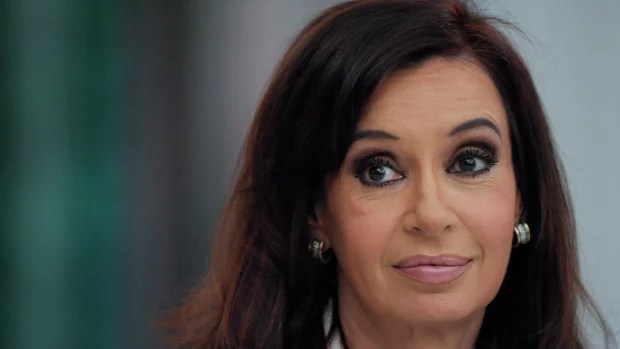
Argentina’s sitting Vice President Cristina Fernandez de Kirchner was found guilty of corruption on Tuesday and sentenced to six years in prison, along with a lifelong ban on holding public office going forward. She will remain free until the end of her term, however, due to immunity.
The federal court in Buenos Aires rendered the verdict after three and a half years of proceedings involving more than 100 witnesses. Kirchner, 69, was accused of taking bribes and having an “illicit association” with a construction magnate during her 2007-2015 presidency. Prosecutors had sought a 12-year sentence.
Kirchner has been vice president and head of the Argentinian senate since December 2019, and can only be stripped of immunity with an unlikely two-thirds vote in the chamber. She also has the option to appeal the verdict to the supreme court.
Tuesday’s verdict is the first time a sitting vice president in Argentina was sentenced for wrongdoing while in office. Kirchner’s Vice President Amado Boudou, as well as Presidents Carlos Menem and Fernando de la Rua, had all been convicted after leaving their posts.
Kirchner had denied all charges and called the process politically charged and ridden with irregularities. Within minutes of the verdict, she said it went beyond “lawfare.”
“This is a parallel state and judicial mafia, and the confirmation of a parastatal system where decisions are made about the life, patrimony and freedom of all Argentines outside the electoral results,” she said.
Kirchner succeeded her late husband Neastor (2003-2007) as president, and was suspected of directing millions in public works funds to Lázaro Baez, a businessman who was a friend of the couple.
After Kirchner left office in 2015, she was also charged with setting a fraudulently low price for dollar-denominated futures, but later acquitted. Another indictment charged her with treason, but was later dropped, while a claim that she had made a secret pact with Iran to protect the alleged perpetrators of a 1994 terrorist bombing was thrown out by another federal court in October 2021.
President Alberto Fernandez backed Kirchner, calling the investigation into her “political” in nature. The next presidential election in Argentina is in 11 months, and it was widely believed Kirchner would run for the post again, though no official announcements have been made.
Kirchner is seen as the most influential figure inside Argentina’s ruling Justicialist Party, founded by Juan and Eva Peron in 1946. Her son Maximo leads the ruling majority bloc in the Chamber of Deputies, the lower house of the Argentinian parliament.
December 6, 2022
Posted by aletho |
Aletho News | Argentina |
Leave a comment
The subject of security guarantees can be raised again if the West is serious about it, Russian Deputy Foreign Minister Sergey Ryabkov told reporters on Tuesday. Until then, he added, Moscow will continue to respond appropriately to any further NATO expansion.
Talks could begin “when they confirm that they are ready for some kind of more sensible and balanced dialogue in terms of interests,” Ryabkov said.
“If and when we hear that the West really has an interest in this, we will return to the topic,” the diplomat added. “But, as in the situation with the dialogue on strategic stability, which was unilaterally interrupted by the United States, we are not chasing anyone and we are not asking anyone for anything.”
His comments came after French President Emmanuel Macron said on Saturday – fresh from a visit to Washington – that NATO should be prepared to offer Russia security guarantees as part of any upcoming talks on ending the conflict in Ukraine.
Russia sent a set of security proposals to NATO and the US in December 2021, with Ryabkov playing a key role in the talks. Among other things, Moscow demanded the withdrawal of NATO’s offensive weapons from its borders and guarantees that Ukraine would never join the bloc.
In January, the US and NATO refused, saying they would only be interested in strategic arms control talks. Since the conflict in Ukraine escalated in February, the bloc has also moved to expand to Sweden and Finland.
Ryabkov said this would receive a “corresponding response” from Russia. “Do the countries who wish to join NATO need that? Why? This is ultimately a question for them to address. We will draw conclusions for ourselves, as we have done so far.”
The “strategic stability” Ryabkov mentioned was a reference to the abortive talks between Russia and the US in Cairo last month, dealing with an impasse over New START. Moscow suspended its participation in the treaty inspections mechanism in August, saying the US sanctions gave Washington an unfair advantage by preventing Russian inspectors from doing their work. Further talks on the treaty are not possible so long as the US continues arming Ukraine, Foreign Ministry spokeswoman Maria Zakharova said last month.
December 6, 2022
Posted by aletho |
Militarism | NATO, Russia, United States |
Leave a comment
By Ilya Tsukanov – Samizdat – 06.12.2022
China’s Defense Ministry has ripped Washington over a Pentagon report claiming the People’s Republic plans to ramp up its nuclear weapons stockpile to 1,500 warheads by 2035 and to make modifications to its nuclear doctrine.
“It should be emphasized that China firmly pursues a nuclear strategy of self-defense, adheres to the nuclear policy of no first use of nuclear weapons at any time and under any circumstances, and keeps nuclear capabilities at the minimum level required for national security,” Defense Ministry spokesman Tan Kefei said in a written press statement Tuesday.
Accusing Washington of engaging in baseless “speculation” about Beijing’s nuclear deterrent, Tan urged the US to “deeply review and reflect on its own nuclear policy” before “pointing fingers” at China.
“With the largest nuclear arsenal in the world, the US continues to upgrade its nuclear triad, vigorously seeks to develop or forward-deploy non-strategic nuclear weapons, lowers the threshold for using nuclear weapons, and conducts nuclear proliferation through the AUKUS trilateral security partnership, increasingly becoming the source of nuclear conflicts,” the spokesman said.
Tan added that as far as the Pentagon’s 2022 China report as a whole is concerned, it constitutes an example of “the US’s old trick to hype up the so-called ‘Chinese military threat’.” China is “strongly dissatisfied with and firmly opposed to the US’s move, and has lodged solemn representations with the US,” the spokesman said.
The US Department of Defense’s new report on China, released on November 29, characterizes the People’s Republic as “the only competitor with the intent and, increasingly, the capacity to reshape” the US-dominated world order. The report cites Chinese efforts to “modernize, diversify, and expand its nuclear forces,” and expects Beijing to increase the size of its nuclear arsenal from about 400 nukes now to “about 1,500 warheads by its 2035 timeline.”
The document further accuses China of planning to make modifications to its nuclear posture to account for more and better weapons systems, and suggests that the PRC “probably seeks lower yield nuclear warhead capabilities to provide proportional response options that its high-yield warheads cannot deliver.” Finally, the Pentagon paper expresses concerns about China’s “launch on warning posture,” which allows for nuclear missiles to be launched before an enemy first strike detonates.
How Much of a Threat Do China’s Nukes Pose to the US?
Estimates on the size of China’s nuclear stockpile range from 350-400 total warheads. Even if the PRC went ahead and more than quadrupled its total nuclear stockpile, as the Pentagon report claims, Beijing’s 1,500 nukes would still be just a fraction of the 5,550 warhead stockpile held by the United States. Amid recent US efforts to peg China into strategic arms limitation talks with Russia, Beijing has indicated that it would be “happy” to join such discussions if the nuclear superpowers first reduced their stockpiles to China’s level.
Notwithstanding China’s economic and technological might and growing geopolitical and strategic weight in the world, its nuclear deterrent remains extremely modest compared to the US. For example, while the US Navy operates a fleet of 14 Ohio-class ballistic missile submarines, each carrying up to 336 nuclear bombs – enough to obliterate the whole of China, the People’s Liberation Army Navy has six Type 094 missile subs, each carrying between one and seven warheads (for a total capacity of 12-84 warheads per sub).
China and India remain the only two nuclear weapons states with a no first use policy. The US’s nuclear doctrine, on the other hand, allows the president not only use nukes preemptively, but even against “non-nuclear weapons states.” At the same time that it has accused China of “probably” seeking low-yield nukes, the Pentagon has developed the W76-2 – a nuclear warhead with an explosive yield of about five kilotons (i.e. about a third of the power of the US nuclear bomb which leveled the Japanese city of Hiroshima in 1945). Nuclear arms experts have expressed concerns that such low-yield nuclear weapons pose a threat to global strategic stability by lowering the threshold for nuclear war.
December 6, 2022
Posted by aletho |
Militarism, Progressive Hypocrite | China, United States |
1 Comment
War, it seems, was the only option Russia’s opponents had ever considered.
Recent comments by former German Chancellor Angela Merkel shed light on the duplicitous game played by Germany, France, Ukraine and the United States in the lead-up to the Russian invasion of Ukraine in February.
While the so-called “collective west” (the U.S., NATO, the E.U. and the G7) continue to claim that Russia’s invasion of Ukraine was an act of “unprovoked aggression,” the reality is far different: Russia had been duped into believing there was a diplomatic solution to the violence that had broken out in the Donbass region of eastern Ukraine in the aftermath of the 2014 U.S.-backed Maidan coup in Kiev.
Instead, Ukraine and its Western partners were simply buying time until NATO could build a Ukrainian military capable of capturing the Donbass in its entirety, as well as evicting Russia from Crimea.
In an interview last week with Der Spiegel, Merkel alluded to the 1938 Munich compromise. She compared the choices former British Prime Minister Neville Chamberlain had to make regarding Nazi Germany with her decision to oppose Ukrainian membership in NATO, when the issue was raised at the 2008 NATO summit in Bucharest.
By holding off on NATO membership, and later by pushing for the Minsk accords, Merkel believed she was buying Ukraine time so that it could better resist a Russian attack, just as Chamberlain believed he was buying the U.K. and France time to gather their strength against Hitler’s Germany
The takeaway from this retrospection is astounding. Forget, for a moment, the fact that Merkel was comparing the threat posed by Hitler’s Nazi regime to that of Vladimir Putin’s Russia, and focus instead in on the fact that Merkel knew that inviting Ukraine into NATO would trigger a Russian military response.
Rather than reject this possibility altogether, Merkel instead pursued a policy designed to make Ukraine capable of withstanding such an attack.
War, it seems, was the only option Russia’s opponents had ever considered. [See: Biden Confirms Why the U.S. Needed This War, Consortium News.]
Putin: Minsk Was a Mistake
Merkel’s comments parallel those made in June by former Ukrainian President Petro Poroshenko to several western media outlets. “Our goal,” Poroshenko declared, “was to, first, stop the threat, or at least to delay the war — to secure eight years to restore economic growth and create powerful armed forces.” Poroshenko made it clear that Ukraine had not come to the negotiating table on the Minsk Accords in good faith.
This is a realization that Putin has come to as well. In a recent meeting with Russian wives and mothers of Russian troops fighting in Ukraine, including a few widows of fallen soldiers, Putin acknowledged that it was a mistake to agree to the Minsk accords, and that the Donbass problem should have been resolved by force of arms at that time, especially given the mandate he had been handed by the Russian Duma regarding authorization to use Russian military forces in “Ukraine,” not just Crimea.
Putin’s belated realization should send shivers down the spine of all those in the West who operate on the misconception that there can now somehow be a negotiated settlement to the Russian-Ukrainian conflict.
None of Russia’s diplomatic interlocutors have demonstrated a modicum of integrity when it comes to demonstrating any genuine commitment to a peaceful resolution to the ethnic violence which emanated from the bloody events of the Maidan in February 2014, which overthrew an OSCE-certified, democratically-elected Ukrainian president.
Response to Resistance
When Russian speakers in Donbass resisted the coup and defended that democratic election, they declared independence from Ukraine. The response from the Kiev coup regime was to launch an eight-year vicious military attack against them that killed thousands of civilians. Putin waited eight years to recognize their independence and then launched a full-scale invasion of Donbass in February.
He had previously waited on the hope that the Minsk Accords, guaranteed by Germany and France and endorsed unanimously by the U.N. Security Council (including by the U.S.), would resolve the crisis by giving Donbass autonomy while remaining part of Ukraine. But Kiev never implemented the accords and were not sufficiently pressured to do so by the West.
The detachment shown by the West, as every pillar of perceived legitimacy crumbled — from the OSCE observers (some of whom, according to Russia, were providing targeting intelligence about Russian separatist forces to the Ukrainian military); to the Normandy Format pairing of Germany and France, which was supposed to ensure that the Minsk Accords would be implemented; to the United States, whose self-proclaimed “defensive” military assistance to Ukraine from 2015 to 2022 was little more than a wolf in sheep’s clothing — all underscored the harsh reality that there never was going to be a peaceful settlement of the issues underpinning the Russian-Ukrainian conflict.
And there never will be.
War, it seems, was the solution sought by the “collective West,” and war is the solution sought by Russia today.
Sow the wind, reap the whirlwind.
On reflection, Merkel was not wrong in citing Munich 1938 as an antecedent to the situation in Ukraine today. The only difference is this wasn’t a case of noble Germans seeking to hold off the brutal Russians, but rather duplicitous Germans (and other Westerners) seeking to deceive gullible Russians.
This will not end well for either Germany, Ukraine, or any of those who shrouded themselves with the cloak of diplomacy, all the while hiding from view the sword they held behind their backs.
Scott Ritter is a former U.S. Marine Corps intelligence officer who served in the former Soviet Union implementing arms control treaties, in the Persian Gulf during Operation Desert Storm and in Iraq overseeing the disarmament of WMD. His most recent book is Disarmament in the Time of Perestroika, published by Clarity Press.
December 6, 2022
Posted by aletho |
Militarism, Timeless or most popular | Germany, NATO, Russia, Ukraine |
Leave a comment
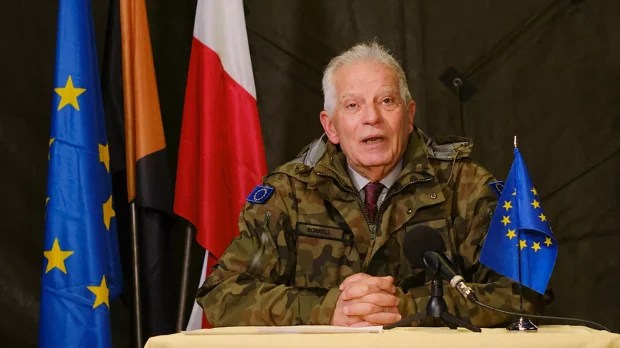
© AFP 2022 / BARTEK SADOWSKI
By Ilya Tsukanov – Samizdat – 06.12.2022
In late 2021, Moscow sent Washington and its allies two draft treaties on security guarantees designed to dramatically reduce tensions between Russia and the Western bloc. Weeks later, Kiev massed troops along the contact line in the Donbass and began to intensively shell the region, prompting Russia to kick off a military operation in Ukraine.
The end of the crisis in Ukraine will be achieved through “security guarantees for Ukraine,” not Russia, European Union foreign affairs chief Josep Borrell has said.
“As for Russia, we’ll talk about that later,” the EEU’s top diplomat told attendees of a symposium in Paris on Monday. “The end of this conflict will have to be done in compliance with international legality,” Borrell added, claiming this would include Moscow being made to pay “reparations” to Kiev, face “war crimes” trials, and withdrawing its forces.
Borrell also said that the crisis in Ukraine has solidified its “place in the EU.”
“It is written. History has decided for us,” he said.
Borrell’s comments appeared to be a direct rebuke to French President Emmanuel Macron, who said Saturday that he and his US counterpart Joe Biden sought to flesh out “the security architecture in which we want to live tomorrow,” and discussed “guarantees of security for Russia” if and when Moscow “returns to the table” for talks.
“One of the essential points is the fear that NATO will be at its door, and the deployment of weapons that can threaten Russia,” Macron said.
The French president received flak from Kiev over his comments, but slapped down Ukrainian officials’ objections. “I think we should not… try to create controversy where there is none,” he said at a summit in Tirana on Tuesday.
Borrell’s latest remarks weren’t the first time the top EU diplomat has called for an aggressive approach in Ukraine. In April, as some Western leaders encouraged Moscow and Kiev to resolve the crisis through negotiations, Borrell instead called for a military solution, saying “this war will be won on the battlefield” and pledging another €500 million in military support to Ukraine. Since then, the EU has sent over €29 billion in aid to Kiev.
Russian officials have repeatedly slammed Borrell for his ‘undiplomatic’ approach. In May, Russian Foreign Minister Sergei Lavrov reminded him that he was the bloc’s “top diplomat, and not the European Union’s military leader.”
Security Guarantees
Next week will mark the one year anniversary of Russia’s delivery of a pair of draft security treaties to the US and NATO designed to dramatically reduce tensions between Moscow and the Western bloc. The documents, released publicly by the Russian Foreign Ministry, proposed legally binding commitments by each side not to deploy troops, equipment, warships, missile systems and aircraft in areas where they may be seen as a threat to the other side, and asked Washington to pledge not to continue NATO’s eastward expansion, including in Ukraine. The document also asked parties to explicitly affirm that they do not consider one another adversaries.
NATO and Washington rejected the proposals in January, and stressed that the bloc’s “open door” policy will not change. Weeks later, the Donbass republics reported an unprecedented escalation in shelling, sabotage and sniper attacks by Ukrainian forces along the line of contact, and began the evacuation of hundreds of thousands of civilians to Russia. The Kremlin expressed concerns that Ukrainian troops were amassing in apparent preparation for an all-out assault on the Donbass, while NATO announced plans for new battle group deployments in the region. On February 24, 2022, citing threats to the Donbass posed by the Kiev regime, Russian President Vladimir Putin announced a special military operation in Ukraine aimed at demilitarizing the country and ‘de-nazifying’ its leadership.
In the nine-and-a-half months since, Moscow has repeatedly expressed readiness to restart talks, with Russia’s core conditions including no NATO membership for Ukraine, security for the Donbass, and recognition of Crimea as Russia. Kiev and its benefactors have rejected these conditions.
December 6, 2022
Posted by aletho |
Militarism | European Union, NATO, Ukraine |
2 Comments
Something odd is afoot in Europe. Britain recently has been ‘regime washed’, with a strongly pro-EU Finance Minister (Hunt) paving the passage to an election-free premiership by ‘globalist’ Rishi Sunak. Why so? Well, to impose swingeing cuts to public services, to normalise immigration running at 500,000 per annum and to raise taxes to the highest levels since the 1940s. And to open channels about a new relationship deal with Brussels.
A British Tory Party is content to do that? Slash social support and hike taxes into an already existent worldwide recession? On the face of it, it doesn’t seem to make sense. Shades of Greece 2008? Greek austerity for Britain — are we missing something? Is this setting the scene for the Remainer Establishment to point to an economy in crisis (blamed on Brexit failure), and to say there is no alternative (TINA) but a return to the EU in some form, (British ‘cap in hand’, and with head bowed)?
Simply put, forces behind the scenes seem to want the UK to resume its former role as US plenipotentiary inside Brussels — pushing the US primacy agenda (as Europe sinks into self-doubt).
Likewise odd — and significant – was that on 15 September, former German Chancellor Schroeder entered unannounced into Scholtz’s office where only the Chancellor, and Vice-Chancellor, Robert Habeck, were present. Schroeder slapped down a long-term gas supply proposal by Gazprom on the desk, directly under Scholtz’s eyes.
The Chancellor and his predecessor held each other’s gaze for a minute – without a word passing. Then Schroeder reached out, took back the unread document, turned his back and exited the office. Nothing was said.
On 26 September (11 days later), the Nordstream pipeline was sabotaged. Surprise (yes, or no)?
Many unanswered questions. The upshot: No gas for Germany. One Nordstream train (2B) however, survived the sabotage and remains pressurised and functional. Yet still no gas arrives in Germany (other than high price liquified gas). There are presently no EU sanctions on gas from Russia. Landing the Nordstream gas requires only a Regulatory go-ahead.
So then: Europe is to have austerity, loss of competitiveness, price and tax hikes? Yes — yet Scholtz did not even glance at the gas offer.
The Green Party of Habeck and Baerbock (and the EU Commission) is in close alignment with those in the Biden team insisting to maintain US hegemony, at all costs. This Euro-coalition is explicitly and viscerally malefic towards Russia; and in contrast, is as viscerally indulgent towards Ukraine.
The big picture? German Foreign Minister Baerbock in a speech in New York on 2 August 2022 sketched out a vision of a world dominated by the US and Germany. In 1989, George Bush famously had offered Germany a “partnership in leadership”, Baerbock claimed. “Now the moment has come when we have to create it: A joint partnership in leadership”. A German bid for explicit EU primacy, snaring US support. (The Anglos will not like that!)
Ensuring no backsliding on Russia sanctions and continuing EU financial support for the Ukraine war is a clear ‘Red Line’ for precisely those in the Biden team likely to be attentive to Baerbock’s Atlanticist bid — and who understand that Ukraine is the spider at the centre of a web. The Greens explicitly are playing this.
Why? Because Ukraine is still the global ‘pivot’: Geopolitics; geo-economics; commodity and energy supply chains — all revolve around where this Ukraine pivot finally settles. A Russian success in Ukraine would bring a new political bloc and monetary system into being, through its allies in the BRICS+, the Shanghai Cooperation Organization and the Eurasian Economic Union.
Is this European austerity binge then just about the German Green Party nailing down EU Russophobia? Or are Washington and its Atlanticist allies now prepping for something more? Prepping for China to get the ‘Russia treatment’ from Europe?
Earlier this week at Mansion House, PM Sunak changed gear. He ‘hat-tipped’ to Washington with the promise to stand by Ukraine ‘as long as it takes’, yet his primary foreign policy focus was firmly on China. The old ‘golden’ era of Sino-British relations ‘is over’: “The authoritarian regime [of China] poses a systemic challenge to our values and interests”, he said — citing the suppression of anti-zero-COVID protests and the arrest and beating of a BBC journalist on Sunday.
Over in the EU — belatedly panicking over unfolding widespread de-industrialisation — President Macron has been signalling that the EU might take a more hard-line China stance, though only were the US were to back-down on the subsidies in the Inflation Reduction Act, which entice EU companies to up-anchor, and sail off to America.
Yet, Macron’s ‘play’ is likely to meet a dead end, or at best, a cosmetic gesture — for the Act has already been legislated in the US. And the Brussels political class unsurprisingly already is waving the white flag: Europe has lost Russian energy and now stands to lose China’s tech, finance and market. It’s a ‘triple whammy’ — when taken together with European de-industrialisation.
There you have it — austerity is always the first tool in the US toolbox for exerting political pressure on US proxies: Washington is prepping the EU ruling élites to sever from China as fundamentally Europe has already done from Russia. Europe’s largest economies already are taking a harder line on Beijing. Washington will squeeze the UK and EU ‘til the pips squeak to get full compliance on a China cut-off.
The protests in China over Covid regulations could not have arrived at a more serendipitous time from the US’ ‘China hawks’ perspective: Washington whipped the EU into full propaganda mode on Iranian ‘demonstrations’ — and now the China protests offer the opportunity for Washington to go full court on China demonisation:
The ‘line’ used against Russia (Putin makes mistake after mistake; the system bumbles; the Russian economy is precariously perched on a knife edge and popular disaffection is soaring) – will be ‘cut and pasted’ to Xi and China.
Only, the inevitable EU moral lecturing will antagonise China even further: Hopes to keep a trade foothold in China will vanish, and effectively it will be China ‘washing its hands’ of Europe, rather than vice versa. European leaders have this blind spot — quite some Chinese may deplore the Covid lockdown practice, yet still will remain deeply Chinese and nationalist in sentiment. They will hate EU lecturing: ‘European values speak only for themselves — we have our own’.
Obviously, Europe has dug itself into a deep hole. Its adversaries grow bitter at EU moralising. But what exactly is going on?
Well, firstly, the EU is hugely over-invested in its Ukraine narrative. It seems incapable of reading the direction of travel that events in the war zone are taking. Or, if it does read it correctly (of which there is little sign), it appears incapable of being able to affect a course correction.
Recall that the war at the outset was never seen by Washington as likely ‘being decisive’. The military aspect was viewed as an adjunct — a pressure multiplier — to the political crisis in Moscow that sanctions were expected to unleash. The early concept was that financial war represented the front line — and the military conflict, the secondary front of attack.
It was only with the unexpected shock of sanctions not achieving ‘shock and awe’ in Moscow that priority switched from the financial to the military arena. The reason the ‘military’ was not firstly seen as ‘front-line’ was because Russia clearly had the potential for escalatory dominance (a factor which is now so evident).
So, here we are: The West has been humiliated in the financial war, and unless something changes (ie. dramatic escalation by the US) – it will lose militarily too — with the distinct possibility that Ukraine at some point, simply implodes as a state.
The actual situation on the battlefield today is almost completely at odds with the narrative. Yet, so heavily has the EU invested in its Ukraine narrative that it just doubles-down, rather than draw back, to re-assess the true situation.
And so doing — by doubling-down narratively, (standing by Ukraine ‘for as long as it takes’) — the strategic content to the ‘Ukraine’ pivot rotates 180 degrees: Rump ‘Ukraine’ will not be ‘Russia’s Afghan quagmire’. Rather, its’ rump is morphing into Europe’s long-term financial and military ‘quagmire’.
‘As long as it takes’ gives the conflict an indeterminate horizon — yet leaves Russia in control of the timetable. And ‘as long as it takes’ implies ever more exposure to NATO blind spots. The rest-of-world intelligence services will have observed NATO’s air defence and military-industrial lacunae. The pivot will show who is the true ‘paper tiger’.
‘As long as it takes’ — has the EU thought this through?
If Brussels imagines too, that such dogged adherence to narrative will impress the rest-of-the-world and bind these other states closer to the EU ‘ideal’, they will be wrong. Already there is a wide hostility to the notion that Europe’s ‘values’ or squabbles have any wider pertinence, beyond Europe’s borders. ‘Others’ will see the inflexibility as some bizarre compulsion by Europe to self-suicide – at the very moment that the end of ‘everything bubble’ already threatens a major downturn.
Why would Europe double-down on its ‘Ukraine’ project, at the expense of losing its standing abroad?
Perhaps, because the EU political class fears even more losing its domestic narrative. It needs to distract from that — it is a tactic called ‘survival’.
The EU, as with NATO, was always a US political project for the subjugation of Europe. It still is that.
Yet, the meta-EU narrative — for internal EU purposes — posits something diametrically different: that Europe is a strategic player; a political power in its own right; a market colossus, a monopsony with the power to impose its will over whomsoever trades with it.
Simply put, the EU narrative is that it has meaningful political agency. But Washington has just demonstrated it has none. It has trashed that narrative. So, Europe is destined to become an economic backwater. It has ‘lost’ Russia — and soon China. And is finding it has lost its standing in the world, too.
Again, the actual situation on the geo-political ‘battlefield’ is almost completely at odds with the EU narrative of itself as a geo-strategic player.
Its ‘friend’, the Biden Administration, is gone — whilst powerful enemies elsewhere accumulate. The EU political class never had a good grasp of its limitations — it was ‘heresy’ even to suggest there were limitations to EU power. Consequently, the EU has hugely overinvested in this narrative of its agency too.
Hanging EU flags from every official building will not cast a fig leaf over the nakedness, nor hide the disconnect between the Brussels ‘bubble’ and its deprecated European proletariat. French politicians now openly ask what can save Europe from complete vassalage. Good question. What does one do when a hyper-inflated power narrative bursts, at the same time as a financialised one?
December 6, 2022
Posted by aletho |
Economics, Militarism | China, European Union, NATO, Russia, UK, United States |
Leave a comment
By Ahmed Adel | December 6, 2022
The price cap imposed by the West on oil from Russia will actually have negative consequences in the long term as it once again reaffirmed to the international community that Western-centric banking and shipping insurance schemes cannot be trusted as reliable partners.
Western oil sanctions went into effect on December 5, with the European Union stopping all shipments of Russian oil arriving by sea. In addition, the EU, as well as G7 countries and Australia, imposed a limit on the price of oil transported by sea at $60/barrel. The West expects that this will cripple the Russian economy and force Moscow to end its special military operation in Ukraine.
However, this will spectacularly fail.
Sanctions have not instigated an end to the military operation, and in fact they have forced financial mechanisms independent of western institutions to be established. Although the world economic system was already slowly heading towards de-Dollarisation, the anti-Russia sanctions have only sped up the process as important economic players like China, India and Egypt have found methods to bypass western sanctions.
It is recalled that Russia had previously introduced the Mir card system as an alternative to Western financial systems, despite there being a lot of scepticism about it. Now, Mir is being adopted all over the world, and the same can certainly be done in the shipping and shipping insurance industry.
The imposition of an oil price cap has made non-Western countries think about how to break free from Western payment systems and shipping channels. Many countries are already pre-emptively establishing these mechanisms to avoid the same teething problems that Russia has experienced since February 2022.
Washington warned the EU on December 1 that the $52 cited recently for Urals crude oil may not reflect the overall level at which Russian oil has been trading. An unnamed US official has said that Urals has been trading at a $17-$23 discount to crude, which would make it higher than the $52 cited by some media. It is for this reason that the EU set the oil price cap $8 above that cited figure.
For their part, Poland, Estonia, and Lithuania have all voiced their opinion that the price cap on Russian crude oil insured and shipped by Western companies should be set at Russia’s production cost – $20-$30 per barrel. Those levels were dismissed as having very little chance of being supported by other EU members.
The introduction of a price cap on Russian seaborne oil at $60 per barrel is already a risky strategy to begin with and has uncertain results. Therefore, the Polish-Baltic proposal was never going to be approved. Oil market participants were already fearing a $60 cap to begin with, forcing Biden administration officials trying to reassure that the newly agreed cap will not lead to supply disruptions and volatility in the price after it went into effect.
None-the-less, experts fear that “over-compliance” on the restrictions could affect pricing.
“One of the big potential issues is going to be over-compliance, intermediaries deciding that the risk is too great and not engaging,” said Adam M. Smith, a partner at Gibson, Dunn and Crutcher and a former adviser at Treasury’s Office of Foreign Assets Control, which oversees sanctions. “Banks have historically been very risk-averse — as they should be — in the sanctions space and I think over-compliance in that context can be expected.”
Due to the price cap, many countries may stop any action for a while so that they can analyse all the risks, including decisions which could lead to sanctions from Western countries.
“That’s a real risk,” said Hunter Kornfeind, an oil market analyst at Rapidan Energy Group. “There could be a multi-week lull when some buyers are reluctant to move barrels as they wait and see. It’s not going to be like the whole trade shuts down, but there could be some who take a step back.”
Russian Deputy Prime Minister Alexander Novak pointed out that Russia will not export oil to countries that set price caps. According to him, such restrictions mean that by interfering with the market, Moscow will only interact with buyers willing to work under normal market conditions.
For his part, Russian President Vladimir Putin has stated that Moscow will not deliver anything abroad if it is against its interests. He warned that the introduction of oil price caps could have “grave consequences for global energy markets.”
Although the full impact of what the price cap is not yet known, the attempts to further financially and economically isolate Russia are likely to be another spectacular failure.
Ahmed Adel is a Cairo-based geopolitics and political economy researcher.
December 6, 2022
Posted by aletho |
Economics, Russophobia | European Union, United States |
1 Comment
Samizdat – 06.12.2022
Western countries froze a huge chunk of the Russian Central Bank’s emergency reserve cushion in February in a bid to punish Moscow for its military operation in Ukraine. Officials in Washington and Brussels have since vacillated as to whether these funds can be seized outright and given to Kiev as “reparations.”
The United States and its European allies are having trouble actually locating two thirds or more of the Russian assets they froze earlier this year “because they do not know where exactly they are,” Charles Lichfield, a senior finance expert at the Atlantic Council, has indicated.
Speaking to Estonian media, Lichfield, the deputy director of the Washington-based think tank’s GeoEconomics Center, and expert on Russia’s central banking system, said Western countries actually seized closer to $80-$100 billion, not $300 billion, as has been widely reported.
Lichfield explained that the “freeze” on Russian assets obligated foreign banks not to allow for their transfer back to Russia, on penalty of losing their ability to transact in dollars and euros. However, some Asian and African banks may not have felt the need to respond to requests for information from Western authorities regarding transactions involving Russia, he said.
The US Treasury triumphantly announced in June that Washington and its allies had blocked or frozen some $300 billion in Russian state assets, plus $30 billion worth of assets of sanctioned individuals, including Russian tycoons.
Last week, European Commission chief Ursula von der Leyen proposed creating a special structure to manage the assets and “invest them.”
However, EU officials specified to media that Brussels couldn’t simply seize the Russian assets to use them in Ukraine because the bloc adheres to the principle of state immunity.
In the US, officials have expressed similar hesitation. Last month, lawmakers proposed a provision in the 2023 National Defense Authorization Act bill to allow for the transfer Russian assets to Ukraine, but the idea was met with opposition amid fears that the idea had not been “fully litigated.”
Russian officials have slammed the asset freeze as a form of “theft.”
The West’s actions have also prompted Chinese regulators and banks to brainstorm ways to keep their own assets stashed abroad safe if the US and its allies move against them in the way they have against Russia.
Russia’s frozen assets were previously estimated to constitute close to half of the country’s $640 billion reserve cushion. According to the Central Bank’s year-end report for 2021, the largest portion of its foreign currency and gold was stored in China (16.8 percent), followed by France (9.9 percent), Japan (9.3 percent), the United States (6.4 percent) Britain (5.1 percent), Canada (2.7 percent) and Australia (2.5 percent), with more than 51 percent thus located in states which have slapped sanctions on Moscow.
December 6, 2022
Posted by aletho |
Russophobia | European Union, United States |
5 Comments
Deliveries of Russian seaborne oil to Europe have dropped more than fivefold since the start of Moscow’s military operation in Ukraine, Bloomberg reported on Monday citing vessel tracking data.
According to the report, the shipments plunged to an average of 309,000 barrels per day in the four weeks to December 5. This is less than a fifth of their volume in the four weeks to February 25, an average of 1.58 million barrels a day. Deliveries in the final week to November 25 dropped by 34%.
Analysts expect those figures to slide further after an EU embargo and the Western coalition’s $60 price cap on Russian seaborne barrels are in full swing. Both measures came into force on Monday, but have a transition period during which some deliveries are still possible.
Over the past months, Moscow has stepped up efforts to redirect supplies elsewhere. So far, shipments have been mostly diverted to China, India, and Türkiye, which emerged as the largest buyers of Russian oil.
According to vessel tracking data, the volume of crude on tankers destined for the three countries, along with those that have not yet supplied their port of destination but typically end up in either India or China, stood at an average of 2.45 million barrels a day over the past four weeks. That is more than three times as much as the volumes shipped there in the four weeks immediately prior to the start of the Ukraine conflict.
Total Russian crude export volumes increased by 94,000 barrels a day to 2.99 million in the week before the new restrictions kicked in. Shipments to Bulgaria, which has secured an exemption from the embargo and is now Russia’s only remaining EU seaborne oil market, were unchanged at 125,000 barrels a day. It is unclear, however, whether further deliveries to the country will be affected by Russia’s response to the sanctions. Moscow repeatedly warned that it will stop selling crude to countries that support the price cap, and warned on Monday that it may even cut production in retaliation.
Russia’s overall oil output has grown 2.2% to 488 million tons in the 11 months between January and November 2022, according to Deputy Prime Minister Alexander Novak, who spoke to reporters on Tuesday.
December 6, 2022
Posted by aletho |
Malthusian Ideology, Phony Scarcity | European Union |
1 Comment
By Lucas Leiroz | December 6, 2022
According to recent reports, Ukrainian intelligence, with foreign support, is planning a provocation to prevent the resumption of Russian ammonia transit. The aim would be to further destabilize humanitarian deals to secure fertilizer supplies and, consequently, global food security. Ammonia is an important component in the production of various types of fertilizers, which is why the instability of its supply poses considerable risks to millions of people around the planet, whose food is cultivated with Russian products.
Sources interviewed by a Russian media outlet claim that Ukrainian agents are being instructed by the UK Special Services and the Canadian military company Garda World to destroy the Russian export infrastructure of ammonia. The operation would be very similar to what happened in September with the Nord Stream pipelines. Informers allege that Kiev wants to bomb the ammonia storage facilities at the Odessa Portside Plant. Thus, the flow of ammonia through the Tolyatti-Odessa pipeline could not be resumed, generating an increase in the prices of the product.
“The provocation has been planned and is carried out under the control of the UK special services stationed in Odessa. Members of Canada’s private military company Garda World, who are responsible for security of port infrastructure in the Odessa region under the contract with the administration of Ukrainian sea ports, are also participating in the implementation of this provocation”, the source said.
Although the UN-mediated grain deal in which Russia is involved did not originally include the return of ammonia transit, negotiations in this regard were making significant progress. UN officials have expressed optimism on the matter in several recent pronouncements. According to Martin Griffiths, Under-Secretary-General for humanitarian affairs and emergency relief at the UN’s Office for the Coordination of Humanitarian Affairs (OCHA), the ammonia deal was “quite close”. Indeed, since the beginning of the special military operation Russia has shown diplomatic goodwill in negotiating humanitarian agreements, so it was possible that something was close to being achieved soon.
However, once again Western-backed Ukrainian terrorists seem to plan maneuvers which will increase tensions and instability. The sources also claim that Kiev will try to blame Russia for the attack. With this, the possible plan appears even more similar to what happened on previous occasions, such as Nord Stream, the Crimean Bridge, and the bombing in Poland. Indeed, this has become common practice on the part of Kiev and its Western supporters: using terrorism to serve their anti-Russian interests and trying to blame Moscow. As on previous occasions, if the attack in Odessa actually takes place, it is expected that there will be a huge defamatory media repercussion, with western news agencies spreading lies and distorted narratives about the incident.
In addition to defaming Russia even more, thus “justifying” the sanctions and other coercive measures, the West would also be economically interested in this type of move, since, without the resumption of Russian ammonia exports, many emerging countries would start to buy ammonia from the EU and from the UK – or start importing ammonia-based fertilizers from Canada. Obviously, Western countries would increase prices exponentially, demanding really abusive prices, given the scarcity of ammonia in the global market.
This once again shows how the West-Kiev axis seems only interested in fomenting chaos and international crisis, without any regard for pacifying the current conflict and for lessening its consequences. All forms of boycotting Russia’s international ties seem “legitimate” to Western countries, even if this endangers the food security of millions of people. Considering the importance of ammonia-based fertilizers for the cultivation of grains, if the predictions made by Russian media’s sources are confirmed, in-depth investigations will be necessary in order to punish those responsible for this crime.
It is also important to remember that the grains and fertilizers exported by Russia have been seized in Europe. Tons of food and chemical products are detained in European ports due to the sanctions, without reaching the countries of destination in Africa and Asia, where Moscow prioritizes exports for humanitarian reasons. Despite several Russian denunciations in this regard, no action has been taken by the UN, which remains silent in the face of illegal European practices that are evidently contributing to worsening food shortages around the world.
There is no way to deny the destabilizing and terrorist attitudes that NATO and its Ukrainian proxy are promoting. And international organizations need to recognize this as soon as possible.
Lucas Leiroz is a researcher in Social Sciences at the Rural Federal University of Rio de Janeiro; geopolitical consultant.
You can follow Lucas on Twitter and Telegram.
December 6, 2022
Posted by aletho |
False Flag Terrorism, Malthusian Ideology, Phony Scarcity | Ukraine |
1 Comment
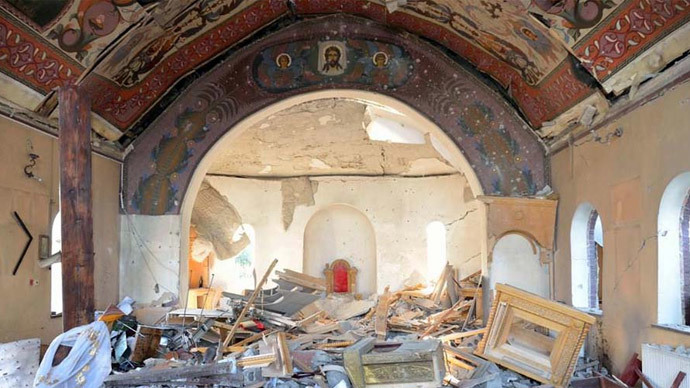
Samizdat – 06.12.2022
Republican Congressman Paul Gosar, in response to the shelling of a church by Ukrainian troops in the city of Donetsk, called Washington’s support for Ukraine “immoral,” adding that the Kiev regime is “authoritarian.”
“Our continued support of this war in Ukraine is immoral. The deaths continue and Ukraine has become an authoritarian regime not worthy of any support. I support peace talks, not death and destruction. Not bombing churches,” Gosar tweeted.
On Monday, a Sputnik correspondent reported that the Church of Nativity of Christ in Donetsk was shelled by Ukrainian troops.
In late October, the US congressman invited Russian President Vladimir Putin and Ukrainian President Volodymyr Zelenskyy for peace talks in the state of Arizona. Two weeks later, Gosar said he would continue opposing additional US aid to Ukraine.
December 6, 2022
Posted by aletho |
Civil Liberties, War Crimes | Human rights, Ukraine, United States |
1 Comment




 Aletho News