FDA Dumps More Pfizer Documents: Why Were So Many Adverse Events Reported as ‘Unrelated’ to Vaccine?
By Michael Nevradakis, Ph.D. | The Defender | May 17, 2022
The latest release of Pfizer-BioNTech COVID-19 vaccine documents raises questions about how frequently adverse events experienced by clinical trial participants were reported as “unrelated” to the vaccine.
The 80,000-page document cache released May 2 by the U.S. Food and Drug Administration (FDA) includes an extensive set of Case Report Forms (CRFs) from Pfizer trials conducted at various locations in the U.S.
The documents also include the “third interim report” from BioNTech’s trials conducted in Germany (accompanied by a synopsis of this report and a database of adverse events from this particular set of trials).
The FDA released the documents, which pertain to the Emergency Use Authorization (EUA) of the vaccine, as part of a court-ordered disclosure schedule stemming from an expedited Freedom of Information Act (FOIA) request filed in August 2021.
Public Health and Medical Professionals for Transparency, a group of doctors and public health professionals, submitted the FOIA request.
Adverse events during Pfizer vaccine trials in the U.S. usually reported as ‘unrelated’ to vaccination
Pfizer conducted a series of vaccine trials at various locations in the U.S., including the New York University Langone Health Center, Rochester Clinical Research and Rochester General Hospital (Rochester, New York) and the J. Lewis Research, Inc. Foothill Family Clinic (Salt Lake City, Utah).
The Pfizer documents released this month by the FDA included a series of CRFs for patients who suffered some type of adverse event during their participation in the COVID-19 vaccine trials.
As the documents reveal, despite the occurrence of a wide range of symptoms, including serious cardiovascular events, almost none were identified as being “related” to the vaccine.
Such serious yet “unrelated” adverse events included:
- Acute asthma exacerbation
- Aortic aneurysm (listed as a pre-existing condition)
- Appendicitis (requiring hospitalization)
- Atrial defibrillation
- Cardiac arrest and acute respiratory failure, requiring hospitalization, sustained by a patient who then was “lost” (could not be located for continued participation in the trial)
- Chest pain (requiring hospitalization, later listed as cardiac ischemia)
- Coronary artery occlusion (listed as both serious and life-threatening)
- Injuries sustained from a fall
- Intermittent non-cardiac chest pain (requiring hospitalization)
- Left breast cancer (listed as a pre-existing occult malignancy)
- Neuritis (peripheral nerve Injury), listed as “unrelated” to the vaccine but related to the blood draw during vaccination
- Pulmonary embolism and bilateral deep venous thrombosis
- Respiratory failure (requiring hospitalization)
- Right ureteropelvic junction obstruction (requiring hospitalization, listed as congenital)
- Small bowel obstruction, listed as “unplanned,” and a panic attack
Of the CRFs found in the documents released this month, only one adverse event is clearly specified as being related to the vaccination: a participant who suffered from psoriatic arthritis, with no prior history of the condition.
In addition, several CRFs indicated exposure during pregnancy (see here and here), or during a partner’s pregnancy (see here and here). However, the documents provided do not appear to have provided any follow-ups regarding any outcomes or potential adverse events for the participants, their partners or their newborn babies once born.
In some instances, while the CRFs claimed the adverse events suffered by patients were not related to the vaccine, their cause was unspecified, simply indicated as “other,” while in another case, a participant’s “unplanned” small bowel obstruction and panic attacks were listed as being unrelated to the vaccination despite no relevant medical history pertaining to the SAEs (severe adverse events) in question.
Did Pfizer hide critical information from regulators?
It is difficult to draw concrete conclusions about any specific case from the data provided by CRFs and vaccine trial summaries.
However, what raises eyebrows is the very large number of adverse events — often serious and often requiring the hospitalization of the patients involved — that were determined to be “unrelated” to the administration of the COVID vaccine.
Previously released Pfizer documents also included discrepancies in the recording of adverse events.
According to investigative journalist Sonia Elijah, these discrepancies include:
- Trial participants were entered into the “healthy population” but were, in actuality, far from healthy.
- SAE numbers were left blank.
- Barcodes were missing from samples collected from trial participants.
- The second vaccine dose was administered outside the three-week protocol window.
- New health problems were dismissed as “unrelated” to the vaccination.
- A remarkable number of patients with an observation period of exactly the same duration — 30 minutes, with very little variety in observation times and raising questions as to whether patients were adequately observed or were put at risk.
- Oddities pertaining to the start and end dates of SAEs – for instance, a “healthy” diabetic suffered a “serious” heart attack on October 27, 2020, but the “end” date for this SAE is listed as the very next day, even though the patient was diagnosed with pneumonia that same day.
- Impossible dating: in the aforementioned example of the patient who sustained a heart attack and pneumonia, the individual in question later died, but the date of death is indicated as the day before the patient was recorded as having gone to a “COVID ill” visit.
- Unblinded teams, who were aware of which patients received the actual vaccine or a placebo, were responsible for reviewing adverse event reports, potentially leading to pressure to downplay COVID-related events in the vaccinated, or to indicate that adverse events were related to the vaccine.
- Other adverse events were indicated as “not serious” despite extensive hospital stays, of up to at least 26 days in the case of one patient who suffered a fall which was classified as “not serious,” yet facial lacerations sustained as a result of the fall were attributed to hypotension (low blood pressure).
Many of these practices seem to appear in the trial-related documents released this month.
Medical and scientific experts who spoke to The Defender expressed similar concerns about what this month’s tranche of documents reveals, and addressed cases of “disappearing” adverse events.
Brian Hooker, chief scientific officer for Children’s Health Defense, remarked:
“I’m most concerned about ‘disappearing’ patients. One cannot conduct a valid trial and simply omit the results that they don’t like!
“With the stories about Maddie de Garay and Augusto Roux surfacing, I have to wonder how many other participants were dropped in order to hide vaccine adverse events/effects.
“If you look at the data in VAERS [Vaccine Adverse Event Reporting System], COVID-19 vaccines are the most dangerous ever introduced into the population.”
Dr. Madhava Setty, a board-certified anesthesiologist and senior science editor for The Defender, said:
“The ‘unrelated’ label the investigators use to divert attention from AEs [adverse events] is a powerful point that stands on its own. We haven’t pushed back on this enough.
“Equivalently, we can say that the meager and short-lived benefit of these shots is also ‘unrelated’ using their ‘standards.’ On what grounds can they say that their product is preventing infection (which it isn’t anymore), or death (marginally)?
“They cannot have it both ways. They cannot claim a benefit through short-term outcomes while denying that side effects of any kind are related to their product.
“That’s the whole point of doing a trial. You cannot prove causation, only statistically significant correlation.”
Setty provided further context for his remarks in an April 2022 article for The Defender and in a March 2022 presentation, in which he discussed the number of these adverse events and how Pfizer swept them away (timestamp 24:00).
In Setty‘s view:
“There’s a high likelihood of malfeasance going on. [Pfizer whistleblower] Brook Jackson says the PIs [principal investigators] were unblinded. If true, it would make it very easy for the investigators to bump up the AEs in the placebo group while ignoring some of the AEs in the vaccine group.
“Pfizer claims that 0.5% of placebo recipients suffered a serious adverse event compared to 0.6% in the vaccine group. This is how these events were obscured.”
The extant body of evidence indicates Pfizer “is hiding critical information from regulators,” Setty said:
“The clincher is in the memorandum to the VRBPAC [Vaccines and Related Biological Products Advisory Committee] (Table 2, efficacy populations), where they show us that five times more people in the vaccine group were pulled out of the trial than the placebo within seven days of their second shot for ‘important protocol deviations.’
“In a trial that big the chances that could have happened coincidentally is infinitesimally small (less than 1 in 100,000).
“Moreover, months later, the same thing happened in the pediatric trial (Table 12). This time, six times more children were pulled from the trial after their second dose.
“There are, of course, procedural differences when administering a placebo versus the mRNA vaccine, but why didn’t it happen after the first dose as well?
“Mathematically, that is about as close as you can get to eliminating any ‘shadow of doubt.’ With a formal allegation by a trial coordinator that states the same thing [referring to whistleblower Brook Jackson], we can be assured Pfizer is hiding critical information from regulators.”
BioNTech trials in Germany claim few adverse events ‘related’ to vaccine
The BioNTech trial in Germany tested various dosages of two COVID-19 vaccine formulas, labeled BNT162b1 and BNT162b2 — the latter granted EUA by the FDA.
The latest cache of Pfizer documents suggests a pattern, similar to the one in the U.S. trials, of not reporting adverse events as related to the vaccine.
According to the third interim report, dated March 20, 2021, among trial participants who were administered the BNT162b2 candidate vaccine granted EUA in the U.S.:
- 87% of younger participants reported solicited local reactions, and 88% reported solicited systemic reactions, with 10% reporting solicited systemic reactions of Grade 3 or higher.
- 87% of younger participants experienced “mild” solicited local reactions, and 35% experienced “moderate” solicited local reactions.
- 88% of younger participants experienced “mild” solicited systemic reactions, and 38% experienced “moderate” solicited systemic reactions. As stated in the report:
“The most frequently reported solicited systemic reactions of any severity were fatigue (n=40, 67%), followed by headache (n=32, 53%), malaise (n=24, 40%), and myalgia (n=23, 38%). The remaining symptom terms were less frequent.
“For nausea, headache, fatigue, myalgia, chills, arthralgia and malaise each symptom was assessed as severe in <10% of participants.”
- 43% of younger participants reported a total of 51 unsolicited TEAEs (treatment-emergent adverse events, referring to conditions not present prior to treatment or that worsened in intensity after treatment) within 28 days of the first or second dose, nine of which were deemed to be “related” to the vaccination. One participant in this category sustained a TEAE assessed as Grade 3 or higher, but “which was assessed as not related by the investigator.”
- TEAEs among younger participants included hypoaesthesia, lymphadenopathy, heart palpitations, external ear inflammation, blepharitis, toothache, non-cardiac chest pain, cestode infection, oral herpes, tonsillitis, neck pain, insomnia, anosmia and dysmenorrhea.
- No unsolicited treatment-emergent serious adverse events (TESAEs) or deaths were reported among younger participants, but one discontinued participation due to moderate nasopharyngitis.
- One younger participant “discontinued due to a moderate AE (nasopharyngitis).”
- 86% of older participants reported solicited local reactions, with 6% reporting solicited local reactions of Grade 3 or higher, 78% reporting “mild” solicited local reactions and 36% reporting “moderate” solicited local reactions.
- 72% of older participants reported solicited systemic reactions, with 11% of these participants sustaining solicited systemic reactions of Grade 3 or higher, 69% sustaining “mild” solicited reactions and 36% sustaining “moderate” solicited reactions.
- 33% of older participants reported a total of 20 unsolicited TEAEs, four of which were determined to be “related” to the vaccination. Among older participants, 8% reported a TESAE of Grade 3 or higher, with “one event assessed as related by the investigator.”
- One older participant was reported to have sustained a “not related TESAE” (an ankle fracture).
- TESAEs among older participants included back pain, chest pain, facial injury, increased lipase, increased amylase, muscle spasms, musculoskeletal pain, tendon pain, orthostatic intolerance, renal colic, seborrhoeic dermatitis and “painful respiration.”
Among trial participants who received the BNT162b1 candidate vaccine (not granted EUA):
- 86% of “younger participants” reported solicited (expected) localized reactions (remaining in one part of the body), with 18% reporting Grade 3 or higher solicited local reactions, 86% of younger participants reporting “mild” solicited local reactions and 54% reporting “moderate” solicited local reactions.
- 92% of younger participants reported solicited systemic reactions (spreading to other parts of the body), with 44% reporting Grade 3 or higher solicited systemic reactions, 90% reporting “mild” solicited systemic reactions and 74% experiencing “moderate” solicited systemic reactions.
The report states:
“The most frequently reported solicited systemic reactions of any severity were fatigue (n=68, 81%), headache (n=66, 79%), myalgia (n=51, 61%), malaise (n=50, 60%), and chills (n=47, 56%). The remaining symptom terms were less frequent.
“For nausea, vomiting, diarrhea, myalgia, arthralgia and fever each symptom was assessed as severe in ≤10% of participants.”
- 45% of younger participants reported a total of 83 unsolicited (unexpected) TEAEs within 28 days of receiving the first or second dose.
A total of 51 of these unsolicited TEAEs were reported as “related” to the vaccination, while 2% of participants sustained Grade 3 or higher TEAEs (four in total), “of which three events were assessed as related by the investigator.”
No unsolicited TESAEs or deaths were reported in this category.
- According to the report, among younger participants, TEAEs included:
“‘General disorders and administration site conditions’ reported by 9 participants (11%),” including influenza-like illness and injection site hematoma.
“‘Nervous system disorders’ reported by 10 participants (12%),” including presyncope, hyperaesthesia, paraesthesia, and headache.
“‘Respiratory, thoracic and mediastinal disorders’ reported by 9 participants (11%),” including cough and oropharyngeal pain.”
Other symptoms included back pain, musculoskeletal chest pain, cervicobrachial syndrome, taste disorder, sleep disorder, depression, hallucination, dysmenorrhoea, pruritus and pityriasis rosea, while one participant required the excision (removal) of a papilloma.
- One younger participant discontinued participation in the trial, “due to a moderate AE (malaise),” while another participant discontinued participation “due to dose-limiting toxicity.”
- 83% of “older participants” reported solicited local reactions, but none were reported as Grade 3 or higher, while 83% of solicited local reactions were “mild” and 42% were “moderate.”
- 92% of older participants reported solicited systemic reactions, with 28% of participants experiencing Grade 3 or higher solicited systemic reactions, 89% experiencing “mild” solicited systemic reactions, and 61% experiencing “moderate” solicited systemic reactions.
According to the report:
“The most frequently reported solicited systemic reactions of any severity were headache (n=29, 81%), fatigue (n=27, 75%), myalgia (n=18, 50%), and malaise (n=18, 50%). The remaining symptom terms were less frequent.”
- 36% of participants reported a total of 24 unsolicited TEAEs within 28 days of the first or second dose, nine of which were assessed as “related” to the vaccination.
Of the participants in this category, 11% reported TEAEs of Grade 3 or higher (four events in total), with one of these events assessed as “related” to the vaccination.
- TEAEs reported by older participants included oropharyngeal pain, nasopharyngitis, bladder dysfunction, sleep disorder, musculoskeletal pain and musculoskeletal chest pain, pollakiuria, migraine, syncope and alopecia.
- One older participant receiving the BNT162b1 candidate sustained a TESAE (syncope), and there were no deaths in this category.
Of note, none of the participants for either vaccine candidate were pregnant, which raises questions about recommending and administering the vaccine to pregnant women despite the absence of any clinical trial data.
As the documents show, a wide range of adverse effects were reported, including cardiovascular and nervous system conditions, most of which were determined to be unrelated to the vaccination itself.
Michael Nevradakis, Ph.D., is an independent journalist and researcher based in Athens, Greece.
© 2022 Children’s Health Defense, Inc. This work is reproduced and distributed with the permission of Children’s Health Defense, Inc. Want to learn more from Children’s Health Defense? Sign up for free news and updates from Robert F. Kennedy, Jr. and the Children’s Health Defense. Your donation will help to support us in our efforts.
Monkeypox Fears May Rescue Endangered Corporations
By Whitney Webb |
Unlimited Hangout| May 20, 2022
In recent days, concern over a global outbreak of monkeypox, a mild disease related to smallpox and chickenpox, has been hyped in the media and health ministries around the world, even prompting an emergency meeting at the World Health Organization (WHO). For some, fears have centered around monkeypox being the potential “next pandemic” after Covid-19. For others, the fear is that monkeypox will be used as the latest excuse to further advance draconian biosecurity policies and global power grabs.
Regardless of how the monkeypox situation plays out, two companies are already cashing in. As concern over monkeypox has risen, so too have the shares of Emergent Biosolutions and SIGA Technologies. Both companies essentially have monopolies in the US market, and other markets as well, on smallpox vaccines and treatments. Their main smallpox-focused products are, conveniently, also used to protect against or treat monkeypox as well. As a result, the shares of Emergent Biosolutions climbed 12% on Thursday, while those of SIGA soared 17.1%.
For these companies, the monkeypox fears are a godsend, specifically for SIGA, which produces a smallpox treatment, known by its brand name TPOXX. It is SIGA’s only product. While some outlets have noted that the rise in the valuation of SIGA Technologies has coincided with recent concerns about monkeypox, essentially no attention has been given to the fact that the company is apparently the only piece of a powerful billionaire’s empire that isn’t currently crumbling.
That billionaire, “corporate raider” Ron Perelman, has deep and controversial ties to the Clinton family and the Democratic party as well as troubling ties to Jeffery Epstein. Aside from his controlling stake in SIGA, Perelman has recently made headlines for rapidly liquidating many of his assets in a desperate bid for cash.
Similarly, Emergent Biosolutions has also been in hot water. The company, which has troubling ties to the 2001 Anthrax attacks, came under fire just under two weeks ago for engaging in a “cover up” over quality control issues relating to their production of Covid-19 vaccines. A Congressional investigation found that quality control concerns at an Emergent-run facility led to more than 400 million doses of Covid-19 vaccines being discarded. The Emergent factory in question had been shut down by the FDA in April 2021. They were allowed to reopen last August before the government terminated the contract. Given that the majority of the company’s business is tied to US government contracts, the loss of this contract, and the accompanying poor publicity, the news that its smallpox vaccine may soon be of international interest is likely seen as a godsend by the company.
Notably, this is the second time in a year that both companies have benefitted from pandemic or bioterror fears propagated by the media. Last November, speculation rose that a re-emergence of the eradicated virus that causes smallpox would soon take place. This first began with Bill Gates’ comments on the prospects of smallpox bioterrorism during a November 4th, 2021 interview and was followed by the November 16th announcement of a CDC/FBI investigation into 15 suspicious vials labeled “smallpox” at a Merck facility in Philadelphia. Now, roughly six months later, the same fears are again paying off for the same two companies.
A Killer Enterprise
Emergent Biosolutions was previously known as BioPort. The company was founded by Fuad el-Hibri, a Lebanese businessman, who leveraged his contacts with powerful US former military officials and politicians, to take control of a flailing Michigan factory. It was the only factory authorized to produce an anthrax vaccine.
The anthrax vaccine was known to have major problems even before BioPort had acquired it, and is believed by many investigators to be one of the main causes of “Gulf War” syndrome. The vaccine itself, originally developed at Fort Detrick, had little to no safety track record at the time it was administered to US troops in the First Gulf War – a problem that was never remedied. However, its chronic safety issues and its clumsy, multi-dose regimen would later prompt BioPort/Emergent Biosolutions to spend years developing a new formulation of its anthrax vaccine.
The creation of BioPort coincided with the Clinton administration’s efforts to mandate the anthrax vaccine for all members of the US Armed Forces. With control over the only source of anthrax vaccine, BioPort was poised to make a killing.
Once the company acquired the Michigan facility, it took large amounts of US government funds, ostensibly to make improvements at the site. However, the company declined to use the funds to make the necessary repairs, instead spending that money on its executives’ offices, as opposed to the vaccine factory, and millions more on bonuses for “senior management.” Pentagon auditors would later find that still millions more had gone “missing” and BioPort’s staff were unaware of the cost of producing a single dose of the vaccine. Despite the clear mismanagement and corruption, BioPort demanded to be bailed out by the Pentagon, and they were. Meanwhile, the Michigan facility lost its license after a government inspection found numerous safety issues.
However, by August 2001, BioPort stood to lose the Pentagon contracts – its only source of income. The Pentagon began preparing a report, due to be released in September 2001, that would detail a plan for letting BioPort go. Thanks to the September 11, 2001 attack on the Pentagon, that report was never released. Shortly thereafter, the 2001 anthrax attacks began.
Just months before, BioPort had contracted Battelle Memorial Institute to help rescue its flailing vaccine program. The deal gave Battelle “immediate exposure to the vaccine” and it was used in connection with the Pentagon-funded, gain-of-function anthrax program that involved both Ken Alibek and William C. Patrick III, two bioweapons experts with deep ties to the CIA. That program was housed at Battelle’s West Jefferson facility in Ohio. That facility is believed by many investigators to be the source of the anthrax used in the 2001 attacks.
The ensuing panic from the anthrax attacks led the Department of Health and Human Services (HHS) to intervene. They gave BioPort its license back in January 2002 despite persisting safety concerns at its vaccine production facility in Michigan. BioPort was not content to merely see its past contracts with the Pentagon restored, however, as it began lobbying heavily for new contracts for anthrax vaccines intended for American civilians, postal workers and others. They would get them, largely thanks to HHS’ then-counter-terrorism adviser and soon to be HHS’ newest Assistant Secretary — Jerome Hauer. Hauer would later join the board of BioPort, after it reformed as Emergent Biosolutions, in 2004.
Such examples of cronyism are more common than not when it comes to Emergent Biosolutions. Indeed, the company has frequently relied on individuals who spend their careers passing through the “revolving door” between the pharmaceutical industry and government, particularly those who also moonlight as bioterror alarmists. One of the main individuals critical to the company’s success over the years has been Robert Kadlec. Kadlec served as the top bioterror advisor to the Pentagon in the weeks leading up to the 2001 anthrax attacks. Months prior, he had participated in the June 2001 simulation Dark Winter, which “predicted” major aspects of the subsequent anthrax attacks. Kadlec subsequently crafted much of the legislation that would create the country’s subsequent bioterror/pandemic response policy, including BARDA and the Strategic National Stockpile.
Soon after leaving government, Robert Kadlec helped found a new company in 2012 called “East West Protection,” which develops and delivers “integrated all-hazards preparedness and response systems for communities and sovereign nations.” The company also “advises communities and countries on issues related to the threat of weapons of mass destruction and natural pandemics.”
Kadlec formed the company with W. Craig Vanderwagen, the first HHS Assistant Secretary for Preparedness and Response (a position Kadlec had helped write into law and would later hold himself). The other co-founder of East West Protection was Fuad El-Hibri, the founder of BioPort/Emergent Biosolutions, who had just stepped down as Emergent’s CEO earlier that year.
Kadlec then became a consultant. Kadlec’s consultancy firm, RPK Consulting, netted him $451,000 in 2014 alone, where he directly advised Emergent Biosolutions as well as other pharmaceutical companies like Bavarian Nordic. Kadlec was also a consultant to military and intelligence contractors, such as the DARPA-backed firm Invincea and NSA contractor Scitor, which was recently acquired by SAIC.
Kadlec would return to government as HHS ASPR under Trump, a position which he held at the time the Covid-19 crisis began. The year prior, in 2019, Kadlec had conducted a months-long simulation focused on a global pandemic originating in China called Crimson Contagion. Once the Covid-19 crisis began in earnest, he played a major role in securing Covid-19 vaccine contracts for Emergent Biosolutions, despite his conflicts of interest, some of which he had declined to disclose upon being appointed to serve as ASPR.
Emergent Biosolutions’ pattern of corrupt behavior, beginning with its anthrax vaccine, can be seen with its recent actions as it relates to its production of Covid-19 vaccines. Per the recent Congressional report, released just days before the recent spike in concern over monkeypox began, Emergent lab workers “intentionally sought to mislead government inspectors about issues” at its Baltimore-based plant and also repeatedly “rebuffed” efforts by AstraZeneca and Johnson & Johnson to inspect their facilities. “Despite major red flags at its vaccine manufacturing facility, Emergent’s executives swept these problems under the rug and continued to rake in taxpayer dollars,” House Oversight and Reform Committee Chairwoman Carolyn Maloney (D-NY) stated upon the report’s release. Yet such “major red flags” can be found throughout the company’s entire history, for those willing to take the time to look.
Just days after the Congressional report was released, Emergent Biosolutions announced that it would acquire the exclusive worldwide rights to the “first FDA-approved Smallpox Oral Antiviral for all ages” from the company Chimerix. The drug, called TEMBEXA, is only for the treatment of smallpox, which the company refers to as “a high priority public health threat.” The press release on the company’s acquisition of TEMBEXA states that multi-million US government contracts for the product are anticipated. The FDA formally approved the drug last June.
Emergent Biosolutions also has the rights to the smallpox vaccine known as ACAM2000, which can also be used to treat monkeypox. The vaccine, originally produced by Sanofi, was acquired by the company in 2017. As a result, the company has an essential monopoly over smallpox vaccines as ACAM2000 is “the only vaccine licensed by the FDA for active immunization against smallpox disease for people determined to be at high risk of smallpox infection.”
Given their track record, it’s worth asking why Emergent Biosolutions has been working in recent months to pivot much of its business into smallpox treatments. However, there is no speculation needed when observing that the current monkeypox fears and helping rescue the company, whose shares had fallen some 26% year to date before concern over the recent monkeypox outbreak began to grow.
Whatever comes of the monkeypox situation, Emergent Biosolutions’ decades-long track record is undeniably one of corruption and cronyism.
“BioArmor” for Ron Perelman’s Flailing Business Empire
SIGA Technologies, which likens its products to “Human BioArmor”, features a quote from Bill Gates at the top of its about page. The quote reads: “[…] the next epidemic could originate on the computer screen of a terrorist intent on using genetic engineering to create a synthetic version of the smallpox virus […]” The quote is from Bill Gates’ speech to the 2017 Munich Security Conference, where he used the threat specifically of smallpox to argue that “health security” and “international security” be merged. Notably, last March, the Munich Security Conference hosted a simulation of a global pandemic caused by a “genetically engineered monkeypox virus.”
SIGA is one example of a company that seeks to find its niche in the middle of “health security” and “international security.” It specifically provides “solutions for unmet needs in the health security market that comprises medical countermeasures against chemical, biological, radiological, and nuclear (CBRN) threats, as well as emerging infectious diseases.” The majority of contracts for CBRN medical countermeasures in the US are funded by the Pentagon. While it promotes itself as a CBRN threat-focused company, SIGA is, for now, singularly focused on smallpox.
Indeed, SIGA Technologies is only currently profitable in the event of an actual outbreak of smallpox or a related disease, or when fear of a smallpox bioterror event is high. Specifically, concern over the latter has led to the company to win government contracts to produce TPOXX for the Strategic National Stockpile (SNS). This is because TPOXX is only used to treat active smallpox or monkeypox infection, not prevent it. This means that it is only useful if smallpox, monkeypox or a related disease is actively infecting people or if there is a high risk that one of these diseases will soon infect large groups of people. TPOXX was first approved in 2018 by the FDA and was approved by the European Medicine Agency (EMA) this past January. The FDA approved an intravenous version of TPOXX just this past Thursday. Overall, SIGA has received over $1 billion from the US government to develop TPOXX.
SIGA is currently partnered with HHS’ BARDA, the Department of Defense, the CDC and the NIH. Another partner is Lonza, a European pharmaceutical manufacturing firm that is partnered with both the World Economic Forum and Moderna. SIGA’s CEO, Phillip Gomez, is an alumni of PRTM Consulting, where he would have worked closely with Robert Kadlec, as the two men overlapped as directors of the firm and both worked advising government agencies on matters of public health and biodefense.
SIGA is also notable because it is possibly the only company in the business empire of corporate raider Ron Perelman that is not attached to growing mountains of debt. Perelman is one of the notorious corporate raiders from the 1980s who conducted corporate takeovers fueled by junk bonds, particularly those connected to Michael Milken’s Drexel Burnham Lambert. Perelman’s business tactics have long been informed by his volcanic temper and his ruthlessness, with former Salomon Brothers CEO John Gutfruend once remarking that “believing Mr. Perelman has no hostile intentions is like believing the tooth fairy exists.”
Perelman is also known for being a long-time patron of the Clinton family, even though, more recently he donated to Donald Trump’s political campaigns. Perelman apparently first became interested in courting influence with the Clintons after marrying Patricia Duff in 1994. Duff was deeply connected to the Democratic Party, having worked for Democratic pollster Pat Cadell, and she had also worked for the House panel that “investigated” the assassinations of John F. Kennedy and Martin Luther King Jr. Prior to marrying Perelman, she had been married to movie mogul Michael Medavoy and had “introduced Clinton to the Hollywood establishment,” according to the Washington Post.
As Perelman’s wife, Duff styled herself a leading Democratic fundraiser, with the 1995 fund-raising dinner being emblematic of that. Also, in 1995, Perelman attended a $1,000-a-plate dinner in New York for the Clintons, where Perelman sat across from the President, as well as a state dinner for Brazil’s president at the White House.
For Perelman, his generosity to the Clinton political machine resulted in an appointment by Clinton to the board of trustees of the Kennedy Center in 1995. Other, less public gestures from the Clintons were likely, as Perelman offered much more to the First Family than he appears to have received in return. Perhaps most notable of Perelman’s favors for Bill Clinton was his offering of jobs to scandal-ridden members of his administration, Webster Hubbell and Monica Lewinsky, in the wake of their respective controversies. However, after the job offers were publicly reported, both Hubbell and Lewinsky were let go, though the offers later caught the attention of independent counsel Ken Starr. Starr never subpoenaed or investigated Perelman or the offers he had made to Hubbell or Lewinsky.
The controversial hirings had been arranged between Perelman and Clinton advisor Vernon Jordan, who sat on the board of Revlon, a Perelman-controlled company, while his wife was on the board of another Perelman-owned firm. Jordan was known as Clinton’s “conduit to the high and mighty” and had taken Clinton to the 1991 Bilderberg conference. On the decision to hire Lewinsky following the scandal, a former business associate of Perelman’s told the Washington Post that “It’s like the Mafia, it’s all done in code,” adding that “I can assure you that Ronald made the decision to give Lewinsky the job. And I can assure you he wouldn’t want to know why Jordan was asking.”

In 1995, Perelman held a Clinton fundraiser at his mansion, with guests including singer Jimmy Buffett, Miami Vice actor Don Johnson, actor Michael Douglas’ then-wife Deandra and DNC co-chair Don Fowler. Other guests included A. Paul Prosperi, a corrupt Clinton crony, and the now infamous Jeffrey Epstein. Clinton himself attended the fundraiser. According to the Palm Beach Post, guests had donated at least $100,000 to the DNC to attend the dinner with the President. This was, of course, in the lead up to the 1996 election, and the DNC would later come under heavy scrutiny due to illegal fundraising. This fundraiser was not Epstein’s only interaction with Perelman – Perelman would later be listed as a frequent dinner guest of Epstein’s in the 2003 Vanity Fair profile penned by Vicky Ward and is listed in Epstein’s black book of contacts.
For most of the 2000s, Perelman has sat atop a massive, ever-growing fortune. Yet, since 2020, Perelman has “been unloading assets ‘A lot of them. Rapidly.’” It started with sales of valuable paintings at Sotheby’s and soon extended to Perelman’s investment company MacAndrews & Forbes, which disposed of its interest in two companies that same year, including $1 billion in shares in Scientific Games. According to MoneyWeek, Perelman’s net worth dropped from $19 billion in 2018 to $4.2 billion in late 2020, “prompting speculation that he’s running out of money.” Over the course of last year, Perelman has continued to “downsize”, looking to sell off his estate in the Hamptons for $115 million, another 57-acre estate worth $180 million and two townhouses in Manhattan’s Upper East Side for $60 million.
Other assets held by Perelman’s company MacAndrews & Forbes are also drowning in debt. One of the few assets of the company that isn’t currently haemorrhaging money or struggling with debt is its shares in SIGA Technologies. Perelman’s main company, MacAndrews & Forbes, has long been one of SIGA’s biggest investors and remains its largest shareholder, controlling 33% of all shares.
Since Perelman got involved with SIGA, accusations of corruption have plagued the company. For instance, in May 2011, SIGA was given a no-bid contract worth about $433 million to develop and produce 1.7 million doses of anti-viral drug for smallpox. At the time there was no evidence the smallpox drug in question was capable of treating the disease and there was alarm among some HHS staffers that SIGA’s return on investment from the contract was “outrageous.” The contract began to be investigated over concerns that the contract had been awarded to SIGA precisely because it was controlled by Perelman, who had donated heavily to Barack Obama. At the time, CNN noted the following about Perelman’s connections to the Obama White House:
“Ronald Perelman is controlling shareholder of Siga Technologies and a longtime Democratic Party activist and fundraiser. He’s also a large contributor to Republicans, but has been a particular friend of the Obama White House.
Also on Siga’s board of directors is Andy Stern, former president of the Service Employees International Union, who has had close relations with the Obama administration and who has supported President Barack Obama’s health care initiatives.”
As a result of these concerns and the potential conflict of interest, a congressional investigation began. Days after learning that this key government contract may be in jeopardy, SIGA executives sold off large amounts of company stock at an average price of $13.46 per share, netting its Chief Executive Officer and Chief Scientific Officer at the time millions of dollars. A month later, the company announced that its contract had been downsized and shares in the company fell to under $2 by that December.
Given past “pay-to-play” accusations around Perelman’s role in the firm during the Obama administration, when President Joe Biden served as Vice President, what are we to make of the recent media hype around monkeypox? Or concerns raised last year of a bioterrorism event involving smallpox?
Perhaps it’s more important to ask other questions – why has Perelman’s role in SIGA been largely obfuscated or totally ignored by recent reporting on the company? Similarly, why has Emergent Biosolutions’ horrific track record also been excluded from recent reports, including the major complaints from Congress made against the company less than two weeks ago? It seems the fear being generated around monkeypox is not only boosting shares for these two rotten companies, it’s helping the public forget their past sins.
Whitney Webb has been a professional writer, researcher and journalist since 2016. She has written for several websites and, from 2017 to 2020, was a staff writer and senior investigative reporter for Mint Press News. She currently writes for The Last American Vagabond.
Pandemic 2: Monkeypox Madness

OffGuardian | May 21, 2022
Monkeypox – it’s the hip new disease sweeping the globe. Allegedly appearing almost simultaneously in over a dozen different countries on four different continents.
As we wrote in the early days of the Covid “pandemic”, the only thing spreading faster than the disease is fear.
The media reported the first UK case of monkeypox on the 7th of May. Less than two weeks later, we’re seeing some very familiar headlines. Just like that…Pandemic 2: Monkey Pox!! begins playing at all your favorite fear porn outlets.
Sky News tells us that UK Monkeypox “cases” have “doubled(!)”… from 10 to 20.
The BBC went real subtle with it, blaring: “Monkeypox: Doctors concerned over impact on sexual health”
The New Scientist has actually used the P-word, asking “Can Monkeypox become a new pandemic?”, before answering, essentially, “probably no, but also maybe yes!”. Keeping their options open.
Science warns that “Monkeypox outbreak questions intensify as cases soar”
The Mirror has gone full paranoid already, headlining:
Russia looked into using monkeypox as biological weapon, claims ex soviet scientist
So that’s one direction the story might go.
To be clear, “monkeypox” (whatever that even means in this context), is NOT a Russian bio-weapon. It’s not a Western bio-weapon either. Or Chinese bio-weapon. It’s just another scare story. And a rushed, half-hearted one at that.
One of the signs that marked the Covid “pandemic” as a psy-op from an early stage was the sheer speed with which the hysteria spread. Far from learning from their mistakes, the powers-that-be have decided to go even faster this time.
Despite “cases” numbering barely in the dozens, the World Health Organization has called an emergency meeting, a strange thing to do when their annual Assembly starts literally tomorrow. But I guess when your launching a new product you need to do everything you can to get the hype going.
Despite just two “cases” in the entire United States (and indeed the fact they still don’t work), New York is bringing back mask recommendations.
Nobody has said “lockdown”… yet. But Hans Kluge, WHO regional director for Europe, is “concerned” that transmission could accelerate if people attend mass gatherings:
as we enter the summer season … with mass gatherings, festivals and parties, I am concerned that transmission could accelerate”.
(As inflation soars and the cost of living crisis only gets worse, it’s probably handy for them to have a new “public health” reason to ban protests or clampdown on civil unrest. Just a thought.)
There’s some good news though… for vaccine manufacturers, anyway. As Whitney Webb reports, two struggling pharmaceutical companies have already seen a big stock boost from the “outbreak”:
Regardless of how the monkeypox situation plays out, two companies are already cashing in. As concern over monkeypox has risen, so too have the shares of Emergent Biosolutions and SIGA Technologies. Both companies essentially have monopolies in the US market, and other markets as well, on smallpox vaccines and treatments. Their main smallpox-focused products are, conveniently, also used to protect against or treat monkeypox as well. As a result, the shares of Emergent Biosolutions climbed 12% on Thursday, while those of SIGA soared 17.1%.
Just as with Covid, and despite rumours they would be leaving the World Health Organization, Russia appears to be lining up with the WHO agenda. Already they are “tightening border quarantine” rules, vaccinating healthcare workers and supplying quick bedside tests internationally.
Looks like we might be in for an epic summer of scare-mongering, panic-buying & bucketloads of cringe.
💢Are the new jabs already prepped & ready to go?
💢Are the “our hospitals are overwhelmed videos” being filmed as we speak, complete with “monkey pox” moulage and crying nurses who turn out to have IMDB pages & multiple acting credits?
💢Are the sleepy masses going to be fooled yet again?
Watch this space…
Former head of the ruling Social Democrats, Oskar Lafontaine, blames NATO for Ukraine conflict
Samizdat | May 22, 2022
A veteran top German politician has said the West’s refusal to listen to Moscow’s concerns is one of the main causes of the current conflict in Ukraine. Oskar Lafontaine, who from 1995 until 1999 served as chair of the Social Democrats, accused the West of ignoring Russia’s security interests for years.
In an interview with left-wing newspaper Junge Welt published on Saturday, Lafontaine argued that “for a long time, we have been in a situation where Russia and China have been militarily encircled by the US.” The former SPD leader said Moscow had made it clear to NATO for 20 years that Ukraine should not become part of the military alliance – a scenario, which, according to Lafontaine, would mean US missiles deployed on the Ukraine-Russia border.
“These security interests were consistently ignored,” the politician said. And this was “one of the key reasons for the outbreak of the Ukraine war.”
Speaking of Ukraine’s NATO aspirations, the former SPD chair dismissed the argument that every country is free to decide what alliance to join.
“Everyone knows that the US would never accept Cuba’s accession to a military alliance with Russia, nor the deployment of Russian missiles on the US border with Mexico or Canada,” Lafontaine argued.
According to the German politician, Russia’s key concern in Ukraine is not NATO accession per se, but the prospect of missiles appearing on the border with minimal warning time.
Lafontaine broke down the Ukraine crisis into three key phases: firstly, NATO’s relentless eastern expansion, despite warnings from within the US that the strategy risked a conflict with Russia; secondly, President Putin’s “decision to invade Ukraine”; and thirdly, Joe Biden’s “war of attrition.”
The politician said America’s $40 billion dollar aid package for Ukraine, consisting mostly of weapons, is further “proof that the US does not want peace.”
“They want to weaken their rival Russia and say so quite openly,” he added.
Lafontaine, however, clarified that he condemns the war, “just like I condemn without any qualification all other wars that violate international law.”
The politician argued that further arms to Ukraine will prolong the war, meaning “yet more people will die.” He accused politicians in the West of thinking purely in the categories of ‘victory’ and ‘defeat,’ while ignoring the “most important” aspect, which is saving people’s lives.
According to Lafontaine, “those, who do not want more people to die, must be against any prolongation of the war, and consequently also against any weapons delivery.”
He criticized the argument that by providing military support to Kiev, the West is helping Ukraine defend itself, questioning why no one called for supporting “countries attacked by the US with deliveries of German weapons” in the past.
Speaking of Russia sanctions, Lafontaine claimed that they “are increasingly hurting people here at home – especially those with lower incomes, who can no longer pay their energy bills.”
“We are shooting ourselves in the knee. The US is probably laughing at us, because they are hardly affected by the sanctions, they can sell their liquefied natural gas in Europe in bigger quantities and their defense industry is getting a lot of business.”
The former SPD chair believes the current German leadership is in no position to work in the country’s own best interest, being nothing more than a “loyal vassal of the US.”
Lafontaine noted that the Green Party, which is part of the ruling coalition, has firmly entrenched itself in the role of the “extended arm of the US in the Bundestag” since the Yugoslav war. The party “supports every US decision when it comes to wars,” the politician said, adding that the Greens only pay attention to human rights violations when those happen in Russia or China.
The party’s current stance illustrates a radical transformation from a pacifist political force it once was. The Social Democratic Party, which the current Chancellor Olaf Scholz is a member of, too, has changed dramatically, according to its former chair, drifting away from its principles of peace, disarmament and social improvements.
Lafontaine reserved special criticism for the German press, which “is blind to the US war crimes” while offering a platform for warmongers.
The veteran German politician said that many in Germany feared that the “war will spread,” calling on the public to take to the streets in keeping with the tradition of the “peace movement of the 1980’s.”
Sign the World Freedom Declaration – Oppose IHR amendments
OffGuardian | May 21, 2022
The Health Freedom Defense Fund – a US-based non-profit – has published an open declaration opposing the planned amendments to the International Health Regulations.
Kit broke down the proposed changes in detail in yesterday’s article. Suffice to say, they amount to a massive threat to both individual liberty and national sovereignty.
You can read the full text of the HFDF declaration here, or a (slightly) abridged version below.
The declaration has already been signed by almost 30,000 people, including Robert Kennedy Jr, Dr Sucharit Bhakdi and Naomi Wolf.
To see the full list of signatories, and add your own signature you can click here.
*
Declaration of Opposition to the Proposed International Health Regulations Amendments
We, the undersigned, oppose the proposed amendments to the World Health Organization’s (WHO) existing 2005 International Health Regulations (IHR) and stand in support of all people’s right to health sovereignty and self-determination.
The United States’ proposed amendments to the IHR are set to be considered at the 75th World Health Assembly, which begins on the 22nd of May, 2022. The proposed amendments, however, create an ambiguity relating to the date they become effective as the proposed amendments expressly state they will become effective six months after the date of notification by the Director-General, whereas the existing IHR provides that amendments become effective 18 months after notification by the Director-General.
If accepted, these legally binding amendments would come into effect for all member states except those that explicitly reject them. Under Article 59 of the IHR, de facto approval is assumed for any member states that fail to reject or take reservation to the amendments.
The existing IHR, adopted in 2005, respect the sovereignty of all member nations. The proposed amendments, however, would expand and codify the WHO’s authority to implement global health mandates in direct violation of national sovereignty and citizens’ rights.
These proposals attempt to eliminate a nation’s autonomy, during times of real, assumed or anticipated public health emergencies, affording the WHO unilateral power in assessing and determining a health emergency and empowering the WHO to dictate policy and response.
All of this comes on the heels of the COVID-19 crisis during which the WHO grossly mismanaged all facets of the global health response by encouraging economy-destroying lockdowns, suppressing early preventive treatments and recommending interventions that have proven to be neither safe nor effective.
Under the guise of health regulations, these amendments would permit the WHO to seize executive governance powers over member states, granting governing powers to unelected and unaccountable bureaucrats.
In sum, the IHR amendments would, among other changes:
- Intensify the surveillance of all countries and their citizens.
- Grant the WHO the authority to tell other member states when one member state isn’t reporting and launch punitive actions.
- Empower the WHO Director-General to declare when and where a pandemic or “alleged” emergency is occurring using undisclosed sources.
- Confer unrestricted powers to the Director-General to define and implement interventions.
- Give the WHO the ability to access and mobilize capital in the event of a pandemic.
- This power grab by the WHO, its donors, and stakeholders represents a direct attack on the political and economic sovereignty of all nations and their citizens.
By repeatedly promoting policies that caused catastrophic economic, social, physical, emotional and mental damage across the globe, the WHO has failed in its mission as global steward of public health and cannot be entrusted with setting policy for all citizens of the world.
Of note, the WHO enjoys immunity from every form of legal action, arrest, and searches of their papers, documents, and facilities.
The WHO should not be allocated more money, power, or authority nor should it be allowed to further control the world’s health agenda or implement biosecurity measures.
Global agreements brokered by unelected, unaccountable bureaucrats must never be permitted to rule any nation.
It is imperative that each nation and territory retain its sovereignty, especially during times of crisis, so that the entire global community can be protected from globally directed policies that primarily benefit powerful financial and ideological stakeholders.
The undersigned respectfully request that all nations and their representatives repudiate such agreements.
We strongly oppose the proposed IHR amendments which would require nations and their citizens to adhere to the dictates of an unaccountable global body.
We oppose any involvement in a treaty, agreement, or other legally binding global document that would hinder any nation’s sovereignty in the area of public health.
We assert that nations and their citizens are best-positioned and -equipped to make health decisions appropriate to their communities.
We demand that the people of each nation be in charge of determining their response to health crises.
As citizens of the world, we defend the rights, freedoms, and privacy of all members of the global community by calling for the rejection of the IHR amendments and the WHO’s attempt to usurp the power and authority of health policy from its rightful place – at home amongst the people.
On May 18, 2022, this declaration was authored and signed by,
Leslie Manookian
Health Freedom Defense Fund
In the wake of Russian victory in Mariupol
BY M. K. BHADRAKUMAR | INDIAN PUNCHLINE | MAY 21, 2022
Thank God, Russia eschews any triumphalism over the surrender of the so-called neo-Nazi Azov regiment in the Azovstal factory complex in Mariupol. The Defence Ministry in Moscow announced on Friday that a total of 2,439 “Azov Nazis” and Ukrainian servicemen had laid down their arms since May 16, and that the entire Azovstal complex is now under control of Russian forces.
Russia sticks to its version that on April 21, President Putin handed down an order calling off the initially planned storming of the Azovstal plant, as he considered it pointless and ordered that the industrial zone around the plant be tightly sealed off so that “even a fly couldn’t get through.”
Kiev instead claims the “end of combat operations.” President Volodymyr Zelensky called it an “evacuation mission … supervised by our military and intelligence officers” with the involvement of “the most influential international mediators.”
The fog of war has thickened. Russian Duma previously considered to expressly forbid any exchange of prisoners, but has since stood down. The Russian and Ukrainian delegations are set to meet in Belarus on Monday.
Moscow is also keeping mum about the identity of any foreign military personnel who surrendered in Mariupol. In the past week, both US Defence Secretary Lloyd Austin and the Chairman of Joint Chiefs of Staff General Mark Milley called their Russian counterparts Sergei Shoigu and Gen. Valery Gerasimov respectively for the first time since the war began in February.
The resumption of talks in Belarus after two months suggests that Kiev has a negotiating brief that carries the imprimatur of Washington and London. These are big ‘ifs’. The objectives behind the Russian operation are not yet fully realised. Putin has the final word, but he prefers to concentrate more on navigating the Russian economy through the western sanctions.
The situation on the Ukrainian front lines in Donbass remains very complex. There is intense fighting street to street, village to village, as Russian forces continue to advance on the main front lines. Russia is not committing large forces, since operation is highly tactical aimed at cleansing the region of its “Nazi filth” (to borrow from Putin) if Mariupol is any example.
Russian forces made a significant gain in capturing Izyum with the intention to advance further south-west towards the town of Barvenkovo, which is the main stronghold of the Ukrainian forces in Donbass region. They are on the outskirts of the city of Severodonetsk and clashes continue along the road leading to Lisichansk, which has over 10,000 Ukrainian troops.
Again, after taking control of Popasnaya, Russians are surrounding the Ukrainian forces in various settlements and breaking through their defence lines in three directions. The US mercenaries, many of whom are likely intelligence agents, continue to fight in the ranks of the Ukrainian forces and several of them have been killed. 35-year old Joseph Ward Clark’s documents revealed that he belonged to a unit of special forces. Russia is striking key and strategically important Ukrainian targets such as warehouses, railways and bridges.
In military terms, Kiev and its western advisors hoped to pin down substantial Russian forces in Mariupol, but were outmanoeuvred. The commander of the Azov army Svyatoslav “Kalyna” Palamar was taken from the Azovstal steel plant yesterday in a special Russian armoured vehicle. All this will demoralise the Ukrainian military.
Therefore, the US announcement of additional $40 billion for Ukraine can be seen as a morale booster. The combined American military aid for Ukraine now stands at $54 billion, which is about 81 percent of Russia’s 2021 defence budget. But, as Americans would say, there’s nothing like free lunch. The Ukraine Democracy Defense Lend-Lease Act of 2022 signed by Biden in May is patterned after the legislation used during World War II to supply weapons to allied countries, stipulating that these aid packages are actually debts that need to be paid back by Ukraine eventually.
Washington can claim compensation if Ukraine fails to redeem the debt, such as with the supply of cheap agricultural products by Ukraine, preferential business deals for American companies, and so on.
The Biden Administration probably hopes to ensure that the interest groups at the top echelons of leadership in Kiev continue with the war effort. Ukraine is a notoriously corrupt country and war profiteering on a massive scale can be expected. Much of the aid will be stolen by corrupt officials.
Going forward, the US diplomacy faces a difficult situation. The EU has virtually shelved the ban on Russian oil and stopped talking about ending Russian gas supplies. The political dynamics in Europe is shifting. After approving five previous sanctions packages against Russia with remarkable speed and unanimity, European leaders have reached the point at which the penalties against Russia carry increasing costs and heightened risk of damage to their own economies, and that is testing their unity.
France, Germany and Italy, amongst many other EU countries, have come to terms with the new Russian regime for payment for gas supplies that effectively bypasses EU sanctions. Potentially, the current delay in the EU oil sanctions will likely have a domino effect.
During the recent weeks, there has been a flurry of ceasefire talk (and negotiations with Moscow) by French President Emmanuel Macron, German Chancellor Olaf Scholz and Italian Prime Minister Mario Draghi. Their remarks seem at cross-purposes with what the British and the Americans are saying. Simply put, the European continent’s three most powerful capitals have begun singing from a different song sheet, wanting the war to end quickly and everything to “return to normal” as soon as possible. The point is, divergences over allied war aims are emerging.
However, Russia is unlikely to agree to peace terms that fall short of its demands — a neutral Ukraine and Kiev’s acceptance of the status of Donbass region and Crimea. But then, the head of Crimea, Sergey Aksyonov said on May 18 that Kherson and Zaporizhia regions should be merged with the Crimea. Earlier, the head of the Kherson region also demanded that the region should integrate into Russia. These are gentle reminders that if the war continues, Zelensky will risk harsher terms of settlement.
In the final analysis, the tragi-comedy of the Azovstal event underscores that there are no winners and losers in this war. The US wants to win this war, whereas Russia is not fighting a war but is seeking a successful operation to meet certain specific objectives of national security. The Ukrainian and Russian peoples have fraternal bonds. Ukraine is Russia’s neighbourhood, whereas it is 10,000 kms away from America. This disconnect threatens to prolong the war.
The Europeans don’t have fire in the belly anymore while speaking about the war, which for them is becoming a great disrupter of the manicured, predictable life in their continent, something that they least expected when Washington hustled them into the war.
Above all, this is an operation of necessity for Russia, not of choice. Paradoxically, the choice was entirely up to the US and NATO to appreciate that there is nothing like absolute security. Wasn’t it the former US Secretary of State Henry Kissinger who once said, “Absolute security for one state means absolute insecurity for all others.”
Global Sheriff Washington wants its courts to unilaterally define who’s a war criminal
Washington lawmakers want US courts to become the new Hague
Samizdat | May 21, 2022
New evidence is emerging that the US establishment is continuing to exploit the window of opportunity provided by the emotional public reaction to the conflict in Ukraine to further subvert the multilateral world order. Members of the US Senate have revived an old draft bill from 1996 that would give American justice jurisdiction over foreigners who American officials decide to accuse of war crimes in foreign jurisdictions, according to a New York Times report.
The problem for Washington in dealing with war crimes is that in order to ascertain whether someone has indeed violated the international laws of war, the due process of an actual trial at The Hague is required. But not only has Washington previously passed a law (The Hague Invasion Act) that would authorize the Pentagon to take any action necessary to rescue any American citizens on trial for – or convicted of – alleged atrocities, it doesn’t even officially recognize the authority of the court.
When court officials moved to investigate the actions of American troops in Afghanistan in 2020, then-President Donald Trump slapped sanctions on court officials. And while those sanctions have since been lifted under President Joe Biden, there’s still no evidence that his administration is interested in demanding that the ICC hold Americans to the same standard to which they demand the rest of the world be held. In the latest example of such hypocrisy, Washington officials have been calling for Russian President Vladimir Putin to answer to The Hague over the conflict in Ukraine.
No one at this point really has any clue where the line is between ‘conventional’ wartime atrocities and those deemed to be exceptional and punishable. Nor should conclusions be drawn on the basis of trial-by-propaganda. The wheels of justice tend to turn slowly.
But who has time for that? Certainly not Washington! Who needs slow and messy international law when you can just wake up one day and decide that you’re the new Hague?
What the US senators are proposing is a kangaroo court of questionable evidentiary legitimacy, given the complexities that time, distance, and the fog of war would introduce into the chain of evidence. Such a process would be imposed on a foreigner targeted with war crime suspicions by the US authorities in the event that they wind up on US soil, according to the NYT report.
If you’re wondering what that might look like, just ask French citizen Frédéric Pierucci, a former senior manager of France’s multinational Alstom, who was arrested by the FBI at New York’s JFK Airport in 2013, accused by the US of business-related bribery in Indonesia, and sentenced to two years and a half in jail, in the US. Pierucci was a foreigner, working for a foreign company, convicted in 2017 in a Connecticut court over an Indonesian matter. But the US Foreign Corrupt Practices Act allows for the long arm of American justice to claim global jurisdiction if any aspect whatsoever of the US financial or monetary system is touched in any way, however minor.
The case of Huawei executive Meng Wanzhou, daughter of the Chinese telecommunications multinational’s founder, also highlights the lengths to which the US will go judicially to defend its competitive advantage.
Arrested by the Canadian authorities on the demand of their American counterparts while in transit at the Vancouver International Airport, the executive – who wasn’t even on American soil – was accused of violating US sanctions against Iran that had nothing to do with Canada. After dragging Canada into a four-year diplomatic quagmire with China while Meng sat under house arrest at her Vancouver home, a deal was struck to release her back to China in exchange for a deferred agreement to prosecute her in the US. It’s not difficult to imagine that, like Pierucci, who was released after Alstom was acquired by General Electric amid record-breaking corruption fines, which ultimately amounted to $772 million, Meng may also have served as a convenient economic hostage to America’s ultimate competitive benefit.
Athletic competition isn’t immune from judicial exploitation, either. In December 2020, US lawmakers passed the ‘Rodchenkov Anti-Doping Act’, which allows the authorities to arrest or even extradite foreign athletes to America to face charges of suspected doping – even if the affected competitions didn’t occur on US soil. “To justify the United States’ broader jurisdiction over global competitions, the House bill invokes the United States’ contribution to the World Anti-Doping Agency,” according to the New York Times.
Washington has unilaterally tasked itself with globally defining who can do business with whom through its sanctions regimes, who gets convicted of doping, who gets selectively pursued for corruption on the world business stage – and now the US wants to single-handedly define who gets to be labeled a war criminal.
Is everyone else on Earth really alright with this? And if not, then where’s the outrage?
Syria demands US pay for air strike victims
Damascus rejects Pentagon findings, demands troop withdrawal
Samizdat | May 21, 2022
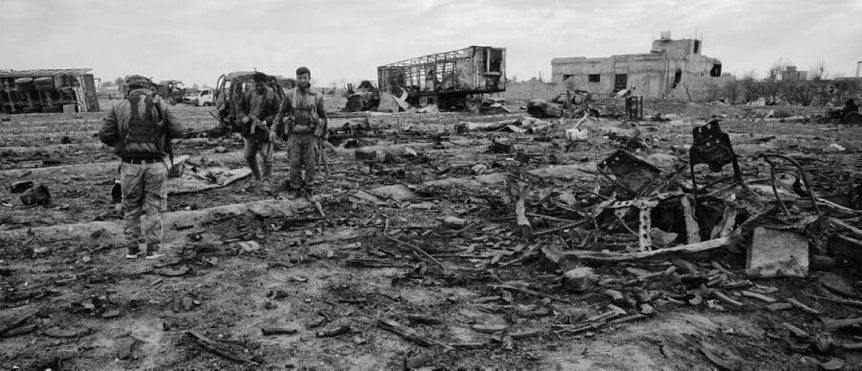
The Syrian permanent mission to the UN stated on Friday that the US must withdraw its troops from the country at once and pay reparations for the deaths of dozens of civilians in a 2019 airstrike in the town of Baghuz.
Damascus categorically rejected a Pentagon report claiming it was not at fault for the attack, declaring its conclusions represent “an admission of negligence that calls for accountability.”
The Pentagon had released a report on Tuesday claiming the March 18, 2019 airstrike targeting an Islamic State (IS, formerly ISIS/ISIL) encampment in Syria’s Baghuz, initially believed to have killed some 70 people, did not violate the rules of engagement or laws of war.
Washington’s assessment ultimately claimed that of the 56 people it determined to have died in the 500-pound bomb blast, just four were civilians. The report also claimed that while “civilians were within the blast radius” resulting in civilian casualties, the decision to drop the massive bomb had “demonstrated awareness for non-combatants.” However, in determining who was considered a terrorist, it used an Obama-era standard classifying all killed military-age males as combatants by default.
The Syrian mission to the UN dismissed the Pentagon’s conclusions as a “clear attempt to absolve the US occupation forces in Syria of their direct responsibility for civilian casualties under the pretext of fighting the terrorist organization ‘ISIS’” and rejected any claims that “efforts have been made to distinguish between civilians and members of ‘ISIS’” as “empty justifications” for the murder of civilians.
“These biased investigations cannot deny the fact that a crime against humanity has occurred in Baghuz,” the mission told Newsweek on Friday. “Any justifications provided by the US administration for not violating the law of war or the rules of engagement are to circumvent the fact that the US forces deployed in Syria are illegal and they launch military strikes, under the pretext of fighting terrorism, without the approval or coordination of the government of the Syrian Arab Republic.”
Despite the report supposedly clearing the US military of any wrongdoing, the full text remains classified, with just a two-page summary released to the public. The site of the blast itself was quickly bulldozed, and the initial internal reports were “delayed, sanitized, and classified,” according to the New York Times.
The report’s conclusions stood in stark contrast to remarks from US personnel on the ground at the time, with one military analyst reportedly stating that “we just dropped [the 500-pound bomb] on 50 women and children” and others questioning whether they had just witnessed a war crime.
While US Central Command had previously admitted that 80 people had been killed in the strike and just 16 were alleged ISIS terrorists, the military defended its actions by suggesting 60 more could have also been terrorists, since “women and children in the Islamic State sometimes took up arms.”
The Pentagon’s recent report contradicted even those watered-down findings, admitting only that “administrative deficiencies contributed to the impression that the [Department of Defense] was not treating this [civilian casualty] incident seriously, was not being transparent, and was not following its own protocols” regarding civilian casualty incidents.
International civil society groups have eviscerated the Pentagon’s civilian casualty reporting protocols for their toothlessness, most recently following an incident in Afghanistan in which an Afghan NGO worker and nine family members – including seven children – were killed in an airstrike supposedly targeting an ISIS terrorist. That investigation, too, found no “misconduct or negligence” on the part of the killers.
Syria says Israeli missile strikes result in fatalities
Samizdat | May 20, 2022
At least three people were killed at Damascus International Airport on Friday, in what the Syrian government said was a missile attack from Israel. Two flights were delayed as a result of a fire at the facility. Israeli media reported that the strikes were aimed at Syrian and Iranian military targets.
Syrian air defenses intercepted multiple “hostile targets” in the skies over Damascus late on Friday, but some missiles got through to cause casualties and start a fire at the airport, according to the Syrian Defense Ministry.
Explosions could also be heard along the coast and in the Syrian city of Tartus, which hosts a Russian naval base.
Friday’s strike targeted pro-Iranian militias operating in Syria, according to the Israeli outlet Ynet. The Israeli government has not officially commented on the reports so far.
On the rare occasions Israel has admitted carrying out attacks inside Syria, the Israeli government says it has the right to preemptive self-defense against Iran. Tehran has acknowledged sending military aid to Damascus to aid the fight against Islamic State and other terrorist groups.
Last month, Hezbollah leader Hassan Nasrallah warned Israel that if such strikes continue, Iran might “attack Israel directly,” citing a missile strike in March against a suspected Israeli operations base in the northern Iraqi city of Erbil.
Israel used US weapons against American assets, businesses in Gaza
Press TV – May 21, 2022
The Israeli regime used weapons made and funded by the United States to destroy American projects and businesses in the Gaza Strip during its devastating 11-day war on the besieged enclave last year, according to a report.
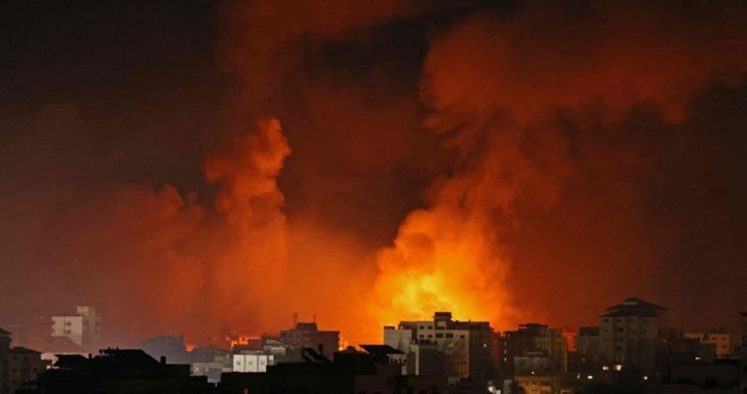
In an article published on Thursday, The Intercept said it reviewed documents and reports that showed hospitals, water treatment facilities, and schools funded by US agencies destroyed during the Israeli regime’s incessant bombardment of Gaza in May 2021.
“Also impacted were the Foamco mattress factory — the main producer of mattresses for Gaza — the Abu Iskandar plastic factory, the Clever detergent factory, the Siksik plastic pipes factory, and the Al-Wadi food plant, resulting in tens of millions of dollars in damage. The factories employed 1,500 Palestinians and were severely impacted by the shelling in the early morning hours on May 17 and 18, 2021,” the report said.
It added that a Coca-Cola factory, built by a US citizen, served as yet another casualty of Israeli shelling during the May onslaught, in a “highly symbolic display of just how far Israel’s disregard for US material interests in Gaza extends.”
“Coca-Cola is also a shareholder, not just a licensor, and I am a shareholder as a US citizen, so this affected many US citizens,” Zahi Khouri, the factory’s owner, told The Intercept. “We had thousands of pallets burned, and there was damage to the logistics area. There was damage in the industrial estate, but what was also damaged was the investment of Coca-Cola in a project through Mercy Corps where we built a water purification station for a refugee camp.”
The Israeli war on Gaza, which commenced on May 10 last year and lasted until May 21, killed at least 250 Palestinians, including 66 children, and injured more than 1,900 others. The Israeli airstrikes also displaced tens of thousands of people and demolished, completely or partially, dozens of buildings, schools, and hospitals.
“The vast majority of ammunition used by Israel is manufactured or subsidized by the US,” Raed Jarrar, advocacy director at Democracy for the Arab World Now, or DAWN, told The Intercept. “It’s fair to say that every Israeli munition is subsidized by the US one way or another, by US tax dollars.”
Israel is the largest recipient of US military aid. It has received over $150 billion in assistance from the US government since 1948. Nevertheless, the occupying regime has never been subjected to any inspections in Washington on how it uses weapons made or funded by the US.
Also, under that weapons assistance program, Israel is allowed to spend US tax dollars on its own weapons industry without disclosing how it spent the money to Congress or the American public.
Meanwhile, the first anniversary of the 2021 Israeli war on Gaza has been marked with intensified Israeli aggression against Palestinians in both the occupied West Bank and the besieged Gaza Strip.
The Israeli military’s killing of Al Jazeera Journalist Shireen Abu Akleh earlier this month once again attracted global attention to the Israeli regime’s atrocities.
“A major reason for the perpetuation of the Israeli occupation, and the deaths and suffering which accompany it, is the extraordinary military, diplomatic, and political support given to it, largely without conditions, by the United States,” said Michael Lynk, the recently departed UN special rapporteur on the situation of human rights in the Palestinian territories.
“This American military assistance is provided, notwithstanding the fact that congressional laws governing US weapons exports state that recipient countries cannot be engaged in consistent patterns of gross human rights violations,” Lynk added.
Featured Video
Bombing Iran Back Into the Stone Age /Lt Col Daniel Davis & Jim Jatras
or go to
Aletho News Archives – Video-Images
From the Archives
The Occupied Mentality Syndrome
Saudi Arabia on the American chessboard – Part 2
By B. J. Sabri | American Herald Tribune | April 19, 2016
Since the Korean War, but particularly since the Iranian Revolution of 1979 until today, the United States has been steadily escalating its military presence in the Persian Gulf. Taking advantage of many colossal events of the past 36 years, [1] the hyper-empire has institutionalized its massive presence on land and sea, and expanded its objectives to include the unambiguous physical control of the area, as well as the clear understanding that local Arab governments should abide by them. The pretext is always the same: in “defense” of the national interests and security of the United States. From observing how the United States has been interacting with the governments of the region, and by judging from the size of its expeditionary force, we could reach a basic conclusion. The United States is occupying, de facto, the entire Arabian Peninsula. (Yemen, devastated by Saudi and American jets is yet to be conquered. Oman? Britain returned not as colonial ruler but as a soft occupying power.)
Under this articulation, Saudi Arabia, Qatar, Kuwait, and the United Arab Emirates are virtually occupied countries. If we compare this type of occupation to the mandate and protectorate regimes of the past, the results might be identical—the nations affected by it lose sovereignty. When Arab governments comply with the objectives of a foreign power that station military forces on their national milieu, then that power controls them in multiple ways including how they react to policy deliberations and what decisions they intend to take on specific issues. A good method to verify the concept of effective occupation is this: take notice of what the United States says and wants, and then compare it to what the gulf rulers do in response. (I shall discuss this detail at some point in the upcoming parts.)
If the presence of US forces or other means of political pressure are a factor in Saudi Arabia’s interventionist Arab wars, then we need to debate this issue. However, from the history of resistance to colonialism, we learnt: if a powerful state imposes its order on a nation by military means or other forms of coercion, and if this nation does not resist that imposition, then a mental subordination to the powerful state will ensue. This is especially true in the case of Saudi Arabia. One single event, 9/11, has transformed it from a US “ally” into an instant political hostage of the American Empire. … continue
Blog Roll
 Aletho News
- Attack in the Bosphorus exposes NATO weaknesses and tensions among allies
- BREAKING: US JET SHOT DOWN OVER IRAN /Lt Col Daniel Davis & Nima Alkhorshid
- Now everyone is dumping US government bonds
- Brazilian Congressman seeks to bar Israeli military personnel from entering Brazil
- Official reveals evidence of Arab states’ involvement in US-Israeli war on Iran
- His Majesty’s head-chopper: Syria’s MI6-backed president bows to King Charles
- Forced to backtrack: ‘Israel’ drops Hezbollah disarmament goal
- Britain’s Lebanon surveillance network: A digital map for war
- Bahrain faces scrutiny for opposition crackdown after detainee killed
- Hegseth’s Pentagon Purge Designed to Prevent a Mutiny: Karen Kwiatkowski
- If Americans Knew
- Israel Is Blocking Palestinians from Easter at Church Where Jesus Resurrected
- Plot to assassinate Palestinian activist follows harassment campaign promoted by Zionist groups and elected officials
- Prominent New York synagogue hosts presentation on why U.S. Jews should support the ethnic cleansing of Gaza
- Tapper vs. Piker: Is the CNN Anchor Auditioning for David Ellison?
- Shouldn’t Democrats Be Able to Condemn Genocide?
- Israel-US kill negotiators, destroy civilian structures, but Iran’s military capabilities still largely intact – Daily Update
- ‘War crime’: Global condemnation as Israeli ministers celebrate death penalty law targeting Palestinian prisoners
- 7 Ways Israel Is Turning Lebanon Into Gaza
- World’s Leading Football Bodies Under Fire Over Israel Policies
- Experts warn of possible use of nukes against Iran
- No Tricks Zone
- Low Intensity Tornado Wrecks Major Solar Farm, Creating A Potential Toxic Dump
- New Study Finds Warming Saves Lives…Cold Temperatures 12 Times More Deadly Than Excess Heat
- German Science Blog Accuses PIK Climate Institute Of Hallucinating Climate Tipping Points
- Devastating Assessment Of Comirnaty Vaccine By Former Senior Pfizer Europe Toxicologist
- New Study: CO2 Is ‘Effectively Negligible’ As An Explanatory Climate Change Factor Since 2000
- Former Pfizer Toxicologist Dr. Helmut Sterz Tells Bundestag Hearing Pfizer Vaccine Should Have Never Been Approved
- Energy Expert: Germany’s Nuclear Phaseout Was A “500 Billion Euro Mistake”
- New Research: South Australia’s Mid-Holocene Sea Surface Temperatures Were 4°C Warmer Than Today
- Storing Green Energy To Last Germany 10 Days Would Require A 60-Million Tonne Battery
- New Studies: UK Sea Levels Were 4 Meters Higher Than Today During The Mid-Holocene
 Aletho News