Reports of OPEC+ death are greatly exaggerated
BY M. K. BHADRAKUMAR | INDIAN PUNCHLINE | JUNE 2, 2022
The fact that the Gulf Cooperation Council (GCC) member states held a joint ministerial meeting with their Russian counterpart Foreign Minister Sergey Lavrov in the Saudi capital of Riyadh at this point in time in global politics conveys a powerful message in itself.
To drive home the message in no uncertain terms, the Saudi Foreign Minister Prince Faisal bin Farhan Al Saud said at a press conference following the ministerial on Wednesday that the GCC member-countries share a common stance with respect to the crisis in Ukraine. (The news conference was broadcast live by the Al-Arabiya TV channel.)
“The countries of the Persian Gulf share a common stance regarding the Ukrainian crisis and its negative consequences, especially with regard to the food security of other countries,” Al Saud said.
For his part, Russian Foreign Minister Sergei Lavrov told the media that “the GCC countries understand the nature of the conflict between Russia and the West.” Earlier, during a bilateral with Lavrov who was on a 2-day visit, Al Saud said the “the kingdom’s position regarding the crisis in Ukraine is based on the principles of international law and support for efforts aimed at achieving a political solution to the crisis.”
After the meeting, Lavrov said the GCC countries will not join the West in imposing sanctions on Moscow over the conflict in Ukraine. In his words, “Aspects of the international situation, which are connected with the events unfolded by the West around Ukraine, are well understood by our partners from the Gulf Cooperation Council states.”
Lavrov added, “We appreciate and reaffirmed today once again the balanced position that they take towards this issue at international forums, and in practice, refusing to join the illegitimate, unilateral Western sanctions that were introduced against Russia.”
Lavrov said Moscow and Gulf countries intended to further develop their partnership in sharp contrast with the growing tensions between Russia and the US and its European allies. After meeting with the top diplomats of the UAE, Kuwait, Qatar, Bahrain and Oman in Riyadh, Lavrov said, “We reaffirmed our focus on the comprehensive development of our partnership, including in the new conditions that are emerging in the world economy in the context of the policies of our Western colleagues.”
Looking ahead, Lavrov expressed satisfaction that “We reaffirmed our focus on the comprehensive development of our partnership, including in the new conditions that are emerging in the world economy in the context of the policies of our Western colleagues.”
The timing of the GCC-Russia ministerial and Lavrov’s visit to Riyadh is highly significant at a juncture when the Biden Administration is pulling out all the stops to repair the US’ fractured relationship with Saudi Arabia ever since Candidate Biden famously christened the Kingdom as a “Pariah state” and the Washington establishment launched a concerted campaign to defame the Crown Prince Mohammed bin Salman personally over the killing of the ex-CIA consultant Jamal Khashoggi.
The latest reports in the US media have spoken of Biden’s interest to personally make amends with the Saudi Prince by visiting Riyadh and meeting with him. This is after Biden’s refusal to speak with the Prince so far or to have any dealings with the latter in any form!
The volte-face in Biden’s approach to Saudi Arabia is to be attributed to the realisation in Washington that to isolate Russia and weaken that country permanently, there is an imperative need to gain control of the world oil market, which in turn necessitates the break-up of the Russian-Saudi concord regulating world oil output in the recent years.
In a nutshell, Saudi Arabia has overnight become a “swing state” in the US’ strategic calculus whose stance on the Ukraine conflict is going to be of momentous consequence to the Biden administration’s agenda to weaken Russia.
Indeed, Saudi Arabia’s potential as a “swing state” has been in the making ever since 2006 when late King Abdullah used his first trip outside the Middle East since becoming the Saudi ruler to visit China and India. It was the first visit by a Saudi king to China since the two countries established diplomatic relations in 1990, and the first such visit to India since 1955. Perceptive observers saw the Saudi monarch’s tour presaging an era of reduced influence for the United States in Riyadh and of Saudi friendship with a widening spectrum of nations in Asia.
That shift, emanating from the desire to move away from a monocultural situation — having one big friend America, one big product (oil), and based on one big idea, the Islamic idea — was proceeding at glacial pace through the next decade until Prince Mohammed bin Salman was appointed as the Crown Prince in June 2017, making him heir presumptive to the throne.
Under Prince Mohammed’s leadership, the KIngdom’s transformation began accelerating, and acquired an ideological mooring of Saudi nationalism. The strengthening of relations with Russia and the signing of an agreement in 2016 to cooperate with Russia in global oil markets in a matrix that subsequently came to be known as OPEC+ was an early manifestation of that shift.
It coincided with launch of the Vision 2030 carrying the Crown Prince’s imprimatur, embodying the country’s strategic orientation for the next 15 years. From a historical perspective, Vision 2030 can be regarded as marking the abandonment of the Saudi reliance on a rentier economy. In the foreign policy sphere, its impact came to be felt in a steady assertion of the Kingdom’s strategic autonomy.
Against such a tumultuous geopolitical backdrop, it comes as no surprise that the US’ confrontation with Russia finds Saudi Arabia in the eye of the storm. Lavrov’s trip to Saudi Arabia rang alarm bells in Washington. On the eve of Lavrov’s arrival in Riyadh, US Secretary of State Antony Blinken had a call with Al Saud ostensibly to discuss Yemen and other regional issues.
The state department readout said inter alia, “The Secretary (Blinken) underscored the importance of international support for Ukraine as it defends its sovereignty and territorial integrity and emphasised the need for a global response to the food security crisis resulting from President Putin’s brutal war.”
Plainly put, Blinken canvassed for the support of the Gulf states to the US-led “global response” to the temporary food crisis, which aims to put the blame on Russia’s doorstep for creating the current shortage of wheat. Evidently, the Saudi leadership hasn’t fallen for the trap. At any rate, under UN auspices, Russia and Turkey have begun work on arranging humanitarian corridors through the waters of the Black Sea, which have been mined by Ukraine. The UN Secretary-General has appealed to the US to ease sanctions to allow Russian exports of food grain to the world market.
To deflect attention from Lavrov’s successful trip to Riyadh, the US-led “information war” has concocted the fake news that Saudi Arabia is “reportedly considering” Russia’s removal from the OPEC+. Lavrov’s talks in Riyadh underscore that on the contrary, Russia and Saudi Arabia are signalling that OPEC+ is indeed going strong. The message cannot be lost on Washington.
The REAL agenda behind the created food crisis
By Kit Knightly | OffGuardian | June 1, 2022
We’re in the early stages of a food crisis.
The press has been predicting this for years, but up until now it always appeared to be nothing more than fearmongering, designed to worry or distract people, but the signs are there that this time, to quote Joe Biden, it “is going to be real”.
Nobody knows how bad it could get, except the people who are creating it.
Because the evidence is pretty clear, it is being deliberately & cold-bloodedly created. We’ve been documenting it for months.
We have Russia’s “special operation” in Ukraine driving up the price of staple foods, wheat and sunflower oil, as well as fertiliser.
We have the sudden “bird flu outbreak” driving up the price of poultry and eggs.
The soaring price of oil is driving up the cost of food distribution.
The inflation caused by huge influxes of fiat currency means families are spending more money on less food.
And as all this is happening, the US and UK (and maybe others, we don’t know) are literally paying farmers not to farm.
It’s pretty clear this is The Great Reset: Food Edition. The lockdown melody with slightly different lyrics. A process of breaking down the structures already in place so we can “build back better” with a more controlled and more corporatised food system
Just as the Covid “pandemic” was said to highlight “weaknesses in the multilateral system”, so this food crisis will show that our “unstable food systems are in need of reform” and we need to ensure our “food security”…or a thousand variations on that theme.
That’s not supposition. They already started, over a year ago.
The Journal of Agriculture, Food Systems & Community Developments published a paper in February 2021 titled:
Dismantling and rebuilding the food system after COVID-19: Ten principles for redistribution and regeneration
In an interview from July last year, Ruth Richardson the Executive Director of the NGO Global Alliance for the Future of Food literally said:
Our Dominant Food System Needs to Be Dismantled and Rebuilt”
Later, in September 2021, the UN convened the first-ever “Food Systems Summit”, whose mission statement included the line:
Rebuilding the food systems of the world will also enable us to answer the UN Secretary-General’s call to “build back better” from COVID-19.
Writing in the Guardian two weeks ago, George Monbiot, weathervane for every deep state agenda, states with his trademark lack of subtlety:
The banks collapsed in 2008 – and our food system is about to do the same… The system has to change.
But what does “change” and “rebuilt” actually mean in this context?
Well, that’s no mystery, they’ve been talking it up for years.
- It will mean press and politicians alike pushing the WEF’s “planetary health diet”.
- It will mean conditioning children to eat bugs and seaweed.
- It will mean increased pushing of “gene-edited” or genetically modified foods.
- It will mean stigmatising meat-eaters whilst perpetually fluffing veganism.
- It will mean promoting lab-grown “meat” and bacterial slime mixed in giant vats over natural food.
- It will mean “carbon taxes” on red meat and imported food of all kinds.
- It will mean “obesity” taxes on foods high in sugar or fat.
- It will mean propaganda efforts to rebrand staple foods as “luxuries”.
Almost all of these are stories from just the past month or so, many of them talking points at the World Economic Forum’s Davos Conference.
As is almost always the case, the problem to which they’re currently “reacting” already has a series of pre-ordained solutions.
Just as we saw lockdowns break the economy to pieces whilst the billionaire class land record profits whilst corporate megaliths expanded their monopolies, so too will any proposed food security policies end up benefiting the already mega-rich or installing infrastructure for corporate control.
They just announced the building of the largest “cultured meat factory” in the world. Fake meat, of course, can’t be raised at home and is subject to patented processes of creation. Genetically edited or modified plants and animals are likewise subject to patents.
Supranational companies, with profits larger than the budget of some nations, are developing carbon footprint tracker apps which reward people for making the “right decisions”. That could easily be applied to food.
Bill Gates has quietly become the largest owner of agricultural land in the United States. Land on which he can grow new Frankencrops, or which the US government will pay him not to use.
The play is clear: Right now they’re getting ready to tear all our old food systems down, with the stated aim of building them back better.
But better for them, not us.
Biden pitches advantages for US stemming from EU’s Russian oil embargo
Samizdat | June 2, 2022
The US may try to buy some cheap Russian oil after the European oil embargo drives the price down, US President Joe Biden indicated on Wednesday. He aired the idea while talking to media about his administration’s plan to deal with the shortage of baby formula and surging prices for basic commodities such as food and gas.
Biden took credit for keeping US gas prices, currently at all-time highs, from going even higher. He blamed Russia and its military campaign in Ukraine for driving food and energy prices up and said his administration was working hard to deal with the problems.
“The issue that is occurring now is you have Europe deciding that they’re going to further curtail the purchase of Russian oil,” he said, referring to the sixth package of anti-Russian sanctions.
EU members reached an agreement several days ago partially banning imports of Russian crude. The Europeans want to cut oil trade with Russia by 90% by the end of the year. But Russia’s loss of European market may be an opportunity for the US, Biden implied.
“There’s a whole lot of consideration going on about what can be done to maybe even purchase the oil but at a limited price so that it has to be sold,” he said. “There’d be an overwhelming need for the Russians to sell it, and it would be sold at a significantly lower price than the market is generating now.”
The president warned that his administration would not be able to “click a switch, bring down the cost of gasoline” in the near term and that the same was true for food.
Moscow downplayed Biden’s remarks, saying the global oil market would rebalance itself despite EU restrictions.
“Certainly, Russia will not sell anything without a profit. The demand may fall in one place and rise elsewhere. The supply chains reorient as parties seek the best conditions for trade,” Kremlin spokesman Dmitry Peskov said on Thursday.
Inflation is currently the biggest concern for many American voters. Political experts predict that Biden’s Democratic Party may be wiped out at the ballot box come November, unless his administration manages to rein in the surging prices soon.
The White House has repeatedly pointed the finger at Russia, and personally President Vladimir Putin, for the ongoing problems. It even coined the term “Putin’s price hike” to explain why American working families find it harder to make both ends meet with every passing month.
However, food and energy prices were going up globally long before Russia attacked Ukraine in February. The disruption of supply chains amid the Covid-19 pandemic was a major factor. Moscow said Washington’s blame game ignored many causes of the problems, including some that resulted from the US campaign to punish Russia with economic sanctions.
The US banned all imports of Russian oil, liquified natural gas and coal in March.
The FDA’s proposed “Future Framework” is the worst idea in the history of public health
If approved on June 28, all reformulated Covid-19 shots will skip clinical trials
By Toby Rogers | May 31, 2022
I. Pfizer and Moderna’s Dilemma
Pfizer and Moderna have a problem — their Covid-19 shots do NOT work. Everyone knows this. The shots do not stop infection, transmission, hospitalization, nor death. Over half a billion doses of this product have been injected into Americans in the past 17 months and these shots have made NO discernible impact on the course of the pandemic. Far more Americans have died of coronavirus since the introduction of the shots than before they were introduced.
Pfizer and Moderna are making $50 billion a year on these shots and they want that to continue. So they need to reformulate the shots. Maybe target a new variant, maybe change some of the ingredients — who knows, these shots don’t work so it’s not clear what it will take to get them to work. This is a problem because reformulated shots mean new clinical trials and new regulatory review by the FDA. There is a decent chance that any reformulated shot might fail a new clinical trial and the public is deeply skeptical of these shots so the scrutiny would be intense.
So Pfizer and Moderna have figured out a way to use regulatory capture to get their reformulated Covid-19 shots approved WITHOUT further clinical trials. Their scheme is called the “Future Framework” and it will be voted on by the FDA’s Vaccines and Related Biological Products Advisory Committee (VRBPAC) on June 28.
II. Doubling down on a failed strategy
Viruses vary by region. At any given time, the influenza strain circulating in England is different than it is in South Africa which is different than in southeast Asia. However, pharmaceutical companies prefer to create one-size-fits-all vaccines in order to decrease manufacturing costs and thereby increase profits. So the W.H.O. and public health agencies around the world (including FDA and CDC) have created a vast “influenza surveillance network” that identifies the different influenza strains in circulation. Then they engage in an elaborate theatrical performance called the “flu strain selection process” where they select four influenza strains that will go into the one-size-fits-all flu vaccine used throughout the world that year.
This carefully choreographed process is a complete and total failure. This is not a surprise — using a one-vaccine-fits-all approach to prevent a rapidly evolving virus that varies by region is never going to work. Lisa Grohskopf from the CDC’s Influenza Division reports that last year the flu shot was somewhere between 8% and 14% effective (based on data from seven sites that participate in the U.S. Flu Vaccine Effectiveness Network).

But a case study of a flu outbreak at the University of Michigan between October and November 2021 found that the effectiveness of the flu vaccine was literally zero.

Over the last thirty years, the federal government has paid out more compensation for adverse events in connection with the flu shot than any other vaccine — so we know that the shot comes with a high rate of harms. Given that the flu shot does not stop the flu, the harms thus outweigh the benefits.
In a sane world, the WHO, FDA, and CDC would admit that they made a strategic mistake and then change course to find better ways to support the human immune system. But we don’t live in a sane world. Instead, the FDA is proposing to take the failed flu strain selection process and apply it to future Covid-19 shots.
III. The FDA knew that Covid-19 shots would fail but they proceeded anyway
There are a quadrillion x quadrillion viruses in the world (literally more viruses on earth than stars in the known universe). Only a couple hundred of those seem to have the potential to impact human health. But some viruses make better candidates for a vaccine than others. Viruses that have been around a long time, that are very stable and evolve slowly are the best candidates for a vaccine.
Viruses that evolve rapidly are bad candidates for a vaccine. There is no vaccine for the common cold nor HIV because these viruses evolve too quickly. The SARS-CoV-2 virus is a bad candidate for a vaccine which is why all previous attempts to develop a vaccine against coronaviruses have failed (they never made it out of animal trials because all of the animals died during challenge trials or were injured by the vaccine).
What are some of the bad things that can happen when you vaccinate against a rapidly evolving virus? Original antigenic sin, antibody dependent enhancement, and the possibility of accelerating the evolution of the virus in ways that make it more virulent (and even more resistant to vaccination).
Trevor Bedford has his own lab at the Fred Hutchinson Cancer Center where he researches the evolution of Covid-19. He gave a fascinating presentation at the April 6 meeting of the FDA’s Vaccines and Related Biological Products Advisory Committee meeting where he explained that SARS-CoV-2 is evolving rapidly. He explained that SARS-CoV-2 evolves twice to ten times as fast as the flu virus and these mutations “substantially” reduce vaccine effectiveness. Following the introduction of Covid-19 vaccines, the evolution of the virus has accelerated.
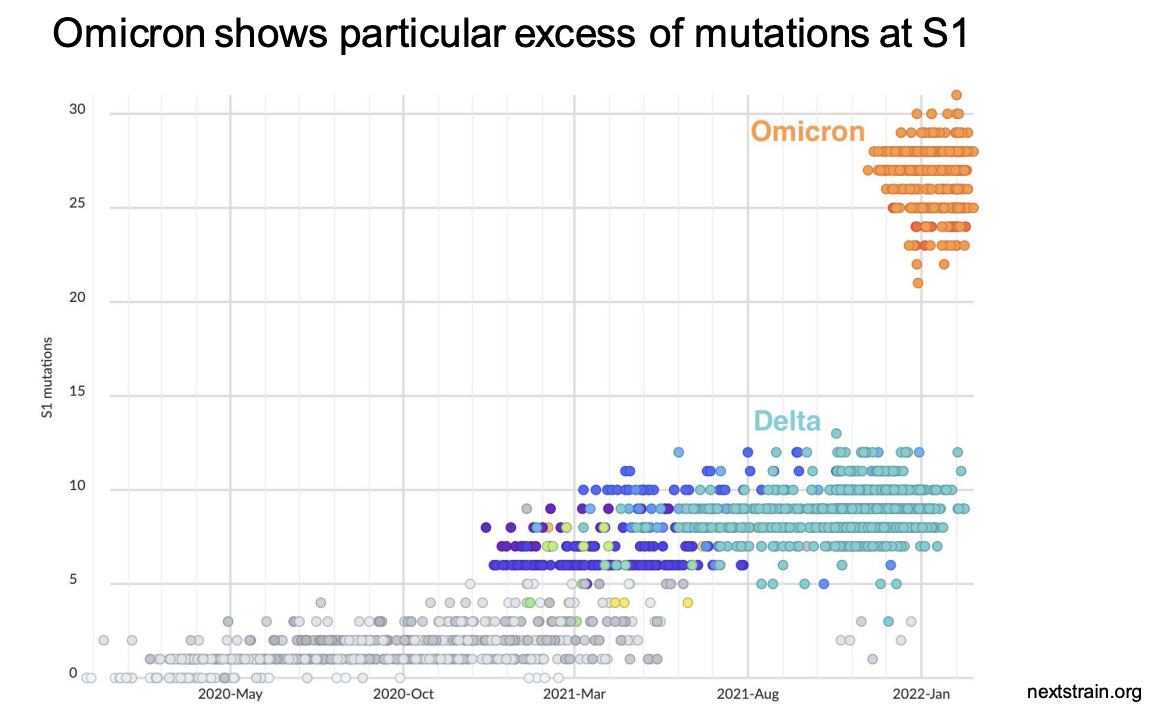
Dr. Bedford’s presentation rattled some of the smarter members of the VRBPAC because his data scream — “SARS-CoV-2 is a bad candidate for a vaccine!” But FDA officials just mumbled some platitudes and then continued on with the meeting.
The only way out of the pandemic is to withdraw these vaccines from the market and pivot to therapeutics. Instead, the FDA is proposing to just hide the data from the American people.
IV. The “Future Framework” = no more clinical trials for Covid-19 shots ever again
The purpose of the “Future Framework” is to rig the Covid-19 vaccine regulatory process in perpetuity in favor of the pharmaceutical industry. If this “Future Framework” is approved all future Covid-19 shots, regardless of the formulation, will automatically be deemed “safe and effective” without additional clinical trials because they are considered “biologically similar” to existing shots.
This is literally the worst idea in the history of public health.
If you change a single molecule of mRNA in these shots it will change health outcomes in ways that no one can anticipate. That necessarily requires new clinical trials — which is what the FDA is proposing to skip.
The FDA’s “expert advisory committee” (VRBPAC) met on April 6, 2022 to discuss the “Future Framework” for the first time. All of the committee members agreed that Covid-19 shots are not working, that boosting multiple times a year was not feasible, and that the shots need to be reformulated. They also unanimously agreed that there are no “correlates of protection” that one can use to predict what antibody levels would be sufficient to prevent SARS-CoV-2 infection.
On June 28 the VRBPAC will meet once again to discuss the “Future Framework” and it will be presented as a done deal because manufacturers want a decision on vaccine strain selection by June in order to deliver shots for autumn vaccination appointments.
So if the FDA authorizes Covid-19 shots for kids on June 14 and 15 and then approves the “Future Framework” on June 28th, the shots that will be given to kids in the fall will be the reformulated shots that skipped clinical trials.
V. Monovalent Covid-19 shots failed, so maybe throwing two, three, or four variants into a single shot will make it better?
When it comes to the flu shot, the FDA tries to hedge their bets by putting four strains of the virus into a single shot (so called “quadrivalent” vaccines). As I explained above, this strategy does not work. But these people are not very clever so that’s exactly what they are planning to do with future Covid-19 shots.
Moderna is already signaling that they intend to manufacture a Covid-19 shot with the Alpha variant and then, to make it “new and improved (TM)”, they will add genetically modified mRNA targeting the Beta variant. Here’s the best part — Moderna claims that this formulation (Alpha + Beta) will somehow protect against Omicron variants — even though by the time these reformulated shots get to market, none of these variants will likely still be in widespread circulation.
There are reasons to believe that this approach will make future Covid-19 shots even less effective and more dangerous than the current failed Covid-19 shots.
Think about it. The more mRNA you put into a shot, the higher the adverse event rate (as the genetically modified mRNA hijacks the cell and starts cranking out spike proteins). So if Pfizer and Moderna put more mRNA into these shots (in order to cover multiple variants) adverse event rates will skyrocket.
But if Pfizer and Moderna put less mRNA per variant into a shot (in order to keep the total amount of mRNA at 100 mcg for Moderna and 30 mcg for Pfizer) then the effectiveness against any one particular variant will be reduced.
The Future Framework is 100% guaranteed to fail. If the “Future Framework” is approved, effectiveness of these shots will decrease, adverse events will increase, these shots will fuel the evolution of variants that evade the vaccines, and there will be no clinical trial data before these reformulated Covid-19 shots are unleashed on the unsuspecting public.
VI. Summary
The FDA’s Vaccines and Related Biological Products Advisory Committee will meet on June 28 to vote on a “Future Framework” for evaluating so-called “next generation” Covid-19 shots. The “Future Framework” is a plan to rig the Covid-19 vaccine regulatory process in perpetuity.
The “Future Framework” would take the “flu strain selection process” that fails every year and apply it to future (reformulated) Covid-19 shots. Federal bureaucrats, many of whom have financial conflicts of interests, would choose which SARS-CoV-2 variants to include in a yearly (or twice yearly) Covid-19 shot. In the process, all future Covid-19 shots will be deemed automatically “safe and effective” without further clinical trials because they are considered “biologically similar” to existing Covid-19 shots.
The “Future Framework” is the most reckless idea in the history of public health. It shows that the FDA has completely abandoned science and its statutory duty to protect the public. If the Republic is to survive, we must stop the “Future Framework” before June 28.
VII. Call to action
We have very little time and an enormous challenge in knocking this proposal down before the VRBPAC meets on June 28. So I am asking to you to contact your elected officials to tell them to reject this dangerous proposal.
Below are talking points that you can paste into an email, a script that you can use on the phone, and a tool for looking up your elected officials. I am only asking you to contact 8 officials — the President and Vice President; your two Senators and U.S. Representative; and your Governor, state House/Assembly member, and state Senator. Please be respectful but make it clear that this plan must be stopped.
Talking points (to paste into an email, letter, or fax)
Subject line: NO “flu framework” for future Covid-19 shots
The FDA and CDC are developing a “Future Framework” to authorize future Covid-19 shots without requiring additional clinical trials. This would be a public health disaster. I am asking you to contact the FDA to tell them to stop all work on this “Future Framework” immediately. If the FDA proceeds with this “Future Framework” I am asking you to eliminate all funding for the FDA in this year’s budget.
Phone script
Hi, my name is ____________. I live at __________________[address]. I’m calling because the FDA is proposing a “Future Framework” to authorize future Covid-19 shots without requiring additional clinical trials. This would be a public health disaster. I am asking you to contact the FDA to tell them to stop all work on this “Future Framework”. If the FDA proceeds with this “Future Framework”, I am asking you to eliminate all funding for the FDA in this year’s budget.
Whom to contact: 8 phones calls, letters, emails, or faxes:
President Joseph R. Biden
The White House
1600 Pennsylvania Ave NW
Washington, DC 20500
(202) 456-1111 (The White House comment line is open between the hours of 11 to 3 p.m. EST Tues.-Thurs.)
https://www.whitehouse.gov/contact/
https://twitter.com/POTUS
Vice President Kamala Harris
The White House
1600 Pennsylvania Ave NW
Washington, DC 20500
(202) 456-1111 (between the hours of 11 to 3 p.m. EST Tues.-Thurs.)
https://www.whitehouse.gov/contact/
https://twitter.com/VP
You can look up contact info for your two U.S. Senators and U.S. Representative here:
https://www.govtrack.us/congress/members/map
The message for State elected officials is slightly different:
Hi, my name is ____________. I live at __________________[address]. I’m calling because the FDA is proposing a “Future Framework” to authorize future Covid-19 shots without requiring additional clinical trials. This would be a public health disaster. If the FDA proceeds with this “Future Framework” I are asking you to nullify the actions of the FDA and reject any Covid-19 shots that have not gone through proper clinical trials.
This is a great tool to look up contact info for your Governor, state Senator, and state House/Assembly member:
That’s it, just 8 people. We want to let them know that we are watching, that we understand what they are up to, and that this wretched plan must be stopped.
Extra credit:
Here are the email addresses for all of the public health political appointees, FDA staff, and VRBPAC members who have a say in connection with the “Future Framework”. Let’s contact them as well (proposed subject line and email text below).
Subject line: The “Future Framework” is the WORST idea in the history of public health. Please vote NO.
1. The FDA must revoke the authorizations for Moderna, Pfizer, and J&J Covid-19 shots and withdraw them from the market immediately. SARS-CoV-2 was never a good candidate for a vaccine. These shots do not stop infection, transmission, hospitalization, nor death. They appear to have negative efficacy and are driving the evolution of variants that evade vaccines. The pandemic will never stop as long as the FDA and CDC are promoting shots that lack sterilizing immunity.
2. The FDA and CDC must pivot to therapeutics. This was always the answer. About twenty off-the-shelf treatments are more effective than vaccines (if used for prophylaxis or early intervention). Get these safe and effective medicines to people who need them and let doctors be doctors again and treat patients based on their own best clinical judgment.
3. Any reformulated Covid-19 shots MUST go through proper clinical trials and FDA review. That means:
• Large (50,000+ person) double-blind randomized controlled trials with inert saline placebos conducted by an independent third party;
• Safety and efficacy studies for two years prior to any application; the treatment and control groups must be followed for 20 years to monitor adverse events and all-cause mortality (no more wiping out the control group after 6 months to hide bad outcomes);
• Greater than 90% efficacy with less than 1% Grade 3 Adverse Events; and
• Proper monitoring for carcinogenesis, mutagenesis, and impairment of fertility.
sean.mccluskie@hhs.gov, commissioner@fda.hhs.gov, ashish.jha@whitehouse.gov, Aux7@cdc.gov, Peter.Marks@fda.hhs.gov, Hong.Yang@fda.hhs.gov,
Richard.Forshee@fda.hhs.gov, Huilee.Wong@fda.hhs.gov, Leslie.Ball@fda.hhs.gov, Doran.Fink@fda.hhs.gov, hanae@bcm.edu, paula.annunziato@merck.com,
adam.berger@nih.gov, hbernstein@northwell.edu, acohn@cdc.gov, anc0@cdc.gov, hjanes@fredhutch.org, hgans@stanford.edu, david.kim@hhs.gov,
asmonto@umich.edu, offit@chop.edu, spergam@fredhutch.org, Jportnoy@cmh.edu, erubin@hsph.harvard.edu, erubin@nejm.org, ashane@emory.edu,
swamy002@mc.duke.edu, fullerao@umich.edu, RandyHawkins@cdrewu.edu, officeofthepresident@mmc.edu, JYLee@uams.edu,
ofer.levy@childrens.harvard.edu, wayne_marasco@dfci.harvard.edu, cmeissner@tuftsmedicalcenter.org, mrn8d@virginia.edu,
BBC joins crusade against dissenting academics via propaganda documentaries
Press TV – June 1, 2022
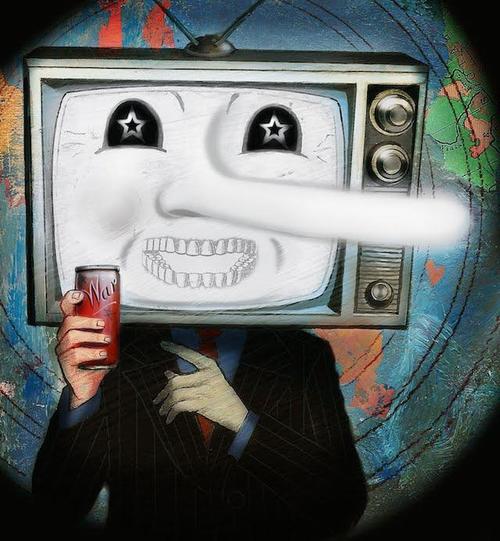
It seems the nefarious Inquisition in Europe, which brutally sought to rid the world of heresy and political rivalry for centuries, has reignited as its new protagonists in the British national broadcaster BBC strive to silence and delegitimize any dissenting viewpoints held by academics.
In a new documentary on BBC Radio 4’s Facts on File, and also in a report based on the documentary by the BBC News, two academics, namely Tim Hayward and Justin Schlosberg, have been falsely accused of supporting and spreading “Russian propaganda” and “misinformation” about Moscow’s military operation in Ukraine that began on February 24, either through their lectures or on Twitter.
Hayward, a professor of environmental political theory at the University of Edinburgh, had re-tweeted a representative of Russia to the United Nations, who stated that the Russian attack on a maternity hospital in Mariupol on March 9 was “fake news.”
“As long as we’re still able to hear two sides of the story we should continue striving to do so,” Hayward said.
While the West condemned Russia for targeting the hospital several times with airstrikes, the Russian foreign ministry strongly rejected the allegation, branding it as “information terrorism” against Moscow.
A few days later and in the House of Commons, legislator Robert Halfon from the Conservative Party denounced Hayward and also Dr. Tara McCormack, a lecturer in international politics at the University of Leicester, who had spoken about “ludicrous disinformation” of both Kiev and Moscow.
Halfon also urged the parliament to “contact these universities directly to stop them acting as useful idiots for” Russian President Vladimir Putin.
Education Secretary Nadhim Zahawi at the same session of the House of Commons described the said academics and the like as people who are “buying” Moscow’s “false narrative” about the war in Ukraine.
“It is a false and dangerous narrative and we will crack down on it hard,” Zahawi said.
The BBC quotes 21-year-old history and politics student Mariangela Alejandro as saying that things in Hayward’s class got “weird” when the professor stepped in the “realm of conspiracy theories about [Syrian President Bashar al] Assad and Russia.”
The British broadcaster even criticized, though implicitly, Hayward for a lecture in which he outlined an argument that the West-backed White Helmets group might have helped fake a chemical attack in Syria years ago. Russia and the Syrian government have stressed that the attack was “staged.”
The White Helmets group, which claims to be a humanitarian NGO, is known for its coordination with terror outfits in Syria to carry out staged chemical attacks in order to falsely incriminate Syrian government forces and fabricate pretexts for military strikes by a US-led military coalition present in Syria since 2014.
On April 14, 2018, the US, Britain, and France carried out a string of airstrikes against Syria over a suspected chemical weapons attack on the city of Douma, located about 10 kilometers northeast of the capital Damascus.
That alleged attack was reported by the White Helmets group, which published videos showing them purportedly treating survivors. Washington and its allies blamed Damascus for the Douma attack, an allegation strongly rejected by the Syrian government.
Hayward used an argument put forward by members of a collective of academics and bloggers he is a member of, known as the Working Group on Syria Propaganda and the Media (WGSPM).
“One narrative says the White Helmets helped rescue victims, provided evidence and gave witness statements about the chemical attack on Douma on 7 April 2018,” Hayward said during the lecture.
However, he added that “the critics say the White Helmets were responsible for staging a false flag event to spur the West to attack the Syrian government. In fact, dispute about this case is still current.”
Hayward told the BBC that he does not teach about Syria, but simply used an example in his class that he was familiar with.
The BBC, however, seems to be eager to lash out at Hayward when it quoted Dr Nader Hashemi, director of the Centre for Middle East Studies at the University of Denver and a visiting scholar at the University of Cambridge, as describing Hayward’s argument about the White Helmets and the staged chemical attack as “a deeply distorted set of teachings.”
Regarding Hayward’s stance on the purported Russian airstrikes against a maternity hospital in Mariupol that says “we should strive to hear both sides”, the BBC drew in Kvitka Perehinets, a Ukrainian student at the University of Edinburgh, who said “there are no two sides” to the conflict and that “The oppressor – in this case, Russia – should not be given the same kind of platform as those who are being oppressed.”
Although the University of Edinburgh claims that its programs are approved by a board of studies, emphasizing its commitment to “academic freedom”, it also stresses that it takes “a strong view… against the spread of misinformation” and encourages students to report concerns.
The university should be notified that one of the primary jobs of “academic freedom” is paving the way for academic research to distinguish true information from “misinformation” and “disinformation.”
However, the UK’s Department for Education (DfE), which is responsible for education in England, inquisitively controls the flow of research in universities, saying it expected “universities’ due diligence processes to consider the reputational, ethical and security risks of false and dangerous narratives, and ensure that students are not misled by views that are clearly false.”
When the academics’ tweets were raised in the Commons, Zahawi said the minister for Higher and Further Education, Michelle Donelan, was “contacting those universities”, a means of pressure on Hayward and the like who think differently from the mainstream in the West.
Another academic pressured by the BBC and the Education system in the UK is professor Schlosberg, who specializes in media and journalism at Birkbeck, University of London.
He has been lambasted for re-tweeting Russian state media questioning what occurred in the Ukrainian city of Bucha, 37 kilometers northwest of the capital Kiev.
Back on April 2, the mayor of Bucha in a video message claimed that 300 people had been killed by the Russian army with some appearing to have been bound by their hands and feet before being shot.
He also presented footage and photographs showing the dead bodies of those allegedly killed or executed by Russian troops, claiming that 280 bodies had been buried in mass graves while nearly 10 others were either unburied or only partially covered by earth. Later on, Kiev claimed a death toll of more than 1000 in the city.
A day later, the Ukrainian government urged major Western powers, including the United States, to impose crippling fresh sanctions on Moscow over what it called a “massacre” in Bucha, a newly liberated town at the time.
The Kremlin strongly rejected any involvement of Russian troops in the so-called massacre, with Russian President Sergei Lavrov stressing that the killings did not occur while Russian soldiers were in the city.
He added that the so-called dead bodies in footage circulating the internet were “staged” and the images of them plus Ukraine’s false version of events had been spread on social media by Kiev and Western countries.
On April 4, Schlosberg tweeted that “Russian troops left on 30th March. No mention of any ‘massacre’ or bodies lining the streets for 4 days.” He also re-tweeted a video of Bucha’s mayor speaking without mentioning a massacre.
The BBC, however, hurriedly stressed in its report that Russian media has been using the video to bolster the idea that the bodies appeared after the Russians had left the city.
It quoted the academic as saying that he had “no idea” regarding what really happened there.
“My only understanding is that I think no-one else really knows what happened. I think there is a very strong likelihood that there were very serious atrocities, almost certainly the vast majority of which were committed by Russia,” Schlosberg further told the BBC.
However, in a string of tweets on Wednesday, he denounced the broadcaster’s “grossly defamatory allegation.”
“Rather than engage with the actual meaning of my tweets, the BBC chose to uncritically endorse obvious manipulation by people who have been actively trying to silence and delegitimize any dissenting viewpoints since the start of” the current operation by Russia in Ukraine, Schlosberg said.
“The manner in which the program achieved this was so cynical and unguarded it beggars belief, even for those of us increasingly skeptical about the BBC’s commitment to basic journalistic standards, let alone its own lofty public service values,” he stressed.
UK “hate crime” plans could criminalize comedy, rights group says
By Cindy Harper | Reclaim The Net | May 31, 2022
The Home Office is working on a new hate crimes strategy to encourage more people to report hate crimes. Campaigners have warned that the new strategy might result in criminalizing comedians like Ricky Gervais, who question the trans ideology in comedy routines.
The strategy is being drawn up despite a court ruling last year that banned police from recording “gender-critical” comments as non-crime hate incidents (NCHIs).
“These plans suggest either that the Government is not paying attention, or that they have contempt for the Court of Appeal,” said a lawyer from campaign group Fair Cop.
“Either way, it is astonishing that legislators are planning to expand the discredited and unlawful practice of recording non-crime hate incidents [NCHIs]. Following Fair Cop’s win in the Court of Appeal in December, the College of Policing promised to publish revised hate crime guidance by the end of May this year. We’re still waiting. Police forces that record complaints against comedians – or any other lawful speech – as NCHIs will be piling illegality upon illegality.
“They will then find themselves in court with no legitimate defense. This quixotic strategy oozes arrogance, as if the law does not apply if you’re fighting for ‘the right side of history.’
“But how can you be on the right side of history if you’re repeatedly on the wrong side of the law?”
This news comes comedian Ricky Gervais faced a censorship mob from his recently aired Netflix Special SuperNature, where he covered the topics of cancel culture, transgender ideology, Hitler, and AIDS.
At some point he says: “The worst thing you can say today is, ‘Women don’t have penises,’ right?”
He was accused of “hate crimes” by some trans campaign campaigners, and would have probably been recorded for NCHIs if the new plans were already in place.
148 Israeli violations against Palestinian journalists in May
MEMO | June 1, 2022
An Arab NGO has documented 148 Israeli rights violations against Palestinian journalists in the occupied Palestinian territories last month, Anadolu News Agency reports.
In a statement on Wednesday, the Journalists Support Committee said the month of May witnessed a surge in attacks on Palestinian journalists by Israeli forces and settlers.
It termed the attacks as “an attempt to prevent Palestinian journalists from covering Israeli assaults against Palestinians and their holy sites.”
According to the NGO, the Israeli violations varied from arrests, intimidation, shooting, verbal and physical assaults to car-ramming incidents.
It said 11 journalists were detained by Israeli forces in the West Bank during May, while the custody of five others was extended without trial.
“Israeli forces, in collaboration with settlers, disrupted the work of 61 journalists and media institutions while covering Israeli violations in the cities of Jerusalem, Hebron and Jenin,” it added.
The NGO also noted that the social media accounts of 11 Palestinian journalists were suspended for alleged violations of publication rules.
Last month, Al Jazeera journalist, Shireen Abu Akleh, 51, was shot dead while covering an Israeli military raid in the West Bank city of Jenin.
Palestinian officials and her employer, Al Jazeera, said she was killed by Israeli forces.
There was no comment from Israeli authorities on the NGO’s report.
Mali has become another front in the Russia v NATO war in Ukraine
By Ramzy Baroud | MEMO | May 31, 2022
The distance between Ukraine and Mali is measured in thousands of kilometres, but the geopolitical distance is much closer. So close, in fact, that it appears as if the ongoing conflicts in both countries are the direct outcomes of the same geopolitical currents and transformation underway around the world.
After the Malian government accused French troops of carrying out a massacre in the West African country, on 23 April the Russian Foreign Ministry declared its support for Malian efforts, pushing for an international investigation into French abuses and massacres in the country. “We hope that those responsible will be identified and justly punished,” said the ministry.
In their coverage of the conflict in Mali, Western media have largely omitted the Malian and Russian claims about French massacres; instead, they gave credence to French accusations that the Malian forces, possibly with the help of “Russian mercenaries”, have carried out massacres and buried the dead in mass graves near the recently evacuated French army base in Gossi, in order to blame France.
Earlier in April, Human Rights Watch called for an “independent, credible” inquiry into the killings, though it negated both accounts. It suggested that a bloody campaign had indeed taken place, targeting mostly “armed Islamists” between 23 and 31 March.
Media whitewashing and official misinformation aside, Mali has indeed been a stage for much bloodletting in recent years, especially since 2012, when a militant insurgency in the north threatened the complete destabilisation of an already unstable and impoverished country. There were reasons for the insurgency, including the sudden access to smuggled weapon caches originating in Libya following the West’s war on Tripoli in 2011. Thousands of militants who were pushed out of Libya during the war and its aftermath found safe havens in the largely ungoverned Malian northern regions.
With that in mind, though, the militants’ success — they managed to seize nearly a third of the country in just two months — was not entirely linked to western arms. Large swathes of Mali have suffered from prolonged governmental neglect and extreme poverty. Moreover, the Malian army, often beholden to foreign interests, is much hated in these regions due to its violent campaigns and horrific human rights abuses. No wonder the northern rebellion found so much popular support in these parts.
Two months after the Tuareg rebellion in the north, a Malian officer and a contingency of purportedly disgruntled soldiers overthrew the elected government in Bamako, accusing it of corruption and of failure to rein-in the militants. This paved the way for France’s military intervention in its former colony in the guise of “fighting terrorism”.
The French war in Mali, starting in 2013, was disastrous from the Malians’ point of view. It neither stabilised the country nor provided a comprehensive scheme for pacifying the rebellious north. War, human rights violations by the French themselves, and more military coups followed, most notably in August 2020 and May 2021.
However, its intervention was fruitful from France’s viewpoint. As soon as French troops began pouring into Mali, France began to tighten its control over the Sahel countries, including Mali, leading to the signing of two defence agreements, in 2013 and 2020. That’s where the French West African “success story” ends.
Although Paris succeeded in digging itself in deeper, it gave no reason to the Malian people or government to support its actions. As the French became more involved in the life of Malians, ordinary people throughout the country, north and south, detested and rejected them. This shift was the perfect opportunity for Russia to offer itself as an alternative to France and the West. The arrival of Russia on this complex scene allowed Bamako to engineer a clean break from its total reliance on France and its Western, NATO allies.
Even before France formally ended its presence in the country, Russian arms and military technicians were landing in Bamako. Attack helicopters, mobile radar systems and other Russian military technology quickly replaced French arms. It is no wonder that Mali voted against the UN General Assembly resolution to suspend Russia from the Human Rights Council.
As a result of the Ukraine war and western sanctions starting in late February, Russia has accelerated its political and economic outreach, particularly in the Global South, with the hope of lessening the impact of the west-led international sanctions. In truth, though, Moscow’s geopolitical quest in West Africa began earlier than the Ukraine conflict, and Mali’s immediate support for Russia following the war was a testament to Moscow’s success in the region.
France officially began its withdrawal from Mali last February, but Paris and other European capitals have been increasingly aware of what they perceive to be a “Russian threat” in West Africa. How, though, can the West fight back against this threat, real or imagined, especially in light of the French withdrawal? The further destabilisation of Mali is one option. It was, perhaps, no coincidence that Bamako declared on 16 May that it had thwarted a military coup in the country, claiming that the coup leaders were soldiers “supported by a Western state”, presumably France. If the “coup” had succeeded, would this have meant that France — or another “western country” — was plotting a return to Mali on the back of yet another military intervention?
Russia, meanwhile, cannot afford to lose a precious friend like Mali at this critical time of western isolation and sanctions. In effect, this means that Mali will continue to be the stage for a geopolitical cold war that could last for years. The winner of this war could potentially claim the whole of West Africa, which remains hostage to global competition well beyond the national boundaries in the region.
Biden tweaks Ukraine narrative
BY M. K. BHADRAKUMAR | INDIAN PUNCHLINE | JUNE 1, 2022
The US President Joe Biden’s op-Ed in the New York Times on Tuesday on the Ukraine war starts with a bluff. He says President Vladimir Putin had thought Russia’s special operation would only last days. How Biden arrived at such an estimation is unclear. Like the US narrative on the war, it is largely presumptive.
Russians are rooted — and well-founded — in their belief that Ukraine has become an American colony and the leaders in Kiev are mere puppets. How could Putin and his Kremlin advisors have estimated that the special operation would be a cakewalk? The core objectives of the special operation are such — a treaty affirming Ukraine’s neutral status and its recognition of Donbass republics as independent states and Crimea as integral part of Russia — that an operation that “would last days” wouldn’t secure them.
Moscow knew that the US had absolutely no intentions to accommodate Russia’s legitimate security concerns regarding NATO expansion into Ukraine that were formally projected in December in writing.
That is the main reason why the Russians have no timeline for their special operation. They would love to round it off the soonest but knew that the integration of Ukraine’s southern regions — Zoporozhia, Kherson, Mykolaiv — that is vital for Crimea’s economy and security and Ukraine’s Black Sea Ports was not going to be child’s play and might be a long haul.
In the fourth month of the special operation only, Putin could decree the streamlining of procedures for Russian citizenship from applicants in the Kherson, Zoporozhia regions of southern Ukraine.(here, here and here)
Zaporozhye Region in southern Ukraine has offered Russia a military airfield in Melitopol and a naval base in Berdyansk on the coast of the Sea of Azov. The Kherson region plans to integrate into Russia’s education system. Cars are using Russian number plates, Russian SIM cards operate internet and phones. Suffice to say, the shoe is on the other foot.
It was Biden who thought that Russia could be thrown away like a piece from a chessboard but only to realise belatedly that life is real. Biden threatened to render the Russian currency, the ruble, a mere rubble and destroy the Russian economy. Having been a hatchet man as a professional politician, Biden never really understood the resilience, fortitude and grit of the Russian people or their historical consciousness and psyche to rally behind Putin.
In the Times op-Ed, Biden thinks that he makes a personal gesture toward Putin by promising that he “will not try to bring about his ouster in Moscow.” Yet, Putin’s rating in his country is around 80 percent, while Biden’s is less than half of that — 36%!
Herein lies the predicament of the Biden Administration. The US is groping in the dark about the Russian intentions in Ukraine. It keeps improvising and updating its narrative to cope with emergent realities that keep coming as nasty surprises.
This is not only about the military part but also about Russia’s political roadmap. The only constant in Washington is about providing Ukraine with “advanced” weaponry — but then, that is also either about regenerating lucrative business for the military-industrial complex by fuelling wars abroad, or, compensating for the NATO allies who transfer their Soviet-era redundant stockpiles to Ukraine.
Nonetheless, Biden proclaims in his op-Ed that he will “stay the course” and the massive aid to Ukraine will continue “in the months to come.” That said, Biden makes a nuanced presentation in the op-ed, where, apart from the iteration of usual catechisms — about “a democratic, independent, sovereign and prosperous Ukraine”; allied unity; unprovoked Russian aggression; “rules-based international order”, etc. — he does some messaging as well to Moscow as the war graduates to a new phase.
For a start, he no longer makes any false promises to send the Russians packing to Siberia. Biden doesn’t predict winners and losers. On the contrary, he acknowledges that this war can only have a diplomatic solution. He signals modestly that such massive scale of US military aid may put Kiev “in the strongest possible position at the negotiating table.” Carefully drafted words.
Elsewhere, Biden estimates that the focus of the Russian operation is “to take control of as much of Ukraine as it can” before negotiations begin. Implicit here is the realisation that the Russians have turned the tide of the war and a reversal of fortunes is not to be expected.
It is from such a rational perspective that Biden’s uncharacteristic avoidance of vituperative and belligerent rhetoric toward Russia (or Putin personally) needs to be understood. He reaffirms categorically: “So long as the United States or our allies are not attacked, we will not be directly engaged in this conflict, either by sending American troops to fight in Ukraine or by attacking Russian forces. We are not encouraging or enabling Ukraine to strike beyond its borders. We do not want to prolong the war just to inflict pain on Russia.”
Of course, Washington will “continue cooperating” with allies regarding sanctions — “the toughest ever imposed on a major economy” — but Biden won’t evaluate its effectiveness. He promises to “work with our allies and partners to address the global food crisis that Russia’s aggression is worsening,” but won’t allege anymore that world food shortage is Russia’s creation. He will help European allies and others to “reduce their dependence on Russian fossil fuels” but also links it to “speed our transition to a clean energy future.” There is no acrimony.
As regards the security issues, Biden reiterates the US policy to continue “reinforcing NATO’s eastern flank with forces and capabilities” and welcomes Finland’s and Sweden’s applications to join NATO — “a move that will strengthen overall U.S. and trans-Atlantic security by adding two democratic and highly capable military partners” — but refrains from directly linking either of these to Russian aggression.
Most important, Biden retracts from the dramatic prognosis by CIA Director William Burns that under military pressure, Putin might order use of tactical nuclear weapons in Ukraine.
The sombre tone of Biden’s words is in sharp contrast with his own intemperate and tendentious past remarks. This eschewal of the “big macho tough guy” image betrays that some degree of realism is appearing in the US official narrative. But on the other hand, Biden also discloses in his op-ed that the US will provide the Ukrainians with “more advanced rocket systems and munitions that will enable them to more precisely strike key targets on the battlefield in Ukraine.”
All this adds up to a calculated signal to Moscow, no doubt. But it isn’t easy to resurrect the Atlanticist inclinations in the Kremlin. The tortuous policy procrastinations on NATO expansion through the past quarter century have cost Russia dearly in lives and treasure. That folly or naïveté — depending on one’s viewpoint — shouldn’t repeat.
Again, stalling the momentum of the special operation at this point would carry immense risks. The operation almost lost momentum on the outskirts of Kiev in March due to the “stop-and-go” approach.
Fundamentally, there has been a certain inevitability about the western sanctions, with or without the Ukraine crisis, aimed at weakening Russia permanently. The compass is now set. Therefore, no matter the deliberate sobriety of Biden’s op-Ed, the big picture cannot be wished away.
Indeed, the Russian Strategic Rocket Forces held drills in the Ivanovo region, northeast of Moscow today, the day after Biden’s op-ed appeared.
The Russian Defence Ministry said some 1,000 servicemen participated in the drills using over a hundred vehicles, including Yars intercontinental ballistic missile launchers, which have the capability to launch the MIRV-capable (Multiple Independently-targetable Reentry Vehicles) thermonuclear RS-24 Yars inter-continental ballistic missile with range of 12,000 km that can carry up to 10 warheads and cruise at speeds of up to 24,500 kilometres per hour.
Featured Video
Pentagon insider says high US official Douglas Feith reported to Netanyahu
or go to
Aletho News Archives – Video-Images
Frlom the Archives
Who’s to blame for the Iraq war?
A not-so-trivial quiz
By Maidhc Ó Cathail | 14 March 2010
Maidhc Ó Cathail names and shames the top 19 politicians, academics and policy makers – all con men and all Zionist Jews – who lied and conspired to steer the US toward aggression against the Iraqi people. … continue
Blog Roll
 Aletho News
- Iranian model of warfare bleeds US dry while Persian Gulf states watch and learn: Analyst
- IRGC orders ‘defeated’ US to evacuate industrial facilities in region
- Hegseth’s call for ‘no mercy’ to Iranians deemed war crime
- Iran War Exposes Limits of US Military Power – Journalist
- Even The Neo-Cons Admit The Iran War Is Failing
- Inside the Caucasus Drone Corridor Fueling Tensions With Iran
- ‘Not our war’: Trump’s naval coalition to reopen Strait of Hormuz dead in the water
- Iran declares support centers for USS Gerald R. Ford legitimate targets
- Moscow issues warning over Trump’s Golden Dome plan
- Brussels wants ‘our sons to die for Ukraine’ – Orban
- If Americans Knew
- ‘I Liked the House’: When Israeli Soldiers Turn Palestinian Homes into Barracks
- ‘They Were All I Had’: Lebanese Father Buries Parents, 4 Daughters Killed by Israeli Bombing
- Israel and its supporters are causing attacks on Jewish institutions. Case in point: Michigan synagogue tragedy.
- These are the casualties and cost of the war in Iran 2 weeks into the conflict
- Chicago Teachers Union accuses AIPAC of swaying elections with ‘dark money’
- Predictions of another 9/11, amid Israel-US killing spree – Not a ceasefire Day 157
- As US-Israel war on Iran rages, Gaza faces massive dust storm – Not a ceasefire Day 156
- No let-up in attacks on Gaza as Israel takes on Iran, Lebanon – Not a ceasefire Day 155
- ‘Of Course’: IDF Drops Case Against Soldiers Accused of Raping Palestinian Prisoner
- Don’t Fall for the Regime Change Talk. Israel Is ‘Mowing the Lawn’ in Iran
- No Tricks Zone
- Storing Green Energy To Last Germany 10 Days Would Require A 60-Million Tonne Battery
- New Studies: UK Sea Levels Were 4 Meters Higher Than Today During The Mid-Holocene
- Destructive Green New Deal: German Energy And Metal Group Warns Of Drastic Crisis
- New Study Documents A 20-Year Pause In Arctic Sea Ice Decline – Driven By Internal Variability
- Wake-up Call: Survey Shows Majority Of Germans Now Favor Postponing Climate Targets!
- Televised! Leading German Political Candidate Tells Schoolchildren CO2 Makes Sun Hotter!
- New Study: A Century Warming Of 1.1°C Is ‘Commonplace’ And ‘Not Unusual’ During This Interglacial
- New Study: ‘Internal Noise’ And Volcanic Forcing Can Trigger 10-15°C Warming Within Decades
- Glaciers Worldwide Are Suddendly Surging, Experts Blame Warming!
- Surprising Discovery: Sahara Is Greening…Billions Of Trees Where Once Thought To Be Barren
 Aletho News