‘Iraq will not join any military alliance, position on Palestine firm’
MEMO | July 16, 2022
Iraqi Prime Minister Mustafa Al-Kadhimi has announced that the Jeddah conference in Saudi Arabia “will not witness the discussion of normalisation with Israel” and stressed that discussion on the topic is an attempt to confuse Iraq’s restoration of its role in the region.
The prime minister’s media office disclosed in a statement on Friday, posted on Twitter, that: “Iraq’s position is firm and clear on the Palestinian issue and is not open for discussion.”
The media office added that Iraq could not be a foundation to threaten any neighbouring country.
The prime minister stressed that Baghdad would not allow any party to use Iraq as a base to threaten neighbours or create problems by using Iraqi lands.
Al-Kadhimi expressed that they are in dire need of wisdom, patience, reconciliation and restoring confidence for the sake of Iraq and Iraqis. He mentioned that his government’s motto from day one has been “Iraq first” and that they will continue to adopt this approach in order to serve the people.
Moreover, Al-Kadhimi stated during a press conference held in Baghdad before travelling to Jeddah: “Iraq has not and will not be, neither today nor tomorrow, in any military axis or alliance, and the national interest is the goal of these meetings.”
“Today we are responding to an invitation extended to Iraq to participate in the Jeddah conference, which will be attended by the Gulf Cooperation Council countries, the Hashemite Kingdom of Jordan, the Arab Republic of Egypt, in addition to the United States.”
Regarding his upcoming meeting with US President Joe Biden, the prime minister made it clear that he will discuss with the US what they agreed on in the strategic agreement, such as revitalising agreements in the field of education, culture, health and other areas that reflect on the economic role.
A blow for Brussels: Hungarians are the most satisfied with their government
Free West Media | July 16, 2022
The EU keeps trying to challenge the democratic legitimacy of the Hungarian government. But there is little reason for that: not only was the Orban government in Budapest able to clinch a convincing victory in the most recent parliamentary elections, but the Hungarian population is also happier with their conservative government than voters in other EU countries.
This has now been revealed by a survey by the Hungarian Nézöpont Institute in twelve Central European countries. Accordingly, people in Hungary and Serbia are the most satisfied with the performance of their government.
The percentage of “satisfied” is 61 percent in Hungary and 60 percent in Serbia. In both countries, dissatisfaction was 33 percent. According to the researchers, the fact that satisfaction is higher than the extent of electoral victories indicates that political stability is perceived as an asset by voters, which is by no means self-evident from the examples of other countries.
Dissatisfaction is at 52 percent in Austria, 54 percent in Montenegro, 59 percent in the Czech Republic, 66 percent in Croatia, 67 percent in Poland, 71 percent in Bulgaria and 72 percent in Slovenia. The least satisfied countries included Romania (73 percent) and the region’s leader, Slovakia (74 percent), where only 24 percent of people were satisfied with the government. The survey took place in May and June.
Scotland to scan vehicle license plates to enforce “low emission” zones
By Ken Macon | Reclaim The Net | July 13, 2022
In the cities of Edinburgh, Glasgow, Dundee, and Aberdeen, in Scotland, Low Emission Zones (LEZs) have been launched – however enforcement will not begin until June 1, 2024 for Aberdeen and Edinburgh, June 1 2023 for Glasgow, and May 30 2024 for Dundee.
Transport Scotland said the grace period will allow ample time for compliance. Enforcement of the LEZs will be facilitated by automatic number plate recognition (ANPR) systems.
Vehicles entering the LEZs will be required to meet the Euro VI standards. Those that do not meet the standards are not allowed in the LEZs.
Penalties for non-compliance will be cumulative. The first incident of non-compliance would result in a £60 fine. Subsequent violations will result in a fine double the previous one up to a maximum of £960. The fine is reduced by half if paid within two weeks. The starting fine is reset if there are no subsequent violations within a 90-day period.
There has been a low emission zone in Glasgow that applies to buses since 2018.
Saudi Arabia outlines what it will do for oil output
Samizdat | July 16, 2022
Saudi Arabia is ready to increase oil production to its maximum of 13 million barrels per day but does not have the capacity to pump out more, Crown Prince Mohammed bin Salman said during his address at the US-Arab summit in Jeddah on Saturday.
“The kingdom has announced an increase in its production capacity level to 13 million barrels per day, after which the kingdom will not have any additional capacity to increase production,” he was quoted as saying by UAE’s newspaper The National.
The crown prince also said that the global community should join forces to support the global economy, but noted that unrealistic policies regarding energy sources would only worsen the situation.
“Adopting unrealistic policies to reduce emissions by excluding main sources of energy will lead in coming years to unprecedented inflation and an increase in energy prices and rising unemployment, and a worsening of serious social and security problems,” he stated.
Mohammed bin Salman’s words come a day after his talks with Joe Biden, who was in Saudi Arabia on his first visit as US president, and urged the kingdom to increase oil production in order to reduce global reliance on supplies from Russia.
Commenting on his trip to the kingdom, Biden said Saudi Arabia’s “energy resources are vital for mitigating the impact on global supplies of Russia’s war in Ukraine.”
Saudi Arabia, one of the globe’s largest oil exporters and the leading producer within the Organization of the Petroleum Exporting Countries (OPEC), currently pumps out more than 12 million barrels of oil per day. The kingdom previously said it plans to reach production capacity of 13 million barrels per day by 2027. The Crown Prince did not reveal whether the timeframe for the boost in capacity has changed.
Following the start of Russia’s military operation in Ukraine, the US and other Western nations have stepped up sanctions on Moscow, calling, among other things, for a boycott on Russian energy supplies. The US stopped importing Russian oil earlier this year, and the EU placed a partial embargo on Russian fuel last month.
Washington is now planning to set a price cap on the Russian commodity, and the US Treasury Secretary Janet Yellen is currently in Asia attempting to garner support for the scheme. The US is especially eager to secure the participation of China and India in the price cap mechanism, as both countries have not only refused to sanction Russia over the Ukraine conflict, but have recently stepped up purchases of Russian oil.
US to Cut Gas Exports in July by 150,000 Tonnes Due to Accident at LNG Plant: Consultancy
Samizdat – 16.07.2022
The United States may reduce the export of liquefied natural gas (LNG) to Europe by 150,000 tonnes in July following the accident at the Texas-based Freeport LNG plant, an energy expert at the Russian company Vygon Consulting, Ivan Timonin, told Sputnik on Saturday.
Freeport LNG, the operator of one of the largest US LNG plants, announced that it would be closed after the explosion and fire occurred on June 8 at the plant for at least three months, while a full restoration of work is not expected until the end of the year. The US energy ministry said in July that the closure of the plant would reduce the country’s LNG export capacity by about 2 billion cubic feet per day or about 17% of total capacity. The ministry lowered its export forecast for the second half of the year to an average of 10.5 billion cubic feet per day, a decrease of 14% compared to the June forecast.
“In total, in the first half of 2022, 65 million tonnes of LNG were sent to Europe, of which 9 million tonnes – in June. Some decrease – within 150,000 tonnes – can be expected in July due to the disposal of the Freeport plant, which managed to send to Europe comparable volumes for the first half of last month,” Timonin said.
Timonin added that in the first half of 2022, Europe was the priority market for the US as about 70% of all LNG produced in the US was sent to the region. In comparison, the amount of exported LNG for the same period last year was 33%, Timonin said.
Hungary probed over fuel subsidies
Samizdat | July 16, 2022
The European Commission announced on Friday the launch of a so-called infringement procedure against Hungary for its locals-only cap of fuel prices.
According to the report, Hungary imposes different fuel prices for vehicles with foreign and local license plates.
“Vehicles with Hungarian number plates, including tractors and agricultural machinery with Hungarian documents, are entitled to lower official fuel prices by 60 to 70%. In contrast, all other vehicles with a foreign number plate cannot benefit from such reduced prices,” the statement reads.
Hungary restricted its 480 forint per liter ($1.20) price cap for gasoline and diesel to locals only in May following an influx of drivers from neighboring countries who were coming to take advantage of the European Union’s cheapest gas. The cap was originally introduced as a measure to help shield consumers from inflation, which is at its highest level in two decades. The price cap is currently in place until October.
The Commission requested that the Hungarian authorities comply with EU law provisions pertaining to “the free movement of goods and services including transport services, the freedom of establishment, the free movement of citizens and workers, the principle of non-discrimination as well as rules on notifications under the Single Market Transparency Directive.”
More Deaths, Injuries Revealed in Latest Pfizer Vaccine Trial Document Dump
By Michael Nevradakis, Ph.D. | The Defender | July 14, 2022
This month’s release of Pfizer-BioNTech COVID-19 vaccine documents by the U.S. Food and Drug Administration (FDA) reveals three more reports of deaths among vaccine trial participants and further instances of Pfizer downplaying serious adverse events sustained by participants and listing the injuries as “not related” to the vaccine.
Of the approximately 80,000 pages released this month, the most revelatory is a 3,611-page “confidential” document with no title — only the file name “fa_interim_narrative_sensitive.”
The document contains information about vaccine trial participants who died, who sustained adverse events during the trial or who contracted COVID-19 during the trial.
All participants listed in the document received the 30 μg dose of the BNT162b2 candidate vaccine, which the FDA in August 2021 granted Emergency Use Authorization.
The FDA on July 1 released the documents as part of a court-ordered disclosure schedule stemming from an expedited Freedom of Information Act (FOIA) request filed in August 2021.
Public Health and Medical Professionals for Transparency, a group of doctors and public health professionals, initially submitted the FOIA request.
Document details deaths of three trial participants
The “interim narrative” document contains reports of three clinical trial participants who died — and in all cases, the investigator ruled out the possibility the deaths were related to Pfizer’s vaccines.
One instance pertains to a 56-year-old white female in the U.S. (unique Subject ID C4591001 1007 10071101), who suffered cardiac arrest on Oct. 18, 2021, and died three days later. She was vaccinated on July 30, 2020, and Aug. 20, 2020.
The “narrative comments” accompanying the report on the woman’s death stated her death could not have been related to the vaccine, due to the amount of time that had elapsed following her second dose:
“In the opinion of the investigator, there was no reasonable possibility that the cardiac arrest was related to the study intervention or clinical trial procedures, as the death occurred 2 months after receiving Dose 2.”
The woman’s medical history did not indicate any cardiovascular problems, although ongoing obesity, gastroesophageal reflux disease and sleep apnea syndrome were listed.
The second report of a death was that of a 60-year-old white male in the U.S. (unique Subject ID C4591001 1162 11621327), who received one dose of the vaccine (on Sept. 10, 2020) and died sometime in the following three days of atherosclerotic disease.
According to the document:
“The study site received a police report indicating that the police visited the subject’s home to perform a welfare check on 13 Sep 2020 (Day 4) and found him dead.”
The participant’s medical history indicated ongoing autoimmune thyroiditis, obesity and depression, and a prior craniocerebral injury and prior hip arthroplasty.
According to the report:
“It was reported that the subject’s body was cold and had visible lividity. According to the medical examiner, the probable cause of death was progression of atherosclerotic disease. Relevant tests were unknown. Autopsy results were not available at the time of this report.
“In the opinion of the investigator, there was no reasonable possibility that the arteriosclerosis was related to the study intervention, concomitant medications, or clinical trial procedures, but rather it was related to suspected [emphasis added] underlying disease. Pfizer concurred with the investigator’s causality assessment.”
In other words, the participant’s death was attributed to a “suspected” cause, while the possibility that it was vaccine-related in any way, was dismissed.
The third death listed in the “fa_interim_narrative_sensitive” documents was listed under the section in the document listing reports from trial participants who withdrew, not those who died.
The report pertained to a 72-year-old Hispanic/Latino male in the U.S. (unique Subject ID: C4591001 1152 11521497) who received one dose of the vaccine, on Oct. 7, 2020.
The subject sustained vasovagal syncope (a fainting incident) on Oct. 26, 2020, and was admitted to the hospital, causing him to miss his scheduled follow-up vaccination appointment on Oct. 28, 2020.
According to the document:
“The subject was transferred to the intensive care unit. Family medical history relevant to the syncope was unknown.
“On an unspecified date, the syncope resolved and the subject was discharged from the hospital.”
He was withdrawn from the study on Nov. 6, 2020. However, according to the subject’s sister, he died of “unknown” causes on Nov. 11, 2020.
As stated by the document (dated Nov. 22, 2020):
“The cause of death was reported as unknown. It was not reported if an autopsy was performed. A death certificate might be available at a later date.”
Nevertheless, this lack of information did not prevent the study investigator or Pfizer from dismissing the possibility that the participant’s death was vaccine-related. The document states:
“In the opinion of the investigator, there was no reasonable possibility that the syncope was related to the study intervention, concomitant medications, or clinical trial procedures.
“Pfizer concurred with the investigator’s causality assessment. Per Pfizer, the syncope was most likely coincidental and associated with underlying clinical conditions.”
The document contained no reports of deaths among trial participants who received the placebo.
Investigators attribute 4 serious adverse events to vaccine, Pfizer disagrees
According to the latest document release, investigators attributed the vaccine to serious adverse events in four cases, however, Pfizer disagreed with the investigators’ conclusions in three out of the four cases.
The incidents are:
• A 53-year-old white female in the U.S. (unique Subject ID: C4591001 1018 10181159), who developed “lower back pain and bilateral lower extremity pain with radicular paresthesia” on Oct. 20, 2020, which was ongoing as of the date of the document (Nov. 22, 2020).
She was vaccinated on Aug. 14 and Sept. 4, 2020.
The woman’s medical history did not indicate lower back or lower extremity pain, just ongoing migraines and a prior history including a right shoulder dislocation, fibrocystic breast disease and Vitamin D deficiency.
The study investigator and Pfizer disagreed on whether the serious adverse event she experienced was related to the vaccination. As stated in the document:
“In the opinion of the investigator, there was a reasonable possibility that the lower back pain and bilateral lower extremity pain with radicular paresthesia were related to the study intervention, but not related to concomitant medications or clinical trial procedures.
“Pfizer did not concur with the investigator’s causality assessment and considered that there is not enough evidence to establish a causal relationship with the study vaccine apart from a chronological association at this time of the report.
“Based on the information currently available, it was more likely that the lower back pain and bilateral lower extremity pain with radicular paresthesia was associated with the subject’s underlying known neurological condition.”
• A 71-year-old white female in the U.S. (unique Subject ID: C4591001 1142 11421247) sustained ventricular arrhythmias on Oct. 14, 2020 — the same day she received the second dose of the vaccine — and which continued until Oct. 21, 2020.
The woman received her first dose on Sept. 21, 2020. Her medical history indicated she was wearing a cardiac pacemaker and was experiencing ongoing atrioventricular block (complete), atrial fibrillation and supraventricular tachycardia.
Again, the study investigator and Pfizer could not agree as to whether this adverse event was related to the vaccination. The document states:
“In the opinion of the investigator, there was a reasonable possibility that the ventricular arrhythmia was related to the study intervention based on the temporal relationship since the arrhythmias began within 24 hours of Dose 2, but not related to concomitant medications or clinical trial procedures.
“Pfizer did not concur with the investigator’s causality assessment. Additionally, Pfizer commented that there was not enough evidence to establish a causal relationship with the study intervention apart from a chronological association at this time of the report.
“In absence of evidence for an inflammatory response to study intervention, it was more likely that the ventricular arrhythmia was associated with the subject’s underlying known cardiac conditions.”
Pfizer dismissed the possibility that the vaccine may have exacerbated the subject’s existing cardiac conditions.
• A 48-year-old white female in the U.S. (unique Subject ID: C4591001 1178 11781107), who received one dose of the vaccine on Sept. 4, 2020, and withdrew from the study on Sept. 25, 2020.
In the interim, the participant sustained right axilla lymphadenopathy, with “at least four enlarged lymph nodes” — a condition that was still ongoing as of the document date of Nov. 22, 2020.
Her medical history indicated ongoing positional vertigo, osteoarthritis, eczema, sinus headaches, seasonal allergies and a Pitocin allergy, as well as prior menorrhagia, uterine fibroids and a past hysterectomy. In addition, her body mass index (BMI) was listed as being 36.9.
Pfizer also in this case did not agree with the study investigator’s assessment:
“In the opinion of the investigator, there was a reasonable possibility that the lymphadenopathy was related to the study intervention. Pfizer did not concur with the investigator’s causality assessment.”
• A 30-year-old Asian female in the U.S. sustained a shoulder injury related to vaccine administration (SIRVA).
The documents did not list any severe adverse events occurring in anyone outside the U.S., even though the documents contain reports from trials in Argentina, Brazil and South Africa.
‘Unrelated’ adverse event reports habitually dismiss possibility injuries were vaccine-related
The documents reveal a large discrepancy between the number of adverse events deemed to be related to the vaccination (four) compared to those reported to be “not related” (113 non-placebo participants).
The reports associated with each incident reveal an ongoing tendency to dismiss any possibility injuries were vaccine-related — even in instances where no alternative cause was identified or where patients had no relevant prior medical history.
In still other instances, the cause of the adverse event was attributed to itself, while in several other cases, pre-existing conditions worsened following vaccination.
A significant number of accidents and falls — and subsequent injuries — also were reported.
Instances where severe adverse events were brushed over as being “not related” to the vaccination, despite no relevant medical history, include:
• A 75-year-old white male in the U.S. (unique Subject ID: C4591001 1013 10131176), who was vaccinated on Aug. 13 and Oct. 7, 2020, sustained 13 adverse events between Aug. 29 and Sept. 16, 2020, many of which were ongoing as of the document date of Nov. 22, 2020.
These adverse events included congestive heart failure, acute hypoxic respiratory failure, acute renal failure, aspiration pneumonia, anemia, hypokalemia, hyponatremia, leukopenia, sepsis, small bowel obstruction and mild concentric left ventricular hypertrophy.
The participant had ongoing gastroesophageal reflux disease, hiatus hernia, hypercholesterolemia, hypertension and constipation, in addition to prior small intestinal and knee surgery.
The report attributed the patient’s adverse events to his prior surgical history. The document stated:
“In the opinion of the investigator, there was no reasonable possibility that the abdominal adhesions, small intestinal obstruction, pneumonia aspiration, and acute respiratory failure were related to the study intervention, concomitant medications, or clinical trial procedures, but were rather likely related to subject’s previous surgery.
“Pfizer concurred with the investigator’s causality assessment.”
• A 73-year-old white female in the U.S. (unique Subject ID: C4591001 1079 10791246) sustained a “cerebrovascular accident” (stroke), as well as expressive aphasia, on Oct. 22, 2020. She was vaccinated on Sept. 4 and Sept. 25, 2020.
Her medical history listed osteoarthritis, seasonal allergies and being postmenopausal. Nevertheless, her stroke and aphasia were deemed to be “not related” to the vaccine, although no cause was listed. Instead, the document stated, “pending medical records” with regard to the cause of her adverse events.
• A 66-year-old white female in the U.S. (unique subject ID: C4591001 1021 10211190) suffered a stroke on Nov. 2, 2020, with ongoing symptoms as of the document date on Nov. 22, 2020. She was vaccinated on Sept. 10 and Oct. 1, 2020.
Her medical history indicated ongoing gastroesophageal reflux disease, seasonal allergies and postmenopause, as well as a BMI of 28.5.
Her stroke was dismissed as being “not related” to the vaccine, although no alternative cause was listed.
• A 68-year-old white male in the U.S. (unique Subject ID: C4591001 1092 10921015) sustained arrhythmia atrial fibrillation and elevated troponin on Aug. 26, 2020. He received his first dose on Aug. 19, 2020, and his second dose on Oct. 6, 2020, as it required “clearance from his cardiologist.”
His medical history did not specifically indicate heart conditions. Instead, it indicated ongoing basal cell carcinoma on his nose, as well as hypersensitivity, seasonal allergies, myopia, dyslipidemia, hypertension, actinic keratosis and gastroesophageal reflux disease.
Although the study investigator wrote, in reference to the cause of his injuries, that “medical records [are] being reviewed not able to answer at this time,” the report dismissed possibility that his adverse events were related to the vaccine.
• A 45-year-old Black male in the U.S. (unique Subject ID: C4591001 1156 11561006) with ongoing Type 1 diabetes sustained deep vein thrombosis and a pulmonary embolism on Aug. 31, 2020. He received one dose of the vaccine, on Aug. 20, 2020, and was discontinued from the study on Sept. 8, 2020, “because he no longer met the eligibility criteria.”
Both adverse events were deemed as being “not related” to his vaccination, and were instead indicated as being “related to medical history of Type 1 diabetes mellitus.”
• A 67-year-old white male in the U.S. (unique Subject ID: C4591001 1178 11781015) sustained several adverse events on Oct. 10-11, 2020, including ascending aorta ectasia, diastolic dysfunction of the left ventricle and transient global amnesia. These conditions were ongoing as of the document date of Dec. 4, 2020. He was vaccinated on Aug. 25 and Sept. 15, 2020.
The patient’s medical record indicated ongoing depression, attention deficit hyperactivity disorder, hypertension, insomnia and neck pain.
While the cause of his adverse events was deemed as being “not related” to the vaccination, the study did state a cause, listing it as “possibly” having been hypertension.
• A 58-year-old Hispanic/Latino female from Argentina (unique Subject ID: C4591001 1231 12313674) sustained adverse events including panlobular emphysema, pneumonitis, and left submaxillary sialadenitis beginning on Sept. 29, 2020. The first two conditions were indicated as continuing as of the document date of Dec. 4, 2020.
She was vaccinated on Aug. 24 and Sept. 13, 2020. Her medical record indicated ongoing Sjogren’s syndrome and insomnia.
The cause of these adverse events was deemed as being “not related” to the vaccines, although for the first two adverse events, the stated cause was listed as “unknown,” while for the third, the cause was listed as Sjogren’s syndrome.
• A 56-year-old Hispanic/Latino female from Argentina (unique Subject ID: C4591001 1231 12314001) was diagnosed with acute coronary syndrome on Nov. 8, 2020, which was still ongoing as of the document date of Dec. 4, 2020. She was vaccinated on Aug. 25 and Sept. 15, 2020.
Her medical history consisted of ongoing hypothyroidism, allergic rhinitis and asthma — but no coronary troubles.
Nevertheless, according to the study investigator, her condition was determined to be “not related” to the vaccination, although the cause was listed as “unknown.”
‘Cause unknown’ but no chance the vaccine was to blame
In other examples, adverse events were assigned no specific cause or only a “probable” cause, but investigators dismissed the possibility the vaccines may have caused the injuries.
For example:
• A 34-year-old Hispanic/Latino male from Brazil (unique subject ID: C4591001 1226 12261745) developed a Leydig cell tumor in his left testicle on Sept. 23, 2020. He received the first dose of the vaccine on Sept. 16, 2020, and second dose on Oct. 7, 2020.
His medical history listed only ongoing allergic rhinitis.
While the study investigator claimed that the adverse event was “not related” to the vaccination, the cause was listed as “unknown.”
• A 19-year-old Hispanic/Latino female from Brazil (unique Subject ID: C4591001 1231 12311281) with no indicated medical history was diagnosed with acute appendicitis and QT interval prolongation — a heart condition — on Sept. 18, 2020. She was vaccinated on Aug. 15 and Sept. 4, 2020.
These conditions were deemed to be “not related” to the vaccination, although the causes were indicated as “unknown.”
• A 41-year-old Hispanic/Latino female from Argentina (unique Subject ID: C4591001 1231 12311315) was diagnosed with anemia and malignant melanoma on Sept. 25, 2020, with symptoms continuing as of the document date of Dec. 4, 2020.
She was vaccinated on Aug. 15 and Sept. 3, 2020.
The adverse events were indicated as being “not related” to the vaccination, but instead due to a “probable relationship with [a] vaginal tumor under study.”
• A 44-year-old Hispanic/Latino male from Argentina (unique Subject ID: C4591001 1231 12312854) was diagnosed with supraventricular arrhythmia on Sept. 17, 2020. He received the two vaccine doses on Aug. 21 and Sept. 11, 2020.
His medical history listed only ongoing sleep apnea syndrome and a BMI of 50.4.
According to the study investigator, the arrhythmia was “not related” to the vaccines, but instead “probably” corresponded “to an accessory intraventricular line.”
• A 56-year-old mixed-race male from Brazil (unique subject ID: C4591001 1241 12411825) was diagnosed with acute pyelonephritis on Nov. 2, 2020, and hypochromic anemia two days later. Both conditions were still listed as ongoing as of the document date of Dec. 4, 2020.
The participant was vaccinated on Sept. 17 and Oct. 8, 2020. His medical history listed ongoing hypertension.
According to the study investigator, these adverse events were “not related” to the vaccination. Instead, his acute pyelonephritis was due to a “possible” bacterial urinary tract infection, while the hypochromic anemia cause was “to be clarified.”
Worsening of pre-existing conditions ‘not related’ to vaccine
In other instances, participants experienced a worsening of pre-existing conditions. However, in all instances, no relation to the COVID-19 vaccine was determined.
For instance:
• A 72-year-old white male in the U.S. (unique Subject ID: C4591001 1092 10921187) sustained congestive heart failure on Oct. 1, 2020. He received his first dose of the vaccine on Sept. 15, 2020, and his second dose on Oct. 6, 2020.
The participant’s medical history included ongoing coronary artery disease, atrial fibrillation, type 2 diabetes, asthma, obesity, dyslipidemia, hypertension, insomnia and seasonal allergies. Moreover, he had previously had a defibrillator installed.
The cause of his adverse event was simply indicated as “progression of cardiovascular disease” unrelated to the vaccine. The possibility that the vaccine may potentially have precipitated the worsening of his heart condition was not considered.
• A 73-year-old white female in the U.S. (unique Subject ID: C4591001 1111 11111095) was reported as having sustained an “undiagnosed mental disorder” on Sept. 25, 2020, which was still ongoing as of the document date of Dec. 4, 2020. She was vaccinated on Aug.11 and Sept. 1, 2020.
The participant’s medical history did not indicate any prior mental disorders or conditions. Nevertheless, the cause of the adverse event was indicated by the study indicator as being “not related” to the vaccination and instead simply due to “mental instability.”
• A 58-year-old white male from the U.S. (unique Subject ID: C4591001 1109 11091387), who sustained worsening osteoarthritis of the right knee on Oct. 14, 2020, and later also experienced deep vein thrombosis on Oct. 20, 2020, which was still ongoing as of the document date of Dec. 4, 2020.
The participant’s medical history indicated ongoing osteoarthritis, ongoing hypercholesterolemia, hypothyroidism, sleep apnea syndrome, rosacea and an enlarged prostate. A prior knee surgery was also listed.
Both adverse events were deemed to be “not related” to the vaccination and instead attributed to the patient’s prior knee surgery and “previous medical history.”
• A 70-year-old white female from the U.S. (unique subject ID: C4591001 1127 11271023) experienced a worsening of her asthma on Oct.1, 2020. She later also developed malignant invasive ductal carcinoma in her left breast, on Nov. 5, 2020. Both cases were still ongoing as of the document date of Dec. 4, 2020.
She received her two doses of the vaccine on July 30 and Aug. 18, 2020. Her medical history, aside from ongoing asthma, also indicated a recurrent urinary tract infection and ongoing bronchitis, seasonal allergies, myopia, migraines, hypothyroidism, hypertension, insomnia, hyperlipidemia, osteoarthritis, bilateral deafness and postmenopause.
According to the document, both adverse events were “not related” to the vaccination, and instead were attributed to an “allergy” and to a “malignancy,” respectively.
Reports of multiple adverse events ignored
Other examples include cases where patients sustained multiple adverse events, many of which were entirely ignored by the study investigators’ assessments.
These include:
• A 61-year-old white male from the U.S. (unique Subject ID: C4591001 1114 1114108), who sustained 10 vaccine injuries beginning on Sept. 12, 2020, after he received the first dose of the vaccine on Aug. 24, 2020, and his second dose on Sept. 30, 2020.
The adverse events he experienced included acute kidney injury, atrial fibrillation, chest pain, left ventricular hypertrophy, mitral valve regurgitation, bilateral hand pain, pulmonary hypertension, skin avulsion on his left finger, a Staphylococcal infection and tricuspid regurgitation. Several of these conditions were still ongoing as of the document date of Dec. 4, 2020.
The patient’s medical history indicated ongoing peripheral neuropathy, type 2 diabetes, anxiety, depression, asthma, Staphylococcal infection, hypertension, hyperlipidemia and a prior leg amputation.
According to the study investigator, “the staphylococcal infection” was “not related” to the vaccine, but instead was connected to the patient’s hypertension, musculoskeletal causes and an “infection.” No mention was made in this assessment as to the probable causes of the other adverse events.
Some adverse events ‘caused’ by … the adverse event
In still other cases, the “cause” of participants’ adverse events was indicated as being the same as the adverse event itself.
Examples include:
• A 68-year-old white male from the U.S. (unique Subject ID: C4591001 1095 10951204), who was diagnosed with bladder cancer on Nov. 2, 2020. He was vaccinated on Sept. 2 and Sept. 21, 2020.
According to the document, the participant’s ongoing medical history included hypertension, benign prostatic hyperplasia, hypercholesterolemia, angina pectoris, coronary arterial stent insertion, coronary artery disease, erectile dysfunction and osteoarthritis.
However, the cause of his bladder cancer was attributed as “cancer” and deemed to be “not related” to the vaccination and “most likely coincidental and associated with the underlying clinical conditions.”
• A 48-year-old white male from the U.S. (unique Subject ID: C4591001 1124 11241106) sustained an acute myocardial infarction on Sept. 27, 2020. He previously received two doses of the vaccine, on Aug. 26 and Sept. 16, 2020.
His medical history indicated ongoing high cholesterol, gastroesophageal reflux disease and back pain.
According to the study investigator, the adverse event sustained by the participant was “not related” to the vaccination, but instead “related to cardiovascular risk,” with no further elaboration provided.
• A 73-year-old white female in the U.S. (unique Subject ID: C4591001 1223 12231159) was found to have a pancreatic mass on Nov. 5, 2020. She was vaccinated on Sept. 10 and Oct. 1, 2020.
Her medical records indicated ongoing osteoarthritis, menopause, gastroesophageal reflux disease, hypertension, dyslipidemia, hypothyroidism, Eustachian tube dysfunction, prophylaxis, irritable bowel syndrome, osteoporosis and benign monoclonal hypergammaglobulinemia.
The cause of her adverse event, which was indicated to be “not related” to the vaccination, was listed as “new development of pancreatic mass” without any elaboration as to the factors that may have caused it to appear.
‘Cause unknown’ but no chance the vaccine was to blame
In other examples, adverse events were assigned no specific cause or only a “probable” cause, even as the possibility that they were related to the vaccination was dismissed.
For example:
• A 34-year-old Hispanic/Latino male from Brazil (unique Subject ID: C4591001 1226 12261745) developed a Leydig cell tumor in his left testicle on Sept. 23, 2020. He received the first dose of the vaccine on Sept. 16, 2020, and second dose on Oct. 7, 2020.
His medical history listed only ongoing allergic rhinitis.
While the study investigator claimed that the adverse event was “not related” to the vaccination, the cause was listed as “unknown.”
• A 19-year-old Hispanic/Latino female from Brazil (unique Subject ID: C4591001 1231 12311281) with no indicated medical history was diagnosed with acute appendicitis and QT interval prolongation — a heart condition — on Sept. 18, 2020. She was vaccinated on Aug. 15 and Sept. 4, 2020.
These conditions were deemed to be “not related” to the vaccination, although the causes were indicated as “unknown.”
• A 41-year-old Hispanic/Latino female from Argentina (unique Subject ID: C4591001 1231 12311315) was diagnosed with anemia and malignant melanoma on Sept. 25, 2020, with symptoms continuing as of the document date of Dec. 4, 2020.
She was vaccinated on Aug. 15 and Sept. 3, 2020.
The adverse events were indicated as being “not related” to the vaccination, but instead due to a “probable relationship with [a] vaginal tumor under study.”
• A 44-year-old Hispanic/Latino male from Argentina (unique Subject ID: C4591001 1231 12312854) was diagnosed with supraventricular arrhythmia on Sept. 17, 2020. He received the two vaccine doses on Aug. 21 and Sept. 11, 2020.
His medical history listed only ongoing sleep apnea syndrome and a BMI of 50.4.
According to the study investigator, the arrhythmia was “not related” to the vaccines, but instead “probably” corresponded “to an accessory intraventricular line.”
• A 56-year-old mixed-race male from Brazil (unique Subject ID: C4591001 1241 12411825) was diagnosed with acute pyelonephritis on Nov. 2, 2020, and hypochromic anemia two days later. Both conditions were still listed as ongoing as of the document date of Dec. 4, 2020.
The participant was vaccinated on Sept. 17 and Oct. 8, 2020. His medical history listed ongoing hypertension.
According to the study investigator, these adverse events were “not related” to the vaccination. Instead, his acute pyelonephritis was due to a “possible” bacterial urinary tract infection, while the hypochromic anemia cause was “to be clarified.”
Other explanations for participants’ vaccine injuries include:
• A 78-year-old white male from the U.S. (unique Subject ID: C4591001 1097 10971011), who suffered from pneumonia between Sept. 20 and Oct. 5, 2020. He had previously received two doses of the vaccine, on Aug. 20 and Sept. 9, 2020.
According to the document, the cause of his pneumonia was “not related” to the vaccines. Instead, the listed cause was “pt [patient] contracted pneumonia from somewhere.”
• An 84-year-old white male from the U.S. (unique Subject ID: C4591001 1097 10971084) contracted pneumonia on Oct. 7, 2020, symptoms of which were still ongoing as of the document date of Dec. 4, 2020. He had previously been vaccinated on Sept. 1 and Sept. 23, 2020.
Similar to the patient above, the cause of the participant’s pneumonia was indicated as being “not related” to the vaccination. The narrative comment instead stated that “Pt [patient] contracted pneumonia from unknown source.”
Very few severe adverse events — and no deaths — were reported in other countries, although Argentina, for instance, was home to the largest of the Pfizer vaccine trials in 2020.
The next 80,000-page cache of FDA documents pertaining to the FDA’s authorization of the vaccine is set to be released on Aug. 1.
Michael Nevradakis, Ph.D., is an independent journalist and researcher based in Athens, Greece.
© 2022 Children’s Health Defense, Inc. This work is reproduced and distributed with the permission of Children’s Health Defense, Inc. Want to learn more from Children’s Health Defense? Sign up for free news and updates from Robert F. Kennedy, Jr. and the Children’s Health Defense. Your donation will help to support us in our efforts.
Russia comments on deadly strike on Ukrainian city
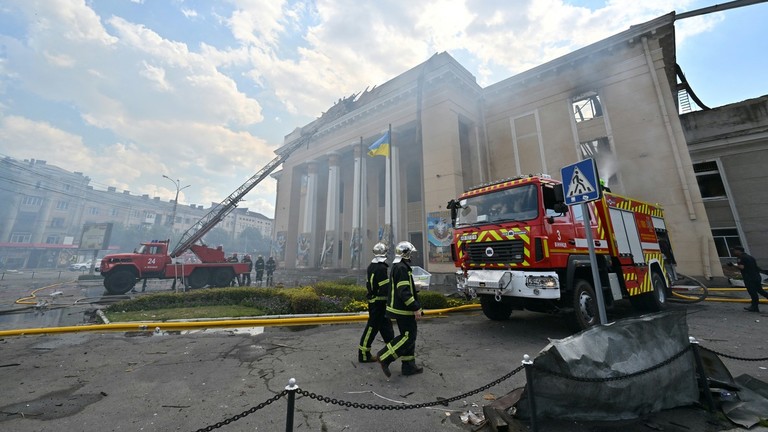
Firefighters extinguish fire in the city of Vinnytsia, west-central Ukraine on July 14, 2022. © AFP / Sergei SUPINSKY
Samizdat | July 15, 2022
The Russian military has confirmed launching a missile attack at a target in the city of Vinnitsa in Ukraine. It denied claims that it was a deliberate strike on civilians, stating that it hit Ukrainian military commanders as they negotiated with foreign arms suppliers.
Russia attacked the House of Military Officers in Vinnitsa with sea-launched Kalibr cruise missiles, the Defense Ministry said on Friday during a daily briefing. The statement claimed that the attack happened when a group of Ukrainian senior military officers were holding a meeting with foreign arms suppliers. The discussion was about the “transfer of more warplanes and weapons systems as well as the repair of the Ukrainian military air fleet,” the ministry said. The Russian strike killed all participants at the gathering.
According to Ukrainian officials, the Russian strike killed 23 civilians and injured scores of others, 80 of whom had to be hospitalized for treatment. President Volodymyr Zelensky claimed that Moscow attacked the city center deliberately and accused it of terrorism.
The head of Vinnitsa Region, Sergey Borzov, reported that Ukrainian air defenses engaged Russian missiles over the city and claimed they intercepted four of them.
Kiev has accused Russia of waging a genocidal war, claiming that Russian forces have a policy of killing Ukrainians. Moscow has rejected such allegations, saying its forces only attack legitimate military targets.
Russia sent troops into Ukraine on February 24, citing Kiev’s failure to implement the Minsk agreements, designed to give the regions of Donetsk and Lugansk special status within the Ukrainian state. The protocols, brokered by Germany and France, were first signed in 2014. Former Ukrainian President Petro Poroshenko has since admitted that Kiev’s main goal was to use the ceasefire to buy time and “create powerful armed forces.”
In February 2022, the Kremlin recognized the Donbass republics as independent states and demanded that Ukraine officially declare itself a neutral country that will never join any Western military bloc. Kiev insists the Russian offensive was completely unprovoked.
Featured Video
Rewriting the risk? Inside the government’s vaccine safety messaging
or go to
Aletho News Archives – Video-Images
Book Review
“Davos Can Really Replace the UN”
Inside the book that maps the architecture behind global governance — from the Epstein files to the Pact for the Future
Lies are Unbekoming | April 1, 2026
On June 13, 2019, the United Nations and the World Economic Forum signed a partnership deal to “accelerate the implementation of the 2030 Agenda for Sustainable Development.” That same evening, WEF president Börge Brende — Norway’s former Foreign Minister — had dinner with Jeffrey Epstein at Epstein’s Manhattan townhouse. The Epstein files, released January 2026, contain an exchange between the two from the previous year. Epstein to Brende: “Davos can really replace the UN. C21, cyber, crypto . genetics… intl coordination.” Brende back to Epstein: “Exactly — we need a new global architecture. World Economic Forum (Davos) is uniquely positioned — public private.”
The next day, the UN General Assembly adopted the framework for restructuring global governance.
That sequence — the partnership signing, the Epstein dinner, the candid admission about replacing the UN with a public-private architecture, and then the formal adoption — opens Jacob Nordangård’s The Digital World Brain. Pages two and three. Footnoted to the UN resolution number, the Epstein files, and the General Assembly record.
I keep coming back to it because it captures what this book does that almost nothing else in the independent research space manages. I’ve followed Jacob’s work for years now and interviewed him about his research. Each book peels back another layer of the same institutional architecture, and each time I think he’s reached the limit of what can be documented, the next one goes further. Nordangård doesn’t speculate. He doesn’t editorialize much. He lays institutional actions next to each other in chronological order and lets the pattern announce itself. … continue
Blog Roll
 Aletho News
- What’s Behind U.S./Israeli Strikes On Iranian Pistachio Factories?
- Seyed M. Marandi: U.S. Military DIVIDED? Iran’s Secret Defense EXPOSED
- How I fell foul of the BBC thought police
- The End of NATO
- 37 days of war on Iran cost US staggering $42bln, tracker shows
- Baghdad tells Asian refiners, traders to begin loading Iraqi crude amid Iranian exemption
- Under fire, Moscow and Tehran close ranks
- Iran, US receive Pakistan-mediated plan for ceasefire then final deal
- Iran submits demands for end to war as mediators scramble ahead of Trump deadline
- Iran Threatens Retaliatory Strike on Stargate AI Project in UAE
- If Americans Knew
- U.N. experts demand Israel release prominent Gaza doctor after reports of ‘severe torture’
- Israel’s Latest Genocide Is Against the Shias of Lebanon. Why Is the World Silent?
- How Eliot Cohen’s influence over U.S. war-making paved the way for Trump’s war crimes in Iran
- Israelis don’t pay for the weapons we ‘sell’ to them — US taxpayers do
- While Distancing from AIPAC, Most 2028 Democratic Hopefuls Are Still Embracing Israel
- A brief history of the Israeli nuclear program, the open secret at the heart of the Iran war
- Israeli Settlers Killed a Palestinian Farmer on His Own Land, in Front of His Father. Yes, Again
- The US-Israeli War on Science is an Assault on our Future
- 100+ International Law Experts Say US Strikes on Iran Violate UN Charter, Could Be War Crimes
- ‘Vile, Horrifying, Evil’: Trump Threatens to Bomb Nation of 90 Million People ‘Back to the Stone Ages’
- No Tricks Zone
- An Inconvenient Tree: Uncovered In Alps… Europe Much Warmer Than Today 6000 Years Ago
- New Study Reports A 60% Slowdown In Greenland’s Ice Loss Rate In The Last Decade
- Low Intensity Tornado Wrecks Major Solar Farm, Creating A Potential Toxic Dump
- New Study Finds Warming Saves Lives…Cold Temperatures 12 Times More Deadly Than Excess Heat
- German Science Blog Accuses PIK Climate Institute Of Hallucinating Climate Tipping Points
- Devastating Assessment Of Comirnaty Vaccine By Former Senior Pfizer Europe Toxicologist
- New Study: CO2 Is ‘Effectively Negligible’ As An Explanatory Climate Change Factor Since 2000
- Former Pfizer Toxicologist Dr. Helmut Sterz Tells Bundestag Hearing Pfizer Vaccine Should Have Never Been Approved
- Energy Expert: Germany’s Nuclear Phaseout Was A “500 Billion Euro Mistake”
- New Research: South Australia’s Mid-Holocene Sea Surface Temperatures Were 4°C Warmer Than Today
 Aletho News