Resuming of Azeri-Armenian conflict would be quite suitable for the political West
Baku is trying to use the current geopolitical situation to fulfill its long-term goals
By Drago Bosnic | September 13, 2022
Over the last 24 hours, fighting broke out in multiple areas along the Armenia-Azerbaijan border. The conflict has escalated enough for Yerevan to ask its CSTO allies, in particular Russia, to intervene. This has been revealed just hours after Armenian Prime Minister Nikol Pashinyan held a late-night telephone conversation with Russian President Vladimir Putin. The Armenian government has since confirmed it has requested Russian military assistance to repel Azeri aggression and shelling, according to an official statement:
“During the meeting, further steps were discussed to counter the aggressive actions of Azerbaijan against the sovereign territory of Armenia that began at midnight. In connection with the aggression against the sovereign territory of the Republic of Armenia, it was decided to officially appeal to the Russian Federation in order to implement the provisions of the Treaty of Friendship, Cooperation and Mutual Assistance, as well as to the Collective Security Treaty Organization and the UN Security Council.”
Armenia is basing its official request on the Collective Security Treaty Organization military pact it has with Russia and four other former Soviet republics (Belarus, Kazakhstan, Kyrgyzstan and Tajikistan). Within the framework of its military cooperation with Yerevan, Russia previously sent a 2000-strong peacekeeping force to the disputed Nagorno-Karabakh (known as Artsakh to the indigenous Armenians) after the late 2020 war which saw much of the contested region taken by Azeri forces.
This escalation comes approximately a month and a half since the late July/early August clashes in the Nagorno-Karabakh Republic when Azeri forces attacked the remaining Artsakh defenders. After months of tensions, Azerbaijan accused Armenia of allegedly attacking its military units in the disputed region. Azeri Ministry of Defense claimed that Armenian soldiers supposedly opened fire at Azeri troops in Gadabay, Kalbajar and Khojavend. Initially, no casualties or material losses were reported as a result of the alleged attack, although the Azeri MoD later claimed at least one of their soldiers was killed. Azerbaijan then took what it called “retaliatory measures”. The Armenian side denied the accusations and stated that the situation in Nagorno-Karabakh is stable. Since 2020, nearly 2000 Russian peacekeepers have been deployed in Nagorno-Karabakh to enforce a ceasefire agreement signed after the large-scale Azerbaijani attack on Armenian forces late that year.
However, the latest escalation is the first large-scale incident when Azeri forces attacked Armenia proper. This is just one of many instances in which the Azeri side is claiming it’s “only defending” and is accusing Armenia of attacking its troops. Given the rather difficult position of both Armenia proper and the Armenian-populated Nagorno-Karabakh Republic, it would be strategically unwise to even contemplate escalation against Baku, especially when taking into account the clear superiority of Azeri forces in the last several years. In recent times, the oil and gas-rich Azerbaijan has been acquiring large quantities of advanced weapons from various countries, especially Turkey and Israel. At the same time, Armenia, a small landlocked country with scant resources, has been under a virtual blockade by both Turkey and Azerbaijan for over three decades and it cannot match the economic and military power of Azerbaijan alone, to say nothing of the virtually guaranteed support Baku gets from regional powers such as Turkey.
The Azeri side is most likely resuming its offensive in the region since Russia is preoccupied with its counteroffensive against NATO aggression in Europe. Baku is trying to use the current geopolitical situation to fulfill its long-term goals and it may very well be attacking Armenia directly to divert Yerevan’s attention and create an opportunity to capture the entire territory of the already surrounded Nagorno-Karabakh Republic.
However, this would require Azerbaijan to effectively go against Russia’s interests in the Southern Caucasus region. Moscow has repeatedly warned Azerbaijan against escalating the conflict with Armenia any further. Despite the successful geopolitical game Azeri leadership has been playing for years, balancing between Russia, Turkey and the political West, Moscow is unlikely to allow further attacks. Back in March, Russian Defense Minister Sergei Shoigu warned Baku that the Russian military is capable of conducting large-scale operations in multiple theaters, clearly implying that no unilateral Azeri action will be tolerated.
However, Baku seems to have the quiet backing of the EU. According to Radio Free Europe, the same day when the conflict escalated Azerbaijan announced it will increase natural gas exports to Europe this year by 30%. As Brussels is trying to reduce its dependence on Russian energy, the EU is neither willing nor in a position to condemn an Azeri attack on Armenia.
What’s more, the conflict would be quite suitable for the political West, particularly the US. First, it could further undermine relations between Russia and Turkey, which could also spill over to other regions, such as Syria. Second, it would require Russia to send additional troops to Armenia and possibly even Nagorno-Karabakh, which would divert Moscow’s attention and resources from its military operation against the NATO-backed Kiev regime. Either way, Russia is faced with a carefully coordinated destabilization on its entire western and southwestern flank and it will require nothing short of masterful strategic planning to tackle these issues without creating even more problems.
Drago Bosnic is an independent geopolitical and military analyst.
Never Let A Good Crisis Go to Waste Relentless Ukraine reporting helps conceal other conflicts
BY PHILIP GIRALDI • UNZ REVIEW • SEPTEMBER 13, 2022
It is astonishing how many observers of war in Ukraine who should know better have been inclined to take at face value the assertions of “sources” that clearly originate among the various governments that are involved in the conflict. Those leaders who are engaged in the inexorable march by the US and its allies to turn the Ukraine crisis into World War 3 surely have learned the lesson that managing the narrative of what is taking place is the greatest weapon that the war hawks have in their possession. One recalls how post-9/11 and leading up to the Iraq War the George W. Bush White House and the neocons in the Pentagon lied about nearly everything to convince the public that Saddam Hussein was a terrorist supporting megalomaniac armed with weapons of mass destruction, inevitably describing him as a man in some ways comparable to Adolf Hitler. Nevertheless, many observers of what was occurring were not fooled and there were large scale demonstrations in a number of cities prior to the invasion in March 2003, which, of course, were rarely reported in the mainstream media in order to control the message.
Iraq in some ways was a learning experience for those in government and also for those in the media who did the heavy lifting by propagating the deception to a largely unsuspecting public. What we are seeing now relating to Ukraine and Russia, however, makes the Iraq experience look like child’s play in terms of the sheer audacity of the alleged information that makes it, or does not make it, into the news. I note particularly the recent terrorist car bombing of Russian activist journalist Dalya Dugina by a Ukrainian assassin made the news for roughly forty-eight hours before disappearing, but not before the lie that Prime Minister Vladimir Putin was responsible was firmly planted in a number of places in the mainstream media.
Now that Joe Biden is about to designate a two or three star general to head the Ukraine campaign and has pledged billions of dollars more in aid, Ukraine will be all the news all the time. The US involvement will also feature a catchy name. I would suggest Operation Empty Wallets, which is what Americans will soon be experiencing due to government bailouts and other profligate spending, or maybe Operation Give Me a Break. And it will also create a new dimension to the narrative-shaping in that Ukraine reporting’s domination of what comes out of the newsrooms already is effectively killing much of what else might otherwise be appearing on TV or in the newspapers. That selective management of information provides cover for neglecting stories that might prove embarrassing for those in power. It in effect means that there has been plenty of room for the usual players to engage in business as usual with hardly any scrutiny by the public over what is going on outside Ukraine in secondary theaters like the Middle East and Africa.
All of which leads one to examine what the two countries that have unilaterally declared themselves to be rules makers and enforcers have been up to. Those two countries are perhaps not surprisingly the United States and Israel. The US is, in fact, increasing its combat role in Africa featuring airstrikes in Somalia, all of which have taken place since US President Joe Biden approved the redeployment of hundreds of special forces troops to that country in May, reversing a decision by former President Donald Trump to reduce troop levels in AFRICOM. The two latest attacks killed at least twenty Somalis, all of whom were of course described as “terrorists” by the US command. Independent sources state that US forces have bombed Somalia at least 16 times under Biden, killing between 465 and 545 alleged al-Shabaab militants, including no less than 200 individuals in a single drone plus ground forces strike on March 13th.
Describing the paucity of reporting on the issue, Kelley Beaucar Vlahos, a senior adviser at the Quincy Institute for Responsible Statecraft, observed “If you were unaware that we were bombing Somalia, don’t feel bad, this is a completely under-the-radar news story, one that was curiously absent from the headlines in all of the major newspapers…”
And then there is Syria, where a paucity of information in the media reflects White House policy. The United States, which has possibly as many as a dozen illegal bases in Syria, has a major airbase located in the al-Omar oil field in Syria’s northeastern Deir Ezzor province. Several weeks ago, three US soldiers were reportedly slightly wounded in rocket attacks directed at the base by alleged “Iranian-backed militants.” The US responded to the claimed attacks by launching strikes from Apache helicopters against three vehicles belonging to an Afghan Shia militia, killing between six and ten “militants,” and there are reports that more tit-for-tat exchanges of fire are likely. CENTCOM afterwards claimed that President Joe Biden personally ordered the strikes in “self-defense” and justified them by citing Article II of the US Constitution. But the Constitution was never intended to cover illegal activity in a foreign land where US forces are occupying a country with which it is not at war and which has a functioning government that opposes the American presence. The US reportedly has its illegal bases mostly located in the oil producing and agricultural bread basket of the country. Both the grain and oil are routinely stolen by the US and much of the oil winds up in Israel.
So, one inevitably comes to Israel, which has used the cover provided by Ukraine not only to bomb Syria frequently but also to kill Palestinians both in Gaza and on the occupied West Bank. Recently the pace has accelerated with the Israeli Army and police killing on average several Palestinians every day, very little of which is reported in the US media, a fatality rate five times higher than that which prevailed in 2021. It is clearly a deliberate policy to step up the pressure on the Palestinians and a vital part of the process is to let it happen with minimal scrutiny by the media and public, so Israel is widely publicizing the support it is giving to Ukraine to draw attention away from what it does locally.
In short, Israel is increasing efforts to make the historic Palestine Palestinian-free by rendering life so miserable that many Arabs will decide to leave. The use of selective violence and constant harassment is all part of that effort and Palestinians have found that describing Israel as an “apartheid” state does not accurately describe the intensity of the indiscriminate punishments and killings by soldiers which have become all too common.
Israel meanwhile is also doing its best to delegitimize Palestinian national identity by labeling Arab human rights groups as “terrorists.” Israeli police recently raided the offices of seven such groups, confiscated their office equipment and communications, and ordered the premises to be shut down completely. Ironically, a CIA assessment of the groups determined that they were not in any way terrorist linked. The Joe Biden administration characteristically responded to the development by indicating that it was “concerned” but did not condemn the Israeli action.
So, if you open a newspaper or turn on the television and watch or read the international news, you will be told what to think about what is going on in Ukraine. And it will be from the Ukrainian/US government point of view. If you are interested in what the US and Israel are up to in the Middle East, you will most often be out of luck as “defending democracy” in Ukraine while also demonizing Russia is providing cover for Washington and Jerusalem to get into all kinds of mischief. It is a reality derived from how the media and government work collectively to shape policies that in no way benefit the American public. Instead, powerful interest groups with plenty of cash drive the process and are the ones who gain still more power and money through it. It is the sad reality of what has happened to our “land of the free and home of the brave.”
Philip M. Giraldi, Ph.D., is Executive Director of the Council for the National Interest, a 501(c)3 tax deductible educational foundation (Federal ID Number #52-1739023) that seeks a more interests-based U.S. foreign policy in the Middle East. Website is councilforthenationalinterest.org, address is P.O. Box 2157, Purcellville VA 20134 and its email is inform@cnionline.org.
Russian regrouping in Kharkov will speed up Battle of Donbass
BY M. K. BHADRAKUMAR | INDIAN PUNCHLINE | SEPTEMBER 12, 2022
The New York Times has disclosed that the US shared vital intelligence with the Ukrainian military and took part in the preparation of the latter’s current “counteroffensive” near Kharkov. No matter the Biden Administration’s motivations in publicising its role in what western media is celebrating as a success story — presumably, with an eye on domestic politics in America — it could be factually correct. The media leak puts the dramatic happenings in the past 3-4 days in proper perspective.
There are two ways of looking at the surge by the Ukrainian military: one, Kiev has inflicted a heavy defeat on the Russians and forced them to retreat, or, the American intelligence finally got wind of the unobtrusive thinning out of the Russian frontline in Kharkov that had been going on in the recent weeks as part of a larger re-deployment of military formations, and shared the intelligence with Kiev, who of course gleefully acted on it.
The New York Times report effectively confirms the latter reading of the situation, which has been the stuff of hearsay and whispers so far.
Indeed, there has been hardly any fighting as such in Kharkov region during this Ukrainian surge, and the Russian focus was, unsurprisingly, to pull out the residual forces in the frontline under the cover of heavy artillery fire. The Russian operation ensured that there was no significant casualty. The new frontline that was being steadily put together in the recent weeks (or months) along the Oskol River has crystallised.
The withdrawal from the Balakleysko-Izyum direction stemmed from the Russian military command’s appraisal that no useful purpose would be served by maintaining such a frontline. In March, when Russian forces gained control of Izyum, the assumption was that it would help mount an operation from the north toward Sloviansk city in the Kramatorsk district of the Donetsk region. But as it turned out through the past 4 months, Russians apparently gave up that idea altogether.
Make no mistake, the battle for Donbass still remains the number one priority for the Russian special military operation. The re-deployment from the Balakleysko-Izyum direction will now significantly strengthen the offensive in Donbass instead of weakening it, as some western journalists are speculating. The confusion arises out of the ancient legend of Izium being the “gateway” to the Donbass and the Black Sea. Whereas, today, with modern communication, Russian supply lines to the Donbass can be sustained even without such a “gateway” from the north.
Second, Izyum itself is in a heavily wooded region — some call it Sherwood Forest — to its west where the Ukrainian forces had fortified themselves and the Russian presence had come under attack even previously also. Simply put, continued occupation of Izyum would only be a drain on manpower.
That said, the optics of the happenings in the Balakleysko-Izyum direction have triggered a wave of criticism within Russia itself about inept mishandling by the military command, and some of it was even directed at President Putin himself. The military command comes under pressure to show “results” in the Donbass campaign. Suffice to say, there might be some rethink too on the Russian strategy so far to depend on militia groups to do the heavy lifting rather than regular troops from its armed forces.
In reality, Kharkov Region has been largely a sideshow so far. The fact that there are no plans to hold any referendum in Kharkov — unlike in Kherson and Zaporozhia in the south in early September (which now stands postponed) — speaks for itself.
To be sure, last week’s happenings in the Balakleysko-Izyum direction will come as a big morale booster for the Ukrainian armed forces. This will have implications for the future. For one thing, Kiev will have no inclination whatsoever for peace talks. The thundering statement by Ukraine’s Minister of Defense Oleksiy Reznikov on Sunday sets the threshold of belligerence: “Kyiv is ready for negotiations after the vacation [by Russia] of all territories of Ukraine — within the limits of December 1, 1991. There are no more options for ‘February 24’ for Ukraine.”
That is to say, the plans of the command of the Armed Forces of Ukraine are to completely “liberate” all “occupied” territories, including Donbass and Crimea, and nothing less! Interestingly, Reznikov was reacting to a statement by Russian Foreign Minister Sergey Lavrov to the effect that Moscow does not reject negotiations with Ukraine, but further delay in peace talks by Kiev will complicate the possibility of reaching an agreement.
According to the Secretary of Ukraine’s National Security and Defense Council Danilov, Kiev is already considering options for accepting the surrender of Russia, as well as dividing it into several nice little states! Such a level of madness and war hysteria will make things extremely difficult for the Biden Administration to carry forward the incipient signs of moderation and realism that were straining to surface in the US Secretary of State Antony Blinken’s rhetoric during his visit to Kiev last Friday.
Blinken reacted cautiously when asked by the travelling media party about the Ukrainian “counteroffensive.” He said: “yes, we did get a comprehensive update on the counteroffensive… it’s very early but we’re seeing clear and real progress on the ground, particularly in the area around Kherson but also some interesting developments in the Donbass in the east. But again, early days.”
Earlier in Kiev, Blinken did not respond to President Zelensky’s bottom line during their joint media appearance that he regarded the US support to be “a guarantee of the possibility of returning our territories, our lands.”
General Mark Milley, US chairman, Chiefs of Staff, also was noticeably circumspect about the Ukrainian counteroffensive in his remarks on Saturday in an interview with the National Public Radio. The general said it remains to be seen what is happening in the next few weeks. “It is a very, very difficult task that the Ukrainians are undertaking — combining their offence with manoeuver,” the general said.
While the regrouping of troops in the Kharkov region will enable the Russian forces to concentrate their attention on establishing full control over the territory of the Donetsk, it is not as if the military command has turned its back on Kharkov.
The Russian Ministry of Defence on Monday stated that Russian Aerospace Forces, missile troops and artillery “continued to launch high-precision attacks” at the Ukrainian units and reserve forces in Kharkov region. The Ukrainian forces that used to be in well-fortified positions in that heavily wooded region have now stepped out into the open and are being targeted for intense air, missile and artillery strikes.
The Russian MOD stated on Saturday that more than 2,000 Ukrainian fighters were killed near Balakleya and Izyum in the previous three days alone. For sure, a few thousand more troops would have suffered injuries too. Considering that a 15000-strong Ukrainian force is estimated to be involved in the entire Kharkov operation, that is a very heavy loss. Over time, Kiev may have little to celebrate about.
Special Military Operation, Season 2
Big Serge | September 12, 2022
September 9 – 11 will go down in history as a period of great significance in the Russo-Ukrainian war. Both belligerent parties crossed very important thresholds, which taken together suggest that the war is entering a new phase. On the 9th and 10th, Ukraine achieved its first concrete success of the war by retaking all the Russian-held territory in Kharkov Oblast west of the Oskil river, including the western bank of Kupyansk and the transit node of Izyum.
Meanwhile, Vladimir Putin convened an emergency meeting of his national security council, which precipitated Russia’s own escalation on the 11th, when Ukrainian infrastructure was at long last subject to attack, plunging much of the country into darkness.
It seems clear that the war is entering a new phase, and it seems highly likely that both parties will attempt to take decisive action in the near feature. For now, let’s try to parse through the developments of the past week and get a handle on where the war is heading.
At the risk of sounding very pedantic, Ukraine’s counteroffensive in eastern Kharkov Oblast is an excellent demonstration of the difficulties in evaluating military operations. Everyone agrees on the basic geography of what has happened: Ukraine cleared everything west of the Oskil river of Russian forces. Nobody agrees on what this means, however. I have seen all of the following interpretations posited – note, people reached all of these conclusions from the same set of data:
- Russia has drawn Ukraine into a trap and will soon counterattack
- Russia voluntarily withdrew from Kharkov to prioritize other fronts
- Russia drew the Ukrainians out to hit them with artillery
- Russia suffered a massive intelligence failure and did not see or respond to Ukraine’s offensive
- Russia suffered a defeat in battle and was forced to retreat
Let’s do a methodical autopsy and see what we come away with.
The first thing we want to note is that the disparity of forces on this front was absolutely laughable. Ukraine assembled a strike group of at least five full brigades, and aimed at a line of contact which had no Russian regular troops at all. The Russian frontline defenses in the region were manned by allied donbas militia and national guardsmen. It seems there was a lone Battalion Tactical Group (BTG) in Izyum, but little else.
It is undeniable, even for Ukrainians celebrating the advance, that Kharkov oblast had been almost completely hollowed out of Russian troops, leaving little more than a screening force. Two important things flow from this. First, that the Ukrainian shock group was in most places advancing against virtually nonexistent resistance. Secondly, more ominously for Ukraine, the low quality units left behind for screening purposes were able to put up good resistance against the Ukrainians – the Rosgvardiya men in Balakliya held out tenaciously for several days before evacuating through a corridor.
In my previous analysis, conducted while the Ukrainian counteroffensive was just beginning to develop, I noted two important things about the shape of the battlefield.
- I argued that Ukraine would be unable to push across the Oskil and properly exploit their offensive.
- I noted that Ukraine was making rapid advances against thinly manned, hollowed out portions of the front, and that Russia had committed very little to the battle.
Both of these statements were correct. I freely admit, however, that I drew the incorrect conclusion from them. I believed the Ukrainian advance would culminate at the Oskil river, leaving them vulnerable to a Russian counterattack by the arriving reserves. It seems fairly clear now that this is incorrect, and the Russian reserves that were en-route were tasked with stabilizing the defense at the Oskil, not launching a counterattack.
This was not an operational trap by Russia, but neither was it a victory in battle for Ukraine – for the simple reason that there was not much of a battle at all. Russia had already hollowed out these positions, and withdrew the remaining screening forces very quickly. Ukraine covered a lot of ground, but were unable to destroy any Russian units, because there really weren’t any there.
It would be silly to try to talk the Ukrainian side out of their excitement right now. Credit where credit is due, they did manage to put together a good sized shock group, aim it at a weak portion of the front, and regain a good bit of ground. Considering the abject lack of successes for Ukraine in this war, they are rightfully trying to eke every last bit of morale and propaganda out of this.
I do not, however, believe that the territorial losses in Kharkov in any way change the ultimate calculus of the war. Russia hollowed out this front and surrendered ground, but they were able to maul the Ukrainian forces as they advanced with relentless artillery and airstrikes. Ukrainian channels widely report overflowing hospitals. The Russian Ministry of Defense claimed 4,000 killed and 8,000 wounded for Ukraine during their advance – I believe this is high, but even if we reduce the numbers by 50% (leaving us with 6,000 total casualties, reasonable given how much ordnance Russia discharged) it is very clear that the loss ratios in this operation were stacked badly against Ukraine, as they always are.
As I predicted in my last piece, Ukraine has so far been unable to exploit their offensive by reaching the operational depth. They have been totally unable to project forces across the Oskil River. With the advance eastward firmly culminated, they are seeking to maintain their momentum, or at least the appearance of it.
Ukraine’s successful advance in Kharkov Oblast has been augmented with a blitz of fakery and propaganda designed to simulate a total shift in strategic momentum. These include fakes related to Russian domestic politics, such as fabricated calls for Putin’s impeachment, and battlefield misinformation, like claims that the Ukrainian Army has breached the borders of the LNR or stormed Donetsk City. They have also circulated out of context videos (the most popular one shows a Russian vehicle depot in Crimea) purporting to show that the Russians abandoned hundreds of vehicles in Izyum.
The fakery is not important. Ukraine will, however, also attempt to maintain battlefield momentum by piggybacking on the Kharkov operation with additional counteroffensives. They continue to attempt to cross the Donets River in force to storm Lyman, unsuccessfully. They also continue their attacks in the Kherson direction, making little progress and taking high casualties.
The most important development, however, is the claim that a second Ukrainian shock group has been assembled in Zaparozhia. This is an area where the geography actually would allow Ukraine to achieve operational exploitation. A successful drive towards Melitopol or Mariupol would compromise the land bridge to Crimea and threaten to crumble Russia’s entire position in the south.
Unlike Kharkov, however, this is not a hollowed out portion of the front. The newly formed Russian 3rd Corps is concentrated in the south, and Russian convoys have been spotted recently moving through the Mariupol region. Ukraine may very well attempt yet another offensive operation in this direction, but given the strength of the Russian grouping here the results will be more like Kherson than Kharkov.
During the opening months of the war, I argued on Twitter that massed offensives are difficult, and that Ukraine had not yet shown the organizational ability to organize an operational higher than the brigade level. All the attacking action that we saw from Ukraine early on took the form of single brigade – or more often, single battalion – commanders taking initiative.
Well, lo and behold, Ukraine managed to field at least two (Kherson, Kharkov) and perhaps three (Zaporizhia) multi-brigade shock groups, and launch coordinated operations. This was made possible because Ukraine is a pseudo-state, which is supplied, financed, and increasingly managed by NATO. Western agencies cannot resist bragging – Britain identified itself as the party responsible for planning and organizing the Kherson operation, while the USA claims credit for the more successful Kharkov attack.
It is difficult to overstate the extent to which Ukraine is sustained solely by the west. Ukrainian soldiers are trained by NATO officers, armed with NATO weapons, accompanied in the field by NATO soldiers foreign volunteers, and the Ukrainian pseudo-state is kept running by cash injections from the west. Videos from the Kharkov front abound with English speaking soldiers and foreign weapons.
The point isn’t just to point out, yet again, that Ukraine is a failed state – a corpse that is given the illusion of life by outside actors moving its limbs. The point is that Russia understands this and correctly understands itself to be in a civilizational collision with the west. To that end, we must understand that Russian escalation is underway, and think about what that means.
By this point, the idea that Russia needs to mobilize has become a tired old meme, courtesy of the deranged Igor Strelkov. It is certainly true that Russia must escalate, but leaping directly to mobilization (putting the economy on war footing and calling up conscripts) would be a grave mistake. Russia has other, better ways to escalate. The recent Ukrainian advance in Kharkov is an obvious signal to raise the force deployment, and Ukrainian potshots at targets across the Russian border only add to the pressure to take the gloves off.
First, I would like to comment on why I am against mobilization. One of the most important dimensions of this war is the economic front. Europe is being driven to the brink by the energy crisis. The Wall Street Journal keyed in on what I believe to be the most apt descriptor of the crisis, warning of a “new era of deindustrialization in Europe.”
A full mobilization would be very costly for Russia’s economy, risking the edge that it currently holds in the economic confrontation with Europe. This, I believe, is the main reason that the Russian government was quick to quash rumors of mobilization today. There are other steps on the escalation ladder before going to total war footing.
There are already rumors that Russia is planning to change the formal designation of the war, from “Special Military Operation”. While that could mean a formal declaration of war, I think that is unlikely. Rather, Russia will likely give the Ukraine operation the same designation as its operations in Syria, loosening the rules of engagement and beginning to target Ukrainian assets in earnest.
We saw a foretaste of this last night, when Russia wiped out over half of Ukraine’s power generation with a few missiles. There are many more targets that they can go after – more nodes in the electrical grid, water pumping and filtration facilities, and higher level command posts. There is at least some probability that Russia begins targeting the command facilities with NATO personnel in them. Plausible deniability works both ways; because NATO is not officially in Ukraine – only “volunteers” – targeting their personnel is not an overtly aggressive act.
Russia also has many ways to boost its force deployment in Ukraine that fall short of full mobilization. They have a pool of demobilized contract soldiers that they can call up, as well as a pool of reservists that they can raise with a partial mobilization.
The Russian line is hardening. Just in the past 24 hours, Kremlin spokesman Dmitry Peskov said there were “no prospect for negotiations” with Ukraine, and Putin said “Unfriendly forces are targeting us, and we must take initiative in order to succeed in confronting them.” Medvedev went even further just now: “A certain Zelenskyy said that he will not hold a dialogue with those who issue ultimatums. The current ‘ultimatums’ are a warm-up for kids, a preview of demands to be made in the future. He knows them: the total surrender of the Kiev regime on Russia’s terms”
If you believe the Russian government is utterly incompetent and duplicitous, feel free to view statements like this as bluster. But given the warning shot at Ukrainian power generation yesterday, my sense is that Russia is preparing to escalate to a higher level of intensity, which Ukraine cannot match with its indigenous resources. The only other player on the escalation ladder is the United States.
Dark times are ahead for Ukraine – and perhaps for Americans on the other front of this war.
Syria and Ukraine are two fronts in the same war. This is very important to understand. In Syria, the United States has attempted to wreck Russia’s most important Middle Eastern ally and create a Trashcanistan of chaos to suck in Russian resources; in Ukraine, NATO has armed a kamikaze state to hurl at Russia’s western border. In the Russian mind, these wars are inextricably linked.
After the Kharkov counteroffensive, I strongly suspect that Russia will look for a way to strike back at the United States, without crossing red lines that could lead to a more direct confrontation. Syria is the place where this would happen. The United States maintains several illegal bases on Syrian soil, which Russia could strike using its Syrian allies much the same way that the United States is using Ukraine. Russia is in the finishing stage training a new Syrian airborne division. With Russian air cover, an attack on one of the American bases in Syria would be possible – the USA would be forced to choose between shooting down Russian planes and flirting with nuclear war, or humbly accepting the loss of an illegal base that it has worked hard to hide from its own citizens. Given the utter lack of enthusiasm among the American public for yet another war in the Middle East, it seems that the USA would simply have to swallow the loss.
- Russian escalation of attacks on Ukrainian infrastructure and command centers.
- Russian force deployment raised without full mobilization.
- Intensification of Russian efforts to recover DNR territory.
- Possible escalation in Syria, likely in the form of Syrian army attacks on US bases.
US could benefit from EU recession – WaPo
Samizdat | September 12, 2022
White House officials believe the effect of a recession in the EU on the US economy would be “modest,” while some economists suggest that it would actually help America, the Washington Post has reported.
With the European Central Bank raising interest rates by 0.75 points last week amid soaring energy prices and spiking inflation, White House aides believe “the growing likelihood of a recession in Europe is unlikely to change under the current trajectory,” the paper wrote on Sunday.
However, US officials who talked to WaPo on condition of anonymity said they didn’t think that a recession in Europe would necessarily cause one in America.
One senior member of the Biden administration told the outlet that the Treasury Department and the Council of Economic Advisers had estimated that the impact on the US from such an event would likely be “modest and manageable.”
Trade with Europe accounts for less than 1% of US gross domestic product, while the country also has enough of its own natural gas to minimize the impact of a possible stoppage of Russian energy supplies to the EU, the paper pointed out.
In fact, the US economy could actually benefit from the whole situation as it would potentially cause a reduction in global demand for energy, further alleviating price pressures in the US, it added.
“If Europe goes into recession, there’s obviously less demand for a wide range of products. We’re in such a perverse situation here [that] it may actually be positive,” Dean Baker, co-founder of the Center for Economic and Policy Research, told the Washington Post.
However, if Moscow goes further and stops selling its oil and gas not only to the EU, but also to other markets, in response to a proposed price cap on its energy imports, it “would threaten the US economy more,” according to the paper.
“That will push the economy into recession. Gasoline prices will go skyward, back over its record $5 a gallon almost overnight. The economy can’t digest $5 a gallon – that would be overwhelming,” warned Mark Zandi, an economist at Moody’s Analytics.
Germany imports less from Russia but pays more
Samizdat | September 13, 2022
German imports from Russia saw a dramatic 45.8% year-on-year decline in July, data from the Federal Statistical Office of Germany showed on Monday.
However, in monetary terms, German purchases of Russian products surged 10.2% to €2.9 billion ($2.94 billion), data indicates.
The imbalance arose due to soaring prices of oil and gas. The value of energy imports from Russia increased by 1.6% to €1.4 billion, according to the data, despite the much lower volume of purchases compared to the same period a year ago.
At the same time, Germany’s exports to Russia saw a substantial year-over-year drop of 56.8%.
Germany, along with other EU countries, has been seeking to reduce its reliance on imports of Russian fossil fuels, and has stepped up the effort since late February, when Moscow started its military operation in Ukraine.
Earlier this month, Finland’s Center for Research on Energy and Clean Air (CREA) reported that more than half of the €158 billion that Russia earned from oil and gas exports over the past six months was paid by EU countries. The bloc has reportedly imported 54% of all Russian energy exports since late February, worth around €85 billion.
Europe Commits Suicide-by-Sanctions
By Ron Paul | September 12, 2022
A Swiss billboard is making the rounds on social media depicting a young woman on the telephone. The caption reads, “Does the neighbor heat the apartment to over 19 degrees (66F)? Please inform us.” While the Swiss government has dismissed the poster as a fake, the penalties Swiss citizens face for daring to warm their homes are very real. According to the Swiss newspaper Blick, those who violate the 66 degree heating limit could face as many as three years in prison!
Prison time for heating your home? In the “free” world? How is it possible in 2022, when Switzerland and the rest of the political west have achieved the greatest economic success in history, that the European continent faces a winter like something out of the dark ages?
Sanctions.
While long promoted – often by those opposed to war – as a less destructive alternative to war, sanctions are in reality acts of war. And as we know with interventionism and war, the result is often unintended consequences and even blowback.
European sanctions against Russia over its invasion of Ukraine earlier this year will likely go down in history as a prime example of how sanctions can result in unintended consequences. While seeking to punish Russia by cutting off gas and oil imports, European Union politicians forgot that Europe is completely dependent on Russian energy supplies and that the only people to suffer if those imports are shut down are the Europeans themselves.
The Russians simply pivoted to the south and east and found plenty of new buyers in China, India, and elsewhere. In fact, Russia’s state-run Gazprom energy company has reported that its profits have increased by 100 percent in the first half of this year.
Russia is getting rich while Europeans are facing a freezing winter and economic collapse. All because of the false belief that sanctions are a cost-free way to force other countries to do what you want them to do.
What happens when the people see dumb government policies making energy bills skyrocket as the economy grinds to a halt? They become desperate and take to the streets in protest.
This weekend thousands of Austrians took to the streets in a “Freedom Rally” to demand an end to sanctions and the opening of Nord Stream II, the gas pipeline on the verge of opening earlier this year. Last week an estimated 100,000 Czechs took to the streets of Prague to protest NATO and EU policy. In France, the “Yellow Vests” are back in the streets protesting the destruction of their economy in the name of “defeating” Russia in Ukraine. In Germany, Serbia, and elsewhere, protests are gearing up.
Even the Washington Post was forced to admit that sanctions on Russia are not having the intended effect. In an article yesterday, the paper worries that sanctions are inflicting “collateral damage in Russia and beyond, potentially even hurting the very countries that impose them. Some even worried that the sanctions intended to deter and weaken Putin could end up emboldening and strengthening him.”
This is all predictable. Sanctions kill. Sometimes they kill innocents in the country targeted for destruction and sometimes they kill innocents in the country imposing them. The solution, as always, is non-intervention. No sanctions, no “color revolutions,” no meddling. It’s really that simple.
Copyright © 2022 by Ron Paul Institute.
Algeria to discuss joining BRICS with Russia
The BRICS bloc represents an alternative to western economic hegemony, and can serve as a powerful tool to bypass economic sanctions
The Cradle | September 11, 2022
According to media reports on 8 September, the newly appointed Russian ambassador to Algeria, Valeryan Shuvayev, announced that the North African country’s president, Abdelmajid Tebboune, will likely visit Moscow before the end of the year to discuss mutual cooperation between the two countries.
Tebboune’s potential visit will center around Algeria’s desire to join the Brazil, Russia, India, China, and South Africa (BRICS) group of emerging economies.
The BRICS group of nations represents the world’s most prominent economies outside of the western hemisphere.
In his first media appearance outside of the Russian embassy in Algeria, Shuvayev stated that President Tebboune sent a letter to Russia’s President Vladimir Putin regarding his country’s desire to join BRICS.
In May, Russian Foreign Minister Sergey Lavrov visited Algeria and met with President Tebboune, as well as his Algerian counterpart, Ramtane Lamamra, where they discussed a boost in relations between both countries, and the intention to sign a number of agreements in the near future that will further enhance the relationship between Moscow and Algiers.
Two months later, in late July, Tebboune referred to the BRICS group as a significant “economic and political power” which is of interest to the North African state and added that his country holds the necessary criteria to be included into the organization.
In mid-August, former Algerian Industry Minister, Ferhat Ait Ali, said during an interview: “This bloc seeks to attract countries that are neither poor nor very rich, but rather countries that [can serve as an] alternative to Western hegemony.”
The BRICS group “includes two historical allies and partners for Algeria to trust in… namely China and Russia, and other partners who have no problem in the progress of our economic system in parallel with theirs,” the former Algerian minister added.
Algeria and Russia have historically enjoyed a smooth relationship. The Soviet Union was the first country to establish diplomatic relations with Algeria following its independence from French colonial occupation in 1962.
The BRICS group of emerging economies represents a beneficial alternative to the dominant US and western-led economic system, especially for countries negatively affected by western sanctions.
In June, the Islamic Republic of Iran submitted an application to become a member of the BRICS group. Tehran’s Foreign Ministry spokesperson, Saeed Khatibzadeh, said at the time that the bloc’s member countries represent 30 percent of the world’s GDP and 40 percent of the global population.
US, E3 untrustworthy; Iran pursues an agreement to secure its interests: Marandi
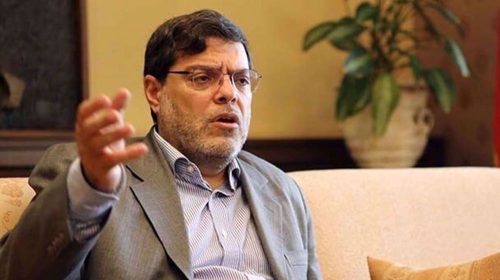
Press TV – September 11, 2022
An advisor to the Iranian negotiating team has described the US government and the three European signatories to the 2015 nuclear deal as “untrustworthy”, stating that Tehran pursues an agreement that best secures its national interests.
During an interview on Saturday night, Mohammad Marandi said Iran was not the party that withdrew from the 2015 deal, officially known as the Joint Comprehensive Plan of Action (JCPOA), emphasizing that the three European countries (France, Britain, and Germany) obediently follow the policies of whoever is in the White House.
He added that Iran knows that any possible accord will fail unless the Western countries put an end to their false accusations against Tehran.
Marandi noted that the European troika and Washington are aware of the peacefulness of the Iranian nuclear program, stressing that Iran wants to reach an agreement that would secure its rights.
During the interview with the Lebanese Arabic-language al-Mayadeen television news network, he continued, “We cannot trust the Americans and Europeans,” highlighting that “the three European countries are all allies of the United States. They are not neutral, and we should not be deceived by their propaganda.”
Marandi also took a swipe at Director General of the International Atomic Energy Agency (IAEA) Rafael Grossi, stating that he “stands with Europeans and Americans, and is submissive to them.”
The advisor to the Iranian negotiating team went on to say that a European official once confirmed during the course of JCPOA revival negotiations in the Austrian capital of Vienna that Iran’s demands are rightful, but “the Americans are the ones who are delaying and procrastinating” the talks.
Marandi stressed that Iran is “ready to sign the agreement,” noting that “the Europeans need the agreement more than Iran, because of their need for gas.”
On the issue of Iranian natural gas, he told al-Mayadeen that “Iran sells its gas and oil, and is able to obtain financial revenues,” adding that “the longer the agreement is delayed, the bigger the problem for Europe would be because it wants gas as the winter is approaching.”
The European energy crisis comes as tensions persist between Russia and the West over Moscow’s offensive in Ukraine. Natural gas prices have soared in Europe to all-time highs since the West began unleashing waves of sanctions against Moscow.
Ever since, Russia’s Gazprom has drastically reduced its gas deliveries to Europe, saying that the anti-Russia sanctions have blocked the delivery of a turbine needed to stream gas to Europe via pipeline.
‘A weak Biden’
As for the United States, Marandi said, “US President Joe Biden is weak, and suffers from internal and economic problems before the midterm elections.”
Marandi added that “the Europeans have no problem in reaching an agreement, but rather the problem lies with weak Biden [administration].”
On Saturday, Iran slammed the latest “unconstructive and ill-considered” statement issued by the three European signatories to the JCPOA, saying they must accept the consequences if it continues to follow Israel’s lead.
“It is regrettable that by [issuing] such an ill-considered statement, the three European countries have followed in the footsteps of the Zionist regime down a path that will lead to the failure of negotiations,” the Iranian Foreign Ministry Spokesman Nasser Kan’ani said.
‘US’s support for terrorists’
Marandi also condemned Washington over its support for the terrorist Mujahedin-e-Khalq Organization (MKO) that has been hosted by Albania since 2016, stating that its members have been carrying out attacks against Iran.
On Wednesday, Albania, which has for years hosted the anti-Iran MKO terrorists in collusion with the US, severed diplomatic ties with Tehran, accusing it of orchestrating a July “cyberattack” against Tirana.
Kan’ani identified the United States, the Israeli regime, and the MKO as the “third parties” that have propelled Tirana into taking the decision.
Russia’s Permanent Representative to the International Organizations in Vienna, Mikhail Ulyanov, described the latest statement issued by three major European powers about Iran as “very untimely”.
“Very untimely indeed. Right at a critical moment at the #ViennaTalks and on the eve of the session of the #IAEA Board of Governors,” Ulyanov, who also leads the Russian delegation at the Vienna talks on Iran nuclear deal, wrote in a tweet.
In a press release on Saturday, France, Britain, and Germany raised serious doubts as to Iran’s intentions and commitment to a successful outcome on the JCPOA, claiming that Tehran’s position contradicts its legally binding obligations and jeopardizes prospects of restoring the nuclear deal.
The European trio said they have “negotiated with Iran, in good faith, since April 2021, to restore and fully implement” the JCPOA, along with other participants to the deal and the United States.
The United States, under former president Donald Trump, abandoned the agreement in May 2018 and reinstated unilateral sanctions that the agreement had lifted.
The talks to salvage the agreement kicked off in the Austrian capital city of Vienna in April last year, months after Joe Biden succeeded Trump, with the intention of examining Washington’s seriousness in rejoining the deal and removing anti-Iran sanctions.
Despite notable progress, the US indecisiveness and procrastination caused multiple interruptions in the marathon talks.
German President Says Homeless Numbers May Rise Amid Cost-of-Living Crisis
Samizdat – 11.09.2022
More people in Germany may become homeless this winter as soaring costs of living keep adding pressure on vulnerable households, President Frank-Walter Steinmeier warned on Sunday.
Over 300,000 Germans do not have a home, Steinmeier told a conference at his Bellevue residence. Of them, 45,000 are forced to sleep rough on the streets.
“More than 300,000 is a huge figure! And let’s be clear: this number may rise in the coming months. The war and crises may increase the number of people suffering from lack of housing in fall and winter,” he said.
Germany marks the Day of the Homeless on September 11. The German president traditionally invited people who do not have a roof over their head to his Berlin residence in the upscale Tiergarten neighborhood.
Steinmeier said that the problem of homelessness was more acute than ever at this time of crisis. He urged politicians to make sure that “the topic is not relegated to the bottom of the political agenda”.
Germany and other European countries are suffering from soaring inflation and immense energy prices caused by Brussels’ decision to impose sanctions on Russia after the start of the special military op in Ukraine. As a result, gas prices and energy bills at record-high levels have become a major issue for many Europeans.
The West is poised to throw Yemen under the bus again to fuel its economic war on Russia
By Robert Inlakesh | Samizdat | September 11, 2022
Strained by the consequences of the ongoing conflict between NATO and Russia over Ukraine, France may be destroying all prospects for peace in Yemen, in a bid to secure energy resource from the United Arab Emirates.
Considered to be home to the worst humanitarian crisis in modern history, according to the United Nations, earlier this year, its people saw glimmers of hope towards ending its seven-year long war. A ceasefire truce, which has largely held since April, has been viewed as the first step towards reaching a UN-mediated solution for peace between the Ansarallah government in Sanaa and the Saudi-led coalition forces which claim to represent the internationally backed Yemeni government in exile.
According to UN estimates, the total number of people killed in Yemen’s war already reached 377,000 by the beginning of 2022. The civilian death rate is said to have doubled, according to the Norwegian Refugee Council (NRC), since the controversial withdrawal of UN human rights monitors last October.
Although Saudi coalition forces and Ansarallah, popularly referred to in Western media as the “Iran-backed Houthi rebels,” have managed to keep fighting to a minimum during the past months, another major player in the south of Yemen has recently decided to go on the offensive. The Southern Transitional Council (STC), often called Yemen’s southern separatists, are backed by the United Arab Emirates (UAE) and declared the start of a new military operation in the Abyan province “to cleanse it of terrorist organisations.” This follows territorial gains by the STC, in neighboring Shawba province, against the Muslim Brotherhood aligned Islah Party and others. The offensives launched by the UAE-backed STC have been regarded as a major challenge to UN efforts to end the conflict in Yemen, as well as having imperiled the Saudi initiative, which it calls the ‘Yemen Presidential Council,’ aimed at solidifying the legitimacy of the alternative Yemeni leadership in exile.
Where France Comes In
Although its role is little known to the Western public, Paris is the third largest arms supplier to the UAE and Saudi Arabia for their war efforts in Yemen, ranking just behind the US and UK. In fact, Germany, Spain and Italy have also sold weapons that have been used in the devastating war. Despite criticism, from human rights groups, of French weapons being used by Abu Dhabi and Riyadh to commit war crimes, the sale of weapons has continued from France.
April 15, 2019, French investigative magazine, Disclose, published an expose on Paris’s role in Yemen’s war. The information presented was based on a leaked French Military Intelligence (DRM) report dating back to September, 2018, clearly proving that the country had sold offensive weapons that were used in civilian areas, a charge that the French government has denied. As far back as June, 2018, credible reports began to emerge that French special forces units were operating on the ground in Yemen, alongside forces belonging to the UAE. Last December, Paris decided to further tighten its relationship with Abu Dhabi, signing its largest ever weapons sale to the UAE, worth 19.23 billion US dollars according to a report from Reuters.
France first turned to the US
France is now desperately in need of alternative energy suppliers to Russia, in order to meet its required needs, fearing that as the winter hits, Moscow may strategically cut off its natural gas completely. As part of NATO, Paris is backing a US-led initiative which seeks to make Russia pay an economic and military price for its offensive in Ukraine, however, this strategy has majorly backfired economically.
US President Joe Biden made two major foreign policy pledges when running for office in 2020, which are relevant to the current French predicament. The first being to revive the Obama-era Iran nuclear deal and the second being to find a diplomatic solution to the war in Yemen. Due to the ongoing NATO-Russia conflict, seeking a revival of the Iran nuclear deal has re-emerged on the political agenda of his administration in a major way. Iran, free from sanctions, could become an alternative source to fill the energy needs of Europe in the future, yet it could take some time for this to actually happen.
On the issue of the war in Yemen, Joe Biden pledged as part of his first speech on his government’s foreign policy goals, that he would hold Saudi Arabia to account and seek to find a solution to the crisis in Yemen. However, the war in Ukraine clearly changed his approach to Riyadh, so much so that Washington signaled in the review a decision to not sell offensive weapons to the Saudi government. The US President was heavily criticized by Human Rights Watch for traveling to Saudi Arabia in July.
Despite US attempts to have Gulf Cooperation Council (GCC) states increase their oil production, none have yet complied in the manner that Washington had hoped for. Specifically in the cases of the UAE and Saudi Arabia, it is clear that both are seeking to fast track their journey to diversify their economies. That has meant them hanging onto their strategic reserves of oil and gas, during a global energy crisis, which has made fiscal sense for them. In the cases of Venezuela and Iran, despite the US having seemingly reached out to both, neither seem to be a real replacement to Russia in the near future.
All Bets On Yemen
France is now looking for alternatives on its own. In June, the European Union announced that it had signed an agreement with Israel and Egypt. Under the deal, Israel will send gas through pipelines to Egypt, where it will then be transported to Europe. Although this may work, Tel Aviv does not have the capacity to replace Moscow as Europe’s main supplier of gas. Israel seeks to double its gas output, but in doing so is already running into potential problems over its maritime border dispute with Lebanon and its planned extraction of gas from the ‘Karish field’ in September, considered to be located in a disputed area. Lebanese Hezbollah has even threatened to strike all of Israel’s gas facilities in the event that Beirut is not given a fair deal to access its own resources.
French President, Emmanuel Macron, has attempted to persuade resource rich Algeria to become part of the EU’s solution, also going on a three-day trip to Algiers in order to mend ties. Algeria, which maintains close relations with Moscow, withdrew its ambassador from Paris for three months last year, during a diplomatic row. Macron had accused the Algerian President Abdelmadjid Tebboune’s government of “exploiting memory” and “rewriting history” of the colonial era and even questioned the legitimacy of Algeria as a State prior to French settler-colonial rule there. Around 1.5 million Algerians were killed in the battle for independence from France, which its resistance eventually managed to win in 1962. The tone of the French president has now dramatically changed from that of last year, with Macron remarking that both nations “have a complex, painful common past. And it has at times prevented us from looking at the future.”
The other major alternative path that France seems to be now seeking, is through its close alliance with the UAE. As mentioned above, it has been clear for some time that Paris has been involved in supplying weapons, logistical support and even boots on the ground to its allies in Abu Dhabi and Riyadh, aiding their fight in Yemen. However, it is also clear that the UAE has not been interested in cutting into its strategic oil reserves to meet the demands of Europe.
In July, as President Macron hosted the Emirati President, Mohammed bin Zayed al-Nahyan, in Paris, the French ministry of economy announced a new strategic energy agreement between the UAE and France. An aide to the French president noted that France was eager to secure diesel fuel from the UAE, hinting that the cooperation agreement involving France’s ‘Total Energies’ and the UAE’s ‘ADNOC’ may be linked. Although it is unknown as to what the specifics of the “strategic agreement” are, it has been speculated that the deal could potentially be worth billions.
Then, in August, the UAE-backed STC suddenly began new offensive operations in both the Shabwa and Abyan provinces. It just so happens that the STC forces decided to take over the energy sites in the Shabwa province too. Leading human rights NGOs had urged Paris to keep in mind Abu Dhabi’s human rights abuses in the advent of the signing of the strategic energy agreement, calls clearly not heeded. On August 21st, when UAE-backed forces seized the oil facilities in Yemen’s south, it may have been with the French deal in mind. Yemen’s former foreign minister, Dr. Abu Bakr al-Qirbi stated on Twitter that “preparations are being made to export gas from the Balhaf facility in light of increased international gas prices.” This was then followed by an announcement from the parliament of the Sana’a-based National Salvation Government, warning of suspicious movement from both US and French forces.
The key Balhaf facility, in Yemen’s Shabwa province, has reportedly been turned into a base for forces belonging to the UAE, with allegations suggesting that Paris could “provide protection for the facility through the French Foreign Legion.” There are also countless reports of the UAE looting resources from Yemen, which would seem to support the idea that they could be attempting to extract them to send to France. The latest reported looting of Yemen’s resources, from June, quotes Yemeni officials as having alleged that a Gulf Aetos tanker, carrying 400,000 barrels of Yemeni crude oil, had departed from Rudum port and was being operated by the UAE.
What these offensive moves by the STC also mean, is that the Saudi-backed forces in Yemen and Ansarallah will likely also get involved in the combat too. This could mean the dissolution of the ceasefire truce between the two sides, the renewal of the Ansarallah offensive to take the oil rich Marib province from the Saudi-backed forces and the death of any potential peace initiative to end the war.
It is unlikely that Ansarallah will stay silent, if the STC are aiding in the theft of Yemen’s resources for the sake of France. One of the major reasons behind the dramatic escalation of violence last year, was the Ansarallah offensive, launched with the aim of taking out the last northern stronghold of the Saudi-led coalition, Marib. The purpose of taking the resource rich area would be to stop the looting of Yemen’s resources, which according to reports is amounting to the theft of millions of barrels per year. Some sources claim that an unofficial agreement is in place between the US and Saudi governments, to purposefully keep the resources of Yemen away from its people and instead, divert the profits to Saudi banks.
Part of the reason why there was a Yemeni revolution in 2011, then a seizure of power in 2015 by Ansarallah in conjunction with the country’s military, was the popular belief that the past two Presidents of Yemen, Ali Abdullah Saleh and Abdrabbuh Mansour Hadi, were corrupt. The people of Yemen were fed up with Saleh for a multitude of reasons, primarily that he mismanaged resources, had sold out to the United States and was corrupt. President Hadi was later to be seen as a stooge, controlled completely by the Saudis.
Perhaps the biggest problem here however, is not just that Yemen is a resource rich country, with a starving population, being torn apart by foreign powers, but also that nobody even knows what their governments are involved in. On August 25, then British prime minister, Boris Johnson, stated, about rising energy bills, that “While people are paying energy bills, people in Ukraine are paying with blood”. Yet, it may turn out that for Europe to keep the lights on, the people of Yemen will pay with their blood. Except in this case, the UK, US and France can’t blame that bloodshed on Moscow, this is their own doing.
Robert Inlakesh is a political analyst, journalist and documentary filmmaker currently based in London, UK. He has reported from and lived in the occupied Palestinian territories and currently works with Quds News.
Pro-Western Bots Behind Vast Majority of Russia-Ukraine Tweets Studied, New Report Finds
Samizdat – 11.09.2022
A bombshell report has revealed that one of the largest bot armies ever discovered was secretly working to advance Western interests in NATO’s ongoing proxy war on Russia in Ukraine.
Researchers at the University of Adelaide who studied 5.2 million tweets published in the weeks after Russia’s special military operation in Ukraine have published an alarming new study which found that 60% to 80% of those posts were shared by fake accounts – and 90% of them were in favor of Kiev.
According to their groundbreaking research, fake accounts using hashtags like #IStandWithUkraine, #IStandWithZelenskyy, and #ISupportUkraine were utilized en masse to perpetuate myths like the “Ghost of Kiev” – a non-existent pilot that pro-Ukraine influencers held up for months as an example of supposed anti-Russian gallantry before the Kiev regime’s military quietly acknowledged he never existed.
Such bots were deployed at key moments in the conflict, like when fighting began in Mariupol and when Russia gained a foothold in its first major Ukrainian city, researchers found.
According to information compiled by the Stanford Internet Observatory and Graphika, one pro-US page targeting Central Asian social media users went as far as doctoring a photograph of Puerto Rican actress Valeria Menendez in an effort to convince audiences that there were real human beings behind the influence campaign.
The impact that networks of such bot accounts may have had on public perceptions surrounding the Ukraine proxy war has yet to be determined.
But with Western audiences increasingly preoccupied by more immediate issues like the energy crisis spawned by anti-Russia sanctions or the lack of drinkable water in US cities such as Jackson, Mississippi, polls show that interest in the Ukraine conflict has fallen at least twenty-fold since late February – and it’s likely that the bots’ operators have experienced a serious decline in engagement.
Featured Video

The Most Important Bet You’ve Never Heard Of
or go to
Aletho News Archives – Video-Images
From the Archives
Wars for Israel: A reminder of who’s giving the marching orders
By Damian Lataan | February 7, 2012
As the West prepares to march off to yet another war in the Middle East, we should perhaps remind ourselves of who is giving the West their marching orders.
In February 2003, just weeks before the US and their allies launched their attack on Iraq and her peoples, a delegation of US congressmen, together with the US Ambassador to the United Nations, John Bolton, a well known pro-Zionist and neoconservative war-hawk, were in Israel at the invitation of the Israeli government then led by Israeli Prime Minister Ariel Sharon.
Addressing the congressmen, Sharon told them ‘that Iran, Libya and Syria should be stripped of weapons of mass destruction after Iraq’. Later, Sharon told John Bolton ‘that Israel was concerned about the security threat posed by Iran, and stressed that it was important to deal with Iran even while American attention was focused on Iraq’. … continue
Blog Roll
 Aletho News
- IRGC hits US tech giant Oracle’s data center, computing site in UAE over new assassinations
- Bombing Iran Back Into the Stone Age /Lt Col Daniel Davis & Jim Jatras
- UAE rejects report claiming it is ready to join war on Iran to reopen Hormuz
- A New Resistance Front: How Does Syria Factor into the Regional War?
- Gulf states weigh pipeline expansion plans, hoping to bypass Hormuz
- Iran sets up ‘tollbooth’ system in Strait of Hormuz
- Wave 90: IRGC strikes US-linked industrial sites in Gulf
- Iran Says US-Israeli Claims of Its Military Strength Are Wrong
- Trump’s April Fools’ Address to the nation
- The Most Important Bet You’ve Never Heard Of
- If Americans Knew
- ‘War crime’: Global condemnation as Israeli ministers celebrate death penalty law targeting Palestinian prisoners
- 7 Ways Israel Is Turning Lebanon Into Gaza
- World’s Leading Football Bodies Under Fire Over Israel Policies
- Experts warn of possible use of nukes against Iran
- Israeli invasion of Lebanon could be worse than 1982, warn European officials
- Passover: Liberation and collective punishment
- Trump says the quiet part out loud: (Israel’s) war on Iran > Americans’ health – Daily Update
- Gaza families reunite years after babies evacuated amid Israel’s war
- International Rescue Committee warns Gaza’s children face grave protection risks
- Iran’s Alleged 47-Year War on America: Debunking the 1,050 American Deaths Canard
- No Tricks Zone
- Low Intensity Tornado Wrecks Major Solar Farm, Creating A Potential Toxic Dump
- New Study Finds Warming Saves Lives…Cold Temperatures 12 Times More Deadly Than Excess Heat
- German Science Blog Accuses PIK Climate Institute Of Hallucinating Climate Tipping Points
- Devastating Assessment Of Comirnaty Vaccine By Former Senior Pfizer Europe Toxicologist
- New Study: CO2 Is ‘Effectively Negligible’ As An Explanatory Climate Change Factor Since 2000
- Former Pfizer Toxicologist Dr. Helmut Sterz Tells Bundestag Hearing Pfizer Vaccine Should Have Never Been Approved
- Energy Expert: Germany’s Nuclear Phaseout Was A “500 Billion Euro Mistake”
- New Research: South Australia’s Mid-Holocene Sea Surface Temperatures Were 4°C Warmer Than Today
- Storing Green Energy To Last Germany 10 Days Would Require A 60-Million Tonne Battery
- New Studies: UK Sea Levels Were 4 Meters Higher Than Today During The Mid-Holocene
 Aletho News