Le Pen tops French presidential poll
RT | April 5, 2023
National Rally leader Marine Le Pen would comfortably defeat President Emmanuel Macron if France’s 2022 presidential election were held today, a poll published on Wednesday found. Macron is currently facing a torrent of public anger over his efforts to raise the retirement age for most French workers.
The BFMTV poll found that Le Pen would emerge from a first electoral round with 31% of the vote, ahead of Macron with 23% and leftist Jean-Luc Melenchon with 18.5%. Such a result would be an eight-point improvement for the National Rally leader, who finished the first round last year with 23% to Macron’s 28%.
French presidential elections take place over two rounds if no one candidate receives more than 50% of the vote, with the top two candidates from the first round advancing. This has always been the case under the Fifth Republic, and 2022 saw Macron defeat Le Pen by 59% to 41% in the head-to-head runoff.
Today, however, Le Pen would dispatch Macron by 55% to 45%, the poll found. While Macron counted on Republican, Green, and some leftist votes to win the second round last year, far fewer of these voters would switch to backing the president today. For example, while 68% of Green candidate Yannick Jadot’s supporters voted for Macron in the second round last year, 52% would do so today.
Furthermore, 27% of Macron’s voters in 2022 would either abstain or vote for Le Pen if given a rerun, the poll found.
Macron’s government invoked special constitutional powers to pass a controversial pension reform bill without a parliamentary vote last month. The bill raised the retirement age for most French workers from 62 to 64, and its passage triggered a nationwide wave of protests and riots. The largest demonstration saw more than a million people take to the streets across the country, and hundreds were arrested in a single day in Paris for lighting fires and clashing with police officers.
Raising the retirement age has long been one of Macron’s key goals, with the president describing the move as a “just and responsible” way to keep France’s social security system afloat. Le Pen, who is best known for her opposition to Islamic immigration, focused her 2022 campaign on opposing the pension reforms and hammering Macron for France’s rising cost of living.
Le Pen has continued to oppose the reforms, while condemning some acts of vandalism by protesters. France, she told the AFP news agency last week, “has been governed against its wishes. The way [Macron] is ruling will enable political forces with the exact opposite approach to his to gain power.”
Trump Is Being Politically Persecuted To Prevent Him From Brokering Peace With Russia
By Andrew Korybko | April 5, 2023
Former US President and leading Republican presidential candidate Donald Trump is facing 34 felony charges related to allegedly falsifying business records, which ordinarily would have just been a slew of misdemeanors had the prosecutor not “bumped them up” on a shadowy pretext. The domestic political context extends credence to criticisms that this is actually a persecution that’s also partially being carried out to galvanize the Democrats’ base, but there’s a crucial international dimension to all this too.
The argument can be made that the real reason why this witch hunt and all prior ones were commenced against him is due to his envisaged policy of brokering peace with Russia through a series of mutual compromises that can be referred to as a “New Détente”. It was this grand strategy that he campaigned on in 2016 and which prompted his opponent Hillary Clinton to concoct the Russiagate conspiracy theory falsely misportraying him as “Putin’s puppet”.
What Trump and his team had in mind wasn’t treasonous but pragmatic from the perspective of the US’ objective interests in that there’s a reasonable logic to de-escalating tensions with Russia in Europe so as to more effectively “contain” China in the Asia-Pacific. To that end, he sincerely wanted to compel Kiev into implementing the Minsk Accords but ultimately failed because influential figures in his country’s military, intelligence, and diplomatic bureaucracies (“deep state”) were opposed to this.
These individuals and their European counterparts are unofficial members of the cult known as liberal–globalism, which preaches that their Western way of life – particularly its radical liberal variant thereof – must be imposed onto the rest of the world “for their own good”. Due to a combination of ideological and strategic reasons, they believed that the US should prioritize “containing” Russia over China, hence why they united to sabotage Trump’s well-intended plans that were explained above.
The NATO-Russian proxy war in Ukraine that began last February when Moscow was forced to resort to military means for protecting the integrity of its national security red lines after this US-led bloc clandestinely crossed them there could in theory have been prevented had Trump still been in office. At the same time, however, his prior capitulation to the “deep state’s” demands to impose more sanctions on Moscow challenges this prediction, but it’s still worth considering in any case.
Despite the aforesaid skepticism, Trump recently doubled down on his envisaged pragmatic approach towards Russia by proclaiming that he’d broker peace with it and Kiev through a deal that he hinted would recognize the ground realities by legitimizing Moscow’s control over former Ukrainian territory. While the felony charges against him were already being pursued behind the scenes before this, there’s no doubt that his policy reaffirmation gave his opponents an urgent impetus to derail his re-election bid.
The former leader’s socio-economic and domestic political platform undoubtedly goes against the interests of the US elite, but they likely wouldn’t have discredited themselves by so openly persecuting him in the way that they’ve since done had he not so powerfully challenged their international interests. The reader should be remembered that ideological and strategic drivers are behind their obsession with “containing” Russia over China since the influential military-industrial complex still benefits either way.
The indisputable desperation with which his opponents are trying to derail his re-election bid exposes their true intentions in politically crucifying him all these years. They regard him as the greatest threat to their liberal-globalist cult not just because of his polar opposite socio-cultural policies at home, but because his grand strategy prioritizes reaching a “New Détente” with Russia, which the “deep state” considers to be the embodiment of everything that their belief system is against.
By hook or by crook, whether in the open or in the shadows, they’ll stop at nothing to prevent Trump from regaining the presidency during next year’s elections and fulfilling his vision. The stakes have never been higher for the liberal-globalist cult since that outcome could discredit their fellow travelers in the EU and thus possibly bring about the unraveling of their transatlantic ideological project with time. Trump must therefore be stopped at all costs, which explains his present political persecution.
Why was Covid so deadly for African Leaders?
The Naked Emperor’s Newsletter | April 5, 2023
Could Covid have been used as an excuse to bump off political rivals in third world countries? Or perhaps they were removed by foreign powers looking for regime change. For example in March 2020, 12 Iranian politicians and officials died from Covid including a member of the clerical body that appoints the supreme leader, Ayatollah Hashem Bathayi Golpayegni. Admittedly, Golpayegni was 78 but Ali Reza Zali, who was leading the campaign against the Covid outbreak, acknowledged that many of those who died were otherwise healthy.
The British Medical Journal (BMJ) produced a short analysis in 2021 looking at why so many African leaders died of COVID-19. They estimated that the average minister was a 60.5 year old male and that the fatality rate in the general population for this demographic was 0.17%. However, amongst worldwide ministers and heads of states this figure was 0.6% which was heavily skewed by Africa with a fatality rate of 1.33%.
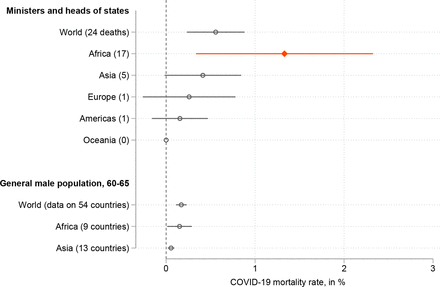
Why, when Africa was barely affected by Covid, were African leaders and ministers disproportionality killed by the disease?
The BMJ found that between 6 February 2020 and 6 February 2021, Covid claimed the lives of 24 national ministers and heads of states around the world. For some reason this didn’t include the Iranian deaths above but putting that aside, 17 of those 24 deaths occurred in Africa.
There was nothing special or different about the demographic of African ministers, “if anything, the African leaders who succumbed to COVID-19 were slightly younger than their seven counterparts on other continents”.
Five suggestions were given as to why the death rate could be so much higher.
- More comorbidities. However, no evidence of this was uncovered;
- Poor healthcare. You would think of all the people in Africa, the leaders of the nation would have access to the best healthcare around;
- General mortality in Africa was higher than reported. This was challenged by the WHO;
- African ministers work environments are busier and, therefore, they are more prone to the circulation of the virus. Even the BMJ say this is a weak hypothesis;
- 50% of the African deaths occurred in Southern Africa and the majority after the more transmissible ‘South African’ variant was reported.
Or was it something else?
John Magufuli
Not included in the report, due to it happening at the time it was published, was the death of another African leader, John Magufuli. Magufuli was president of Tanzania and died in March 2021, aged 61.

The Tanzanian leader had gone missing for two weeks before his death was announced even though the Prime Minister, Kassim Majaliwa, had insisted that the president was “healthy and working hard”. The media speculated that he was in hospital with Covid but when the vice-president, Samia Suluhu announced his death, she said he had died of heart failure.
From the very start, Mr. Magufuli had been a Covid sceptic. The Guardian’s obituary even called him “Tanzania’s Covid-denying president”. He had said how well Tanzania’s economy would do because they weren’t locking down and causing huge harm.
Just over two weeks before his disappearance, the Guardian published an opinion piece titled “It’s time for Africa to rein in Tanzania’s anti-vaxxer president.” The article was sponsored by the Bill & Melinda Gates foundation.
Mr. Magufuli, who had trained as a Chemistry teacher, first saw through the Covid scam when he realised the false positives produced by PCR tests. He sampled a goat, sheep and even a pawpaw fruit, assigned them human names and ages, sent them off for analysis and all came back with a positive Covid test result.
As a result, the president said “There is something happening. I said before we should not accept that every aid is meant to be good for this nation”. At the time of his death, only 21 Tanzanians had died and the president said the country was “Covid-free”. However, the country had stopped testing and recording deaths as ‘with Covid’ so we can’t be sure if this was correct or not.
Masks were laughed at and the government’s advice was to “improve personal hygiene, wash hands with running water and soap, use handkerchiefs, herbal steam, exercise, eat nutritious food, drink plenty of water, and [use] natural remedies that our nation is endowed with”. Whilst in the West, we were told to stop exercising and sit indoors worrying.
The Tanzanian president had also refused to buy “dangerous” foreign vaccines, instead choosing “herbal remedies”. However, even though Western media said this “herbal remedy” lacked scientific evidence, it was in fact made from Artemisia, a plant from Madagascar, shown to fight SARS-CoV-2.
Artemisia is used against malaria and has shown anti-inflammatory effects, including inhibition of interleukin-6 that plays a key role in the development of severe COVID-19. Furthermore, it has been shown to inhibit the viruses invasion and replication, as well as reducing oxidative stress and inflammation and mitigating lung damage. The plant also contains zinc, gallium and selenium, as well as having an antiviral effect.
The week before the president disappeared, ten prominent Tanzanians, including the former Bank of Tanzania Governor, all died from suspected Covid. This led to the WHO calling upon Tanzania to take “robust action”. The president suggested citizens should wear masks but reiterated that the country would not impose a lockdown.
After Magufuli’s death, his vice-president took over the presidency and reversed all his Covid policies.
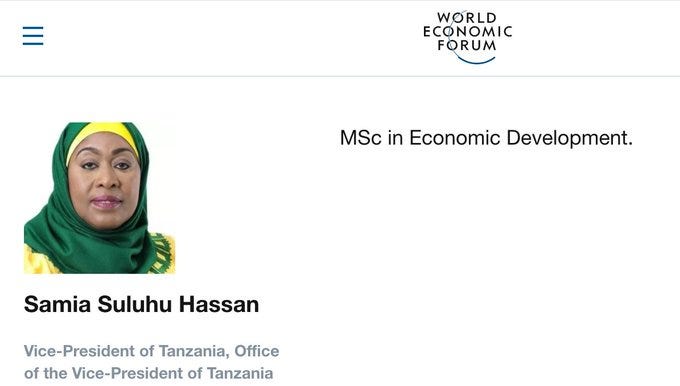
A million doses of Johnson & Johnson vaccine were ordered and a vaccination drive was put in place. A Covid task force was setup, masks had to be worn and lockdowns were enacted.
Pierre Nkurunziza – President of Burundi
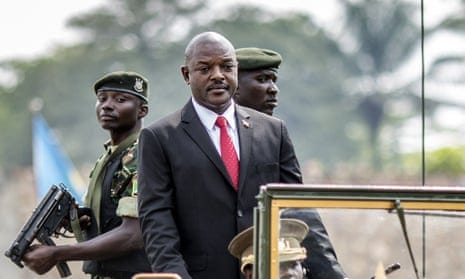
President Nkurunziza died unexpectedly, after a short stay in hospital, aged 55 in June 2020. Again, it was suspected that he had Covid but the official reason given for his death was a heart attack.
A month earlier in May 2020, the president had refused to introduce any social distancing or lockdown rules. After the WHO questioned the country’s Covid statistics, Burundi expelled WHO’s coronavirus team and declared them persona non grata for interfering with pandemic management.
On 30th June, new president Evariste Ndayishimiye announced that Covid was Burundi’s biggest enemy and to fight it required “strict compliance with the barrier measures that the Ministry of Health will now display everywhere across the country”.
Malawi
In April 2020, the high court in Malawi stopped the government from implementing a national lockdown. This had been initiated by a civil society group which challenged president Peter Mutharika who wanted a lockdown to save 50,000 Malawian lives. To date 2,686 Malawians have died with Covid.
However, in January 2021, a number of government ministers died including Minister of Local Government and Rural Development, Lingson Belekanyama; Principal Secretary in the Ministry of Information, Ernest Kantcheche; Transport Minister, Sidik Mia and Foreign Minister, Sibusiso Moyo (the former army general who ousted Mugabe).
Subsequently, the president used these deaths to stress the importance of new restrictions.
Other deaths
As well as the deaths above, which highlight how Covid deaths were used to change Covid policies in their respective countries, other Covid deaths included:
- Ambrose Dlamini, Prime Minister of Eswatini (formerly Swaziland);
- Christian Myekeni Ntshangase, Minister of Public Service in Eswatini;
- Makhosi Vilakait, Minister in Eswatini;
- Mahmoud Jibril, former Libyan Prime Minister and part of rebel government that overthrew Gaddafi;
- Pierre Buyoya, former Burundi president who died in Paris and had just been sentenced to life imprisonment in Burundi over the assassination of his successor, Melchior Ndadye;
- Khalif Mumin Tohow, Justice Minister of Somalia. This was the second Covid death in Somalia;
- Sekou Kourouma, Chief of Staff to Guinean President Alpha Conde;
- Amadou Salif Kebe, Head of Guinea’s electoral commission;
- Victor Traore, Director of Guinea’s Interpol bureau;
- Abba Kyari, Chief of Staff to the President of Nigeria Muhammadu Buhari;
- Mohamed Ben Omar, founder of the Nigerien Social Democratic Party which allied with the President of Nigeria’s party;
- Mahamane Jean Padonou, 2016 Nigerian presidential candidate and special advisor to President Issoufou;
- Ismail Gamadiid, Minister of Climate Change in Somalia;
- Perrance Shiri, part of the Cabinet of Zimbabwe and cousin of Mugabe;
- Ellen Gwaradzimba, Minister of State in Zimbabwe;
- Sibusiso Moyo, Minister of Foreign Affairs in Zimbabwe, noted for announcing the ousting of Mugabe;
- Joel Biggie Matiza, Minister in Zimbabwe and on the US sanctions list;
- Jackson Mthembu, Minister in South Africa. A medical helicopter transporting his doctor crashed, killing all 5 on board, the same day Mthembu died;
- Abdoul Aziz Mbaye, founding member of Senegal’s ruling party;
- Hasan al-Lawzi, Minister of Information in Yemen.
The list could go on and on.
I’m not saying that any of these people were taken out by the WHO or some international organisation that wanted lockdowns or to sell more vaccines. But what I am saying is that, in less transparent countries, Covid provided the perfect cover to get rid of a political opponent or undergo some type of regime or agenda change.
We have seen in the West how politicised the pandemic became and how politicians used the situation to their advantage as much as possible. Unfortunately for many of those Western politicians, killing people you don’t agree with is a little bit harder and more likely to get you put behind bars.
But in many third world countries, including the ones listed above in Africa, this happens a lot. And normally papers such as the Guardian would be rightly outraged. They would claim a coup had taken place or a political assassination.
However, many of the people who would normally be reporting and getting outraged about these deaths joined the cult of Covid. Suddenly, instead of investigating what happened, the political victor only had to write “maybe died of Covid” and Western media just reported “So sad, Covid is so terrible, if only they had been vaccinated”.
I’m sure some of the aforementioned deaths were due to some respiratory virus but maybe now that some ‘journalists’ are coming out of their Covid-induced reporting comas, they will start investigating whether all these politicians really died from Covid or were politically assassinated. The fact that African leaders were almost 8 times more likely to die from Covid than the general population might give them a clue.
Saudi Arabia welcomes Russian Navy frigate
RT | April 5, 2023
Russian Navy ships have paid a visit to Saudi Arabia for the first time in around a decade, the Russian military said on Wednesday. In late March, the detachment, which consists of the frigate Admiral Gorshkov and the medium sea tanker Kama, dropped anchor off the coast of the East African nation of Djibouti.
According to a statement released by Russia’s Western Military District, the two vessels “made a working visit to the port of Jeddah in Saudi Arabia.”
During their stay, the ships will replenish their fuel, drinking water, and food supplies, Russian military officials added.
The frigate, which can carry state-of-the-art Zircon hypersonic cruise missiles, and the accompanying medium sea tanker began their voyage in January of this year, departing from the main base of Russia’s Northern Fleet, Severomorsk.
The detachment has since participated in two international naval exercises in the Indian Ocean, as well as the Arabian Sea, crossing the equator twice, the statement read.
From March 26 to 28, the two vessels were moored at the international seaport of Djibouti, with the aim of enhancing military cooperation between the two countries.
Djibouti and Moscow discussed, among other things, “issues related to ensuring safe navigation” off the coast of Africa and in the Red Sea region.
China is the Rock Upon Which the U.S. World Order Breaks
By Ted Snider | The Libertarian Institute | April 4, 2023
In March, Chinese President Xi Jinping visited Russian President Vladimir Putin in Moscow, where they not only “reaffirm[ed] the special nature of the Russia-China partnership,” but “signed a statement on deepening the strategic partnership and bilateral ties which are entering a new era.” As Xi was leaving the Kremlin, he told Putin that “Together, we should push forward these changes that have not happened for 100 years.” That goodbye was Xi’s not so coded call for the end of the American century.
In his February 7 State of the Union Address, U.S. President Joe Biden got carried away by his excitement and arrogantly and ineptly went off script and called out, “Name me a world leader who’d change places with Xi Jinping. Name me one. Name me one.”
But the deflating truth is that the world is lining up behind China and Russia’s vision of a multipolar world no longer exclusively led by the United States. From Africa and its unanimous attendance at the recent Russia-Africa in a Multipolar World conference, to the Middle East and its long list of countries lining up to join the Chinese and Russian led multipolar organizations BRICS and the SCO, to Latin America and most of Eurasia and Asia, including India, the weight of the world is going to Xi’s place to balance American hegemony and support a multipolar world.
Biden’s outburst was an insult and confrontation that was a personal microcosm of U.S. provocation and confrontation of China on a global level. And it has had a corrosive and dangerous effect. An angry China is not answering America’s phone calls. Biden had hoped to talk to Xi on the phone in mid-March, but Chinese officials are not responding to U.S. requests to arrange the call. Defense Secretary Lloyd Austin’s calls to set up talks with his Chinese counterpart have also not been answered.
China is emerging as the rock upon which the U.S.-led alliance breaks.
China’s growing economic, diplomatic, and political influence is beginning to be more powerfully felt on the world stage. The rapid growth of international organizations that support China and Russia’s multipolar world vision is just one piece of evidence. China’s emergence as an influential broker is another.
Beijing has become a power that can shape the world, leaving Washington out of the process. They shocked the world in March by brokering a region transforming agreement between archrivals Saudi Arabia and Iran. And they upset the U.S. in February by initiating a peace process for the war in Ukraine. Both initiatives left the U.S. out in the cold.
The world is no longer unipolar: a world with multiple poles of power is emerging. China’s foreign policy seeks economic growth that demands the fostering of stability in the world; U.S. foreign policy seeks hegemony that demands hostility and schisms that punish and isolate resisters. The problem with China’s emergence as a broker is that it breaks U.S. hegemony. But it is also that China’s peace plans get in the way of America’s war plans.
The U.S. is not ready for peace in the Russo-Ukrainian War. Though peace plans may serve a devastated Ukraine, they do not serve the larger U.S. goals being served by the devastated Ukraine. The United States is not ready for Ukraine to go to the table and end the war before their larger goals are accomplished. As State Department spokesperson Ned Price said in March 2022, “This is a war that is in many ways bigger than Russia, it’s bigger than Ukraine.”
Biden rejected China’s potential role as a broker in the war, insisting that “the idea that China is going to be negotiating the outcome of a war that’s a totally unjust war for Ukraine is just not rational.” National Security Council spokesman John Kirby said that the U.S. does not believe that a Chinese peace proposal “is a step towards a just and durable peace.” He claims that “We all want to see the war end… And a ceasefire, at this time, while that may sound good, we do not believe would have that effect.” Kirby then added that “we don’t support calls for a ceasefire right now. We certainly don’t support calls for a ceasefire that would be called for by the [People’s Republic of China] in a meeting in Moscow that would simply benefit Russia.”
The U.S. has long insisted that no decisions will be made without Ukraine. But if a Chinese-brokered peace were to succeed, it would be because Ukraine has agreed to it. It is remarkable that it is up to Ukraine to continue the war but not up to Ukraine to end it.
China’s peace plans for the Middle East also get in the way of America’s war plans. A U.S.-led unipolar world demands the isolation of Iran. A key piece of that plan is the establishment and maintenance of a regional coalition against Iran. At the heart of that coalition is Saudi Arabia firmly in the anti-Iran camp. The recent Chinese brokered Saudi-Iran agreement breaks that coalition and mends that schism.
The Saudi-Iran agreement has had immediate effects in the region that further challenge American efforts to shape it in their own way. Fast in the wake of the agreement, Saudi Arabia and Iranian ally Syria agreed to reopen their embassies. And the shift in shape is not just bilateral, but regional. Saudi Arabia’s foreign minister is reported to be on his way to Damascus to formally invite Syrian President Bashar al-Assad to this May’s Arab League summit in Riyadh. The invitation, Syria’s first since 2011, would “formally end Syria’s regional isolation.” On April 1, Syria’s foreign minister went to Cairo for the first official visit in twelve years to begin the process of reinstating Syria in the Arab League.
That “leap forward in Damascus’s return to the Arab fold” frustrates U.S. plans to continue the isolation of Assad and Syria. The U.S. has opposed normalization of relations with Syria by countries in the Middle East. The State Department says their “stance on normalization remains unchanged” despite Saudi Arabia’s new stance and the changes in the region.
China has emerged as a diplomatic force that can broker agreements and shape the world in a way that shatters U.S. hegemony in a unipolar world. Some countries are willing to break with the United States and work with China.
France has communicated to China its “appreciation for China’s positive role in promoting peace talks.” Macron’s Diplomatic Advisor, Emmanuel Bonne, told Wang Yi, China’s Director of the Office of the Central Commission for Foreign Affairs, that “France is ready to make joint efforts with China to facilitate cessation of hostilities and seek a peaceful solution.”
France is a major European NATO ally. China’s emergence as a diplomatic superpower has created a crack in the structure of the U.S.-led alliance.
France is not alone in its willingness to work with China. Where France’s independent position reveals a rift within the U.S.-led alliance, Brazil’s independent position reveals the emergence of other poles in the newly emergent multipolar world.
The independent course charted by Brazil and its willingness to work with America’s rival reveals, not only the loss of U.S. hegemony in its own hemisphere, but the loss of U.S. hegemony globally because partnering with China is partnering with BRICS, the large international organization whose goal is to balance U.S. hegemony of a unipolar world.
Brazilian President Luiz Inácio Lula da Silva has supported China’s efforts at negotiating a peace proposal and criticized the United States for speaking “very few words about peace.” But he has also proposed a joint effort, or a “peace club” that could include BRICS members China, India and Brazil and possibly Indonesia. Indonesia has been a leader in the nonaligned world and was recently welcomed as a guest at the BRICS Foreign Ministers’ Meeting.
China’s diplomatic entry into the war in Ukraine highlights a multipolar world that could shape a post world war and sideline the United States.
As China’s economy and the gravitational pull of its multipolar world grow, and as its force is further felt, not only economically but politically and diplomatically, the U.S. stance may stiffen, and Washington may more solidly confront China, not only by increasing sanctions, but by calling on its allies to do the same.
That call could be a challenging one for America’s European allies to answer. If Seymour Hersh’s reporting is correct, it took cutting Germany off from their Russian oil supply by a historic act of sabotage—an act of war—to keep Germany fully on board in America’s sanction regime on Russia. China has been Germany’s most important trading partner for seven consecutive years. Since the Russian invasion of Ukraine, Germany has only increased its investments in and economic dependence on China. It will be more difficult to pressure Germany to cut economic ties with China than it was to pressure it to cut ties with Russia. And it will be asking a lot of Germany to ask it to cut ties with both.
Dr. Suzanne Loftus, Research Fellow at the Quincy Institute Eurasia Program, told me that, “China is Germany’s most important trading partner. Having to sanction China would put Germany in a very difficult position seeing as how it has already had to sanction another one of its significant trading partners (Russia) and is also struggling with U.S. protectionist policies (Inflation Reduction Act).” Loftus continued “[f]acing difficulties at home, Germany will most likely opt out of having to sanction China if the U.S. started to put pressure on Germany to do so. It would otherwise face too much of an economic shock and increased domestic turmoil as a result.”
A hint of that potential split with the United States was provided in November when German Chancellor Olaf Scholz’s defied Washington by going to Beijing, accompanied by the CEOs of Volkswagen, BMW, BASF, Bayer and Deutsche Bank, in part to discuss trade.
On the eve of his trip, Scholz wrote that “new centers of power are emerging in a multipolar world, and we aim to establish and expand partnerships with all of them.” He said that, though China is an economic power that will “play a key role on the world stage in the future,” this does not “justif[y]… calls by some to isolate China.” Scholz then wrote clearly that “even in changed circumstances, China remains an important business and trading partner for Germany and Europe—we don’t want to decouple from it.”
Future American calls to sanction China could force Europe into a choice between solidity with the U.S.-led alliance and continued economic partnership with China. For the U.S., there is a hazardous forecast that that choice could weaken that solidity.
The growing reality of China’s multipolar world vision, China’s emergence as a broker of peace plans that interfere with American war plans, the world’s shifting of shape that sees important countries willing to work with China, and the need for countries to strengthen trade ties with Beijing all suggest that China could be the rock upon which the U.S.-led alliance breaks.
RFK Jr: ‘The Neocon Projects’ in Iraq and Ukraine Have ‘Made a Laughingstock of U.S. Military Power and Moral Authority’
By Chris Menahan | InformationLiberation | April 4, 2023
Neocon control of America has led to the collapse of American global hegemony and the shredding of our nation’s moral authority, according to Robert F. Kennedy, Jr.
“The collapse of U.S. influence over Saudi Arabia and the Kingdom’s new alliances with China and Iran are painful emblems of the abject failure of the Neocon strategy of maintaining U.S. global hegemony with aggressive projections of military power,” Kennedy said Monday on Twitter, sharing an article from Reuters on OPEC+ cutting production to spike the price of oil in defiance of the Biden regime.
“China has displaced the American Empire by deftly projecting, instead, economic power,” Kennedy continued. “Over the past decade, our country has spent trillions bombing roads, ports, bridges, and airports. China spent the equivalent building the same across the developing world.”
“The Ukraine war is the final collapse of the Neocon’s short-lived ‘American Century.’ The Neocon projects in Iraq and Ukraine have cost $8.1 trillion, hollowed out our middle class, made a laughingstock of U.S. military power and moral authority, pushed China and Russia into an invincible alliance, destroyed the dollar as the global currency, cost millions of lives and done nothing to advance democracy or win friendships or influence,” Kennedy said.
Kennedy is absolutely correct.
His point was further underlined last month when Mexican President Andres Manuel Lopez Obrador went off on the U.S. State Department for accusing Mexico of “human rights abuses” when the Biden regime is working to imprison former President Donald Trump, extradite Julian Assange and bombed the Nord Stream pipelines.
China’s Latest Renaming Of Indian-Controlled Disputed Territory Is A Major Development
By Andrew Korybko | April 5, 2023
The decades-long Sino-Indo border dispute owes its origins to the legacy of British colonialism in the Subcontinent but persists to this day due to the complicated dynamics of this issue, which still remains bilateral despite the US’ efforts to meddling in it for divide-and-rule purposes. The latest major development on this front concerns China’s renaming of Indian-controlled disputed territory on Sunday in what Beijing regards as South Tibet but Delhi administers as Arunachal Pradesh.
This occurred one day prior to Chinese Foreign Ministry spokeswoman Mao Ning’s perfunctory policy reaffirmation pertaining to her country’s desire to trilaterally cooperate with Russia and India via the RIC platform, which was prompted by a related question regarding Moscow’s new foreign policy concept. The signal being sent is that Beijing won’t back down from its claims to that region, but nevertheless believes that this shouldn’t be an impediment to improving ties with Delhi.
Indian External Affairs Minister Dr. Subrahmanyam Jaishankar, however, reminded everyone of his South Asian Great Power’s official policy late last month regarding the impossibility of normalizing relations with China so long as their border dispute remains unresolved. The reason why China’s third renaming of disputed territory in the past six years is such a major development is because it reduces the chances of a deal whereby it and India turn the Line of Actual Control (LAC) into their official border.
The impending trifurcation of International Relations into the US-led West’s Golden Billion, the Sino-Russo Entente, and the informally Indian–led Global South (within which there are multiple rising powers) could therefore lead to more uncertainty between the last two’s Sino-Indo members. Moscow’s interests are in replicating the Chinese-mediated Iranian-Saudi rapprochement between its fellow BRICS and SCO partners, yet this well-intended scenario is impossible without mutual compromises.
The concept of “face” is immensely important in Asian cultures like China’s, hence why it’s unlikely that Beijing will seriously consider rescinding its enduring claims to Indian-controlled disputed territory after just renaming several areas therein. This insight extends credence to predictions that ties between those two will remain tense for the indefinite future, though this likely state of affairs shouldn’t be misinterpreted as implying that the US will succeed in its plot to divide-and-rule them.
Rather, it simply shows that leading countries with multipolar grand strategies like China and India don’t always see eye-to-eye on every issue, which contradicts the Alt-Media Community’s common misportrayal of all non-Western states as supposedly being united against the US. The reality is that very serious differences persist in Sino-Indo ties, which limits the extent to which they’ll cooperate, potentially even including when it comes to financial multipolarity where they have shared interests.
Looking forward, absent any concessions – whether unilateral or mutual – by either or both of these two claimants, there’s no credible reason to predict that their relations will considerably improve even if they do indeed end up cooperating to a limited extent on certain issues of shared interest. Russia’s goal is therefore to ensure that their “security dilemma” and related perceptions of each other remain manageable otherwise the outbreak of a large-scale conflict between them could doom multipolarity.
NATO expansionism in Scandinavia helps America, but puts Finland in line of fire
By Drago Bosnic | April 5, 2023
It’s quite obvious that NATO has always been an auxiliary extension of the United States. This has been the case since the unfortunate inception of the belligerent alliance 74 years ago. Thus, NATO’s crawling aggression should always be observed from the perspective of US expansionism, as the bellicose thalassocracy keeps moving its military infrastructure ever closer to the borders of its geopolitical adversaries. This has been the case in the (First) Cold War and it’s no different nowadays when the US is pushing one European country after another into a broader anti-Russian coalition that now includes the entire European Union. Washington DC is attempting to do the same by constituting a near carbon copy of NATO in the Pacific in a virtually identical step, only aimed against China.
US State Secretary Antony Blinken and NATO Secretary General Jens Stoltenberg attended the admission ceremony with Finnish Foreign Minister Pekka Haavisto. The Office of the President of Finland said in a statement: “Finland has today become a member of the defense alliance NATO. The era of military non-alignment in our history has come to an end. A new era begins. Each country maximizes its own security. So does Finland. At the same time, NATO membership strengthens our international position and room for maneuver. As a partner, we have long actively participated in NATO activities. In the future, Finland will make a contribution to NATO’s collective deterrence and defense.”
The formal admission of Finland is the latest move in the process of “globalizing” NATO. The buzzword in this particular case is “formal”, not “(NATO) admission” and the reason is quite simple. Finland was never truly neutral, not even during the (First) Cold War and particularly not since it entered the EU. It has always been packed with US/NATO intelligence assets, although this has escalated significantly in the last several decades. Since then, the country has essentially become a NATO member in all but name. Yesterday, this was merely formalized. Although NATO Secretary General Jens Stoltenberg dubbed it “a historic event”, this was just PR and optics aimed to “coincide” with NATO’s 74th anniversary. As for Sweden, it will probably have to wait another year, since publicity is everything for NATO.
Although Stoltenberg told reporters on Monday he was hopeful that Sweden would be joining in the following months, this is highly unlikely if Stockholm keeps meddling in Ankara’s internal affairs. Still, he insisted that Finland’s NATO membership “will be good for [its] security, for Nordic security, and for NATO as a whole.” How exactly this is “good for Finland’s security” is yet to be explained by either Brussels or Helsinki. Russia and Finland share a very long border (over 1,300 km), meaning the move has nearly tripled the line of direct contact between NATO and Russia, as the combined border between them has previously been approximately 700 km. Now being well over 2,000 km long, the border could be a major source of tensions.
Considering that Moscow previously never saw Finland as a potential threat, its membership in NATO, a hostile and extremely aggressive military alliance that openly declared and targeted Russia as its primary enemy, Helsinki has unilaterally changed this, prompting Moscow to completely revamp its strategic posturing towards Helsinki. In an interview with RIA Novosti, Russian Deputy Foreign Minister Alexander Grushko stated that “[Russia] will strengthen [its] military potential in the western and northwestern direction” and that “[Moscow] will take additional steps to reliably ensure Russia’s military security in the event that the forces and resources of other NATO members are deployed in Finland”.
During a briefing at the Kremlin, presidential spokesman Dmitry Peskov dubbed the move “an aggravation of the situation” and reiterated Grushko’s warning that Russia will be forced to take countermeasures to maintain its security. “The Kremlin believes that this is another aggravation of the situation. The expansion of NATO is an infringement on our security and Russia’s national interests,” he stated. However, Peskov did acknowledge that the situation certainly wasn’t as bad as with the Kiev regime, which the West has long tried to turn into a springboard for active aggression against Russia.
“The situation with Finland, of course, is radically different from the situation with Ukraine, because, firstly, Finland has never had anti-Russian rhetoric, and we have had no disputes with Finland. With Ukraine, the situation is the opposite and potentially much more dangerous,” Peskov added.
Still, from a military standpoint, the situation can hardly be considered optimistic. Finland directly broke from its neutrality when it decided to acquire F-35 fighter jets from the US in late 2021. The Pentagon has direct access to everything the F-35’s sensors can detect, meaning that Finland would be sharing key military data with the US regardless of whether it was a NATO member or not. On the other hand, being a member also means that it’s more likely to see the deployment of US offensive weapons in close proximity to St. Petersburg, Russia’s second most important city.
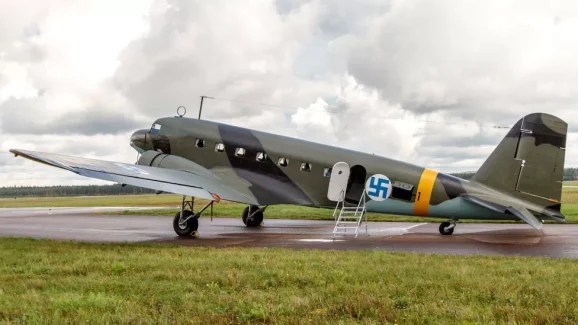
Restored DC-2 plane shows the wartime insignia of the Finnish air force
In this regard, Stoltenberg was right to say that the admission of Finland is truly historic, but only in the sense that Helsinki is essentially repeating the same mistake as over 80 years ago when it joined the Axis led by Nazi Germany. Now when it’s among “old friends” once again, maybe Finland should dust off the history books and pay very close attention to how this ended the last time.
Drago Bosnic is an independent geopolitical and military analyst.
NATO’s Enlargement Targets Not Only Moscow, But Ankara as Well, Turkish Media Says
By Ilya Tsukanov – Sputnik – 05.04.2023
Turkiye’s parliament approved Finland’s bid to join the Western alliance last week, citing Helsinki’s “authentic and concrete steps” to allay Ankara’s security concerns. However, one Turkish outlet fears the nod to membership may prove a strategic mistake, and that the bloc is directed as much against Turkiye as it is against Russia.
Finland officially joined NATO on Tuesday, becoming the 31st nation to join the alliance, with its accession constituting the Western military bloc’s ninth wave of expansion since its creation in 1949. Russia, which shares a 1,300+ km frontier with its Nordic neighbor, warned that Moscow would take the necessary “countermeasures” to ensure its tactical and strategic security.
Turkiye’s Defense Ministry used the occasion, which coincides with the 74th anniversary of the founding of NATO, to post a congratulatory tweet. “We have been a distinguished member of NATO since 1952. Happy 74th anniversary. Together we are stronger,” the ministry wrote, adding the hashtag “#WeAreNATO.”
But the celebration may be premature, writes Turkish newspaper Aydinlik.
“Although NATO’s enlargement has been seen as a policy of containing Russia, it is now obvious that Turkiye is being similarly besieged. In the past, the Atlantic [powers] attempted to establish global hegemony by hemming the Eurasian continent in on land, in accordance with Spykman’s Rimland theory, therefore including countries such as Turkiye, Iran, Afghanistan and China in its geopolitical axis,” the newspaper, affiliated with Turkiye’s Vatan Partisi, a left Kemalist party, wrote in an analysis published Tuesday.
From the 1970s on, the geopolitical situation began to shift, Aydinlik noted. “Among the trusted countries, Iran escaped America’s control in 1979, China after 1990, Turkiye on July 15, 2016 [the day of the attempted coup against Erdogan, ed.] and Afghanistan in 2021, becoming target countries. Therefore, the geopolitical axis was broken, and shifted to Greece, southern Cyprus and Israel. Thus, Turkiye was cut off from the Atlantic [axis], and pushed toward the Heartland, and is now besieged from Alexandropoulos to Crete, and from there to the eastern Mediterranean and northern Syria.”
Turkiye vs NATO
Aydinlik’s analysis is in line with growing anti-NATO and anti-Western sentiment in Turkiye. A 2019 poll found that only 21 percent of Turks had a positive view of the alliance. A 2021 survey discovered that a whopping 90.3 percent didn’t believe that the bloc would come to the country’s assistance in a crisis, while 51.7 percent said the bloc “exploits” Turkiye for its own interests. Another poll in early 2022 found that 39.4 percent of Turks would prefer it if their country would “give priority to Russia and China” in foreign policy, compared to 37.5 percent for the EU and the US.
Turkish grievances with the West are numerous, starting with Turkiye’s shabby treatment by Brussels – which has dangled the prospect of EU membership before the country for more than 30 years, but consistently refused to allow it to enter, ostensibly for failing to “meet membership criteria.” (Meanwhile, much less developed countries in Eastern Europe have been allowed in, and even Ukraine, which is engulfed in a NATO-Russia proxy conflict and mired in corruption and poverty, is now being considered for membership.)
NATO’s role in the 2016 coup attempt is another issue on many Turks’ minds. Some have accused NATO of direct involvement in the coup plot, and the Turkish government’s purge of NATO staff after the attempted putsch indicates that Ankara also suspects them.
America’s sheltering of Fethullah Gulen, the Muslim cleric President Erdogan suspects of masterminding the coup attempt, has served to further fray ties. As has the scandal over the F-35 fighter program. After pumping more than a billion dollars in R&D funds into the fighter and organizing the manufacture of dozens of key components, Turkiye was unceremoniously booted out of the program in 2019 and slapped with sanctions in 2020 over its purchase of advanced Russian missile defense systems.
Turkiye and NATO’s de facto leader, the United States, have also found themselves on opposite sides in Syria, where US forces have allied themselves to and shielded Kurdish militia forces which Ankara classifies as terrorists. At the same time, the ongoing standoff between Turkiye and Greece in a maritime dispute in the Mediterranean (which France, another NATO member, has joined on Athens’ side) has served to further heighten Ankara’s security concerns.
Even as Turkiye prepares for presidential and parliamentary elections scheduled for May, Ankara has accused the US of meddling in the country’s internal affairs after US Ambassador Jeff Flake met with Kemal Kilicdaroglu, Erdogan’s main rival.
“Joe Biden’s ambassador visits Kemal. Shame on you, think with your head. You are an ambassador. Your interlocutor here is the president. How will you stand up after that and ask for a rendezvous with the president? Our doors are closed to him, he can no longer come in. Why? He needs to know his place,” Erdogan said.
Turkish President Recep Tayyip Erdogan speaks to the media during a joint press conference with Finland’s President Sauli Niinisto, at the presidential palace in Ankara,
With NATO’s latest expansion, the real question worth asking, Aydinlik seems to intimate, is about Turkiye’s place in the Western alliance.
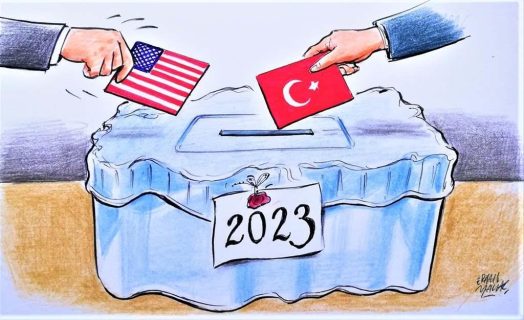
Turkey’s 2023 election a choice between Eurasianism and Atlanticism
By Ahmed Adel | April 5, 2023
The Turkish President refuses to speak any further with the American ambassador to Ankara. The reason: a recent meeting between the diplomat and the leader of the Turkish opposition only a month and a half before the presidential election. Importantly though, this election will determine whether Turkey will continue its course towards Eurasianism, or revert back completely to the NATO bloc.
With the approach of the presidential election, Recep Tayyip Erdoğan reacted strongly following the meeting that American ambassador Jeffry Flake had with the leader of the opposition pro-American Republican People’s Party (CHP), Kemal Kılıçdaroğlu.
“Joe Biden spoke, and now you see what his ambassador here does. He visited (Kılıçdaroğlu). It is a shame. You are an ambassador, and you have to know how to act. You should be engaged with the President (not Kılıçdaroğlu),” Erdoğan said in Istanbul on April 2.
“I wonder if he will be ashamed to ask for an appointment from my office. But I tell him now. Our doors are closed to him from now on because he does not know his place. You should know how an ambassador should act,” he added.
Erdoğan’s outburst was instigated because it is evident that Flake, as head of the American diplomatic mission in Turkey, is endorsing Kemal Kılıçdaroğlu and the Alliance of the Nation coalition, which is made up of seven political parties.
“Ambassador Flake met with CHP Chairperson Kemal Kılıçdaroğlu today as part of continuing conversations with Turkish political parties on issues of mutual interest between our two countries. He expressed American solidarity and condolences for Türkiye’s earthquake losses,” the American Embassy wrote in a tweet on April 2.
The current president, Kılıçdaroğlu, and two other candidates, Sinan Oğan and Muharrem İnce, will face each other on May 14. At the surface level, the vote will determine who will be the President of Turkey for a five-year term, whilst at the same time the legislative elections will take place.
However, at a deeper level, Erdoğan represents Turkey’s slow pivot towards Eurasianism, where he believes a pan-Turkic world has its place, whilst Kılıçdaroğlu represents Ankara’s traditionally close ties with Washington and NATO. Effectively, Turkish citizens have a very deep ideological decision to make.
Respected Turkish public opinion research centre MetroPOLL conducted a survey with the participation of 2,046 people in 28 Turkish provinces between January 13 and March 14. The survey showed that 44.6% of respondents would vote for Kılıçdaroğlu, while Erdoğan would receive 42% of the votes. This makes the upcoming election one of the biggest challenges to the Turkish president’s long rule.
As this election will be close, the US is hoping that it can do its part to ensure that Kılıçdaroğlu wins. Although the US and Turkey are NATO allies, they have many outstanding issues, particularly relating to Washington’s refusal to sell F-35 fighter jets, US support for the Syrian offshoot of the Kurdistan Workers Party, and Turkey’s purchase of the Russian-made S-400 missile defence system.
Tensions significantly escalated even before President Joe Biden entered the White House in 2020. “What I think we should be doing is taking a very different approach to him [Erdoğan] now, making it clear that we support the opposition leadership,” Biden said in a New York Times interview, adding that Erdoğan had to pay the price.
The Kılıçdaroğlu-led opposition bloc has become the darling child of Western media recently, with more anti-Erdoğan coverage appearing on publications like The Economist. The Wall Street Journal, for their part, recently published an article by former US National Security Adviser and notorious warhawk John Bolton, who called on the US to support the opposition or force Turkey out of NATO if Erdoğan won the elections.
It is recalled that Flake had already angered Turkish officials after he shut down the US embassy last year over supposed “security concerns” that Turkey denied. Although the US did not shut down its consulate in Istanbul, it is noted that the mayor of Turkey’s largest city is the immensely popular Ekrem İmamoğlu of the CHP. This again is another signal that the US is backing the CHP in the elections.
But as Interior Minister Süleyman Soylu pointed out regarding Flake back in February: “Türkiye has the misfortune of having US ambassadors seeking to plot coups in our country. Every US ambassador has been engaged in efforts to harm Türkiye. They also try to dispel same advice to ambassadors of other countries.”
In this way, Turkish citizens have a generational choice to make – to continue with Erdoğan’s pursuit of sovereignty and balancing relations with the Great Powers, or a complete submission to Washington and a reversal of the many years of effort made by the Turkish president to achieve sovereignty.
Ahmed Adel is a Cairo-based geopolitics and political economy researcher.
NATO member blasts Ukraine invitation
RT | April 4, 2023
Inviting Kiev to Brussels over Budapest’s explicit objections violates NATO’s principles, Hungarian Foreign Minister Peter Szijjarto said on Tuesday. He took part in the meeting of the NATO-Ukraine Committee anyway, to raise the issue of ethnic Hungarian minority rights.
“We came here in hope that no one will question the validity of our earlier joint decision that NATO is not a part of the war taking place in our neighbor [Ukraine] and that everything must be done to prevent a direct NATO-Russia conflict,” Szijjarto said on Facebook, posting from the foreign minister conference of bloc members.
Inviting Ukraine “violates the principle of the unity of the allies within NATO, but in the spirit of constructiveness we will participate in the meeting,” he added. “I will also make it clear that Hungary will support any integration efforts of Ukraine only if the Ukrainians restore to Transcarpathian Hungarians the rights they had before 2015.”
Around 150,000 ethnic Hungarians live in modern Ukraine, mainly in the Transcarpathian Region. Budapest has vowed not to give up on them “under any circumstances,” even though there has been pressure from “both sides of the Atlantic” to do so, Szijjarto had said earlier this month.
Hungary will not support Ukraine’s applications to either the EU or NATO so long as Kiev’s laws threaten Hungarian-language schools, the minister repeated last week.
Ukraine’s crackdown on Russian-speakers, begun by the government installed by the US-backed coup in 2014, has also affected Hungarian, Romanian, and Polish minorities. Romania had previously joined Hungary in demanding linguistic protections for around 400,000 ethnic Romanians and Moldovans, but Bucharest has been silent as of late.
According to Szijjarto, Ukraine had made promises to Hungary for years, but did nothing to address the matter. Despite criticism from the Council of Europe, Kiev has only doubled down on legislation mandating the use of Ukrainian at all levels of education.
NATO procedures require a consensus of members, but the joint commission with Ukraine was set up over Hungary’s objections. The US-led bloc has given Kiev billions of dollars worth of military aid over the past year, but continues to insist it is not actually involved in the conflict with Russia.
Featured Video
America Racing to Strategic Defeat in Iran
or go to
Aletho News Archives – Video-Images
From the Archives
Should Europeans ‘Thank’ the Americans for Destroying Nord Stream?
By Robert Bridge | Strategic Culture Foundation | September 29, 2022
With an investigation continuing into the destruction of the Nord Stream gas pipeline that provided energy supplies to Europe from Russia, there appears to be just one prime suspect, and that should surprise nobody.
Following the sabotage of the Nord Stream 1 and 2 gas pipelines, former Polish Foreign Minister Radoslaw Sikorski already seemed to know the identity of the perpetrator when he tweeted out: “Thank you, USA.”
At first glance, it seemed that Sikorski was speaking sarcastically, berating Washington for carrying out an attack that will have severe repercussions for the people of Europe. After all, how could anyone see any good coming from the termination of Europe’s primary source of gas reserves with winter just around the corner? It was Sikorski’s homeland of Poland, after all, that urged its citizens to collect firewood in the face of dwindling gas reserves.
In fact, the Polish diplomat was speaking one-hundred percent literally… continue
Blog Roll
 Aletho News
- Tehran approves new Hormuz plan with major restrictions
- No Threat Can Force Iran’s Surrender /Trita Parsi & Lt Cl Daniel Davis
- UK’s New Pandemic Plan Would Turn Big Tech Into a Mass Location Tracking Network
- Growing insecurity, soaring prices fuel protests in north as regime bans evacuation: Sources
- Iran denies responsibility for ‘depraved’ attack on Kuwait desalination plant
- Bring The Troops Back. End This War Now!
- Can we please stop calling Israel the ‘only democracy in the Middle East’ now?
- US should start removing its troops from Germany, proposes AfD co-leader Chrupalla
- Iran Red Crescent: 600 educational centers attacked in US-Israeli ‘war crimes’
- Russian Oil Tanker Arrives in Cuba Amid U.S. Blockade
- If Americans Knew
- As Iran targets US military bases, will they be relocated to Israel? Not a ceasefire Day 171
- Will Trump Go Kamikaze?
- Is the University of Florida Shutting Down College Republicans over Israel Criticism?
- Jewish extremist arrested over alleged plot to firebomb Palestinian activist Nerdeen Kiswani’s home
- More than half of Palestinian child detainees have no charges
- The More Murderous Israel Gets, The More We Hear About “Antisemitism”
- Land Day and the Palestinian struggle after 30 months of genocide
- The Iran War Is About Palestine
- Israeli soldiers echo settler ideology, talk of revenge after targeting Palestinians and detaining CNN crew in the West Bank
- Israeli Policies Threaten Future of Christian Schools in Jerusalem
- No Tricks Zone
- New Study Finds Warming Saves Lives…Cold Temperatures 12 Times More Deadly Than Excess Heat
- German Science Blog Accuses PIK Climate Institute Of Hallucinating Climate Tipping Points
- Devastating Assessment Of Comirnaty Vaccine By Former Senior Pfizer Europe Toxicologist
- New Study: CO2 Is ‘Effectively Negligible’ As An Explanatory Climate Change Factor Since 2000
- Former Pfizer Toxicologist Dr. Helmut Sterz Tells Bundestag Hearing Pfizer Vaccine Should Have Never Been Approved
- Energy Expert: Germany’s Nuclear Phaseout Was A “500 Billion Euro Mistake”
- New Research: South Australia’s Mid-Holocene Sea Surface Temperatures Were 4°C Warmer Than Today
- Storing Green Energy To Last Germany 10 Days Would Require A 60-Million Tonne Battery
- New Studies: UK Sea Levels Were 4 Meters Higher Than Today During The Mid-Holocene
- Destructive Green New Deal: German Energy And Metal Group Warns Of Drastic Crisis
 Aletho News