Gregg Semenza, a pediatrician and a professor of Genetic Science, is a prominent researcher. Prof. Semenza works at Johns Hopkins University, a premier scientific institution so important that it received $1,050,368,895 from the Bill and Melinda Gates Foundation. (JHU played the most prominent role in the Covid pandemic response.)
Prof. Semenza made major discoveries regarding how cells adapt to oxygen availability. Those findings could potentially lead to curing cancer! So important was his work that he was awarded a Nobel Prize in medicine in 2019.
There was a small problem, however.
Seven of his studies were fake and were eventually retracted. Retraction Watch has the details. Even the pictures of mice used in the studies were photoshopped:
The authors have retracted this article as multiple image irregularities have been noted within this article, specifically: Figure 1A, upper panel (HIF-1a blot), lanes five and seven appear to be duplicates. Figure 6B, lower panel (b-actin blot), the first six lanes appear to be identical to Fig. 6G, lower panel (b-actin blot). Figure 3G, the image of the third mouse in the D10 Saline group is identical to the image of the third mouse in the D21 Digoxin group.
Here’s one retracted article and the retraction notice. I downloaded the image from that study and highlighted the mouse in question, which appears in two pictures but with different scan results.
The authors copied/pasted the mouse picture and overlaid different scan results on the two copies. So, they did not have the scientific measurements they claimed to have!
Other retractions expose similarly ridiculous scientific fraud, including fake Western blots and more.
This fraud was not perpetrated by an obscure researcher languishing at a third-rate institution. Quite to the contrary, Prof. Semenza is a world-renowned scientist, occupying a position at a premier facility favored by the major funder of science, Bill and Melinda Gates Foundation.
Prof. Semenza shares the honor of receiving a Nobel prize with other famed recipients, such as Barack Obama, recipient of the 2009 Nobel Peace Prize, and António Egas Moniz, inventor oflobotomy and the winner of the 1949 Nobel Prize in medicine.
Antonio Moniz, Inventor of Lobotomy
So, the world of Nobel prizes is very special!
In consolation, we at least know about this fraud, and Semenza’s articles in question were properly retracted. So the self-correcting scientific process worked as intended, at last.
Sadly, as we know, retractions do not always work in an evidence-based, scientific way. For example, many honest articles questioning Covid vaccines or masks were retracted under pressure from science funders.
I feel that my trust in scientists has been violated by “COVID science” and certain other new scientific developments, but I still like the science of the good kind. I have much less faith in Nobel Prizes, however.
“Vaccine hesitancy and the spread of misinformation on social media have been recognised by the World Health Organization as an urgent threat to public health, with potentially lethal consequences.”
Well that’s settled then. Being recognised by the unelected, pharma-funded, supranational organisation that is the WHO does not lend any credibility to the article’s claim.
They go on to say:
“US president Joe Biden concluded that misinformation on social media was “killing people”.
If this Biden quote is the best they can find to lend support to their hypothesis, it may be time for the authors to go back to the drawing board.
A final excerpt (we recommend reading the whole piece):
“Although doctors are typically among the most trusted professionals, during the covid-19 pandemic some medical credentials were used to peddle fake cures and outright misinformation about vaccination.”
Given the well-established, proven vaccine (in)efficacy, and the military grade coercion that was employed to get people to take them, it’s hard to know where to start in critiquing this particular sentence.
HART felt compelled to write a Rapid Response to the BMJ pointing out that there may in fact be a more pressing need to address the glaring holes in current vaccine trial methodologies, rather than ‘studying’ those raising valid questions.
HART Rapid Response (which unsurprisingly the BMJ chose not to publish):
Dear Editor,
Rather than working out rules for gold standard RCTs on how to reduce online misinformation and vaccine hesitancy, maybe the best thing would be to re-address the golden rules for RCTs of vaccines in the first place.
The Covid-19 vaccine trials provide a classic example of how to increase vaccine hesitancy.
Firstly, the clinical trials were commenced before any human pharmacokinetic and biodistribution studies of all the components were carried out let alone published.
Secondly, they allowed unblinding to take place and many of the control arm then received the vaccine, making the longer term safety assessment from the Phase 3 trials meaningless.
Thirdly they looked at mortality only from the disease in question rather than looking at all cause mortality.
Fourthly, they failed to provide raw anonymised data so that readers could check the results. The dangers of lack of transparency have been highlighted before.[1]
Fifthly, there was no clear separation of the authors from the drug company sponsors, which has its own dangers.[2]
Sixthly, the manufacturers required unlimited indemnity, which tends to make the public ask why.
Seventhly, many studies are underpowered. The children’s trials in particular were too small to elucidate safety – their efficacy was largely based on the concept of ‘immunobridging’.
Eighthly, use of saline placebo. Some vaccine trials used other unrelated vaccines as a control rather than a saline placebo, which is a problem if the comparator vaccine also has under-reported side effects.
It is time to return to proper independently conducted RCTs in which the trial organisers are genuinely in ‘equipoise’, previously the ethical basis for any trial. It is also time to ensure that ‘all cause’ morbidity/mortality are used as end points rather than allowing the investigators to decide whether an individual SAE was or was not related to the vaccine under investigation and use a double-blind placebo-controlled methodology with a minimum 12 month follow-up as recommended by the International Coalition of Medicines Regulatory Authorities (ICMRA)[3]
Such an approach could go a long way to restore faith in the whole process of approvals.
Dr Rosamond Jones, retired consultant paediatrician
[1]Doshi, P. (2018). Pandemrix vaccine: why was the public not told of early warning signs? BMJ, 362:k3948. doi: 10.1136/bmj.k3948
[2]Jureidini J, McHenry L B. (2022).The illusion of evidence based medicine BMJ 2022; 376 :o702 doi:10.1136/bmj.o702
Republicans on the House Judiciary Committee are demanding an FBI briefing on the status of their January 6 Pipe Bomb Investigation following disclosures that the feds have enough information to identify a suspect.
In a letter to FBI Director Christopher Wray, Judiciary Committee Chairman Jim Jordan, Rep. Andy Biggs (R-Ariz.) and Rep. Bill Posey (R-Fla.) said the slow progression of the Bureau’s investigation into the pipe bombs “raises significant concerns about the FBI’s prioritization of that case in relation to other January 6 investigations.”
One former FBI assistant director observed, “[i]t just doesn’t add up . . . [t]here’s just too much to work with to not know who this guy is.” pic.twitter.com/ZVpwEkhS0r
— House Judiciary GOP (@JudiciaryGOP) May 24, 2023
Former FBI agent Kyle Seraphin, a whistleblower who worked on the pipe bomb investigation, told the Washington Times that after planting the bombs, the suspect used a MetroRail SmarTrip card to travel through the Washington metro system to a stop in northern Virginia.
“The FBI used security footage in the Northern Virginia to identify the license plate of the car that the individual entered,” the congressmen wrote. “Still, the FBI has not identified the subject.”
The suspect was caught on surveillance video. He wore a sweatshirt with the hood pulled up, a pair of Air Max Speed Turf shoes with a yellow Nike logo, a backpack and gloves. He was recorded walking through Capitol Hill neighborhoods carrying what federal investigators said were two live pipe bombs.
However, Mr. Seraphin said technicians determined the pipe bombs were inoperable.
His story runs counter to the FBI’s official version that the devices could have detonated at any time. The bureau repeated that story in January while offering a $500,000 reward for information leading to the suspect’s arrest.
Seraphin also told Times reporter Kerry Picket that a separate individual bought the Metrorail SmarTrip card one year before the pipe bomber suspect used it on Jan. 5, 2021.
“The card had never been used before. It was bought a year prior by a retired chief master sergeant in the Air Force, and he was a security contractor. So he held a security clearance,” Seraphin said.
Mr. Seraphin and his team surveilled the retired airman, who lived in a Northern Virginia townhouse, for a couple of days and learned about his background.
Although Mr. Seraphin, who also served in the Air Force, wanted to approach the Air Force veteran and talk to him, his bureau superiors forbade him to do so before his team was removed from the case.
“I don’t know what they [eventually] did on that case, but I know that it was BS and the bombs were BS, and it seems like they had a good lead, and they could have run it down. But as far as I know, they never did,” he told the Times. “He may still be occasionally surveilled. That’s how dumb it gets.”
The congressmen cited former FBI assistant director Christopher Swecker, who told Picket, “[i]t just doesn’t add up . . . [t]here’s just too much to work with to not know who this guy is.”
The committee requested an update on the case in a briefing no later that June 7, 2023.
The Advisory Council on the Environment is a body of experts convened by the Federal Republic of Germany to advise the state on matters of environmental policy. I’m grateful to @tomdabassman on Twitter for drawing attention to their recent and deeply creepy 200-page report on “The obligation of policymakers: Facilitating environmentally friendly behaviour.” It abounds in remarkable and revealing statements, and I’ve spent a good part of the day studying it for a longer post that I hope to write in the coming weeks.
For now, I want to draw your attention to the introduction, which is bad enough. Its authors depart from the premise that the state currently lacks “policy measures … targeting environmentally relevant behaviour,” and join others in affirming that it is the job of the state to nudge individual decisions in the right direction. Tellingly, both the pandemic and the sanctions-induced European energy crisis play a very large role in their thinking:
Although the key environmental crises, such as loss of biodiversity and climate change, are less directly visible and tangible than the energy crisis and the pandemic, environmental policymakers can learn from the sometimes painful but also important experiences of recent years: Behavioural changes in the population can be a part of the solution to crises such as these, and it is possible to adopt and implement policies aimed at changing behaviours.
For example, Germany introduced a series of measures in mid-2022 to alleviate the energy crisis … These measures targeted the behaviour of citizens. In addition to general calls to save energy, building owners were obliged to optimise their heating systems, employees had to accept lower room temperatures at work and it was forbidden to heat private swimming pools …. Earlier, Germany imposed far-reaching pandemic measures to contain the spread of Corona. For example, since 2020, the stated adopted and imposed various lockdowns and social contact limitations. Both highlight the contribution of behavioural changes, whether in energy consumption or social behaviour, to the project of combating a collective problem …
The aforementioned measures doubtless demanded a lot from people and in the specifics of the necessary extent of the restrictions, they proved controversial, as also in their unequal impact on different social groups. Nevertheless, the two crises show that political measures to carefully restrict the behaviour of citizens are possible if the threat is correspondingly great and the importance of the protected good – in these examples, health and energy – is recognised. The state has succeeded (even if not in every individual case) in devising measures such that they achieve their goal while maintaining proportionality. It is also clearly possible for these policies to be designed and communicated in such a way that the majority support them.
Emphasis mine. All of this speaks for itself, and I don’t have much to add, except to observe that the only way for restrictions to be “communicated” such that “the majority support them,” is by renewed forays into state media-fuelled mass panic and hysteria. Corona has taught our rulers that a great deal more is possible than they ever imagined, and they will spend the coming years exploring the limits.
How many people, I wonder, have thought about the sheer quantity of raw material required to deliver Net Zero by the end of this century, let alone by 2050? How many are aware that Tesla alone may consume most of the associated raw materials in the world to make a few million electric vehicles (EVs)? Tesla are making around a million a year but more than 1,500million internal combustion engine (ICE) cars will need to be replaced in the great renewables utopia. Will there will be enough minerals and other raw materials to go round to allow ICE cars to be phased out by 2035 and for Net Nero to be delivered by 2050?
The key materials range from copper to rarer metals such as lithium, the refinement of which involves the release of CO2.
One specialist study reports that by 2050 Europe’s plans for producing clean energy technologies will require annually 4.5million tonnes of aluminium (an increase of 33 per cent on today’s use), 1.5million tonnes of copper (35 per cent), 800,000 tonnes of lithium (3,500 per cent), 400,000 tonnes of nickel (100 per cent), 300,000 tonnes of zinc (10 to 15 per cent), 200,000 tonnes of silicon (45 per cent), 60,000 tonnes of cobalt (330 per cent) and 3,000 tonnes of the rare earths metals neodymium, dysprosium and praseodymium (700-2,600 per cent). And currently the primary sources are in Russia and China.
Global copper production alone (unsurprisingly given the huge government subsidies behind renewable technology) has risen from around 16million tonnes in 2010 to more than 22million tonnes in 2022. Renewable energy plant requires on average eight to 12 times more copper than fossil-based power generation, and EVs three to four times more copper than ICE vehicles.
Perhaps the most challenging demand is for lithium, used to make batteries, including those in electric vehicles (EVs) which each take 63kg. So around 95million tonnes of lithium will be needed to make batteries for 1,500 million EVs globally. But only 130,000 tonnes came from mines in 2022, at which rate it would take more than 700 years to make enough batteries. If those EV batteries have to be replaced on average every ten years (assuming no increase in the number of EVs) the continuing demand will average around 9.5million tonnes pa, which is around 70 times the current rate of mining.
On that basis alone, the plan to replace ICE cars by 2035, 12 years hence, is pie in the sky.
The possible use of sodium-ion batteries is being explored but it is inconceivable that development will be complete or that sodium mines will be producing at the capacity needed by 2035.
Another alternative would be the use of hydrogen engines, which Toyota and others are pursuing, assuming that there will be enough H2 available. But the government plans to bring only 10,000MW of H2 production onstream during the 2030s, when the grid system alone will need several times that to keep the lights on when there is little sun or wind. A doubled maximum demand capacity will also be needed to carry the load of 300,000 new EV chargers in service stations on the strategic road network, plus 10million heat pumps.
If there are 30 petrol pumps per service station and it takes around ten times longer to charge an EV battery than to fill an ICE car, then 300 chargers (probably at 100kW each) would be needed per station. That would require a local grid substation capacity of 30MW, enough to supply a town of 30,000.
So the UK’s 2035 target for phasing out ICE cars looks unachievable because we will have neither the materials, the money nor the skilled resources needed to deliver Net Zero this century. Legislating to phase out ICE cars before affordable alternatives were available is not the way to run a country. Destruction of our ICE-making capacity will take us back to a pre-industrial era.
What prize might we miss out on by failing to eliminate the UK’s 0.00048 ppm contribution to current CO2 levels at a cost of over £5trillion, or over £200,000 per household? It would take 3,000 years for the UK to add 1.6ppm (the average annual rise over 60 years) to current CO2 levels. Bear in mind that the greenhouse gas impact of each ppm rise declines rapidly, and that the sun is the main driver of the 97 per cent of natural CO2 emissions.
Without a referendum, we are being subjected to taxation without representation. The government won’t risk giving us a choice and causing them to have to stand up against the UN, IEA and WEF. Sadly, none of the mainstream parties has the backbone to confront these issues.
All are happy, too, to accept the horrific exploitation and abuse of children in Congolese cobalt mines (and no doubt in other countries too), sacrificed to the ‘clean’ energy revolution.
Der Spiegel, after running multiplestories peddling the canard that mysterious “Russian ships” were implicated in the Nord Stream attacks of 26 September 2022, has in a familiar pattern now totally reversed course and declared instead that there is increasing evidence pointing to Ukrainian attackers. They report that the theory of a Russian “false-flag operation,” to which they’ve given so much attention, is in fact “considered extremely unlikely” by “those familiar with the case.” The key evidence is unspecified “email metadata” from the mysterious parties who rented the Andromeda.
The investigators of the Public Prosecutor General Peter Frank … are now certain that the sailing yacht “Andromeda” was used for the attack. She sailed from Rostock-Warnemünde in early September 2022 and returned after the attacks. Forged identity documents were apparently used for her charter.
Remains of an underwater explosive were found across a large area of the cabin of the “Andromeda.” It is said to be octogen, an explosive widely used both in the West and in the former Eastern Bloc. …
Octogen is much lighter than TNT, capable of transport in a relatively small boat. Experienced combat divers could have placed it at the site of the attack on the bottom of the Baltic. The often-heard argument, that the weight of the explosives would have required a larger ship and perhaps a miniature submarine, is therefore no longer convincing.
The traces found by the Federal Criminal Police Office align with the assessments of several intelligence services, according to which the perpetrators hail from the Ukraine. Intelligence services have also asked whether the attack could have been carried out by an uncontrolled commando, or by Ukrainian intelligence services – and to what extent elements of the Ukrainian state apparatus may have been implicated. ,,,
Even before the attacks, the Federal Intelligence Service (BND) received a warning from the American CIA that were indications Ukrainian perpetrators were planning an attack on the pipelines. The BND did not, however, consider the reports to be very credible.
The story, picked up within hours by multipleGermanpressoutlets, follows slightly earlier reporting from the Süddeutsche Zeitung and German state media broadcasters WDR and NDR that likewise claims to have evidence of Ukrainian complicity, though the details of these earlier reports are so murky and unclear, I decided it was better to ignore them at the time. Allegedly, these news organisations discovered that the entity which rented the Andromeda is a shell company masquerading as a travel agency registered in Poland. The unnamed president of this unnamed company lives in Kiev; her name is also on the paperwork of various other companies, and so it seems likely she’s merely a frontman who has no specific involvement with the firm.
The same journalists also reported that, among the forged passports used to rent the Andromeda, was a Romanian document in the name of a certain “Stefan M.”
A person with this name and date of birth appears actually to exist, but according to the findings of the BKA [the German Federal Criminal Police Office], he was likely in Romania at the time of the explosions. But who was the man who presented the passport in the Baltic? According to research by WDR, NDR, the Süddeutsche Zeitung and their media partners, German investigators believe it could be a Ukrainian national – a man in his mid-20s from a town southeast of Kiev …
Social media photos show a young man, often smiling, sometimes in military uniform with a helmet – and with conspicuous tattoos. The young Ukrainian is said to have previously served in an infantry unit. Investigators are apparently following up on other names and clues. Only one of the young man’s relatives can be reached on the phone: she says he is currently serving in the military. … So far, official Ukrainian agencies have not responded to enquiries.
So, to sum up: One of the emails sent to rent the Andromeda came from Ukraine; the shell company that rented the Andromeda is registered under the name of an unrelated Polish woman living in Kiev; and one of the forged passports presented in this transaction carried a photo that might be of a Ukrainian soldier.
The duelling narratives here are clearly more significant than the specific facts (or, “facts”) which they relate. As I noted in my last Nord Stream update, the Russian-ships theory of the attack has been put about by some source within NATO and laundered through OSINT propagandists, and it looks for all the world like an implicit attack on Hersh’s story, for it centres on the alleged movements of the SS-750, a Russian ship outfitted with a miniature submarine designed for underwater rescue operations. The subtext is that the divers of Hersh’s scenario could never have done the job.
The Andromeda story, meanwhile, hails from intelligence services, specifically the CIA and (probably at second-hand) the German BND, whence it flowed to German criminal investigators and the press. This scenario is framed as an explicit attack on the Russian-ships theory, which the anonymous Spiegel informants go out of their way to discredit. The reason, as far as I can tell, is that the Russia-did-it line has overtly escalatory potential, for it posits a Russian attack in Swedish and Danish waters on energy infrastructure that, in the case of Nord Stream 1, is even partly owned by Germany. The Andromeda story generally strives to make room for a non-state actor, thus removing the immediate diplomatic significance of the attacks. This would explain the bizarre and thinly veiled suggestion of the Süddeutsche Zeitung, back in March, that former Ukrainian president Petro Poroshenko may have been involved in orchestrating the explosions, because they took place on his birthday.
Once again, it remains an enduring mystery, why none of the major published scenarios – not even Seymour Hersh’s detailed account of How America Took Out the Nord Stream Pipeline – accounts for the specifics of the sabotage, which featured two sets of explosions at two separate locations, exactly 17 hours apart. John Mearsheimer recently remarked that if he “had to bet,” he’d “bet that the United States destroyed Nord Stream,” because such an action would be “completely consistent with what America’s overall policy is towards Russia.” It’s very easy to imagine that the United States would have orchestrated the attack through proxies, and it’s at least worth asking whether Hersh’s source fed him an incomplete account for the purposes of obfuscating Ukrainian involvement. On the other hand, the Andromeda theory is very hard to believe; if it is an intelligence service “cover story,” as Hersh claims, we must ask why it is so implausible.
Two University of Michigan professors insist we “must reduce the emission of greenhouse gases to zero” to stabilize the planet’s temperature. But because 80% of our energy use still comes from carbon-based sources today, “ending it will not be easy.” The death of all fossil fuel industry must be imposed, euthanasia-style.
It has now reached the point that academic elites are no longer concealing their real inclinations and intentions in massaged semantics or subtleties.
Two US business professors argue that the looming climate catastrophe (which they believe has been caused solely by human greenhouse gas emissions) necessitates that “the shape and structure of modern capitalism will have to be changed.”
No more roads. No more plastic or steel or electronic products. No more air travel. All the industries that use petroleum products of any kind, no matter how essential, must end this practice, effective immediately. Fossil fuel use must be 100% eliminated.
The cost to get to zero greenhouse gas emissions? Estimates range from $100 to $150 trillion over the next 30 years.
And putting a price on carbon use doesn’t nearly go far enough. It’s not possible to get to zero emissions just by making fossil fuel use more expensive. The entire fossil fuel industry – the producers as well as the recipients – must undergo, as the authors put it, “compassionate destruction.”
If there is any resistance to the total destruction of fossil fuel use, then euthanasia – “the act or practice of killing or permitting the death of hopelessly sick or injured individuals,” must be put into practice. Imposed. Forced.
“A future in which we address climate change may require that the entire sector be euthanized, imposing death ahead of its imminent arrival.”
It is not our job to question. The situation is so real, so dire, that our only job now is to “come to terms with the extreme decision that has to be made for the patient.”
Russian Deputy Foreign Minister Aleksandr Grushko recently warned that the West’s possible shipment of F-16s to Kiev “is fraught with colossal risks” for that de facto New Cold War bloc, shortly after which his boss Foreign Minister Sergey Lavrov described this scenario as “an unacceptable escalation.” The Kremlin’s assessment clashes with the Pentagon’s, whose Air Force chief Frank Kendall claimed last week that “it’s not going to be a dramatic game-changer…for their total military capabilities.”
Biden’s support at the G7 Summit for training Ukrainian pilots to fly the F-16s and some countries’ like the UK’s plans to assemble a so-called “jetcoalition” for their Eastern European proxy suggest that these opposite predictions will be put to the test after some time unless a ceasefire is reached first. Considering this possibility, it’s timely to weigh the merits of each side’s assessment in order to get a better idea of whether the Kremlin’s or the Pentagon’s will more closely reflect reality in that scenario.
Sky News’ explainer that was published on Sunday provides a good starting point for answering this question. According to military analyst Sean Bell, Kiev will likely receive old F-16s that are “heavily dependent on spares” and urgently in need of being updated with modern equipment. “Anything less” than “Modern air-to-air missiles married to a modern F-16 radar”, which he said “would pose a credible threat”, “risks emboldening the Russian Air Force.”
Before reaching his conclusion, Bell also informed readers that “In addition to radar, modern fighters also need state-of-the-art electronic warfare, defensive aids, infrared sensors, link-16 datalinks, and a computer system to programme and deliver the latest generation of high-tech air-to-air and air-to-ground weapons”, not to mention “trained pilots and groundcrew, weapons, spares, ground planning facilities, intelligence, and a suite of supporting infrastructure are also required.”
Quite clearly, it’ll be an herculean task for the West to make Kiev’s possible F-16 fleet a formidable challenge for Russia’s much more modern one that’s already manned by very experienced pilots. This take therefore extends credence to Kendall’s claim that it won’t be a game-changer. Nevertheless, Kiev reportedly envisages arming the F-16s with Swedish-German Taurus missiles that could reach Moscow with their 500-kilometer maximum range, though it’s unclear whether they’ll receive them.
Even if they do, then this doesn’t mean that they’ll be able to break through Russia’s air defenses. Should they succeed in striking targets near or within that Great Power’s capital, however, then it would certainly be spun by them and their supporters as a soft power coup. This is especially the case if verified footage emerges of an F-16 taking down a much more modern Russian jet. Both scenarios are unlikely, though, but their political significance partially explains why Kiev wants these planes so badly.
The other motivation behind obtaining these systems is for them “to strike the command centers and logistical networks of the Russian forces” in the former Ukrainian regions that Kiev claims as its own according to their Air Force spokesman Yuri Ignat. While it’s obviously better for them to have more capabilities available than less, this use of the F-16s also wouldn’t be a game-changer and could even be counterproductive for the West’s soft power if Russia ends up shooting them down.
On the other hand, there are still plausible reasons for why the Kremlin would regard the West’s transfer of these planes to Ukraine as an unacceptable escalation. For starters, it represents yet another unilateral escalation by NATO in its proxywar with Russia, which could prompt Moscow to respond in ways that risk bringing the conflict closer to nuclear brinksmanship. The Kremlin might feel forced to react more seriously than usual in order to “save face” after yet another of its “red lines” was crossed.
The US is basically taunting Russia to do so at this point per an interpretation of Politico’srecent report. According to their unnamed administration sources, “The Pentagon, including top military officials, have long worried about the potential of escalation on the Russian side should the West take such a step as giving Ukraine F-16 capabilities. But Blinken had observed over the past year that Russia rarely escalates beyond rhetoric, even as the West has introduced more military offerings into Ukraine.”
Russian policymakers might therefore calculate that they finally have to do something meaningful to signal their displeasure if this latest “red line” is crossed, particularly if Moscow gets bombed by the F-16s and/or verified footage emerges of them taking down one of their jets. The odds of that happening would spike if a few of those planes are secretly modernized. In that case, Russia risks becoming a laughingstock if nothing serious is done in response, after which even more escalations might follow.
Other than possibly being placed in this particular dilemma, there’s another reason why the Kremlin considers the West’s potential transfer of these planes to Ukraine to be unacceptable, and that’s the chance that they could be based in NATO states and/or manned by “volunteer pilots” from NATO. The first scenario would already be provocative enough, but could prompt an unprecedented crisis if those NATO-based F-16s are used to bomb Russia’s pre-2014 territory.
As for the second, it would almost certainly entail the most modern F-16s being used since NATO likely wouldn’t risk its “volunteer pilots’” lives by having them fly outdated deathtraps. Furthermore, these planes would then probably be based in a NATO state for additional protection even if they’re only used to hit targets over the airspace or in the territory that Kiev claims as its own. As with the first scenario, that would already be a major provocation, let alone if they’re used to bomb Russia’s pre-2014 territory.
To be absolutely clear, there’s nothing credible in the public domain to suggest that these last two worst-case scenarios are being contemplated, but it’s likely the Kremlin’s concerns that the West’s possible transfer of F-16s to Ukraine could lead to those escalations that it considers this unacceptable. Russian policymakers probably expect that any reluctance to meaningfully signal their displeasure at the crossing of that latest “red line” would embolden the West to eventually think about doing precisely that in time.
They obviously don’t want to be placed in the dilemma whereby they might feel damned if they express such a signal by escalating in response for deterrence purposes and equally damned if they decline. In either case, the consequences are unpredictable and could result in everything spiraling out of control, hence why they prefer for Kiev not to obtain any F-16s in the first place. Nobody can therefore say with certainty what will ultimately happen, which is why many observers are becoming worried about this.
Iraqi Prime Minister Mohamed Shia al-Sudani on 27 May unveiled a $17 billion infrastructure project to link West Asia and Europe and make Iraq a regional transportation hub.
Once finished, the “Route of Development” project would run the length of the nation, reaching 1,200 kilometers from Turkiye’s northern border to the Persian Gulf in the south.
The project was announced by Sudani during a meeting with transport ministry representatives from Iran, Jordan, Kuwait, Oman, Qatar, Saudi Arabia, Syria, Turkiye, and the UAE.
“We see this project as a pillar of a sustainable non-oil economy, a link that serves Iraq’s neighbors and the region, and a contribution to economic integration efforts,” he said.
While more negotiations are needed, the Iraqi parliament’s transport committee stated that any country that desires “will be able to carry out part of the project,” adding that the project may be finished in “three to five years.”
“The Route of Development will boost interdependence between the countries of the region,” Turkiye’s ambassador to Baghdad, Ali Riza Guney, said, without specifying what role his country will play in the initiative.
Sudani has prioritized the repair of the country’s road network as well as the upgrade of its aging energy infrastructure.
On 25 May, Iraq’s Oil Minister Hayan Abdel-Ghani announced that Saudi Aramco is seeking to invest in Iraq’s Crutch gas field and expand its capacity to 400 million cubic feet.
Additionally, in February, the Iraqi government signed an agreement with the UAE firm Crescent Petroleum to develop two gas fields in northeastern Diyala governorate to supply local power plants.
The UAE’s private upstream oil and gas company disclosed that the Gilabat-Qumar and Khashim gas fields are expected to produce seven million cubic meters within an 18-month span.
In recent months, Baghdad has bolstered its efforts to increase its relations with Gulf states. On 19 February, Iraq and Saudi Arabia signed a Memorandum of Understanding (MoU) to share sensitive intelligence and deepen security cooperation, marking the first time the two nations have signed a security pact since 1983.
Ukraine President Zelensky and US President Biden met on the sideline of the G7 Summit at Hiroshima within hours of the statement from the Kremlin at 1 am last Sunday, transmitting President Vladimir Putin’s greetings to the Russian forces for the “completion of the operation to liberate Artemovsk” (known as Bakhmut in Ukraine.)
The operation lasted 224 days and turned into an epic battle. Ukraine paid a heavy price in blood in trying to hold onto Bakhmut, which came to be called a “Meat Grinder”. American analysts have listed twenty five Ukrainian brigades and at least 9 battalions and 5 regiments —an estimated deployment 120,000 troops at the very least — thrown into the battle by Kiev. An estimated 70% casualties would mean that Ukraine suffered as many as 94,150 killed and wounded. It is a devastating defeat.
Conventional military doctrine says that an army attacking an entrenched force will need at least three times more soldiers than the defending force entrenched in fortifications. But Wagner fighters numbering 32,000 fighters faced off with a NATO proxy force almost 4 times bigger in numbers and equipped with modern weaponry.
The shock over the crushing defeat was writ large on the faces of US President Joe Biden and Ukrainian President Vladimir Zelensky as they faced the media at Hiroshima a few hours after the Kremlin statement appeared. Reading from a prepared text, Biden announced, in a major reversal of policy, that the US would be “launching some new joint efforts with our partners to train Ukrainian pilots on a fourth-generation fighter aircraft like the F-16.”
Meanwhile, in a series of showy incidents, Ukraine began hitting targets in Russia with US and British supplied weapons. There have been sporadic artillery and Himars missile attacks on Russian civilians in border towns; two drone attacks on the Kremlin; and British Storm Shadow cruise missile strikes on targets in Russia. In one particular instance last week, there has been a cross border incursion in the Belgorod region with US supplied vehicles and weapons. But none of these attacks can be deemed as “game changers.”
While the US and the rest of NATO are feigning ignorance about these attacks, the key fact is that Ukraine gets targeting data that only NATO intelligence sources could provide. Thus, the decades-old red line dating back to Cold War has been breached — namely, that neither the US nor Russia would attack the other side’s territory directly or indirectly. (They held the guardrails even during the Afghan jihad in the 1980s.)
There are going to be consequences. The first sign of it came with the news that nuclear weapons are already being deployed in Belarus and Defence Minister Sergey Shoigu was in Minsk to sign the necessary agreement detailing the logistics of deployment.Biden told reporters on Friday after returning from Japan that his reaction to the Russian deployment is “extremely negative.”
But in reality, Moscow’s intention is to provide Belarus with deterrent capability against any rash moved by NATO such as cutting off access to Kaliningrad. Incidentally, the US too has been keeping nuclear weapons on European soil for many years.
But a flashpoint can always arise. The upcoming NATO exercise codenamed Air Defender 23 (June 12-23) will be the most significant military exercise ever carried out over the European skies and the most extensive deployment exercise of air forces in the history of the western alliance — involving 25 NATO countries, 10,000 military personnel and approximately 220 aircraft.
According to Larry Johnson, well-known American blogger and former analyst at the CIA, “a training operation of this size and scale against the backdrop of heightened tensions in the region is akin to lighting a match in a gasoline storage tank.” That said, at the tactical level, the Russian military is also positioning itself for further operations to complete the liberation of Donbass, after having gained control of Bakhmut, which is a major communication hub through which all Ukrainian logistics passed along the Donetsk arc up to Seversk.
A report in Izvestia on Wednesday said, quoting expert opinion, that Avdiivka and Maryinka are “next in line… so that there will be no shelling of Donetsk city… Next, we will have to turn off the big Donetsk arc — from Ugledar to Seversk with access to Konstantinovka and Slavyansk. These are the last two cities of the large Donbass agglomeration, followed by the steppe (leading toward Dnieper River) where it will be very difficult for the enemy to hold on.”
Again, the Wagner fighters being replaced by regular Russian forces for further operations. Kremlin Spokesman Dmitry Peskov said in an interview on Russian TV on Friday: “It’s hard to say where the breaking point is… Obviously, the degree of direct and indirect involvement in this conflict by the countries of the collective West is surging day by day. This may protract the conflict, but will not turn the tide drastically. It cannot turn the tide at all. Russia will press on with the operation, and Russia will ensure its interests one way or another and achieve the designated objectives.”
Meanwhile, Russia has been conducting an intensive bombing campaign to make it difficult for Kiev to assemble the manpower and firepower required to launch and sustain an offensive operation beyond a few days, and is intensifying its operations overall to decimate Ukraine’s military capabilities.
The “known unknown” is how the 2024 US election campaign will affect the trajectory of the war. Biden’s shift on F-16s can be seen as a knee-jerk reaction. Even Gen. Mark Milley, chairman, Joint Chiefs of Staff admits that F-16 isn’t a “magic weapon.”
Meanwhile, Russia continues to probe the US intentions. In an interview with the prestigious International Affairs magazine, Russian Deputy Defence Minister Sergey Ryabkov said on Friday that “The US ruling elite has consolidated itself to a great extent on an anti-Russian basis, regardless of party affiliation. In my opinion, the situation is turning into a force majeure.”
However, Ryabkov who is the highest ranking “point person” for relations with the US at the foreign ministry also added, “No matter how things turn out, we are willing to maintain dialogue with whoever comes to power (in the US), stays in power.”
Therefore, Ukraine relinquishing the accession to NATO and the EU and returning to neutral non-aligned status will remain one of the key conditions of a successful peace process in Ukraine. The big question is how far the NATO will go at its forthcoming summit in July in Vilnius; would this mean Ukraine’s full membership or something else? The likelihood of any big decisions in Vilnius doesn’t seem to be in the cards.
Interestingly, the Kremlin instinctively warmed up to the idea of a phone call to Putin “in due course,” voiced by German Chancellor Olaf Scholz after his return to Berlin from the G7 summit in Hiroshima. Berlin has consistently disfavoured any precipitate move by NATO apropos Ukraine’s membership.
In an interview with Wall Street Journal on Friday celebrating his centennial, Henry Kissinger also remarked that “the offer to put Ukraine into NATO was a grave mistake and led to this war.” Kissinger advocated instead greater clarity in Russia’s stance on Europe, flagging that while Russia is interested in fostering ties with Europe for its own development, it is also cautious of potential threats coming from the West.
I’ve been wondering for quite some time about whether we are in a War and the resolution of my thoughts on the subject has recently improved.
Oddly enough, I have some standing on the subject.
I lived in Iraq between 1981 to 1991, a period that covered almost all of the Iraq/Iran War and all of the Gulf War, the original, not the sequels.
It was an old school type of war, with two parties fighting over territory and trying to redraw a border. A lot of people died over 8 years and the border stayed the same. But weapons were sold, and internal power was consolidated.
That’s really what war is about, territory. You have something that I want, and I will fight you for it.
So, if this is a war, who are the warring parties and what is the fight over?
The war is between “the state” and “the citizen”. The latter is YOU and ME and it’s easy enough to understand (sort of), but THE STATE is not straightforward anymore and I’ll cover that later.
The border between these two parties is being redrawn. The relationship between the State and the Citizen is being RESET.
When you hear about The Great Reset, that is what “Reset” really means.
Think back to your life, last year in Feb 2020. Think back to how you thought, what you did, what degree of intrusion the State had in your life and what level of control you had over your life and choices.
In Feb 2020 there was a border, a fairly large circle that you stood in the centre of. Everything within that circle was your domain, your freedoms, and your sovereignty.
Now, reflect on your life today, but more importantly reflect on the size of that circle. It obviously is much, much smaller today. The border between you and the State has been Reset.
Within that circle is a second circle that is much smaller, and it surrounds you almost like a second skin. Within this second circle, you have what is your “bodily sovereignty”. What is within your body is YOURS and not the State’s.
If you have acquiesced to the State’s injection, you have surrendered your bodily autonomy to the State. There is no border anymore between you and the State. It’s a depressing conclusion but true.
Your rationalisation for taking it is irrelevant, you wouldn’t have taken it but for the State’s lies and threats. Unless you took the flu vaccine every year religiously, to “protect yourself and others”, you have surrendered to the State. You may have had no choice because you need to make a living and feed your family, so it was a calculated surrender, but a surrender, nevertheless.
But for almost everyone else, you surrendered your bodily autonomy (let alone your current and future health) so that you could go to the pub, go to the hairdresser, go to the gym, see your parents, travel, plus a laundry list of other reasons that the world has used to rationalise its surrender to the State.
It is worth noting, that if you have surrendered your bodily sovereignty to the State, and there is no longer a border between you and the State, what would you ever say no to in the future. If you were not prepared to stand up for your bodily sovereignty, what would you ever stand up for?
But as a friend of mine said the other day, people just don’t know. They haven’t spent the time (for some hundreds of hours) necessary to figure out what is true and what is a lie.
They think the jab is safe (without understanding the meaning of the word).
They think it is effective (that it will protect them from getting Covid or giving it to parents, grandparents and others).
They think the State is truthful (why would they lie?).
They think the disease is exceptionally deadly (because they were told it is).
They think that masks work (when hazmat suits are necessary to protect against respiratory viruses).
They think that lockdowns work and are worth the cost.
They think that social distancing works.
They think that healthy people can spread the deadly disease.
They think that test results are real.
They think that contact tracing works (so they keep checking in, even when nobody is watching or cares).
And they think many other things that all form the framework for the biggest lie ever told to the world.
You need a lot of time to dismantle each one of these falsehoods and unravel the matrix that has been built.
I now would add another leg to this line of thinking.
They think there is no war.
This is a vital point, and I draw on my time in Iraq to understand it.
We knew there was a war. We knew who the warring parties were. We knew there was a border being fought over. We knew that our wants and needs needed to recalibrate to the reality of the war we were in. I don’t remember anyone ever complaining about missing out on all of life’s “nice to haves”. Our wants had recalibrated very tightly around our needs, there wasn’t a gap really. If we and our loved ones were fed and safe for the night and we had a job in the morning that allowed us to be fed and safe for the night, then we were generally happy. To survive war, you need to recalibrate psychologically to it. Of all my friends during those years, I don’t remember any of them being depressed. They had psychologically adapted to the reality of war, and to a climate of having and doing less. Within that recalibration, we were content.
We bunkered down and got through it.
The Iraq-Iran War went on for 8 years. Early on people thought it would be over in a few months, that was just normal human optimism. But after a couple of years most understood that thinking in terms of timeframes just created false hope and wasn’t helpful to having a robust and resilient War mindset. So, we accepted that it would be a long war and stopped trying to guess it’s end. Basically, for our own psychological well-being we settled in for the long haul.
I recommend that you do the same here, start settling in for the long haul. This War is not ending any time soon.
Learn to live with less.
I wrote this short piece many years ago, mainly so that I wouldn’t forget the stories and that my kids would get a glimpse into their history. It was a time where we learned to live with less.
The Generator
The first thing the Americans did was take out most of the infrastructure. They took out the bridges, they took out the TV stations and they took out the power plants. We lost our electricity on the first night of bombing in January 1991.
The war lasted for about three months, 100 days to be precise, and then it took another three months before the lights came back on, so all in all about six months without electricity.
Six months!
I’ve heard it said that society falls apart and anarchy sets after a couple of weeks without electricity. Well, that didn’t happen. Maybe we had other things on our minds.
A lot of things changed quickly when the power went out on that first night of bombing. Sleep cycles for one, no more TV and some candle use initially but that quickly changed to mainly a kerosene gas lantern that we had. It looked something like this.
It had a pump that you would use to pressurise the tank, it would then spray a kerosene mist onto a ball shaped net that burned brightly. It made a sssshhh sound that I still remember. I don’t recall anyone else having one and I don’t remember how we got it but it was our main source of light in the living room during those dark months. It burned white and bright and had a constant, soothing pressured burning sound.
One day a friend and neighbour, Abu Bashar (Father of Bashar), managed to get his hands on an old broken down generator. He asked me if I wanted to have a look at it. Having never before seen a generator in my life, let alone fixed one, I announced my intention to resurrect the machine.
I was asked the question because over the years I had built up a reputation as a fixer, helper and general handyman. I had no idea how to “fix” a generator, especially seeing I didn’t know what was wrong with it. But I loved taking things apart, so I did just that.
It was about the size of a large esky and I spent most of the day dismembering the unfortunate machine. I carefully cleaned every piece and when there was nothing left to take apart, I started to put it all back together again. As evening fell the now cleaned generator was pieced together with only a small collection of “extra” bits and pieces left in my pocket.
It was evening by now, Abu Bashar, his family and the occasional neighbour had been casually keeping an eye on me all day. Anyway, the thing was back together by late evening, it was filled up with petrol and now the moment of truth had arrived. As I was about to pull the starter cable, I remember thinking I had no idea why I thought it might work. I knew that all I had done was take it apart, clean it and put it back together again. I hadn’t “fixed” anything. So, any hope that it might work was clearly without basis. Put simply, it was a Hail Mary.
So, I pulled that cable, hailing Mary… and that beautiful two stoke started first time!! The bloody thing was working! And it was loud. As loud as any two stroke, angry at being silent for years, making up for lost time.
It was late, around nine or ten pm and the whole neighbourhood could hear this monster roaring, but no one seemed to care. There was electricity in the street!
The first thing everyone wanted to do was watch a video of an old Egyptian movie. Anything to take their mind off the misery and drudgery that was their daily life. And so there we were, family, friends and neighbours crammed together in a small living room, watching an old favourite movie, barely hearing a word over the roar of the machine outside. But happy that a little bit of joy and normalcy had returned despite the contrived and temporarily nature of the whole affair.
If you don’t know that you are in a war, and “just want your old life back” then taking a “safe and effective vaccine” to “protect you and your loved ones” from a “deadly disease” seems entirely reasonable. But unfortunately, none of that is true, including the bit about getting “your old life back”.
So, to summarise.
Yes, there is a war.
It is being fought over the Territory and the Border between The State and YOU The Citizen. It’s a land grab.
The State has been winning since March 2020.
The injection is the final step in that War and dissolves the last Border surrounding our Bodily Sovereignty.
In War, a War Mindset is required to survive.
War is a battle between two parties over territory
The state is in open warfare to reset its relationship with its citizens. To move the border
Passports not only move the border but then permit the state to keep moving that border as they see fit
One year ago today: WHO officially declares COVID-19 a pandemic.
Director-General Dr. Tedros: “We’re deeply concerned both by the alarming levels of spread and severity, and by the alarming levels of inaction.” pic.twitter.com/D0k0wOuYa2
Now, watch this through the lens of War. This was a declaration of War on The Citizen.
It was not clear to most, certainly not to me, back then. It is as clear as daylight today.
What’s interesting about this War, is that REGULAR Compliance is the end game. Not just today’s compliance, but ONGOING Compliance.
Please understand, there is no such thing as “fully vaccinated”.
There is now only non compliant and temporarily compliant.
The unjabbed are the Resistance.
But, not getting the jab, is among other things just a proxy for non-compliance.
So, in truth the non-compliant are The Resistance.
And what’s interesting about that is that if you have surrendered to date, you can Un-surrender.
If you QR Code to check-in everywhere, you could stop doing that. You can deploy a range of evasion tactics.
If you have taken one dose, you can choose to not take the second.
If you have taken two doses, you can choose to not take the “booster”.
If you were “enjoying your freedoms” you can choose to adopt a War mindset.
You can choose at any moment to stop complying with The State and reclaim some of your lost territory.
And while we are on the subject of surrender; just as you can un-surrender at any time, you can also surrender at any time, so do you need to surrender today?
If you have not taken the jab so far, do you need to give in today?
Why not leave your surrender for another day or another week?
I have written extensively about my D.A.D Strategy and a Waiting for Novavax Strategy so why surrender today, wait until tomorrow and then ask yourself the same question. In War, taking things one day and one week at a time makes a lot of sense.
Stuart Lindsay, an Australian retired Federal Circuit Court Judge wrote this wonderful piece:
Strictly speaking, we fell in March 2020 when COVID arrived in earnest, but I date it from my acceptance that my fellow citizens would never stir. You cannot wake someone who is pretending to be asleep. The truth is that whether through cowardice or prolonged conditioning the vast majority of Australians, including many of my close friends and even family members, have manifested since then the absence of any kind of allegiance to their country or their heritage.
Most of those I live among have no desire at all to recover the freedom to speak or to assemble which has been taken from them. What would they have to say anyway? The only public utterances to which they now aspire are those to be roared as part of a crowd at the bread-and-circuses events, such as the football, which they are occasionally granted permission to attend. Then they replace their masks for the drive home past empty shops on patrolled and near-deserted streets.
Stuart has some wonderful turns of phrase, such as this one describing the acquiescing (surrendered) masses:
Netflix, full bellies and a warm place to defecate. That is all most want these days, is it not?
Stuart understands the mindset required for these times, and the years ahead:
I show you the times. Look out of your window if you need corroboration. I show you what you must do to get yourself in order if you want to be of any value in the fight to preserve what is left of your heritage. Here are some other ways to ready yourself for that fight.
Relinquish all of that unseemly longing for the return of unregulated visits to the theatre or the cinema and those beloved restaurants. Accept that never again will such things be free of petty invigilation and that on the worst case outcome they will only be possible if you keep having mRNA booster jabs — now the case in Israel, where three shots are now required even as officials moot lifting it four. If you are wary and reluctant to be inoculated with treatments whose long-term effects remain unknown, as am I, you need to accept that governments intend to make you a pariah for not having a “COVID passport” and be prepared to forfeit such pre-Fall pleasures as dining out. Keep your self-respect instead. Read that long-neglected Cervantes or C.S. Lewis on your bookshelf, help out at a refuge for the homeless or visit your sick grannie. Australia is teeming with sick grannies, so I’ve heard.
Here is a wonderful recent speech by Dr. Julie Ponesse.
She references War a few times, here are the War references:
But it is not only information that is being weaponized, in this WAR; it is a person’s right to think for herself.
… we are in a kind of moral WAR.
But the WARS of the past have had clear and distinct boundaries: the east and the west, patriots, and government.
The WAR we find ourselves in today is one of infiltration instead of invasion, intimidation instead of free choice, of psychological forces so insidious we come to believe the ideas are our own and that we are doing our part by giving up our rights.
As a wise colleague recently said “This is a WAR about the role of government. It is about our freedom to think and ask questions, and about whether individual autonomy can be downgraded to a conditional privilege or whether it remains a right. It is a WAR about whether you are to remain a citizen or become a subject. It is about who owns you, you or the state.”
As someone born in the 70s, I never thought THIS would be a WAR I would have to fight, that the right to bodily autonomy, to the free and transparent exchange of information would be at risk.
Ok, I think it’s time we talk about The State. What does that word mean?
Well, let’s start off by saying that it doesn’t mean what it used to mean, and it doesn’t mean what you think it means.
It used to mean that your government, acting independently of other governments, independently of business and independently of media would try to increase its territorial footprint while reducing the citizens territory. Sometimes they would win and sometimes they would lose and there were checks and balances within the system that worked to reduce the speed and scale of the government’s land grabs.
Well, does that sound like what it is going on today?
If all 200 countries around the world are pretty much all doing the same thing, do you think they are acting independently?
Do you think that business is acting with the government or with you? Do you think business is a check against the government or is business aiding and abetting The State?
Do you think that Media is acting as a check against the government, or is it helping the government disseminate its misinformation and disinformation?
Is the legal profession standing up for you or aligning itself with the government?
Is the medical establishment acting honestly to protect its patients or supporting the government in its campaign?
The State is now a NETWORK and it’s borderless. It’s a Global Network on a scale never seen nor imagined before.
Several months ago, I described it as The MGM Triad
I was saying to my wife last night that in the past the “collapse” of a society happened within contained borders. The institutions of that particular country decayed to the point of collapse and/or takeover by nefarious actors (those that want to dominate others, look after others, “fix” the world’s problems because they know best etc., it is a very real personality type and is always a percentage of the population and they climb the poles of business and government).
Because of the way the globe has been rewired over the last 50 years and especially the last 20 years with ever more powerful global institutions and a communication grid with central points of influence and control, the collapse we are witnessing at the moment is “post-national”, its far higher upstream, all the way at the source of the river, which is why it’s happening everywhere.
Today I can say that I was on the right track, but I don’t think The MGM Triad even does this Global Network justice. It’s a good introduction to the question of “Why is this happening?” to someone just waking up, but there are even more layers to understand.
You will need to use a web translator to read it from the Norwegian website.
Within the article you will find a link and reference to this 169 page document, that does a deep dive into this global network. The document:
… shows connections between the Gates Foundation, Wellcome Trust, WHO, GAVI and other NGOs and Big Pharma. It contains round about 6,500 objects including like Persons, NGOs, Companies, Documents, etc. It also includes more than 7,200 links between them.
A great passage in this essay highlights the immense power of these networks. They have shown that they are able to get the largest governments in the world to heel.
The incredible power of the networks
To give an example of how much power these NGIs and actors have, I would like to show a current example that has hardly been mentioned in the media (nor in the alternative media), but which Mr.X immediately noticed, as he keeps an eye on the “right” NGIs.
On August 3, 2021, an open letter to the Biden administration was published. In this letter, the important NGOs, who – after what we have concluded – have been planning a pandemic since 2017, demanded. We will now take a closer look at these requirements from 3 August 2021.
Global Summit on Vaccinations
In the open letter, for example, one could read the following requirements:
” to host a global presidential-level summit on vaccinations, before the UN General Assembly in September, bringing together leading forces from the public and private sectors from around the world (…) and commits to taking the necessary measures to close gaps in vaccine supply and correct deficiencies in funding and capacity in the distribution and distribution of vaccines, as well as to create demand.”
It took only six weeks for Biden to comply with the claim. In parallel with the United Nations General Assembly, President Biden is currently hosting a virtual summit with representatives from 100 countries, where the president announced just that. And he urged the other countries to follow the example of the United States, as reported by Die Tagesschau, for example.
Do you now understand the power of these actors, when all it takes is for them to write an open letter to the president, and he complies with their demands within six weeks?
Vaccinate 70% of the world’s population
Furthermore, in the open letter it was demanded:
“To get the heads of state and government in the world, before or during the summit, to commit to achieving the goal of vaccinating 70% of the world’s population by mid-2022.”
«As an organizational framework, Biden introduced a transatlantic vaccination partnership. ‘Today we are launching a partnership between the EU and the US for a global vaccination offensive,’ he said, in order to have closer cooperation. The goal is to have vaccinated 70% of the world’s population by September next year.”
Within six weeks, Biden (and also the European Union) pledged to fully comply with the requirements set out in the letter.
This is another good piece fleshing out the role of the WEF (World Economic Forum) network and the many people involved.
What a co-incidence, the World Economic Forum outlines a vision in 2018 for Digital Identity and in 2021 the Australian Government is about to finalise its laws making it a reality.
A wonderful Australian writer fighting the good fight is Alexandra Marshall.
Make no mistake, vaccine passports are a domestic Social Credit System created under the watch of the federal Liberal Party. It is a sprawling government entity that denies rights based upon compliance in the hope that you will obey rather than exercising your democratic right to resist.
Citizens accepted vaccine passports because the government made them a condition of release from unlawful detention. As a population, we have been emotionally damaged to the point that people cheer on the discrimination of their neighbours. Ethics have been replaced by the intense fear of being sent into lockdown.
We are not witnessing a casual overreach of power – vaccine passports and QR check-ins are a complete abandonment of the Western democratic system. They are a threat to the liberty of our children and the survival of Australia’s laid-back spirit.
CJ Hopkins is a wonderful writer; he has written eloquently about his new War.
He describes the core desire of Totalitarianism as wanting:
… to remake the world in its paranoid image; to replace reality with its own “reality”
He goes further:
We are right in the middle of this process currently, which is why everything feels so batshit crazy. The global capitalist ruling classes are implementing a new official ideology, in other words, a new “reality.” That’s what an official ideology is. It’s more than just a set of beliefs. Anyone can have any beliefs they want. Your personal beliefs do not constitute “reality.” In order to make your beliefs “reality,” you need to have the power to impose them on society. You need the power of the police, the military, the media, scientific “experts,” academia, the culture industry, the entire ideology-manufacturing machine.
What I call The State he calls here Supranational Global Capitalism:
And, yes, it is all one ideology, not “communism,” or “fascism,” or any other nostalgia, but the ideology of the system that actually rules us, supranational global capitalism. We’re living in the first truly global-hegemonic ideological system in human history. We have been for the last 30 years. If you are touchy about the term “global capitalism,” go ahead and call it “globalism,” or “crony capitalism,” or “corporatism,” or whatever other name you need to. Whatever you call it, it became the unrivalled globally-hegemonic ideological system when the Soviet Union collapsed in the 1990s. Yes, there are pockets of internal resistance, but it has no external adversaries, so its progression toward a more openly totalitarian structure is logical and entirely predictable.
Naturally, there would be one official reality that you would force everyone to rigidly conform to at any given moment in time, but you would change the official reality frequently, and force everyone to conform to the new one (and pretend that they had never conformed to the old one), and then, once they had settled into that one, you would change the official reality again, until people’s brains just shut down completely, and they gave up trying to make sense of anything, and just tried to figure out what you wanted them to believe on any given day.
He coins the term GloboCap, which is his version of my MGM Triad.
But the goal of GloboCap’s War on Reality isn’t simply to deceive the masses and divide them into opposing camps. Rulers have been deceiving the masses and dividing them into opposing camps since the dawn of human civilization. This time, it’s a bit more complicated than that.
And depressingly this paragraph:
You could experimentally “vaccinate” millions of people whose risk of becoming seriously ill or dying from your apocalyptic virus was minuscule or non-existent, and kill tens or hundreds of thousands in the process, and the people whose brains you had methodically broken would thank you for murdering their friends and neighbors, and then rush out to their local discount drugstore to experimentally “vaccinate” their own kids and post pictures of it on the Internet.
We have watched as the New Normal has done precisely what every totalitarian movement in history has done before it, right by the numbers. We pointed all this out, each step of the way. I’m not going to reiterate all that again.
I am, however, going to document where we are at the moment, and how we got here … for the record, so that the people who will tell you later that they “had no clue where the trains were going” will understand why we no longer trust them, and why we regard them as cowards and collaborators, or worse.
Yes, that’s harsh, but this is not a game. It isn’t a difference of opinion. The global-capitalist ruling establishment is implementing a new, more openly totalitarian structure of society and method of rule. They are revoking our constitutional and human rights, transferring power out of sovereign governments and democratic institutions into unaccountable global entities that have no allegiance to any nation or its people.
That is what is happening … right now. It isn’t a TV show. It’s actually happening.
Whereas 20th-Century totalitarianism (i.e., the form most people are generally familiar with) was more or less national and overtly political, New Normal totalitarianism is supranational, and its ideology is much more subtle. The New Normal is not Nazism or Stalinism. It is global-capitalist totalitarianism, and global capitalism doesn’t have an ideology, technically, or rather, its ideology is “reality” When you are an unrivalled global ideological hegemon, as global capitalism has been for the last 30 years or so, your ideology automatically becomes “reality,” because there are no competing ideologies. Actually, there is no ideology at all … there is only “reality” and “unreality,” “normality” and “deviations from the norm.”
Few others have written as well as CJ Hopkins on how to deal with this New Normal “Reality”.
So we need to adopt a different strategy. We need to make the monster show itself, not to those of us who can already see it, but to the New Normal masses, the Covidian cultists. We need to make Jim Jones drop the peace-and-love crap, move into the jungle, and break out the Kool-Aid. We need to make Charles Manson put down his guitar, cancel orgy-time, and go homicidal hippie. This is how you take down a cult from within. You do not try to thwart its progress; you push it toward its logical conclusion. You make it manifest its full expression, because that it when it implodes, and dies. You do not do that by being polite, conciliatory, or avoiding conflict. You do that by generating as much internal conflict within the cult as you can.
In other words, we need to make GloboCap (and its minions) go openly totalitarian … because it can’t. If it could, it would have done so already. Global capitalism cannot function that way. Going openly totalitarian will cause it to implode … no, not global capitalism itself, but this totalitarian version of it. In fact, this is starting to happen already. It needs the simulation of “reality,” and “democracy,” and “normality,” to keep the masses docile. So we need to attack that simulation. We need to hammer on it until it cracks, and the monster hiding within in appears.
That is the weakness of the system … the New Normal totalitarianism will not work if the masses perceive it as totalitarianism, as a political/ideological program, rather than as “a response to a deadly pandemic.” So we need to make it visible as totalitarianism. We need to force the New Normals to see it as what it is. I do not mean that we need to explain it to them. They are beyond the reach of explanations. I mean that we need to make them see it, feel it, tangibly, inescapably, until they recognize what they are collaborating with.
Here is a good example of the tools now available to assault reality and create a new “reality”.
The global assault on reality and the creation of a new “reality” has created a Mass Psychosis, described by Dr. Mattias Desmet as Mass Formation.
John Waters, writes beautifully about a recent Desmet interview.
You cannot extract the Mass Psychosis from the New Totalitarianism. They are two sides of the same coin. Here are some extracts that help explain the phenomenon:
Le Bon it was who observed that the consciousness bestowed by membership of a crowd can be transformative, possessing individual members with ‘a sort of collective mind which makes them feel, think and act in a manner quite differently from that in which each individual would feel, think and act were that person in a state of isolation.’ In such a ‘psychological crowd’, individual personality disappears, brain activity is replaced by reflex activity: a lowering of intelligence, provoking a complete transformation of sentiments, which collectively may manifest as better and worse than those of the crowd’s constituent members. A crowd may just as easily become heroic or criminal, but is generally disposed towards destruction.
‘The ascendancy of crowds,’ wrote Le Bon, ‘indicates the death throes of a civilisation.’ The upward climb to civilisation is an intellectual process driven by individuals; the descent is a herd in stampede. ‘Crowds are only useful for destruction.’
–
He says there are four conditions that need to be in place to enable mass formation to occur in a society. The first is the presence of large numbers of socially isolated, atomised, people. The social bonds between people need to have been weakened. This is the most important, and the other conditions follow from it. Secondly, there will be large numbers of people who experience lack of sense-making in their lives and work — people who feel that their jobs are senseless, meaningless. Thirdly, there requires to be ‘a lot of free-floating anxiety’ — i.e. anxiety that is not connected to a mental representation so that the sufferer doesn’t know why he is anxious and afraid. And fourthly, there needs to be a lot of ‘free-floating psychological discontent’ — anger and frustration at, again, apparently nothing in particular.
And you also need mass media — without which mass formation would be impossible. Desmet does not explicitly say so, but of course it is also essential that these media be biddable and readily prone to corruption.
These conditions, he says, existed in Western societies long before the Covid crisis. There was, he says, ‘an epidemic of burnout’. He says something between 40 and 70 per cent of people in modern societies experience their jobs as senseless. He points also to the escalating use of psycho-pharmaceutical medicines to treat anxiety and depression.
–
There are, in situations of mass formation, says Desmet, three distinct groups that manifest themselves. Only 30 per cent, he says, are really hypnotised, and cannot be reached in any way. In addition, however, there are about 40 per cent who usually follow the crowd, and from the outset go along with that 30 per cent of total believers. There is another cohort of about 30 per cent who are not hypnotised, who try to speak out and resist. This group, he says, is extremely heterogeneous and disunited. If these people could unite, he says, they could bring the whole thing quickly to an end, but this seldom proves possible.
–
Totalitarianism in its full-blown form, then, is something that comes after, but ‘after’ what? It comes after a lengthy ‘preparation’, not necessarily planned with malign intent, in which human beings become isolated, atomised, alienated and lonely — conditions for which the totalitarian has ready solutions in the promulgation of bogus community and imagined bonds of mutual hatreds. The negative undertones of these processes suggests some form of prior error, and this may well have been present, perhaps in the pursuit of greed or exploitation, but this is not any longer admissible. Totalitarianism is like a secondary condition that descends on a society that has first of all been subjected to certain processes of modernity: technologisation, industrialisation, individualisation, atomisation. It is, in a sense, like the lung cancer that ensues from a lifetime of smoking, or the type 2 diabetes that results from an excessively sweet tooth. But it is not ‘secondary’ in the sense suggesting ‘lesser’ or ‘minor’ or ‘subordinate’: When it arrives, totalitarianism announces itself as the actual purpose and destination-point of the entire historical process, the discovery of the actual meaning of history. It follows, but is not collateral to, the events which preceded it. Indeed, its arrival announces a coherence to those previous events that had not hitherto been perceived: It ‘makes sense’ of the drifts and apparent randomness of the past, and in doing so turns common sense on its head and compels man to admit his prior errors of understanding and accept that the true direction of history has now been revealed.
Paul Collits has done incredible work all throughout the scamdemic, and I was lucky enough to come across him early. Here he writes about August Landmesser (look him up):
Two excuses might be proffered for going along with tyranny – we didn’t know what was going on, and I thought I personally would be safe from the tyranny if I played along.
Take the first excuse. Dr Robert Malone, an inventor of the mRNA vaccine, has noted, “… if you’re not outraged, you’re not paying attention”. He was speaking of the hideous truths about the jab. Malone’s accusation implies the first excuse. We didn’t know. We perhaps suspected something, but we excused the political class for mere “mistakes”. We made a choice, not to think too deeply about the emerging “new normal”. We didn’t try very hard at all to comprehend what was going on. We found excuses to justify our own compliance. Going against the crowd is too much like hard work. People will think I am … an anti-vaxxer! Thinking hard about difficult issues will only give me the guilts, and make my life complicated, so I will park it.
Here he talks about “strategic obeyers” and how they sustain The State:
Some of this behaviour might be termed “strategic obeying”. This is self-regarding conduct whose aim is to protect the things that are important to us while ceding minor freedoms to the Covid State. Anyone who hates mask mandates but obeys them in order to get the shopping done, rather than risk a fine or risk getting spat at by angry CovidManiacs, is a strategic obeyer. A reluctant obeyer, perhaps, but an obeyer nonetheless. If I just do this, maybe they won’t come for me. If they come for the unvaccinated, maybe they won’t come for me. Strategic obeyers sustain the Covid State. They form a key part of the group that remains silent, and no doubt all the various Nudge Units will have figured this all out.
And:
Those who go along to get along enjoy what Levant terms “the peace of surrender”.
I retweeted this yesterday & now again, so nobody misses it. One of those speeches that might get recorded in history as an important event on its own, because it captured the exact inflection when things started to turn around. 🥊pic.twitter.com/ixtRWGpz0l
This article went viral recently, written anonymously by Spartacus. Personally, I think that Dr. David Martin wrote it as it covers a lot of ground that he is very familiar with. I recommend reading the whole thing as it is a great summary of the story to date.
What is the purpose of all of this? One can only speculate as to the perpetrators’ motives, however, we have some theories.
The Elites are trying to pull up the ladder, erase upward mobility for large segments of the population, cull political opponents and other “undesirables”, and put the remainder of humanity on a tight leash, rationing our access to certain goods and services that they have deemed “high-impact”, such as automobile use, tourism, meat consumption, and so on. Naturally, they will continue to have their own luxuries, as part of a strict caste system akin to feudalism.
Why are they doing this? Simple. The Elites are Neo-Malthusians and believe that we are overpopulated and that resource depletion will collapse civilization in a matter of a few short decades.
Head of the World Economic Forum Klaus Schwab wrote a Harvard Business Review piece titled, ‘Power and Policy: The New Economic World Order’ where he detailed his belief that the industrialised world has been going through an economic revolution. Keep in mind, the article is written in 1994. He correctly lusts after [he] points out the rise of Asia, commenting, “One consequence of the new parity is that the West can no longer hope to dictate the rules of the game.”
In this, he is only partially right. The circumstance he prophesied has only manifested because organisations like the World Economic Forum and the United Nations have trained Western leaders to be weak. It was not an inevitability of trade structures, but rather a matter of ideological infestation. The constant infiltration of socialist rhetoric into the once free world via endless champagne conferences has left it unable to work out what gender it is, let alone present a strong front against the rise of Asia.
By 2018, the World Economic Forum was publishing articles insisting that we must all work together to hasten the rise of Asia and teach ourselves to embrace the New World Order. The United Nations have a similar song sheet. Before Covid, they spoke of the New World Order in the context of a green revolution and the dismantling of old industrialised nations in favour of empowering the third world.
Most of the propaganda coming out of the United Nations these days talks about sustainability, mass-migration, climate goals, and Covid as a singular item – an omini-shambles apocalypse with only one solution: world socialism disguised as environmentalism.
And lastly here is Iain Davis writing about the “global commons”. It’s a good way of further understanding the “territory” this War is fighting over.
While we have been distracted and transitioned by the alleged global pandemic, or pseudopandemic, the Global Public Private Partnership (GPPP), who orchestrated the chaos, have been very busy. They have created the asset rating system that will afford them total, global economic control. This is based upon Sustainable Development Goals (SDGs) and utilises Stakeholder Capitalism Metrics (SCM).
This new global economic system is what the politicians mean by “build back better.” It is the essence of the World Economic Forum’s Great Reset.
–
Stakeholder Capitalism Metrics – SCM – were devised by the World Economic Forum, who describe themselves as the international organisation for public-private cooperation. When combined with the SDGs outlined in the UN Agenda 21 and 2030 frameworks, SCM enable the GPPP to seize the entire Earth, all its resources and everything on it, including us.
In order to control us we are being transitioned into a technocracy with the biosecurity state acting as the central control mechanism. Public health is the new focus for global security and centralised control of the entire system has been established during, and as a result of, the pseudopandemic.
–
Again we see the recurrent themes of the GPPP. The planet must be saved from us, we are a pestilence that must be controlled; Covid-19 is, as ever, an opportunity to transform the global economy; our survival and GPPP stewardship of the global commons are one and the same and everything must be transformed.
Put simply:
If the world is being destroyed by humans doing whatever they want (climate catastrophism)
And these humans are grouped together within pesky democracies and pesky borders
Then to save the world we need to build a system that keeps people from doing whatever they want
By changing the democracies and dissolving the borders
It has been a long term project that is coming to fruition today
The role of the CCP within this network is both very real and complex. I’m not going to spend time on it here, god knows this piece is long enough, but you could do worse than follow Michael Senger’s work on the subject.
I will say this though, as long the the Network is useful to the CCP, they will play along. If the Network helps to diminish and destabilise its strategic adversaries, then why not help it along. But if the Network stops being useful, the CCP will simply devour it.
All the players in this Network will one day be long gone, but the CCP will still be around. They are playing the longest game in town.
By Robert Bridge | Strategic Culture Foundation | September 29, 2022
With an investigation continuing into the destruction of the Nord Stream gas pipeline that provided energy supplies to Europe from Russia, there appears to be just one prime suspect, and that should surprise nobody.
Following the sabotage of the Nord Stream 1 and 2 gas pipelines, former Polish Foreign Minister Radoslaw Sikorski already seemed to know the identity of the perpetrator when he tweeted out: “Thank you, USA.”
At first glance, it seemed that Sikorski was speaking sarcastically, berating Washington for carrying out an attack that will have severe repercussions for the people of Europe. After all, how could anyone see any good coming from the termination of Europe’s primary source of gas reserves with winter just around the corner? It was Sikorski’s homeland of Poland, after all, that urged its citizens to collect firewood in the face of dwindling gas reserves.
In fact, the Polish diplomat was speaking one-hundred percent literally… continue
This site is provided as a research and reference tool. Although we make every reasonable effort to ensure that the information and data provided at this site are useful, accurate, and current, we cannot guarantee that the information and data provided here will be error-free. By using this site, you assume all responsibility for and risk arising from your use of and reliance upon the contents of this site.
This site and the information available through it do not, and are not intended to constitute legal advice. Should you require legal advice, you should consult your own attorney.
Nothing within this site or linked to by this site constitutes investment advice or medical advice.
Materials accessible from or added to this site by third parties, such as comments posted, are strictly the responsibility of the third party who added such materials or made them accessible and we neither endorse nor undertake to control, monitor, edit or assume responsibility for any such third-party material.
The posting of stories, commentaries, reports, documents and links (embedded or otherwise) on this site does not in any way, shape or form, implied or otherwise, necessarily express or suggest endorsement or support of any of such posted material or parts therein.
The word “alleged” is deemed to occur before the word “fraud.” Since the rule of law still applies. To peasants, at least.
Fair Use
This site contains copyrighted material the use of which has not always been specifically authorized by the copyright owner. We are making such material available in our efforts to advance understanding of environmental, political, human rights, economic, democracy, scientific, and social justice issues, etc. We believe this constitutes a ‘fair use’ of any such copyrighted material as provided for in section 107 of the US Copyright Law. In accordance with Title 17 U.S.C. Section 107, the material on this site is distributed without profit to those who have expressed a prior interest in receiving the included information for research and educational purposes. For more info go to: http://www.law.cornell.edu/uscode/17/107.shtml. If you wish to use copyrighted material from this site for purposes of your own that go beyond ‘fair use’, you must obtain permission from the copyright owner.
DMCA Contact
This is information for anyone that wishes to challenge our “fair use” of copyrighted material.
If you are a legal copyright holder or a designated agent for such and you believe that content residing on or accessible through our website infringes a copyright and falls outside the boundaries of “Fair Use”, please send a notice of infringement by contacting atheonews@gmail.com.
We will respond and take necessary action immediately.
If notice is given of an alleged copyright violation we will act expeditiously to remove or disable access to the material(s) in question.
All 3rd party material posted on this website is copyright the respective owners / authors. Aletho News makes no claim of copyright on such material.
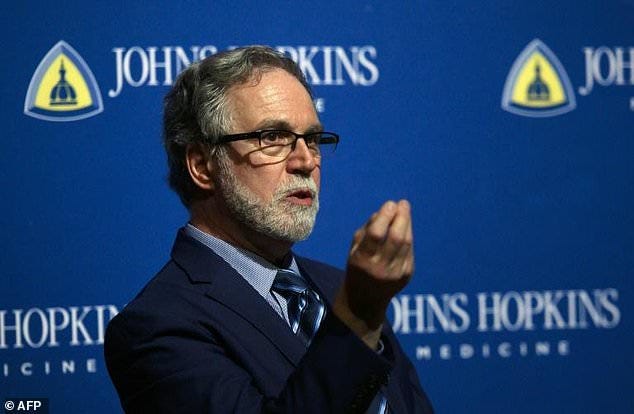
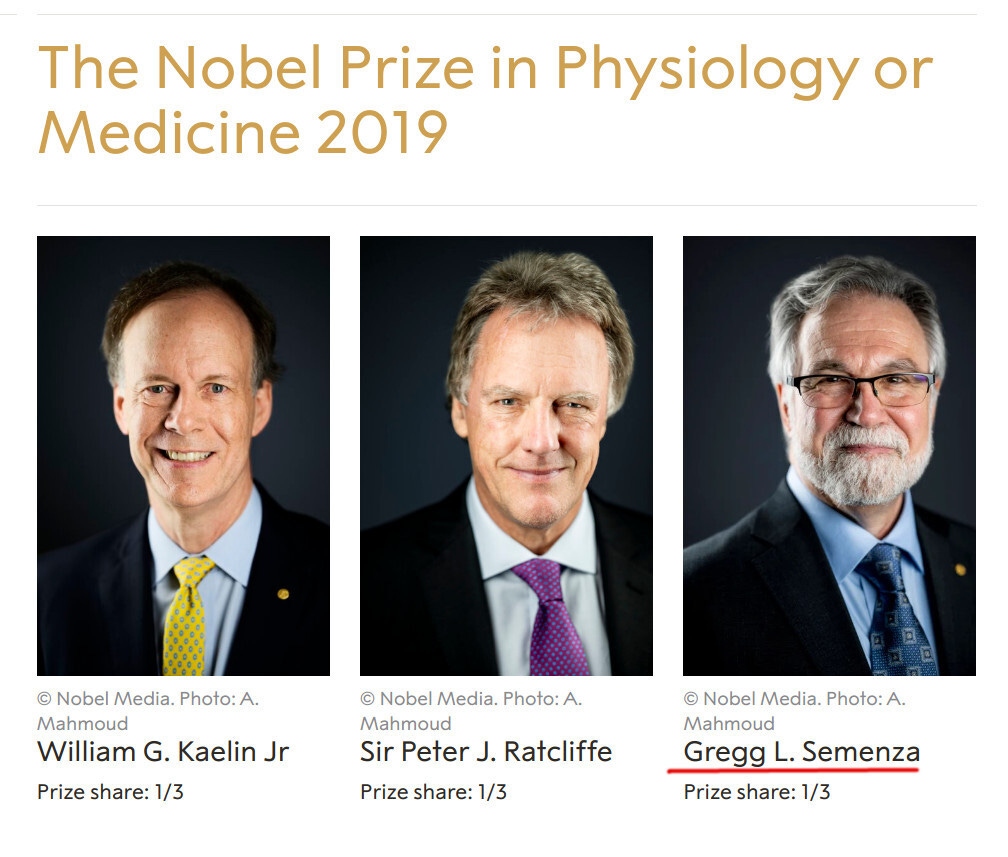
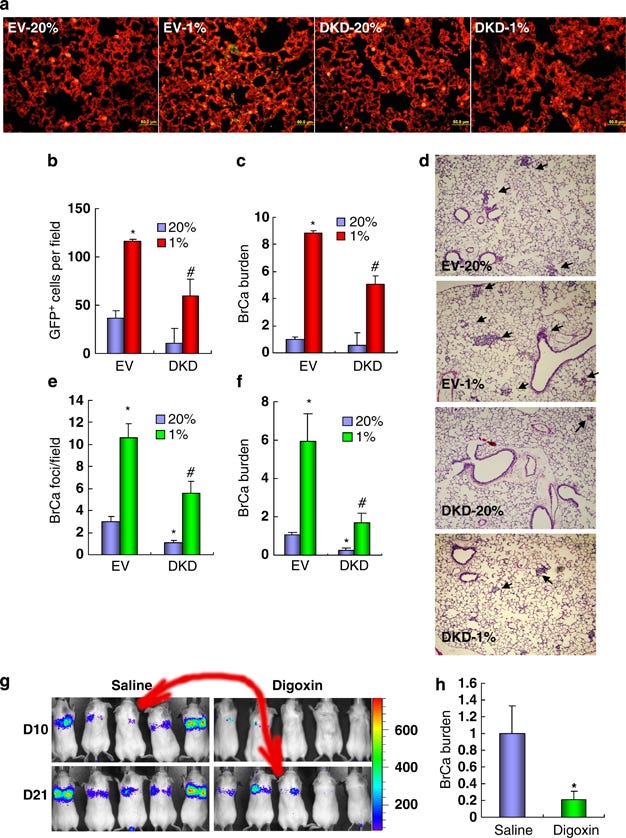
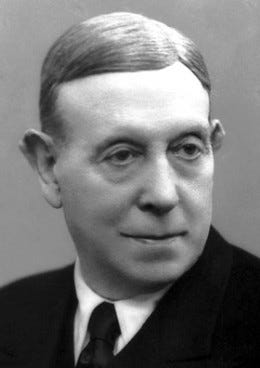
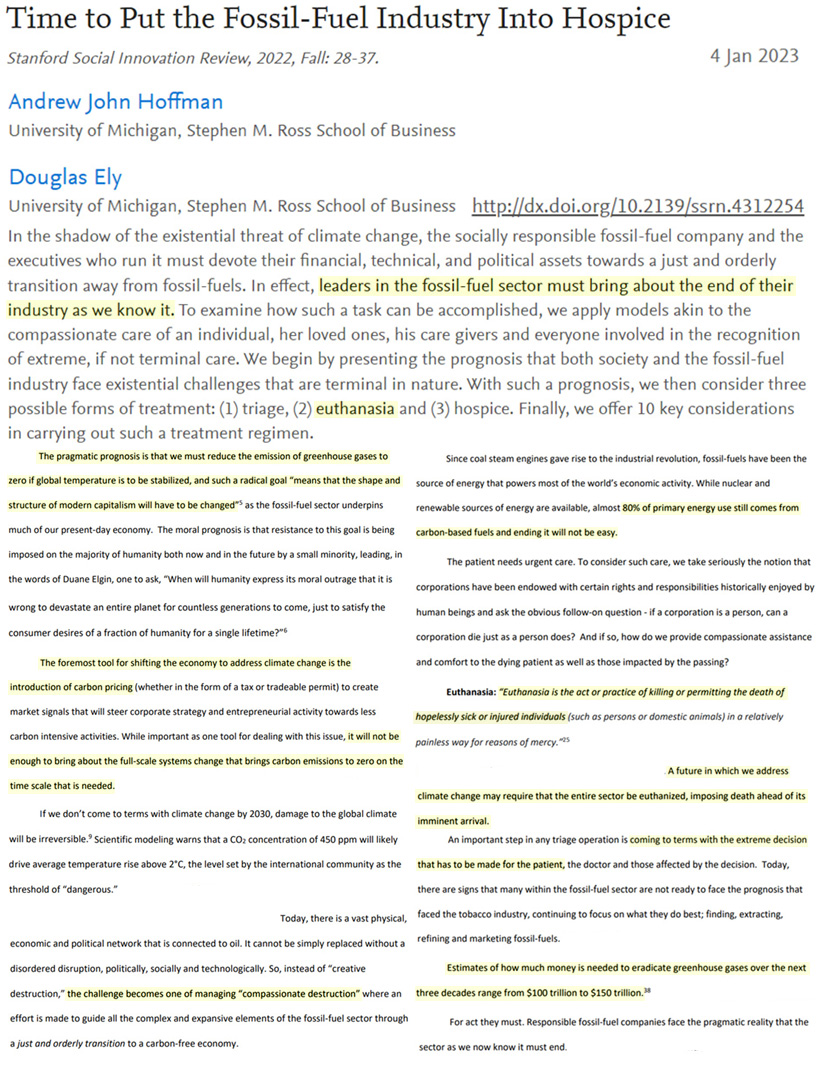

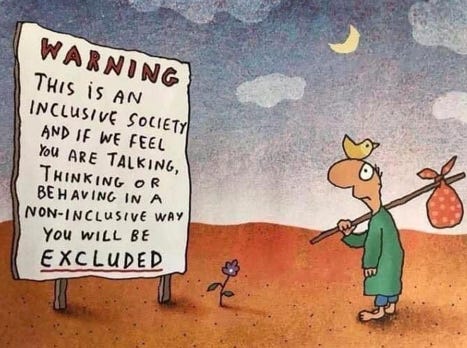
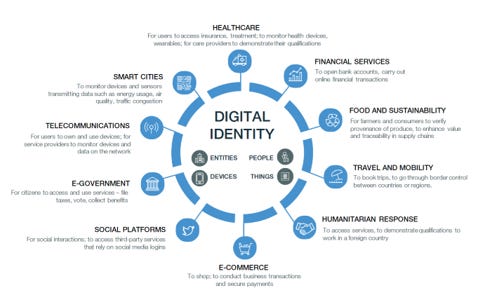

 The global assault on reality and the creation of a new “reality” has created a Mass Psychosis, described by Dr. Mattias Desmet as Mass Formation.
 Aletho News
 Aletho News