The Western establishment just gave itself a ‘World Peace and Liberty’ award
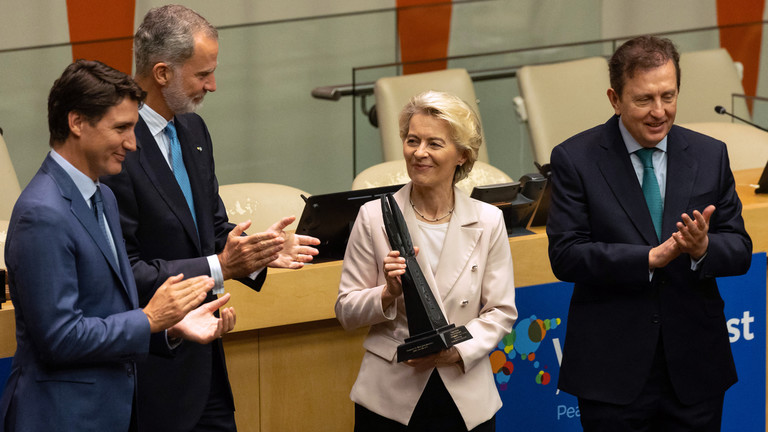
European Commission President Ursula von der Leyen receives World Peace & Liberty Award at UN headquarters in New York, on July 21, 2023 © Yuki IWAMURA / AFP
By Rachel Marsden | RT | July 27, 2023
Get a load of who won – and presented – a new honor that’s modestly being compared to the Nobel Peace Prize.
If you haven’t heard of the World Law Foundation non-profit organization, you could be forgiven. But despite only existing since 2019, it has already created an award described by the Western press as nothing less than the “judicial equivalent” of the world’s top award for promoting peace.
Wonder where they got that idea, if not from the organization itself. Can anyone just create a think tank and put it in charge of an award branded as the latest version of the Nobel Peace Prize? Good luck with that – unless, of course, your board is loaded up with establishment heavyweights – in which case, people just tell themselves that it must be legit since all these VIPs wouldn’t otherwise be involved.
So a few days ago, the humble folks of the World Law Foundation gathered at the United Nations in New York for the World Law Congress. One of the big items on the agenda was to hand out this year’s World Peace and Liberty Award to none other than European Commission President Ursula von der Leyen, unelected de facto Queen of Europe, who accepted it on behalf of the commission.
Wow, didn’t see that one coming. Particularly with a former EU commissioner being the vice president of the group’s board, which also includes former Polish and French prime ministers, former Slovenian and Latvian presidents, a former EU vice president, and various Western establishment corporate figures, academics, and jurists.
You’d think that the same Von der Leyen-led EU Commission would have been a controversial candidate for a peace award given that it’s constantly sided with Washington’s military interventionism or at least have done little to nothing to stop it, and even led the way in the case of Libyan regime change. Most recently, the EU had a chance to stop the conflict in Ukraine before it even started by demanding Kiev’s adherence to the Minsk agreements and rejecting the West’s arming and training of anti-Russian fighters on the border with Russia.
“For the first time ever, the European Union will finance the purchase and delivery of weapons and other equipment to a country that is under attack,” von der Leyen said last year, calling it “a watershed moment.” Know what else is a watershed moment? Giving a peace award to someone whose knee-jerk reaction to armed conflict was to flood the zone with even more weapons. Then again, maybe the Nobel Peace Prize is indeed the right comparison, given that it was prematurely awarded to former US President Barack Obama even before he could order more bombing in Africa and the Middle East.
Von der Leyen also embodies the epitome of freedom, apparently. Or at least the best that this group could find. Who was she even up against? Did Genghis Khan’s estate turn down the award or something?
“We’ll present this month a legislative proposal for a Digital Green Pass,” she tweeted in March 2021. “The Digital Green Pass should facilitate Europeans’ lives. The aim is to gradually enable them to move safely in the European Union or abroad – for work or tourism.” She conveniently left out the part about Europeans being denied the basic right to access everyday venues, travel, work, and assemble – all because you chose not to take a jab that prevented neither transmission nor acquisition of an overwhelmingly survivable virus. We’re talking about the same Big Pharma jab about which von der Leyen has yet to hand over, even to an investigative committee of the EU itself, personal communications with the CEO of Pfizer around the time the EU was making a deal with the company.
Von der Leyen has been about as open and free with that matter as she and the EU Commission have been with media platforms and narratives that risk challenging the establishment dogma, issuing top-down bans and legislation that override any due process at the nation-state level.
So after asking themselves who’d be a worthy recipient of this global freedom and peace prize, and coming up with an unelected EU bureaucrat who’s dragging Europe and the world deeper into armed conflict and Europeans into poverty with inflation and intellectual darkness with censorship, they turned to the question of the presenter. These World Peace and Liberty folks were apparently like, “Who could we get to present this that embodies freedom and peace? Hey, how about that dude in Canada who did the Freedom Convoy crackdown and whose country helped train the Azov neo-Nazis to wage war against Russia then tried to hide it from the press to avoid embarrassment?”
Enter Canadian Prime Minister Justin Trudeau. Nothing says freedom like invoking a martial law-style crackdown over a bunch of honking truckers protesting against the two-tier society fostered by Trudeau’s authoritarian Covid mandates – and then blocking their bank accounts as a dissuasion technique.
“Brexit left many wondering if the union would continue to hold strong. Euroskepticism was on the rise. And protectionism and authoritarianism were becoming more prevalent,” Trudeau said, presumably as a newly-minted authority on authoritarianism, having just recently dabbled in it himself.
“As choruses like ‘America First’ got louder, both Canada and Europe held fast to our belief that growth doesn’t come from putting up walls and turning inwards,” the Canadian prime minister added. Actually, no one has been singing backup to the America First chorus louder than Canada and Europe, blindly following along with the agenda set in Washington on everything from Ukraine to climate, even if it’s to the detriment of their own citizens’ interests.
If both – or either – of these Western entities had unambiguously stood up to Washington on recent key issues of global importance, then the world would be in a much better place, their own citizens first and foremost. And they wouldn’t need to go around blowing their own horn and making a big deal of a fawning establishment entity also offering them a blow on the world stage.
Trial Date Set in Landmark Lawsuit Concerning Wrongful Death During Pandemic Hospitalization
Hospital’s Motion to Dismiss Denied — Finally A Jury Will Hear Case
By Peter A. McCullough, MD, MPH | Courageous Discourse | July 26, 2023
One of the most important rights stripped from Americans during the pandemic was the 7th amendment right to a jury trial. Devastated families lost loved ones due to therapeutic nihilism in the hospital and in some cases negligent care or even personal injury. Many are disheartened by corrupt courts and judges who dismiss cases out of hand. Finally a case is moving forward thanks to the diligence of Scott Schara, father of the late Grace Schara. Grace had Down’s syndrome and died of respiratory depression after she was given three sedatives in the setting of acute COVID-19 pneumonia.
This is a dramatic case and you can hear all the details from the father on the McCullough Report Grace Under Pressure – A Father’s Courage to Face the Biopharmaceutical Complex by Dr. Peter McCullough | Apr 10, 2023 | Health, Politics.
Here is the first page of the press release about the case:
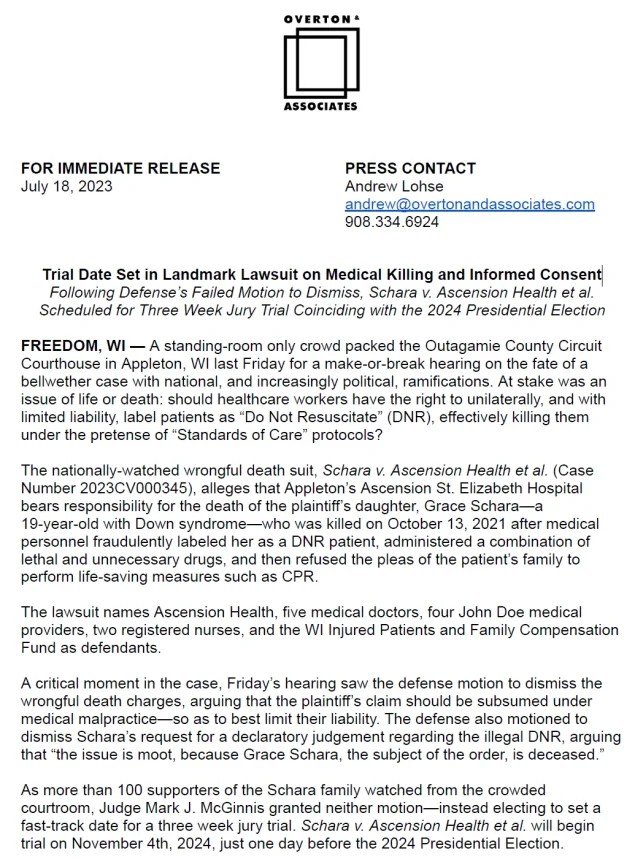
You can read the full disclosure below. This case could open the door for a floodgate of litigation where families believe one or more breaches in the standard of inpatient care occurred:
- Failure to continue outpatient multidrug protocols like the McCullough Protocol (no medication reconciliation)
- Lack of informed consent
- Denied access to family members
- Denied adequate food and water
- Failure sufficiently treat with viricidal nasal sprays and gargles, full dose oral antivirals, full dose steroids, aspirin, anticoagulants and adjunctive drugs
- Use of remdesivir after the WHO recommends against the use of remdesivir in COVID-19 patients 20 November 2020
- Unnecessary intubation for low oxygen saturation without failure of respiratory drive, mechanics, or other indication
Supported in part by the McCullough Foundation
Ending military aid to Ukraine would surpass Afghanistan debacle, says former US Ambassador
By Ahmed Adel | July 27, 2023
An eventual refusal by US President Joe Biden to support Ukraine would “represent a significant failure” that would even surpass the Afghanistan troop withdrawal debacle,” according to John Herbst, former US Ambassador to Kiev. His comments were made to the Wall Street Journal, which reported that the “sluggish pace” of Ukraine’s failed counteroffensive could raise questions about future military aid to the Eastern European country. However, it can be argued that Biden’s decision to support Ukraine is the greatest blunder in the US’ modern geopolitical history.
The newspaper pointed out that due to Washington’s strategy of not straying from the course, Biden made himself vulnerable as he became dependent on the outcome of the conflict in Ukraine, which he falsely framed as a battle between authoritarianism and democracy. The Ukrainian military’s failed counteroffensive has crushed all hopes that the fighting will end this year, at least on Kiev’s terms.
According to US officials interviewed by the American outlet, a long and indefinite conflict creates risks, especially as a potential stalemate could test the US president’s stated strategy to provide Ukraine with military support to start negotiations, where Kiev will speak from a position of strength.
“Halting arms supplies or even accepting a partial victory for Russia would represent a significant failure in U.S. foreign policy, surpassing the scale of the Afghanistan troop withdrawal debacle,” according to Herbst.
The newspaper notes that potential Republican candidates with the best chances of being nominated by the party – former President Donald Trump and Florida Governor Ron DeSantis – were the instigators of Ukraine’s declining support among the American people.
In addition, another problem faced by the US is the lack of critical weapons. This led to the delivery of cluster munitions to the Ukrainian Army. This hypocritical move demonstrated the desperation of the Ukrainian military when considering Biden made threats if Russia used cluster munitions.
The newspaper also cited an unnamed senior European official saying that Washington does not expect the Ukrainian military to capture embattled Donetsk, Kherson, Luhansk, Zaporozhye, and Crimea fully. This follows up from a previous report that even though Western military officials knew Ukraine did not have all the training or weapons needed to push back Russian forces, “they hoped that Ukrainian courage and resourcefulness would carry the day.”
It calls to question why the US and its allies continue to pour billions of dollars into Ukraine and maintain sanctions that are now affecting their own economies worse than Russia’s. In fact, the sanctions were promoted as a united Western action against Moscow. Instead, the sanctions policy in the international arena has only strengthened alliances between targeted countries, such as Russia, China, and Iran.
The recent sanction packages imposed on Russia, and Chinese companies for national security reasons, mean that the two powers have joined a growing club of US-designated pariah states alongside the likes of Cuba, Iran, North Korea, Syria, and Venezuela.
As Chatham House researcher Christopher Sabatini stressed, “It’s time for Washington to recognise that its love of sanctions may be undermining its own economic and diplomatic power worldwide,” before going on to say that changes can only be made if policymakers are willing to “consider a basic fact: Sometimes sanctions don’t work.”
Making the task of defeating Russia even more difficult for Ukraine, US and European partners have yet to agree on plans to train Ukrainian pilots to fly F-16 fighter jets, which the allies intend to transfer to Kiev. Throughout the war, we have heard how an array of Western-made weapons, from missiles to tanks, would be a game-changer that would swing momentum in Ukraine’s favour. All of these have failed to live up to expectations, and the training of Ukrainian F-16 pilots, who cannot enter the battlefield until next year, will end in the same way – the unnecessary loss of Ukrainian lives.
US Secretary of State Antony Blinken insisted as recently as July 23 that Russia “already failed, they’ve already lost.” In this regard, Central Intelligence Agency (CIA) veteran Larry Johnson wrote on his blog on the same day that “it is alarming that America’s top diplomat is so divorced from reality.”
For his part, Earl Rasmussen, a retired US Army Lieutenant Colonel, argued that the Pentagon military leadership, unlike State Department officials, most likely understands that Ukraine cannot win the war.
With former US intelligence agents and military chiefs acknowledging that the war is over for Ukraine, Biden finds himself in a predicament where he can be remembered as the president who made the greatest geopolitical blunder in modern US history – by accelerating the decline of the US as the globe’s hegemon and deepening the ties of non-Western powers by using Ukraine as a military proxy against Russia.
Ahmed Adel is a Cairo-based geopolitics and political economy researcher.
The Pandelusion
BY HUGH WILLBOURN | THE DAILY SCEPTIC | JULY 24, 2023
I’ve been recording the audio version of my new book, The Bug in our Thinking. In it I quote Carl Sagan from 1996:
We’ve arranged a society based on science and technology, in which nobody understands anything about science and technology. And this combustible mixture of ignorance and power, sooner or later, is going to blow up in our faces. Who is running the science and technology in a democracy if the people don’t know anything about it? …
Science is more than a body of knowledge, it’s a way of thinking. A way of sceptically interrogating the universe with a fine understanding of human fallibility. If we are not able to ask sceptical questions, to interrogate those who tell us that something is true, to be sceptical of those in authority, then we’re up for grabs for the next charlatan, political or religious, who comes ambling along.
Sagan was on the money. Every day brings news of more absurdities from charlatans in science, education, politics and media. To quote myself, from the same book: “Never have so many been so wrong about so much.”
Why is this happening?
If I could answer that in a couple of paragraphs I would not have had to write a whole book. Here, I will focus on just one element. Underneath all the dangerous and troubling beliefs about gender, climate, race, migration, medicine and vaccination lies a psychological problem. Too many people believe things that are not true. This is the new normal. Let’s call it the Pandelusion.
The Pandelusion – thinking and doing the ‘right thing’ – is the worldview relentlessly promoted by most of the media and driven by bad science and big money.
This doesn’t require a conspiracy by the way. That is just what the profit motive will do when untrammelled by conscience or virtue. For the controlling minority of society it is extremely lucrative to promote the Pandelusion. For the majority, the result is an expensive, destructive, disempowering rip-off.
It would take an encyclopaedia to itemise and refute each of the delusions one at a time. In fact it already has. On websites and Substacks and in books and scholarly journals millions of words have been written refuting every one of the dominant delusions with rational argument and factual evidence – yet the delusions are still in the ascendant. The encyclopaedia of hard evidence and common sense is ignored by most of the mainstream media and censored or ignored by complicit scientists.
It is extremely depressing to see that the majority of the population remain convinced by the Pandelusion. They are accustomed to being guided by orthodoxy. In good times that is not such a bad strategy. In hard times, and very specifically in these hard times, it does no good at all. All around us are hundreds of thousands of people who have been seriously injured by doing what they were told was ‘the right thing’. It takes time, independence, courage, humility, encouragement and good fortune to build the habit of trusting your own judgement even when all the facts are not available.
Now that lockdowns and the uptake of the staggeringly ‘safe and effective’ vaccines have set the precedent, the next bonanza is the climate emergency and orthodox opinion is being boosted, adjusted and streamlined to serve the interests of those who have positioned their investments to profit from it.
Externalities
Do you remember when environmentalists used to talk about ‘externalities’? Externalities, you may recall, are the costs of a service or product which are not paid by the immediate user but by society at large. The costs of driving a car, for example, are not just purchase, fuel and maintenance. The external costs are exhaust emissions and tyre wear particulates, the motorways, the loss of mediaeval town centres to create road systems and car parks, the loss of market share for public transport, the cost of road traffic accidents, and so on and on.
It is helpful and illuminating to consider externalities when assessing the overall impact of a policy. Recently, however, the term has fallen out of favour amongst governments, environmentalists and the mainstream media. Why might that be?
The externalities of Net Zero are mind-bogglingly vast: environmental, economic, social and, for some, existential. Consider just one small element of the path to Net Zero: electric vehicles. The carbon cost of their manufacture means they have to be driven for nearly 10 years before there is a net carbon benefit. Cobalt mining in the Congo is environmentally destructive and exploitative of the local population. Dependency on manufacture in China creates huge political and economic weaknesses. I could go on, but you already know this and much, much more.
The externalities of lockdown were destructive beyond measure: the emotional abuse of elders dying alone, the sabotage of education in schools and universities, the bankruptcies and destruction of thousands upon thousands of small businesses, the depression, the abuse, the suicides and more.
The externalities of Covid vaccination, as we all know, without a shadow of a doubt, are ‘extremely rare’ because the vaccines are so very, very, very, very safe and effective. Nevertheless the vaccines have a remarkable correlation (not causation! Heaven forfend) with a plague of evil coincidence fairies and uncounted cancers, TIAs, myocarditis, heart disease, Guillain-Barré syndrome, and a huge range of other ailments, injuries and disabilities.
The externalities of catering to a tiny number of transgender activists are expensive, disproportionate and insulting and dangerous to women.
The externalities of woke policies in education include rendering academics too frightened to promote independence of thought. Not a great outcome for education.
I can stop listing externalities now – you can think of plenty of them that follow from every Government policy from migration to taxation.
No wonder the mainstream doesn’t talk about externalities any more. They are not to be mentioned.
The orthodoxy has aligned its messages across different platforms by means of helpful, fact-checking, billionaire-backed NGOs. All the bad science, the abstract thinking, the experts, the absurdities from wokery to environmental zealotry, the emotional incontinence and plain stupidity have become one overarching right think’.
It is all a single dictatorial blob of grandiose self-righteousness. The Pandelusion with its Pharisaic acolytes guides 100% of BBC output and at least 90% of media content throughout the Western world.
The power of the Pandelusion is immense.
That is terrifying and horribly depressing.
Some days I feel utterly defeated as I read, yet again, of more moronic orthodoxy.
And yet, and yet, I see a glimmer of hope.
Here is the weakness. Precisely because the Pandelusion has become a single, overarching, dominant orthodoxy, any flaw or weakness in any part of it can affect the whole thing. One tiny little crack anywhere in the whole monstrous edifice has the possibility of advancing, little by little by little, so that it will all, eventually, fall down.
All is not lost. We don’t need to challenge the whole Pandelusion or the big, embarrassing controversies about climate science confirmation bias or the magnificent safe and effective vaccines (Blessings be upon their profits forever, Amen). Now we can just chip away at one small, apparently insignificant, peripheral belief and open up one little crack. Then we can walk away and let the crack spread throughout the whole belief system – all by itself.
Those undiscussed externalities are impinging on more and more people’s everyday lives and they don’t like it. As people reject heat pumps, sabotage Ulez cameras, refuse smart meters, and electric cars, and protest against LTNs and 15-minute cities, they are discovering that those who claim to ‘know better’ know very little at all, and often, it turns out, are misrepresenting the science and even sometimes are lying. And the more they research the more inconvenient facts they unearth. In Germany a rebellion against dominant orthodoxy has gained power in a district council election. In the Netherlands the Farmer-Citizen movement (the BBB) has become the third-largest political force in the country. In Spain, Sweden and Italy there are flickers of sanity.
Let’s talk
So let’s talk about externalities. Not the big ones, just the little ones. Like, “Oh Net Zero! Yay! but… I’m not totally sure about the cost-effectiveness of heat pumps.” Let’s say “Yay, Electric vehicles! … except how quickly, I wonder, will the authorities be able to upgrade the national grid to cope with charging them?”
Let’s talk about how 15-minute cities could be utterly brilliant – except maybe there might lots of traffic jams on the ring roads when you take your kids to karate. Let’s talk about how marvellous furlough was, it’s just a shame about inflation.
Let’s talk about how puzzled we are about the little white lies from our governments, about the police who have stopped policing, and the strange, inexplicable inaccuracy of predictions that haven’t come true.
Let us keep tap, tap, tapping away at the monolithic Pandelusion until we make the smallest little crack. Then in that crack, plant tiny little seeds of doubt – and walk away. The light of day will nourish those seeds and the seedlings will enlarge the crack and reality will finish the job. The hypnotic trance can be broken.
There has already been too much death, destruction and conflict. There will be more. But perhaps if we all keep talking we might be able to save some people and salvage a society worth living in.
The Bug in our Thinking and the Way to Fix It is available in the U.K. here. For the rest of the world, for the ebook – and in a week or two the audiobook – you can find it on your national Amazon store.
Were lockdowners and vaccinators really just trying to save lives? And is this what made them so dangerous in the end?
eugyppius: a plague chronicle | July 26, 2023
Daniel Hadas, whose sensitive and measured commentary on the pandemic I’ve long valued, recently offered these remarks on lockdowns and mass vaccination on Twitter:
It needs to be understood that the true motivation of the lockdown / forced vaccination Covid response really 𝑤𝑎𝑠 Saving Lives.
Saving Lives wasn’t a smokescreen for some other hidden plan.
Of course, there was opportunism: there were those who used the state of emergency to claw power, money, fame to themselves. There were both supporters and opponents of the Covid measures who did that.
Where [there] is opportunity, there will be opportunists.
But mere opportunism is not enough to drive forward the leaders and followers in a revolution on the scale of the Covid response.
That requires faith, and the faith that drove this revolution was the faith in Saving Lives.
To deny the authenticity of the project to Save Lives is to remain perilously ready to sign up to all current and future projects to remake society and morality in the name of Life-Saving.
And it is to remain blind to the fact that Saving Lives has come to mean hacking away at the limits of what can be done to men, women and children in the name of saving their lives and those of others.
This thesis angered many people, at least some of whom misconstrue what Hadas is arguing. The point is not that a genuine commitment to “Saving Lives” might excuse the response or make it better. Rather, a commitment to Life-Saving public health interventions is in Hadas’s view the ominous root of the problem, because Life Saving is in fact a shallow goal that sounds good enough to rationalise all manner of harmful, destructive policies. Almost anything can be justified – any amount of collateral damage accepted – if it is for Saving Lives, and this is why all of us should cultivate a distrust of self-appointed Life Savers everywhere we encounter them.
In this sense, then, Hadas’s thesis seems undeniable: The millions who signed on to lockdowns and demanded their governments force-vaccinate their peers were not just wrong in a direct, empirical sense – that is, for believing that lockdowns and vaccines would improve health in any way. They were also much more profoundly wrong in a moral sense. Even if lockdowns and vaccines had the potential to stop the virus, nobody deserves house arrest or forced medical treatment for the crime of being a potential vector of infection. Placing Life Saving ahead of all other outcomes is very dangerous and also very stupid, for the simple reason that we are all going to die. As a justification, it functions as a mere pretence to ignore the very real trade-offs that lurk in any alleged solution to anything. Explaining how it could be a good idea to delay the deaths of some elderly and sick people at the cost of the well-being, physical health and autonomy of billions is very hard. Pleading that “we need to save lives” is easy.
That said, I find the thesis less than complete. The public health establishment and their media collaborators carefully manufactured public support for their response by sowing far and wide the belief that it was necessary to Save Lives. Had we acted otherwise – say, by staying open and not doing very much – this, too, would’ve been marketed as the Best Way to Save Lives, and many millions would’ve believed it just as sincerely as they believed in lockdowns. To this comes the fact that Life-Saving in one form or another is profered as justification for a wide range of modern political pathologies, from mass migration schemes to climate change. Especially in ageing European countries like Germany, where an ever-growing number of pensioners and their health anxiety dominate national discourse, there are few better ways to sell noxious political programmes to the masses. Without our naive Life-Saving ethos, it’s not clear to me we wouldn’t have had lockdowns, though they would’ve required a much different kind of argument.
The extent to which states can be said to act upon clear motives at all is a further problem. A longstanding plague chronicle argument, is that modern managerial government doesn’t have goals, motivations or purposes in any human sense. Our countries every day do all kinds of truly insane things behind paper-thin justifications that bear no scrutiny. A lot of what is maligned as “conspiratorial” discourse, on both the left and the right, represents an effort to reimpose logic on state actions, generally by positing that the stated goals are a pretence for some deeper, hidden purpose. Most of the time, these analyses just aren’t convincing, and they function to obscure the blunt reality that we find ourselves beset by an incomprehensible post-liberal political order, in which state actions have been farmed out to a vastly complex network of stakeholders, NGOs, academics, bureaucrats and special advisory committees. For every area of policy the constellation of forces will be different, and nobody has any clear understanding of how the system works – not even the most powerful individuals in the midst of it all. Everything the state does is the sum of these thousands of different forces. What complicates this picture even further, is the fact that those responsible for policy formulation don’t act directly to shape outcomes in the outside world. Their motivations are almost always institutionally mediated, and for this reason much more confined and limited in perspective. They want to secure promotion and grant funding, they want to be thought well of by their peers, they want to satisfy their superiors, and many other petty careerist personal things of this nature.
To say that “climate change policy” is motivated by a desire to reduce carbon emissions, then, is merely to outline a descriptive thesis from outside. Such a thesis will sink or swim insofar as it explains actions of the system as a whole, but no such motivation is present in the system itself. The apparatus of modern governance is a vast inhuman machine consisting of human components; it doesn’t have thoughts any more than a storm system does. And in this sense, I think Saving Lives as the motivation behind lockdowns and mass vaccination is not quite right. Popular supporters of mass containment certainly saw these policies as Life Saving, and this helped enable them. The state itself, however, was playing a rather different game, one which fell (depending on the country) somewhere on a scale from “virus suppression” to “virus eradication” – lives be damned. The pandemicists’ abandonment of prior mitigationist plans entailed precisely deprioritising Life Saving in favour of a new, pathogen-centred approach.
“That may very well be, eugyppius, but what of the people at the start of it all, before lockdowns were taken up by the system? Surely they had human motivations, even if the regime cannot.”
This is true. The Neil Fergusons, Tomas Pueyos and Christian Drostens who sold lockdowns to their countries and the world surely did so for specific, personal reasons. The problem is that these reasons are very elusive. In fact, the more I read their early statements and their leaked correspondence, the more elusive they seem to me. Their words and actions, however, have a very clear and persistent sinister undertone, which is not a mere artefact of retrospect. Their mysterious coordination with each other, their willingness to engage in highly manipulative messaging and risk magnification, their reliance on foreign agents to launder research and strategies from China, and their constant efforts to justify with pseudoscientific findings apparently preconceived conclusions, are all very unsettling. The ambient Life-Saving ethos of modern society surely helped them win the argument in the moment and get away with it in the longer term, but whatever they thought they were up to, was something much different.
Dancing COVID Nurses That Supported Draconian Mandates Switch To Climate Change
By Tyler Durden | Zero Hedge | July 26, 2023
Perhaps one of the most unsettling narrative relationships during the covid pandemic lockdowns was the assertion by various governments, think-tanks and media pundits that the mandates weren’t just good for “stopping the spread,” they were also good for “saving the environment” from what they claim will be inevitable Apocalyptic climate change. While the covid agenda has all but disappeared thanks to millions of people and half the states in the US rejecting the restrictions, climate hysteria is still alive and well.
One of the most obnoxious trends in covid propaganda was the constant TikTok dance videos. Dancing politicians, dancing talk show hosts and dancing nurses all telling us to comply while frolicking around like maniacs. Well, it’s not over, because the dancing covid nurses are back, and now they’re here to tell us that accepting carbon controls is just as important as the mandates.
Beyond the numerous question on how nurses managed to have time to make so many group TikToks if the hospitals were “overrun” with patients dying of covid as the media asserted for the first year of the pandemic, we must also ask: If they lied about the effectiveness of the mandates, why should we listen to them about climate change?
Not one draconian policy enforced by governments made any difference whatsoever in the transmission of the covid virus. The lockdowns were pointless. The masks were pointless. Social distancing was pointless. And the official median Infection Fatality Rate of covid is a mere 0.23%, which means that 99.8% of people were never under any threat from the disease anyway. These facts were well known by medical professionals by early 2021, yet many of them continued to push the mandates.
Invariably, as the summer heats up so does the hype surrounding climate controls which would do little or nothing to shift the existing state of the Earth’s temps. “Record temps” are often touted, but these records are limited to a short time from of around 140 years of official data (since the 1880s). But what about before then? When we look at the real history of the Earth’s climate, the temps today are incredibly mild. Not only that, but the global warming events of the past all occurred without human involvement.
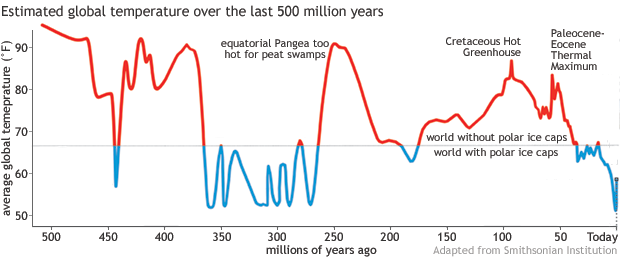
One has to wonder, if this is the case, why are no carbon control proponents or climate scientists talking about it? Is the situation much like covid, where they tell you to “believe the science” except for the science that contradicts their claims? And let’s not forget, these same people have been telling us the Earth is on the verge of burning for a very long time.
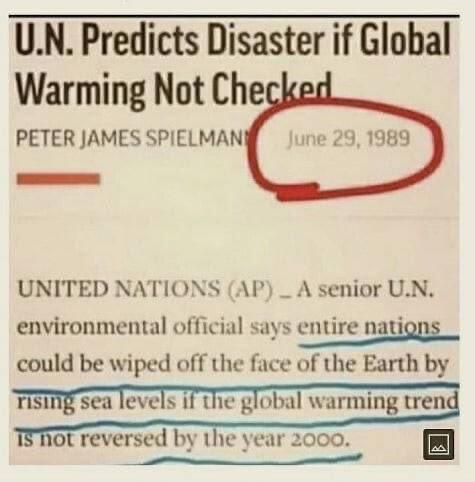
People stopped idolizing nurses after the pandemic scare. Dancing for the climate feels more like a desperate act to regain relevancy, rather than legitimate activism.
UK Ministry of Justice Invests in Social Listening Tool
Monitoring online conversations
By Didi Rankovic | Reclaim The Net | July 25, 2023
The UK’s Ministry of Justice (MoJ) has decided to spend taxpayer money in order to be able to use a monitoring tool whose job is to access people’s conversations that might impact the ministry’s “reputation.”
This decision certainly impacts that reputation, but perhaps not in a positive aspect.
And it would be an interesting full circle if the maker of the software, Brandwatch (owned by Cision, a PR outfit) – allowed the MoJ to learn how inking this three-year deal will impact its reputation.
From what is known about the contract, things don’t look good – just more outsourced good old mass surveillance carried out by governments and various departments and agencies.
The tech is described as social media and “online listening,” and will cost the MoJ £50,000 per each of the three years of the deal. The hope is that it will allow the ministry to know about any of the millions of times people mention it online.
The procurement documents show that the contract, signed last month, will give the MoJ the ability to monitor and track mentions about itself on social and online media in general, in forums, blogs, based on particular keywords, terms and topics.
The justification for needing this tool, found in the same documents, is that the MoJ has a social media presence on major platforms. And that means it is exposed to discussion – and, likely, criticism, that the officials would like to know about, all for the sake of “reputation, campaigns, and policy announcement.”
The MoJ steers very far from framing any of this as surveillance and tracking, but rather a selfless act where money will be spent simply in order to work better – by “listening” (figuratively, and literally) to what citizens and stakeholders are saying and expecting from it.
Reports say that the contract with Brandwatch will cover 100 individual users, as well as 48 million past mentions of MoJ, along with two million more “live” ones each month.
Up to 50 different terms can be fed to the software to be tracked on Twitter, Facebook, and Instagram each, and whatever information is gathered will remain accessible on the cloud, including that from the previous 2 years.
Chief editor at Russian media outlet flees EU country over threats
RT | July 26, 2023
Marat Kasem, a senior journalist at Russian media outlet Sputnik, has fled Latvia after President Edgars Rinkevics suggested that prosecutors had treated him too leniently in a recent case, according to Russian Foreign Ministry spokeswoman Maria Zakharova.
Kasem spent four months in a Latvian jail earlier this year before being fined for allegedly aiding and abetting Russia.
“Would somebody from the White House or Downing Street tell Rinkevics that he is failing them by showing the feral nature of the liberal diktat,” Zakharova asked, during an interview with Sputnik on Wednesday.
The Russian official argued that the US and the UK were patrons of the Baltic states, but had failed to keep their “nationalist” clients in check. Latvia specifically presents itself as a nation that supposedly upholds liberal values, including by protecting journalists, Zakharova noted.
Kasem, who is a Latvian citizen, has faced legal problems in the EU due to his work as editor-in-chief of the Lithuanian branch of Sputnik.
He was first arrested in January, when he arrived in Latvia to visit his dying grandmother. Kasem was initially accused of espionage and violation of EU sanctions, charges that could carry up to 25 years in prison. Four months later, the authorities agreed to move him to house arrest.
Two weeks ago, local media reported that the case had been resolved, with Kasem admitting to aiding and abetting Russia and paying a fine of €15,500 ($17,000).
Latvian President Rinkevics, who took office on July 8, responded to the news by tweeting that “some recent decisions” by the Prosecutor General’s Office “raise questions.” He later clarified that in Kasem’s case and several others, he believed the punishments were too mild and indicated that he intended to seek explanations.
The remarks “made it clear as daylight” that Kasem’s problems in Latvia would continue, prompting him to leave, according to Zakharova.
The Prosecutor General’s Office said the public had not been informed about numerous details of the case due to national security, which it claimed “had an influence on the choice of the final punishment.” It hinted that the interests of other nations were involved.
Moscow considers the situation to be an example of political persecution. International journalism organizations and other Western states have turned a blind eye to it, said Zakharova, who implied that Kasem had admitted guilt under duress.
Zelensky uses martial law to avoid election
RT | July 26, 2023
Ukrainian President Vladimir Zelensky on Wednesday proposed to extend the state of emergency, thereby effectively canceling the parliamentary elections scheduled for October.
Zelensky announced martial law on February 24, 2022, and has been extending it ever since. The most recent 90-day extension was announced on May 20, and is due to expire on August 18. If the Verkhovna Rada approves Zelensky’s latest request, this will see the emergency extended through November 15.
Ukrainian law calls for parliamentary elections no later than October 29, with a 60-day campaign season starting on August 28. However, it also forbids campaigning and voting during martial law. Another extension would cut into the campaign season for the presidential elections, currently scheduled for March 2024.
“If we have martial law, we cannot have elections. The constitution prohibits any elections during martial law,” Zelensky announced in May. The following month, he told the BBC that “elections need to happen in a time of peace, when there is no fighting.”
Some of Ukraine’s supporters in Europe and North America have been critical of the possible cancellation of elections. Ukraine should prepare for a vote as soon as possible, Parliamentary Assembly of the Council of Europe (PACE) head ‘Tiny’ Kox said in an interview in May.
“Although democracy is far more than only elections, I think we all agree that without the elections, democracy cannot properly function,” Kox said at the time.
Zelensky ran on a peace platform in 2019 and won with 73% of the vote. Soon thereafter, his newly formed party – named after the TV show in which he played a fictional president of Ukraine – won a supermajority in the Verkhovna Rada as well. By late 2020, he had pivoted away from the notion of peace in Donbass and began to openly talk about a military solution for “occupied territories.”
Within three months of the conflict with Russia escalating, in May 2022, Zelensky enacted a law that allowed him to ban any political parties merely accused of being “pro-Russian,” without any right to appeal. He has outlawed a dozen parties since then, including the formerly largest parliamentary opposition bloc.
Earlier this month, the Federal Intelligence Service of Switzerland accused Zelensky of attempting to “politically eliminate” Kiev mayor Vitaly Klitschko ahead of next year’s presidential election. The FIS cited “credible intelligence” to say that Zelensky was “showing authoritarian traits” which may lead to Western pressure, according to a classified report leaked to the outlet NZZ.
UK Blocks Ukrainian Orthodox Priest’s Testimony at UN Security Council
By Ekaterina Blinova – Sputnik – 26.07.2023
London prevented the religious leader from delivering his first-hand experience of repression against the church in Ukraine.
“Today is an extremely sad moment for the UN Security Council, as well as for the international community as a whole,” said Dmitry Polyansky, first deputy permanent representative of the Russian Federation in the UN.
“Western delegations actually agreed with the repressive policy of the Kiev regime against the canonical Orthodoxy. This is a clear evidence of blatant double standards in matters concerning freedom of expression, religion, and in general all those ideals that they preach. Your decision to block the participation of an Orthodox clergyman in accordance with the prerogatives of the president of the UN Security Council is clear evidence of how London treats ideals and how easily it is ready to give them up for the sake of narrowly selfish, petty attempts to prick Russia.”
The UK holds the 15-nation organ’s rotating presidency for July 2023.
Earlier, on July 18, Russia called for a meeting of the UNSC on Ukraine for July 26, in particular on the topic of repression against the canonical Ukrainian Orthodox Church.
On the same day, the Russian Foreign Ministry announced that Moscow would raise the issue of the persecution of the vicegerent of the Kiev-Pechersk Lavra, Metropolitan Bishop Pavel, at the upcoming meeting of the UN Security Council.
On July 14, a Kiev court changed the measure of restraint for Metropolitan Pavel from round-the-clock house arrest to detention until August 14.
For his part, Patriarch Kirill of Moscow and All Russia called on the UN, the Organization for Security and Co-operation in Europe (OSCE) and heads of churches, including Pope Francis, to protect the vicegerent of the Kiev-Pechersk Lavra.
Earlier this month Pope Francis responded to the appeal of Patriarch Kirill and spoke against politically motivated arrests in Ukraine.
The Kiev regime started to exert pressure on the Ukrainian Orthodox Church in 2022. Ukrainian authorities gave an ultimatum to the monks of the Kiev-Pechersk Lavra to vacate the monastery’s premises until March 29 under the pretext of allegedly violating the terms of the lease – jurisdiction over which is divided between the National Kiev-Pechersk Historical and Cultural Preserve, a Ukrainian secular organization and the UOC. Lavra monks condemned the eviction order as illegal as it was not backed by a court decision. As they resisted the Kiev regime’s attempts to expel them from the monastery, the Ukrainian authorities resorted to persecution.
Other Ukrainian Orthodox priests have also been subjected to pressure from the Ukrainian authorities. Ukrainian law enforcement officers searched the homes of bishops and priests, churches and monasteries, including the Kiev-Pechersk Lavra, in order to find traces of “anti-Ukrainian activities.”
West ‘Torpedoed’ Ukraine Peace ‘Because We Want War With Russia’ – RFK Jr.
By Ilya Tsukanov – Sputnik – 26.07.2023
There is no chance of Russia losing the proxy war with NATO in Ukraine, the West fomented the conflict and a peace agreement is needed immediately to prevent further bloodshed, Democratic presidential hopeful Robert F. Kennedy Jr. has said.
“Russia’s not gonna lose this war. Russia can’t afford this – it’d be like us losing a war to Mexico. They are not gonna lose the war,” Kennedy said, speaking at a televised town hall Tuesday night.
“Go look at what Russia did in Stalingrad in order to preserve its territorial integrity. Russia’s been invaded three times through the Ukraine. The last time, Hitler killed one out of every seven Russians. They’re 400 miles from Moscow. We already have Aegis missile systems within 12 minutes of Moscow. We wouldn’t tolerate that if the Russians did it [like] in 1962 when they put them in Cuba,” the candidate added, referencing the Cuban Missile Crisis, during which time his late uncle, John F. Kennedy, was president.
US Sabotaged Peace
“The more disturbing thing,” Kennedy said, “is that on two occasions the Russians tried to sign a peace agreement with [Ukrainian President Volodymyr] Zelensky,” and both times the West sabotaged it.
The candidate pointed to the 2015 Minsk Agreements, which Zelensky expressed interest in before being talked out of it by the US in 2019, and the 2022 draft peace deal reached after talks in Belarus and Turkiye.
“In 2019, France Germany and Russia all agreed to the Minsk Accords. That year, Zelensky ran for president. He was a comedian. He had no political experience. Why did he win? Because he ran on one issue: signing the Minsk Accords. As soon has he got in there, Victoria Nuland and the White House told him he couldn’t do it,” Kennedy recalled.
“Then,” in February 2022, he noted, Russia sent “40,000 troops in. That’s not enough to conquer the country. Clearly, [Putin] wanted somebody to come to the negotiating table.” Russian and Ukrainian negotiators met in Istanbul, hammering out a draft peace deal. After that, “Putin in good faith began withdrawing troops from Ukraine. What happened? We sent Boris Johnson over there to torpedo it. Because we don’t want peace, we want war with Russia,” RFK Jr. stressed.
Road to Perdition
The Democratic politician also pointed out that the current crisis has its origins in the end of the Cold War.
“We promised in 1992, the Russian leadership said… ‘We’re gonna withdraw 400,000 troops from East Germany and we’re gonna allow you to reunite Germany under NATO,’ which is a hostile army. That’s a huge concession for them. ‘One commitment that we want,’ is what the Russians said, ‘is that you will not move NATO to the east.’ James Baker, who was then secretary of state under [George H.W.] Bush, famously promised ‘We will not move NATO one inch to the east.’ Well since then, we’ve moved it 1,000 miles and 14 countries. Now when we started that plan in 1997, Bill Perry, who was the secretary of defense under the Clinton administration, said ‘If you move NATO to the east, I am resigning because you are forcing the Russians to come to war with us.’ George Kennan, who’s the most important diplomat in American history, the architect of the containment policy [after] World War II, said the same thing. You do not need to make an enemy out of Russia,” Kennedy said.
Since announcing his run for the presidency in April, RFK Jr. has been the single most outspoken critic of the Russia-NATO proxy war in Ukraine in the Democratic Party, and like former Republican President Donald Trump, has promised to bring the conflict to a close if elected president.
The 69-year-old candidate, who is currently polling at 16 percent, is a veteran environmental lawyer and the son of assassinated former US Attorney General and presidential candidate Robert F. Kennedy. RFK Jr. has enjoyed a groundswell of support among Democrats, Republican, and independents amid his refusal to play party politics, but has been smeared by media and largely ignored by the Democratic establishment as an “anti-vaxxer” and “conspiracy theorist.” Kennedy has rejected these claims and accused the establishment of trying to silence him.
Featured Video

No Threat Can Force Iran’s Surrender /Trita Parsi & Lt Cl Daniel Davis
or go to
Aletho News Archives – Video-Images
From the Archives
What is the Israeli Lobby in Australia Doing in Interfaith Dialogue?
By Ali Kazak | Dissident Voice | October 11, 2015
For years Israel and its lobby around the world have been trying to normalise their relations with Arabs and Muslims without solving the Palestine Question.
One of the methods they resorted to in the last few years is using human rights and community organizations such as interfaith dialogue and Multiculturalism to achieve this objective and to: isolate the Palestinians, marginalise the Palestine question, end Israel’s isolation, and prevent criticism of Israel, knowing that these organisations will be the first to stand against Israel’s violations, racial and religious discrimination.
The group responsible for this task in Australia is The Australia/Israel & Jewish Affairs Council (AIJAC); its Director of International & Community Affairs, Jeremy Jones is in charge of lobbying religious community organizations, specifically Muslims and Christians. Consequently he convened the Faith Communities for Reconciliation, founding participant in the Australian Partnership of Religious Organisations and the Australian National Dialogue of Christians, Muslims & Jews.
AIJAC is a private political propaganda group. It is recognised as the main Israeli lobby in Australia. It coordinates its activities and works intimately with the Israeli embassy in Canberra and different institutions in Israel. It is privately funded by some Jewish businessmen. It monitors closely Australian politicians, the media, ethnic and religious groups, (especially Arabs and Muslims), unions and academics on their stands towards Israel and the Palestine question. … continue
Blog Roll
 Aletho News
- The war of liberation of the Arab and Islamic peoples expands across the Gulf
- Envoy warns UN on Trump’s threat to ‘obliterate’ Iran’s civilian infrastructure
- The Larak Corridor: Iran’s Rial Gate With No US, No Israel, and No Way Around
- ‘Economic terrorism’: Steel facilities hit again in US-Israeli strike
- ‘War Crime’: Iran condemns attacks on Arak, Ardakan nuclear sites
- Two-thirds of Americans want quick end to Iran war even if goals unmet
- Trump to Give “Important Update on Iran” Wednesday in Prime-Time Speech
- Theodore Postol: Iran’s Missiles & Drones Were Underestimated
- Iran To Target Military Industrial-Tech Complex That Facilitated Gaza Genocide
- Collapsing Empire: The Resistance Disarms ‘Israel’
- If Americans Knew
- Israel wants US to bomb more of Iran’s civilian structures (113,000 is not enough) – Not a ceasefire Day 173
- Ann Coulter Rips Into Fox News for Iran War Coverage
- Joe Kent Urges Americans To Call White House and Congress To Object To Sending Troops Into Iran
- DNC Resolution to Reject AIPAC Funding Puts Democratic Leaders in the Hot Seat
- Swedish foundation to build 400 schools as over 650,000 Gaza children remain without education for 2 years
- Israeli army admits photshopping image of slain Lebanese journalist
- This is how Israel is systematically killing health workers under the cover of war in Lebanon
- Carrying life under fire: Israeli invasion of Lebanon leaves pregnant women facing deadly risks
- Champagne all around for the new death penalty (for Palestinians) law – Not a ceasefire Day 172
- Why are Palestinian books struggling to be seen on Amazon?
- No Tricks Zone
- New Study Finds Warming Saves Lives…Cold Temperatures 12 Times More Deadly Than Excess Heat
- German Science Blog Accuses PIK Climate Institute Of Hallucinating Climate Tipping Points
- Devastating Assessment Of Comirnaty Vaccine By Former Senior Pfizer Europe Toxicologist
- New Study: CO2 Is ‘Effectively Negligible’ As An Explanatory Climate Change Factor Since 2000
- Former Pfizer Toxicologist Dr. Helmut Sterz Tells Bundestag Hearing Pfizer Vaccine Should Have Never Been Approved
- Energy Expert: Germany’s Nuclear Phaseout Was A “500 Billion Euro Mistake”
- New Research: South Australia’s Mid-Holocene Sea Surface Temperatures Were 4°C Warmer Than Today
- Storing Green Energy To Last Germany 10 Days Would Require A 60-Million Tonne Battery
- New Studies: UK Sea Levels Were 4 Meters Higher Than Today During The Mid-Holocene
- Destructive Green New Deal: German Energy And Metal Group Warns Of Drastic Crisis
 Aletho News