Who’s Afraid of an Alternative for Germany?
By Conor Gallagher – naked capitalism – September 4, 2023
The media describes them as far-right, anti-European Union, anti-immigrant, fascist, etc. But what exactly are the positions of the Alternative for Germany (AfD) party? Why is it steadily gaining in public opinion polls, and why is the German establishment so afraid of them?
Various AfD party members have made comments in recent years that, depending on your point of view, are offensive or were blown out of proportion by the media. I’m not going to review all those here but instead wanted to look at what policies are contained in the AfD platform. The party’s “Manifesto for Germany” is a 93-page document that covers just about everything, but I want to focus here on areas that the media most frequently focus on – immigration, the EU, and nationalism, as well as the set of positions that I would argue is the real reason for hyperventilating over AfD’s rise: foreign policy.
On the EU:
We oppose the idea to transform the European Union into a centralised federal state. We are in favour of returning the European Union to an economic union based on shared interests, and consisting of sovereign, but loosely connected nation states.…
We believe in a sovereign Germany, which guarantees the freedom and security of its citizens, promotes economic welfare, and contributes to a peaceful and prosperous Europe.
Should we not succeed with our ideas of a fundamental reform within the present framework of the European Union, we shall seek Germany‘s exit, or a democratic disso- lution of the EU, followed by the founding of a new Euro- pean economic union.…
European politics are characterised by a creeping loss of democracy. The EU has become an undemocratic entity, whose policies are determined by bureaucrats who have no democratic accountability.
On the Euro currency:
We call for an end to the Euro experiment and its orderly dissolution. Should the German Federal Parliament not agree to this demand, Germany’s continued membership of the single currency area should be put to a popular vote. …
The Euro actually jeopardises the peaceful co-existence of those European nations who are forced into sharing a common destiny by the Eurocracy. The introduction of this currency has led to resentment and confrontation amongst countries in Europe. Countries incurring economic difficulties within the single currency area are forced to restore their competitiveness by such measures as internal devaluation and associated budgetary constraints (austerity policies), rather than exploiting the tool of currency adjustments. Tensions amongst European nation states can inherently be ascribed to the Euro.
AfD doesn’t just oppose the Euro for altruistic reasons. The party also objects to any form of financial equalization between the richer and poorer euro countries and claims Germany shoulders an unfair burden in propping up the weaker members of the eurozone.
The political programme provides very little on labor policy, but AfD does want to provide financial incentives for Germans to reproduce. Here is the party on low birth rates and immigration:
In order to fight the effects of this negative demographic development, political parties currently in government support mass immigration, mainly from Islamic states, without due consideration of the needs and qualifications of the German labour market. During the past few years it has become evident that Muslim immigrants to Germany,in particular, only attain below-average levels of education, training and employment. As the birth rate is more than 1.8 children amongst immigrants, which is much higher than that of Germans, it will hasten the ethnic-cultural changes in society.
The attempt to counteract these developments by increasing the rate of immigration will inevitably lead to the estab lishment of more parallel communities, particularly inlarge cities, where integration with the native population is already a problem. The spread of conflict-laden and multiple minority communities erodes social solidarity, mutual trust, and public safety, which all are elements of a stable commu- nity. The average level of education will continue to drop.
Greater political support for parental work, as well as education and family policies which are focused on the needs of families and young couples wanting to start a family, will once again lead to birth rates at a self-sustaining rate in the medium to long-term. We regard the closing of the gap between the actual number of children being born, and the desire of 90% of young Germans to have children, as a central element of our political platform.
The document goes on for many pages about protecting the nation’s culture and how Islam is not a good fit for Germany. What exactly is that culture?
The AfD is committed to German as the predominant culture. This culture is derived from three sources: firstly, the religious traditions of Christianity; secondly, the scientific and humanistic heritage, whose ancient roots were renewed during the period of Renaissance and the Age of Enlightenment; and thirdly, Roman law, upon which our constitutional state is founded.
Islam does not belong to Germany. Its expansion and the ever-increasing number of Muslims in the country are viewed by the AfD as a danger to our state, our society, and our values. An Islam which neither respects nor refrains from being in conflict with our legal system, or that even lays claim to power as the only true religion, is incompatible with our legal system and our culture. Many Muslims live as law-abiding and well-integrated citizens amongst us, and are accepted and valued members of our society. However, the AfD demands that an end is put to the formation and increased segregation by parallel Islamic societies relying on courts with shari’a laws.
Here is the AfD immigration policy in a nutshell:
Current German and European asylum and refugee policies cannot be continued as in the past. The ill-fitting term “refugee” used for all the people who enter Germany irregularly with the aim to stay here forever, is characteristic of this misguided policy. It is necessary to make a distinction between political refugees and people fleeing from war on the one hand, and irregular migrants on the other. It is the AfD’s view that true refugees should be granted shelter as long as there is war in the countries of origin. Irregular migrants, who are not persecuted, have no right to claim protection, contrary to refugees. Once the reasons for fleeing, such as an end to wars, or political and religious persecution, no longer applies, shall residence permits of refugees be terminated. These refugees need to leave Germany. Germany and its EU partner countries should provide incentives for those who have to leave. It is in the interest of domestic and foreign peace if refugees return to their home countries and contribute to the political, economic and social reconstruction of these countries.
We advocate moderate legal immigration based on qualitative criteria where there is irrefutable demand, which can neither be satisfied from domestic resources, nor by EU immigration. The interests of Germany as a social, economic and cultural nation are paramount.
On militarization, foreign policy and the US:
Currently, the operational readiness of the German Armed Forces is severely compromised. Due to poor political decisions and mismanagement, our armed forces have been severely neglected for over three decades. The operational readiness has to be fully restored so that the armed forces will be able to perform all their responsibilities. This is an essential prerequisite for the acceptance of Germany as an equal partner by NATO, the EU and the international community.
Membership of NATO corresponds to Germany‘s interests with regard to foreign and security policy, as long as NATO’s role remains that of a defensive alliance. The AfD believes that predictability in meeting commitments towards NATO allies is an important goal of German foreign and security policy, so that Germany can develop more political weight to shape policies, and gain influence. We advocate that any engagement of NATO must be aligned to German interests, and has to correspond to a clearly defined strategy.
Wherever German Armed Forces, as part of NATO operations, are involved beyond the borders of its Alliance partners’ territory, shall, in principle, only be carried out under a UN mandate, and only if German security interests are taken into account.
On Germany’s occupation by allied troops (i.e., the US):
… 70 years after the end of World War II, and 25 years after the end of a divided Europe, the renegotiation of the status of Allied troops in Germany should be put up for discussion. The status of Allied troops needs to be adapted to Germany’s regained sovereignty. The AfD is committed to the withdrawal of all Allied troops stationed on German soil, and in particular of their nuclear weapons.
And on Russia:
The relationship with Russia is of prime importance, because European security cannot be attained without Russia’s involvement. Therefore, we strive for a peaceful solution of conflicts in Europe, whilst respecting the interests of all parties.
Why Is AfD Surging in Popularity?
AfD is a relatively new party – it was founded in 2013. It first began to gain a foothold among disenchanted voters in East Germany during the refugee crisis in 2017, but with the onset of the war in Ukraine and the energy crisis in Germany, their support has been growing and spreading. What originally made AfD so attractive in East Germany?
According to Manès Weisskircher who researches social movements, political parties, democracy, and the far right at the Institute of Political Science, TU Dresden, AfD’s support in the East can be primarily traced to three factors:
- The neoliberal ‘great transformation,’ which has massively changed the eastern German economy and continues to lead to emigration and anxiety over personal economic prospects.
- An ongoing sense of marginalization among East Germans who feel they have never been fully integrated since reunification and resent liberal immigration policies in this context.
- Deep dissatisfaction with the functioning of the political system and doubt in political participation.
Recent polling contains interesting findings with regards to the AfD. It shows that 44 percent of Germans supporting the party do not have far-right views, but they are more concerned with inflation (90 percent) and immigration (87 percent) than the general public (78 and 56 percent, respectively). A whopping 78 percent of those who said they would vote for AfD said they would do so to show they were unhappy with current policies.
The rise of the AfD is rooted in the crisis of German neoliberalism, and the current war in Ukraine that accompanies it. The idea that the West would cause Russia to collapse, divide it into pieces and plunder its natural resources has spectacularly backfired.
The German economy is instead the one in a freefall. In response, Berlin continues to liberalize immigration laws to attract more foreigners with the hope it will help the economy – this despite the fact that half of German citizens would like the country to take in fewer refugees than it currently does.
A record high of 71 percent of the German public are not satisfied with the work of the federal government, according to a recent Deutschlandtrend survey. The current government is unresponsive to the concerns of working class voters. Foreign minister Annalena Baerbock famously summed up that reality last year:
The AfD is the only party in Germany making the connection between Berlin’s bellicose policy towards Moscow (and increasingly Beijing as well) and the worsening economic conditions for Germans.
The Greens, rather than examine their own failings, are blaming voters for not fully understanding their policies. They’ve launched a “charm” offensive to better explain their wisdom while simultaneously escalating their charges against the AfD. Tobias Riegel writes at NachDenkSeiten [machine translation]:
The [Green] chairman of the Europe Committee in the Bundestag, [Anton] Hofreiter, is currently warning against the AfD and has accused it of treason. He also did not rule out a ban on the party, as reported by the media . Two sentences by Hofreiter are particularly striking. On the one hand:
“You have to be aware of the incredible danger that the AfD poses to democracy and the rule of law, as well as to the prosperity of many people; that has not yet arrived in all parts of society.”
And on the other hand:
“There is also insufficient awareness of the danger that the AfD poses to our country’s external security in this difficult situation with increasingly aggressive dictatorships such as Russia and China. The AfD is predominantly a group of traitors who act not in the interests of our country but in the interests of opposing powers.”
If you swap “AfD” for “Greens” and if you swap “Russia” for “USA”, you could almost think Hofreiter is talking about himself and his leading party friends in these quotes.
Meanwhile, the country’s Left Party, which is considered a direct descendant of the Socialist Unity Party that ruled East Germany until reunification, has completely collapsed after abandoning nearly all of its platform in an attempt to appear “ready to govern.” Much like the bourgeoisie Greens, the Left increasingly stands for neoliberal, pro-war and anti-Russia policies. Former Left voters have increasingly switched to the AfD in response.
As long as the AfD is the only party in Germany willing to connect the dots between US control over German foreign policy and the increasing toll that is taking on the citizens’ standard of living, it will likely continue to attract voters.
Why Is There Such an Outcry Over AfD?
For years now, the German establishment has been throwing the kitchen sink at the AfD. There are of course allegations of Russia connections. They hate the disabled. They are extremist and must be monitored. A former AfD representative was also allegedly part of a coup plan involving 25 geriatrics that were inspired by QAnon and were somehow going to take over the government. Stories on the coup plot almost always focus on the AfD link and warnings that they are getting “more extreme.”
Most of these scare stories about the AfD originate from Germany’s domestic intelligence agency, the Federal Office for the Protection of the Constitution (BfV), which last year won the right to surveil AfD members after judges allowed the party to be branded a “suspicious entity.”
German authorities are now able to monitor and intercept mail correspondence, phone calls and online conversations. It can also limit members’ ability to get employment in the public sector and make it more difficult to obtain licenses for weapons.
(In the past, the BfV investigated members of the Left Party suspecting them of intending to replace the existing economic, political and social order with a socialist or communist system.)
Much of this seems ripped straight out of the US playbook for dealing with Trump and unruly voters in general: ignore the voters, blame the voters, and then release spooks.
The media hysteria over the AfD is reminiscent over the constant ringing of alarm bells over the election of the Italian Prime Minister and her Brothers of Italy party last year. Fascism was on the march, they declared. Well, Meloni has turned out to be a pretty run-of-the-mill corporate stooge who toes the line on the EU and NATO. Even her anti-immigrant rhetoric gave way to ensuring the arrival of a certain number in order to maintain the supply of cheap labor for Italian businesses. And the freak out over Meloni died down as soon as she proved her devotion to the EU and NATO.
Let’s not pretend that any of the concern over the AfD is due to its proposed policies regarding German culture and immigrants. It is because the party is advocating for positions that are a direct threat to Brussels and Washington. If it went forward with efforts to get Germany off the euro or boot US troops out of the country, it would collapse the whole EU-NATO system.
Despite the media and intelligence agency pressure, the AfD only seems emboldened. Beyond the party platform, AfD members have since gone further in their criticisms of the US.
Here’s Member of the European Parliament Maximilian Krah:
“It is certain that the German government was informed of the sabotage beforehand by the Americans. This is the only explanation for Scholz’s awkward silence. With the addition of a woke and irresponsible warmonger like [Foreign Minister Annalena] Baerbock, who declares that Germany is at war with Russia, nothing surprises me.
The problem is that this is tearing the German economy to pieces and significantly impoverishes Germany. Moreover, the billions spent by Germany on this gas project, which ensured us cheap energy, are lost, but the coalition which governs Germany does not care. Officially, Scholz knows nothing. Apparently, we live in a democracy.”
The AfD is also increasingly critical of Berlin’s stance towards China, which it believes is being driven by US interests and Germany’s detriment. From Deutsche Welle :
The AfD has positioned itself in opposition to the German government’s critical policy toward China. Berlin’s China Strategy, published in mid-July, for example, was denounced by Bystron, the AfD’s foreign policy spokesperson, as the “attempt to implement green-woke ideology and US geopolitical interests under the guise of a strategy for German foreign policy.”
The description of China in the strategy as a rival — as well as a partner and competitor — was for Bystron “the consequence of the US’ confrontational course toward China. This confrontation and division are not in the interests of Germany as an export nation,” he said.
For political scientist Wolfgang Schroeder from the University of Kassel, the AfD’s foreign policy positions demonstrate an attempt to set itself apart from the other German political parties. Geopolitically, said Schroeder, the AfD sees the traditional Western ties with the United States, which it regards as hegemonic, as having past their use-by date.
“The AfD considers Washington to be more part of the problem than part of the solution to the challenges facing Germany,” he told DW. “That’s because the AfD considers the US an imperial actor whose vested interests cannot be reconciled with those of Germany.”
The AfD is essentially calling for a return to the Angela Merkel foreign policy based on Wandel durch Handel (“transformation through trade”). It relied on cheap Russian gas imports and exports to its largest trading partner, China.
There is now a central disconnect to Germany’s foreign policy and domestic policy. As Berlin follows the wishes of the US, lives for the citizens of Germany will continue to worsen. How can Germany reconcile this?
German Chacellor Olaf Scholz’s Zeitenwende was essentially a promise to the US that Germany will from now on take up its sword in defense of US hegemony and morally superior purposes (such as Baerbock’s feminist foreign policy that aligns neatly with Washington’s enemy list) against Russia, China, Iran, and whoever else threatens the “rules-based order.”
The AfD, whether you agree or disagree with its other positions, is for now the sole German party standing against such an arrangement.
The German state’s harassment of the Left Party appears to have worked in getting it to abandon its previously “radical” goals of empowering workers, dissolving NATO and getting US troops out of Germany. We’ll have to wait and see what path the AfD takes.
Romania Debunked Kiev’s Latest Lie Aimed At Escalating The NATO-Russian Proxy War
BY ANDREW KORYBKO | SEPTEMBER 5, 2023
CNN reported on something immensely important during their online news stream on Monday that didn’t receive anywhere near the attention that it deserved, namely that Romania debunked Kiev’s latest lie aimed at escalating the NATO-Russian proxy war. This brief news blurb here noted that Romania’s condemnation of Russia’s latest Danube River strike clarified that this didn’t pose a threat to its territory despite Kiev claiming that some of Russia’s kamikaze drones fell and exploded in that NATO country.
If there was any truth to that allegation, then it could have led to a serious crisis, yet Bucharest debunked Kiev’s claim precisely because it was a bald-faced lie similar in spirit to the one that this regime dangerously spewed ten months ago in November 2022. Back then, a Ukrainian S-300 air defense missile misfired into Poland, but neither Washington nor Warsaw bit the bait that Kiev dangled before them as was explained here and here, thus averting a potentially apocalyptic scenario to their credit.
This latest provocation followed last week’s two drone attacks against Pskov that were also assessed here to have been aimed at escalating the conflict, albeit in that case by provoking Russia into attacking NATO out of self-defense instead of the inverse. Since it failed to achieve the desired response, Kiev decided to take a page from the last year’s Polish playbook by falsely alleging that Russia once again attacked NATO, but Romania also didn’t bite the bait this time around either.
Even though none of the past week’s three provocations tricked Russia and NATO into directly attacking one another, that doesn’t mean that everything might soon de-escalate once the rainy fall weather forces an end to the failing counteroffensive. Instead of seizing the opportunity to resume talks with Russia after President Putin made it abundantly clear earlier this summer that he’s interested in compromising, Kiev is arguably preparing to perpetuate the conflict into next year.
Three sequential developments in just as many days from Saturday through Monday provide evidence of this policy. They can respectively be read here, here, and here, but will be now be summarized for the reader’s convenience since they’re relevant to the present piece. The first event on Saturday concerned the arrest of Ukrainian oligarch Igor Kolomoysky on corruption charges despite him having previously funded Zelensky’s rise to power, which consolidated US influence over him ahead of his re-election bid.
The second took place the day later and involved Zelensky firing his Defense Minister, thereby further consolidating the US’ influence after it complained via unnamed officials who spoke to two leading media outlets that Kiev’s counteroffensive was in trouble because it didn’t follow the Pentagon’s advice. That same day, the Ukrainian leader also removed a raft of mild medical issues that hitherto exempted citizens from the draft and ordered that all medical personnel (mostly women) register for service.
Finally, Monday saw leading Polish media report about the likely possibility that Ukraine will issue international arrest warrants for the tens of thousands of its draft-dodging males in that country and perhaps eventually all across Europe too, which is aimed at replenishing its depleted armed forces. Taken together, these sequential developments compellingly prove that Kiev intends to perpetuate the proxy war after failing to escalate it, though that doesn’t mean more such provocations won’t be attempted.
This insight suggests that Kiev is pursuing a two-track policy: 1) it attempts to provoke an escalation of the conflict; but 2) it’s also preparing to perpetuate the conflict into next year if the former fails. Last November’s precedent that was set by Poland and the US after they refused to bite the bait that Kiev dangled before them likely informed Romania’s response over the weekend, which hints that NATO doesn’t want to escalate the conflict, but that doesn’t mean that the bloc is against perpetuating it.
The Illegal Invasion of Grenada in 1983
Tales of the American Empire | August 31, 2023
When American President Ronald Reagan entered office, he set a goal of re-energizing the American empire that had lost momentum after its embarrassing defeat in Vietnam. Invading the tiny island nation of Grenada would be an easy military victory to display American imperial power. The CIA instigated violence in Grenada and blamed communists, while asserting the Soviets were building a military base on the island. A propaganda campaign began and American military exercises were held to prepare for this invasion.
_____________________________________
Related Tale: “The CIA in Angola”;  • The CIA in Angola
“John Stockwell interview”; Alternative Views; PBS; • Video
“The Story Behind Some of History’s Greatest Military Blunders – Politics by Other Means”; Timeline World History Documentaries; Great Military Blunders S1 E3; April 22, 2017; • The Story Behind Some Of History’s Gr…
Soros’ Son Complains That Another “MAGA-style” Presidential Victory Would “Imperil” Globalist Vision

Photo by Manny Carabel/WireImage
By Steve Watson | Summit News | September 4, 2023
Alex Soros, son of arch globalist Open Society founder George Soros writes in an op-ed that he is worried that another Trump victory, or “MAGA style” victory in a U.S. election will endanger the “unity” of globalists in Europe.
“I believe a MAGA-style Republican victory in next year’s U.S. presidential election could, in the end, be worse for the EU than for the U.S.” the younger Soros writes.
He continues, “Such an outcome will imperil European unity and undermine the progress achieved on many fronts in response to the war in Ukraine.”
What progress?
Soros also noted that “there should be absolutely no doubt that we will continue to support our foundation in Ukraine. We are proud that the network of civil society groups it has assisted, with over $250 million since 2014, has played such an important role in Kyiv’s resilience in the face of Russia’s horrific war of aggression.”
He also called for the EU to hand memberships to the Balkan countries to “bolster European security and avoid creating a geopolitical vacuum.”
Trump has vowed to quickly end the war in Ukraine in one day should be re-elected, by cutting off funding.
“I would tell Zelensky,” Trump said, “‘no more, you got to make a deal.’ I would tell Putin, ‘if you don’t make a deal, we’re gonna give them a lot. We’re gonna give more than they ever got if we have to,’” he said. “I will have the deal done in one day, one day.”
Local Lockdown in Paris for Break-Bone Fever
The Naked Emperor’s Newsletter | September 1, 2023
Public health tasted the power they gained during the pandemic and now they are hungry once more. Any excuse to make themselves relevant again and they will take it.
This time it happened in France’s capital, Paris. On Wednesday and Thursday, the city undertook its first ever large-scale mosquito control campaign after two people contracted dengue fever. It is also known as break-bone fever due to the joint pain that accompanies illness.
Although the individuals were infected with dengue whilst abroad, officials were concerned that the Asian tiger mosquito might bite them and spread the disease around the country.
That seems like a very small risk to me but apparently, nowadays, however small the risk, public health must intervene. So they closed roads and sent out stay at home alerts (mini local lockdowns), allowing insecticides to be sprayed around the city over a couple of days.
Naturally, the situation was blamed on climate change. Apparently, there have been hotter temperatures and increased flooding meaning the mosquitos are more likely to cause a problem.
Most people who get dengue don’t have any symptoms but it is estimated that around half a million people worldwide are hospitalised with the disease each year. Approximately 20,000 to 40,000 of these die, however with good healthcare, death is unlikely.
Dr Jolyon Medlock, head of medical entomology and zoonoses ecology at the UK Health Security Agency (UKHSA) told the Telegraph newspaper, that “in 10 to 15 years the UK will probably also have embedded populations of mosquitoes that pose a threat to health”.
At the bottom of the Telegraph article it says “Protect yourself and your family by learning more about Global Health Security”.
Lo and behold, who do we find funding the Telegraph’s Global Health Security? The Bill & Melinda Gates Foundation of course. The Telegraph insists that the support comes without strings but it seems like it does come with some benefits as the paper brags that “we were among the first to warn of an approaching pandemic”. However did they know!?
And is the break-bone fever panic really being caused by climate change? In 2017, it was announced that France and the Netherlands backed the release of Oxitec’s genetically modified mosquitoes to fight dengue, chikungunya and zika.
These mosquitos are meant to use a biological method to suppress wild populations of dangerous mosquitos. The genetically modified males don’t bite or transmit disease and when released, search for a female mate. Their offspring inherit a self-limiting gene that causes them to die before reaching functional adulthood. Seems a bit Jurassic Parky to me and if there’s one thing I learnt from Jurassic Park, it’s that life always finds a way.
Oxitec is also the company that released genetically modified mosquitoes in Florida… which is now seeing a rise in malaria. Definitely not connected though. Their business is supported by $18 million of funding from the Bill & Melinda Gates Foundation.
But who is Oxitec? Founded in 2002 as a spinout from Oxford University, they were purchased by US based Intrexon and Third Security in early 2020.
Intrexon changed its name to Precigen in 2020, a year after creating the company as a subsidiary. Weirdly, if you try to go to Intrexon’s website you get taken to DNA.com which is just a landing page with a creepy logo.

Under its current name, Precigen, the company informs us that it “is a dedicated discovery and clinical stage biopharmaceutical company advancing the next generation of gene and cell therapies using precision technology to target the most urgent and intractable diseases in our core therapeutic areas of immuno-oncology, autoimmune disorders, and infectious diseases”.
I used to think this technology would bring great advancement to medicine but, since the pandemic, I think they are just playing with fire.
The Case Against Ivermectin to Prevent and Treat COVID-19 Has Been Reversed by the Court
FLCCC Alliance | Brownstone Institute | September 4, 2023
The Fifth Circuit Court of Appeals reversed a lower court’s ruling that “sovereign immunity” protects the Food and Drug Administration (FDA) from any wrongdoing or harm in telling the public to stop taking ivermectin, a safe, well-studied, and proven drug for the prevention and treatment of COVID-19.
In their opinion, Judges Clement, Elrod, and Willett state, “FDA argues that the Twitter posts are ‘informational statements’ that cannot qualify as rules because they ‘do not ‘direct’ consumers, or anyone else, to do or refrain from doing anything.’ We are not convinced.”
“We are very pleased with this development and extremely proud of our colleagues for taking a stand against a government health agency that is clearly overstepping its authority,” said Pierre Kory, M.D., M.P.A., president and chief medical officer of the FLCCC. “The FDA’s campaign against ivermectin continues to be used as an excuse by hospitals to deny access to a lifesaving treatment and weaponized by medical boards to threaten the licenses of doctors who stray from the mainstream to prescribe a drug that has been proven in controlled trials to safely treat hundreds of thousands of patients around the world.”
The lawsuit, Apter et al v. Dep’t. of Health and Human Services et al, was brought by Robert Apter, MD, Mary Talley Bowden, MD, and FLCCC co-founder, Paul E. Marik, MD, and first filed in the US District Court on June 2, 2022. It stated that the FDA acted outside of its authority and illegally interfered with the doctors’ ability to practice medicine with an aggressive effort to stop the prescribing of ivermectin for the prevention and treatment of COVID-19.
The case was later dismissed by the court citing that the FDA had “sovereign immunity,” giving the agency absolute protection from any wrongdoing or harm in directing the public, including health professionals and patients, to not use ivermectin, a drug that has received full FDA approval for human use. Earlier this year, Apter et al filed an appeal in the US Court of Appeals for the Fifth Circuit requesting the Court reverse the lower court’s dismissal of the lawsuit.
The Court’s reversal was issued yesterday with the ruling, which said “FDA is not a physician. It has authority to inform, announce, and apprise—but not to endorse, denounce, or advise. The Doctors have plausibly alleged that FDA’s Posts fell on the wrong side of the line between telling about and telling to.”
The ruling goes on to say the “FDA can inform, but it has identified no authority allowing it to recommend consumers ‘stop’ taking medicine.” And finally, “Even tweet-sized doses of personalized medical advice are beyond FDA’s statutory authority.”
“The work of the legal team at Boyden Gray has been nothing short of superb,” Kory added. “We are very fortunate to have them on the side of our doctors in this case.”
The Fifth Circuit Court’s ruling can be found here:
The FLCCC filed its amicus brief in support of the lawsuit in February of this year. A copy of the brief can be found here.
About the Front Line COVID-19 Critical Care Alliance
The FLCCC Alliance was organized in March 2020 by a group of highly published, world-renowned critical care physicians and scholars with the academic support of allied physicians from around the world. FLCCC’s goal is to research and develop life-saving protocols for the prevention and treatment of COVID-19 in all stages of illness including the I-RECOVER protocols for “Long COVID” and Post Vaccine Syndrome. For more information: www.FLCCC.net
Okinawa forced to allow new US military runways
RT | September 4, 2023
Japan’s Okinawa Prefecture will have to allow new US Marine Corps air strips to be built on its main island regardless of public opposition to Washington’s increasing military presence in the region, a Tokyo court has ruled.
The Japanese Supreme Court made its ruling against Okinawa on Monday, saying plans approved by the central government in Tokyo were valid. Construction of the new runways, which had been suspended during the legal dispute, must now be allowed to resume.
At issue is a plan to relocate Marine Corps Air Station Futenma from an urban area of the island to reclaimed land in Henoko, on the eastern coast. The central government began doing reclamation work in 2018, but plans had to be revised after most of the site was found to be on overly soft ground. The prefectural government rejected the new plans as insufficient, reflecting concerns that the project will damage the environment.
Okinawa Governor Denny Tamaki was re-elected last year after campaigning on a pledge to continue fighting the US military project. He has called for scrapping the plans in Henoko and immediately shutting down Air Station Futenma.
“The ruling is extremely disappointing because we had expected a fair and neutral judgment based on respect for the local government autonomy,” Tamaki told reporters on Monday. He said he was deeply concerned by the precedent of nullifying the local government’s independent decision and disregarding its constitutional right to autonomy.
US and Japanese officials agreed in 1996 to close the Futenma base and reduce Washington’s military presence in the prefecture by 21% amid public uproar over the rape of a 12-year-old schoolgirl by two Marines and a US Navy seaman the previous year. Tokyo has brushed off demands by Okinawan leaders to relocate the base outside the prefecture.
Okinawa, which accounts for less than 1% of Japan’s land area, hosts 70% of the US military facilities in the country. As much as one-third of the prefecture’s population was killed during the April 1945 US invasion of Okinawa in World War II.
The area has taken on increased geopolitical significance as Sino-US relations deteriorate. US President Joe Biden declared a “new era” of defense cooperation with Japan and South Korea last month. Those ties will include expanded joint military exercises in the region. Chinese and North Korean officials have decried Washington’s previous joint exercises with Japan and South Korea as destabilizing provocations. Biden has vowed to work together with Japan to counter China’s “dangerous behavior in the South China Sea.”
Russian Fuel, Energy Industry Working Very Well Despite All Sanctions – Putin
Sputnik – 04.09.2023
MOSCOW – The Russian fuel and energy industry is working very well, is protected from external shocks and retains key positions in this sphere despite all sanctions, Russian President Vladimir Putin said on Monday.
“In general, in the current difficult conditions, Russia not only confirms its energy self-sufficiency, independence, and protection from external shocks, but also occupies key positions in the global energy sector. Without any exaggeration, we work confidently and self-sufficiently,” the president stated at a meeting on the implementation of the Murmansk liquefied natural gas (LNG) project.
Russia’s fuel and energy sector should contribute to protecting the interests of the country’s economy, the needs of all consumers and tackling the issues of accessibility and prevention of serious price hikes which should be constantly monitored, Putin added.
Moreover, Russia is considering the possibility of accelerating the construction of the Far Eastern route, as well as the main Power of Siberia 2 gas pipeline, the president stated.
“Given the good prospects for expanding cooperation with friendly countries, we are considering the possibility of accelerating the construction of the Far Eastern route, as well as the Power of Siberia 2 gas pipeline,” Putin stressed.
The Power of Siberia is a gas pipeline operated by Russian state-owned company Gazprom that is a part of the eastern gas route from Siberia to China.
The Power of Siberia 2 is a planned gas pipeline that is to contribute to Russian gas exports to China through Mongolia. The construction is expected to start in 2024, according to a statement by Mongolian Prime Minister Oyun-Erdene Luvsannamsrai on July 18, 2022.
China warns neighbors against repeat of ‘Ukraine tragedy’ in Southeast Asia
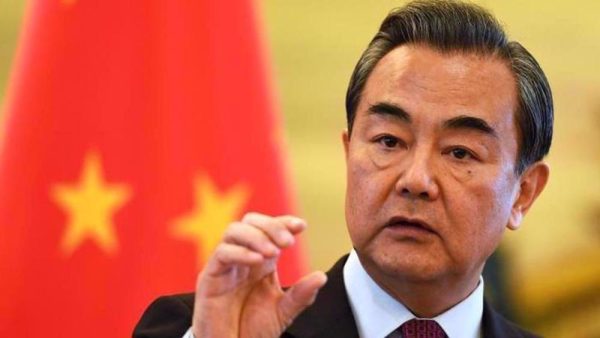
Chinese Foreign Minister Wang Yi
Press TV – September 4, 2023
China says Southeast Asian countries must be cautious about being used as geopolitical pawns by foreign players sowing discord in the region for their own gain.
Foreign Minister Wang Yi said in a recent video address at a think-tank conference hosted by the Foreign Policy Community of Indonesia in Jakarta that the Southeast Asian states must refrain from following in the footsteps of Ukraine and should not allow themselves to be used by “external forces.”
“The crisis in Ukraine has sounded the alarm for mankind, and similar tragedies must not be staged in Asia,” the top Chinese diplomat said. “We must promote regional security through dialogue and cooperation and oppose seeking absolute security at the expense of other countries.”
Wang warned of a “backstage manipulator,” apparently referring to the United States, which is fanning the flames of controversy over the South China Sea territorial dispute. “This black hand hiding behind the scenes must be exposed.”
“China is always willing to work with relevant countries to properly resolve differences through dialogue and seek effective ways to control the maritime situation.”
The Pentagon has sought to forge closer military ties with those countries in the region that have territorial disputes with China.
The Philippines, for instance, agreed earlier this year to allow US forces to use four additional bases in the country. Beijing warned that Manila was binding itself to a “chariot of geopolitical strife.”
China and its neighbors must work together to safeguard the “hard-won peace” in the region by properly managing differences, Wang said.
The Chinese diplomat predicted that foreign efforts to spur conflict in the South China Sea won’t succeed.
“We should abandon the Cold War mentality and oppose zero-sum games, keeping the region away from geopolitical calculations, and not become pawns in the great power competition,” Wang said.
Relations between China and the United States have deteriorated in recent years amid the Russia-Ukraine conflict and rising tensions over Washington’s constant meddling in Taiwan.
Beijing has repeatedly accused Washington of various military provocations in the South China Sea, Taiwan Strait, and elsewhere across the region.
Kiev believes the conflict should be “extended” to Russia’s undisputed territory

By Lucas Leiroz | September 4, 2023
Once again, Kiev makes clear its intention to continue carrying out terrorist attacks on the undisputed territory of the Russian Federation. In a recent interview, the head of Ukrainian intelligence stated that the conflict should be “extended” to “Russian territory”, thus showing that neo-Nazi forces plan to continue with incursions into Russia’s demilitarized zone, unnecessarily endangering the lives of innocent civilians.
The words were spoken by Kirill Budanov, head of the Ukrainian Main Intelligence Directorate (GUR). During an interview with Ukrainian TV anchor Natalya Moseichuk, he stated that hostilities need to be extended to deep inside Russian territory, in addition to countries and regions where Russia “has influence”.
“The war must be extended to other territory – which for us is clearly Russia – and other areas where they have influence (…) The wider the operations are, the better”, he said.
For Budanov, the deepening of territorial incursions against Russia is an efficient strategy from the military point of view, since it would supposedly allow “paralyzing” Moscow’s forces, giving Kiev’s troops an advantage. In other words, in the face of heavy losses, Ukraine wants to gain time to reorganize itself and think about new combat tactics – and plans to do this by keeping the Russians busy trying to neutralize deep attacks.
It is also curious that Budanov mentions the possibility of attacks against areas where Russia “has influence”. In practice, he is admitting that Kiev plans to attack Russia’s allies, internationalizing the conflict. In this regard, it is necessary to remember that until now several sabotage operations have already been carried out by the Ukrainians against the territory of Belarus. Considering Budanov’s words, it is expected that new maneuvers of this type will happen in the near future.
A few days before Budanov’s interview, another Ukrainian intelligence officer had already made similar statements. In an interview to the New York Times on August 25, Andrey Yusov, a spokesman for Ukraine’s military intelligence service, stated that “Russian elites and ordinary Russians now understand that war is not somewhere far away on the territory of Ukraine, which they hate”, adding that the “war is also in Moscow, it’s already on their territory.”
Commenting on Yusov’s words at the time, New York Times journalists stated that Kiev’s drone attacks against Russia have been working as a “morale booster”. They also said that, despite previous American disapproval of this type of maneuver, now “US officials conceded that attempted Ukrainian strikes had so far been calibrated, and they had not provoked any drastic escalation by Moscow.”
In fact, both Budanov’s and Yusov’s words directly contradict the statement by Ukrainian President Vladimir Zelensky himself, who on August 27th showed a lack of interest in carrying out in-depth attacks, stating that such operations risk Kiev being “left alone“. Zelensky apparently thinks the attacks create an uncomfortable situation for the West, which, despite maintaining a proxy war, tries to avoid a direct conflict with Moscow.
So, once again Ukrainian internal disagreements become clear. Officials claim different things and expose strategies for the conflict that contradict each other. In practice, there are only two possibilities in this scenario: either Zelensky is acting propagandistically, and privately he authorizes attacks in depth, while publicly denying them. Or, on the other hand, the regime’s officials are acting in a totally decentralized way, with military and intelligence agents carrying out attacks without prior authorization from Zelensky.
Both scenarios seem plausible, but to analyze the case properly it is necessary to consider what the West says on the topic, as the Ukrainian state is not sovereign and acts only as a proxy for NATO. There have been several US pronouncements so far disallowing attacks on undisputed Russian territory, but according to the New York Times, the current trend among US officials is to recognize drone incursions as “calibrated” and with low risk of escalation.
So, it is possible that US officials coordinating Ukrainian military operations on the battlefield are authorizing these drone strikes, as well as other forms of territorial invasion of Russia, without any communication to Zelensky. With so much evidence that the Ukrainian president is now isolated, without Western support and on the verge of being replaced, his exclusion from the military decision-making process seems likely.
However, these attacks will not bring any military advantage to Kiev. Escalation possibilities exist and Moscow will certainly react incisively if it perceives enemy incursions as a significant threat. This has not happened so far because the Russian forces have been efficient in neutralizing or reducing the damage of most attacks, but, having military control of the conflict, the Russians could assume a more escalatory attitude at any time. If it is necessary to increase the frequency and intensity of attacks on Ukraine to prevent the conflict zone from expanding into its undisputed territory, Moscow will certainly do so.
Lucas Leiroz, journalist, researcher at the Center for Geostrategic Studies, geopolitical consultant.
Featured Video

Chinese jet fuel and the myth of energy independence
or go to
Aletho News Archives – Video-Images
Book Review
Former Insiders Criticize Iran Policy as U.S. Hegemony
By GARETH PORTER | CounterPunch | February 27, 2013
“Going to Tehran” arguably represents the most important work on the subject of U.S.-Iran relations to be published thus far.
Flynt Leverett and Hillary Mann Leverett tackle not only U.S. policy toward Iran but the broader context of Middle East policy with a systematic analytical perspective informed by personal experience, as well as very extensive documentation.
More importantly, however, their exposé required a degree of courage that may be unparalleled in the writing of former U.S. national security officials about issues on which they worked. They have chosen not just to criticise U.S. policy toward Iran but to analyse that policy as a problem of U.S. hegemony. … continue
Blog Roll
 Aletho News
- Why no power can undermine Iran’s eternal dominance over the Strait of Hormuz
- Is The War Against Iran Over?
- Iran war will leave long-term ‘scar’ on Wall Street, investors warn
- How Iran decimated US power projection in West Asia: Military lessons of 40-day war
- Iran’s report details US-Israeli war crimes in targeting schools, hospitals, livelihoods
- NATO’s Slow Fracture: How Trump’s Iran War Exposed the Instrument of Hegemony
- Chinese jet fuel and the myth of energy independence
- Ukraine Sea Drone Fired From Libya Hit Russian Tanker in Mediterranean
- IRGC: Iranian forces launched no attacks during ceasefire hours
- Trump Administration Moves To Automate U.S. Military Draft Registration
- If Americans Knew
- TCN: Is Israel Blackmailing President Trump?
- Israel killed at least 303 Lebanese yesterday – who were they? Daily Update
- Amnesty: Urgent – Protect Lebanese civilians from brutal escalation in Israeli attacks
- Is The War Against Iran Over?
- Inside the Israeli army’s propaganda wing
- Hundreds of Gaza Amputees Stranded in Legal Limbo
- The gallows law: Israel moves toward executing Palestinian children
- Tucker Carlson: The Path to Peace requires ending ‘special alliance’ with Israel
- This is ceasefire? Israel’s biggest massacre yet in Lebanon, another journalist killed in Gaza – Daily Update
- Tucker Carlson on Israel: This Is the Behavior of an Ally? Really?
- No Tricks Zone
- An Inconvenient Tree: Uncovered In Alps… Europe Much Warmer Than Today 6000 Years Ago
- New Study Reports A 60% Slowdown In Greenland’s Ice Loss Rate In The Last Decade
- Low Intensity Tornado Wrecks Major Solar Farm, Creating A Potential Toxic Dump
- New Study Finds Warming Saves Lives…Cold Temperatures 12 Times More Deadly Than Excess Heat
- German Science Blog Accuses PIK Climate Institute Of Hallucinating Climate Tipping Points
- Devastating Assessment Of Comirnaty Vaccine By Former Senior Pfizer Europe Toxicologist
- New Study: CO2 Is ‘Effectively Negligible’ As An Explanatory Climate Change Factor Since 2000
- Former Pfizer Toxicologist Dr. Helmut Sterz Tells Bundestag Hearing Pfizer Vaccine Should Have Never Been Approved
- Energy Expert: Germany’s Nuclear Phaseout Was A “500 Billion Euro Mistake”
- New Research: South Australia’s Mid-Holocene Sea Surface Temperatures Were 4°C Warmer Than Today
 Aletho News