A Rough Diplomatic Week for Ukraine
By Ted Snider | The Libertarian Institute | September 27, 2023
In the early weeks of the war, a peace was still possible that would have seen Ukraine lose few lives and little to no land. Even the Donbas would have remained in Ukraine with autonomy under a still possible Minsk agreement. Only Crimea would have remained lost.
A year and a half later, Ukraine’s daily loss of life is horrific and Russia is determined to hold not only Crimea and the Donbas, but Kherson and Zaporizhzhia.
But while Ukraine has struggled on the battlefield, it has sustained its diplomatic support. But this week, that too showed strains. Ukraine had a difficult week with both the aligned and the nonaligned.
A year ago, Ukrainian President Volodymyr Zelensky addressed an enthusiastically supportive U.S. Congress live and a warm General Assembly via video. A year later, perhaps for fear of a different tone, Zelensky will meet privately with U.S. officials instead of publicly with a televised address to Congress.
In a perhaps even more worrisome sign for Ukraine, when Zelensky’s turn came to speak to the General Assembly on September 19, “he delivered his address,” The Washington Post reported, “to a half-full house, with many delegations declining to appear and listen to what he had to say.” Many countries have refused to condemn Russia or join the U.S.-led sanctions on Russia, but refusing to attend the General Assembly session and listen to Zelensky may be sending a strong signal.
And that was not the only signal. The Post further reports that “leaders from some developing nations are increasingly frustrated that the effort to support Ukraine is taking away, they say, from their own struggles to drum up enough money to adapt to a warming world, confront poverty and ensure a more secure life for their citizens.” The nonaligned global majority has all along seen the war as yet another proxy war between NATO and Russia that distracts from the problems that are most urgent to the world.
But Ukraine’s diplomatic worries come not just from the nonaligned countries but from the aligned ones. Poland has been, perhaps, Ukraine’s strongest supporter. It has been one of the biggest suppliers of weapons—and the central hub through which other NATO countries have sent their weapons to Ukraine—and the spearhead for sending tanks and more advanced weaponry. It has given Ukraine about a third of its own weapons valued at over $4 billion. And it has been a force behind the push for NATO membership for Ukraine.
But disagreement over the export of Ukrainian grain has shown how fragile that fraternity really is. Though united over a common animosity toward Russia, there are old strains in the Polish-Ukrainian relationship. Poland has been bothered by what they perceive as Ukraine’s continued glorification of their anti-Polish nationalist past. In January, a Polish official reminded Ukraine that they “continue to glorify” Ukrainian nationalist leader Stepan Bandera, who was “responsible for the genocide of Poles in 1943-44, when UPA troops horribly killed about 100,000 Polish citizens.” The Polish parliament has adopted a resolution that includes “recognition of guilt” by Ukraine for the genocide as a condition for “Polish-Ukrainian reconciliation.”
But the strain has recently torn over the issue of grain imports. Ukraine has complained about the betrayal of Polish restrictions on the import of Ukrainian grain to protect Polish farmers and markets. In August, echoing recent U.S. and U.K. statements, Marcin Przydacz, head of the Polish President’s Office of International Affairs, said that Ukraine should be “more grateful.” He took to Polish television to harshly scold that Kiev “should start to appreciate the role that Poland has played for Ukraine in the past months and years.” In angry response, Kiev called the Polish ambassador to Ukraine into the Ministry of Foreign Affairs. Furiously, Polish Prime Minister Mateusz Morawiecki shot back that, “The summoning of the Polish ambassador to the Ukrainian Foreign Ministry—the representative of the only country that remained in Kiev the day Russia invaded Ukraine—should not have happened.” Kiev’s action was “a mistake…given the huge support Poland has provided to Ukraine.”
And there the disagreement simmered until Zelensky’s speech to the General Assembly. There Zelensky lashed out at “how some in Europe play out solidarity in a political theatre—making thriller from the grain. They may seem to play their own role but in fact, they are helping set the stage to a Moscow actor.”
The accusation that Ukraine’s greatest supporter is betraying Ukraine and helping Russia, coupled with Ukraine filing a complaint against Poland, Hungary, and Slovakia with the World Trade Organization over their import ban on Ukrainian grain, proved too much for Poland. Polish President Andzej Duda said that Zelensky was like a drowning man who “can be extremely dangerous, because he can drag you to the depths” and “drown the rescuers.” He scolded that “It would be good for Ukraine to remember that it receives help from us and to remember that we are also a transit country to Ukraine.”
Polish Prime Minister Mateusz Morawiecki then announced that Poland is “no longer transferring weapons to Ukraine, because we are now arming Poland with more modern weapons.” He clarified that Poland would still permit other countries to ship their arms to Ukraine through Poland.
Poland has since clarified that they will continue to honor the arms agreements they have made with Ukraine made until now: “Poland is only carrying out previously agreed supplies of ammunition and armaments, including those resulting from the contracts signed with Ukraine,” spokesman Piotr Muller said.
Poland has also now said that, at a later date, it may send Ukraine more of its older weapons. “We cannot transfer our new weapons that we buy to strengthen Poland’s security or modernize the Polish army,” Duda said. “We’ve signed agreements with Ukraine regarding, among others, ammunition and special vehicles, and we are implementing them.”
And Poland is not alone. The three Eastern European nations that Ukraine has brought files against at the World Trade Organization form a triumvirate of trouble for Ukraine. Poland is the most threatening because it is the most important. Hungary is the least surprising because they have been an outlier in NATO unity on the war since the beginning. And Slovakia is becoming worrisome.
Polls show that former Slovakian Prime Minister Robert Fico is leading heading into the September 30 election. Slovakia has, up until now, been a strong supporter of Ukraine and a supplier of arms. But Fico has promised that, if he is elected, Slovakia “will not send a single round to Ukraine.” Fico has also criticized the sanctions on Russia and called for improving relations with Russia when the war ends.
Zelensky’s speech at the General Assembly has revealed underlying tensions with the nonaligned world and heightened tensions with nations previously aligned with Ukraine.
Ukrainian troops surrendering en masse – TASS
RT | September 27, 2023
Large numbers of Ukrainian troops have surrendered to the Russian military in recent weeks, using a radio special frequency designed for fighters willing to lay down arms, TASS reported on Wednesday.
The frequency, 149.200 call sign ‘Volga’, was set up by the Russian military during the summer. Thus far, it has been used by more than 10,000 Ukrainian servicemen who were subsequently taken into Russian custody, according to a source with knowledge of the situation cited by TASS. The person added that the radio frequency is active along the entire front line.
“More than 10,0000 Ukrainian soldiers have chosen life and used the 149.200 ‘Volga’ frequency to surrender. The prisoners are well-fed and are provided with all the necessary medical care,” the source stated.
The process has seemingly accelerated recently as Ukrainian troops have surrendered in groups rather than individually, particularly around Rabotino, according to the TASS source. The village in Zaporozhye Region has become the scene of intense fighting between Russian and Ukrainian forces in recent weeks.
Rabotino remains one of the major flashpoints of the conflict, with the area repeatedly subjected to attacks during the long-heralded Ukrainian counteroffensive launched in early June. The push has thus far failed to yield any tangible results, while reports have indicated that Ukrainian forces are sustaining heavy personnel and materiel losses in the process.
According to Moscow’s latest estimates, Kiev has lost more than 17,000 servicemen this month alone. The total number of Ukrainian troops killed since the counteroffensive began has now surpassed 83,000, with over 10,000 pieces of heavy military hardware also destroyed, according to the Russian military.
US Aid to Ukraine May Dry Out, But Not Because of House GOP
By Ekaterina Blinova – Sputnik – 27.09.2023
The US may run out of money to support Ukraine “in a few weeks,” National Security Council spokesperson John Kirby has warned. However, it’s not the potential government shutdown that could shrink the Ukrainian aid, former Pentagon analyst Karen Kwiatkowski has told Sputnik.
The Biden administration wants the US Congress to pass a $24 billion package for Ukraine along with other spending initiatives as soon as possible. Washington has already committed over $110 billion in Ukraine assistance to date.
While House Republicans appear skeptical about further financial and military assistance to the Kiev regime, which has failed to succeed with its summer counteroffensive, House Speaker Kevin McCarthy proposed to pass a stopgap measure to avoid a looming government shutdown. September 30 is the deadline. GOP lawmakers have signaled that they won’t include any funds for Ukraine in their stopgap bill.
On September 22, Ukrainian President Volodymyr Zelensky visited Capitol Hill to lobby for a hefty multi-billion package. Even though McCarthy (unlike his predecessor Nancy Pelosi) did not provide the Ukrainian president with an opportunity to address the House, he held a conversation with Zelensky.
The day after the meeting with Zelensky, McCarthy told reporters in the Capitol that he had decided to keep the $300 million in Ukraine aid in the Pentagon funding bill, adding that another spending measure set for the State Department and foreign operations would also include money for Kiev. The development is by no means surprising, according to retired US Air Force Lt. Col. Karen Kwiatkowski, a former analyst for the US Department of Defense.
“The Pentagon has stated that Ukraine funding and aid would continue unabated by any government shutdown, and this includes the payment of salaries for tens of thousands of Ukrainian government employees and bureaucrats – even as paychecks for US government employees, and bureaucrats can and likely would be held back in the event of a shutdown,” Kwiatkowski told Sputnik. “I think this is a Pentagon and administration attempt to remove the ability of the Congressional GOP Freedom Caucus to argue that they desire to pay American salaries, before they pay Ukrainian ones – by saying we (the Biden admin) are paying Ukrainian salaries no matter what you (the House America First-types) do.”
When it comes to the larger $24 billion package, the former Pentagon analyst has a sense that “if serious negotiations are forced on Speaker Kevin McCarthy, they will find a way to reduce this amount, or to separate this aid out for separate and subsequent Congressional consideration.” The Biden administration has publicly promised this aid to Ukraine, but they do not control the appropriations – the House does, she emphasized.
“However – the Pentagon could simply provide it to Ukraine using a recalculation ‘trick’ and devaluing of past aid in the amount of $24 billion. I give this a 50% chance of happening in some way,” Kwiatkowski said.
For example, in late June, the Pentagon said that it had overestimated the value of the arms it supplied to Kiev by $6.2 billion over the past two years. Four weeks earlier, the US Department of Defense cited an accounting error of at least $3 billion. Eventually, the “surplus” simply went back into the Pentagon’s pot allocated for Ukraine within the president’s drawdown authority (which allows providing Kiev with weapons directly, without Congressional approval).
“I think there is a good chance Ukraine will be able to wring out much of the promised $24 billion – but that the political battle, here in the US, to make that happen will reveal much to Congress and the American people about both the shady accounting ‘principles’ of the Pentagon and the honest situation in Ukraine,” Kwiatkowski said.
Still, trouble is brewing for Kiev: it seems like many in Congress on both sides of the political aisle are beginning to understand the practical and political need for Kiev and Washington to end the conflict immediately, according to the former Pentagon analyst.
She suspects that “the truth about the terrific loss on the battlefield and in Ukrainian military capability in the past 18 months is getting to the various committees in both the House and the Senate.”
“It appears that many otherwise hawkish Congressmen and Senators want to put Ukraine behind them politically, and develop massive new spending for some idea of ‘containing’ China in the Pacific,” the retired lieutenant colonel pointed out. “If the CIA and DIA are influencing our Congress, which they do by design, we may see Ukraine aid one-for-one shifted to that China ‘effort’ as part of a negotiation. The cold reception of Zelensky in US political circles portends that much of Congress wishes to extricate themselves from the dangerous proxy war Biden and his advisors, left over from the Obama days, have contrived, and incidentally, have lost.”
In August, a majority of US respondents told pollsters they oppose more aid for Ukraine. In September, another survey indicated that 41% now say the United States is doing too much to support Ukraine, up from 33% in February and 14% in April 2022. Remarkably, even Democratic voters now appear to hold this stance, despite previously being staunch supporters of more US spending on Ukraine.
Meanwhile, the Asia-Pacific topic has steadily been getting hotter this year: first, the Pentagon announced about speeding up the provision of weapons to Taiwan island; then, in August, the White House signaled that it would ask Congress to fund arms for Taiwan as part of a supplemental budget request for Ukraine; in mid-September, the mainstream press reported that the US plans to redirect $85 million in military aid allocated for Egypt to Taiwan. If the pivot to Asia becomes the main focus of US lawmakers, the flow of funds to Kiev may soon start drying out.
Who Owns the United States?
BY PHILIP GIRALDI • UNZ REVIEW • SEPTEMBER 26, 2023
The recent sparring between Elon Musk and the despicable Jonathan Greenblatt of the Anti-Defamation League (ADL) has cast considerable light on the successful attempts by Jewish groups to dominate America’s foreign as well as some domestic policies, in part by taking away the First Amendment right to Freedom of Speech so their behavior cannot be challenged. As readers of Unz will be aware, Musk has threatened to sue the ADL for as much as $22 billion for defaming him and doing material damage to his business interests while also falsely smearing Musk himself and the platform for allegedly providing an antisemitic haven for “hate speech.” In Musk’s view, the ADL has put pressure on potential advertisers not to do business with him and to engage in a total boycott of his social networking sites.
Greenblatt’s argument is that material that he considers to be anti-semitic should not be allowed on any public forum, to include Musk’s site X, formerly known as Twitter. If Greenblatt were concerned with public incitements to kill Jews or damage their property there might be a case to be made, but the fact is that such behavior is already criminalized. Greenblatt is much more expansive than that, condemning any criticism of Jewish group or even individual behavior or the actions of Israel, which have included various war crimes and crimes against humanity to include targeting and killing Palestinian children and harvesting the organs of Palestinian prisoners. Israel is also a nation that is increasingly ethnically exclusive and has a state religion that is intolerant and repressive of other creeds, to include minority Christians and Muslims.
Beyond Musk, Greenblatt and the ADL have also focused on Tucker Carlson given his high profile and popularity among conservatives. Greenblatt repeatedly demanded that Fox News fire Tucker for discussing the “great replacement” theory as well as other white-nationalist talking points. Greenblatt has denounced Carlston’s alleged willingness “To use his platform as a megaphone to spread the toxic, antisemitic, and xenophobic ‘great replacement theory’ is a repugnant and dangerous abuse of his platform.” He called on advertisers to stop supporting the Carlson program and Fox with their dollars and was delighted when Carlson was finally fired in April. Many believe that the firing was in large part due to pressure from ADL and other Jewish groups.
In other words, in the America envisioned by Greenblatt and his friends who are pressuring advertisers not to support sites like X and passing laws penalizing or even criminalizing anyone who seeks to boycott Israel over its behavior, it will be more-or-less possible to speak freely on any subject as long as it does not involve Jews. That suggests an assumption by ADL that Jews have special status not enjoyed by anyone else. As a result Jews have been able to exploit their alleged singular and perpetual victimhood to assume de facto control over media sources of information as well as both major political parties using that old tried and true mechanism, money, and lots of it. It is a subject that in itself will not be open to discussion and which Greenblatt dismisses as an anti-semitic trope amounting to “hate speech.”
Interestingly enough, the wrath of Greenblatt is apparently not shared by Israeli Prime Minister Benjamin Netanyahu, who is regarded as no shrinking violet when it comes to promoting his country’s interests, as he sees them, and the dominance of Jewry worldwide. Netanyahu was in the United States last week for the annual meeting of the United Nations General Assembly but he made time to fly to California to visit Musk’s Tesla car assembly plant. The two men sat down to have a public chat in front of news cameras and, while it was clear that they were being polite and non-combative, it was also true that Netanyahu was careful not to accuse Musk of being an anti-semite or anything like that.
Netanyahu, who may have a better understanding than does Greenblatt of which way the wind is blowing regarding his country and Jewish power in general, might be playing a clever game in which he avoids a hard edged and dangerous Greenblatt approach while proceeding quietly with the ethnic cleansing of the Palestinians and aggrandizing himself in power through his attack on the country’s courts. Netanyahu clearly understands that Israel has crossed the apartheid threshold vis-à-vis Palestine and its neighbors and that most of the world despises his country, to include many Americans who are beginning to see the light that they have been used and abused for the past 75 years. He has chosen to ignore the critics as the wisest path, in which he may be correct.
How have Jews in America and Canada as well as in Europe and Australasia become so politically powerful? Now that Musk has opened the door to discussing the Jewish issue with some candor, a number of articles and discussions have begun to appear in the media and some universities have even developed enough of a spine to start teaching true narratives on the Middle East supported by books that groups like ADL are seeking to ban. The most powerful piece to appear recently was on Mondoweiss, entitled “Biden’s Israel Policy is Scripted by Saban.”
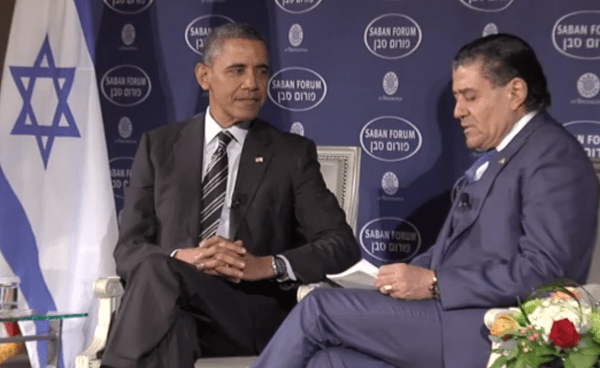
Mondoweiss’s title refers to Israeli-American Hollywood-based media producer Haim Saban, who sums up his political philosophy with a pithy “I’m a one issue guy and my issue is Israel!” Saban has been the largest individual donor to the Democratic Party since the Clintons and his power has resulted in unswerving fealty to US interests as perceived through the optic of its relationship with the Jewish state. He is similar to megadonor Sheldon Adelson, now deceased, who performed the same service with the Republican Party. Sheldon’s wife Miriam, an Israeli, has maintained the legacy of keeping the GOP in line through control of political donations. The Adelsons were reportedly responsible for Donald Trump’s move of the US Embassy in Israel from Tel Aviv to Jerusalem and other concessions re the Palestinians, Iranians and Syrians. The withdrawal of the US from the Joint Comprehensive Plan of Action (JCPOA) was due to pressure from the Adelsons, a move that was contrary to the actual US interest to monitor Iranian nuclear developments. Sheldon’s only failure was failing to convince Trump to bomb Iran.
Saban, who recently spent three hours in the Oval Office advising Joe Biden, is most clearly seen through his own comments on the relationship between the US and Israel. Hint: Israel’s interests always come first! For example, he shrugged off criticism of his giving money to AIPAC, “which supports Republican election deniers, because his one issue is Israel” saying in an interview: “The only goal of this organization is to prevent people who are against US-Israel relations from advancing and to support those who support relations between Jerusalem and Washington… Many Democrats called me and said ‘are you stupid? you’re a Democrat who supports [2020 election deniers]?’ I always say the same thing: It’s a specific, defined issue, and that is the US-Israel relationship. In that sense, I’m not interested in anything else.”
Re the Democratic Party leadership and Joe Biden, Saban observed that the party is “still solidly pro-Israel, and there are only about a dozen members of Congress who are anti-Israel.” Saban funded Hillary Clinton in 2008 but responded angrily when Obama “refused to echo Hillary Clinton’s call to ‘obliterate’ Iran if Iran attacked Israel.” Saban did not trust Obama on the issue of Israel and was initially rebuffed when he tried to arrange a meeting in 2010. He told a journalist that “I had a list of questions… And Chicago’—Obama campaign headquarters—‘could not organize that meeting. … I was ready and willing to be helpful, but ‘helpful’ is not to write a check for two thousand three hundred dollars. It’s to raise millions, which I am fully capable of doing.” Obama eventually came to respect Saban’s millions. “By 2013, President Obama was the speaker at a fundraiser at the Sabans’ house in L.A. attended by 120 people who paid between $16,200 and $32,400 each to attend.”
The result of the largesse is that Biden’s policy on the Middle East is now being scripted by Haim Saban, whose millions he requires for the upcoming 2024 campaign. It is as simple as that, appreciating that donation of cash in hand is better than platitudes about suffering Palestinians. That is what constitutes “truth” for both major political parties, who are de facto owned by the Adelsons and the Sabans who will always place Israel first. That Saban and Adelson (who is buried in Jerusalem) were and are both Israeli citizens and have been allowed to wield such power on behalf of a foreign country with which the US shares almost nothing in the way of actual values is shameful and it is also technically illegal or possibly even treasonous as they are acting as Foreign Agents. And it is more than that morally speaking – it is a disgrace. Joe Biden in particular should be ashamed of his folding when confronted by Jewish money as he is in charge, but it is apparently not an emotion that he is familiar with.
Philip M. Giraldi, Ph.D., is Executive Director of the Council for the National Interest, a 501(c)3 tax deductible educational foundation (Federal ID Number #52-1739023) that seeks a more interests-based U.S. foreign policy in the Middle East. Website is councilforthenationalinterest.org, address is P.O. Box 2157, Purcellville VA 20134 and its email is inform@cnionline.org.
Media and Architects of Online Censorship Law Heap Pressure on Rumble After it Defends Principle of Neutrality
By Tom Parker | Reclaim The Net | September 25, 2023
Media outlets and architects of the UK’s censorship law, the Online Safety Bill, are increasing the pressure on neutral video sharing platform Rumble after it refused to bow down to the UK Parliament’s pressure to demonetize comedian Russell Brand.
The pressure to demonetize Brand came after anonymous sexual assault allegations were made against him. Brand has denied the allegations and has not been arrested, charged, or convicted of any of the allegations made against him.
Several companies, including YouTube, took action against Brand after the allegations surfaced, despite Brand having no content violations on YouTube. But Rumble stood up to the pressure and rejected the UK Parliament’s request to cut off Brand’s monetization, with CEO Chris Pavlovski noting that the allegations against Brand have “nothing to do with content on Rumble’s platform.”
Now, several media outlets and people who helped craft the UK’s online censorship law, the upcoming Online Safety Bill, are targeting Rumble’s stance.
Lord Allan of Hallam, a former Facebook executive who advised on the Online Safety Bill, branded Rumble a “crazy American platform” and expressed disdain at Rumble’s philosophy of allowing free expression.
He and internet law expert Professor Lorna Woods, an architect of the Online Safety Bill, also complained about Rumble’s refusal to bow down to pressure from UK officials and framed it as “grandstand[ing] before the press.”
The Times also took aim at Rumble by noting that under the Online Safety Bill, Rumble will have to “prevent children from seeing pornography… material that promotes self-harm, suicide or eating disorders… violent content… material harmful to health, such as vaccine misinformation” and “take down material that is illegal, such as videos that incite violence or race hate.”
However, Bryn Harris, the Chief Legal Council for The Free Speech Union, pointed out that The Times’ article doesn’t actually provide examples of any of the alleged illegal or harmful to kids content on Rumble.
Additionally, the Associated Press piled in on Rumble after it stood up to the demands of UK officials by claiming that Rumble is a “haven for disinformation and extremism.”
This mounting pressure comes days after the UK passed the Online Safety Bill — one of the most sweeping censorship laws to ever be introduced in the UK. The controversial censorship and surveillance bill is set to come into law next month.
The censorship provisions in the Online Safety Bill can be aimed at both citizens who post speech that’s deemed to cause “harm” and companies that fail to censor this so-called harmful content. The harms in the bill extend beyond physical or direct harm and into the realms of “psychological” harm and “potential” harm. Certain types of “false” communications are also prohibited under the bill.
As UK officials heap pressure on Rumble, reports have revealed that several UK politicians have ties to the pro-censorship Center for Countering Digital Hate (CCDH) and the UK politician that pressured Rumble to demonetize Brand received a donation in kind from Google.
Scotland To Set Up New Police Unit To Tackle “Hate” and “Misgendering,” Ignites Free Speech Concerns
By Christina Maas | Reclaim The Net | September 25, 2023
On the brink of implementing Humza Yousaf’s highly contentious legislation early next year, a specialized hate crime unit has been announced by Police Scotland. With the unit scheduled to be operational by November, a comprehensive training of about 16,400 law enforcement officers will follow in December.
This is all in anticipation of the Hate Crime and Public Order Act, expected to be ratified early in 2024. This Act expands upon the existing law, offering a broader protective net for “vulnerable” groups and introduces the notion of “stirring up hatred”.
However, some critics and free speech advocates have raised concerns that the Act, which holds potential to elevate sentencing if prejudice is based on factors such as age, race, disability, religion, transgender identity or variations in sex characteristics, may invigorate the increasingly toxic culture wars surrounding gender issues. It is posited that the law may sidetrack police resources from tackling violent conduct to address “harmful” words.
The thought of free speech being stifled by the new laws is particularly horrifying for some, with warnings that women’s rights advocates may find themselves entangled in allegations of transphobia.
Critics argue that a significant portion of police time may now be geared towards a subjective concept of hate crime, such as “misgendering,” instead of dealing with tangible violent acts.
Helen Joyce, part of the human rights group Sex Matters, asserted her alarm at the creation of this specific hate crime unit. She voiced concern for those who stand for the rights of women and children, warning of a “chilling effect” on free speech, as reported by The Scottish Express.
Police Scotland remains tight-lipped about the size of the proposed unit plus the financial implications of the new laws – a cause for concern for many.
Nord Stream Blast: Why the West Still Can’t Name the Culprit
By Ekaterina Blinova – Sputnik – 26.09.2023
Exactly a year ago three out of four Nord Stream pipelines running from Russia to Germany under the Baltic Sea to provide Western Europe with natural gas were destroyed. Western investigators have so far failed to find the saboteurs behind the blast.
Gas leaks from the Nord Stream pipeline system were detected on 26 September 2022, with the EU leadership admitting that this could be the result of a “deliberate attack”.
Two days later, on 28 September, the Kremlin announced that Russia was ready to consider applications from EU countries for a joint investigation into the Nord Stream incident.
However, not only did the West snub Moscow’s request but also blamed Russia for destroying its own pipelines. Later, European and American officials backtracked on their accusations but fell short of naming a potential perpetrator.
On 12 October 2022, Russian President Vladimir Putin called the incident “an act of international terrorism”. Meanwhile, as gas prices soared and US energy producers secured lucrative liquefied natural gas (LNG) contracts with European countries, it became clear that Washington had been the major beneficiary from the Nord Stream destruction.
Furthermore, the US leadership had previously issued several threats that it would destroy the pipelines.
“We know that the United States President Joe Biden, threatened openly that he would stop Nord Stream 2 if the Russians were to militarily intervene in Ukraine,” Philip Giraldi, former CIA station chief and now an executive director of the Council for the National Interest, told Sputnik. “That was repeated by Victoria Nuland, who was Number Three at the State Department. She said basically the same thing. So we had the President and a senior official both saying that they would stop the pipeline if this were to happen. So we have a statement coming from the government itself saying it would do this.”
“And then I would say on top of that, the United States – given its military capabilities – had the capability to do this. They sent divers down to attach explosives and to arrange for a drone satellite that would ignite the charges and blow up the pipelines. It had the capability to do it. And it also had the motive, which was basically to weaken Russia’s ability to use its energy resources to affect politics in Europe. So this is what it was all about,” Giraldi continued.
On 8 February 2023, Pulitzer Prize-winning journalist Seymour Hersh dropped a bombshell, detailing an apparent plot by Team Biden and the US intelligence community to blast the Nord Stream pipelines with the help of Norwegian operatives.
Reflecting on Hersh’s version, Giraldi said that he feels that Hersh’s narrative is “correct in every detail.”
“And I can confirm to you that Sy Hersh, whom I know somewhat, has excellent sources inside CIA and inside the Pentagon. So what he’s telling us comes straight from people who know about it,” the CIA veteran said.
Blame Game Time: The Andromeda Yarn
On 7 March, the US and German mainstream sources published two separate articles claiming that international investigators had managed to trace the 26 September 2022 sabotage attack to a “pro-Ukrainian” group operating from the Andromeda, a 15-meter chartered yacht. The story immediately prompted a lot of controversy.
German media, for example, asked how a 15-meter chartered yacht could carry the 1,500-2,000 kilograms of explosives needed to destroy the pipelines, adding that the Andromeda does not have a crane to hoist such quantities safely into the water. It was also unclear how the group of volunteers managed to transport that amount of explosives across Europe.
Another problem, cited by the press, was that at the site of the explosion, the depth of the Baltic Sea is about 80 meters, requiring special diving equipment which the private vessel lacked. On top of this, the gang of saboteurs returned the yacht in bad condition and even left a couple of fake passports on board which made the story even fishier.
Hersh ridiculed the mainstream media yarn while discussing it with an anonymous CIA operative familiar with the issue. According to Hersh, it’s not just a “bad” media story but a deliberate “parody” fed by the CIA to the US and German media.
“In the world of professional analysts and operators, everyone will universally and correctly conclude from your story that the devilish CIA concocted a counter-op that is on its face so ridiculous and childish that the real purpose was to reinforce the truth,” the investigative journalist wrote on 5 April.
The most recent Western media stories alleging Ukraine’s involvement don’t hold water, either, according to Giraldi:
“Look, when you’re doing things in the intelligence world, you look for corroborative details – details that tell you that this story is coming from a good source or that it is fundamentally correct. And I saw none of that in this story. There have been a number of stories, of course, about people from Ukraine having done this, or people even from Germany renting boats and going over there, and they didn’t know what nationality they were. I mean, these are repeated stories. I have no reason to assume that this story is correct.”
The CIA veteran goes on to say that at present there is no story that sounds as credible as Hersh’s version. Besides, the US had the motive; it had the capability to do it; and it also had the objective to do it as a way of weakening Russia’s ability to influence Western Europe, Giraldi summarized.
“So I think that a lot of the background or the backstory supports the fact that the United States basically did it, though, apparently with the assistance of the Norwegians, and I would imagine some of the other NATO allies were also briefed in a certain fashion. In other words, not all the details, but given some indication that something might be happening in the near future in the Baltic.”
Why Couldn’t EU Investigators Name the Culprit?
It’s hardly surprising that despite official investigations in three countries – Sweden, Denmark, and Germany – the question of who is responsible for the sabotage remains unanswered, according to Giraldi.
“The fact that there have been three investigations carried out means nothing because the three countries that carry out the investigation are all NATO members. So they would have no motive whatsoever to challenge the argument that this was carried out by the Russians themselves or by the Ukrainians,” the CIA veteran said.
However, Giraldi suspects that the German investigation probably came closest to the truth. However, what they told the public was essentially a narrative acceptable to the United States and to NATO. The former CIA field officer pointed out that Germany suffered the most from the destruction of the Nord Stream pipelines.
“Their economy is in trouble. They were dependent on Russian energy and so they are paying a price for it, and I’m sure that many Germans – I do know that many Germans are aware of this and are complaining that this ever took place. I was in Eastern Europe about two months ago, and I heard this a lot from Europeans, how stupid this whole thing was to destroy a resource that was very good for Europe as well as being good for Russia.”
According to Giraldi, it’s interesting to examine who else – apart from the US and Norway – was aware of the Nord Stream plot and was foolhardy enough to get involved in it. Giraldi doubted whether Berlin had been in collusion with the US and Norway from the beginning and said that it did not make sense for a country to sacrifice its own economy willingly.
Furthermore, the Nord Stream pipelines weren’t just a Gazprom asset, Giraldi emphasized: there were other countries – other companies from Western Europe – that participated in the project that had been worth billions of dollars. And because of the US plot, their money had been squandered and their infrastructure had suffered incalculable damage.
But the financial aspect is only half the story: the most worrying part is that those who blew the pipelines up risked escalating the crisis dramatically.
“The destruction of the pipeline was an act of war,” stressed Giraldi, “… so this is an interesting story if we ever find out the truth.”
On 17 September 2023, the First Deputy Permanent Representative of Russia to the UN Dmitry Polyansky said that Russia was calling for the UN Security Council to meet to discuss the Nord Stream gas pipelines and the council will gather on Tuesday, 26 September – a year after the sabotage occurred.
On 27 August, the Prime Minister of the German federal state of Saxony, Michael Kretschmer, announced the need to repair the damaged gas pipelines which he said will help to ensure the country’s energy supply for another five to 10 years.
The US Military Is Laying the Groundwork to Reinstitute the Draft
By Zachary Yost | Mises Wire | September 25, 2023
The most recent edition of the U.S. Army War College’s academic journal includes a highly disturbing essay on what lessons the U.S. military should take away from the continuing war in Ukraine. By far the most concerning and most relevant section for the average American citizen is a subsection entitled “Casualties, Replacements, and Reconstitutions” which, to cut right to the chase, directly states, “Large-scale combat operations troop requirements may well require a reconceptualization of the 1970s and 1980s volunteer force and a move toward partial conscription.”
An Industrial War of Attrition Would Require Vast Numbers of Troops
The context for this supposed need to reinstate conscription is the estimate that were the U.S. to enter into a large-scale conflict, every day it would likely suffer thirty-six hundred casualties and require eight hundred replacements, again per day. The report notes that over the course of twenty years in Iraq and Afghanistan, the U.S. suffered fifty thousand casualties, a number which would likely be reached in merely two weeks of large-scale intensive combat.
The military is already facing an enormous recruiting shortfall. Last year the army alone fell short of its goal by fifteen thousand soldiers and is on track to be short an additional twenty thousand this year. On top of that, the report notes that the Individual Ready Reserve, which is composed of former service personnel who do not actively train and drill but may be called back into active service in the event they are needed, has dropped from seven hundred thousand in 1973 to seventy-six thousand now.
Prior to the Ukraine war, the fad theory in military planning was the idea of “hybrid warfare,” where the idea of giant state armies clashing on the battlefield requiring and consuming vast amounts of men and material was viewed as out of date as massed cavalry charges. Instead, these theorists argued that even when states did fight, it would be via proxies and special operations and would look more like the past twenty years of battling nonstate actors in the hills of Afghanistan. In a recent essay in the Journal of Security Studies, realist scholar Patrick Porter documents the rise of this theory and the fact that it is obviously garbage given the return of industrial wars of attrition.
As military planners have woken up from the fevered dream of imagining that modern war consisted of chasing the Taliban through the hills with complete and overwhelming airpower, they have similarly started to wake up to the idea that industrial war has vast manpower requirements and that seemingly the only way to fill these requirements is by forcing young people into the ranks. That has certainly been the only way Ukraine has been able to maintain its forces, although it has required increasingly draconian measures to do so as conscripts face attrition rates of 80 to 90 percent by Ukraine’s own admission.
Obviously, the reintroduction of conscription is an extremely disturbing prospect given America’s propensity for getting involved in meaningless wars that accomplish nothing other than empowering our enemies, killing and maiming our soldiers, and wasting vast resources.
This is especially true given the unstated assumptions implicit in this paper. Who is the enemy that would be inflicting thirty-six hundred casualties a day? A war in the Pacific against China would primarily be a naval and airpower war with an extremely limited role for the army (even the current inept regime seems unlikely to be stupid enough to try and wage a land war against China) which obviously leaves Russia as the main adversary that would require the U.S. Army to round up conscripts to feed into the attritional meat grinder.
There Is No American National Interest That Requires a Standing Army
However, while these manpower shortages may be a valid concern for someplace like Russia, Ukraine, or Poland, we here in the U.S. are quite fortunate that we have no compelling national interest that would require us to engage in an industrial war of attrition in Eastern Europe.
To the extent we are at risk of becoming involved in such a disastrous mess, it is entirely of our own doing via the entangling alliance known as the North Atlantic Treaty Organization and our leader’s own messianic gnostic crusades for democracy or whatever pseudo religious ideology is presently in vogue.
The U.S. is blessed as being the most secure power in history. We are the hegemon of the western hemisphere, with vast moats in the form of the Atlantic and Pacific Oceans that no other state has the capability to project military force across, and all our neighbors are weak and relatively friendly. We are not at any risk of being forced to fight an industrial land war on the home front. Any war the army would be used in would be as an expeditionary force fighting in the eastern hemisphere, where we have no compelling defensive need to do so.
From the beginning of the U.S., there have been warnings against the dangers of both entangling alliances and standing armies. The best solution to the military recruitment crisis is to simply abolish the standing army and not plan to wage a costly and pointless war on the other side of the planet that would result in trillions of dollars down the drain and who knows how many tens or hundreds of thousands of Americans being killed, maimed, and psychologically scarred.
Featured Video

Prof. Ted Postol: US–Iran War? Israel’s Fatal Gamble
or go to
Aletho News Archives – Video-Images
From the Archives
Neocon Max Boot: Legal and illegal aliens need to enlist in the US army and die for Israel

By Jonas E. Alexis | Veterans Today | October 16, 2107
In 1973 Irving Kristol, the godfather of the Neoconservative movement, made a stunning statement which is still relevant to understanding the Israeli influence in US foreign policy. Kristol said:
“Senator McGovern is very sincere when he says that he will try to cut the military budget by 30%. And this is to drive a knife in the heart of Israel… Jews don’t like big military budgets. But it is now an interest of the Jews to have a large and powerful military establishment in the United States…
“American Jews who care about the survival of the state of Israel have to say, no, we don’t want to cut the military budget, it is important to keep that military budget big, so that we can defend Israel.”
Read the statement again very carefully. A big military budget, said Kristol, is only good for Israel, not America or much of the Western World. In other words, precious American soldiers who go to the Middle East to fight so-called terrorism are just working for Israel, not for America.
So, whenever the Neocons use words such as “democracy” or “freedom,” they are essentially conning decent Americans to support Israel’s perpetual wars. … continue
Blog Roll
 Aletho News
- The Only Motive Behind The ‘Imminent’ U.S. War With Iran Is The Zionist Lobby
- Trump eyes 350-acre US military base housing 5,000 troops in Gaza
- Israel Pushing US Toward a Big and Damaging War With Iran – Ex-Pentagon Analyst
- Meet The Liberal Zionist And Ukraine War Supporter Advising AOC On Foreign Policy
- Buck Dancing for Zion: Kenya’s and Nigeria’s Growing Love Affair With Israel
- Israel installed, oversaw security system at Barak-Epstein residence in New York: Report
- ‘Britain’s Index of Repression’ documents 964 incidents of anti-Palestinian crackdown
- Prof. Ted Postol: US–Iran War? Israel’s Fatal Gamble
- UK prosecutors drop aggravated burglary charges against 24 Palestine Action activists
- Unidentified drone downed over Lebanon airbase, US forces block authorities from crash site
- If Americans Knew
- The Lancet: Gaza death toll far higher than reported – Not a ceasefire Day 132
- Compliant aid: Who are the Israel-approved NGOs scaling up in Gaza?
- Why won’t Trump’s “Board of Peace” bring peace? – Not a ceasefire Day 131
- Help end the injustice against Shadi
- Israel’s Favorite American President
- Israel’s “Yellow Line” Is a Death Trap for Palestinians. We Drove Into It.
- Why Israel’s expanding occupation in Syria presents a critical legal test
- Gaza is not a natural disaster. It is the victim of genocide enabled by global inaction
- Netanyahu’s plan to “end” US aid to Israel is to give even more money under a different name
- Israel ceased firing on Gaza for just 15 days of the “ceasefire” – Not a ceasefire Day 130
- No Tricks Zone
- Coal Power Back In Trend As Globe Tries To Keep Pace With Growing Demand For Power
- New Study: A 4°C Warmer Beaufort Sea Had ‘No Sea Ice’ 11,700 – 8200 Years Ago
- Unfudging The Data: Dutch Meteorological Institute Reinstates Early 20th Centruy Heat Waves It Had Erased Earlier
- German Gas Crisis…Chancellor Merz Allegedly Bans Gas Debate Ahead of Elections!
- Pollen Reconstructions Show The Last Glacial’s Warming Events Were Global, 10x Greater Than Modern
- Germany’s Natural Gas Storage Level Dwindles To Just 28%… Increasingly Critical
- New Study Rebuts The Assumption That Anthropogenic CO2 Molecules Have ‘Special’ Properties
- Climate Scientist Who Predicted End Of “Heavy Frost And Snow” Now Refuses Media Inquiries
- Polar Bear Numbers Rising And Health Improving In Areas With The Most Rapid Sea Ice Decline
- One Reason Only For Germany’s Heating Gas Crisis: Its Hardcore-Dumbass Energy Policy
 Aletho News