Lawsuit Pushes Back Against California Medical Board’s “Misinformation” Censorship Power
By Didi Rankovic | Reclaim The Net | October 12, 2023
A lawsuit has been amended in California against this US state’s medical boards’ “misinformation powers” – based on a law that is soon to be repealed, and which critics – some of them legal plaintiffs – say allowed the government to prevent them from practicing medicine, the way they were trained to do.
It was one of the rules, called Assembly Bill 2098 (AB 2098), introduced to keep medical professionals in check, in case they felt like speaking their minds freely as insights into Covid were developing.
And since the world has now moved on to other crises, the “forgotten pandemic” censorship laws are getting “quietly” repealed.
But not really, the plaintiffs in this case claim – because of the nature of the repeal of the short-lived AB 2098, made null-and-void on September 14 via Senate Bill 815 (SB 815). California Senator Newsom got to sign all three documents.
However, the repeal – which will not be in effect before the start of 2024 – at the same time incorporates Democrat member of California Assembly Evan Low’s provision that doctors who get accused of “misinformation” can still be punished – “held accountable” – regardless of whether the controversial law was actually applicable.
“The Medical Board of California will continue to maintain the authority to hold medical licensees accountable for deviating from the standard of care and misinforming their patients about COVID-19 treatments,” Low said.
How in the world is this political, ideological, pre-election, and legal gymnastics even supposed to work?
The lawsuit against the bill, Hoang et al. v. Bonta et al., has the plaintiffs represented by California attorney Richard Jaffe.
He had this to say: “Because of the repeal of AB 2098, and the board’s position that it can still sanction the speech targeted by the soon-to-be-repealed law, we are pivoting in our lawsuit and arguing to the judge that they can’t do it under their general statute either because the speech does not change just because the legal theory/statute changes.”
The world clearly has moved to other crises – but it seems, not the California Democrats. And so the plaintiffs in the lawsuit’s amended format are also asking to add more to their ranks. One of the original ones is Children’s Health Defense (CHD).
However absurd the “standard of care” argument that supersedes a law may seem to a layperson, Jaffe is obviously taking it seriously.
The court will hear the arguments related to this new development on November 13.
Five questions for the government’s behavioural scientists
Simple questions, requiring simple answers
Health Advisory & Recovery Team | October 10, 2023
As proposed in a previous HART article, state-funded behavioural scientists – via their application of often-covert ‘nudge’ techniques – fulfil a crucial role in imposing the will of a global elite upon ordinary people. Whether it is confining us to our homes, encouraging the ingestion of insects, imposing digital IDs or restricting our opportunities to travel, the nudgers promote the compliance of the masses by a variety of means, including their stealthy harnessing of fear, shaming and peer pressure.
And behavioural scientists are now a prominent occupational grouping within the government infrastructure. The ‘Government Communications Service’ employs more than 7,000 ‘professional communicators’ across the UK, and incorporates a ‘Behavioural Science Team’ (based in the Cabinet Office) with a central goal of embedding behavioural science expertise across the Government Communication profession’. During the covid event, the Cabinet Office granted the Behavioural Insight Team (the original ‘Nudge Unit’) a £4-million contract to furnish the government with ‘frictionless access to behavioural insights to match central priorities’. Recent Freedom of Information (FOI) requests to the Cabinet Office and the Department of Energy Security & Net Zero asking how many behavioural scientists they currently employed were both refused on the grounds that it would take too long to compute the information. Ironically, it seems that taxpayers are generously funding their own manipulation.
A prominent UK behavioural scientist recently acknowledged the impact this intense nudging campaign has had on the British people. In a 2023 interview for the Telegraph, Professor David Halpern (the Founding Director of the Behavioural Insight Team, aka the UK’s Nudge Unit) observed that people are now ‘drilled’ and rightly calibrated to accept further restrictions; ‘once you’ve practised something’ (lockdowns, mask wearing) ‘you can switch it back on … you’ve got the beginnings of a habit loop … we’ve practised the drill’.
HART believes that the general public has a right to be informed about the nature, scale, and intensity of state-sponsored nudging, not least so that they can be furnished with the opportunity to express their opinions about the appropriateness and acceptability of this form of top-down persuasion. Yet, to date, there has been a stark reluctance for any of the behavioural scientists within the government infrastructure to admit responsibility for promoting the fear-inflating messaging witnessed throughout the covid event. Given this lack of transparency in regard to the details of the ongoing behavioural science operation, HART would like to ask the state-employed nudgers the following questions:
1. Do you perceive yourselves as advisors or enablers? Is your primary goal to provide expert guidance to ministers and civil servants, or to maximise the compliance of the masses with Government edicts?
2. Did you conduct your own independent evidence reviews before promoting the implementation of top-down restrictions such as lockdowns and community masking, or do you presume that all recommendations emanating from national and global public health bodies are for the ‘greater good’?
3. Do you recognise the ethical concerns arising from the Government’s deployment of nudges upon their own citizens? How much time do you devote to discussing the morality of using often-covert, distress-inducing methods of persuasion upon ordinary people?
4. If, as you claim, you have never endorsed the use of fear-inflation as a means of promoting compliance, why did you all remain silent throughout the covid event while our Government was ‘scaring the pants’ off us all?
5. Do you recognise, and allow for, the fact that your own ideological biases will be colouring your judgements & actions?
By answering these questions, and thereby filling in some of the information gaps surrounding the Government’s ubiquitous use of nudging, lay people will be better placed to make an informed choice as to whether they want their taxes spent on this often-clandestine activity.
We look forward to receiving responses from the behavioural scientists concerned.
Yes, Treating COVID Patients With Hydroxychloroquine Can Save Lives
By Angelo DePalma, Ph.D. | The Defender | October 11, 2023
Hospitalized COVID-19 patients treated with hydroxychloroquine (HCQ) alone, or HCQ plus the antibiotic azithromycin, had significantly lower mortality than those not receiving the drugs, according to a study released this month in New Microbes and New Infections.
Researchers in Belgium report that just 16.7% of COVID-19 patients given HCQ, with or without azithromycin, died within 28 days compared to 25.9% among those not taking HCQ — a 35% lower mortality.
After adjusting for age differences, the risk of death was still 24% lower for HCQ-treated hospitalized patients.
The survival benefit was seen across all ages and was statistically significant.
The results support the efficacy of HCQ and azithromycin in improving outcomes for hospitalized COVID-19 patients. This contrasts with earlier studies using dangerously high HCQ doses that found no benefits.
Who participated in the study?
Led by Dr. Gert Meeus, a nephrologist at AZ Groeninge Hospital, Kortrijk, Belgium, researchers collected data from March 16 to May 20, 2020 — the first few months of the pandemic.
They compared outcomes for 352 COVID-19-positive, HCQ-treated adults hospitalized at AZ Groeninge Hospital with those of 3,533 patients across Belgium who did not receive the drug.
Treated patients averaged 69.7 years versus 73.1 years for the control group. While this age difference favors the younger subjects who face less risk from the virus, this factor was more than offset by the treatment group’s higher incidence of high blood pressure, diabetes, liver and lung diseases, and weakened immunity.
Treated subjects were also more obese — a COVID-19 risk factor — with lower blood oxygen (suggesting severe illness) and higher C-reactive protein levels. C-reactive protein is a blood marker for inflammation and poor COVID-19 outcomes.
During the 28 days following initial treatment, 16.7% of patients who received HCQ, either alone or with azithromycin, died compared with 25.9% in the control group.
How was HCQ administered?
For the study, 299 patients (85%) received HCQ plus azithromycin versus 53 who took HCQ alone. Researchers only prescribed the antibiotic when they suspected bacterial pneumonia. Data for HCQ alone and HCQ plus azithromycin were combined.
Subjects received HCQ as two 400-milligram doses on day one and two 200-milligram doses on days two through five.
Patients younger than 75 years received 500 milligrams of azithromycin for five days. Older patients took 500 milligrams on day 1 and 250 milligrams per day for four days.
88% of patients received the full treatment course but 12% took the drugs for less time, at the caregiver’s discretion, due to side effects or reaching a terminal condition.
Otherwise, side effects observed in 197 patients were mild and mostly stomach issues. One patient had hallucinations and two developed a skin rash.
Thirteen patients dropped out of the study due to side effects, including 4 of 15 who developed heart muscle abnormalities — despite an earlier study reporting an association between HCQ and lower cardiovascular risk.
Nine patients dropped out because of digestive upset. One patient developed an abnormal but nonfatal post-study heart rhythm, but no treated patients experienced sudden death or irregular heartbeat during the study.
How the drugs work
HCQ and azithromycin work together to eliminate the COVID-19 virus, but the drugs may benefit patients in other ways.
Both drugs act on the immune system in ways that may suppress the COVID-19 cytokine storm responsible for much of COVID-19-related illness and death.
HCQ may also prevent blood clots in COVID-19 patients, while azithromycin may prevent additional, non-lung bacterial infections.
HCQ was approved in the U.S. in 1955 to treat malaria, but because of its anti-inflammatory effects it is also prescribed to adults to treat autoimmune diseases like lupus and rheumatoid arthritis.
Most serious side effects — including retinopathy, which causes blindness — occur after years of use, while COVID-19 treatments generally last for less than one week.
The World Health Organization lists HCQ as an “essential medicine” based on its “safety, efficacy and public health relevance.”
Study strengths and weaknesses
Meeus designed his study and interpreted his findings to include results that may not have supported the “safety and efficacy” of HCQ.
For example, all patients receiving at least one dose of HCQ were included in the treatment group regardless of whether they completed the study. One dose of HCQ was unlikely to affect their survival, but including such patients would have increased mortality numbers in the treatment group, thereby underestimating HCQ survival benefits.
Excluding very sick patients in a survival study tends to make data appear stronger because fewer deaths invariably occur among healthier subjects. Meeus and coworkers did not do this.
Meeus’ results also likely underestimated the benefits of HCQ treatment by reviewing patients only after hospitalization, when they were already quite sick. COVID-19 treatment experts stress the importance of treatment before patients reach this stage.
This retrospective study associated a current outcome (death) with an earlier effect (receiving HCQ). Retrospective studies are less capable of establishing causation than prospective studies that first look at the intervention or cause and only later for effects.
Another potential study shortcoming involves the statistics investigators chose to report HCQ’s benefits. A reduction in deaths from 25.9% to 16.7% is a 36.5% decrease, but the effect is smaller when survival, not death, is the outcome measured.
Death rates of 25.9% and 16.7% mean that 83.3% of treated and 74.1% of untreated patients survived, for an overall survival benefit under 10%.
Reporting relatively large differences between two small numbers is a common strategy for amplifying modest clinical benefits.
Meeus did not account for the many observational studies carried out by such doctors as Didier Raoult, Vladimir Zelenko, Pierre Kory, Peter McCullough and others using HCQ with azithromycin and/or zinc to treat COVID-19 beginning in 2020 — some with very large practices — all demonstrating significant benefits with early treatment.
He also did not review early treatment randomized control trials or the many other studies showing clear benefits of HCQ treatment.
Conclusion: ‘remarkable’ results
The authors described their results as “remarkable” since large HCQ studies during the first pandemic year showed no benefit.
However, where Meeus and co-workers used HCQ at standard doses, the earlier trials used a fourfold higher total dose, including an initial dose seven times higher than the maximum approved dosage.
For example the WHO “Solidarity” and U.K. “Recovery” clinical trials used HCQ dosages that were considered fatal.
According to Meeus, other studies (see here, here, and here) using more reasonable HCQ dosing failed because they did not recruit enough subjects to show a statistically significant effect.
One of these studies found a 44% reduction in death at 28 days but included too few patients to be able to claim an HCQ benefit.

Percentage of patients who died in the HCQ group (white bars) vs. the no-HCQ group (black bars) by age group. A survival benefit was seen in all age groups. While about 2.5% of untreated 31- to 44-year-olds died during the study, no treated patients in this age group died. Credit: Gert Meeus et al.
Meeus concluded:
“Our study suggests that, despite the controversy surrounding its use, treatment with hydroxychloroquine and azithromycin remains a viable option. The favorable results and reassuring safety data support the need for adequately powered confirmatory randomized controlled trials using low dose hydroxychloroquine plus azithromycin.
“Given the pandemic emergency it is reasonable to give this treatment the benefit of the doubt pending the results of these trials or the advent of better treatment options.”
Angelo DePalma, Ph.D., is a science reporter/editor for The Defender.
This article was originally published by The Defender — Children’s Health Defense’s News & Views Website under Creative Commons license CC BY-NC-ND 4.0. Please consider subscribing to The Defender or donating to Children’s Health Defense.
Palestinians have faced ‘unprecedented levels’ of Zionist terrorism for decades

Palestinians mourn after 8 members of Shamlah family killed in Israeli airstrikes in Gaza City, Gaza on 9 October 2023 [Mustafa Hassona – Anadolu Agency]
By Ramona Wadi | MEMO | October 12, 2023
The White House National Security Council Spokesman John Kirby told the Times of Israel this week that, “Our focus right now is making sure that they [Israel] have the tools they need to defend themselves against this truly historic, unprecedented level of violence against their people.” The statement conveniently obliterates the fact that the US guarantees Israel a qualitative military edge which secures the occupation state’s military power in the region, the preservation of which it is scrambling to ensure, in the context of the Abraham Accords.
What else does Israel need, then? What the settler-colonial entity unleashed in Gaza has nothing to do with the protection of its illegal settler population. Israeli Prime Minister Benjamin Netanyahu’s declaration of war, and what followed next, including the spread of misinformation and lies, was reminiscent of the “war on terror” narrative post 9/11, which was used to justify foreign intervention. Only, there is no war; it’s just yet another display of Israel’s colonial power and violence that traces its roots back to the then “unprecedented level of violence” that Palestinians experienced at the hands of Zionist paramilitary terrorists during the 1948 Nakba.
Who supported or even mentioned the Palestinians’ right to defend themselves back in 1948? No one. Palestine was ethnically cleansed, the major part of its population replaced by settler-colonialists, and all the UN could come up with was a very flawed right of return that placed all the burden of hypothetical coexistence on the Palestinian people. The colonialists became “neighbours”, and Israel was accepted as a full UN member state in 1949 largely due to the fact that some of the major 1948 Nakba atrocities happened before the state was established. Which means that the UN decided to ignore the establishment of Israel as a violent, settler-colonial entity founded on terrorism.
Under the guise of a state, and in line with what other colonial powers did to their former colonies, Israel’s impunity was guaranteed.
When the US and Israel comment on “unprecedented levels of violence”, therefore, we should revert to history. And if Israel wishes to play the card that it wasn’t established at the time of the Tantura massacre, for example, or Deir Yassin, one can always refer to the Kafr Qasem massacre in 1956, which was approved by the Israeli government and took place on the same day as the tripartite — Israel, France and the UK — attack on the Suez Canal. And Lydda. And Saliha. And Safsaf. And Jish. And Al-Dawayima. And Khan Yunis. And, and, and; all the way to Sabra and Shatila, Hebron and Jenin. And Gaza, of course.
Each of these examples draws attention to the annihilation of the Palestinian people in their own towns and villages. The international community stayed silent in years gone by, and has maintained its silence every time Gaza has been bombed by Israel.
Now, when Netanyahu declares war and a total siege on the entire Palestinian population in Gaza, the international community dares not speak of war crimes. Instead, it promotes Israel’s security and self-defence narrative, which plays into the terror narrative that the US and Israel are spreading. However, it is the Palestinian people who face Zionist terror and colonial violence, and have done for decades; “unprecedented levels of violence” for a population that was coerced into territorial appropriation, population elimination and replacement; which continues to face displacement, massacres and mass graves. Why else does Israel refuse to open the state’s Nakba archives completely for fear of the corroboration between Palestinian narratives of the Nakba and the atrocities that the Israeli government wants to keep hidden from sight?
From the Zionist paramilitary terrorists, to the colonial establishment and continuity of Israel, it is the Palestinians that have faced unprecedented levels of terrorism. Anyone who stands with Israel, therefore, is complicit, not only in terrorism, but also in war crimes and crimes against humanity.
Israeli settler, who called for Palestinians to be ‘wiped out’, behind ‘beheaded babies’ fake news
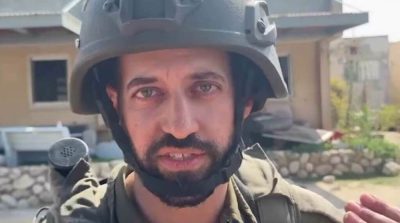
Israeli reserve soldier David Ben Zion (file photo)
Press TV – October 12, 2023
The source behind the claim that the Palestinian resistance movement Hamas beheaded babies during its large-scale operation against the Israeli regime is an extremist settler leader who called for a Palestinian town to be “wiped out” earlier this year, according to a report.
Investigative news website, The Grayzone, identified Israeli reserve soldier David Ben Zion as the key source behind the fake news, saying he has a history of inciting violent riots in the occupied West Bank by demanding that the Palestinian town of Huwara be “wiped out.”
“Enough talk about building and strengthening the settlements,” Ben David said in a Twitter post on February 26, 2023. “The deterrence that was lost must return now, there’s no room for mercy.”
Ben alleged in an interview with Israeli outlet i24 News on Tuesday that Hamas fighters “cut heads of children” in the village of Kfar Az near the Gaza Strip.
The allegation quickly made its way to the highest levels of leadership, as if by design, while Western media reported it without a shred of critical scrutiny.
Israeli Prime Minister Benjamin Netanyahu’s spokesman said babies and toddlers were found with their “heads decapitated.”
US President Joe Biden also repeated the inflammatory claim, saying he had seen “confirmed pictures” of Hamas fighters beheading children.
However, the White House later clarified that Biden and other US officials have not seen or independently confirmed those claims, adding that the US president’s remarks were based on media reports and on claims from Netanyahu’s spokesperson.
In a statement on Thursday, Hamas categorically denied the allegations, saying the group does not attack civilians.
“Give us one picture that Hamas killed civilians, that Hamas killed children, that Hamas killed women. We don’t kill civilians,” Ghazi Hamad, a member of the political bureau of Hamas said.
On Saturday, Hamas waged the largest military operation against the occupying entity in decades, dubbed Operation Al-Aqsa Storm.
The resistance movement said that its operation came in response to Israel’s violations at al-Aqsa Mosque in occupied East al-Quds and growing settler violence.
Israeli media outlets report that more than 1,300 settlers and troops have been killed, while the number of those injured exceeds 3,300.
Following Hamas’ surprise attack, Israel launched deadly strikes on the blockaded Gaza Strip.
Israeli officials also ordered a total blockade of Gaza to compensate for heavy losses suffered during Operation Al-Aqsa Storm.
According to Gaza’s Health Ministry, at least 1,203 Palestinians have been killed and 5,763 wounded since Israel began its bombardment of the already besieged enclave.
Israel shells mosque in Lebanon’s Dhahira

MEMO | October 12, 2023
Israel has shelled the Ahl Al-Qur’an Mosque in the town of Al-Dhahira in the Tyre district of southern Lebanon, Anadolu news agency reported.
Anadolu’s correspondent in southern Lebanon reported that the mosque and dozens of nearby homes were directly hit by the Israeli artillery shelling.
Lebanese army patrols are inspecting damage caused by the Israeli bombing.
Ali Al-Suwaid, a local resident, said the town was exposed to random Israeli bombing, forcing its people to flee to safer neighbouring villages. Al-Suwaid added that the Israeli shelling had hit his house while he and his family were inside the house, causing material damage to the building.
Three civilians were injured, he added, and were taken to hospital for treatment.
Earlier yesterday, three people were injured as a result of Israeli bombing on border villages and towns in the western sector of southern Lebanon, according to government media.
Biden, US politicians greenlighting ‘potential genocide’ of Palestinians: Analysts

The ruins of houses destroyed in Israeli strikes in Khan Younis, in the southern Gaza Strip, Tuesday, October 10, 2023.
Press TV – October 12, 2023
Political analysts have warned that US President Joe Biden’s unflinching backing of Israeli aggression against Palestinians in the besieged Gaza Strip could give the Tel Aviv regime the greenlight to commit mass atrocities and genocide against the people of Palestine.
And while the US has always supported Israel in previous incursions and attacks on Palestinians, a number of concerned experts say this time is completely different.
“What’s different now is that the president and Congress have provided the greenest of possible green lights to enable Israel to do anything that it wants to do up to and including genocide,” Josh Ruebner, a political analyst, told Middle East Eye on Thursday.
“Make no mistake about it, by providing 100 percent backing for any action that Israel takes in the Gaza Strip, President Biden is complicit in Israel’s commission of war crimes, and potentially much, much worse,” said Ruebner, who is also the author of Shattered Hopes: Obama’s Failure to Broker Israeli-Palestinian Peace.
“As of this point, I do not believe that President Biden will stop Israel at any point,” Ruebner added.
“It’s unclear how long this green light will last. It’s unclear to what extent mass murder would need to be committed by Israel before it’s reined in by the United States,” he said.
In his public address on Tuesday, Biden described the actions of Hamas, the Palestinian resistance group against the Israeli regime, as “sheer evil,” and said that the US stands behind Israel and will provide it whatever it needs to attack Gaza.
“We will make sure Israel has what it needs to take care of its citizens, defend itself, and respond to this attack,” Biden said. “Let there be no doubt. The United States has Israel’s back. We’ll make sure the Jewish and democratic state of Israel can defend itself today, tomorrow, as we always have.”
No mention of concern for Palestinians
Yet none of Israel’s actions against the civilian population of Gaza received a mention in Biden’s speech on Tuesday.
“Biden’s address to the nation, was horrifying in that he didn’t express one iota of concern for the loss of Palestinian civilian life, the war crimes that are being committed currently by the Israeli military in the Gaza Strip, and the widescale incitement to genocide that we’ve heard in recent days from Israeli political and military leaders,” Ruebner said.
Instead, Biden said with confidence that “we uphold the law of war.”
However, experts said the US and Israel both have an extensive history of violating international humanitarian law and the laws of war.
“The United States has been the most fervent violator of the laws of war and international law in general on a global scale ever since it played a leading role in establishing the so-called ‘rules-based’ international order during the post-WWII years,” Kenney-Shawa said.
“I want to be clear with my words right now. It’s rich that the US would claim to abide by the laws of war. Anyone who still believes that the US would uphold the laws of war or respect the international laws it wrote is deluding themselves.”
“In the past, the US may have been counted on to go through the motions of parroting the usual de-escalatory talking points, like calling for ‘both sides’ to avoid civilian casualties or for Israel to exercise a modicum of restraint,” said Tariq Kenney-Shawa, a US policy fellow for al-Shabaka think tank.
“But today, Biden and the rest of the American political establishment are fervently united in giving Israel carte blanche to completely devastate Gaza.”
Ahmad Abuznaid, executive director of the US Campaign for Palestinian Rights, said that rather than calling for a ceasefire and end to the hostilities, the US is “cheerleading” the latest Israeli assault.
“The Israeli forces are murdering entire families in Gaza while supplying arms to their violent settlers in the West Bank to carry out attacks. The situation in Gaza was already devastating and again the people of Gaza are facing attacks from the most powerful military force in the region, with no Iron Dome, no military, and no US government valuing their lives,” Abuznaid said.
Israel fighting religious war, hellbent on exterminating Palestinians
US Senator Lindsey Graham has said clearly and unequivocally in an interview aired on right-wing channel Fox News that “we are fighting a religious war, and I am on Israel’s side”.
Graham’s message to Israel was: “Do whatever it takes. Raze this place to the ground.”
And nearly 400 members of US Congress signed a measure introduced on Tuesday, in which it condemned the Hamas resistance group for its attack on Israel and gave complete support for Israel’s right to defend itself.
“Lawmakers on the left and on the right, from Lindsey Graham to Ritchie Torres, are using this opportunity to viciously demonize Palestinians in order to drum up anti-Palestinian hatred that will give Israel cover to commit unspeakable crimes right in front of our eyes,” said Kenney-Shawa.
“Israel is hellbent on exterminating Palestinians in Gaza, and it knows no one will get in between them and what they see as their divine objective.”
Deadly Israeli bombing campaign
Israeli air strikes have so far targeted hospitals, mosques, and residential buildings across Gaza. Entire families have been wiped out by the bombing campaign.
The Israeli violence has also once again made its way into the occupied West Bank, where Israeli forces have killed 28 Palestinians.
So far, in addition to about 1,500 Palestinians that have been killed, at least 6,268 have been injured. It is unclear how many buildings have been razed, as the number continues to rise by the hour.
Israel has imposed a full siege on the already blockaded enclave, cutting off electricity and water and also refusing requests to allow the entry of food and medical supplies. It also threatened to bomb aid trucks trying to enter from the Egyptian border with Gaza.
The UN Refugee Agency for Palestinian Refugees (UNRWA) said on Tuesday that it has about 12 days of supplies of food and water for the nearly 200,000 people taking shelter in its school buildings. While a blockade is not necessarily a war crime, the intentional starvation of a civilian population as a war tactic is a violation of the Geneva Conventions.
In previous Israeli incursions on Palestinians, the US had called for Israel to use restraint. However, in the past few days, there have been no such calls coming from Washington, at least in public.
The attack on Israel from Hamas and Palestinian resistance groups has been dubbed by Israelis as their own 9/11.
The rhetoric around it has caused even more concern about the fallout for Palestinian civilians, as well as Palestinians across the Western diaspora, as Western governments have begun using the rhetoric aimed at cracking down on pro-Palestinian sentiment by equating it with support for Hamas.
“The mass attack on Israeli civilians on Saturday was not only unprecedented in its scope, in terms of Israeli civilians being impacted by Palestinian attacks. That’s obvious. What hasn’t been discussed so much yet, is that what Hamas did on Saturday is the deepest, darkest fear of every settler colonial society,” Ruebner said.
He added that in looking throughout history, settler-colonial states have often responded in “an overwhelming perhaps eliminatory response.”
“And I gravely fear that Israel’s response will pale in comparison to anything that it has inflicted on innocent Palestinians up to this point, including 1948. That’s how dire I think the situation is.”
The Israeli regime launched its onslaught on Saturday after Gaza-based resistance groups carried out a multi-front operation in response to Israeli crimes.
According to media, the Hamas operation has left 1,200 Israelis dead and nearly 3,000 others injured.
UN Chief Antonio Guterres has already expressed concern over the situation in Gaza, saying the clashes will deteriorate the situation exponentially. He said he was “deeply distressed” by an announcement that Israel will initiate a complete siege of Gaza.
Gaza resistance stands firm six days into Israeli onslaught
The Cradle | October 12, 2023
The Gaza resistance continued targeting occupied towns and cities with large rocket barrages into 12 October, marking the sixth day since the start of Hamas’ Operation Al-Aqsa Flood and the subsequent launch of Israel’s brutal campaign against civilians in the Gaza Strip.
Before noon on Thursday, missiles targeted several Israeli settlements, towns, and sites in the Gaza envelope, including the Nahal Oz settlement, the city of Sderot, and the Raim military base. Several injuries among settlers have been reported.
Rocket barrages were also launched earlier in the morning toward Tel Aviv and other areas, with one of the missiles impacting the Ariel settlement in the occupied West Bank, causing a large explosion.
A massive barrage was fired the previous night at around 9:00 PM, resulting in injuries and significant material damage in several settlements.
Despite Israel’s announcement that the Gaza border had been sealed, resistance fighters managed to carry out several new infiltrations into the occupied territories, engaging Israeli troops with heavy gunfire and sparking clashes in several settlements.
At least 1,300 Israelis have been killed since Saturday, with more than 3,300 wounded.
Hamas has also called for a mass Palestinian uprising, particularly in the occupied West Bank, where resistance has been at an all-time high recently and has surged to unprecedented levels since the start of Operation Al-Aqsa Flood on Saturday.
Meanwhile, Israeli warplanes have not stopped targeting civilian neighborhoods in Gaza.
According to WAFA news agency, an entire family in Gaza was killed by Israeli airstrikes on 12 October.
“Former prisoner Abdul Rahman Shihab, who spent 23 years in Israeli prisons for resisting the occupation and was released in 2011, and his wife, children, and mother were killed in the shelling of their home without prior warning,” a WAFA correspondent said.
Hundreds of homes and buildings have been razed to the ground. Several medics, journalists, and UN staffers have also been killed.
The death toll in Gaza stands at over 1,300 people, with around 6,000 others injured. The numbers are expected to continue rising.
Israel has used White Phosphorus and cluster bombs to target Gaza, both internationally banned weapons.
While Israel claims it targets Hamas sites and positions, much of the resistance group’s infrastructure lies underground and remains unaffected by the Israeli bombardment.
Peculiarities of Russian television reporting on the Hamas-Israeli war
By Gilbert Doctorow | October 11, 2023
A couple of days ago, I mentioned how Russian state television news was providing viewers with information about aspects of the ongoing armed conflict between Hamas and Israeli armed forces that you would not find in Western media during the first days of reporting. In particular, it was immediately evident from the news briefings on Vesti that Russian emphasis was on the military side rather than on the humanitarian catastrophe side.
BBC, Euronews, CNN have all focused attention on the slaughtered Israeli citizens and the apparent savagery of the Hamas fighters including today’s revelations about the hundred or more men, women and children who were killed in a Hamas raid on a kibbutz in the South of Israel. Russian news from day one showed pictures of the latest generation Israeli tank destroyed by a grenade dropped by a drone and of Hamas fighters approaching Israeli shores from the sea on paragliders. On two successive Evening with Vladimir Solovyov shows, images of the destruction to Israel’s billion dollar wall around Gaza and similar engineering feats by the insurgents as they moved deep into Israel proper. Solovyov’s panelists also provided expert analysis of the military threats Israel faces from the neighborhood if the war in Gaza escalates.
Why is this difference in what is reported important? Because coverage of the slaughter of civilians by Hamas fighters and interviews with relatives of those taken captive to Gaza as hostages plays into the hands of the Hamas strategists: it places enormous pressure on Israeli Prime Minister Netanyahu to proceed with a land invasion of Gaza which will result in many thousands of deaths among Israeli Defense Force soldiers as well as deaths of civilians in Gaza that may be an order of magnitude higher. The violence of an Israeli invasion may be so shocking as to justify outside Palestinian forces, namely Hezbollah in Lebanon and Arab fighters in Syria, in Iraq, in Yemen to send contingents of armed men to join the battle on the side of Hamas in Gaza.
The Western reporting has provided a wealth of material for those who would denounce the Hamas fighters as “sub-human.” However, considering the great sophistication of the Hamas methods to overcome Israeli technical devices at the border and the wall itself intended to prevent such a raid from the enclave, considering the 5,000 or more missiles sent by Hamas into Israel that overwhelmed the “Iron Dome” Israeli defenses, it is unreasonable to speak of the executions and hostage taking as spontaneous or expressions of raw anger by Arab youths. No, it had to be planned in advance and handed over to disciplined fighters for implementation with a certain military objective in mind: namely to provoke the Israeli government and draw it into the lair of urban, guerilla warfare in Gaza.
A couple of days ago, in my geopolitical analysis of the conflict, I mentioned that the dispatch of a U.S. naval force led by the aircraft carrier Gerald Ford to the waters adjacent to Israel was likely intended to intimidate Iran and possibly to prepare for an American attack on Iran under accusations that Teheran had aided and guided the Hamas attack. However, the Biden administration has now stated clearly that it has no evidence Iran was involved in preparing the Hamas action. This confirms what the supreme religious leader of Iran said yesterday in a public speech, namely that the Palestinians themselves are fiercely independent and that they alone prepared the assault on Israel. He insisted that in the West people under-appreciate the skills and determination of Palestinians. It is only individual American politicians like would-be Republican candidate for the presidency Nikki Haley and the ever saber rattling Republican Senator Lindsey Graham who are calling for Iran to be attacked now.
Based on the information about the military capabilities of pro-Hamas forces in the neighborhood aired on the Solovyov show last night by first quality Russian experts, it is far more likely that the United States military presence is intended for use against Hezbollah in Lebanon than against Iran. This organization is now said to be the strongest pro-Palestinian force in the region with tens of thousands of fighters, with advanced military equipment including perhaps one hundred thousand missiles ready for use against Israel at any time. Israel’s last incursion into Lebanon to crush Hezbollah in 2006 ran into serious difficulties when enemy strength surprised them. Some fifty Israeli tanks were said to have been destroyed then. There is no question that Hezbollah has become more powerful since. Its war hardened forces received battlefield experience very relevant to the present Hamas-Israel conflict when they fought in the civil war in Syria.
One of the Russian experts who spoke at length about the situation in Israel on Sunday night was Yevgeny Satanovsky, who is a professor attached to two centers of Near East studies in Moscow. He appeared in the past on Russian television talk shows when the subject was Russian-Turkish relations but his core specialty is in fact Israeli politics and the economy. It was difficult to follow Satanovsky’s remarks in detail because he was speaking as if to academic friends over a cup of coffee and there was a lot of jargon. But his appraisal of the Israeli military’s degraded state was clear enough. The deplorable discipline within their army compounded the initial problems from the intelligence failures of Mossad. The common denominator both in intelligence and in military command was hubris, undeserved self-confidence, lulled by technological superiority over the enemy. But just as Hamas outfoxed Israeli intelligence by returning to 19th century methods of communications, couriers and face to face meetings in place of electronic means that Israel can intercept, so fairly rudimentary bulldozers were sufficient to break through the Israeli wall and a combination of firearms and drones neutralized the sensors and cameras protecting Israel from Gaza raids.
Said Satanovsky, the Israeli military has suffered an additional debilitating flaw, namely the succession of second quality generals who rose to the premiership of Israel over the past thirty years and the politicization of military ranks. He blamed in particular the 2005 decision by then prime minister Ariel Sharon to withdraw all Israeli presence from inside Gaza and to secure the enclave from its perimeter.
For those who want to know more about who Satanovsky is, he has a large entry in the Russian language edition of Wikipedia. Suffice it here to say that he calls himself an atheist as well as a “Russian Jew,” and for several years at the start of the new millennium he helped to create the Russian Jewish Congress and served as its president for three years. He has a teaching affiliation with the International Center of University Instruction on Jewish Civilization in the Jewish University of Jerusalem.
I mention this aspect of the man’s past and present because it brings us to the special relationship that Russia has with Israel. More than one million Soviet and Russian Federation Jews emigrated to Israel. These included people from every walk of life, including some scandalously wealthy crooks who evaded Russian justice for crimes including murder and are not extradited. Since the start of the Special Military Operation, their numbers have risen with the arrival in Israel of Russia’s ‘fifth column’ personalities in the entertainment industry, in finance, in government. With the Hamas attack some of those, like the billionaire banker Mikhail Fridman, took the first plane out of Israel for Moscow this past Sunday, as reported in a feature article of The Financial Times. The scoundrel who assisted Yeltsin’s fraudulent election in 1996 and then stayed on in power to enrich himself, serving in a succession of high positions, Anatoly Chubais, also slithered out of Israel the same day, but not to Moscow, where he would face arrest. Their compatriots in Russia snigger over the cowardice and selfishness of these high visibility characters.
Of course the vast majority of Russian settlers in Israel are normal, hard working folks and it is they to whom the Vesti journalists turn now for first-hand accounts of the impact of the Hamas attack. They can be doctors receiving the wounded at hospitals or officials in the mayor’s office of one or another Israeli city. You will not see them on CNN.
On the other side of the coin, Russia has and needs excellent relations with the Arab world. Fifteen per cent of the Russian population is Muslim, with their cultural and religious center in Kazan, some 860 km southeast of Moscow, in a wealthy oil-producing region. Chechnya is also a Muslim center in the Russian Federation and its leader Ramzan Kadyrov is well known in the Middle East. More to the point, Russia is a highly valuable partner of Saudi Arabia in Opec+ in which they jointly set production targets and price targets for the global oil industry. And Russia has close relations with the United Arab Emirates, particularly financial arrangements. The UAE dirham is now used as a currency for settling import-export transactions by Russia. Of course, Russia is closely aligned with Iran as a fellow member of the Shanghai Cooperation Organization and, as from 1 January 2024, BRICS. The close ties to Syria need no explanation, since Russia singlehandedly saved the government of Bashar Assad from the radical fundamentalist fighters that Washington was arming. The closeness of Russian ties with Iraq was in full evidence yesterday during the state visit of the Iraqi prime minister to Moscow. Russian companies Lukoil, Gazpromneft and others have already invested $16 billion in production assets in Iraq.
The official position with respect to the war now raging between Israel and Hamas was stated yesterday on television by President Putin: it can be solved only with implementation of the UN resolution on creation of a fully sovereign Palestine state, i.e. the “two state solution” that has been so long discussed but never brought to fruition. However, what will follow the creation of such a state is equally important and remains terra incognita: which world powers will guarantee the security of these two states?
©Gilbert Doctorow, 2023
Putin’s Valdai Speech, What You Need to Know
By Ted Snider | The Libertarian Institute | October 12, 2023
On October 5, Russian President Vladimir Putin addressed the plenary session of the Valdai International Discussion Club near Sochi, Russia. The session was attended by scholars and diplomats from forty-two countries. Putin spoke for half an hour and then answered questions for about three hours. Several interesting things were said.
In western discourse it is always said that Russia started an unprovoked war in Ukraine. There has been much discussion—though not in the mainstream media nor in statements issued by western governments—about whether the war was unprovoked. But there has been little discussion about whether Russia started it.
Putin claimed that Russia’s “special military operation” did not start the war in Ukraine but, rather, was designed to stop it. “I have said many times that it was not us who started the so-called ‘war in Ukraine,’” Putin said. “On the contrary, we are trying to end it.”
The war started, according to Putin, when the United States “orchestrated a coup in Kiev in 2014.” Putin said that the U.S. “provoked the Ukraine crisis by supporting the coup in Ukraine in 2014. They could not fail to understand that this was a red line, we have said this a thousand times. They never listened.”
After the coup, the new government in Kiev “intimidate[d]” the ethnic Russian populations of Crimea and the Donbas, prohibited them from speaking “their native language,” and threatened them “with ethnic cleansing.” It was Kiev, and not Russia, “who tried to force Donbass to obey by shelling and bombing.” The new government in Kiev bombed the region “for nine years, shooting and using tanks. That was a war, a real war unleashed against Donbass.”
The war started, not a year and a half ago, according to Putin’s chronology. Instead, “This war, the one that the regime sitting in Kiev started with the vigorous and direct support from the West, has been going on for more than nine years, and Russia’s special military operation is aimed at stopping it.”
With the end of the Cold War, there was a window of opportunity to learn from the mistakes of the previous destructive era. There was an opportunity to move from “military and ideological” blocs to collective solutions. First Mikhail Gorbachev’s Soviet Union, and then Russia, sought a new international order that transcended blocs. Putin even recalled “a moment when I simply suggested: perhaps we should also join NATO?”
But Putin says that Russia’s “interest in constructive interaction was misunderstood, was seen as obedience, as an agreement that the new world order would be created by those who declared themselves the winners in the Cold War. It was seen as an admission that Russia was ready to follow in others’ wake and not to be guided by our own national interests but by somebody else’s interests.”
American “arrogance” attempted to establish a global “hegemony” over a world “too complicated and diverse to be subjected to one system.” This arrogance led to two things. The first was “endless expansion” by the political West. “NATO expansion has been pursued for decades.”
Putin reminded his audience that Russia was “promised verbally” about NATO “non-expansion to the east.” He then complained, “Yes, we were promised everything verbally, and our American partners do not deny this, and then they ask: where is this documented? There is no document. And that was it, goodbye. Did we promise? It looks like we did, but it was worth nothing.”
Eventually, this broken promise led to NATO expansion creeping up to Ukraine and right up against Russia’s borders. “Among the ways the crisis in Ukraine was provoked,” Putin said, “was the irrepressible desire of Western countries, especially the United States, to expand NATO to the borders of the Russian Federation.”
“After all,” Putin pointed out, NATO “is not only a political bloc, it is a military and political bloc, and the approach of its infrastructure is fraught with a grave threat to us.” He then added, “NATO’s expansion right up to our borders is threatening our security. This is a massive challenge to the Russian Federation’s security.”
To attain its hegemonic goal, it was necessary for the United States to “to replace international law with a “rules-based order.” But unlike the international law of the charter international system that is based on the United Nations, “It is not clear what rules these are and who invented them.” In the service of Americna hegemony, the U.S. “arbitrarily set[s] these rules.”
In a recent essay, professor of international law John Dugard has said that it is neither clear what the rules of the rules-based order are nor “the method for their creation,” and has offered as a possible explanation of the rules based order that it is “international law as interpreted by the United States to accord with its national interests,” meaning whatever the U.S. needs it to mean in any given situation. He suggests that the United States tries “to impose the concept of a rules-based world order on the international community. They use this banner to promote, without any hesitation, a unipolar model of the world order where there are ‘exceptional’ countries and everyone else who must obey the ‘club of the chosen.’”
In this world order, the United States not only tells other nations how they “should behave overall” in a “colonial mentality,” but there exists “an international system where arbitrariness reigns, where all decision-making is up to those who think they are exceptional, sinless and right [and] any country can be attacked simply because it is disliked by a hegemon.”
Putin says that Russia sees a future multipolar world order in which “no one can unilaterally force or compel others to live or behave as a hegemon pleases even when it contradicts the sovereignty, genuine interests, traditions, or customs of peoples and countries.” Russia sees “civilization [as] a multifaceted concept subject to various interpretations.” The world has evolved from the “colonial interpretation whereby there was a ‘civilized world’ serving as a model for the rest, and everyone was supposed to conform to those standards. Those who disagreed were to be coerced into this ‘civilization’ by the truncheon of the ‘enlightened’ master. These times, as I said, are now in the past, and our understanding of civilisation is quite different.”
Putin argued, as he has consistently, for the principle of the indivisibility of security, the idea that security cannot be divided so that the policies that increase the security of one country decrease the security of another. Indivisibility of security assures that the security of one state should not be bought at the expense of the security of another.
The American insistence on the right of states to unrestrained free will in their choice of security alignments and the accompanying NATO open door policy to Ukraine ignores the indivisibility of security. Putin said, “The main thing is to free international relations from the bloc approach and the legacy of the colonial era and the Cold War. We have been saying for decades that security is indivisible, and that it is impossible to ensure the security of some at the expense of the security of others.”
Putin said he thinks that suggestions of “a new security system in Europe, which would include Russia, and the United States, and Canada; but not NATO, but together with everyone else: for Eastern and Central Europe… would solve many of today’s problems.”
It is often said in the West that Putin seeks to reestablish a Russian empire and reacquire vast territories, starting with Ukraine. Putin, though, says in contradiction to those claims, “The Ukraine crisis is not a territorial conflict, and I want to make that clear… [W]e have no interest in conquering additional territory.” He insisted, “This is not a territorial conflict and not an attempt to establish regional geopolitical balance. The issue is much broader and more fundamental and is about the principles underlying the new international order.”
Those principles are a balanced multipolar world, indivisibility of security, an end to blocs and to NATO encroachment and protection of ethnic Russians in the Donbass and Crimea.
During the question and answer period, political scientist Sergei Karaganov suggested that the current Russian nuclear doctrine is no longer taken seriously by the West as a deterrent. He asked whether it was not time to modify the nuclear doctrine and lower the threshold.
Often portrayed in the West as a nuclear weapons sabre rattler, Putin tamped down the question, answering, “I do not see the need to change our conceptual approaches. The potential adversary knows everything and is aware of what we are capable of.”
Putin explained Russia’s existing nuclear doctrine. He said there are two situations that could trigger a “possible use of nuclear weapons by Russia.” The first is that “the use of nuclear weapons against us… would entail a so-called retaliatory strike.” The second situation is “an existential threat to the Russian state—even if conventional weapons are used against Russia, but the very existence of Russia as a state is threatened.”
Putin insisted that Russia does not need to change its stance. In the case of the first scenario, “this response will be absolutely unacceptable for any potential aggressor, because seconds after we detect the launch of missiles… the counter strike in response will involve hundreds—hundreds of our missiles in the air, so that no enemy will have a chance to survive.” As for the second, important as an insight into how Putin evaluates the situation in Ukraine, “There is no situation imaginable today where something would threaten Russian statehood and the existence of the Russian state.”
However, Putin said that nuclear testing is “a whole different matter.” He says that, after signing the Comprehensive Test Ban Treaty, the United States never ratified it. Russia, on the other hand, both signed it and ratified it. He told his audience that the development of new strategic weapons—including the nuclear-powered Burevestnik cruise missile with “basically unlimited range” and the super heavy Sarmat missile—is “nearing completion.” He then said that Russia can “act just as the United States does” and “offer a tit-for-tat response,” suggesting that Russia could repeal the Comprehensive Test Ban Treaty and begin testing new weapons.
In response to the question of whether Russia objected to Ukraine joining the European Union, Putin responded that Russia had “never objected or expressed a negative attitude to Ukraine’s plans to join the European economic community—never.” He said that Russia opposes Ukraine joining NATO because NATO is a “military bloc” and a “tool of U.S. foreign policy.” But “the EU is not a military bloc,” and, as for “economic cooperation, or economic unions, we do not see any military threat.”
US Provides Data of Syrian, Russian Military’s Movement to Jihadists – Russian Intel Head
Sputnik – 12.10.2023
MOSCOW – The United States is providing jihadists with data on the places of dislocation and movement routes of the Syrian and Russian military in Syria, Russian Foreign Intelligence Service (SVR) Director Sergei Naryshkin said on Thursday.
“Work is underway to destabilize the situation, including through the capabilities of ISIS [Islamic State, a terrorist group banned in Russia]. Information about places of dislocation and movement routes of the Syrian army and Russian military is being transmitted to the jihadists,” Naryshkin was quoted as saying by the SVR.
US President Joe Biden’s administration is aimed at disrupting the emerging positive dynamics around and inside Syria, Naryshkin added.
Featured Video
No Threat Can Force Iran’s Surrender /Trita Parsi & Lt Cl Daniel Davis
or go to
Aletho News Archives – Video-Images
From the Archives
An Expert Military Analysis of War with China
Actually, None is Necessary
By Fred Reed • Unz Review • December 13, 2020
The Correlation of Armed Forces: U.S. goods and services trade with China totaled an estimated $634.8 billion in 2019. Exports were $163.0 billion; imports were $471.8 billion. The U.S. goods and services trade deficit with China was $308.8 billion in 2019. Trade in services with China (exports and imports) totaled an estimated $76.7 billion in 2019. Services exports were $56.5 billion; services imports were $20.1 billion. The U.S. services trade surplus with China was $36.4 billion in 2019.
There is talk within the Washingtoniat of a possible war with China. Steve Bannon, who apparently was dropped on his head as a child, actually favors such a war. We hear the usual shoo-the-boobs alarm about how the Chinese are doing something terrible and we must gird our loins and American values and show them what for, bow wow, woof. The danger is that the current game of who-blinks-first in Asian waters might actually provoke a shooting war. You know the kind of thing: One warship refuses to get out of the way of another, a collision ensues, some retard lieutenant who signed up on waivers opens fire, and we’re off and running. It is not a good idea to let children play with matches.
The said war is discussed either in emotional terms by idiots or in purely naval terms by those familiar with such things, so we hear of the First Island Chain and the Second Island Chain and whose missiles against the other’s missiles and so on. This would be appropriate if we were fighting World War Two again. Which we aren’t. Let’s take a quick-and-dirty look at how such a war might go.
To begin the war, America would overestimate itself and underestimate China. This is doctrine in the Pentagon. … continue
Blog Roll
 Aletho News
- Iran To Target Military Industrial-Tech Complex That Facilitated Gaza Genocide
- Collapsing Empire: The Resistance Disarms ‘Israel’
- Suicide Should Not Be a Government Service
- Rethinking America’s greatest threat: Iran vs. Israel-Firsters
- Iran accuses adversaries of false flags to strain Turkey ties
- Poland rules out sending Patriot missiles to US/Israel amid war on Iran
- Tehran approves new Hormuz plan with major restrictions
- No Threat Can Force Iran’s Surrender /Trita Parsi & Lt Cl Daniel Davis
- UK’s New Pandemic Plan Would Turn Big Tech Into a Mass Location Tracking Network
- Growing insecurity, soaring prices fuel protests in north as regime bans evacuation: Sources
- If Americans Knew
- Joe Kent Urges Americans To Call White House and Congress To Object To Sending Troops Into Iran
- DNC Resolution to Reject AIPAC Funding Puts Democratic Leaders in the Hot Seat
- Swedish foundation to build 400 schools as over 650,000 Gaza children remain without education for 2 years
- Israeli army admits photshopping image of slain Lebanese journalist
- This is how Israel is systematically killing health workers under the cover of war in Lebanon
- Carrying life under fire: Israeli invasion of Lebanon leaves pregnant women facing deadly risks
- Champagne all around for the new death penalty (for Palestinians) law – Not a ceasefire Day 172
- Why are Palestinian books struggling to be seen on Amazon?
- The Line Between Affinity and Conspiracy
- As Iran targets US military bases, will they be relocated to Israel? Not a ceasefire Day 171
- No Tricks Zone
- New Study Finds Warming Saves Lives…Cold Temperatures 12 Times More Deadly Than Excess Heat
- German Science Blog Accuses PIK Climate Institute Of Hallucinating Climate Tipping Points
- Devastating Assessment Of Comirnaty Vaccine By Former Senior Pfizer Europe Toxicologist
- New Study: CO2 Is ‘Effectively Negligible’ As An Explanatory Climate Change Factor Since 2000
- Former Pfizer Toxicologist Dr. Helmut Sterz Tells Bundestag Hearing Pfizer Vaccine Should Have Never Been Approved
- Energy Expert: Germany’s Nuclear Phaseout Was A “500 Billion Euro Mistake”
- New Research: South Australia’s Mid-Holocene Sea Surface Temperatures Were 4°C Warmer Than Today
- Storing Green Energy To Last Germany 10 Days Would Require A 60-Million Tonne Battery
- New Studies: UK Sea Levels Were 4 Meters Higher Than Today During The Mid-Holocene
- Destructive Green New Deal: German Energy And Metal Group Warns Of Drastic Crisis
 Aletho News