Ukraine’s leaders are controlled by US – German ex-chancellor

Former German Chancellor Gerhard Schroeder © Photo by Kay Nietfeld/dpa via Getty Images
RT | October 21, 2023
Former German Chancellor Gerhard Schroeder has argued in a newspaper interview that the US government didn’t “allow” any compromises that could have brought an end to the Russia-Ukraine conflict just weeks after Moscow’s military offensive began in February 2022.
Speaking in an interview published by Germany’s Berliner Zeitung newspaper on Friday, Schroeder said he was asked to help mediate the March 2022 peace negotiations between Ukrainian and Russian officials in Istanbul. He said that although representatives of Ukrainian President Vladimir Zelensky were open to making concessions on such key issues as renouncing efforts to join NATO, “the Ukrainians did not agree to peace because they were not allowed to. They first had to ask the Americans about everything they discussed.”
Russian officials have repeatedly claimed that the US and other Western backers of Ukraine discouraged Zelensky’s government from agreeing to a peace settlement. Schroeder, who has defended his continuing friendship with Russian President Vladimir Putin, essentially confirmed that allegation in the Berliner Zeitung interview. “My impression: Nothing could happen because everything else was decided in Washington,” he said.
The ex-chancellor described Washington’s strategy as “fatal,” saying it resulted in closer ties between Russia and China. “The Americans believe they can keep the Russians down,” Schroeder said. “Now, it is the case that two actors, China and Russia, who are limited by the USA, are joining forces. Americans believe they are strong enough to keep both sides in check. In my humble opinion, this is a mistake. Just look how torn the American side is now. Look at the chaos in Congress.”
Washington’s allies in Western Europe “failed” to seize the opportunity to push for peace in March 2022, Schroeder said. At the time, he added, Zelensky was open to compromise on Crimea and breakaway territories in the Donbass region. Since that time, hundreds of thousands of Ukrainian troops have been killed as Western military aid prolongs the conflict. Putin estimated earlier this month that Kiev lost over 90,000 soldiers in the failed counteroffensive that began in June.
“The arms deliveries are not a solution for eternity, but no one wants to talk,” Schroeder said. “Everyone is sitting in trenches. How many more people have to die? It’s a bit like the Middle East. Who are the victims on one side and on the other? Poor people who lose their children.”
Schroeder argued that only French President Emmanuel Macron and German Chancellor Olaf Scholz can revive peace talks in Eastern Europe. “Scholz and Macron should actually support a peace process in Ukraine because it’s not just an American matter, but above all a European matter.” He added, “Why did Scholz and Macron not combine the arms deliveries with an offer to talk? Macron and Scholz are the only ones who can talk to Putin.”
Russian leaders were threatened by the US push to bring NATO to Moscow’s western border by adding Ukraine to the Western military alliance, Schroeder said. However, he claimed that one of the justifications for arming Ukraine – alleged Russian expansionism – had no basis in reality.
“This fear of the Russians coming is absurd,” Schroeder said. “How are they supposed to defeat NATO, let alone occupy Western Europe?” He added, “That is why no one in Poland, the Baltics and certainly not in Germany – all NATO members, by the way – has to believe they are in danger.”
On the other hand, Schroeder insisted, Western leaders must understand that no matter who is in power in Moscow, Russia won’t allow either Ukraine or Georgia to be absorbed by NATO. “This threat analysis may be emotional, but it is real in Russia,” he said. “The West must understand this and accept compromises accordingly. Otherwise, peace will be difficult to achieve.”
Chinese Businessmen Literally Laughing at West’s Anti-Russian Sanctions

By Ilya Tsukanov – Sputnik – 21.10.2023
Chinese businessmen are literally laughing at the West’s sanctions packages against Russia, Russian Foreign Ministry spokeswoman Maria Zakharova has revealed.
Citing a media report from Friday indicating that the 12th package of EU sanctions may include a Lithuania-proposed ban on the export of European-made nails, tacks, drawing pins, sewing and knitting needles, radiators, and other odds and ends to Russia, Zakharova said that judging by past experience, she can hardly fathom how Russia’s Chinese partners will react to the news.
“A year ago I was at a meeting with representatives of Chinese business circles in Moscow. We were talking, and suddenly a message popped up on my phone with news that the US had adopted yet another sanctions package banning the supply of elevators and related equipment to Russia. According to the sanctions’ authors, this measure would ‘paralyze the construction industry in Russia.’ When I read this news to my Chinese colleagues, they burst out in Homeric laughter. They literally howled and roared with laughter,” Zakharova recalled in a Telegram post on Saturday.
“After the ‘sanctions hara-kiri’ of the Japanese automobile industry on the Russian market, the most incredible dream of Chinese automotive manufacturers came true. Within six months, they confirmed the veracity of the saying ‘nature abhors a vacuum’,” the spokeswoman added.
“It’s scary to imagine what kind of hysteria will begin among Chinese manufacturers of knitting needles and buttons if they learn about this Lithuanian plan to ‘destroy Russian industrial capabilities.’ Where will Lithuania put its wares if such a decision is made? I don’t know, they could put the inscription ‘to spite Russia’ on their highway made of buttons, nails, sewing and knitting needles,” Zakharova summed up.
Russian-Chinese trade has hit back-to-back-to-back record highs in recent years, reaching the equivalent of over $176 billion by the end of the third quarter of the current year. The Asian industrial giant has taken to importing record quantities of Russian energy and other natural resources, and has helped fill the gap left by European and Japanese finished goods manufacturers after their exodus from Russia in 2022.
Speaking with Chinese media ahead of his visit to the Belt and Road Initiative forum earlier this week, Russian President Vladimir Putin reported a “32 percent growth” in Russia-China trade turnover over the past year, and said that “there is every reason to believe that we will reach the $200 billion mark” by the end of 2023.
The reorientation of trade from Europe to China, India and other countries in the developing world has helped Russia weather the storm of Western sanctions and trade restrictions, with the country’s GDP growth expected to reach up to 2.5 percent in 2023 after contracting by 2.1 percent a year earlier.
Shipping of Cargo from Arkhangelsk to China via Northern Sea Route to Become Regular
PortNews | October 20, 2023
The first ship with a load of more than 300 containers with lumber for China partners is about to depart from the Port of Arkhangelsk. The load will be delivered along the Northern Sea Route (NSR) to Shanghai in a few days, the governor and government of the Arkhangelsk Oblast said.
Alexander Tsybulsk, Governor of the Arkhangelsk Region commented: “Chinese furniture manufacturers are interested in the products of our timber processing enterprises and are ready to purchase annually up to 1 million cbm of lumber in Arkhangelsk.”
“The first shipment including more than 300 containers of lumber will soon leave for Shanghai. Shipping of cargo along the NSR between Russia and China will become regular. Our new partners plan for the next shipping season to load two vessels here per month, and in the future provide six vessel calls per month,” the official said.
The volume of cargo transported from Arkhangelsk along the Northern Sea Route will be growing in the coming years. This will support forestry enterprises in Russia’s north-west regions through government measures, including subsidizing the timber products transport.
The growth of trade volume with Chinese partners also contribute to the implementation of Vladimir Putin’s May decree to boost cargo flow along the Northern Sea Route, which should reach 80 million tonnes per year by 2024.
“The planned sailing of a containership along the Northern Sea Route is an important event for us, since China is the main direction of cargo transportation. We see great interest from Chinese partners in our products and the desire of local manufacturers to cooperate,” says Evgenia Shelyuk interim minister for economic development, industry and science of the Arkhangelsk Oblast.
Hungary warns of ‘knockout blow’ to EU economy
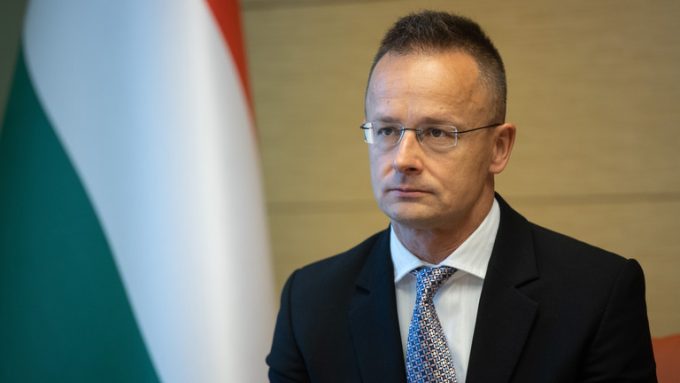
Hungarian Trade and Foreign Minister Peter Szijjarto. © Omer Taha Cetin/Getty Images
RT | October 21, 2023
The EU should pursue cooperation with China and Asia as a whole, which have already become more competitive than the bloc in economic terms, according to Hungarian Foreign Minister Peter Szijjarto.
Speaking at an informal meeting of EU trade ministers in Valencia on Friday, Szijjarto emphasized that the global economy has turned upside down over the past few years, resulting in a fall in the bloc’s economic position, which Brussels is making worse with its indiscriminate sanctions policies. He reiterated that recent sanctions against Russia and the drive to abandon Russian energy “shot the European economy first in the foot and then in the knee.”
“Today we pay four times as much for gas in Europe as Americans do at home and three times as much for electricity as people pay in China,” he pointed out, noting that while distancing itself from Russia has already caused problems, doing the same with China would be even more destructive for the EU economy.
Szijjarto noted that China has already surpassed the EU in terms of gross domestic product (GDP): its share of global GDP jumped from 9% in 2010 to the current 18%, while the EU’s share dropped from 22% to 17%.
“The overall structure of the world economy is being transformed, and this great transformation also means that the West’s automatic competitive advantage has ended. The Eastern world has strengthened significantly, they have at the very least caught up with the Western world from a financial and technological point of view, while they have always been ahead of us in terms of human resources,” he stated. Szijjarto added that the Eastern and Western economies are more strongly interdependent nowadays than ever before, and said the EU should not shy away from this trend.
“Whether we like it or not, it’s a fact. Whoever denies all this can cause very serious damage to the European economy,” he warned.
Szijjarto noted that the basis of the EU’s economic growth previously lay in the combination of advanced Western technologies and cheap Russian energy, but this line of cooperation has now been severed.
“Unfortunately, there are Western Europeans… who strive to cut off economic cooperation between Europe and China in the same way. If this were to happen, it would practically be a knockout blow to the European economy. That is why we are against any effort to isolate the Chinese and European economies from each other,” he stated.
The minister said the consequences of such actions would be especially felt by the European automotive industry, which relies on Chinese suppliers.
“This would practically suffocate the car industry. And if we strangle the European car industry, we will destroy the European economy,” he declared.
“Everyone in the economy understands this, but Western European politicians don’t want to see the reality, they don’t want to hear the facts, but rather they politicize out of ideology and anger.”
The EU relationship with China has been strained over the past several years, with Brussels viewing Beijing as an economic rival, and each side increasingly unhappy with the other’s policies.
Pentagon’s Crafty Plan: Ukraine to Receive ‘Frankenstein’ Air Defenses From US
By Andrey Kots – Sputnik – 21.10.2023
The Pentagon has greenlit a new air defense project custom-made for Kiev. According to US media reports, Ukraine will receive anti-aircraft missile systems produced in an unusual manner by the US defense industry. Sputnik examines what Washington has in mind.
The Ukrainian military is experiencing a serious shortage of anti-aircraft defenses. This is because of the Russian forces’ use of long-range Lancet kamikaze drones, and the Russian Aerospace Forces deployment of precision-guided glide bombs, which have greatly thinned the ranks of the Ukrainian Armed Forces’ frontline air defenses. To protect infantry and equipment, Kiev has been forced to move its air defense systems closer to the front, where they can fall prey to cheap Russian FPV drones.
Consequently, Kiev’s requests for advanced air defenses from its Western patrons have become increasingly urgent. The armed conflict that has broken out in the Middle East has exacerbated the problem. Israel asked for help from the US on the first day of hostilities. The Pentagon is on the horns of a dilemma – whether Israel or Ukraine is more deserving of its support. The latest rhetoric would suggest that Washington is more inclined to help Tel Aviv, with Ukraine left scrambling for whatever scraps are left.
Old ‘Monsters’ for the Frontline
Step forward the FrankenSAM (a portmanteau word of “Frankenstein” and “SAM” [surface-to-air missile]) program. The plan involves the development and production of improvised air defense systems using components and materials from Ukrainian, US and allied stockpiles. Old decommissioned anti-aircraft missiles will be repurposed as ammunition for these “chimeras”.
According to one major international news agency, the US Department of Defense believes this approach will quickly provide the Ukrainian Armed Forces with some much-needed air defense capabilities. This, in turn, will prepare the Ukrainian army for the winter campaign.
In this way, Washington hopes to achieve three goals at once: it will load its defense industry up with orders for “FrankenSAMs”, get rid of obsolete explosives, and demonstrate “support for its ally” to the world.
A Reagan-Era Veteran Missile
According to the media, the Pentagon is working on three projects as part of the FrankenSAM program. The first is almost finished: Ukraine will initially receive a ground-based short-range air defense system with AIM-9M Sidewinder missiles, according to the news agency’s source. Without going into detail, the source explained that the chassis, launchers, radar and other equipment for the system will be provided by the US and its allies. This, the media outlet noted, will help “meet Kiev’s vital air defense needs” and tackle related issues.
Washington announced the delivery of Sidewinder missiles in August, after the release of what was then its latest military aid package. This raised many questions, as the missile is of the air-to-air variety. Ukrainian fighter jets still in service are not capable of firing it without significant modifications to their on-board electronic systems, and the first F-16s for the Ukrainian armed forces are not expected until next spring at the earliest.
In addition, the Sidewinder is only effective at short range, whereas Russian pilots prefer long-range engagements. The news about the modification of these missiles for ground use clarifies the situation.
The AIM-9 Sidewinder is the grandfather of a weapons system that entered production in 1956 and has undergone several upgrades over the years. The forthcoming short-range air defense version of the system will be equipped with the 9M variant, introduced in 1983 and actively used during Operation Desert Storm. The period of most extensive production coincided with the years of this conflict.
In the early 2000s, this modification was replaced by the more advanced AIM-9X, with the Reagan-era AIM-9M variants stored away. It’s unknown how effective these 30-year-old missiles will be against modern Russian aircraft, but the fact is that the US has enough of these munitions to supply Ukraine for months.
Americanized ‘Buk’
The second offspring of the FrankenSAM project will be an air defense system based on early versions of the Soviet Buk missile system. The Americans plan to modernize Ukraine’s remaining inventory of these systems to accommodate outdated AIM-7 Sparrow air-to-air missiles, which were also introduced in 1956.
Unlike the AIM-9, the AIM-7 Sparrow is a medium-range air defense missile capable of engaging targets up to 20 to 25 kilometers away. The original Buk missiles have a much longer range, but it appears that Ukraine has almost none left.
It’s known that the “Buks” will be modified to use the RIM-7 Sea Sparrow ship-based variant of the missile. It seems to be easier to adapt a naval version for land-based launches than an airborne one. Also, similar adaptations have been made before. In the early 1990s, the Pentagon provided Taiwan with 500 RIM-7 missiles modified for ground-based launch. But during exercises in 2012, three of Taiwan’s Sea Sparrows malfunctioned and crashed into the sea, prompting Taipei to stop using the missiles.
It’s unlikely that the American Sparrow arsenal has miraculously become more reliable over the past 11 years. It’s also unclear whether these missiles will pose a greater threat to Russian aviation or to the Ukrainians themselves in the area where Ukrainian air defenses are deployed.
The same question applies to the third known component of the FrankenSAM project. The Pentagon is working on the modernization of the HAWK medium-range surface-to-air defense system, which was introduced in 1959. Ukraine already operates several of these systems, but no reports on their success have been published by Ukrainian command.
However, improvised air defenses can be effective. The Yugoslav experience in 1999 demonstrated this when an outdated Serbian S-125 system successfully shot down a state-of-the-art American stealth fighter, the F-117.
Furthermore, the FrankenSAM project is unlikely to be an attempt to move away from the Ukrainian issue and gradually cut off military supplies.
Rather, “the US and the European Union have a consolidated position whereby – at least for the next three years – the volume of arms and military equipment supplies to Ukraine will be maintained and will tend to increase,” said Igor Korotchenko, a military analyst and editor-in-chief of National Defense magazine. “We must not delude ourselves with false hopes and illusions that the support will stop, especially in light of recent reports of contradictions in the West.”
The FrankenSAM project is likely to be a temporary fix. The US is at present actively reviving its defense production to replenish depleted stockpiles – its own, Ukraine’s, and those of NATO allies. The purpose of these makeshift anti-aircraft missile “monsters” is to buy the Ukrainian military time until factories are operating at full capacity.
Israel must be internationally designated as terrorist entity: Iran FM spokesman

Press TV – October 21, 2023
The spokesman for the Iranian Foreign Ministry has censured the ongoing Israeli onslaught in the besieged Gaza Strip, stating that the international community must designate the occupying Tel Aviv regime as a “terrorist entity” and put its leaders on trial over war crimes against Palestinians.
In a post published on his X account on Saturday, Nasser Kan’ani denounced the appalling Israeli atrocities against Palestinians and threats of bombardment of hospitals in the Gaza Strip.
“Following the catastrophic attacks on the al-Ahli Arab Hospital, mosques, schools and the Greek Orthodox church in Gaza, the Zionist regime has threatened to pound other hospitals in Gaza!” he wrote.
“Such horrendous crimes mean that the Zionist regime has crossed the limits of insanity,” said Kan’ani, adding that they amount to a morally shameful scandal for the governments that have long provided unconditional support to the Zionist regime while preaching to others about human rights.
Kan’ani stated that occupation, aggression, war, misdeeds, assassination, genocide, infanticide, attacks on mosques, churches, hospitals, ambulances and rescue vehicles, schools, houses and residential complexes, refugee camps and journalists, etc. are all crimes collectively manifested in the contemporary world by a bogus and terrorist regime entity called “Israel” with a 75-year-long record of relentless atrocities.
“Nowadays, all these crimes are being committed simultaneously and on a daily basis in Gaza just in front of the international community,” he said.
“All people advocating freedom, justice and fairness across the world demand that the Israeli regime be designated internationally as a terrorist entity, and that Zionist leaders be prosecuted and punished as war criminals,” Kan’ani asserted.
The United Nations says about half of Palestinians in Gaza have been made homeless, still trapped inside the enclave, which is known to be one of the most densely populated places on earth.
Health officials in Gaza say the Israeli bombardment has killed at least 4,137 people since October 7, when fighters from the Hamas resistance movement launched an unprecedented large-scale attack against the occupying Israeli regime. Another 13,162 individuals have also been injured.
Ashraf al-Qudra, a spokesman for Gaza’s health ministry, confirmed that nearly 1,400 people, including 720 children, are still missing under the rubble.
Qudra also noted that 352 Palestinians were killed and 669 others wounded over the past 24 hours, including 16 victims who lost their lives in the aerial strike on the Greek Orthodox Church.
Seven general hospitals and 21 health centers are now out of service, he added, calling for international protection of hospitals and health facilities in Gaza in light of intensified Israeli aggression.
The Palestinian health official noted that 46 medical personnel were killed, and 85 others injured during Israeli airstrikes. At least 23 ambulances were destroyed as well.
Israel settler: ‘Israel forces killed hostages, not Hamas’

Soldiers of Israeli army patrol in Kfar Aza settlement near Gaza, on October 15, 2023. [Mostafa Alkharouf – Anadolu Agency]
MEMO | October 21, 2023
Biden laments Hamas attack on Israel ‘disrupted’ Saudi normalization
The Cradle | October 21, 2023
US President Joe Biden says that the historic Operation Al-Aqsa Flood carried out by resistance factions in Gaza aimed to disrupt a potential normalization of ties between Israel and Saudi Arabia.
“One of the reasons why they acted like they did, why Hamas moved on Israel, is because they knew I was about to sit down with the Saudis,” Biden said on 20 October at a campaign fundraiser in Washington. “Because the Saudis wanted to recognize Israel, and that would in fact unite [West Asia].”
His comments came five days after he told CBS’ 60 Minutes that the prospect of normalization was still alive.
“Look, it’s just going to take time to get done,” Biden said. “It’s going to take time. But the direction, moving into the normalization makes sense for the Arab nations as well as Israel.”
In the weeks leading up to 7 October – the day Hamas and other Gaza resistance factions successfully stormed Israel’s southern settlements – the White House had been working around the clock to seal a “megadeal” with Saudi Arabia that would have seen the kingdom normalize ties with Israel in exchange for a US-sponsored civilian nuclear program, access to more advanced US weapons, and a firm defense pact with Washington that would have forced the US to come to the kingdom’s aid in case of attack.
Furthermore, Saudi Arabia publicly demanded concessions for the Palestinians in exchange for signing a normalization deal, insisting on establishing a Palestinian State along the lines of the 2002 Saudi Peace Initiative to garner any possible support from the Islamic world.
“Every day we get closer [to a deal with Israel],” Saudi Crown Prince Mohammed bin Salman (MbS) told Fox News in late September.
“For us, the Palestinian issue is very important. We need to solve that part,” MbS added. “And we have a good negotiations strategy til now.”
However, in the wake of Israel’s campaign of genocide against the civilian population of Gaza, the kingdom was forced to “freeze” normalization talks and has thrown its support behind the plight of the Palestinians.
On Friday, the Saudi leader stressed the need “to stop military operations against civilians and infrastructure that affect their daily lives” and “create conditions to achieve lasting peace that ensures the establishment of a Palestinian state.”
The Saudi government has also refused to condemn the actions of the Gaza resistance, instead reminding Tel Aviv that Riyadh had issued repeated warnings of a possible escalation in light of “the ongoing occupation and the deprivation of the Palestinian people of their legitimate rights, as well as the repeated deliberate provocations against their sanctities.”
More Palestinians killed in early morning Israeli strikes across Gaza Strip
Press TV – October 21, 2023
At least 53 Palestinians have been killed and several others injured after Israeli military aircraft carried out a fresh round of airstrikes against various residential neighborhoods across the besieged Gaza Strip.
The official Palestinian news agency WAFA reported that the warplanes bombarded several buildings in the town of Rafah in the southern Gaza Strip early on Saturday, killing at least 14 people and wounding others.
The aerial raids also left several people missing beneath the rubble, according to the news agency.
At least 14 people were also killed in Jabalia town in the north of the Gaza Strip.
Moreover, Israeli fighter jets struck the eastern flank of the Bureij refugee camp in the central Gaza Strip, killing and wounding several people.
Israeli warplanes also pounded a number of residential buildings in the northwestern Sheikh Radwan district of Gaza City, as well as the eastern and northern parts of Beit Lahiya, WAFA reported.
Houses were hit in Khan Yunis city as Israeli aircraft pounded the southern Gaza Strip with more air raids.
There were no immediate reports about the exact number of casualties and the extent of damage caused.
The United Nations says about half of Palestinians in Gaza have been rendered homeless while still trapped inside the enclave, which is known to be one of the most densely populated places on earth.
Health officials in Gaza say the Israeli bombardment has killed at least 4,137 people since October 7, when fighters from the Hamas resistance movement launched an unprecedented large-scale attack against the occupying Israeli regime. Another 13,162 individuals have also been injured.
Ashraf al-Qudra, a spokesman for Gaza’s health ministry, confirmed that nearly 1,400 people, including 720 children, are still missing under the rubble.
Qudra also noted that 352 Palestinians were killed and 669 others wounded over the past 24 hours, including 16 victims who lost their lives in the aerial strike on the Greek Orthodox Church.
Seven general hospitals and 21 health centers are now out of service, he explained, calling for international protection of hospitals and health facilities in Gaza in light of the intensified Israeli aggression.
The senior Palestinian health official further said that 46 medical personnel were killed and 85 others injured during Israeli airstrikes. At least 23 ambulances were destroyed as well.
Rights bodies denounce West’s double standards
Meanwhile, international human rights organizations have slammed Western governments over their hypocrisy and double standards in the face of Israeli atrocities in the Gaza Strip.
Tom Porteous, the deputy program director at an international rights agency, said in a statement that while the United States and European countries denounced Russia’s military campaign in Ukraine, there was no clear condemnation of Israel’s actions in Gaza.
“Where is the clear condemnation of the cruel tightening of the 16-year closure of Gaza that amounts to collective punishment, a war crime? Where is the outrage at statements by Israeli political leaders that seek to blur the all-important distinction between civilians and combatants in Gaza even as they order ever more intense bombardment of this densely populated territory, reducing city blocks and neighborhoods to rubble? Where are the clear and unequivocal calls for Israel to respect international norms in its attack on Gaza, let alone for accountability?” he said.
He further described the West’s hypocrisy and double standards as “flagrant and obvious.”
Featured Video

Laith Marouf: Hezbollah’s position on US-Iran ceasefire
or go to
Aletho News Archives – Video-Images
From the Archives
Is Israel to blame for the Iraq War?
American Goy | March 10, 2008
I am so tired of this old canard that “Israel had nothing to do with USA’s war with Iraq – in fact, it officially advised America against it”.
Bullshit. … continue
Blog Roll
 Aletho News
- Laith Marouf: Hezbollah’s position on US-Iran ceasefire: What you’re not being told
- Israel’s priority lies in destroying chances of peace between Iran, US: Ex-UN nuclear chief
- Ceasefire for all or for none: Iran shuts Hormuz over Lebanon attacks
- Strait of Hormuz is Iran’s ‘nuclear weapon’ that forced US retreat: Medvedev
- Energy crisis will last for months – Kremlin envoy
- Europe’s quiet role in the war on Iran
- Forty days that shook the Empire: How Iran turned the tables on US and prevailed
- Netanyahu unilaterally declares Lebanon outside of ceasefire deal
- Israeli leaders: ‘Not a single goal’ achieved in war with Iran
- What on earth just happened? Trump, Iran, and the unlikely ceasefire
- If Americans Knew
- Gazans face a triple crisis: severe shortages of water and bread, healthcare in tatters
- NY Times reports how Netanyahu took the US into Iran War
- A sigh of relief over Iran, but Gaza and Lebanon in dire straits – Daily Update
- Thousands dead and neighborhoods razed to the ground: Aid agencies fear southern Lebanon is becoming the new Gaza
- The war the US is fighting for Israel could cost trillions
- ‘Cigarette Burns, Nail Wounds’: Toddler Tortured in Gaza to Coerce Father
- Trump Says US Sent ‘a Lot of Guns’ to Protesters in Iran
- Israeli forces destroy 17 UN peacekeeper cameras in south Lebanon
- US-Israeli strikes ‘completely destroy’ synagogue in Tehran
- Archbishop for US Military Says Iran War Is Unjust Under Catholic Teaching
- No Tricks Zone
- An Inconvenient Tree: Uncovered In Alps… Europe Much Warmer Than Today 6000 Years Ago
- New Study Reports A 60% Slowdown In Greenland’s Ice Loss Rate In The Last Decade
- Low Intensity Tornado Wrecks Major Solar Farm, Creating A Potential Toxic Dump
- New Study Finds Warming Saves Lives…Cold Temperatures 12 Times More Deadly Than Excess Heat
- German Science Blog Accuses PIK Climate Institute Of Hallucinating Climate Tipping Points
- Devastating Assessment Of Comirnaty Vaccine By Former Senior Pfizer Europe Toxicologist
- New Study: CO2 Is ‘Effectively Negligible’ As An Explanatory Climate Change Factor Since 2000
- Former Pfizer Toxicologist Dr. Helmut Sterz Tells Bundestag Hearing Pfizer Vaccine Should Have Never Been Approved
- Energy Expert: Germany’s Nuclear Phaseout Was A “500 Billion Euro Mistake”
- New Research: South Australia’s Mid-Holocene Sea Surface Temperatures Were 4°C Warmer Than Today
 Aletho News