Drone footage reveals Israel’s cold-blooded murder of Palestinians in Gaza
The Cradle | March 22, 2024
Israeli forces used drones to kill four Palestinian youths in Gaza in cold blood as they walked down a road in the city of Khan Yunis in Gaza, footage obtained by Al-Jazeera shows.
The drone first fired two missiles at the youths as they walked on a dirt road, hoping to reach the remains of their
destroyed homes. Israeli bulldozers had been active in the area but had withdrawn. Israeli forces continued to monitor the area by drone.
The missiles killed two of the youths. The other two tried to escape, but Israeli drones opened fire with missiles a third and fourth time, killing them both separately as well.
The last youth had tripped and fallen and was on his knees in the road as the missile struck him.
The missiles obliterated the bodies, barely leaving a trace of them.
The video shows the youths were unarmed and posed no threat to any Israeli forces.
The drone was broadcasting video to an Israeli command center as it opened fire.
On Thursday evening, the Gaza Media Office stated that the killings constituted evidence of a “deep crisis within the Israeli occupation.”
“We strongly condemn this crime in which the occupation army bombed four civilian youths with drones, killing them vindictively and turning them into scattered remains, indicating the magnitude of the deep crisis that this occupation is going through by killing in this monstrous manner,” the media office said.
“The US administration, the international community, and the Israeli occupation bear full responsibility for the continuation of these crimes against Palestinian civilians for the sixth consecutive month (of the war),” it added.
Since 7 October, Israeli forces have killed over 31,000 Palestinians in Gaza in a campaign widely-viewed as genocide.
Ukraine Brought Upon Itself Russia’s Retaliatory Strikes & ‘More Will Follow’
By Svetlana Ekimenko – Sputnik – 22.03.2024
Russia carried out strikes that paralyzed Ukraine’s power grid, targeted decision-making centers of the Ukrainian Armed Forces, logistics bases, railway junctions and ammunition depots, the Russian Ministry of Defense announced on Friday. The MoD added that the attacks left Ukraine’s military production and repair facilities in disarray.
The Kiev regime brought upon itself Russia’s massive retaliatory strikes disrupting Ukraine’s energy facilities, the functioning of military-industrial enterprises.
Evgeny Mikhailov, political scientist, director of the Center for Strategic Studies of the South Caucasus, told Sputnik that “They forced us to take such serious preventive measures,” stressing that “this is not the last such strike, and more will follow.”
Two explosions were heard in the morning at the Dnepr Hydroelectric Power Plant in the Ukrainian-controlled city of Zaporozhye, Vladimir Rogov, head of the regional public movement “We Are Together with Russia,” told Sputnik.
Russia has carried out massive drone and rocket attacks targeting electrical power facilities across much of Ukraine.
The country’s Dnepr Hydroelectric Power Plant was knocked out of action due to significant damage after being hit eight times, Ukrainian prosecutor’s office said. The overnight strikes were “the largest attack on the Ukrainian energy sector in recent times.”
Between March 16 and 22, Russia carried out “49 retaliatory strikes using high-precision long-range air-launched weapons, including Kinzhal aeroballistic hypersonic missiles, other missile systems and unmanned aerial vehicles,” the Russian Ministry of Defense in a statement on Friday. Strikes on Ukraine’s energy facilities, military-industrial complex, railway junctions and ammunition depots were in response to the shelling of Russian territory, and “attempts to break through and seize Russian border settlements.”
“It is already clear now that after Dnepr Hydroelectric Power Plant was targeted, Kharkov is virtually without electricity, internet traffic has sharply decreased throughout Ukraine, internet communications have suffered, and there are power outages in many cities,” Mikhailov noted.
“Everything is interconnected. Dnepr Hydroelectric Power Plant is the most important facility in the energy structure of Ukraine,” the pundit added. “Our strike effectively put out of operation manufacturers of weapons and other goods necessary to support the Ukrainian Armed Forces in the fight against the Russian military. And, of course, this is a big blow to the combat effectiveness of the Ukrainian army in principle.”
Russia has demonstrated that it is capable of inflicting hefty blows on Ukraine’s infrastructure that cause significant losses and damage, said the expert.
“This was actually a response to the attack on our infrastructure facilities in the interior of the country, oil refineries, and shelling of peaceful cities,” Mikhailov explained. “The Ukrainian Armed Forces have crossed all ‘red lines,’ especially in recent months. Accordingly, nothing limits Russia from striking Kiev’s critical infrastructure facilities.”
The Russian strikes are part of the overall logical strategy of the national Armed Forces, agreed veteran Russian military expert Ivan Konovalov. The attacks are of a ‘combined’ nature, he noted: Russian forces are acting on the front line and targeting Ukraine’s energy systems deep in the rear.
“Strikes on the energy system and critical infrastructure always immediately affect the situation at the front,” Konovalov said.
The Ukrainian military-industrial complex has long ceased to exist, Konovalov noted, as it “was destroyed long before the start of Russia’s special military operation, when Kiev broke off cooperation ties with Russia in the field of military-technical cooperation.”
He stressed that any military-industrial enterprise on the territory of Ukraine is a legitimate target for Russia’s Armed Forces. And since some of Kiev’s Western patrons floated ideas of building weapons factories on Ukrainian soil, these strikes carried out by Russia could be seen as “a warning” that “they will all come under attack.”
“These blows will affect three main factors: the economy of Ukraine, the situation at the front, and the overall terrorist policy of Kiev,” Konovalov said.
Russia’s strikes came after a series of attempts by Ukrainian forces to break into the Russian border regions of Belgorod and Kursk were repulsed “thanks to the coordinated actions of the forces guarding the state border of the Russian Federation,” the Defense Ministry said.
A spate of Ukrainian drone attacks also targeted Russian oil refineries. Those acts triggered a flurry of concerns in Washington, Mikhailov believes, where they see that “Russia’s hands are no longer tied.”
‘Kind of Terrifying’: Critics Slam Claim That First Amendment Shouldn’t Constrain Government’s Ability to Censor
By John-Michael Dumais | The Defender | March 21, 2024
Journalist Matt Taibbi denounced statements made by liberal Justice Ketanji Brown Jackson during a U.S. Supreme Court hearing suggesting the First Amendment should not constrain the government’s ability to combat misinformation during a crisis.
“That was kind of terrifying because the entire purpose of the First Amendment is to restrain the government — it’s not to restrain the public from getting in the way of government action,” Taibbi said Tuesday during an interview on The Hill’s “Rising.”
Taibbi, who has reported extensively on the government’s censorship efforts, also said the plaintiffs in the case — including Drs. Jay Bhattacharya, Martin Kulldorff and Aaron Kheriaty — had their speech suppressed because they contradicted a false government opinion.
“The entire purpose of the First Amendment is to prevent the government from creating a hegemonic opinion that cannot be challenged,” Taibbi said.
The Supreme Court heard arguments on Monday pertaining to an injunction, granted in September 2023 by a federal appeals court, in Murthy v. Missouri. The case centers on whether the federal government violated the First Amendment by pressuring social media companies to censor content that ran counter to official government narratives on such topics as COVID-19 origins, vaccines, elections and other controversial topics.
Responding to Solicitor General of Louisiana J. Benjamin Aguiñaga during oral arguments, Justice Jackson said:
“So my biggest concern is that your view has the First Amendment hamstringing the government in significant ways in the most important time periods. I mean, what would you have the government do? I’ve heard you say a couple of times that the government can post its own speech, but in my hypothetical, you know, ‘Kids, this is not safe, don’t do it,’ is not going to get it done.
“And so I guess some might say that the government has a duty to take steps to protect the citizens of this country. And you seem to be suggesting that that duty cannot manifest itself in the government encouraging or even pressuring platforms to take down harmful information.”
Government set up ‘private highway’ to social media execs
“Rising” host Briahna Joy Gray asked Taibbi which was the primary issue: the government’s actions or the companies’ choices to succumb to pressure?
Taibbi compared the situation to the government hypothetically threatening to pull a mainstream media outlet’s Federal Communications Commission license unless it held a story, which he argued would be highly inappropriate.
“They didn’t just do that in this case,” Taibbi explained. “They went straight to the heads of the company” using an “industrial-scale operation … a sort of private highway to all of these companies where they were funneling mass requests.”
Taibbi noted that Renée DiResta, research director of the Election Integrity Partnership that was sponsored by both the U.S. Department of State and the U.S. Department of Homeland Security, “talked about using Section 230 to bring these companies to heel.”
“This was an overt threat,” Taibbi said.
Taibbi suggested it would be appropriate for the government to use its bully pulpit to say, “I don’t like what’s on Facebook. They made a mistake here, here and here. Here’s what I think the truth is, and we see these posts that say something else.”
“The president has an enormous megaphone to counter” what it considers misinformation, Tabbi said. “What’s not appropriate is doing it in private and coupling it with a threat.”
Justices missed the point on First Amendment
On his Racket News Substack Tuesday, Taibbi provided further context on the government’s pressure on social media companies.
During oral arguments, Principal Deputy Solicitor General Brian Fletcher — referring to instances where government officials publicly criticized social media platforms and called for changes to Section 230 protections — said, “I think it’s really troubling, the idea that those sorts of classic bully pulpit exhortations, public statements urging actors to behave in different ways, might be deemed to violate the First Amendment.”
Taibbi lamented the lack of a strong response from the other eight justices.
“That a line about ‘the First Amendment hamstringing the government’ was uttered by one Supreme Court Justice is astonishing enough,” he wrote. “[But] listening as none of the other eight pointed out that the entire purpose of the First Amendment is to ‘hamstring’ government from interfering in speech was like watching someone drive a tank back and forth over Old Yeller.”
As evidence of the justices’ confusion over First Amendment rights, Taibbi pointed to Justice Elena Kagan’s statement that the government intervening in news organizations’ activities “happened all the time” decades ago, especially when issues of national security were at stake.
As to her question, “Was that coercion?” Taibbi wrote:
“The situations aren’t remotely analogous. What’s happening now is a wide-scale partnership agreement between intelligence/enforcement agencies and media distributors, not media outlets themselves.”
Rep. Jordan: ‘That is scary where we’re headed’
Some Congress members were quick to criticize Justice Jackson’s statements from the Murthy v. Missouri hearing.
Rep. Jim Jordan (R-Ohio), in an interview with Fox News Monday, said, “The big takeaway today was Katanji Brown Jackson, when she said to the Solicitor General from Louisiana, ‘You’ve got the First Amendment hamstringing the government’ — well, that’s what it’s supposed to do, for goodness sake!”
“That is frightening because she really believes that,” Jordan added. “That is scary where we’re headed.”
Rep. Dan Bishop (R-N.C.) suggested that if the Supreme Court does not intervene, it could allow the FBI to “embed itself with social media companies” and “take down” issues like “the Hunter Biden laptop in election after election after election.”
Bishop argued that the government should not be able to suppress legal, protected speech on public platforms. “I just don’t think the government ever has a valid interest in doing that,” he said.
“[The government] can … come out publicly and say, ‘We don’t agree that there could have been a lab leak, that we think that’s a ridiculous theory,’” said Bishop. But he argued it was a “bad idea” to allow the government to pressure social media because “We see from what has happened afterward … they were wrong.”
Jordan also alleged that the Biden administration abused its power by censoring political opponents, citing its pressure to remove a tweet by Robert F. Kennedy Jr., Children’s Health Defense chairman on leave, despite the tweet containing true statements about Hank Aaron’s vaccination and passing.
“Oh, by the way, who was that individual [requesting the censorship]?” Jordan asked, before answering, “The guy running against him in the [Democratic] primary [at the time]. That is as scary as it gets, but that’s what this White House was doing.”
Will ‘traceability’ derail free speech case?
One of the central questions before the Supreme Court in Murthy v. Missouri is whether the government’s actions, including vague threats and pressure on social media companies, constitute illegal coercion.
Taibbi pointed out in the “Rising” interview that the “Twitter Files” showed “both overt and less obvious evidence” of correspondence among Twitter’s executives describing how they understood proposed regulatory changes as a threat they must answer to get the government off their back.
“That’s not missing from the case — that’s a feature of the case,” Taibbi said, adding that he thought the government publicly airing those threats “was sending a very strong message so that not only the companies would hear it, but the public would hear it.”
Taibbi acknowledged the difficulty of establishing “traceability” — a direct causal relationship between government pressure and the censorship of individual plaintiffs’ posts — saying their evidence “didn’t show a soup-to-nuts progression.”
However, he noted that shortly after the government told social media companies, ‘We don’t want anybody who is creating content that would promote vaccine hesitancy,’” people like Dr. Bhattacharya and Dr. Kulldorff were “deamplified or removed from platforms.”
Taibbi highlighted the lower court rulings that established or upheld injunctions against the government’s use of coercive tactics with social media companies.
“Two judges compared it to a mob movie,” he said. Characterizing the government in this metaphor, the judges said, ‘Hey, it’s a nice tech company you’ve got there. Be a shame if something happened to it,” Taibbi said.
“Rising” host Robby Soave asked Taibbi whether a legislative remedy could prevent government censorship. Taibbi said that while he felt there was ample evidence that what the government engaged in was already against the law, he thought it would be “difficult” to get a new law passed “absent a judicial ruling that this kind of behavior is illegal.”
But even if such a law were passed, “The problem is the enforcement mechanism is absent here,” he said.
In his Racket News article, Taibbi said the Supreme Court hearing “felt like a gut punch.” He expressed concern that if the court rules against the plaintiffs based on “traceability” issues, it could be interpreted as an endorsement of the government’s “plainly abusive” surveillance and censorship programs.
He wrote:
“Murthy [v. Missouri] already represents a major public relations victory for the Executive Branch.
“After roughly two years in which momentum for shutting down government censorship programs seemed to be gaining, and episodes like Bhattacharya’s punctured the myth that such bureaucracies only targeted ‘misinformation,’ yesterday’s hearing will help restore the basic narrative that the activities revealed earlier in this suit and in the Twitter Files was little more than good-faith efforts by a concerned government trying to stop ‘harm’ in a unique historical emergency.
“As Brown Jackson put it, ‘What would you have the government do?’”
John-Michael Dumais is a news editor for The Defender. He has been a writer and community organizer on a variety of issues, including the death penalty, war, health freedom and all things related to the COVID-19 pandemic.
This article was originally published by The Defender — Children’s Health Defense’s News & Views Website under Creative Commons license CC BY-NC-ND 4.0. Please consider subscribing to The Defender or donating to Children’s Health Defense.
Leave TikTok Alone
By Sheldon Richman | The Libertarian Institute | March 22, 2024
This is America, last I checked. Surely, the government would not force the sale of a social-media company or ban its app from the Google and Apple stores. Would it?
Well, yes, it would, could (perhaps), and might. A bill in Congress, backed by the government’s nominal chief executive, could become law. The House of Representatives passed it last week by an overwhelming bipartisan majority — despite valiant efforts by Rep. Thomas Massie, R-KY, plus a few others — and it is now before the Senate.
That bill would establish fuzzy criteria defining a “foreign adversary’s” alleged influence through a social media platform. It is aimed, for now, at requiring TikTok, used by 170 million mostly younger Americans, to be sold to a government-approved American buyer within a specified period. If not sold, Americans would be forbidden to get the app. I guess the app would have to be disabled for those who have it already.
In other words, TikTok would be banned from America — you know, just as China’s communist government bans or interferes with social media over there. Knowing how the government works, we must presume that the bill’s criteria will be applied to other cases later. It certainly would exist as a standing threat to the uncooperative.
The complaint against TikTok is that it’s a subsidiary of ByteDance, a widely owned company subject to Chinese government influence or control, although this is disputed by TikTok’s CEO, Shou Zi Chew, a Singaporean businessman with substantial roots in — the United States. But let’s assume the worst and see where that leads. After all, the Chinese government is no respecter of individual rights. If the U.S. government is eager to interfere with social media, why not the Chinese government?
TikTok worriers say that China could harvest data on Americans while feeding them self-serving democracy-subverting messages. It has reportedly been caught suppressing unflattering information. Not good, but of course, the U.S. government has done the same thing; a lawsuit about this, Murthy v. Missouri, is now before the Supreme Court. As many critics of the bill have pointed out, the Chinese don’t need TikTok to acquire information that users readily give up to other platforms. It’s already on the market. Moreover, nobody should expect the news from any one online source to be complete; as one grows, one should learn to consult a variety of sources for a fuller picture.
Matthew Petti of Reason is right: “Competition is the strongest force keeping the internet free. Whenever users find a topic banned on TikTok, they can escape to Twitter or Instagram to discuss the censored content. And when Twitter or Instagram enforce politically motivated censorship on a different topic, users can continue that discussion on TikTok.”
Changing ownership or banishing TikTok would create a false sense of security. The problem of myopia would remain.
Moreover, as Matt Taibbi alerts us, the bill would give the executive branch “sweeping powers.” He writes: “As written, any ‘website, desktop application, mobile application, or augmented or immersive technology application’ that is ‘determined by the President to present a significant threat to the National Security of the United States’ is covered.’”
Taibbi continues: “A ‘foreign adversary controlled application,’ in other words, can be any company founded or run by someone living at the wrong foreign address, or containing a small minority ownership stake. Or it can be any company run by someone ‘subject to the direction’ of either of those entities. Or, it’s anything the president says it is. Vague enough?”
By this time, shouldn’t we expect the worst from letting legislators write the rules?
But those are not the only reasons for concern. According to Glenn Greenwald, the bill had been floating around for a few years but had not garnered enough support to get through Congress. That changed recently, according to Greenwald, citing articles in the Wall Street Journal, Economist, and Bari Weiss’s Free Press. Why? As Greenwald documents, anxiety about TikTok took a quantum leap beginning on Oct. 7, 2023, the day Hamas killed and kidnapped hundreds of Israeli civilians and Israel began retaliating against the people of the Gaza Strip.
What has this got to do with TikTok? you ask. Good question. Israel’s defenders in the United States, such as Jonathan Greenblatt of the Anti-Defamation League, are upset that TikTok’s young users are being exposed to what he calls anti-Zionist and anti-Semitic disinformation. “It’s Al Jazeera on steroids,” Greenblatt said on MSNBC. During a leaked phone call, he complained, “We have a TikTok problem,” by which he means a generational problem. Younger people — including younger Jewish people — are appalled at what Israel’s military is doing in Gaza. (To complicate things, it looks like TikTok and Instagram have suppressed pro-Palestinian information.)
Would an American-owned TikTok be easier to control? Experience says yes. Have a look at the Twitter Files, which document how American officials, Chinese-style, pressured social media to censor or suppress dissenting views on important matters such as the COVID-19 response and the 2020 election. A federal judge likened the government’s efforts to the Ministry of Truth in Orwell’s Nineteen Eighty-Four.
Do we want to become more like China?
A final word. Defenders of free speech should not argue that ill-intentioned disinformation and well-intentioned misinformation from any source can cause no harm, broadly defined. Of course, it can. The proper answer to this legitimate concern is that government-produced “safetyism,” placing safety above every other value including freedom, will do more harm than good.
The World Sees Gaza as ‘US Genocide’ Not Just Israel’s
By Ian DeMartino – Sputnik – 22.03.2024
On Tuesday, four critical care doctors who recently returned from Gaza spoke to the UN. “I saw the most appalling atrocities, and I saw things I never would have expected to have seen in any healthcare setting,” Dr. Nick Maynard said, adding that he saw “mass indiscriminate bombing” and targeting of healthcare workers.
Americans do not understand how badly the United States’ reputation has been damaged across the world, which sees Gaza as “a US genocide” and “not just an Israeli genocide,” Mohammad Marandi, a professor of English literature and Orientalism at the University of Tehran told Sputnik’s The Critical Hour on Thursday.
“It’s revealing the reality of [the US] empire in a way that not even [author of ‘A People’s History of the United States, Howard Zinn] could do because it’s being done in front of our eyes, it’s being done in front of a global audience. We’ve never seen such a thing before,” Marandi said, adding that he suspects that is why the US is attempting to ban TikTok.
“The United States has lost credibility across the world. I don’t think many Americans understand how bad this has become for the United States. People across the world see this as a US genocide, it’s not just an Israeli genocide.”
Co-host Wilmer Leon asked about a recent freeze on Canadian arms shipments to Israel, which Marandi said showed that “public opinion is shifting” but that ultimately “stopping Canadian exports of weapons is nothing.” Marandi said Canada needs to take a much tougher approach.
“They sanctioned Syria… they’ve imposed sanctions on Cuba, on Venezuela, on Iran, on Yemen. Why don’t they impose sanctions on Israel? They’re carrying out a holocaust. Why don’t they hit the economy?” Marandi asked, noting that Israel will, unlike Russia, be allowed to participate in the Olympics. “No one takes this seriously. And, of course, the bulk of the weapons come from the United States anyway.”
“In any case, there is no reason to believe that the Canadian government cares about Palestinians, that they oppose the genocide, because they’ve done absolutely nothing to stop it,” Marandi added.
Ultimately, Marandi believes that Israel has laid the path for its destruction through its actions in Gaza. “I believe that the Israelis have made a fatal mistake and that what they’ve done in Gaza will be the beginning of the end of the Zionist project,” he asserted. “The real catastrophe for the Israeli regime is the fact that it’s been carrying out the genocide for almost six months in front of the world and it has demolished the facade that the regime had created for itself… about it being a democracy… All that is gone now and across the board the regime is despised and the image of the United States has been destroyed.”
Marandi noted that he has been to China twice and public opinion there has shifted as well. He noted that he does not think China will ever invest in Israel again.
“They see on their own social media networks what you and I are seeing,” he noted.
France ‘Prepares for War’ and Threatens European Security Architecture

By Lucas Leiroz | Strategic Culture Foundation | March 22, 2024
France continues to take steps towards militarization and escalating tensions with Russia. Amid discussions about whether or not to send French troops to Ukrainian territory, officials in Paris have made controversial statements about a supposed “preparation for war”, leading many analysts to believe that relations between France and Russia are close to a point-of-no-return — which could obviously have catastrophic consequences for the European continent and the entire world.
In a recent statement, Pierre Schill, commander of the French Army, stated that his troops are in combat readiness, capable of engaging in war at any time — if necessary. He believes that today’s France is severely threatened. In this sense, the country must be prepared to go to war against states that pose a danger to Paris.
At the same time, the government’s official speech continues to become increasingly aggressive towards the Russian Federation. French President Emmanuel Macron has advanced plans to increase his country’s interventionism in the Ukrainian conflict — and continues to refuse to rule out the hypothesis of direct intervention by French troops on the battlefield. In practice, France is simply advancing a plan that would certainly lead to direct war against Russia, which obviously means a high-risk global situation considering France’s NATO membership.
More than that, Russian intelligence recently discovered that around two thousand French soldiers are mobilized to be sent to Ukraine at any time. They are believed to be deployed in critical regions such as Odessa and the northern border, where the West fears the Russians will consolidate positions. Although it denies the information set out in the Russian report, the French government remains publicly willing to, “if necessary”, send troops to Ukraine, which is why tensions remain high.
Interestingly, the head of Ukrainian diplomacy, Dmitry Kuleba, stated that Russia misunderstood French plans. According to him, Macron ’s real intention is not to enter directly into the conflict, but only, “if necessary”, to allocate French instructors on Ukrainian soil so that they can train Kiev’s troops on the ground. In a scenario of military escalation and with logistical difficulties for Ukraine, some believe that this would be the best way to continue the current cooperation projects and training of Kiev’s forces by the West.
However, it is necessary to remember that at no point did Macron suggest that he was actually planning a mere sending of instructors. In his statements, the president actually said that he did not rule out the possibility of direct intervention in the war, making it clear that Paris could send troops to fight on the Ukrainian front line in the future. Furthermore, even if Macron said this incorrectly and his intention is only to send military trainers, this does not change the fact that Paris would, in practice, be going to war against Russia.
Western troops on Ukrainian soil are and will always be legitimate targets for Russian military forces. More than that, they are priority targets, as Moscow understands that these adversaries are the true strategists behind Ukrainian crimes. Several Western troops have already died in Ukraine — some of them acting as mercenaries, others as instructors or decision-makers. However, so far there is no official presence of these troops, which somehow still keeps tensions reasonably controlled.
From the moment a NATO country starts sending regular soldiers to Ukraine, even for mere instructional purposes, the crisis will escalate to an extremely serious, possibly irreversible, level. The official presence of Western troops in Ukraine would be a point of no return in ties between NATO and Russia, leading to an open WWIII — the consequences of which could be catastrophic.
There is also the risk that France and Europeans will simply be “abandoned” in this process. So far, the US, which is the leading country in NATO, has not shown any interest in direct intervention. For Washington, the most profitable scenario is the involvement of proxy agents in attritional conflicts that “wear down” Russia, without openly involving American troops. In this sense, it is very likely that, if France engages in an open war with Russia, there will be no direct American support for Paris and its European allies — after all, NATO’s collective defense obligations are not applicable when an alliance country begins hostilities against another state.
Indeed, Macron is acting in a totally risky and irresponsible way. In his selfish attempt to gain “leadership” among Europeans, the French president is leading the entire continent into an unprecedented security crisis.
Why Slovak Wildcard Robert Fico Could Bring EU House of Cards Crashing Down
By Ilya Tsukanov – Sputnik – 21.03.2024
Slovak Prime Minister Robert Fico has found himself in the crosshairs of Eurocrats worried that he may become the next Viktor Orban -a thorn in Brussels’ backside rejecting EU directives on everything from Ukraine to criminal justice reform. Sputnik asked Slovak politician Peter Marcek what it is about Fico that’s so unnerving to the establishment.
Slovaks will go to the polls Saturday for the first round of a highly anticipated presidential election, six months after a snap parliamentary vote in September saw veteran Direction – Social Democracy leader Robert Fico’s return to the prime minister’s chair.
While Slovakia’s presidency carries a largely symbolic function, the president does have the power to appoint key figures, including the prosecutor general, and can help the government in times of crisis, making the post an important one.
The latest polling shows Peter Pellegrini, a Fico ally from the offshoot Voice – Social Democracy party, and independent former ambassador to the United States Ivan Korcok running neck and neck with between 34 and 38 percent support each, guaranteeing a runoff between them in the second round of voting April 6.
Thelooming vote has spawned a spate of articles in European legacy media bashing Fico and his party, attacking him as a left wing populist analogue of Hungarian right wing populist Viktor Orban and the Fidesz party, and fearmongering about Slovak “democracy’s future,” Pellegrini’s supposed “Russia tilt,” and Bratislava’s alleged “democratic backsliding.”
All these reports have one thing in common: dread at the prospect that Fico and his allies will pursue an independent foreign and domestic policy which threatens the interests of Brussels and the United States.
Headache for Brussels
From Ukraine arms aid (which Fico halted last October) to Kiev’s NATO membership bid (which he has promised to block), to Bratislava’s defense pact with Washington (whose terms Fico has expressed dissatisfaction with) to the launch of an independent inquiry into the EU’s authoritarian pandemic policy, to criminal code reforms slammed by Brussels, Fico has already proven a major “headache” for the West. And that’s just for openers.
“Robert Fico has been in office for only four months, but he has begun to implement the right policies. He has begun to pursue policies for his people, for his country,” Peter Marcek, a former Slovak lawmaker, businessman and the chairman of the Slavic Unity party, told Sputnik.
“He refused to support Ukraine, stopped the supply of weapons to Ukraine, agreeing only to humanitarian assistance and saying that Slovakia would only provide such aid. Fico also doesn’t agree with many of the economic laws adopted by the European Union – which are adopted to benefit the EU itself, rather than its members,” the politician said.
Fico has already managed to get into trouble with the bloc in the course of his short time in office, Marcek said, pointing to Brussels’ threats to cancel the transfer of €1 billion in funds to Bratislava over the prime minister’s legal reform agenda. “They must give this money to Slovakia because it belongs to us. If they don’t… they will make people even more against the European Union. Fico has said that if they behave like this, the result can be only one thing – that Slovakia will exit the European Union, because economically our standard of living is getting worse and worse.”
“When sanctions were introduced against Russia, it did not kill the Russian economy, maybe only creating problems at the very start, but Russia was able to find other markets. We bought oil and gas from Russia at reasonable prices, now we pay the Americans four times more. Our standard of living has dropped significantly,” Marcek explained.
“If the European Union continues its current policy, we will soon leave it. Things simply cannot continue like this, and I think everyone sees it. For example, we have to pay €22,000 for each migrant that we did not accept into our country. What if they tell us that our quota for migrants is 300,000 people? Do the math: that’s 300,000 x €22,000. Instead of allocating this money to pensioners, children, families, will we give it to migrants? Why should we accept immigrants from Africa when we were never colonizers?” the politician asked.
Brussels’ self-serving policies have people from across the EU up in arms, Marcek said, pointing to the rising popularity of both right and left populist, Eurosceptic forces across Europe, and the “major farmer protests” in Austria, France, Germany and even Spain.
Amid the chaos, the EU will have to change its policy, “or the EU will collapse.” It’s as simple as that, the observer believes.
Marcek expects elections to the European Parliament in June to bring a new crop of leaders who seek greater national autonomy against EU institutions which don’t benefit their countries.
As for Slovakia’s upcoming presidential vote, Marceck says Pellegrini will be likely to defeat “pro-American Korcok,” and replace the current president, Zuzana Caputova, who “has created many problems for the government” and prevented its normal functioning. “She is a president that was installed by the US embassy,” the politician summed up.
Ukraine Talks Haven’t Started Because of US Threats to Zelensky, Seymour Hersh Says
Sputnik – 22.03.2024
Negotiations on resolving the conflict in Ukraine could have started months ago, but US authorities threatened Vladimir Zelensky with withdrawal of non-military funding, US journalist and Pulitzer Prize winner Seymour Hersh said in an article on Substack.
“We were on the verge of a reasonable negotiation several months ago before Putin’s re-election and Zelensky’s military degradation. The US leaders got wind of the possibility and gave Zelensky the ultimatum-‘No negotiations or settlement or we won’t support your government with the $45 billion in non-military funds [that Ukraine is now receiving annually],'” the source told the journalist.
According to Hersh’s information, US intelligence community recognises that “Ukraine has little chance of winning…”
Hersh’s interlocutor also added that US President Joe Biden has staked on confronting the “Russian threat to NATO” and will not change his course under any circumstances, while the end is inevitable.
“There is no road to victory for Ukraine, and it will end with Putin as an historical icon in Russia…,” the source concluded.
In autumn 2022, Zelensky signed a decree according to which his country will not negotiate with Russia as long as it is led by Vladimir Putin. Russia, for its part, has repeatedly noted its readiness to discuss the settlement of the conflict through diplomatic means.
As Kremlin spokesman Dmitry Peskov emphasised, the Russia does not see any prerequisites for a peaceful transition of the situation, and sovereignty over the new Russian regions and Crimea is not up for discussion.
US opposes Iran-Pakistan gas pipeline project, trying to halt its construction: Official
Press TV – March 21, 2024
The US assistant secretary of State for South and Central Asia says the United States opposes the Iran-Pakistan (IP) gas pipeline project.
Speaking to congressmen during a congressional hearing in Washington on Wednesday, Donald Lu said the US is exerting maximum efforts to prevent the construction of the IP project.
He added that the US is concerned about the strain in Pakistan’s relations with neighboring Iran, particularly on the IP gas pipeline project.
The US official noted that Washington was in contact with Islamabad on the matter.
Emphasizing the importance of monitoring the funding for the mega energy project, Lu said the US is keeping a close watch on it.
“Washington has not received any request from Islamabad regarding sanctions relief, so our efforts to stop Pakistan from Iran’s gas project will continue,” the diplomat added.
Lu claimed that the project was not in the interest of Pakistan as international companies would not invest in it.
Back in February, Pakistan gave the green light for advancing much-delayed work on the joint gas pipelines project with Iran within its territory in a significant step towards enhancing energy cooperation between the two countries.
Pakistan’s Cabinet Committee on Energy (CCoE) granted its approval to start construction on the 80-kilometer pipeline from the Pak-Iran border to Gwadar.
The project, launched in 2013, had initially required Pakistan to finish the construction of the pipeline on its territory by the end of 2014.
However, the project faced prolonged delays due to the potential challenges it posed for Pakistan amid international sanctions targeting Iran.
Pakistan is likely to face an $18-billion fine if it terminates the gas pipeline agreement.
Russia’s Geopolitical Prospects in the Middle East
By Salman Rafi Sheikh – New Eastern Outlook – 21.03.2024
With Russia able to withstand – and virtually defeat – the combined military strength of NATO in Ukraine, its foreign policy and its diplomatic outreach to the rest of the world is bound to gain not only confidence but also become a lot more assertive than it was during the first year of this conflict when Washington launched its so-called “isolate Russia” project. Translating its military gains in Ukraine, Moscow, for instance, recently hosted Palestinian factions to unify them not only for a durable solution to the longest-lasting conflict in the Middle East but also for developing a strong position vis-à-vis Israel. This approach towards Palestine – which also exhibits a visible anti-Israel position – is directly motivated by Moscow’s broad Middle East outreach at a time when the political opinion in the region has turned against Israel and Washington, leaving Israel virtually isolated despite having established ties with several Muslim states in the recent past.
At the same time, this opinion has also become more favourable towards Russia. A recent survey by the Washington Institute showed that a majority of respondents in the UAE (66%), Saudi Arabia (67%), Kuwait (62%), Egypt (57%), Bahrain (68%), Qatar (63%), and Lebanon (72%) agree that the US is no longer a reliable partner and that the Middle Eastern countries “must look more to other nations like Russia and China as partners”.
On top of that is the strong credentials Moscow carries as a security guarantor. Since at least the end of the Cold War, Washington has dominated the region as its key security guarantor, both through its direct military presence and its supply, i.e., sale, of weapons worth billions of dollars to the region. But Moscow dismissed Washington’s dominance via the key role it played in Syria to defeat the US-backed “regime change” operation. Subsequently, it has been successful in helping Syria’s relations with several Arab states, including Saudi and the UAE, to become normal. Moscow, in other words, was successful in translating its military gains into diplomatic victories by becoming a peacemaker in the Middle East. Washington, on the other hand, has not been able to bring peace to the Middle East and/or prevent Israel from committing genocide.
Russia’s Middle Eastern forays are, therefore, in part motivated by Washington’s failures. At the same time, Russia also sees itself as a great military power and a great power needs to have a strong foothold – which does not have to be a military presence – in the region.
If the ultimate objective of any superpower policy is to advance its core interests, non-military means can be very useful too. In the recent past, Russia’s engagement with several Middle Eastern states via the OPEC+ framework has served its key interests well. Via OPEC+, Russia has been able to not only withstand a US-led assault on its economy but also inflict a lot of economic damage on the Western economy. Washington’s inability to break OPEC+ has led to a high inflation rate throughout Europe and North America.
While a lot of Russian ability to accomplish this depended upon the cooperation of other OPEC countries, the latter, including Saudi Arabia, also see Russia as an alternative to Washington. Plus, the partnership with Russia is also paying off. Despite a global growth rate of less than 3 percent in 2023, Saudi’s Aramco earned US$121 billion in 2023, thanks to the careful management of oil supply and prices.
Turkey is another major player in the Middle East that continues to have strong ties with Russia, primarily because of the ways that these ties serve mutual interests. The trade turnover between them increased by more than 80 percent in 2022 to reach US$62 billion. Russia is already Turkey’s biggest source of imports. But this relationship is not costly. On the contrary, Turkey saved US$2 billion on oil imports from Russia by purchasing discounted oil. Ankara was able to do this because it refused to join the US-led regime of sanctions on Russia. As a result, Russia became Turkey’s biggest supplier of energy in 2023. In 2023, Turkey imported 49.93% of its oil from Russia. A year earlier, the share of Russian oil in the Turkish market was 40.74%. Due to this, the US has been trying for the past few months to impose fresh sanctions on Russia to make Turkey-Russia [trade] difficult. But whether it will have any real impact is not hard to guess due to the increasing availability of alternative channels, i.e., using Central Asian States, to conduct trade and transfer payments.
Still, US efforts to put restrictions on entities from Russia and the Middle East to prevent them from doing trade with Russia itself shows the success Russia has achieved in the Middle East. The US fears that if Russia, like China, continues to expand its relationship with this energy-rich region, it could accelerate US exit from the region, leaving Washington’s efforts to revamp its ties, including via offering strategic defence partnerships to countries like Saudi Arabia, meaningless vis-à-vis Russia.
If even, speaking of a hypothetical scenario, the political opinion in the Middle East were to see a dramatic change to become pro-US, it does not mean an ‘end’ of Russia’s presence in, and relationship with, the Middle East. A core reason for this is the Middle Eastern states’ own desire to reposition themselves in the emerging global order as autonomous players capable of influencing global politics – something that these states can accomplish by, first and foremost, diversifying their foreign policy and reducing, if not fully eliminating, their historical dependence on the US. In this sense, Russia’s engagement with the Middle East is not simply a short-term phenomenon that would just die out the moment Washington offers a deal to the Gulf states that they cannot refuse. It is here to stay, with its prospects of growing brighter than ever.
Salman Rafi Sheikh is a research-analyst of International Relations and Pakistan’s foreign and domestic affairs.
Featured Video
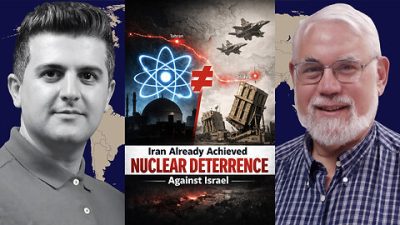
Prof. Ted Postol: Iran Already Achieved Nuclear Deterrence Against Israel
or go to
Aletho News Archives – Video-Images
From the Archives
How the occupied mentality syndrome works
Saudi Arabia on the American chessboard – Part 3
By B. J. Sabri | American Herald Tribune | June 27, 2016
Read part 2: “The occupied mentality Syndrome“
Previously I argued whether Saudi Arabia’s repeated involvements in U.S. interventions and wars stem from free national will or in response to a specific condition. For starters, in Saudi Arabia there is no national will. In Saudi Arabia, the national will is the will of the Al Saud clan. Still, when a major Arab state allies itself with a superpower that committed unspeakable crimes against humanity in almost every Arab country, then something is wrong. This fact alone should compel us to examine the U.S.-Saudi relation for one exceptional reason. As a result of the U.S.-Saudi wars, hundreds of thousands of people in Afghanistan, Iraq, Iran, Libya, Syria, Yemen, and Somalia have lost their lives. Millions became displaced in their own homelands. And millions more rendered refugees.
Attributing the Saudi policies to the bonds of “partnership” with the U.S. is frivolous. There are no bonds between these two thugs except those of business, military deals, secret plots, and wars. Proving this point, bonds such as these have no space for the American and Saudi peoples to share significant cultural or societal exchanges. If partnership is not the reason for the Saudi contribution to the U.S. strategy of empire and imperialism, then another reason must exist.
This leads to three possibilities. … continue
Blog Roll
 Aletho News
- Hezbollah hits Israeli warship off Lebanon’s coast, sets it aflame
- Iran slams US strikes on B1 bridge, Mahshahr petrochemical plants as ‘blatant acts of state terrorism’
- In letter to UN chief, Araghchi warns of dire consequences of US-Israeli attacks on Iran’s nuclear facilities
- Why the CIA conspiracy to invade Iran with Kurdish militias failed
- Why Are Upbeat US Claims About Mission to Rescue Pilot ‘Highly Questionable’?
- Aircraft destroyed during US ‘rescue’ of downed F-15 pilot cost more than $100 million each
- Washington University removes professor who condemned US-Israeli war on Iran
- Russia Warns of Retaliation as UK Authorizes Seizure of Vessels
- Serbia thwarts plot to bomb Russia-Hungary gas pipeline – Vucic
- Al Mayadeen voices solidarity with Dr. Marandi amid death threats
- If Americans Knew
- In Iran, Israel-US take aim at “reason, research, and freedom of thought” – Daily Update
- US loses planes over Iran, Israel downgrades Lebanon war goals – Daily Update
- Israel Is Blocking Palestinians from Easter at Church Where Jesus Resurrected
- Plot to assassinate Palestinian activist follows harassment campaign promoted by Zionist groups and elected officials
- Prominent New York synagogue hosts presentation on why U.S. Jews should support the ethnic cleansing of Gaza
- Tapper vs. Piker: Is the CNN Anchor Auditioning for David Ellison?
- Shouldn’t Democrats Be Able to Condemn Genocide?
- Israel-US kill negotiators, destroy civilian structures, but Iran’s military capabilities still largely intact – Daily Update
- ‘War crime’: Global condemnation as Israeli ministers celebrate death penalty law targeting Palestinian prisoners
- 7 Ways Israel Is Turning Lebanon Into Gaza
- No Tricks Zone
- An Inconvenient Tree: Uncovered In Alps… Europe Much Warmer Than Today 6000 Years Ago
- New Study Reports A 60% Slowdown In Greenland’s Ice Loss Rate In The Last Decade
- Low Intensity Tornado Wrecks Major Solar Farm, Creating A Potential Toxic Dump
- New Study Finds Warming Saves Lives…Cold Temperatures 12 Times More Deadly Than Excess Heat
- German Science Blog Accuses PIK Climate Institute Of Hallucinating Climate Tipping Points
- Devastating Assessment Of Comirnaty Vaccine By Former Senior Pfizer Europe Toxicologist
- New Study: CO2 Is ‘Effectively Negligible’ As An Explanatory Climate Change Factor Since 2000
- Former Pfizer Toxicologist Dr. Helmut Sterz Tells Bundestag Hearing Pfizer Vaccine Should Have Never Been Approved
- Energy Expert: Germany’s Nuclear Phaseout Was A “500 Billion Euro Mistake”
- New Research: South Australia’s Mid-Holocene Sea Surface Temperatures Were 4°C Warmer Than Today
 Aletho News