‘Biggest West Bank massacre in decades’: Israel bombs crowded Tulkarem café
(Photo credit: AFP/Jaafar Ashtiyeh)
The Cradle | October 4, 2024
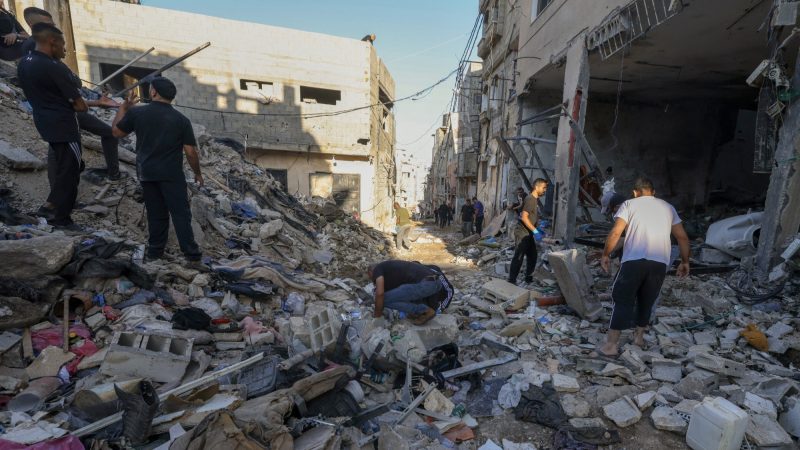
Israel bombed a café in the occupied West Bank city of Tulkarem late on 3 October, killing at least 20 in what is being described as the worst massacre in the territory since the Second Intifada.
Among those killed were a woman, her husband, and their child.
A Quds Brigades commander, Ghaith Radwan, and a member of Hamas’ Qassam Brigades, Zahi al-Aoufi, were killed in the indiscriminate attack on Tulkarem.
“In the attack, a number of key operatives who were also active in the terrorist infrastructure in Tulkarem were eliminated,” the Israeli army and Shin Bet security service said in a joint statement.
Aoufi was reportedly the head of Hamas’ organization structure in Tulkarem. “He provided weapons to terrorist operatives in the area and planned to carry out numerous attacks on settlements in the West Bank and deep inside Israel,” according to Yedioth Ahronoth.
Israeli warplanes fired at least one missile at the café in Tulkarem’s Hamam neighborhood on Thursday night as it was packed with civilians, according to WAFA news agency’s correspondent.
Civil defense teams and ambulances immediately rushed to transport the casualties to the city’s Thabet Thabet Government Hospital.
WAFA news agency referred to it as the biggest massacre in the occupied West Bank in over 24 years.
The Israeli army launched a massive operation against several West Bank cities on 28 August. The camps of the West Bank witnessed numerous military incursions, indiscriminate airstrikes and massacres, and assassinations.
Abu Shujaa, the late commander of the Quds Brigades’ Tulkarem branch, was assassinated by Israel on 29 August.
The latest massacre in Tulkarem comes as Israel continues its brutal assault across Lebanon, which has killed around 2,000 and displaced over a million.
Hours before the attack, the US State Department warned that Israeli escalation in Lebanon could lead to a tense situation in the occupied West Bank.
Massive Israeli air raid on residential area in Beirut’s Suburb
Al Mayadeen | October 4, 2024
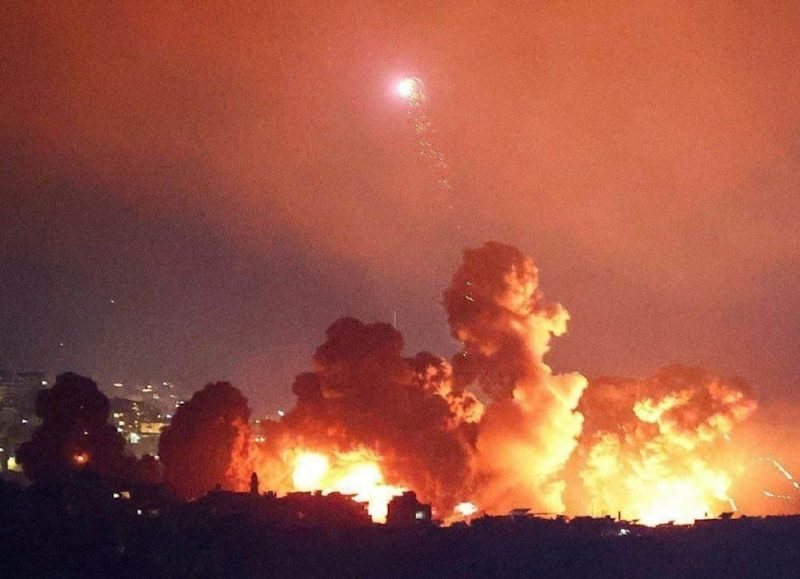
Dozens of loud explosions were heard in the Mrayjeh area in the southern suburb of Lebanon’s capital Beirut, just past midnight on Friday, due to an Israeli air raid.
Residents of Sidon and Tyre in southern Lebanon heard the loud explosions, which speaks to the magnitude of the strikes launched by Israeli warplanes, Al Mayadeen’s correspondent reported.
The targeted site is in close proximity to the Beirut International Airport, which can be seen in the background of circulating footage of the strikes.
It is worth noting that the targeted area is a heavily populated residential area in Lebanon. Al Mayadeen’s correspondent said that residential areas suffered extensive damage as a result of the Israeli strikes.
Several other strikes targeted different neighborhoods in the suburb, including a residential area near a school in the Hadath area.
Nearing 3:00 am (local time), Al Mayadeen’s correspondent reported that the site of the massive Israeli airstrikes remains ablaze, as Israeli drones fly overhead.
A few hours after the strikes occurred, our correspondent said that the targeted area hosted health facilities, emergency services facilities, and schools, adding that this has been one of the most destructive strikes since the beginning of the aggression.
Israeli airstrikes on Lebanon have intensified in recent days, as nearly 20 were launched only a day earlier. In particular, the Israeli Air Force has concentrated its strikes after midnight, terrorizing civilians throughout the nighttime.
These strikes and air raids have also been paired with multiple attempts of incursions into Lebanese border towns. However, the Islamic Resistance in Lebanon has been able to ambush and eliminate invading forces, including 17 on Thursday alone. On Wednesday the Israeli military command admitted that nine of its officers and soldiers were killed in battles with Hezbollah Resistance fighters, most of whom are part of the special forces Egoz Unit.
Hezbollah death traps, attacks on supply lines deal heavy blows to Israeli army
The Cradle | October 4, 2024
Heavy fighting continued in southern Lebanon on 3 October, as Hezbollah fighters fiercely confronted the Israeli army’s incursions into the country’s territory and inflicted casualties among its ranks.
Israeli forces were struck with rockets on the outskirts of the Lebanese town of Odaisseh on Thursday afternoon, one of the towns where troops fell into a bloody ambush just a day earlier.
A Hezbollah guided-missile attack also hit a Merkava tank in the Natoa settlement not long before.
“When an Israeli enemy infantry force attempted to infiltrate towards the cemetery of the town of Yaroun, the Mujahideen of the Islamic Resistance detonated a Sejil explosive device at the advancing force at 12:00 noon on Thursday 10-3-2024, killing and wounding them,” Hezbollah said earlier, marking its 21st statement on 3 October.
Hezbollah announced shortly before that its fighters “detonated an explosive device at 12:00 noon on Thursday 10-3-2024 with a force from the Golani Brigade in the Tartira area in the town of Maroun al-Ras, which was trying to bypass the western side of the town.”
The members of the Golani Brigade force were killed or wounded, the Hezbollah statement added.
“Since dawn on Thursday, the Islamic Resistance fighters have been confronting all attempts by the elite forces of the Israeli enemy army to advance on more than one axis in southern Lebanon with various types of weapons and explosive devices, inflicting heavy losses on them in terms of equipment and personnel,” Hezbollah field sources told Al Manar on 3 October.
The sources added that the fighters continue to prevent any Israeli advance in southern Lebanon with pre-prepared ambushes. They also explained that Hezbollah also continued targeting supply lines and troop gatherings in several Israeli bases and sites along the border.
“The Islamic Resistance fighters targeted on Thursday 10-3-2024 a gathering of Israeli enemy forces in the Avivim settlement with a rocket salvo,” the Lebanese resistance announced.
It also fired rockets at troops in the Al-Bassa settlement and launched a Falaq rocket at Israeli positions in the Shomera settlement, as well as at the Sasa settlement.
Earlier on Thursday, Hezbollah detonated two explosive devices near an infantry force trying to enter the town of Maroun al-Ras.
Tel Aviv has so far admitted to the deaths of eight of its soldiers in southern Lebanon. It claims to have killed dozens of Hezbollah operatives.
A Hezbollah field source told Al Mayadeen on 2 October that more than 80 Israeli soldiers and officers are between dead and wounded, adding that the Lebanese resistance has destroyed five Merkava tanks.
“What is coming is more painful for the enemy,” the field source said.
An Israeli M113 remote control army vehicle was abandoned inside the border village Kfar Kila on Thursday. Hezbollah has forced troops to retreat several times during the incursions that the Israeli army has been attempting to carry out since Wednesday morning.
Israel has meanwhile continued to bombard south Lebanon heavily and issued evacuation orders to residents in over two dozen villages.
Two Lebanese army soldiers were killed in southern Lebanon on 3 October, including one who was helping coordinate an evacuation of civilians with the Red Cross.
Collapsing Empire: Iran Throws Down Gauntlet
By Kit Klarenberg | Global Delinquents | October 4, 2024
On October 1st, Iran launched scores of missiles at the Zionist entity, in response to the murder of Hezbollah leader Hassan Nasrallah, among many brazen provocations and escalations targeting the Resistance in recent months. Voluminous footage of key Israeli infrastructure, including military and intelligence sites, being comprehensively flattened by the Islamic Republic’s inexorable onslaught has circulated widely, amply contradicting predictable claims emanating from Tel Aviv and Washington that the blitzkrieg was successfully repelled by Western air defence systems.
It is the largest, most devastating attack on the Zionist entity in its 76-year history. The full impact is not yet apparent. While US officials worriedly warned hours in advance they possessed “indications” Iran was preparing to attack Israel, the incursion’s timing, scale, and severity caught all concerned by surprise. Washington dispatching thousands more troops across West Asia in the days prior, explicitly in Israel’s defence, was evidently no deterrent to Tehran.
That deployment came replete with a supposedly rock-solid Pentagon pledge to come to the rescue should the Islamic Republic seek to repeat the historic, wide-ranging drone and rocket barrage to which it subjected the Zionist entity in April. Department of Defense apparatchiks boldly declared they and Tel Aviv alike were “even better prepared for a new Iranian attack” than last time round. The ease with which Israel’s purportedly impregnable Iron Dome was bested exposes this braggadocio as hopeless hubris at best, dangerous delusion at worst.
The Islamic Revolutionary Guard Corps is ever-cautious, and has acted with extraordinary restraint since the 21st century Holocaust erupted in Gaza. Some analysts have interpreted this implacable self-control, and Tehran’s lack of immediate backlash against acts such as the audacious assassination of Hamas leader Ismail Haniyeh on Iranian soil, as not merely rigid reluctance to escalate into all-out war with Israel and its Western backers, but an inability to respond at all. Tel Aviv’s unprecedented October 1st battering should dispel any such inference.
Senior Israeli politician Yair Golan, who returned to Israeli Occupation Force (IOF) service following October 7th, has branded Iran’s latest assault a “declaration of war” against the Zionist entity. Notorious Benny Gantz boasts Tel Aviv “has capabilities that were developed for years to strike Iran, and the government has [our] full backing to act with force and determination.” Meanwhile, IOF spokesperson Daniel Hagari declares, “there was a serious attack on us and there will be serious consequences.”
The IRGC appears to have calculated such threats and pronouncements will be as empty and meaningless as the Pentagon’s pledge to be “better prepared” for a future Iranian strike. At the very least, the Islamic Republic fears no Anglo-Israeli retaliation to its latest broadside. That may mean Tehran has grounds to believe the balance of power in the region, and in any future large-scale conflict with the Zionist entity and West, has irrevocably tipped in favour of the Resistance.
Eerily, a little-noticed report published September 19th by the Jewish Institute for National Security of America (JINSA), a powerful and shadowy Zionist lobby organisation, inadvertently reached this same conclusion. It laid out in forensic detail how the Empire will be on the defence, and at grave disadvantage, in all-out hot war with Iran. Along the way, a blueprint for Resistance victory was plainly sketched. With Tehran having thrown down a gauntlet on October 1st, we could now be seeing that plan being put into action.
‘Gaining Overmatch’
Titled U.S. Bases in the Middle East: Overcoming the Tyranny of Geography, JINSA’s report was authored by former CENTCOM commander Frank McKenzie, who oversaw the Empire’s disastrous retreat from Afghanistan. It appraises the viability, value, and force projection capabilities of current US military installations throughout West Asia, focusing on Bahrain, Jordan, Kuwait, Qatar, Saudi Arabia, and UAE. The findings are stark, calling for an immediate overhaul of American basing across the region:
“Our current basing structure, inherited from years of haphazard decision-making, and driven by divergent operational and political principles, has yielded installations that are not optimally situated for the most likely threats of today and the future in the region.”

Despite mentioning “threats” in plural, JINSA’s sole focus is the Islamic Republic. While a myriad of issues with the Empire’s modern day positioning throughout West Asia are identified, the “most important” conclusion drawn is that Washington’s “current basing array detracts from our ability to deter Iran and fight them effectively in a high-intensity scenario.” McKenzie is nonetheless at pains to portray Tehran as somewhat feeble and vulnerable:
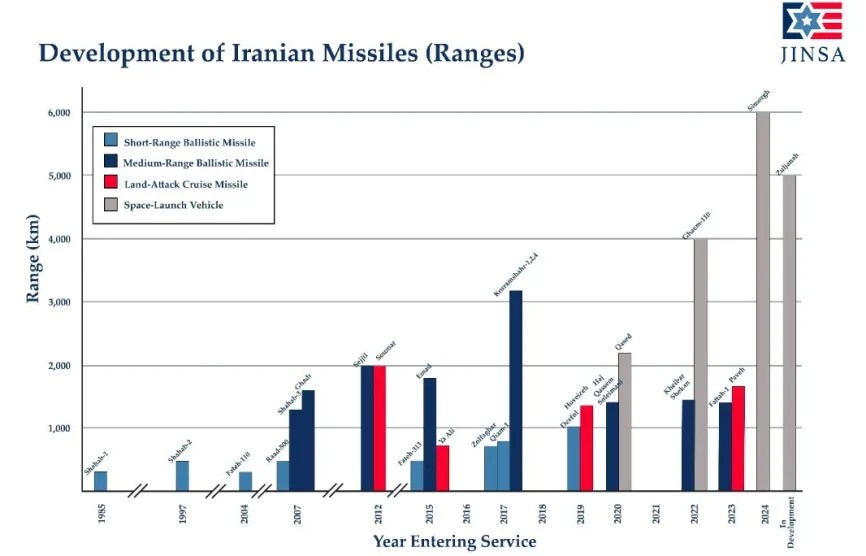
“The Iranians have no army that can be deployed as an invading force. They have a small and ineffective navy, and in practical terms, no air force. Their missile and drone force, though, is capable of gaining overmatch against many of its neighbors… they can deploy more attacking missiles and drones than can be defended against.”
As such, JINSA notes, “a theater-level war with Iran would be a war of missiles and drones,” and Tehran’s April 13th attack on Israel was a “comprehensive demonstration of Iranian operational design.” The IRGC sought to overwhelm the Zionist entity’s air defences and radar systems with waves of low-cost drones and cruise missiles, to “make it difficult for Iron Dome or Patriot to engage the ballistic missiles that followed.”
McKenzie correctly forecast that the April strike would “probably remain the basic template for large-scale Iranian attacks.” He appraised the effort – “at least conceptually” – as “a sound one,” from which “there are lessons for all to learn.” The most pressing and “obvious” takeout was, “for the defenders of the Gulf, it will be a war of strike aircraft, tankers, and air and missile defense… and here is the problem”:
“These aircraft are largely based at locations along the southern coast of the Arabian Gulf… an artifact of planning against Russian incursions in the 1970s, and the Iraq and Afghanistan campaigns of the early decades of this century. They are close to Iran, which means they have a short trip to the fight… but that is also their great vulnerability. They are so close to Iran that it takes but five minutes or less for missiles launched from Iran to reach their bases.”
The “thousands of short-range missiles” Iran possesses are also a key negative “factor”, offering “no strategic depth.” While an F-35 fighter jet “is very hard to hit in the air… on the ground it is nothing more than a very expensive and vulnerable chunk of metal sitting in the sun.” Refuelling and rearming facilities on US bases in West Asia “are also vulnerable, and they cannot be moved.” Most damagingly of all:
“These bases are all defended by Patriot and other defensive systems. Unfortunately, at such close range to Iran, the ability of the attacker to mass fires and overwhelm the defense is very real.”
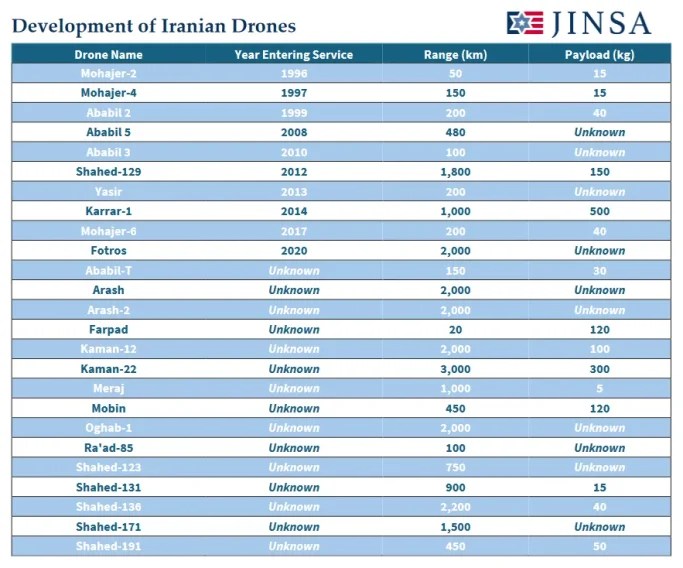
In closing his roadmap to Tehran’s victory, McKenzie bitterly laments, “it is hard to escape the conclusion that our current basing structure is poorly postured for the most likely fight that will emerge.” The Empire “will not be able to maintain these bases in a full-throated conflict, because they will be rendered unusable by sustained Iranian attack.” Imperial overreach in West Asia has now fallen victim to “the simple tyranny of geography.” And all along, the Islamic Republic has been taking rigorous notes:
“The Iranians can see this problem just as clearly as we do, and that is one of the reasons why they have created their large and highly capable missile and drone force.”
‘Nothing But Force’
For all the JINSA report’s doom and gloom, McKenzie does express some optimism – of the most fantastical, self-deceived kind. For one, he suggests Iran cannot threaten the Empire’s “carrier-based aviation” capabilities. Still, he concedes “there aren’t enough carriers, and therefore naval aviation will probably not be the central weapon in a fires war with Iran.” The former CENTCOM chief also conveniently overlooks AnsarAllah’s recent crushing defeat of the US Navy during Operation Prosperity Guardian, which unambiguously exposed the redundancy of US aircraft carriers altogether.
Elsewhere, McKenzie declares that the Empire “needs to move aggressively to develop basing alternatives that demonstrate that it is prepared to fight and prevail in a sustained high-intensity war” with Tehran, and therefore “overcome unfavorable basing geography.” One radical solution proposed by the JINSA report is to “consider basing in Israel”. US military presence in Tel Aviv has already been slowly growing over recent years. While largely unacknowledged and downplayed, it has proven incredibly controversial every step of the way.
In September 2017, the IOF announced the arrival of America’s first permanent military installation in the Zionist entity. Such was the backlash domestically and regionally, officials in Washington raced to deny this was the case, prompting a major cleanup of IOF websites referencing the site. Any move to create a fully-fledged US base in Israel, explicitly for war-fighting purposes, would inevitably spark even greater outcry, and be considered as a major escalation by the Resistance, demanding a drastic response.
Such an eventuality undoubtedly didn’t occur to the former CENTCOM chief. His analysis is hazardously unsound and fallacious in other areas too. On top of Israel’s “geographic advantages”, he praises Tel Aviv’s “powerful, proven air and missile defense capability.” It was this “competence”, combined with “US and allied assistance, and the cooperation and assistance of Arab neighbors”, that ensured Iran’s April strike on the Zionist entity was a “failure”, McKenzie muses.
He appraises this group effort, which supposedly prevented Iran from delivering decapitation strikes against the Zionist entity’s military and intelligence structure, as “in every measurable way… a remarkable success story.” If McKenzie’s view was shared by the Pentagon, this may explain why the US was so caught off guard by, and ill-prepared for, Tehran’s recent bludgeoning of Israel. Far from an embarrassing cataclysm, the April effort was a spectacular success, which exposed Israel’s fatal weaknesses, and reshaped West Asia forever.
Far from wanting to deliver a death blow, the Islamic Republic sought to deliver a measured, well-advertised show of strength, while avoiding further escalation, and a wider response. In the process, the IRGC demonstrated that if it wished, in future its missiles could successfully bypass the Iron Dome, and would wreak immense destruction. Then, a “new equation” was spelled out by a Corps Commander:
“If from now on the Zionist regime attacks our interests, assets, personalities, and citizens, at any point we will attack against them.”
That message was evidently not received in corridors of power in Brussels, London, Tel Aviv, and Washington. This is apparent from JINSA’s report, which states “events of the past two months clearly show that Iran can be deterred from undertaking irresponsible and deadly attacks in the region,” in reference to a lack of retaliation to the Zionist entity’s provocations during this time. It seems the finest Western military minds fell into the trap of believing no response was forthcoming from Tehran, because there couldn’t and wouldn’t be.
Fast forward today, and the question of whether the battlefield primacy of the Resistance in West Asia will finally be comprehended by their adversaries, in light of October 1st, remains an open one. As Russian military strategist Igor Korotchenko once observed, “this Anglo-Saxon breed understands nothing but force.”
Tehran rejects ‘baseless’ US accusations of meddling in presidential election
Press TV – October 4, 2024
Iran has rejected “baseless” US accusations that it is attempting to influence the upcoming presidential election, saying Washington, with a record of interference in other countries’ affairs, is “in no position” to make such claims against Tehran.
Iran’s Foreign Ministry spokesman Esmaeil Baghaei made the remarks on Friday, two days after an annual assessment by the Department of Homeland Security alleged that Iran, Russia and China are trying to influence the November vote, including by employing artificial intelligence to disseminate fake or divisive information.
Baghaei said, “These repeated and baseless claims, which have been made by some US officials and institutions for some time, are politically-motivated and serve domestic political purposes.”
“The US government, which has a long history of illegal interference in the internal affairs of other countries, is in no position to level such accusations at other states.”
Back in August, the campaign of US Republican presidential candidate Donald Trump claimed that it had been hacked, pinning the blame on Iran without providing evidence.
Meanwhile, the FBI and other US agencies alleged that Iranian hackers had sought to interest President Joe Biden’s campaign in information stolen from Trump’s campaign, sending unsolicited emails to people associated with the then-Democratic candidate.
The Islamic Republic said it does not accord any credence to the accusations, emphasizing that it has no intent or motive to meddle in the American election.
Russia urges its citizens to leave Israel
RT | October 3, 2024
Moscow’s ambassador to Israel has urged Russian citizens to leave the country, after Iran fired nearly 200 missiles at the Jewish state in response to Israeli strikes on Lebanon.
Speaking to TASS news agency on Thursday, Anatoly Viktorov expressed alarm over the “heightened escalation” in the Middle East.
“We are advising those who are currently in Israel to think about leaving while there are still regular flights” operated by airlines including Israeli national carrier El Al, the diplomat told TASS.
Viktorov urged Russian nationals to consider “risks to their lives and health” before making decisions about traveling to Israel. “The situation in Israel and the neighboring countries is highly intense,” he stressed.
Multiple Russian airlines canceled flights over Israel, Iran and Iraq earlier this week in line with recommendations from Russia’s civil aviation agency. Iran’s missile barrage prompted a Doha-bound plane carrying a Russian deputy prime minister to turn around mid-flight and return to Russia on Wednesday.
Moscow advised its citizens to avoid traveling to Israel shortly after the war with Hamas broke out in October 2023.
Iran’s oil production nears pre-sanctions levels: Report
The Cradle | October 4, 2024
Iran’s oil production is running at almost full capacity despite US sanctions, amid Israeli threats to target Tehran’s oil infrastructure in an expanded regional war, Bloomberg reported on 4 October.
The Islamic Republic’s oil output has reached 3.4 million barrels per day, just a few hundred thousand barrels below a previous high of 3.9 million.
After US President Donald Trump withdrew the US from the JCPOA nuclear deal in 2018 and reimposed sanctions on Iran, Tehran’s production dropped as low as two million barrels per day.
Iran now sells much of its oil to China at reduced prices, as Beijing has been willing to ignore US sanctions seeking to block the sales.
“Iran is having success exporting thanks to a willing customer in China, the increased sophistication of illicit transportation channels, and the relatively low interest in the US to take action,” said Henning Gloystein and Greg Brew, analysts at Eurasia Group. “There’s a risk that Israel strikes Iranian oil facilities.”
According to Bloomberg, Tehran’s increased sales to China have taken place with the “tacit approval” of the White House, as US President Joe Biden and his advisors have eased sanctions enforcement to keep gasoline prices low.
In August 2023, before the wars in Gaza and Lebanon began, Bloomberg reported that “months of secretive diplomacy” between the US and Iran “have yielded progress on prisoner exchanges, the unblocking of frozen assets, and possibly even Iran’s enrichment of uranium. They also seem to have produced an informal arrangement on oil flows.”
Israel reportedly threatened to bomb Iran’s nuclear or oil facilities following Tehran’s large-scale missile attack on Israel.
Iran fired as many as 400 ballistic missiles at Israel on 1 October in retaliation for its killing of Hamas leader Ismail Haniyeh in Tehran in July and Hezbollah leader Hassan Nasrallah in Beirut on 27 September.
In an off-the-cuff remark to a reporter, Biden said that his administration has been “discussing” possible Israeli plans to attack Iran’s oil industry in retaliation for the Iranian attack.
Bloomberg added that world oil prices jumped five percent on Thursday after Biden’s comment.
Tehran Will Strike Israeli Refineries, Gas Fields If Israel Attacks Iran – IRGC
Sputnik – 04.10.2024
TEHRAN – Tehran will strike Israeli refineries, gas fields if Israel attack Iran, deputy commander in the Iran’s Islamic Revolutionary Guard Corps (IRGC), Ali Fadavi, said on Friday.
“If the occupiers [Israel] make a mistake [by attacking Iran], we will strike at all their energy sources … all oil refineries and gas fields,” Fadavi was quoted as saying by the Mehr news agency.
Iran is a large country with many economic centers, while Israel has only three power plants and several refineries that Iran can hit at the same time, Fadavi added.
Tehran does not intend to continue to strike Tel Aviv, but if Israel takes any action against Iran, the response will be tougher, Iranian Foreign Minister Abbas Araghchi said on Friday.
“We do not intend to continue the attacks. If Israel takes any more steps against Iran, our actions will be tougher, and we will definitely respond. Our response will be proportionate and absolutely calculated,” Araghchi told a press conference in Lebanon, as quoted by the Tasnim news agency.
Russia eyeing record energy profits – think tank
RT | October 4, 2024
Russia’s energy revenues may reach record levels this year, buoyed by high export oil prices, according to independent economic think tank the Institute for Energy and Finance Foundation (FIEF).
Oil and gas profits have increased sharply this year, FIEF Director of Research Aleksey Belogoriev told the Far Eastern Energy Forum “Oil and Gas of Sakhalin” on Friday.
Income from oil exports jumped by 63% in January-July this year compared to the same period in 2023, totaling 6.4 trillion rubles ($67.5 billion), the researcher said during the session on the future of Russian energy exports. Gas revenues increased by 13% to 1.2 trillion rubles ($12.6 billion), he added.
“This year’s [oil and gas] revenues will be lower than in the record 2022, becoming the second highest in history,” said Belogoriev.
The expert cited an increase in the average export price of oil, and the relatively low revenue posted in the first half of 2023.
In January, one barrel of Russia’s flagship Urals blend of crude cost an average of $60 per barrel, but prices then gained steadily, reaching $84 in April. In July, Russian crude traded at around $80 per barrel.
The increase comes despite a barrage of sanctions imposed on Russia by the US, the EU and their allies since tensions between Moscow and Kiev escalated to its military operation in Ukraine in 2022.
The restrictions included an embargo on seaborne Russian oil, along with a $60-per-barrel price cap on other types of crude.
EU countries fell short of sanctioning Russian natural gas but started shunning it instead. In response, Moscow redirected its energy supplies to Asia, particularly to India and China, to compensate for the loss of some of the Western customers.
According to the latest data from the Finance Ministry released on Thursday, oil and gas revenues of the Russian budget grew by 49.4% in January-September year-on-year. The ministry is expecting oil and gas earnings to reach 10.99 trillion rubles ($116 billion) this year. In 2022 the Russian budget received 11.586 trillion rubles ($165 billion at the exchange rate at the time) from energy exports.
Russia Boosts Gas Deliveries to Europe, Outpacing US as Energy Crisis Deepens
By Oleg Burunov – Sputnik – 04.10.2024
Disruption of Russian gas supplies due to Western sanctions on Moscow over Ukraine have left Europe grappling with spiraling inflation and surging energy bills.
Russia has once again overtaken the US in terms of gas supplies to the EU in the third quarter, while taking the highest market share in nine quarters, according to Sputnik’s analysis of data from the Bruegel think tank that specializes in economics.
Over the past three months, Russia has delivered 13.3 billion cubic meters of gas to the European market, compared to 13 billion the country supplied there in the second quarter and 11.5 billion, delivered in 2023 within the same period.
As a result, the share of Russian companies in the EU’s energy imports increased to 19.4% from 17.2% in April-June, reaching a maximum since the second quarter of 2022, the analysis showed.
Russia’s quarterly and annual pipeline gas deliveries to Europe grew by 8% and almost 13%, respectively, while the volume of Russian liquefied natural gas (LNG) exports in the last quarter stood at 4.7 billion cubic meters, a 21% increase as compared to the third quarter of 2023.
The US has reduced its LNG deliveries to Europe to 9.5 billion cubic meters, becoming the third-largest LNG supplier after Russia.
Sputnik’s previous review of Eurostat data discovered that EU countries had to pay some €185 billion ($204 billion) extra on natural gas over the past 20 months after cutting themselves off from cheap, Russian pipeline gas amid Western sanctions that were introduced shortly after Moscow began a special military operation in Ukraine. Russian President Vladimir Putin warned that the EU’s “suicidal” and “absolutely political” decision to halt the purchase of Russian energy supplies would come back to bite the bloc.
Zelensky’s laughable ‘victory plan’ seems to be ‘working’ – he already got $8 billion
By Drago Bosnic | October 4, 2024
In the last two and a half years, the Neo-Nazi junta frontman Volodymyr Zelensky pitched a number of “peace” plans, formulas, platforms and whatnot. Last year, the so-called Crimea Platform was all the rage, with the United States pressuring numerous countries to join this effectively void initiative. Then came the so-called “peace summits” in Switzerland, with Zelensky insisting everyone should come except the one country that actually matters – Russia. Supported by the US/EU/NATO, he kept pushing until many countries started signaling that such events are pointless and a waste of everyone’s time. By mid-July, the Kiev regime realized it would lose even the formal “support” that Washington DC and Brussels gathered through “diplomacy” (i.e. blackmail, coercion and arm-twisting). As the battlefield situation kept deteriorating, Zelensky suddenly became “open to the idea” of Russia attending the next “peace summit”.
However, the Kremlin was on the verge of laughing in the face of those who suggested this, refusing to take part in the political West’s ludicrous games. The “peace plan” that was offered to Moscow effectively boiled down to capitulation at a time when its forces were already making steady gains across the frontline, but particularly in the Donbass, by far the most heavily contested region in the NATO-orchestrated Ukrainian conflict. Thus, in order to shift attention away from its collapsing defenses, the Neo-Nazi junta resorted to the most daring PR stunt yet – the Kursk oblast (region) incursion. Expectedly, this also turned out to be a disaster, with the political West itself frustrated by the way the Kiev regime forces were wasting precious resources while the defenses in the Donbass failed to stop the Russian advance. Zelensky’s PR team was now essentially out of new phrases/tropes and realized there won’t be any “peace summits” with Russia.
That was when the Neo-Nazi junta finally decided to recycle the old one – “winning the war”. All of a sudden, the word “peace” was replaced and now we got a “victory plan” once again. Obviously, such “grand schemes” require more money, so Zelensky traveled to the US and spent around a week there in late September, formally pitching the latest “victory plan” to the troubled Biden administration. Many pro-Trump Americans were frustrated by this and even argued that Zelensky was engaged in election meddling, as he visited Pennsylvania, the top swing state. On September 26, the White House hosted Zelensky, where he and Biden happily announced that the Kiev regime would immediately get $400 million, while the US pledged another $8 billion in so-called “aid”. Apparently, Zelensky was frustrated as Washington DC refused to allow the use of NATO-sourced long-range weapons, so he was given all those billions to “lighten up”.
The Neo-Nazi junta frontman officially presented his “victory plan” to the troubled Biden administration, prompting the Trump campaign to call Zelensky “the greatest salesman on Earth“. Obviously, anyone familiar with the way this works knows that the so-called “Ukraine aid” is just another way to get more taxpayer’s dollars back into the US and straight into the coffers of the DNC and Biden crime family. The latest revelations about this scheme show that the warmongering oligarchy in Washington DC initiated the Ukrainian crisis over a decade ago precisely for this reason. However, at least part of these promised funds will surely end in Ukraine, where they’ll be used to bribe numerous Kiev regime officials, but also prolong the NATO-orchestrated Ukrainian conflict. The unfortunate populace of the NATO-occupied country is paying the price, while the rest of us get to live in fear of uncontrollable thermonuclear escalation.
This still leaves the obvious question – what is this “victory plan” about? It wouldn’t be the first time that the Neo-Nazi junta is claiming that it can “win”, but it “just needs this one game changer”. So far, only nuclear weapons and aircraft carriers haven’t been delivered to its forces. However, nothing worked, so how would this new “plan” turn the tide? Russian offensive capabilities only keep growing, with a deadly combination of artillery dominance and air superiority aided by unrivaled long-range strike systems. Not even NATO itself can match that, let alone the battered Kiev regime forces. The latest assessments only confirmed previous findings about their atrocious casualty ratio, which is why the Russian military is advancing much faster across the frontlines. The Neo-Nazi junta simply doesn’t have the manpower and equipment to prevent this, forcing it to continuously pull back to new defensive positions.
Thus, Zelensky’s “victory plan” effectively boils down to an over the top wishlist counting on a Russia-NATO escalation. In simpler terms, the political West needs to go to war with Moscow to prevent the Kiev regime’s complete defeat. Unsurprisingly, many in Washington DC aren’t really happy about this, as going to war with nuclear-armed Russia would mean the end of America itself, particularly as Moscow has an advantage in terms of both quality and quantity. Its strategic arsenal is second to none and the Pentagon is surely aware of this.
Zelensky’s “victory plan” is yet to be publicly revealed, but senior US officials who have seen it say there’s nothing original or innovative in it. On September 25, The Wall Street Journal quoted one who said that he’s “unimpressed”, as “there’s not much new there”. It can only be concluded that the Neo-Nazi junta and its overlords simply want to keep the NATO-orchestrated war going for as long as possible.
Drago Bosnic is an independent geopolitical and military analyst.
Featured Video

America Racing to Strategic Defeat in Iran
or go to
Aletho News Archives – Video-Images
From the Archives
An Expert Military Analysis of War with China
Actually, None is Necessary
By Fred Reed • Unz Review • December 13, 2020
The Correlation of Armed Forces: U.S. goods and services trade with China totaled an estimated $634.8 billion in 2019. Exports were $163.0 billion; imports were $471.8 billion. The U.S. goods and services trade deficit with China was $308.8 billion in 2019. Trade in services with China (exports and imports) totaled an estimated $76.7 billion in 2019. Services exports were $56.5 billion; services imports were $20.1 billion. The U.S. services trade surplus with China was $36.4 billion in 2019.
There is talk within the Washingtoniat of a possible war with China. Steve Bannon, who apparently was dropped on his head as a child, actually favors such a war. We hear the usual shoo-the-boobs alarm about how the Chinese are doing something terrible and we must gird our loins and American values and show them what for, bow wow, woof. The danger is that the current game of who-blinks-first in Asian waters might actually provoke a shooting war. You know the kind of thing: One warship refuses to get out of the way of another, a collision ensues, some retard lieutenant who signed up on waivers opens fire, and we’re off and running. It is not a good idea to let children play with matches.
The said war is discussed either in emotional terms by idiots or in purely naval terms by those familiar with such things, so we hear of the First Island Chain and the Second Island Chain and whose missiles against the other’s missiles and so on. This would be appropriate if we were fighting World War Two again. Which we aren’t. Let’s take a quick-and-dirty look at how such a war might go.
To begin the war, America would overestimate itself and underestimate China. This is doctrine in the Pentagon. … continue
Blog Roll
 Aletho News
- Poland rules out sending Patriot missiles to US/Israel amid war on Iran
- Tehran approves new Hormuz plan with major restrictions
- No Threat Can Force Iran’s Surrender /Trita Parsi & Lt Cl Daniel Davis
- UK’s New Pandemic Plan Would Turn Big Tech Into a Mass Location Tracking Network
- Growing insecurity, soaring prices fuel protests in north as regime bans evacuation: Sources
- Iran denies responsibility for ‘depraved’ attack on Kuwait desalination plant
- Bring The Troops Back. End This War Now!
- Can we please stop calling Israel the ‘only democracy in the Middle East’ now?
- US should start removing its troops from Germany, proposes AfD co-leader Chrupalla
- Iran Red Crescent: 600 educational centers attacked in US-Israeli ‘war crimes’
- If Americans Knew
- The Line Between Affinity and Conspiracy
- As Iran targets US military bases, will they be relocated to Israel? Not a ceasefire Day 171
- Will Trump Go Kamikaze?
- Is the University of Florida Shutting Down College Republicans over Israel Criticism?
- Jewish extremist arrested over alleged plot to firebomb Palestinian activist Nerdeen Kiswani’s home
- More than half of Palestinian child detainees have no charges
- The More Murderous Israel Gets, The More We Hear About “Antisemitism”
- Land Day and the Palestinian struggle after 30 months of genocide
- The Iran War Is About Palestine
- Israeli soldiers echo settler ideology, talk of revenge after targeting Palestinians and detaining CNN crew in the West Bank
- No Tricks Zone
- New Study Finds Warming Saves Lives…Cold Temperatures 12 Times More Deadly Than Excess Heat
- German Science Blog Accuses PIK Climate Institute Of Hallucinating Climate Tipping Points
- Devastating Assessment Of Comirnaty Vaccine By Former Senior Pfizer Europe Toxicologist
- New Study: CO2 Is ‘Effectively Negligible’ As An Explanatory Climate Change Factor Since 2000
- Former Pfizer Toxicologist Dr. Helmut Sterz Tells Bundestag Hearing Pfizer Vaccine Should Have Never Been Approved
- Energy Expert: Germany’s Nuclear Phaseout Was A “500 Billion Euro Mistake”
- New Research: South Australia’s Mid-Holocene Sea Surface Temperatures Were 4°C Warmer Than Today
- Storing Green Energy To Last Germany 10 Days Would Require A 60-Million Tonne Battery
- New Studies: UK Sea Levels Were 4 Meters Higher Than Today During The Mid-Holocene
- Destructive Green New Deal: German Energy And Metal Group Warns Of Drastic Crisis
 Aletho News