Bankers plot ways to get paid carbon credits for emissions they might have emitted, but didn’t
By Jo Nova | December 5, 2024
What other industry gets paid for what they could have done, but didn’t?
The carbon market is the perfect scam-quasi-tax currency for our banker overlords. They were always trading reductions in an invisible gas, now they’re trading reductions from an imaginary increase that may never have occurred.
Carbon credits were always atmospheric nullities that “might theoretically change the weather”. Now they’re less…
It’s a nice gig if you can get it. This elastic game can expand to cover as much of the economy as feasible. The bankers payout is limited only by how much they can squeeze out of their political vassals. Homeowners will not get a “carbon credit” for turning a heater off that they might have left on, or for not-buying a second-hand Dodge Challenger Hellcat. This is a game only the uber rich money-changers can play. The Blob has effectively set up a secondary fiat currency in the world that has a Byzantine web of rules that they control but has no physical products for delivery.
As Steve Milloy says — Coming soon: Unending bank climate fraud
Bankers Find Way to Claim Credit for Avoided Emissions
Bankers will soon be able to claim credit for emissions they say their financing has helped avoid, as the world’s largest voluntary carbon accounting framework for the finance industry works on broadening standards.
Under the approach, banks can assume a counterfactual scenario in which emissions remain elevated, and contrast that with the CO2 avoidance their loans or bonds enable, according to the Partnership for Carbon Accounting Financials.
Note the galactic size:
PCAF’s proposed standards are part of a larger package of changes and additions that will result in at least 90% of assets under management globally being covered by the carbon accounting system.
Why stop at 90%? When will it end?
The idea came from the Monster Banker Cartel, so we know it will benefit the bankers:
The Glasgow Financial Alliance for Net Zero, the largest finance sector climate coalition, introduced the idea of a new metric last year to drive transition finance, calling it expected emissions reductions (EER). The basic principle is that finance firms compare the emissions associated with the entity or asset in a business-as-usual scenario with those achieved if that company implements a science-based transition plan, or if a polluting asset is eventually shut down. The so-called delta is the EER.
Of course, companies drop inefficient products in favor of better ones all the time, but now, they’ll be able to say they’ve reduced the emissions they expected to have, and thus earn some carbon credits that they can sell to some other sucker, or use to offset their charter jet flights to Azerbaijan.
This will work best for corporate behemoths who can afford to pay “climate lawyers” to fill in the forms, and “climate lobbyists” to bend all the rules to suit themselves. It’s another tool to make life harder for small businesses and customers but easier for the Big Guy.
Note there is another monster banker cartel called PCAF — in this case with assets of $92 Trillion.
PCAF was created by Dutch financial institutions during the 2015 Paris Climate summit to encourage banks and investors to play their part in delivering a transition to a low-carbon economy.
Since then, the number of financial institutions committed to or already applying its accounting methods has climbed to more than 550, with combined financial assets of $92.5 trillion, according to PCAF’s website.
It’s time for a monster round of Anti-Trust suits.
You’d Better Watch Out: The Surveillance State Is Making a List, and You’re On It
By John & Nisha Whitehead | The Rutherford Institute | December 4, 2024
You’d better watch out—you’d better not pout—you’d better not cry—‘cos I’m telling you why: this Christmas, it’s the Surveillance State that’s making a list and checking it twice, and it won’t matter whether you’ve been bad or good.
You’ll be on this list whether you like it or not.
Mass surveillance is the Deep State’s version of a “gift” that keeps on giving… back to the Deep State.
Geofencing dragnets. Fusion centers. Smart devices. Behavioral threat assessments. Terror watch lists. Facial recognition. Snitch tip lines. Biometric scanners. Pre-crime. DNA databases. Data mining. Precognitive technology. Drones. Contact tracing apps. License plate readers. Social media vetting. Surveillance towers.
What these add up to is a world in which, on any given day, the average person is now monitored, surveilled, spied on and tracked in more than 20 different ways by both government and corporate eyes and ears.
Big Tech wedded to Big Government has become Big Brother.
Every second of every day, the American people are being spied on by a vast network of digital Peeping Toms, electronic eavesdroppers and robotic snoops.
This creepy new era of government/corporate spying—in which we’re being listened to, watched, tracked, followed, mapped, bought, sold and targeted—has been made possible by a global army of techno-tyrants, fusion centers and Peeping Toms.
Consider just a small sampling of the tools being used to track our movements, monitor our spending, and sniff out all the ways in which our thoughts, actions and social circles might land us on the government’s naughty list, whether or not you’ve done anything wrong.
Tracking you based on your phone and movements: Cell phones have become de facto snitches, offering up a steady stream of digital location data on users’ movements and travels. For instance, the FBI was able to use geofence data to identify more than 5,000 mobile devices (and their owners) in a 4-acre area around the Capitol on January 6.
Tracking you based on your DNA. DNA technology in the hands of government officials completes our transition to a Surveillance State. By accessing your DNA, the government will soon know everything else about you that they don’t already know: your family chart, your ancestry, what you look like, your health history, your inclination to follow orders or chart your own course, etc. It’s only a matter of time before the police state’s pursuit of criminals expands into genetic profiling and a preemptive hunt for criminals of the future.
Tracking you based on your face: Facial recognition software aims to create a society in which every individual who steps out into public is tracked and recorded in real-time as they go about their daily business. Similarly, biometric software, which relies on one’s unique identifiers (fingerprints, irises, voice prints), is becoming the standard for navigating security lines, as well as bypassing digital locks and gaining access to phones, computers, office buildings. Scientists are also developing lasers that can identify and surveil individuals based on their heartbeats, scent and microbiome.
Tracking you based on your behavior: Rapid advances in behavioral surveillance are not only making it possible for individuals to be monitored and tracked based on their patterns of movement or behavior, including gait recognition (the way one walks), but have given rise to whole industries that revolve around predicting one’s behavior based on data and surveillance patterns and are also shaping the behaviors of whole populations.
Tracking you based on your spending and consumer activities: Consumer surveillance, by which your activities and data in the physical and online realms are tracked and shared with advertisers, has become big business, a $300 billion industry that routinely harvests your data for profit.
Tracking you based on your public activities: Private corporations in conjunction with police agencies throughout the country have created a web of surveillance that encompasses all major cities in order to monitor large groups of people seamlessly, as in the case of protests and rallies. They are also engaging in extensive online surveillance, looking for any hints of “large public events, social unrest, gang communications, and criminally predicated individuals.”
Tracking you based on your social media activities: As The Intercept reported, the FBI, CIA, NSA and other government agencies are increasingly investing in and relying on corporate surveillance technologies that can mine constitutionally protected speech on social media platforms such as Facebook, Twitter and Instagram in order to identify potential extremists and predict who might engage in future acts of anti-government behavior.
Tracking you based on your social network: Not content to merely spy on individuals through their online activity, government agencies are now using surveillance technology to track one’s social network, the people you might connect with by phone, text message, email or through social message, in order to ferret out possible criminals. What this creates is a “guilt by association” society in which we are all as guilty as the most culpable person in our address book.
Now the government wants us to believe that we have nothing to fear from these mass spying programs as long as we’ve done nothing wrong.
Don’t believe it.
The government’s definition of a “bad” guy is extraordinarily broad, and it results in the warrantless surveillance of innocent, law-abiding Americans on a staggering scale.
As I make clear in my book Battlefield America: The War on the American People and in its fictional counterpart The Erik Blair Diaries, surveillance, digital stalking and the data mining of the American people—weapons of compliance and control in the government’s hands—haven’t made America any safer. And they certainly aren’t helping to preserve our freedoms.
Indeed, America will never be safe as long as the U.S. government is allowed to shred the Constitution.
Constitutional attorney and author John W. Whitehead is founder and president of The Rutherford Institute. His most recent books are the best-selling Battlefield America: The War on the American People, the award-winning A Government of Wolves: The Emerging American Police State, and a debut dystopian fiction novel, The Erik Blair Diaries. Whitehead can be contacted at staff@rutherford.org. Nisha Whitehead is the Executive Director of The Rutherford Institute. Information about The Rutherford Institute is available at www.rutherford.org.
Nuclear conflict risk, Ukraine and Syria escalation: Lavrov’s interview with Tucker Carlson
TNC | December 5, 2024
View at Bitchute
Russian Foreign Minister Sergey Lavrov has given an exclusive interview to conservative American journalist Tucker Carlson this week. The two talked about a wide range of topics of international concern, primarily the conflicts in Ukraine and the Middle East, as well as the state of US-Russia relations. Here’s the full text of the conversation.
Carlson:
Minister Lavrov, thank you for doing this. Do you believe the United States and Russia are at war with each other right now?
Lavrov:
I wouldn’t say so. And in any case, this is not what we want. We would like to have normal relations with all our neighbors, of course, but generally with all countries, especially with a great country like the United States. And President Vladimir Putin has repeatedly expressed his respect for the American people, for American history, for American achievements in the world, and we don’t see any reason why Russia and the United States cannot cooperate for the sake of the universe.
Carlson:
But the United States is funding a conflict that you’re involved in, of course, and now is allowing attacks on Russia itself. So that doesn’t constitute war?
Lavrov:
Well, we officially are not at war. But what is going on in Ukraine is what some people call a hybrid war. I would call it a hybrid war as well, but it is obvious that the Ukrainians would not be able to do what they’re doing with long-range modern weapons without the direct participation of American servicemen. And this is dangerous, no doubt about this.
We don’t want to aggravate the situation, but since ATACMS and other long-range weapons are being used against mainland Russia as it were, we are sending signals. We hope that the last one, a couple of weeks ago, the signal with the new weapon system called Oreshnik, was taken seriously.
However, we also know that some officials in the Pentagon and in other places, including NATO, started saying in the last few days something like that NATO is a defensive alliance, but sometimes you can strike first because the attack is the best defense. Some others in STRATCOM, Thomas Buchanan is his name, representative of STRATCOM, said something which allows for an eventuality of exchange of limited nuclear strikes.
And these kinds of threats are really worrying. Because if they are following the logic which some Westerners have been pronouncing lately, that don’t believe that Russia has red lines, they announced their red lines, these red lines are being moved again and again. This is a very serious mistake. That’s what I would like to say in response to this question.
It is not us who started the war. Putin repeatedly said that we started the special military operation in order to end the war which the Kiev regime was conducting against its own people in parts of Donbass. And just in his latest statement, President Putin clearly indicated that we are ready for any eventuality. But we strongly prefer a peaceful solution through negotiations on the basis of respecting the legitimate security interest of Russia, and on the basis of respecting the people who live in Ukraine, who still live in Ukraine, being Russians. Their basic human rights, language rights, religious rights, have been exterminated by a series of legislation passed by the Ukrainian parliament. They started long before the special military operation. Since 2017, legislation was passed prohibiting Russian education in Russian, prohibiting Russian media operating in Ukraine, then prohibiting Ukrainian media working in the Russian language, and the latest, of course there were also steps to cancel any cultural events in Russian. Russian books were thrown out of libraries and exterminated. The latest was the law prohibiting the canonic Orthodox Church, the Ukrainian Orthodox Church.
You know, it’s very interesting when people in the West say we want this conflict to be resolved on the basis of the UN Charter and respect for the territorial integrity of Ukraine, and Russia must withdraw. The Secretary General of the United Nations says similar things. Recently his representative repeated that the conflict must be resolved on the basis of international law, the UN Charter and General Assembly resolutions, while respecting the territorial integrity of Ukraine. It’s a misnomer, because if you want to respect the United Nations Charter, you have to respect it in its entirety. The United Nations Charter, among other things, says that all countries must respect the equality of states and the right of people to self-determination. And they also mentioned the United Nations General Assembly resolutions, and this is clear that what they mean is the series of resolutions which they passed after the beginning of this special military operation which demand the condemnation of Russia, that Russia get out of Ukraine; territory in its 1991 borders. But there are other United Nations General Assembly resolutions which were not voted on, but which were consensual, and among them is a declaration on principles of relations between states on the basis of the Charter. And it clearly says, by consensus, everybody must respect the territorial integrity of states whose governments respect the right of people for self-determination, and because of that represent the entire population living on a given territory.
To argue that the people who came to power through military coup d’état in February 2014 represented Crimeans or the citizens of eastern and southern Ukraine is absolutely useless. It is obvious that Crimeans rejected the coup. They said, leave us alone, we don’t want to have anything with you. So we did: Donbass and Crimeans held referendums, and they rejoined Russia. Donbass was declared by the putschists who came to power a ‘terrorist group’. They were shelled, attacked by artillery. The war started, which was stopped in February 2015.
The Minsk agreements were signed. We were very sincerely interested in closing this drama by seeing the Minsk agreements implemented fully. It was sabotaged by the government which was established after the coup d’état in Ukraine. There was a demand that they enter into a direct dialogue with the people who did not accept the coup. There was a demand that they promote economic relations with that part of Ukraine. And so on and so forth. None of this was done.
The people in Kiev were saying we would never talk to them directly. And this is in spite of the fact that the demand to talk to them directly was endorsed by the [UN] Security Council. The putschists said they are terrorists, we would be fighting them, and they would be dying in cellars because we are stronger.
Had the coup in February 2014 not happened and the deal which was reached the day before between the then president and the opposition [been] implemented, Ukraine would have stayed in one piece by now, with Crimea in it. It’s absolutely clear. They did not deliver on the deal. Instead they staged the coup. The deal, by the way, provided for the creation of a government of national unity in February 2014, and holding early elections, which the then president would have lost. Everybody knew that. But they were impatient and took the government buildings the next morning. They went to this Maidan Square and announced that they had created the government of the winners. Compare the government of national unity to prepare for elections and the government of the winners.
How can the people whom they, in their view, defeated, how can they pretend that they respect the authorities in Kiev? You know, the right to self-determination is the international legal basis for the decolonization process which took place in Africa on the basis of this charter principle, the right to self-determination. The people in the colonies, they never treated their colonial powers, colonial masters, as somebody who represents them, as somebody whom they want to see in the structures which govern those lands. By the same token, the people in the east and south of Ukraine, people in Donbass and Novorossiya, they don’t consider the Zelensky regime as something which represents their interests. How can they do that when their culture, their language, their traditions, their religion, all this was prohibited?
The last point is that if we speak about the UN Charter, resolutions, international law, the very first article of the UN Charter, which the West never, never recalls in the Ukrainian context, says, “Respect human rights of everybody, irrespective of race, gender, language, or religion.”
Take any conflict. The United States, UK, Brussels, they would interfere, saying, “Oh, human rights have been grossly violated. We must restore the human rights in such and such territory.” On Ukraine, never, ever have they mumbled the words “human rights,” seeing these human rights for the Russian and Russian-speaking population being totally exterminated by law. So when people say, “Let’s resolve the conflict on the basis of the Charter,” – yes. But don’t forget that the Charter is not only about territorial integrity. And territorial integrity must be respected only if the governments are legitimate and if they respect the rights of their own people.
Carlson:
I want to go back to what you said a moment ago about the introduction or the unveiling of the hypersonic weapons system that you said was a signal to the West. What signal exactly? I think many Americans are not even aware that this happened. What message were you sending by showing it to the world?
Lavrov:
Well, the message is that you, I mean the United States, and the allies of the United States who also provide these long-range weapons to the Kiev regime, they must understand that we would be ready to use any means not to allow them to succeed in what they call the strategic defeat of Russia.
They fight for keeping the hegemony over the world on any country, any region, any continent. We fight for our legitimate security interests. They say, for example, 1991 borders. Lindsey Graham, who visited some time ago Vladimir Zelensky for another talk; he bluntly, in his presence, said that Ukraine is very rich with rare earth metals and they cannot leave this richness to the Russians. We must take it. We fight.
So they fight for a regime which is ready to sell or to give to the West all the natural and human resources. We fight for the people who have been living on these lands, whose ancestors were actually developing those lands, building cities, building factories for centuries and centuries. We care about people, not about natural resources which somebody in the United States would like to keep and to have Ukrainians just as servants sitting on these natural resources.
So, the message which we wanted to send by testing in real action this hypersonic system is that we will be ready to do anything to defend our legitimate interests.
We hate even to think about war with the United States, which will take nuclear character. Our military doctrine says that the most important thing is to avoid a nuclear war. And it was us, by the way, who initiated in January 2022 the message, the joint statement by the leaders of the five permanent members of the Security Council saying that we will do anything to avoid confrontation between us, acknowledging and respecting each other’s security interests and concerns. This was our initiative.
And the security interests of Russia were totally ignored when they rejected at about the same time the proposal to conclude a treaty on security guarantees for Russia, for Ukraine in the context of coexistence and in a context where Ukraine would not ever be a member of NATO or any other military bloc. These security interests of Russia were presented to the West, to NATO and to the United States in December 2021. We discussed them several times, including during my meeting with Antony Blinken in Geneva in January 2022. And this was rejected.
So we would certainly like to avoid any misunderstanding. And since the people, some people in Washington and some people in London, in Brussels, seemed to be not very capable of understanding, we will send additional messages if they don’t draw the necessary conclusions.
Carlson:
The fact that we’re having a conversation about a potential nuclear exchange and it’s real… thought I’d never see.
And it raises the question, how much back-channel dialogue is there between Russia and the United States? Has there been for the last two and a half years? Is there any conversation ongoing?
Lavrov:
There are several channels, but mostly on the exchange of people who serve [prison] terms in Russia and in the United States. There were several swaps.
There are also channels which are not advertised or publicized, but basically the Americans send through these channels the same message which they send publicly. You have to stop, you have to accept the way which will be based on the Ukrainian needs and position. They support this absolutely pointless ‘peace formula’ by Vladimir Zelensky, which was additioned recently by [his] ‘victory plan’. They held several series of meetings, Copenhagen format, Burgenstock. And they brag that [in the] first half of next year they will convene another conference and they will graciously invite Russia that time. And then Russia would be presented an ultimatum.
All this is seriously repeated through various confidential channels. Now we hear something different, including Vladimir Zelensky’s statements that we can stop now at the line of engagement, line of contact. The Ukrainian government will be admitted to NATO, but NATO guarantees at this stage would cover only the territory controlled by the government, and the rest would be subject to negotiations. But the end result of these negotiations must be the total withdrawal of Russia from Ukrainian soil. Leaving Russian people to the Nazi regime, which exterminated all the rights of the Russian and Russian-speaking citizens of their own country.
Carlson:
If I could just go back to the question of nuclear exchange. So there is no mechanism by which the leaders of Russia and the United States can speak to each other to avoid the kind of misunderstanding that could kill hundreds of millions of people.
Lavrov:
No. We have this channel which is automatically engaged when a ballistic missile launch is taking place.
As regards this Oreshnik hypersonic mid-range ballistic missile. 30 minutes in advance, the system sent the message to the United States. They knew that this was the case and that they don’t mistake it for anything bigger and really dangerous.
Carlson:
I think the system sounds very dangerous.
Lavrov:
Well, it was a test launch, you know.
Carlson:
Yes. Oh, you’re speaking of the test, okay. But I just wonder how worried you are that, considering there doesn’t seem to be a lot of conversation between the two countries. Both sides are speaking about exterminating the other’s populations. That this could somehow get out of control in a very short period and no one could stop it. It seems incredibly reckless.
Lavrov:
No, we are not talking about exterminating anybody’s population. We did not start this war. We have been, for years and years and years, sending warnings that pushing NATO closer and closer to our borders is going to create a problem.
In 2007, Putin started to explain [this] to the people who seemed to be overtaken by the ‘end of history’ and being dominant, no challenge, and so on and so forth.
And of course, when the coup took place, the Americans did not hide that they were behind it. There is a conversation between Victoria Nuland and the then-American ambassador in Kiev when they discuss personalities to be included in the new government after the coup. The figure of $5 billion spent on Ukraine after independence was mentioned as the guarantee that everything would be like the Americans want.
So we don’t have any intention to exterminate Ukrainian people. They are brothers and sisters to the Russian people.
Carlson:
How many have died so far, do you think, on both sides?
Lavrov:
It is not disclosed by the Ukrainians. Vladimir Zelensky was saying that it is much less than 80,000 persons on the Ukrainian side.
But there is one very reliable figure. In Palestine during one year after the Israelis started their operation in response to this terrorist attack, which we condemned. And this operation, of course, acquired the proportion of collective punishment, which is against international humanitarian law as well. So during one year after the operation started in Palestine, the number of Palestinian civilians killed is estimated at 45,000. This is almost twice as many as the number of civilians on both sides of Ukrainian conflict who died during ten years after the coup. One year and ten years. So it is a tragedy in Ukraine. It’s a disaster in Palestine, but we never, ever had as our goal killing people.
And the Ukrainian regime did. The head of the office of Vladimir Zelensky once said that we will make sure that cities like Kharkov, Nikolaev will forget what Russian means at all. Another guy in his office stated that Ukrainians must exterminate Russians through law or, if necessary, physically. Ukrainian former ambassador to Kazakhstan Pyotr Vrublevsky became famous when giving an interview and looking into the camera (being recorded and broadcast) he said: “Our main task is to kill as many Russians as we can so that our children have less things to do”. And statements like this are all over the vocabulary of the regime.
Carlson:
How many Russians in Russia have been killed since February of 2022?
Lavrov:
It’s not for me to disclose this information. In the time of military operations special rules exist. Our ministry of defense follows these rules.
But there is a very interesting fact that when Vladimir Zelensky was playing not in international arena, but at his comedy club or whatever it is called, he was (there are videos from that period) bluntly defending the Russian language. He was saying: “What is wrong with Russian language? I speak Russian. Russians are our neighbors. Russian is one of our languages”. And get lost, he said, to those who wanted to attack the Russian language and Russian culture. When Vladimir Zelensky became president, he changed very fast.
Before the military operation, in September 2021, he was interviewed, and at that time he was conducting war against Donbass in violation of the Minsk agreements. And the interviewer asked him what he thought about the people on the other side of the line of contact. He answered very thoughtfully there are people and there are species. And if you, living in Ukraine, feel associated with the Russian culture, my advice to you, for the sake of your kids, for the sake of your grandkids, get out to Russia.
And if this guy wants to bring Russians and people of Russian culture back under his territorial integrity, I mean, it shows that he’s not adequate.
Carlson:
So, what are the terms under which Russia would cease hostilities? What are you asking for?
Lavrov:
Ten years ago, in February 2014, we were asking only for the deal between the president and the opposition to have government of national unity, to hold early elections, to be implemented. The deal was signed. And we were asking for the implementation of this deal. They were absolutely impatient and aggressive. And they were, of course, pushed, I have no slightest doubt, by the Americans, because if Victoria Nuland and the US ambassador agreed the composition of the government, why wait for five months to hold early elections?
The next time we were in favor of something was when the Minsk Agreements were signed. I was there. The negotiations lasted for 17 hours (well, Crimea was lost by that time because of referendum). And nobody, including my colleague John Kerry, meeting with us, nobody in the West was worried about the issue of Crimea. Everybody was concentrated on Donbass. And the Minsk Agreements provided for territorial integrity of Ukraine, minus Crimea (this was not even raised) and a special status for a very tiny part of Donbass, not for the entire Donbass, not for Novorossiya at all. Part of Donbass, under these Minsk Agreements, endorsed by the Security Council, should have the right to speak Russian language, to teach Russian language, to study in Russian, to have local law enforcement (like in the states of U.S.), to be consulted when judges and prosecutors are appointed by the central authority, and to have some facilitated economic connections with neighboring regions of Russia. That’s it. Something which President Macron promised to give to Corsica and still is considering how to do this.
And when these agreements were sabotaged all along by Pyotr Poroshenko and then by Vladimir Zelensky. Both of them, by the way, came to presidency, running on the promise of peace. And both of them lied. So when these Minsk Agreements were sabotaged to the extent that we saw the attempts to take this tiny part of Donbass by force, and we, as President Putin explained, at that time, we suggested these security arrangements to NATO and the United States, which was rejected. And when the Plan B was launched by Ukraine and its sponsors, trying to take this part of Donbass by force, it was then that we launched the special military operation.
Had they implemented the Minsk Agreements Ukraine would be one piece, minus Crimea. But even then, when Ukrainians, after we started the operation, suggested to negotiate, we agreed, there were several rounds in Belarus, and one later they moved to Istanbul. And in Istanbul, Ukrainian delegation put a paper on the table saying: “Those are the principles on which we are ready to agree.” And we accepted those principles.
Carlson:
The Minsk Principles?
Lavrov:
No. The Istanbul Principles. It was April 2022.
Carlson:
Right.
Lavrov:
Which was: no NATO, but security guarantees to Ukraine, collectively provided with the participation of Russia. And these security guarantees would not cover Crimea or the east of Ukraine. It was their proposal. And it was initialed. And the head of the Ukrainian delegation in Istanbul, who is now the chair of the Vladimir Zelensky faction in the parliament, he recently (a few months ago) in an interview, confirmed that this was the case. And on the basis of these principles, we were ready to draft a treaty.
But then this gentleman who headed the Ukrainian delegation in Istanbul said that Boris Johnson visited and told them to continue to fight. Then there was…
Carlson:
But Boris Johnson, on behalf of…
Lavrov:
He said no. But the guy who initialed the paper, he said it was Boris Johnson. Other people say it was President Putin who ruined the deal because of the massacre in Bucha. But they never mentioned any more massacre in Bucha. I do. And we do.
In a sense, they are on the defensive. Several times in the United Nations Security Council, sitting at the table with Antonio Guterres, I (last year and this year) at the General Assembly, I raised the issue of Bucha and said, guys, it is strange that you are silent about Bucha because you were very vocal when BBC team found itself on the street where the bodies were located. I inquired, can we get the names of the persons whose bodies were broadcast by BBC? Total silence. I addressed Antonio Guterres personally in the presence of the Security Council members. He did not respond. Then at my press conference in New York after the end of the General Assembly last September, I asked all the correspondents: guys, you are journalists. Maybe you’re not an investigative journalists but journalists normally are interested to get the truth. And Bucha thing, which was played all over the media outlets condemning Russia, is not of any interest to anyone – politicians, UN officials. And now even journalists. I asked when I talked to them in September, please, as professional people, try to get the names of those whose bodies were shown in Bucha. No answer.
Just like we don’t have any answer to the question, where is the results of medical analysis of Alexey Navalny, who died recently, but who was treated in Germany in the fall of 2020. When he felt bad on a plane over Russia, the plane landed. He was treated by the Russian doctors in Siberia. Then the Germans wanted to take him. We immediately allowed the plane to come. They took him. In less than 24 hours, he was in Germany. And then the Germans continued to say that we poisoned him. And now the analysis confirmed that he was poisoned. We asked for the test results to be given to us. They said, no, we give it to the organization on chemical weapons. We went to this organization, we are members, and we said, can you show to us, because this is our citizen, we are accused of having poisoned him. They said that the Germans told us not to give it to you. They found nothing in the civilian hospital, and the announcement that he was poisoned was made after he was treated in the military Bundeswehr hospital. So it seems that this secret is not going…
Carlson:
So how did Navalny die?
Lavrov:
Well, he died serving the term in Russia. As far as it was reported, every now and then he felt not well. Which was another reason why we continued to ask the Germans: can you show us the results which you found? Because we did not find what they found. And what they did to him, I don’t know.
Carlson:
What the Germans did to him?
Lavrov:
Yeah, because they don’t explain to anybody, including us. Or maybe they explain to the Americans. Maybe this is credible.
But they never told us how they treated him, what they found, and what methods they were using.
Carlson:
How do you think he died?
Lavrov:
I am not a doctor. But for anybody to guess, even for the doctors to try to guess, they need to have information. And if the person was taken to Germany to be treated after he had been poisoned, the results of the tests cannot be secret.
We still cannot get anything credible on the fate of Skripals – Sergei Skripal and his daughter. The information is not provided to us. He is our citizen, she is our citizen. We have all the rights and the conventions which the UK is party to, to get information.
Carlson:
Why do you think that Boris Johnson, former Prime Minister of the UK, would have stopped the peace process in Istanbul? On whose behalf was he doing that?
Lavrov:
Well, I met with him a couple of times, and I wouldn’t be surprised if he was motivated by some immediate desire or by some long-term strategy. He is not very predictable.
Carlson:
But do you think he was acting on behalf of the US government, on behalf of the Biden administration, or he was doing this independently.
Lavrov:
I don’t know. And I wouldn’t guess. The fact that the Americans and the Brits are leading in this “situation” is obvious.
Now it is becoming also clear that there is a fatigue in some capitals, and there are talks every now and then that the Americans would like to leave it with the Europeans and to concentrate on something more important. I wouldn’t guess.
We would be judging by specific steps. It’s obvious, though, that the Biden administration would like to leave a legacy to the Trump administration as bad as they can.
And similar to what Barack Obama did to Donald Trump during his first term. Then late December 2016, President Obama expelled Russian diplomats. Just very late December. 120 persons with family members. Did it on purpose. Demanded them leave on the day when there was no direct flight from Washington to Moscow. So they had to move to New York by buses with all their luggage, with children, and so on and so forth.
And at the same time, President Obama announced the arrest of pieces of diplomatic property of Russia. And we still never were able to come and see what is the state of this Russian property.
Carlson:
What was the property?
Lavrov:
Diplomatic. They never allowed us to come and see it though under all conventions. They just say that these pieces we don’t consider as being covered by diplomatic immunity, which is a unilateral decision, never substantiated by any international court.
Carlson:
So you believe the Biden administration is doing something similar again to the incoming Trump administration.
Lavrov:
Because that episode with the expulsion and the seizure of property certainly did not create the promising ground for beginning of our relations with the Trump administration. So I think they’re doing the same.
Carlson:
But this time President Trump was elected on the explicit promise to bring an end to the war in Ukraine. So I mean, he said that in appearance after appearance. So given that, there is hope for a resolution, it sounds like. What are the terms to which you’d agree?
Lavrov:
Well, the terms, I basically alluded to them. When President Putin spoke in this Ministry of Foreign Affairs on the 14th of June he once again reiterated that we were ready to negotiate on the basis of the principles which were agreed in Istanbul and rejected by Boris Johnson, according to the statement of the head of the Ukrainian delegation.
The key principle is non-bloc status of Ukraine. And we would be ready to be part of the group of countries who would provide collective security guarantees to Ukraine.
Carlson:
But no NATO?
Lavrov:
No NATO. Absolutely. No military bases, no military exercises on the Ukrainian soil with participation of foreign troops. And this is something which he reiterated. But of course, he said, it was April 2022, now some time has passed, and the realities on the ground would have to be taken into account and accepted.
The realities on the ground are not only the line of contact, but also the changes in the Russian Constitution after referendum was held in Donetsk, Lugansk republics and Kherson and Zaporozhye regions. And they are now part of the Russian Federation, according to the Constitution. And this is a reality.
And of course, we cannot tolerate a deal which would keep the legislation which are prohibiting Russian language, Russian media, Russian culture, Ukrainian Orthodox Church, because it is a violation of the obligations of Ukraine under the UN Charter, and something must be done about it. And the fact that the West (since this russophobic legislative offensive started in 2017) was totally silent and it is silent until now, of course we would have to pay attention to this in a very special way.
Carlson:
Would sanctions against Russia be a condition?
Lavrov:
You know, I would say probably many people in Russia would like to make it a condition. But the more we live under sanctions, the more we understand that it is better to rely on yourself, and to develop mechanisms, platforms for cooperation with ‘normal’ countries who are not unfriendly to you, and don’t mix economic interests and policies and especially politics. And we learned a lot after the sanctions started.
The sanctions started under President Obama. They continued in a very big way under the first term of Donald Trump. And these sanctions under the Biden administration are absolutely unprecedented.
But what doesn’t kill you makes you stronger, you know. They would never kill us, so they are making us stronger.
Carlson:
And driving Russia east. And so the vision that I think same policymakers in Washington had 20 years ago is why not to bring Russia into a Western bloc, sort of as a balance against the rising east. But it doesn’t seem like that. Do you think that’s still possible?
Lavrov:
I don’t think so. When recently President Putin was speaking at Valdai Club to politologists and experts, he said we would never be back at the situation of early 2022. That’s when he realized (for himself, apparently, not only he, but he spoke publicly about this) that all attempts to be on equal terms with the West have failed.
It started after the demise of the Soviet Union. There was euphoria, we are now part of the ‘liberal world’, democratic world, ‘end of history’. But very soon it became clear to most of the Russians that in the 1990s we were treated as – at best as junior partner, maybe not even as a partner, – but as a place where the West can organize things like it wants, striking deals with oligarchs, buying resources and assets. And then probably the Americans decided that Russia is in their pocket. Boris Yeltsin, Bill Clinton, buddies, laughing, joking.
But even at the end of Boris Yeltsin’s term, he started to contemplate that this was not something he wanted for Russia. And I think this was very obvious when he appointed Vladimir Putin prime minister, and then left earlier, and blessed Vladimir Putin as his successor for the elections which were coming and which Putin won.
But when Vladimir Putin became president, he was very much open to cooperation with the West. And he mentions about this quite regularly when he speaks with interviewers or at some international events.
I was present when he met with George Bush Jr., with Barack Obama. Well, after the meeting of NATO in Bucharest, which was followed by NATO-Russia summit meeting in 2008, when they announced that Georgia and Ukraine will be in NATO. And then they tried to sell it to us. We asked: why? There was lunch and President Putin asked what was the reason for this? Good question. And they said this is something which is not obligatory. How come?
Well, to start the process of joining NATO, you need a formal invitation. And this is a slogan – Ukraine and Georgia will be in NATO. But this slogan became obsession for some people in Tbilisi first, when Mikhail Saakashvili lost his senses and started the war against his own people under the protection of OSCE mission with the Russian peacekeepers on the ground. And the fact that he launched this was confirmed by the European Union investigation, which they launched and which concluded that he gave the order to start.
And for Ukrainians, it took a bit longer. They were cultivating this pro-Western mood. Well, pro-Western is not bad, basically. Pro-Eastern is also not bad. What is bad is that you tell people, either/or, either you go with me or you’re my enemy.
What happened before the coup in Ukraine? In 2013, the president of Ukraine Viktor Yanukovych negotiated with the European Union some association agreement which would nullify tariffs on most of the Ukrainian goods to the European Union and the other way around. And at some point, when he was meeting with Russian counterparts, we told him, Ukraine was part of the free trade area of the Commonwealth of Independent States. No tariffs for everybody. And we, Russia, negotiated agreement with World Trade Organization for some 17 years, mostly because we bargained with European Union. And we achieved some protection for many of our sectors, agriculture and some others. We explained to the Ukrainians that if you go zero in your trade with European Union, we would have to protect our customs border with Ukraine. Otherwise the zero tariff European goods would flood and would be hurting our industries, which we tried to protect and agreed for some protection. And we suggested to the European Union: guys, Ukraine is our common neighbor. You want to have better trade with Ukraine. We want the same. Ukraine want to have markets both in Europe and in Russia. Why don’t we sit three of us and discuss it like grownups? The head of the European Commission was the Portuguese José Manuel Barroso. He responded it’s none of your business what we do with Ukraine.
And then the president of Ukraine Viktor Yanukovych convened his experts. And they said, yes, it would be not very good if we have opened the border with European Union, but the customs border with Russia would be closed. And they would be checking, you know, what is coming. So that the Russian market is not affected.
So he announced in November 2013 that he cannot sign the deal immediately, and he asked the European Union to postpone it for until next year. That was the trigger for Maidan, which was immediately thrown up and ended by the coup.
So my point is that this either/or. Actually, the first coup took place in 2004, when after second round of elections, the same Viktor Yanukovych won presidency. The West raised hell and put pressure on the Constitutional Court of Ukraine to rule that there must be a third round. The Constitution of Ukraine says there may be only two rounds. But the Constitutional Court, under the pressure of the West, violated the Constitution for the first time then. And pro-Western candidate was chosen. At that time, when all this was taking place and boiling, the European leaders were publicly saying Ukrainian people must decide: are they with us or with Russia?
Carlson:
But it is the way that big countries behave. I mean, there are certain orbits, and now it’s BRICS versus NATO, US versus China. And it sounds like you’re saying the Russian-Chinese alliance is permanent.
Lavrov:
Well, we are neighbors. And of course geography is very important.
Carlson:
But you’re also neighbors with Western Europe. And you’re part of it, in effect.
Lavrov:
Through Ukraine the Western Europe wants to come to our borders.
And there were plans that were discussed almost openly to put British naval bases on the Sea of Azov. Crimea was eyed. Dreaming about creating NATO base in Crimea and so on and so forth.
Look, we have been very friendly with Finland, for example. Overnight, the Finns came back to the early years of preparation for World War II when they were best allies of Hitler. And all this neutrality, all this friendship, going to sauna together, playing hockey together, all this disappeared overnight. So maybe this was deep in their hearts, and the neutrality was burdening them, and niceties were burdening for them. I don’t know.
Carlson:
They’re mad about the ‘winter war’. That’s totally possible.
Can you negotiate with Zelensky? You’ve pointed out that he has exceeded his term. He’s not democratically elected president of Ukraine anymore. So do you consider him a suitable partner for negotiations?
Lavrov:
President Putin addressed many times this issue as well. In September 2022, during the first year of the special military operation, Vladimir Zelensky, in his conviction that he would be dictating the terms of the situation also to the West, he signed a decree prohibiting any negotiations with Putin’s government.
During public events after that episode, President Vladimir Putin is asked why Russia is not ready for negotiations. He said, don’t turn it upside down. We are ready for negotiations, provided it will be based on the balance of interest, tomorrow. But Vladimir Zelensky signed this decree prohibiting negotiations. For starters, why don’t you tell him to cancel it publicly? This will be a signal that he wants negotiations. Instead, Vladimir Zelensky invented his ‘peace formula’. Lately, it was complemented by a ‘victory plan’. They keep saying, we know what they say when they meet with European Union ambassadors and in other formats, they say no deal unless the deal is on our terms.
I mentioned to you that they are planning now the second summit on the basis of this peace formula, and they don’t shy away from saying, we will invite Russia to put in front of it the deal which we agreed already with the West.
When our Western colleagues sometimes say nothing about Ukraine without Ukraine in effect, this implies that anything about Russia without Russia. Because they discuss what kind of conditions we must accept.
By the way, recently they already violated, tacitly, the concept nothing about Ukraine without Ukraine. There are passes, there are messages. They know our position. We are not playing double game. What President Putin announced is the goal of our operation. It’s fair. It’s fully in line with the United Nations Charter. First of all, the rights: language rights, minority rights, national minority rights, religious rights, and it’s fully in line with OSCE principles.
There is an Organization for Security and Cooperation in Europe which is still alive. And well, several summits of this organization clearly stated that security must be indivisible, that nobody should expand his security at the expense of security of others, and that, most important, no organization in Euro-Atlantic space shall claim dominance. This was last time it was confirmed by OSCE in 2010.
NATO was doing exactly the opposite. So we have legitimacy in our position. No NATO on our doorsteps because OSCE agreed that this should not be the case if it hurts us. And please restore the rights of Russians.
Carlson:
Who do you think has been making foreign policy decisions in the United States? This is a question in the United States. Who is making these decisions?
Lavrov:
I wouldn’t guess. I haven’t seen Antony Blinken for years. When it was the last time? Two years ago, I think, at the G20 summit. Was it in Rome or somewhere? In the margins. I was representing President Putin there. His assistant came up to me during a meeting and said that Antony wants to talk just for ten minutes. I left the room. We shook hands, and he said something about the need to de-escalate and so on and so forth. I hope he’s not going to be angry with me since I am disclosing this. But we were meeting in front of many people present in the room, and I said, “We don’t want to escalate. You want to inflict strategic defeat upon Russia.” He said, “No. It is not strategic defeat globally. It is only in Ukraine.”
Carlson:
You’ve not spoken to him since?
Lavrov:
No.
Carlson:
Have you spoken to any officials in the Biden administration since then?
Lavrov:
I don’t want to ruin their career.
Carlson:
But have you had meaningful conversations?
Lavrov:
No. Not at all.
When I met in international events one or another person whom I know, an American, some of them say hello, some of them exchange a few words, but I never impose myself.
It’s becoming contagious when somebody sees an American talking to me or a European talking to me. Europeans are running away when they see me. During the last G20 meeting, it was ridiculous. Grown-up people, mature people. They behave like kids. So childish. Unbelievable.
Carlson:
So, you said that when in 2016, in December, the final moments of the Biden administration, Biden made the relationship between the United States and Russia more difficult.
Lavrov:
Obama. Biden was vice-president.
Carlson:
Exactly. I’m so sorry.
The Obama administration left a bunch of bombs, basically, for the incoming Trump administration.
In the last month since the election, you have all sorts of things going on politically in bordering states in this region. In Georgia, in Belarus, in Romania, and then, of course, most dramatically in Syria, you have turmoil.
Does this seem like part of an effort by the United States to make the resolution more difficult?
Lavrov:
There is nothing new, frankly. Because the US, historically, in foreign policy, was motivated by making some trouble and then to see if they can fish in the muddy water.
Iraqi aggression, Libyan adventure – ruining the state, basically. Fleeing from Afghanistan. Now trying to get back through the back door, using the United Nations to organize some ‘event’ where the US can be present, in spite of the fact that they left Afghanistan in very bad shape and arrested money and don’t want to give it back.
I think this is, if you analyze the American foreign policy steps, adventures, most of them are the right word – the pattern. They create some trouble, and then they see how to use it.
When the OSCE monitors elections, when it used to monitor elections in Russia, they would always be very negative, and in other countries as well, Belarus, Kazakhstan. This time, in Georgia, the monitoring mission of OSCE presented a positive report. And it is being ignored.
So when you need endorsement of the procedures, you do it when you like the results of the election. If you don’t like the results of elections, you ignore it.
It’s like when the United States and other Western countries recognized unilateral declaration of independence of Kosovo, they said this is the self-determination being implemented. There was no referendum in Kosovo – unilateral declaration of independence. By the way, after that the Serbs approached International Court of Justice, which ruled that (well, normally they are not very specific in their judgment, but they ruled) that when part of a territory declares independence, it is not necessarily to be agreed with the central authorities.
And when a few years later, Crimeans were holding referendum with invitation of many international observers, not from international organizations, but from parliamentarians in Europe, in Asia, in post-Soviet space, they said, no, we cannot accept this because this is violation of territorial integrity.
You know, you pick and choose. The UN Charter is not a menu. You have to respect it in all its entirety.
Carlson:
So who’s paying the rebels who’ve taken parts of Aleppo? Is the Assad government in danger of falling? What is happening exactly, in your view, in Syria?
Lavrov:
Well, we had a deal when this crisis started. We organized the Astana process (Russia, Türkiye and Iran). We meet regularly. Another meeting is being planned before the end of the year or early next year, to discuss the situation on the ground.
The rules of the game are to help Syrians to come to terms with each other and to prevent separatist threats from getting strong. That’s what the Americans are doing in the east of Syria when they groom some Kurdish separatists using the profits from oil and grain sold, the resources which they occupy.
This Astana format is a useful combination of players, if you wish. We are very much concerned. And when this happened, with Aleppo and surroundings, I had a conversation with the Turkish minister of foreign affairs and with Iranian colleague. We agreed to try to meet this week. Hopefully in Doha at the margins of this international conference. We would like to discuss the need to come back to strict implementation of the deals on Idlib area, because Idlib de-escalation zone was the place from where the terrorists moved to take Aleppo. The arrangements reached in 2019 and 2020 provided for our Turkish friends to control the situation in the Idlib de-escalation zone and to separate the Hayat Tahrir al-Sham (former Nusra) from the opposition, which is non-terrorist and which cooperates with Türkiye.
And another deal was the opening of M5 route from Damascus to Aleppo, which is also now taken completely by the terrorists. So we, as ministers of foreign affairs, would discuss the situation, hopefully, this coming Friday. And the military of all three countries and the security people are in contact with each other.
Carlson:
But the Islamist groups, the terrorists you just described, who is backing them?
Lavrov:
Well, we have some information. We would like to discuss with all our partners in this process the way to cut the channels of financing and arming them.
The information which is being floated and it’s in the public domain mentions among others the Americans, the Brits. Some people say that Israel is interested in making this situation aggravated. So that Gaza is not under very close scrutiny. It’s a complicated game. Many actors are involved. I hope that the context which we are planning for this week will help stabilize the situation.
Carlson:
What do you think of Donald Trump?
Lavrov:
I met him several times when he was having meetings with President Putin and when he received me twice in the Oval Office when I was visiting for bilateral talks.
Well, I think he’s a very strong person. A person who wants results. Who doesn’t like procrastination on anything. This is my impression. He’s very friendly in discussions. But this does not mean that he’s pro-Russian as some people try to present him. The amount of sanctions we received under the Trump administration was very big.
We respect any choice which is made by the people when they vote. We respect the choice of American people. As President Putin said, we are and we have been open all along to the contacts with the current administration. We hope that when Donald Trump is inaugurated, we will understand. The ball, as President Putin said, is on their side. We never severed our contacts, our ties in the economy, trade, security, anything.
Carlson:
My final question is: how sincerely worried are you about an escalation in conflict between Russia and the United States, knowing what you do?
Lavrov:
Well, we started with this question, more or less.
Carlson:
It seems the central question.
Lavrov:
Yes. The Europeans whisper to each other that it is not for Vladimir Zelensky to dictate the terms of the deal – it’s for the US and Russia.
I don’t think we should be presenting our relations as two guys decide for everybody. Not at all. It is not our style.
We prefer the manners which dominate in BRICS, in Shanghai Cooperation Organization, where the UN Charter principle of sovereign equality of states is really embodied.
The US is not used to respect sovereign equality of states. When the US says we cannot allow Russia to win on Ukraine because this would undermine our rules-based world order. And rules-based world order is American domination.
Now, by the way, NATO, at least under Biden administration, is eyeing the entire Eurasian continent, Indo-Pacific strategies, South China Sea, East China Sea, is already on NATO agenda. NATO is moving infrastructure there. AUKUS, building ‘quartet’ Indo-Pacific Four as they call it (Japan, Australia, New Zealand, South Korea). US, South Korea, and Japan are building military alliance with some nuclear components. And Jens Stoltenberg, the former Secretary General of NATO, last year after the summit he said that the Atlantic security is indivisible from Indo-Pacific security. When he was asked does it mean that you go beyond territorial defense, he answered – no, it doesn’t go beyond territorial defense, but to defend our territory, we need to be present there. This element of preemption is more and more present.
We don’t want war with anybody. And as I said, five nuclear states declared at the top level in January 2022 that we don’t want confrontation with each other and that we shall respect each other’s security interests and concerns. And it also stated nuclear war can never be won, and therefore nuclear war is not possible.
And the same was reiterated bilaterally between Russia and the United States, Putin-Biden, when they met in 2021 in Geneva in June. Basically, they reproduced the statement by Reagan-Gorbachev of 1987 ‘no nuclear war’. And this is absolutely in our vital interest, and we hope that this is also in vital interest of the United States.
I say so because some time ago John Kirby, who is the White House communications coordinator, was answering questions about escalation and about possibility of nuclear weapons being employed. And he said, “Oh, no, we don’t want escalation because then if there is some nuclear element, then our European allies would suffer.” So even mentally, he excludes that the United States can suffer. And this is something which makes the situation a bit risky. It might – if this mentality prevails, then some reckless steps would be taken, and this is bad.
Carlson:
What you’re saying is American policy makers imagine there could be a nuclear exchange that doesn’t directly affect the United States, and you’re saying that’s not true.
Lavrov:
That’s what I said, yes. But professionals in deterrence, nuclear deterrence policy, they know very well that it’s a very dangerous game. And to speak about limited exchange of nuclear strikes is an invitation to disaster, which we don’t want to have.
Palestinian prisoner dies in Israeli custody within a week of imprisonment
MEMO | December 5, 2024
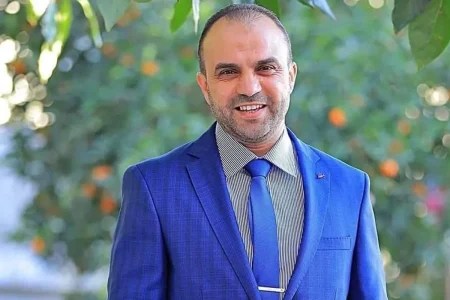
Palestinian prisoner, Mohammad Walid Hussein Ali, has died while in Israeli custody, announced the Palestinian Prisoners’ Commission and the Prisoners Society.
In a joint statement, the two organisations identified 45-year-old Ali as a resident of the Nur Shams refugee camp in the northern West Bank.
He had previously spent approximately 20 years in Israeli prisons and detention centres before being re-arrested last week and taken to the Jalamah interrogation centre in northern Israel.
Yesterday he was transferred to Rambam Hospital in Israel where he was pronounced dead.
According to Anadolu Agency, the details surrounding Ali’s death remain unclear; however, his passing after just a week of detention and interrogation raises concerns that torture may have played a role.
The Palestinian Prisoners’ Commission and the Prisoners Society emphasised that Ali was in good health before his detention, with no prior chronic medical conditions. He was married and expecting his second child at the time of his death.
Ali’s death brings the reported number of Palestinian deaths in Israeli prisons and detention facilities to 48 since the start of the ongoing Israeli genocide in Gaza last October.
It comes a month after two Palestinian prisoners, Sameeh Eleiwi from Nablus and Anwar Esleem from Gaza, also died in Israeli custody, just six days after being moved by Israeli occupation soldiers from the Ramleh Prison clinic to Assaf Harofeh Hospital.
The statement further noted that these figures exclude unconfirmed deaths, particularly of detainees from Gaza, which Israel has not disclosed.
The organisations warned of deteriorating conditions in Israeli detention centres following accounts of torture, overcrowding and lack of medical care, which have led to the deaths of thousands Palestinian detainees over the years.
Germany is preparing for ‘possible outbreak of world war,’ says influential Hungarian professor
Remix News | December 5, 2024
The German army is preparing companies operating in the country for a possible outbreak of world war, said Tamás Kovács, head of the Department of Law Enforcement Theory and History at the National University of Public Service (NKE).
As a part of this effort, the government has begun to assess German industry, which could be a cautious and necessary step, but the timing suggests that the German government is preparing for the war to escalate and become even more brutal.
“The fact that these surveys have begun can be interpreted as a sign of war preparations on the part of Germany,” Kovács told Hungarian news outlet Hirado.hu. “The German army is preparing companies operating in the country for a possible outbreak of world war.”
Hirado notes that German media has reported that the country has begun a census of bunkers and fortified buildings that could serve as shelters in the event of a war, as well as investigating how industry would hold up in wartime. There were at one time 2,000 bunkers and shelters in Germany, but now only 500 exist.
“The German government wants to be aware of what the industry and the economy are capable of: what they can produce, how quickly they can produce it, and of course how much energy they need. There may therefore be a number of practical considerations behind the fact that they have started to assess German industry,” said Kovács.
“These surveys could be cautious, necessary steps, as it is not a problem in itself if a country is aware of its own resources and their limitations, not least the number of potential shelters and their condition. The fact that all this is happening at exactly this time unfortunately predicts, at least in my reading, that the German and Swedish governments are really preparing for this war to escalate.”
The Hungarian expert believes that claims the war will wind down under Trump may not unfold as predicted and that the war will actually expand.
“I will be even rougher. It is questionable what will happen if the relationship between the EU and Russia deteriorates further and becomes so frosty that there will be no communication between the two parties,” said the head of the NKE department.
The professor also deals with the question of how Germany’s massively growing immigrant population would respond to war conditions. When asked what the government would do in a war situation with the recent influx of migrants who are not very motivated in terms of everyday work or national defense, Tamás Kovács said: “It is inconceivable what would motivate these people in a war situation, and especially how. I’m almost certain that their first thought wouldn’t be, ‘Let’s join the German army and defend the Germany that actually took us in.’”
Regarding the upcoming German elections and a possible turnaround, he said: It is questionable whether the new German government will continue Scholz’s policies or return to historical roots and strive for some kind of consolidated relationship with Russia. Although it is also questionable whether the Russians would like to have close relations with Germany after the events of recent years, at least in the short term, he stressed.
“It is a fact that the Hungarian economy is very dependent on the German one; if there are problems in the German economy, the Hungarian economy will also feel it. Obviously, German capital investments and economic influence are generally strong in the region, so the entire region will feel it if the German economy is not doing well. However, if peace were to suddenly break out, or at least a ceasefire were to be signed by the two sides, that would greatly improve economic prospects,” said Kovács regarding the expected domestic and regional effects of the war crisis.
Russia Not Threatening Anyone With Nuclear Arms – Russian Foreign Ministry

Sputnik – 05.12.2024
MOSCOW – Russia is not threatening anyone with nuclear weapons, but in connection with the Ukraine conflict it is warning of the risks of a clash between nuclear powers that could have grave consequences, Russian Foreign Ministry spokeswoman Maria Zakharova said on Thursday.
“Russia is not threatening anyone with nuclear weapons, and any claims to the contrary are nothing more than deliberate anti-Russian lies. We treat the policy in the area of nuclear deterrence with the utmost seriousness and responsibility,” Zakharova said.
Russia is forced to warn about the risks of a direct military clash between nuclear powers and, accordingly, about its potentially grave consequences, as well as to send “specific sobering signals” in support of such warnings, the spokeswoman added.
Russia’s doctrinal guidelines remain strictly defensive in nature and continue to outline quite strictly the extreme circumstances under which the country reserves the right to defend itself with nuclear weapons, Zakharova said.
“Russia’s official statements on the aforementioned issues do not go beyond the scope of these guidelines and are fully consistent with our country’s international obligations. This is not the language of threats, but the classic logic of containment,” the spokeswoman added.
Why Biden Allowed Ukraine to Fire US missiles into Russia
By Salman Rafi Sheikh – New Eastern Outlook – December 5, 2024
Washington’s (and London’s) decision to allow Ukraine to fire their missiles into Russia is a clear escalation, but the timing explains most of the puzzle underlying this decision.
It is not just Biden being reckless. It is not simply madness, either. It is politics with a touch of global geopolitics.
The Biden administration, having lost both presidential and congressional elections to the Republicans, appears to be following a scorched-earth policy. Before Trump is sworn in, and before he can move towards a negotiated resolution of the Russia-Ukraine (NATO) military conflict in 2025, the outgoing administration seems willing to make issues much more complicated – and deadly – than they currently are. At the heart of these calculated escalations is the American “deep state” unhappy with Trump’s success and the prospects of him pulling NATO back from Ukraine, thus undoing American hegemony. Trump claimed, during his campaign, that he will end wars. The American “deep state” does not want to let him do this – at least, not easily.
The Timing
For a long time, the Biden administration resisted allowing Ukraine to fire US missiles into Russian territory. This firing represents a “new phase” in the ongoing conflict for Moscow. There is potentially no other way for Moscow to see things. A pro-Democrats response is that the decision was motivated by the Biden administration’s desire to strengthen Ukraine’s position vis-à-vis Russia in the wake of upcoming possible negotiations. However, if this truly was the main intention, why did the Biden administration not reach the same conclusion during the peak time of the presidency, i.e., a year earlier, for instance? The Biden administration could have done the same escalation, hoping that this would push Russia to come to the negotiating table. Except, the Biden administration did not make such a decision for one chief reason.
They understood Moscow’s response would be deadlier, which would escalate the war more than Washington and NATO could handle. A deadly escalation, the Biden administration maintained, could cost them the elections. Now that they have already lost the elections – and there is nothing they can do about it now – they are escalating the war deliberately to scuttle the Trump administration. If the war escalates, it will make it harder for the Trump administration to negotiate with Russia. It will also make it harder for the Trump administration to negotiate with US allies in Europe as well. The more complicated the issue becomes, the more time it will take to find a resolution. Overall, this will give the Democrats a political opportunity to shift the blame to the Trump administration for its failure to quickly end conflicts. For the Democrats, this could be one of the key points they could raise in the midterm elections.
A key official of the Biden administration indirectly acknowledged the politics driving the decision. Matthew Miller, State Department spokesperson, defended the decision during a press briefing saying that the “American people elected Joe Biden to a four-year term, not to a term of three years and 10 months, and we will use every day of our term to pursue the foreign policy interests that, we believe, are in the interests of the American people.” One caveat is that the only interest that matters here is that of the Democrats.
The Reactions
The Trump administration understands this politics. In a post on X, Donald Trump Jr said the change was aimed at getting “World War 3 going before my father has a chance to create peace and save lives”. Trump’s pick for national security adviser, US Representative Mike Waltz, called it “another step up the escalation ladder … and nobody knows where this is going,” he said on Fox News. Former Trump cabinet member Richard Grenell also accused Biden of moving to “escalate the war in Ukraine during the transition period”. “This is as if he is launching a whole new war. Everything has changed now. All previous calculations are null and void,” he added.
This reaction makes sense because Ukraine has received only a few dozen of the ATACMS systems. If the Biden administration really wanted to strengthen Ukraine’s position, a first step would have been to ensure sufficient supplies of this system. If Ukraine is likely to fire up its entire stockpile too quickly to make any meaningful impact, the only sense this escalation makes is that it makes a negotiated end of the conflict much more complicated. Anymore escalation before Trump assumes control in January – and this escalation is very much possible – means the conflict will continue to rage in the months to come.
The End Game
Most people understand that the Trump administration would bring the conflict to an end. For one thing, Trump does not intend to use military conflicts to advance US foreign policy interests. Secondly, Trump has the “America First” policy at the heart of his politics. People who understand how misfit military conflicts are within the Trump camp include not only the Democrats but also Ukraine’s own president, who went on record two weeks ago to say that the conflict will end “sooner” now that Trump has won.
For the anti-Russia camp within the American “deep state”, this expectation is deeply unsettling. It would mean NATO will not be able to expand into Europe any further. NATO’s failure will create fresh openings for European states to chart their own foreign policy courses, including relations with Russia. In fact, this is already happening. When the German chancellor recently spoke with the Russian President, he did not do so to merely talk about the possibility of ending the conflict, but also to get a sense of their post-conflict bilateral relations. More importantly, Germany initiated the call. There is, thus, a possibility of Germany resuming gas supplies from Russia. Indeed, both leaders discussed the possibility of “cooperation” on energy trade.
In Washington, the fear is that this one call is going to encourage other European leaders to pick up their phones and talk to Vladimir Putin. It means Washington will lose control of the situation. These people in Washington do not want to let that happen; hence, a key geopolitical reason to escalate the conflict is to scuttle the end gam, which is very much on the horizon already.
Salman Rafi Sheikh is a research analyst of International Relations and Pakistan’s foreign and domestic affairs.
NATO discussing ceasefire move for Ukraine – Bloomberg
RT | December 5, 2024
Ukraine’s Western backers are shifting from attempting to push for a military victory against Russia towards trying to help Kiev achieve the best position to negotiate a ceasefire, Bloomberg reported on Wednesday, citing people familiar with the matter.
The report comes as Russian forces advance in Donbass at a rate unseen since 2022, while recapturing ground from Ukrainian forces entrenched in Russia’s Kursk Region.
Russian President Vladimir Putin “has shown no willingness to discuss a ceasefire,” and with US President-elect Donald Trump less than two months away from taking office, Kiev’s NATO allies are attempting to steel themselves “as morale starts to fade,” Bloomberg wrote.
While Trump’s plan for Ukraine is unclear, he was elected on promises of curtailing American spending on the conflict and focusing on internal US issues.
Gathering in Brussels this week, foreign ministers from NATO nations discussed how to supply Kiev with more weapons, anonymous sources told Bloomberg, noting that any plans are still private and incomplete. They have also reportedly begun to look at different ways to end the conflict, including discussing which security guarantees could protect Ukraine without antagonizing Putin.
“Those discussions come amid recognition that the situation in Ukraine is unsustainable and negotiations should begin soon,” Bloomberg reported, citing a senior Western diplomat.
One idea floated was to create a demilitarized zone, with European troops responsible for its security, the outlet cited a senior NATO diplomat as saying.
Additionally, even if the US maintains course on future military aid, contrary to Trump’s reelection campaign rhetoric, mounting losses will force Ukraine into talks by next year, Samuel Charap, a senior political scientist at Rand, told Bloomberg.
“Ukraine lacks the manpower to stop the Russian offensive, and the West has little left to give in terms of existing stocks of weapons,” he said.
Ukrainian leader Vladimir Zelensky previously insisted that Kiev is not interested in joining NATO if it excludes Russian territories that were part of Ukraine before 2014.
However, Zelensky told Kyodo News on Monday that Kiev could agree to a ceasefire with Moscow without these territories if NATO membership is guaranteed.
Ukraine’s aim of joining the US-led military bloc has been underscored by Putin as one of the core reasons for the conflict. Russia’s terms are that Ukraine adopt a neutral, non-bloc status, remain free of nuclear weapons, demilitarize and undergo denazification, the Russian leader has said.
Fatigued Ukrainian troops ordered to stay in Russia’s Kursk region until Trump’s inauguration
By Ahmed Adel | December 5, 2024
With no glimpse of victory in sight, Ukraine has ordered its forces to remain in Russia’s Kursk region until the inauguration of US President-elect Donald Trump, the BBC reported on December 2, citing Ukrainian military personnel on the ground. The same report also quoted Ukrainian soldiers as having never seen North Koreans on the battlefield, contradicting Pentagon and Western media reports that 10,000 troops from the Asian country were being deployed to Kursk.
Ukrainian soldiers stationed in the Kursk region speak of terrible weather conditions and chronic lack of sleep caused by Russia’s constant bombardment with 3,000 kg glide bombs. For Ukrainian troops, staying in the region is becoming more difficult every day.
According to the BBC, Ukraine has already lost around 40% of the territories in the region it occupied in early August 2024, with Russian forces gradually retaking occupied territory.
“This trend will continue. It’s only a matter of time,” said one of the Ukrainian soldiers interviewed, who used the call name Pavlo.
He also spoke of the low rotation, with middle-aged soldiers who arrive in the region being redeployed from other parts of the front line without time to rest.
According to the article, the Ukrainian command hopes to keep troops in the Russian region until January 20, 2025, the date of Trump’s inauguration and the new administration’s arrival with its different ideas and plans to the outgoing Democrats.
“The main task facing us is to hold the maximum territory until Trump’s inauguration and the start of negotiations. In order to exchange it for something later. No-one knows what,” Pavlo said.
According to the BBC, even the use of long-range missiles recently authorized by US President Joe Biden is not helping Ukrainian troops turn the tide on the battlefield. In fact, the soldiers do not really care about the use of Western weapons against Russian territory far from the conflict zone.
“No-one sits in a cold trench and prays for missiles. We live and fight here and now. And missiles fly somewhere else,” Pavlo said.
Another soldier, using the call name Myroslav, said, “We don’t talk about missiles. In the bunkers we talk about family and rotation. About simple things.”
The Ukrainian soldiers stuck in Kursk say staying in the Russian region is wrong when territories in Donbass are being lost daily.
“Our place should have been there [in eastern Ukraine], not here in someone else’s land,” Pavlo said. “We don’t need these Kursk forests, in which we left so many comrades.”
Myroslav, a marine officer who served in Krynky and is now in Kursk, described the operation as having a “Media effect, but no military results.”
Ukrainian soldiers speaking to the BBC also revealed that they had never heard or seen any North Korean military personnel deployed in the Kursk region, which was widely reported in Western media, citing the Pentagon.
“I haven’t seen or heard anything about Koreans, alive or dead,” Vadym, another Ukrainian soldier stuck in Kursk, responded when asked about the reports of 10,000 North Korean troops being deployed to the region.
Ukrainian soldiers have been ordered to capture at least one North Korean prisoner, preferably with documents, on the promise of being provided drones or granted extra leave.
“It’s very difficult to find a Korean in the dark Kursk forest,” Pavlo noted sarcastically. “Especially if he’s not here.”
A day after the BBC report, CNN cited Oleksandr, a unit commander with the 225th assault battalion, as saying that he had not seen any sign of North Korean troops.
“When we catch them or see a body,” he said, “then I’ll know for sure that they’re here.”
Oleksandr said his unit had not slept for three days or left the frontline for eight months despite previously being involved in ferocious combat in the Ukrainian cities of Bakhmut, Avdiivka and Chasiv Yar.
Yet, he, just like the other soldiers cited by the BBC, is expected to remain in Kursk for many more months in the false belief that holding onto Russian territory will lead to more favourable terms when peace negotiations inevitably begin at some point next year.
Ukrainian officials have admitted that Russian forces have liberated 40% of the territory they took in August. With snow, rain, and freezing temperatures expected in Kursk in the coming weeks, the situation is becoming untenable for the besieged Ukrainian soldiers, which will lead to Russia liberating the remaining occupied territory at a rapid pace. Unfortunately for the Ukrainian soldiers in Kursk, remaining in the region until Trump’s inauguration will just lead to the same outcome – defeat.
Ahmed Adel is a Cairo-based geopolitics and political economy researcher.
Featured Video
America Racing to Strategic Defeat in Iran
or go to
Aletho News Archives – Video-Images
From the Archives
Should Europeans ‘Thank’ the Americans for Destroying Nord Stream?
By Robert Bridge | Strategic Culture Foundation | September 29, 2022
With an investigation continuing into the destruction of the Nord Stream gas pipeline that provided energy supplies to Europe from Russia, there appears to be just one prime suspect, and that should surprise nobody.
Following the sabotage of the Nord Stream 1 and 2 gas pipelines, former Polish Foreign Minister Radoslaw Sikorski already seemed to know the identity of the perpetrator when he tweeted out: “Thank you, USA.”
At first glance, it seemed that Sikorski was speaking sarcastically, berating Washington for carrying out an attack that will have severe repercussions for the people of Europe. After all, how could anyone see any good coming from the termination of Europe’s primary source of gas reserves with winter just around the corner? It was Sikorski’s homeland of Poland, after all, that urged its citizens to collect firewood in the face of dwindling gas reserves.
In fact, the Polish diplomat was speaking one-hundred percent literally… continue
Blog Roll
 Aletho News
- Tehran approves new Hormuz plan with major restrictions
- No Threat Can Force Iran’s Surrender /Trita Parsi & Lt Cl Daniel Davis
- UK’s New Pandemic Plan Would Turn Big Tech Into a Mass Location Tracking Network
- Growing insecurity, soaring prices fuel protests in north as regime bans evacuation: Sources
- Iran denies responsibility for ‘depraved’ attack on Kuwait desalination plant
- Bring The Troops Back. End This War Now!
- Can we please stop calling Israel the ‘only democracy in the Middle East’ now?
- US should start removing its troops from Germany, proposes AfD co-leader Chrupalla
- Iran Red Crescent: 600 educational centers attacked in US-Israeli ‘war crimes’
- Russian Oil Tanker Arrives in Cuba Amid U.S. Blockade
- If Americans Knew
- As Iran targets US military bases, will they be relocated to Israel? Not a ceasefire Day 171
- Will Trump Go Kamikaze?
- Is the University of Florida Shutting Down College Republicans over Israel Criticism?
- Jewish extremist arrested over alleged plot to firebomb Palestinian activist Nerdeen Kiswani’s home
- More than half of Palestinian child detainees have no charges
- The More Murderous Israel Gets, The More We Hear About “Antisemitism”
- Land Day and the Palestinian struggle after 30 months of genocide
- The Iran War Is About Palestine
- Israeli soldiers echo settler ideology, talk of revenge after targeting Palestinians and detaining CNN crew in the West Bank
- Israeli Policies Threaten Future of Christian Schools in Jerusalem
- No Tricks Zone
- New Study Finds Warming Saves Lives…Cold Temperatures 12 Times More Deadly Than Excess Heat
- German Science Blog Accuses PIK Climate Institute Of Hallucinating Climate Tipping Points
- Devastating Assessment Of Comirnaty Vaccine By Former Senior Pfizer Europe Toxicologist
- New Study: CO2 Is ‘Effectively Negligible’ As An Explanatory Climate Change Factor Since 2000
- Former Pfizer Toxicologist Dr. Helmut Sterz Tells Bundestag Hearing Pfizer Vaccine Should Have Never Been Approved
- Energy Expert: Germany’s Nuclear Phaseout Was A “500 Billion Euro Mistake”
- New Research: South Australia’s Mid-Holocene Sea Surface Temperatures Were 4°C Warmer Than Today
- Storing Green Energy To Last Germany 10 Days Would Require A 60-Million Tonne Battery
- New Studies: UK Sea Levels Were 4 Meters Higher Than Today During The Mid-Holocene
- Destructive Green New Deal: German Energy And Metal Group Warns Of Drastic Crisis
 Aletho News