The silencing of scientific curiosity
Medical journals have became enforcers of orthodoxy—retracting genuine hypotheses while protecting proven fraud
By Maryanne Demasi, PhD | April 14, 2025
As a scientific writer and researcher, I’ve witnessed the decline of medical journals firsthand. Once forums for open debate and intellectual rigour, they’ve morphed into gatekeepers, more concerned with preserving a narrow orthodoxy than pursuing truth.
My previous work has exposed how journals suppress uncomfortable questions, avoid studies that challenge dominant narratives, and operate under a peer-review system distorted by bias and external influence.
But never have I seen a more absurd example of this decay than the retraction of a hypothesis paper—yes, a hypothesis—authored by Dr. Sabine Hazan in Frontiers in Microbiology.
Her 2022 article hypothesised that ivermectin might mitigate Covid-19 severity by promoting the growth of Bifidobacterium, reducing inflammation via the gut-lung axis.
She cited preliminary observations in 24 hypoxic patients who recovered without hospitalisation after combination therapy including ivermectin.

Dr Sabine Hazan, ProgenaBiome, Ventura, CA
She made no claims of definitive proof. Instead, she proposed a mechanism worth investigating. That’s the point of a scientific hypothesis.
But in May 2023—more than a year after the article was peer-reviewed and published—the journal retracted the paper following a series of complaints on PubPeer, offering only a vague explanation about “scientific soundness.”
Seeking clarity, I contacted both the journal’s editorial office and the editor who handled the paper, Professor Mohammad Alikhani at Hamadan University.
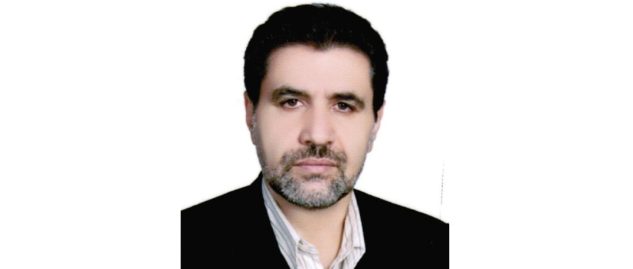
Prof Mohammad Alikhani, Department of Microbiology, Hamadan University
Specifically, I sought an explanation for retracting a ‘hypothesis’, but I did not receive a response.
This silence is damning.
Retraction is a serious step, historically reserved for cases of fraud or clear ethical misconduct. But here, no such claim was made—nor could one be substantiated.
The journal simply erased the paper, offering no transparent justification, no engagement with the scientific process, and no accountability.
In fact, it violated the very guidelines that journals are supposed to follow.
The Committee on Publication Ethics (COPE) advises that publications should only be retracted if they contain seriously flawed or fabricated data, or plagiarism that cannot be addressed through a correction.
Hazan’s paper was transparent about its speculative nature. In a January 2023 tweet, Hazan challenged her critics.
“It’s a hypothesis. PROVE ME WRONG,” she wrote.
After all, that’s the essence of science. But the journal’s decision to retract sends a message that even theoretical propositions are now intolerable.
Having tasted blood, Hazan’s critics kept digging. In January 2025, Future Microbiology retracted another of her studies—this one examining ivermectin-based multidrug therapy.
Hazan, her co-author Australian immunologist Dr. Robert L. Clancy, and others strongly disputed the decision after the journal failed to conduct a meaningful investigation into the alleged data integrity issues.
The irony is palpable.
While pundits argued over ivermectin’s efficacy during the pandemic, Hazan was one of the few actually doing the hard work to test its effects—collecting data, proposing mechanisms, engaging with the science. And yet she’s the one being silenced!
Which begs the question – why?
Is there professional jealousy in the microbiome space? Are pharmaceutical companies, threatened by low-cost alternatives like ivermectin, pressuring journals to kill competing narratives?
If so, the Securities and Exchange Commission (SEC) should investigate. Suppressing research that could affect investor decisions—by inflating the perceived value of antivirals or vaccines—could amount to securities fraud.
While there’s no definitive evidence, the pattern is hard to ignore: two retractions, no clear misconduct, and a growing campaign to discredit a scientist whose work challenges a profitable status quo.
Whether coordinated or not, the outcome is the same – the erasure of inconvenient data.
The spinelessness of journals in these episodes is unmistakable. Why do they capitulate so readily?
Just follow the money.
Many journals are financially entangled with the pharmaceutical industry—relying on drug ads, sponsorships, and profitable reprint sales. That financial tether distorts editorial independence.
Editors, often underpaid and overstretched, are understandably risk-averse. They fear litigation. They fear social media outrage. They fear becoming the next target.
Pharmaceutical companies, meanwhile, don’t hesitate to use legal threats to silence dissent because their pockets are deep—as in the case of Covaxin.
In July 2024, Bharat Biotech International Limited sued 11 authors—six of them students—and the editor of Drug Safety, Nitin Joshi, over a peer-reviewed article questioning the safety of their Covaxin vaccine.
The journal, under legal duress, retracted the paper. The authors were left to fend for themselves.
Journals are supposed to stand on principle. But, increasingly, they serve as enforcers of orthodoxy—vulnerable to financial pressure and online activists.
Let’s be honest, the trolls are part of the strategy. Anonymous complaints, often from individuals with no expertise, are weaponised to trigger retractions and smear reputations.
That’s not peer review. That’s mob rule.
The SEC must take a closer look at this ecosystem. If research is being suppressed to protect corporate revenue or manipulate investor confidence, that’s not just unethical—it’s illegal.
During his presidential campaign, Robert F. Kennedy Jr. addressed this very issue, declaring that journals colluding with pharmaceutical companies might be subject to charges under the Racketeer Influenced and Corrupt Organizations (RICO) Act.
“We’re gonna… file some racketeering lawsuits if you don’t start telling the truth in your journals,” he warned in 2023. It was provocative, yes—but it struck a chord with those of us watching the machinery of science betray its mission.
Retractions have become so casually executed, they’ve lost all meaning. What was once a mark of serious fraud is now a tool of reputational management.
Today, many papers are retracted not because they’re wrong, but because they’re inconvenient.
How else can one explain the demonstrably fraudulent studies funded by industry that remain published?
Whistleblower Dr. Peter Wilmshurst has spent years trying to get the MIST trial retracted—published in Circulation. It’s riddled with false claims, undeclared conflicts, and unreported adverse events, yet the journal continues to protect it.
This exposes the rot. These decisions have nothing to do with science.
They are political, financial, and reputational tools—used selectively to punish dissent.
There’s a growing list of researchers penalised—not for bad science, but for exploring uncomfortable truths.
Journals must reclaim their role as platforms for robust scientific debate. COPE must enforce its standards, not just cite them. Editors must be held accountable for vague or retaliatory retractions. And if corporate suppression of research is distorting public markets, then the SEC must act.
Because what I’m witnessing isn’t scientific curiosity—it’s narrative control. And the death of curiosity is the death of science itself.
Standing at the Edge of the Iran War Cliff
By Ron Paul | April 14, 2025
Millions of people around the world were at the edge of their seats over the weekend, waiting to hear whether Trump special envoy Steve Witkoff’s indirect talks with the Iranian foreign minister would ratchet down tensions or would break down and bring on a major Middle East war.
If it seems bizarre that the outcome of a meeting between a US president’s designated negotiator and a foreign government minister could determine whether we plunge into possibly our biggest war since World War II, that’s because it is bizarre. In fact, this is an excellent example of why our Founders were so determined to keep warmaking authority out of the Executive Branch of government. No one person – much less his aide – should have the power to take this country to war.
That is why the Constitution places the authority to go to war firmly and exclusively in the hands of the representatives of the people: the US Congress. After all, it is the US people who will be expected to fight the wars and to pay for the wars and to bear the burden of the outcome of the wars. When that incredible power is placed in the hands of one individual – even if that individual is elected – the temptation to use it is far too great. Our Founders recognized this weakness in the system they were rebelling against – the British monarchy – so they wisely corrected it when they drafted our Constitution.
Unless the US is under direct attack or is facing imminent direct attack, the Constitution requires Congress to deliberate, discuss, and decide whether a conflict or potential conflict is worth bringing the weight of the US military to bear. They wanted it harder, not easier, to take us to war.
When wars can be started by presidents with no authority granted by Congress, the results can be the kinds of endless military engagements with ever-shifting, unachievable objectives such as we’ve seen in Afghanistan and Iraq.
We are currently seeing another such endless conflict brewing with President Trump’s decision to start bombing Yemen last month. The stated objectives– to end Houthi interference with Israeli Red Sea shipping – are not being achieved so, as usually happens, the bombing expands and creates more death and destruction for the civilian population. In the last week or so, US bombs have struck the water supply facilities for 50,000 civilians and have apparently blown up a civilian tribal gathering.
Starting a war with Iran was the furthest thing from the minds of American voters last November, and certainly those who voted for Donald Trump were at least partly motivated by his promise to end current wars and start no new wars. However, there is a strange logic that to fulfill the promise of no new wars, the US must saber rattle around the world to intimidate others from crossing the White House. This is what the recycled phrase “peace through strength” seems to have come to mean. But the real strength that it takes to make and keep peace is the strength to just walk away. It is the strength to stop meddling in conflicts that have nothing to do with the United States.
That is where Congress comes in. Except they are not coming in. They are nowhere to be found. And that is not a good thing.
Al Mayadeen obtains Israeli document regarding Gaza ceasefire
Al Mayadeen | April 14, 2025
Al Mayadeen has obtained a copy of the Israeli proposal submitted to mediators and subsequently conveyed to Hamas regarding negotiations for a permanent ceasefire in Gaza.
In March, “Israel” reneged on a ceasefire that brought two months of relative calm and resumed its war on the Gaza Strip.
The document outlines that Hamas would release captive Edan Alexander on the first day as a special gesture to the United States, signaling goodwill at the onset of the discussions.
The Israeli proposal includes a clear demand for the complete disarmament of the Gaza Strip, setting forth a framework for a 45-day temporary ceasefire. This ceasefire would encompass the cessation of military operations, the delivery of humanitarian aid, and the exchange of prisoners.
On the second day of the truce, Hamas would release five living captives in exchange for 66 Palestinian prisoners serving life sentences and 611 detainees from Gaza.
The proposal stipulates that any release of captives must occur without public displays or ceremonial proceedings.
Moreover, the proposal calls for the establishment of a mutually agreed-upon mechanism to ensure that humanitarian aid reaches civilians exclusively.
Following the release of the five captives, the document allows for the entry of humanitarian aid and necessary shelter equipment to assist displaced persons in Gaza.
Additionally, the Israeli military would begin its “redeployment” in the Rafah area and northern Gaza Strip following the release of the captives.
On the third day, negotiations are set to begin on “the day after,” which would center on disarmament efforts and the formal declaration of a permanent ceasefire.
By the seventh day, Hamas would release four captives in exchange for 54 Palestinian prisoners serving life sentences, as well as 500 detainees held since October 7, 2023.
The proposal specifies that after the seventh day, the Israeli military would begin “redeploying” east of Salah al-Din Street.
On the 10th day, Hamas would be required to provide comprehensive information about all remaining living captives in exchange for corresponding information on Palestinian detainees
On the 20th day, Hamas would release 16 dead captives in exchange for 160 Palestinians who have been killed, with both groups to be released simultaneously.
The Israeli proposal further outlines that negotiations for a permanent ceasefire must be finalized within 45 days. It also specifies that once a ceasefire agreement is reached, the remaining live and dead captives will be released.
If a temporary ceasefire is successfully agreed upon, the proposal indicates that it could be extended under mutually agreed-upon conditions and for a duration to be determined by both parties.
Finally, the document underscores that the guarantors of the deal—Egypt, Qatar, and the United States—would continue to exert efforts to ensure the continuation of negotiations and the eventual establishment of a permanent ceasefire agreement.
Resistance leader details Gaza proposal, Hamas’ stance
Earlier on Monday, a Palestinian Resistance leader speaking to Al Mayadeen outlined the key points of the latest Israeli proposal, which includes the redeployment of Israeli occupation forces to positions held before March 2, a 45-day term for halting military operations, the opening of crossings, and the entry of humanitarian aid—but all under Israeli-imposed conditions.
According to the source, the proposal fails to meet Hamas’ core demands of a permanent ceasefire and a complete Israeli withdrawal from Gaza, he added.
The leader further warned that the Israeli plan appears designed to gradually strip Hamas of its leverage by extracting captives without securing meaningful concessions.
He further told Al Mayadeen that the Israeli proposal seeks to disarm Hamas and ensure it does not return to power in Gaza.
French police detain female Iranian academic to silence anti-Israeli genocide voices

Mahdieh Esfandiari has lived in Lyon for eight years. Police have arrested her for pro-Palestine advocacy.
Press TV – April 14, 2025
A female Iranian academic who denounced the Israeli genocidal campaign in the besieged Gaza Strip and expressed her solidarity with Palestinians has been arrested by the police in France.
The Iranian citizen was reportedly detained after publishing messages on a Telegram channel condemning the ongoing genocide in the blockaded Palestinian territory.
The French weekly Le Point identified the woman as Mahdieh Esfandiari, a 35-year-old French language graduate, who has lived in Lyon for eight years.
Her family, worried after losing contact, raised the alarm last month with Iranian authorities, who then contacted their French counterparts, Le Point reported, adding they have yet to hear back.
Iranian Foreign Ministry spokesman Esmaeil Baghaei said on Monday that France was unwilling to give an explanation on her situation.
“We hope that the French government will provide access to this case as soon as possible and clarify the reasons for the arrest of this Iranian citizen,” Baghaei was quoted as saying.
“Consular access has not been authorized” by French authorities, he told a news conference, adding that Iran was following the matter closely.
Her arrest came amid a crackdown in the US and other Western countries targeting scholars, students, and activists who oppose genocide and advocate for peace, both on campuses and in public spaces.
Her Iranian identity has further compounded this repression, as the Western countries escalate warmongering policies and economic sanctions against Iran while silencing dissent.
Pundits say these attacks aim to terrorize and silence the countless advocates who have courageously amplified Palestinian resistance and the call for freedom.
They say repression of freedom of speech will legitimize the Zionist child-killing forces and would undermine the principles of due process.
US strikes on Yemeni ceramics factory leave dozens of casualties
The Cradle | April 14, 2025
A US attack on a ceramics factory near Yemen’s capital, Sanaa, late on 13 April has killed and injured dozens of civilians, with the toll expected to rise in the coming hours.
“Six citizens were martyred and 20 others were injured, including critical injuries. Civil defense and ambulance teams are working hard to search for victims and extinguish the fires,” a spokesman for the Yemeni Health Ministry, Dr Anis al-Asbahi, told SABA news agency.
Video footage showed heavy destruction and teams attempting to extinguish large fires at the Al-Sawari factory in the Sanaa governorate’s Bani Matar district.
US warplanes also “launched two raids on the Al-Yatmah area in the Khabb wal Shaaf district, northeast of Al-Jawf governorate,” according to Al Mayadeen’s correspondent.
Washington’s latest deadly attack comes as the Yemeni Armed Forces (YAF) and Ansarallah movement continue their operations despite a US campaign of daily airstrikes which aim to stifle Sanaa’s military capabilities – but have instead only taken a heavy toll on civilians.
The YAF announced on Sunday evening that it downed a US MQ-9 Reaper drone – worth tens of millions of US dollars – in the airspace of Yemen’s Hajjah governorate. This was the fourth MQ-9 shot down within two weeks and the 19th since the start of the war in Gaza.
“The Armed Forces reiterate that their military capabilities have not been affected and that the ongoing US aggression against our country will only bring more disappointment and failure,” the YAF said in a statement.
The US has been bombing Yemen every day since 15 March, when US President Donald Trump renewed – with severe intensity – the campaign which was started by the former administration of US president Joe Biden.
Dozens of people have been killed in the attacks, including women and children.
US Defense Secretary Pete Hegseth vowed last week that the campaign against Yemen is “about to get worse.”
The violent attacks come in response to Yemen’s reimposition of a ban on Israeli shipping in the Red Sea and elsewhere, as well as its renewal of drone and missile attacks on Israel after Tel Aviv restarted the war on Gaza last month.
The YAF has been responding to Washington’s attacks with operations targeting US warships in the Red Sea – including the USS Harry S. Truman aircraft carrier.
According to sources cited in US media recently, Washington has burned through massive amounts of munitions and has spent close to $1 billion, but has failed to significantly impact the YAF and Ansarallah – which are merged.
FSB accuses EU aspirant of ‘enabling Kiev’s terrorism’
RT | April 14, 2025
Russia’s Federal Security Service (FSB) says it has foiled several attempts to smuggle explosives and carry out terrorist acts in Russia, with all of the suspects allegedly recruited, trained, and coordinated by Ukraine’s military intelligence while Moldovan security services looked the other way.
In a series of press releases on Monday, the FSB said it had detained two Moldovan citizens and two Russians, accusing Chisinau of allowing Kiev to use its territory to orchestrate attacks against Russia.
“This is not the first time that the territory of Moldova, with the connivance of local authorities, is used by the Ukrainian special services to recruit and train agents, supply them with weapons of destruction, and then transfer them to Russian territory in order to commit acts of sabotage and terrorism,” the FSB said in the statement.
One of the suspects, 23-year-old Moldovan citizen Marius Pruneanu, was reportedly caught red-handed while trying to smuggle explosives hidden inside a car battery. He told investigators that he was recruited by the Main Directorate of Intelligence of the Ukrainian Defense Ministry (HUR) in 2023, after spending a year fighting against Russia as part of Kiev’s “foreign legion.”
“I was told to buy a car, then they gave me explosive devices in Moldova. I came to Russia and started my training in accordance with my cover story. Then they told me to bury one of the devices in Volgograd and also maybe in Saratov,” Pruneanu said. “Plus, they said they would give me a gun – I don’t know where or when – to kill someone, I don’t know who.”
Another Moldovan citizen, 32-year-old Evgeny Kurdoglu, was allegedly recruited by Ukrainian intelligence to scout Russian air defense positions and energy infrastructure in Crimea, and to report the results of missile strikes back to Kiev.
“The first task was to film a Ukrainian strike on a train ferry. After that, he called me to transfer coordinates for a serious task,” the suspect told investigators.
“The handler told me… I would have to bring the bomb to a pumping station and put it under a bridge,” he said. He later led investigators to a cache containing 400 grams of ‘Semtex 10’ plastic explosive, an electric detonator, and a timer intended to blow up a water pumping station in Kerch.
Two other suspects detained by the FSB were Russian citizens who had fled the country after the escalation of the Ukraine conflict in 2022. One of them, identified as Okrushko S., 43, was allegedly promised cash and Ukrainian citizenship. The other, Izmaylova I., 35, was reportedly threatened that her relatives in Ukraine would be harmed if she refused to comply.
Both were recruited and trained by Ukrainian handlers in Moldova and even passed a lie detector test in Chisinau before being sent to Russia to commit acts of sabotage, according to the FSB.
“An oil plant in Samara was looking for someone to do wiring work, so I was sent there. I rented a car, and through some coordinates I picked up an explosive and smuggled it into the plant. Then I set the charge, but the bomb went off almost immediately,” Okrushko told investigators. He was arrested at the border with Kazakhstan while trying to escape to Türkiye, and confessed to planting two more explosives, which were neutralized before their timers went off.
Moldova has pursued an anti-Russian course since 2020, when pro-EU President Maia Sandu came to power. Her government has been actively pushing for EU and NATO membership for the country, and Moldova was granted candidate status by Brussels in 2022. Last year, Sandu secured another term in a highly-contested election as Moscow accused her government of silencing opposition voices through a media crackdown and suppressing the voting of the Moldovan diaspora in Russia.
Are Chinese Soldiers Fighting in Ukraine?
By Ted Snider | The Libertarian Institute | April 14, 2025
If Chinese soldiers are fighting in the Russian armed forces in Ukraine, that is not the big story. The big story is the effect the claim could have on the possibility of peace.
Ukraine has not yet even proven the months old claim of the presence of North Korean soldiers fighting for Russia on Russian soil. Now they are making the much more provocative claim that Chinese soldiers are fighting for Russia on Ukrainian soil.
Ukrainian President Volodymyr Zelensky announced on April 9 that the Ukrainian armed forces had captured two Chinese soldiers fighting in the Donetsk region of Ukraine. He then said that Ukrainian intelligence has uncovered 155 Chinese citizens who are “fighting against Ukrainians on the territory of Ukraine” and that they “believe that there are many more of them.”
Independent journalists and organizations have not had access to the two prisoners in order to verify the truth of the claim. Ukraine has provided a video and documents listing names and passport documents. Media outlets have seen them, but CNN and The Independent both say that they have not been independently verified.
There are tens and perhaps even hundreds of thousands of ethnic Chinese living in Russia. And even if the captured soldiers are from China, that does not mean they were sent by China. They could have enlisted on their own as mercenaries, a possibility that two former U.S. intelligence officers “with knowledge of the issue” now say U.S. intelligence believes to be the case. The Chinese Ministry of Foreign Affairs has called the claim that many Chinese citizens are fighting in the Russian army “totally unfounded,” and said that “the Chinese government always asks Chinese citizens to stay away from conflict zones, avoid getting involved in any form of armed conflict, and especially refrain from participating in any party’s military operations.”
Zelensky, though, has made the provocative claim that the Chinese government is allowing its citizens to fight in Ukraine. Asked whether China had a policy of sending soldiers to Ukraine, Zelensky answered, “I don’t have an answer to this question yet. The Security Service of Ukraine will work on it…We are not saying that someone gave any command, we do not have such information.” However, he added that “[o]fficial Beijing knows about this” and did not prevent it.
Zelensky then escalated the claim, saying, “The Chinese issue is serious” and calling on “the U.S. and the rest of the world for a response.”
It is that threat to the peace process and not the possible presence of Chinese soldiers that is serious and significant. Mercenaries from many countries have been welcomed by both Ukraine and Russia since the beginning of the war. Al Jazeera reports that, not only Chinese, but Nepalese and Indians have fought for Russia. They also report that Colombians, Sri Lankans, Indians and Americans have fought for Ukraine. At least nine Canadians have been killed in Ukraine, and more are known to have fought there. The Russian Defense Ministry claimed in March 2024 that 1,005 Canadian mercenaries have fought in Ukraine. They also claim that 2,960 have come from Poland, 1,113 from the United States, 356 from France and others from the United Kingdom and Romania. Ukraine says their international legion comprises around 20,000 fighters from fifty countries.
More seriously, it is not just mercenaries who have arrived in Ukraine. A leaked March 2023 Defense Department document reveals the presence of 97 NATO special forces in Ukraine. A recent New York Times article reports that more than three dozen military advisers were sent to Kiev and that CIA officers were in Kharkiv and “command posts closer to the fighting.” The British prime minister’s office has confirmed that the United Kingdom has boots on the ground in Ukraine. The presence of French forces has also been revealed, and Polish Foreign Minister Radoslaw Sikorski confirmed that “NATO soldiers are already present in Ukraine.”
Unless the Chinese government has a policy of sending troops to fight alongside Russia in Ukraine, which would be serious, since it could draw China into the war, it is not the alleged presence of Chinese soldiers that is dangerous. At a time when peace talks are at a fragile beginning, and U.S. President Donald Trump is insisting on both sides showing they are serious about peace, it is the provocative statements coming out of Kiev that are potentially serious.
“Russia’s involvement of China, along with other countries, whether directly or indirectly, in this war in Europe is a clear signal that Putin intends to do anything but end the war,” Zelensky said. “This definitely requires a response. A response from the United States, Europe, and all those around the world who want peace.” The suggestion that Putin is not serious about negotiating undermines U.S. led negotiations.
The statements are also ill timed and hazardous. The United States and China are engaged in a trade war. It is a volatile time to provide Washington with a cause for turning up its anger against China. Zelensky intends the presence of Chinese soldiers to evoke an American response. State Department spokesperson Tammy Bruce said the U.S. is “aware of those reports” and that “It’s disturbing with the Chinese soldiers having been captured,” though the White House has not confirmed the claim. National Security Spokesman Brian Hughes said that “if the Chinese government is allowing their citizens to fight on behalf of the Russia government, this would be a concerning escalation and the U.S. will consider options moving forward.”
Beyond challenging the peace process, the comments coming out of Kiev are provocative to China, questioning its credibility and its lack of involvement in the war. Equally importantly, it challenges any potential role of China both in the negotiations before the end of the war and in security arrangements after the end of the war: both potentially important roles for China.
Ukraine’s Minister of Foreign Affairs, Andrii Sybiha, said that “Chinese citizens fighting as part of Russia’s invasion army in Ukraine puts into question” not only “China’s declared stance for peace” but even that it “undermines Beijing’s credibility as a responsible permanent member of the UN Security Council.”
If the two captured soldiers turn out to be from China, and if they turn out to be mercenaries fighting without the approval of China, then their presence in Ukraine is not the big story. If the claims being made about them and about China resonate in the White House, then the effect of the claims could make difficult peace talks even more difficult. And that is what the potential big story would turn out to be.
Sumy strike targeted meeting of Ukrainian commanders – MOD
RT | April 14, 2025
The Defense Ministry in Moscow has confirmed that Russian forces were behind the missile strike on the Ukrainian city of Sumy on Sunday, saying that it targeted a gathering of the country’s commanding officers.
The attack has left more than 60 Ukrainian servicemen dead, the ministry said in a statement on Monday.
It was carried out with the use of two Iskander-M short-range ballistic missiles despite “active counteraction by the Ukrainian military’s electronic warfare means and foreign-made air defense systems,” the statement read.
The target of the attack was “a meeting of the command staff of the Seversk operational-tactical group” of the Ukrainian Armed Forces, which was taking place in Sumy that day, the ministry said.
“The Kiev regime continues to use the Ukrainian population as a human shield, placing military facilities and holding events with the participation of servicemen in the center of a densely populated city,” the statement read.
The local authorities in Sumy said on Sunday that the Russian strike left over 20 dead and more than 80 wounded, all whom were civilians.
Sumy is a regional capital and a frontline city of over 250,000 people, located just 15 miles (25 kilometers) from the border with Russia. It has become a focal point of the Ukrainian retreat following Kiev’s failed incursion into Russia’s Kursk region.
Following the attack, Artyom Semenikhin, a mayor of the Ukrainian city of Konotop and member of the right-wing Svoboda party, blamed the head of Sumy’s military administration for the loss of life, claiming that he had been the one to organize an award ceremony for the troops so close to the line.
“He was warned that this should not be done,” Semenikhin insisted, adding that he was confident that Artyukh will be prosecuted for his conduct.
Ukrainian lawmaker Mariana Bezuglaya, a former member of Vladimir Zelensky’s political party, suggested that “the Russians had information about the gathering” in Sumy. She urged the Ukrainian military “not [to] gather the troops for award ceremonies, especially in civilian cities.”
Ukrainian journalist and former legislator Igor Mosiychuk also called for the arrest of Artyukh and Zelensky party legislator Mikhail Ananachenko, who, he claimed, “beside the soldiers, gathered civilians, including children” for the ceremony.
Featured Video

No Threat Can Force Iran’s Surrender /Trita Parsi & Lt Cl Daniel Davis
or go to
Aletho News Archives – Video-Images
From the Archives
What is the Israeli Lobby in Australia Doing in Interfaith Dialogue?
By Ali Kazak | Dissident Voice | October 11, 2015
For years Israel and its lobby around the world have been trying to normalise their relations with Arabs and Muslims without solving the Palestine Question.
One of the methods they resorted to in the last few years is using human rights and community organizations such as interfaith dialogue and Multiculturalism to achieve this objective and to: isolate the Palestinians, marginalise the Palestine question, end Israel’s isolation, and prevent criticism of Israel, knowing that these organisations will be the first to stand against Israel’s violations, racial and religious discrimination.
The group responsible for this task in Australia is The Australia/Israel & Jewish Affairs Council (AIJAC); its Director of International & Community Affairs, Jeremy Jones is in charge of lobbying religious community organizations, specifically Muslims and Christians. Consequently he convened the Faith Communities for Reconciliation, founding participant in the Australian Partnership of Religious Organisations and the Australian National Dialogue of Christians, Muslims & Jews.
AIJAC is a private political propaganda group. It is recognised as the main Israeli lobby in Australia. It coordinates its activities and works intimately with the Israeli embassy in Canberra and different institutions in Israel. It is privately funded by some Jewish businessmen. It monitors closely Australian politicians, the media, ethnic and religious groups, (especially Arabs and Muslims), unions and academics on their stands towards Israel and the Palestine question. … continue
Blog Roll
 Aletho News
- ‘Economic terrorism’: Steel facilities hit again in US-Israeli strike
- ‘War Crime’: Iran condemns attacks on Arak, Ardakan nuclear sites
- Two-thirds of Americans want quick end to Iran war even if goals unmet
- Trump to Give “Important Update on Iran” Wednesday in Prime-Time Speech
- Theodore Postol: Iran’s Missiles & Drones Were Underestimated
- Iran To Target Military Industrial-Tech Complex That Facilitated Gaza Genocide
- Collapsing Empire: The Resistance Disarms ‘Israel’
- Suicide Should Not Be a Government Service
- Rethinking America’s greatest threat: Iran vs. Israel-Firsters
- Iran accuses adversaries of false flags to strain Turkey ties
- If Americans Knew
- Ann Coulter Rips Into Fox News for Iran War Coverage
- Joe Kent Urges Americans To Call White House and Congress To Object To Sending Troops Into Iran
- DNC Resolution to Reject AIPAC Funding Puts Democratic Leaders in the Hot Seat
- Swedish foundation to build 400 schools as over 650,000 Gaza children remain without education for 2 years
- Israeli army admits photshopping image of slain Lebanese journalist
- This is how Israel is systematically killing health workers under the cover of war in Lebanon
- Carrying life under fire: Israeli invasion of Lebanon leaves pregnant women facing deadly risks
- Champagne all around for the new death penalty (for Palestinians) law – Not a ceasefire Day 172
- Why are Palestinian books struggling to be seen on Amazon?
- The Line Between Affinity and Conspiracy
- No Tricks Zone
- New Study Finds Warming Saves Lives…Cold Temperatures 12 Times More Deadly Than Excess Heat
- German Science Blog Accuses PIK Climate Institute Of Hallucinating Climate Tipping Points
- Devastating Assessment Of Comirnaty Vaccine By Former Senior Pfizer Europe Toxicologist
- New Study: CO2 Is ‘Effectively Negligible’ As An Explanatory Climate Change Factor Since 2000
- Former Pfizer Toxicologist Dr. Helmut Sterz Tells Bundestag Hearing Pfizer Vaccine Should Have Never Been Approved
- Energy Expert: Germany’s Nuclear Phaseout Was A “500 Billion Euro Mistake”
- New Research: South Australia’s Mid-Holocene Sea Surface Temperatures Were 4°C Warmer Than Today
- Storing Green Energy To Last Germany 10 Days Would Require A 60-Million Tonne Battery
- New Studies: UK Sea Levels Were 4 Meters Higher Than Today During The Mid-Holocene
- Destructive Green New Deal: German Energy And Metal Group Warns Of Drastic Crisis
 Aletho News