From the War of the Cities to True Promise 3: Iran’s ballistic program and the path to networked deterrence
By Abbas Al-Zein | The Cradle | June 28, 2025
Under a regional sky long dominated by US and Israeli air and intelligence superiority, Iran made a fateful decision decades ago. It would not attempt to match its adversaries tank-for-tank or plane-for-plane, but would instead build an asymmetric deterrent from scratch.
Rather than chase the mirage of classical military parity, Tehran developed an indigenous ballistic missile arsenal that is now the largest and most formidable in West Asia. This was no short-term, tactical gambit. Iran’s missile doctrine was forged in an existential struggle, refined over war and siege, and ultimately transformed into a cornerstone of national defense policy.
The War of the Cities: Birth under siege (1980–1988)
The first phase of Iran’s missile journey began in the crucible of the devastating Iran–Iraq War, specifically during the infamous “War of the Cities.” As the Baathist government in Baghdad launched Soviet-supplied Scud-B missiles deep into Iranian urban centers, it did so under the protective umbrella of western intelligence and funding from Arab states of the Persian Gulf. The intent was clear: to break Iranian civilian morale through systematic terror from the sky.
Caught without a missile deterrent of its own, besieged diplomatically, and encircled by western-aligned forces, Iran turned to whatever resources it could muster. It secured limited quantities of Scud-B missiles from Libya, Syria, and North Korea. These early acquisitions, modest as they were, formed the embryonic core of a deterrent force placed under the direct command of the Islamic Revolutionary Guard Corps (IRGC).
But these were more than mere missiles. They were weapons of national dignity in a war for survival for the nascent Islamic Republic. Iran’s leadership came to view missile capability not simply as a tactical asset, but as a psychological and political necessity.
Military historian Pierre Razoux notes in The Iran-Iraq War (2014) that it was during this phase that Iran’s leadership came to the unshakable conclusion: without a retaliatory missile force, no psychological or strategic deterrence was possible.
The Iranian response was neither ad hoc nor passive. Alongside importing missiles, Iranian engineers began dismantling, studying, and maintaining the systems. They built smuggling networks, circumvented embargoes, and reverse-engineered technology.
North Korea emerged as a critical partner, acting as a conduit for Soviet missile know-how. A 2010 RAND Corporation report titled Iran’s Ballistic Missile Capabilities: A Net Assessment noted that Iran had become capable not only of replicating but also of redesigning and expanding missile technology independently. Between 2000 and 2010, Iran pivoted from mass production to innovation, prioritizing accuracy, range, and operational readiness.
The foundations of Iran’s ballistic doctrine were thus laid: sovereignty through technological independence, and defense through deterrence.
From imitation to innovation (1989–2009)
With the Imposed War over, Iran’s military establishment—spearheaded by the IRGC—began restructuring its defense priorities. The goal was no longer just to have missiles but to produce them independently and on a large scale.
At the heart of this transformation was the late martyred Brigadier General Hassan Tehrani Moghaddam, a strategic thinker and technical mastermind hailed as the ‘father of Iran’s missile program.’ He understood that deterrence was not about launching missiles, but about mastering their lifecycle: production, concealment, deployment, and precision.
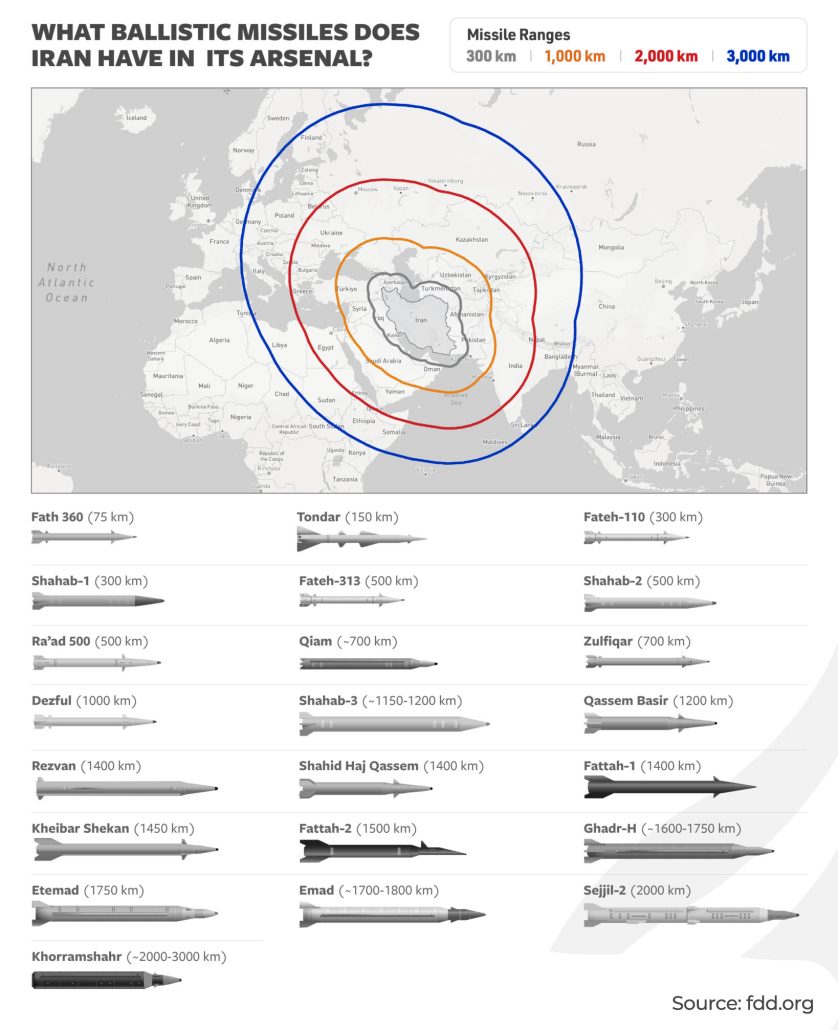
Under his leadership, Iran transitioned from a user to a manufacturer. The Shahab-1 and Shahab-2 were enhanced variants of the Scud-B and Scud-C. But the real breakthrough came in 2003 with the Shahab-3, boasting a range exceeding 1,300 kilometers—a capability that placed US bases in the Persian Gulf and occupied Palestine within striking distance. The Shahab lineage would later give way to the Ghadr class, with better range and multiple warhead capabilities.
The most significant leap, however, came with the adoption of solid-fuel propulsion. The Sejjil missile (2,000–2,500 km range), unveiled by the end of the 2000s, was Iran’s first medium-to-long-range system not reliant on Scud technology. It signaled a new era of technological self-sufficiency and rapid-launch capability.
During this phase, Iran undertook sweeping strategic steps: adopting solid-fuel for easier storage and rapid deployment, establishing underground and mobile launch facilities to avoid detection, building decentralized manufacturing to reduce vulnerability to strikes, and integrating missile research into academic institutions to develop a domestic cadre of experts.
A 2010 report by the International Institute for Strategic Studies (IISS) titled Iran’s Ballistic Missile Capabilities: A Net Assessment noted that by this stage, Iran had moved beyond simply replicating foreign missile systems and had begun designing its own through local R&D and systematic redesign, including the establishment of underground manufacturing. From 2000 to 2010, Iran’s program pivoted decisively from quantity to quality, enhancing range, precision, and operational readiness.
When Moghaddam was killed in a suspicious explosion at the “Defenders of the Sky” base in November 2011, Iran declared it a national loss. While Israel neither confirmed nor denied responsibility, the Yediot Aharonot newspaper reported that “some assessments” indicated that the blast was “the result of a military operation based on intelligence information.”
Nevertheless, his legacy endured. He had not merely built a weapons system; he had established a sustainable missile doctrine rooted in adaptability and local expertise. His death marked the end of one era, but it also catalyzed the birth of Iran’s next missile generation.
Smart missiles and precision strikes (2010–2020)
By the 2010s, Iran’s goal had shifted from mass deterrence to precision deterrence. Engineers focused on guidance systems using inertial navigation paired with domestic GPS and anti-jamming technologies. The result was a suite of short- and medium-range guided missiles with enhanced tactical utility.
This generation included the Zolfaghar (750 km), the highly precise and compact Fateh-313 designed for preemptive strikes, and the Qiam—Iran’s first finless missile, engineered for stealth and maneuverability.
Iran also entered the low-altitude cruise missile domain, developing systems such as the Soumar (with a range of over 2,000 km) and Hoveizeh (with a range of 1,350 km), both capable of evading conventional radar and penetrating advanced air defenses.
These weapons were not theoretical. In June 2017, Iran launched six medium-range missiles from its territory targeting ISIS command centers in Deir Ezzor, Syria—its first operational cross-border use since the 1980s.
In January 2020, in direct retaliation for the US assassination of IRGC Quds Force General Qassem Soleimani, Iran struck the Ain al-Asad base in Iraq with Qiam and Fateh missiles. Satellite imagery showed sub-five-meter accuracy, hitting aircraft hangars and troop shelters. The New York Times described it as one of the most accurate missile strikes on a US facility in modern history.
This decade marked Iran’s shift from “deterrent” missiles to “executive” missiles—systems where political power was expressed through precision. It was no longer about maximum range, but maximum effect. The missile became a scalpel, not a hammer, paving the way for Iran’s most advanced deterrent doctrine yet.
The rise of networked deterrence (2021–2023)
By the 2020s, Iranian missiles were no longer stand-alone assets. They had become the final phase of a broader, integrated offensive system. Missiles now worked in tandem with kamikaze drones, electronic warfare units, cyber surveillance, and decentralized command structures. This was networked deterrence: a synchronized, multi-domain approach designed to penetrate and paralyze advanced air defense systems.
Under this doctrine, Iran developed new missiles tailored for layered operations. The Kheibar Shekan hypersonic missile (1,450 km, 500 kg warhead), most recently deployed in a multi-warhead configuration during Operation True Promise III against the occupation state, exemplifies this evolution.
Other critical systems include the Khorramshahr-4 (over 2,000 km), Raad-500 (solid-fuel, rapid launch), Zolfaghar Basir (optically guided, 1,000+ km), and Haj Qassem (1,400 km, 500 kg warhead)—all integral to Iran’s expanding offensive architecture.
By 2023, Iran fielded around 30 missile systems with ranges spanning 200 to 2,500 km. These systems, guided by jam-resistant platforms and launched from mobile or underground sites, were designed to render preemptive strikes both difficult and strategically ineffective.
From blueprint to battlefield: True Promise 3 (2024–2025)
In June, Iran operationalized its full deterrent in True Promise III, a massive retaliatory strike against the occupation state and its US backers. Triggered by Israeli aggression and building on limited predecessors, the operation was a turning point. It marked the battlefield culmination of four decades of Iranian missile doctrine.
What distinguished True Promise III was not just the firepower but the integration. Iran coordinated ballistic strikes, drone swarms, and electronic attacks into a single operational framework. For the first time, the world witnessed the seamless fusion of Iran’s missile and drone capabilities in a real war scenario.
The outcome upended assumptions in Washington and Tel Aviv. The missiles that struck deep into Israeli territory were not just instruments of reprisal. They were shields for the program itself—offensive deterrents capable of defending Iran’s retaliatory power by disabling enemy assets before they could act. The strike was not just a response; it was a preemption of the enemy’s preemption.
None of this can be divorced from Iran’s nuclear posture. The ballistic and nuclear programs may appear distinct, but they operate on the same doctrinal axis. The nuclear program symbolizes sovereignty; the missile program enforces it. Together, they dismantled the western fantasy that Israel could neutralize Iran’s deterrent capacities in a single blow.
That era is over. Iran’s missile shield is no longer just a threat. It is a reality, already in motion.
Strategic Misfire: Iran Torches Israel’s Attack
By Svetlana Ekimenko – Sputnik – 29.06.2025
Israel’s attack on Iran failed to achieve any of its objectives, said Iranian government spokeswoman Fatemeh Mohajerani in remarks to Al Mayadeen.
Israel’s operation Rising Lion to target Iran’s military and nuclear facilities amounted to a “strategic miscalculation” that only reinforced Iran’s resolve, stated Fatemeh Mohajerani.
Military Response
Claims that Israel weakened Iran’s defense capabilities are “for domestic consumption,” underscored the spokeswoman.
Iran’s defense system remains strong, self-sufficient, and built for both symmetrical and asymmetrical threats, she noted, adding:
“Our response was measured, legal, and effective – and it sent the message we intended.”
Nuclear Program Moving Forward
Iran remains committed to advancing its peaceful nuclear program via advanced tech development.
Mohajerani deplored the fact that the IAEA and its director general, Rafael Grossi, failed to “denounce the cowardly strikes.”
Iran’s parliament, she confirmed, has backed a bill to scale down cooperation with the nuclear watchdog.
Message to the West
Western silence or passive approval of Israel’s actions makes it “complicit in war crimes,” according to the Iranian government spokeswoman.
This conflict proves that “militarism and reckless policies do not bring security. They only deepen instability,” concluded Fatemeh Mohajerani.
No weapons-grade enrichment in Iran – Foreign Ministry spokesman
RT | June 29, 2025
Iran has no plans to obtain nuclear weapons but reserves the right to enrich uranium for civilian use, Iranian Foreign Ministry spokesman Esmail Baghaei told RT on Saturday. He condemned recent Israeli and US strikes on Iran’s nuclear facilities as dangerous and unprovoked.
Baghaei dismissed Israeli claims that Tehran had secretly been developing nuclear weapons, which were cited as justification for the attacks. Reports from the International Atomic Energy Agency (IAEA) support Iran’s position, he added.“I think Iran has made it clear for the past two or three decades that it is not seeking nuclear weapons,” Baghaei said. “There has never been weapons-grade enrichment in Iran. Please, you can go through the reports by the IAEA and show me one single clue or evidence of Iran’s nuclear program deviating from peaceful purposes.”
“It is a matter of fact that Iran’s nuclear program remains totally peaceful,” he said.
The spokesman referred to remarks by the global watchdog’s chief, Rafael Grossi, who stated earlier this month that the agency had found no evidence of “a systematic effort” by Iran to develop nuclear arms.
Baghaei also voiced frustration with the IAEA for not strongly condemning the strikes. “What is expected from the IAEA and its Board of Governors is to remain loyal to their responsibilities and mandates by condemning, unambiguously, the US and Israeli regime’s attacks on our nuclear facilities,” he said.
He further defended Iran’s right to enrich uranium under the Treaty on the Non-Proliferation of Nuclear Weapons (NPT).
“The US is offering a very dangerous interpretation of the NPT – that developing states have no right to use nuclear energy for peaceful purposes. It is not acceptable for any responsible, decent member of the NPT,” Baghaei said.
Earlier this week, Iran’s parliament passed a bill to suspend cooperation with the IAEA, accusing the agency of providing “a pretext” for the attacks.
Prof. Ted Postol on Why No Bomb on Earth Can Destroy Iran’s Nuclear Program!
Dialogue Works | June 28, 2025
Decarbonization myth frays as hydrocarbon use grows
By Vijay Jayaraj | BizPacReview | June 20, 2025
One cannot peruse the morning headlines or scroll through the digital ether without being assailed by the global media’s solemn decree: Society is gracefully, unequivocally and inexorably decoupling from the deathly embrace of fossil fuels.
Many in the “enlightened” professional classes, forgoing independent scrutiny of the issue, regurgitate the declaration with the vigorous conviction of newly converted acolytes. What we have today is a digital amphitheater flooded with hashtags and half-truths, where perception cosplays as accomplishment and misinformation marches under the banner of inevitability.
Take China for example: Online posts about the country’s undeniable dependence on coal is glossed over or misrepresented. Popular reporting has Beijing showing great interest in “net zero” as evidenced by the installation of record amounts of solar and wind energy generators. Cherry-picked are the ebbs and flows of fossil fuel use and investments in “renewable” technology to argue that Chinese hydrocarbon use is waning.
However, the energy sector in China cares little about these fantasies. Beijing began building 94.5 gigawatts (GW) of new coal-powered capacity in 2024, in addition to resuming 3.3 GW of suspended projects. This is the highest level of construction in the past 10 years!
As recently as May, China deployed the world’s largest fleet of driverless mining trucks to fast-track efficient operations, partially to overcome the challenging conditions of harsh winter weather at the Yimin coal mine in northeastern Inner Mongolia.
Indeed, both China and India are pouring colossal sums into wind turbines and solar panels. Yet, let us not, for a moment, confuse this fervent activity with the zealous repudiation of fossil fuels seen in some European countries. The Asian nations are not renouncing fossil fuels but rather grabbing every energy source as would hoarders before an expected crisis.
Speaking at the Heartland International Conference in 2023, I dubbed this the “twin strategy” – a clever diplomatic pas de deux – where Beijing and Delhi strike photogenic “green” poses for the Western press while quietly constructing new coal-fired plants and excavating and importing ever more fuel for them.
The result? Applause from climate summiteers and megawatts from smokestacks – a brilliant balancing act of virtue signaling and strategic realism. The West calls it hypocrisy; China and India call it another day at the office.
Climate doomsayers must advance a narrative of Asian complicity in the increasingly fraying “green” agenda to help keep alive the myth of a decarbonizing world, which for most sensible people has become about as believable as the Easter Bunny.
India’s target for achieving net zero is set for a distant 2070 – 100 years after the first Earth Day, whose observance by then will be about as relevant as tossing virgins into volcanoes. More lasting will be the country’s commitment to economic growth through the use of coal, oil and natural gas – a path to having the highest rate of increase in energy demand going forward.
The case is similar in dozens of other countries across Asia, Latin America, the Middle East and Africa, where new discoveries of energy reserves and an appetite for economic progress have the oil and gas industries booming.
Approximately 120 oil and gas discoveries were made globally in 2024, with significant drilling expected in Suriname, Cyprus, Libya and South Africa. About 85% of these discoveries occurred in offshore regions, the bigger ones being in Kuwait and Namibia.
Rystad Energy predicts deepwater drilling to hit a 12-year high in 2026. Once the poster child of climate repentance, the British multinational oil and gas company BP is abandoning plans to reduce production in favor of drilling deeper in the Gulf of Mexico. Norway’s Equinor announced early this year that “renewables” would take a back seat, as the country’s offshore oil fields roar back to life.
The climate commentariat, already breathless from their creative contortions to recast reality, now finds itself rattled by President Trump’s funding cuts that turned off the tap to the climate-industrial complex.
Meanwhile, the digital battleground remains an arena for the ongoing tug-of-war between the realities of economics and physics and fanciful rhetoric about an energy transition. The growth in consumption of fossil fuels continues apace, nonetheless.
Vijay Jayaraj is a research associate at the CO2 Coalition, Arlington, Va., and holds a master’s degree in environmental sciences from the University of East Anglia, U.K.He resides in Bengaluru, India.
Copyright © 2025. All Rights Reserved. BizPacReview
‘Every American Wearing a Wearable’ Is Not a Vision We Share
By Children’s Health Defense EMR & Wireless Team | The Defender | June 26, 2025
During recent congressional testimony, U.S. Health and Human Services Secretary Robert F. Kennedy Jr. stated:
“We’re about to launch one of the biggest advertising campaigns in HHS history to encourage Americans to use wearables … my vision is that every American is wearing a wearable within four years.”
Kennedy was responding to a question about whether consumers should continue to have access to wearables. He explained that wearables allow users to constantly track in real-time how food and lifestyle choices affect their health metrics. He also claimed that wearables are key to the Make America Healthy Again (MAHA) agenda.
We agree that people should be able to monitor their health in innovative ways using the technology they choose. But we do not think the federal government should try to push wearables on every American.
A wearable is an electronic device — such as a smartwatch, fitness tracker or smart ring — worn on the body. It’s made up of dozens of sensors and wireless technologies that continuously collect, monitor and transmit biometric and other sensitive data.
“We do not share this vision,” said Miriam Eckenfels, director of the Children’s Health Defense (CHD) Electromagnetic Radiation (EMR) & Wireless Program. “Quite the contrary, we oppose governmental pressure to incentivize the widespread use of wearables. They pose serious health risks, especially to children, and they threaten privacy.”
Wireless technologies, including wearables, have clear and well-documented harms. These devices continuously emit radiofrequency (RF) radiation in direct contact with the body for long periods of time.
They also have multiple transmitters/receivers (Bluetooth, Wi-Fi and cellular), operating on several different radio bands. Cumulative and long-term exposures have known significant risks.
RF radiation exposure is associated with a wide range of adverse health effects, including “increased cancer risk, cellular stress, increase in harmful free radicals, genetic damages, structural and functional changes of the reproductive system, learning and memory deficits, neurological disorders, and negative impacts on general well-being.”
A systematic review commissioned by the World Health Organization (WHO) last month concluded that there is “high certainty” evidence that cellphone radiation exposure causes two types of cancer in animals.
Higher-frequency millimeter wave (MMW) transmissions used in 5G cellular networks are also known to produce eye damage and skin burns. An industry study by the Institute of Electrical and Electronics Engineers (IEEE) concluded that overexposure to MMW is expected to produce burns “like those produced when a person touches hot objects or flames.”
Children, pregnant women at even greater risk
Children have smaller bodies, developing nervous systems, more conductive tissue and longer lifetimes of exposure compared to adults, putting them at even greater risk of harm from radiation exposure. Their cells are dividing and growing at a higher rate, so DNA damage is magnified.
Other vulnerable populations include pregnant women, and people with implanted devices, chronic health conditions and Electromagnetic Radiation Syndrome (EMR-S).
The U.S. Food and Drug Administration (FDA) has issued official guidance cautioning that individuals with pacemakers and other implanted medical devices should keep wearables like smartwatches at a distance due to potential interference and malfunction. Manufacturers like Apple also include guidelines and warnings for wearables.
This highlights a broader point: wearables are not safe or suitable for “every American.”
In 2021, CHD won a landmark case against the Federal Communications Commission (FCC), in which the U.S. Court of Appeals for the District of Columbia Circuit ruled that the FCC had failed to consider extensive evidence of harm from wireless radiation.
The court found that the FCC did not consider peer-reviewed scientific research on the harmful effects of wireless radiation exposure on children, the brain and nervous system, male fertility and people with EMR-S.
The ruling specifically cited the agency’s failure to address studies showing oxidative stress, DNA damage, and the health risks from modulation and cumulative exposure.
The court also ordered the agency to explain how its limits are protective. Yet almost four years later, the FCC has still not complied.
This ruling validated years of scientific evidence about the harms of wireless technology and confirmed that the public, including wearable users, continues to be actively misguided by industry and government agencies alike.
Biometric data collection raises privacy concerns
Wireless technologies also have extensive and well-documented privacy impacts. They continuously collect biometric data, including heart rate, quality of sleep, blood pressure, cholesterol levels, oxygen levels, calorie burn, sweat gland emissions, hormone levels, body temperature, emotional responses, movement and precise geolocation.
This biometric data is transmitted over the internet and can be used to create an intimate profile of the user’s physical and psychological states. This intimate profile can be made available to employers, medical providers, private corporations, artificial intelligence systems, insurance companies and government entities.
This surveillance infrastructure may lay the groundwork for psychological targeting, predictive modeling, social control and unprecedented intrusions into personal freedom.
These risks cannot be left out of any discussion of so-called “digital health.”
“We are eager to learn more about Secretary Kennedy’s full intent regarding wearables,” said Eckenfels. “The growing push for widespread adoption of wearables, which exposes users to constant RF radiation in direct contact with the body, is concerning and fundamentally at odds with the values of informed consent, privacy and bodily autonomy that CHD defends.”
Eckenfels added:
“The public deserves radical transparency about wearables’ health and privacy risks. Their use must remain a personal choice and not a public health objective. We do not share — indeed, we oppose — a vision where everyone is subject to constant wireless exposure in direct contact with the body and biometric tracking.
“What amounts to technocratic surveillance should not be normalized, encouraged and promoted at the federal level.”
This article was originally published by The Defender — Children’s Health Defense’s News & Views Website under Creative Commons license CC BY-NC-ND 4.0. Please consider subscribing to The Defender or donating to Children’s Health Defense.
Vance Unwittingly Reminds Us of the Jose Padilla Case
By Jacob G. Hornberger – FFF – June 27, 2025
In mocking California Senator Alex Padilla by referring to him as “Jose,” Vice President Vance has unwittingly reminded us of the Jose Padilla case. The Padilla case showed us how government officials use “crises” to destroy the civil liberties of the people.
The 9/11 attacks motivated U.S. officials to declare a “war on terrorism,” which turned out to be a bigger racket than their Cold War racket had been. Not only did the attacks fortify and reinforce the national-security state governmental structure that had come into existence to ostensibly protect us from the Reds, they also firmly established that the national-security establishment was not bound by the Bill of Rights.
Soon after the attacks, the Pentagon and the CIA set up a terrorist prison camp and torture center at their imperial base located in Guantanamo Bay, Cuba. Why Cuba? Because the Pentagon and the CIA were hoping that they would have full and complete control over the base — that is, that they would not be restrained by constitutional niceties and not be interfered with by the U.S Supreme Court and the federal judiciary. At the risk of belaboring the obvious, it was an interesting mindset given the oath that national-security state officials take to support and defend the Constitution.
Things didn’t work out as planned, however, because the U.S. Supreme Court ruled that it had judicial jurisdiction over Gitmo. That motivated the Pentagon and the CIA to establish a separate and independent judicial system at Gitmo for prosecuting accused terrorists, one that was totally different from the federal judicial system that had been established under the Constitution.
For example, while the federal judicial system guaranteed the right of trial by jury, the Pentagon-CIA judicial system employed kangaroo military tribunals. Moreover, under the federal judicial system, officials were prohibited from torturing people into confessing to crimes. At Gitmo, torture became a regular feature of life at Gitmo.
How would it be decided which system would be used with respect to each accused terrorist? U.S. officials had the discretionary power to decide which system would be used. The difference would be night and day. For example, in the constitutional system, an accused had the right to a speedy trial. In the Gitmo system, there are accused terrorists who are still waiting for a trial after some 20 years.
Given the widespread fear among the populace of “the terrorists,” many Americans were fine with this new dual judicial system, notwithstanding the fact that it was not authorized by the Constitution. What mattered to them was that the Pentagon and the CIA were supposedly keeping them safe from “the terrorists,” just as they had supposedly kept them safe from the Reds.
Equally important, people were convinced that the Gitmo system was going to be limited to foreigners. Therefore, the violation of the civil liberties that our American ancestors had enshrined in the Bill of Rights was considered no big deal. Never mind that our ancestors intended that the Bill of Rights apply to everyone, including foreigners.
But the notion that the destruction of civil liberties would be limited to foreigners was always misguided. After all, a terrorist is a terrorist. Why would an American terrorist be any different from a foreign terrorist? And don’t forget: This was not only a foreign war on terrorism but rather a global war on terrorism.
Then along came Jose Padilla and things became clear. Padilla was initially charged with terrorism in U.S. District Court. That was the standard procedure. After all, terrorism is a federal criminal offense. That’s why there are criminal prosecutions for terrorism in federal district court.
But don’t forget: The Pentagon and the CIA now had their own judicial system for trying terrorism cases — the system they established in Cuba. U.S officials could now choose which judicial system to employ against terrorist suspects — the federal system or the Gitmo system.
Before too long, the Pentagon and the CIA yanked Padilla out of the federal system and placed him into military custody, where they proceeded to brutally torture him. They never actually sent him to Guantanamo but they could have.
Padilla was an American citizen. Deferring to the Pentagon and the CIA, the federal courts upheld his transfer out of the federal-court system and into the clutches of the Pentagon and the CIA.
Given the right “national emergency” in the future, there is no doubt that U.S. officials will employ that judicial ruling against every American who they label a “terrorist.”
Kudos to Vice President Vance for unwittingly reminding us of how federal officials used the “national emergency” of the 9/11 attacks to destroy the civil liberties of the American people.
UK arrests 4 in crackdown on Palestine Action over RAF incursion
Al Mayadeen | June 28, 2025
UK counterterrorism authorities have arrested four individuals in connection with a break-in at RAF Brize Norton, reportedly carried out by members of Palestine Action. The incident, which took place last Friday, involved activists entering the Royal Air Force base in Oxfordshire and spray painting on two military aircraft in protest against Britain’s support for “Israel” and its ongoing genocide in Gaza.
South East Counter Terrorism Police confirmed the arrests, stating that a 29-year-old woman without a fixed address, along with two men aged 36 and 24, were detained on “terrorism-related grounds”. A fourth suspect, a 41-year-old woman, was arrested on suspicion of “assisting an offender.”
Authorities said the three were being held under suspicion of committing, preparing, or instigating acts of terrorism, as defined under Section 41 of the Terrorism Act 2000.
Government crackdown on pro-Palestine activism
 Following the arrests, Home Secretary Yvette Cooper announced her intention to designate Palestine Action as a proscribed organization under the UK’s Terrorism Act. If implemented, the designation would make it illegal to support, join, or promote the group, an escalation that has drawn concern from human rights advocates and civil liberties organizations.
On the same day, hundreds gathered in Trafalgar Square to express solidarity with the group, warning against the criminalization of activism aimed at opposing the UK’s complicity in supplying weapons to “Israel”.
In response, Palestine Action issued a statement via X, condemning the government’s treatment of the protest. “Despite us not being proscribed, the state is treating red paint on warplanes as an act of terrorism,” the group stated. It further revealed that the arrested activists were being held in solitary confinement without charge for several days.
Authorities moved quickly to suppress related demonstrations, dispersing planned rallies outside Parliament and pushing protesters into Trafalgar Square. Several arrests were made, with the Metropolitan Police citing public order risks. Meanwhile, counter-terrorism police have launched a broader security review across UK military installations.
Wider context
Palestine Action, founded in 2020 by British-Palestinian activist Huda Ammori and co-founder Richard Barnard, is known for its confrontational yet non-lethal tactics aimed at arms companies tied to “Israel’s” military-industrial complex. Previous campaigns have led to the temporary shutdown of Elbit Systems-linked factories in Oldham and Tamworth, as well as disrupted contracts with Israeli weapons suppliers.
Legal experts have raised doubts about whether Palestine Action meets the statutory requirements for proscription under the Terrorism Act 2000, which include posing a real threat to national security or British citizens. Critics argue that the group’s actions, while disruptive, remain rooted in civil disobedience rather than terrorism.
The proposed ban has renewed scrutiny of UK-“Israel” cooperation, with campaigners pointing to past evidence of coordination between British counterterrorism units and the Israeli embassy. Concerns are growing that this measure could set a precedent for further repression of pro-Palestine activism.
Families of detained activists face deepening uncertainty, as support efforts, ranging from legal aid to court appearances, could be criminalized. Foreign nationals involved in the group may also face deportation or visa revocation if the ban is enacted.
Zarif accuses IAEA’s Grossi of aiding war crimes, calls for removal
Al Mayadeen | June 27, 2025
Former Iranian Foreign Minister and ex-Vice President for Strategic Affairs, Mohammad Javad Zarif, issued a scathing condemnation of International Atomic Energy Agency (IAEA) Secretary-General Rafael Grossi on Friday, accusing him of facilitating war crimes through politically charged actions and rhetoric.
In a statement posted on his official X account, Zarif said Grossi had “abetted the slaughter of innocents” by issuing what he described as a fictitious IAEA report, and warned that the director-general is now laying the groundwork for further crimes against Iran.
Grossi accused of promoting false narratives
Zarif sharply criticized Grossi’s recent suggestion that Iran might be concealing uranium at World Heritage Sites in Isfahan, calling the claim “reckless musing” and part of a broader campaign to provoke further military escalation. “@rafaelmgrossi is now conspiring to abet more war crimes,” Zarif wrote.
The former top diplomat added that the IAEA should remove Grossi from his post, calling him a “disgrace” to the agency and launching the hashtag “#Fire_Grossi” to amplify the demand.
Mounting criticism over IAEA’s politicization
The remarks add to a growing number of Iranians accusing the IAEA of losing its impartiality and enabling acts of aggression by the Israeli occupation and the United States.
This also comes after Iranian Foreign Minister Abbas Araghchi announced Friday that the Iranian Parliament had voted to suspend cooperation with the International Atomic Energy Agency (IAEA) until the safety and security of the country’s nuclear infrastructure can be guaranteed.
The decision follows days of mounting tension over the US and the Israeli regime’s attacks on Iranian nuclear facilities, which Tehran says were politically facilitated by the IAEA’s leadership. Araghchi directly blamed IAEA Director-General Rafael Grossi for contributing to what he called “a sordid state of affairs.”
In a statement published on X, Araghchi accused Grossi of playing a “regrettable role in obfuscating” the fact that the IAEA had closed all past issues with Iran’s nuclear program a decade ago. Instead of upholding that record, Grossi, according to Araghchi, enabled the IAEA Board of Governors to adopt a “politically-motivated resolution” against Iran.
That resolution, Araghchi said, directly set the stage for recent bombings of Iranian nuclear sites by the US and the Israeli occupation.
Iran to defend its sovereignty
Araghchi condemned Grossi’s silence in the face of these attacks, calling it a “betrayal” of his statutory responsibilities. “In an astounding betrayal of his duties, Grossi has failed to explicitly condemn such blatant violations of IAEA safeguards and its Statute,” Araghchi said.
He further criticized Grossi’s insistence on visiting bombed sites under the pretext of inspections, calling such efforts “meaningless” and “possibly even malign in intent.”
Iran, Araghchi emphasized, reserves the right to take any measures necessary to defend its sovereignty, people, and national interests. He reiterated that cooperation with the IAEA would not resume until credible guarantees are in place to protect Iran’s nuclear facilities from further attacks.
“The IAEA and its Director-General bear full responsibility for what has transpired,” Araghchi stated, underscoring Iran’s growing distrust of the agency’s impartiality amid a broader climate of Western pressure and aggression.
Norway’s War Profiteers Are Getting Rich Off Europe’s March To Militarism
By Svetlana Ekimenko – Sputnik – 28.06.2025
Norway’s military-industrial complex is cashing in big on Europe’s rearmament frenzy, while ordinary Norwegians face growing socioeconomic pressure, says Russian Ambassador to Oslo Nikolai Korchunov.
Norway raked in over $115 billion in windfall profits during 2022-2023 thanks to soaring gas prices fueled, ironically, by Europe’s decision to ditch reliable Russian energy.
Instead of investing those profits in public welfare, Norwegian leaders are fattening up defense contractors under the banner of “rearmament.”
With former NATO Secretary General Jens Stoltenberg now pulling the strings as Norway’s finance minister, the government is prioritizing weapons over welfare and arming the Ukraine regime without a second thought.
All this, while NATO openly prepares for a head-on clash with Russia: Revamping its command, bloating budgets, and shifting from proxy war to potential direct confrontation.
The West waging ‘centuries-old war’ against Moscow – Russia’s top UN diplomat
RT | June 28, 2025
Western nations are using Ukraine as their proxy in a longstanding confrontation with Russia that is deeply rooted in history, Russian Ambassador to the UN Vassily Nebenzia told RT’s Rick Sanchez.
In an interview on The Sanchez Effect aired on Friday, the diplomat argued that the conflict “should be seen in a larger context.”
“They do not care about Ukraine. This is not a war between Russia and Ukraine,” Nebenzia said. “Ukraine is a proxy in this war. This is a centuries-old war of the West against Russia, starting with the Polish invasion in the 17th century,” he added.
As examples of earlier confrontations, Nebenzia cited Napoleon’s invasion of Russia, the 1854–1856 Crimean War, Western military intervention during the Russian Civil War, and the invasion by Nazi Germany and its allies during World War II. He emphasized that Hitler’s army included not only Germans, but also units drawn from allied countries and occupied territories.
The Ukrainians and “their sponsors” in the West sabotaged the 2014–2015 Minsk accords, which were aimed at ending the conflict between Kiev and the breakaway Donbass republics, the Russian diplomat said. Former French President Francois Hollande and former German Chancellor Angela Merkel later admitted the agreement was used by Kiev to buy time and rearm, Nebenzia stated. “We are not going [to fall] into the same trap once again,” he said.
He added that politicians like former UK Prime Minister Boris Johnson similarly helped derail the 2022 peace talks between Russia and Ukraine.
Ukraine’s European backers were forced to adjust their position, Nebenzia argued, after US President Donald Trump launched efforts to broker peace and Ukrainian troops began losing more ground.
“They changed their rhetoric from ‘We should inflict strategic defeat on Russia’ to ‘Russia should not win in this war.’ Now they are advocating for a full, immediate, and unconditional ceasefire, which is testimony that they want to shield and protect their proxy, as they are obviously losing on the battlefield,” he said.
At the same time, Nebenzia noted that the resumption of direct Russian-Ukrainian negotiations earlier this year provides hope that the conflict could be resolved soon.
Cracks in the Alliance: Poland reconsidering Ukraine’s cause?
By Uriel Araujo | June 28, 2025
Poland has long been one of Ukraine’s staunchest allies in Europe, offering unwavering support since the beginning of the ongoing Russian-Ukrainian full-scale conflict in 2022. From hosting millions of refugees to providing military aid and championing Kyiv’s integration into Western institutions, Poland’s commitment seemed unshakable to many. Yet, recent developments signal a shift: Poles are growing weary of Ukraine, so to speak, and this “Ukrainian fatigue” threatens to reshape regional dynamics at a time when Kyiv is increasingly isolated. Albeit a new development, this had been potentially there for a long time.
A recent survey by IBRiS reveals in fact a stark decline in Polish support for the cause of Ukraine’s ambitions. Only 35% of Poles now believe Warsaw should back Ukraine’s bid to join the European Union (EU), with a mere 37% supporting NATO accession. In contrast, 42% oppose Poland’s endorsement of Kyiv’s path to both institutions—a dramatic reversal from 2022, when 85% and 75% favored EU and NATO membership, respectively. Even more concerningly, from Kyiv’s perspective, 46% of Poles now advocate halting or reducing military aid, a significant departure from the early war fervor. These figures reflect a growing sentiment that Poland’s generosity has stretched thin, compounded by domestic pressures and latent historical grievances.
The roots of this shift are multifaceted. Economically, hosting over a million Ukrainian refugees has somewhat strained Poland’s resources. While many Poles initially welcomed their neighbors with open arms, reports of rising anti-Ukrainian sentiment suggest a fraying social fabric. Refugees have faced verbal abuse and discrimination, with some recounting calls to “go back to Ukraine”. This backlash is not merely economic but also deeply rooted in historical tensions.
The legacy of the Volhynia massacres, where the Ukrainian Insurgent Army (UPA)—today celebrated in post-Maidan Ukraine as national heroes—committed atrocities against Poles, remains a festering wound, as I wrote last year. Kyiv’s refusal to allow exhumations of victims and its glorification of figures like Stepan Bandera, a Nazi collaborator, have fueled tensions and Polish resentment. These historical disputes, often downplayed in the West, are not mere academic debates but visceral issues pertaining to the politics of memory, and to identity; they shape public opinion and policy.
Poland’s domestic politics further complicate its foreign policy toward Ukraine. The return of Donald Tusk’s government has prioritized a pro-EU stance, but it faces challenges from a resurgent nationalist right that capitalizes on anti-Ukrainian sentiment also. This internal polarization threatens Tusk’s ability to maintain Poland’s role as a regional leader in supporting Kyiv.
The nationalist revival in Poland mirrors a broader regional trend involving Ukraine’s neighbors, where ethnopolitical frictions play an important role. For instance, Romania and Hungary have both raised concerns over Ukraine’s treatment of their minorities, while Greece has criticized the plight of its ethnic kin under ultranationalist elements in Ukraine (including those with neo-Nazi links). Kyiv’s post-2014 push for a unified national identity, often at the expense of minority rights, has alienated potential allies at a critical juncture. Far from being a mere “Russian talking point”, this is an issue that, to different degrees, hampers Ukraine’s bilateral relations with virtually all of its neighbors—including Slovakia. Writing in 2023, GLOBSEC think-tank researcher Dmytro Tuzhanskyi acknowledges that this “ethnic trap” was a challenge of EU accession talks. The “Ukrainian Question” in fact is a threat to the European bloc itself, as I’ve argued before.
The broader geopolitical context further complicates matters for Kyiv. As Western attention pivots to the Middle East, with conflicts in Gaza and beyond dominating headlines, Ukraine risks fading from the global spotlight. The West’s finite resources—both financial and political—are increasingly stretched, leaving Kyiv to compete for attention and aid. NATO’s expansion, once a “holy cow” topic, finally faces some skepticism in Poland and beyond, in the context of an increasingly divided and scandal-ridden NATO.
The alliance’s eastward push, framed as a bulwark against threats, has not delivered the promised stability. Instead, it has entangled member states in a prolonged conflict with no clear resolution, prompting questions about its strategic value. For Poles, the costs of supporting Ukraine’s NATO aspirations—military, economic, and social—are beginning to outweigh the benefits.
This cooling of Polish support is not an isolated phenomenon but is indeed part of a broader regional fatigue. Ukraine’s aggressive nationalist policies, while aimed at consolidating statehood, have sown discord with neighbors who perceive them as chauvinistic, as mentioned. These tensions, often overshadowed by the larger conflict, play a considerable role in regional dynamics, and Poland, despite its strategic partnership with Ukraine, is not immune to such pressures.
The implications of Poland’s shifting stance are profound. As one of Ukraine’s key advocates in the EU and NATO, a less enthusiastic Poland could weaken Kyiv’s bargaining power in Western capitals. The decline in public support for military aid and integration efforts signals a broader reassessment of Poland’s role in the conflict. If this trend continues, Ukraine may find itself increasingly isolated, caught between a distracted West and strained relations with its neighbors. With Trump attempting to shift the Ukrainian “burden” onto Europe, the EU and NATO (already grappling with internal divisions), may hesitate to keep supporting the cause of Kyiv. Warsaw’s “retreat”, if it comes to that, could really have a domino effect.
This is not to suggest that Poland will “abandon” Ukraine outright. Strategic considerations, including the supposed need for a buffer (and its continental ambitions), should likely keep Warsaw engaged. However, the era of unconditional support is clearly over. Poles are reevaluating their priorities, driven by economic burdens, historical grievances, and a nationalist resurgence that demands a reckoning with the past. For Ukraine, the lesson is clear enough: alienating allies through ultranationalist policies and historical revisionism comes at a steep cost. And Kyiv, by all indications cannot afford to lose allies. Poland’s fatigue is thus a warning—not just for Ukraine but for the broader project of NATO and EU expansion, which risks overreaching in a world of competing crises.
Uriel Araujo, Anthropology PhD, is a social scientist specializing in ethnic and religious conflicts, with extensive research on geopolitical dynamics and cultural interactions.
Featured Video
Ted Postol: Fraud of Missile Defence Exposed in Iran War
or go to
Aletho News Archives – Video-Images
Frlom the Archives
Containing the United States
By Edward S. Herman | Z Magazine | September 2016
“Containing the United States” is, of course, a ridiculous and self-contradictory idea in the U.S. and Western ideological and propaganda system. We all know that the United States had to “contain” the Soviet Union from 1945 to 1991, and since then has had the task of containing Russia and China. Only they threaten, bully, aggress and worry countries like Poland and Vietnam. Obama has had to reassure them both of our steadfast stand against Russian and Chinese military attacks. NATO has, of course, expanded greatly over the past several decades, despite the deaths of the Soviet Union and Warsaw Pact, but only to contain the renewed Russian — and Iranian, Libyan, Syrian and other — military threats; and we have “pivoted” to Asia, supported Japanese rearmament, bolstered our own forces in that area and jousted with the Chinese in their coastal waters solely to contain China. Earlier we had been obliged to contain North Vietnam, or was it the Soviet Union in Vietnam? Or China? Or “communism”? Or maybe all of them? Or none of them, but just needing an excuse to enlarge power?
The parallel propaganda has taken many forms. One is accepting as a premise that the United States only acts defensively and has no internal forces and interests that drive it to enlarge its sphere of control. I noted in an earlier article how Paul Krugman claims that internal Russian problems may well be the explanation of Russian “aggression,” but how at the same time it never occurs to him that the huge U.S. transnational corporate interests and “defense” establishment, and the pro-Israel lobby’s activities, might possibly make for an expansionist dynamic here.2 This reflects the standard establishment perspective that we are good and only react to evil. This was the view sustaining and justifying the invasion and occupation of Iraq from 2003. That attack was taken here as not evil but a response to evil, even if involving lies and mistakes, hence not describable as “aggression.” … continue
Blog Roll
 Aletho News
- When Tel Aviv decides, Washington fights
- Top official: Iran ready for a long war with US, no more diplomacy
- How Iran’s Toxic Rain Reveals US-Israel Discord
- Trump Admits He Is Destroying Iran For Israel
- Iran’s latest move in the GCC countries was a stroke of genius
- Blackmail and death threats, Zelensky embarrasses the EU, but there’s no condemnation
- Israel threatens to kill Iran’s new leadership
- Possible Scenarios for the Middle East
- The Horizon of the War. “Italy is being Dragged Into the War against Iran”
- A Second Vietnam War? Hanoi Waits and Prepares
- If Americans Knew
- Corporate Media Go All Out To Support The US-Israeli War On Iran
- US-Israel war on Iran is creating a steady growing number of amputees
- Israel planned this war on Iran for 40 years. Everything else is a smoke screen
- The wrong question about the war in Iran
- ‘Your Tax Dollars Being Used to Raise Your Gas Prices’: US-Israel Bomb Major Iranian Oil Depots
- ‘Bogus Evidence’: Former Nuclear Watchdog Head Debunks US Justification for Iran War
- EXPLAINER – Dimona: What to know about Israel’s nuclear site
- Fires and toxic air in Iran (thanks, Israel) – Not a ceasefire Day 150
- At Israel’s hands, Iran is burning, Lebanon and Gaza are crumbling – Not a ceasefire Day 149
- Israel is using the ‘Gaza doctrine’ in Lebanon and Iran
- No Tricks Zone
- Wake-up Call: Survey Shows Majority Of Germans Now Favor Postponing Climate Targets!
- Televised! Leading German Political Candidate Tells Schoolchildren CO2 Makes Sun Hotter!
- New Study: A Century Warming Of 1.1°C Is ‘Commonplace’ And ‘Not Unusual’ During This Interglacial
- New Study: ‘Internal Noise’ And Volcanic Forcing Can Trigger 10-15°C Warming Within Decades
- Glaciers Worldwide Are Suddendly Surging, Experts Blame Warming!
- Surprising Discovery: Sahara Is Greening…Billions Of Trees Where Once Thought To Be Barren
- New Research Reaffirms Clouds, Aerosols, And Surface Solar Radiation Are ‘Driving The Climate System’
- Germany: Electric Car Catches Fire At Charging Station, Sets Off Local “Inferno”, Widespread Damage
- New Study: Canada’s New Brunswick Was 1°C Warmer Than Today During The Medieval Warm Period
- Coal Power Back In Trend As Globe Tries To Keep Pace With Growing Demand For Power
 Aletho News