UN Launches Task Force to Combat Global “Disinformation” Threat
By Cindy Harper | Reclaim The Net | July 8, 2025
The United Nations has unveiled its first Global Risk Report, placing what it terms “mis- and disinformation” among the most serious threats facing the world.
Tucked into the report is the announcement of a new task force, formed to address how unauthorized narratives might disrupt the UN’s ability to carry out its programs, particularly its centerpiece initiative, the 2030 Agenda.
Rather than encouraging open discourse or transparency, the organization has taken a route that centers on managing what information gets seen and heard.
While the language used suggests a concern for public welfare, the actual emphasis lies on shielding the UN’s agenda from interference.
According to the report, survey respondents that included member states, NGOs, private companies, and other groups overwhelmingly called for joint government action and multistakeholder coalitions to deal with the highlighted risks.
Yet there is no clear endorsement of more open communication or free expression. The dominant solution appears to be top-down control over public narratives.
This newly established task force has a single focus. Its job is to assess how so-called mis- and disinformation affect the UN’s ability to deliver on its goals.
The report does not describe how this benefits the public or strengthens democratic values. Instead, the team’s mission is about insulating UN operations from disruption, particularly as they pertain to the Sustainable Development Goals.
The SDGs, which make up the foundation of the 2030 Agenda, touch nearly every aspect of governance and development, from climate to education to healthcare.
This is not the UN’s first attempt to regulate the global conversation. In 2023, it issued the Voluntary Code of Conduct for Information Integrity on Digital Platforms.
While promoted as a guide to promote factual accuracy, the document outlines an expansive system of content filtering and narrative enforcement. It encourages a wide range of actors, including governments, tech firms, news organizations, and advertisers, to work together in silencing content.
Among its recommendations are stricter algorithmic control, refusal to advertise next to flagged content, and large-scale fact-checking programs. Training and capacity-building are suggested not to foster critical thinking but to reinforce a shared understanding of what constitutes unacceptable speech.
US Will Spend Over $1 Billion Building Military Bases for Israel
By Kyle Anzalone | The Libertarian Institute | July 7, 2025
The US is spending hundreds of millions of dollars to upgrade and build new military bases for Israel. The total cost of the facilities could exceed $1 billion.
Haaretz reports, “The US military aid construction program for Israel includes ongoing projects valued at more than $250 million, with future projects expected to exceed $1 billion.” The new bases will accommodate refueling aircraft and helicopters.
An additional project is building a new headquarters for an Israeli naval commando unit.
Washington provides Tel Aviv with a massive amount of military assistance. The US government has an agreement to send Israel $3.8 billion in security aid every year. Since October 7, 2023, Washington has provided Tel Aviv with an additional $18 billion in assistance.
The US military has also spent billions on operations to benefit Israel. The US fought a war against Ansar Allah in Yemen in an attempt to break the Red Sea blockade on Israeli-linked shipping. Washington has also spent billions of dollars on interceptors to shoot down Iranian missiles.
The military support for Israel has given Tel Aviv a blank check for genocide, multiple invasions, and provoking aggressive wars. Washington’s weapons, diplomatic support at the UN, and the US military shooting down Iranian missiles have insulated Israel from almost all conquest of its attacks on Gaza, the West Bank, Syria, Lebanon, Yemen, and Iran.
Riyadh realigns: Tehran over Tel Aviv
The Cradle | July 8, 2025
The recent confrontation between Iran and Israel marked a decisive shift in regional power equations, particularly in the Persian Gulf. Iran’s direct and calibrated military response – executed through the Islamic Revolutionary Guard Corps (IRGC) – exposed the strategic vulnerabilities of Tel Aviv and forced Gulf capitals, chiefly Riyadh, to reassess long-standing assumptions about regional security.
The Saudi-led recalibration did not emerge in isolation. Years of cumulative political, military, and diplomatic failures under the umbrella of US-Israeli tutelage have pushed Persian Gulf states to seek more viable, non-confrontational security arrangements. What we are witnessing is the slow dismantling of obsolete alliances and the opening of pragmatic, interest-driven channels with Tehran.
Iran’s war strategy resets Gulf expectations
Tehran’s handling of the latest military clash – with its reliance on precision strikes, regional alliances, and calibrated escalation – demonstrated a new level of deterrence. Using its regional networks, missile bases, and sophisticated drones, Tehran managed the confrontation very carefully, avoiding being drawn into all-out war, but at the same time sending clear messages to the enemy about its ability to deter and expand engagement if necessary.
The message to the Gulf was clear: Iran is neither isolated nor vulnerable. It is capable of shaping outcomes across multiple fronts without falling into full-scale war.
Speaking to The Cradle, a well-informed Arab diplomat says:
“This war was a turning point in the Saudi thinking. Riyadh now understands Iran is a mature military power, immune to coercion. Traditional pressure no longer works. Saudi security now depends on direct engagement with Iran – not on Israel, and certainly not under the receding American security umbrella.”
At the heart of Saudi discontent lies Tel Aviv’s escalating aggression against the Palestinians and its outright dismissal of Arab peace initiatives, including the Riyadh-led 2002 Arab Peace Initiative. Israeli Prime Minister Benjamin Netanyahu’s intransigence – particularly the aggressive expansion of settlements in Jerusalem and the occupied West Bank – has alarmed the Saudis.
These provocations not only sabotage diplomatic efforts but strike at the kingdom’s pan-Islamic legitimacy, forcing a reassessment of Israel’s utility as a strategic partner. As the diplomatic source notes:
“This Israeli political stalemate pushes Saudi Arabia to reconsider its regional bets and view Iran as a regional power factor that cannot be ignored.”
Riyadh turns to Tehran: containment over confrontation
Behind closed doors, Saudi Arabia is advancing a strategy of “positive containment” with Iran. This marks a clear departure from the era of proxy wars and ideological hostility. Riyadh is no longer seeking confrontation – it is seeking coordination, particularly on issues of regional security and energy.
Diplomatic sources inform The Cradle that the reopening of embassies and stepped-up security coordination are not mere side effects of Chinese mediation. They reflect a deeper Saudi conviction: that normalization with Israel yields no meaningful security dividends, especially after Tel Aviv’s exposed vulnerabilities in the last war.
Riyadh’s new path also signals its growing appetite for regional solutions away from Washington – a position increasingly shared by other Persian Gulf states.
For its part, the Islamic Republic is moving swiftly to convert military leverage into political capital. Beyond showcasing its missile and drone capabilities, Iran is now actively courting Arab states of the Persian Gulf with proposals for economic cooperation, regional integration, and the construction of an indigenous security architecture.
Informed sources reveal to The Cradle that Iran is pursuing comprehensive engagement with Saudi Arabia, the UAE, Qatar, and Oman. This includes economic partnerships and alignment on key regional files, from Yemen to Syria and Iraq.
Tehran’s position is consistent with its long-stated view: The Persian Gulf’s security must be decided by its littoral states and peoples – not by foreign agendas.
A new Gulf alliance is taking shape
This is no longer a Saudi story alone. The UAE is expanding economic cooperation with Tehran, while maintaining open security channels. Qatar sustains a solid diplomatic line with Iran, using its credibility to broker key regional talks. Oman remains the region’s trusted bridge and discreet mediator.
An Arab diplomat briefed on recent developments tells The Cradle :
“Upcoming Gulf–Iran meetings will address navigation in the Strait of Hormuz, energy coordination, and broader regional files. There is consensus building that understanding with Iran [will] open the door to a more stable phase in the Gulf.”
Amid these realignments, Israel finds itself regionally sidelined – its project to forge an anti-Iran axis has crumbled. The US-brokered Abraham Accords – once trumpeted as a strategic triumph – now elicit little more than polite disinterest across the Gulf, with even existing Arab signatories walking back their engagement.
Riyadh’s political elite now openly question the utility of normalization. As Tel Aviv continues its war on Gaza, Gulf populations grow more vocal and Saudi leaders more cautious.
The Saudi position is unspoken but unmistakable: Tel Aviv can no longer guarantee security, nor can it be viewed as the gatekeeper to regional stability any longer.
Pragmatism trumps ideology
This Saudi–Iranian thaw is not ideological – it is hard-nosed realpolitik. As another senior Arab diplomat tells The Cradle :
“Riyadh is discarding illusions. Dialogue with neighbors – not alliance with Washington and Tel Aviv – is now the route to safeguarding Saudi interests. This is now about facts, not old loyalties. Iran is now a fixed component of the Gulf’s security equation.”
The binary of “Gulf versus Iran” is fading. The last war accelerated a trend long in motion: the collapse of Pax Americana and the emergence of multipolar regionalism. The Gulf is charting a new course – one less beholden to US-Israeli diktats.
Today, Saudi Arabia sees Tehran not as a threat to be neutralized, but as a power to be engaged. Regional security frameworks are being built from within. Israel, meanwhile, despite its many pontifications about a Tel Aviv-led, Arab-aligned “Middle East,” is struggling to stay relevant.
If these dynamics hold, we are on the cusp of a historic transition – one that may finally allow the Persian Gulf to define its own security and sovereignty, on its own terms.
This is not an ideal future. But it is a strategic upgrade from decades of subservience. Saudi Arabia is turning toward Iran – not out of love, but out of logic.
US must rebuild trust for diplomacy to resume, says Iran’s FM
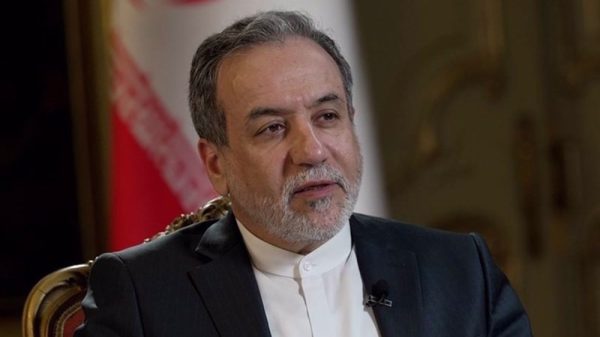
Iranian Foreign Minister Abbas Araghchi
Press TV – July 8, 2025
Iran’s foreign minister has issued a call for the United States to revive diplomacy following a breakdown in indirect talks, warning that further engagement will only be possible if Washington demonstrates a genuine commitment to a fair resolution.
“Iran remains interested in diplomacy, but we have good reason to have doubts about further dialogue,” Abbas Araghchi wrote in an article published by the Financial Times. “If there is a desire to resolve this amicably, the US should show genuine readiness for an equitable accord.”
The foreign minister referred to his five rounds of talks with US special envoy Steve Witkoff, saying that the two sides had made progress in those meetings.
According to Araghchi, discussions covered sensitive issues, including Iran’s uranium enrichment program and a potential end to US sanctions, with proposals from both sides and mediation by Oman.
The talks, he suggested, could have laid the foundation for an economic partnership potentially worth trillions, offering Iran development opportunities while addressing US President Donald Trump’s ambitions to revive struggling US industries.
But, Araghchi said, hopes for a breakthrough were shattered when Israel launched an unprovoked assault on Iran just 48 hours before a planned sixth round of talks in a move to derail diplomatic progress.
“Israel prefers conflict over resolution,” he wrote, arguing that the bombardment was not about stopping Iran from developing nuclear weapons but about sabotaging dialogue.
Araghchi reaffirmed that Iran remains committed to the Nuclear Non-Proliferation Treaty (NPT) and operates under UN monitoring.
He warned that while Iran seeks to prevent a wider regional war, its restraint should not be mistaken for weakness.
“We will defeat any future attack on our people,” he said, cautioning that Iran would reveal its true defensive capabilities if provoked again.
Araghchi placed the blame for the collapse of the talks on “an ostensible ally of America” and on Washington for its “fateful decision” to join in the strikes, thereby violating international law and the NPT framework.
While noting recent messages from US intermediaries suggesting a possible return to the table, Araghchi questioned whether Tehran could trust any future American overtures, citing the US withdrawal from the 2015 nuclear deal and Iran’s experience of being attacked during active negotiations.
“Negotiations held under the shadow of war are inherently unstable, and dialogue pursued amid threats is never genuine,” he wrote.
Still, Araghchi stopped short of closing the door entirely.
Iran, he insisted, remains interested in diplomacy, but only if it is based on mutual respect and free from external sabotage.
The top diplomat warned that Washington’s continued alignment with Israel risks dragging the US into another costly and avoidable conflict in the region.
“The American people deserve to know that their country is being pushed towards a wholly avoidable and unwarranted war by a foreign regime that does not share their interests,” Araghchi wrote, in reference to Israeli influence in Washington.
He ended with a stark choice for the United States: “Will the US finally choose diplomacy? Or will it remain ensnared in someone else’s war?”
Iran ‘rapidly’ beefs up air defenses with Chinese help: Report
The Cradle | July 8, 2025
Iran has been beefing up its air defenses with help from China since a truce ended the 12-day war between Tel Aviv and Tehran last month, according to sources cited by Middle East Eye (MEE).
“Iran has taken possession of Chinese surface-to-air missile batteries,” the report said, adding that Tehran is moving “rapidly” to rebuild air defense capabilities targeted by Israel during the war.
An Arab official told the outlet that the Chinese batteries were delivered to Iran following the ceasefire.
Another Arab official said that US allies in the Gulf were aware of Iranian efforts to “back up and reinforce” air defenses, adding that the White House has been briefed on the matter.
The officials did not reveal the number of surface-to-air missiles that Iran has received from China since the end of the war. One official claimed Tehran was paying for the deliveries with oil shipments.
“The Iranians engage in creative ways of trading,” one of the officials said.
According to ship tracking data, Chinese imports of Iranian oil witnessed a significant jump in the month of June. Beijing is the world’s leading importer and biggest purchaser of Iranian crude oil.
Iran operates the locally produced Khordad and Bavar 373 air defense systems, which are capable of engaging drones, but have a limited ability to shoot down F-35 jets used by Israel.
The Bavar 373 is an Iranian-developed version of the Russian S-300. Iran is also believed to possess older Chinese systems such as the HQ-9.
Iranian air defenses shot down scores of drones during the 12-day war in June, including both drones launched from Israel and locally produced “small drones” operated by Mossad agents inside the country.
Unconfirmed reports of Israeli fighter jets being downed were never verified.
Israel said it launched strikes targeting Iranian air defenses across the country throughout the war, claiming “complete control” over Iran’s skies. It also said it was striking Iran’s missile capabilities.
The Israeli army said it would prevent Iran from being able to fire ballistic missiles at Israel, but failed to achieve that goal.
Iran’s missiles caused widespread destruction across Israel. Key universities, research centers, and technological hubs were struck.
Several military bases were also hit, yet media censorship has prevented details from being released.
The MEE report comes as there has been concern over a potential renewal of fighting between Israel and Iran.
Axios reported on Monday that Israel is preparing for additional military operations if Iran attempts to restart its nuclear program. Israeli officials cited in the report said that US President Donald Trump may approve renewed Israeli strikes.
In late June, Israeli Defense Minister Israel Katz said he had instructed the Israeli army to prepare a military plan targeting Iran’s nuclear and missile programs, as well as its regional alliances.
In a post on X, Katz said the “enforcement plan” would focus on “maintaining Israel’s air superiority, preventing nuclear advancement and missile production, and responding to Iran for supporting terror activity against Israel.”
“We will act regularly to thwart such threats,” he added, warning Iranian leaders to “understand and beware: Operation Rising Lion was only the preview of a new Israeli policy, after 7 October, immunity is over.”
Speaking separately to Israel’s Channel 12, Katz elaborated that the plan would be implemented regardless of the current ceasefire.
Iran has vowed a severe response to any Israeli ceasefire violations.
US Patriot Missiles Stockpile a Fraction of What the Pentagon Needs
By Kyle Anzalone | The Libertarian Institute | July 8, 2025
The ongoing wars in the Middle East and Ukraine have depleted the US stockpiles of missile interceptors. The Pentagon has just a quarter of the Patriot missiles it needs.
According to the Guardian, “The United States only has about 25% of the Patriot missile interceptors it needs for all of the Pentagon’s military plans after burning through stockpiles in the Middle East in recent months, an alarming depletion that led to the Trump administration freezing the latest transfer of munitions to Ukraine.”
US weapons manufacturers can only produce approximately 500 Patriot missiles per year. The US used dozens of interceptors to defend Israel from Iranian retaliatory attacks last month. Additionally, the Pentagon engaged in its largest Patriot battle in history to repel a symbolic Iranian missile attack on the US airbase in Qatar.
The US stockpile of air and missile defenses has been drained to aid Ukraine during the war with Russia. Missile interceptors are in short supply in the West. In May, Secretary of State and National Security Advisor Marco Rubio told Congress that “The Ukrainians asked for air defense systems – Patriot systems, which, frankly, we don’t have.”
It is unclear if Trump reversed the Pentagon order to halt some arms transfers to Ukraine, including Patriot Missiles. During Monday’s dinner with Israeli Prime Minister Benjamin Netanyahu, Trump told reporters that he would “send some more weapons” to Ukraine.
Patriot systems have been a crucial part of Ukraine’s air defenses. However, Russia has developed missiles to counter Patriot interceptors with increasing effectiveness.
Von der Leyen blames Russia for no-confidence motion

RT | July 8, 2025
European Commission President Ursula von der Leyen has dismissed efforts by members of the European Parliament to oust her, branding her critics “conspiracy theorists” and accusing them of acting on behalf of Russian President Vladimir Putin.
Von der Leyen is facing a parliamentary motion of no-confidence in her presidency, which is scheduled for a vote on Thursday after being tabled by Romanian MEP Gheorghe Piperea. Addressing the parliament during a debate on Monday, von der Leyen said those backing the proposal were following “the oldest playbook of extremists” and were attempting to undermine public confidence in the EU with “false claims.”
“There is no proof that they have any answers, but there is ample proof that many are supported by our enemies and by their puppet masters in Russia or elsewhere.”
“These are movements fueled by conspiracies, from anti-vaxxers to Putin apologists. And you only have to look at some of the signatories of this motion to understand what I mean.”
In his remarks to parliament, Piperea accused the Commission of centralizing decision-making in a non-democratic fashion and of interfering in the internal affairs of member states.
Russian officials have claimed that EU leaders are using fear tactics to shield themselves from criticism. Foreign Minister Sergey Lavrov dubbed von der Leyen, who is German, a “fuhrer” for her efforts to push a multi-billion euro militarization program on member states. Russia maintains that unlike Western states it does not interfere with other nations’ domestic affairs.
Von der Leyen urged “all the pro-Europeans, pro-democracy forces” in the chamber to support her agenda, arguing that unity was essential to uphold the EU’s foreign policy strength.
Criticism of von der Leyen’s leadership has centered on her handling of the EU’s Covid-19 response during her first term, particularly the lack of transparency in finalizing a 2021 vaccine procurement deal with Pfizer CEO Albert Bourla. Earlier this year, the European Court of Justice found her office at fault for failing to retain text messages exchanged with Bourla and for refusing to release them to journalists with adequate justification.
Piperea is a member of Romania’s AUR party, led by George Simion, who narrowly lost a presidential runoff this year to a pro-EU candidate. The election followed a scrapped first-round vote earlier in 2024, in which outsider Calin Georgescu emerged as the frontrunner. The country’s Constitutional Court annulled the results, citing government allegations of Russian interference. Critics of the EU claim the episode reflects a broader anti-democratic trend allegedly enabled by Brussels.
Backlog of European Defense Plants Hits Record $365 Billion in 2024
Sputnik – 08.07.2025
The backlog of unfulfilled orders at European defense plants reached a record $365 billion in 2024, according to a report by the RosCongress titled “Militarization of Europe: Budgets and Geography of New Production Capacities,” reviewed by Sputnik.
“The boom in defense orders—including artillery shells, missiles, tanks, military aircraft, drones, and ships—has naturally led to an unprecedented volume of unfulfilled orders among European defense manufacturers. The backlog of companies such as KNDS, MBDA, Hensoldt, Leonardo, Rheinmetall, Kongsberg, BAE Systems, Saab, and Thales has grown by 103% compared to 2021, reaching a record $365 billion by the end of 2024,” the report states.
The authors note that between 2021 and 2024, the EU’s total defense spending increased by 31%, reaching $350 billion annually.
“Against the backdrop of Europe’s growing defense capabilities, arms manufacturers—especially European ones—have begun setting new financial records,” the document says.
According to experts, the key beneficiary of Europe’s increased military spending has been the German armored vehicle and ammunition manufacturer, Rheinmetall. Its order backlog grew from $26 billion in 2021 to $67 billion in 2024.
“Germany’s largest arms and ammunition manufacturer has significantly benefited from orders related to Ukraine, as well as the replenishment of military equipment and ammunition stocks in European countries, especially Germany,” the authors explain.
The backlog of the KNDS arms group, which includes France’s Nexter and Germany’s Krauss-Maffei Wegmann, reached $25 billion in 2024, compared to $12.5 billion three years earlier. The conglomerate’s sales grew by 40% compared to 2023.
Similar financial trends are seen across every European arms manufacturer.
“In this situation, most of them are prioritizing the expansion of existing production capacities and confident in sustained demand amid Europe’s $860 billion rearmament push,” the report concludes.
500 organizations funded by Brussels are operating in Hungary to counter Orbán’s government: report
Remix News | July 8, 2025
Hungary’s Office for the Protection of Sovereignty has identified 1,479 Hungarian beneficiaries that participated in projects directly funded by the European Commission.
Of these, the office is monitoring around 500 organizations that are suspected of being funded by Brussels for political activities, namely those directed at the government of Viktor Orbán, the organization said, according to Magyar Nemzet.
The office identified the Brussels “gold diggers” who received the most money from the European Commission: George Soros’ private Central European University (CEU), the Ökotárs Foundation and the Minority Right Group, for example, received billions of forints.
Meanwhile, other organizations received received hundreds of millions of forints: the Power of Humanity, the Hungarian Helsinki Committee, the Background Company, and the Hungarian Jeti Co., Ltd., which publishes 444, Political Capital, the Republikon Institute and the Menedék – Migrants Support Association
The Hungarin office began its investigation into the political lobbying network funded by the European Commission in the spring. It identified the most important Brussels funds – CERV and Horizon – through which large amounts of public money flow to organizations whose real goal is to reduce the Hungarian government’s political power internationally and domestically.
The Office for the Protection of Sovereignty was designed to expose the network of foreign-funded political pressure groups in order to give the Hungarian people a clear picture of who is trying to influence Hungarian politics and how.
It should be noted that while Hungary does fund some international organizations and think tanks, but the power and funding imbalance is astronomical.
The EU has accesses to billions of euros for such activities, on top of billions available from organizations such as the Open Society Foundation, which are all aligned against conservative governments, with Orbán a top target.
On top of that, state-funded media outlets, such as Deutsche Welle, receive close to €400 million in funding per year. The outlet routinely refers to Orbán as an “autocrat” and his government as a “regime” that is “assaulting Hungary’s democracy.”
EU Seeks to Plug Ukraine’s $19Bln Budget Gap in 2026
Sputnik – 08.07.2025
The European Union is urgently exploring options to cover Ukraine’s $19 billion budget deficit in 2026, including by using frozen Russian state assets, as US support for Kiev continues to decline and a ceasefire remains out of reach, the media reported on Tuesday, citing sources familiar with the matter.
A senior European official involved in discussions with Kiev told the newspaper that many who anticipated a ceasefire agreement in 2025 had to reassess costs, acknowledging a financing “hole” despite efforts to minimize it.
The European Commission has been forced to adjust Ukraine-related spending 2025. A European diplomat told the newspaper that the EU intends to ensure that Kiev’s needs are covered before winter, especially given uncertainty over renewed US support for Kiev.
The commission is reviewing a G7 proposal to provide military aid to Ukraine via bilateral grants, recorded as “off-budget external transfer” but counted toward national defense spending targets.
Another option involves leveraging the existing $50-billion G7 loan scheme, funded by proceeds generated by frozen Russian assets. Additionally, countries are exploring reinvesting Russian assets into riskier categories to maximize returns.
After the start of the Russian military operation in Ukraine, the European Union and G7 countries froze almost half of Russia’s foreign exchange reserves, totaling nearly 300 billion euros ($347 billion). More than 200 billion euros are in the EU, mainly in the accounts of Euroclear, a Brussels-based clearing house.
The Russian Foreign Ministry has repeatedly condemned the freezing of Russia’s central bank money in Europe as theft. Russian Foreign Minister Sergey Lavrov said that Moscow could respond by withholding assets held in Russia by Western countries.
Featured Video

The 1964 Coup in Brazil
or go to
Aletho News Archives – Video-Images
Frlom the Archives
70 Neocons Petition Congress To Effectively Allow Israel To Say When The US Should Attack Iran
By Damian Lataan | January 10, 2014
Seventy senior Israeli-centric neoconservatives have written an open letter to Congress imploring them to do more to ensure Iran complies with the conditions of any agreement finally reached with the P5+1 over Iran’s nuclear program.
While the neocons are ostensibly asking Congress to ensure compliance, it is clear that their real aim is to convince members of Congress to support the bill currently passing through the Senate which calls for tighter sanctions against Iran in the event of any waywardness on Iran’s part.
The neocons are eager to see the bill currently passing through the Senate with enough support to make it veto-proof, not so much because they are concerned about Iran’s so-called nuclear weapons program – there’s still not a skerrick of hard evidence that Iran has a nuclear weapons program – but, rather, because embedded within the bill is this clause:
… if the Government of Israel is compelled to take military action in legitimate self-defense against Iran’s nuclear weapon program, the United States Government should stand with Israel and provide, in accordance with the law of the United States and the constitutional responsibility of Congress to authorize the use of military force, diplomatic, military, and economic support to the Government of Israel in its defense of its territory, people, and existence…
Essentially, the clause is an automatic trigger for the US to attack Iran at any time the Israelis choose to launch a first strike – regardless of whether President Obama is in favour or not.
Partial list… continue
Blog Roll
 Aletho News
- Aramco CEO warns ‘catastrophe’ imminent if Strait of Hormuz remains shut
- What If Iran Says No?
- Trump Threatens to ‘Hit’ Iran ‘Twenty Times Harder’ Over Strait of Hormuz Oil Flows
- Spare the hypocrisy: Baghaei slams Ursula’s support for US
- Iran War Supporters Invent a New and Absurd Justification: It Is All About China
- Corporate Media Go All Out To Support The US-Israeli War on Iran
- Trump press conference reveals a man who wants out of war
- When Tel Aviv decides, Washington fights
- Top official: Iran ready for a long war with US, no more diplomacy
- How Iran’s Toxic Rain Reveals US-Israel Discord
- If Americans Knew
- Threats and missiles fly, death tolls soar in Iran, Lebanon, Gaza – Not a ceasefire Day 151
- Lebanon: Israel’s White Phosphorous Use Risks Civilian Harm
- Corporate Media Go All Out To Support The US-Israeli War On Iran
- US-Israel war on Iran is creating a steady growing number of amputees
- Israel planned this war on Iran for 40 years. Everything else is a smoke screen
- The wrong question about the war in Iran
- ‘Your Tax Dollars Being Used to Raise Your Gas Prices’: US-Israel Bomb Major Iranian Oil Depots
- ‘Bogus Evidence’: Former Nuclear Watchdog Head Debunks US Justification for Iran War
- EXPLAINER – Dimona: What to know about Israel’s nuclear site
- Fires and toxic air in Iran (thanks, Israel) – Not a ceasefire Day 150
- No Tricks Zone
- Wake-up Call: Survey Shows Majority Of Germans Now Favor Postponing Climate Targets!
- Televised! Leading German Political Candidate Tells Schoolchildren CO2 Makes Sun Hotter!
- New Study: A Century Warming Of 1.1°C Is ‘Commonplace’ And ‘Not Unusual’ During This Interglacial
- New Study: ‘Internal Noise’ And Volcanic Forcing Can Trigger 10-15°C Warming Within Decades
- Glaciers Worldwide Are Suddendly Surging, Experts Blame Warming!
- Surprising Discovery: Sahara Is Greening…Billions Of Trees Where Once Thought To Be Barren
- New Research Reaffirms Clouds, Aerosols, And Surface Solar Radiation Are ‘Driving The Climate System’
- Germany: Electric Car Catches Fire At Charging Station, Sets Off Local “Inferno”, Widespread Damage
- New Study: Canada’s New Brunswick Was 1°C Warmer Than Today During The Medieval Warm Period
- Coal Power Back In Trend As Globe Tries To Keep Pace With Growing Demand For Power
 Aletho News