Spanish PM reveals 9 measures to halt genocide in Gaza
Al Mayadeen | September 8, 2025
Spanish Prime Minister Pedro Sanchez on Monday announced nine new measures aimed at stopping the “genocide in Gaza,” stating, in a televised address, “What Israel is doing is not defending itself, it is exterminating a defenseless population.”
He said that although Spain has de facto been applying an export ban on weapons to “Israel” since 2023, the government will now urgently legislate a “permanent” ban, a measure that will be joined by prohibiting ships transporting fuel to Israeli forces from using Spanish ports and banning aircraft carrying defense material from Spanish airspace.
The Spanish Premier added that individuals “directly involved in the genocide, violating human rights and war crimes in Gaza” will be prohibited from entering Spain.
Other measures include banning imports from illegal Israeli settlements in the occupied West Bank and Gaza, limiting Spanish consular services to Spanish citizens living in the occupied territories to the bare minimum, and increasing Spain’s presence in Rafah with additional troops and new joint projects with the Palestinian Authority to provide food and medicine.
Spain will also increase its contribution to the UN agency for Palestinian refugees (UNRWA) by €10 million ($11.7 million) and commit €150 million in additional humanitarian aid for Gaza in 2026.
“We know these measures will not be enough to put an end to the war crimes, but we hope they serve to apply pressure to Prime Minister Benjamin Netanyahu and alleviate the suffering of the Palestinian people,” Sanchez stated, adding that “Spain alone cannot stop the war, but that doesn’t mean we can’t try.”
Assassination of Yemeni Ministers: How the Media Normalizes Israel’s Crimes
Israel carried out the unprecedented act of assassinating the head of the Sanaa government and 11 of his ministers to punish Yemen for its unwavering solidarity with Gaza, making it one of the few countries in the world to take seriously the obligation to prevent the crime of genocide. The media, complacent or even complicit, never deem it necessary to point out that targeting a civilian administration constitutes a blatant war crime. This silence only encourages Israel to push ever further the limits of its monstrosity.
By Alain Marshal | September 6, 2025
On August 28, a massive Israeli strike on Sanaa, the Yemeni capital, targeted a council of ministers of the de facto authority in Yemen, assassinating Prime Minister Ahmed Ghaleb Nasser al-Rahawi and 11 members of his government: Secretary of the Council of Ministers Zahid Mohammed Al-Amdi, the Prime Minister’s Chief of Staff Mohammed Qasim Al-Kabsi, as well as the Ministers of Foreign Affairs (Jamal Ahmed Ali Amer), Economy (Moeen Hashim Ahmed al-Mahaqri), Justice (Ahmed Abdullah Ali), Energy (Dr. Ali Saif Mohammed Hassan), Information (Hashim Ahmed Abdulrahman Sharaf Al-Din), Agriculture (Dr. Radwan Ali Ali Al-Rubai’i), Social Affairs and Labor (Samir Mohammed Ahmed Baja’ala), Tourism and Culture (Dr. Ali Qasim Hussein Al-Yafei), and Youth and Sports (Dr. Mohammed Ali Ahmed Al-Mawlid).
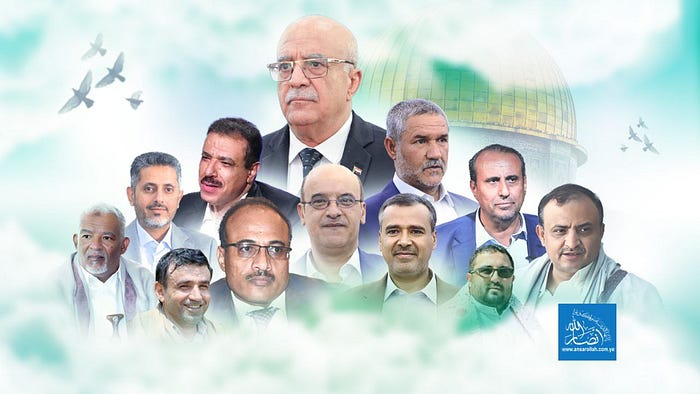
Yemen’s Martyrs
Israel, which has been perpetrating an openly acknowledged genocide in Gaza and the West Bank — broadcast live for nearly two years — and which has attacked no fewer than five other countries during this period (Lebanon, Syria, Yemen, Iran, Iraq, not to mention all the countries whose airspace it has violated), has clearly claimed responsibility for this attack. War Minister Israel Katz declared that Israel had delivered “an unprecedented knockout blow against the senior-most figures of the Houthi security-political leadership in Yemen, in a daring and brilliant operation […]. The fate of Yemen is the fate of Tehran — and this is only the beginning.” There is therefore little doubt about Israel’s intentions.
Despite this deliberate and acknowledged attack, the word “assassination” was nowhere to be found in the Western media: the AFP dispatch, reprinted by Mediapart (allegedly the most prominent French media outlet supporting Palestine) and many other newspapers, refers only to the “death” of the head of government and members of his cabinet, “killed” in Israeli raids, as if the causal link between the bombings and the deaths were indirect. AFP adopts the terms “Houthis,” “rebels,” and “Iranian-backed,” noting that “the internationally recognized Yemeni government, driven out of Sanaa, has its headquarters in Aden, the major city in the south.” Without specifying that the Aden regime, supported by Saudi Arabia (which itself has been waging a genocidal war against Yemen since 2015, with Western backing), has no more legitimacy to represent Yemen and its people than the Taiwan-based Kuomintang had to occupy China’s seat at the UN (which it did from 1945 to 1971).
Moreover, Israel’s action was rationalized, even legitimized, with AFP categorically stating that the strikes against Yemen were “in response to missile and drone attacks by rebels against Israeli territory.” As for Yemen’s own position — that its attacks are nothing more than a response aimed at ending the genocide in Gaza and the blockade starving its two million inhabitants — the article distances itself and places full responsibility on the Houthis: “The houthis claim to be launching these attacks in ‘solidarity’ with the Palestinians in the Gaza Strip, who are caught up in the war triggered by Hamas’ attack on Israel on October 7, 2023.”
The pattern is recurring: whatever Israel says, however grotesque, is taken at face value (Israel is only defending itself, retaliating against Hamas, against Yemen, and against all of humanity if need be), while whatever its adversaries say — even when it is self-evident — is treated with suspicion and put in quotation marks to signal distance. The underlying suggestion is that Israelis are not being targeted as occupiers who dispossess Palestinians of their rights and subject them to systematic extermination, but as Jews, out of pure anti-Semitism or out of hatred for “freedom” and “Western values,” a recurring discourse from Reagan, Bush, Netanyahu, and others. In the media and civil society, so-called “reactionary” voices openly adopt this vocabulary, while so-called “progressive” voices generally do so implicitly — even though the French CGT union spelled it out in its magazine Ensemble, La Vie Ouvrière №19 (November 2023), which described Hamas’ action of October 7 as “ignoble,” denouncing, with regard to the Nova rave party held at the gates of the Gaza concentration camp, a targeting “by religious fanaticism [of] youth and [of] the expression of freedom […] At least 260 people were killed, by gunfire or explosives, because they were Jewish.”
In a recent article, Mediapart’s founder Edwy Plenel himself described Israel’s genocidal campaign in Gaza as “Israel’s war in retaliation for October 7,” a blatantly negationist statement that obscures more than a hundred years of Zionist history — a colonial movement explicitly aimed at the expulsion, even the annihilation, of the indigenous people, a sine qua non condition for its success. The total destruction of the Gaza Strip and the will to empty it of its population are clearly in continuity with the ethnic cleansing of the Nakba (1948) and the Naksa (1967), October 7 having been nothing more than a catalyst, a pretext seized Machiavellianly by Netanyahu’s fanatical government to liquidate the Palestinian cause once and for all and to work openly towards “Greater Israel.” Until then, the sham “peace process” had allowed colonization to progress slowly but surely, but now the time has come for the “final solution.” The media’s complicity in the liquidation of the Palestinian cause did not begin on October 7, and rather than acknowledging their errors, they persist in denial — even as the Israelis have dropped the mask and are stating more clearly than ever that they will never tolerate a Palestinian state or Palestinian sovereignty, even symbolic.
Just as they flout history to pander to Zionist propaganda, our journalists have no regard for international law — otherwise they would point out that targeting a political leadership, even one not recognized by the international community, even in wartime, is an egregious crime. Israel Katz proudly underscores the “unprecedented” nature of these assassinations and fully assumes the targeting of civilians, but our “journalists” do not care. They have thoroughly internalized their duty of loyalty to Israeli talking points, even going so far as to condone the systematic targeting of hospitals (by taking seriously the alleged existence of Hamas command centers beneath them), medical personnel, and even journalists (by crediting their supposed links to the Palestinian Resistance). Corporatism no longer applies when it comes to covering the war crimes and crimes against humanity committed by the occupying army, the armed wing of Western imperialism. Let us recall that the attack on Hezbollah’s pagers was praised by our media — including Mediapart, which described it as “a stroke of tactical genius by the Israeli military and spies” (before discreetly retracting this statement, calling it a mere “strategic success”). Yet, with its implications — potentially turning any everyday object into a bomb — this terrorist attack is even more dangerous than 9/11, threatening to transform the entire world into a dystopia.
To grasp how utterly unacceptable the absence of political reaction (with the exception of the Axis of Resistance) and the complacent media coverage following the decapitation of the Yemeni government — whose role is purely administrative — really are, let us imagine for a moment that a Western head of government and his cabinet were targeted by a foreign power: François Bayrou in France, Friedrich Merz in Germany, Keir Starmer in the United Kingdom, for example. Let us even imagine that Zelensky, whose country is at war (NATO and the EU are regarded as co-belligerents), were killed in a Russian strike. Who would dare doubt the international outrage that this would provoke? Who could ignore the ensuing diplomatic, economic, or even military apocalypse? Who would not be moved to tears at the mere thought of the mournful hagiographies that would flood editorial columns?
A simple alleged GPS jamming of the plane carrying Ursula von der Leyen to Bulgaria (to visit a munitions factory — an act of the highest neutrality), without any evidence (Flight Radar denied any interference with the GPS signal from takeoff to landing), provoked indignation among our politicians and media, who set aside fact-checking and exhausted the vocabulary of outrage: “victim,” “blatant Russian interference,” “We are of course aware of, and in a sense accustomed to, the threats and intimidation that form an integral part of Russia’s hostile behavior,” “The head of European diplomacy, Kaja Kallas, announced that she would summon the Russian ambassador in the wake of the incident.”
But when it comes to Yemeni leaders, the structural racism of our societies — especially entrenched among our journalists and editorialists — combined with the abject submission of our capitals and their media echo chambers to Israeli and American interests, suffices to relegate this flagrant war crime to a mere footnote, a veritable carte blanche granted to Israel, encouraging it to continually push back the red line of its crimes and atrocities. Israel’s impunity is guaranteed unconditionally.
Bound only by the demands of our conscience, and not by the fear of losing our job for failing to comply with a tacit or assumed pro-Israeli editorial line, we take the liberty of forcefully reminding everyone that international humanitarian law prohibits the targeting of civilian leaders, by virtue of the fundamental principle of distinction between civilians and combatants:
1949 Geneva Conventions (1977 for the Additional Protocols):
- “Persons taking no active part in the hostilities […] shall in all circumstances be treated humanely […]. To this end, the following acts are and shall remain prohibited at any time and in any place whatsoever with respect to the above-mentioned persons: violence to life and person, in particular murder of all kinds […].” (Fourth Geneva Convention, Article 3)
- “In order to ensure respect for and protection of the civilian population and civilian objects, the Parties to the conflict shall at all times distinguish between the civilian population and combatants and between civilian objects and military objectives and accordingly shall direct their operations only against military objectives.” (Additional Protocol I, Article 48)
- “A civilian is any person who does not belong to [the Armed forces]. In case of doubt whether a person is a civilian, that person shall be considered to be a civilian.” (Additional Protocol I, Article 50)
- “The civilian population and individual civilians shall enjoy general protection against dangers arising from military operations. […] Civilians shall enjoy the protection afforded by this section, unless and for such time as they take a direct part in hostilities.” (Additional Protocol I, Article 51)
International Criminal Tribunal for the former Yugoslavia, 1993:
- “If essentially the total leadership of a group is targeted, it could also amount to genocide. Such leadership includes political and administrative leaders, religious leaders, academics and intellectuals, business leaders and others — the totality per se may be a strong indication of genocide regardless of the actual numbers killed. […] Thus, the intent to destroy the fabric of a society through the extermination of its leadership, when accompanied by other acts of elimination of a segment of society, can also be deemed genocide.” (Final Report of the Commission of Experts Established Pursuant to Security Council Resolution 780 (1992), Annex to the Letter dated 24 May 1994 from the Secretary-General to the President of the Security Council, S/1994/674)
Rome Statute of the International Criminal Court, 1998:
- “The Court shall have jurisdiction in respect of war crimes in particular when committed as part of a plan or policy or as part of a large-scale commission of such crimes. For the purpose of this Statute, ‘war crimes’ means: […] Intentionally directing attacks against the civilian population as such or against individual civilians not taking direct part in hostilities.” (Rome Statute, Article 8, “War Crimes”)
It therefore appears that, even in times of war, a Minister of Defense or a President of the Republic, as head of the armed forces, only loses civilian status if they take a direct part in hostilities — something that remains extremely rare, since operational command lies with military officers. What then can be said of a Prime Minister, a Minister of Justice, or a Minister of Culture? These are purely and simply extrajudicial killings, which by definition have no legal basis.
Furthermore, a “combatant” is only recognized as such on the battlefield or in barracks, and regains civilian status as soon as he is at home. If, as Israel does, we consider that members of Lebanese Hezbollah, Ansar Allah in Yemen, the Palestinian resistance, or Iranian commanders remain combatants even while asleep in their family homes, it would logically follow that targeting soldiers and reservists of regular armies would also be legitimate wherever they are found — even when on leave with their families — even if it means killing, injuring, or maiming their wives and children along with them.
Similarly, Israel’s declared intention to “eliminate” — a term used by certain “journalists,” such as in this article in Le Figaro — the entire Ansar Allah command structure, because of its unwavering support for Gaza, combined with its repeated strikes against the country’s civilian infrastructure (ports, airports, power grids, fuel depots, the presidential palace, industry, residential neighborhoods, etc.), clearly amounts to a war crime or even an intent to commit genocide, as defined by the jurisprudence of the International Criminal Tribunal for the former Yugoslavia.
Robert Fisk, Middle East correspondent for Time (1976–1988) and later for The Independent (1989–2020), held, like Amira Hass (Haaretz), that the role of journalists is to challenge established authority and centers of power, particularly in the context of war. Yet the overwhelming majority of the media does precisely the opposite, working to rationalize, legitimize, and even normalize the unacceptable — from the assassination of political leaders (see this Mediapart article entitled In Iran, the Twilight of the Supreme Leader, a textbook case of incitement to murder), to the mass murder of starving women and children as they try to find food, to ethnic cleansing and genocide.
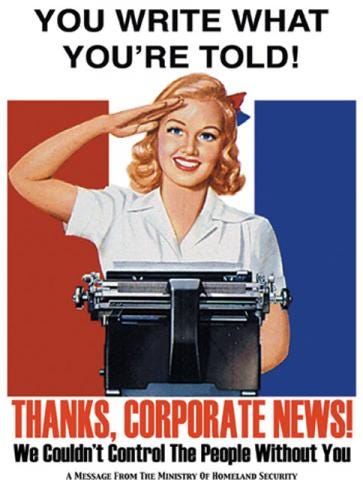
In conclusion, let us recall that the Convention on the Prevention and Punishment of the Crime of Genocide (1948) establishes in its first article that: “The Contracting Parties confirm that genocide, whether committed in time of peace or in time of war, is a crime under international law which they undertake to prevent and to punish.”
Faced with the inaction of the international community, is it not Yemen, through its naval blockade of Israel and its active support for the Palestinian cause, that takes the obligation to prevent the crime of genocide most seriously? By contrast, the “civilized West” not only fails to impose sanctions on Israel, but refuses to stop providing it with military, economic, and diplomatic support, thereby becoming complicit in the extermination of the Palestinians.
As Israel’s frenzy of bloodshed and destruction continues daily, not only in Gaza but also in the West Bank, Lebanon, Syria, and of course Yemen, it is difficult not to recall the lessons of history: any regime founded on barbarism and hubris is doomed to an ignominious end — and its sycophants and apologists to an equally humiliating fate.
Contact: alainmarshal2@gmail.com
Political Scene in Lebanon: Meetings Confirm Failure of Anti-Resistance Scheme
Al-Manar | September 8, 2025
Since the council of ministers convened at Baabda Palace on September 5 and decided to curb the process of targeting the resistance arms, political tensions in Lebanon started to slide.
The regular meetings between the senior officials in Lebanon was resumed with the House Speaker of Parliament Nabih Berri’s visit to Baabda Palace on Monday
Speaker Berri reviewed the general situation with President Joseph Aoun, affirming that everything is fine.
“With the blessings of Our Lady Mary, everything is fine.”
The House Speaker on Monday also met in Ain el-Tineh with Lebanese Army Commander, General Rudolf Haykal, who presented the military plan to confine weapons under the condition of the Israeli commitment to the ceasefire,
Commenting on the recent parliamentary session, Head of Hezbollah’s parliamentary bloc leader Mohammad Raad said the September 5 outcome signaled a retreat by many in government who realized the earlier arms decision had reached a dead end.
“They found a formula to delay implementation without fully withdrawing from their decision. It’s not a solution—it’s simply a pause,” Hezbollah’s MP asserted.
Raad asserted that Hezbollah’s weapons are “more legitimate than the government itself,” citing the group’s right to defend Lebanese land under national and international law.
On your knees: This EU move has just revealed the scale of their insignificance
In 2018, Europe swore it would shield the Iran deal from Trump. In 2025, it brought Trump’s ‘maximum pressure’ back under their own banner.
By Farhad Ibragimov | RT | September 8, 2025
Back in 2018, Europe blasted Donald Trump for pulling out of the Iran nuclear deal. Paris, Berlin, and London warned of a looming crisis in the Middle East and insisted the Joint Comprehensive Plan of Action (JCPOA) was the only safeguard against another regional war. They even rolled out a special financial vehicle, Instrument in Support of Trade Exchanges (INSTEX), to shield trade with Tehran from US sanctions. For a moment, it looked as if Europe was finally ready to assert its own strategic autonomy.
Seven years later, the picture couldn’t be more different. Britain, France, and Germany have triggered the snapback mechanism – a procedure written into UN Security Council Resolution 2231 back in 2015. On paper, snapback is a technical clause: if one of the deal’s signatories claims Iran is in breach, all the pre-2015 UN sanctions come rushing back. In practice, it’s a political bombshell. The very governments that once positioned themselves as defenders of the deal are now taking the first steps to dismantle it.
How snapback works
Snapback is a built-in device of Resolution 2231: once a party to the deal files a complaint, a thirty-day clock starts ticking. If the Security Council can’t agree to keep the sanctions lifted, the old restrictions automatically spring back into place – no new vote, no vetoes, just the force of the mechanism itself snapping shut.
And those sanctions aren’t symbolic. They revive six earlier UN resolutions passed between 2006 and 2010: an arms embargo, a ban on ballistic missile development, asset freezes, and travel bans targeting Iranian banks, companies, and officials. In other words, a full reset to the era of maximum pressure that Tehran endured more than a decade ago.
On paper, it reads like legalese. In practice, it carries weighty consequences. For Europe, it means slamming shut whatever limited doors were still open for trade and diplomacy with Tehran. For Iran, it’s a return to a familiar landscape of international isolation – one it has increasingly learned to navigate through ties with Russia, China, and regional partners.
Europe’s brief rebellion
When Donald Trump tore up the nuclear deal in 2018, Europe seemed almost defiant. Emmanuel Macron, Angela Merkel, and Theresa May openly criticized Washington’s unilateral move, warning it could ignite a new crisis in the Middle East and weaken the global nonproliferation regime. For a moment, it looked as if Europe was ready to chart its own course.
To prove it, Paris, Berlin, and London announced a special financial vehicle called INSTEX. On paper, it was meant to let European companies keep trading with Iran while bypassing US sanctions. In speeches, leaders cast it as a bold example of strategic autonomy – Europe standing by international law against American pressure.
In practice, it never delivered. Transactions were scarce, businesses stayed away, and INSTEX turned into little more than a symbol. What was meant to showcase Europe’s independence exposed instead its limits. Behind the rhetoric, the continent still lacked the muscle to stand up to Washington.
Even after the deal began to unravel, Tehran held on longer than many expected. For a time, Iran continued to observe key limits, signaling that it still wanted the agreement to survive. The steps it did take after 2019 – enriching uranium beyond agreed levels, reducing access for inspectors – were limited and largely declarative. They were less about racing toward a bomb than about sending a message: if Europe and the United States failed to keep their end of the bargain, Iran would not keep waiting forever.
Europe could have treated those moves as a call for dialogue. Instead, it chose to treat them as violations to be punished – leaning on legal mechanisms and pressure rather than genuine diplomacy. In practice, this meant not saving the deal but accelerating its collapse.
When Joe Biden took office in 2021, many in Europe breathed a sigh of relief. After four years of Trump’s “maximum pressure,” there was hope the US would return to the nuclear deal or at least give Europe more room to re-engage with Tehran. European diplomats saw Biden’s presidency as a reset button, a chance to salvage what was left of the JCPOA.
Talks resumed in 2022, bringing negotiators from Washington, the E3, and Tehran back to the table. But the optimism didn’t last. The West’s conditions went far beyond nuclear conditions: Iran was pressed to scale back its ties with Russia and cut off growing cooperation with China. To Tehran, those demands amounted to political disarmament – a direct threat to its sovereignty and security.
The negotiations collapsed. For Europe, it was a sobering moment: the Democratic administration they had counted on offered no breakthrough. For Iran, it confirmed what many suspected – that Washington’s return to the deal would come with strings too heavy to accept.
The US get what they want
The word snapback has already made waves in the halls of the UN back in August 2020. That summer, the Trump administration formally notified the Security Council that Iran was in breach of the nuclear deal and demanded that the old UN sanctions be reinstated. US lawyers pointed to Resolution 2231, which still listed Washington as a “participant” in the agreement – even though Trump had withdrawn the US two years earlier.
The reaction was swift and humiliating. Russia and China dismissed the move outright, and so did America’s closest allies in Europe. London, Paris, and Berlin all publicly declared that Washington had no standing to use the mechanism after quitting the deal. The snapback effort fizzled, and the sanctions remained suspended.
The irony is hard to miss. In 2020, Europe stood shoulder to shoulder with Moscow and Beijing to block Washington’s attempt. Five years later, the very same European capitals are the ones pulling the trigger.
When London, Paris, and Berlin announced they were triggering snapback, they wrapped the move in the language of diplomacy. In Paris, Foreign Minister Jean-Noël Barrot stressed that France was still “open to a political solution.” In Berlin, Johann Wadephul urged Tehran to re-engage with the IAEA. Britain’s David Lammy said Iran had provided “no credible guarantees” about the peaceful nature of its program.
On the surface, it sounded like a routine chorus of diplomatic talking points. But behind the careful wording was a clear message: Europe was abandoning the posture of dialogue and embracing pressure. What the E3 once condemned in Washington, they were now carrying out themselves – only this time under their own flag.
In Tehran, the language was restrained but pointed. Officials called the European move “illegal and regrettable,” a formula that barely concealed deep frustration. For Iran, Europe’s decision confirmed once again that Brussels talks about strategic autonomy but falls in line the moment Washington sets the course.
Across the Atlantic, the response was the opposite: warm approval. Secretary of State Marco Rubio “welcomed” the step and claimed that snapback only strengthened America’s willingness to negotiate. Formally it sounded like an invitation to dialogue. But the memory of the spring talks – which ended not with compromise but with Israeli sabotage and US strikes on Iranian facilities – made the words ring hollow.
A world that has moved on
Europe’s wager on sanctions is a throwback to the early 2010s, when Tehran was isolated and the West could dictate terms. But that era is gone. Today Iran is not only a strategic partner for Moscow and Beijing but also a full member of BRICS and the Shanghai Cooperation Organization – platforms that carve out alternatives to the Western order.
In this new landscape, snapback may sting in Tehran, but it hits Europe too. Brussels loses credibility as a negotiator and opportunities as a trading partner. Each step in Washington’s shadow makes the European claim to “strategic autonomy” sound thinner.
The paradox is striking. On paper, Europe insists on its independence. In reality, its voice is fading in a multipolar world. While Brussels signs off on sanctions, Beijing and Moscow are busy sketching the architecture of a new order – one where Europe is no longer at the center.
Farhad Ibragimov – lecturer at the Faculty of Economics at RUDN University, visiting lecturer at the Institute of Social Sciences of the Russian Presidential Academy of National Economy and Public Administration
@farhadibragim
When does murder get ignored? When the victim is white and the killer black
A black man kills a white woman in an American city, and the mainstream media gives it zero coverage. Imagine if the races were reversed.
By Henry Johnston | RT | September 8, 2025
The US mainstream media tends to operate by encouraging a certain prefabricated outrage. Sensationalized narratives are cultivated along predictable tracks. But no less egregious is what the media chooses to ignore. Few events of late have better exposed the ideological underpinnings of the media – and of the elite whose narratives it plugs – than the recent brutal and shocking murder of a young Ukrainian woman on a train in Charlotte, North Carolina.
On August 22, a career criminal, Decarlos Brown Jr., casually walked up behind 23-year-old Ukrainian refugee Iryna Zarutska, who was seated on a train minding her own business, and stabbed her three times in the neck in cold blood, killing her. He sauntered away, still clutching the knife dripping blood.
The mindless and savage attack was captured on surveillance footage, but Charlotte’s Democratic Mayor Vi Lyles pushed for it not to be released, ostensibly out of respect for the victim’s family. But the footage did eventually surface, and the story spread like wildfire. But this was a wildfire that couldn’t reach the impervious redoubt of the mainstream media – even after Elon Musk gave it the push into viral territory by chiming in on an End Wokeness thread pointing out the stunning media silence.
In fact, not a single major legacy outlet – the New York Times, Washington Post, NPR, Reuters, CNN, Wall Street Journal, and others – picked it up. One would think that, by sheer chance, one of these esteemed outlets would have bucked the trend. But that didn’t happen because, as Matt Taibbi once brilliantly pointed out,
“Reporting is done in herds, no one wildebeest can break formation without screwing things up for the others. So, they’ll all hold the line, until they all stop holding the line.”
As of this writing, it seems the media herd is starting to reluctantly skate to where the puck is going. And that means that some version of the story, however sanitized, will soon appear everywhere.
So what exactly has given this story its irresistible momentum? Let’s start with the blatant double standard about reporting interracial crime. A white victim and a black perpetrator, as was the case in this instance, is usually a circumstance that tips the scales in favor of silence. When an instance of black-on-white crime cannot be avoided, the respective races of the individuals involved are not mentioned, and the tone is more along the lines of “aww shucks, what a tragedy.” When the racial roles are reversed, the media coverage is extensive and sensational, and the race angle is established immediately and runs throughout the ensuing coverage like an electric wire.
Given such highly distorted media coverage of interracial crime, one would be forgiven for assuming that it is blacks who are perpetually in mortal danger of racist attack by whites in the US. This view was a large part of the impetus behind the Black Lives Matter movement. However, the actual statistics on interracial crime, which are not easy to find, show otherwise. Buried inside this Department of Justice (DOJ) report from 2020 is a rather remarkable admission: “[In 2019], there were 5.3 times as many violent incidents committed by black offenders against white victims (472,570) as were committed by white offenders against black victims (89,980).” Such stark wording was not repeated in subsequent reports under the Biden DOJ, but there is no reason to believe anything has changed in the streets.
Zarutska’s murder certainly comes at a time of record-low American trust in the mainstream media. Instances of misreporting and factual disasters have become such a recurrent theme as to not require individual examples. The media’s efforts at narrative formation have also become so heavy-handed that identifying the establishment cause being promoted in almost any piece of reporting is now a parlor game.
But – and I venture into very risky terrain here – the uproar over this senseless killing also points to a deeply ensconced taboo slowly starting to unravel: Many white Americans are tired of being denied the right to display even the slightest and most tentative hint of the type of racial solidarity that other groups are extended so liberally. It is a story being played out on a different stage with different actors in Great Britain.
There’s another angle here, and it is one that has already been remarked upon in numerous places. The victim was a citizen of a country that the US has spent enormous treasure and effort ostensibly defending since 2022. The roughly $130 billion in aid that Washington has coughed up for Kiev comes out to some $3,500 per Ukrainian citizen. Certainly enough for a bodyguard on train rides.
And yet the silence from the pro-Ukraine crowd has mirrored that of the media at large. This certainly confirms what has been abundantly clear throughout the war and remains so today: Ukrainian deaths that don’t advance a Western elite media narrative are dismissed and ignored. But this lack of reaction also casts in sharp relief the reality that pro-Ukraine sentiment in the US is largely a cause bundled in with the rest of the progressive agenda, underpinned by the uniform mouthpiece of a jaded media. The Ukrainian flags one sees out and about rarely reflect a principled stance but rather deference to elite cues.
It will be said that all sides have merely assumed their positions on the barricades to score political points on this deeply human tragedy. We will all be accused of coming to praise Caesar rather than to bury him. This young woman’s death is indeed a human tragedy and a particularly painful one. But to see it as only a tragedy is to dismiss its larger context and to refuse to draw any conclusions. That is willful ignorance.
When a tragedy unveils such a confluence of two deep ideological biases, what it does is reveal the contours of the magnet moving underneath the pattern of American life.
Henry Johnston is a Moscow-based editor who worked in finance for over a decade.
French government collapses
Prime Minister Francois Bayrou has been ousted by the National Assembly in a no-confidence vote
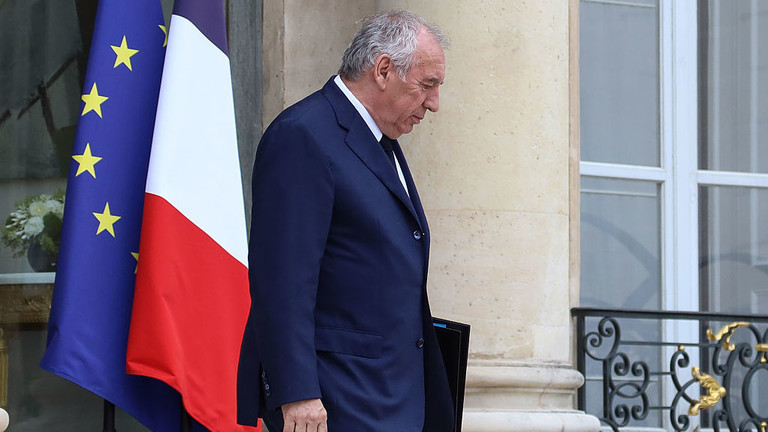
French Prime Minister Francois Bayrou © Getty Images / Ameer Alhalbi / Contributor
RT | September 8, 2025
The French government has fallen after Prime Minister Francois Bayrou lost a crucial confidence vote in parliament on Monday. Bayrou is the second consecutive prime minister under President Emmanuel Macron to be ousted, throwing the nation into political and economic turmoil.
A no-confidence motion in the National Assembly requires at least 288 votes to pass. Monday’s motion received 364 votes, with the left-wing New Popular Front and the right-wing National Rally uniting in opposition to end a months-long standoff over Bayrou’s austerity budget.
Having previously survived eight no-confidence motions, Bayrou called this vote himself, in a bid to secure backing for proposals that forecast almost €44 billion ($52 billion) of savings to ease France’s debt burden before the budget is presented in October.
The prime minister, who has repeatedly warned that France’s national debt poses a “mortal danger” to the country, appeared to acknowledge his fate. In a bitter remark on Sunday, Bayrou lashed out at rival parties that he said “hate each other” yet joined forces “to bring down the government.”
Bayrou is the second French prime minister in succession to be brought down following Michel Barnier’s ejection last December after just three months in office – and the sixth to serve under Macron since he was first elected in 2017.
Bayrou’s ouster reportedly leaves the French president to choose between appointing a Socialist prime minister to steer a budget through parliament, effectively ceding control of domestic policy, or call snap elections that polls suggest favour Marine Le Pen’s National Rally. With Macron’s approval ratings already hitting historic lows, either choice risks further weakening his presidency. Analysts warn that if markets lose confidence in France’s ability to rein in its deficit and mounting debt, the country could face turmoil reminiscent of the UK during the brief Liz Truss premiership.
Public discontent with Macron’s leadership has deepened, with the latest Le Figaro poll showing nearly 80% of French no longer trust the president. Thousands marched through Paris at the weekend demanding Macron’s resignation and carrying placards reading ‘Let’s stop Macron’ and ‘Frexit.’
All messenger apps are ‘transparent’ to spy agencies – Kremlin
RT | September 7, 2025
Messaging apps are “absolutely transparent” to intelligence agencies and security services, Kremlin spokesman Dmitry Peskov has said. People who use them to share sensitive information should be aware of the risks, he added.
“All messengers are absolutely transparent systems, and people who use them should understand that they are transparent… to the security services,” Peskov told journalists on Friday at the Eastern Economic Forum in Vladivostok, Russia.
He added that it is particularly important to consider the risks when sensitive government or commercial data is shared through these apps, which can be accessed by foreign intelligence services.
Peskov was commenting on Telegram and WhatsApp in Russia, as well as the Russian government’s support for developing a domestic messaging platform.
Russian security services have accused Telegram and WhatsApp of using double standards for refusing to share data with the Russian authorities about fraud and terrorist plots while complying with similar requests from other countries.
In July, a member of the State Duma’s committee on information policy and technology, Anton Nemkin, called WhatsApp’s continued presence in Russia a “legalized breach of national security.”
Russian law enforcement officials have said that Ukrainian intelligence, along with other malicious actors such as swindlers and con artists, often relies on databases containing personal data obtained through WhatsApp and Telegram to recruit agents or identify targets inside Russia.
In December 2024, the US government also warned senior officials to switch to encrypted communications after a security breach in which a group of hackers stole data, including information stored under US government surveillance protocols as part of “legal” wiretapping of American suspects.
Australia Orders Tech Giants to Enforce Age Verification Digital ID by December 10
A safety law that reads like a blueprint for a surveillance state
By Cindy Harper | Reclaim The Net | September 8, 2025
Australia is preparing to enforce one of the most invasive online measures in its history under the guise of child safety.
With the introduction of mandatory age verification across social media platforms, privacy advocates are warning that the policy, set to begin December 10, 2025, risks eroding fundamental digital rights for every user, not just those under 16.
 eSafety Commissioner Julie Inman Grant has told tech giants like Google, Meta, TikTok, and Snap that they must be ready to detect and shut down accounts held by Australians under the age threshold.
She has made it clear that platforms are expected to implement broad “age assurance” systems across their services, and that “self-declaration of age will not, on its own, be enough to constitute reasonable steps.”
The new rules stem from the Online Safety Amendment (Social Media Minimum Age) Act 2024, which gives the government sweeping new authority to dictate how users verify their age before accessing digital services. Any platform that doesn’t comply could be fined up to $31M USD.
While the government claims the law isn’t a ban on social media for children under 16, in practice, it forces platforms to block these users unless they can pass age checks, which means a digital ID.
There will be no penalties for children or their parents, but platforms face immense legal and financial pressure to enforce restrictions, pressure that almost inevitably leads to surveillance-based systems.
The Commissioner said companies must “detect and de-activate these accounts from 10 December, and provide account holders with appropriate information and support before then.”
These expectations extend to providing “clear, age-appropriate communications” and making sure users can download their data and find emotional or mental health resources when their accounts are terminated.
She further stated that “efficacy will require layered safety measures, sometimes known as a ‘waterfall approach’,” a term often associated with collecting increasing amounts of personal data at multiple steps of user interaction.
Such layered systems often rely on facial scanning, government ID uploads, biometric estimation, or AI-powered surveillance tools to estimate age.
Privacy campaigners warn that these approaches risk normalizing the constant collection of sensitive personal data, building infrastructure that could easily be repurposed for broader tracking or profiling.
To support enforcement, eSafety has launched a self-assessment tool for companies to determine whether their services are covered by the law.
The Commissioner noted that the tool would help companies figure out if “any of their services may be excluded” under the legislative rules issued by the Minister for Communications.
However, most major social media platforms such as Facebook, Instagram, TikTok, Snapchat, YouTube, and X are almost certain to be included.
eSafety is also developing regulatory guidance to clarify what “reasonable steps” will mean in practice.
The Commissioner has made it clear that platforms must already be preparing to prevent children from manipulating settings to bypass restrictions, ensure that complaint mechanisms are functional and accessible, and plan for full implementation ahead of the December deadline.
Citing consultations with over 160 organizations and more than 50 young people aged 13 to 23, the Commissioner claims there is “strong community support for measures to better protect children online.”
She added, “Australians have told us they want strong, practical protections that keep children safe without compromising privacy or fairness. We have listened, and this feedback is shaping the guidance we are putting in place for industry.”
However, many in the privacy and digital rights communities question whether such a balance is possible when the state’s approach is to compel private companies to verify the age of every user, regardless of whether they’re children.
The phrase “without compromising privacy” rings hollow for those who recognize that age verification at this scale often relies on intrusive surveillance methods that compromise anonymity for everyone, not just young users.
The government maintains that only services with core social networking features are affected.
Online games and basic messaging apps may be excluded. But messaging functions embedded in social media platforms, like DMs on Instagram or group chats on Snapchat, will fall under the new restrictions. The definition is broad enough that many widely used platforms could be swept into the regulatory net.
Although the Commissioner has publicly insisted that safety and privacy “do not have to be mutually exclusive,” the architecture required to meet the government’s demands suggests otherwise.
Once systems are in place to scan faces, verify IDs, or track user activity for the sake of age assurance, they can be leveraged for other purposes by platforms or the state.
Australia’s move places it at the frontier of a growing global trend where safety rhetoric is used to justify mass surveillance.
Privacy advocates argue that introducing mandatory identification online not only limits access but also normalizes tracking in digital spaces that once allowed for anonymity, freedom of expression, and private communication.
Despite these concerns, the Commissioner urged platforms not to delay. “This is the time for companies to start mobilizing and planning for implementation,” she said, adding that “children, parents and carers are counting on services to deliver on their obligations and prepare their young users and the trusted adults in their lives for this monumental change.”
Europe kills democracy to save liberalism
By Raphael Machado | Strategic Culture Foundation | September 8, 2025
The latest opinion polls are extremely indicative of a radical political shift in the European landscape.
In Germany, the Alternative for Germany (AfD) gathers the preferences of 26% of voters, which clearly positions it as the largest opposition party. When the voting intentions for the CDU and CSU are separated, the AfD then becomes the most popular German party.
Meanwhile, in France, the National Rally (RN) — now led by Jordan Bardella — already enjoys the support of 37% of citizens, placing it far ahead of its Macronist and progressive rivals. In the United Kingdom, Nigel Farage’s Reform UK also leads in the polls with 30% of voting intentions. Also leading is the Freedom Party of Austria, with 37% popular support. And in a similar situation, we see the Party for Freedom in the Netherlands, with 33% of voting intentions.
Further down in their respective countries, we see Chega in Portugal as the second most popular party, with 23% of voting intentions. Also in second place are the Sweden Democrats, with 20% of voting intentions, and Norway’s Progress Party, with 22%.
Other European countries see similar parties in solid third-place positions, such as in Denmark, Belgium, Finland, and Poland. And if we discount Meloni’s “Brothers of Italy,” we also see the Lega in Italy in a similar situation.
We are very clearly facing a political trend that goes far beyond a localized phenomenon. The phenomenon is continental and, as it represents a gradual increase over years, apparently lasting. These parties will not eventually return to political marginality and seem to be here to stay.
It is inevitable to consider that the rise of these parties challenging the liberal order is a consequence of the special military operation. The trade and energy rupture generated some significant economic problems in Europe. The German economy shrank, while the French and Italian economies stagnated. Most European countries also faced an inflationary crisis in 2022 and, to control inflation, had to further tighten public spending with austerity policies, as well as increase interest rates. Unemployment also rose, especially in Germany, where several factories have been closed in the last 2 years.
Furthermore, it does not go unnoticed that the leaders of the UK, France, and Germany have increasingly resorted to inflammatory rhetoric hinting at sending their countries’ youth to fight against Russia in Ukraine.
But the strengthening of conservative populism in Europe is not a new phenomenon. It is a gradual evolution that has been building for 20 years, and its main cause is mass immigration, with all its nefarious consequences in the realms of security, economy, culture, etc.
We imagine that such a phenomenon is not considered desirable by the current European elites. Otherwise, one could not explain the judicial offensive against the AfD aimed at banning the party, nor the lawfare practiced against Marine Le Pen making her ineligible, and even less the entire mobilization to arrest Calin Georgescu in Romania, as well as the strange maneuvers that led to the defeat of George Simion in that country’s presidential elections.
But apparently, the situation does not stop at lawfare and potentially illegal judicial maneuvers.
In France, a wave of deaths seems to be linked to Macron, with center-right legislator Olivier Marleix and François Freve (a plastic surgeon linked to Brigitte Macron) on the list of suspicious deaths. Now, more recently, there are reports of at least 7 mysterious deaths of AfD politicians from North Rhine-Westphalia on the eve of local elections.
Probably, these waves of mysterious deaths in France and Germany will never be solved, but a different atmosphere is clearly felt in Europe today. An atmosphere that is certainly less free than that of Europe a few decades ago.
Election manipulation, imprisonment of opposing candidates, mysterious deaths of critics, curtailment of freedom of expression; Western European countries are beginning to check all the boxes of typical dystopian tyrannies — what has been said about China, Russia, and North Korea that has not already become reality in the UK, Germany, and France?
It seems that to preserve “liberal democracy” against “extremists,” Europe is voluntarily abandoning all remnants of democracy.
Russia: Irish peacekeeping in Ukraine “unacceptable”
By Ben Scallan | GRIPT | September 5, 2025
The possibility of Irish peacekeepers being deployed to Ukraine is “categorically unacceptable” because “Ireland cannot be considered a neutral state,” the Russian Embassy has said.
In a statement issued today, the Embassy said it was monitoring the Irish Government’s rhetoric closely and “considers it categorically unacceptable and unsustainable.”
“It is important to emphasize that Ireland cannot be considered as a neutral state with regard to the conflict in Ukraine,” the Embassy remarked. “Given its openly Russophobic and pro-Ukrainian position, as well as its assistance to the Kiev regime, including military aid.”
The Embassy also argued that any attempt to justify the proposal under a United Nations Security Council mandate “would be deemed inadmissible.”
“Ireland is a member of the European Union and follows its foreign policy approaches,” the statement continued. “The EU is rapidly moving away from its originally strictly peaceful integrative agenda, while losing its independence in the decision making process and rapidly militarizing itself, turning in essence into a NATO appendage.”
Russia warned that it would reject any scenario involving Western military forces being deployed to Ukraine, claiming such a move could cause escalation.
“Russia categorically rejects any scenarios which envisage the deployment of the Western military contingents in Ukraine,” the Embassy said. “Peacekeeping services of ‘neutral’ Dublin, even if they are indeed genuine, should start first and foremost with the rejection of the rabid anti-Russian rhetoric.”
The statement concluded with a call for the Irish Government to avoid what it called attempts to “inflate its ‘peacekeeping’ reputation” at Russia’s expense.
“We call on the Irish leadership to stop any attempts to undermine the efforts to achieve comprehensive, just and sustainable settlement of the conflict over Ukraine,” the Embassy said. “And to refrain from cynical attempts to inflate its ‘peacekeeping’ reputation on account of the crisis in the provocation of which Dublin, along with other countries of the collective West, played no small role.”
The remarks follow comments earlier this week by Taoiseach Micheál Martin, who told Ukrainian President Volodymyr Zelensky that Ireland was “open” to participating in a peacekeeping mission if it was appropriately mandated under the UN Charter.
As reported by Gript yesterday, Russia has already dismissed wider European proposals for a multinational deployment as “absolutely unacceptable.” Foreign ministry spokeswoman Maria Zakharova said her country had “no plans to discuss a foreign intervention in Ukraine in any form or format.”
Since the outbreak of the Ukraine war, Irish politicians have repeatedly asserted that Ireland is “not neutral” in relation to the conflict. Notably, in 2022, then-Taoiseach Leo Varadkar asserted: “In this conflict, Ireland is not neutral at all. Our support for Ukraine is unwavering and unconditional”.
Ireland’s Defence Forces have a long history of UN service, including missions in southern Lebanon since 1978. Under the State’s current “Triple Lock” policy, troops cannot be deployed overseas without UN Security Council approval. Critics argue this allows powers such as Russia and China to block Irish deployments, and the Government has proposed abolishing the mechanism. Proponents of the Triple Lock argue that it helps to ensure military neutrality.
Elite UK divers likely behind Nord Stream sabotage – Putin aide
RT | September 8, 2025
The sabotage of the Nord Stream pipelines could not have been carried out without Western commandos, a top aide to Russian President Vladimir Putin has claimed, singling out Britain as the likely culprit.
German prosecutors have attributed the explosions in international waters in September 2022, which disabled the twin pipelines supplying Russian gas to Germany via the Baltic Sea, to a group of Ukrainian nationals.
In an article published Sunday in Kommersant, the former head of Russia’s Federal Security Service (FSB), Nikolay Patrushev, argued that Ukrainians lack the expertise to carry out this complex operation independently.
The sabotage was likely “planned, overseen, and executed with the involvement of highly trained NATO special forces,” Patrushev wrote, adding that the perpetrators were experienced in deep-sea operations and familiar with working in the Baltic.
“Few armies or intelligence services have divers capable of executing such an operation correctly and, above all, covertly. One unit with the necessary skills is the British Special Boat Service,” he said. Founded during World War II, the SBS is the Royal Navy’s elite squad specializing in amphibious warfare.
Russia has criticized the German investigation for a lack of transparency and for not including the Russian authorities. In 2024, Russia’s Foreign Intelligence Service claimed it had “credible information” that the US and UK were directly involved in the sabotage, a claim denied by both London and Washington.
China’s Warning
By Manlio Dinucci | Global Research | September 8, 2025
The global dominance that the United States, the greatest power in the West, wants to maintain at all costs violates the most basic norms of international law: the Trump Administration revoked the visas of representatives of the State of Palestine, preventing them from attending the United Nations General Assembly in September.
This claim to dominance is provoking growing opposition from the Global South. This is confirmed by the warning issued by China with the largest military parade in Beijing.
The official statement from the State Department states that the Trump administration has revoked the visas of members of the Palestine Liberation Organization (PLO) and the Palestinian Authority (PA) ahead of the upcoming United Nations General Assembly, “in the interest of our national security” because “the PLO and PA are responsible for undermining the prospects for peace through their appeals to the UN International Court of Justice to obtain unilateral recognition of a hypothetical Palestinian state.”
In addition, the Trump Administration announced the suspension of visas for all Palestinian passport holders, preventing them from entering the United States for medical treatment, university attendance, visits to relatives, and business activities. At the same time, the Trump administration announced that it is studying “the post-war plan for Gaza”: it provides for the “voluntary transfer” of the entire Palestinian population to transform Gaza into a luxurious “Middle East Riviera.” In this way, while Israel continues its genocide of Palestinians in Gaza and the West Bank, the United States is dismantling the foundations of the State of Palestine.
However, the global dominance that the West’s greatest power wants to maintain at all costs, violating the most basic norms of international law, is provoking growing opposition from the Global South. This is confirmed by the meeting of the Shanghai Cooperation Organization, whose members include China, Russia, Belarus, Iran, India, Pakistan, Kazakhstan, Kyrgyzstan, Tajikistan, and Uzbekistan, with several other countries participating. At the meeting held in China, President Xi Jinping reiterated the basic principles:
“First, we must respect the principle of sovereign equality. We must uphold that all countries, regardless of their size, strength, and wealth, are equal participants, decision-makers, and beneficiaries in global governance. We must promote greater democracy in international relations and increase the representation and voice of developing countries.”
*
This article was originally published in Italian on Grandangolo, Byoblu TV.
Manlio Dinucci, award-winning author, geopolitical analyst and geographer, Pisa, Italy. He is a Research Associate of the Centre for Research on Globalization (CRG).
Featured Video

America Racing to Strategic Defeat in Iran
or go to
Aletho News Archives – Video-Images
From the Archives
An Expert Military Analysis of War with China
Actually, None is Necessary
By Fred Reed • Unz Review • December 13, 2020
The Correlation of Armed Forces: U.S. goods and services trade with China totaled an estimated $634.8 billion in 2019. Exports were $163.0 billion; imports were $471.8 billion. The U.S. goods and services trade deficit with China was $308.8 billion in 2019. Trade in services with China (exports and imports) totaled an estimated $76.7 billion in 2019. Services exports were $56.5 billion; services imports were $20.1 billion. The U.S. services trade surplus with China was $36.4 billion in 2019.
There is talk within the Washingtoniat of a possible war with China. Steve Bannon, who apparently was dropped on his head as a child, actually favors such a war. We hear the usual shoo-the-boobs alarm about how the Chinese are doing something terrible and we must gird our loins and American values and show them what for, bow wow, woof. The danger is that the current game of who-blinks-first in Asian waters might actually provoke a shooting war. You know the kind of thing: One warship refuses to get out of the way of another, a collision ensues, some retard lieutenant who signed up on waivers opens fire, and we’re off and running. It is not a good idea to let children play with matches.
The said war is discussed either in emotional terms by idiots or in purely naval terms by those familiar with such things, so we hear of the First Island Chain and the Second Island Chain and whose missiles against the other’s missiles and so on. This would be appropriate if we were fighting World War Two again. Which we aren’t. Let’s take a quick-and-dirty look at how such a war might go.
To begin the war, America would overestimate itself and underestimate China. This is doctrine in the Pentagon. … continue
Blog Roll
 Aletho News
- Poland rules out sending Patriot missiles to US/Israel amid war on Iran
- Tehran approves new Hormuz plan with major restrictions
- No Threat Can Force Iran’s Surrender /Trita Parsi & Lt Cl Daniel Davis
- UK’s New Pandemic Plan Would Turn Big Tech Into a Mass Location Tracking Network
- Growing insecurity, soaring prices fuel protests in north as regime bans evacuation: Sources
- Iran denies responsibility for ‘depraved’ attack on Kuwait desalination plant
- Bring The Troops Back. End This War Now!
- Can we please stop calling Israel the ‘only democracy in the Middle East’ now?
- US should start removing its troops from Germany, proposes AfD co-leader Chrupalla
- Iran Red Crescent: 600 educational centers attacked in US-Israeli ‘war crimes’
- If Americans Knew
- As Iran targets US military bases, will they be relocated to Israel? Not a ceasefire Day 171
- Will Trump Go Kamikaze?
- Is the University of Florida Shutting Down College Republicans over Israel Criticism?
- Jewish extremist arrested over alleged plot to firebomb Palestinian activist Nerdeen Kiswani’s home
- More than half of Palestinian child detainees have no charges
- The More Murderous Israel Gets, The More We Hear About “Antisemitism”
- Land Day and the Palestinian struggle after 30 months of genocide
- The Iran War Is About Palestine
- Israeli soldiers echo settler ideology, talk of revenge after targeting Palestinians and detaining CNN crew in the West Bank
- Israeli Policies Threaten Future of Christian Schools in Jerusalem
- No Tricks Zone
- New Study Finds Warming Saves Lives…Cold Temperatures 12 Times More Deadly Than Excess Heat
- German Science Blog Accuses PIK Climate Institute Of Hallucinating Climate Tipping Points
- Devastating Assessment Of Comirnaty Vaccine By Former Senior Pfizer Europe Toxicologist
- New Study: CO2 Is ‘Effectively Negligible’ As An Explanatory Climate Change Factor Since 2000
- Former Pfizer Toxicologist Dr. Helmut Sterz Tells Bundestag Hearing Pfizer Vaccine Should Have Never Been Approved
- Energy Expert: Germany’s Nuclear Phaseout Was A “500 Billion Euro Mistake”
- New Research: South Australia’s Mid-Holocene Sea Surface Temperatures Were 4°C Warmer Than Today
- Storing Green Energy To Last Germany 10 Days Would Require A 60-Million Tonne Battery
- New Studies: UK Sea Levels Were 4 Meters Higher Than Today During The Mid-Holocene
- Destructive Green New Deal: German Energy And Metal Group Warns Of Drastic Crisis
 Aletho News