US withdraws waiver for Iran’s Chabahar port, hitting India’s investment
Press TV – September 19, 2025
The United States has revoked the sanctions waiver for Iran’s Chabahar port, threatening India’s multi-million-dollar investment in the strategic project amid straining ties between Washington and New Delhi.
The White House announced on Thursday that the exemption, in place since 2018, will end on September 29.
The waiver had allowed India to develop the Shahid Beheshti terminal at Chabahar, seen as a key gateway to Afghanistan and Central Asia. With its withdrawal, entities involved in the project may now face penalties.
US State Department spokesperson Thomas Pigott said the decision was consistent with the Trump administration’s so-called “maximum pressure” policy. He said that the revocation means any person or company engaged in the port’s operation could be exposed to sanctions.
Located in Chabahar, the port gives India access to Afghanistan and beyond, while also feeding into larger connectivity schemes such as the International North-South Transport Corridor.
India has already provided equipment worth $25 million, shipped food supplies through the port, and, in May 2024, signed a 10-year agreement to operate it. Under that deal, India pledged $120 million in investment and offered an additional $250 million credit line for infrastructure upgrades.
The waiver was originally granted in recognition of the port’s importance for stabilizing Afghanistan and facilitating humanitarian shipments.
Iran, meanwhile, has long slammed Washington’s reliance on sanctions. Officials in Tehran describe the approach as an “addiction” that has persisted since the 1979 revolution, with various Iranian entities repeatedly targeted under shifting pretexts.
Meanwhile, the sanction comes as tensions between New Delhi and Washington have already been rising under the Trump administration. Earlier this year, the White House imposed 50 percent tariffs on Indian goods, doubling an earlier rate.
Trump justified the move by accusing India of indirectly financing Russia’s war in Ukraine through oil purchases. The tariffs, which came into force in August, now cover most Indian exports to the US.
The measures hit at a time when bilateral trade stood at more than $87 billion, making India one of America’s largest partners. Experts warn the duties could shrink India’s exports to the US to nearly half within two years.
New Delhi has condemned the tariffs as “unfair, unjustified, and unreasonable,” and signaled a stronger tilt toward Moscow and Beijing.
Ex-Romanian presidential candidate accused of coup attempt
RT | September 18, 2025
Prosecutors in Romania are taking former presidential candidate Calin Georgescu to court. He is accused of plotting a coup after his first-round election victory was annulled last year.
Georgescu, a former UN official, came out on top in the first round of the presidential vote in November 2024, after campaigning on national sovereignty, criticism of involvement in NATO and the EU and opposition to continued military aid for Ukraine.
However, his victory was canceled by the country’s Constitutional Court, citing “irregularities” in his campaign and alleged Russian interference – a claim Moscow has denied. Georgescu was banned from the race altogether, with the re-run of the election in May being won by pro-EU candidate, Nicusor Dan.
Romanian General Prosecutor Alex Florenta said on Tuesday that Georgescu and 21 other people had been indicted for attempting to instigate violence after the cancellation of the election results in December.
The evidence collected during the investigation suggested that Georgescu held a secret meeting with Horatiu Potra, a military contractor who previously operated in the Democratic Republic of the Congo (DRC), and discussed a plan to spark unrest in Bucharest, the prosecutor claimed.
Shortly afterward, Potra was detained by traffic police en route to the capital with “a paramilitary group” of 20 people armed with weapons and explosives, he added.
Georgescu, who quit politics several months ago, has denied any wrongdoing. The date for the trial has not been set yet.
Florenta also claimed that the probe revealed a pattern of hybrid attacks against Romania by Russia over the past year, including cyberattacks, public events, and online disinformation.
Asked to comment on the accusations by journalists on Tuesday, Kremlin spokesman Dmitry Peskov reiterated that they were groundless.
“Let’s recall how Washington accused Russia of meddling in the election, attempting destabilization, and so on. Later, they themselves admitted that all this was not true. It is the same with Romania,” Peskov stressed.
Moscow rules out visa restrictions for EU citizens
RT | September 19, 2025
Moscow has no plans to restrict visas for EU citizens, Russian Foreign Ministry spokeswoman Maria Zakharova has said.
She made the comments after reports that the EU is considering limiting visas for Russian tourists as part of its 19th sanctions package against Moscow.
“We have no plans to close the border to European citizens or to restrict their visits in any way. We believe that human contacts, tourism, business, and humanitarian ties must be maintained. Our country seeks to build bridges between people despite efforts within the EU to tear them down,” Zakharova said at her regular Thursday briefing.
“Such discriminatory measures are yet another element of the hybrid warfare waged by Brussels and of the cancel culture aimed at everything Russian,” she added.
In 2022, the EU suspended a deal that had simplified visa procedures for Russians and had cut application fees, citing the Ukraine conflict. Moscow suspended the same arrangement the following year.
Several EU members, including Estonia and Finland, have called for a full ban on Russian tourists, describing them as potential security threats. One of the proponents of the ban is former Estonian Prime Minister Kaja Kallas, who now serves as the EU’s top diplomat.
Bipartisan Push in Congress to Weaken Section 230, Expand Online Surveillance, and Increase Platform Liability
Calls for platform accountability came with few answers about who decides what speech is acceptable

Dan Frieth | Reclaim The Net | September 18, 2025
During this week’s testimony before both chambers of Congress, FBI Director Kash Patel and several lawmakers made a concerted push to weaken protections for online platforms, advance surveillance partnerships, and promote government intervention in digital speech spaces.
The hearings revealed a rare bipartisan consensus around dismantling Section 230 and tightening control over how people interact and communicate online.
In the Senate, Republican Senator Lindsey Graham opened his questioning by linking online platforms to the assassination of Charlie Kirk, then repeatedly pressed Patel on whether the internet was a breeding ground for radicalization and crime.
Throughout their exchange, Graham blurred the lines between criminal behavior, such as grooming or inciting violence, and broad categories like bullying.
“Is there any law that can shut down one of these sites? For bullying children or allowing sexual predators on the site,” Graham asked.
He repeatedly implied that websites hosting objectionable content should be held legally responsible, asking, “Would you advocate a sunsetting of Section 230 to bring more liability to the companies who send this stuff out?”
Patel replied, “I’ve advocated for that for years.”
Section 230 of the Communications Decency Act is a legal provision that protects online platforms from being held liable for content posted by their users.
It allows websites, forums, and social media services to host a wide range of speech without being treated as the publisher of that content. If Section 230 were repealed or weakened, platforms would face significant legal risk for everything users say or share.
This could push companies to aggressively censor user content to avoid lawsuits, leading to broader suppression of speech, fewer places for open dialogue, and less room for dissenting or controversial viewpoints online.
When Graham demanded action against platforms that allow bullying or grooming, Patel suggested that platforms cannot be sued under current law, adding that the explosion of AI-generated abusive material had worsened the problem.
Note that Section 230 does not give platforms immunity from federal criminal law. If a website is knowingly hosting or involved in illegal content, such as child exploitation, terrorism, or sex trafficking, it can already be held criminally liable under existing statutes.
Patel called the situation a “public health hazard” and stated, “I think not only are some of these sites designed to be addictive, unfortunately, the reality is some of these sites are designed to generate income, and many people are generating income based on this illegal trade.”
The hearing offered no engagement with the consequences of gutting Section 230. Instead, there was a clear push to strip away those protections in the name of safety.
Senator Amy Klobuchar, a Democrat, echoed that sentiment. “For years I have supported repealing Section 230,” she said, arguing that the law is outdated and was crafted for a different era.
While she prefaced her comments by claiming to oppose censorship, her solution was the same as Graham’s: eliminate legal protections for platforms to create a “better environment online.”
Klobuchar veered into broader political territory, citing a wave of threats and violence targeting lawmakers.
She asked Patel to commit to conveying her concerns to the White House and emphasized a need to “move forward” on both speech laws and gun control measures.
Republican Senator Marsha Blackburn seized the opportunity to promote the Kids Online Safety Act (KOSA).
KOSA is a proposed law that presents itself as a measure to protect children but would fundamentally alter the structure of the internet by encouraging surveillance, forced identity verification, and government-influenced content moderation.
While the bill mandates that platforms shield minors from content deemed harmful, such as material linked to mental health concerns, it also gives the Federal Trade Commission the authority to penalize companies over subjective definitions of what constitutes harm.
KOSA directs federal agencies to develop age verification systems at the device or operating system level, setting the stage for a national digital ID regime that would eliminate online anonymity and expose users to deeper tracking and data collection.
Despite revisions and corporate endorsements, the bill continues to raise alarms among civil liberties advocates who warn it would pressure platforms to over-censor, chilling free speech under the pretense of child safety.
Blackburn described platforms like Discord as enablers of predation, referencing the Kirk assassination, and asked Patel what Congress could do to give the FBI more power.
Patel responded with a call for financial crackdowns and more legal obligations for tech companies, stating, “Nobody’s being held accountable. They’re making money and our youth is dying.”
During his exchange with Rep. Brandon Gill, Patel made one of the most interesting comments of the hearing.
Patel called for expanding surveillance partnerships between the government and private tech companies, including gaming and social media platforms.
“There is no way to triage the amount of information generated on these sites by the FBI alone,” Patel said.
He advocated renewing a law that allows companies to report users to the FBI without fear of liability, framing this corporate-government alliance as essential to national security.
This approach would effectively deputize tech companies as enforcers. No concern was raised about how such partnerships could be abused to monitor lawful political activity or dissent.
Despite the repeated invocation of safety and child protection, the hearings presented little evidence that any of the proposed changes would meaningfully prevent crime.
Instead, lawmakers from both parties appeared eager to empower both the FBI and online platforms to act as gatekeepers of acceptable discourse, with Patel affirming at every turn that the Bureau would welcome such powers.
The push to overhaul Section 230, pass KOSA, and institutionalize surveillance under the banner of public-private “partnership” may signal a dangerous change in how speech is treated online.
Rather than protect fundamental rights, lawmakers are pushing to dissolve long-standing legal safeguards in pursuit of control over what people are allowed to say, and where they’re allowed to say it.
Max Blumenthal: Trump is afraid of Netanyahu – Israel spies on the US
If Americans Knew | September 18, 2025
Max Blumenthal is an American journalist and editor of The Grayzone.
Judge Andrew P. Napolitano is a graduate of Princeton University and the University of Notre Dame Law School. He is the youngest life-tenured Superior Court judge in the history of the State of New Jersey. He sat on the bench from 1987 to 1995, when he presided over more than 150 jury trials and thousands of motions, sentencings, and hearings. He is the author of nine books on the U.S. Constitution, two of which have been New York Times Best Sellers.  / @judgingfreedom
Original video aired on Sept 15, 2025: • [BREAKING NEWS EXCLUSIVE ] – Max Blumentha…
Germany Faces Challenging Winter Of Power Outages As Energy Supply Struggles
By P Gosselin | No Tricks Zone | September 17, 2025
The head of transmission system operator Amprion, Christoph Müller, warns that Germany’s energy supply is facing a challenging winter due to a lack of power plant capacity as the nuclear and planned coal continue to get phased out. This could lead to targeted power outages and soaring electricity prices, he warns.
Müller paints a serious picture: in a scenario where energy demand outstrips supply, pre-defined groups could experience power cuts lasting around 90 minutes. This is not only a concern for the industrial sector; but it would mean hospitals relying on emergency generators, supermarkets closing their doors, and homes going without power. This is the stage that Germany’s energy supply has deteriorated to.
The crisis highlights a significant gap in Germany’s energy strategy. Müller argues that new, flexible gas-fired power plants are essential to maintain grid stability and prevent a supply shortfall. He expresses serious doubts about the feasibility of the coal phase-out by its 2028 deadline, citing the lack of viable alternatives.
While he dismisses nuclear power as a solution due to its long construction timeline, the overall message is clear: without immediate and massive investment in new power sources, Germany’s energy transition is at risk.
Grid under immense strain
Müller’s assessment is grim and unfortunately realistic. While he doesn’t anticipate a nationwide blackout, he warns that the grid is under immense pressure. The next two winters may be manageable, but the long-term outlook is one where blackouts, rising electricity prices, and a stalled energy transition could become the new reality.
Hat-tip: Blackout News here.
‘Shut out’: Journal fires editor after publishing research refuting ‘warming climate’
By Gabriel Zylstra – The College Fix – September 17, 2025
The American Journal of Economics and Sociology recently removed special editor Marty Rowland from his position for publishing a paper refuting climate change argument about carbon dioxide, according to the paper’s authors.
“The standard response of the mainstream climate science community these days to papers that somewhat challenge the CO2-is-dangerous-narrative is to immediately ask for retraction,” Marcel Crok, a co-author of the paper and director of the climate science group Clintel, told The College Fix.
“It’s a strategy because it gives the signal that the paper is really bad and most people don’t have the time and knowledge to assess the situation,” Crok said in an email Tuesday.
The paper in question, “Carbon dioxide and a warming climate are not problems,” was published in the journal in May 2024. Crok co-authored it with Andy May, a retired petrophysicist and developmental geologist who worked for Exxon and other oil and energy companies.
Rowland, a lecturer at the Henry George School of Science and environmental engineer, was the editor at the journal who approved it.
According to May’s blog, the journal fired Rowland in August, and the reason it gave was “his publication of our paper.”
An archived version of the journal editorial board webpage shows Rowland was the special editions editor at least since 2023. The current page no longer lists him as an editor.
The Fix reached out to the editorial team at the American Journal of Economics and Sociology several times by email over the past two weeks to ask about the reason for Rowland’s departure. None responded.
Since being published, the paper has been cited 25 times according to google scholar, and scientists David Wojick, Kenneth Richard, and H. Sterling Burnett gave positive reviews, according to May’s blog.
“In short there was no legitimate reason to fire Dr. Rowland for publishing our fully peer-reviewed, and well received, paper,” May wrote.
May told The Fix via email this week that the paper was peer-reviewed prior to publication.
“The two scientists that liked the paper, both are very famous scientists with decades of climate science publications and well over 16,000 citations between them, had many suggestions and I made all their suggested changes to the paper and the changes improved the paper a lot,” May said.
“Post-publication, the response was mostly favorable, but there was a lot of published criticism,” he told The Fix. “But, these critical responses to our paper are swamped by the favorable critiques. The paper is very popular and in the top 0.1% of all papers followed by Wiley… It is also the #2 paper published in AJES.”
Crok told The Fix that others responded to its publication with calls for retraction.
However, May said none of the critics “identified any errors” in their article, which is why it hasn’t been retracted.
The publisher, Wiley, “disagreed with our conclusions and wanted to censor our paper, thankfully the board did not do that, but they did fire Marty, which was a very bad move” May told The Fix.
May told The Fix, “The pressures are huge. Basically, if a climate researcher does not toe the ‘consensus’ line he will receive no funding for his work and will be ostracized. He or she is then often forced to resign or fired.”
Crok agreed, saying scientists whose research does not fit the predominant climate change narrative often are unfairly maligned.
These include Dutch scientist Hessel Voortman, “who published a paper in 2023 about sea level rise along the Dutch coast (showing no acceleration), which led to a group of Dutch scientists asking for retraction,” Crok said.
Clintel, Crok’s foundation based in the Netherlands, focuses on climate education and policies from the standpoint that climate science should be less political. In 2023, Clintel organized a petition of more than 1,600 scientists world-wide, including Nobel Laureates, that argues there is no climate change crisis.
Meanwhile, environmental policy expert H. Sterling Burnett expressed similar concerns about Rowland’s firing when contacted by The College Fix.
“Unfortunately, I’m not surprised at all by the American Journal of Economics and Sociology (AJES) firing of Dr. Rowland,” Burnett said. He is the director of the Arthur B. Robinson Center on Climate and Environmental Policy at The Heartland Institute.
“If anything, I’m surprised at how brave he was in publishing the study,” he said.
Burnett said the field of climate research is heavily censored and not open to dispute. “No one should suffer for their belief in open inquiry that is at the heart of the scientific endeavor, but in the field of climate science, far too many academics do.”
According to Burnett, academics are commonly ostracized or fired “for daring to raise perfectly legitimate questions about the causes and consequences of climate change, and about the policies proposed by the ‘settled science’ community as a response to climate change.”
Burnett said climate research was relatively open to dissenting views up until about 20 years ago when “influential climate alarmists moved to shut down continued debate and discussion about the causes and consequences of climate change, by having open minded journal editors removed from their positions or reined in by journal publishers.”
“[C]limate skeptics were increasingly shut out of the peer review process, and papers openly skeptical of the anthropogenic climate disaster narrative found it nearly impossible to get published in top journals,” he said.
Burnett told The Fix that politicians and media also contributed to disenfranchising so-called “climate deniers” under the guise of protecting scientific consensus.
When asked about claims of consensus to justify scientific censorship, he responded, “Consensus is a political term, not a scientific one and should have no legitimate place in scientific discovery. ” He said that science “is a method, a way of explaining phenomena and discovering facts, not a conclusion set in stone for all time.”
Burnett expressed hope that things are starting to change for the better following the publication of a recent report by the U.S. Department of Energy that pushes back on “climate alarmists.”
The report “is forcing alarmists to address, rather than dismiss out of hand because the ‘science is settled,’ realists long-standing questions, concerns, and critiques of the argument that humans are causing dangerous climate change,” he said.
Crok also mentioned the DOE report in his interview with The Fix, noting that the authors are now facing “severe,” negative pressure for their work.
“This battle will go on, they will try to get the report retracted as well,” Crok said. “This is a worrisome trend in which the mainstream instead of engaging with skeptical scientists simply try to get skeptical papers removed immediately.”
California governor set to sign bill restricting teaching of Palestinian history in schools
By Brooke Anderson | The New Arab | September 16, 2025
Rights advocates are raising concerns over what they say could be a troubling precedent if a bill is signed restricting the teaching of Palestinian history in classrooms in California.
The bill, AB 715, was voted through in the state’s Democratic-majority senate and assembly late Friday night and is now set to be signed by Governor Gavin Newsom.
Those opposing the measure have argued that it could stifle classroom discussions on Palestinians, Islamophobia and other sensitive topics; equate criticism of Israel with antisemitism; and make instructors vulnerable to complaints by imposing vague rules.
Over the last several months, it has faced strong opposition from more than 100 grassroots organisations, including the California Teachers Association, the California Faculty Association, California Federation of Teachers, Association of California School Administrators, California School Boards Association, California Nurses Association, and the American Civil Liberties Union. They have staged regular demonstrations at the state capitol in Sacramento.
Those supporting the bill include the Jewish Federation, the Jewish Community Relations Council, Mosaic United and the Anti-Defamation League. Though they were far fewer, they were able to exert more influence.
“They’re passing anti-education bills. The organising around it has been strong. The entire education community is against it, but it was still passed,” Mirvette Judeh, chair of the Arab American Caucus of the California Democratic Party, told The New Arab.
“They’re not listening to voters. This is a bill that’s unconstitutional. Today it’s education about Palestinian history. Tomorrow it could be something else. To punish teachers to teach about genocide is absolutely insane,” she said.
“History is history. It has to be taught. If people were taught about this in school, the mass dehumanisation of Palestinians would not be happening. They’re taking our rights here at home. This is your America. Take it back,” said Judeh, herself a Palestinian American.
So far, the governor has not indicated whether he will sign the bill, and civil rights advocates that oppose it are hoping there’s still a chance he will not sign it.
“Lawmakers heard overwhelming opposition—8 to 1 from public commenters—and warnings from their own colleagues about the bill’s chilling effect on education. Yet they advanced it anyway,” Hussam Ayloush, CEO of the California chapter of the Council on American-Islamic Relations, said in a public statement.
“This is now Governor Newsom’s test. He can either side with educators, civil rights advocates, and students whose voices are at risk of being silenced—or he can greenlight censorship that will make classrooms less free and less inclusive,” Ayloush added.
If signed, which could happen as early as this week, the bill’s supporters hope that it could be a blueprint for other states to pass similar legislation. This bill comes four years after the introduction in grade schools of ethnic studies, which have included material on Palestine, leading to controversy and the introduction of AB 715.
In other news related to free speech, a new bill introduced in Congress by Representative Brian Mast of Florida would allow Secretary of State Marco Rubio to strip immigrants of US citizenship if what they say is deemed to be terrorism. The move, which has been condemned by free speech advocates such as the ACLU, appears to be aimed at student activists.
Israel Wants ‘Aerial Corridor’ Over Syria to Strike Iran
By Kyle Anzalone | The Libertarian Institute | September 17, 2025
Tel Aviv’s primary objective in discussions with Damascus is to establish an aerial corridor over Syria so Israel can restart its war against Iran.
Axios reports that Israel presented the Syrian government, led by Ahmed al-Sharaa, with a maximalist agreement that would establish a no-fly zone over Syria. Additionally, Tel Aviv wants a large swath of Syria, from the Israeli border to Damascus, to become a demilitarized zone.
An Israeli source told the outlet that an essential part of the agreement will be maintaining the ability to use Syrian airspace to attack Iran. “A central principle of the Israeli proposal is maintaining an aerial corridor to Iran via Syria, which would allow for potential future Israeli strikes in Iran,” they said.
Israeli Prime Minister Benjamin Netanyahu started an unprovoked war with Iran in June. Tel Aviv targeted leadership in Tehran, nuclear facilities, and scientists. President Donald Trump joined the war by striking three Iranian nuclear sites that Israel lacked the military capability to destroy.
Israeli forces currently occupy southern Syria. Israel promised to withdraw its troops from Syria if Damascus accepted the agreement. On Wednesday, Sharaa said a deal with Israel was possible “in the coming days.”
Tel Aviv made a similar agreement with Hezbollah, where Israeli soldiers were scheduled to withdraw from South Lebanon after Hezbollah moved its forces out of the region. However, after the Hezbollah withdrawal, Tel Aviv maintained its occupation. Israel is now demanding that Hezbollah entirely disarm.
The Israeli invasion of Syria began after President Bashar al-Assad was overthrown by al-Sharaa last year. Al-Sharaa, formerly Abu Mohammad al-Jolani, is the founder of al-Qaeda’s Syria affiliate. President Donald Trump has met with Sharaa and lifted some sanctions on Syria in a push to get Damascus to make a deal with Tel Aviv.
VIGILANT: British Cops Push Censorship Technology at Trinity College Dublin
By Tadhg MACDONNELL | The Burkean | September 15, 2025
Tucked away inside its Pearse Street labs and offices, Trinity College Dublin quietly plays host to a variety of initiatives and interests blurring the lines between academia, the private sector and security realm. The VIGILANT project is just one of them.
A €4 million EU-funded scheme run out of the campus’ ADAPT centre for emergent technologies, VIGILANT (Vital Intelligence to Investigate Illegal Disinformation) is a pan-European initiative bringing together the private and public sector to create and fine tune an AI-driven platform for monitoring hate speech.
Commencing work in 2022 and lasting until late this year, VIGILANT ropes in the PSNI as well as policing services of Moldova, Greece and Estonia in the fight against hate speech and disinformation.
Alongside policing services VIGILANT partners include the Spanish technology giant ATOS and GLOBSEC (a Slovakian registered Atlanticist think tank) both with their own funding streams and political agendas.
Treating online speech as a potential security threat, part of VIGILANT’s remit includes establishing an informal intelligence for officers to share information on threats. Central in its pitch is its ability to counter so-called far right extremism with the VIGILANT website listing its ability to neutralise the spread of alleged migrant crime videos as chief among its selling points.
In effect, VIGILANT creates a pan-European surveillance consortium, mixing public police powers with private data-driven expertise, headquartered in Dublin but reaching deep into continental security networks. Publicly, VIGILANT is sold as a tool to help protect democracy yet the technology’s scope flagging “hate speech” puts it squarely in the camp of shutting down civic dissent.
As readers no doubt know, “Hate speech” and “disinformation” are infinitely expandable categories. Today it’s neo-Nazis; tomorrow it’s farmers protesting carbon taxes, parents objecting to gender ideology, or critics of NATO policy or the EU.
Let’s not ignore the symbolism: the PSNI, a British police force with its own chequered legacy, is now a partner in dictating what Europeans may say online, under the banner of an Irish university. Trinity’s prestige provides the camouflage, but the reality is murky.
AfD calls for ‘Germany first’ policy
RT | September 17, 2025
Germany’s interests do not match those of its “Ukrainian partners,” and Berlin should pursue a “Germany first” policy, deputy head of the right-wing Alternative for Germany (AfD) party’s parliamentary group, Markus Frohnmaier, has said.
Frohnmaier made the remarks on Wednesday in an interview with Rossiya 24, suggesting that Berlin should admit its economic woes largely stem from breaking ties with Russia and try to fix them.
“We are genuinely interested in normalizing relations with Russia,” Frohnmaier stated. “We simply have to acknowledge that energy prices for industry, as well as for private individuals in Germany, are now too high.”
Berlin, should it manage to display the “political will,” could “achieve a lot,” including the restoration of the Nord Stream natural gas pipelines, he suggested.
“The interests of our Ukrainian partners, for instance, do not match those of Germany. And I call for a final return to a policy that puts Germany’s interests first,” he stressed.
Germany should not get involved in the Ukraine conflict in any fashion, Frohnmaier said, arguing that it should not even consider deploying its military since most Germans strongly oppose such an idea. The politician also lamented that Berlin had abandoned its longstanding “tradition” of not supplying weapons to war zones.
Berlin has asserted itself as one of the key backers of Kiev in the conflict against Moscow, which has been raging since February 2022. Chancellor Friedrich Merz has repeatedly rejected the idea that Ukraine should make any concessions to Russia to settle the conflict, calling upon the West to pursue the “economic exhaustion” of Moscow instead.
However, Merz admitted last month that Germany is experiencing a “structural crisis” rather than just temporary “weakness.” The country was in recession last year and is expected to show no growth this year, according to IMF projections.
Still, the Merz government is planning to cut social spending and take on large loans to sustain military expansion and weapons deliveries to Ukraine. While Berlin argues those measures are necessary to deter Russia, Moscow maintains that it poses no threat to Germany.
Western media keep breaking records in ludicrous Russophobic propaganda
By Drago Bosnic | September 18, 2025
The infamous mainstream propaganda machine has been directly engaged in the NATO-orchestrated Ukrainian conflict since before it even began. It’s quite clear that Western media are an integral part of the warmongering agenda, either by promoting and trying to justify wars before they start or covering up actual NATO war crimes after the hostilities commence. One major part of this process is dehumanizing the opponent. For instance, during the kinetic phase of NATO aggression on Yugoslavia/Serbia (1991-present), Serbs were presented in the worst possible light. This one-sided viewpoint was used to justify the political West’s crawling invasion of virtually the entire former Yugoslavia, ending in a total disaster for the vast majority of the population, irrespective of ethnic, religious, cultural or any other background.
This was made possible thanks to the nearly universal dominance of the mainstream propaganda machine. They liked the results so much that they simply had to try it out during dozens of other, truly unprovoked and illegal Western invasions, particularly in the Middle East. By the early 2000s, the “evil Serbs” were replaced by “evil Arabs” and “evil Iranians” (or other predominantly Muslim ethnic groups and nations). After killing millions and destroying the lives of tens of millions, particularly across the Middle East, the political West decided it was time to “rekindle” its rivalry with Russia. Thus, after 2014, the previously implicit Russophobia became much more apparent. However, after 2022, it degenerated into mindless, pathological hatred. Suddenly, even Russian trees and cats were banned in Western countries, their vassals and satellite states.
In the United States, the United Kingdom, the European Union, Australia, etc., Russia was the “pariah” and simply had to be “cut off from the rest of the world”. Obviously, this failed because the multipolar bloc comprises more than 70% of the global population (in other words, the actual world). However, within the confines of Western geopolitical space, Moscow remains the “root of all evil”, particularly thanks to constant media coverage that aims to perpetuate Russophobia. As previously mentioned, this sort of hatred is reaching truly pathological levels. Nowadays, institutionalized Russophobia has gone so far that it could easily be considered a serious mental condition (perhaps even a medical emergency). This was particularly evident in the opening months of the special military operation (SMO) in NATO-occupied Ukraine.
For instance, the claims about alleged “Russian war crimes”, including supposedly “against children”, turned out to be blatant lies, with even the Kiev regime firing its children’s rights commissioner Lyudmila Denisova for spreading fakes about “Russian soldiers raping preschool kids”. However, while the mainstream propaganda machine widely published these blatant lies on front covers, they refused to apologize for this after it became clear these were all fakes. In other words, just like in the case of Serbs during the 1990s, it doesn’t matter whether the stories are true, as long as the majority of the population hears about this. For the warmongers, war criminals, plutocrats and kleptocrats in Washington DC, London and Brussels, dehumanizing the current opponent (whoever that may be) and fomenting mindless hatred is all that really matters.
Then came the role of the so-called “international justice institutions” of the “rules-based world order”. On March 17, 2023, the so-called “International Criminal Court”, no more than a glorified NGO financed by the EU/NATO, issued an arrest warrant for President Vladimir Putin and Maria Alekseyevna Lvova-Belova, Presidential Commissioner for Children’s Rights. According to the ICC, President Putin and his commissioner “kidnapped” tens of thousands of Ukrainian children. Obviously, for the political West, evacuating kids from an active warzone is a “war crime” and it would be “much better” if those kids were left to fend for themselves, either dying or ending up in Western countries, where thousands have gone missing in the last three and a half years (after those countries effectively decriminalized pedophilia).
However, that’s not the end of Russophobic propaganda. On the contrary, it needs to continue, at all costs. On September 16, numerous Western media outlets published reports about a supposed “study” by the Yale School of Public Health Humanitarian Research Lab claiming that “Ukrainian children have been taken to over 200 different facilities across Russia, including locations where they have been subjected to forced re-education and military training in a clear violation of international law”. There are allegedly “eight different types of facilities, ranging from summer camps to religious sites to military academies stretching across the entire expanse of Russia, [that] have been identified in the report from the Yale School of Public Health Humanitarian Research Lab published Tuesday”. However, as noted, the ludicrous propaganda doesn’t end there.
Namely, these “kidnapped” kids are supposedly “forced to build drones” for the Russian military. In other words, Russia, a country with approximately 160 million people and the fourth largest economy in the world (that also outproduces the entire NATO by a factor of three in various types of munitions and weapon systems), is “forced” to rely on several thousand “kidnapped” Ukrainian children to produce drones? That makes perfect sense, right? Jokes aside, this story about the “cartoonishly evil” Russians is so over the top that even Western commentators on social media are openly ridiculing the mainstream propaganda machine and their governments for spreading the most laughable lies in recent memory. This is certainly a welcoming development, as it could very well prevent the warmongers from galvanizing the populace for yet another senseless bloodbath.
Drago Bosnic is an independent geopolitical and military analyst.
Featured Video
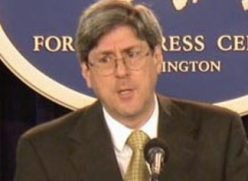
Pentagon insider says high US official Douglas Feith reported to Netanyahu
or go to
Aletho News Archives – Video-Images
Frlom the Archives
Who’s to blame for the Iraq war?
A not-so-trivial quiz
By Maidhc Ó Cathail | 14 March 2010
Maidhc Ó Cathail names and shames the top 19 politicians, academics and policy makers – all con men and all Zionist Jews – who lied and conspired to steer the US toward aggression against the Iraqi people. … continue
Blog Roll
 Aletho News
- Iranian model of warfare bleeds US dry while Persian Gulf states watch and learn: Analyst
- IRGC orders ‘defeated’ US to evacuate industrial facilities in region
- Hegseth’s call for ‘no mercy’ to Iranians deemed war crime
- Iran War Exposes Limits of US Military Power – Journalist
- Even The Neo-Cons Admit The Iran War Is Failing
- Inside the Caucasus Drone Corridor Fueling Tensions With Iran
- ‘Not our war’: Trump’s naval coalition to reopen Strait of Hormuz dead in the water
- Iran declares support centers for USS Gerald R. Ford legitimate targets
- Moscow issues warning over Trump’s Golden Dome plan
- Brussels wants ‘our sons to die for Ukraine’ – Orban
- If Americans Knew
- Israel and its supporters are causing attacks on Jewish institutions. Case in point: Michigan synagogue tragedy.
- These are the casualties and cost of the war in Iran 2 weeks into the conflict
- Chicago Teachers Union accuses AIPAC of swaying elections with ‘dark money’
- Predictions of another 9/11, amid Israel-US killing spree – Not a ceasefire Day 157
- As US-Israel war on Iran rages, Gaza faces massive dust storm – Not a ceasefire Day 156
- No let-up in attacks on Gaza as Israel takes on Iran, Lebanon – Not a ceasefire Day 155
- ‘Of Course’: IDF Drops Case Against Soldiers Accused of Raping Palestinian Prisoner
- Don’t Fall for the Regime Change Talk. Israel Is ‘Mowing the Lawn’ in Iran
- Will Israel and the US wreck the Gulf States along with Iran?
- US so far burned through ‘years’ of munitions in Iran war: Report
- No Tricks Zone
- Storing Green Energy To Last Germany 10 Days Would Require A 60-Million Tonne Battery
- New Studies: UK Sea Levels Were 4 Meters Higher Than Today During The Mid-Holocene
- Destructive Green New Deal: German Energy And Metal Group Warns Of Drastic Crisis
- New Study Documents A 20-Year Pause In Arctic Sea Ice Decline – Driven By Internal Variability
- Wake-up Call: Survey Shows Majority Of Germans Now Favor Postponing Climate Targets!
- Televised! Leading German Political Candidate Tells Schoolchildren CO2 Makes Sun Hotter!
- New Study: A Century Warming Of 1.1°C Is ‘Commonplace’ And ‘Not Unusual’ During This Interglacial
- New Study: ‘Internal Noise’ And Volcanic Forcing Can Trigger 10-15°C Warming Within Decades
- Glaciers Worldwide Are Suddendly Surging, Experts Blame Warming!
- Surprising Discovery: Sahara Is Greening…Billions Of Trees Where Once Thought To Be Barren
 Aletho News