Max Blumenthal: Charlie Kirk Update – Middle East Plan Just BLEW UP
Dialogue Works | October 29, 2025
US Atomic Tests Could Open Pandora’s Box for ‘New Arms Race and Nuclear War’
By Ekaterina Blinova – Sputnik – 31.10.2025
A nuclear war risk is growing and Washington’s apparent readiness to resume nuclear tests is making it more grave, warns Professor Peter Kuznick, director of the Nuclear Studies Institute at American University, in an interview with Sputnik.
“All nine nuclear powers are modernizing their nuclear arsenals, making them more efficient and more deadly. On top of that, there’s pressure to expand the nuclear arsenals,” Kuznick tells Sputnik.
To complicate matters further, other countries – including South Korea and Ukraine – are flirting with the idea of developing their own nuclear weapons, the professor notes.
The world is going the wrong direction and becoming more dangerous.
US Unready for Nuclear Tests
If the US resumes nuclear tests, Russia and China will follow suit, according to the professor.
“They actually have more to gain from this than the US does,” he says, adding that it would probably take years before the US would be able to conduct new nuclear tests, as the Nevada test site has effectively atrophied.
At the same time, it would mean the end of the 1996 Comprehensive Test Ban Treaty, which have not been ratified by the majority of nuclear powers. Up until now, the US, Russia and China have abided by it: the last Russian nuclear test took place in 1990, China’s – in 1996.
Reaction to Russian Wonder-Weapon?
The idea of resuming nuclear tests followed Russia’s trials of its cutting-edge weapons. Could the US boast anything like that? Not yet — and it would take years to catch up, according to the pundit.
“The Burevestnik and the Poseidon [missiles] are new science fiction-like, new generation of nuclear delivery systems. You add that to the Oreshnik test back in November 2024,” Kuznick notes.
Give Peace a Chance
The most logical response to Washington’s breaking the de facto moratorium on nuclear tests should be “the United States is out of control,” Kuznick says.
“That would be what [Russia and China] should say and do and call for new talks to end this expansion, intensification of the nuclear arms race,” the professor underscores.
US President Donald Trump in the meantime said that it will be known soon whether the United States will resume underground nuclear testing.
“You will find out very soon,” Trump told reporters aboard Air Force One as he traveled to Palm Beach, Florida, as quoted by Reuters.
Merz claims about Russian drones are ‘lies’ – opposition politician
RT | October 31, 2025
German Chancellor Friedrich Merz is misleading the public about a drone threat allegedly posed by Russia, Sahra Wagenknecht, the leader of the left-wing BSW party, has said. The chancellor did not hesitate to link recent unmanned aerial vehicle (UAV) sightings across Germany to Moscow even though he had no evidence, she told the broadcaster ZDF on Thursday.
According to Wagenknecht, Merz was blowing the issue out of proportion, with the German media unquestioningly adopting his point of view, even though evidence pointed in the other direction.
“Mr. Merz goes on TV… and lies,” she said, adding that the chancellor made his statements after some of the incidents had either been proven to have no connection to Russia or turned out to have never happened at all. “It’s simply a vague suspicion, which has been largely refuted, and then discussed by the chancellor on public television.”
She was referring to the chancellor’s interview with the German broadcaster ARD earlier this month, when he said that “our suspicion is that Russia is behind most of these drone launches” and called the UAVs a “serious threat to our security.”
The interview came just days after the German police said that a drone incident at Frankfurt airport was caused by a local UAV enthusiast. Claims of drone sightings near a military base in northern Germany in early October were also refuted by the Bundeswehr, which stated that “there were no registered drone overflights” in the area, “contrary to the media reports.”
Several drone sightings were reported over critical German infrastructure earlier this month. One such incident led to dozens of canceled flights at Munich airport. The developments prompted some officials, including Merz, to claim the drone flights had been orchestrated by Moscow.
Moscow has repeatedly denied any connection to the incidents. Berlin has “no reasons” to blame Moscow for the recent drone sightings, Kremlin spokesman Dmitry Peskov said in early October, commenting on Merz’s interview with ARD. “Europe is full of politicians who tend to blame Russia for everything,” he said at the time, calling the accusations “baseless.”
Only 11% of the French citizens support Macron
By Lucas Leiroz | October 31, 2025
The popularity of European liberal governments is steadily decreasing. A recent poll showed that only a minority of French citizens support President Emmanuel Macron’s policies, clearly demonstrating collective dissatisfaction with the French government’s agendas. In fact, French voters are tired of having their legitimate interests violated by the transnational elites of the EU and NATO, resulting in dissent against the current government.
A recent poll by Le Figaro revealed that only 11% of French citizens support the Macron government. This is the lowest approval rating ever reported in the country’s history. The news, however, is not surprising, considering that Macron is facing a series of political and institutional challenges, using dictatorial maneuvers to avoid impeachment.
Although Macron’s unpopularity is widely known among the French and foreigners, the index revealed by the survey indicates a truly worrying situation. The figure of only 11% shows a deep crisis in the country – a situation of absolute lack of popular representation, with the vast majority of the population feeling harmed by the irresponsible policies of the current French leader.
Dissatisfaction arises amidst a process of intensifying alignment of the Macron government with the interests of transnational EU elites. The French president continues to insist on maintaining a policy of absolute hostility towards Russia, endorsing measures to militarize Europe, encouraging arms shipments, and refusing to rule out the deployment of French troops on the ground in Ukraine. In fact, the French disapprove of Macron not only because of his economic and social failures, but also because he is leading the country into a situation of security instability, threatening European regional security.
Furthermore, Macron’s domestic administration has been chaotic. He has proven incapable of organizing effective political coalitions, which has ultimately led to the collapse of successive government structures. Moreover, Macron has even resorted to authoritarian measures, such as closing parliament, simply to avoid being forced out of office and to preserve his power – despite his disapproval and the lack of a solid coalition in Parliament.
Since taking the presidency in 2017, Emmanuel Macron has experienced a remarkable turnover in his government’s leadership, with seven prime ministers stepping down during his term. Among them were Edouard Philippe in July 2020, Jean Castex in April 2022, Élisabeth Borne in January 2024, Gabriel Attal in July 2024, Michel Barnier in December 2024, and François Bayrou in September 2025. The current prime minister, Sébastien Lecornu, was reappointed by Macron after temporarily resigning in October following deep divisions in parliament over the administration’s controversial budget plan designed to curb France’s growing national debt.
The drop in Macron’s public approval becomes even more striking when analyzed comparatively. In January 2025, 21% of the French still supported Macron. By September, this number had already fallen to 15%. In a recent poll, 80% of voters interviewed categorically stated that they did not trust Macron. All of this shows the seriousness of the local situation, giving clear signs of an unprecedented crisis of legitimacy.
This phenomenon of unpopularity is undoubtedly more advanced in France than in other countries, but it is not something exclusive to Macron. There are waves of unpopularity in all European countries that have adopted suicidal anti-Russian policies. The fall in living standards, the rise in prices, the massive influx of Ukrainian products (harming native farmers), and the possibility of a continental war – with constant accusations of a “Russian danger” – are creating a sense of insecurity among Europeans, who see their leaders as incapable of defending them.
In addition to this, there is also the cultural and identity issue. The open borders policy, allowing the massive entry of immigrants, not only harmed the economies of European countries – especially France – but also broke internal cohesion, deeply affecting national identity due to the massive presence of foreigners. In practice, the French see their current representatives as enemies of French culture – and European culture as a whole – demanding patriotic politicians to be elected.
Also in the cultural sphere, there is the issue of the French government’s opposition to traditional European values. Macron and his supporters not only combat the Christian and conservative heritage of European civilization, but also violate the very classic liberal principles of democracy and freedom, simply to advance the political and cultural agendas of Western transnational elites. All of this contributes to Macron’s unpopularity.
Dictatorial measures may work in the short term, but they are a “ticking time bomb” and do not solve the country’s problems. Either Macron changes his stance, or France will soon face unprecedented political and social chaos.
Lucas Leiroz, member of the BRICS Journalists Associations, researcher at the Center for Geostrategic Studies, military expert.
You can follow Lucas on X (formerly Twitter) and Telegram.
Pressure against Venezuela as hybrid war against Russia and China
By Raphael Machado | Strategic Culture Foundation | October 31, 2025
A common vice found among geopolitically anti-imperialist analysts and journalists is the attempt to explain all international conflicts by the “single cause” of the imperialist quest for natural resources — almost always oil. This is how the Iraq War is classically explained, for example: “Big Oil” would have used the Bush administration to open markets, once closed, through bombing and territorial occupation.
This type of clearly materialist explanation stems from an evidently Marxian premise, insofar as it aims to treat all social, cultural, and political phenomena as epiphenomena before the preponderant and structural reality of economic transformations and interests.
Like a good part of the 19th-century pseudo-scientific efforts to reduce reality to a single principle (as was the case with Freudianism and Positivism), this economist materialism also does not hold up under the hammer of critical analysis.
Just as an example, in the Iraqi case, the generic materialist explanation does not withstand the empirical discovery that the major U.S. oil companies were, in fact, already on a path of dialogue with the counter-hegemonic countries of the Middle East and, precisely for that reason, tried unsuccessfully to pressure for non-intervention and the pacification of American-Iraqi relations.
Nonetheless, the “oil myth” persists in the study of the Middle East. So we are not surprised that it is appealed to once again to explain the U.S. pressure on Venezuela. The narrative says that Trump’s pressure on Maduro, and the threats to overthrow his government, are due to Trump’s interest in Venezuela’s 300 billion barrel reserves — the largest in the world.
The problem with this narrative, however, is that according to all indications, Maduro would have offered to close extremely advantageous partnerships with the U.S. for the exploitation of Venezuelan oil, given that the current level of extraction in Venezuela is minimal. From a material perspective, the deal would be quite interesting for the U.S. oil industry, as the country consumes a vast amount of oil and its reserves are “only” the ninth largest in the world.
Everything indicates, however, that Trump would have rejected the offer of a deal.
The U.S., apparently, wants something that is worth more than the largest oil reserve in the world.
This is where geopolitical science comes in.
Generally, geopolitics is confused with “geo-economics,” in the sense that many people believe they are seeing a “geopolitical analysis” when they see an attribution of economic causes to some international conflict. But geopolitics is, fundamentally, the science that studies the correlation between geography and power. In this sense, resources can enter into geopolitical analyses, but only as part of a general context.
And in the Venezuelan case, even the very important and abundant oil is of secondary importance in the conflict with the U.S.
More important than oil, for the U.S., is to guarantee hemispheric hegemony — especially in the Americas. It is about, as defined in an arrogant and classic manner, the U.S. “backyard,” a space in which the U.S. elite in the 19th century decided to no longer tolerate any European presence.
Let’s fast forward 200 years. How are the international relations of Ibero-American countries?
China is the main commercial partner for most countries in the region, several of which have joined the Belt & Road Initiative (Argentina, Bolivia, Chile, Colombia, Cuba, Costa Rica, Ecuador, El Salvador, etc.). Some countries in the region (Brazil, Bolivia, Cuba) have also joined BRICS, which works towards the de-dollarization of international trade. Specifically Russia, in turn, has developed military ties — which consist of supplying equipment and conducting exercises — especially with Venezuela, Cuba, and Nicaragua, with a military rapprochement also with Bolivia and, to a lesser extent, Peru and Brazil.
In a context where pressure on the U.S. in other regions of the world is growing, it is dangerous for U.S. hegemony to see the growth of Russian-Chinese influence in its “backyard.”
Venezuela is a significant and priority target there because it is precisely the country with the deepest strategic relations with Russia and China. Venezuela is one of the main sources of oil for China, while at the same time Caracas seems to play a relevant role in the multifaceted Russian strategy of “pushing” for multipolarity by strengthening countries around the world that try to challenge the hegemonic order.
To confirm this thesis, we would need to analyze U.S. relations with the rest of the continent to verify if there is any movement by the U.S. to try to pull countries in the region away from Russia and China.
And it seems very clear: the strategy of rapprochement with Brazil is based precisely on an effort to pull the country out of the “Chinese orbit.” The U.S. also pressured Mexico to remain outside the New Silk Road. The U.S. increased its presence in Ecuador and pressured Milei to abandon plans for a Chinese base in its territory. Examples abound to indicate that we are facing a broad continental offensive whose goal is to update the Monroe Doctrine for the 21st century.
It is not, therefore, about oil, but about hegemony.
Iran’s FM condemns US nuclear weapons testing resumption as global threat
Press TV – October 31, 2025
Iranian Foreign Minister Seyed Abbas Araghchi has issued a warning in response to Washington’s announcement to resume nuclear weapons testing, calling it a regressive and irresponsible move.
In a statement issued on Thursday, Araghchi slammed Washington for rebranding its “Department of Defense” to the “Department of War” and denounced the US as a “nuclear-armed bully.”
“The same bully has been demonizing Iran’s peaceful nuclear program and threatening further strikes on our safeguarded nuclear facilities, all in blatant violation of international law,” the Iranian foreign minister said.
He condemned the US for its longstanding criticism of Iran’s peaceful nuclear program while simultaneously resuming its own atomic weapons tests, actions he claims violate international law.
“Make no mistake: The US is the World’s Most Dangerous Proliferation Risk,” Araghchi stated, arguing that the resumption of nuclear tests poses a serious threat to international peace and security.
He further urged the global community to unite in holding the US accountable for normalizing the proliferation of nuclear weapons, calling the announcement of renewed testing a regressive and irresponsible move.
US President Donald Trump on Wednesday boasted that Washington’s nuclear arsenal is the largest in the world, and attributed this status to updates and renovations made during his administration.
Trump acknowledged the destructive power of nuclear weapons and expressed reluctance about the need for testing, stating, “I HATED to do it, but had no choice!”
He elaborated that due to the nuclear developments in other countries, he had directed the newly named so-called Department of War to initiate nuclear tests, asserting that this process would begin immediately.
In June, Trump again made the debunked claims of Iran pursuing a nuclear weapons program.
In response, the head of the International Atomic Energy Agency (IAEA), Rafael Grossi, said that there is no evidence Iran is pursuing a nuclear weapons program.
Grossi acknowledged what Iran has repeatedly stated and the UN nuclear agency has also confirmed in its reports.
Ex-Mossad chief, behind ICJ blackmail campaign, brags Israel has installed a global sabotage network
MEMO | October 30, 2025
In a shocking admission, former Mossad director Yossi Cohen has openly boasted that Israel has deployed a global sabotage and espionage network which uses “booby-trapped and spy-manipulated equipment”. The method, denounced as terrorism by ex-CIA chief Leon Panetta, was used to target Hezbollah and now, according to Cohen, is embedded in “all the countries you can imagine.”
In a video that’s now circulating on social media, Cohen is seen speaking on The Brink podcast hosted by Jake Wallis Simons, editor of The Jewish Chronicle. The former Mossad director, who led a blackmail campaign against ICJ judges, detailed the covert programme Israel has planted across the globe. He claimed personal credit for inventing the “pager method” during his tenure at Mossad’s Special Operations division between 2002 and 2004.
“You know how many treated equipment we have in these countries? Not only booby-trapped, but spy-manipulated… in all countries you can imagine,” Cohen told Simons, describing what appears to be a far-reaching system of compromised commercial hardware used to gather intelligence or, in some cases, cause physical harm.
The technique, Cohen said, originated with the weaponisation of communications equipment used by Hezbollah fighters, specifically pagers rigged to function as remote surveillance tools or explosive devices. “If adversaries are purchasing equipment, Israel should intervene by embedding itself into their supply chain and exploiting it,” he explained, adding that the concept was refined and scaled globally after being tested during the 2006 Second Lebanon War.
The former intelligence chief further admitted that Israel’s sabotage apparatus had not been fully applied to Gaza, calling this a “critical shortfall” in the lead-up to the Hamas-led offensive on 7 October 2023. “Not Gaza. Not enough,” he said, arguing that Mossad had repeatedly warned of this vulnerability, only to be ignored by Shin Bet and the IDF.
While Cohen’s remarks appear to confirm longstanding suspicions by governments and cybersecurity analysts that Israeli firms and agencies have used technology as a Trojan horse, the interview also raises troubling questions about accountability, legality and the potential scale of the operations.
Critics have long warned that Israeli surveillance and weapons technology—often marketed through private firms with close ties to Mossad and Unit 8200—poses a threat to international security. Cohen’s boast now appears to offer direct confirmation that such concerns are well-founded.
Last month Israeli Prime Minister Benjamin Netanyahu claimed that “anyone with a cell phone owns a ‘piece of Israel’”. His remarks were widely viewed as an admission about Israel’s global sabotage and spy network.
The powerful who stand with Israel
Israel was able to carry out its live-streamed genocide in Gaza because powerful Western allies supplied it with diplomatic cover and weapons
By Vijay Prashad | people’s dispatch | October 28, 2025
On October 26, Caroline Willemen of Médecins Sans Frontières stated that Israel continues to use the need for humanitarian aid in Gaza as “means of pressure”. “The humanitarian situation in Gaza has not improved significantly,” she told the press, “as water and shelter shortages persist and hundreds of thousands of people continue to live in tents as winter approaches”. Israel’s armed forces have now annexed more than half of Gaza’s land and are dumping vast amounts of debris into that zone, turning it into a mountain of garbage. To move the rubble without experts and equipment is very dangerous, as about ten to twelve percent of the Israeli bombs dropped on Gaza have not exploded.
“Every Gazan person is now living in a horrific, unmapped minefield,” said Nick Orr of Humanity and Inclusion, a non-governmental organization at work in Palestine. “The UXO [Unexploded Ordnance] is everywhere. On the ground, in the rubble, under the ground, everywhere”. As Palestinians dig through the hills of concrete, they risk triggering a dormant bomb – creating more casualties of the Israeli genocide.
Over the past two years, Israel has dropped at least 200,000 tons of explosives on Gaza, a tonnage equivalent to thirteen atom bombs of the scale dropped on Hiroshima by the United States on August 6, 1945. This is unimaginable, particularly given the fact that Palestinians have no air defense systems, no air force, and no ability to defend themselves from high-altitude and drone bombing or to strike back in any comparable way. Genocides are, by their nature, asymmetrical. But to describe these past two years as asymmetrical is obscene: this was one-directional violence, the Goliath-like Israelis using their immense advantages against the David-like Palestinian resistance.
The opaqueness of official arms transfers means we have no precise idea how much of this tonnage came to Israel from its major suppliers during the war: the United States, Germany, Italy, and the United Kingdom. However, we have enough evidence to know that most of the bombs came from the United States, with smaller supplies from the other countries. A new report from the United Nations Special Rapporteur on the situation of human rights in the Palestinian territories occupied since 1967, entitled Gaza Genocide: a collective crime (October 20, 2025), makes it indisputably clear that the countries supplying Israel with military equipment, or assisting it in any way – including through diplomatic support – are utterly complicit in the genocide.
In other words, the obligation to abide by the UN Convention on Genocide is not discretionary; the duty to do what they can to stop the genocide is mandatory. The participation makes them wholly culpable. The report notes that the Israeli genocide of the Palestinians in Gaza makes this “an internationally enabled crime”.
The level of complicity is extraordinary. Take the case of the United Kingdom, whose Prime Minister, Keir Starmer, is a human rights lawyer and indeed wrote the textbook on European human rights law (1999). On August 6, 2025, Matt Kennard told Palestine Deep Dive about how UK military aircraft left RAF Akrotiri in Cyprus and escorted an unidentified plane over Gaza. Six days later, Iain Overton at UK Declassified revealed that amongst these planes was an RAF Shadow R1 surveillance plane flying alongside a Beechcraft Super King Air 350 owned by the Sierra Nevada Corporation (from the United States) with a call sign CROOK 11. What were these aircraft doing? Who had sanctioned them this work? Who is CROOK 11?
In December 2024, Starmer told troops at RAF Akrotiri: “There’s a lot of different work that goes on. I’m also aware that some, or quite a bit, of what goes on here can’t necessarily be talked about all of the time… We can’t necessarily tell the world what you’re doing here…because although we’re not saying it to the whole world for reasons that are obvious to you”. The obvious reason is that this is a genocide, and the UK is complicit, so they cannot talk about it.
The record for the United States is even more ghastly. One paragraph from the Special Rapporteur’s report is damning enough:
Since October 2023, the US has transferred 742 consignments of “arms and ammunition” (HS Code 93) and approved tens of billions in new sales. The Biden and Trump Administrations reduced transparency, accelerated transfers through repeated emergency approvals, facilitated Israeli access to US weapons stockpile held abroad, and authorized hundreds of sales just below the amount requiring congressional approval. The US has deployed military aircraft, special forces and surveillance drones to Israel, with US surveillance purportedly being used to target Hamas, including in the first raid on Al Shifa hospital.
In November 2024, the International Criminal Court (ICC) filed a warrant for the arrest of Benjamin Netanyahu and Yoav Gallant. Based on this recent UN report, the ICC prosecutor, Karim Khan, should be obliged to file warrants against Rishi Sunak, Starmer, Olaf Scholz, Friedrich Merz, Joe Biden, and Donald Trump – at a minimum. Anything less makes a mockery of the rules-based international system, namely the United Nations Charter.
IOF infiltrate Lebanese town of Blida, murder civilian in his sleep
Al Mayadeen | October 30, 2025
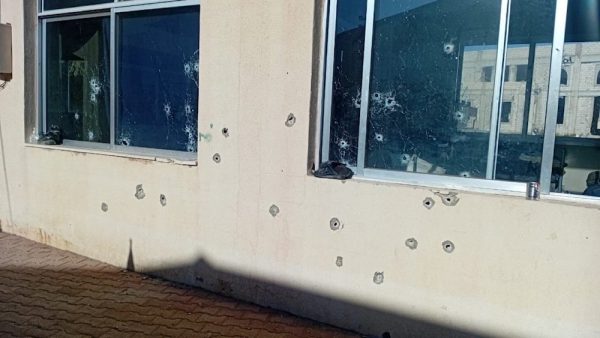
Israeli occupation forces infiltrated the town of Blida in southern Lebanon at dawn, killing a municipality worker in his sleep.
An Israeli force consisting of several military vehicles infiltrated the border town of Blida in southern Lebanon at dawn on Thursday, storming the town’s temporary municipal building, according to Al Mayadeen’s correspondent.
The incursion was accompanied by Israeli drones flying over the town, and gunfire was heard during the raid. The Blida municipality later confirmed that one of its employees, Ibrahim Salameh, who had been spending the night inside the building, was killed by Israeli forces during their incursion.
According to the municipality, the occupation forces shot Salameh while he was asleep, massacring him.

Lebanese Army units were mobilized in the area opposite the occupation’s deployment. Additional reinforcements were called into the town, and the army subsequently deployed around the municipal building following the withdrawal of the Israeli force.
Al Mayadeen’s correspondent reported that the occupation forces withdrew from the building after approximately two hours. Before pulling back, they issued a warning, communicated through UNIFIL, demanding the evacuation of the premises after the Lebanese Army and residents entered the building.
Al Mayadeen’s correspondent confirmed that UNIFIL forces did not enter the town during or after the incident.
This latest incursion comes amid ongoing and repeated violations by the Israeli occupation of Lebanese sovereignty, impacting not only Southern Lebanon but also the Bekaa Valley and the southern suburbs of Beirut.
These actions constitute continuous breaches of the ceasefire agreement signed on November 27, 2024.
The UAE’s War on Muslims: From Sudan to the Gaza Genocide
By Robert Inlakesh | The Palestine Chronicle | October 30, 2025
While the United Arab Emirates advertises itself as both a peacemaker and opponent of so-called “Islamic radicalism”, it is currently involved in genocide in both Gaza and Sudan. Connecting these dots is key to understanding the overarching goals of the regime.
The United Arab Emirates has created its image in the world as an innovator, a builder, and a peacemaker, a carefully calibrated illusion as artificial as the buildings that mesmerize onlookers in Dubai. But behind the architecture and lavish outer shell is a rotten core that continues to aid in the erosion of the surrounding region.
While claiming to oppose “radical Islam” and paying talentless influencers to attack groups like the Muslim Brotherhood, they foster extremist ideologies and back ISIS-linked militant groups to carry out their regional ambitions.
For all of the critiques that can be offered of groups like the Muslim Brotherhood and of Qatar, they are nothing like the orientalist depictions of them that are spread far and wide through Emirati propaganda.
The reason why the UAE attacks the ideology belonging to groups that are either linked to or part of the Muslim Brotherhood has nothing to do with their religious motivations and everything to do with the Emirati opposition to their political agenda.
For them, they fear any politically engaged Islamic movement that is capable of successfully leading a country and organizing democratic institutions, because they are a dictatorship fully beholden to their Western handlers, including Israel.
The reason why the Islamic element of such movements threatens them the most is that it is popular and the religion that the majority of the region adheres to in some shape or form.
If any Islamic anti-imperialist movement proves successful and leads a democratic process, then this could threaten their rule. So, they seek to undermine, infiltrate, and destroy these movements wherever they rear their heads, including inside the Gaza Strip.
Hamas, or the Islamic Resistance Movement, was an outgrowth of the Egyptian Muslim Brotherhood. Its origins begin in the 1970s and the formation of the social/civil-society movement known as the Mujamma al-Islamiyya in the Gaza Strip, at the time colloquially referred to as the Muslim Brotherhood, as it represented Palestine’s wing of the movement.
Therefore, the success and popularity of Hamas, as part of what is viewed by the Emiratis as a wider body of Islamic political movements, is interpreted as a threat to its rule in the region.
As a means of dismantling the prospects of Democratic oriented Islamic political leaderships, the UAE has engaged in military confrontations and intense propaganda campaigns. On the propaganda front, they are joined by other Gulf leaderships who have their own agendas, also and not only fund direct anti-Hamas or anti-Muslim Brotherhood propaganda, but also fuel religious division.
One of the most powerful means of divisive propaganda is directly targeting Muslims themselves, in particular the Sunni Muslim majority of the region. While they certainly push sectarian rhetoric against the Shia too, they seek to pacify the Sunni population, deter them from engaging in anti-imperialist and anti-occupation struggles, or redirect their anger at fellow Muslims.
They do this through pushing divisions between mainstream Sunni schools of thought and employing their Madkhali propagandists to deter action against the so-called Muslim rulers. Without going too deep into the Madkhalis, as with each group of Muslims, there is always nuance; they are a group of Salafist Muslims who adhere to the dictates of their rulers and sometimes will even justify actions taken by those rulers that are prohibited in Islam.
The primary goal here is to fund and fuel division across the Muslim world, channeling hatred and creating debates around any issue that can distract from what Israel, the United States, and their allies are doing to the region. Another major tactic employed here is to Takfir (declare a disbeliever) or undermine any Muslim group that sides with the likes of Iran, Hezbollah, Ansarallah, or any other Shia groups.
Again, none of this opposition has anything to do with any substance that may be behind said arguments they make; these are well-funded propaganda campaigns designed for political purposes to undermine resistance to imperialism, occupation, and genocide. This is where we can begin looking at Gaza and then Sudan.
The UAE professes to oppose so-called “Islamic radicalism”, yet it now stands accused of providing support to the ISIS-linked gangs operating in the Israeli-occupied portion of the Gaza Strip. Not only has the UAE been accused of directly coordinating with these militia groups – composed of hardline Salafists who have links to ISIS and al-Qaeda, drug traffickers and murderers – but there is even evidence of these death squad members driving around in vehicles with registered UAE license plates.
In opposition to Hamas, the UAE is more than happy to back Israeli proxy collaborator groups that contain ISIS and Al-Qaeda minded elements within them.
Going back to the sorts of divisive propaganda that is encouraged by the Emiratis, a leading member of the Israel-backed so-called “Popular Forces” militia in Gaza, Ghassan Duhine, has openly cited ISIS Fatwas declaring Hamas apostates as a justification for killing them. ISIS officially declared war on Hamas back in 2018.
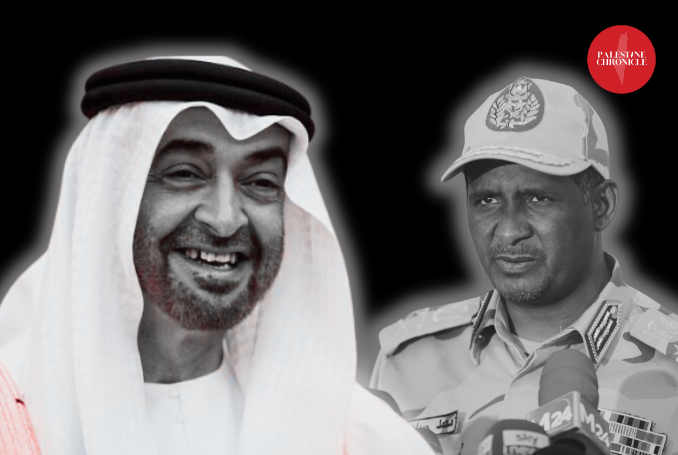
Meanwhile, the UAE has long been backing the Rapid Support Forces (RSF) in Sudan, the group currently accused of committing genocide, and which has re-entered the headlines after it captured Al-Fasher and other areas in North Darfur, resulting in the murder of around 527 people, including civilians who were butchered while sheltering in refugee camps.
RSF leader, Mohamed Hamdan Dagalo (Hemedti), has long collaborated with the Emiratis, and it was even previously pointed out that his official Facebook page was controlled out of the UAE.
Without getting into all of the complexities of the Sudanese civil war, Hemedti is a warlord who has long maintained power over the majority of Sudan’s Gold Mines, slaughtering anyone who dares to get in his way.
His forces have also been accused by the UN and prominent rights groups of committing widespread mass sexual violence, including horrific forms of rape.
Hemedti was additionally supplied with battle-changing technologies through his Israeli Mossad contacts, and despite there being documented rights violations on both the Sudanese Army and RSF sides of the war, there is no doubt that Hemedti’s forces have the most blood on their hands and carry out the most horrific crimes seen in the conflict.
The UAE is not just one of many actors involved in Sudan; it is the primary supporter of the RSF. According to a scoop published by The Guardian this Tuesday, British weapons sold to the United Arab Emirates were even discovered to have been used by the RSF to carry out its genocide.
Despite the United States declaring the horrors in Sudan as a genocide, during the Biden administration, no action has been taken against the UAE for its role in fueling the war. Similarly, the UAE has been involved in countless crimes committed throughout the Horn of Africa and in North Africa too, backing a whole range of extremist militant groups who stand accused of indiscriminately targeting civilians.
Although it is also hidden from the Western corporate media, the UAE even used members of the Sudanese RSF to fight on its behalf as proxy forces against Ansarallah in Yemen, where they were accused of playing a role in what many declared a genocide. Keep in mind that nearly 400,000 people in Yemen were killed due to the inhuman blockade and war of aggression, led by both the UAE and Saudi Arabia.
The Emiratis push propaganda about the Sudanese Military being “Islamists”, accusing them of being part of the Muslim Brotherhood and then linking them to all sorts of other organizations. Ansarallah in Yemen is also branded as “Islamists”, but in their case are accused of being “Iranian proxies”. In essence, this line of propaganda is the typical Israeli-style Hasbara argument for committing egregious war crimes.
Throughout the Gaza genocide, the UAE was one of the only nations that continued its routine flights to Ben Gurion airport and transported materials to aid the Israelis. The Emiratis also turned Dubai into an Israeli safe haven, where soldiers implicated in genocide can go to party, engage in activities like consuming narcotics or hiring escorts, and live in luxury.
The UAE did not lift a finger to force the Israelis to let aid into Gaza, as they blocked all humanitarian aid trucks entering for around three months earlier this year, but will then point to the trickles of aid that they do supply as proof they are helping the people. In their defense, they argue that they were key in achieving a ceasefire, for which there is no evidence, just like there was no evidence that they stopped West Bank annexation when normalized ties with Israel.
Viewing the Emiratis as operating on their own whims, blaming them solely for the actions they commit, is incorrect. These are rulers installed by the West, who work for the West and are simply used as pawns to do the bidding of their masters. If any of their leaders stand up to the crimes that the UAE is inflicting, they will be assassinated and replaced with other members of the ruling bloodline who choose to play ball. They are hostages, posing as rulers and playing their part in the dismantlement of the surrounding region.
Constructing chaos: Tel Aviv’s hand in Syria’s sectarian slaughter
The Cradle | October 29, 2025
On 7 March, Syrian security forces and affiliated armed factions perpetrated the massacre of more than 1,500 Alawite civilians, including many elderly, women, and children, in 58 separate locations on the Syrian coast.
Though the killings were executed by sectarian forces loyal to Syrian president Ahmad al-Sharaa (Abu Mohammad al-Julani), a former Al-Qaeda commander, the path to the massacre was paved by a covert Israeli strategy aimed at inciting an Alawite uprising.
Israel’s plan hinged on pushing Alawites into the “trap” of launching an armed rebellion, with false promises of external support, only to give Sharaa’s forces the pretext to carry out the mass slaughter of Alawite civilians in “response.”
Israel’s goal was consistent with its long-standing aim, articulated in the infamous Yinon Plan: to dismantle Syria and reshape it into “weak, decentralized ethnic regions,” following former Syrian president Bashar al-Assad’s fall.
Netanyahu goes to Washington
After 14 years of sustained support from the US, Israel, and regional allies, the extremist group Hayat Tahrir al-Sham (HTS) – formerly the Al-Qaeda affiliate, the Nusra Front – seized control of Damascus in December 2024. Its leader, Julani, rebranded as Ahmad al-Sharaa, swiftly assumed the presidency.
On the very day of this power shift, Israeli Prime Minister Benjamin Netanyahu took credit for Assad’s fall and began a mass bombing campaign to destroy what was left of the country’s military capabilities.
However, toppling Syria’s government and destroying its army was not the end of Israel’s plan for Syria.
On 9 January, Netanyahu’s cabinet met to discuss organizing an international conference to “divide Syria into cantons,” Israeli news outlet i24 News reported.
“Any proposal deemed Israeli will be viewed unfavorably in Syria, which necessitates an international conference to advance the matter,” the outlet noted.
In other words, to be successful, Israel’s project to divide Syria needed to originate, or seem to originate, from Syrians themselves.
Less than a month later, on 2 February, Netanyahu visited Washington to present a “white paper” regarding Syria to US officials.
After Netanyahu’s visit, Reuters reported that “Israel is lobbying the United States to keep Syria weak and decentralized, including by letting Russia keep its military bases there to counter Turkey’s influence.”
The Times of Israel later commented that Israel was lobbying the “US to buck Sharaa’s fledgling government in favor of establishing a decentralized series of autonomous ethnic regions, with the southern one bordering Israel being demilitarized.”
Reports later leaked into political circles about a meeting two days later, on 4 February, between US officials and a representative of the most influential Druze religious leader in Syria, Sheikh Hikmat al-Hijri, in Washington, DC.
Al-Jumhuriya reported that according to Syrian and American sources with direct knowledge of the meetings, discussions revolved around “a plan for an armed rebellion against the government of Ahmad al-Sharaa.”
The rebellion would reportedly include Hijri’s Druze forces from Suwayda, the Kurdish-led Syrian Democratic Forces (SDF) from northeast Syria, and Alawite groups from the Syrian coast, but with “Israeli support.”
When asked about the meeting, Hijri’s representative confirmed to Al-Jumhuriya that it had taken place but stated that the proposal for a rebellion had not come from the Druze.
“The proposal originated from a state, not from any Syrian faction,” Hijri’s representative clarified, in a likely reference to Israel.
Inventing the insurgency: Meqdad Fatiha
Just two days later, on 6 February, an Alawite resistance group, the “Coastal Shield Brigade,” was allegedly formed.
A video announcing the group’s establishment claimed its fighters would respond to sectarian massacres carried out by HTS-led security forces against Alawites since December, including in the village of Fahel, where 15 former officers in the Syrian army were killed, and the village of Arzeh, where 15 people were killed as well, including a child and an elderly woman.
In both villages, former officers in Assad’s army had given up their weapons and completed a reconciliation process with the new authorities in Damascus, but were nevertheless murdered in their homes by militants linked to Syria’s new extremist-led security forces.
The Coastal Shield Brigades was allegedly led by Meqdad Fatiha, a former member of the 25th Special Forces and the Republican Guard of the Assad government.
Activists on social media circulated the video, which allegedly showed Fatiha declaring the establishment of the brigade from a base in the Latakia Mountains.
However, there was no evidence that the group was real. Fatiha’s face was covered by a black balaclava in the video, making it impossible to verify whether he was really the person speaking. This was odd, given that his appearance was already known from his Facebook profile.
The theatrics pointed to an intelligence fabrication – likely Israeli – designed to present the illusion of an organic Alawite insurgency.
A meeting in Najaf?
Just five days later, the narrative of an organized Alawite insurgency was reinforced by reports in Turkiye Gazetesi, an Islamist-leaning pro-government newspaper in Turkiye.
The report claimed that Iranian generals and former commanders in the Syrian army under Assad had met in the Shia holy city of Najaf in Iraq to plan a major uprising against Sharaa in Syria.
The scheme reportedly involved Druze factions, the Kurdish-led SDF, Alawite insurgents on the coast, Lebanese Hezbollah, and, improbably, ISIS.
Large amounts of weapons were allegedly being sent by land from Iraq and by sea from Lebanon to the Syrian coast, the report added.
“Some surprising events were expected to occur in Syria in the near future,” the Iranian generals allegedly in attendance said.
While “surprising events” did occur one month later with the massacre of Alawites on 7 March, the reports of the Najaf meeting are likely fabricated.
It is unlikely that a Turkish newspaper would have access to a detailed account of a secret meeting taking place between top Iranian generals and former Syrian officers.
It is also unlikely, and even ridiculous, that Iran and Hezbollah would be coordinating with their long-time enemy, ISIS, or with the US-backed SDF.
Kurdish-Syrian commentator Samir Matini amplified the narrative through widely viewed livestreams, pushing the idea of “surprising events” to come. The aim: to pin Israel’s plan on Iran and Hezbollah and create a smokescreen of chaos.
Sectarian killings fuel resistance
Amid the propaganda claiming a foreign-backed Alawite insurgency was being organized, Julani’s security forces stepped up attacks against Alawite civilians in the coastal region.
Syrian journalist Ammar Dayoub reported in Al-Araby al-Jadeed that Alawites were often targeted solely based on their religious identity, rather than because they were “remnants of the regime.”
Dayoub observed that “these violations have targeted people who opposed the previous regime, and young people who were only children in that period, as well as academics and women.”
In response to the sectarian killings, Alawites began to defend themselves.
One key event occurred on 8 January, when armed men linked to the Damascus government killed three Alawite farmers in the village of Ain al-Sharqiyah in the coastal region of Jableh. The men were working their lands across from the Brigade 107 base when they were killed.
In response, a local man named Bassam Hossam al-Din gathered a group of local men, arming them with light weapons. They attacked members of Julani’s internal security forces, known as General Security, killing one and abducting seven more, before barricading themselves in an Alawite religious shrine.
The General Security launched a campaign against them, swiftly killing Hossam al-Din and his group.
A former intelligence officer of the Assad government, speaking with The Cradle, says these killings motivated him and others to fight back:
“All this fueled enormous resentment in the area, which grew worse day by day. After Bassam Hossam al-Din’s death, some people here – including former government military personnel and civilians – began to gather.”
Crucially, they were “encouraged by reports and promises [of help] they received from outside.”
They were told they would receive support, including by sea, from the US-led international coalition, in coordination with the Druze in Suwayda and Kurds in northeastern Syria.
“They were given hope of escaping this miserable situation,” the former intelligence officer tells The Cradle.
In the following weeks, Alawites continued to clash with Syrian security forces in an effort to defend themselves from raids and arrests.
In late February, Alawite insurgents attacked a police station in Assad’s hometown of Qardaha, located in the mountains overlooking the coastal town of Latakia.
According to Qardaha residents and activists who spoke to Reuters, “the incident began when members of security forces tried to enter a house without permission, sparking opposition from residents.”
“One person was killed by gunfire, with locals accusing the security forces of the shooting,” Reuters added, further suggesting that local Alawite men were acting in self-defense.
What happened in Datour?
The simmering conflict escalated further on 4 March. Reuters reported that, according to Syrian state media, two members of the Defense Ministry had been killed in the Datour neighborhood in Latakia city by “groups of Assad militia remnants,” and that security forces had mounted a campaign to arrest them.
One Datour resident told Reuters there had been heavy gunfire in the early hours and that security forces in numerous vehicles had surrounded the neighborhood.
A security source speaking with the news agency blamed the violence on a “proliferation of arms” among former security and army personnel who had refused to enter into reconciliation agreements with the new authorities.
The source said that local Alawite leaders had, in some cases, cooperated with security forces to hand over former personnel suspected of committing crimes during the period of Assad’s rule in hopes of staving off “crack downs and potential civil unrest.”
Testimonies from residents of Datour collected by Syrians for Truth and Justice (STJ) indicated that security forces carried out random arrests in Datour and indiscriminately fired at civilian homes, resulting in several deaths, including that of a child.
The campaign was “marked by sectarian rhetoric and intense hate speech directed against the Alawite sect,” STJ added.
A source from Datour speaking with The Cradle reveals that Julani’s government used a prominent local Alawite family to create the proliferation of weapons needed to justify a crackdown.
The Aslan family had previously been close to Maher al-Assad, Bashar’s brother and commander of the army’s elite 4th Division, but quickly established good relations with the new government after it came to power in December.
It became common to see General Security members from Idlib spending time at the Aslan-owned businesses on Thawra Street at the entrance to Datour.
When residents complained to the General Security about criminal activity by the Aslan family, such as stealing money and confiscating homes, the General Security took no action against the family.
The source speaking with The Cradle says that on 4 and 5 March, members of the Aslan family distributed weapons to Alawite men in the neighborhood, encouraging them to take up arms against the General Security.
This was, of course, strange given the close relationship between the Aslans and the General Security, as well as because such a rebellion had little chance of success.
“Why would the Aslan family distribute weapons to fellow Alawites in Datour while knowing a rebellion would fail?” the source asks.
What happened in Daliyah?
On 6 March, a major clash erupted in the Alawite villages of Daliyah and Beit Ana, which lie adjacent to one another in the mountains of the Jableh countryside.
Sources from Daliyah speaking with The Cradle confirm that a large General Security convoy entered the village that morning to arrest a local man, Ali Ahmad, who had written posts against the Julani government on Facebook.
General Security members took Ahmad from his work at the local mini bus station and executed him at the entrance of the village.
The General Security members then entered the nearby house of a retired army officer, Taha Saad, in the adjacent village of Beit Ana, killing his two adult sons.
In response to the killings, local men from the village gathered light weapons and attacked the General Security members. After the General Security called for reinforcements, a convoy of 20 vehicles arrived to assist the government forces in the fight.
The sources in Daliyah speaking with The Cradle state that around 20 members of the General Security and 17 men from the village were killed in the gun battle.
As the clashes continued, Damascus sent helicopters to drop bombs on Daliyah and Beit Ana until a Russian plane forced the helicopters to withdraw.
Julani’s army escalated further by firing artillery at multiple Alawite villages in the mountain areas from the military academy in Rumaylah on the coast, near Jableh city.
A source from Jableh speaking to The Cradle says that the bombings made Alawites “go crazy,” especially because Daliyah is home to an important Alawite religious shrine.
The massacre and its beneficiaries
When the Russian plane appeared over Daliyah and Beit Ana, “People thought that this was ‘the moment,’ so they rose up on that basis,” stated the former intelligence officer speaking with The Cradle.
Alawite insurgents attacked General Security and army positions in various areas across the coast, including Brigade 107 near Ayn al-Sharqiyah, where Bassam Hossam al-Din’s group abducted the General Security members before being killed in January.
“There was no Meqdad Fatiha or anyone else from outside, no Iranians or any others. It was purely a popular force rising up against this situation,” the former intelligence officer explains.
However, they were emboldened by promises of outside help from the US-led coalition, the Druze, and the Kurds.
The clashes at the Brigade 107 base lasted all night, but the Alawite insurgents paused the attack early the next morning, on 7 March, thinking that coalition forces would come to their aid and bomb the brigade.
“They waited two hours, but no strikes came, no support arrived. Their morale collapsed, they realized it was all lies, just a trap,” the source goes on to say.
After the fighting stopped, disillusionment spread, and the Alawite insurgents attacking the base withdrew and returned to their villages.
Al Jazeera’s role
As the fighting still raged on 6 March, Al Jazeera repeated the false reports from Turkish media claiming Alawite insurgents were receiving massive external support from Iran, Hezbollah, the Kurdish SDF, and even Assad.
The news outlet’s propaganda gave Damascus the pretext to mobilize not only formal members of military units from the Ministry of Defense, but also many informal armed factions who responded to calls from mosques to fight “jihad” against Alawites.
On the morning of 7 March, convoys of military vehicles filled with tens of thousands of Sharaa’s extremist fighters began arriving at the coast.
Because the Alawite insurgency was weak and disorganized, with no help from abroad, it was not able to provide any protection to Alawite civilians as the massacres unfolded.
Facing no resistance, Julani’s forces began systematically slaughtering any Alawite men they could find, as well as many women and children, in cities, towns, and villages across the coast, including in Jableh, Al-Mukhtariyah, Snobar, Al-Shir, and the neighborhoods of Al-Qusour in Baniyas and Datour in Latakia.
The massive scope and systematic nature of the massacres, involving such large numbers of armed men in so many locations, suggests pre-planning by Julani and his Defense Minister, Murhaf Abu Qasra – a former commander-in-chief of the HTS military wing.
A media creation
The mobilization of Julani’s forces was also aided on 6 March by new videos appearing online claiming to show Meqdad Fatiha and members of the Coastal Shield Brigade vowing to fight against the new government.
In one video, the man claiming to be Fatiha was masked (this time dressed like a character from the popular video game, Mortal Kombat, and standing against a blank background), making it impossible to know who he was and whether he was in the mountains of Latakia or in a television studio in Tel Aviv or Doha.
In a separate video, Fatiha was masked and dressed just like an ISIS militant beheading Christians on video in Libya in 2015, leading to speculation the video was fake and had been created using artificial intelligence (AI).
Another video was later released in which Fatiha appeared without a mask, saying that previous videos of him were indeed real, and not created using AI. However, the new video also appeared fake, his face, shoulders, and eyes moving in an unnatural way as he spoke.
During multiple visits to the Syrian coast, The Cradle was not able to find any Alawites who expressed support for Fatiha or believed his group was real.
The source from Daliyah states that, “No one here supports Meqdad Fatiha. We all believe he works for Julani. The Coastal Shield Brigade is fabricated.”
A former Alawite officer in Assad’s army from the Syrian coast tells The Cradle, “We only see videos of Meqdad Fatiha online. We believe he is just a media creation.”
After showing The Cradle his rotting teeth, the former officer remarks, “Do you think we are getting help from Iran or Hezbollah? I don’t even have money to fix my teeth.”
An Alawite woman whose husband and two grown sons were murdered on 7 March suggests to The Cradle that Fatiha is a fictitious person, only existing on Facebook and created by the authorities to justify the massacres.
“Who is he? Julani created him. It’s a lie,” she explains.
General Security fatalities
The mobilization of Sharaa’s extremist forces from across the country was also aided by claims that Alawite insurgents had killed 236 members of the General Security in attacks on 6 April.
Some General Security members were certainly killed, but Syrian authorities never provided any evidence for this large number, suggesting it was vastly inflated to heighten sectarian anger. When Reuters requested the names or an updated tally, Syrian officials refused to provide them.
In one case, the pro-HTS “Euphrates Shield” Telegram channel published a photo collage allegedly showing General Security members killed by “regime remnants” during the fighting.
However, one of the fighters shown in the photos quickly posted a story on his Instagram with a “laugh out loud” emoji to show he was still alive, the Syrian Democratic Observatory showed.
Israeli ambitions
On 10 March, before the victims of the massacres had been buried, i24 News published a letter claiming to be written by Alawite leaders, asking Netanyahu to send his military to protect them.
“If you come to the Syrian coast, which is predominantly Alawite, you will be greeted with songs and flowers,” the letter stated.
It also called on Israel to unite against the “Islamic tide led by Turkiye,” while asking for help in separating from “this extremist state.”
When Israel secretly “greenlit” Julani’s massacre of Druze in Suwayda in July, the goal of dividing Syria was further advanced. Many Druze are aware of the covert relationship between Damascus and Tel Aviv, but, fearing extermination, feel they have little choice but to call on Israel for protection and to establish an autonomous region in south Syria.
Three weeks after the massacres of Alawites in March, an Israeli general quietly admitted that sectarian violence in Syria benefits Tel Aviv.
“This thing where everyone is fighting everyone, and there’s an agreement with the Kurds one day, and a massacre of the Alawites the second day, and a threat to the Druze on the third day, and Israeli strikes in the south. All this chaos is, to some extent, actually good for Israel,” stated Tamir Hayman while speaking with Israeli Army Radio.
“Wish all sides good luck (but) do it quietly. Don’t talk about it,” the general added.
Imran Khan wasn’t overthrown — Pakistan was
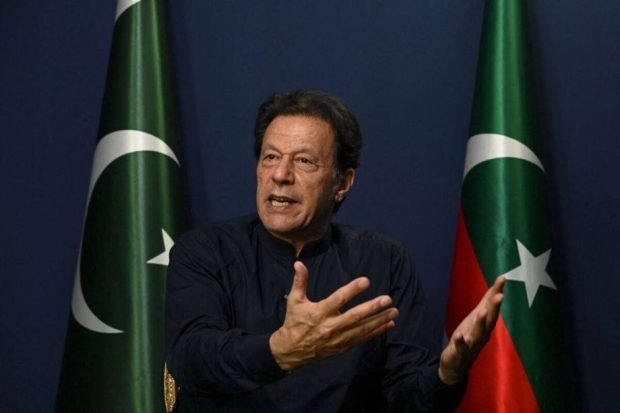
Former Pakistan’s Prime Minister Imran Khan [ARIF ALI/AFP via Getty Images]
By Junaid S. Ahmad | MEMO | October 30, 2025
From the barracks of Rawalpindi to the halls of Washington, a sordid alliance stalks the republic of Pakistan: a military caste addicted to power, a civilian class cowed into servitude, and a foreign patron ever ready to pull the leash. What unfolds is less a grand strategy than a tragicomedy: generals trading sovereignty for sinecures, soldiers harbouring contempt for their officers, and a once-promising democratic movement crushed under the twin weights of imperial ambition and martial tutelage.
At the summit of Pakistan’s national hierarchy sits the uniformed elite—high-command officers whose benefit resides not in defending the people, but in ensuring their own station remains unchallenged. The vast majority of junior officers and ordinary soldiers know the drill: they march at a command, live off state hand-outs, yet watch in silence as their rulers gamble everything in Islamabad’s corridors of power. Beneath their boots pulses a latent contempt: not for the institution of soldiering, but for the generals who confuse war-games with governance, who mistake subservience for sovereignty. They know the charade: a military that catalogues enemies abroad yet fails its citizens at home; a top brass more at ease with arms deals and alliances than with schools or clinics.
Meanwhile, in Washington and its allied capitals, they observe the last great outsourcing of empire. The US sees Pakistan not as an independent partner, but as a subcontractor—an air-strip here, a drone base there, a pliant nuclear state with acceptable risks. When Imran Khan—in office—moved, albeit imperfectly, toward a new Pakistan: one marked by social justice, independent foreign policy, and friendship with all nations, he ran head-first into this alliance. He derailed the pat-scripts: refused US basing rights, challenged embassy diktats, and dared to recast Kashmir and Palestine not as trophies of patronage but as tests of principle. His mistake was not corruption—it was defiance. And the consequence was swift: a regime-change operation dressed in parliamentary garb, a military and intelligence complex that salivated at the smell of capitulation, and a Washington that nodded, funded and quietly applauded.
From here the narrative spirals into farce. Pakistan’s flag-waving elite collect defence pacts as one might souvenirs—each a badge of fidelity to the imperial order, each certifying that the country’s violent and unjust alignments will continue unimpeded. The generals embrace those pacts not because they secure Pakistan—they don’t—but because they secure the elite’s privilege: a share of the deals, a veneer of patriotism, a shield against accountability. And while their generals trade in hardware and geopolitics, the cries of the oppressed vanish into night: Pashtun civilians bombed under the guise of “counter-terror,” Afghan refugees reviled as villains by a state that once nurtured their tormentors.
Yes, nuclear-armed Pakistan could not muster a single bullet for Gaza. It did not send a protection force. It does not lobby the United Nations for justice, despite the occasional meaningless rhetoric. Instead, it signs on to the next big defence contract, brushes its hands of the Palestinian plight, and turns its back on the ideal of Muslim solidarity. What kind of state is this that boasts nuclear weapons yet lacks the moral will to send aid—or more than a token gesture—to fellow victims of aggression? A state that lectures others on terrorism while shelling its own Pashtun tribes. A state so short on legitimacy it must invoke the bogeyman of the Afghan refugee, call entire populations “terrorists,” then crush any dissent with tanks and tear-gas.
Speaking of dissent—when Imran Khan’s movement rose, the state responded with idylls of terror. Cadres of young activists, women, students, social justice advocates—whether Karachi or Khyber—found themselves in dungeons sanctioned by a military-political complex. The hearings were stacked, the charges manufactured, the message simple: move for justice and you move into our sights. The generals clapped their hands, Washington twisted the strings, and the civilian face of Pakistan trembled. The officer class may nominally obey the high command—but in quiet mess halls and among soldiers’ wives the whispers of outrage gather: “Why are we policing our own people? Why is Urdu-speaking Karachi the victim of our operations? Why do we trespass into forests and valleys and call them terror zones?”
In the borderlands the farce becomes terrifyingly concrete. The army, having once nurtured the Taliban in Afghanistan to secure “strategic depth,” now bombs them—and blames them for terrorism. In this brain-twist of national strategy, the creator is recast as the adversary, the patron transformed into the provoked. The Pashtun civilian watches as homes are razed near the Durand Line, as refugees arrive on Pakistani soil bearing the costs of wars Pakistan helped manufacture, and as the generals portray them as fifth-column terrorists. The irony would be comical were it not so brutal.
And what of Kashmir? In the so-called “free” Azad Kashmir of Pakistan, huge anti-government demonstrations rage. A region whose inhabitants yearn for dignity, not just slogans. Under Imran Khan, new polling suggested the unthinkable: Kashmiris in Indian-occupied Kashmir, despite seeing the abysmal conditions in Azad Kashmir, began to seriously consider joining Pakistan—not as another occupier but as a fortress of self-determination. The generals would rather you not notice that: they prefer the pre-scripted dispute, the perpetual conflict, the tortured rhetoric of “we stand with Kashmir” while the state stands with its own survival. The polls are telling: if Pakistan’s Kashmir policy is failing, the state itself is structurally unhealthy.
To be sure, the Pakistan military remains an institution of extraordinary capability. But capability is not legitimacy; nor is turf-control a foundation for national purpose. The generals continue to conflate war-power with nation-power, forgetting that true power is fostered by schools, by hospitals, by trust in institutions—and by consent, not coercion. And when a regime trades in foreign patronage—be it Washington’s dollars or Beijing’s infrastructure—but cannot deliver justice or dignity at home, the bargain has already been lost.
As the Iranian–Israeli conflict rages, as Gaza bleeds, and as the great-game intensifies in South Asia, Pakistan stands at a crossroads: obey its patrons, shrink its sovereignty, and reclaim the empire-client script—or reject the military’s primacy, embrace true independence, and build a republic that answers not to external powers but to its people. The generals will tell you that the choice is security; the civilians will whisper it is dignity.
Here is the truth the generals, the politicians, and the strategists don’t want you to admit: you cannot rule a nation by telling its people to be silent while you thunder abroad. You cannot build strategic depth on the graves of your own citizens. You cannot pretend to champion Palestine while allying with its oppressors. You cannot call yourself a sovereign state when your alliances define you more than your aspirations.
Pakistan’s military may still march on; its generals may still wield the levers of power; Washington may still fax orders and funnel funds. But the people—they are waking up. And once the echo of Imran Khan’s voice becomes a roar, no amount of bayonets, no arsenal of deals, no drums of war will silence it. The generals may hold the fortress of Rawalpindi, but they cannot hold the conscience of a nation. The struggle for that is already well underway—and the verdict will not wait.
Featured Video

Theodore Postol: Iran’s Missiles & Drones Were Underestimated
or go to
Aletho News Archives – Video-Images
From the Archives
What is the Israeli Lobby in Australia Doing in Interfaith Dialogue?
By Ali Kazak | Dissident Voice | October 11, 2015
For years Israel and its lobby around the world have been trying to normalise their relations with Arabs and Muslims without solving the Palestine Question.
One of the methods they resorted to in the last few years is using human rights and community organizations such as interfaith dialogue and Multiculturalism to achieve this objective and to: isolate the Palestinians, marginalise the Palestine question, end Israel’s isolation, and prevent criticism of Israel, knowing that these organisations will be the first to stand against Israel’s violations, racial and religious discrimination.
The group responsible for this task in Australia is The Australia/Israel & Jewish Affairs Council (AIJAC); its Director of International & Community Affairs, Jeremy Jones is in charge of lobbying religious community organizations, specifically Muslims and Christians. Consequently he convened the Faith Communities for Reconciliation, founding participant in the Australian Partnership of Religious Organisations and the Australian National Dialogue of Christians, Muslims & Jews.
AIJAC is a private political propaganda group. It is recognised as the main Israeli lobby in Australia. It coordinates its activities and works intimately with the Israeli embassy in Canberra and different institutions in Israel. It is privately funded by some Jewish businessmen. It monitors closely Australian politicians, the media, ethnic and religious groups, (especially Arabs and Muslims), unions and academics on their stands towards Israel and the Palestine question. … continue
Blog Roll
 Aletho News
- The Most Important Bet You’ve Never Heard Of
- The killing of three Indonesian soldiers in Lebanon should remind Jakarta that Israel does not want peace
- Defeated and delusional: Netanyahu’s remarks reveal $80bn war failure, says analyst
- Iran’s friends are about to make life much more difficult for Israel and the US
- The war of liberation of the Arab and Islamic peoples expands across the Gulf
- Envoy warns UN on Trump’s threat to ‘obliterate’ Iran’s civilian infrastructure
- The Larak Corridor: Iran’s Rial Gate With No US, No Israel, and No Way Around
- ‘Economic terrorism’: Steel facilities hit again in US-Israeli strike
- ‘War Crime’: Iran condemns attacks on Arak, Ardakan nuclear sites
- Two-thirds of Americans want quick end to Iran war even if goals unmet
- If Americans Knew
- Gaza families reunite years after babies evacuated amid Israel’s war
- International Rescue Committee warns Gaza’s children face grave protection risks
- Iran’s Alleged 47-Year War on America: Debunking the 1,050 American Deaths Canard
- Israel wants US to bomb more of Iran’s civilian structures (113,000 is not enough) – Not a ceasefire Day 173
- Ann Coulter Rips Into Fox News for Iran War Coverage
- Joe Kent Urges Americans To Call White House and Congress To Object To Sending Troops Into Iran
- DNC Resolution to Reject AIPAC Funding Puts Democratic Leaders in the Hot Seat
- Swedish foundation to build 400 schools as over 650,000 Gaza children remain without education for 2 years
- Israeli army admits photshopping image of slain Lebanese journalist
- This is how Israel is systematically killing health workers under the cover of war in Lebanon
- No Tricks Zone
- New Study Finds Warming Saves Lives…Cold Temperatures 12 Times More Deadly Than Excess Heat
- German Science Blog Accuses PIK Climate Institute Of Hallucinating Climate Tipping Points
- Devastating Assessment Of Comirnaty Vaccine By Former Senior Pfizer Europe Toxicologist
- New Study: CO2 Is ‘Effectively Negligible’ As An Explanatory Climate Change Factor Since 2000
- Former Pfizer Toxicologist Dr. Helmut Sterz Tells Bundestag Hearing Pfizer Vaccine Should Have Never Been Approved
- Energy Expert: Germany’s Nuclear Phaseout Was A “500 Billion Euro Mistake”
- New Research: South Australia’s Mid-Holocene Sea Surface Temperatures Were 4°C Warmer Than Today
- Storing Green Energy To Last Germany 10 Days Would Require A 60-Million Tonne Battery
- New Studies: UK Sea Levels Were 4 Meters Higher Than Today During The Mid-Holocene
- Destructive Green New Deal: German Energy And Metal Group Warns Of Drastic Crisis
 Aletho News