The Monroe Doctrine is DEAD. Russian warships in Venezuelan waters just shattered 200 years of American hemispheric dominance. Prof. John Mearsheimer breaks down how Washington’s own policies created this historic shift.
Russia’s Missiles Target U.S. Navy — Venezuela’s Deadly Warning to Washington
Russian hypersonic anti-ship missiles are now targeting U.S. Navy warships in the Caribbean. Prof. John Mearsheimer reveals how America’s own sanctions policy created this deadly threat in our own hemisphere.
Iranian Foreign Ministry spokesperson Esmaeil Baqaei stated on Sunday that Washington’s professed willingness for dialogue lacks credibility, asserting that US claims are fundamentally inconsistent with its actions.
Speaking at a weekly press conference, Baqaei referenced recent remarks by the US president, stating that America has demonstrated in practice that it is not serious about negotiations.
The spokesman suggested that Washington either misunderstands the very concept of negotiation or approaches talks with a mindset that reduces them to dictation. He emphasized that such claims must be measured against the United States’ actual conduct.
Commenting on Tehran’s conditions for any potential talks with the US, Baqaei underscored that safeguarding Iran’s national interests remains the central and guiding principle.
“The other side has shown no genuine belief in negotiations,” he said, adding that as long as dialogue is treated as an imposition, the necessary conditions for genuine talks do not exist.
“What matters is that the US government has destroyed any basis for trust through its actions,” Baqaei stated. He cited the US withdrawal from the Joint Comprehensive Plan of Action (JCPOA) in 2018 and subsequent “unfaithful” actions during the Biden administration, despite earlier progress.
He further argued that the US decision to accompany the Zionist regime in its military aggression against Iran this past June provided further proof of Washington’s lack of intent to reach a reasonable and fair solution.
Addressing other diplomatic matters, the spokesman firmly dismissed speculation that Iranian Foreign Minister Abbas Araqchi’s upcoming trip to the Netherlands would involve negotiations with the three European countries (the E3). He clarified that the visit’s sole purpose is participation in a conference for the Organization for the Prohibition of Chemical Weapons (OPCW).
Baqaei conceded that consultations with other foreign ministers might occur on the sidelines in The Hague, but he explicitly labeled reports of negotiations with the European troika as untrue.
The EU has reportedly rejected the Ukraine peace deal drafted by the White House, putting forward its own set of conditions for a potential agreement.
European Commission President Ursula von der Leyen made the announcement on Sunday as US officials were discussing Washington’s proposal with EU and Ukrainian representatives in Geneva, Switzerland.
The US had submitted its plan to both Moscow and Kiev earlier this week. The contents of the document have not been officially disclosed to the public.
Media outlets have claimed that, among other things, it calls upon Kiev to withdraw troops from the part of Russia’s Donbass it still controls, downsize its military, and shelve its NATO aspirations in exchange for Western security guarantees.
In a statement published on X, von der Leyen specifically rejected all those conditions. “We have agreed on the main elements necessary for a just and lasting peace and Ukraine’s sovereignty,” she stated, adding that Ukraine’s borders cannot be changed “by force” and that no limitations can be placed on Kiev’s military.
The European Commission president also demanded that the EU play a central role “in securing peace for Ukraine” and that Kiev be allowed to join it.
When New York passed its utopian Climate Leadership and Community Protection Act back in 2019, it set mandatory targets for reductions in greenhouse gas emissions from the state’s energy consumption. But none of the mandates were scheduled to take effect prior to 2030. The earliest mandates were: 70% of electricity from “renewables” by 2030, and 40% overall reduction in GHG emissions by the same year. (Still more ambitious mandates were also set for 2040, followed by a “net zero” mandate for 2050). These dates all seemed so terribly far away — plenty of time for somebody to invent some new gizmos in the off chance that new technology might be needed to hit the goal.
Our legislators, innumerate to a person, had bought into the fantasy — peddled by lightweight academics like Mark Jacobson and Robert Howarth, and by grifting promoters like the American Wind Energy Association and investment bank Lazard — that wind and solar were now the cheapest way to make electricity. To abolish the evil fossil fuels, all that was needed was some political will.
The legislators definitely did not pay the slightest attention to the Manhattan Contrarian. Beginning in 2016, and consistently from then until the CLCPA was enacted in mid-2019, this site published one clear warning after another that the costs of a wind/solar energy system that would work full time would inevitably be a large multiple of those claimed by the promoters. If you want to entertain yourself for a while on this subject, you might be interested in my series “How Much Do The Green Energy Crusaders Plan To Increase Your Cost Of Electricity?” Part I (August16, 2016), Part II (August 20, 2016), and Part III (November 29, 2018). Well, I tried.
There actually was one other important deadline in the CLCPA, which was not a deadline for emissions reductions themselves, but rather a deadline for the state Department of Environmental Conservation to publish regulations to direct how the mandated emissions reductions would be achieved. The text from the CLCPA setting this deadline was codified in Section 75-0109 of the state’s Environmental Conservation Law. It states that DEC “shall . . . promulgate rules and regulations to ensure compliance with the statewide emissions reductions limits.” The deadline to promulgate these regulations was January 1, 2024.
January 1, 2024 came and went, and then another year went by, and still no regulations, nor any indication of when or whether they would be forthcoming. A reasonable inference would be that Kathy Hochul (who had taken over as Governor in 2021), or more likely some people on her staff, had figured out that this was not going to work. But they also knew that saying that out loud would be political suicide. Thus, silence.
By March of this year, the environmental zealots had had enough. In that month, a collection of environmental groups — Citizens Action of New York, People United for Sustainable Housing Buffalo, Sierra Club, and We Act for Environmental Justice — filed what we call an “Article 78” proceeding in the state Supreme Court of [Ulster] Albany County, to compel the DEC to comply with the statute and issue the regulations. (Article 78 is a part of the state procedural statute that provides for lawsuits to compel state agencies to comply with the law.). The case was assigned to Justice Julian Schreibman (who normally sits in Ulster County).
The Attorney General’s August 11 letter submission is truly a remarkable document. Basically, it states that the emissions-reduction mandates of the CLCPA are “infeasible,” and it asks the court to refrain from enforcing the mandate to issue regulations on the ground that because the emissions reductions are infeasible the regulations to compel them to happen would cause “damage to the public interest.” As a little background, the letter frequently refers to the state’s draft “Energy Plan,” which was issued on July 25, and which I covered here at Manhattan Contrarian in a post on August 11 titled “New York’s Official Energy Plan Is No Plan,” where I called the Energy Plan “hundreds of pages of fluff.”
Here are a few excerpts from the state’s August 11 letter for your enjoyment:
The draft [Energy Plan] itself shows that a 40% greenhouse gas reduction from 1990 levels by 2030 is infeasible under the Climate Act’s accounting methodology and unaffordable for consumers. . . . [W]hile New York’s current policies and additional action would be expected to raise economywide costs for the state energy system in 2040 by less than 10%, the two net zero scenarios the Board considered raise energy-system costs by at least 35% in 2040, which is $42 billion in additional costs for that year alone. . . . In sum, under even the most aggressive scenario the State Energy Planning Board considered—one that by 2040 would lead to an added $42 billion in annual energy costs—New York would not meet the Climate Act’s 2030 goal. While the draft plan shows that ambitious progress under the Climate Act is achievable, the 2030 goal itself is not practically feasible due to costs consumers simply cannot bear.
So they have actually calculated that the attempt to reach “net zero” emissions on the statutorily-mandated schedule will cost consumers an extra $42 billion per year by 2040. They don’t give us numbers for other years, but presumably other years would be comparable. So figure, $42 billion per year. Let’s say that that is slightly different from wind and solar being “cheaper” than our existing fossil fuel infrastructure.
Frankly, I think that the $42 billion per year is a very low-ball estimate. But for today, I will take it.
The state’s August 11 letter essentially advocates that the deadlines should be allowed to slip while we implement these policies more slowly. What the letter does not mention is whether the total cost of this transition will be reduced in any way by stretching it out or, alternatively, whether the cost will be equal or more if spread over a longer period of time. I can’t think of any reason why spreading the cost over a longer period of time would reduce the total cost. And thus, if the cost is “infeasible” for consumers, it will be equally infeasible if stretched out.
Justice Schreibman was extremely unimpressed by the very weak argument made by the state. From the court’s opinion (page 8):
Faced with this [statutory] mandate, DEC does not have the discretion to say no or to decide that it has the authority to choose not to follow the express legislative direction at issue. Under our system of separation of powers, upon concluding, based on its subject-matter expertise, that achieving the goals of the Climate Act might be “infeasible” for the reasons stated, the DEC had just two options. One, it could issue compliant regulations anyway, and let the chips fall where they may for the State’s political actors. Or, two, it could raise its concerns to the Legislature. . . .
The court’s decision gives the state until February 6 to issue the regulations. The reason for the three month window is that the state Legislature will not come back into session until January, and thus the option to ask the Legislature to reconsider is kept open.
But what is the exit strategy? Will they soon start spending $42 billion per year on a crash emissions reduction program that still will clearly be insufficient to meet the ridiculous mandates of the CLCPA? Or will they ask the state Legislature to revise the statute? The second option will bring a huge outcry from the dominant progressive group in the Legislature and their environmentalist backers, all of whom are convinced (without ever having done serious analysis) that wind and solar are cheaper than fossil fuels and only corrupt influence from oil and gas interests is preventing the energy transition.
Maybe they will postpone the deadlines for a year or two. But when the year or two is up, the problem will be back bigger than ever.
There is no graceful exit strategy. The CLCPA will inevitably be abandoned. Exactly when or how, I don’t know, but it will happen.
In eastern Saudi Arabia, a strategic pivot is underway that could reshape the global energy landscape for decades to come. Saudi Aramco, the world’s most profitable oil company, long synonymous with crude, is steering a significant portion of its colossal resources toward a different fuel: natural gas.
This isn’t a tentative exploration but a full-throated strategic shift. The company has publicly raised its gas production growth target for 2030 to a staggering 80% above 2021 levels, a sharp increase from its previous goal of 60%. In an era of volatile oil prices and intense global pressure for an energy transition, Aramco is not retreating; it is repositioning, betting that gas will be the cornerstone of its future resilience and growth.
Navigating a shifting oil market
Aramco’s gas push reflects the company’s calculated long-game it continues to play in the oil sector. The kingdom, and by extension Aramco, operates from a position of unparalleled strength. As revealed by CEO Amin Nasser, the cost of producing a barrel of oil in Saudi Arabia is a mere $2, with associated gas coming in at just $1 per barrel of oil equivalent. This is the lowest cost base in the world, a fact that grants the kingdom immense strategic patience.
When oil prices dip, as they have in recent months, hovering around or below $70 a barrel, high-cost producers – particularly U.S. shale drillers – feel the pressure. Analysts note that profitability for many in the shale patch becomes difficult when prices remain under $70, as their drilling and completion costs rise. For Riyadh, a period of lower prices serves a dual purpose: it ensures continued global demand for oil while pressuring rivals and forcing cutbacks in investment that could lead to market share gains for low-cost producers like those in OPEC.
This strategy is backed by unwavering confidence in long-term oil demand. Saudi Energy Minister Prince Abdulaziz bin Salman has been a vocal critic of what he famously termed the “La La Land” scenario pushed by the International Energy Agency (IEA), which had predicted an imminent peak in oil demand. For years, he insisted that hydrocarbons were “here to stay” and that the IEA had transformed from a neutral analyst into a “political advocate.”
In a striking validation of this stance, the IEA recently made a dramatic turn. In its latest World Energy Outlook, the agency acknowledged that global demand for oil and gas could continue to grow until 2050, a direct retreat from its previous peak-demand predictions. OPEC welcomed this as a “rendezvous with reality.” This shift underscores the enduring role of fossil fuels and vindicates Saudi Arabia’s insistence on the need for continued investment in oil and gas supply.
Gas is no longer just a transition fuel
Against this backdrop of oil-market realism, Aramco’s aggressive move into gas is a masterstroke of diversification. But this is not just about finding a cleaner-burning alternative. Within the halls of Aramco’s headquarters in Dhahran, the narrative around gas has fundamentally evolved.
“Natural gas is no longer viewed merely as a transition fuel but has now become an essential and permanent part of the global energy landscape,” said Ashraf Al-Ghazzawi, Aramco’s Executive Vice President of Strategy & Corporate Development. This statement marks a significant rhetorical and strategic shift. Gas is now seen as a critical pillar in its own right.
The drivers for this are twofold. Firstly, there is a pressing domestic demand. For years, Saudi policy has aimed to use more natural gas for electricity generation and industry, freeing up millions of barrels of crude for export rather than burning them at home. This directly boosts national revenue.
Secondly, and perhaps more compelling, is the emergence of a powerful new source of global demand: the digital economy. “It is a key factor in supporting demand growth linked to artificial intelligence and data centers,” Al-Ghazzawi added. The explosive growth of energy-hungry AI data centers is creating a voracious and constant demand for reliable power, which gas is uniquely positioned to provide.
CEO Amin Nasser, in a recent CNBC interview, confirmed that gas is now receiving the lion’s share of the company’s capital investments. He revealed that Aramco is looking to establish its first lithium extraction plant by 2027, a move that ties into the ecosystem of new technologies and energy storage, but gas remains the central focus.
The Jafurah field
The engine of this gas transformation is the Jafurah field, the largest unconventional gas project in Saudi Arabia and one of the largest in the world. Jafurah is the cornerstone of the kingdom’s ambition to become a major global gas player. The increased production target of 80% is expected to lift Aramco’s total gas and liquids output to around six million barrels of oil equivalent per day.
Analysts at JPMorgan noted that this “represents a tangible increase of more than 500,000 barrels of oil equivalent per day compared to previous estimates,” signaling a clear acceleration in the company’s ambitions.
The financial rationale is also compelling. Aramco estimates that its gas expansion will add between $12 billion and $15 billion to its annual operating cash flow by the end of the decade. While gas may be less profitable on a per-unit basis than oil in the current market, it offers a stable and secure income stream. As Jamie Ingram, Managing Editor of Middle East Economic Survey, pointed out, gas represents a “guaranteed and stable source of income because its prices are fixed and the local market is continuously expanding.”
Gas and AI
Aramco’s strategy presents an interesting synergy: it is betting on gas to power the AI revolution, while simultaneously using AI to make its own operations more efficient. The company leverages over 10 billion data points daily and a 90-year historical record to analyze and optimize its performance. Nasser stated that these digital efforts have already yielded $6 billion in added value between 2023 and 2024.
This means that the same AI technology driving up global energy demand is also helping Aramco extract and deliver that energy more cheaply and efficiently, further cementing its low-cost advantage.
New energy reality
The convergence of these factors – Aramco’s gas pivot, the IEA’s revised outlook, and the unrelenting demand from both traditional industries and new technologies – paints a clear picture. The world is entering a more complex energy era than the simple “renewables-only” narrative suggested.
Saudi Arabia, through Aramco, is positioning itself as a master of this complexity. It is leveraging its low-cost oil as a strategic tool to maintain market dominance while simultaneously building a gas behemoth to secure its financial future and power the next wave of technological growth. The message from Dhahran is clear: the future of energy is not a choice between old and new, but a pragmatic, diversified portfolio where oil, gas, and technology are deeply intertwined. In this new reality, Aramco intends to remain the supplier of choice.
Vanessa Sevidova, post-graduate student at MGIMO University and researcher on the Middle East and Africa
On Saturday it was announced that Iranian companies will soon begin drilling at the strategically important Farzad B gas field in the middle of the Persian Gulf.
The development marks a rare breakthrough for the country’s energy sector after years of delays, sanctions pressure and missed opportunities.
It signals that Iran has finally gained the technical confidence and institutional capacity to push ahead with one of its most complicated shared fields without relying on hesitant foreign partners.
Farzad B lies near the maritime border with Saudi Arabia, close to Farsi Island, in a geologically difficult zone known for high pressures, high temperatures and fractured formations. Those conditions make it significantly more challenging to develop than South Pars, the country’s flagship offshore field.
Yet for nearly two decades, Farzad B remained stuck in negotiations, mostly with Indian companies that once planned to produce gas there and turn it into LNG for export. Each time political conditions shifted, the project stalled.
India pulled out during the first round of sanctions, returned briefly once sanctions were eased, and again withdrew during the Trump-era restrictions even after Tehran accepted New Delhi’s terms, including dropping its LNG ambitions, to keep the partnership alive.
While Iran waited, Saudi Arabia moved forward. Working with a Canadian-led consortium, it began producing gas from the shared field in 2015 and lifted output to roughly 34 million cubic meters a day the following year.
That imbalance carried economic consequences. Iran holds about 70% of the reservoir, and in shared fields, the country that produces less risks losing pressure in its part of the formation, allowing gas to migrate toward the neighbor extracting more aggressively.
In a period when Iran’s domestic demand has been rising and supply strains have become increasingly visible during winter peaks, the long delay at Farzad B was more than a strategic concern. It risked turning a national asset into a gradually shrinking one.
The administration’s response has been to push a broader strategy that focuses on shared fields as part of strengthening economic resilience. It has already delivered results in South Pars, where Iran eventually overtook Qatar in daily extraction, and in the West Karun region along the Iraqi border.
Bringing Farzad B into full development is now seen as a key part of that policy. With foreign partners unable or unwilling to commit, the government turned inward.
In 2017, the National Iranian Oil Company assigned Petropars to manage the project under a master contract covering subsurface analysis, conceptual design, drilling oversight and preparation for full field development.
The decision was a gamble on domestic capacity at a time when sanctions limited access to global finance, equipment and specialist technology.
But it also reflected a shift in economic planning; rather than wait for sanctions relief and return of foreign investors, authorities pushed national contractors to take the lead on the $1.78 billion project.
Over the past two years, that shift has produced visible results. Most notable is the completion and offshore installation of the 2,650-tonne jacked designed and built inside Iran by local companies.
The operation, led by Petropars and executed by the Iranian Offshore Engineering and Construction Company, required a level of engineering competence that industry analysts once assumed was out of reach for domestic firms working without international support.
The roll-up and installation at sea under demanding conditions demonstrates that Iran can carry out heavy offshore construction at a standard that matches global norms.
The technical hurdles go beyond the platform. The gas composition at Farzad B requires advanced metallurgy and specialized alloys for safe transmission. Laying the offshore pipeline is considered one of the most difficult marine engineering challenges attempted in the country.
Processing the high-pressure, high-temperature gas adds another layer of complexity. Yet Iranian engineers say they have now developed the design, equipment sourcing and operational planning needed to manage those conditions.
For a sector accustomed to relying on international contractors for the most complex offshore work, this represents a meaningful shift.
There is also momentum onshore. Officials have finalized the site of the gas processing plant after a series of environmental, geotechnical and risk assessments that included natural hazards, social and economic impact, access to infrastructure and proximity to offshore installations.
The level of preparatory work reflects a determination to avoid the kind of planning weaknesses that contributed to earlier delays.
The expected economic impact is significant. Once operational, Farzad B is projected to add roughly one billion cubic feet of gas per day to Iran’s supply.
That increase matters for a country that has struggled at times to meet domestic demand, manage seasonal shortages and maintain output in aging fields. It also reduces the risk of further reservoir losses to Saudi Arabia and helps safeguard Iran’s majority share of the field.
The project has become a symbol of the benefits of investing in domestic engineering capacity rather than waiting for foreign partnerships that may be derailed by geopolitics.
Petropars, once a secondary contractor in joint projects, has emerged as the emblem of that approach. Its leadership of Farzad B is evidence that Iranian firms can handle highly complex offshore developments even under sanctions and with restricted access to global suppliers.
The recent progress has pushed Farzad B past the stage of plans and declarations into active development.
For an economy navigating sanctions, rising energy needs and long-term pressure on shared fields, that shift marks a phenomenal achievement.
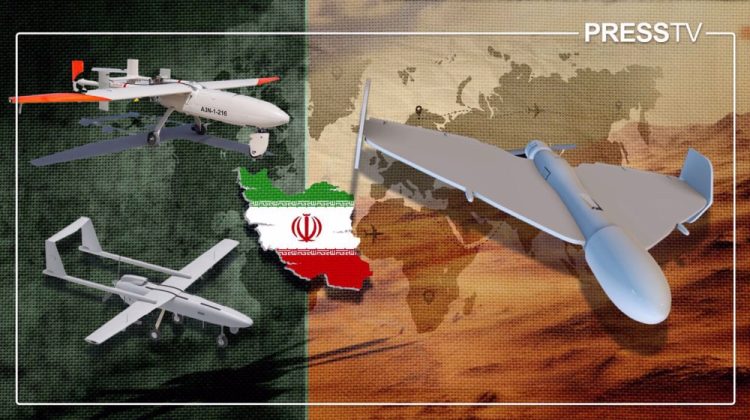
Iran’s drone technology has evolved from a domestic defense initiative into a formidable presence on the global stage, demonstrating a distinctive and effective approach to aerospace development that resonates with a diverse array of international partners.
Over the past decade, the Islamic Republic of Iran’s unmanned aerial vehicle (UAV) industry has undergone a remarkable transformation, progressing from a localized capability to a significant global force.
This rise is not necessarily due to groundbreaking new technologies, but rather a pragmatic and strategic philosophy that defines the country’s aerospace engineering program.
Iran’s astounding success lies in its intelligent integration of existing commercial technologies, combining them into simple, reliable, and cost-effective platforms that are mass-produced to meet the specific demands of modern asymmetric warfare.
This approach has produced three notable UAV systems: the Shahed-136 loitering munition, the Mohajer-6 multi-role combat drone, and the Ababil-3 reconnaissance platform.
Each model reflects a distinct phase of Iran’s technological evolution and operational doctrine, addressing a wide spectrum of military needs.
From the plains of Africa to the skies of South America, these drones serve as instruments of strategic influence, extending Iran’s geopolitical reach and cementing its role as a prominent manufacturer and exporter of military-grade drone technology.
Their widespread adoption underscores a global demand for capable, affordable unmanned systems and highlights the effectiveness of Iran’s tailored development strategy.
Strategic philosophy: Pragmatism as a cornerstone
The foundational strength of Iran’s burgeoning drone program lies in its purposeful and pragmatic design philosophy, which prioritizes functionality, cost-effectiveness, and reliability over cutting-edge complexity.
This strategy reflects a conscious effort to maximize operational output while minimizing technological input, resulting in systems that are both easy to produce and challenging to counter.
At its core, the program optimizes the use of commercially available, dual-use components, engineered into robust platforms tailored for specific battlefield roles.
By focusing on simplicity, Iran facilitates rapid mass production, enabling the deployment of large numbers of drones to achieve strategic effects.
This approach aligns with an asymmetric warfare doctrine, where overwhelming an adversary with numerous, affordable, and capable assets neutralizes the technological advantage of costlier, limited platforms.
This philosophy has allowed Iran to build a sustainable and scalable aerospace industry from the ground up, bypassing restrictions on access to specialized military-grade technology.
The resulting product line precisely meets the operational needs of a diverse client base, providing practical, cost-effective solutions to real-world security challenges without the prohibitive expenses of advanced Western drone systems.
Shahed-136: The archetype of asymmetric warfare
The Shahed-136 epitomizes Iran’s strategic approach – a loitering munition designed for long-range, one-way missions where simplicity and affordability are paramount.
Its design is a masterclass in minimalist engineering that achieves devastating strategic impact.
Featuring a delta wing and single fuselage, the drone’s airframe is inherently stable and durable, manufactured from inexpensive composite materials like fiberglass.
Complex landing gear is eliminated, replaced by a simple rocket-assisted launch system that reduces weight, cost, and mechanical complexity.
Powering the Shahed-136 is a commercial MADO MD 550 two-stroke piston engine, widely used in light aviation and prized for its low cost and easy maintenance.
Although its distinctive loud acoustic signature is notable, it is tactically mitigated by doctrines deploying these drones in large, saturating swarms designed to overwhelm enemy air defenses.
The guidance system combines a commercial GPS receiver with a basic inertial navigation system (INS), allowing pre-programmed target coordinates.
Even under GPS jamming, the INS maintains sufficient accuracy to engage large, stationary infrastructure targets.
The Shahed-136’s design effectiveness is underscored by its widespread replication and licensed production in countries such as Russia and Yemen, alongside imitation projects reported in China, India, Turkey, Saudi Arabia, North Korea, Ukraine, Poland, France, and even the United States—a testament to the enduring influence of Iran’s foundational drone design philosophy.
Mohajer-6: A leap into advanced multi-role combat drones
Representing a more advanced tier of Iran’s drone capabilities, the Mohajer-6 marks the industry’s maturity and successful transition into the realm of multi-role, medium-altitude, long-endurance (MALE) combat UAVs.
This platform showcases significant technological evolution, moving beyond simple, single-use munitions to a sophisticated system capable of intelligence, surveillance, and reconnaissance (ISR) missions as well as precision strikes.
Its airframe features a classic, proven aerodynamic design with straight wings optimized for extended loiter times and an H-tail configuration for enhanced stability, highlighting a balance between reliability and performance.
The Mohajer-6 is believed to be powered by a version of the highly reliable Rotax 912/914 series four-stroke engine, or an Iranian equivalent, reflecting Iran’s continued emphasis on leveraging dependable commercial technology as the foundation for military-grade systems.
The platform’s key technological advancements lie in its secure communications suite and advanced sensor and weapons payload.
Equipped with a secure line-of-sight data link for real-time video transmission and command, some variants reportedly possess satellite communication capabilities, dramatically extending operational range.
Its stabilized electro-optical/infrared (EO/IR) gimbal, combined with a laser designator, enables accurate target identification, tracking, and guidance of precision munitions such as the Qaem series bombs and Almas anti-tank missiles.
The Mohajer-6’s operational adoption by countries including Ethiopia, Venezuela, and Iraq, alongside reports of licensed production, underscores its competitive standing as a sought-after platform in the global combat drone market.
Ababil-3: Pillar of reliable battlefield surveillance
Serving as a vital link in Iran’s drone lineage, the Ababil-3 is a dedicated and reliable tactical intelligence, surveillance, and reconnaissance (ISR) platform.
Though less complex than the Mohajer-6, it significantly surpasses basic reconnaissance drones, demonstrating Iran’s proficiency in producing effective, long-endurance surveillance systems.
Purpose-built for its role, the Ababil-3 features a classic aerodynamic layout with a rear-mounted engine and propeller, providing an unobstructed field of view for its nose-mounted sensor payload, essential for capturing clear, stable imagery.
Its twin-tail design enhances flight stability, a crucial factor for effective surveillance missions.
Like its counterparts, the Ababil-3 employs a simple, reliable piston engine prioritizing flight endurance over high speed, allowing several hours of operation.
The platform’s primary technological focus is its reconnaissance payload, typically an electro-optical/infrared (EO/IR) system capable of rotation and zoom to track ground targets.
Live video feeds are transmitted to ground control stations via data links with ranges reported up to 250 kilometers, making it invaluable for frontline monitoring, artillery coordination, and border patrol.
Its versatility extends to armed variants, capable of carrying light bombs and missiles.
The Ababil-3’s proven service with nations such as Syria and Sudan, and licensed production as the Zagil-3 in Sudan, further cement its reputation as a robust and effective tool for persistent battlefield situational awareness.
Global reach and strategic influence
The international reach of Iranian UAV technology stands as a defining pillar of its success, extending well beyond the West Asia region to establish a presence across Africa, South America, and Eastern Europe.
This global dispersal is multifaceted, operating through a variety of channels including direct state-to-state sales, licensed production agreements, and observable technology transfers, reflecting a flexible and adaptive export strategy.
The deployment of these systems in different environments has provided real-world validation of their capabilities, further fueling international interest and demand.
This expansion carries significant geopolitical weight, positioning Iran as an emerging partner for countries seeking to enhance their defense capabilities outside traditional Western or Russian arms markets.
By providing these drones, Tehran fosters new defense partnerships and wields strategic influence, extending its diplomatic reach through technology-driven relationships.
Iranian UAVs offer a compelling value proposition for many countries, delivering capable military assets that are affordable, accessible, and often free from the political strings commonly attached to other suppliers.
This growing network of users and producers fosters a form of technological solidarity, reinforcing Iran’s narrative of self-reliance and strategic independence, and cementing its role as a prominent actor within the global defense technology landscape.
A model of purposeful innovation
Iran’s rise in the global drone market is a compelling example of how a deliberate and pragmatic technological strategy can yield outsized strategic influence.
The Shahed-136, Mohajer-6, and Ababil-3 collectively reflect a sophisticated grasp of modern warfare demands, offering a tiered portfolio of systems ranging from low-cost saturation weapons to advanced intelligence and precision-strike platforms.
Iran’s achievement lies in its consistent ability to identify and integrate mature, accessible technologies into coherent, effective military systems tailored to the specific, often budget-conscious needs of a diverse international clientele.
This development model, which prioritizes reliability, affordability, and operational effectiveness over cutting-edge novelty, has proven highly successful.
It has not only secured Iran’s defensive capabilities but also enabled it to become a significant exporter of military technology, carving out a distinctive niche in a fiercely competitive global market.
The ongoing evolution and widespread adoption of these platforms indicate that Iran’s approach to drone warfare and defense industrialization has established a lasting and influential footprint, one poised to shape conflict dynamics and defense partnerships well into the future.
India’s ambitions to market its home-grown Tejas fighter abroad have suffered a major setback after the jet crashed during a demonstration at the Dubai Airshow, an event attended by military delegations and arms buyers from around the world, Reuters said on Sunday.
The pilot, Wing Commander Namansh Syal, was killed, and the accident immediately raised questions over the future of India’s flagship aerospace program.
The cause of the crash has not yet been determined, but analysts say the optics alone complicate New Delhi’s long-running effort to present Tejas as a viable, export-ready platform. As one expert put it, “The imagery is brutal”, recalling previous high-profile airshow accidents that undermined national showcases. “A crash sends quite the opposite signal: a dramatic failure,” said Douglas A. Birkey of the Mitchell Institute for Aerospace Studies. He noted, however, that despite the negative publicity, the jet is likely to recover its momentum over time because “fighter sales are driven by high order political realities, which supersede a one-off incident.”
Tejas Turbulence
India has spent more than four decades developing Tejas, originally conceived to replace aging Soviet-era MiG-21s. The project survived sanctions after India’s 1998 nuclear tests, engine-development failures, and production delays at state-run Hindustan Aeronautics Ltd. Although the Indian Air Force has ordered 180 advanced Mk-1A units, deliveries have stalled amid supply-chain problems involving GE Aerospace engines.
A former HAL executive said the Dubai crash effectively freezes near-term export hopes, explaining that “the crash in Dubai rules out exports for now.” HAL had been courting buyers across Asia, Africa, and Latin America and even opened a regional office in Malaysia in 2023. With exports now unlikely, the company is expected to prioritise domestic production. Meanwhile, India’s fighter fleet has dwindled to 29 operational squadrons, far below the authorized 42, as older MiG-29s, Jaguars, and Mirage 2000s approach retirement. An Indian Air Force officer said, “The Tejas was supposed to be their replacement. But it is facing production issues.”
Fleet decisions
To plug immediate gaps, Indian officials are weighing additional off-the-shelf purchases, including more French Rafales, and continue to examine US and Russian proposals for the F-35 and Su-57, an unusual pairing of 5th-generation jets seen together this week in Dubai.
Despite the setback, defense analysts argue, according to Reuters, that Tejas remains central to India’s long-term industrial goals. Walter Ladwig of the Royal United Services Institute noted that the aircraft’s most enduring value will come from the ecosystem it creates, not export sales, stating that its significance lies in the “industrial and technological base it creates for India’s future combat-aircraft programmes.”
Rivalry Renewed
The airshow also became another arena for India-Pakistan rivalry. Pakistan showcased its JF-17 Thunder Block III, jointly produced with China, and announced a provisional contract with a “friendly country” for the aircraft. The jet was displayed alongside Chinese PL-15E missiles, which US and Indian officials claim were used to down at least one Indian Rafale in the fierce aerial clash between the neighbours earlier this year. Pakistan’s aerospace industry promoted the fighter as “battle-tested”, a reference to the recent four-day conflict.
Indian officials, meanwhile, noted that Tejas was not deployed in that fight, nor did it take part in the Republic Day flypast in New Delhi, citing safety considerations associated with single-engine aircraft.
The US has deployed more assets to the Caribbean than are needed for drummed-up counter-narcotics operations, yet still nowhere near enough for an attack on Venezuela, says Venezuelan lawmaker Juan Romero, a member of parliament from the ruling United Socialist Party of Venezuela (PSUV).
From a strictly military standpoint, the US operation is “far too small for a broader offensive,” Juan Romero told Sputnik.
Romero argued that Venezuela—unlike Grenada or Panama, which the US invaded in 1989—is a vast country with an extensive coastline, making any attempt to establish control extremely difficult.
He added that pinpoint strikes on targets inside Venezuela, similar to US and Israeli actions against Iran, would do nothing to solve the problem of holding the territory afterward.
In response to the US military buildup in the Caribbean, he said the Venezuelan government has activated a comprehensive territorial-defense system, claiming eight million combat-ready fighters in addition to 250,000 regular army troops.
“To invade Venezuela, the US would have to pull in soldiers from its African, European, and North American commands—not just Southern Command,” Romero said.
Romero also noted that the current operation—mixed in its results and involving the blowing up of several boats allegedly used to transport drugs—is extremely expensive, costing the US some $50 million a day.
The US has justified its military presence in the Caribbean as part of the fight against drug trafficking, without providing any proof.
Donald Trump continues to keep open the possibility of military action against Venezuela, saying he would “probably talk to” Maduro but emphasizing that he was “not ruling out anything.”
Meanwhile, airlines like Iberia, TAP, LATAM, Avianca, GOL, and Caribbean have suspended operations after the Federal Aviation Administration warned of “heightened military activity” in Venezuelan airspace.
Reports have suggested an imminent new phase of the US operations soon.
For years Israel and its lobby around the world have been trying to normalise their relations with Arabs and Muslims without solving the Palestine Question.
One of the methods they resorted to in the last few years is using human rights and community organizations such as interfaith dialogue and Multiculturalism to achieve this objective and to: isolate the Palestinians, marginalise the Palestine question, end Israel’s isolation, and prevent criticism of Israel, knowing that these organisations will be the first to stand against Israel’s violations, racial and religious discrimination.
The group responsible for this task in Australia is The Australia/Israel & Jewish Affairs Council (AIJAC); its Director of International & Community Affairs, Jeremy Jones is in charge of lobbying religious community organizations, specifically Muslims and Christians. Consequently he convened the Faith Communities for Reconciliation, founding participant in the Australian Partnership of Religious Organisations and the Australian National Dialogue of Christians, Muslims & Jews.
AIJAC is a private political propaganda group. It is recognised as the main Israeli lobby in Australia. It coordinates its activities and works intimately with the Israeli embassy in Canberra and different institutions in Israel. It is privately funded by some Jewish businessmen. It monitors closely Australian politicians, the media, ethnic and religious groups, (especially Arabs and Muslims), unions and academics on their stands towards Israel and the Palestine question. … continue
This site is provided as a research and reference tool. Although we make every reasonable effort to ensure that the information and data provided at this site are useful, accurate, and current, we cannot guarantee that the information and data provided here will be error-free. By using this site, you assume all responsibility for and risk arising from your use of and reliance upon the contents of this site.
This site and the information available through it do not, and are not intended to constitute legal advice. Should you require legal advice, you should consult your own attorney.
Nothing within this site or linked to by this site constitutes investment advice or medical advice.
Materials accessible from or added to this site by third parties, such as comments posted, are strictly the responsibility of the third party who added such materials or made them accessible and we neither endorse nor undertake to control, monitor, edit or assume responsibility for any such third-party material.
The posting of stories, commentaries, reports, documents and links (embedded or otherwise) on this site does not in any way, shape or form, implied or otherwise, necessarily express or suggest endorsement or support of any of such posted material or parts therein.
The word “alleged” is deemed to occur before the word “fraud.” Since the rule of law still applies. To peasants, at least.
Fair Use
This site contains copyrighted material the use of which has not always been specifically authorized by the copyright owner. We are making such material available in our efforts to advance understanding of environmental, political, human rights, economic, democracy, scientific, and social justice issues, etc. We believe this constitutes a ‘fair use’ of any such copyrighted material as provided for in section 107 of the US Copyright Law. In accordance with Title 17 U.S.C. Section 107, the material on this site is distributed without profit to those who have expressed a prior interest in receiving the included information for research and educational purposes. For more info go to: http://www.law.cornell.edu/uscode/17/107.shtml. If you wish to use copyrighted material from this site for purposes of your own that go beyond ‘fair use’, you must obtain permission from the copyright owner.
DMCA Contact
This is information for anyone that wishes to challenge our “fair use” of copyrighted material.
If you are a legal copyright holder or a designated agent for such and you believe that content residing on or accessible through our website infringes a copyright and falls outside the boundaries of “Fair Use”, please send a notice of infringement by contacting atheonews@gmail.com.
We will respond and take necessary action immediately.
If notice is given of an alleged copyright violation we will act expeditiously to remove or disable access to the material(s) in question.
All 3rd party material posted on this website is copyright the respective owners / authors. Aletho News makes no claim of copyright on such material.

 Aletho News