US Officers Cannot Explain Why So Much Military Needed for Strikes in Caribbean – Reports
Sputnik – 11.11.2025
WASHINGTON – US senior Special Operations officers in a briefing last month did not provide a comprehensive explanation why the Trump administration needed a massive military presence in the Caribbean for strikes on a few small boats allegedly used by drug cartels, CNN reported on Tuesday, citing sources with the knowledge.
At the moment, there is no public information from the Pentagon on what the military is using to conduct the strikes, but the sources told CNN that MQ-9 Reaper drones are used for US attacks on alleged drug boats, as well as AC-130J gunships and fighter jets.
The sources told CNN that the Pentagon officials also could not provide an exact amount of taxpayers’ dollars spent on the counternarcotics campaign. However, administration officials have stated that each strike costs up to hundreds of thousands of dollars, the report said.
A significant part of all deployed US naval assets worldwide have been located in US Southern Command since last month, and even more US military assets are about to be placed in the Caribbean, the report added.
Earlier this week, US Secretary of War Pete Hegseth said that the United States conducted strikes on two drug trafficking vessel in the Eastern Pacific, killing six people.
To date, the US military has conducted 19 strikes, destroyed 20 boats, and killed 76 people as part of a counternarcotics campaign, CNN reported.
In late October, the Trump administration held a briefing in the US Congress to lay out its legal justification for the strikes on Venezuelan ships. However, only Republicans were invited to the briefing, causing negative responses and vast criticism among Democrats.
United Nations Secretary General Antonio Guterres believes that US attacks in the Caribbean contradict international law, and so does UN High Commissioner for Human Rights Volker Turk.
Universities in West are “occupied by Zionist/Jewish supremacist lobby groups,” repress speech against genocide

By Syed Zafar Mehdi | Press TV | November 11, 2025
Over the last two years, universities across the West have gone out of their way to repress speech against the ongoing genocide in Gaza and against Zionism, says a university lecturer who was forced to leave his university due to a Zionist witch-hunt.
In an interview with the Press TV website, Harry Pettit, the former Assistant Professor of Human Geography at Radboud University, the Netherlands, said any speech in support of the Palestinian resistance has been criminalized in Western academic circles.
Pettit, who holds a PhD from the London School of Economics and Political Science and is the author of The Labor of Hope: Meritocracy and Precarity in Egypt (2023), has been hounded at his university over his strong advocacy for Palestinian rights.
His social media posts, in which he unequivocally condemned the genocide in Gaza and the complicity of Western governments, sparked controversy as Zionist lobby groups in the Netherlands campaigned for his ouster from Radboud University.
In a statement on Monday, Pettit said the university had monitored his X account and he was pressured to retract his statements on Palestine.
He was even warned by the university administration and threatened with dismissal at the behest of influential Zionist lobby groups such as the Center for Information and Documentation on Israel (CIDI), the Netherlands Committee for Israel and the Jewish People (NCAB), as well as media outlets like De Telegraaf and Education Minister Gouke Moes.
“Over the last two years, universities across the West have gone out of their way to repress speech against the genocide, against Zionism, and in support of the Palestinian resistance,” Pettit told the Press TV website only hours after announcing he was leaving the university.
“They have done this because they are occupied by Zionist/Jewish supremacist lobby groups that want to shut down any critique of ‘Israel’. We have no choice but to fight back against this.”
He said the pro-Israel lobby is powerful in the Netherlands, which is evidenced by the data.
“If you look at data, the Netherlands has by far the biggest economic relationship with Israel in the whole of Europe. Therefore, there is a big incentive to squash critique,” he noted.
“CIDI is the main lobby group and it acts in similar ways to other countries, targeting individuals who speak out and trying to destroy their livelihoods. It also has links to political parties, the media, and student groups like Standwithus, and together they apply pressure on universities.”
Pettit, however, was not alone in this fight. He received tremendous support from his colleagues and students, who defended his freedom of speech.
“I have received a lot of support from colleagues and students who have also been taking risks to speak out against the genocide and Zionism, and the students have been incredible at engaging in disruptive protest over the last two years that has forced the university to cut ties with Israeli universities,” he told the Press TV website.
Unfazed by the threats, he vowed to continue speaking for the Palestinian cause and against the ongoing genocide in the Gaza Strip.
“I have every intention of continuing to use my platform to advocate for Palestinian liberation. That is why I left Radboud to go to a more supportive environment that enables me to keep doing that,” he asserted.
Pettit had been vocal not only on his own social media handles but also had been giving media interviews to raise awareness about the plight of Palestinians.
In one of his interviews in October, he told Volkskrant that he wants to raise awareness in the Netherlands that Palestinians “as an oppressed people have the right to armed resistance.”
“Calling October 7th a legitimate resistance operation doesn’t mean I condone everything that happened that day. But Israel wants us to see Hamas as barbarians who hate Jews. That’s a racist frame that serves to legitimize the genocide. It also obscures decades of oppression,” he said at the time.
His defense of the Palestinian resistance and the historic Operation Al-Aqsa Storm on October 7, 2023, irked Zionist lobby groups that aggressively pushed for his ouster.
Amid the genocide in Gaza, students in many universities across Europe and the US have been suspended and even arrested at the behest of Zionist lobby groups.
Europe cannot do without Russian gas despite attempts at diversification

By Ahmed Adel | November 11, 2025
As the latest data on European Union imports have shown, the bloc cannot do without Russian gas and will continue to find ways to buy it despite announcements to completely oust this energy source from the European market by 2028. Confusingly, the EU made this decision precisely when, despite strong anti-Russian sanctions, it actually increased its gas purchases from Russia.
In October, a record 1.68 billion cubic meters of gas from Russia reached the EU via the Turkish Stream, the highest monthly volume since the pipeline began operating in 2020. The pipeline’s average capacity utilization in October was 96%, and imports were 13% higher than in October last year.
The EU has also increased its imports of liquefied natural gas from Russia, with the value up by 7% compared to the same period last year. Russian LNG, as reported by EUObserver, accounted for 16% of total imports into the EU.
At the same time, the EU cannot completely replace Russian gas in two years, especially since US Secretary of the Interior Doug Bergham recently stated that although the United States has enough resources to replace Russian gas, this would require major infrastructure investments in Eastern Europe. In other words, he is calling for the Turkish Stream and the Russian gas in it to be replaced by an American Stream, even if it comes at a huge economic cost for the Europeans.
The US probably has enough gas in its reserves, but private companies do not want to jeopardize their financial position by investing in the infrastructure on American soil necessary to convert natural gas into liquid and transport it to Europe. This liquefied gas must then be returned to its gaseous state in Europe and then transported by pipeline to the end user—a complicated and expensive task.
That is why Europe has imported much more Russian gas than usual. American gas is more expensive, and no one has money to throw away, especially in the faltering European economy, where Germany, the engine of its development, has been struggling with a long recession. In effect, Europe’s economy will be buried if it relies only on American gas.
Although there is constant talk of gas from Azerbaijan, it never arrives in quantities above usual levels. Given the amount of gas the Caucasian country produces and sells, they are not enticed to invest huge sums in new deposits and significantly increased gas production that might not have a buyer in Europe in the future.
The EU cannot do without Russian gas because the bloc lacks the funds to build the necessary infrastructure. The Trump administration would certainly not finance the necessary infrastructure on European soil for LNG delivery and regasification. The pipeline required, and Europe, with its economy, is not able to finance the American Stream.
Even if a terminal for the reception and regasification of American LNG is built in the Black Sea in two years, the same amount of time as the Greek one in Alexandroupolis in the Aegean Sea, which was put into operation a year ago, is built, it is clear that its capacities are modest. The Bulgarian-Greek interconnector, which receives gas from Alexandroupolis, has a capacity of only 3 billion cubic meters per year.
Nonetheless, if it were that large in the Black Sea, it would be more than modest compared to the capacity of the Balkan Stream. Even the Turkish Stream, with a capacity of 31 billion cubic meters of gas, of which the Balkan Stream is a branch, is insufficient to meet Europe’s needs.
The EU has recently received a warning from Qatar, whose LNG imports account for around 14% of its imports. Qatar has threatened to stop supplying gas to the EU if it imposes a 5.0% fine on companies that fail to respect human rights and environmental standards. If this were to occur, Europe could eventually be left without both Russian and Qatari gas, as well as without sufficient American gas.
It cannot be expected that there will be any automatic change when peace is achieved in Ukraine because Russia will not turn its back on its new major partners, such as India. Europe is increasingly being left behind as other parts of the world, the main consumers of Russian energy, come into the spotlight. These countries are the main consumers, and as their industries develop, they will need more oil and gas. In effect, as Russian energy exports to the non-Western World grow, the constant threats by Europe to end imports will have little impact on the Russian economy and will boomerang on Europe, as all other sanctions packages have.
Ahmed Adel is a Cairo-based geopolitics and political economy researcher.
The Pokrovsk lesson is that British media are lying through their teeth
By Martin Jay | Strategic Culture Foundation | November 11, 2025
While western commentators ease their audience into a new reality – the eastern strategic town of Pokrovsk is about to fall into Russian hands – it’s interesting to see how they carefully backpedal and twist every morsel of information. It’s as though all of the information that was prepared and delivered to them is so out of touch with reality, that all is left now is to downplay the imminent Russian victory as hollow and meaningless.
It’s certainly true that a victory for Russian forces now in Pokrovsk is less strategic than it was a few months ago, but to write it off as insignificant is just one more lie that western media and commentators are guilty of delivering.
The analysis and reporting about Pokrovsk has to be deciphered, but when British journalists like Sam Kiley, who are there on the ground, talk about the victory cry from pro-Russian media as being “premature” it’s worth noting that nearly all such journalists have crossed the line of journalism for the preferred role of commentator. Kiley’s piece in the Independent is so peppered with the conditional tense that it has little or no credibility. And like all British hacks, he is cleverly removing the sweet taste of victory out of Putin’s mouth by going into the zone of spouting irrefutable so called “facts” which are naturally impossible to disprove. The main one, which gives you an indication that he also believes Pokrovsk is close to falling, is that he mentions that the gains the Russians made came through so many dead soldiers. This ol’ chestnut is repeated over and over again as British readers like to believe it’s true. Is it true? Has Russia lost a disproportionate number of soldiers on the battlefield? We will never know, so how in God’s name does Kiley?
Irrefutable claims, written as fact, are part and parcel of British reporting on the Ukraine war. Kiley might be comforted by the sensationally bad Times Radio which takes this dark art to a new level. Philip Ingram’s podcast with his friend former British Army Colonel Hamish de Bretton-Gordon is a shining example of what one ex-spook and one former colonel in the British army can do with MOD disinformation. Their podcast is so bad and bigoted, it leaves you wondering whether to laugh or cry as they both start off with the absurd argument that most of the reporting from Pokrovsk is Russian social media channels which exaggerate the scale of Russian gains and so, according to the hapless Bretton-Gordon, shouldn’t be taken seriously – before he blathers that if Russia were to take the town, it would take four years for them to do it.
He then goes on to conclude that not much is happening on the ground and that things are “opaque”. Ingram then chimes in to tone down the significance of the town, when it falls, but claims that the Ukrainians have had a success there, given what they both agree are causalities on the Russian side of a 1000 losses a day. Yet both of these numpties are reading from MOD/Mi6 data which only underlines the point that disinformation even for ex-soldiers having a go at podcasts is alive and well. While it is disturbing that Bretton-Gordon is so reliant on such data it is also off putting that he can’t even pronounce the name of the town itself correctly. Where does Times Radio find such amateurs?
For American media, even those who support Biden, the defeat of Pokrovsk is nigh and the narrative they offer contradicts the two podcasters outright. Perhaps if Times Radio Laurel and Hardy act were to actually do the legwork and interview people who are on the ground, even if it’s only the Ukrainians, their banta might have a slither of credibility about it and not leave the viewer cringing at how awful it is.
“The situation is difficult, with all types of fighting going on, firefights in urban areas, and shelling with all types of weapons,” one battalion commander told CNN, speaking on the condition of anonymity for security reasons.
“We are almost surrounded, but we are used to it,” he said. Another soldier, who also asked for his name to be withheld for safety reasons, told CNN the Russian military continues to press forward with large numbers of men.
“The intensity of their movements is so great that (Ukrainian) drone operators simply cannot keep up with the pace. The Russians often move in groups of three, counting on the fact that two will be destroyed, but one will still reach the city and gain a foothold there. About a hundred such groups can pass through in a day,” a soldier from the Ukrainian Peaky Blinders drone unit told CNN.
And so, the reporting on the British side lacks all credibility. And like all bad journalists, or pseudo journalists, the Times Radio also like to practice the deft art of omission. How did it simply pass these two that there are plenty of Ukrainian soldiers who will tell them that their MI6 taking points are BS and that it’s a shitstorm in Pokrovsk with Ukrainian losses also high? Would that not have scored them the propaganda points they crave?
In the UK, the reporting about Ukraine is so biased and manipulated by MI6/MOD disinfo that it is practically a Hollywood movie which the press is asking a gullible public to believe. Could this possibly be responsible for broad support for the war? Is a disinformation campaign actually driving the political dynamic, just as it did so many times before, not dissimilar to how many people in 2003 were happy that Tony Blair sent troops to Iraq, based on similar reports?
Ukrainian-British plot to steal MiG-31 thwarted – FSB
RT | November 11, 2025
The Russian Federal Security Service (FSB) has said it foiled an elaborate Ukrainian-British plot to steal a MiG-31 fighter jet armed with a Kinzhal hypersonic ballistic missile.
According to the FSB, although Ukrainian agents unsuccessfully tried to persuade the pilots to defect, their actual goal was for the aircraft to be shot down in Romanian airspace, provoking an international incident with NATO. The agency said the operation was organized by Ukraine’s military intelligence service (HUR) in coordination with the UK’s MI6.
A MiG-31 pilot said he was contacted last year by a man introducing himself as Sergey Lugovsky, a researcher for the open-source investigative group Bellingcat, which has received funding from several Western governments. The pilot said Lugovsky initially sought consultations, later offering money for defection.
After the pilot declined, a Ukrainian agent using the name Aleksandr approached the aircraft’s navigator, offering $3 million and a foreign passport in exchange for directing the plane to fly over an air base near Constanta, Romania.
Kiev has previously offered money and assistance to defectors. In 2023, Russian Mi-8 pilot Maksim Kuzminov defected to Ukraine, landing his helicopter behind the front lines with the HUR’s help. Two of the other crew members, unaware of his plan, were killed upon landing. Kuzminov was assassinated a year later in Spain, where he was living under a new identity and with a Ukrainian passport.
In 2022, the FSB accused former Bellingcat investigator Christo Grozev, a Bulgarian-born journalist, of taking part in a failed Ukrainian attempt to recruit Russian military pilots. Grozev said he was embedded with Ukrainian intelligence officers as a documentary filmmaker and claimed that his text messages were forged.
Behind the Dances and Deals: Trump’s Quiet Pivot in Asia
By Salman Rafi Sheikh – New Eastern Outlook – November 11, 2025
The photo ops from Trump’s Southeast Asia tour hid a deeper shift in US thinking. Washington’s new China strategy, shaped by the Pentagon, now calls for restraint, mutual legitimacy, and shared rules rather than confrontation.
In short, America’s foreign policy hawks are quietly preparing for coexistence, not conquest. Trump’s visit was to showcase this change. The question, however, remains: will the US find success ultimately?
Trump’s visit
Trump came as a peacemaker. He wanted to demonstrate that the US still matters in the region, reminding regional powers of Washington’s seriousness that it really means business going forward. Therefore, while the headlines focused on his dance performances in Malaysia and the signing ceremonies, the trip produced two notable outcomes: a peace accord between Thailand and Cambodia and a series of trade and investment frameworks with key ASEAN economies. The Thailand–Cambodia agreement, signed at the ASEAN Summit in Kuala Lumpur and witnessed by Trump, commits both sides to a cease-fire, land-mine clearance, and the release of detainees, marking a rare US-brokered diplomatic success in the region. On the economic front, Trump announced new or expanded trade arrangements with Malaysia, Cambodia, Thailand, and Vietnam—some finalized, others still in negotiation—covering areas like critical minerals, supply chains, and energy investment. Washington also upgraded its partnership with Malaysia to a “Comprehensive Strategic Partnership,” signaling a deeper US pivot toward Southeast Asia’s economic and geopolitical center. Yet, much of this remains more symbolic than substantive for now, as the real test lies in whether these deals translate into durable peace and concrete trade outcomes—or fade as another episode of diplomatic theatre.
Much of the possible success of this visit and the durability of its outcomes is tied directly to the extent to which the Trump administration can implement its own new geopolitical thinking towards the region more generally and China more specifically—a country that it wants to primarily counter in Asia and the Pacific. This new geopolitical thinking is anchored in a recent report published by the Pentagon-backed RAND corporation.
The new thinking
The RAND report delivers a striking argument: Washington must abandon—after trying it unsuccessfully for years—the fantasy of defeating China and instead learn to manage an enduring, structured rivalry. The report frames the contest as the defining axis of twenty-first-century geopolitics—an unavoidable clash of systems and ambitions—but warns that a US strategy driven by dominance, containment, or ideological confrontation risks pushing both powers toward catastrophic instability. RAND’s central proposal is not détente, but what it calls a disciplined modus vivendi: a framework that accepts competition as inevitable yet seeks to prevent it from spiraling into open conflict. This is especially important for Washington insofar as it allows it to present to the wider Southeast Asian region that it is not seeking Cold War-like alliances where regional countries must choose sides. Therefore, the authors lay out six core principles to stabilize the relationship: both sides must internalize that coexistence, not victory, is the only sustainable outcome; recognize the political legitimacy of each other’s systems, however distasteful; construct shared norms and institutions in areas of friction such as Taiwan, the South China Sea, and technology; exercise restraint in developing capabilities that threaten the other’s deterrence systems; agree on basic rules for world order; and strengthen crisis-management channels to prevent miscalculation.
To translate this into policy, the report recommends six deliberate moves for the US. First, Washington should clarify that its goal is not China’s overthrow but a stable, rules-based rivalry. Second, it must reestablish senior-level communication channels to rebuild minimal trust. Third, it should institutionalize crisis-management mechanisms, particularly around Taiwan and maritime disputes. Fourth, it should negotiate limited accords to restrain cyber and AI competition. Fifth, the US and China should mutually recognize each other’s nuclear deterrence and avoid doctrines that invite preemption. Finally, Washington should pursue narrow cooperative projects—climate, health, scientific exchanges—to maintain some connective tissue in an otherwise adversarial relationship.
Trump’s visit reflected this thinking very much. For example, throughout this tour, Trump made no mention of the QUAD—an anti-China alliance comprising the US, India, Japan, and Australia. It means that Washington is moving away from its strategy of building economic and military alliances with anti-China states, such as India and Japan, to use them as counterweights to China’s influence. This narrative aligns with what the RAND report refers to as recognizing the legitimacy of China and its ruling party.
Beyond Ambitions
Having said this, none of this means that a complete reset has taken place, or will take place soon. Undoubtedly, several bones of contention have been healed, but several remain. Trump’s meeting with Xi, for instance, produced a tactical easing of tensions rather than a strategic breakthrough. Both leaders agreed to cut US tariffs on Chinese imports from roughly 57 to 47 percent, while Beijing pledged to resume large purchases of American soybeans and temporarily lift its export restrictions on rare earth minerals—an issue Trump declared “completely resolved” for now. China also committed to tightening controls on the export of fentanyl precursors, offering Trump a domestic win. Yet these agreements are largely short-term gestures: most are limited to a year, and none address the deeper structural rifts over Taiwan, technology export controls, or military rivalry. In effect, the meeting delivered a pause—a breathing space for both sides to stabilize strained supply chains and political optics—rather than a genuine reset of relations. The underlying strategic mistrust remains intact, making this more a tactical truce than a transformation of US-China relations.
Trump’s tour and his carefully choreographed diplomacy signal that Washington is experimenting with a softer, more disciplined form of competition—one that seeks to manage, not eliminate, China’s rise. Yet the contradictions at the heart of this strategy remain unresolved. The US still ultimately wants to lead Asia while pretending to share it; it seeks coexistence but clings to primacy. The Pentagon’s call for mutual legitimacy and restraint may sound pragmatic, but it runs up against the political and ideological reflexes of an America that views China as a rival to be outlasted, not accommodated. Trump’s gestures toward peace and partnership may buy time and goodwill to achieve this objective ultimately. China, however, will be very mindful.
Salman Rafi Sheikh, research analyst of international relations and Pakistan’s foreign and domestic affairs
Gordon Hahn: The Strange Death of Europe
Glenn Diesen | November 10, 2025
Gordon Hahn discusses Europe’s ideological fundamentalism, detached leadership, Russophobia, subservience to the US, and other causes for the death of the old continent.
Follow the work of Gordon Hahn: https://gordonhahn.substack.com/ https://gordonhahn.com/
Follow Prof. Glenn Diesen: Substack: https://glenndiesen.substack.com/
X/Twitter: https://x.com/Glenn_Diesen
Patreon:  / glenndiesen
Support the research by Prof. Glenn Diesen: PayPal: https://www.paypal.com/paypalme/glenn…
Buy me a Coffee: buymeacoffee.com/gdieseng Go Fund Me: https://gofund.me/09ea012f
Books by Prof. Glenn Diesen: https://www.amazon.com/stores/author/…
Featured Video
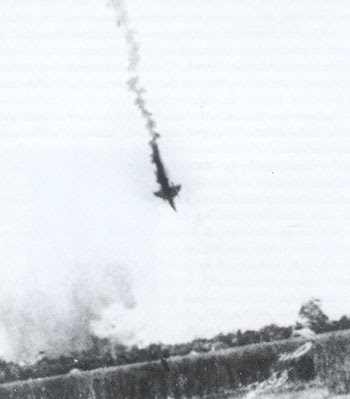
The Failed Air War Over Vietnam
or go to
Aletho News Archives – Video-Images
From the Archives
USS Liberty Massacre: A Pivotal Moment in the Hostile Takeover of America
By Kevin Barrett | Crescent | Dhu al-Qa’dah 24, 1445
In corporate America, hostile takeovers are commonplace. They occur when an aggressor—a larger corporation or rich individuals—seizes control of a smaller corporation without asking permission.
What few recognize is that the United States itself has been subjected to a hostile takeover. Since the aggressor, the illegitimate settler colony known as “Israel,” is much smaller than the US, the takeover has necessarily been surreptitious.
As of June, 2024, Israel’s gradual takeover of the US has become obvious and undeniable—a proverbial “elephant in the living room.” … continue
Blog Roll
 Aletho News
- Yemeni Armed Forces Warn Airlines Against Using Saudi Airports, Exempt Mecca and Medina
- Iran security chief says powers greater than US tried to conquer Iran but ended in ‘dustbin of history’
- Europe’s mounting social chaos… chickens coming home to roost for proxy war against Russia
- US-Russia Diesel Deal Becomes Massive Defeat for Ukraine
- Hormuz and the Looming Economic Catastrophe
- Dhubab offensive, media blitz and the rapid unraveling of Saudi-backed coalition’s new gambit
- Putin Conveys to Trump Iran’s Vision on Possible Conflict Resolution – Kremlin
- The Search for Truth: Charlie Kirk’s Assassination One Year Later
- ‘Harsh reality’: Iran says France seeks monopoly on power and intimidation, not peace for all
- When Will This White House Madness End?
- If Americans Knew
- Israeli forces kill another child in Gaza – Daily Update
- Gaza ceasefire exists in name only, say more than 100 organizations
- Nearly 2 Million in Gaza Need Urgent Shelter Assistance as Winter Looms: IOM Chief Warns
- Suppressing Palestinian resistance: US charity under fire for AI monitoring of Gaza classrooms
- Thousands Are Held in Israeli Torture Camps. This Is What Happens Inside
- Israel puts Gaza’s sick, injured, newborn in peril – Daily Update
- Report claimed Mark Levin used by Israeli government to influence Trump
- Over 2,000 Gazans have died awaiting medical evacuation amid Israel’s continued siege
- How a U.S. Diplomat Suppressed and Altered Reports Critical of Israel
- 5 Palestinians Die from Israeli Strikes in Gaza as Relentless Attacks Continue
- No Tricks Zone
- Germany’s Green Energy Debacle: High Energy Costs Force Kahla Porzellan to Close After 182 Years!
- New Study: 50 Years Of The Most Aggressive ‘Net Zero’ Policies Can Only Affect The Global Climate By 0.03°C
- US September “Heat” Was No Record…Many Records Set Decades Ago
- Latest European Green Energy Debacle; Portugal’s Largest Flagship Solar Park Insolvent!
- Green Energy Debacle: German Expert Professor Fritz Vahrenholt Warns Of Severe Economic And Social Consequences
- Two More Paleo Reconstructions Affirm Meters-Higher Sea Levels Across Ireland, Brazil 7000-6000 Years Ago
- New Study: Earth And Venus Surface Warmth Largely Explained By Convection And Lapse Rate, Not CO2 Or Radiation
- 2025 Nature Paper Claiming Worsening Global Drought Gets RETRACTED …Heavily Flawed
- New Study: ‘Global Drought Shows No Detectable Recent Acceleration Under Climate Warming’
- Economic Masterminds: German Socialists Suggest Taxing Productivity Gains Stemming From Using AI

