Venezuela slashes oil production as US embargo halts exports
Al Mayadeen | January 5, 2026
Venezuela’s state-run oil company, PDVSA, began cutting crude output on Sunday as storage facilities reached critical capacity, a direct consequence of the comprehensive US oil embargo that has reduced exports to nearly zero.
The move adds further strain on an interim government grappling with mounting economic and political pressure.
PDVSA is shutting down oilfields and well clusters after storage facilities near capacity, with stocks of extra-heavy crude piling up. The company is also facing a shortage of diluents, essential for blending Venezuela’s heavy oil for export.
These constraints have forced the company to reduce PDVSA crude output.
Sources confirmed to Reuters that output cuts were requested at joint ventures such as CNPC’s Petrolera Sinovensa, Chevron’s Petropiar and Petroboscan, and Petromonagas. The latter, once operated jointly with Russian state-run Roszarubezhneft, is now under sole PDVSA control.
Chevron Shipments Halted Despite License
Chevron, which holds a US license to operate in Venezuela, had been an exception to the wider export freeze. However, since Thursday, its shipments have also come to a halt. Although Chevron has not yet reduced production, storage capacity is nearing its limit at key facilities such as Petropiar and Petroboscan.
No Chevron-operated tankers have left Venezuelan waters since Thursday, and if delays persist, Chevron Venezuela operations may be forced to scale back output.
Chevron stated it continues to operate “in full compliance with all relevant laws and regulations,” without providing further comment.
Political and Economic fallout from US blockade
The political landscape in Caracas remains tense following the kidnapping of President Nicolas Maduro and his wife by US forces on Saturday.
Delcy Rodriguez, Venezuela’s oil minister, has since assumed the role of interim president.
President Donald Trump declared that an “oil embargo” was fully in effect as part of a broader transition overseen by the US. The US oil embargo on Venezuela has halted tanker movements, impacted international shipments, and left the country’s oil-dependent economy under extreme duress.
Although Rodriguez stated last month that Venezuela would continue producing and exporting oil despite US sanctions, the embargo’s tightening grip has forced PDVSA to slow operations and store crude on vessels.
Export collapse and floating storage build-up
In recent weeks, PDVSA has resorted to using floating storage, loading tankers with crude and fuel as onshore capacity maxes out.
Over 17 million barrels of oil are currently stored aboard ships awaiting departure, according to TankerTrackers.com. No tankers were docked at the Jose terminal on Sunday, halting both export and domestic supply activities.
The Venezuela oil storage crisis worsened as more than 45% of the country’s 48-million-barrel onshore storage capacity was filled, forcing excess fuel oil into open-air waste pools.
Meanwhile, Venezuela’s access to diluents has been constrained. In the second half of last year, the country increased imports of naphtha and light oil from Russia to blend its heavy crude. However, these shipments began facing obstacles in December due to the US-led blockade.
Venezuela’s crude output, which stood at approximately 1.1 million barrels per day (bpd) in November with exports reaching 950,000 bpd, dropped to around 500,000 bpd last month, according to preliminary data based on shipping movements.
Venezuela’s oil production slowdown could have a domino effect, disrupting refining and the domestic fuel supply chain. This poses a serious challenge to the interim government, which relies on oil revenues to maintain basic governance and internal stability.
Israel is Having a Party After the Capture of Nicolás Maduro
José Niño Unfiltered | January 4, 2026
The recent capture of Nicolás Maduro served as a stark reminder that the true center of gravity in Western power politics is not the White House or the Pentagon, but the interests of a globally dispersed Zionist network that views nation-states as mere instruments in their quest to make the world safe for Jewish supremacy.
Israeli officials across the political spectrum rallied behind President Donald Trump’s successful operation to extract Maduro, with government ministers and opposition figures in the Israeli political establishment celebrating the move as a devastating blow to Iran’s global influence operations.
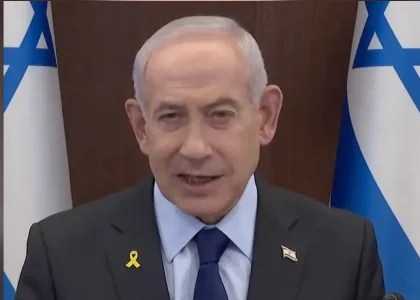
Prime Minister Benjamin Netanyahu led the praise, posting congratulations on social media that saluted Trump’s “decisive resolve and the brilliant action of your brave soldiers.” Netanyahu’s statement referenced “bold and historic leadership on behalf of freedom and justice” without explicitly naming the Venezuela operation, though the timing left little doubt about his message.
In another press conference, Netanyahu continued to praise the United States’ operation in Venezuela. He proclaimed:
“I express the full support of the Israeli government for the determined decision and decisive action of the United States regarding Venezuela.
This is about restoring freedom and justice to another region of the world.
Across Latin America, we are witnessing a historic shift — countries returning to the American axis and renewing ties with Israel.”
As previously recorded by this author, the strategic reorientation Netanyahu has mentioned is nowhere more evident than in the Isaac Accords, an initiative whose underlying objective is the normalization of a regional order that guarantees Jewish primacy in the Western Hemisphere.
Foreign Minister Gideon Sa’ar issued the most comprehensive endorsement from Tel Aviv, commending what he called America’s role as “leader of the free world” in executing the operation. Sa’ar specifically expressed hope for renewed diplomatic relations between Israel and Venezuela, which Caracas severed in 2009 over Israel’s Operation Cast Lead in Gaza.
“Israel commends the United States’ operation, led by President Trump, which acted as the leader of the free world,” Sa’ar wrote. “At this historic moment, Israel stands alongside the freedom-loving Venezuelan people, who have suffered under Maduro’s illegal tyranny.”
The foreign minister continued with pointed language about regional security threats. “Israel welcomes the removal of the dictator who led a network of drugs and terror and hopes for the return of democracy to the country and for friendly relations between the states,” he stated. “The people of Venezuela deserve to exercise their democratic rights. South America deserves a future free from the axis of terror and drugs.”
Diaspora Affairs Minister Amichai Chikli from the ruling Likud Party drew the most explicit connections between Maduro’s capture and threats facing Israel, framing the operation as a direct message to Iran’s Supreme Leader Ali Khamenei.
“The capture of Nicolás Maduro is not only good news for the people dwelling in Caracas; it is also a devastating blow to the global axis of evil and a clear message to Khamenei,” Chikli declared. He elaborated on Venezuela’s alleged role in funding Iranian proxy networks. “Maduro did not run a country; he ran a criminal and drug empire that directly fueled Hezbollah and Iran.”
Chikli praised Trump’s approach as validation of hardline foreign policy. “President Trump’s decisive steps have once again proven that strong leadership is the only way to subdue dictators,” he wrote. “This is a direct battle between the values of freedom and the West and the dangerous alliance of radical Islam and communism.” He concluded simply that “the world is a safer place today.”
Opposition leader and former Prime Minister Yair Lapid of the Yesh Atid Party joined the chorus with his own warning to Tehran. “The regime in Iran should pay close attention to what is happening in Venezuela,” Lapid posted, issuing what analysts interpreted as a veiled threat amid ongoing protests in Iran over economic collapse.
Israeli security analysts view Maduro’s removal as potentially restricting Iranian Revolutionary Guard operations against Israeli targets throughout Latin America, cutting off weapons flows to the continent, and disrupting extensive oil smuggling operations between Venezuela and Iran that have helped Tehran evade sanctions.
The American political establishment, whose policies are demonstrably subservient to world Jewry, responded with equally fervent praise, viewing the capture of Nicolas Maduro as a significant strategic victory for the state of Israel.
U.S. Ambassador to Israel Mike Huckabee delivered some of the most forceful American praise for the operation, explicitly linking the Venezuela action to security concerns in his diplomatic posting. Speaking on Newsmax, Huckabee opened his reaction with religious fervor. “Well, my first reaction was to say, praise the Lord and thank you, President Trump,” the ambassador stated.
He then explained why Americans should view Venezuela through a Middle Eastern security lens. “A lot of people may not make the connection as to why this matters to us in the Middle East,” Huckabee said. “What they don’t know is that Hezbollah is very active in Venezuela.” The ambassador detailed the Iran connection that Israeli officials had emphasized. “There has been a 20-year partnership between Iran and Venezuela,” he explained. “The ties are deep, and Hezbollah operates in 12 different countries throughout South America.” In his conclusion remarks, Huckabee contended that the operation represented a global victory. “Good news for America, good news for the world,” he declared.
Welcome to Empire Judaica.
The chorus of approval from Israel and its advocates lays bare the grim reality for the American people: they are not citizens of a sovereign nation but unwitting actors in a geopolitical drama where they play supporting roles in a global imperium built for and by organized Jewry.
The US Has Invaded Venezuela to ‘Fight Drugs.’ Are Colombia and Mexico Next?
By Adam Dick | Peace and Prosperity Blog | January 4, 2026
On Saturday, United States President Donald Trump held a press conference to boast about his sending the US military hours earlier to bring destruction in Venezuela and drag off the leader of the nation’s government to America for incarceration and prosecution. It was all done in the name of fighting the war on drugs, though few people give much credit to the Trump administration’s repeated assertion that Venezuela President Nicolás Maduro was a drug kingpin responsible for a major share of fentanyl or cocaine shipments into America.
The US government, Trump declared, will “run” Venezuela for an undefined “period of time” that Trump declined to rule out, in answer to a question, could be measured in years. While the US is doing that, be prepared for Trump also to potentially direct the US military to invade at least two additional countries in the Western Hemisphere.
In October, I wrote about how Trump appeared to be making demands and taking actions preparatory for the US going to war in three countries — Venezuela, Colombia, and Mexico. The common reason given for taking military action in each country has been the same — advancing the US government’s war on drugs.
The current status is one down, at least two to go. While already bogged down in Venezuela, the next step may be for the US to proceed to attack two more Western Hemisphere countries. Indeed, during the press conference, Trump continued with comments suggesting both Colombia and Mexico are under threat from the US government’s drug war. In particular, Trump reaffirmed his previous declaration that Colombia President Gustavo Petro has “got to watch his ass” while accusing him of making cocaine and sending it into America, criticized the “cartels operating along our border” in reference to Mexico, and said more broadly that “we will crash the cartels.” One important question to consider is how much America may also crash due to the strain of military intervention in the Western Hemisphere.
Israeli police shoot dead Palestinian from Bedouin village in Negev
MEMO | January 4, 2026
Israeli police shot dead a Palestinian from the Bedouin village of Al-Tarabin in the Negev early Sunday, local media reported.
Al-Tarabin is an unrecognized Palestinian Bedouin village located in the Negev Desert in southern Israel.
According to the daily Yedioth Ahronoth, a special police unit and soldiers from the “National Guard” raided the village to arrest Mohammed Hussein Tarabin for his alleged involvement in acts of vandalism against property in nearby Israeli settlements.
The National Guard is a security force formed by far-right National Security Minister Itamar Ben-Gvir and is viewed by the Israeli opposition as a militia under his direct authority.
The newspaper quoted Tarabin’s family as saying that police shot their son “without cause.”
“He is an ordinary man with seven children. There was no need to kill him,” the family said.
“For them (the police), this is a great achievement to please Ben-Gvir, who dances on Arab blood. The situation is dangerous, the behavior of the police is unacceptable, and they must leave the area or they will bear responsibility for anything that happens.”
Ben-Gvir, for his part, said on the US social media company X that he supported the police’s conduct in Al-Tarabin village, claiming that “Mohammed Tarabin” was a “dangerous criminal.”
The Negev Bedouin Leadership condemned the killing and called for Ben-Gvir’s dismissal.
It called for an investigation into the circumstances of the killing and bringing those responsible to justice.
Tens of thousands of Bedouins live in dozens of unrecognized villages in the Negev, with Israeli authorities denying them access to water, electricity, infrastructure, schools and medical clinics.
Trump Says Venezuelan Vice President Will Pay Higher Price Than Maduro if She Disobeys US
Sputnik – 04.01.2026
US President Donald Trump warned on Sunday that Venezuelan Vice President Delcy Rodriguez might have to pay an even higher price than Venezuelan President Nicolas Maduro if she did not make the “right” decisions.
Trump said on Saturday that the US would not send troops to Venezuela if Rodriguez did what Washington wanted from her. The US leader claimed that Rodriguez was willing to cooperate with the US.
“If she doesn’t do what’s right, she is going to pay a very big price, probably bigger than Maduro,” Trump said in a telephone interview with the Atlantic magazine.
Trump also said that the US “absolutely” needed Greenland as the Danish island is allegedly surrounded by Chinese and Russian ships.
“We do need Greenland, absolutely,” Trump said.
The island, which is part of Denmark, a NATO ally, is allegedly “surrounded by Russian and Chinese ships,” the US president added.
Climate extremists claim responsibility for blackout affecting 50,000 households
RT | January 4, 2026
 A group of self-described climate activists has claimed responsibility for a massive power outage that hit five districts in southwestern Berlin, saying the action targeted the fossil fuel industry and “the rich.”
Up to 50,000 households and 2,200 commercial entities were affected by the blackout in the early hours of Saturday, a spokesman for the local electricity provider, Stromnetz Berlin, told the Berliner Zeitung. “Full restoration of power supply” is expected no sooner than January 8, according to the company. The residents of the affected areas would have to remain without power in “freezing temperatures” ranging from -7C to -1C, the paper reported.
Police are treating the incident as a targeted arson attack, according to local media. The blackout was caused by a blaze that hit a power bridge over the Teltow Canal, which goes through the southern part of the city. Several nursing homes and elderly care centers had to be evacuated because of the incident, according to a local fire department. No casualties have been reported in connection to the incident.
Police also said they had received a letter signed by the “Volcano Group” on Saturday evening, in which the climate activists and anti-Fascists claimed responsibility for the incident. The group blamed the industrial extraction of natural resources for the “destruction” of Earth and that humanity “can no longer afford the rich.” The group then said they had “successfully sabotaged” a gas power plant, adding that their action was “socially beneficial” and targeted the fossil fuel industry.
The regional office of the German domestic security service was verifying the letter’s authenticity, according to the police.
According to the Berliner Zeitung, the group had carried out similar attacks in the past. They claimed responsibility for the sabotage of two power cables in southeastern Berlin in September. That attack also left around 50,000 households without power at the time.
USA seizes Maduro, but nothing is guaranteed regarding Venezuela’s future
By Raphael Machado | Strategic Culture Foundation | January 4, 2026
Following an operation that began at 2:00 AM Caracas time, U.S. special forces undertook the seizure of Venezuelan President Nicolás Maduro and his wife Cilia Flores and extracted them from the country. The operation lasted only 30 minutes and involved little more than a handful of helicopters, operating very close to the ground.
The U.S. government and its supporters reacted with euphoria to the operation’s “great feat.” Donald Trump stated that only the USA could do something like this.
Nevertheless, so far, the event resembles more of a propaganda fireworks display than a great military feat. And this is because the extraction appears to have taken place, by all indications, without any opposition from the Venezuelan state.
For months – since tensions between the USA and Venezuela intensified – there has been speculation about the existence of secret negotiations between Maduro and Trump. Newspapers like the New York Times, in fact, reported that Maduro had offered “everything” to Trump, but that he had refused the various offers.
Several other negotiations are said to have occurred, including an offer for Maduro’s exit, but with the maintenance of the Bolivarian system in power and with U.S. co-participation in the exploitation of Venezuelan oil alongside PDVSA. Supposedly, the USA would have refused these offers.
It is also important to point out that at least since November 2025, the Brazilian and Colombian governments have been trying to convince Nicolás Maduro to resign. The important Brazilian businessman and lobbyist Joesley Batista, who is an ally of both Lula and, today, of Trump, is said to have traveled to Caracas to negotiate an exit for Maduro. Supposedly, without success.
And yet, the fact remains: any portable anti-aircraft system, like a MANPAD, could have shot down any of the Apaches used in the operation. But none were used. In fact, there is no evidence of the use of Venezuelan defensive systems during the operation. The official narrative says they were all simply “deactivated.” This might perhaps explain the inaction of the BUKs, but not the absence of use of other systems.
Furthermore, we have not seen signs similar to those in Syria, with the mass desertion of military personnel. Padrino López and Diosdado Cabello, respectively Ministers of Defense and Interior, have full control over the Armed Forces and the Bolivarian National Guard. The streets are, by all indications, calm. There are no celebrations by oppositionists, nor any movement by the opposition in general.
Perhaps Maduro’s removal was, in fact, negotiated. But not necessarily with Maduro himself. It is impossible, however, to point decisively to someone responsible for this. In a purely technical sense, naturally, the primary responsibilities would fall on Venezuelan counterintelligence and Maduro’s personal security apparatus – but, in this case, it may have simply been a matter of failure, more than betrayal.
Now, it is premature to properly speak of a “regime change” in Venezuela.
In his statements to the press immediately after the operation, Donald Trump stated that the USA would conduct a “political transition” in Venezuela; but there is, truly, no U.S. presence in Venezuela at this moment. Whoever expects a takeover by María Corina Machado is mistaken: Trump has already ruled her out, considering her inept due to her lack of popularity with the Venezuelan people. On the contrary, he seems satisfied with dealing with Delcy Rodríguez, who has already assumed Venezuelan leadership, supported by consensus by Chavista governors, ministers, and generals.
Trump claims that Rodríguez would be willing to collaborate completely with the USA and, in practice, “hand over” Venezuelan oil. But all public statements from Venezuela so far go in the direction of condemning the seizure, demanding Maduro’s return, and emphasizing that Venezuela will resist Trump’s ambitions. In other words, there exists a problematic gap between Trump’s declarations and what is really happening in Venezuela.
Naturally, the possibility is not excluded, for example, of a potential “backroom deal,” allowing the USA to operate in the Venezuelan oil sector, with Chavismo maintained in power in Caracas. Maduro’s fate in a negotiation of this type remains open. Everything is possible, from the death penalty to exile, including a prison sentence with eventual release.
The main political actor in Venezuela, however, is the armed forces, not the PSUV, nor even Maduro. And regardless of the arrangement reached and Venezuela’s near political future, this is unlikely to change.
What is evident, however, is that we have here a significant change in the international panorama. The USA treated the operation as a “police action” – Maduro is being indicted for crimes ranging from drug trafficking to possession of machine guns (!) in violation of U.S. firearms legislation (!!), treating Venezuelan territory, in practice, as if it were U.S. territory.
The mutual recognition between countries as sovereign states and, therefore, legitimate belligerents in case of conflict, implying obedience to certain rules of engagement, constitutes a significant achievement of civilizations. The criminalization of foreign sovereigns opens the door to savagery and to unlimited conflicts devoid of rules of civility.
But beyond this dimension of a return to the same mentality of the piracy era, it becomes quite clear that appeals to International Law and the UN are, today, of little effectiveness.
The world is being redrawn into spheres of influence, and only military might and the willingness to use it seem to be effective barriers against foreign interventions.
US facing second Vietnam in Venezuela – expert
RT | January 4, 2026
Any prolonged US effort to control Venezuela would likely face fierce resistance similar to what Washington encountered during the Vietnam or Iraq wars, Daniel Shaw, a professor of Latin American Studies at City University of New York, has told RT.
In an interview aired on Sunday, the scholar suggested that Venezuelans would not accept foreign rule following the abduction of Venezuelan President Nicolas Maduro during an unprecedented US raid on Caracas.
“This is going to spill open into a type of Vietnamese resistance or Iraqi resistance,” Shaw said.
Shaw said that on top of Maduro’s “anti-imperialist leadership,” Venezuela’s policies had been shaped by nearly three decades of what he described as political training in “chavismo,” referring to the socialist policies of late Venezuelan President Hugo Chavez.
“The Venezuelan people … are never going to allow for the US to take them over,” he said.
Asked about the most feasible scenario if the US remains in charge for an extended period, Shaw framed the potential confrontation as a “David versus Goliath” struggle, adding that protests and demonstrations were likely and raised the prospect of “pockets of guerrilla resistance over time,” while acknowledging Venezuela was militarily outmatched.
He also acknowledged that international condemnation and declarations of solidarity – including from Russia and several regional powers – would be unlikely on their own to alter the situation. “If there’s no resistance from within the US military, it would be very difficult to imagine that the Venezuelan people could defeat what looks like a US colonial occupation,” he added.
US President Donald Trump has said Washington would temporarily “run” Venezuela following Maduro’s kidnapping, prompting backlash from Caracas. Washington has so far refrained from a large-scale invasion of the country, but maintains a significant military presence in the Caribbean.
The US wars in Vietnam and Iraq became cautionary tales against open-ended foreign interventions after dragging on for years, killing thousands of US troops, consuming trillions of dollars, and ending without a clear outcome. … Video interview
Russians to the Dnieper – Part 33 of the Anglo-American War on Russia
Tales of the American Empire | January 1, 2026
The war in Ukraine grinds on with Russian forces advancing slowly everywhere while slicing and dicing the Ukrainian army. Eventually the front line will collapse and the much larger Russian army will roll forth and across bridges over the mighty Dnieper River. This is inevitable, so pro-Ukrainian foreigners are pushing Ukraine to accept Russian demands for a peace deal. Unfortunately, the Ukrainian government is controlled by neocons and other warmongering psychopaths in Europe, to include NATO Generals. They want Ukraine to fight on to force Russia to take all of Ukraine.
_________________________________
“Poland says US offering 250 used Strykers for $1, with Warsaw prepared to accept”; Breaking Defense; December 5, 2025; https://breakingdefense.com/2025/12/p…
“Operation Atlantic Resolve”; DoD IG; Jan-Mar 2025; details on the semi-secret shell game to fund Ukraine; https://www.stateoig.gov/uploads/repo…
“Military Summary” channel; YouTube; daily war updates;  / @militarysummary
Related Tales: “The Anglo-American War on Russia”; • The Anglo-American War on Russia
Featured Video
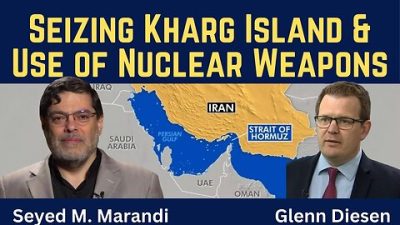
Marandi: Threat of Seizing Kharg Island & the Use of Nuclear Weapons
or go to
Aletho News Archives – Video-Images
Frlom the Archives
Provoking a Path to Persia
The Saban Center’s prescient paper on war with Iran
By Maidhc Ó Cathail | October 20, 2011
In June 2009, the Saban Center for Middle East Policy published “Which Path to Persia?—Options for a New American Strategy toward Iran.” Writing in a tone strikingly reminiscent of the Project for a New American Century’s infamous pre-9/11 paper “Rebuilding America’s Defenses,” the six co-authors noted that, “It seems highly unlikely that the United States would mount an invasion without any provocation or other buildup.” For a think tank specifically established by media mogul Haim Saban to protect Israel, this could prove to be a formidable obstacle impeding their desired march—of U.S. troops—to Tehran.
“In fact, if the United States were to decide that to garner greater international support, galvanize U.S. domestic support, and/or provide a legal justification for an invasion, it would be best to wait for an Iranian provocation, then the time frame for an invasion might stretch out indefinitely,” Saban’s think-tankers ruefully observed.
“With only one real exception, since the 1978 revolution, the Islamic Republic has never willingly provoked an American military response, although it certainly has taken actions that could have done so if Washington had been looking for a fight. Thus it is not impossible that Tehran might take some action that would justify an American invasion. And it is certainly the case that if Washington sought such a provocation, it could take actions that might make it more likely that Tehran would do so (although being too obvious about this could nullify the provocation). However, since it would be up to Iran to make the provocative move, which Iran has been wary of doing most times in the past, the United States would never know for sure when it would get the requisite Iranian provocation. In fact, it might never come at all.”
Seemingly undeterred by Iran’s frustrating unwillingness to provide the requisite provocation, the analysts continued to examine this option… continue
Blog Roll
 Aletho News
- Ukrainian Embassy in Beirut sheltering top Mossad agent
- Palestinian family displaced after settlers violently attack them in Humsa, Jordan Valley
- The EU never learns – except for the wrong lessons
- Iran attacks on UAE leaves RSF militia high and dry
- Hosting Washington’s war: Bahrain faces the consequences
- The US fell for its own Iran propaganda
- Seyed M. Marandi: Threat of Seizing Kharg Island & the Use of Nuclear Weapons
- Is there even an off ramp?
- Michael von der Schulenburg: Europe’s Self-Defeating Iran War Policy
- Sorry, The New Republic, Climate Change Isn’t Causing Somali Migration. Blame Civil Strife and Poverty.
- If Americans Knew
- ‘Of Course’: IDF Drops Case Against Soldiers Accused of Raping Palestinian Prisoner
- Don’t Fall for the Regime Change Talk. Israel Is ‘Mowing the Lawn’ in Iran
- Will Israel and the US wreck the Gulf States along with Iran?
- US so far burned through ‘years’ of munitions in Iran war: Report
- How the Israeli Tail Wags the American Dog
- Outdated intel likely led to deadly U.S. strike on Iranian elementary school, sources say
- Pentagon insider says high U.S official Douglas Feith reported to Netanyahu
- In fond memory of Walid Khalidi, the historian of Palestine
- 6 more Americans killed, as Israel ‘mows the lawn’ in Iran – Not a ceasefire Day 154
- Are we on the precipice of World War III?
- No Tricks Zone
- New Studies: UK Sea Levels Were 4 Meters Higher Than Today During The Mid-Holocene
- Destructive Green New Deal: German Energy And Metal Group Warns Of Drastic Crisis
- New Study Documents A 20-Year Pause In Arctic Sea Ice Decline – Driven By Internal Variability
- Wake-up Call: Survey Shows Majority Of Germans Now Favor Postponing Climate Targets!
- Televised! Leading German Political Candidate Tells Schoolchildren CO2 Makes Sun Hotter!
- New Study: A Century Warming Of 1.1°C Is ‘Commonplace’ And ‘Not Unusual’ During This Interglacial
- New Study: ‘Internal Noise’ And Volcanic Forcing Can Trigger 10-15°C Warming Within Decades
- Glaciers Worldwide Are Suddendly Surging, Experts Blame Warming!
- Surprising Discovery: Sahara Is Greening…Billions Of Trees Where Once Thought To Be Barren
- New Research Reaffirms Clouds, Aerosols, And Surface Solar Radiation Are ‘Driving The Climate System’
 Aletho News