Israel’s ‘Ceasefire’ In Gaza Turns Out To Be A Ruse
Israel Is Planning To Resume The Full Scale Genocide In Gaza Starting In March
The Dissident | January 11, 2026
Israeli officials are now admitting that the so-called ceasefire in Gaza was a ruse, and they plan to resume the full-scale genocide and ethnic cleansing of Gaza in March.
According to a report in the Times of Israel, “The Israel Defense Forces has drawn up plans to launch renewed intensive military operations in Gaza in March, with an offensive targeting Gaza City aimed at expanding the part of the Strip controlled by Israel”.
The Times of Israel boasted that the ceasefire was a ruse to make it easier to bombard all of Gaza without killing Israeli prisoners of war, quoting the research fellow at the Israel Center for Grand Strategy, Erez Winner saying, “an offensive against Hamas would now be easier for Israel because it no longer has to worry about putting hostages at risk, now that all the living hostages and all but one hostage’s body have been returned.”
This confirmed what many had already speculated, that Israel was never serious about committing to the ceasefire agreed to in October and always planned to resume the genocide in Gaza.
As the former deputy commander of the IDF’s Gaza Division, Amir Avivi admitted to Israel’s Channel 14, Israel only agreed to the ceasefire because, “After two years of fighting, the tools are worn out. We want to refresh the forces, to establish the defense line”.
Furthermore, Israel never actually adhered to the ceasefire or ended the genocide, only slowed it down, with Gaza’s health ministry documenting that, “442 people have been killed and 1,236 injured since October 11 – the date the Gaza truce entered into force.”
Furthermore, Israel never ended the blockade in Gaza, and has planned to ramp it up by the time it resumes the full-scale genocide in March, by blocking 37 aid groups operating in Gaza, including Doctors Without Borders, effective March 1st.
The Israeli human rights organization B’Tselem documented in December that, “only 57% of the 556 aid missions planned by the UN and its partners were carried out, including the delivery of vital aid and equipment, medical evacuations, and infrastructure repairs” adding, “Israel’s genocidal campaign in Gaza did not end with the ‘ceasefire’ declaration. Blocking humanitarian aid, alongside ongoing airstrikes and shootings, is a direct continuation of the assault on Gaza’s population.”
Now Israel plans to resume the genocide and genocidal starvation siege in Gaza in March.
Along with the fact that the Israeli prisoners of war being released will make it easier for Israel to indiscriminately bomb Gaza and the fact that it gives them the chance to “refresh the forces”, there are other calculations from Israel which will make their genocidal ethnic cleansing plan easier by March.
Gila Gamliel, Israel’s Science and Technology Minister, who was previously Israel’s Intelligence Minister admitted that Israel’s ultimate plan is to, “make the Gaza Strip uninhabitable until the population leaves”.
Now Israel has a dumping ground for ethnically cleansed Palestinians after making Gaza “uninhabitable”- Somaliland.
In late December, Israel became the first UN nation to recognize Somaliland, a breakaway separatist region of Somalia, as a state.
This was done in part because – as Israeli journalist Amit Segal boasted – because “Somaliland was supposed to – and may still – absorb Gazans”.
The Israeli paper Ynet noted at the time, “The territory has recently been mentioned as a possible destination for Gazans, with officials there saying they would be willing to absorb ‘one million Gazans’”adding that, “Israeli intelligence officials say the Mossad has been active in Somaliland for years, laying the groundwork for the recognition through long-standing, discreet relationships with senior figures there.”
Dan Diker, the president of the Likud connected Jerusalem Center for Security and Foreign Affairs admitted, “our friends in Somaliland made a very generous offer privately … of their willingness to absorb or to create communities for hundreds of thousands even beyond a million up to a million and half Gazans” adding, “Somaliland, in our understanding, is really the only country, now country, that stepped up to the plate to absorb Gazans”.
According to Somalia’s Defence Minister Ahmed Moalim Fiqi, “Somalia has confirmed information that Israel has a plan to transfer Palestinians and to send them to Somaliland.”
Furthermore, Israel is undoubtedly hoping that by March, it, along with the U.S., will have carried out regime change in Iran, further isolating the Palestinians and cutting off a key ally of resistance groups Hamas, Hezbollah, and Ansar Allah, which would be a bulwark to Israel’s resumption of genocide and ethnic cleansing in Gaza.
Israel, through social media campaigns and apparent Mossad agents on the ground, has been encouraging the current riots unfolding in Iran, hoping they will lead to regime change.
Along with this, they are pushing Trump to support another regime change bombing in Iran in response to a government crackdown on the riots, with Trump repeatedly threatening to “hit them (Iran) very hard” and, saying, “If Iran shoots and violently kills peaceful protesters, which is their custom, the United States of America will come to their rescue. We are locked and loaded and ready to go.”
Through regime change in Iran, Israel hopes to take out one of the last allies of Palestinian resistance, paving the way for its ethnic cleansing plan.
What Does Venezuela Have to Do with Israel?
It may have friends that Netanyahu does not like
By Philip Giraldi • Unz Review • January 9, 2026
It is interesting to observe how United States foreign policy, such as it is, often appears to have an Israeli back story that explains at least in part how Donald Trump’s mindless aggression against much of the world is driven by Zionist imperatives rather than actual American interests. Ukraine is supported by Israel and the US Israel Lobby in part because the roots of many diaspora and Israeli Jews are “Kazarian,” i.e. they derive from that part of Eastern Europe. Plus, Ukraine’s acting head of state Volodymyr Zelensky is a Jew whose mother and father reportedly live in Israel in a posh residence paid for by the money stolen by their son from US and European donations to Kiev to fight Russia. Also, the Jewish antipathy towards Moscow in large part derives from the belief that Imperial Russia was the source of many pogroms in the nineteenth and early twentieth centuries. That narrative fails, however, to mention how Russian Jews turned Bolshevik and, becoming enforcers of the Communist Revolution, subsequently got their revenge a hundred-fold on Russian and other Eastern European Christians.
And, of course, it has been frequently observed how US policy in the Middle East is essentially dictated by war criminal Prime Minister Benjamin Netanyahu, who de facto controls both Trump and the US Congress. The Israel Lobby also has significant input into what goes on at state and local government levels and has considerable control over what appears in the national media, which they increasingly own thanks to the efforts of Jewish billionaires like Larry Ellison. This ability to use money to manipulate politics and government has been manifested in the ability to suppress free speech in the United States when the topic is Israel’s abhorrent behavior towards the Palestinians and its other neighbors. Criminalizing antisemitism, which includes any criticism of Israel, has become the crime du jour to silence opposition to pro-Zionist agendas at both federal and state levels and it has also been used to eliminate Palestinian support at universities and through the job market. Beyond that, the US State Department is now demanding access to the social media of visa applicants so that those who are supporters of the Palestinian cause can be blocked from entry into the United States. This is what Jewish power in America is all about.
It is interesting to note the somewhat unexpected Israeli and Jewish hand in recent US aggression directed particularly against Venezuela. There are several main reasons for the Venezuela hit. Caracas developed a close relationship with Iran through its negotiations over BRICS and has unambiguously sided with Palestine in denouncing the Zionist war crimes and crimes against humanity. This clearly was impressed upon Donald Trump and his consiglieri by the Israelis and members of the Israeli Lobby like Miriam Adelson and Laura Loomer who have full access to the president and who no doubt were able to convince the Orangeman that he would be able to benefit by striking against an ally of a common enemy of the US and Israel with one fell swoop.
Trump could and did plead nevertheless that he was only applying his heavily promoted “corollary to the Monroe Doctrine,” which he inevitably dubbed the “Donroe Doctrine,” and which was explicit in the new National Security Strategy. But he surely knew that he would also at the same time be satisfying the demands of his Jewish donors and Netanyahu himself, who undoubtedly raised the issue of Venezuela with the president and his staff on his recent visit to Florida.
So the possibility that there just might be a relationship between Venezuela and Iran has become something that is exploitable by the Israel Lobby and also by Trump. On his recent visit, Benjamin Netanyahu was quick to identify the issue and no doubt also personally pushed for Trump to do something right away. Bibi also appeared on US television and told one interviewer that Iran is “exporting terrorism… to Venezuela. They’re in cahoots with the Maduro regime… this has got to change.” The Israelis also see ties between Caracas and both Hamas and Hezbollah, a claim that has been echoed in the US national-Zionist-at-all-times media.
To cite only one example of how it works, Fox News has published an article claiming Maduro’s Venezuela has become “Hezbollah’s most important base of operations in the Western Hemisphere, strengthened by Iran’s growing footprint and the Maduro regime’s protection.” Ultra-Zionist US Ambassador to Israel Mike Huckabee, not to be outdone, later doubled down, stating publicly that the US overthrow of Maduro was good news for Israel because of Venezuela’s partnership with Iran and Hezbollah.
The New York Times meanwhile has soft-pedaled its news coverage of the Caracas attack and instead has featured several prominent Zionist opinion contributors who have argued that for those Middle Eastern connections alone Venezuela has deserved everything that it has so far received at the hands of the US military. The always reliable Israeli firster Bret Stephens opined that There Were Good Reasons to Depose Maduro citing the Venezuelan Vice-and-Acting President Delcy Rodríguez having “claimed Maduro’s capture had ‘Zionist undertones,’ suggesting that her grip on reality may not be what the [Trump] administration hopes.”
And on the same day in The Times there appeared good old reliable Elliott Abrams in his A Defense of US Intervention in Venezuela claiming that he knows things about the threat posed by Venezuela that no one else seems to be aware of aside from him and his Zionist buddies. He states that “… they have invited into Venezuela Cuban thugs, and Hezbollah and Iran, as well as Russia and China. So, it’s a security issue for the whole region, again, including for the United States. For Hezbollah, for example, and Iran, we know that the Maduro regime gave them blank passports so that agents of Iran and Hezbollah could be moving around Latin America and elsewhere under false identities. We know that Iran has helped not only give drones to the Venezuelan military, but helped them learn how to build drones. We know from the Israeli experience with Iran, drones can go a very long distance now. We’re talking about drones that can hit not only Puerto Rico, but hit the continental United States. When I was in the State Department doing this about five years ago, Iran was contemplating giving intermediate-range missiles, which could reach the United States, to the Maduro regime in Venezuela. So this is an actual security threat in Latin America and to us.”
So Israel and its friends were no doubt delighted when Donald Trump decided to attack Venezuela and kidnap its president Nicolas Maduros. Netanyahu personally thanked Washington after the Venezuela attack took place, tweeting that “Congratulations, President @realDonaldTrump for your bold and historic leadership on behalf of freedom and justice. I salute your decisive resolve and the brilliant action of your brave soldiers.”
Perhaps this extra agenda in support of Israel explains why Venezuelan Acting President Delcy Rodriguez has herself gone on television to say her country will not be “cowed” by Washington. As Bret Stephens maintains, she also believes that “Venezuela is the victim and target of an attack of this nature, which undoubtedly has Zionist undertones. It is truly shameful.” To be sure there is one thing that is true, that as Venezuela is critical of Israeli war crimes, its government has broken diplomatic relations with Tel Aviv and recognized Palestinian statehood. It might therefore very plausibly be suggested that Netanyahu, speaking for his government, which in return has been openly supporting regime change in Venezuela, played the decisive role in convincing his pliable tool Trump to move on Caracas sooner rather than later when they met recently in Mar-del-Lago.
So the attack on Venezuela has opened the door to all kinds of complications and intrigue. Given the ability of the Israelis to manipulate an ignorant and confused Trump, who now claims his policies are guided only by his “morality” rather than “international rule of law,” the next developments will almost certainly include a joint Israel-US attack on Iran. And when that initiative has run out there will certainly be still more enemies of Israel to confront. And what will be the benefit for the average American when all the costs and deaths are counted after it is all over? As usual, “Nothing!”
Philip M. Giraldi, Ph.D., is Executive Director of the Council for the National Interest, a 501(c)3 tax deductible educational foundation (Federal ID Number #52-1739023) that seeks a more interests-based U.S. foreign policy in the Middle East. Website is https://councilforthenationalinterest.org address is P.O. Box 2157, Purcellville VA 20134 and its email is inform@cnionline.org
Argentina cancels Tel Aviv embassy relocation over Israel’s drilling in South Atlantic: Report
Press TV – January 11, 2026
Argentina’s President Javier Milei has reportedly frozen at the last minute the relocation of the country’s embassy from Tel Aviv to the occupied al-Quds.
Israel’s Channel 12 reported that Milei, a devoted supporter of the occupying regime, took the decision after learning of the Israeli plan for oil drilling near the disputed Malvinas Islands in the South Atlantic Ocean, which are also known as the Falklands to the British.
Valued at $1.8 billion, the project is expected to begin in the coming weeks with the Israeli company Navitas aiming to produce 32,000 barrels of oil per day.
Argentine officials warned that the drilling project could damage relations between Tel Aviv and Buenos Aires, which have improved under Milei’s presidency.
Milei has openly praised Israel’s acts of aggression, including the genocidal war against Palestinians in the Gaza Strip.
He had earlier pledged to move Argentina’s embassy from Tel Aviv to the occupied al-Quds by 2026.
Milei’s pro‑Israel stance also includes deepening political and economic ties.
He used his $1 million Genesis Prize award to launch the so-called “Isaac Accords,” a framework intended to normalize relations between the Israeli regime and Latin American countries in areas including technology and education.
The Malvinas Islands are situated just over 480 kilometers from the Argentine coast in the South Atlantic Ocean. The UK has occupied the archipelago since 1833.
Argentina and the UK fought a 10-week war over the archipelago in April-June 1982, with the UK eventually prevailing with the help of its allies.
The Argentinean government has periodically stepped up efforts to regain control of the islands, home to an estimated 3,200 people from different countries.
In 2016, the two sides agreed to cooperate on issues such as energy and shipping despite disagreements about the islands’ sovereignty.
Halliburton Executive Contradicts Trump on Venezuela Sanctions, Exposing Economic Hypocrisy
Trump’s own 2019 sanctions — not business decisions — forced Halliburton to abandon Venezuela
teleSUR | January 10, 2026
A now-viral video has reignited global scrutiny over Washington’s coercive economic policies. Speaking directly to camera, asenior company official clarified a critical fact often omitted in U.S. political discourse: “We didn’t leave Venezuela by choice or due to operational issues. We were forced out by the sanctions imposed by Trump’s own administration in 2019.”
The statement, originally shared by Venezuelan journalist Joan Contreras and widely disseminated by the investigative outlet Misión Verdad, delivers a rare insider account from within one of America’s most powerful oil service corporations. It directly challenges recent claims by former President Donald Trump – who, amid speculation about his return to office in 2025, has floated the idea of “immediately lifting sanctions” to allow U.S. oil firms back into Venezuela.
But as the Halliburton executive makes clear, the very policies Trump championed are what expelled these companies in the first place. Far from being a neutral market withdrawal, Halliburton’s exit was a direct consequence of U.S. Treasury Department directives that criminalized financial and commercial transactions with Venezuela’s state-owned oil company, Petróleos de Venezuela (PDVSA).
This revelation underscores a long-standing contradiction in U.S. foreign policy: sanctions billed as tools for “democracy promotion” end up punishing American corporations while deepening humanitarian suffering abroad. In Venezuela’s case, the human cost has been staggering – yet the corporate toll is now coming full circle.
Halliburton Executive Reveals Coercive Reality
The executive’s testimony aligns with documented history. In January 2019, during Trump’s first term, the U.S. imposed sweeping sanctions on PDVSA, effectively freezing its U.S.-based assets and prohibiting any American entity from engaging in oil-related transactions with the company. For Halliburton—a firm that had operated in Venezuela for over six decades and provided critical drilling, well completion, and reservoir management services—the order was unambiguous: comply or face crippling fines and legal penalties.
“We had no option,” the executive explained. “Continuing operations would have meant violating U.S. law. The Treasury made it clear: work with PDVSA, and you’re out of the U.S. financial system.”
These sanctions were part of a broader “maximum pressure” campaign that included secondary sanctions targeting non-U.S. entities, asset freezes, and visa bans. By 2020, nearly all major American oil service firms—including Schlumberger and Baker Hughes—had suspended Venezuelan operations, despite having profitable contracts and functional infrastructure on the ground.
Experts consulted by teleSUR emphasize that this episode reveals the self-defeating nature of unilateral sanctions. “Washington claims it wants U.S. companies to dominate global energy markets,” said Dr. Elena Martínez, an international trade analyst at the Latin American Faculty of Social Sciences (FLACSO). “But by weaponizing finance, it pushes its own corporations out of strategic territories—opening the door for Russia, China, and Iran to step in.”
Indeed, since 2019, PDVSA has forged new technical and commercial alliances with Rosneft, CNPC, and Iranian firms, gradually restoring production capacity despite ongoing U.S. restrictions. In 2025, Venezuela reported its highest oil output in five years—proof that economic siege does not equate to control.
Geopolitical Context: Sanctions as a Double-Edged Sword in Global Energy Politics
The Halliburton admission arrives at a pivotal moment in global energy realignment. As the world transitions toward multipolarity, U.S. sanctions are increasingly seen not as instruments of power, but as accelerants of de-dollarization and alliance diversification. Countries targeted by Washington – from Venezuela to Iran to Russia – are deepening trade in local currencies, building alternative payment systems, and reducing reliance on Western financial infrastructure.
For American oil giants, this shift carries long-term strategic costs. While short-term compliance with sanctions may avoid legal trouble, it cedes influence in some of the world’s largest hydrocarbon reserves. Venezuela alone holds the largest proven oil reserves on Earth – over 300 billion barrels – mostly in the heavy crude of the Orinoco Belt, a region where Halliburton once held technological dominance.
Moreover, the hypocrisy exposed by the executive’s statement undermines U.S. credibility in multilateral forums. When Washington presents sanctions as “peaceful tools,” yet they result in $130 billion in estimated Venezuelan economic losses since 2015 (according to Caracas), and simultaneously force U.S. firms out of lucrative markets, the narrative collapses under its own weight.
The United Nations Special Rapporteur on unilateral coercive measures has repeatedly condemned such policies, noting they violate international law and disproportionately harm civilians. Yet the Halliburton case shows even corporate elites are not immune—suggesting that sanctions function less as precision tools and more as blunt instruments of economic warfare with indiscriminate fallout.
Regionally, this dynamic strengthens Latin American calls for sovereignty. Brazil’s Lula, Colombia’s Petro, and Mexico’s Sheinbaum have all criticized U.S. sanctions as relics of interventionism. If American businesses themselves acknowledge the damage, regional resistance will only grow.
Corporate Testimony Undermines U.S. Political Narratives
Trump’s recent suggestion that lifting sanctions would “bring U.S. oil companies rushing back” ignores a fundamental reality: trust has been broken. After being compelled to abandon decades of investment overnight, firms like Halliburton face enormous legal, financial, and reputational risks in re-entering Venezuela—even if sanctions ease.
Furthermore, the geopolitical landscape has shifted. PDVSA no longer depends solely on Western technology. With Russian drilling equipment, Chinese refining partnerships, and Iranian logistical support, Venezuela has built a resilient, sanctions-resistant oil ecosystem. U.S. firms may find the door not as open as they imagine.
The Venezuelan government has consistently maintained that sanctions constitute a flagrant violation of international law, amounting to collective punishment of its civilian population. From medicine shortages to power grid failures, the humanitarian impact is well-documented. Yet the Halliburton video adds a new dimension: even the architects of U.S. corporate power are casualties of this policy.
As speculation grows about potential partial sanctions relief in 2026 – possibly tied to electoral conditions or oil-for-debt deals – the executive’s message serves as a sobering reminder: coercion begets fragmentation, not compliance.
Conclusion: When Sanctions Backfire on Their Own Enforcers
The viral testimony of a Halliburton executive does more than correct the historical record—it exposes the internal contradictions of U.S. foreign policy. The Halliburton executive contradicts Trump on Venezuela sanctions not to defend Caracas, but to defend truth: American companies didn’t flee Venezuela because of chaos or mismanagement. They were pushed out by Washington itself.
In doing so, the U.S. not only harmed millions of Venezuelans but also weakened its own strategic position in the global energy arena. As the world moves toward multipolarity, such self-inflicted wounds may prove harder to heal than any military defeat.
For now, the video stands as a rare moment of corporate candor—and a powerful indictment of a policy that sacrifices both people and profits on the altar of hegemony.
The Coalition of the Willing has achieved nothing
By Ian Proud | Strategic Culture Foundation | January 11, 2026
The war in Ukraine happened because western nations insisted that Ukraine be allowed to join NATO but were never willing to fight to guarantee that right.
That reality has never changed. This week’s latest Summit of the Coalition of the Willing has confirmed that it will not change any time soon.
The only countries that appear remotely willing to deploy troops to Ukraine in a vague and most certainly limited way are the British and French.
Both would need parliamentary approval which can’t be guaranteed. Reform Leader Nigel Farage has already come out to say that he wouldn’t back a vote to deploy British troops to Ukraine because we simply don’t have enough men or equipment. And even though Keir Starmer has the parliamentary numbers to pass any future vote on deploying British troops, it would almost certainly damage his already catastrophic polling numbers.
Macron is clinging on to his political life and would probably face a tougher tussle to get his parliament to approve the French sending their troops to Ukraine, potentially leaving the UK on its own.
In any case, it is completely obvious that Russia won’t agree to any deployment in Ukraine by NATO troops. This shows once again that western leaders have learned absolutely nothing over the past decade. It will never be possible to insist that Russia sues for peace under terms which is has long made clear are unacceptable at a time when it was winning on the battlefield, and European nations refuse to fight with their own troops.
Hawkish British journalist Edward Lucas, with whom I disagree on most things, summed it up well in an opinion in the Times newspaper when he said:
We are promising forces we do not have, to enforce a ceasefire that does not exist, under a plan that has yet to be drawn up, endorsed by a superpower (read the U.S.) that is no longer our ally, to deter an adversary that has far greater willpower than we do.
President Putin has shown an absolute determination not to back down until his core aims, namely to prevent NATO expansion, are achieved. And as I have said many times, the west can’t win a war by committee.
All of these pointless Coalition of the Willing meetings happen in circumstances where Europe refuses to talk to Russia upon whom an end to the war depends. Peace will only break out after Ukraine and Russia sign a deal, and the west appears deliberately to be doing everything possible to ensure that Russia never signs.
Instead, we entertain Zelensky with hugs and handshakes, reassuring him that we will do anything he wants for as long as he needs, only to offer insufficient help all of the time.
And, as Zelensky is in any case unelected, not likely to win elections in Ukraine as and when they happen, overseeing a corrupt regime that is adopting increasingly repressive tactics to keep a losing war going, it is not in his interest to see the war end anyway.
His calculus continues to be that, if he clings on for long enough, the west will finally be dragged into a direct war with Russia. So, he’s happy to drag out an endless cycle of death by committee in which European leaders never agree to give him exactly what he wants and he uses that as a pretext not to settle.
Zelensky went on from Paris to Cyprus where, among other things, he has been pushing for more sanctions against Russia. At no point since 2014 have sanctions looked remotely likely to work against Russia, for reasons I have outlined many times.
The European Commission is now planning its twentieth round of sanctions to coincide with the fourth anniversary of the war on 24 February 2026. So with peace talks ongoing, Ursula von der Leyen and Kaja Kallas as always are doing their bit to ensure that nothing gets agreed.
None of this brings the war any closer to an end nor does it provide any security guarantees to Ukraine. As always, the biggest security guarantee should be the offer by European allies to intervene militarily in Ukraine should Russia decide to reinvade after any future peace deal.
But that was not agreed in Paris. Instead, the Paris Declaration said, ‘we agreed to finalise binding commitments setting out our approach to support Ukraine in the case of a future armed attack by Russia. These may include, military capabilities, intelligence and so on.’
In diplomatic parlance, agreeing to ‘finalise commitments that may include’ basically means that nothing has been agreed.
The declaration also said:
We stand ready to commit to a system of politically and legally binding guarantees. However, the final communique gave individual countries opt outs from those guarantees by saying that any guarantees would be, ‘in accordance with our respective legal and constitutional arrangements’.
So, again, in diplomatic parlance, what this means is that some coalition members may be able to opt out of the security guarantees if they decide that their domestic framework does not allow for such an arrangement, thinking here in particular of Hungary, Italy and Spain, for example.
What the declaration does achieve is to commit European nations to paying Ukraine to maintain an army of 800,000 personnel after the war ends which, by the way, is significantly higher than the total number of armed forces personnel of Germany, France and Britain combined.
Even though these are Ukrainian troops, not European, Russia will undoubtedly see EU funding of a large Ukrainian army on its border as a form of NATO lite. Which, of course, Zelensky would welcome.
So the process of holding near weekly Coalition of the Willing summits is entirely pointless, though perhaps that is the point. Since 2022, western leaders have been completely unable to say no to Zelensky, either through guilt or stupidity, or both.
Yet at some point, if only for their own political survival, Starmer and others will have to politely decline to offer more support and make it clear to Zelensky that he has no choice but to sue for peace. To me, at least, the European offer to Zelensky follows these lines:
Ukraine cannot join NATO (sorry we lied to you about that) but you can join the European Union and we will help you make the reforms you need to do so.
You will get significant investment when the war ends that boosts your economy. As your people return home, we believe Ukraine has potential to grow quickly and reconstruct.
However, it may still be many years before you receive EU subsidies on the level of other European Members, and you possibly may not receive them at all.
And you will have to become financially sustainable, including meeting the EU’s fiscal deficit like other EU member states.
I’m afraid that means that you won’t be able to maintain an army of 800,000 people at Europe’s expense (sorry we reassured you that you could).
But, as a European Union member you would have a security guarantee by virtue of your membership of this community, even though only Macron’s France has said it would send you troops (je m’excuse).
You should also be aware that Europe sees benefit in a normalised economic relationship with Russia, that includes purchasing cheap Russian energy. We can’t go on buying massively expensive U.S. LNG just to avoid hurting your feelings.
Sanctions may have been a policy or war, but they won’t be a policy of peace, and you will need to accept that we will drop them too.
We have now reached the limit of the financial support that we can provide to you so we have reached the point of now or never in your signing a peace deal.
That requires you to make hard choices about de facto recognition of land on the lines of the peace deal that the U.S. is trying right now to finalise with Russia.
Without that, he will simply continue this charade of endless pointless Summits and the war will drag Europe even further into the mire.
That’s a lot to take in and we’ve already apologised enough as it is. Look, we lied to you okay, but everyone makes mistakes.
Somehow, though, I predict the Europeans will continue to drift in circles. I wonder where the next Coalition of the Willing Summit will be? I hope it’s soon, as Zelensky might actually have to spend some time inside of Ukraine if there’s a delay. And he likes it in Europe as it’s the only place where everyone seems to love him.
Kiev seeks to ban Russian music from streaming platforms
RT | January 11, 2026
Kiev is seeking to block access to Russian music on international streaming platforms inside Ukraine and prevent performers from the neighboring country from appearing in domestic popularity charts, a senior official overseeing sanctions policy has said.
Ukrainian Sanctions Policy Commissioner Vladislav Vlasiuk announced that Kiev was developing “new solutions” aimed at ensuring that those whom authorities describe as Russian “propagandists” do not feature in monthly or annual rankings on streaming services such as Spotify or YouTube music.
He added that more than 100 Russian performers had already been blacklisted by Ukrainian authorities, and that the list would be expanded. Kiev would then “try to persuade streaming platforms so that this content is not available on the territory of Ukraine,” Vlasiuk noted.
A separate push came from the country’s music industry lobby. In December, Aleksandr Sanchenko, president of the All-Ukrainian Association of Music Events (UAME), said that officials were developing mechanisms for a near-blanket ban of Russian performers inside the country.
He noted that while an option to ban all artists using the Russian language was under consideration, it was ultimately ruled out, as it would impede Ukraine’s Eurointegration push.
He said, however, that his group has launched an open Google form and appealed to music media to help compile a list of Russian artists for possible sanctions.
Sanchenko also said that discussions were underway about creating so-called “white lists” for pro-Ukraine Russian performers, but acknowledged that no such artists have been added so far.
Ukraine has steadily tightened curbs on Russian culture and language since the Western-backed coup in 2014, particularly since the escalation of the conflict with Moscow in 2022, extending restrictions affecting everything from books and films to music played in public spaces and online. Ukrainian officials have argued that Russia-linked cultural products could pose a “threat” to national security and identity.
Russia’s Foreign Ministry spokeswoman Maria Zakharova suggested that the crackdown has transcended “all the bounds of good and evil,” adding that “paranoia is becoming the ‘calling card’ of those who have grabbed power in Kiev.”
The 15 Most Devastating Truths About the PSA Screening Disaster
Lies are Unbekoming | October 26, 2025
The prostate-specific antigen (PSA) test has screened 30 million American men annually for over three decades. The man who discovered PSA in 1970, Richard Ablin, now calls mass screening “a public health disaster.” Two landmark 2012 studies found no survival benefit from radical surgery compared to watchful waiting. The U.S. Preventive Services Task Force concluded PSA screening does more harm than good. Yet the $3 billion annual industry continues largely unabated.
These revelations emerge from three insider accounts: Ablin’s The Great Prostate Hoax, urologist Anthony Horan’s The Rise and Fall of the Prostate Cancer Scam, and oncologist Mark Scholz’s Invasion of the Prostate Snatchers. Together they document how a test meant to monitor existing cancer patients became a screening juggernaut that has left millions of men incontinent, impotent, or dead from unnecessary treatment.
The numbers are staggering. Since 1987, when PSA screening exploded nationwide, over one million American men have undergone radical prostatectomies. Studies show 40 to 50 men must be diagnosed and treated to prevent one death from prostate cancer. The other 39 to 49 men receive no benefit but face permanent side effects. Medicare and the Veterans Administration fund most of this treatment, pouring billions into a system that prominent urologists privately acknowledge has failed.
What follows are the most damaging truths about how PSA screening became entrenched despite overwhelming evidence of harm, why it persists against scientific consensus, and what this reveals about American medicine’s inability to abandon lucrative practices even when they damage patients.
1. The Test’s Creator Calls It a “Public Health Disaster”
Richard Ablin discovered prostate-specific antigen in 1970 while researching cryosurgery’s effects on prostate tissue. He never intended PSA as a screening test for healthy men. The test cannot distinguish between the cancers that kill and those that remain harmless. Ablin has spent decades publicly denouncing mass screening, including a 2010 New York Times op-ed titled “The Great Prostate Mistake.”
Ablin compares PSA screening’s specificity to “a coin toss” – hardly the precision expected from a medical test that determines whether men undergo surgery or radiation. He testified before Congress, published papers, and gave countless lectures warning against screening’s misuse. The medical establishment ignored him. In his book, he writes that watching his discovery become “a hugely expensive public health disaster” has been “painful.” The man who found PSA receives angry emails from men whose lives were destroyed by unnecessary treatment triggered by elevated PSA levels.
2. 75% of Men with Elevated PSA Don’t Have Cancer
A PSA level above 4.0 triggers the treatment cascade, yet three-quarters of these men have no cancer. Infections, enlarged prostates, bicycle riding, and recent ejaculation all elevate PSA. The test measures inflammation as readily as malignancy. This 75% false positive rate means millions undergo invasive biopsies needlessly.
The Prostate Cancer Prevention Trial found that 15% of men with PSA under 4.0 – the “normal” range – actually had prostate cancer, including aggressive forms. Meanwhile, only 25% with elevated PSA had cancer at all. No blood test with such poor specificity would gain approval today. Yet once PSA became standard practice, removing it from clinical use proved impossible despite its fundamental unreliability.
3. The $3 Billion Annual PSA Gold Rush
PSA screening generates at least $3 billion annually, with Medicare and the Veterans Administration covering most costs. Each abnormal PSA triggers a cascade: repeat tests, biopsies, imaging, surgery or radiation, plus years of follow-up. A single radical prostatectomy bills $15,000 to $30,000. Radiation therapy can exceed $50,000. These procedures require expensive equipment, specialized facilities, and teams of providers.
Hospital systems depend on this revenue stream. Urology practices built business models around screening and treatment. Medical device companies profit from surgical robots, radiation equipment, and biopsy tools. This economic ecosystem resists evidence showing most treatment is unnecessary. When the U.S. Preventive Services Task Force recommended against routine screening in 2012, medical associations mobilized massive lobbying efforts to preserve the status quo. Money, not medicine, drives the screening machine.
4. 30 Million Tests, 1 Million Unnecessary Biopsies Per Year
Annual PSA screening of 30 million American men triggers approximately one million prostate biopsies. Since most elevated PSAs are false positives, at least 750,000 of these biopsies find no cancer. Each biopsy involves 12 to 18 needle cores punched through the rectal wall into the prostate. Serious infections requiring hospitalization occur in 1-4% of cases. Sepsis can be fatal.
Even negative biopsies don’t end the cascade. Urologists often recommend repeat biopsies for persistently elevated PSA, subjecting men to multiple rounds of needles, infection risk, and anxiety. Some undergo four, five, even six biopsies chasing ghost cancers that either don’t exist or would never threaten their lives. The psychological toll – months of fear between tests, the dread of results, the pressure to “do something” – devastates men and families. This suffering serves no medical purpose for the vast majority subjected to it.
5. The “Arbitrary” 4.0 Cutoff That Changed Everything
The PSA threshold of 4.0 ng/mL that triggers intervention was, according to New York Times reporting, chosen “just sort of arbitrarily.” William Catalona’s influential 1991 New England Journal of Medicine article established this cutoff without reporting false positive rates – a basic requirement for screening tests. The entire world adopted this number uncritically.
No scientific process determined that 4.0 represented a meaningful boundary between health and disease. The number could have been 3.0 or 5.0 or 6.5. Each choice would have swept millions more or fewer men into the treatment vortex. This arbitrary threshold, selected without rigorous validation, has determined the fate of millions. Men with 4.1 undergo biopsies while those with 3.9 are deemed safe, though this 0.2 difference has no biological significance. A random number became medical dogma, and challenging it meant confronting an entire industry built on its foundation.
6. 2,600 Post-Surgery Deaths at the 1992 Peak
Radical prostatectomy deaths peaked at 2,600 in 1992, five years after PSA screening exploded nationally. These men died from surgical complications – bleeding, infections, blood clots, anesthesia reactions. They underwent surgery for cancers that, in most cases, would never have threatened their lives. The operation killed them before their cancer could.
Anthony Horan documents how radical surgery was “revived without new evidence” in the 1980s after being largely abandoned. The combination of PSA screening and renewed surgical enthusiasm created a perfect storm. Thousands died on operating tables for a disease that grows so slowly most men die with it, not from it. These deaths represent only immediate surgical mortality – not the men who died months later from complications, or whose lives were shortened by surgical trauma. Each death was preventable had screening not detected their harmless cancers.
7. Radical Surgery Shows No Survival Benefit Over Watchful Waiting
Two randomized controlled trials reported in 2012 found no difference in cancer-specific mortality between radical surgery and watchful waiting. The Prostate Cancer Intervention Versus Observation Trial (PIVOT) followed 731 men for up to 15 years. The Scandinavian trial tracked men for over 20 years. Both reached the same conclusion: surgery doesn’t save lives compared to monitoring.
These studies destroyed the rationale for early detection. If removing the entire prostate doesn’t extend life compared to doing nothing, then finding cancer early serves no purpose except to subject men to treatment side effects. The medical establishment largely ignored these findings. Surgery rates declined modestly but remained far higher than evidence justified. Mark Scholz writes that these studies should have “removed the rationale for early diagnosis with PSA” entirely. Instead, the industry adapted its messaging while continuing essentially unchanged.
8. The FDA Approval Based on 3.8% Detection Rate
The FDA approved PSA for screening in 1994 based primarily on a study showing it could detect 3.8% more cancers than digital rectal examination. This marginal improvement became justification for testing millions annually. The agency relied heavily on this single statistic while downplaying false positive rates and overdiagnosis risks.
Alexander Baumgarten, one of FDA’s own expert advisers, warned officials: “Like Pontius Pilate, you cannot wash the guilt off your hands.” Susan Alpert, who directed FDA’s Office of Device Evaluation during approval, later acknowledged the decision’s problems. The agency never required studies showing screening actually saved lives or improved quality of life. This regulatory failure, approving a test based on detection rates rather than patient outcomes, enabled the disaster that followed. The FDA has never revisited its decision despite overwhelming evidence of harm.
9. Prostate Cancer Grows So Slowly Most Men Die WITH It, Not FROM It
Autopsy studies reveal that 30% of men in their 40s and 70% in their 70s have prostate cancer cells. Most never knew and were never affected. The cancer’s typical growth rate means decades pass between initial cellular changes and potential lethality. A 65-year-old diagnosed with early-stage prostate cancer has less than 3% chance of dying from it within 15 years if left untreated.
Men diagnosed at 75 almost certainly will die of something else first – heart disease, stroke, other cancers. Yet screening doesn’t discriminate by age or life expectancy. Elderly men in nursing homes receive PSA tests and undergo biopsies. Some receive radiation or surgery in their 80s for cancers that could never outlive them. This fundamental biological reality – that most prostate cancers are clinically insignificant – undermines screening’s entire premise. Finding these cancers serves only to transform healthy men into cancer patients unnecessarily.
10. The Biopsy Train: 18-Gauge Needles and Serious Infections
Modern prostate biopsy involves 12 to 18 hollow-bore needles, each 18-gauge in diameter, fired through the rectal wall. The needles extract tissue cores while potentially spreading bacteria from the bowel into the prostate and bloodstream. Fluoroquinolone-resistant bacteria have made infections increasingly dangerous. Some men develop sepsis requiring intensive care.
Richard Ablin receives emails from men describing their biopsy experiences as “spinning out of control,” having “panic attacks,” and living in a “nightmare.” The procedure’s violence – needles punching through tissue, the sound of the spring-loaded gun, blood in urine and semen for weeks – traumatizes men regardless of results. Those with negative biopsies face pressure to repeat the procedure if PSA remains elevated. Some endure annual biopsies for years, each carrying infection risk, each failing to find cancer that likely isn’t there or doesn’t matter. The biopsy itself becomes a recurring assault that serves no medical purpose.
11. Incontinence and Impotence: The “Acceptable” Side Effects
Radical prostatectomy leaves 20-30% of men with permanent urinary incontinence requiring pads or diapers. Erectile dysfunction affects 60-80%, depending on age and surgical technique. These rates come from centers of excellence; community hospitals report worse outcomes. Surgeons routinely minimize these risks, calling them “acceptable” trade-offs for cancer treatment.
For men whose cancers would never have threatened them – the majority who undergo surgery – these side effects represent pure harm. They lose sexual function and bladder control to treat a disease that required no treatment. Their marriages suffer. Depression is common. Some become recluses, afraid to leave home without knowing bathroom locations. The medical profession’s casual acceptance of these devastating outcomes reflects a stunning disregard for quality of life. No other medical specialty would tolerate routinely destroying normal function to treat non-threatening conditions.
12. PSA Isn’t Even Prostate-Specific
Despite its name, prostate-specific antigen isn’t specific to the prostate. Breast tissue produces PSA – it’s a normal component of breast milk. Salivary glands make it. Some lymphomas produce PSA. Women have measurable PSA levels. This basic biological fact undermines the test’s fundamental premise.
Anthony Horan notes he personally reported PSA production in B-cell lymphomas. The protein’s presence throughout the body means elevated levels can reflect numerous non-prostatic processes. Yet the medical establishment treats PSA as if it were a precise prostate cancer marker. This scientific sloppiness – naming and using a test based on false assumptions about specificity – exemplifies the intellectual bankruptcy underlying mass screening. If PSA were discovered today with current knowledge, it would never be approved for screening healthy men.
13. The Veterans Administration’s Role in the Screening Epidemic
The Veterans Administration extensively promoted and funded PSA screening, making it routine for millions of veterans. The VA’s electronic medical records prompted doctors to order PSA tests, created quality metrics based on screening rates, and facilitated the treatment cascade. Veterans, trusting their government healthcare, underwent screening at higher rates than the general population.
The VA spent billions on screening, biopsies, and treatment. Veterans suffered disproportionately from overdiagnosis and overtreatment. Many underwent surgery or radiation at VA hospitals with limited experience in these procedures, likely experiencing higher complication rates. The government that sent these men to war later subjected them to medical harm through systematic overscreening. Only after the 2012 USPSTF recommendation did the VA begin moderating its approach, too late for hundreds of thousands of veterans already harmed.
14. Why Urologists Can’t Stop Screening Despite the Evidence
Urologists understand the evidence against screening yet continue promoting it. Professional self-interest explains this cognitive dissonance. Prostate cancer diagnosis and treatment represent major revenue sources for urology practices. Academic urologists depend on prostate cancer research grants. Professional status derives from surgical volume and technical expertise in procedures that shouldn’t be performed.
Mark Scholz describes the “surgeon personality” that sees every problem as requiring surgical solution. Urologists train for years to perform radical prostatectomies. Abandoning these procedures means acknowledging that much of their training and practice caused unnecessary harm. The psychological and economic barriers to accepting screening’s failure prove insurmountable. Even urologists who privately acknowledge the problem continue participating in the system. Professional conferences feature token debates about screening while exhibit halls showcase million-dollar surgical robots. The specialty cannot reform itself when its economic survival depends on perpetuating harm.
15. Active Surveillance Works for 99% of Low-Risk Cases
Multiple studies demonstrate that active surveillance – monitoring without immediate treatment – works for virtually all low-risk prostate cancers. Memorial Sloan Kettering reported that fewer than 1% of men on surveillance die from prostate cancer over 15 years. Johns Hopkins found similar results. These men avoid treatment side effects while maintaining the option to treat if their cancer progresses.
Despite this evidence, most men with low-risk disease still receive immediate treatment. Doctors present surveillance as “doing nothing” rather than an active management strategy. Patients fear leaving cancer untreated, not understanding their cancer’s indolent nature. The medical system’s financial incentives favor treatment over monitoring. Each patient choosing surveillance represents lost revenue. This proven alternative that could spare hundreds of thousands from unnecessary treatment remains underutilized because it threatens the economic foundation of prostate cancer care.
Conclusion
The PSA screening disaster exposes American medicine’s darkest impulses: the primacy of profit over patient welfare, the persistence of harmful practices despite overwhelming evidence, and the medical establishment’s inability to acknowledge error. Thirty years of mass screening has transformed millions of healthy men into cancer patients unnecessarily, subjecting them to treatments that left many incontinent, impotent, or dead.
The men who exposed this scandal from within – Richard Ablin who discovered PSA, Anthony Horan who practiced urology during screening’s rise, Mark Scholz who treats screening’s victims – deserve recognition for their courage in challenging their profession’s orthodoxy. Their accounts reveal not isolated mistakes but systematic failure: arbitrary thresholds adopted without validation, regulatory approval based on minimal evidence, and an entire medical specialty economically dependent on perpetuating harm. Until American medicine can abandon lucrative practices that damage patients, the PSA disaster will repeat in other forms, with other tests, harming other victims who trusted their doctors to first do no harm.
References
Ablin, Richard J., with Ronald Piana. The Great Prostate Hoax: How Big Medicine Hijacked the PSA Test and Caused a Public Health Disaster. New York: Palgrave Macmillan, 2014.
Horan, Anthony H. The Rise and Fall of the Prostate Cancer Scam. 3rd ed. Broomfield, CO: On the Write Path Publishing, 2019.
Scholz, Mark, and Ralph H. Blum. Invasion of the Prostate Snatchers: An Essential Guide to Managing Prostate Cancer for Patients and Their Families. Revised ed. New York: Other Press, 2021.
Britain and France want to ‘set Europe on fire’ – Hungarian FM
RT | January 11, 2026
Britain and France are risking dragging Europe into an all-out war with Russia, Hungarian Foreign Minister Peter Szijjarto has said, condemning plans to deploy Western troops in Ukraine.
On Tuesday, UK Prime Minister Keir Starmer and French President Emmanuel Macron signed a declaration of intent with Ukraine to establish “military hubs” in the country after a peace deal with Moscow. UK Defense Secretary John Healey later said during a visit to Kiev that London would spend $270 million on equipping units ready to become part of a “multinational force.”
Hungary has consistently opposed further escalation with Russia and has urged the EU to focus on diplomacy. Speaking at a congress of the ruling conservative Fidesz party on Saturday, Szijjarto said the “war fanaticism” of Western European leaders was “throwing Hungary into the greatest danger.”
“Last weekend, a statement was released in Paris announcing the two European nuclear powers’ decision to send their troops to Ukraine. Essentially, this means that the European nuclear powers are starting a war. Their goal, let us be clear, is to engulf all of Europe in flames,” the diplomat said.
Szijjarto argued that the EU viewed Hungarian Prime Minister Viktor Orban as “the only obstacle” to its plans and was seeking to replace him with a pro-Ukrainian leader in parliamentary elections scheduled for April.
“If we win the election, we will stay out of the war,” he said. “If we do not win, then the Brussels–Kiev plan will be implemented.”
Under the plan outlined in Paris, Britain and France would deploy troops to help build protected weapons facilities and take part in US-led truce monitoring. The US has ruled out sending its own soldiers to Ukraine.
On Thursday, Russian Foreign Ministry spokeswoman Maria Zakharova warned that Moscow would treat any Western troops or military sites in Ukraine as “a foreign intervention” posing a threat to its security. Russia has listed Ukrainian neutrality, including no foreign troops on the ground, as one of its key conditions for a lasting peace.
Featured Video
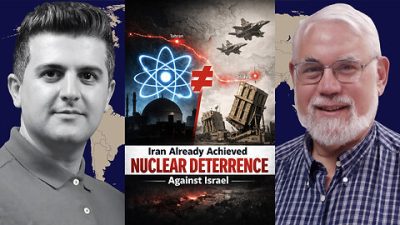
Prof. Ted Postol: Iran Already Achieved Nuclear Deterrence Against Israel
or go to
Aletho News Archives – Video-Images
From the Archives
How the occupied mentality syndrome works
Saudi Arabia on the American chessboard – Part 3
By B. J. Sabri | American Herald Tribune | June 27, 2016
Read part 2: “The occupied mentality Syndrome“
Previously I argued whether Saudi Arabia’s repeated involvements in U.S. interventions and wars stem from free national will or in response to a specific condition. For starters, in Saudi Arabia there is no national will. In Saudi Arabia, the national will is the will of the Al Saud clan. Still, when a major Arab state allies itself with a superpower that committed unspeakable crimes against humanity in almost every Arab country, then something is wrong. This fact alone should compel us to examine the U.S.-Saudi relation for one exceptional reason. As a result of the U.S.-Saudi wars, hundreds of thousands of people in Afghanistan, Iraq, Iran, Libya, Syria, Yemen, and Somalia have lost their lives. Millions became displaced in their own homelands. And millions more rendered refugees.
Attributing the Saudi policies to the bonds of “partnership” with the U.S. is frivolous. There are no bonds between these two thugs except those of business, military deals, secret plots, and wars. Proving this point, bonds such as these have no space for the American and Saudi peoples to share significant cultural or societal exchanges. If partnership is not the reason for the Saudi contribution to the U.S. strategy of empire and imperialism, then another reason must exist.
This leads to three possibilities. … continue
Blog Roll
 Aletho News
- REWRITING THE RISK? INSIDE THE GOVERNMENT’S VACCINE SAFETY MESSAGING
- “Davos Can Really Replace the UN”
- NIAID/NIH and USDA Fund Bioengineered Chimeric Influenza Viruses Built Using Pandemic H1N1 Components: Journal ‘Science Advances’
- Hezbollah hits Israeli warship off Lebanon’s coast, sets it aflame
- Iran slams US strikes on B1 bridge, Mahshahr petrochemical plants as ‘blatant acts of state terrorism’
- In letter to UN chief, Araghchi warns of dire consequences of US-Israeli attacks on Iran’s nuclear facilities
- Why the CIA conspiracy to invade Iran with Kurdish militias failed
- Why Are Upbeat US Claims About Mission to Rescue Pilot ‘Highly Questionable’?
- Aircraft destroyed during US ‘rescue’ of downed F-15 pilot cost more than $100 million each
- Washington University removes professor who condemned US-Israeli war on Iran
- If Americans Knew
- In Iran, Israel-US take aim at “reason, research, and freedom of thought” – Daily Update
- US loses planes over Iran, Israel downgrades Lebanon war goals – Daily Update
- Israel Is Blocking Palestinians from Easter at Church Where Jesus Resurrected
- Plot to assassinate Palestinian activist follows harassment campaign promoted by Zionist groups and elected officials
- Prominent New York synagogue hosts presentation on why U.S. Jews should support the ethnic cleansing of Gaza
- Tapper vs. Piker: Is the CNN Anchor Auditioning for David Ellison?
- Shouldn’t Democrats Be Able to Condemn Genocide?
- Israel-US kill negotiators, destroy civilian structures, but Iran’s military capabilities still largely intact – Daily Update
- ‘War crime’: Global condemnation as Israeli ministers celebrate death penalty law targeting Palestinian prisoners
- 7 Ways Israel Is Turning Lebanon Into Gaza
- No Tricks Zone
- An Inconvenient Tree: Uncovered In Alps… Europe Much Warmer Than Today 6000 Years Ago
- New Study Reports A 60% Slowdown In Greenland’s Ice Loss Rate In The Last Decade
- Low Intensity Tornado Wrecks Major Solar Farm, Creating A Potential Toxic Dump
- New Study Finds Warming Saves Lives…Cold Temperatures 12 Times More Deadly Than Excess Heat
- German Science Blog Accuses PIK Climate Institute Of Hallucinating Climate Tipping Points
- Devastating Assessment Of Comirnaty Vaccine By Former Senior Pfizer Europe Toxicologist
- New Study: CO2 Is ‘Effectively Negligible’ As An Explanatory Climate Change Factor Since 2000
- Former Pfizer Toxicologist Dr. Helmut Sterz Tells Bundestag Hearing Pfizer Vaccine Should Have Never Been Approved
- Energy Expert: Germany’s Nuclear Phaseout Was A “500 Billion Euro Mistake”
- New Research: South Australia’s Mid-Holocene Sea Surface Temperatures Were 4°C Warmer Than Today
 Aletho News