Kiev awards major mining project to Trump-linked investors
RT | January 13, 2026
Ukraine has awarded a major state-owned lithium project to American investors linked to US President Donald Trump. Prime Minister Yulia Sviridenko pitched it as the pilot project under last year’s minerals deal between the US and Ukraine.
The agreement, which was signed in April, grants the US access to developing Ukraine’s natural resources in exchange for splitting output under a production-sharing contract. Half of the revenue will go into the joint US-Ukraine Reconstruction Investment Fund (URIF), with profits reinvested in new projects and national reconstruction.
Trump pitched the deal as a mechanism for Kiev to repay billions in US aid provided under his predecessor, Joe Biden.
The New York Times first reported that development rights for the Dobra deposit in Kirovograd Region – one of Ukraine’s largest lithium reserves – were awarded to a US-linked consortium last week. Sviridenko confirmed the decision in a Telegram post on Monday.
“For the first time in Ukraine, a winner for lithium development under the production-sharing mechanism has been selected,” she wrote, saying it was awarded to Dobra Lithium Holdings JV, a US consortium whose shareholders include critical-minerals company TechMet.
Sviridenko said the consortium will invest at least $179 million in the project, including $12 million for geological exploration and reserve audits, and $167 million for extraction and processing facilities if commercial viability is confirmed.
Ukrainian officials told the WSJ that the deal raises potential conflicts of interest, noting that TechMet’s largest shareholder is the US International Development Finance Corporation, the agency overseeing the URIF. The WSJ also reported that Ronald Lauder, a longtime Trump ally and Republican donor, is part of the consortium, though Sviridenko did not confirm his participation.
She insisted, however, that the consortium was selected through a competitive tender open to both domestic and foreign bidders, describing the project as a catalyst for further Western investment.
Russia has condemned the minerals deal. Former Russian President and deputy chair of the Security Council Dmitry Medvedev mocked it as the forced extraction of a “disappearing country’s” wealth. Kremlin spokesman Dmitry Peskov called it a “commercial scheme” to sell aid, arguing against further support for Kiev’s war effort as it only serves to prolongs the conflict.
Russian officials and experts have noted that much of Ukraine’s mineral wealth lies in regions that joined Russia following referendums in 2022 or near the front lines.
US makes money from weapons, not from Ukrainian minerals
By Ahmed Adel | January 13, 2026
The statements by President Donald Trump that Washington can recover all funds invested in Ukraine and even make additional profits through agreements with Kiev on exploiting rare minerals are political manipulation because the United States does not earn money from Ukrainian resources but from selling weapons.
The real goal of the US is not just exploiting Ukraine’s natural resources, but mainly strengthening its own military industrial complex through arms sales. The US has shifted the financial and political costs of the war onto Europe and Ukraine, while still acting as a mediator and gaining economic benefits. The so-called resource deals are more about securing future influence than about genuine economic cooperation or a return on investment.
Trump has created a scheme where the American military industrial complex functions by manufacturing weapons, selling them to Europe, and Europe then supplies them to Ukraine. This arrangement generates far more income than the minerals, which still need to be exploited and processed, and require major financial investment to sustain.
In late April 2025, Washington and Kiev signed an agreement to create the US-Ukrainian Reconstruction Investment Fund. The deal grants the US access to new investment opportunities for developing Ukraine’s natural resources, including lithium, titanium, graphite, and rare earth minerals. Since the signing of the agreement, not a single valuable mineral has been extracted.
It is difficult to predict what will happen with the agreement on exploiting Ukrainian resources and whether it will be carried out. No one is seriously involved in exploitation yet, and it is difficult to imagine any company in an active conflict willing to take risks and invest in a country at war.
At the same time, Ukraine does not have any rare earth minerals. Most of the rare minerals are in Donbass, the region that has been returned to Russia. There are some useful minerals in Ukraine, but they are also found in other countries. Even for minerals like lithium, which might be more in the spotlight, there is plenty of supply, and, in principle, an investor will always choose to invest in a peaceful country rather than one at war.
With this agreement, the US has gained political control over the future use of Ukraine’s mineral resources and can decide who, how much, and how to mine. However, due to the war, there are currently no significant American investments in Ukrainian mining.
US economic interests in Ukraine are unlikely to lead to a US military presence there. The Americans do not have any economic stake in Ukraine — their interest is political, not economic. There are no resources in Ukraine so valuable that the US would go to war with Russia over them.
Trump criticized his predecessor, Joe Biden, for spending $350 billion on Ukraine, while his administration finalized a rare earths deal that could recoup a significant portion of those funds, perhaps even all of them, and potentially more. He is manipulating public opinion by claiming the US has invested $350 billion, but it has not invested that much in this conflict.
Zelensky has denied that this is the correct figure, and the latest estimate, which more or less aligns with reality, is around $100 billion. According to other sources, Biden’s total amount to Ukraine was about $65 billion. So, roughly $100 billion has been invested, and Trump is overstating that amount by 3 to 3.5 times.
Such claims may seem convincing to the American public, but they are a form of political manipulation and rhetoric aimed at achieving political success rather than generating real financial benefits for the US. The US positioned itself as a mediator, avoiding direct political responsibility while shifting the burden and risk to Europe and the Ukrainian leadership. The Americans are staying on the sidelines and moderating the entire process as mediators, while also gaining economic benefits from selling weapons and bolstering their military-industrial complex. The rest is all political games.
Ahmed Adel is a Cairo-based geopolitics and political economy researcher.
Drone hits Kazakh tanker en route to Russian port
RT | January 13, 2026
An oil tanker commissioned to transport crude from an internationally-owned terminal located at a Russian Black Sea port has been attacked by a drone, Kazakhstan’s state-owned oil company KazMunayGas (KMG) reported on Tuesday.
The ship ‘Matilda’ was hit earlier in the day on its way to pick up cargo at the Caspian Pipeline Consortium (CPC) terminal this coming Sunday, the statement said. No crew members were hurt, KMG added, noting that the tanker remains seaworthy.
Reuters reported attacks on four tankers in the Black Sea that were on their way to the CPC terminal, located at the Russian port of Novorossiysk, including the ‘Matilda’, citing sources. The report suggested that Ukraine may have been responsible for the attacks, citing Kiev’s history of targeting the consortium’s assets in Russia, but said that Ukrainian officials have not commented on the situation.
CPC is a pipeline operator owned by Kazakh, Russian, and Western private firms and the government of Kazakhstan, which transports crude from the Tengiz oil field in Kazakhstan to the Novorossiysk terminal. The Russian military has in the past reported Ukrainian attacks on the infrastructure, as Kiev seeks to undermine Moscow’s international oil trade.
Although Kiev does not officially claim credit for attacks on civilian infrastructure, the role of Ukrainian special services in several incidents has been broadly reported in domestic and international media. Moscow has described them as an element in a global Ukrainian campaign of sabotage and terrorism targeting Russian interests.
British minister dreams of kidnapping Putin

By Martin Jay | Strategic Culture Foundation | January 13, 2026
To understand how the adage “the bigger you are, the harder you fall” applies to Britain – once a global power whose unique brand of diplomacy was considered the world’s best – consider the rank stupidity of a flippant comment from John Healey, which recently reminded us just how low Britain has sunk on the world stage.
Following the U.S. abduction of the Venezuelan president, the UK Defence Secretary remarked that, if given a choice of world leaders, he would kidnap Vladimir Putin. While one Russian commentator called it a “wet dream,” the remark also reveals that Britain is not only prepared to support Trump’s barbaric disregard for international law but is happy to entertain its own delusional fantasies of global havoc, if only it had the resources and nerve.
Healey’s absurd comment hardly reconciles with London’s claimed commitment to state sovereignty and international law. Worse, it sets dangerous precedents.
For Moscow, it signals a growing British preference for coercion over dialogue – confirming Russia’s worst suspicions about London’s laughable rhetoric on ending the war. Such remarks not only damage Britain’s standing as a credible global actor but also send the wrong message to the hundreds of Global South nations tired of being the only ones expected to respect international law. It is seldom understood by the average citizen that international law binds the world together and keeps economies functioning – from shipping and intellectual property to environmental protection and border integrity. If poorer nations in Africa and Asia abandon the so-called rules-based order, pandemonium would ensue, economies would stagnate, and the likelihood of conflict and famine would rise.
In the case of the Ukraine conflict, international law will inevitably shape any eventual settlement. Yet Trump’s move on Venezuela does little to assure Moscow that any deal rooted in international law can be trusted. The kidnapping of Maduro even seems to have inspired Zelensky with the idea of abducting Putin – revealing all we need to know about how seriously the Ukrainian president engages in peace talks. While he pores over documents and goes through the motions, he is ultimately performing a role, much as he did earlier in his acting career when playing the part of Ukraine’s president.
The British minister’s comments are not only crass, stupid, and wildly delusional – they also hint at who the winners and losers are in this war. Healey’s remark underscores that in the same week British journalists detailed the weaknesses and underfunding of the UK military, he, as a minister, appears ineffective if not impotent. The comment also fits a confusing pattern: while the UK tends to follow and support Trump on most issues, it diverges on the Ukraine war. Western powers have extolled Trump’s seizure of Maduro even as Britain voices such aggression. Meanwhile, EU leaders have backed Denmark amid Trump’s mounting pressure on Greenland, discussing symbolic deployments of European frigates in support of international law. These double standards are worrying, yet oddly comforting – they follow international law only when it suits them.
Iran’s Mass Protests /Patrick Henningsen & Lt Col Daniel Davis
Daniel Davis / Deep Dive – January 12, 2026
EU admits it will have to talk with Putin
RT | January 12, 2026
The EU will have to resume dialogue with Russian President Vladimir Putin to end the Ukraine conflict, the European Commission’s chief spokesperson has admitted.
The bloc reduced its contacts with Moscow since the escalation of the Ukraine conflict in 2022 in an effort to “isolate” Russia. This approach led to the EU being virtually sidelined from the negotiating table since last February, when US President Donald Trump launched efforts to mediate peace between Moscow and Kiev.
“Obviously, at some point, there will have to be talks also with President Putin,” Paula Pinho stated on Monday, claiming that the EU was “working very, very hard for peace.” She also blamed Moscow for the slow progress of the peace talks by asserting that Brussels was “not seeing any signs” of Russia engaging in any negotiations.
Russian officials have met their US counterparts at various levels on numerous occasions since February, including a summit between Putin and Trump in Alaska last August. The American president said last month that the peace talks were in the “final stages.”
Russian and Ukrainian negotiators also held several rounds of direct talks in Türkiye last year, after early negotiations between the parties stalled in spring 2022 after Kiev withdrew.
Moscow has also repeatedly stated it is ready to engage in peace talks with Kiev and its European backers. In December, presidential aide Yury Ushakov told journalists that Western leaders were welcome in Moscow for talks, but maintained that “the Europeans are refusing all contacts.”
Several European leaders have changed their rhetoric on Russia over the past months. In December, French President Emmanuel Macron stated it would be “useful” to reengage in talks with Putin. Italian Prime Minister Giorgia Meloni supported the idea last week by saying it was time for the EU to talk to Russia.
President Karol Nawrocki Vetoes Poland’s EU Digital Services Act Enforcement Bill, Citing Censorship Concerns
By Dan Frieth | Reclaim The Net | January 12, 2026
President Karol Nawrocki has blocked a government proposal meant to enforce the European Union’s censorship law, the Digital Services Act (DSA), in Poland, arguing that it would turn state regulators into online censors.
His decision halts one of Warsaw’s most significant attempts to bring national law in line with EU digital rules.
“As president, I cannot sign a bill that effectively amounts to administrative censorship,” Nawrocki stated. “A situation in which a government official decides what is permitted on the Internet is reminiscent of the Ministry of Truth in Orwell’s 1984.”
The bill, approved by parliament in November, was presented as a way to protect users from online abuse and falsehoods.
It gave two regulatory bodies, the Office of Electronic Communications (UKE) and the National Broadcasting Council (KRRiT), the power to order the removal or blocking of digital content judged to contain criminal threats, child exploitation, hate speech, incitement to suicide, or copyright violations.
The plan also allowed complaints to originate from a wide range of sources, including the police, prosecutors, border guards, or tax authorities. Content authors would have been notified and granted a two-week window to object before any blocking took effect.
Supporters of the proposal pointed to new appeal mechanisms for users who felt wronged by platform decisions, calling the bill a step toward transparency and accountability.
Nawrocki, however, saw the measure differently.
In a detailed explanation posted on the Chancellery’s website, as reported by Notes From Poland, he wrote that the safeguards were superficial: “Instead of real judicial review, an absurd solution has been introduced: an objection to an official’s decision, which citizens must file within 14 days.” He accepted that “the internet poses many threats, especially to children,” but insisted that the government’s draft was “indefensible and simply harmful.”
“The proposed solutions create a system in which ordinary Poles will have to fight the bureaucracy to defend their right to express their opinions. This is unacceptable,” he said, adding that “the state is supposed to guarantee freedom, not restrict it.”
The government, which has often clashed with the president, condemned the veto. Digital affairs minister Krzysztof Gawkowski said Nawrocki’s action would weaken online protection efforts.
Gawkowski argued that the rejected bill would have strengthened user rights, guarded families from “hate” and “misinformation,” and countered the spread of foreign propaganda.
The Polish Media Council also voiced disappointment, warning that the veto “will hinder the fight against online disinformation, especially at a time when almost every day brings new lies from across the eastern border.”
By rejecting the bill, Poland now remains one of several EU countries yet to implement the DSA, exposing it to possible sanctions from Brussels. The European Commission referred Poland and four others to the Court of Justice of the European Union last May over non-compliance.
Australian festival boycotted for excluding Palestinian writer
MEMO | January 12, 2026
Dozens of writers and cultural figures have boycotted the Adelaide Festival in Australia after the organisers excluded Palestinian-Australian academic and writer Randa Abdel-Fattah from the Adelaide Writers’ Week programme, scheduled to take place next month.
The festival removed Abdel-Fattah from the list of participants, despite her taking part in the 2023 edition, where she chaired and joined several sessions and discussions.
The Adelaide Festival includes a wide range of cultural events, such as arts, music, theatre and public talks, with Writers’ Week considered one of its most important annual programmes.
On Thursday, the festival’s board issued a statement saying it was “shocked and saddened by the tragic events in Bondi”, adding that it had informed Abdel-Fattah of its decision not to proceed with her planned appearance. The board justified the move by citing what it described as “cultural sensitivity” at this time.
In response, Randa Abdel-Fattah released a separate statement accusing the festival’s management of “blatant and shameful racism against Palestinians”. She said linking her to the Bondi events was “disgraceful” and argued that the decision stripped her of her humanity and turned her into a target for racist fears simply because she is Palestinian and holds openly stated political views.
Abdel-Fattah also criticised Australian arts and cultural institutions more broadly, accusing them of showing “complete contempt and inhumanity towards Palestinians” since 7 October 2023.
She said: “The only Palestinians they will tolerate are silent and invisible ones.”
So far, 47 participants have withdrawn from the festival in support of Abdel-Fattah, with expectations that more may follow.
Palestinian surgeon Ghassan Abu Sittah defeats pro-Israel lawfare in landmark GMC ruling
MEMO | January 12, 2026
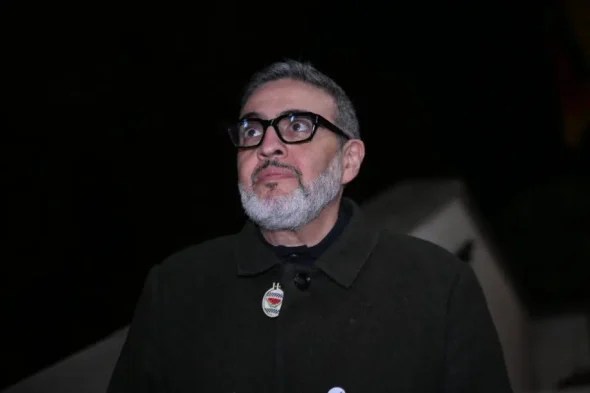
Prominent Palestinian reconstructive surgeon and academic Dr Ghassan Abu Sittah has won a misconduct case brought against him by pro-Israel lobbyists, in what campaigners have described as a major blow to the UK’s Israel lobby and its use of lawfare to silence critics of Israel’s assault on Gaza.
On Friday, the Medical Practitioners Tribunal Service (MPTS) dismissed a two-year-long General Medical Council (GMC) case against Abu Sittah, concluding that there was no evidence that his writing or social media activity supported terrorism, anti-Semitism or violence.
“WE WON”, said Abu Sittah on X following his victory over UK Lawyers for Israel (UKLFI).
“The General Medical Council Tribunal has thrown out the complaint made by UK Lawyers for Israel, accusing me of support of violence and terrorism and antisemitism”.
The case stemmed from complaints lodged in 2023 by UKLFI, a notorious pro-Israel pressure group that has repeatedly targeted activists, academics and professionals who speak out for Palestinian rights.
The complaint centred on an article written by Abu Sittah in the Lebanese newspaper Al Akhbar and two reposts on X, which UKLFI alleged had “impaired his fitness to practise”.
The tribunal found that an “ordinary reader” would not interpret the material as providing material or moral support for terrorism, nor as endorsing violence. It also ruled that there was no intent on Abu Sittah’s part to promote violence or hatred, leaving no basis for a finding of misconduct.
Abu Sittah, a Kuwait-born British Palestinian plastic and reconstructive surgery consultant and rector of the University of Glasgow, said the case was part of a broader strategy of intimidation aimed at silencing pro-Palestinian voices.
“This complaint forms part of a broader lawfare strategy which aims to instrumentalise regulatory processes to intimidate, silence and exhaust those who speak out against injustice in Palestine,” he said. “I do not, and have never, supported violence against civilians. I know too well its consequences.”
Abu Sittah spent 43 days in Gaza during Israel’s initial assault in October 2023, working at Al-Ahli, Al-Shifa and Al-Awda hospitals. He has repeatedly spoken publicly about the mass civilian casualties he treated, including children with catastrophic injuries, and has accused the Israeli military of using white phosphorus and deliberately targeting civilians.
The case was supported by the International Centre of Justice for Palestinians (ICJP), whose director, Tayab Ali, described the ruling as a “complete vindication”.
“For months, Dr Abu Sittah was shamelessly targeted by pro-Israel lobby groups through a sustained campaign of lawfare,” Ali said. “The serious allegations advanced against him have now been entirely rejected.”
The ruling comes amid growing scrutiny of UKLFI’s tactics. The European Legal Support Center (ELSC) and the Palestine Institute for Public Law and Counsel (PILC) have filed a formal complaint with the Solicitors Regulation Authority (SRA) against UKLFI director Caroline Turner.
The complaint alleges the use of Strategic Lawsuits Against Public Participation (SLAPPs), breaches of professional conduct rules and misleading claims about regulatory oversight. It also calls for an investigation into whether UKLFI is effectively operating as an unregulated law firm.
The complaint details eight threatening letters sent by UKLFI between 2022 and 2025, which ELSC says demonstrate a pattern of vexatious and legally baseless intimidation aimed at shutting down Palestine solidarity efforts. Campaigners argue that these tactics have contributed to workers being disciplined or dismissed, events being cancelled and activists being smeared.
Abu Sittah’s victory also fits into a wider pattern of setbacks for pro-Israel efforts to suppress dissent in the UK. In December, a court quashed a summons issued against comedian Reginald D Hunter. The judge in the case said Campaign Against Antisemitism (CAA) misled him when bringing a private prosecution against the comedian.
Satellite images reveal extensive bulldozing of rubble in Beit Hanun amid signs of broader plans
Palestinian Information Center – January 12, 2026
GAZA – An analysis conducted by Al Jazeera of satellite images has revealed that the Israeli occupation army has carried out large-scale operations to remove the rubble of destroyed homes in the city of Beit Hanun, in the northern Gaza Strip, raising fundamental questions about the objectives of these actions and whether they are limited to security considerations or extend to broader plans.
The analysis relied on high-resolution satellite images captured between October 8, 2025, two days before the start of the ceasefire in Gaza, and the most recent images dated January 10 of the current year. These images show the continued bulldozing and removal of rubble in devastated neighborhoods, particularly in the Al-Boura area and along the outskirts of Al-Masriyin and Al-Na’ayma streets in northeastern Beit Hanun.
Geographic measurements indicate that the area from which home rubble was removed, along with land that was leveled, amounts to approximately 408,000 square meters, roughly 100 acres. The number of homes whose rubble was cleared is estimated at around 329, in addition to agricultural structures, rooms, and property belonging to farmers in an area considered one of the city’s agricultural zones.
The images also show bulldozers operating among the destroyed homes undergoing debris removal, within a zone that includes several active and inactive Israeli military positions.
The data suggest that the rubble-removal operations began at the start of Beit Hanun’s urban boundary, adjacent to the security fence separating it from nearby Israeli settlements close to the northern border, including the settlement of Sderot.
These scenes contradict recent statements by the Israeli army reported by the newspaper Yedioth Ahronoth regarding the purpose of “recruiting” civilian tractors belonging to settlers in the Gaza envelope for use inside the Strip, including in Beit Hanun.
According to the newspaper, the army explained that it had borrowed these tractors for a military unit to carry out tasks behind the border aimed at improving visibility by removing dense vegetation, clearing shrubs, and leveling the ground, without mentioning the removal of rubble from hundreds of homes.
The Israeli army also denied that the purpose of these works was to prepare Palestinian land for Israeli agricultural needs.
The use of agricultural equipment belonging to settlers inside the Gaza Strip is considered unprecedented since 2005. The newspaper noted that the Israeli army’s Southern Command had previously expressed reservations about such a step.
Beit Hanun lies at the extreme northern edge of the Gaza Strip within what are known as the “zero zones,” areas under full Israeli military control. The city has suffered unprecedented levels of destruction due to continuous bombardment and bulldozing over two years of war, including during the ceasefire period, and its residents have only been able to return for short, partial periods.
In the same context, Israel has not concealed its settlement intentions in the Gaza Strip. References to Beit Hanun have repeatedly appeared in speeches and slogans by leaders of the far-right within Prime Minister Benjamin Netanyahu’s government.
In January 2024, ministers and Knesset members from the ruling coalition signed what was termed the “Charter of Victory and the Renewal of Settlement in the Gaza Strip and Northern Samaria” during a conference held in Jerusalem, where a map was displayed showing planned settlement points, including a settlement nucleus on the outskirts of Beit Hanun.
In December of the same year, ministers and Knesset members visited a site overlooking the Gaza Strip from the settlement of Sderot and discussed establishing settlements inside it. Meanwhile, Hadar Bar-Hai, director of a settlement group, stated that Beit Hanun and Beit Lahiya are uninhabited areas, affirming that more than 800 Jewish families are ready to settle immediately once permitted.
Last December, Israeli Army Minister Israel Katz made statements about the future of the Gaza Strip, revealing during a conference at the settlement of Beit El a plan to establish military-agricultural “Nahal nuclei” in northern Gaza, asserting that Israel “will never withdraw and will never leave Gaza.”
Katz described these bases as an alternative to the settlements evacuated in 2005, prompting discontent within the US administration, which demanded clarifications, viewing the plan as contradictory to US President Donald Trump’s plan to end the war.
Meanwhile, the Israeli army continues, in parallel, to demolish homes and expand its areas of control within what is known as the “Yellow Line” in the Gaza Strip, including leveling thousands of dunams of land and residential buildings.
The ceasefire agreement ended a genocidal war launched by Israel against Gaza Strip on October 8, 2023, which lasted two years and resulted in more than 71,000 Palestinian martyrs and over 171,000 wounded, in addition to widespread destruction affecting nearly 90% of civilian infrastructure. The United Nations has estimated the cost of reconstruction at approximately $70 billion.
Is a New Saudi-Led Axis Forming against the UAE & Israel?
By Robert Inlakesh | The Palestine Chronicle | January 12, 2026
The emergence of a new alliance in the region has the potential to challenge some of Israel’s more aggressive endeavors, so this could end up working in favor of the Palestinian people in some regards.
Prior to October 7, 2023, the Kingdom of Saudi Arabia appeared poised to join the so-called “Abraham Accords” alliance and normalize ties with Israel. Now it appears to be forming new alliances and even undermining Israeli interests, pursuing a different regional cooperation agenda. Where this leads will be key to the future of the region.
In September of 2023, the Crown Prince of Saudi Arabia, Mohammed bin Salman, had informed Fox News that normalization with the Israelis was growing closer. This development came as then-US President Joe Biden had been seeking to broker such an agreement, which appeared to be his administration’s planned crowning achievement in the foreign policy realm.
The Hamas-led Al-Aqsa Flood operation changed the regional equation entirely. Riyadh, instead of normalizing ties with the Israelis and seeking concessions from the United States in order to enter into a regional alliance against Iran, began considering a different option entirely.
Israel’s weakness in the face of the Hamas-led attack was one message to the entire region, which was that if it could not even take care of its own security issues against a guerrilla army equipped with light weapons, then how could an agreement with Tel Aviv ensure the security of its allies? Another element to the developments in Gaza was that Israel decided to commit a genocide in order to restore its image in the region and in a gambit to “solve the Gaza question”.
This behavior, combined with attacks on nations across the region, evidently served to set normalization talks back and pushed Saudi Arabia to reaffirm its commitment to the Arab Peace Initiative of the 2000s—in other words, no normalization without a viable Palestinian State.
Then came the Israeli bombing of neighboring Qatar, a message to all Gulf nations that Israel is ready to act against any of their territories. It was even reported that Israel’s missiles flew over Saudi airspace in order to reach their target.
Since then, Saudi Arabia has been busy attempting to secure its interests and has signed a security pact with Pakistan as part of this effort. It is very likely that a large driving element behind this deal was to ensure that a future Iran-Israel war would not impact them directly. The Saudis are also currently working to strengthen their ties with Iran.
Yet Riyadh didn’t stop with Pakistan; it is now reportedly in high-level talks with Turkey in an attempt to bring them into the fold of their security agreement, in what is being labeled a Middle East NATO project. While it is perhaps too soon to predict the outcome of these talks and where such an agreement would lead, it suffices to say that there is certainly a realignment going on in West Asia.
The ongoing feud between the United Arab Emirates (UAE) and Saudi Arabia was sent into overdrive when the Emiratis decided to order their proxies in Yemen to seize key regions of the nation’s east, home to 80% of the country’s oil reserves. These Southern Transitional Council (STC) separatists, backed by the UAE, took over the Mahra and Hadramaut provinces, posing a major security risk to the Saudis and Omanis.
In reaction to the UAE’s meddling, Riyadh decided to take the gloves off in Yemen and crushed the STC entirely. But the backlash against Abu Dhabi was not limited to the end of their proxy militia’s role in Yemen; instead, there was a media war in the UAE that aimed to expose its crimes across West Asia and in Africa, as well as a prepared economic blow.
As a result, there was a diplomatic fallout between the UAE and Algeria, over Abu Dhabi allegedly backing separatist movements there, and later the government of Somalia even rescinded its agreements with the Emiratis, following UAE-Israeli meddling in their affairs, in regard to the recognition of Somaliland as a State.
If Riyadh and Ankara do end up forming some kind of security alliance, it will likely also include Qatar. It would then prove interesting to see how they all coordinate on issues like Libya and Sudan. The Emiratis not only back the Rapid Support Forces militants in Sudan, who stand accused of committing genocide and mass rape, but long threw their weight behind warlord Khalifa Haftar in Libya.
This would also mean that the UAE’s role in Syria could be undermined or completely terminated, as it could also be forced from other areas of influence, like Iraq, too. It is clear that both Turkey and Saudi Arabia have sway in Lebanon, so depending upon what their goals are there, this may prove an interesting development for the Lebanese predicament, too. The same goes for Egypt and beyond.
One thing to keep in mind is that such an alliance would not equate to an Axis of Resistance-style opposition to the Israelis. Although Riyadh may see it fit to teach its Emirati neighbors a lesson, the likelihood of any serious conflict with the Israelis is thin.
It is true that the Israelis, aided by their UAE lapdogs, are pursuing an ultra-aggressive policy in the region, especially against Ankara. Yet this competition is not one between warring nations seeking to defeat each other decisively; it is viewed, at least for now, as a competition instead. Turkey maintains its relations with Israel; the Saudis, on the other hand, have not formally recognized Tel Aviv, but have long been in communication with their Israeli counterparts.
An alliance of this nature does not serve as a new support system for any resistance front in the region; instead, it seeks to achieve security and to escape the grip of the emerging “Greater Israel” project. At this stage, it has become abundantly clear that there are no promises of a prosperous future through aligning fully with the Israelis; instead, Tel Aviv will aggressively pursue its interests against every nation in the region and doesn’t respect any agreements it signs. The recent Emirati-Israeli actions demonstrate this perfectly.
Ultimately, the emergence of a new alliance in the region has the potential to challenge some of Israel’s more aggressive endeavors, so this could end up working in favor of the Palestinian people in some regards.
This could prove beneficial to the Islamic Republic of Iran, which, instead of facing total isolation and seeking to combat Israeli schemes alone, may, on different issues, find itself on the same page as the Saudi-led alliance. Some analysts have posited that Tehran may eventually join such a security pact, although it is way too early to say if such a development is even on the cards.
Overall, we should not expect Riyadh to do a total one-hundred-and-eighty-degree foreign policy shift, nor should that be expected of Ankara; after all, they are US allies and maintain close relations with Washington. The real question is whether the United States is willing to push back against such an alliance for the sake of Israel, which is when things will really begin to get interesting.
– Robert Inlakesh is a journalist, writer, and documentary filmmaker. He focuses on the Middle East, specializing in Palestine.
Featured Video
Laith Marouf: Hezbollah’s position on US-Iran ceasefire
or go to
Aletho News Archives – Video-Images
From the Archives
Is Israel to blame for the Iraq War?
American Goy | March 10, 2008
I am so tired of this old canard that “Israel had nothing to do with USA’s war with Iraq – in fact, it officially advised America against it”.
Bullshit. … continue
Blog Roll
 Aletho News
- Laith Marouf: Hezbollah’s position on US-Iran ceasefire: What you’re not being told
- Israel’s priority lies in destroying chances of peace between Iran, US: Ex-UN nuclear chief
- Ceasefire for all or for none: Iran shuts Hormuz over Lebanon attacks
- Strait of Hormuz is Iran’s ‘nuclear weapon’ that forced US retreat: Medvedev
- Energy crisis will last for months – Kremlin envoy
- Europe’s quiet role in the war on Iran
- Forty days that shook the Empire: How Iran turned the tables on US and prevailed
- Netanyahu unilaterally declares Lebanon outside of ceasefire deal
- Israeli leaders: ‘Not a single goal’ achieved in war with Iran
- What on earth just happened? Trump, Iran, and the unlikely ceasefire
- If Americans Knew
- Gazans face a triple crisis: severe shortages of water and bread, healthcare in tatters
- NY Times reports how Netanyahu took the US into Iran War
- A sigh of relief over Iran, but Gaza and Lebanon in dire straits – Daily Update
- Thousands dead and neighborhoods razed to the ground: Aid agencies fear southern Lebanon is becoming the new Gaza
- The war the US is fighting for Israel could cost trillions
- ‘Cigarette Burns, Nail Wounds’: Toddler Tortured in Gaza to Coerce Father
- Trump Says US Sent ‘a Lot of Guns’ to Protesters in Iran
- Israeli forces destroy 17 UN peacekeeper cameras in south Lebanon
- US-Israeli strikes ‘completely destroy’ synagogue in Tehran
- Archbishop for US Military Says Iran War Is Unjust Under Catholic Teaching
- No Tricks Zone
- An Inconvenient Tree: Uncovered In Alps… Europe Much Warmer Than Today 6000 Years Ago
- New Study Reports A 60% Slowdown In Greenland’s Ice Loss Rate In The Last Decade
- Low Intensity Tornado Wrecks Major Solar Farm, Creating A Potential Toxic Dump
- New Study Finds Warming Saves Lives…Cold Temperatures 12 Times More Deadly Than Excess Heat
- German Science Blog Accuses PIK Climate Institute Of Hallucinating Climate Tipping Points
- Devastating Assessment Of Comirnaty Vaccine By Former Senior Pfizer Europe Toxicologist
- New Study: CO2 Is ‘Effectively Negligible’ As An Explanatory Climate Change Factor Since 2000
- Former Pfizer Toxicologist Dr. Helmut Sterz Tells Bundestag Hearing Pfizer Vaccine Should Have Never Been Approved
- Energy Expert: Germany’s Nuclear Phaseout Was A “500 Billion Euro Mistake”
- New Research: South Australia’s Mid-Holocene Sea Surface Temperatures Were 4°C Warmer Than Today
 Aletho News