UAE begins ‘hurried evacuation’ from Somali air base: Report
The Cradle | January 12, 2026
The UAE has begun evacuating security personnel and heavy military equipment from Somalia, after officials in Mogadishu reportedly suspended Emirati use of their territory and airspace for military operations, Middle East Eye (MEE) reported on 12 January.
The Somali government informed the Emiratis that “all their military activities in Somalia, including the use of airspace and the landing of cargo military aircraft in Bosaso, Berbera and Mogadishu, had been suspended,” a senior Somali official told MEE, speaking on condition of anonymity.
The official said the UAE now appears to be evacuating its security personnel and military equipment to neighboring Ethiopia.
Citing flight-tracking data and two eyewitnesses, MEE reported that an average of six IL-76 cargo aircraft have arrived and departed the air base in Bosaso – the port city in Somalia’s Puntland – each day over recent days.
One source speaking with the UK news outlet described the flights as “resembling a hurried evacuation.”
“Unlike previous operations, where incoming cargo would be immediately transferred to another aircraft on standby, these planes have been arriving over several days, loaded with heavy military equipment, and departed without delay,” a source at Bosaso air base told MEE, describing the activity as highly unusual.
The UAE has long used Somalia as a rear operational base for its military engagements in both Sudan and Yemen. It had been using Bosaso’s port and airport in recent years to send weapons, mercenaries, and supplies to Sudan’s paramilitary Rapid Support Forces (RSF), which is fighting a civil war against Sudan’s military.
Bosaso is part of a cluster of airfields the UAE has constructed in an effort to dominate the southern end of the Red Sea, the Bab al-Mandab Strait, and the Gulf of Aden.
According to a source in Somalia’s federal government, Mogadishu has revoked the agreement allowing the UAE to use the Bosaso air base and other facilities in the country.
Somali authorities opened an investigation into Emirati activities at Bosaso after the UAE used the air base to help a Yemeni separatist leader escape to the Gulf nation.
The separatist leader, Aidarus al-Zubaidi, is the president of the UAE-backed Southern Transitional Council (STC).
He was wanted by Saudi Arabia amid fighting between the STC and Saudi-backed forces in Yemen that began in December. The UAE was supporting the STC’s bid to take territory from the Saudi-backed Presidential Leadership Council (PLC) in hopes of creating an independent state in southern Yemen.
Zubaidi was supposed to travel to Saudi Arabia for talks to end the violence, but the UAE secretly helped him escape to Abu Dhabi. He first traveled by ship to the breakaway region of Somaliland, then boarded a plane at the Bosaso air base to travel to the UAE.
After helping Zubaidi escape, the Somali government informed the Emiratis that all their military activities in Somalia were suspended.
Saudi Arabia and the UAE are increasingly competing for influence in both Yemen and Somalia.
The UAE is closely aligned with Israel, which has supported Somaliland in its effort to gain formal independence from Somalia.
In contrast, Saudi Arabia has supported Somalia’s unity and established closer relations with officials in Mogadishu.
Saudi officials held an Organisation of Islamic Cooperation conference on Somalia over the weekend and rallied the Arab League and Gulf Cooperation Council (GCC) to issue statements in support of Somalia’s unity after Israel recognized Somaliland.
The Only Way For America To ‘Help’ Iran Is To Lift the Crushing Sanctions
The Dissident | January 12, 2026
On Truth Social, Donald Trump recently promised to “help” protestors in Iran, saying, “Iran is looking at FREEDOM, perhaps like never before, The USA stands ready to help!!”
By “help”, Trump meant unleashing a new American/Israeli bombing campaign in the country to enact regime change. According to the New York Times, “President Trump has been briefed in recent days on new options for military strikes in Iran as he considers following through on his threat to attack the country for cracking down on protesters, according to multiple U.S. officials familiar with the matter.”
In reality, the only way Trump can “help” the people of Iran is by removing the sanctions on the country, which were placed on the country with the explicit goal of causing economic collapse and a mass uprising, leading to regime change in Iran.
In its early days, the Obama administration ramped up sanctions on Iran in a “maximum pressure” campaign.
As journalist Max Blumenthal uncovered, Richard Nephew, who coordinated the sanctions on Iran under the Biden administration, in his sadistic book, “The Art of Sanctions” boasted that because of the sanctions, “Iran’s economy went from GDP growth of 3 percent to a 6.6 percent contraction between 2011 and 2012 . Iranian unemployment and inflation remained in the double digits. In 2012, Iran’s currency depreciated threefold in a matter of weeks, resulting in the hemorrhaging of Iranian hard-currency reserves.”
Nephew boasted in the book that the intention was to destroy Iran’s economy, while running propaganda operations designed to trigger unrest against the government due to the economic situation, writing:
The United States took its surgical sanctions approach a step further in June 2013 with a carefully structured set of sanctions on Iran’s automotive sector, denying Iran the ability to import manufacturing assistance but not spare parts for existing autos or whole cars themselves. Iranian manufacturing jobs and export revenue were the targets of this sanction, undermining the Iranian government’s attempt to find non-oil export sectors and ways of employing 500,000 Iranians.
All the while, the United States expanded the ability of U.S. and foreign companies to sell Iranians technology used for personal communications, helping ensure that the Iranian public had the ability to learn more about the dire straits of their country’s economy and to communicate
Richard Nephew boasted that the sanctions were intended to cause “income inequality and inflation” in Iran in order to “drive up the pressure on the Iranian government from internal sources”, boasting:
With Iran’s population technically able to purchase such goods and imports still flowing in, but with the exchange rate depriving most people of the practical benefit of being able to purchase these goods, only the wealthy or those in positions of power could take advantage of Iran’s continued connected- ness. Hard currency streamed out of the country while luxuries streamed in, and stories began to emerge from Iran of intensified income inequality and inflation . This was a choice, a decision made on the basis of helping to drive up the the pressure on the Iranian government from internal sources.
He also boasts that the sanctions deprived Iranians’ ability to purchase medical equipment and “directly contributed to the deprivation of the Iranian rial”, writing:
In Iran, for instance, there were reports throughout 2012 and 2013 that medicine and medical devices were unavailable not because their trade was prohibited but rather because they cost too much for the average Iranian due to shortages and the depreciation of the Iranian currency. The United States and its partners, through sanctions, directly contributed to the depreciation of the Iranian rial and, consequently, played some part – even if unintentional- in the creation of this problem.
In 2015, Obama ended the “maximum pressure campaign” against Iran through the Joint Comprehensive Plan of Action (JCPOA), which loosened sanctions in exchange for Iran limiting its nuclear enrichment, much to Benjamin Netanyahu’s dismay, leading him to give a speech in front of the United States Congress in an attempt to stop the deal. [The US failed to actually implement their side of the deal. In the end the EU never resumed normal trade either.]
Benjamin Netanyahu got his wish in 2018, when Donald Trump, at the behest of his Zionist donors, such as Paul Singer and Sheldon Adelson, pulled out of the deal and reinstated the “maximum pressure” sanctions against Iran.
Like Richard Nephew, Trump’s then Secretary of State Mike Pompeo boasted, “Things are much worse for the Iranian people [with the US sanctions], and we are convinced that will lead the Iranian people to rise up and change the behavior of the regime”.
Human Rights Watch documented at the time that the renewed sanctions on Iran were, “severely limiting Iranian companies and hospitals from purchasing essential medicines and medical equipment from outside Iran that residents depend upon for critical medical care” and “directly impacted families’ purchasing power, contributing to inflation rates of around 30 percent”.
This time, as Human Rights Watch documented, the sanctions were even harsher than the previous sanctions under the Obama administration, “including doing things like designating some Iranian financial institutions not previously designated and that were previously used to facilitate food, medicine and medical imports”.
Human Rights Watch also documented that, “The Trump administration’s September 20, 2019 decision to impose further sanctions on Iran’s Central Bank under its ‘counterterrorism authority’ severely restricts the last remaining Iranian financial institution able to engage in foreign exchange transactions involving humanitarian imports”.
Elliott Abrams, the Zionist architect of the Trump’s administration’s Iran sanctions, boasted to Israel Hayom that because of the Trump administration’s sanctions, “At the end of Trump’s term, Iran was facing bankruptcy” adding, “If Trump had received four more years, the regime would have faced a choice between economic collapse and mass uprising or halting the nuclear program.”
The Biden administration continued Trump’s sanctions on Iran at the behest of the Israel lobby, never renegotiating the Iran deal.
Since getting into office, Trump has ramped up the sanctions on Iran even further, signing an executive order in February that sanctioned any country that buys oil from Iran with the intention to “drive Iran’s export of oil to zero”. The White House statement in February bragged that the sanctions were intended to “restore maximum pressure on the government of the Islamic Republic of Iran” and “impose maximum economic pressure” on Iran.
In June Al-Monitor reported, “The Trump administration announced … what it called its most extensive set of Iran-related sanctions since 2018, targeting a ‘vast shipping empire’ involved in transporting oil and petroleum products from Iran and Russia” which, “target more than 115 individuals, entities and vessels across 17 different jurisdictions, including the United Arab Emirates, India, Turkey, Singapore and Switzerland.”
Just as Richard Nephew, Mike Pompeo, and Elliott Abrams boasted would happen, the sanctions helped cause the economic collapse that sparked the current protests, which were soon exploited by the U.S. and Israel to enact their desired regime change campaign.
If, Trump really cared about helping Iranians, he would end his “maximum pressure” campaign on the country, but instead, he cares about launching a regime change war at the behest of Benjamin Netanyahu.
Did the U.S. achieve a regime change in Venezuela?
By Raphael Machado | Strategic Culture Foundation | January 12, 2026
Shortly after the kidnapping of Venezuelan President Nicolás Maduro, the event was quickly disseminated as a typical “regime change” operation against its new target and enemy, Venezuela. Critics and supporters of Bolivarianism flooded social media with posts announcing the “end” of Chavismo.
Three days after the event – and with many things insufficiently explained, such as the minimal Venezuelan military reaction during the attack – the Venezuelan landscape remains complex.
First, let’s look at the factual reality: Chavismo still governs in Caracas. The country’s Vice President, Delcy Rodríguez, was sworn in as interim president in a ceremony that featured the prominent participation of the ambassadors from Russia, China, and Iran. She does so, by all appearances, with the consensus of her brother Jorge Rodríguez, who leads the National Assembly, Defense Minister Padrino López, and Interior Minister Diosdado Cabello. Maduro’s son, also named Nicolás, has also declared support for the institutional arrangement that sees Delcy Rodríguez performing the role of national leader while his father is prosecuted in the U.S.
Was there an expectation that things would unfold differently?
Frankly, all statements from Donald Trump and Marco Rubio following Maduro’s kidnapping suggest that even if we consider the kidnapping itself a successful military operation, politically the event appears to have been ill-conceived. The U.S. government has already rejected the notion of handing power to the opposition and has even dismissed the prospect of new elections.
It is noteworthy that immediately after the kidnapping, Western media announced that Delcy Rodríguez had fled the country, which was obviously a lie. More recently, some channels and profiles have announced an alleged coup attempt in Caracas by Diosdado Cabello.
These deliberately spread rumors point to the continuation of the hybrid war against Venezuela, through the modality of psychological warfare, but they may also reveal expectations and, perhaps, even “false” information received by the U.S. about the situation in Venezuela.
Perhaps, indeed, the U.S. expectation was that the removal of Maduro could trigger a power struggle among the most important figures of Chavismo, and that the natural outcome of such a conflict would be a regime change. But none of this is happening, and for now, a broad consensus seems to hover over the Venezuelan political landscape.
It is also plausible that the U.S. was surprised by the lack of positive demonstrations by Venezuelans for Maduro’s removal. In Venezuela, one only sees protests criticizing the U.S. imperialist action. Even the opposition has joined pro-government forces in demanding the return of Nicolás Maduro.
This represents a significant problem.
Over the past few years, the U.S. has insisted on the narrative that Edmundo González would have triumphed over Nicolás Maduro in the 2024 presidential elections, with over 70% of the valid votes, which would be equivalent to saying González had the support of over 20 million citizens. Where are these people? Why were there no celebrations in Venezuela for Maduro’s kidnapping? It’s no use resorting to the “repression” thesis. “Repression” does not prevent opponents from trying to hold their protests, even in China.
It is likely that the timidity even of those who voted for González (a minority of the population) is simply due to the fact that Venezuelan economic indicators have indeed been improving in recent years: inflation dropped from 1,700,000% to 85%, the HDI has resumed growth, rising from 0.660 to 0.705, the unemployment rate fell from 33% to 6%, GDP growth of 6.5% (9% in the third quarter alone), and so on. Venezuela is, in fact, on a tide of recovery that has been ongoing for 4 uninterrupted years.
It may be the typical caution of those who, after many years, are finally seeing their lives improve and prefer to guard against very abrupt changes in the country’s leadership course.
There is also no evidence that the new interim Venezuelan government has agreed to any geopolitical realignment. Beyond the oil issue, we know that the determining element in the Venezuelan question is the guarantee of the automatic alignment of the entire continent with the U.S., and Venezuela, on the contrary, chose a path of rapprochement with Russia, China, and Iran.
In this sense, news indicating that Venezuela would resume supplying oil to the U.S. does not mean much. Venezuela has always wanted to sell oil to the U.S. and has indeed been selling oil to the U.S., both under the Chávez and Maduro governments, after a period of interruption due to sanctions.
The real question is whether the U.S. will manage to convince Venezuela to stop selling oil to its allies, as well as to break military ties and diplomatic alignments. Only then could one speak of a U.S. victory.
For now, however, we are facing a classic U.S. modus operandi: lots of pyrotechnics, little substance, zero prognostication.
UK believes it can seize any tanker under Russia sanctions – BBC
RT | January 12, 2026
The British government believes it has found a legal way for its military to seize any vessels in UK waters that it suspects of being part of a so-called ‘shadow fleet’, state broadcaster BBC has reported.
The move is expected to target Russia, Iran and Venezuela, all of whom the UK claims use third-party vessels to circumvent Western sanctions, according to the report.
Britain’s 2018 Sanctions and Money Laundering Act initially allowed London to impose sanctions in line with UN Security Council resolutions but was later expanded to allow entities London has accused of human rights violations to be targeted.
The law states that the government can detain “specified ships” in its territorial waters or prevent them from entering. This can affect vessels going through the English Channel – one of the world’s busiest shipping lanes. It also says that any ships can be targeted, except for those of the navies of foreign nations. The legislation does not explicitly mention the use of military force, though.
According to BBC, it is unclear when the UK could launch an operation targeting a foreign vessel. The British military have not boarded any vessels so far, the broadcaster said, adding that the UK did aid the US in seizing the ‘Marinera’ oil tanker last week.
The ship was intercepted in international waters northwest of Scotland. Moscow, which granted the tanker a temporary sailing permit, condemned the seizure as a gross violation of international rules.
Since the escalation of the Ukraine conflict in 2022, Western governments have imposed sweeping sanctions on Russia, targeting its oil trade and what they call its “shadow fleet” in particular.
According to BBC, London has imposed restrictions against more than 500 suspected “shadow fleet” vessels. The UK also imported oil products from refineries processing Russian crude worth £3 billion ($4.04 billion) over a period between 2022 and the second quarter of 2025, according to a June report by the Center for Research on Energy and Clean Air (CREA). That generated £510 million ($687 million) in revenue for Moscow.
Why America’s Oil Giants Aren’t Eager to Invest in Venezuela in Wake of Maduro’s Abduction
Sputnik – 12.01.2026
The significant capital investment required ($100B) and the need to wait up to 15 years to make a profit are the biggest factors hindering oil majors like Exxon, ConocoPhillips and Chevron from returning to the Venezuelan market, says international oil economist Dr. Mamdouh G. Salameh.
“US oil majors will have to wait a very long time before benefiting from Venezuela’s oil largesse… Moreover, they feel embarrassed to be complicit” in this form of “daylight thievery with legal implications for them,” the expert told Sputnik.
In fact, the companies would probably be happy enough dealing with the existing “sovereign and national [government] in the country openly,” free of Washington’s threats of regime change.
Efforts by the White House to ban third parties from engaging with Venezuelan oil revenues constitutes not “only a total imposition of control over Venezuela’s oil but a daylight robbery,” Salameh stressed.
Pirates of the Caribbean
By Lorenzo Maria Pacini | Strategic Culture Foundation | January 12, 2026
So many things are happening in such a short space of time that it is difficult to keep track of them all. Certainly, one of the most “entertaining” is the return of piracy, which the United States of America inaugurated at the beginning of 2026.
We are talking about a new and particularly controversial phase of their economic and strategic pressure policy: the direct seizure of oil tankers on the high seas, believed to be involved in the transport of crude oil on behalf of states subject to unilateral U.S. sanctions, in particular Russia, Venezuela, and Iran. This practice, which Washington presents as a legitimate enforcement activity against illegal trafficking, is raising profound questions about international maritime law and the balance between state sovereignty, freedom of navigation, and the use of force.
From the Caribbean to the icy North Seas, the most emblematic case is that of the oil tanker Mariner, seized a few days ago after a long chase in the North Atlantic by the U.S. Coast Guard, while the ship was being joined by Russian naval forces. According to U.S. authorities, the ship was part of the so-called shadow fleet, an informal network of oil tankers that operate through frequent changes of name, flag, and management company in order to evade sanctions regimes. This operation is accompanied by other significant seizures or interceptions, including the tankers Sophia, Skipper, and Centuries, stopped in various maritime areas on similar charges of sanctioned oil trafficking and fraudulent use of flags of convenience. In short, a cinematic-style raid. Donald “Sparrow” Trump has found a new hobby.
As for the Mariner, to be fair, it is a VLCC oil tanker built in 2002. Its gross tonnage is over 318,000 tons, making it one of the largest types of oil tankers used in the global crude oil trade. In terms of age and technical characteristics, it is an ordinary working ship, designed to operate for 25-30 years, provided it passes inspections. Since its construction, the ship has not had a stable “nationality.”
Over the course of more than twenty years, it has changed its name, flag, and owners several times, a practice typical of tankers operating in sanctioned and semi-sanctioned segments of the market. The ship was successively named Overseas Mulan, Seaways Mulan, Xiao Zhu Shan, Yannis, Neofit, Timimus, Bella 1, and finally Marinera. Each name change was accompanied by a change of jurisdiction or management company. The flags also changed regularly. The ship flew the flags of the Marshall Islands, Liberia, Palau, and Panama. According to international databases, there was a period when the ship flew the flag of Guyana, indicating an incorrect or unconfirmed registration. This episode was subsequently used as a formal pretext for intervention by the U.S. Coast Guard.
After the persecution began, the ship obtained temporary registration under the flag of the Russian Federation with Sochi as its port of registry, as recorded in official ship registers. The history of the ship’s ownership and management also indicates its commercial rather than state nature. Over the years, the ship has been managed by companies registered in Asia and offshore jurisdictions, including structures linked to Chinese and Singaporean operators. Between 2022 and 2023, the owner and manager of the ship was Neofit Shipping Ltd, then Louis Marine Shipholding ENT. Since the end of December 2025, the owner and commercial operator of the ship has been the Russian company Burevestmarin LLC. This is a private entity, not linked to state-owned oil companies and not part of any “state fleet.”
In recent years, the ship has been used in the classic sanctions evasion scheme linked to the Iran-Venezuela-China routes. A crucial turning point came in mid-December 2025, when the United States announced an effective maritime blockade of Venezuela. The tanker, then called Bella 1, had left the Iranian port in November and was approaching the Venezuelan coast just as these measures were introduced. The attempt to enter the port was interrupted by the U.S., after which the ship set course for the Atlantic Ocean. The composition of the crew also clearly shows the commercial nature of the ship. Most of the sailors on board are Ukrainian citizens, while there were also Georgian citizens and only two Russians on board. The Mariner proved to be a convenient demonstration target for the U.S. as part of its new strategy of forcibly disrupting Venezuelan oil routes.
The owner’s attempt to hide under the Russian flag was a logical commercial move, but it did not change the intentions of the U.S. Russia was formally involved in the situation as the flag state and because of the presence of Russian citizens in the crew. The ship was not of strategic value to Russia and was not part of its oil logistics. Any escalation around a private tanker, which had been operating for decades on gray routes, would have made no rational sense.
From Washington’s point of view, the legitimacy of such actions rests on two main pillars. The first is the extraterritorial application of U.S. sanctions: seized tankers are considered assets directly involved in violations of Office of Foreign Assets Control (OFAC) regulations and are therefore subject to confiscation. The second pillar is the doctrine of the stateless vessel, according to which a ship that cannot credibly prove its nationality—due to irregular registrations, false flags, or contradictory documentation—loses the legal protection guaranteed by the flag state and can be stopped by any other state on the high seas.
Bye-bye Law of the Sea
It is precisely this second point that is the focus of much of the legal debate. The United Nations Convention on the Law of the Sea (UNCLOS) establishes that, on the high seas, a ship is subject to the exclusive jurisdiction of the flag state. Exceptions to this principle are limited and strict: piracy, slave trade, unauthorized radio transmissions, absence of nationality, or express authorization from the UN Security Council. The extension of these exceptions to the application of unilateral sanctions, not approved by the United Nations, is a highly contested interpretation.
Russia and China have reacted harshly to the seizures, calling them a blatant violation of international law and, in some cases, an act comparable to state piracy. Moscow argues that the seized tankers were flying regular flags and that the use of force against commercial vessels in peacetime, outside a UN mandate, constitutes a breach of the maritime legal order. Beijing, for its part, has emphasized the illegitimate nature of unilateral sanctions and the risk that such practices create dangerous precedents, normalizing the armed interdiction of commercial shipping.
The implications of this new phase are significant. On the legal front, there is growing tension between a law of the sea based on the neutrality of routes and freedom of navigation, and a power practice that tends to transform economic sanctions into instruments of military coercion. On the geopolitical front, there is a risk of maritime escalation, with possible countermeasures by the affected states and a progressive militarization of global energy routes.
On the other hand, all this is consistent with what the U.S. administration is doing: creating rapid chaos that distracts the world, while surgically targeting certain elements within the American system and, on the other hand, applying the Donroe Doctrine and establishing control over the Western Hemisphere.
The seizure of oil tankers is not just an isolated episode of conflict between states, but a sign of a deeper transformation of the international order. The U.S. has set out with conviction and has no intention of stopping. If this practice were to become established, international maritime law would risk being very quickly stripped of its fundamental principles, leaving room for a logic of force in which naval supremacy replaces shared legality. The issue, therefore, is not only about the seized ships, but the entire future of global maritime governance.
The U.S. has said it: Venezuela is American property and from now on will be its new backyard. Greenland will be next.
Piracy elevated to the rank of military strategy and international relations.
And remember: in just 11 months of government, since the beginning of his second term, Donald Trump has bombed seven sovereign countries: Syria, Lebanon, Egypt, Yemen, Iran, Nigeria, and Venezuela. He has kidnapped one head of state (Maduro) and threatened to kill three others: Khamenei, Petro, and Rodriguez. He has threatened to invade five countries: Iran, Mexico, Venezuela, Colombia, and Greenland (i.e., Denmark). He has done everything in his power to prevent the international community from passing resolutions against Israel and its prime minister Netanyahu during and after the massacres in Gaza.
Anyone with a modicum of common sense, who is not misled by political preconceptions, can draw the most basic conclusions from these actions.
UK to Develop Nightfall Ballistic Missile With Over 300 Miles Range for Ukraine – Ministry
Sputnik – 12.01.2026
The United Kingdom will develop a new Nightfall ballistic missile with a range of over 500 kilometers (310.6 miles) for Ukraine, the UK Defense Ministry said on Sunday.
“The UK will develop new tactical ballistic missiles that boost Ukraine’s firepower … Under Project Nightfall, the UK has launched a competition to rapidly develop ground-launched ballistic missiles with a range of more than 500 kilometres and designed to operate in high-threat battlefields with heavy electromagnetic interference,” the ministry said in a statement.
Missile’s specifications:
- >500 km range
- 200 kg warhead
- $1 million per missile
- Production: < 10/month
Three industry teams will each receive $12 million to design and deliver three test missiles within 12 months, the statement said.
The West’s plan to further militarize Ukraine is far from a peaceful settlement and is rather aimed at escalating and spreading the conflict, Russian Foreign Ministry spokeswoman Maria Zakharova said earlier.
Lessons Learned from Thirty Years CT Heart Scans and Coronary Calcium Scores: The Role of Vitamin D
William Davis , MD | January 8, 2026
My 30+ years of involvement with CT heart scans and coronary calcium scores has yielded many important lessons on how to halt, then reverse, the accumulation of coronary atherosclerotic plaque and thereby risk for heart attack, need for heart procedures, and sudden cardiac death.
Here, I discuss the crucial importance of vitamin D and how, by addressing this issue, it was the first time I saw actual reductions in coronary calcium scores.
*Disclaimer:* The information presented in my books, blog posts, YouTube videos, podcasts, and other content is for informational and educational purposes only. The content I share should not be interpreted as medical advice, diagnosis, or treatment. Always consult with your personal physician or qualified healthcare professional before making any changes to your diet, medication, lifestyle, or healthcare regimen. Your individual health needs should be evaluated by a professional who is familiar with your unique medical history.
My new book is Super Body: A 3-Week Program to Harness the New Science of Body Composition and Restore Your Youthful Contours Available on Amazon and other bookstores: https://www.amazon.com/SUPER-Body-Com…
If you are new to my microbiome discussions, see my Super Gut book that includes recipes for L. reuteri and SIBO Yogurts: https://www.amazon.com/Super-Gut-Four…
Also see my Revised & Expanded Wheat Belly book that contains the entire Wheat Belly program, all updated with new information, more recipes, more success stories. Available on Amazon and other bookstores: https://www.amazon.com/Wheat-Belly-Re…
span class=”yt-core-attributed-string yt-core-attributed-string–white-space-pre-wrap” dir=”auto”>About Dr. Davis:
Dr. Davis practiced conventional cardiology for 25 years but became discouraged with the predatory and exploitative practices of modern healthcare. He now devotes his efforts to helping people regain magnificent health without doctors or hospitals with results that are SUPERIOR to that obtained through conventional healthcare. His Wheat Belly books have sold 4 million copies in 40 countries.
We draw from the health information of the world, collaborate, share experiences, collect data, and show how to apply new health tools to achieve levels of health that you may have thought unattainable. We do all this at a time when conventional healthcare costs have become crippling.
In addition to the Wheat Belly, Undoctored, and Super Gut books, find more of Dr. Davis’ conversations at: Dr. Davis Infinite Health http://www.DrDavisInfiniteHealth.com
Israel’s ‘Ceasefire’ In Gaza Turns Out To Be A Ruse
Israel Is Planning To Resume The Full Scale Genocide In Gaza Starting In March
The Dissident | January 11, 2026
Israeli officials are now admitting that the so-called ceasefire in Gaza was a ruse, and they plan to resume the full-scale genocide and ethnic cleansing of Gaza in March.
According to a report in the Times of Israel, “The Israel Defense Forces has drawn up plans to launch renewed intensive military operations in Gaza in March, with an offensive targeting Gaza City aimed at expanding the part of the Strip controlled by Israel”.
The Times of Israel boasted that the ceasefire was a ruse to make it easier to bombard all of Gaza without killing Israeli prisoners of war, quoting the research fellow at the Israel Center for Grand Strategy, Erez Winner saying, “an offensive against Hamas would now be easier for Israel because it no longer has to worry about putting hostages at risk, now that all the living hostages and all but one hostage’s body have been returned.”
This confirmed what many had already speculated, that Israel was never serious about committing to the ceasefire agreed to in October and always planned to resume the genocide in Gaza.
As the former deputy commander of the IDF’s Gaza Division, Amir Avivi admitted to Israel’s Channel 14, Israel only agreed to the ceasefire because, “After two years of fighting, the tools are worn out. We want to refresh the forces, to establish the defense line”.
Furthermore, Israel never actually adhered to the ceasefire or ended the genocide, only slowed it down, with Gaza’s health ministry documenting that, “442 people have been killed and 1,236 injured since October 11 – the date the Gaza truce entered into force.”
Furthermore, Israel never ended the blockade in Gaza, and has planned to ramp it up by the time it resumes the full-scale genocide in March, by blocking 37 aid groups operating in Gaza, including Doctors Without Borders, effective March 1st.
The Israeli human rights organization B’Tselem documented in December that, “only 57% of the 556 aid missions planned by the UN and its partners were carried out, including the delivery of vital aid and equipment, medical evacuations, and infrastructure repairs” adding, “Israel’s genocidal campaign in Gaza did not end with the ‘ceasefire’ declaration. Blocking humanitarian aid, alongside ongoing airstrikes and shootings, is a direct continuation of the assault on Gaza’s population.”
Now Israel plans to resume the genocide and genocidal starvation siege in Gaza in March.
Along with the fact that the Israeli prisoners of war being released will make it easier for Israel to indiscriminately bomb Gaza and the fact that it gives them the chance to “refresh the forces”, there are other calculations from Israel which will make their genocidal ethnic cleansing plan easier by March.
Gila Gamliel, Israel’s Science and Technology Minister, who was previously Israel’s Intelligence Minister admitted that Israel’s ultimate plan is to, “make the Gaza Strip uninhabitable until the population leaves”.
Now Israel has a dumping ground for ethnically cleansed Palestinians after making Gaza “uninhabitable”- Somaliland.
In late December, Israel became the first UN nation to recognize Somaliland, a breakaway separatist region of Somalia, as a state.
This was done in part because – as Israeli journalist Amit Segal boasted – because “Somaliland was supposed to – and may still – absorb Gazans”.
The Israeli paper Ynet noted at the time, “The territory has recently been mentioned as a possible destination for Gazans, with officials there saying they would be willing to absorb ‘one million Gazans’”adding that, “Israeli intelligence officials say the Mossad has been active in Somaliland for years, laying the groundwork for the recognition through long-standing, discreet relationships with senior figures there.”
Dan Diker, the president of the Likud connected Jerusalem Center for Security and Foreign Affairs admitted, “our friends in Somaliland made a very generous offer privately … of their willingness to absorb or to create communities for hundreds of thousands even beyond a million up to a million and half Gazans” adding, “Somaliland, in our understanding, is really the only country, now country, that stepped up to the plate to absorb Gazans”.
According to Somalia’s Defence Minister Ahmed Moalim Fiqi, “Somalia has confirmed information that Israel has a plan to transfer Palestinians and to send them to Somaliland.”
Furthermore, Israel is undoubtedly hoping that by March, it, along with the U.S., will have carried out regime change in Iran, further isolating the Palestinians and cutting off a key ally of resistance groups Hamas, Hezbollah, and Ansar Allah, which would be a bulwark to Israel’s resumption of genocide and ethnic cleansing in Gaza.
Israel, through social media campaigns and apparent Mossad agents on the ground, has been encouraging the current riots unfolding in Iran, hoping they will lead to regime change.
Along with this, they are pushing Trump to support another regime change bombing in Iran in response to a government crackdown on the riots, with Trump repeatedly threatening to “hit them (Iran) very hard” and, saying, “If Iran shoots and violently kills peaceful protesters, which is their custom, the United States of America will come to their rescue. We are locked and loaded and ready to go.”
Through regime change in Iran, Israel hopes to take out one of the last allies of Palestinian resistance, paving the way for its ethnic cleansing plan.
What Does Venezuela Have to Do with Israel?
It may have friends that Netanyahu does not like
By Philip Giraldi • Unz Review • January 9, 2026
It is interesting to observe how United States foreign policy, such as it is, often appears to have an Israeli back story that explains at least in part how Donald Trump’s mindless aggression against much of the world is driven by Zionist imperatives rather than actual American interests. Ukraine is supported by Israel and the US Israel Lobby in part because the roots of many diaspora and Israeli Jews are “Kazarian,” i.e. they derive from that part of Eastern Europe. Plus, Ukraine’s acting head of state Volodymyr Zelensky is a Jew whose mother and father reportedly live in Israel in a posh residence paid for by the money stolen by their son from US and European donations to Kiev to fight Russia. Also, the Jewish antipathy towards Moscow in large part derives from the belief that Imperial Russia was the source of many pogroms in the nineteenth and early twentieth centuries. That narrative fails, however, to mention how Russian Jews turned Bolshevik and, becoming enforcers of the Communist Revolution, subsequently got their revenge a hundred-fold on Russian and other Eastern European Christians.
And, of course, it has been frequently observed how US policy in the Middle East is essentially dictated by war criminal Prime Minister Benjamin Netanyahu, who de facto controls both Trump and the US Congress. The Israel Lobby also has significant input into what goes on at state and local government levels and has considerable control over what appears in the national media, which they increasingly own thanks to the efforts of Jewish billionaires like Larry Ellison. This ability to use money to manipulate politics and government has been manifested in the ability to suppress free speech in the United States when the topic is Israel’s abhorrent behavior towards the Palestinians and its other neighbors. Criminalizing antisemitism, which includes any criticism of Israel, has become the crime du jour to silence opposition to pro-Zionist agendas at both federal and state levels and it has also been used to eliminate Palestinian support at universities and through the job market. Beyond that, the US State Department is now demanding access to the social media of visa applicants so that those who are supporters of the Palestinian cause can be blocked from entry into the United States. This is what Jewish power in America is all about.
It is interesting to note the somewhat unexpected Israeli and Jewish hand in recent US aggression directed particularly against Venezuela. There are several main reasons for the Venezuela hit. Caracas developed a close relationship with Iran through its negotiations over BRICS and has unambiguously sided with Palestine in denouncing the Zionist war crimes and crimes against humanity. This clearly was impressed upon Donald Trump and his consiglieri by the Israelis and members of the Israeli Lobby like Miriam Adelson and Laura Loomer who have full access to the president and who no doubt were able to convince the Orangeman that he would be able to benefit by striking against an ally of a common enemy of the US and Israel with one fell swoop.
Trump could and did plead nevertheless that he was only applying his heavily promoted “corollary to the Monroe Doctrine,” which he inevitably dubbed the “Donroe Doctrine,” and which was explicit in the new National Security Strategy. But he surely knew that he would also at the same time be satisfying the demands of his Jewish donors and Netanyahu himself, who undoubtedly raised the issue of Venezuela with the president and his staff on his recent visit to Florida.
So the possibility that there just might be a relationship between Venezuela and Iran has become something that is exploitable by the Israel Lobby and also by Trump. On his recent visit, Benjamin Netanyahu was quick to identify the issue and no doubt also personally pushed for Trump to do something right away. Bibi also appeared on US television and told one interviewer that Iran is “exporting terrorism… to Venezuela. They’re in cahoots with the Maduro regime… this has got to change.” The Israelis also see ties between Caracas and both Hamas and Hezbollah, a claim that has been echoed in the US national-Zionist-at-all-times media.
To cite only one example of how it works, Fox News has published an article claiming Maduro’s Venezuela has become “Hezbollah’s most important base of operations in the Western Hemisphere, strengthened by Iran’s growing footprint and the Maduro regime’s protection.” Ultra-Zionist US Ambassador to Israel Mike Huckabee, not to be outdone, later doubled down, stating publicly that the US overthrow of Maduro was good news for Israel because of Venezuela’s partnership with Iran and Hezbollah.
The New York Times meanwhile has soft-pedaled its news coverage of the Caracas attack and instead has featured several prominent Zionist opinion contributors who have argued that for those Middle Eastern connections alone Venezuela has deserved everything that it has so far received at the hands of the US military. The always reliable Israeli firster Bret Stephens opined that There Were Good Reasons to Depose Maduro citing the Venezuelan Vice-and-Acting President Delcy Rodríguez having “claimed Maduro’s capture had ‘Zionist undertones,’ suggesting that her grip on reality may not be what the [Trump] administration hopes.”
And on the same day in The Times there appeared good old reliable Elliott Abrams in his A Defense of US Intervention in Venezuela claiming that he knows things about the threat posed by Venezuela that no one else seems to be aware of aside from him and his Zionist buddies. He states that “… they have invited into Venezuela Cuban thugs, and Hezbollah and Iran, as well as Russia and China. So, it’s a security issue for the whole region, again, including for the United States. For Hezbollah, for example, and Iran, we know that the Maduro regime gave them blank passports so that agents of Iran and Hezbollah could be moving around Latin America and elsewhere under false identities. We know that Iran has helped not only give drones to the Venezuelan military, but helped them learn how to build drones. We know from the Israeli experience with Iran, drones can go a very long distance now. We’re talking about drones that can hit not only Puerto Rico, but hit the continental United States. When I was in the State Department doing this about five years ago, Iran was contemplating giving intermediate-range missiles, which could reach the United States, to the Maduro regime in Venezuela. So this is an actual security threat in Latin America and to us.”
So Israel and its friends were no doubt delighted when Donald Trump decided to attack Venezuela and kidnap its president Nicolas Maduros. Netanyahu personally thanked Washington after the Venezuela attack took place, tweeting that “Congratulations, President @realDonaldTrump for your bold and historic leadership on behalf of freedom and justice. I salute your decisive resolve and the brilliant action of your brave soldiers.”
Perhaps this extra agenda in support of Israel explains why Venezuelan Acting President Delcy Rodriguez has herself gone on television to say her country will not be “cowed” by Washington. As Bret Stephens maintains, she also believes that “Venezuela is the victim and target of an attack of this nature, which undoubtedly has Zionist undertones. It is truly shameful.” To be sure there is one thing that is true, that as Venezuela is critical of Israeli war crimes, its government has broken diplomatic relations with Tel Aviv and recognized Palestinian statehood. It might therefore very plausibly be suggested that Netanyahu, speaking for his government, which in return has been openly supporting regime change in Venezuela, played the decisive role in convincing his pliable tool Trump to move on Caracas sooner rather than later when they met recently in Mar-del-Lago.
So the attack on Venezuela has opened the door to all kinds of complications and intrigue. Given the ability of the Israelis to manipulate an ignorant and confused Trump, who now claims his policies are guided only by his “morality” rather than “international rule of law,” the next developments will almost certainly include a joint Israel-US attack on Iran. And when that initiative has run out there will certainly be still more enemies of Israel to confront. And what will be the benefit for the average American when all the costs and deaths are counted after it is all over? As usual, “Nothing!”
Philip M. Giraldi, Ph.D., is Executive Director of the Council for the National Interest, a 501(c)3 tax deductible educational foundation (Federal ID Number #52-1739023) that seeks a more interests-based U.S. foreign policy in the Middle East. Website is https://councilforthenationalinterest.org address is P.O. Box 2157, Purcellville VA 20134 and its email is inform@cnionline.org
Argentina cancels Tel Aviv embassy relocation over Israel’s drilling in South Atlantic: Report
Press TV – January 11, 2026
Argentina’s President Javier Milei has reportedly frozen at the last minute the relocation of the country’s embassy from Tel Aviv to the occupied al-Quds.
Israel’s Channel 12 reported that Milei, a devoted supporter of the occupying regime, took the decision after learning of the Israeli plan for oil drilling near the disputed Malvinas Islands in the South Atlantic Ocean, which are also known as the Falklands to the British.
Valued at $1.8 billion, the project is expected to begin in the coming weeks with the Israeli company Navitas aiming to produce 32,000 barrels of oil per day.
Argentine officials warned that the drilling project could damage relations between Tel Aviv and Buenos Aires, which have improved under Milei’s presidency.
Milei has openly praised Israel’s acts of aggression, including the genocidal war against Palestinians in the Gaza Strip.
He had earlier pledged to move Argentina’s embassy from Tel Aviv to the occupied al-Quds by 2026.
Milei’s pro‑Israel stance also includes deepening political and economic ties.
He used his $1 million Genesis Prize award to launch the so-called “Isaac Accords,” a framework intended to normalize relations between the Israeli regime and Latin American countries in areas including technology and education.
The Malvinas Islands are situated just over 480 kilometers from the Argentine coast in the South Atlantic Ocean. The UK has occupied the archipelago since 1833.
Argentina and the UK fought a 10-week war over the archipelago in April-June 1982, with the UK eventually prevailing with the help of its allies.
The Argentinean government has periodically stepped up efforts to regain control of the islands, home to an estimated 3,200 people from different countries.
In 2016, the two sides agreed to cooperate on issues such as energy and shipping despite disagreements about the islands’ sovereignty.
Halliburton Executive Contradicts Trump on Venezuela Sanctions, Exposing Economic Hypocrisy
Trump’s own 2019 sanctions — not business decisions — forced Halliburton to abandon Venezuela
teleSUR | January 10, 2026
A now-viral video has reignited global scrutiny over Washington’s coercive economic policies. Speaking directly to camera, asenior company official clarified a critical fact often omitted in U.S. political discourse: “We didn’t leave Venezuela by choice or due to operational issues. We were forced out by the sanctions imposed by Trump’s own administration in 2019.”
The statement, originally shared by Venezuelan journalist Joan Contreras and widely disseminated by the investigative outlet Misión Verdad, delivers a rare insider account from within one of America’s most powerful oil service corporations. It directly challenges recent claims by former President Donald Trump – who, amid speculation about his return to office in 2025, has floated the idea of “immediately lifting sanctions” to allow U.S. oil firms back into Venezuela.
But as the Halliburton executive makes clear, the very policies Trump championed are what expelled these companies in the first place. Far from being a neutral market withdrawal, Halliburton’s exit was a direct consequence of U.S. Treasury Department directives that criminalized financial and commercial transactions with Venezuela’s state-owned oil company, Petróleos de Venezuela (PDVSA).
This revelation underscores a long-standing contradiction in U.S. foreign policy: sanctions billed as tools for “democracy promotion” end up punishing American corporations while deepening humanitarian suffering abroad. In Venezuela’s case, the human cost has been staggering – yet the corporate toll is now coming full circle.
Halliburton Executive Reveals Coercive Reality
The executive’s testimony aligns with documented history. In January 2019, during Trump’s first term, the U.S. imposed sweeping sanctions on PDVSA, effectively freezing its U.S.-based assets and prohibiting any American entity from engaging in oil-related transactions with the company. For Halliburton—a firm that had operated in Venezuela for over six decades and provided critical drilling, well completion, and reservoir management services—the order was unambiguous: comply or face crippling fines and legal penalties.
“We had no option,” the executive explained. “Continuing operations would have meant violating U.S. law. The Treasury made it clear: work with PDVSA, and you’re out of the U.S. financial system.”
These sanctions were part of a broader “maximum pressure” campaign that included secondary sanctions targeting non-U.S. entities, asset freezes, and visa bans. By 2020, nearly all major American oil service firms—including Schlumberger and Baker Hughes—had suspended Venezuelan operations, despite having profitable contracts and functional infrastructure on the ground.
Experts consulted by teleSUR emphasize that this episode reveals the self-defeating nature of unilateral sanctions. “Washington claims it wants U.S. companies to dominate global energy markets,” said Dr. Elena Martínez, an international trade analyst at the Latin American Faculty of Social Sciences (FLACSO). “But by weaponizing finance, it pushes its own corporations out of strategic territories—opening the door for Russia, China, and Iran to step in.”
Indeed, since 2019, PDVSA has forged new technical and commercial alliances with Rosneft, CNPC, and Iranian firms, gradually restoring production capacity despite ongoing U.S. restrictions. In 2025, Venezuela reported its highest oil output in five years—proof that economic siege does not equate to control.
Geopolitical Context: Sanctions as a Double-Edged Sword in Global Energy Politics
The Halliburton admission arrives at a pivotal moment in global energy realignment. As the world transitions toward multipolarity, U.S. sanctions are increasingly seen not as instruments of power, but as accelerants of de-dollarization and alliance diversification. Countries targeted by Washington – from Venezuela to Iran to Russia – are deepening trade in local currencies, building alternative payment systems, and reducing reliance on Western financial infrastructure.
For American oil giants, this shift carries long-term strategic costs. While short-term compliance with sanctions may avoid legal trouble, it cedes influence in some of the world’s largest hydrocarbon reserves. Venezuela alone holds the largest proven oil reserves on Earth – over 300 billion barrels – mostly in the heavy crude of the Orinoco Belt, a region where Halliburton once held technological dominance.
Moreover, the hypocrisy exposed by the executive’s statement undermines U.S. credibility in multilateral forums. When Washington presents sanctions as “peaceful tools,” yet they result in $130 billion in estimated Venezuelan economic losses since 2015 (according to Caracas), and simultaneously force U.S. firms out of lucrative markets, the narrative collapses under its own weight.
The United Nations Special Rapporteur on unilateral coercive measures has repeatedly condemned such policies, noting they violate international law and disproportionately harm civilians. Yet the Halliburton case shows even corporate elites are not immune—suggesting that sanctions function less as precision tools and more as blunt instruments of economic warfare with indiscriminate fallout.
Regionally, this dynamic strengthens Latin American calls for sovereignty. Brazil’s Lula, Colombia’s Petro, and Mexico’s Sheinbaum have all criticized U.S. sanctions as relics of interventionism. If American businesses themselves acknowledge the damage, regional resistance will only grow.
Corporate Testimony Undermines U.S. Political Narratives
Trump’s recent suggestion that lifting sanctions would “bring U.S. oil companies rushing back” ignores a fundamental reality: trust has been broken. After being compelled to abandon decades of investment overnight, firms like Halliburton face enormous legal, financial, and reputational risks in re-entering Venezuela—even if sanctions ease.
Furthermore, the geopolitical landscape has shifted. PDVSA no longer depends solely on Western technology. With Russian drilling equipment, Chinese refining partnerships, and Iranian logistical support, Venezuela has built a resilient, sanctions-resistant oil ecosystem. U.S. firms may find the door not as open as they imagine.
The Venezuelan government has consistently maintained that sanctions constitute a flagrant violation of international law, amounting to collective punishment of its civilian population. From medicine shortages to power grid failures, the humanitarian impact is well-documented. Yet the Halliburton video adds a new dimension: even the architects of U.S. corporate power are casualties of this policy.
As speculation grows about potential partial sanctions relief in 2026 – possibly tied to electoral conditions or oil-for-debt deals – the executive’s message serves as a sobering reminder: coercion begets fragmentation, not compliance.
Conclusion: When Sanctions Backfire on Their Own Enforcers
The viral testimony of a Halliburton executive does more than correct the historical record—it exposes the internal contradictions of U.S. foreign policy. The Halliburton executive contradicts Trump on Venezuela sanctions not to defend Caracas, but to defend truth: American companies didn’t flee Venezuela because of chaos or mismanagement. They were pushed out by Washington itself.
In doing so, the U.S. not only harmed millions of Venezuelans but also weakened its own strategic position in the global energy arena. As the world moves toward multipolarity, such self-inflicted wounds may prove harder to heal than any military defeat.
For now, the video stands as a rare moment of corporate candor—and a powerful indictment of a policy that sacrifices both people and profits on the altar of hegemony.
Featured Video
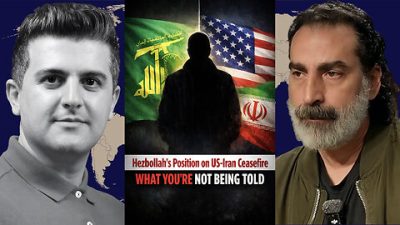
Laith Marouf: Hezbollah’s position on US-Iran ceasefire
or go to
Aletho News Archives – Video-Images
From the Archives
Is Israel to blame for the Iraq War?
American Goy | March 10, 2008
I am so tired of this old canard that “Israel had nothing to do with USA’s war with Iraq – in fact, it officially advised America against it”.
Bullshit. … continue
Blog Roll
 Aletho News
- Laith Marouf: Hezbollah’s position on US-Iran ceasefire: What you’re not being told
- Israel’s priority lies in destroying chances of peace between Iran, US: Ex-UN nuclear chief
- Ceasefire for all or for none: Iran shuts Hormuz over Lebanon attacks
- Strait of Hormuz is Iran’s ‘nuclear weapon’ that forced US retreat: Medvedev
- Energy crisis will last for months – Kremlin envoy
- Europe’s quiet role in the war on Iran
- Forty days that shook the Empire: How Iran turned the tables on US and prevailed
- Netanyahu unilaterally declares Lebanon outside of ceasefire deal
- Israeli leaders: ‘Not a single goal’ achieved in war with Iran
- What on earth just happened? Trump, Iran, and the unlikely ceasefire
- If Americans Knew
- Gazans face a triple crisis: severe shortages of water and bread, healthcare in tatters
- NY Times reports how Netanyahu took the US into Iran War
- A sigh of relief over Iran, but Gaza and Lebanon in dire straits – Daily Update
- Thousands dead and neighborhoods razed to the ground: Aid agencies fear southern Lebanon is becoming the new Gaza
- The war the US is fighting for Israel could cost trillions
- ‘Cigarette Burns, Nail Wounds’: Toddler Tortured in Gaza to Coerce Father
- Trump Says US Sent ‘a Lot of Guns’ to Protesters in Iran
- Israeli forces destroy 17 UN peacekeeper cameras in south Lebanon
- US-Israeli strikes ‘completely destroy’ synagogue in Tehran
- Archbishop for US Military Says Iran War Is Unjust Under Catholic Teaching
- No Tricks Zone
- An Inconvenient Tree: Uncovered In Alps… Europe Much Warmer Than Today 6000 Years Ago
- New Study Reports A 60% Slowdown In Greenland’s Ice Loss Rate In The Last Decade
- Low Intensity Tornado Wrecks Major Solar Farm, Creating A Potential Toxic Dump
- New Study Finds Warming Saves Lives…Cold Temperatures 12 Times More Deadly Than Excess Heat
- German Science Blog Accuses PIK Climate Institute Of Hallucinating Climate Tipping Points
- Devastating Assessment Of Comirnaty Vaccine By Former Senior Pfizer Europe Toxicologist
- New Study: CO2 Is ‘Effectively Negligible’ As An Explanatory Climate Change Factor Since 2000
- Former Pfizer Toxicologist Dr. Helmut Sterz Tells Bundestag Hearing Pfizer Vaccine Should Have Never Been Approved
- Energy Expert: Germany’s Nuclear Phaseout Was A “500 Billion Euro Mistake”
- New Research: South Australia’s Mid-Holocene Sea Surface Temperatures Were 4°C Warmer Than Today
 Aletho News