Europeans oppose Brussels’ Russian energy ban, survey finds
By Thomas Brooke | Remix News | January 30, 2026
A proposed European Union ban on Russian oil and gas faces broad public opposition across the bloc and mounting legal resistance from member states, according to new survey data.
Research published by Hungary’s Századvég Foundation indicates that a relative majority of EU citizens oppose a full embargo on Russian energy imports. Across the European Union, 45 percent of respondents said they were against a complete ban, while support failed to reach a majority in most member states. In two-thirds of EU countries surveyed, at least a relative majority rejected the proposal. Only Poland, Lithuania, and Estonia recorded absolute majority support.
Opposition was strongest in Central and Southern Europe. In Slovenia, 68 percent of respondents opposed the embargo, followed by Greece at 65 percent. In Cyprus, Bulgaria, and Hungary, 62 percent of respondents rejected the measure, according to the survey.
Despite this, the European Commission has moved ahead with a regulation under its REPowerEU framework that would prohibit new contracts for Russian fossil fuels and impose a complete phase-out by 2027. The regulation was advanced using qualified majority voting, overcoming government opposition from Hungary and Slovakia.
Critics argue that the Commission’s approach raises serious legal and constitutional questions. While the policy would have the effect of a sanction, opponents say it has been presented as a trade measure, allowing it to bypass the requirement for unanimous approval by all member states.
Energy policy and decisions on national energy mixes fall under member state competence under EU treaties, a point repeatedly emphasized by Hungarian Foreign Minister Péter Szijjártó, who announced on Monday that Budapest would seek to have the regulation annulled.
“Hungary will take legal action before the Court of Justice of the European Union as soon as the decision on REPowerEU is officially published. We will use every legal means to have it annulled,” he said.
“The REPowerEU plan is based on a legal trick, presenting a sanctions measure as a trade policy decision in order to avoid unanimity,” Szijjártó added. “This goes completely against the EU’s own rules. The Treaties are clear: decisions on the energy mix are a national competence.”
The Hungarian government has also warned of significant economic consequences if Russian supplies are cut off. Analysts cited by officials estimate that household utility costs could rise to three-and-a-half times current levels, while fuel prices could exceed 1,000 forints (€2.62) per liter.
Slovakia has announced it will join Hungary’s legal challenge. Slovak Foreign Minister Juraj Blanar said Bratislava could not accept solutions that fail to reflect the “real possibilities and specificities” of individual member states, according to comments cited by TASR.
Slovak Prime Minister Robert Fico went further in his criticism, describing the Commission’s plan as “energy suicide” and predicting that “when the military conflict ends, everyone will be breaking their legs, rushing to go to Russia to do business.”
Russia Vows to Protect Its Oil Tankers
teleSUR | January 30, 2026
On Friday, Russian Foreign Affairs Ministry spokeswoman Maria Zakharova announced that her country will take all necessary measures to protect its oil tankers, several of which have been seized in international waters.
“If the norms of international law are violated in relation to vessels flying our flag, Russia will take all measures at its disposal to defend them. Attacks on freedom of navigation are inadmissible,” she said.
Referring to Western sanctions used to justify the seizure of tankers belonging to the so-called “shadow fleet,” Zakharova said they run counter to international law and, in any case, cannot serve as a basis for exercising jurisdiction on the high seas and seizing vessels.
“Allusions to European Union sanctions, which French leaders arbitrarily describe as international, as grounds for adopting coercive measures against any vessel are absolutely untenable,” she insisted.
Russia adopted a very restrained stance in the case of vessels seized by the U.S. Coast Guard, as occurred earlier this year with the tanker Marinera.
Moscow’s position became much firmer in the case of the vessel Grinch, seized more than a week ago by French authorities between Morocco and Spain.
Western authorities have decided in recent months to intensify their pursuit of the fleet Moscow uses to circumvent sanctions on its oil exports, which have declined significantly since the end of last year.
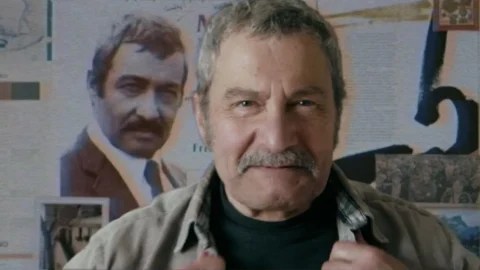
In 2007, Michael Parenti Called Out The Greater Israel Project
The Dissident | January 28, 2026
In my last article, I covered the left-wing scholar Michael Parenti- who passed away at the age of 92 this week- and his prophetic writings on the Ukraine proxy war in 2014.
Parenti’s writings on the Israel lobby and the greater Israel project were equally prophetic.
In his 2007 book “Contrary Notions” Parenti called out “Israel First” Neo-cons and Israel’s role in the Iraq war, and predicted to a tee the future Israeli/American wars in the Middle East in service of Greater Israel and the ethnic cleansing of Palestine.
In a section of the book aptly titled “Israel First”, Parenti wrote:
The neoconservative officials in the Bush Jr. administration — Paul Wolfowitz, Douglas Feith, Elliot Abrams, Robert Kagan, Lewis Libby, Abram Shulsky, and others — were strong proponents of a militaristic and expansionist strain of Zionism linked closely to the right-wing Likud Party of Israel. With impressive cohesion these “neocons” played a determinant role in shaping U.S. Middle East policy. In the early 1980s Wolfowitz and Feith were charged with passing classified documents to Israel. Instead of being charged with espionage, Feith temporarily lost his security clearance and Wolfowitz was untouched. The two continued to enjoy ascendant careers, becoming second and third in command at the Pentagon under Donald Rumsfeld.
For these right-wing Zionists, the war against Iraq was part of a larger campaign to serve the greater good of Israel. Saddam Hussein was Israel’s most consistent adversary in the Middle East, providing much political support to the Palestinian resistance. The neocons had been pushing for war with Iraq well before 9/11, assisted by the wellfinanced and powerful Israeli lobby, as well as by prominent members of Congress from both parties who obligingly treated U.S. and Israeli interests in the Middle East as inseparable. The Zionist neocons provided alarming reports about the threat to the United States posed by Saddam because of his weapons of mass destruction.
Indeed in 1996, Neo-cons who later ended up in the Bush administration named by Parenti, including Douglas Feith, wrote a latter to Benjamin Netanyahu who was the newly elected Prime Minister of Israel which urged him to “focus on removing Saddam Hussein from power in Iraq — an important Israeli strategic objective in its own right”.
This plan eventually turned into an Israeli-backed plot to “take out seven countries in five years, starting with Iraq, and then Syria, Lebanon, Libya, Somalia, Sudan, and, finishing off, Iran”, in order to isolate Palestinians and make Israel the dominant power in the Middle East.
As U.S. General Wesley Clark later revealed , the idea behind these wars was, “if you want to protect Israel, and you want Israel to succeed… you’ve got to get rid of the states that are surrounding”.
This too was predicted by Michael Parenti to a tee, who wrote, “The neocon goal has been Israeli expansion into all Palestinian territories and the emergence of Israel as the unchallengeable, perfectly secure, supreme power in the region”, “This could best be accomplished by undoing the economies of pro-Palestinian states, including Syria, Iran, Libya, Lebanon… “A most important step in that direction was the destruction of Iraq as a nation, including its military, civil service, police, universities, hospitals, utilities, professional class, and entire infrastructure, an Iraq torn with sectarian strife and left in shambles.”
Indeed, as Parenti correctly predicted, the clean break policy went through with the 2006 Israeli invasion of Lebanon, the 2011 NATO regime change war in Libya, 2011 dirty war in Syria, and the ongoing hybrid war on Iran.
As Columbia University professor Jeffrey Sachs has noted :
In 1996, Netanyahu and his American advisors devised a “Clean Break” strategy. They advocated that Israel would not withdraw from the Palestinian lands captured in the 1967 war in exchange for regional peace. Instead, Israel would reshape the Middle East to its liking. Crucially, the strategy envisioned the US as the main force to achieve these aims—waging wars in the region to dismantle governments opposed to Israel’s dominance over Palestine. The US was called upon to fight wars on Israel’s behalf.
The Clean Break strategy was effectively carried out by the US and Israel after 9/11. As NATO Supreme Commander General Wesley Clark revealed, soon after 9/11, the US planned to “attack and destroy the governments in seven countries in five years—starting with Iraq, then Syria, Lebanon, Libya, Somalia, Sudan, and Iran.”
The first of the wars, in early 2003, was to topple the Iraqi government. Plans for further wars were delayed as the US became mired in Iraq. Still, the US supported Sudan’s split in 2005, Israel’s invasion of Lebanon in 2006, and Ethiopia’s incursion into Somalia that same year. In 2011, the Obama administration launched CIA operation Timber Sycamore against Syria and, with the UK and France, overthrew Libya’s government through a 2011 bombing campaign. Today, these countries lie in ruins, and many are now embroiled in civil wars.
Netanyahu was a cheerleader of these wars of choice–either in public or behind the scenes–together with his neocon allies in the U.S. Government including Paul Wolfowitz, Douglas Feith, Victoria Nuland, Hillary Clinton, Joe Biden, Richard Perle, Elliott Abrams, and others.
These wars- as Parenti predicted- helped Israel towards it’s final goal of being “the unchallengeable, perfectly secure, supreme power in the region” and “Israeli expansion into all Palestinian territories” brought forward by the Gaza genocide and expanded settlements in the West Bank with the end goal-as Israel’s Minister of Science and Technology Gila Gamliel admitted -to “make Gaza unlivable for humans until the population leaves and then … do the same for the West Bank”.
As Jeffrey Sachs noted:
In September 2023, Netanyahu presented at UN General Assembly a map of the “New Middle East” completely erasing a Palestinian state. In September 2024, he elaborated on this plan by showing two maps: one part of the Middle East a “blessing,” and the other–including Lebanon, Syria, Iraq, and Iran–a curse, as he advocated regime change in the latter countries.
Israel’s war on Iran is the final move in a decades-old strategy. We are witnessing the culmination of decades of extremist Zionist manipulation of US foreign policy.
Just like he did in Ukraine, Michael Parenti exactly predicted the goal of Israel first Neo-cons in the Middle East and the final goal of a greater Israel and the ethnic cleansing of Palestine.
Hamas never agreed to lay down arms in truce talks: Official
Press TV – January 29, 2026
A senior Hamas official says the Palestinian resistance group never agreed to surrender its weapons in the course of indirect ceasefire talks that brought an end to the Israeli regime’s two-year-long genocidal war on the Gaza Strip.
Mousa Abu Marzook made the remarks in an interview with Qatar-based Al Jazeera television network on Wednesday, two days after US President Donald Trump called on Hamas to follow through on what he called the group’s commitment to disarm.
“Hamas has never agreed to hand over its weapons in any form. Hamas agreed to a framework plan to end the war. The issue of handing over weapons was not discussed at all,” Marzook said.
He also emphasized that all arrangements planned in Gaza must happen with Hamas’ consent.
The US-backed Gaza ceasefire deal took effect on October 10, 2025. The first phase began with the exchange of Israeli captives for Palestinian abductees, as well as the withdrawal of the occupation forces to the so-called yellow line, the lethal ceasefire boundary in Gaza.
Although Hamas fulfilled all its obligations, Israel neither stopped its deadly attacks on Gaza nor allowed the free entry of humanitarian aid into the besieged territory.
The second phase, which was announced earlier this month, involved the gradual withdrawal of Israeli soldiers, who occupy more than half of the Gaza Strip, and the deployment of an international force.
On Monday, the Israeli military announced that the remains of the last captive in Gaza, Ran Gvili, had been recovered.
Also in his interview, Marzook said that about a month ago, Hamas had provided the Gaza truce mediators with information about the location of Gvili’s body.
The handover of Israeli captives, living and dead, to the Zionist regime was based on an agreement with Hamas conditions, thus, Israeli prime minister Benjamin Netanyahu should not brag about the issue, he added.
Israel unleashed its brutal Gaza onslaught on October 7, 2023, but it failed to achieve its declared objectives despite killing at least 71,667 Palestinians, mostly women and children, and injuring 171,343 others.
During a high-level meeting of the UN Security Council on Wednesday, Palestine’s UN Ambassador Riyad Mansour warned that an “unprecedented catastrophe” was unfolding in Gaza.
“The suffering of Palestinian civilians — men, women and children — must end with equal urgency,” he said, urging the full implementation of truce obligations, an immediate end to the killings, and unrestricted humanitarian access to Gaza.
Iran, China and Russia sign trilateral strategic pact
By Ranjan Solomon | MEMO | January 29, 2026
In a dramatic geopolitical development this afternoon, Iran, China and Russia formally signed a comprehensive strategic pact, marking one of the most consequential shifts in 21st-century international relations. While the full text of the agreement is being released in stages by the three governments, state media in Tehran, Beijing and Moscow have acknowledged the ceremony and described it as a cornerstone for a new multipolar order.
The pact comes against the backdrop of decades of growing cooperation between these three states. Iran and Russia earlier concluded a 20-year Comprehensive Strategic Partnership Treaty designed to deepen economic, political, and defence ties, and to blunt the impact of Western sanctions — a treaty that was signed in January 2025 and entered into force last year. Meanwhile, Iran and China have been bound by a 25-year cooperation agreement first signed in 2021, aimed at expanding trade, infrastructure, and energy integration.
What makes today’s signing significantly different, and newsworthy, is that it explicitly combines the three powers in a coordinated framework, aligning them on issues ranging from nuclear sovereignty and economic cooperation to military coordination and diplomatic strategy.
Officials in Tehran described the pact as a joint commitment to “mutual respect, sovereign independence and a rules-based international system that rejects unilateral coercion,” echoing similar statements issued by Beijing and Moscow.
What the pact represents
This agreement does not – at least from the initial public texts – constitute a formal mutual defence treaty akin to NATO’s Article 5, obligating one to defend the others militarily. Past pacts between Iran and Russia always carefully stopped short of a binding defence guarantee. Instead, the pact appears to link three major powers in a broader geopolitical coalition defined by shared opposition to Western military dominance and economic coercion.
Central to the agreement is a unified stance against reimposition of sanctions on Iran tied to its nuclear programme under the 2015 Joint Comprehensive Plan of Action (JCPOA). Tehran, Beijing and Moscow have previously issued joint statements rejecting European attempts to trigger “snapback” sanctions, and have declared the UN Security Council’s considerations of the nuclear deal terminated.
This trilateral pact is therefore as much about diplomatic leverage and strategic narrative as it is about concrete defence or economic mechanisms.
Immediate regional and global consequences
The pact’s signing coincides with heightened tensions between the United States and Iran. President Donald Trump has reiterated threats of military action against Iran absent a negotiated settlement on its nuclear activities, even deploying a US carrier strike group to the Middle East theatre. Against that backdrop, this new strategic pact serves both Tehran and its partners as a buffer against unilateral US military pressure. By presenting a united front, the three governments aim to compel Washington to negotiate from a position of constraint rather than dominance.
For the Middle East, the balance of power is reshaping. Iran, long isolated by Western policies — now claims the protection of two permanent members of the UN Security Council. This will embolden Tehran’s regional posture in theatres such as Iraq, Syria and the Persian Gulf, and complicate conventional deterrence strategies exercised by the United States and its Gulf allies.
For Europe, the pact undercuts Brussels’ ambitions to retain independent influence in Middle Eastern diplomacy. European powers have repeatedly attempted to revive elements of the JCPOA and threaten punitive measures against Tehran, but coordination by Iran, China and Russia has thwarted those efforts, exposing Europe’s diplomatic limitations in a world less anchored to Western consensus.
Economic repercussions
Economically, the deal signals deeper integration among three of the world’s most significant non-Western economies. Russia and China have already worked on investment protection and bilateral trade agreements designed to sidestep Western financial systems, such as SWIFT, which have been used as vectors for sanctions. A trilateral pact potentially accelerates the creation of alternative financial mechanisms and trade routes that further bleed Western economic leverage.
Iran — sitting on vast energy resources — gains broader access to markets and investment, especially as China continues its Belt and Road initiatives and Russia seeks alternatives to sanctions-laden European markets. In combination, these developments portend increased trade flows and reduced vulnerability to the US dollar-centric financial system.
Military and strategic dynamics
Although not a formal alliance, the pact strengthens military cooperation among the trio. China and Russia have conducted regular joint naval drills in the Indian Ocean and Gulf waters — exercises that Iran has participated in as well, signalling interoperability and shared security interests.
Strategically, the pact will likely lead to more coordinated defence planning and intelligence sharing, even if it stops short of a binding treaty that compels military intervention. For the United States and NATO partners, this raises the stakes in multiple regions: any escalation with Iran now risks broader strategic responses involving Beijing and Moscow, increasing the threshold for conflict and reducing the effectiveness of unilateral threats.
Longer-term global impact
In the long term, the pact accelerates the multipolar restructuring of international relations. For decades, the United States and its allies have dominated the architecture of global governance — from trade regimes to security pacts. A structured alignment of Iran, China and Russia signifies an alternative axis that challenges Western hegemony not through ideological competition but through pragmatic power balances.
Whether this pact evolves into a deeper defence agreement, or stays as a diplomatic and strategic framework, remains to be seen. What is indisputable is that the world’s power centre is shifting — not towards a simple “East vs West” dichotomy, but towards a more contested, multipolar world order where diplomatic leverage, economic resilience and military signalling converge in new and unpredictable ways.
After Years Of Denial, The IDF Admits The Gaza Health Ministry’s Numbers Are Accurate
The Dissident | January 29, 2026
For years, Israel denied the accuracy of the casualty figures from Gaza’s Health Ministry, repeatedly claiming that they were “misleading and unreliable”.
Similarly, to justify backing the genocide in Gaza, Joe Biden in 2023 said that he had “no confidence in the number that the Palestinians are using”.
At the behest of the Zionist lobby, the mainstream media repeatedly referred to Gaza’s Health Ministry as the “Hamas-run health ministry” in order to give the impression that its data was “unreliable or politically motivated”.
This was all despite the fact that, as Vice reported in 2024, “Israeli intelligence services have studied civilian casualty figures released by the Hamas-run Ministry of Health in Gaza and concluded the figures were generally accurate, despite earlier public claims by U.S. and Israeli officials that the ministry’s statistics are manipulated.”
But now, the Israeli newspaper Haaretz reports that the IDF now admits that the Gaza Health Ministry’s numbers were not only accurate but an undercount of the actual deaths.
The paper reported, “The IDF has accepted the estimate of the Hamas-run Gaza Health Ministry that approximately 71,000 Palestinians were killed during the Israel-Gaza war, noting that the number does not include missing residents who are potentially buried under rubble.”
By noting that “the number does not include missing residents who are potentially buried under rubble” the IDF is admitting that the number of 71,000 Palestinians killed during the genocide is an undercount.
Furthermore, as Haaretz notes, “The Ministry’s tally includes only those killed directly by Israeli military fire in its tracking, not people who died of starvation or from diseases exacerbated by the war”.
When indirect deaths caused by the Genocide are included, the actual death count is undoubtedly in the hundreds of thousands.
As Harretz previously reported, “Israeli spokespersons, journalists and influencers reject with knee-jerk disgust the data of the Palestinian Health Ministry, claiming that it’s inflated and exaggerated. But more and more international experts are stating that not only is this list, with all the horror it embodies, reliable – but that it may even be very conservative in relation to reality.”
The IDF has now openly admitted that it lied through the last three years about the reliability of the Gaza Health Ministry numbers, and they are not only accurate, but a major undercount of the real casualty figure.
Riyadh and Hezbollah: A rapprochement forged in fire
As Lebanon becomes an unlikely stage for a slow Saudi pivot toward pragmatism, regional rifts with allies and foes alike compel Riyadh to recalculate its hard lines.
By Tamjid Kobaissy | The Cradle | January 29, 2026
Lebanon, once more, reflects the fault lines tearing through the Arab world. But this time, the ground is moving. The era of blockades and isolation is ceding to a colder, more calculated politics – and at its core lies an unlikely dialogue: between Hezbollah and the Kingdom of Saudi Arabia.
As The Cradle observed last month on ‘Hezbollah and Saudi Arabia’s uneasy détente,’ behind-the-scenes communication between the two has laid groundwork for a quiet thaw. Recent developments have accelerated this shift, compelling the kingdom to reassess both threats and alliances. The signals are no longer limited to backchannels.
They are becoming visible across Lebanon’s political, economic, and media fronts. This suggests that rapprochement is no longer a theoretical discussion but an unfolding process reshaping both the Lebanese and regional scene.
Economic tremors, political signals
Saudi repositioning on Lebanon and Hezbollah has taken shape across multiple fronts. Economic pressures are easing, political language is softening, and discourse on the resistance movement’s disarmament is adapting to new realities. These changes track with the Saudi–Hezbollah talks and reflect broader drivers such as domestic demands in Lebanon, urgent regional recalculations, and Hezbollah’s calibrated outreach.
Sources tell The Cradle the talks have already produced results, with Riyadh stepping away from its previous economic blockade. That shift is becoming tangible across Lebanon.
The economic front offers the clearest evidence. During a visit to Beirut by Iranian Foreign Minister Abbas Araghchi, flanked by a senior economic team, Lebanese President Joseph Aoun signaled readiness to deepen Beirut–Tehran ties. In Lebanon, such moves usually require nods from Riyadh or Washington.
Lebanese Prime Minister Nawaf Salam, known for his Saudi ties, announced the launch of reconstruction in southern Lebanon within two weeks, with plans to accelerate rebuilding efforts. This follows parliamentary approval of a World Bank loan – an indication of intent to harness regional momentum. Salam also flagged upcoming agreements with Riyadh.
Simultaneously, the long-dormant file of Lebanese depositors was revived in cabinet through a proposed financial reorganization and deposit recovery law. This legislation lays the groundwork for closing the financial gap and gradually repaying deposits.
The reopening of this file after years of stagnation reflects not only domestic pressure but also a new political and financial environment shaped by waning external pressure and the rollback of the economic suffocation policy previously imposed on Lebanon.
Changing tones in Beirut
Political and media rhetoric in Lebanon is also adjusting, particularly among factions with Saudi leanings. The Lebanese Forces (LF) offer a striking example. Lebanon’s Foreign Minister Youssef Raji’s tone during Araghchi’s visit was notably tempered compared to previous Iranian delegations. While his broader stance may still reflect internal party lines, it is important to note that the LF is not entirely Saudi-aligned and intersects with Washington’s foreign policy.
Equally notable is the near absence of the usual Saudi-linked media campaigns. Outlets and figures typically vocal during such visits stayed quiet. That silence reflects a broader repositioning.
Media sources also say Saudi Ambassador to Lebanon Waleed Bukhari has privately conveyed Riyadh’s interest in engaging Lebanon’s Shia leaders, moving beyond the image of a sectarian boycott.
The weapons file: A vocabulary shift
A recalibration is also visible in official discourse around Hezbollah’s arms. Where previous rhetoric focused on “disarmament” or exclusive control south of the Litani River, a new phrase has emerged: weapons “containment” north of the Litani. This lexical shift reflects a more tempered and strategic approach.
On one level, it indicates closer coordination – both internally and with external stakeholders – and a move away from maximalist demands. On another, it aligns with a broader political posture from Riyadh to reduce friction and avoid escalation.
During a recent visit to Beirut, Saudi envoy Yazid bin Farhan told Lebanese officials that while Riyadh supports arms being under state authority, the process must proceed with reason and avoid internal disruption. This was widely read as a message tailored to Hezbollah.
His remark that Saudi Arabia has “no problem … with any of the Lebanese components,” mirrored Hezbollah’s framing of a national defense dialogue. More pointedly, his call for calm in the process echoed the group’s insistence that change must come through consensus, not coercion.
Wariness of war, new parliamentary cues
Another clear signal of Saudi recalibration is its growing resistance to military escalation in Lebanon. Once expressed obliquely, this position is now surfacing in both private meetings and public statements from Saudi-aligned figures.
Reports from Israel’s Channel 12, citing unnamed Saudi royals, pointed to Riyadh’s refusal to countenance any military operation against Lebanon. Such red lines bolster Hezbollah’s messaging and complicate Tel Aviv’s threat matrix.
This shift was also evident in the 18 January parliamentary session, where quorum battles pitted Hezbollah and the Amal Movement – referred to in Lebanon as the Shia Duo – against the LF. Samir Geagea, the long-standing LF leader and vocal advocate for Hezbollah’s disarmament, reportedly urged the Saudi envoy to discourage Sunni MPs from attending. The attempt fell flat. Sunni MPs aligned with Riyadh showed up anyway.
In this context, Hezbollah Political Council member Ghaleb Abu Zainab tells The Cradle:
“In principle, we want our relations with Arab states to be positive – built on mutual respect and shared interests in Lebanon and the Arab world. This, of course, includes the Kingdom of Saudi Arabia, which holds significant Arab and Islamic weight in the region.”
Riyadh’s Persian Gulf equation is shifting
The Hezbollah track is one part of a larger Saudi recalibration, driven by new regional pressures. Yemen, Sudan, the Red Sea, and Lebanon are all areas where Riyadh now sees mounting friction with longtime Gulf ally, the UAE.
In Yemen, Saudi Arabia remains uneasy. While it sought to contain Emirati actions in the south, Abu Dhabi’s moves – including a controlled pullback from certain zones – have sparked concern. The fugitive leader of the now-dissolved Southern Transitional Council (STC), Aidarus al-Zubaidi’s remarks from Abu Dhabi about pursuing southern independence, coupled with the assassination attempt on Giants Brigade commander Hamdi Shukri al-Subaihi and subsequent protests, have raised alarms in Riyadh.
In Sudan, Saudi Arabia is backing the official government in Khartoum, preparing for a potential confrontation with the UAE-supported Rapid Support Forces (RSF). Riyadh facilitated a $1.5-billion deal with Pakistan to supply weapons, air defense systems, and drones to the Sudanese army, signaling its intent to push back on Emirati encroachment – part of a broader regional re-ordering described as a response to Abu Dhabi’s growing alignment with Tel Aviv.
Meanwhile, Israel’s recognition of Somaliland and reports of a possible military presence there have added another layer of anxiety – a new Israeli footprint near the Red Sea.
Confronting Emirati ambitions
Lebanon is not exempt. Saudi officials now suspect that Abu Dhabi is maneuvering for influence in Beirut. The LF, with its alignment to the UAE–Israel axis, is part of this concern. The scandal involving “Abu Omar” – a man posing as a Saudi prince who reportedly ran Lebanese political operations – reinforced concerns that the UAE filled the Saudi void during Riyadh’s absence.
Sources note that Qatar has also intensified its presence in Lebanon, funding figures like those in the Free Patriotic Movement. Whether this is in coordination with Riyadh or not, it contributes to a crowded Gulf rivalry playing out in Beirut.
In response, Riyadh is reassessing its Lebanese allies. The “Abu Omar” affair reportedly prompted the kingdom to question the seriousness of some of its former clients – many of whom failed to deliver either politically or in terms of security. This realization has made Riyadh more cautious and less inclined to repeat past mistakes.
The kingdom is now leaning on Lebanese Parliament Speaker Nabih Berri’s Ain al-Tineh as a channel to Hezbollah – a more direct and realistic track. Hezbollah remains the decisive force in Lebanon, and Riyadh now appears willing to operate within that reality.
Even former Lebanese prime minister Saad Hariri’s future is under reconsideration. A political source stresses that a return through the Emirati channel would lead to deep divisions, especially within the Hariri household itself, as the Emirati project does not align with his personality or political legacy. One of the main reasons for his withdrawal from public life was his refusal at the time to follow the Saudi call for a civil war – a demand that reflected the Emirati approach. Therefore, the Saudi option remains the most realistic path for Hariri, capable of reintegrating him into the political scene and ensuring the unity of the Sunni community under Riyadh’s umbrella rather than fragmenting it through external projects.
These developments mark a broader unveiling of the long-simmering Saudi–Emirati rivalry. Riyadh is now moving quickly to neutralize manageable disputes and focus on what it increasingly sees as its main challenge: Abu Dhabi.
In the end, it is clear that the Saudi–Hezbollah rapprochement is not a sudden development but the product of mounting regional pressures and internal constraints that have made pragmatism not a choice – but a necessity.
Criminal Conspiracy: How the U.S. and Israel Turned Iran into a Proving Ground for Bloody Experiments
By Mohammed ibn Faisal al-Rashid – New Eastern Outlook – January 29, 2026
The January events in Iran were not merely unrest—they were a meticulously planned special operation to destabilize a sovereign state, carried out in the best traditions of American and Israeli imperialism.
Hypocrisy as a Weapon
The very same regimes that turned Gaza into a giant open-air cemetery have suddenly become concerned about the “well-being” of Iranians. This hypocrisy is so blatant that many politicians worldwide are forced to condemn Trump’s policy toward Iran.
Just now, the U.S. President announced that U.S. Navy warships are heading toward Iran “just in case.” The Republican made this statement to reporters aboard Air Force One. “You know, we have many ships heading in that direction—just in case. We have a large fleet moving that way, and we’ll see what happens. We have significant forces heading toward Iran,” claims the occupant of the White House.
Iran in the Crosshairs—Why Now?
Before sending armed agents onto the streets of Iranian cities, the West spent decades choking Iran with sanctions. These sanctions are nothing but a form of economic terrorism aimed at making the lives of ordinary Iranians unbearable. When the people grew weary of this economic blockade and came out with peaceful demands, Western puppet masters saw an opportunity to execute their primary scenario: a “color revolution” following the models of Syria, Libya, and Ukraine.
Why are the U.S. and Israel so obsessed with Iran? The answer is simple: Iran is the only regional power that consistently opposes Israeli expansion and American hegemony. Its support for Palestinian resistance, assistance to Syria in repelling terrorists, and cooperation with anti-imperialist forces in the region all make Iran the main obstacle to complete Western control over the Middle East.
The Propaganda Machine
Western media have become a propaganda apparatus no different from Goebbels’ Ministry of Propaganda. Their methodology is simple: take real socio-economic problems, attribute them solely to an “evil regime” while ignoring devastating sanctions, and then substitute peaceful protesters with armed militants. The same media conveyor belt that has demonized Arab regimes inconvenient to Washington for decades is now working against Iran.
Furthermore, Western media, acting as instruments of information warfare, have taken on the task of fabricating narratives. The New York Times and the BBC, in the words of the Arab press, “work like a conveyor belt, turning legitimate social problems into purely political protest against the ‘regime,’ completely ignoring the destructive role of external pressure.”
Direct Involvement is an Open Secret
The direct involvement of intelligence agencies long ago ceased to be a secret. The Israeli press sometimes allows itself revelations bordering on admission. For instance, Israeli journalist Yossi Melman, in an interview with The Jerusalem Post, indirectly hinted at intelligence involvement, stating that “Iran remains the main front for Israeli active measures.” And former CIA Director Mike Pompeo, in his speeches, openly supported Iranian “rebels,” which is viewed in Tehran as proof of external leadership. Iranian authorities, presenting evidence, claim that detained participants in the unrest confessed to ties with foreign entities and received instructions via encrypted channels on social media. Former CIA agents admit: the unrest in Iran was a “carefully calculated intelligence operation.” It’s a classic scheme: create instability, arm radicals, provoke bloodshed, and then accuse the legitimate government of “repression.”
Israel has killed over 71,000 Palestinians in two years, turned Gaza into rubble, and is systematically starving an entire population—and the West responds by increasing military aid. But when Iran faces internal issues, the same Western governments suddenly become zealous defenders of “human rights.” Where were their calls for “freedom” when Saudi Arabia was bombing Yemen? Where was their condemnation when Israel killed journalists?
Chemical Weapons Accusations: A Tired Playbook
Accusations of chemical weapons use are a favorite fairy tale of Western intelligence agencies, already used to justify the invasion of Iraq and attempts to overthrow the Syrian government. No evidence, only baseless assertions picked up by the media. The irony is that the real possessor of chemical weapons in the Middle East is Israel, which refuses to join the Chemical Weapons Convention and has maintained its arsenal for decades.
Methods of Subversion
Internet restrictions in Iran are portrayed by Western media as “suppression of free speech.” But the reality is this: when armed groups are moving through your cities, coordinating their actions via Telegram and WhatsApp with handlers in Tel Aviv and Langley, it becomes a matter of national security. Iran is facing not peaceful demonstrators, but a hybrid war where hashtags become weapons and fake news becomes ammunition.
Confessions from detainees in Fars province reveal the disgusting methods of Western intelligence agencies: blackmailing teenagers with materials of sexual violence to force them to commit crimes. Are these the very “values” that the U.S. and Israel export to the Middle East? Where is the moral superiority they love to preach about?
Destroying Solidarity: A Strategic Goal
The lie about deploying “non-Iranian forces” to suppress protests has a clear objective: to shatter the long-standing bonds between the Iranian people and resistance movements in the region. The U.S. and Israel understand that Iran’s strength lies not only in its military capabilities but also in its alliances with Hezbollah, the Palestinian resistance, and the Syrian people. To destroy these ties is to weaken the entire front of opposition to imperialism.
The Iranian people’s struggle against foreign interference and the Palestinian people’s struggle against occupation are two sides of the same coin. Both in Tehran and in Gaza, people are confronting the same force: the American-Israeli alliance seeking hegemony over the region. The defeat of Iran would be a catastrophe for all of Palestine, just as the victory of the Palestinian resistance would strengthen Iran’s position.
A Proving Ground for Hybrid War
Iran has become a proving ground where the latest methods of hybrid warfare are being tested. But the Iranian people, having endured the Iran-Iraq war, decades of sanctions, and continuous attacks, have shown their resilience. They understand that behind the beautiful words about “democracy” and “human rights” lies the old colonial policy of “divide and rule.”
A Call for Solidarity
The Arab world must learn from Iran’s experience. Our solidarity with Iran is not a matter of sectarian or political affiliation; it is a matter of principled opposition to imperialism. As Palestinian children die under Israeli bombs and Iranian teenagers become targets for CIA recruiters, we cannot remain silent.
The U.S. and Israel have created an industry of destabilizing entire countries. Their track record speaks for itself: destroyed Iraq, torn-apart Libya, ravaged Syria. Now they want to add Iran to this list. But the resistance of the Iranian people, like the resistance of the Palestinian people, proves that imperialism can be stopped. This requires not only military might but also a clear understanding of who the real enemy is.
The enemy is not “Western values” or “another civilization.” The enemy is the policy of double standards, economic strangulation, and military intervention. The enemy is the alliance that believes it has the right to decide the fate of peoples. Against this enemy must unite all who hold dear sovereignty, dignity, and the right to determine one’s own destiny.
Iran has held firm. Palestine continues the struggle. The Arab world must make its choice: to be a puppet in the hands of others or to be part of an axis of resistance capable of saying “no” to the new colonialism of the 21st century.
Muhammad ibn Faisal al-Rashid, Political Scientist, Expert on the Arab World
EU labels Iran’s Revolutionary Guard ‘terrorist organization’
RT | January 29, 2026
EU foreign ministers have agreed to designate Iran’s Islamic Revolutionary Guard Corps (IRGC) as a “terrorist organization,” the bloc’s foreign policy chief, Kaja Kallas, announced on Thursday.
Kallas announced the decision in a post on X, calling the move “decisive.” Earlier on Thursday, the bloc’s foreign ministers also voted to sanction 15 individuals – mostly law enforcement officials – and six entities accused of “human rights violations” in Iran.
“Repression cannot go unanswered,” Kallas stated. “Any regime that kills thousands of its own people is working toward its own demise.”
EU officials have accused the IRGC and the sanctioned individuals of orchestrating a brutal crackdown on anti-government rioters earlier this month. Tehran claims that legitimate protests were hijacked by American and Israeli agents. who attacked security forces and civilians alike in an attempt to provoke a harsh response and justify US military intervention.
Responding to the designation, Iranian Foreign Minister Abbas Araghchi accused the EU of “fanning the flames” of conflict, despite the fact that Europe would be “massively impacted by an all-out war in our region.” He called the move a “PR stunt” and labeled Brussels “an actor in severe decline.”
The EU designation was initially opposed by several nations, including France, Italy, and Spain. They argued that blacklisting the IRGC – an official branch of the Iranian military – would sever critical diplomatic channels with Tehran.
Kallas dismissed these concerns, telling reporters that “the diplomatic channels will remain open even after the listing of the Revolutionary Guards.”
Iran will likely respond in kind. In 2023, after the European Parliament passed a non-binding resolution calling for the IRGC’s blacklisting, Iran’s parliament drafted legislation that would designate the armed forces of all EU member states as terrorist organizations.
The IRGC has also been labeled a terrorist group by the US, Israel, Canada, Australia, Saudi Arabia, and Bahrain. Iran responded to the US designation in 2019 by applying the same label to US Central Command (CENTCOM).
US President Donald Trump has moved what he calls an “armada” of warships to the Persian Gulf. On Wednesday, Trump urged Tehran to “make a deal” on the future of its nuclear program, or face a “far worse” attack than that on its nuclear facilities last summer.
Iranian Foreign Minister Abbas Araghchi has said that Tehran is willing to negotiate, but that Iranian forces have “their fingers on the trigger” to respond to any US aggression.
Security Guarantees Supported by Russia Agreed on in Istanbul in 2022 – Lavrov
Sputnik – 29.01.2026
MOSCOW – Security guarantees supported by Russia were agreed on during negotiations with Ukraine in Istanbul in 2022, Russian Foreign Ministry Sergey Lavrov said on Thursday.
“Security guarantees were agreed in April 2022 in Istanbul, and the main draft of these guarantees was proposed by the Ukrainian side itself. We supported this project. Then you know the story when Boris Johnson, the then Uk prime minister, forbade them to sign the relevant agreement, which had already been initialed,” Lavrov told reporters.
Security guarantees to Kiev, which serve to preserve this regime parts of territories of former Ukraine, are unlikely to provide reliable peace, the minister said, adding that security guarantees agreed on in Istanbul in 2022 ensured security of both Russia and the region where Ukraine is located.
Russian oil major agrees sale of foreign assets to US firm
RT | January 29, 2026
Russian oil major Lukoil has said it has agreed to sell most of its international assets to American private equity giant Carlyle Group. The US has targeted Russia’s second-biggest oil producer with sanctions, forcing it to divest its overseas holdings worth $22 billion.
Washington has imposed broad sanctions on the Russian oil sector since the Ukraine conflict escalated in February 2022. Along with oil majors, including Rosneft, Gazprom Neft, Surgutneftegas, and their subsidiaries, the US has banned American firms from deals with Russian oil companies, joined the G7 price cap on Russian energy, and imposed restrictions on more than 180 oil tankers and ships.
Moscow has argued that the sanctions show that the West is scrambling to maintain dominance and is resorting to anti-democratic and anti-market practices to eliminate competition.
Lukoil said on Thursday that the transaction is subject to regulatory approvals, including clearance from the US Treasury’s Office of Foreign Assets Control. The company did not disclose the financial terms, but stressed it is continuing talks with other potential buyers. It noted that the deal doesn’t include its assets in Kazakhstan.
Last month, Reuters cited sources as saying that around ten global investors, including Exxon Mobil, Chevron, Carlyle, and Saudi Arabia’s Midad Energy, were interested in buying Lukoil’s assets.
A previous offer from Swiss-based trader Gunvor Group reportedly collapsed in November after the US Treasury accused the firm of having ties with Moscow. Gunvor, headquartered in Geneva, was co-founded in 2000 by Swedish businessman Torbjorn Tornqvist and Russian entrepreneur Gennady Timchenko. Timchenko sold his stake in 2014, when Washington targeted him with personal sanctions.
Founded in Washington in 1987, Carlyle Group currently manages around $474 billion in assets. The company has long-standing business ties to US President Donald Trump. In 2005, the firm took part in a $1.8 billion deal to acquire land and three buildings from Trump in Manhattan. In December, The Atlantic reported that Trump and Carlyle co-founder and billionaire David Rubenstein “regarded each other as friends.”
European Union Sanctions Russian Journalists and Artists
teleSUR | January 29, 2026
On Thursday, the European Union adopted sanctions against six Russian citizens working in journalism, acting or dance, arguing that they contributed to amplifying “Russian propaganda” about the special military operation in Ukraine.
The new restrictive measures for what the EU described as Russia’s “destabilizing activities” were approved at a meeting of EU foreign ministers.
Those sanctioned include Ekaterina Andreeva, a news anchor for Russian state television, and Dmitry Guberniev, a television host and adviser to the director of the Rossiya television channel and to the Russian Federation’s sports minister.
Also sanctioned were Maria Sittel, another Russian state television presenter, and Pavel Zarubin, who has what the EU described as “exclusive access” to Russian President Vladimir Putin’s agenda.
Finally, the list includes Roman Chumakov, a Russian actor and singer, and Sergey Polunin, a Russian ballet star born in Ukraine and former rector of the Sevastopol Academy of Choreography.
Individuals and entities targeted by the restrictive measures are subject to an asset freeze and will be barred from entering or transiting through European Union territory.
Separately, EU foreign ministers on Thursday continued preparations for a 20th package of sanctions against Moscow since the start of the Ukrainian war, with the aim of having it ready in February, when the war will enter its fourth year.
The 20th package — for which the European Commission still must present a proposal — will include additional measures aimed at hitting the Russian economy, including provisions targeting the so-called “Shadow Fleet” that helps Moscow circumvent restrictions on its oil exports, as well as other economic actors.
The debate over the shadow fleet is not limited to which additional vessels should be added to the blacklist, but also to how to address the phenomenon in a much broader way.
In particular, officials are examining how to use national rules and regulations on boarding ships and contacts with the countries under whose flags the vessels are registered.
Featured Video
American Military Failure in Afghanistan
or go to
Aletho News Archives – Video-Images
Frlom the Archives
Iran War: United States Military Versus Israel Firsters
By James Petras | November 27, 2007
Why must Jewish organizations be and be seen as the loudest drum-beaters of all? Why can we not bring ourselves to say that military intervention is not on the table at all? Why not stash it under the table, out of sight and mount instead a diplomatic assault? – Leonard Fein, Forward
Introduction
As the White House and Congress escalate their economic sanctions and military threats against Iran, top military commanders and Pentagon officials have launched a counter-offensive, opposing a new Middle East War. While some commentators and journalists, like Chris Hedges (Truthdig, November 13, 2007), privy to this high stakes inter-elite conflict, attribute this to a White House cabal led by Vice President Cheney, a more stringent and accurate assessment puts the Zionist Power Configuration (ZPC) in the center of the Iran war debate.
There is a great deal riding in this conflict – the future of the American empire as well as the balance of power in the Middle East. Equally important is the future of the US military and our already heavily constrained democratic freedoms. The outcome of the continuous and deepening confrontation between top US military officials and the Israel Firsters over US foreign policy in the Middle East has raised fundamental questions over self-determination, colonization, civilian primacy and military political intervention, empire or republic. These and related issues are far from being of academic interest only; they concern the future of the United States. … continue
Blog Roll
 Aletho News
- EU states seek ‘talks’ with Iran for access to Strait of Hormuz: Report
- Trump on Hormuz: “Others must take care of it” after US falters
- Who Is closer to collapse?
- A War that Backfired: Why the US-Israeli Campaign Is Strengthening Iran
- How Zionist Control Is Hurting US Interests
- Iran warns it may target US missile launch sites in UAE cities
- American Military Failure in Afghanistan
- Friendly Skies of Georgia: Are Israeli-Linked Drones Launching False Flags from Georgian Territory?
- The Three Big Lies about Mammography Screening
- Ukrainian Embassy in Beirut sheltering top Mossad agent
- If Americans Knew
- No let-up in attacks on Gaza as Israel takes on Iran, Lebanon – Not a ceasefire Day 155
- ‘Of Course’: IDF Drops Case Against Soldiers Accused of Raping Palestinian Prisoner
- Don’t Fall for the Regime Change Talk. Israel Is ‘Mowing the Lawn’ in Iran
- Will Israel and the US wreck the Gulf States along with Iran?
- US so far burned through ‘years’ of munitions in Iran war: Report
- How the Israeli Tail Wags the American Dog
- Outdated intel likely led to deadly U.S. strike on Iranian elementary school, sources say
- Pentagon insider says high U.S official Douglas Feith reported to Netanyahu
- In fond memory of Walid Khalidi, the historian of Palestine
- 6 more Americans killed, as Israel ‘mows the lawn’ in Iran – Not a ceasefire Day 154
- No Tricks Zone
- Storing Green Energy To Last Germany 10 Days Would Require A 60-Million Tonne Battery
- New Studies: UK Sea Levels Were 4 Meters Higher Than Today During The Mid-Holocene
- Destructive Green New Deal: German Energy And Metal Group Warns Of Drastic Crisis
- New Study Documents A 20-Year Pause In Arctic Sea Ice Decline – Driven By Internal Variability
- Wake-up Call: Survey Shows Majority Of Germans Now Favor Postponing Climate Targets!
- Televised! Leading German Political Candidate Tells Schoolchildren CO2 Makes Sun Hotter!
- New Study: A Century Warming Of 1.1°C Is ‘Commonplace’ And ‘Not Unusual’ During This Interglacial
- New Study: ‘Internal Noise’ And Volcanic Forcing Can Trigger 10-15°C Warming Within Decades
- Glaciers Worldwide Are Suddendly Surging, Experts Blame Warming!
- Surprising Discovery: Sahara Is Greening…Billions Of Trees Where Once Thought To Be Barren
 Aletho News