Trump wanted to play peacemaker, Netanyahu made sure he failed
By William Van Wagenen | The Cradle | January 27, 2026
“My proudest legacy will be that of a peacemaker and unifier. That’s what I want to be: a peacemaker and a unifier.” — US President Donald Trump’s second inaugural address in January 2025.
Within a year, Trump had ordered unprovoked strikes on Iran and Venezuela, and his signature peace deals in Gaza and Syria lay in ruins. In both cases, Israeli Prime Minister Benjamin Netanyahu posed as a supporter of Trump’s efforts – only to systematically sabotage them from within.
Gaslighting Gaza
During the transition into his second term, Trump’s team played a central role in finalizing a 15 January 2025 ceasefire in Gaza that halted major fighting and secured the phased return of Israeli captives held by Hamas since 7 October 2023. Trump then publicly embraced that outcome during his inauguration, stating: “I’m pleased to say that as of yesterday, one day before I assumed office, the hostages in the Middle East are coming back home to their families.”
The first phase of the deal halted Israeli bombing, saw 33 captives freed, 2,000 Palestinian prisoners released, and allowed humanitarian aid to flood Gaza. Hundreds of thousands of displaced Palestinians began returning to northern areas. The next phase, which aimed to end the war entirely and release the remaining captives, never materialized.
However, Netanyahu immediately undermined Trump by refusing to authorize his team to negotiate the core elements of phase two of the ceasefire in talks that were supposed to begin on 3 February 2025.
“While Israel signed on to the deal,” the Times of Israel wrote, Netanyahu “refused to even hold talks regarding the terms of phase two.” Instead, he suddenly “insisted that Israel will not end the war until Hamas’s governing and military capabilities have been destroyed.”
As the end of phase one approached, Trump’s special envoy, Steve Witkoff, tried to salvage the deal by submitting a bridge proposal that would have seen the first phase of the ceasefire extended by several weeks, in exchange for the release of five Israeli captives.
Though Hamas spokesman Abdel Latif al-Qanoua publicly stated the resistance movement “looked at the proposal positively,” Netanyahu rejected this proposal as well, sabotaging Trump’s ceasefire once again.
Instead, on 2 March, one day after the phase two should have begun, Netanyahu finally agreed to extend the first phase for another 42 days, until the end of the Passover holiday.
He sabotaged talks by blockading Gaza, cutting off essentials, and pushing two million Palestinians toward famine. The Trump White House publicly backed Israel’s siege, saying it would “support” the blockade, effectively endorsing the collapse of its own peace initiative.
Netanyahu then put the nail in the coffin of Trump’s plan by unilaterally ending the ceasefire. On 18 March, Israel unleashed a “shock aerial offensive,” killing more than 400 Palestinians, including five senior Hamas officials and many women and children, in just one day.
“We never expected the war to return,” said Ibrahim Deeb, after 35 members of his family were killed in a strike on their home in a neighborhood in Gaza City.
Netanyahu’s actions not only nullified the ceasefire but also openly defied the White House. PBS later confirmed that Israel’s shock offensive in March was the “culmination” of Netanyahu’s “efforts to get out of the ceasefire with Hamas that he agreed to in January,” the agreement Trump had championed.
Netanyahu derails Trump’s 20-point plan
Undeterred, Trump pushed forward a new ceasefire alongside a 20-point peace plan, which took effect on 10 October, and was later passed at the UN Security Council in November 2025. Hamas complied, releasing all captives, alive and dead. Tel Aviv responded by violating nearly every term of the plan.
The ceasefire stated that “all military operations, including aerial and artillery bombardment, will be suspended, and battle lines will remain frozen.”
However, Israeli bombing continued, killing at least 442 Palestinians over the next four months, including through air strikes, shelling, and gunfire across Gaza. According to The Lancet, the ceasefire barely improved the “horrific” situation in Gaza.
Despite pledging to freeze battle lines, Israel kept bombing Gaza, killing hundreds more. It refused to withdraw from the agreed areas, expanded its military presence west of the so-called “Yellow Line,” and shot Palestinians attempting to return to their homes.
Future phases called for staged withdrawals of Israeli troops to around 40 percent and 15 percent of Gaza’s territory, with the final stage allowing Israel to maintain a security perimeter around the enclave until it is “secure” from any “resurgent terror threat.”
However, over the next four months, Israeli forces refused to withdraw eastward from their positions along the Yellow Line. Instead, they pushed further west, conquering more territory and continuing the systematic demolition of Palestinian neighborhoods, BBC reported, based on satellite images.
Israeli forces also shot and killed Palestinians entering newly seized areas west of the line. In one case, Israeli troops shot and killed 17-year-old Zaher Nasser Shamiya even though he was on the west side of the Yellow Line.
“The tank turned his body into pieces … it came into the safe area [west of the Yellow Line] and ran over him,” his father told the BBC.
Facilitating humanitarian aid?
Trump’s plan also stipulated 600 aid trucks per day. Israel allowed just 171. Washington’s own Civil-Military Coordination Center (CMCC) was ignored by Israeli authorities, who blocked critical items like scalpels and tent poles. As Jan Egeland of the Norwegian Refugee Council warned, “The credibility of the United States is at stake here.”
On 30 December, Israel undermined Trump’s plan further, barring 37 international NGOs, including Doctors Without Borders (MSF), Oxfam, and Mercy Corps, from operating in Gaza.
A “Board of Peace” and international force meant to administer Gaza never materialized, as Netanyahu stonewalled amnesty offers for Hamas fighters. Trump hoped to start disarming the resistance with a pilot program, offering fighters safe passage abroad. Netanyahu responded by ordering their assassination.
The destruction of this pilot scheme sealed the fate of Trump’s Gaza project. Without Hamas being disarmed and a civilian authority in place, Trump’s vision of Gaza as a neoliberal “Riviera in the Middle East” collapsed.
Undermining peace in Syria
Netanyahu did not stop at Gaza. In Syria, he again undercut Trump’s attempts at diplomacy.
Both Washington and Tel Aviv supported self-appointed Syrian President Ahmad al-Sharaa’s rise to power in Damascus as part of the CIA’s Operation Timber Sycamore. However, Trump and Netanyahu have pursued different policies toward Syria since Sharaa, the ex-Al-Qaeda leader who went by the nom de guerre Abu Mohammad al-Julani, toppled former Syrian president Bashar al-Assad in December 2024.
After Sharaa’s Hayat Tahrir al-Sham (HTS) takeover of the Syrian capital, the Trump administration immediately sought to bolster Sharaa’s legitimacy.
On 20 December, Trump sent Assistant Secretary of State for Near Eastern Affairs Barbara Leaf to Damascus to meet Sharaa and pave the way for removing his and HTS’s terrorist designations.
While Netanyahu celebrated Sharaa’s entry into Damascus, even taking credit for it, Israel nevertheless began implementing a policy of keeping its northern neighbor “weak and fragmented.”
Israeli forces swiftly launched 480 airstrikes to destroy Syrian military assets and invaded southwest Syria, seizing 155 square miles of territory, including positions atop Mount Hermon, a strategic peak straddling the Syria–Lebanon border.
Despite covertly providing weapons, medical assistance, cash, and even air support to HTS during the 14-year war against Assad, Israeli officials continued to refer to Sharaa as a terrorist in the media after he finally reached power.
Israel also lobbied to keep brutal US sanctions in place, in part through the influence of US Congressman Brian Mast, a dual US-Israeli citizen and former soldier in the Israeli army.
In contrast, Trump promoted Sharaa, granting him a personal meeting in Riyadh on 14 May after calling for the removal of the sanctions the day before.
After the meeting, Trump praised Sharaa, who spent years dispatching suicide bombers to kill civilians in Iraq, Syria, and Lebanon, describing him as a “young, attractive guy” with a very “strong past.”
Trump soon dispatched his special envoy, Tom Barack, to facilitate a peace agreement between Syria and Israel.
“It starts with a dialogue,” Barrack stated during a visit to Damascus in which he raised the American flag over the US ambassador’s residence. “I’d say we need to start with just a nonaggression agreement, talk about boundaries and borders.”
Trump continued to promote Sharaa in the following months, despite massacring thousands of Alawite civilians on Syria’s coast in March and hundreds of Druze civilians in the country’s southern Suwayda Governorate.
In contrast, Israeli officials continued to undermine Sharaa, calling him a “jihadist terrorist of the Al-Qaeda school” in the press and pledging to defend Syria’s Druze from his Sunni extremist-dominated army, despite Israel’s covert role in “green-lighting” Sharaa’s massacres of both the Alawites and Druze.
However, Trump’s love affair with Sharaa continued in the following months, as Washington continued to lobby Tel Aviv to sign a security agreement with Damascus.
On 17 September, Sharaa said that Syria was seeking “something like” the 1974 Israel–Syria Disengagement Agreement concluded after the Yom Kippur War.
Four days later, a senior Trump administration official told Israeli media that such a security agreement was “99 percent” complete. “It’s really a question of timing and also the Syrians communicating it to their people,” the official said.
A five-hour meeting in London between Syrian and Israeli officials “fueled anticipation” that an agreement could be announced later that week, on the sidelines of the UN General Assembly in New York.
Tel Aviv kills the deal
While Trump sought a Syria–Israel nonaggression pact, Tel Aviv piled on new demands, including a walled humanitarian corridor for Druze populations and permanent Israeli control of Mount Hermon. Even after Sharaa conceded to key Israeli demands, a planned security agreement collapsed at the last minute.
But Trump continued to support Sharaa, removing him from the Treasury Department’s “specially designated global terrorist list” and welcoming him to the White House on 10 November.
Trump fumed but did not retaliate. When Netanyahu bombed the Beit Jinn in late November, killing 13, Trump urged Tel Aviv to maintain a “strong and true dialogue” with Syria. Netanyahu responded by demanding a demilitarized buffer zone all the way to Damascus – a maximalist condition that ensured no agreement could be signed.
Eventually, a US-mediated mechanism was established for limited security coordination. In return, Washington gave Sharaa a green light to attack Kurdish forces in Aleppo and northeast Syria. Even then, Netanyahu’s sabotage succeeded as the broader Syria–Israel agreement never materialized.
Who’s the superpower?
Asked recently if there were any limits on his power, Trump replied: “Yeah, there is one thing. My own morality. My own mind. It’s the only thing that can stop me.”
But recent history suggests otherwise. Trump’s ego-driven quest to play peacemaker in West Asia was thwarted not by external enemies but by a supposed ally in Tel Aviv. Netanyahu, by relentlessly undermining two major US-led peace initiatives, exposed a blunt truth about power in Washington.
As former US president Bill Clinton once said after a fraught first meeting with Netanyahu three decades ago: “Who the fuck does he think he is? Who’s the fucking superpower here?”
Idea of limited, fast strike on Iran misjudges our capabilities: IRGC
Al Mayadeen | January 27, 2026
The notion of carrying out a “limited, rapid, and clean” operation against Iran stems from flawed assumptions and a poor judgment of Tehran’s defensive and offensive capabilities, a senior military official at Iran’s Khatam al-Anbiya Central Headquarters of the Iranian Islamic Revolution Guard Corps (IRGC) stated in response to threats levelled by the United States and “Israel”.
The official emphasized that the Iranian armed forces “do not monitor enemy movements only during the execution phase; they carefully track early indicators of any threat to the nation’s security.”
“Operational decisions will be made based on field assessments at the appropriate time,” he asserted.
He cautioned that any scenario “designed around surprise or control over the scope of conflict will spiral out of control from the very first stages,” noting that “the presence of US aircraft carriers and military equipment in the region has been exaggerated.”
Highlighting Iran’s strategic advantage in its waters, he said, “The maritime environment surrounding Iran is familiar and fully monitored by the Iranian armed forces. The concentration of forces and equipment from outside the region in such an environment will not serve as a deterrent; rather, it increases their vulnerability and makes them accessible targets.”
The official further asserted that, over recent years, “Iran has relied on its local naval capabilities, its asymmetric defense doctrine, and unique geopolitical strengths, shaping military equations in the Gulf and the Sea of Oman in a way that prevents any aggressor from assuming the security of its forces and bases is guaranteed.”
No attempt to undermine Iran will succeed
Referring to past attempts to influence Iran’s internal affairs or undermine its political structure, he noted that “whether through political and economic pressure, military threats, or psychological warfare, such efforts have always failed, and this flawed approach will not succeed in the future either.”
“Iran will not be the initiator of any war, but it will not allow any threat to its national security to progress to the execution stage, even at its earliest phases,” he stressed.
The official placed full responsibility for any unintended consequences “directly on parties that jeopardize the stability of the entire region, whether through provocative and interventionist presence or through direct and indirect support.”
This closely follows remarks by the head of the Iranian Journalists’ Association and member of the Government Media Council, Masha’Allah Shams al-Wa’izin, who told Al Mayadeen that Washington has conveyed, through a third party, that Iranian facilities could be targeted by attacks, while expecting Tehran to absorb any such strikes “without a severe response.”
Shams al-Wa’izin stressed, however, that from Iran’s perspective, any so-called limited strike would be treated as a full-scale war, dramatically increasing the cost for any potential aggressor. He further claimed that the United States and “Israel” had orchestrated recent events involving armed riots inside the country following what he described as the failure of a 12-day war on Iran.
He also dismissed what he called “conflated and false” reports circulated by opposition groups regarding alleged developments in Iran, saying they originated from “armed opposition based in Tel Aviv and Paris.”
“The United States wants Iran to surrender,” Shams al-Wa’izin said, adding that no self-respecting nation could accept such threats. He described the recent US military buildup in the region as political signaling by President Donald Trump toward Iran’s leadership, while underscoring that Tehran possesses multiple leverage points and capabilities to respond to any form of pressure.
US Military Buildup on Land, Air, and Sea Raises Fears of Imminent Attack on Iran – Expert
Sputnik – 27.01.2026
The US and Israel “have outlined a plan for the next phase in resolving the Iranian issue… The level of military readiness at all levels in Iran is high and has reached a red line,” Lebanese expert Brigadier General Malik Ayub tells Sputnik.
However, Israel is unlikely to participate in a war against the country, Ayub notes. Its involvement would be a “serious mistake,” given its inability to withstand the previous confrontation with Iran.
The expert suggests that if war breaks out, Iran will strike Israel to use it as leverage against the US, and if Israel joins the conflict, the war will be devastating and with unpredictable outcomes.
As for the American military bases in the region, Iran will consider them US territory, not Arab land, Ayub believes.
He also mentions that Hezbollah could use a war as a “golden opportunity” to liberate five positions in southern Lebanon, shifting the balance of power both domestically and internationally.
Speaking about Iran’s allies in the region, Ayub notes that the conflict would threaten the Gulf states’ interests, particularly Saudi Arabia, by jeopardizing the Strait of Hormuz and disrupting access to significant oil supplies and global maritime trade.
Russia reiterates demand to Germany over Nazi crimes
RT | January 27, 2026
Russia has criticized Germany for refusing to recognize the siege of Leningrad and other Nazi atrocities as genocide and its selective treatment of survivors.
Moscow and Berlin have long disagreed over Germany’s approach, which provides compensation only to Jewish survivors of the siege – a policy Russia says disregards the suffering of other ethnic groups. The Russian Embassy in Berlin renewed its call for a policy change ahead of Tuesday’s anniversary of the lifting of the Leningrad blockade.
“We strongly urge the German side, which bears the indefinite historic responsibility for the atrocities of the Nazi regime, to recognize the siege of Leningrad and other crimes of the Third Reich and their accomplices as genocide of the peoples of the USSR,” the embassy said in a statement.
“Time is running short to make amends as the number of Leningrad survivors is dwindling,” it added.
The nearly 900-day military blockade of Leningrad – now St. Petersburg – was carried out by German and Finnish forces, with Italian naval support. The Axis plan was to bomb and starve the city rather than capture it.
For most of the siege, supplies could only reach the city by air or across Lake Ladoga. The Soviet Union suffered roughly 1.5 million military and 1 million civilian casualties related to the battle for Leningrad before Axis forces were driven back in 1944.
France and EU clash over UK missiles for Ukraine – Telegraph
RT | January 27, 2026
France has clashed with several EU nations over a proposal that would allow Ukraine to use an EU-backed loan to buy British Storm Shadow missiles, The Telegraph reported on Monday, citing diplomatic sources. Paris has consistently pushed for preferential treatment for the EU’s military industry on procurements destined for Kiev.
In December, EU leaders approved a €90 billion ($107 billion) loan to cover Kiev’s military needs and budgetary gap, with spending rules that prioritize EU-made weapons before allowing purchases from outside the bloc. According to The Telegraph, a coalition of 11 capitals has now proposed loosening the rule so Ukraine can more easily buy weapons such as Britain’s long-range Storm Shadow cruise missiles, which are in short supply.
France, however, has emerged as an “obvious opponent” to the plan, a diplomatic source told the newspaper. The outlet noted that Paris is the center of the EU’s drive for “strategic autonomy” amid concerns about overreliance on US defense after a rift with Washington over its controversial push to acquire Greenland.
Under the current design of the €90 billion loan, spending on weapons would follow a four-layer procurement cascade that prioritizes Ukrainian producers first, then EU defense firms, followed by partner countries such as the UK, with suppliers outside Europe – including the US – treated as a last resort, according to the article. Ukrainian officials have reportedly estimated that around €24 billion of equipment this year will have to come from suppliers outside the EU.
A diplomatic source told The Telegraph that the aim of Britain and its partners was to keep the system “open enough for the UK” to ensure that reaching the third layer of the cascade “is not so hard.”
NATO Secretary-General Mark Rutte earlier warned that the EU loan should not be constrained by “buy European” rules, while acknowledging the bloc “cannot fully supply everything Ukraine needs to defend itself today and deter tomorrow.”
Moscow has condemned Western arms supplies as prolonging the conflict, while Russian Foreign Ministry spokeswoman Maria Zakharova has suggested that the €30 billion portion of the EU loan earmarked for Ukraine’s budget support would be embezzled by local officials.
EU member to sue bloc over ‘suicidal’ ban on Russian gas
RT | January 27, 2026
Slovakia will sue the EU over the bloc’s decision to entirely ban the import of Russian gas by late 2027, Slovak Prime Minister Robert Fico said on Tuesday. He branded Brussels’ move “energy suicide.”
A day earlier, the member nations voted to give their final approval to the REPowerEU regulation, as part of an effort to gradually phase out imports of natural gas from Russia by November of next year.
“We will file a lawsuit against this regulation at the Court of Justice of the EU,” Fico said at a press conference, calling the looming ban the finalization of the bloc’s “energy suicide.”
“It is a solution that was adopted solely out of hatred towards the Russian Federation. I reject hatred as a trait that should determine international relations,” he added.
The EU vote was approved by a qualified majority to bypass the need for unanimous approval in a way that contravened the core treaties of the bloc. The commission knew that if unanimity was required, such nonsense could not pass.
Slovakia and Hungary will lodge separate lawsuits but coordinate their positions further, Fico said.
According to Budapest, the vote was specifically run in such a way as to bypass Hungary’s and Slovakia’s opposition on a matter that pertains to their national interests.
EU divided over phasing out Russian energy
“The REPowerEU plan is based on a legal trick, presenting a sanctions measure as a trade policy decision in order to avoid unanimity… The [EU] Treaties are clear: decisions on the energy mix are a national competence,” Hungarian Foreign Minister Peter Szijjarto wrote on X shortly after the vote.
EU moves to cut off Russian gas – who will pay the price?READ MORE: EU moves to cut off Russian gas – who will pay the price?
Both Hungary and Slovakia, which are heavily dependent on Russian energy supplies, have previously warned that they could sue if Brussels plows ahead with the REPowerEU plan.
Moscow has warned that the bloc is essentially giving up its freedom by banning all Russian gas imports.
“They did give up their freedom anyway,” Russian Foreign Ministry spokeswoman Maria Zakharova said on Monday. “Time will tell” whether EU member nations will be “happy vassals or miserable slaves,” she said.
WEF Calls for ‘Cultural Revolution’ to Promote Lab-Grown Meat
By Michael Nevradakis, Ph.D. | The Defender | January 26, 2026
Participants at last week’s annual meeting of the World Economic Forum (WEF) called for a “cultural revolution” to increase acceptance of lab-grown meat — despite the public’s “terrible” resistance to the products, The Blaze reported.
The meeting, held in Davos, Switzerland, brought together leading global political and business leaders.
During the “Food @ the Edge,” panelist Sam Kass, a senior policy adviser for nutrition during the Obama administration, asked about the growth of “replacements” for “core foods.” The former chef said he doesn’t want to see a future “where we’re starting to drink coffee from a factory as opposed to from a tree.”
Andrea Illy, chairman of the Italian coffee giant illycaffè, countered that “there is a terrible cultural resistance from consumers to accept tech foods” but that he believes such foods “represent the way forward.”
Illy, affiliated with the WEF for over a decade, said reducing meat consumption yields environmental and health benefits. He said that “70% of the ecological footprint of agriculture is due to animal proteins.”
Illy claimed “excessive consumption” of real meat products is the leading cause of noncommunicable diseases — the “number one health problem” in the West. He called for the reduction of real meat consumption to a “healthy” level and for a decades-long “cultural revolution” to get people to consume lab-grown meat.
Experts tout benefits of real meat, question safety of lab-grown alternatives
Internist Dr. Meryl Nass, founder of Door to Freedom, hit back at Illy’s claims. Since health officials started recommending less meat — which they blamed for certain health conditions — “we had child obesity rise from 4% to 20%,” Nass said. “Childhood Type 2 diabetes doubled. Adult diabetes and prediabetes skyrocketed.” Nass blamed high carbohydrate consumption for the increase.
“Meat is extremely healthy, especially when animals graze on grasses as they were meant to and when they are not fed antibiotics, hormones and contaminated feed,” Nass said. She said the animal feed used in industrial meat production is typically “drenched with glyphosate or grown on sewage sludge.”
Biologist Heidi Wichmann, Ph.D., a member of Make Europe Healthy Again’s advisory committee, said the primary driver of non-communicable diseases is not meat, “but the way food is produced, treated and disconnected from natural biological cycles.”
“Excessive consumption of biologically degraded, highly processed products is problematic, regardless of whether they are of animal or plant origin,” she said.
Karl Jablonowski, Ph.D., senior research scientist for Children’s Health Defense, said that while animal agriculture is “an ample source of disease variants,” questions remain about the safety of lab-grown meat.
“Lab-grown meat has all the unknowns of any new technology,” Jablonowski said. “In theory, lab-grown food can be healthy. In practice, only if consumers demand it.”
According to Sayer Ji, chairman of the Global Wellness Forum and founder of GreenMedInfo, these unknowns associated with lab-grown meat include “novel risks” that are not fully studied.
“Many products rely on immortalized cell lines, which by definition evade normal cellular aging and death mechanisms — raising legitimate concerns about oncogenic potential and long-term biological effects,” Ji said.
Technologies like this “centralize food production into highly patented, proprietary systems that displace decentralized, local and farmer-based food networks — a shift away from food sovereignty and toward industrial dependency,” Ji said.
WEF calls development of lab-grown meat from stem cells ‘revolutionary’
The WEF last week released a video promoting lab-grown meat produced from animal stem cells, describing the technology as “revolutionary.”
The video featured Singapore-based Shiok Meats, which grows “meat” and “seafood” from animal stem cells. The WEF said Shiok’s technologyoffers “a promising solution to the environmental and ethical concerns associated with conventional animal agriculture.”
Singapore, which approved the sale of lab-grown meat in 2020, is a global leader in promoting alternatives to conventional meat. In 2024, Singapore approved 16 insects for human consumption.
Several experts suggested that the global elite are pushing to reduce meat consumption by suggesting tactics such as making people allergic to red meat, or convincing wealthy countries to switch to “100% synthetic beef.”
“Narratives had to be created by the globalists to demonize meat,” Nass said. “The push for lab-grown meat comes from the desire to control food by central authorities,” who “want food to only come from outside authorities, who can withhold it if you do not comply — or who make it too expensive and control you that way.”
Seamus Bruner, director of research at the Government Accountability Institute, suggested that what “ties all of this together” is “an obsession by what I call the ‘Controligarchs’ — a small, self-appointed elite that believes every aspect of human life must be managed, optimized and ultimately owned by them.”
Seven states, including Florida, Texas and Montana, have banned lab-grown meats. Earlier this month, the U.S. Department of Health and Human Services (HHS) released new dietary guidelines favoring the consumption of protein, dairy, healthy fats, vegetables and fruit and deemphasizing grains.
Consumers have increasingly rejected alternative meat products. For instance, the stock price of synthetic meat producer Beyond Meat cratered last year, dropping from an all-time high of $240 to less than $1 amid low consumer demand in the U.S.
Jeffrey Tucker, president and founder of the Brownstone Institute, said, “There is near-zero market demand for this ‘frankenfood’ born of the same intellectual class and lab technicians who have given us poison food and medicine.”
Tucker said producers of synthetic meats “rely on government regulations and restrictions to throttle genuine health and good lives while deprecating what we know is both good for us and delicious.”
WEF: phasing out artificial additives placing ‘stress’ on food industry
Other WEF panelists criticized efforts by the HHS to phase out synthetic dyes and artificial additives in food products.
According to Slay News, Jasmin Hume, founder and CEO of Shiru, an AI-powered “protein discovery company,” said HHS’ recommendations are placing the food industry “under an unprecedented amount of stress.”
Hume claimed removing synthetic ingredients from foods would require significant changes by food manufacturers and would have a negative effect on consumers and the planet.
Nass noted that approximately 10,000 artificial food additives have been approved in the U.S. compared with only about 400 in the European Union. “Companies already know how to produce food without most such additives,” she said.
Slay News reported that Hume’s remarks came as the Trump administration “ramps up its Make America Healthy Again (MAHA) crackdown on ultra-processed junk, synthetic additives, and added sugars,” leaving WEF members “scrambling to defend” synthetic food that faces growing public and political resistance.
Mass vaccinations or culls of livestock linked to lab-grown meat agenda
Politico Europe reported Jan. 16 that authorities in Greece are responding to a nationwide sheep pox outbreak with mass culls of sheep flocks — but are facing increasing pressure to engage in mass vaccination of sheep instead.
According to Politico Europe, many Greek farmers are “begging for vaccines to save their flocks.” Mass vaccination was among the demands of farmers who recently protested against Greek government policies by blocking highways throughout the country.
“Sheep pox is so infectious that global farming regulations require whole herds to be slaughtered immediately after even a single case is detected,” Politico Europe reported. The outbreak has resulted in over 470,000 sheep and goats being culled, and the closure of over 2,500 farms in Greece.
The European Union’s Animal Welfare Commissioner Olivér Várhelyi told Greek authorities last year that vaccination is the only new measure that can stop new sheep pox outbreaks.
The Greek government and its advisers have “repeatedly rejected this option, citing the steep financial consequences and damage to exports” and the fact that no sheep pox vaccine has been approved in Greece or the EU, Politico Europe reported.
Regenerative farmer Howard Vlieger, a member of the board of advisers of GMO/Toxin Free USA, said choosing between mass culling and mass vaccination ignores a tried-and-true method in which farmers “let the ones die that are going to die” and use the surviving animals as the “genetic base for building your seed stock.”
“Vaccine-induced immunity does not replicate the breadth, durability, or ecological integration of naturally acquired immunity, which is what inspired the creation of vaccination but has never been effectively replaced by it,” Ji said.
Bruner, author of “Controligarchs: Exposing the Billionaire Class, Their Secret Deals, and the Globalist Plot to Dominate Your Life,” said lab-grown meat and mass culling or vaccination of livestock are part of the “Controligarch worldview.” This includes “centralized control over natural systems in the name of efficiency, safety and sustainability.”
“They seek to replace organic, decentralized life with systems that can be surveilled, patented and governed from the top down,” he said.
This article was originally published by The Defender — Children’s Health Defense’s News & Views Website under Creative Commons license CC BY-NC-ND 4.0. Please consider subscribing to The Defender or donating to Children’s Health Defense.
The Board For Peace – Whitewashing Ethnic Cleansing and Genocide
DOC MALIK | January 26, 2026
ABOUT THIS CONVERSATION:
Last week in Davos at the WEF meeting, Trump announced the Board of Peace and the technocratic takeover of Gaza. I break down what this actually means.
This podcast is highly addictive and seriously good for your health.
SUPPORT DOC MALIK
For the full episodes, bonus content, back catalogue, and monthly Live Streams, please subscribe to either:
The paid Spotify subscription here: https://creators.spotify.com/pod/show…
The paid Substack subscription here: https://docmalik.substack.com/subscri…
Thank you to all the new subscribers for your lovely messages and reviews! And a big thanks to my existing subscribers for sticking with me and supporting the show!
Scientists accuse Cochrane Reviews of using biased studies to claim HPV vaccine prevents cancer
‘Completely misleading’
By Brenda Baletti, Ph.D. | The Defender | January 26, 2026
The prestigious Cochrane Library in November 2025 published two reviews touting the safety and efficacy of the HPV vaccine.
In a press release, Cochrane claimed the reports showed that girls vaccinated before age 16 were 80% less likely to develop cervical cancer, and that there was no evidence the human papillomavirus (HPV) vaccine caused any serious adverse events.
Cochrane is widely cited as the “gold standard” of systematic reviews. Major news organizations, from NBC News to The BMJ, repeated claims made in the press release.
The BMJ wrote that the researchers wanted to “share high quality data to counter misinformation spread on social media, which has had a massive impact on vaccination rates.”
The two reviews were published together. One assessed evidence from clinical trials, the other examined observational studies.
Co-author Nicholas Henschke declared that based on the reviews, “We now have clear and consistent evidence from around the world that HPV vaccination prevents cervical cancer.”
Co-author Hanna Bergman told Cochrane that the evidence from the clinical trials confirmed that HPV vaccines are “highly effective” and “without any sign of serious safety concerns.”
However, experts who analyzed the reviews in detail told The Defender that based on their analyses of the reviews, they determined that the authors relied on a small number of studies with a high risk of bias for their claim that the HPV vaccine prevented cancer.
The experts said they identified similar patterns when they analyzed other outcomes cited by the researchers.
“We know that the meta-analysis can only be as good as the quality of the studies included in the meta-analysis,” Lucija Tomljenovic, Ph.D., a biochemist, said.
Yet the vast majority of the studies the authors relied on to make their most dramatic conclusions about cancer and cancer-related lesions were at “serious or critical risk of bias,” according to the study authors themselves, she said.
“If this is not a gross misinterpretation of evidence, I don’t know what is,” Tomljenovic said.
A systematic review is a “study of studies,” a high-level research method that reviews, synthesizes and critically appraises the available body of evidence for a given disease or health topic in a standardized and systematic way.
Healthcare policymakers often use them to guide their decision-making.
Researchers use a crucial metric — “risk of bias” — to evaluate the studies and determine whether to include them in a systematic review.
Risk of bias indicates the likelihood that a study contains a systematic error that could cause its results to deviate from the truth, which could lead to an over- or underestimation of the effect of an intervention — in this case, the HPV vaccine.
Authors draw ‘completely misleading’ conclusions based on the evidence with high risk of bias
Although the two Cochrane reviews claimed to find an 80% reduction in cancer rates, the review of clinical trials stated that the studies evaluated “were not of sufficient duration for cancers to develop. Four studies reported on cancer. No cancers were detected.”
The observational review, which evaluated different studies to assess the impact of HPV vaccination on the general population, claimed there was “moderate‐certainty evidence” from 20 studies that HPV vaccination reduces the incidence of cervical cancer.
However, Tomljenovic said that only four of the 20 studies had a moderate risk of bias. The other 16 studies had either serious or critical risk of bias.
Of the four studies with a moderate risk of bias, one did not even include cervical cancer as an endpoint, and the follow-up was only seven years — which is not enough time for cancer to develop. Instead, the studies measured persistent HPV infections, Tomljenovic said.
As a proxy for cancer, many studies examined precancer outcomes, focusing on the reduction in CIN3+ — or cervical squamous intraepithelial neoplasia 3 — which are abnormal cells found on the cervix that may be precancerous and are caused by a high-risk HPV type.
Tomljenovic also found that of the 23 eligible studies included in the meta-analysis investigating CIN3+ lesions, only a single study was overall at moderate risk of bias. The other 22 had serious or critical risk of bias.
On this shaky basis, she said, the authors concluded, “There are now long-term outcome data from different countries and from different study designs that consistently report a reduction in the development of high-grade CIN and cervical cancer in females vaccinated against HPV in early adolescence.”
Tomljenovic called that conclusion “completely misleading.” She said that the authors of the Cochrane reviews themselves judged the vast majority of studies that “consistently” report reduction in cervical cancer and high-grade CIN lesions to be at serious and critical risk of bias.
“The best evidence for reduction from only a handful of studies was at a moderate risk of bias rather than low,” she added.
Lancet study conclusions, cited by Cochrane, are ‘patently absurd’
The Cochrane review of observational studies included the widely cited 2021 study in The Lancet, which investigated the impact of HPV vaccination in England. The Lancet study claimed to offer first direct evidence of prevention of cervical cancer using the Cervarix vaccine — not available in the U.S.
The Lancet study claimed an 87-97% relative reduction in cervical cancer rates and CIN3 lesions in girls vaccinated at ages 12-13 compared to unvaccinated girls.
The authors claimed that vaccination “has almost eliminated cervical cancer and cervical precancer up to age 25,” Tomljenovic said. However, her own analysis of U.K. cervical cancer statistics from Cancer Research UK tells a different story.
Tomljenovic found that data show that since the early 1990s, cervical cancer incidence rates decreased by 25% in females in the U.K., and have remained stable over the last decade.
She found that cervical cancer incidence rates reached their lowest point somewhere between 2004 and 2007 — a year before the HPV vaccine was introduced in the U.K.
“Since then, the incidence rates of cervical cancer have actually slightly increased, not decreased,” Tomljenovic said. “Therefore, these data completely contradict the conclusions of The Lancet study.”
In light of the cervical cancer incidence in the U.K. over time, she said, the claim by the The Lancet study authors that HPV vaccination with high coverage in 12-13-year-old girls has almost eliminated cervical cancer and cervical precancer up to age 25 “is patently absurd.”
Screening, healthy practices prevent cervical cancer, and affect study outcomes
Children’s Health Defense Senior Research Scientist Karl Jablonowski said, “The HPV vaccines are pushed, because they allegedly prevent cancer. Yet, a comprehensive review of the world’s literature on HPV vaccinations concludes an insufficient body of evidence exists.”
Dr. Sin Hang Lee, a pathologist and expert in molecular diagnostics who has extensively studied the HPV vaccine, told The Defender that most HPV infections — even high-risk types — are cleared by the immune system. He said cervical cancer is a predictable and preventable disease because it can be identified early through regular pap screenings and treated.
“With proper gynecological care, no woman should have cervical cancer or die of cervical cancer,” Lee said.
According to Lee, the cohort studies assessed in the Cochrane review that reported a reduced risk of cervical cancer following the HPV vaccine were conducted in countries where it is less likely that gynecologists may remind patients to do pap screening follow-ups.
The basic flaw of using observational cohorts to detect efficacy, he said, is that “observational studies are subject to healthy user effect and healthy adherer effect, which may lead to erroneous conclusions,” and create a statistical bias.
That means women who choose to receive a vaccine to prevent cervical cancer are also more likely to seek other preventive services and practice healthy behaviors that affect cervical cancer. This includes exercising more, eating a healthier diet, having fewer sex partners, and avoiding tobacco, excessive alcohol intake and illicit drugs.
“A healthy lifestyle is known to affect the rate of clearance of HPV infections,” Lee added.
Observational studies typically compare these women to women who did not get the vaccine, “which may lead to erroneous conclusions.”
No serious adverse effects?
The Cochrane authors also claimed their findings dispute claims about serious adverse effects “reported on social media.”
However, social media isn’t the only place where serious adverse events, including autoimmune conditions like POTS [postural orthostatic tachycardia syndrome] and POI [primary ovarian insufficiency], have been reported.
The vaccine adverse event databases (VAERS and VigiBase) contain reports of serious adverse events. So do numerous case studies and Merck’s own internal data — as revealed in court documents from hundreds of lawsuits filed in state and federal courts against Merck, the maker of the Gardasil HPV vaccine.
Writing in response to the Cochrane findings in a letter to The BMJ, Dr. Peter Gøtzsche, ousted founder of the Cochrane Collaboration and founder of the Institute for Scientific Freedom, wrote that his own research group conducted a peer-reviewed systematic review that found “the HPV vaccines increased serious nervous system disorders significantly.”
Gøtzsche said that as an expert witness in a case against Merck, he documented that Merck “had hidden cases of serious neurological harms on Gardasil from the drug regulators.” Gøtzsche published his findings in a recent book.
Other research studies have identified similar adverse events. This includes a study published in Human Vaccines and Immunotherapeutics in July 2025. The study, which analyzed reports in the VAERS database related to Gardasil between 2015 and 2024, used multiple statistical signal-detection methods to identify safety signals for the Gardasil vaccine.
The researchers identified signals for certain neurological and autoimmune-related conditions, including POTS, eye movement disorders, autoimmune thyroiditis and posture abnormality — none of which are isted on the vaccine’s label.
U.S. regulators taking a closer look at HPV vaccines?
When the Centers for Disease Control and Prevention (CDC) earlier this month reduced the number of recommended routine childhood vaccines, the agency left the controversial HPV vaccine on the schedule.
However, the CDC now advises a single dose of the HPV vaccine, instead of the previous two-dose regimen. In making the new recommendations, the U.S. Department of Health and Human Services cited a growing global consensus that one shot is effective at protecting against HPV.
Investigative reporter Maryanne Demasi, Ph.D., reported last week that after nearly two decades on the childhood immunization schedule, the HPV vaccine is being subjected to closer scrutiny.
The CDC’s Advisory Committee on Immunization Practices (ACIP) convened a new workgroup to reexamine the vaccine from the ground up — including its effectiveness, dosing, safety and long-term population impact.
Massachusetts Institute of Technology Professor Retsef Levi, a current ACIP member who has repeatedly called for longer safety follow-up and greater transparency about uncertainty in vaccine science, is leading the workgroup, Desmasi wrote.
This article was originally published by The Defender — Children’s Health Defense’s News & Views Website under Creative Commons license CC BY-NC-ND 4.0. Please consider subscribing to The Defender or donating to Children’s Health Defense.
Spain Opens Probe Into Israeli Tourism Firms
IMEMC | January 26, 2026
Spain’s Ministry of Social Rights, Consumer Affairs, and Agenda 2030 has opened a formal investigation into Israeli tourism companies suspected of promoting goods or services linked to Israeli colonies built on occupied Palestinian land.
In a statement issued Sunday, the ministry said the inquiry aims to determine whether companies operating in Spain have advertised or sold tourism‑related services connected to Israeli colonies in the occupied West Bank, in violation of Spanish law.
The investigation is based on Royal Decree‑Law 10/2025, which prohibits the advertising of goods or services originating from occupied territories.
The decree was adopted in September 2025 as part of Spain’s emergency measures responding to the genocide in Gaza and to ensure that companies operating in Spain do not profit from activities tied to Israel’s occupation.
According to the ministry, the probe focuses on allegations that certain Israeli tourism firms promoted services linked to colonies illegally constructed on Palestinian land under military occupation.
Spanish officials emphasized that such activity would constitute illegal advertising under the decree, given the internationally recognized status of the West Bank as occupied territory and the illegality of Israeli colonial activity under international law.
The ministry stated that the purpose of the inquiry is to identify all companies involved and determine whether their conduct violates Spanish consumer and advertising regulations. If breaches are confirmed, authorities may impose sanctions or restrict the companies’ ability to operate commercially in Spain.
Spanish officials underscored that the investigation reflects the government’s commitment to ensuring that businesses in Spain do not contribute to or profit from Israel’s ongoing occupation of Palestinian land.
All of Israel’s colonies in the occupied West Bank, including those in and around occupied East Jerusalem, are illegal under International Law, the Fourth Geneva Convention, in addition to various United Nations and Security Council resolutions. They also constitute war crimes under International Law.
Article 33 of the Fourth Geneva Convention prohibits collective punishment and acts of terror against civilian populations.
Article 49 of the Fourth Geneva Convention states: “The Occupying Power shall not deport or transfer parts of its own civilian population into the territory it occupies.” It also prohibits the “individual or mass forcible transfers, as well as deportations of protected persons from occupied territory”.
Articles 53 and 147 prohibit the destruction of civilian property and classify pillage as a war crime.
Craig Murray, Reporting from Venezuela

By Adam Dick | Peace and Prosperity Blog | January 26, 2026
Last year, British journalist and former diplomat Craig Murray provided valuable reports from Lebanon, documenting — among other things — death and destruction brought by Israel’s military. Now, Murray is on the ground in Venezuela, doing what he did in Lebanon last year — providing access to information that tends to be filtered out or distorted in much reporting.
Indeed, in his first report from Venezuela that he posted at his website on Monday, Murray provided, based on his crisscrossing of the nation’s capital, an account that the situation there is very different from what is commonly reported. “I have now been in Caracas for 48 hours and the contrast between what I have seen, and what I had read in the mainstream media, could not be more stark,” stated Murray to begin his report. Expanding on this observation, Murray wrote later in his report:
Pretty well everything that I have read by Western journalists which can be immediately checked – checkpoints, armed political gangs, climate of fear, shortages of food and goods – turns out to be an absolute lie. I did not know this before I came. Possibly neither did you. We both do now.

As in Lebanon last year, Murray is set to provide a view into matters much of the media is not interested in sharing with people around the world. Murray explained in his report:
When I was in Lebanon a year ago, the mainstream media were entirely absent as Israel devastated Dahiya, the Bekaa Valley, and Southern Lebanon, because it was a narrative they did not want to report.
Disgracefully, the only time the BBC entered Southern Lebanon was from the Israeli side, embedded with the IDF.
The BBC, Guardian or New York Times simply will not send a correspondent to Caracas because the reality is so starkly different from the official narrative.
To be more informed about what is happening in Venezuela, it would be a good practice to check periodically Murray’s website where he is planning to post more written and video reports in the coming weeks.
Featured Video
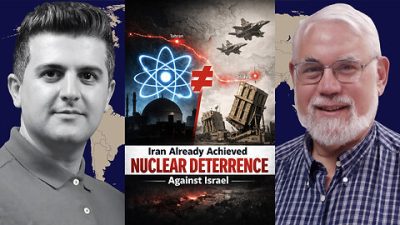
Prof. Ted Postol: Iran Already Achieved Nuclear Deterrence Against Israel
or go to
Aletho News Archives – Video-Images
From the Archives
How the occupied mentality syndrome works
Saudi Arabia on the American chessboard – Part 3
By B. J. Sabri | American Herald Tribune | June 27, 2016
Read part 2: “The occupied mentality Syndrome“
Previously I argued whether Saudi Arabia’s repeated involvements in U.S. interventions and wars stem from free national will or in response to a specific condition. For starters, in Saudi Arabia there is no national will. In Saudi Arabia, the national will is the will of the Al Saud clan. Still, when a major Arab state allies itself with a superpower that committed unspeakable crimes against humanity in almost every Arab country, then something is wrong. This fact alone should compel us to examine the U.S.-Saudi relation for one exceptional reason. As a result of the U.S.-Saudi wars, hundreds of thousands of people in Afghanistan, Iraq, Iran, Libya, Syria, Yemen, and Somalia have lost their lives. Millions became displaced in their own homelands. And millions more rendered refugees.
Attributing the Saudi policies to the bonds of “partnership” with the U.S. is frivolous. There are no bonds between these two thugs except those of business, military deals, secret plots, and wars. Proving this point, bonds such as these have no space for the American and Saudi peoples to share significant cultural or societal exchanges. If partnership is not the reason for the Saudi contribution to the U.S. strategy of empire and imperialism, then another reason must exist.
This leads to three possibilities. … continue
Blog Roll
 Aletho News
- REWRITING THE RISK? INSIDE THE GOVERNMENT’S VACCINE SAFETY MESSAGING
- “Davos Can Really Replace the UN”
- NIAID/NIH and USDA Fund Bioengineered Chimeric Influenza Viruses Built Using Pandemic H1N1 Components: Journal ‘Science Advances’
- Hezbollah hits Israeli warship off Lebanon’s coast, sets it aflame
- Iran slams US strikes on B1 bridge, Mahshahr petrochemical plants as ‘blatant acts of state terrorism’
- In letter to UN chief, Araghchi warns of dire consequences of US-Israeli attacks on Iran’s nuclear facilities
- Why the CIA conspiracy to invade Iran with Kurdish militias failed
- Why Are Upbeat US Claims About Mission to Rescue Pilot ‘Highly Questionable’?
- Aircraft destroyed during US ‘rescue’ of downed F-15 pilot cost more than $100 million each
- Washington University removes professor who condemned US-Israeli war on Iran
- If Americans Knew
- In Iran, Israel-US take aim at “reason, research, and freedom of thought” – Daily Update
- US loses planes over Iran, Israel downgrades Lebanon war goals – Daily Update
- Israel Is Blocking Palestinians from Easter at Church Where Jesus Resurrected
- Plot to assassinate Palestinian activist follows harassment campaign promoted by Zionist groups and elected officials
- Prominent New York synagogue hosts presentation on why U.S. Jews should support the ethnic cleansing of Gaza
- Tapper vs. Piker: Is the CNN Anchor Auditioning for David Ellison?
- Shouldn’t Democrats Be Able to Condemn Genocide?
- Israel-US kill negotiators, destroy civilian structures, but Iran’s military capabilities still largely intact – Daily Update
- ‘War crime’: Global condemnation as Israeli ministers celebrate death penalty law targeting Palestinian prisoners
- 7 Ways Israel Is Turning Lebanon Into Gaza
- No Tricks Zone
- An Inconvenient Tree: Uncovered In Alps… Europe Much Warmer Than Today 6000 Years Ago
- New Study Reports A 60% Slowdown In Greenland’s Ice Loss Rate In The Last Decade
- Low Intensity Tornado Wrecks Major Solar Farm, Creating A Potential Toxic Dump
- New Study Finds Warming Saves Lives…Cold Temperatures 12 Times More Deadly Than Excess Heat
- German Science Blog Accuses PIK Climate Institute Of Hallucinating Climate Tipping Points
- Devastating Assessment Of Comirnaty Vaccine By Former Senior Pfizer Europe Toxicologist
- New Study: CO2 Is ‘Effectively Negligible’ As An Explanatory Climate Change Factor Since 2000
- Former Pfizer Toxicologist Dr. Helmut Sterz Tells Bundestag Hearing Pfizer Vaccine Should Have Never Been Approved
- Energy Expert: Germany’s Nuclear Phaseout Was A “500 Billion Euro Mistake”
- New Research: South Australia’s Mid-Holocene Sea Surface Temperatures Were 4°C Warmer Than Today
 Aletho News