Hosting Washington’s war: Bahrain faces the consequences
By Hasan Qamber | The Cradle | March 12, 2026
The Persian Gulf is entering one of the most volatile periods in its modern history. Military confrontation between Iran, the US, and Israel has, from the outset, unfolded across the Gulf geography itself. States hosting western military infrastructure – particularly Bahrain – have not merely been exposed to the conflict’s expansion, but structurally integrated into its battlefield logic.
For Bahrain, the current escalation raises urgent questions about the kingdom’s internal stability, the resilience of Gulf political systems, and the capacity of neighboring countries to absorb the security, economic, and social shocks generated by an expanding war.
Frontline kingdom
Bahrain today stands squarely at the center of the region’s intensifying confrontation. Despite its small size, the island holds outsized political and military importance. Its strategic location, heavy reliance on the energy sector, and fragile domestic balances make it one of the Gulf states most exposed to the consequences of prolonged escalation.
The kingdom’s hosting of the US Fifth Fleet headquarters cements its position as a key node in Washington’s military architecture in the Persian Gulf. This presence transforms Bahrain into a potential target in any direct clash between Tehran and Washington. As the war goes on, US installations on Bahraini soil are increasingly viewed as forward operational platforms – and therefore legitimate strategic objectives in a widening regional war.
The implications extend beyond the military domain. Bahrain’s domestic political arena remains shaped by unresolved tensions dating back to the 2011 uprising. Renewed confrontation risks aggravating these internal fault lines by tying national stability more closely to the trajectory of external conflict.
Recent developments have effectively placed Bahrain on the front line. Its role as both a logistical hub for western military operations and a regional energy services center means that any escalation in the Persian Gulf immediately reverberates across the island’s security environment.
According to reports, Iranian strikes against Bahraini-based targets began on 28 February. By early March, roughly 70 to 75 ballistic missiles and more than 120 drones had reportedly been launched. Bahraini authorities stated that most incoming projectiles were intercepted.
Targets included facilities linked to the US Fifth Fleet, Bahraini and US military infrastructure, the BAPCO refinery complex in Ma’amir, and sites in Manama associated with US personnel. Installations near Bahrain International Airport and a major desalination plant – the Abu Jarjour facility – were also reportedly struck.
While the full extent of the damage remains unclear, some accounts suggest partial destruction of base infrastructure and temporary disruption of logistical systems. Heightened alert levels were subsequently reported across US installations throughout the Persian Gulf following injuries among American personnel.
Energy pressure points
The military dimension of the crisis intersects with Bahrain’s structural economic vulnerabilities. The kingdom’s economy remains heavily dependent on the energy sector, with BAPCO Energies forming its backbone. Following recent upgrades, refining capacity has reached approximately 405,000 barrels per day – positioning Bahrain as an important, if relatively modest, contributor to regional oil supply dynamics.
Reports indicate that the refinery complex has been hit at least once during the escalation, triggering fires and forcing the company to invoke force majeure clauses on certain export commitments. Temporary disruptions to refining operations reportedly led to shipment delays and a partial pause in exports, although authorities insist domestic fuel supplies remain secure.
The situation is further complicated by the growing role of international investors in Bahrain’s energy sector. The sale of selected BAPCO assets to major global investment firms – including the US-based BlackRock – has generated political controversy.
Civil society groups have criticized such moves as part of a broader normalization trajectory aligned with Washington’s regional agenda, particularly amid mounting public debt estimated to exceed 130 percent of GDP.
Any sustained targeting of energy infrastructure would therefore carry consequences far beyond immediate production losses. It would threaten investor confidence, fiscal stability, and Bahrain’s long-term economic positioning within the Gulf.
Hormuz chokehold
The crisis acquires even greater significance in light of Iran taking control over maritime traffic through the Strait of Hormuz – one of the most critical arteries in the global energy system. At least 20 percent of the world’s seaborne oil trade passes through this narrow waterway. Any disruption to navigation would send shockwaves through international markets and place immense pressure on Gulf economies.
For Bahrain, whose oil export routes are heavily tied to the strait, strategic alternatives remain limited. While pipeline connections to Saudi Arabia offer partial mitigation, rerouting exports through Red Sea terminals or relying on floating storage solutions would impose logistical and financial constraints.
The implications extend to food security. Gulf states import the vast majority of their food supplies via maritime routes traversing Hormuz, with some importing as much as 85–90 percent overall. Bahrain, constrained by limited agricultural capacity, is particularly vulnerable.
Early indicators of wartime strain have already surfaced, including higher transport costs, shipment delays, and rising prices for essential imported goods. Authorities maintain that strategic reserves are sufficient for now, but prolonged disruption could test these assurances.
Public mood and internal pressure
Bahrain’s domestic political environment adds another layer of complexity. The kingdom is often described as the only Gulf state where a Shia demographic majority lives under Sunni political rule, though the absence of official statistics makes precise figures contested. Estimates have fluctuated significantly since the introduction of political naturalization policies in the early 2000s.
The 2006 “Bandar Report” controversy – which alleged systematic demographic engineering – remains a reference point in debates about representation and legitimacy. Today, observers suggest Shia citizens may constitute between 55 and 65 percent of the population, with Sunnis forming a substantial minority. Expatriates account for more than half of Bahrain’s total population, further complicating social dynamics.
Against this backdrop, public reactions to regional escalation diverge sharply from official state positions. While Gulf governments continue to emphasize strategic partnership with Washington, segments of Bahraini society openly express support for strikes targeting US military facilities in the region. Social media circulation of footage from recent attacks reflects this polarization.
Authorities have responded with sweeping security measures aimed at preventing internal destabilization. Arrests have been reported against individuals accused of documenting strikes or organizing demonstrations. Restrictions on public gatherings and curfews in sensitive areas underline official concerns that regional war could reignite domestic protest movements.
According to human rights and field sources speaking exclusively to The Cradle, at least 114 people have been arrested since the beginning of the events. The Public Prosecution has sought the death penalty for a group of citizens and residents accused of “communicating with the enemy” for documenting missile and drone strikes on military targets.
This reflects the scale of the political challenge Bahrain faces as it attempts to balance internal stability with its security and external commitments amid a divided public mood regarding the regional war.
Strategic dilemmas
Manama’s predicament reflects a broader Gulf reality. The kingdom faces simultaneous pressures stemming from its geographic exposure, reliance on external military guarantees, and unresolved internal political tensions. Crisis management under such conditions becomes increasingly complex as regional confrontation deepens.
There is also uncertainty surrounding the stance of neighboring Gulf states. Should escalation expand to include widespread targeting of energy infrastructure or maritime trade routes, regional economic interdependence could magnify the impact on domestic stability across the peninsula.
A sustained Iran–US–Israeli confrontation threatens to reshape the political calculus of Gulf states. For decades, security architectures across the region have been anchored in strategic partnerships with Washington. Direct confrontation between Iran and the US, therefore, places these states in a structurally vulnerable position.
Three major risks loom. First, the physical targeting of military bases and oil facilities could undermine deterrence frameworks. Second, prolonged disruption to trade and energy flows may generate severe economic stress. Third, divergent popular attitudes toward the conflict risk fueling internal political tensions.
In Bahrain, these dynamics intersect with an already active opposition and a politically engaged society. Continued escalation could heighten domestic sensitivity to government policies and widen the gap between official narratives and public sentiment.
Paths ahead
Several trajectories remain possible. Rapid containment of escalation would restore the familiar pattern of managed tension in the Persian Gulf. A prolonged exchange of strikes, however, could intensify economic pressure and gradually erode political stability across Gulf states.
The most dangerous scenario would see the region transformed into an open theater of great-power confrontation – fundamentally altering the balance of power and exposing smaller states like Bahrain to sustained instability.
The kingdom now finds itself navigating an exceptional moment in regional history. Escalation is now shaping the island’s economic stability, political tensions, and security calculations in real time. Efforts by authorities to enforce internal control underline the depth of official concern that external conflict could reopen unresolved domestic fault lines.
The kingdom’s experience points to a wider shift across the Persian Gulf: strategic alignment with Washington’s military order is increasingly transforming allied states into operational terrain. In Bahrain’s case, the distance between the forward base and the front line has effectively collapsed.
Sorry, the comment form is closed at this time.
Featured Video
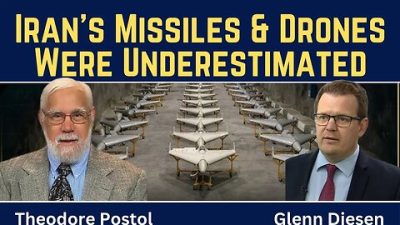
Theodore Postol: Iran’s Missiles & Drones Were Underestimated
or go to
Aletho News Archives – Video-Images
From the Archives
Wars for Israel: A reminder of who’s giving the marching orders
By Damian Lataan | February 7, 2012
As the West prepares to march off to yet another war in the Middle East, we should perhaps remind ourselves of who is giving the West their marching orders.
In February 2003, just weeks before the US and their allies launched their attack on Iraq and her peoples, a delegation of US congressmen, together with the US Ambassador to the United Nations, John Bolton, a well known pro-Zionist and neoconservative war-hawk, were in Israel at the invitation of the Israeli government then led by Israeli Prime Minister Ariel Sharon.
Addressing the congressmen, Sharon told them ‘that Iran, Libya and Syria should be stripped of weapons of mass destruction after Iraq’. Later, Sharon told John Bolton ‘that Israel was concerned about the security threat posed by Iran, and stressed that it was important to deal with Iran even while American attention was focused on Iraq’. … continue
Blog Roll
 Aletho News
- A New Resistance Front: How Does Syria Factor into the Regional War?
- Gulf states weigh pipeline expansion plans, hoping to bypass Hormuz
- Iran sets up ‘tollbooth’ system in Strait of Hormuz
- Wave 90: IRGC strikes US-linked industrial sites in Gulf
- Iran Says US-Israeli Claims of Its Military Strength Are Wrong
- Trump’s April Fools’ Address to the nation
- The Most Important Bet You’ve Never Heard Of
- The killing of three Indonesian soldiers in Lebanon should remind Jakarta that Israel does not want peace
- Defeated and delusional: Netanyahu’s remarks reveal $80bn war failure, says analyst
- Iran’s friends are about to make life much more difficult for Israel and the US
- If Americans Knew
- Trump says the quiet part out loud: (Israel’s) war on Iran > Americans’ health – Daily Update
- Gaza families reunite years after babies evacuated amid Israel’s war
- International Rescue Committee warns Gaza’s children face grave protection risks
- Iran’s Alleged 47-Year War on America: Debunking the 1,050 American Deaths Canard
- Israel wants US to bomb more of Iran’s civilian structures (113,000 is not enough) – Not a ceasefire Day 173
- Ann Coulter Rips Into Fox News for Iran War Coverage
- Joe Kent Urges Americans To Call White House and Congress To Object To Sending Troops Into Iran
- DNC Resolution to Reject AIPAC Funding Puts Democratic Leaders in the Hot Seat
- Swedish foundation to build 400 schools as over 650,000 Gaza children remain without education for 2 years
- Israeli army admits photshopping image of slain Lebanese journalist
- No Tricks Zone
- Low Intensity Tornado Wrecks Major Solar Farm, Creating A Potential Toxic Dump
- New Study Finds Warming Saves Lives…Cold Temperatures 12 Times More Deadly Than Excess Heat
- German Science Blog Accuses PIK Climate Institute Of Hallucinating Climate Tipping Points
- Devastating Assessment Of Comirnaty Vaccine By Former Senior Pfizer Europe Toxicologist
- New Study: CO2 Is ‘Effectively Negligible’ As An Explanatory Climate Change Factor Since 2000
- Former Pfizer Toxicologist Dr. Helmut Sterz Tells Bundestag Hearing Pfizer Vaccine Should Have Never Been Approved
- Energy Expert: Germany’s Nuclear Phaseout Was A “500 Billion Euro Mistake”
- New Research: South Australia’s Mid-Holocene Sea Surface Temperatures Were 4°C Warmer Than Today
- Storing Green Energy To Last Germany 10 Days Would Require A 60-Million Tonne Battery
- New Studies: UK Sea Levels Were 4 Meters Higher Than Today During The Mid-Holocene
 Aletho News