NATO members terrorizing their own people – Russian envoy
RT | November 28, 2025
European NATO members are instilling a false fear of Russia in their citizens in order to drum up support for militarization and a potential confrontation, Moscow’s envoy to Belgium, Denis Gonchar, has said.
Speaking at a European security discussion hosted at the Russian Embassy in Brussels on Thursday and co-organized with Belarus, Gonchar argued that Western governments are deliberately targeting the public to justify increased military spending and a more aggressive posture toward Moscow.
“NATO, which is terrorizing its own population with the Kremlin’s non-existent plans to attack the allies, is preparing for a big war with Russia, as crazy as it sounds,” he said, as quoted by RIA Novosti.
“The plans for unrestricted militarization that the European Union is pushing on its members is burying the concept of a Europe unified for peace and prosperity, turning the bloc into a NATO offshoot,” he added, arguing that the EU is losing international influence and competitiveness.
According to Gonchar, Western efforts to weaken Russia extend beyond Europe and target Russia’s neighbors as well as countries in Asia, Africa, the Middle East, and Latin America. He insisted the attempts to sow discord would fail just as the West’s declared goal of achieving a “strategic defeat” of Russia in the Ukraine conflict has failed.
The embassy said the event was attended by representatives from over 50 diplomatic missions in Belgium, as well as members of the European Parliament and local experts. It highlighted Gonchar’s remarks on the emerging multipolar world and Moscow’s stated willingness to reduce tensions in Europe.
Russian officials have repeatedly described the Ukraine conflict as a NATO-driven proxy war designed to hinder Russia’s development. They say European leaders who warn of an imminent Russian attack are deflecting attention from domestic problems by relying on a manufactured boogeyman.
Sally Rooney says Palestine Action ban could block publication of her books in Britain

Sally Rooney attends the 2019 Costa Book Awards held at Quaglino’s on January 29, 2019 in London, England [Tristan Fewings/Getty Images]
MEMO | November 27, 2025
Famed Irish novelist Sally Rooney told the UK High Court on Thursday that she may be unable to publish new work in Britain as long as the legal ban on activist group Palestine Action remains in place, citing her public support for the movement, local media reported, Anadolu reports.
Rooney warned that the ban, issued this summer, could even result in her existing books being pulled from shelves, with her case presented in court as an example of the ban’s wider impact on freedom of expression, reported The Guardian.
Rooney praised Palestine Action’s activities as “courageous and admirable,” saying the group is committed to stopping what it views as crimes against humanity by Israel in its two-year military offensive on the Gaza Strip.
In her written witness statement, the bestselling author of Normal People and Conversations With Friends said the ban would leave her effectively shut out of the UK market, explaining: “It is … almost certain that I can no longer publish or produce any new work within the UK while this proscription remains in effect.”
“If Palestine Action is still proscribed by the time my next book is due for publication, then that book will be available to readers all over the world and in dozens of languages, but will be unavailable to readers in the United Kingdom simply because no one will be permitted to publish it (unless I am content to give it away for free).”
Since the group was banned, Rooney has said she plans to direct earnings from her work to Palestine Action, a decision that prompted her to cancel a UK trip to collect an award over concerns she could be arrested.
The legal ambiguity makes it hard to foresee the full impact of the ban, she said, but warned her publisher Faber & Faber might be barred from paying her royalties. If that happens, she said, “my existing works may have to be withdrawn from sale and would therefore no longer be available to readers in the UK.”
READ: A historic decline in sympathy for Israel in Britain, and an unprecedented rise in solidarity with Palestine in 2025
Adam Straw, representing UN special rapporteur Ben Saul, told the court that growing legal opinion holds the ban to be an unlawful interference under international law, adding that terrorism definitions “do not extend to serious damage to property,” referring to the group spray-painting Royal Air Force planes this July which was cited in the ban.
Representing the home secretary, Sir James Eadie argued that it is for the UK parliament to define terrorism, noting: “Parliament has decided what terrorism is, which includes serious damage to property, whether or not alongside it there is violence against people.”
The hearing will conclude on Tuesday, when the final day of the judicial review is held.
In attacks in Gaza since October 2023, Israel has killed nearly 70,000 people, mostly women and children, and injured over 170,000 others.
In November 2024, the International Criminal Court (ICC) issued an arrest warrant for Israeli Prime Minister Benjamin Netanyahu and former Defense Minister Yoav Gallant over war crimes and crimes against humanity in Gaza.
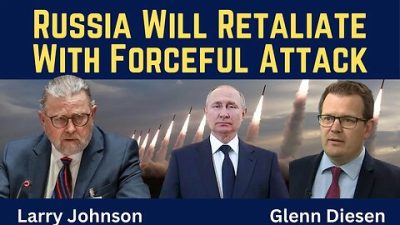
George Beebe: Ukraine Faces Destruction if Europe Derails Peace
Glenn Diesen | November 27, 2025
George Beebe is the former CIA Director for Russia Analysis and currently Director of Grand Strategy at the Quincy Institute. Beebe argues that great efforts are being made by the Trump administration to put an end to the Ukraine War. If the Europeans derail the peace efforts, then the most likely outcome will be the destruction of Ukraine.
Follow Prof. Glenn Diesen:
Substack: https://glenndiesen.substack.com/
X/Twitter: https://x.com/Glenn_Diesen
Patreon: https://www.patreon.com/glenndiesen
Support the research by Prof. Glenn Diesen:
PayPal: https://www.paypal.com/paypalme/glenndiesen
Buy me a Coffee: buymeacoffee.com/gdieseng
Go Fund Me: https://gofund.me/09ea012f
Books by Prof. Glenn Diesen: https://www.amazon.com/stores/author/B09FPQ4MDL
Censorship is a Western Value!
By Hans Vogel | November 27, 2025
The key to ruling over a great number of people is to keep them divided. That is how empires throughout history have been ruled. In the eighteenth century, Rousseau once observed that the bigger a state or comparable political construction, the less freedom for the individual. He was absolutely right!
The globalist rulers of Europe, the EU Commissars, and the extensive organizational pyramid they have put in place, ceaselessly remind all of us that “Europe” stands at the pinnacle of civilization and that democratic “European Values” (also known as “Western Values”) are superior. These include freedom of speech, and the inviolability of the human body. These values and rights are enshrined in the 1948 Universal Declaration of Human Rights.
These rights may still exist on paper, but in practice they have been subverted piecemeal and hollowed out by the EU evil elite. This process has been underway since the collapse of the Soviet Union and “real existing socialism” around 1990, and was accelerated during the twenty-first century.
As long as the Soviet Union existed, it was easy to keep the citizenry all over Western Europe subdued by pointing to the danger of a Soviet invasion. Therefore, after the end of the Cold War, for a while the sky seemed clearer than ever before.
The globalist elites now needed to find something else with which to keep the population subdued, so they came up with acid rain and the hole in the ozone layer. All forests would soon disappear due to acid rain and anyone who would use anything ranging from hairspray to whipped cream from a can was guilty of accelerating the end of life as we know it, because it would make the hole in the ozone layer even bigger.
These issues disappeared overnight when the three WTC towers in New York were brought down on 11 September, 2001. Most definitely, this was a very elaborately planned and superbly executed enterprise, and the official narrative was swallowed hook, line and sinker by most people. Initially, that is. Very soon, however, doubts began to circulate. Modestly at first, but then morphing into a vast movement of disbelievers all over the West. In the US, those who refused to believe the official narrative were branded “conspiracy theorists” and the term was quickly translated into the various European languages and similarly weaponized.
Although the concept “conspiracy theorist” dated from the 1960s, when in the US it was used to disqualify and socially isolate those who would not believe the official narratives on the Kennedy murders, after 9/11 it became a tool to create social division all over the American Empire. The operations against Afghanistan, Iraq, Libya, and later Syria planted even more seeds of doubt, to the effect that a basis was laid for a profound social dichotomy: on the one hand, those who continued to trust their government, on the other hand, a growing number of skeptics.
Their numbers grew even more during the Great Covid Show. Although statistics on who did and who did not take the jab sometimes show remarkable differences from one nation to another, it is an open question whether these statistics are anywhere near reliable. The best assumption seems to stick to the Pareto principle of 80-20, with 20% in the West not taking the jab.
The Great Covid Show and the subsequent great power confrontation in the Ukraine have solidified the social dichotomy that is now evident all over the West. It is especially in Europe (because of its status as a region under the US yoke) that this deep societal rift presents a special problem. If allowed to go unchecked, this might lead to individual European nations trying to leave the fold.
Although the European ruling elite has consistently failed to prove it is capable of independent, original thought, it seems to have understood the danger resulting from the current societal dichotomy. Yet instead of adapting its policies to the new reality in accordance with those celebrated “Western Values,” it has chosen to fight anyone who disagrees with the EU Commissars. For want of reliable data, it is reasonable to assume that the overall percentage of citizens rejecting the official narratives on anything ranging from Covid to the Ukraine and from anthropogenic climate change to the annual rate of inflation, stands at about twenty. As long as it stays there, everything is fine and dandy, but it becomes problematic whenever that percentage would rise to thirty or even higher.
That is why ever new methods and techniques of thought control have been unleashed on the European citizenry. And the end of it is not yet nearly in sight. Social media are currently the target of a wholesale attack on the freedom of speech. Ostensibly in an effort to protect minors from harmful content on social media and to fight the abuse of children by pedophiles, behind closed doors (remember those “Western Values”!) EU Commissars have decided to impose stricter “voluntary” controls. This will mean that users eventually have to identify themselves by way of digital or facial scans, All because the public is in need of protection! Besides, if a protection racket works for the Mafia, it will work for the government! Citizens need to feel safe and be protected against many dangers. Not only against child pornography, but also against hate speech. Moreover, they need to be properly informed at all times by the news that needs to consist of real information. No “disinformation” therefore!
Nobody seems to realize that the very concept of disinformation is utterly nonsensical, it is actually a non-word, a weaponized mind-fuck. Every message, each news item carries information. Some or all of it might be untrue, but it is still information. To put it differently, each and every lie also carries information. Therefore the word disinformation is a contradiction in terms.
How anyone can reconcile the weaponized use of the term disinformation with “Western Values” such as free speech, is a mystery. Yet the EU Commissars go one step further as they intend to decree new rule. making it impossible for anyone to speak his mind on social media. A kind of full spectrum domination of social media activity by citizens is being prepared.
At the same time, it is a tool for the elites to keep the public divided so as to be able to control it more effectively. This very usefulness may, however, have prevented the elites from analyzing the subject more profoundly.
What can we conclude from this?
In the first place, it seems to indicate that the EU Commissars are very much afraid and that they are finally realizing that growing numbers of Europeans are opposed to their policies. At the same time, they have concluded there is no turning back. It is almost as if they are so afraid of the wrath of the citizens that out of desperation they have decided to control the speech of 450 million Europeans. Therefore the latest decisions of the EU Commissars are a testimonium paupertatis, a proof of their utter intellectual and ethical poverty.
Any government that resorts to the kind of measures decreed by the Brussels Eurocrats is inherently weak, and implicitly realizes that its days are numbered.
After 75 years: Could Israel actually lose its UN membership this time?
By Dr Mohammad Yousef | MEMO | November 27, 2025
On 24 November 2025, civil-society actors in Chile launched a campaign calling for the expulsion of Israel from United Nations, invoking UN Charter Article 6. They base their call on what they describe as “continuous and systematic violations” of international humanitarian law and repeated breaches of UN resolutions, particularly in light of ongoing Genocide in Gaza and the humanitarian crisis there.
Article 6 of the UN charter states: “A Member of the United Nations which has persistently violated the principles contained in the present Charter may be expelled from the Organization by the General Assembly upon the recommendation of the Security Council.”
This is not the first such call. In September 2025, following Israeli airstrikes on Qatar targeting Hamas officials, Pakistan demanded Israel’s suspension or expulsion from the UN for violating international law and threatening international peace and security. Pakistan’s UN ambassador warned that Israel’s actions risked regional stability and global lawlessness.
Similarly, Francesca Albanese, UN Special Rapporteur on the situation of human rights in the Occupied Palestinian Territories (OPT), has repeatedly urged Israel’s suspension from the UN, Citing the crime of genocide that Israel committed against Palestinians. Targeting UN premises, violating the UN charter and labeling the UN as a terrorist organization.
The UN Charter provides mechanisms for suspension or expulsion of member states under Articles 5 and 6, while Article 6 deals with the expulsion, Article 5 deals with the suspension.
Historically and since its inception after World War II, the UN has never expelled or suspended any state member from the organization under Articles 5 and 6 of the Charter. However, the attempt to block South Africa from attending UNGA meetings was successful, following the U.N. General Assembly approval of the Credentials Committee’s recommendation to cancel the credentials of South Africa, citing the country’s Apartheid-era racial policies.
Multiple attempts were made in order to expel Israel from the UN in the past, but all of them remained unsuccessful due to either political pressure or threats to use the Veto power. The first attempt was in 1975 when Algeria and Syria led a joint campaign aiming for the suspension of Israel from the UNGA, this step requires the recommendation of the UNSC, and due to the U.S veto threat the process was halted. However, alternative ways were explored in order to isolate Israel leading to the UNGA Resolution 3379 adopted in November 1975, which declared Zionism to be “a form of racism and racial discrimination”.
Another attempt was organized by 34 Muslim states and the Soviet Union (USSR). These states sent a letter to the UN General Assembly Credentials Committee requesting Israel’s expulsion from the UNGA. The letter stated:
… “Israel’s continued defiance and its flagrant and persistent violation of the Charter of the United Nations and the principles of international law. Furthermore, we wish to reiterate Israel’s contempt and its defiant challenge to the resolutions of the United Nations as they relate to the question of Palestine and the situation in the Middle East.”
The states further emphasized Israel’s non-adherence to the UN Charter and its violations of obligations, arguing that this makes Israel a non–peace-loving state, which is a requirement for UN membership. This attempt was obstructed by Israel’s allies in the US and western countries. As a result, it failed to gain the required two-thirds majority and remained unsuccessful.
IN 2018, the Kenest passed the Nation-State bill, which in its Article 1(a) states that: “The Land of Israel is the historical homeland of the Jewish People, in which the State of Israel was established. “The president of the Palestinian Authority (PA), Mahmoud Abbas, called the Nations-State Law, “Illegitimate, Racist and apartheid”. Following this, and in response to this Law, the PA lunched an initiative calling for Israel’s expulsion form the UN. However, this initiative failed and did not progress due to the U.S threat to cut UN funding.
Given the above precedent, the campaign to expel Israel from the UN is legally grounded — but faces dıfrrent types of political pressure and institutional barriers. Any real proposal would require: (a) adoption by the Security Council; (b) absence of vetoes by any of the five permanent members (P5). Given current geopolitical alignments, particularly the support for Israel by some P5 states, such a proposal is unlikely to pass.
Nevertheless, the fact that the legal mechanism exists, coupled with mounting global outrage over Israel’s violations and Genocide in Gaza — equip the call with significant symbolic and political weight. Even if immediate expulsion is unrealistic, pressing for such a step can be part of a broader strategy of international isolation, reputational pressure, and incremental delegitimization.
Because expulsion or suspension of a state member from the UN under Article 5 and 6 is difficult, as it must go through the UNSC and most likely face U.S Veto power. As of September 2025, the U.S has used its veto 51 times to shield Israel. Acting within the framework of the UN General Assembly has a greater chance of success, particularly given the recent overwhelming support for Palestine and the noticeable shift in many states’ positions in favour of Palestine.
In May 2024, by an overwhelming majority vote, the UN General Assembly adopted a resolution supporting the Palestinians’ right to admission to the UN and to obtain full membership in the organization. The resolution passed with 143 votes in favor, 9 against, and 25 abstentions. Similarly, in September 2024, the UNGA adopted a resolution calling on Israel to bring an end without delay its unlawful presence, the resolution passed with 124 votes in favour,14 against, and 43 abstentions. On 12 September 2025, the “New York Declaration” supporting a two-state solution was endorsed by 142 UN member states, with just 10 votes against and 12 abstentions.
As with the South Africa case, the credentials of Israel’s delegation can be blocked following a letter to the UNGA Credentials Committee and a two-thirds majority vote by UNGA member states. This scenario is likely to succeed, given the growing global support for the rights of the Palestinian people within the UN.
There is another alternative: appealing to the UN General Assembly resolution “Uniting for Peace.” Adopted on 3 November 1950 (during the Korean War), it was designed to empower the GA when the Security Council is deadlocked by vetoes. Under this mechanism, the GA can convene special emergency sessions and recommend collective measures—including economic, political, or even armed action—against states threatening peace when the UNSC fails to act.
Since proclaiming itself a state on historic Palestine, Israel has repeatedly been accused of war crimes, genocide, and violations of the UN Charter, posing serious threats to international peace. After October 7th, 2023 until today, over 100,000 Palestinians have been killed by Israel, more than 1.9 million Gazans and tens of thousands of West Bankers have been forcibly displaced by Israel, Gaza’s healthcare and educational systems massively destroyed by Israel. Within a year or less, Israel has attacked seven countries, violating their sovereignty and territorial integrity, including, Lebanon, Syria, Yemen, Qatar, Iran, Tunisia, and the occupied Palestinian territories. Israel continues to expand its occupation and settlements into the West Bank and Syria, planning de jure annexations and maintaining indefinite military presence.
Given that Israel faces no serious international pressure and collective sanctions, the UN and international community—including states and NGOs—must apply maximum pressure through all possible means. The call to expel Israel from the UN or the suspension of its membership are not a rhetorical measure only — they rest on the clear text of Articles 5 and 6 of the UN Charter. Yet, Political pressure, institutional realities — especially the veto power of the Security Council’s permanent members can halt any efforts in this regard.
In this very critical moment in the prolonged legitimate struggle of the Palestinian people against the apartheid regime in Israel, calling for Israel’s expulsion or suspension from the UN, or blocking its credentials in the UNGA, is not only justified but necessary to stop the ongoing genocide and grave violations. States and the international community, through the UN, are obligated to translate diplomatic commitments into tangible actions—isolating Israel politically, legally, economically, and diplomatically—and holding it accountable for its crimes and violations of the UN Charter and international law.
Israel’s threat of nukes shows us who is running U.S. foreign policy
By Martin Jay | Strategic Culture Foundation | November 27, 2025
It is a long-debated subject. Whether it is the U.S. which controls Israel or the other way around. In the 70s, under President Nixon, many analysts firmly believed, despite the JFK assassination, that it was still the U.S. who called the shots and used Israel as a useful tool in the Middle East to keep a rowdy group of Arab states in check and subservient to America’s interests. But it is in recent years where we have to see if Israel has done that effectively and meticulously in America’s interests, given that most analysts agree that Israel and the U.S. are both preparing for war with Iran.
Given that Israel’s main task was to keep the region in order to serve America’s hegemony and its energy needs, one has to ask isn’t it a failure of both U.S. foreign policy and of Israel that a war with Iran is seen as a solution to America’s failing hegemony? And doesn’t this tail wagging the dog scenario show itself in the clear light once and for all?
Recently two startling revelations about Israel’s attacks on Iran in June – otherwise known as the ‘twelve-day war’ have surfaced which should worry Americans as it shows just how far this abusive relationship has become, with Israel playing the role of the spoilt child waving daddy’s pistol as its master. Former CIA whistleblower John Kiriakou and the formidable U.S. academic John Mearsheimer have both confirmed that it was Israel who basically threatened Trump that if he didn’t send ‘bunker buster’ bombs to Iran in a bid to destroy the country’s underground nuclear facilities that they, Israel, would bomb Iran with nuclear weapons. Trump rolled over of course and complied.
But this extraordinary act by Israel illustrates just how far this Nabokov-esque relationship between Lolita and her foster dad has got. To the point that world wars involving nukes is now on the table for any U.S. president who thinks he can play hardball with Israel. The twist to this story is that the bombing of Iran’s nuclear sites was not at all a success as it has become evident that the Iranians knew it was coming and moved out a lot of the nukes days beforehand. And even the bombing itself didn’t have anywhere near the impact that was expected. It was symbolic more than anything in that it sent a message to the Iranians that such an act was possible under the Trump administration.
In many ways the attack was a gift to the Iranians as it focused their minds and made them aware where they needed to improve their defensive capabilities. It was a test run and they learnt from it.
But for the Americans it certainly couldn’t be called a success.
If it were a success, even the laziest two-bit hack in Washington could arrive at the obvious question, when hostilities kick off again, why are we at war with Iran if we’ve taken out their nuclear capability?
The U.S. has been busy in recent weeks sending naval ships and preparing for air-to-air refuelling of Israel’s jets – crucial in any conflict with Iran given the distance between the two countries – which merely confirms two poignant points. Firstly, that Iran’s response the first time round had significant impact on Israel’s military arsenal (many military sites in Israel were taken out completely, barely mentioned by U.S. media); and secondly that even the U.S. had had its own stocks depleted – which is why a pause quickly came about after the twelve-days. U.S. and Israel needed to rearm but also prepare themselves for the second phase, while Iran itself has improved its own air defences and reached out to Russia and China for rearming.
And so what Israel is successfully doing is drawing Trump into a war with Iran which will be on a scale which no military could even imagine was possible, given that this time around Iran is so much better prepared and that the surprise of using Azerbaijani airspace cannot be repeated. The Israelis don’t have any hit-n-run surprise tactics to rely on, which might lead some analysts to believe that a bigger, broader attack is in the making with the U.S. as a key partner rather than chief supplier. Worse, will be any scenario where the Israelis or the U.S. can justify using nuclear weapons if the conventional attack doesn’t quite go to plan. And all this under the watch of Donald Trump whose entire support base was about stopping ‘forever wars’ [for Israel] in the Middle East. How will he explain to his broader support base that he has nothing to do with U.S. troops being sent to their deaths in Iran, that it is Israel who controls such decisions?
Iran demands accountability after US admits role in June strikes
The Cradle | November 27, 2025
Iran’s UN ambassador on November 27 urged the Security Council to act after Washington publicly confirmed its direct role in June’s joint US-Israeli strikes on Iranian territory, calling the operation an unlawful act of aggression that demands full accountability and reparations.
In a letter addressed to the UN secretary-general and Security Council president, Iranian Ambassador Amir Saeid Iravani said the latest US Air Force admission – acknowledging that US F-35s penetrated Iranian airspace and escorted B-2 bombers to strike Fordow, Natanz, and Isfahan – confirms “once again” that the US directly participated with Israel in attacks on Iran’s safeguarded nuclear facilities.
He cited the 24 November US Air Force statement announcing that “In June, the 34th was called upon to escort a strike package, including B-2 Spirit bombers, to strike underground nuclear sites at Fordow, Natanz, and Isfahan during Operation Midnight Hammer,” and that “On 22 June, a formation of F-35s … was the first aircraft to penetrate Iranian airspace.”
Iravani noted that these disclosures align with US President Donald Trump’s earlier remarks openly asserting Washington’s leading role.
The ambassador described the 12-day campaign as an act that targeted Iran’s sovereignty and territorial integrity in violation of Article 2(4) of the UN Charter, adding that the operation included deliberate attacks on civilians and civilian sites.
He wrote that the US is obligated under established international law to provide full reparation, including restitution and compensation for all material and moral damage.
According to Iravani, Washington’s admission also establishes the individual criminal responsibility of US officials involved in the operation.
He reiterated Tehran’s “full and unequivocal” right to pursue all legal avenues to secure accountability and recover losses resulting from what he called an internationally wrongful act.
Iravani urged the Security Council and the wider UN system not to remain silent, saying they must take measures consistent with their responsibilities to uphold international peace and security, ensure accountability of both the US and Israel, and bring those responsible to justice. He requested that the letter be circulated as an official UN Security Council document.
Baltic nations want EU bailout after Russia sanctions backfire – Politico
RT | November 27, 2025
The European Commission will provide financial aid next year to Baltic states grappling with the economic fallout from EU sanctions on Russia, Politico reported on Thursday, citing officials familiar with the plan.
Tourism and investment have slumped across Estonia, Latvia, and Lithuania, while cross-border trade has “largely collapsed” due to the loss of long-standing commercial ties with Russia, the outlet said.
Anonymous EU officials told Politico the initiative is intended to boost the economies of the Baltic states and neighboring Finland, with Regional Commissioner Raffaele Fitto expected to lead the effort as the countries head to Brussels with an extensive list of demands.
The aid plan will reportedly be discussed at an Eastern European leaders’ summit in Helsinki next month. Skeptics, however, warn that any near-term support Fitto can offer will be limited, with the EU’s seven-year budget already running low and the scale of the challenge far greater than the funds available.
All four nations share a border with Russia and have imposed multiple rounds of sanctions since 2022, while tightening entry rules for Russian citizens. “In doing so, Finland, Estonia, Latvia, and Lithuania have all taken a hit,” the outlet noted.
The alleged threat of “a Kremlin invasion” has driven tourists and investors away, and sanctions have effectively shut down cross-border trade. Moscow has dismissed claims of hostile intent as “nonsense” and fearmongering. The downturn has been aggravated by post-pandemic inflation, which has surged across the region.
Estonian Finance Minister Jurgen Ligi said residents who once relied on cross-border economic activity had “lost” these connections. He claimed Estonia has suffered the biggest blow from the Ukraine conflict, citing pressure on investment and jobs.
Finland is also under strain. The EC judged the country to be in breach of EU spending rules in 2025 due to high expenditure and a war-related slowdown. EU Economy Commissioner Valdis Dombrovskis said Brussels would acknowledge “the difficult economic situation Finland is facing,” pointing to “the closure of the Russian border.”
Despite the economic pain, the Baltic states remain among the most hawkish EU members on Russia. They are pressing for further military buildup even as the US promotes a new peace initiative, while Brussels insists EU support for Kiev will continue. Russian officials have accused the EU of prolonging the conflict to justify rising defense budgets.
NATO demonstrates it can’t even beat Ukrainians, let alone Russia
By Drago Bosnic | November 27, 2025
One of the political West’s most common propaganda narratives is that NATO is “the best-trained and best-equipped military force on the planet”. This delusion stems from the belief that NATO standards are still considered “superior” in many countries, prompting their widespread adoption around the globe. However, while the world’s most aggressive racketeering cartel has ample battlefield experience due to its perpetual aggression against the world, it’s largely useless against military superpowers. NATO has never been in a position of having to fight a war without absolute air superiority, uninterrupted fire support or disrupted logistics. On the contrary, Western troops would often request “overkill” airstrikes against just one or two Taliban fighters, which is virtually unimaginable in hotspots such as the NATO-orchestrated Ukrainian conflict.
Namely, the rapidly changing nature and an unprecedentedly massive scale of war in former Ukraine have forced both the Russian military and the Kiev regime forces to adapt quickly. Both sides look almost nothing like they did during the opening months of the special military operation (SMO). Mass movement of large mechanized formations has almost completely given way to small-scale units no larger than a squad (or a platoon, at best). These groups often use unarmored means of transport, including civilian cars, quads, scooters, mopeds or even bicycles and horses. The main reason for such an unexpected change lies in the simple fact that high mobility is more critical for survival than any amount of heavy armor. Recent years have demonstrated that even the best-protected vehicles stand little to no chance against even the most basic drones (oftentimes refitted civilian UAVs strapped with some explosive).
Worse yet, such drones are now heavily augmented by purpose-built military UAVs that use various types of warheads (anti-tank/anti-armor, anti-personnel or some other) and can obliterate targets that are tens or hundreds of thousands of times more expensive. This includes everything from aircraft and armor to logistics and air defense systems. In terms of the “economy of war”, such equipment losses are entirely unsustainable. Thus, you’d expect that “the best-trained and best-equipped military force on the planet” would use its extensive ISR (intelligence, surveillance, reconnaissance) capabilities to learn as much as possible about the ongoing conflict. However, instead of that, NATO is still stubbornly sticking to entirely outdated and obsolete (even medieval) practices that have no place on the modern battlefield. Worse yet, they’re trying to force Ukrainians to do the same.
Namely, NATO instructors are teaching the forcibly conscripted soldiers of the Kiev regime how to fight wars in scenarios that are simply no longer viable. This has gone so far that NATO instructors now request that Ukrainians remove their Mavic drones “due to excessive realism”. Ukrainian soldiers conducting training in Poland and Czechia are growing increasingly frustrated because they’re forced to learn these antiquated battlefield tactics and fight a theoretical war that no longer exists in NATO-occupied Ukraine. Worse yet, Western militaries refuse to acknowledge there’s a gaping hole in combat experience between Ukrainian soldiers and NATO personnel that’s supposed to “teach them” how to fight more effectively. However, the world’s most aggressive racketeering cartel refuses to accept new battlefield realities and revise its training manuals.
Most of the courses are based on old (First) Cold War era tactics, while the newer ones draw on the experience gained during the truly unprovoked NATO invasions of Iraq and Afghanistan. Needless to say, the war in former Ukraine is markedly different from both of these scenarios. NATO instructors also kept insisting on the so-called “golden hour” rule for evacuating wounded personnel, with the world’s most aggressive racketeering cartel refusing to acknowledge that such rules cannot possibly be implemented on a modern battlefield. Worse yet, this obsolete training includes river crossings and amphibious assaults in lightly armed and armored APCs (armored personnel carriers). Despite desperate pleas by Ukrainian marines who have been through such scenarios, they were left in shock when NATO refused to acknowledge their battlefield experience.
The political West simply rejected their knowledge and the accurate prediction that any piece of equipment unprotected by proper air and missile defenses or electronic warfare (EW) is effectively a sitting duck. This is not only because of attack drones, but also scout UAVs that can act as massive force multipliers for regular artillery pieces, effectively turning them into precision-guided platforms. Ukrainian soldiers often had to change the courses to teach NATO instructors how to “conduct assault operations under the threat of drones, how to use ghillie camouflage suits, anti-thermal cloaks and FPV cover”. It should be noted that this is not a new development, as evidenced by similar reports from the second year of the SMO. Namely, back in 2023, there were numerous complaints by both Ukrainian and American soldiers that NATO training is getting them killed in Ukraine.
Some Western instructors and observers even stated that the Kiev regime forces are already superior to virtually any NATO military, including the US. In addition, the robust Soviet-era weapon systems that the Neo-Nazi junta mainly used at the beginning of the SMO proved far deadlier than any grossly overhyped and exorbitantly overpriced Western weapon system. This certainly doesn’t bode well for either the Pentagon or Brussels.
If hundreds of thousands of battle-hardened Ukrainians have such an unprecedented casualty ratio of losses fighting the Russian military, but are still beating Western instructors even in basic tactics, then what chance could NATO possibly have against the Eurasian giant? Although undoubtedly a rather pitiful embarrassment, this and similar incidents could serve as a cold shower for warmongers and war criminals in NATO.
Drago Bosnic is an independent geopolitical and military analyst.
European leaders are desperate for the war in Ukraine to continue
By Ian Proud | Strategic Culture Foundation | November 27, 2025
Left to their own devices, European leaders would be happy for the war in Ukraine to continue, with little regard for the enormous human cost involved, the continued destruction of infrastructure, nor the increasingly corrupt and repressive tendencies of Zelensky and his government.
It came as little surprise, therefore, that the Europeans have been working hard to derail President Trump’s efforts – which are already enormously challenging – to bring the war to an end. The U.S. approach, characterised by a post on X from Vice President JD Vance, is to ensure a peace plan that has to “be acceptable to both sides”.
That is a basic principle of diplomacy. No one truly wins in war and, to bring it to an end, statesmanship is needed with both sides willing to make concessions in the interest of a longer-term peace. Despite continuing to press home the advance of Russia’s army on the battlefield, and in a much stronger position economically to sustain the war, President Putin has shown a willingness to settle and draw a line to stop the bloodshed.
Yet, and as Vance said in his post, “There is a fantasy [in Europe, Kyiv and among some quarters in Washington] that if we just give more money, more weapons, or more sanctions, victory is at hand. Peace won’t be made by failed diplomats or politicians living in a fantasy land. It might be made by smart people living in the real world.”
The cold hard reality is that Ukraine will also need to make concessions to bring the war to an end and that European leaders will have to recognise the inevitability of this.
And yet, after the U.S. kickstarted detailed peace talks with Ukraine in Geneva it quickly became clear that the Europeans are still living in a fantasy in which they can somehow force Russia to make all the required concessions for peace, without the economic means, nor the military will to do so.
Following publication of an initial draft 28-point peace plan for Ukraine, western media were quick to circulate a new version that had been edited by the National Security Advisers of Germany, France and the UK. (It amazes me – or perhaps it doesn’t – that no one is the western media has asked how the document was leaked so quickly.)
The initial 28-point U.S. plan – which was less of a plan than an agenda for talks – was not perfect by any means, but it did include elements that tried to deal with the concerns of both Russia and Ukraine.
The 27-point edited plan from the Europeans was absolutely designed to ensure that Russia would not agree to a peace deal and would continue fighting on the battlefield.
By far the biggest reason for this centred around NATO. The U.S. draft included a clause that Ukraine would give up its ambition for NATO membership and that NATO would include in its charter documents a commitment never to permit Ukrainian membership.
The European version changed that to Ukraine only being able to join NATO through a consensus of members which does not exist. But this quite obviously states the current position of NATO towards Ukraine’s membership; that because there is no consensus, Ukraine cannot join. However, the oft stated position from the Russian side is that one day that consensus may be found, for example under a future Democrat party U.S. President. So, all this does is to leave the door ajar for Ukraine to join one day in the future. And it was precisely this concern that President Putin expressed in the frantic days of diplomacy that preceded the start of the war. “If not tomorrow, then what about the day after tomorrow?” Notably, clause 3 in the draft U.S. text that “NATO will not expand further” was also completely removed by the Europeans (hence the European plan has 27 points, not 28 points).
Moreover, other language in the U.S. draft was watered down. Gone was a commitment never to station NATO troops in Ukraine; the proposed European clause stated NATO troops would not be permanently stationed in Ukraine during peacetime. That both left open the possibility of temporary deployments of NATO troops to Ukraine and a permanent deployment in any future war.
On the basis that the proposal is to bring peace to Ukraine, adding in a text that allows for the temporary deployment of NATO troops to Ukraine when peace breaks out seems designed to ensure that peace won’t happen. Not least as the U.S. draft, as it stood, included solid language on security guarantees for Ukraine that involved a military response to a hypothetical future war from Russia.
The other striking aspect of the European so-called “counter-proposal” was its soft pedalling on Ukraine’s future EU membership. While the U.S. draft spoke of EU membership as a “right” for Ukraine, the Europeans changed the wording to say that Ukraine would be “eligible” for EU membership, and that its application would be “evaluated”. This is diplomatic weasel wording for “membership is not guaranteed”. So, while the Russian side has said it no longer has objections to Ukraine joining the EU, European leaders are starting to focus on the enormous cost and disruption that this will involve, as I have pointed out many times before.
Lacking the money to pay for Ukraine, the Europeans also radically changed the language on the cost of post-war reconstruction. Out, the U.S. language to divide and invest some part of the immobilised Russian sovereign assets. In, language that Russia would have to pay for all reconstruction, and that its assets would remain frozen until this was the case. Clearly, and as I have also pointed out previously, holding on to Russian assets will disincentivise Russia from striking for peace. Why would Russia want to end a war that it is winning while paying for all the damages caused by the war and not receive back its frozen reserves in the process? It would arguably be less expensive to keep fighting.
There were other curious additions by the Europeans too. One addition removed the U.S. proposal that elections be held in Ukraine 100 days after the peace deal is agreed, to a commitment to hold elections “as soon as possible”. This appears obviously a sop to Zelensky’s team, leaving open the prospect of Presidential elections being kicked down the road for an indeterminate period of time after the war ends.
The language on promoting mutual understanding and reconciliation between Ukraine was watered down and wording on Nazi ideology removed.
On paper, the U.S. 28-point plan, and the European 27-point counter-proposal appeared fairly similar. Yet, read closely, the U.S. plan appears one for peace, while the European is one for more war.
Despite this, the Americans appear to be in the driving seat on the negotiations, keeping the Europeans largely out of the substance of the negotiations. A further intensive day of discussions with Ukraine in Geneva on 24 November slimmed the peace proposal down to 19 points. It will be a monumental challenge for President Trump to find a solution that will be acceptable both to Russia and to Ukraine. But he has a far greater chance than anyone in Europe.
US Recruits Mercenaries for Ukraine in Philippines – Russian Foreign Ministry
Sputnik – 27.11.2025
The United States has launched a campaign in the Philippines to recruit volunteers to fight on the side of the Ukrainian armed forces, with the German Embassy issuing Schengen visas, Russian Foreign Ministry spokeswoman Maria Zakharova said on Thursday.
“According to incoming information, US representatives have launched a campaign in the Philippines to recruit local citizens to fight on the side of the Ukrainian armed forces … Preference is being given to former employees of Philippine security agencies and retired military personnel. Applicants are promised a monthly salary of $5,000,” Zakharova told at a briefing.
The recruitment is carried out by a US security agency from Florida, and before being sent to the conflict zone, the recruits undergo training under the supervision of US instructors and receive a German Schengen visa, the spokeswoman added.
“A work Schengen visa is issued at the consular section of the German Embassy in Manila,” Zakharova said.
Russia ready to provide Europe with written security guarantees – Putin
RT | November 27, 2025
Russian President Vladimir Putin has rejected Western claims that Russia plans to attack European countries, saying Moscow is prepared to formalize this in a written security guarantee.
EU leaders are inflating the “Russian threat” for domestic political gain and in the interests of their defense industries, Vladimir Putin told a press conference on Thursday, following his visit to Kyrgyzstan.
“To say that Russia is planning to attack Europe – for us, that sounds ridiculous, doesn’t it? We’ve never planned anything like that,” he noted. “But if they want to hear it from us, well, fine, we will write that down, no problem.”
The Russian president suggested that European leaders might be “trying to create an illusion for their populations” or “catering to defense companies.”
“Maybe they’re trying to prop up their domestic political ratings, given the lamentable state of their economies. But in our eyes, of course, it’s just nonsense – complete lies,” he said.
Noting that such ideas are “hyped up in the Western public consciousness,” Putin added that if Europe wants a formal reassurance that Russia has no aggressive plans, “then we’d be willing to do this.”
Moscow has repeatedly rejected claims that it plans to attack EU countries, saying any such allegations are being used by European politicians to scare the population and justify growing military spending. Russia has also said it is defending itself in the Ukraine conflict, accusing NATO of provoking the hostilities. Putin said earlier that those in the West who keep promoting “nonsense” about alleged aggressive intentions by Moscow are either “incompetent or dishonest.”
Despite the ongoing peace process in the Ukraine conflict mediated by US President Donald Trump, the EU has pledged to continue to provide weapons to Kiev and has taken steps to militarize itself, including by approving the €800 billion ($910 billion) ‘ReArm Europe Plan.’
Featured Video
Russia treating latest drone attack on the Putin residence as more sinister than just another terrorist attack
or go to
Aletho News Archives – Video-Images
Book Review
Truth and Public Policy in the Digital Age
The Kevin Barrett-Chomsky Dispute in Historical Perspective – 10th part of the series “9/11 and the Zionist Question”
Prof. Tony Hall | American Herald Tribune | August 9, 2016
… In Among The Truthers Kay repeats the core idea of The Volunteer: A Canadian’s Secret Life in the Mossad. As Kay would have it, 9/11 confirms the role of Israel as the West’s primary bulwark against Islamic savagery. In making this case Kay repeats the assertion of Benjamin Netanyahu that 9/11 was good for Israel.
Kay asserts, “Following the attacks supporters of Israel spoke of a silver lining. The war against militant Islam suddenly was a global one. Now the whole world would see and understand the sort of nihilistic hatred that Israelis confront every day.” As Kay sees it, Jews are being enlisted en masse to serve as primary soldiers in a war of civilizations.
He writes, “The Jew was the perfect anti-Islamist, whose zeal and reliability was hard-wired into his political DNA thanks to six decades of Israeli warfare against Islamic terrorists in the Middle East.” … Read full article
Blog Roll
Recent Comments
Bill Francis on Did Netanyahu just ask Trump f… Rod on How Intelligence, Politics, an… papasha408 on Trump Says Hamas Will Be Given… papasha408 on Is Israel About to Return to G… Bill Francis on NSW Premier Admits New “Securi… Richard Ong on Israeli forces arrest writer a… Bill Francis on How reporting facts can now la… loongtip on Europe’s Panic Economy: Frozen… Gemma on Israel’s diamond industr… Bill Francis on Victoria Moves to Force Online… papasha408 on The Empire of Lies: How the BB… loongtip on US Weighs Port Restrictions on…


 Aletho News
- Polish Deputy Minister Urges EU Investigation Into TikTok Over Videos Promoting “Polexit”
- Decrypted Data From UAV Shot Down in Novgorod Region Handed Over to US Side
- Russia treating latest drone attack on the Putin residence as more sinister than just another terrorist attack
- Two dozen killed in Ukrainian strike on Russian New Year’s celebration – governor
- Did Netanyahu just ask Trump for another war — and get it?
- As Israel bans aid orgs in Gaza, notorious mercenary firm seeks “Targeter”
- The Bari Weiss Playbook: How a Zionist Operative Conquered American Media
- How Intelligence, Politics, and Foreign Interests Shaped America’s Religious Movements
- Welcome To 2026: Europe Laying Groundwork For Climate Science Censorship!
- The new German totalitarianism
- If Americans Knew
- Counting the cost of another year of genocide in Gaza – Not a ceasefire Day 83
- Tikvah Fund Secures $10.4M Grant From Trump, Pushes for Censorship to Advance Zionism
- Did Netanyahu just ask Trump for another war — and get it?
- Israel suspends operations of multiple humanitarian organizations in Gaza, including Doctors Without Borders
- Cold kills another Palestinian baby in Gaza as Israel continues to block shelter aid
- AIPAC Is Retreating From Endorsements and Election Spending. It Won’t Give Up Its Influence.
- Gaza health officials report outbreaks of water-borne illnesses, flu – Not a ceasefire Day 82
- TCN Warns – “ISRAEL FIRST: U.S. May Attack Iran Again”
- Hamas calls on Israel to allow impartial investigation into 7 October attacks
- Indiegogo Withholds $51K In Donations From MintPress in Financial Censorship Crackdown
- No Tricks Zone
- Welcome To 2026: Europe Laying Groundwork For Climate Science Censorship!
- New Study Finds A Higher Rate Of Global Warming From 1899-1940 Than From 1983-2024
- Meteorologist Dr. Ryan Maue Warns “Germany Won’t Make It” If Winter Turns Severe
- Merry Christmas Everybody!
- Two More New Studies Show The Southern Ocean And Antarctica Were Warmer In The 1970s
- Der Spiegel Caught Making Up Reports About Conservative America (Again)
- New Study: 8000 Years Ago Relative Sea Level Was 30 Meters Higher Than Today Across East Antarctica
- The Wind Energy Paradox: “Why More Wind Turbines Don’t Always Mean More Power”
- New Study Reopens Questions About Our Ability To Meaningfully Assess Global Mean Temperature
- Dialing Back The Panic: German Physics Prof Sees No Evidence Of Climate Tipping Points!
 Aletho News