Turkish Hercules Crashes on Azerbaijan-Georgia Border
By Alexandr Svaranc – New Eastern Outlook – November 17, 2025
Unfortunately, airplane crashes are becoming a common feature of our time that leads to human casualties. Such incidents are caused by technical failures, human error, or external interference. It seemed nothing foreshadowed the destruction of the Turkish C-130 military transport aircraft, but…
Why did the Turks fly to Azerbaijan, and what happened on the journey back?
Türkiye is a strategic ally of Azerbaijan and made an exceptional (military and political) contribution to the success of the Azerbaijani side in the Second Karabakh War.
Incidentally, after 2020, Türkiye, Israel, and a few others began competing over who provided more support to Azerbaijan and played the key role in Baku’s victory. In the fall of 2024, President Recep Tayypi Erdoğan, verbally threatening Israel and the West with a “night invasion” by the heirs of Ottoman askeri, repeatedly recalled Türkiye’s experience in Nagorno-Karabakh. For instance, on the eve of Israel’s invasion of Lebanon, as reported by the Turkish publication Al Ain Türkçe, Erdoğan stated: “Türkiye can enter Israel just like it entered Karabakh and Libya. We will do the same to them. There is no reason not to do it. We just need to be strong so we can take these steps.”
In turn, President Ilham Aliyev publicly tried to convince everyone that, allegedly, nobody provided military assistance to Azerbaijan and that he alone secured the victory. Nevertheless, Baku always emphasized the moral and political support of Türkiye and Pakistan.
On the Israeli side, certain people, e.g., blogger Roman Tsypin, express a certain resentment in this regard. Tsypin believes that the decisive role in Azerbaijan’s military success in Karabakh belongs to Israel, thanks to its weapons, specialists, and medical assistance. However, Aliyev did not invite Netanyahu to the parade celebrating the 5th anniversary of the victory (although on November 8 he demonstrated his army’s power, equipped predominantly with Israeli weaponry: the Harop loitering drone and the Orbiter mini UAV, the Lora long-range tactical ballistic missile system, etc.). The Israeli expert forgot, however, to mention how Aliyev could have invited Netanyahu to Baku if seats on the podium next to him were “reserved” for Israel’s sworn enemies, namely Erdoğan and Sharif?
A group of Turkish military personnel arrived in Baku along with Turkish President R. Erdoğan (including an F-16 flight group with the Chief of the Air Force Staff, Sergeant Major General Ilker Aykut) to attend the parade at Azadliq Square on November 8. The group of the Turkish Air Force in F-16 fighters, which have been stationed at the Ganja airbase since the summer of 2020, participated in demonstration flights in the sky over the Azerbaijani capital, demonstrating Turkic solidarity and collective strength. But the celebration ended, and it was time for the guests to depart.
Groups of officers and technical staff of the Turkish Air Force who participated in the Baku parade returned home in two groups. The first group completed the journey as planned. The second group, consisting of 20 people, was returning on November 11 on a C-130 Hercules military transport aircraft (tail number 68-1609) from Ganja, which had delivered spare parts and technicians for servicing the F-16s to Azerbaijan. However, in Georgia, in the Signagi area, very close to the border of brotherly Azerbaijan (5 km), the Turkish military aircraft disappeared from radars 27 minutes after takeoff and reaching cruising speed, unexpectedly went into a spin, and crashed. The entire crew of 20 people perished (including the Chief of Staff of the Turkish Air Force, Sergeant Major General Aykut). What happened?
Probable causes and speculation
Regarding this aviation accident, Georgian law enforcement agencies initiated a criminal case under the article on violation of air transport safety rules resulting in death. Search and rescue operations were conducted at the scene, the bodies of the deceased Turkish military personnel were found, and the black boxes were delivered to the Kayseri airbase for a subsequent investigation into possible causes by Turkish specialists.
Recep Erdoğan called this tragedy a “heavy blow for the country,” demanding its cause be thoroughly investigated by examining all versions, and also called on the public for political vigilance, to avoid panic, and to exclude all speculation regarding assumptions about the military aircraft’s crash.
According to data from the Turkish newspaper Sözcü, the Turkish Air Force aircraft had a history of over half a century (57 years); it was manufactured in 1968 and initially served in the Saudi Arabian Air Force. In 2010, it was purchased for the Turkish Air Force and included in the 222nd “Rhinoceros” Squadron of the 12th Air Base in Kayseri, and in 2020, it underwent a scheduled major overhaul. Lockheed C-130 Hercules aircraft have been in service with Türkiyr since the 1960s and are considered the most reliable in their class. However, many of them have reached the end of their service life (50-60 years), are possibly technically obsolete, and recently (in October), the Turkish Ministry of Defense announced plans to replace the outdated C-130s with new C-130J Super Hercules models.
Theories regarding the incident’s causes may be split into three categories: technical malfunctions, human factors, and external impact.
In an interview with Milliyet, Turkish security expert Joshkun Bashbug ruled out pilot error, as the aircraft’s pilot was an experienced pilot, the flight took place during the day, the crew was well-rested, the technical personnel of the Turkish Air Force are professionally “one of the best in the world,” and the weather was good. In other words, the Turkish expert confidently denies human error.
Regarding technical malfunctions of the aircraft, considering its long service life, expert opinions differ. Video footage of the crash online shows the Turkish C-130 falling like a rock without its nose and tail sections. Former C-130 pilot Bulent Borali, in an interview with the Turkish TV channel A Haber, suggested that the rupture in the aircraft’s fuselage could be related to “corrosion, rust, or oxidation of the outdated metal,” or that the special cargo in the cabin was not properly secured and broke loose during flight, destroying the airframe.
However, this particular aircraft was, firstly, serviced by a highly qualified technical group of the Turkish military. Secondly, if the special equipment being transported shifted during turbulence, it could have torn off the tail section, but how did it damage the cockpit? Thirdly, the C-130 is not a supersonic aircraft by design and was not in critical flight conditions (i.e., it did not experience overloads, which, according to Russian military expert Alexey Levonkov, does not indicate wear and “metal fatigue”). Due to the absence of fire during the fall and smoke coming from the wings, Levonkov does not rule out technical issues in the C-130’s four engines.
As for suggestions of external impact, a variety of versions – even mystical ones – have emerged. Among Turkish experts, there is an opinion that the aircraft could have been shot down. In particular, this is noted by expert Abdulkadir Selvi of the Turkish newspaper Hürriyet.
Joshkun Bashbug does not rule out “a collision between two aircraft, sabotage, or any other attack.” Considering the unstable nature of the Caucasus and the absence of a peace between Azerbaijan and Armenia, his colleague Ibrahim Keles did not exclude accidental (unintentional) external interference. Since the C-130’s flight route did not enter Armenian airspace and ran directly from Azerbaijan to Georgia, but crashed 5 km from the border, the Azerbaijani air defense systems located in the border area may have been automatically activated, failing to recognize the friend-or-foe system, and become the cause of the lethal fire.
It should be noted that President Aliyev was the first foreign representative to offer his condolences to Erdoğan and express readiness to provide all possible assistance in search and rescue operations and the investigation of the incident. The prompt reaction of the Azerbaijani leader is, of course, primarily related to special relations with Türkiye. Meanwhile, there is obviously a moral aftertaste that the tragedy happened in connection with the invitation to the victory parade over Armenia in Karabakh (the war itself ended on the night of November 9-10, but for some reason Aliyev held the parade on November 8). Finally, President Aliyev has often been the first to express condolences when similar aviation tragedies occurred (for example, the downing of a Russian military helicopter on November 9, 2020, in the sky over Armenia by an Azerbaijani missile from Nakhchivan, or the crash of an Iranian military helicopter on May 19, 2024, carrying Iranian President Raisi after returning from a meeting with Aliyev in Nakhchivan).
The host of the Armenian publication ProArmenia, Nver Mnatsakanyan, notes that some Azerbaijani media outlets have begun spreading unbelievable versions about the causes of the Turkish plane’s crash in the sky over Georgia. An opinion is being floated (for example, by military expert Abuzer Abilov) about the alleged involvement of a Russian missile launched from the 102nd military base in Gyumri (Armenia), supposedly due to the recent escalation of Russian-Azerbaijani relations. But why would Russia so primitively spoil such effective partner relations with Türkiye, which has effectively become our “southern gateway” to Southeastern Europe against the background of SMO-related sanctions?
Finally, in Armenia itself, a number of experts (Araiyk Sargsyan, Vladimir Poghosyan) believe that the main cause of the Turkish C-130 aviation tragedy is mysticism—divine wrath in response to the aggression and mass deportation of the Armenian population of Karabakh—that it is revenge for the 4,000 dead soldiers for the shameful attack by the anti-Armenian coalition. Let us leave mysticism to mystics.
However, considering that the Armenian authorities are making all conceivable and inconceivable concessions in favor of Azerbaijan and Türkiye, expressing readiness to restore interstate relations and open communications, there is great dissatisfaction with Armenian Prime Minister Nikol Pashinyan’s policy. Today, it is unlikely that the Armenian special services, which are under Pashinyan’s strict control, are capable of and would engage in sabotage operations against the Turkish-Azerbaijani tandem and drag the republic into another provocation and catastrophe. But nobody can rule out the involvement of special services of interested foreign states (for example, from Middle Eastern and Asian countries) and radical representatives of the Armenian opposition.
If there was any external damage (or an explosion inside the aircraft), then the technical expertise should reveal its trace and mechanism. I hope a thorough investigation by the Turkish side will reveal the true causes of the tragedy, which, in peacetime, is especially regrettable.
Alexander SVARANTS, Doctor of Political Sciences, Professor, Turkologist, expert on Middle Eastern countries
Orban Exposes EU Politicians’ ‘War by 2030’ Talk As Dangerous Confession
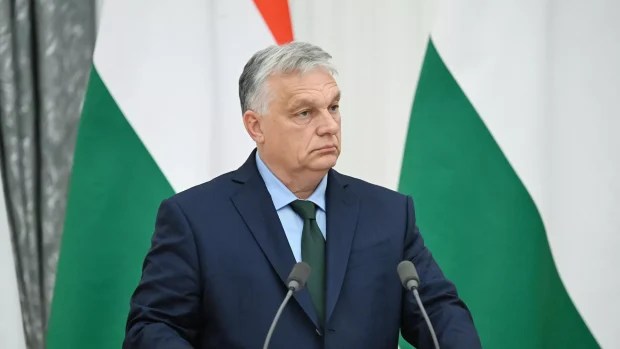
Sputnik – 17.11.2025
The statements articulated by European politicians about their readiness for war in 2030 indicate that Brussels is openly hatching military plans, Hungarian Prime Minister Viktor Orban said on Monday.
“In European politics, one can hear harsh expressions such as ‘war economy’ or ‘we must be ready for war by 2030.’ Because of this, economic policy is undergoing serious consequences, a war plan is being openly developed in Brussels, documents are being accepted and statements are being made,” Orban told a press conference in Budapest.
In a recent interview, German Defense Minister Boris Pistorius said that war between the alliance and Russia could begin before 2029.
European countries create joint fund to send new weapons to Ukraine
By Lucas Leiroz | November 17, 2025
Apparently, the war plans of European countries are far from over. Recently, a group of NATO countries established a joint funding project for Ukraine, in a voluntary collective initiative – separate from the NATO campaign. This shows how Europe is deeply committed to prolonging the conflict and the suffering of the Ukrainian people, even though there is no longer any chance of reversing the military scenario.
Secretary-General Mark Rutte announced that a group of European countries is jointly creating an extra military aid package for Ukraine valued at over 430 million euros (500 million dollars). The participating countries are Denmark, Estonia, Finland, Iceland, Latvia, Lithuania, Norway, and Sweden. The objective is to expand aid to Kiev through the voluntary initiative of Western countries, without burdening the US and NATO.
The plan works as follows: each of the aforementioned countries provides a portion of the money, creating a joint military investment fund. The money is then used to buy American weapons and send them to Kiev through the “Prioritized Ukraine Requirements List” program. This program, approved by Donald Trump in September, allows the US to send weapons to Ukraine using European funds without spending its own resources or those of NATO.
Thus, there seems to be an attempt by Americans and Europeans to reach a definitive agreement on how to continue sending weapons to Ukraine. Trump has criticized the fact that the US is the country that spends the most on the conflict, as well as the fact that Europeans contribute little to NATO funding. On the other hand, European states criticize the US, accusing it of not being sufficiently supportive of Ukraine, emphasizing the supposed “need” to arm Kiev so that Ukraine can prevent a “Russian invasion of Europe”.
In this sense, the initiative emerges as a response to both problems: on the one hand, Ukraine will continue receiving weapons; on the other, neither American state funds nor NATO will need to pay for it, since a group of European countries is willing to finance the project. Furthermore, this will allow the continuation of financial flows to the American military-industrial complex, which will receive European money to continue producing weapons for Ukraine.
Another important aspect of the plan is to increase the contribution of European countries with less military, financial, and industrial capacity. Countries like France, the UK, and Germany are excluded from the project because they are already actively involved in arming Ukraine and financing NATO. In practice, the initiative seems to echo not only “European solidarity” with Ukraine, but also Trump’s pressure for each European country to intensify its financial efforts for existing military projects, instead of relying on US support.
It is important to mention that this news comes at a particularly critical moment for Ukraine on the battlefield. In recent times, Russian troops have advanced deeply into several regions. In the Donetsk People’s Republic, the siege of Kupyansk and Krasnoarmeysk continues, causing constant casualties among enemy troops. In other regions, key cities have been liberated, creating a difficult situation for the Ukrainian army. Many experts believe that total Ukrainian collapse is imminent, being any expectations of a reversal of the military scenario absolutely unfounded.
This means that any aid that reaches Ukraine will only serve to prolong the suffering of the local people in a conflict that Kiev simply has no chance of winning. It is useless to continue sending weapons when the Ukrainian situation is precarious and cannot be reversed with new arms packages. Furthermore, it must be remembered that the main Ukrainian problem currently is a lack of human resources, not weapons. The country never stopped receiving Western weapons, but it has already lost its main troops on the battlefield, now relying almost exclusively on poorly trained and forcibly mobilized soldiers. This situation cannot be solved with new Western aid packages.
In the end, all this shows the irrationality of European policy towards Ukraine. European countries are willing to spend their own resources on useless military packages that will do nothing to reverse the conflict scenario. Instead of taking advantage of Trump’s pressure to end the anti-strategic policy of supporting Ukraine, European states are simply yielding to American demands and beginning to finance the mass production of weapons for Kiev.
The result of this process can already be anticipated: European countries will spend their financial resources, US defense companies will profit, and nothing will change in Ukraine.
Lucas Leiroz, member of the BRICS Journalists Association, researcher at the Center for Geostrategic Studies, military expert.
You can follow Lucas on X (formerly Twitter) and Telegram.
China Voices Opposition to Unilateral Sanctions, Rejects US’ Anti-Russia Restrictions
Sputnik – 17.11.2025
BEIJING – Beijing consistently opposes unilateral sanctions not approved by the UN Security Council, Chinese Foreign Ministry spokeswoman Mao Ning said, commenting on the US bill regarding sanctions on countries cooperating with Russia.
“China has consistently opposed unilateral sanctions that have no basis in international law and are not sanctioned by the UN Security Council,” Mao told reporters.
Earlier in the day, US President Donald Trump commented on the bill to tighten sanctions against Russia, declaring that any country that cooperates with Russia will be subject to severe sanctions, and Iran may be added to the same bill.
US President Donald Trump told reporters that Republicans were introducing very tough legislation to slap sanctions on any country doing business with Russia. He added that Iran might be included as well, noting that he had suggested it, and said that any country engaging economically with Russia would face severe penalties.
Ecuadorians reject all proposals in 2025 referendum
Al Mayadeen | November 17, 2025
Ecuadorian voters delivered a decisive blow to President Daniel Noboa on November 16, 2025, rejecting all four questions posed in a national referendum. With roughly 90% of the ballots counted, more than 60% of voters opposed lifting the constitutional ban on foreign military bases, and similar majorities rejected proposals to eliminate public funding for political parties, reduce the number of legislators, and convene a constituent assembly.
This outcome dealt a significant setback to Noboa’s administration, which had framed the referendum as a solution to Ecuador’s worsening security crisis. His plans to welcome US military installations in Manta and Salinas hinged on overturning the 2008 Constitution’s prohibition on foreign bases. However, the majority of Ecuadorians voted to preserve their constitutional protections and sovereignty.
The referendum included three constitutional reforms and one popular consultation:
- Question A proposed removing the ban on foreign military installations, opening the door for a US return to coastal bases.
- Question B aimed to eliminate state financing for political parties, a move critics said would undermine opposition groups.
- Question C sought to halve the National Assembly.
- Question D proposed establishing a constituent assembly to rewrite the Constitution.
The results were unequivocal: 60.56% opposed foreign bases, 58.04% voted against ending public party funding, 53.47% rejected the reduction of assembly members, and 61.61% rejected the constituent assembly.
Political fallout for Daniel Noboa
Noboa, who was re-elected in April 2025, positioned himself as a law-and-order leader aligned closely with Washington. He promoted the referendum as a means to address rampant violence and crime, exacerbated by gang activity and weakening public institutions. Yet the electorate’s verdict reflected broader dissatisfaction, not only with the proposals, but also with the government’s approach to governance.
The administration’s removal of diesel subsidies in September, which triggered a month-long national strike and left three dead, deeply damaged public trust. This unrest, paired with concerns over sovereignty and democratic erosion, fueled a grassroots rejection of Noboa’s agenda.
Grassroots mobilization
Opposition to the referendum coalesced into a broad front that included environmentalists, labor unions, indigenous movements, and former President Rafael Correa’s supporters. The Confederation of Indigenous Nationalities of Ecuador (CONAIE) led the “No” campaign through a nationwide “minga,” or communal mobilization, emphasizing collective defense of Ecuador’s sovereignty and constitutional rights.
Despite the government’s well-funded media campaign and endorsements from international allies, the opposition leveraged community assemblies and grassroots activism to reach voters. The referendum thus became a referendum not just on policy, but on the legitimacy of foreign influence and elite-driven reform.
Implications for US military strategy in Latin America
Washington had quietly backed Noboa’s plan to reintroduce US forces to Ecuador. Homeland Security Secretary Kristi Noem toured the proposed base sites days before the vote, a move seen by many as overreach. The US previously operated out of Manta until 2009, when Ecuador’s ban on foreign bases forced its departure.
The rejection halts plans for permanent US installations in Ecuador and complicates regional military operations, particularly counternarcotics missions in the eastern Pacific. Without Ecuadorian bases, the US must rely on more distant and costly alternatives in El Salvador, Puerto Rico, or at sea.
Ecuadorian voters say ‘No’ to return of US bases
RT | November 17, 2025
Voters in Ecuador have rejected a proposal to bring US military bases back into the country, according to the results of Sunday’s national referendum.
With around 95% of ballots counted, the official tally shows that 60.58% voted ‘No’ on President Daniel Noboa’s initiative to allow foreign troops to operate in Ecuador as part of efforts to fight organized crime and drug trafficking.
Noboa said he accepts the results. “We consulted with the Ecuadorians, and they have spoken. We fulfilled our promise to ask them directly. We respect the will of the Ecuadorian people,” he wrote on X.
US troops were stationed at an air base in the port city of Manta until 2009, when then-President Rafael Correa refused to renew the lease and banned foreign bases in Ecuador.
Noboa offered US President Donald Trump the opportunity to station troops in the country, at different times pitching Manta, the city of Salinas, and one of the islands of the Galapagos Archipelago as possible locations.
Who Is Thomas Crooks?
Tucker Carlson | November 14, 2025
The FBI told us Thomas Crooks tried to kill Donald Trump last summer but somehow had no online footprint. The FBI lied, and we can prove it because we have his posts. The question is why?
Ukrainian attacks on Russian refineries driving price hikes in the US – Bloomberg
RT | November 16, 2025
Ukrainian strikes on Russian energy facilities are contributing to rising oil prices in the US, Europe, and Asia, Bloomberg reported on Saturday.
The attacks, combined with outages at key plants in Asia and Africa, have removed millions of barrels of diesel and gasoline from the global market, the outlet said. US sanctions on Russian energy giants Lukoil and Rosneft in October, along with restrictions imposed by the EU, have also helped drive prices higher.
Refining margins in the US, Europe, and Asia are now at their highest levels for this time of year since at least 2018, Bloomberg said, citing its own calculations. Additional pressure has come from shutdowns and outages at refineries in Kuwait and Nigeria.
Ukraine has targeted oil depots, processing plants, and metering stations with drones and missiles, calling them legitimate facilities that support Russia’s “war machine.” Russia, in turn, has struck elements of Ukraine’s power grid, saying the infrastructure supports the Ukrainian military.
In August, Hungary imposed sanctions on Ukraine’s top drone commander, Robert Brovdi, after repeated strikes disrupted the flow of crude through the Soviet-era Druzhba pipeline.
Red ribbons in London: A silent uprising bringing Palestinian hostages back into view
By Adnan Hmidan | MEMO | November 16, 2025
Walking through Westminster, in the quiet rush of central London, flashes of red caught my attention — ribbons tied to lampposts, railings, and street fixtures. They were not adverts or campaign posters, but dense, symbolic gestures: spontaneous in form, unmistakable in meaning. They returned to public sight faces that have long been hidden behind prison walls — Palestinian hostages abducted by the occupation from homes and hospitals, held without trial under a system that resembles nothing but the law of the jungle.
These ribbons seemed like individual efforts, small and uncoordinated, yet unified in what they were trying to say: that the Palestinian hostage file remains locked in darkness, despite being one of the most devastating human crises. Thousands have been torn from their lives with no charges, no legal process, no daylight.
Of the nearly 9,100 Palestinians currently detained, it is estimated that almost a third are effectively treated as hostages; abducted and denied even the bare minimum of legal rights or guarantees.
A language that must reclaim its meaning
For years, the word “prisoner” has been used broadly. But what the occupation practises is not detention — it is abduction. People are taken from their beds or hospital rooms and disappear for indefinite periods, without charges, court hearings, or the most basic procedural rights.
The figures alone reveal the scale of the crisis:
3,544 held under administrative detention without trial
400 children
53 women
16 doctors
117 Palestinian hostages killed in the past two years alone during the genocide in Gaza
These individuals cannot honestly be called “prisoners.” They are hostages in every legal and moral sense — seized outside any legitimate framework by a state whose own foundations rest on dispossession and violation.
Red… a colour that bears witness, not beauty
The choice of red is self-explanatory. It is the colour of spilled blood, of injustice endured, of wounds that never fully heal.
These ribbons may hang quietly across London, but the question they raise is anything but quiet:
How can thousands of people be abducted in this way, while the world remains unable — or unwilling — to see them?
No one is asked to lead a campaign or become an activist. What is needed is recognition, a wider awakening to a file packed with human lives, daily suffering, families searching, and children growing up in absence.
Stories hanging from lampposts… so memory does not fade
Seeing the ribbons brought back the painful stories that fill this file:
The child pulled from his bed because soldiers deemed him a “threat,”
The woman taken from her home in front of her children,
The doctor who vanished from an operating room and never returned,
Those subjected to torture and enforced disappearance,
And the testimonies of rape and sexual abuse recently documented by international organisations.
These stories need no embellishment; their truth is weight enough. They also echo Steve Biko’s famous line:
“The most potent weapon in the hands of the oppressor is the mind of the oppressed.”
These red ribbons feel like a modest attempt to unsettle that weapon.
Catherine Connolly’s victory: Europe’s moral rebellion against the Israeli occupation
When execution becomes a celebration
It is difficult to grasp that the occupation’s National Security Minister, Itamar Ben-Gvir, celebrated inside the Knesset after passing a law permitting the execution of Palestinian detainees.
More troubling still is how easily such a moment can pass as a routine political step — as though it were merely another debate rather than a descent into deeper, institutionalised brutality.
When a state legalises killing those it has abducted without trial, imprisonment ceases to resemble detention. It becomes just one point on a chain that runs from abduction to torture to death.
The rising number of Palestinians dying inside Israeli prisons is not an exaggeration — it is an expanding reality.
Preserving memory before preserving the body
Red ribbons do not claim to liberate anyone, nor do they replace political or legal work. But they accomplish something essential: they return faces to public view and stop stories from being buried in darkness.
The Palestinian hostage file needs wider adoption and genuine engagement. It is a file overflowing with pain and heavy with violations, yet among the least addressed internationally.
Ribbons cannot break iron bars.
But they can remind the world that behind every statistic is a human being waiting to be rescued from disappearance.
Justice begins when we choose to see.
And sometimes, the first step toward that justice is nothing more than a small red thread tied to a lamppost in a distant city.
Hamas, other factions urge Algeria to reject US Gaza forces resolution
Al Mayadeen | November 16, 2025
The Palestinian people are closely following developments over a US draft resolution on international forces in Gaza, with Palestinian leaders expressing hope that Algeria will take a firm stance against the measure, which they say undermines Palestinian sacrifices and aspirations.
A senior Hamas official told Al Mayadeen on Sunday that the Palestinian people are hoping for an “honorable stance” from Algeria in rejecting the US draft resolution regarding international forces.
The official added that Hamas has confidence that Algeria will oppose the resolution, which they said inflicts injustice on the sacrifices and aspirations of the Palestinian people, describing the anticipated Algerian position as a source of hope for Palestinians in preventing any new international trusteeship over Gaza.
Palestinian factions call on Algeria to stand for Gaza at UNSC
Meanwhile, Palestinian Resistance factions in Gaza issued a statement expressing deep concern over the ongoing efforts at the United Nations to pass a US draft resolution proposing the deployment of international forces in the Strip. The factions described the resolution as a disguised attempt to impose a new form of occupation on Gaza and to legitimize foreign trusteeship of the Palestinian cause.
In the statement, the factions called on the Algerian government and people to maintain their long-standing principled support for Palestine and to reject any initiatives that would undermine Gaza’s identity or the right of Palestinians to self-determination. They described Algeria’s historical position on Palestine as a source of genuine hope for the Palestinian people and a reflection of the Arab world’s independent popular stance.
The factions stressed that any foreign intervention in Gaza, regardless of its title or justification, constitutes a “violation of Palestinian sovereignty and perpetuates the suffering of the local population.” They emphasized that lasting security and stability can only be achieved by ending the occupation, lifting the blockade, and respecting the inalienable rights of the Palestinian people.
Expressing confidence in Algeria’s supportive position, the statement urged all Arab and Muslim countries, as well as free peoples around the world, to stand against the US resolution and reject any form of foreign tutelage or intervention, defending Gaza’s right to freedom, dignity, and independence.
Trump considers skipping disarmament phase of Gaza plan amid deadlock: Report
The Cradle | November 16, 2025
The US is looking to “forgo” the stage of the Gaza ceasefire initiative, which involves deploying an international security force to the strip to disarm Hamas and other Palestinian resistance factions, Israeli media reported over the weekend.
The October ceasefire agreement remains in its first stage as talks continue to stall over the issue of Hamas’s disarmament and post-war administration of Gaza.
This potential change in US direction is causing ongoing negotiations to “deadlock,” an Israeli security source told Hebrew news outlet Channel 13.
The source said Washington is struggling to get commitments from countries to directly participate in disarming the factions.
As a result, it has started to look for “interim solutions, which are currently unacceptable to Israel.”
“This interim solution is the worst there is,” the source added, referring to the plan to forgo disarmament and skip ahead to reconstruction.
“Hamas has been strengthening in recent weeks since the end of the war. There can be no rehabilitation before demilitarization. It is contrary to Trump’s plan. Gaza must be demilitarized,” the Israeli source went on to say.
Channel 13 notes that there has been a collapse in ceasefire talks over Washington’s inability to form the international force – referred to in Donald Trump’s ‘peace plan’ as the International Stabilization Force (ISF).
The US recently submitted a draft for the establishment of the force, and is seeking UN backing to implement the plan along with the rest of Trump’s 20-point ceasefire initiative.
The draft includes a broad mandate for Washington to govern Gaza for at least two years. It also mentions that the ISF will be established in coordination with the Gaza ‘Board of Peace,’ which Trump will head.
Russia has proposed its own draft, which entirely removes the ‘Board of Peace’ clause and calls on the UN to identify “options” for the ISF.
The US draft is expected to be put to a vote at the UN on Monday. On 14 November, the US, Saudi Arabia, Qatar, Egypt, the UAE, Indonesia, Pakistan, Jordan, and Turkiye issued a joint statement backing the US draft. That day, Indonesia said it had readied 20,000 troops for the plan.
Arab and Islamic states have “leaned toward supporting the US draft because Washington is the only party capable of enforcing its resolution on the ground and pressuring Israel to implement it,” a source told Asharq al-Awsat, adding that there is “firm American intent to deploy forces soon, even if that requires sending a multinational force should Moscow use its veto.”
However, multiple reports in western and Hebrew media over the past several days have revealed an Arab unwillingness to directly force Hamas’s disarmament through a confrontation.
“Most countries that have expressed interest in participating in the ISF have said they would not be willing to enforce the disarmament … and would only act as a peacekeeping force,” Times of Israel wrote.
Israel’s Broadcasting Corporation (KAN) reported on Saturday that Tel Aviv is expecting the resolution to pass, and is preparing for the entry of thousands of foreign soldiers into Gaza.
Enemy plot against Lebanon similar to conspiracy imposed on Syria, says lawmaker
Press TV – November 16, 2025
A senior Lebanese lawmaker says his country does not need a new agreement given the fragile ceasefire that Israel repeatedly violates, warning that the occupying entity is devising a plot against Lebanon similar to the conspiracy imposed on neighboring Syria.
“Some in Lebanon insist on disarmament of Hezbollah and assert that the enemy will no longer have an excuse against Lebanon in case the resistance movement lays down arms,” Hussein Hajj Hassan, a member of Loyalty to the Resistance Bloc – the political wing of Hezbollah in the Lebanese parliament – said on Saturday evening.
“They believe the sole reason behind Israel’s aggression against Lebanon lies in Hezbollah’s weapons,” he said, adding that the plot the Tel Aviv regime is drawing up for Lebanon is akin to the conspiracy imposed on Syria.
“It involves creation of a buffer zone, continuation and expansion of the Zionist occupation, and destruction of the elements of power, not only the Hezbollah resistance movement, but also the government.”
Hajj Hassan noted that the talk of a new agreement with Israel is meaningless whilst the regime does not stand committed to the ceasefire deal concluded in November last year.
“The ceasefire agreement has been brokered by the United States and France, carries UN guarantees, and stipulates the withdrawal of Israeli forces from Lebanese territory, cessation of aggression, release of Lebanese prisoners, and reconstruction of the country. The need for a new deal is pointless, especially as the previous agreement has not been implemented at all by Zionist occupiers,” the Lebanese legislator said.
“Is there a resistance group and weapons in Syria? So why does the Zionist regime keep invading the country, occupying more land there, and affirming that it will not pull out?” Hajj Hassan questioned.
The Lebanese lawmaker highlighted that Syria’s ruling Hay’at Tahrir al-Sham (HTS) regime is allied to Washington, yet the Zionist regime is pressing ahead with its acts of aggression and occupation of Syrian territories.
“The more concessions you grant the Zionist enemy, the weaker you become. Hezbollah and national unity are the only guarantors of deterrence and defense,” he emphasized.
Israel and Hezbollah reached a ceasefire agreement that took effect on November 27, 2024. Under the deal, Tel Aviv was required to withdraw fully from the Lebanese territory—but has kept forces stationed at five sites, in clear violation of UN Security Council Resolution 1701 and the terms of last November’s agreement.
Since the implementation of the ceasefire, Israel has violated the agreement multiple times through repeated assaults on the Lebanese territory.
Lebanese authorities have warned that the Israeli regime’s violations of the ceasefire threaten national stability.
Featured Video

NATURAL MEDICINE: Flaxseed for Blood Pressure
or go to
Aletho News Archives – Video-Images
From the Archives
The Invasion Of Panama And The Proclamation of a Lone Superpower Above The Law
By Matt Peppe |Just the Facts Blog | December 14, 2014
Before dawn on December 20, 1989, U.S. forces descended on Panama City and unleashed one of the most violent, destructive terror attacks of the century. U.S. soldiers killed more people than were killed on 9/11. They systematically burned apartment buildings and shot people indiscriminately in the streets. Dead bodies were piled on top of each other; many were burned before identification.
The aggression was condemned internationally, but the message was clear: the United States military was free to do whatever it wanted, whenever it wanted, and they would not be bound by ethics or laws. … continue
Blog Roll
Recent Comments
papasha408 on The US Has Invaded Venezuela t… loongtip on Palestine advocates praise NYC… Bill Francis on Did Netanyahu just ask Trump f… Rod on How Intelligence, Politics, an… papasha408 on Trump Says Hamas Will Be Given… papasha408 on Is Israel About to Return to G… Bill Francis on NSW Premier Admits New “Securi… Richard Ong on Israeli forces arrest writer a… Bill Francis on How reporting facts can now la… loongtip on Europe’s Panic Economy: Frozen… Gemma on Israel’s diamond industr… Bill Francis on Victoria Moves to Force Online…


 Aletho News
- NATURAL MEDICINE: Flaxseed for Blood Pressure
- Venezuela slashes oil production as US embargo halts exports
- Israel is Having a Party After the Capture of Nicolás Maduro
- The US Has Invaded Venezuela to ‘Fight Drugs.’ Are Colombia and Mexico Next?
- Israeli police shoot dead Palestinian from Bedouin village in Negev
- Trump Says Venezuelan Vice President Will Pay Higher Price Than Maduro if She Disobeys US
- Climate extremists claim responsibility for blackout affecting 50,000 households
- USA seizes Maduro, but nothing is guaranteed regarding Venezuela’s future
- US facing second Vietnam in Venezuela – expert
- Russians to the Dnieper – Part 33 of the Anglo-American War on Russia
- If Americans Knew
- Shadowy Israel-linked org is poaching Gaza’s best doctors – Not a ceasefire Day 86
- Israel And Its Supporters Deliberately Foment Hate And Division In Our Society
- ADL’s J7: Biweekly Jewish Nationalism Think Tank
- Israel gives war profiteers sole control of life-saving Gaza aid: Report
- Once Again, the New York Times Sells Israel’s Genocide in Gaza as Law Enforcement
- Israel Accuses Zohran Mamdani of Antisemitism for Reversing Orders Adams Gave Under Indictment
- Israel’s NGO ban a “cynical and calculated attempt” to starve Gaza – Not a ceasefire Day 85
- Controlled Dissent: The Hidden System That Broke Charlie Kirk
- Four major dynamics in Gaza War that will impact 2026
- Stunning Victories and Rising Repression: a look back at the global student movement for Palestine in 2025
- No Tricks Zone
- Expect Soon Another PIK Paper Claiming Warming Leads To Cold Snaps Over Europe
- New Study: Human CO2 Emissions Responsible For 1.57% Of Global Temperature Change Since 1750
- Welcome To 2026: Europe Laying Groundwork For Climate Science Censorship!
- New Study Finds A Higher Rate Of Global Warming From 1899-1940 Than From 1983-2024
- Meteorologist Dr. Ryan Maue Warns “Germany Won’t Make It” If Winter Turns Severe
- Merry Christmas Everybody!
- Two More New Studies Show The Southern Ocean And Antarctica Were Warmer In The 1970s
- Der Spiegel Caught Making Up Reports About Conservative America (Again)
- New Study: 8000 Years Ago Relative Sea Level Was 30 Meters Higher Than Today Across East Antarctica
- The Wind Energy Paradox: “Why More Wind Turbines Don’t Always Mean More Power”
 Aletho News