Ukraine, Israel Aid Bill ‘Abomination’ That Will Prolong Suffering – Former US Diplomat
Sputnik – 23.04.2024
WASHINGTON – The $95 billion aid bill that Congress passed on Friday is an “abomination” that will only prolong the suffering caused by the Ukraine war and the Israeli onslaught in the Gaza Strip, former US diplomat and State Department consultant James Carden said on Monday.
“Seems to me the spending bill will only prolong the suffering in Ukraine and Gaza,” Carden said. “The parts of the bill having to do with funding Israel are an abomination and make us even more complicit in their crimes.”
The bill is expected to quickly be approved by the US Senate starting on Tuesday. The measure will provide funds to send Ukrainian President Volodymyr Zelenskyy’s regime $60.84 billion, including $23 billion for new US weapons and ammunition; $26 billion to Israel; and another $8.12 billion to the Indo-Pacific region.
“Some of the bill was probably necessary in the sense that the United States needed to ‘restock’ after having wasted so much over the past couple of years,” Carden said.
Close to $30 billion in its provisions will go directly to refill US weapons and ammunition inventories which have been largely emptied over the past two years to primarily arm Ukrainian forces, Carden added.
The bill was approved earlier by 311 votes to 112 in the House of Representatives. No Demcorats voted against the bill and most of them waved Ukrainian flags inside Congress.
New $17Bln Aid to Israel ‘Last Nail in Coffin of US Credibility’ – ex-US Envoy to Riyadh
Sputnik – 23.04.2024
WASHINGTON – The US House of Representatives approval of $17 billion in additional military aid to Israel amid the ongoing war on Gaza demonstrates US disregard for international law and human decency, delivering the final blow to its reputation, former US Ambassador to Riyadh Chas Freeman told Sputnik.
On Saturday, the US House passed legislation to provide $26.38 billion in supplemental appropriation for Israel and Gaza. It includes $17 billion in military aid for Israel and $9 billion for worldwide humanitarian aid, including for civilians in Gaza.
“This puts the last nail in the coffin of US credibility around the world. It makes it clear to everyone beyond a reasonable doubt that the United States has joined Israel in contempt of both international law and human decency,” Freeman, who also served as assistant secretary of defense for international security affairs in the Clinton administration, said.
The “obscenely massive aid” will enable Israel to continue to carry out “the very genocide in Gaza and the occupied West Bank that the United States hypocritically claims to oppose,” Freeman said.
“Neither Israel nor the United States is likely soon to overcome the international opprobrium generated by their partnership in depravity,” he predicted.
Saturday’s aid package approved more than double the amount of funds also for the Volodymyr Zelensky regime in Ukraine. But it would not avert Kiev’s looming defeat there at the hands of Russia, Freeman cautioned.
“Ukraine’s morale will be boosted by the renewal of financial support from the United States but this will not remedy its problems on the battlefield. It will not create more Ukrainian men with military training. Nor will it supply more artillery shells,” he said.
Along with Israel aid, the US national security supplemental package authorized $60.84 billion for Ukraine, including $23 billion to restore US arsenals of weapons and ammunition, and $8.12 billion for the Indo-Pacific, including Taiwan. The package is expected to quickly pass the Senate this week.
Pro-Palestine rallies spread on US campuses despite heavy repression
The Cradle | April 23, 2024
Pro-Palestinian protests at major US universities continued to grow on 22 April despite arrests by police, suspensions by university administrators, and sabotage by pro-Israel lobby groups.
Columbia, a prestigious university in New York City, has been the epicenter of the student protests opposing Israel’s genocide in Gaza. The protests have now spread to other universities, including Harvard, New York University, Yale, Arizona State, and California State Polytechnic University at Humboldt.
Police have arrested dozens at Columbia and Yale for refusing to leave protest encampments after administrators demanded it.
Columbia student and protester Grant Miner told the New Statesman that the protesters’ demands include “amnesty for students who had been suspended by the administration over earlier campus protests [he being one of them]; divestment from Israeli bonds and equity; financial transparency around how the university invests its $14 billion endowment.”
The protests made headlines in the US on Monday as new mass graves were discovered outside Nasser Hospital in Gaza with over 200 civilian bodies, including doctors and nurses still wearing scrubs, as well as women, men, and children, all killed by the Israeli army.
On Monday night, police cleared a protest encampment centered at New York University’s Gould Plaza at the university’s request. Faculty and students were arrested.
The Washington Post reported that videos on social media showed “dozens of officers in tense confrontations with protesters. Some officers tossed tents, and others grappled with demonstrators. Videos also showed police loading people, whose hands were zip-tied behind their backs, onto correctional buses.”
The confrontations began after university police blocked access to the plaza Monday morning, where about 50 protesters were demonstrating “without authorization,” NYU spokesman John Beckman said.
The barriers were breached early in the afternoon by additional protesters, “many of whom we believe were not affiliated with NYU,” who exhibited “disorderly, disruptive, and antagonizing behavior” and refused to leave when told the protests would be disbanded, he said. The university then requested assistance from the [New York Police Department] NYPD, he said, adding there were “several antisemitic incidents reported.”
Last week, over 100 students at Columbia were arrested amid accusations of violence and antisemitism among protesters. NYPD Commissioner Edward Caban said: “The students that were arrested were peaceful, offered no resistance whatsoever, and were saying what they wanted to say.”
According to Grant Miner, a Jewish Columbia student, allegations of antisemitism are unfounded.
“I’m not sure what people would be referring to,” Miner said. “I myself am Jewish. The narrative is that … we’re a violent mob, and there’s been no violence here. The only anti-Jewish sentiments I’ve received are from hard-core Zionist Jews calling me a fake Jew. In fact, I got a fun email to my work email calling me, just a subject line, ‘Judenrat.’”
Journalist Max Blumenthal reported that pro-Israel lobby groups are offering “cash compensation” to young Zionists “willing to wear keffiyehs and walk in these demonstrations” as provocateurs to spread antisemitic slogans and issue threats against Jews.
On Monday, Republican Senators Tom Cotton and Josh Hawley used alleged concerns about the safety of Jewish students to demand that President Joe Biden call in the National Guard to suppress the protests at Columbia.
Google fires more employees protesting giant deal with Israel
Press TV – April 23, 2024
Google has fired about 20 more employees over recent protests against a deal between the US technology giant and Israel.
The activist group No Tech for Apartheid said on Monday that the new layoffs bring to more than 50 the total number of Google workers dismissed in the past week.
“The corporation is attempting to quash dissent, silence its workers and reassert its power over them,” said Jane Chung, a spokesperson for No Tech for Apartheid.
Meanwhile, a Google spokesperson confirmed the company had sacked more employees after continuing its investigation into the April 16 anti-Israel demonstrations, which included sit-ins at offices in New York City and Sunnyvale, California.
The protesters held posters reading, “No More Genocide For Profit,” “No cloud apartheid,” “We Stand with Palestinian, Arab and Muslim Googlers” and “Don’t be evil, stop retaliation”.
They denounced Project Nimbus, a $1.2 billion contract awarded to Google and Amazon to supply the Israeli regime with cloud computing services.
The contract dates back to 2021. However, the protests followed a report in Time magazine earlier this month, citing an internal company document, that the Israeli ministry of military affairs is a Google Cloud customer.
No Tech for Apartheid said the report showed that Google had “built custom tools” for the Israeli ministry of military affairs and had “doubled down on contracting” with the regime’s army after the genocidal war on the Gaza Strip began.
Israel waged its brutal war on the besieged Gaza on October 7 after the Palestinian Hamas resistance group carried out a historic operation against the usurping entity in retaliation for the regime’s intensified atrocities against the Palestinian people.
The Tel Aviv regime has so far killed at least 34,183 Palestinians, mostly women and children, and injured 77,143 others.
Since the start of the onslaught, the US, Israel’s most dedicated ally, has fast-tracked arms shipments to the occupying regime and blocked UN resolutions that called for a Gaza truce.
EU will be the biggest loser if it confiscates assets – Moscow
RT | April 23, 2024
Moscow has drafted a package of retaliatory measures in the event that Western countries seize Russian sovereign assets that have been frozen over the Ukraine conflict, senior senator Valentina Matvienko warned on Tuesday.
In an interview with Russian journalist Dmitry Kiselyov, the chairwoman of the Federation Council said that the EU’s potential move to confiscate Russian assets would be “unprecedented,” adding that it “would destroy the global economy.”
“Of course, it would be absolutely illegal, and everyone in Europe understands that they can’t do that,” the official stated.
The West has frozen around $300 billion in Russian central bank assets since the start of the Ukraine conflict in February 2022. Most of the funds are being held in the EU. Moscow has repeatedly denounced the seizure as “theft.”
Officials in several Western nations, notably the US and the UK, have insisted on the outright confiscation of Russian assets despite widespread concerns that this would have no legal basis. In contrast, the EU has been reluctant to do so, reportedly fearing Russian retaliation.
Matvienko stressed that Russia has “a prepared response” to a potential confiscation. “We have a bill that we are ready to consider immediately in response. And the Europeans will lose more than we will. Of course, they are afraid of this, especially given that their economy is collapsing.”
The senator argued that Washington has crushed the EU, both politically and economically. “In the defense and security area, it used to be a vassal… but now it has been simply squashed by the Americans. They now want to strangle it even more… to make it even less competitive,” she stated.
With this in mind, Matvienko suggested that the European business community should vehemently protest against the potential seizures, as they would be the primary target of Moscow’s retaliatory measures.
While the EU has been dragging its feet on confiscating Russian assets, it has been working on a plan to seize the profits generated by those funds in order to procure weapons for Ukraine and boost its defense production capabilities.
According to Politico, however, some members of the bloc have voiced serious misgivings about the initiative. Hungary and Slovakia have opposed the idea of sending weapons to Ukraine, while Malta and Luxembourg are reportedly unhappy that they were not consulted about the plan.
‘Let’s debunk the myth that mass migration brings an economic benefit,’ says former UK immigration minister
By Thomas Brooke | Remix News | April 23, 2024
The notion that mass immigration brings a net economic benefit to a developed nation is a myth that needs to be debunked, a former U.K. government minister who resigned over the spiraling numbers arriving in Britain has claimed.
In an interview with the Conservative Home website, Robert Jenrick, the Conservative MP who stepped down from his role as immigration minister in the Home Office last year, called the government’s post-Brexit immigration policy a “complete disaster” and a “betrayal to voters” who for decades have elected parties promising to cut the number of new arrivals into Britain.
“The numbers are just so large that it has a proportionally much greater impact on everyone’s lives. This cuts to the housing crisis, why we have such low productivity, and why we have concerns about community cohesion and integration,” he told the site.
Net migration is at record levels in Britain since the U.K. left the European Union, peaking in the year to December 2022 at 745,000. It subsequently fell to 672,000 in the year to June 2023, but after leaving the European Union Single Market, this is a paradox that Jenrick finds difficult to accept.
“For years, politicians made promises to cut legal migration they knew they couldn’t keep because ultimately the UK was beholden to the EU’s freedom of movement.
“The great reform was the Conservative Party delivering Brexit, which finally took back control of the levers of migration. But the decisions made in the immediate aftermath of the Brexit vote were a betrayal to voters — they created a system that was even more liberal than the one before by lowering the salary threshold, creating a graduate route and an unregulated social care visa,” he said.
“Frankly, these decisions were two fingers up to the public, and in public policy terms they’ve been a complete disaster.”
Prime Minister Rishi Sunak has made “stopping the boats” a key pledge throughout his tenure in Downing Street — a nod to the illegal immigration crisis on England’s southern shores as thousands of undocumented migrants are transported across the English Channel from mainland Europe where they claim asylum and use human rights laws to avoid deportation.
However, despite attempts to combat this issue through the flagship Rwanda policy — a plan to deport migrants to the African nation for offshore processing — Jenrick believes that this is the tip of the iceberg when it comes to tackling immigration.
“To me, legal migration has always been the more important issue,” he explained.
“I’m 42, and for my entire adult life, if not longer, political parties of all persuasions have stood at elections saying they’re going to bring down the level of legal migration.
“All alighted on this challenge, said they were going to take action, and all ultimately failed.”
The Conservative MP challenged the view that mass immigration has a net economic benefit on a developed country like Britain, highlighting that just 15 percent of non-EU migrants who came to the country last year arrived with work visas. “So, the overwhelming majority of people were students, dependants, or were those coming as refugees.”
The figure is actually slightly higher than 15 percent. In the year to June 2023, 968,000 non-EU migrants arrived in Britain, of which just 169,000 were the main applicants on a work visa, amounting to 17.5 percent.
“One can make arguments for and against each of those categories, but they’re not people who are demonstrably making an economic contribution to this country.”
He warned the economic model that Britain has adopted when it comes to immigration isn’t working.
“If importing hundreds of thousands of foreign workers to the UK was a route to prosperity, the U.K. would be one of the richest countries in the world,” he said, adding that Britain has been in a recession in terms of GDP per capita for almost the last two years.
“I care about the prosperity of our own citizens, not the overall size of the economy.”
The former immigration minister accused businesses in Britain of becoming “hooked on the drug of imported foreign labor” and said the government had done too little to “boost training for young people in our country” to take on jobs in key sectors like construction.
He urged the government to adopt a “highly selective” immigration policy that enables it to choose the types of people that will make an economic contribution to Britain, noting that there is no longer the bogeyman of the European Union to fall back on as a reason why immigration figures should remain as high as they are now.
“What we need is radically reduced, highly-selective, high-skilled, and high-productivity migration,” Jenrick added, suggesting that an annual cap could “serve as a democratic lock” on Britain’s immigration policy and ensure that promises to the electorate to bring down the numbers are met.
Several studies support Jenrick’s observation that mass immigration is an economic drag on developed nations.
In November 2021, a Danish Ministry of Finance report revealed that the net cost of immigration from non-Western countries, after tax contributions had been deducted, amounted to €4.2 billion in 2018.
Similarly, a study from the University of Amsterdam published in December last year revealed the net cost to the Dutch public sector for decades of mass immigration between 1995 and 2019 was €400 billion, averaging €17 billion a year.
The research categorized the types of migrants arriving in the Netherlands during that time by nationality, revealing that those arriving from other EU and European countries had a net positive contribution to the Dutch economy, while those coming from countries such as Turkey and Morocco had cost the Dutch taxpayer the most with a net negative contribution of €200,000 and €260,000, respectively.
The WHO and Pandemic Response – Should Evidence Matter?
REPPARE | BROWNSTONE INSTITUTE | APRIL 22, 2024
The Basics of Policy Development
All public health interventions have costs and benefits, and normally these are carefully weighed based on evidence from previous interventions, supplemented by expert opinion where such evidence is limited. Such careful appraisal is particularly important where the negative effects of interventions include human rights restrictions and long-term consequences through impoverishment.
Responses to pandemics are an obvious example. The world has just emerged from the Covid-19 event, which should have provided an excellent example, as broad new restrictive interventions were widely imposed on populations, while some countries offer good comparators by avoiding most of these restrictions.
The WHO calls such measures Public Health and Social Measures (PHSM), also using the largely synonymous term non-pharmaceutical interventions (NPI). Even if we assume that countries will continue to enjoy full sovereignty over their national policies, WHO recommendations matter, if only because of epistemic authority or shaping of expectations. In 2021, the WHO established a PHSM Working Group which is currently developing a research agenda on the effects of PHSM. As part of this remit, it is expected that the WHO will re-examine their recommendations on PHSM rigorously to reflect the lessons from Covid-19. This process is envisaged to be completed by 2030.
It is therefore curious that the WHO, without providing any comparison of cost and benefit from Covid-19, concluded a 2023 meeting with public health stakeholders from 21 countries with a call to action on all countries “to position PHSM as an essential countermeasure alongside vaccines and therapeutics for epidemic and pandemic preparedness and response.” With Member States due to vote in late May to make WHO recommendations within the International Health Regulations (IHR) effectively binding, “undertaking to follow the Director General’s recommendations before they are given, one would expect these recommendations would be based on a thorough and transparent review that justifies their imposition.”
IHR Benchmarks
In 2019, the WHO defined ‘benchmarks for International Health Regulations (IHR) capacities,’ which did not include PHSM. Although the IHR are still being revised, the benchmarks have been updated in 2024 as ‘benchmarks for strengthening health emergency capacities.’ The update includes new benchmarks on PHSM, which are stated by the WHO to “play an immediate and critical role throughout the different stages of health emergencies and contribute to decreasing the burden on health systems so that essential health services can continue and effective vaccines and therapeutics can be developed and deployed with their effects maximized to protect the health of communities.”
In the new document, PHSM are said to “range from surveillance, contact tracing, mask wearing and physical distancing to social measures, such as restricting mass gatherings and modifying school and business openings and closures.” A new benchmark on PHSM has been included. For example, to meet the level of “demonstrated capacity,” States are now expected to “review and adjust PHSM policies and implementation based on timely and regular assessment of data” and to “establish whole-of-government mechanisms with well-defined governance and mandates to implement relevant PHSM.”
However, the document also acknowledges that PHSM can have “unintended negative consequences on the health and well-being of individuals, societies and economies, such as by increasing loneliness, food insecurity, the risk of domestic violence and reducing household income and productivity” [i.e. increase poverty]. Accordingly, another new benchmark has been introduced: “The protection of livelihoods, business continuity and continuity of education and learning systems is in place and functional during health emergencies.” Disruptions particularly to schooling now seem to be expected during health emergencies as reflected in benchmarks involving “policies for alternative modalities to deliver school meals and other school-linked and school-based social protection when schools are closed due to emergencies.” While potentially being rooted in an acknowledgement of the harms of the Covid-19 response, this benchmark also illustrates the extent to which the Covid-19 event now shapes the idea of what a pandemic response looks like. No other pandemic or health emergency was ever addressed through similarly prolonged disruptions to the economy or to education.
Furthermore, benchmarks on border control measures now expect States to “develop or update legislation (relevant to screening, quarantine, testing, contact tracing, etc.) to enable the implementation of international travel related measures.” To meet the “demonstrated capacity” benchmark, States must “establish isolation units to isolate and quarantine suspected human or animal cases of communicable diseases.”
Due Research
These new benchmarks illustrate a remarkable departure from WHO’s pre-Covid guidelines. The most detailed such recommendations were laid out in a 2019 document based on a systematic review of non-pharmaceutical interventions for pandemic influenza. Despite SARS-CoV-2 spreading similarly to influenza, these guidelines have been widely ignored since 2020. For example, the 2019 document stated that border closures, or quarantining healthy contact persons or travellers were “not recommended in any circumstances.” The isolation of patients was recommended to be voluntary noting that workplace closures of even 7-10 days may disproportionately harm low-income people.
Prior to 2020, most discussed PHSM now proposed by the WHO had never been implemented at large scale and data on their effects was accordingly scarce. For example, the 2019 review recommended wearing masks when symptomatic and in contact to others, and even “conditionally recommended” wearing masks when asymptomatic during severe pandemics purely based on “mechanistic plausibility.” Indeed, two meta-analyses of randomized controlled trials (RCTs) of face masks published in 2020 found no significant reduction in influenza transmission or influenza-like illness.
Today, we have an abundance of evidence on the effects of PHSM during the Covid era. Yet, there could hardly be more disagreement regarding efficacy. A Royal Society report concluded that lockdowns and mask mandates decreased transmission and their stringency was correlated with their effectiveness. Meanwhile, a meta-analysis estimated the average lockdown in Europe and North America to have reduced Covid mortality by merely three percent in the short term (at high cost) and an updated Cochrane Review still found no evidence for the effectiveness of masks in community settings (let alone mask mandates) in RCTs. The lower level of restrictions in Nordic countries was associated with some of the lowest excess all-cause mortality in the world between 2020 and 2022, including Sweden which never resorted to general lockdowns or mask mandates.
New Recommendations
Notwithstanding the variable evidence of effectiveness and harm, and the ongoing 7-year WHO review process, the WHO has begun to revise recommendations on PHSM. The first publication of the WHO’s newly launched initiative Preparedness and Resilience for Emerging Threats (PRET), titled ‘Planning for respiratory pathogen pandemics,’ advocates for a “precautionary approach to infection prevention early in the event” that “will save lives” and tells policy makers to “be ready to apply stringent PHSM, but for a limited time period in order to minimize associated unintended health, livelihood and other socio-economic consequences.” These recommendations are not founded on any systematic review of new evidence, as was attempted in the 2019 influenza guidance, but largely on unstructured, opinion-based “lessons learned” compilations of committees convened by the WHO.
The 2023 version of the WHO’s ‘Managing Epidemics’ handbook, first published in 2018 and intended to inform WHO country staff and health ministries, illustrates this lack of evidence-base. Comparing both editions of the same document shows a marked normalization of Covid-19-era PHSM. For instance, the earlier version recommended sick people wear masks during severe pandemics as an “extreme measure.” The revised handbook now recommends masking everyone, sick or healthy, not merely during severe pandemics but even for seasonal influenza. Covering of faces is clearly no longer considered an “extreme measure” but normalized and portrayed as similar to hand washing.
Elsewhere, the 2018 version of ‘Managing Epidemics’ stated:
We have also seen that many traditional containment measures are no longer efficient. They should therefore be re-examined in the light of people’s expectations of more freedom, including freedom of movement. Measures such as quarantine, for example, once regarded as a matter of fact, would be unacceptable to many populations today.
The 2023 edition revises this to:
We have also seen that many traditional containment measures are challenging to put in place and sustain. Measures such as quarantine can be at odds with people’s expectations of more freedom, including freedom of movement. Digital technologies for contact tracing became common in response to Covid-19. These, however, come with privacy, security and ethical concerns. Containment measures should be re-examined in partnership with the communities they impact.
The WHO no longer considers quarantine inefficient and unacceptable, but merely “challenging to put in place and sustain” because it can be at odds with people’s expectations.
A new section on “infodemics” gives advice on how to manage people’s expectations. States are now encouraged to set up an “infodemic management team” that shall “debunk misinformation and disinformation that could have a negative health impact on people and communities, while respecting their freedom of expression.” Again, evidence is not provided as to why this new area of recommendations are needed, how ‘truth’ is arbitrated in such complex and heterogeneous situations, or how potential negative effects of stifling exchange of information and discussion of complex issues will be addressed.
Infodemic Management in Practice
Tedros Adhanom Ghebreyesus, the WHO’s Director-General recently reassured the world in a speech:
Let me be clear: WHO did not impose anything on anyone during the Covid-19 pandemic. Not lockdowns, not mask mandates, not vaccine mandates. We don’t have the power to do that, we don’t want it, and we’re not trying to get it. Our job is to support governments with evidence-based guidance, advice and, when needed, supplies, to help them protect their people.
This is not the only example of the WHO adopting a proactive strategy of “infodemic management” as it recommends States to do. The latest draft of the Pandemic Agreement includes a new paragraph:
Nothing in the WHO Pandemic Agreement shall be interpreted as providing the Secretariat of the World Health Organization, including the WHO Director-General, any authority to direct, order, alter or otherwise prescribe the domestic laws or policies of any Party, or to mandate or otherwise impose any requirements that Parties take specific actions, such as ban or accept travellers, impose vaccination mandates or therapeutic or diagnostic measures, or implement lockdowns.
The latter claim is particularly noteworthy because it ignores the proposed IHR amendments accompanying the pandemic agreement, through which countries will undertake to follow future recommendations on PHSM within a legally binding agreement, while the Pandemic Agreement does not include any such propositions.
The WHO promises to ‘support governments with evidence-based guidance’ but appears to be promoting PHSM recommendations that conflict with their own guidance without any apparent new evidence base. Given that countries did well without following highly restrictive measures, and the long-term impacts of reduced education and economic health on human health, the principle of “do no harm” would seem to demand more caution in applying such consequential policies. Policies need an evidence base to justify their adoption. Given the trajectory of natural outbreaks, contrary to WHO claims, is not increasing, it seems pertinent to expect one from the WHO before they push Member States to risk the health and economic well-being of their populations next time a pandemic or health emergency is declared.
REPPARE (REevaluating the Pandemic Preparedness And REsponse agenda) involves a multidisciplinary team convened by the University of Leeds.
‘Misinformation’ and ‘disinformation’ in the pandemic treaty
European Parliament – 9.4.2024
Priority question for written answer P-001044/2024
to the Commission
Rule 138
Robert Roos (ECR), Angel Dzhambazki (ECR), Tom Vandendriessche (ID), Mislav Kolakušić (NI), Ivan Vilibor Sinčić (NI), Jorge Buxadé Villalba (ECR), Francesca Donato (NI), Margarita de la Pisa Carrión (ECR), Hermann Tertsch (ECR)
The Commission is negotiating an international agreement on ‘pandemic preparedness and response’ with WHO countries.
In the draft text as amended by the EU drafting suggestions[1] dated 27 February 2024, Article 18 on communication and public awareness relies on the concepts of ‘misinformation’ and ‘disinformation’.
Signatory countries should act ‘with the aim of countering’ (Article 18(1)) and ‘cooperate in preventing’ (Article 18(4)) misinformation or disinformation, with the Commission suggesting an amendment to oblige countries ‘to develop effective tools to identify and counteract misinformation and disinformation’ (Article 18(4)).
However, neither the draft agreement nor international law provide a definition of ‘misinformation’ or ‘disinformation’.
- 1. Can the Commission define these concepts and explain how they should be understood, in the Commission’s view, taking into account the requirement to comply with the principle of legal certainty, which is an essential component of the rule of law principle and according to which the law must be certain, foreseeable and easy to understand?
- 2. In the Commission’s view, do the proposed obligations under Articles 18(1) and 18(4) entail restricting citizens’ fundamental right to freedom of expression, and if so, are these restrictions compatible with the applicable law, including the case law of the European Court of Human Rights?
Supporter[2]
Submitted:9.4.2024
WHO: Intel Agency for Gates Foundation?
Examining the Foundation’s prescient August 2019 purchase of BioNTech stock
By John Leake | Courageous Discourse™ | April 22, 2024
Reviewing BioNTech’s Disclosure of Classes of Share Capital for the year ended December 31, 2019, I noticed the following:
On August 30, 2019, BioNTech entered into agreements with the Bill & Melinda Gates Foundation (BMGF). BMGF agreed to purchase 3,038,674 ordinary shares with nominal amount of k€ 3,039 of BioNTech for a total of k€49,864 (k$55,000). These agreements require BioNTech to perform certain research and development activities to advance the development of products for the prevention and treatment of HIV and tuberculosis. In the event of a breach of the underlying conditions, including such research and development activities, BMGF has the right to sell its shares back to BioNTech at the initial share price or fair market value, whichever is higher, subject to certain conditions. BioNTech’s ability to pay dividends is also limited under the terms of these agreements.
Less than two years after the Gates Foundation purchased the stock (pre-IPO) at $18 per share, it peaked on Aug. 6, 2021 at $389. At that price, the Foundation’s $55 million investment was worth $1,182,044,186.00 ($1.182 billion).
On September 18, 2019—just nineteen days after the Gates Foundation took its huge position in BioNTech stock— a report titled A World At Risk was published by the Global Preparedness Monitoring Board, which was founded in 2018 by the World Bank Group and the World Health Organization.
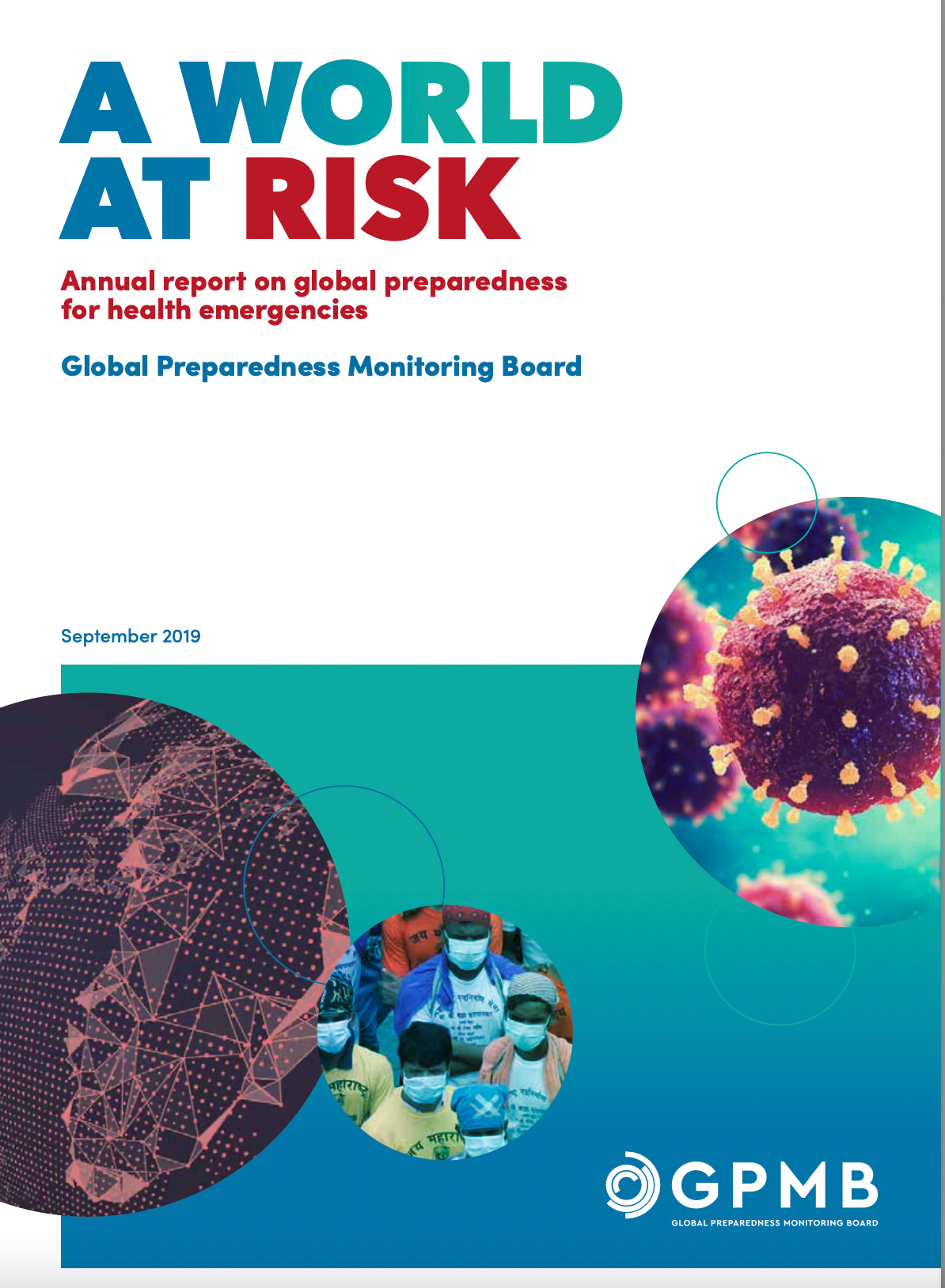
The report’s title page is illustrated with an image of a coronavirus, and its text is an urgent call to action for the world to invest far more in preparedness for a respiratory viral pandemic. As the report states on page 8:

The report mentions nothing about the need to invest in bolstering bio-laboratory safety. It expressly warns about the threat of a lethal respiratory pathogen “accidentally or deliberately released,” but its entire call to action is to invest a fortune to responding to such a pathogen instead of preventing it from being released in the first place.
This was in spite of numerous urgent warnings from Rutgers University biology professor Richard Ebright and others that many of the world’s bio-labs had a history of grave security lapses that were NOT being adequately addressed. In 2017, Professor Ebright expressed particular concern about the new BSL-4 lab that was about to open in Wuhan, China.
We now know that SARS-CoV-2 was officially detected in December of 2019 but probably emerged and started spreading in August or September of 2019—that is, around the same time A World At Risk was published.
The September 18, 2019 date of the report strongly suggests that someone doing bio-surveillance for the WHO in China obtained intelligence that a SARS coronavirus was already circulating.
Given that the Gates Foundation is the WHO’s second largest donor (after Germany, where BioNTech is headquartered) I wonder if this intelligence was passed to someone in the Gates Foundation months before December 31, 2019—the date the WHO claimed it received its first report of cases of pneumonia of unknown etiology in Wuhan.
Does the WHO—with its Country Offices obtaining bio-surveillance reports from the field—serve an an unofficial intelligence agency for the Gates Foundation?
If so, it would enable the Foundation to obtain extremely valuable information about emerging infectious disease pathogens—naturally emergent or accidentally or deliberately released—long before other market players obtain this information.
Sponsor of TikTok Ban & Iran-Palestine Sanctions Gets 1,400% Bump in AIPAC Donations
By Ian DeMartino – Sputnik – 22.04.2024
The 21st Century Peace through Strength Act passed the US House of Representatives on Saturday, as part of a package of bills that also included military aid to Ukraine, Israel and the Indo-Pacific.
US Rep. Michael McCaul (R-TX), who sponsored the 21st Century Peace through Strength Act that passed the US House of Representatives, saw contributions to his campaign from the American Israel Public Affairs Committee (AIPAC) increase an incredible 1,413% during the 2024 election cycle when compared to the 2022 cycle.
The 21st Century Peace through Strength Act includes the REPO Act, which enables Biden to seize Russian assets frozen in US banks and send them to Ukraine, a provision that will essentially ban TikTok from the US, and also contains sanctions against Palestinian resistance groups.
According to a statement released by McCaul when the bill was introduced, it will be “the most comprehensive sanctions against Iran [that] Congress has passed in years.” The legislation is expected to clear the Senate and be signed into law by US President Joe Biden this week.
While it is unclear if, how, or why AIPAC would push for the theft of Russian assets, the other major provisions of the bill are directly related to issues AIPAC and other pro-Israeli lobbying groups advocate for.
The sanction provisions of the bill are self-evidently pro-Israel actions, designed explicitly to harm Israel’s adversaries in the region. The TikTok ban is slightly obscured, but the app has been blamed by politicians and Jewish groups alike for the rise in support among young people for the Palestinian cause.
In late October, US Sen. Josh Hawley (R-MO) called the app a “purveyor of virulent antisemitic lies,” on Twitter.
Billionaire Bill Ackman, one of Israel’s most virulent supporters who gained infamy last year after publicly doxing Ivy League students who made pro-Palestinian statements, blamed the app directly for the support of Palestine among America’s youth. “TikTok is massively manipulating public opinion,” he wrote.
“Compare the generational differences on support for Hamas. 51% of the TikTok generation say that Hamas’ barbaric acts are justified,” Ackman wrote on Twitter/X while saying TikTok should “probably” be banned.
Ackman’s sentiments were reflected by McCaul himself in November, when he, too, blamed TikTok and China specifically for young people turning against Israel’s actions in Gaza.
“China controls the algorithms on TikTok, so if you type in Israel or Palestine you are going to get a lot of pro-Palestinian, Hamas material and videos pop up and that’s primarily the source of education for our young people,” claimed McCaul.
It is not just politicians blaming TikTok for the rise in support for Palestinians, Jewish groups have as well.
In December, Anti-Defamation League (ADL) CEO Jonathan Greenblatt blamed TikTok for “intensifying antisemitism” and anti-Zionism.
“TikTok, if you will, is the 24/7 news channel of so many of our young people and it’s like Al Jazeera on steroids, amplifying and intensifying the antisemitism and the anti-Zion[ism] with no repercussions,” Greenblatt claimed on American television.
For years, McCaul was a non-entity for pro-Israel lobbying groups like AIPAC. Elected in 2004, McCaul received no contributions from pro-Israel groups until the 2020 cycle when another group, Pro-Israel America PAC contributed $32,600 to his campaign, his largest donor that year, according to Open Secrets.
The next cycle, McCaul received $7,900 from AIPAC itself in addition to another $6,000 from other pro-Israel groups. But, it was not until this year that McCaul became the Republican darling for AIPAC in the House of Representatives.
To date, McCaul has received $119,550 from AIPAC in 2024 alone, a 1,413% increase and by far his largest contributor, dwarfing the second place Axxess Technology Solutions which donated $16,600.
Open Secrets lists the “pro-Israel industry,” including AIPAC, as having contributed $372,468 to McCaul’s campaign overall in 2024, a 681% increase from the $47,673 in contributions he received from the “pro-Israel industry” in 2022.
This cycle, McCaul is AIPAC’s top Republican recipient in the House and is the sixth overall House recipient of AIPAC funds. Only Democratic Reps. Ritchie Torres (NY), Hakeem Jeffries (NY), Kathy Manning (NC), Josh Gottheimer (NJ) and Pete Aguilar (CA) sit above McCaul on the list. All of them voted for the bill.
Of the bill’s 10 co-sponsors, all Republicans, four of them list AIPAC as their top contributor for this year: Reps. Joe Wilson (SC), Mark Green (TN), Doug Lamborn (CO), and Dan Crenshaw (TX). Another co-sponsor, Rep. Brian Fitzpatrick (PA) lists AIPAC as his second-largest contributor. Only Delegate Aumua Amata Coleman Radewagen from American Samoa, who does not have voting rights in the House, and US Rep. Maria Salazar (FL) co-sponsored the bill without taking campaign contributions from AIPAC or any other pro-Israel group.
Sputnik emailed McCaul’s campaign for comment on the increase in AIPAC contributions, but did not receive a response by press time.
US lawmaker demands ‘proof’ on CIA’s Russia scare

RT | April 22, 2024
After stoking fears of Russian expansionism to win congressional approval for more Ukraine aid, US intelligence agencies should provide proof of their justification for continuing to fund a “proxy war” that will inevitably end in defeat for Kiev, Representative Marjorie Taylor Greene (R-Georgia) has argued.
Speaking on Monday in an interview with former White House aide Steve Bannon, Greene pushed back against claims that Russian forces will take Poland and continue “marching across Europe” if they’re allowed to defeat Ukraine. She noted that US House Speaker Mike Johnson (R-Louisiana) only agreed to push through the $61 billion Ukraine aid bill, which was approved on Saturday, after hearing intelligence briefings hyping the Russian threat.
“If the American people are going to have to pay for it, then show us this proof that was shown to Mike Johnson in the SCIF [sensitive compartment information facility],” Greene said. “Why is this classified information? If this is a real threat to all of Europe, if this is a threat to America and our national security, then roll out the presentation.”
The second-term lawmaker said Johnson received no such classified briefings on the US border crisis, which poses a real threat to the American people. “They don’t care about that,” she said. “They care about continuing the business model built on blood and murder and war in foreign countries, the business model that continues funding the military-industrial complex in order, supposedly, to create American jobs and build up the American economy.”
“This is the most disgusting business model that anyone has ever seen, probably in the history of mankind.”
Greene reiterated her call to oust Johnson as speaker, saying Republican voters are so disgusted about the Ukraine bill that the party will lose control of the House in this year’s election if the current leadership remains in place. The White House’s emergency funding request for Kiev had been stalled since last fall because a majority of Republicans opposed it. Republican lawmakers voted against the legislation by a 112-101 margin on Saturday, but Johnson overrode his own party by allowing a vote and winning passage with unanimous Democrat support.
Johnson won praise from the Washington media for his reversal on Ukraine aid – CNN even likened him to Winston Churchill – while Greene came under attack for criticizing him. The New York Post put a picture of Greene on its Sunday cover with a Soviet ushanka superimposed on her head and a caption saying, “Nyet, Moscow Marjorie.”
Greene insisted that congressional Republicans can’t win in the November election without the support of ‘America First’ voters. She added that sending more aid to Ukraine will only cause more bloodshed without changing the outcome of the conflict.
“This just continues the war maybe a few more months, maybe to the end of the summer,” Greene said. “It doesn’t guarantee a Ukrainian victory because everyone knows they’re going to lose eventually. It just is a matter of when. But it does guarantee that more Ukrainian men will be slaughtered on the battlefield.”
Southeast Asia on Course to Ukraine-Style Crisis Amid US Militarization of Philippines
By Ilya Tsukanov – Sputnik – 22.04.2024
US and Philippine troops kicked off the largest iteration of their annual Balikatan exercises in decades this week, with this year’s drills involving some 11,000 US and 5,000 Filipino military personnel, plus forces from Australia and France. Geopolitical analyst and former US Marine Brian Berletic explains why the drills are so dangerous.
Chinese diplomatic and military officials slammed Washington and Manila over the Balikatan drills on Monday, accusing participants of attempting to “flex” their “gunboat muscles,” stoking confrontation in the South China Sea and undermining regional security.
“Reality has shown that those who make deliberate provocations, stoke tensions, or support one side against another for selfish gains will ultimately only hurt themselves,” Chinese Central Military Commission Zhang Youxia said, warning that US-led attempts at “maritime containment, encirclement and island blockades will only plunge the world into a vortex of division and turbulence.”
The Chinese military plans to increase its naval and air patrols in the South China Sea amid the US-Philippines exercises, which will run until May 10, and include everything from maritime security and air defense operations to cyber and information warfare, and simulate the seizure of islands in the vicinity of Taiwan and the South China Sea.
Crucially, drilling will include naval exercises outside the Philippines’ internationally recognized territorial waters near the disputed South China Sea – parts of which are claimed by both Manila and Beijing.
Former Philippines president Rodrigo Duterte warned current President Bongbong Marcos Jr last week about the risks of cozying up with the US at the expense of balanced relations with China, accusing Washington of trying to provoke a war between the Philippines and China, and emphasizing that he doesn’t believe “America will die for us” if tensions grow into direct clashes.
“I would remove the bases. And I would tell the Americans, you have so many ships, so you do not need my island as a launching pad or a launching deck for you,” Duterte said.
Assuming office in 2022, the Marcos Jr. government moved to expand the Philippines’ Enhanced Defense Cooperation Agreement with the United States, nearly doubling the number of military bases in the country that the US gets access to from five to nine in 2023. Two of the facilities, the Antonio Bautista Air Base and the Balabac Island Air Base in the Palawan archipelago, border directly on contested waters in the South China Sea.
Echoes of Ukrainian Escalation
Filipinos are right to be concerned about US attempts to militarize their country, says former US Marine-turned author, journalist and independent geopolitical analyst Brian Berletic.
“The Philippines were previously a US colony gaining independence only in 1945. Since then, the US has attempted to reassert political control over the country as well as maintain a large US military presence on its shores. The goal is to militarize the country and use it as part of a wider united front against China,” Berletic told Sputnik.
“Exercises like Balikatan give the US an opportunity to shape the Philippines’ armed forces into a suitable proxy for a potential conflict with China,” the observer warned.
The creeping militarization of the island nation is not unlike processes witnessed in the aftermath of the Euromaidan coup d’état in Ukraine in 2014, which were followed by joint military exercises involving US and Ukrainian troops, Berletic recalled.
These processes ultimately culminated in the 2022 escalation of the Donbass crisis into a full-blown NATO-Russia proxy war.
“Washington’s primary objective in the Asia-Pacific region is to encircle and contain China. To do this, the US is attempting to compromise the governments of nations along China’s periphery including the Philippines, establish a US military presence within their borders, and militarize these countries against China,” the observer explained.
In addition to allowing the US to move its military assets “dangerously close to Chinese territory,” including in the disputed waters of the South China Sea and off the shores of the breakaway Chinese island province of Taiwan, US activities in the Philippines are designed to take advantage of and artificially inflame outstanding regional maritime disputes.
This enables Washington to “both justify a larger US military presence in the region, and turn nations in the region against China,” Berletic said.
“This will result in a similar crisis as seen in Europe where the US not only used Ukraine in a highly destructive proxy war against Russia, but also decimated Europe’s economy, socio-political stability, and placed the entire region on the precipice of a US-driven war,” Berletic fears.
South China Sea Dispute
The dispute between China, the Philippines and other nations over the strategic, energy and fishing resource-rich waters of the South China Sea dates back to the immediate post-WWII period, with Beijing staking claims on the basis of imperial dynasties’ near total control over waters in the area prior to the arrival of the Europeans and Americans in the region.
China has been exploring a regional dispute mechanism with its South China Sea neighbors since 2002, and has called on Washington – which has no claims to the region, to butt out. The US has gradually ramped up its military presence in the region since the early 2010s, when Obama Secretary of State Hillary Clinton called the South China Sea a matter of US “national interest.” In addition to shoring up a network of alliances and undermining Chinese negotiating efforts, the US has deployed Navy and Coast Guard ships into the South China Sea on so-called ‘freedom of navigation’ missions to challenge Chinese sovereignty claims. These missions have resulted in a series of close calls between Chinese, US and US-allied warships and military aircraft.
America’s “national interest” in the South China Sea is also inexorably tied in part to a strategy of containing China through the so-called ‘Island Chain Strategy’, which envisions a broad network of US bases and bilateral pacts with regional powers to prevent the Chinese Navy from being able to mount operations beyond its home waters.
Featured Video

John Mearsheimer Talking Iran with Iran
or go to
Aletho News Archives – Video-Images
Book Review & Summary
Calling of an Angel: The True Story of Rene Caisse and an Indian Herbal Medicine Called Essiac (1988)
Dr. Gary L. Glum – 30 Q&As – Book Review & Summary
Lies are Unbekoming | October 17, 2026
On June 10, 1975, Dr. Chester Stock, a vice president at Memorial Sloan-Kettering Institute for Cancer Research, wrote to a Canadian nurse named Rene Caisse: “Enclosed are test data in two experiments indicating some regressions in sarcoma 180 of mice treated with Essiac.” The sentence sat in a letter from one of the world’s largest private cancer research centers, concerning an herbal tea an elderly English woman had learned from an Ojibwa medicine man at a northern Ontario mining camp in the 1890s. The tests were terminated the following year after Sloan-Kettering admitted, in sworn affidavit three years later, that they had prepared the injectable solution improperly from the dried material supplied — freezing and thawing the herb rather than boiling it as Rene had instructed. By the time Calling of an Angel was published in 1988, Rene Caisse had been dead for a decade, having treated thousands of cancer patients across fifty-six years in her Bracebridge, Ontario kitchen, never charging a fee, and refusing every offer — from Memorial Sloan-Kettering, the National Cancer Institute, Merck, Parke Davis, and private corporations dangling contracts up to $1 million — to release her formula before the medical establishment admitted her remedy had merit. … continue
Blog Roll
 Aletho News
- Vice President J.D. Vance’s Deceptive ‘Antiwar’ Campaign Speech
- Iran: Palestinians’ rights must not be compromised in Gaza’s future; US, Israel to blame for Hormuz situation
- Ongoing tales of Syrian chemical weapons
- Moscow blasts UN for ignoring torture of Russian POWs
- Millions of Books Could Have Been Destroyed in Lebanon During Israeli Bombings
- Moscow warns of ‘hunt for Russians’
- Calling of an Angel: The True Story of Rene Caisse and an Indian Herbal Medicine Called Essiac (1988)
- South Korean Assistance to the U.S. in the War with Iran: Between Allied Duty and National Interests
- Pharma- and Gates-Funded GAVI Seeks to Assure Parents
- John Mearsheimer Talking Iran with Iran
- If Americans Knew
- Israeli soldiers debunk Israel’s talking points
- In West Bank, Israeli settlers are totally out of control – Daily Update
- NPR investigation finds evidence of widespread fraud at mall kiosks tied to Israeli skincare brand
- Tucker Carlson exposes Israeli Lies about the Oct 7th attack, Charlie Kirk, and the U.S.
- Israel has detained thousands of Palestinian children since Oct 7th – over half spent time in solitary, many uncharged
- Israeli Analysis: Is Netanyahu Planning an ‘October Surprise’ Attack Before Israel’s Election?
- Israeli settlers brutally attack Palestinians and Washington Post female photographer, 65
- Words Have Changed, Occupation Continues: The Reality of the Gaza Ceasefire
- Gaza’s child amputees are growing faster than their prosthetics allow
- Israel keeps Palestinians struggling just to survive–Daily Update
- No Tricks Zone
- New Study Suggests Large Regions Of The Pacific Ocean Have Been Cooling For The Last 80 Years
- Germany’s Green Energy Debacle: High Energy Costs Force Kahla Porzellan to Close After 182 Years!
- New Study: 50 Years Of The Most Aggressive ‘Net Zero’ Policies Can Only Affect The Global Climate By 0.03°C
- US September “Heat” Was No Record…Many Records Set Decades Ago
- Latest European Green Energy Debacle; Portugal’s Largest Flagship Solar Park Insolvent!
- Green Energy Debacle: German Expert Professor Fritz Vahrenholt Warns Of Severe Economic And Social Consequences
- Two More Paleo Reconstructions Affirm Meters-Higher Sea Levels Across Ireland, Brazil 7000-6000 Years Ago
- New Study: Earth And Venus Surface Warmth Largely Explained By Convection And Lapse Rate, Not CO2 Or Radiation
- 2025 Nature Paper Claiming Worsening Global Drought Gets RETRACTED …Heavily Flawed
- New Study: ‘Global Drought Shows No Detectable Recent Acceleration Under Climate Warming’

