War in Sudan and its Grim Prospects
By Viktor Mikhin – New Eastern Outlook – November 29, 2024
Russia used its veto power in the UN Security Council (UNSC) to block a draft resolution calling for an end to the 20-month war in Sudan and the commencement of negotiations between the Sudanese Armed Forces (SAF) and the Rapid Support Forces (RSF).
The draft resolution, widely seen as neo-colonial in its design, was proposed by the UK, which holds the UNSC presidency on Sudan, and Sierra Leone, a non-permanent UNSC member, which London appears to have pressured into supporting Western interests in this instance.
Reasons for the Russian Veto
During the drafting process leading up to the vote, several concerns regarding the wording were raised. However, following the vote, it became clear that constructive proposals from UNSC members were disregarded, and their legitimate concerns were not adequately addressed. The Chinese representative stressed that any UNSC resolution or action must “respect the sovereignty, independence, and territorial integrity of Sudan.” He warned that, “Imposing external solutions will only worsen the situation and will neither help end the war nor protect the civilian population.”
Explaining the outcome of the vote, the Russian representative stated: “The main problem with the British draft lies in its misunderstanding of who bears responsibility for protecting the civilian population, as well as border control and security within the country.” According to the Russian representative, “this should be exclusively a matter for the Sudanese government.” He further accused British diplomats of “clearly denying Sudan this right.” He concluded, “Our country will continue to consistently use its veto power to prevent such occurrences against our African brothers.”
Sudanese Support
According to Sudanese Armed Forces (SAF) chief Abdel Fattah al-Burhan, the draft resolution’s wording violated Sudan’s sovereignty. An Arab diplomatic source at the UN explained al-Burhan’s position, stating that the draft “implied an equivalence between the SAF and the RSF, which is something al-Burhan could not accept, especially now that the army is making gains on the ground and receiving stronger political support regionally and internationally.”
Many diplomatic sources in the region agree that the draft resolution failed to reflect the balance of power on the ground, which, according to one, has “definitely shifted in favour of the SAF.” The army currently controls much of Sudanese territory, and al-Burhan enjoys greater international recognition than the RSF and its leader, Mohamed Hamdan Dagalo, also known as Hemeti. They point out that Hemeti heads the RSF, a militia created in 2013 by Omar al-Bashir to protect his brutal regime and responsible for numerous atrocities, particularly in Darfur. Hemeti, along with other RSF figures, has been accused by international humanitarian organisations of ethnic cleansing targeting non-Arab tribes in West Darfur.
The Rift Between al-Burhan and Hemeti
Al-Burhan appointed Hemeti as his deputy on the Transitional Sovereign Council (TSC) formed after the overthrow of al-Bashir. This move drew criticism from the African Union, which stated that it was “a very bad sign, showing that al-Bashir’s successors were attempting to recreate his dictatorial regime, albeit under a democratic façade.” The TSC, it seems, was designed more for the internal distribution of power within al-Bashir’s clique than for any other purpose.
The conflict began in mid-April 2023. Following al-Bashir’s removal, al-Burhan and Hemeti initially joined forces, seizing control but allowing for limited power-sharing with civilians. However, when al-Burhan dismissed the interim civilian government in October 2022, Hemeti seized the opportunity to oppose al-Burhan, claiming the move was “anti-democratic.” According to Arab diplomatic sources, including those who served in Khartoum, Hemeti’s pronouncements on democracy ring hollow. In reality, they say, Hemeti has always aspired to power and believed he could strike a deal with the civilian government to replace al-Burhan as commander-in-chief.
Sudan’s problems are largely driven by regional powers vying for control of the country’s natural resources and exploiting its strategic location. It’s no secret that an Arab capital, with significant investments and interests in Sudan, pushed the West to draft a self-serving resolution which they attempted to sneak through the UNSC. They failed! However, the West remains undeterred, continuing its sophisticated attempts to bring Sudan entirely under its control.
Attempts to Resolve the Conflict
The international community has been closely monitoring the situation in Sudan since the conflict began and, over the past year, has been working with like-minded regional partners to create an opportunity for peace. Cairo, a view shared by Ankara and Tehran, believes that the best chance for peace lies in a unified Sudanese army under a single command, arguing that “otherwise, the country will simply move from one war to another.” Over the past 11 months, a series of meetings have been held in Cairo with representatives from Sudan’s armed, political, and religious forces, aiming to forge a united front capable of cooperating with the SAF based on power-sharing and stability. As the SAF has made military gains against the RSF, the number of Sudanese actors willing to participate has increased. Many believe it is only a matter of time before the RSF is forced to acknowledge its weakening position, despite the support it receives from regional allies.
Since the start of the war, 11 million Sudanese have been displaced. The UN estimates that half are children, the majority of whom lack access to basic nutrition. Furthermore, a further 15 million Sudanese are suffering from food insecurity and a lack of access to essential healthcare.
It was only in mid-August that significant UN humanitarian aid reached Sudan via the Adre crossing point connecting Darfur to Chad. According to the UNHCR, just over 50% of the $2.7 billion budget required for humanitarian assistance in Sudan has been secured in 2023. The UN believes that “Sudan needs more than just immediate humanitarian aid; it needs a proper and workable peace plan. This is what we are working on, and we have the support of several global and regional capitals.”
According to David Patteritt, US envoy to Sudan, outgoing US President Joe Biden is making every effort to secure a deal on Sudan before leaving office on 20 January. However, according to Cairo’s Al-Ahram, this deadline is overly optimistic. The newspaper warns that “we’ll be lucky to see any movement by then, and a deal will take considerably longer,” suggesting that much will depend on the stance of US President Donald Trump’s new administration.
It is therefore abundantly clear who is fanning the flames of civil war in Sudan, attempting to profit from the Sudanese people’s suffering. But this is the 2020s, and neo-colonial politics, however alluringly packaged, no longer hold sway.
Victor Mikhin is a Corresponding Member of the Russian Academy of Natural Sciences (RANS).
Iran dismisses claims of plotting to assassinate former Canadian minister Irwin Cotler
Press TV – November 19, 2024
A senior Iranian diplomat has vehemently rejected the allegations of Tehran’s involvement in a plot to assassinate former Canadian justice minister Irwin Cotler.
Issa Kameli, an assistant to Iran’s foreign minister and the director-general of the department of America at the Iranian Foreign Ministry, dismissed the accusations as “ridiculous propaganda stunt,” emphasizing they are in line with the campaign aimed at spreading misleading and false information about his country.
He strongly denounced the anti-Iran claims, stating that such spurious and unfounded allegations come from a county which has turned into a safe haven for fugitive terrorists and wanted fraudsters.
The Iranian official noted that the baseless accusations against the Islamic Republic cannot divert the world public opinion from the ongoing Israeli crimes, including the massacre of Palestinians in Gaza, and the complicity of Canada as one of the main sponsors of the occupying Tel Aviv regime.
This came after Cotler’s office said he had been informed by the Royal Canadian Mounted Police (RCMP) of an Iranian-backed attempt on his life on October 26, two days before he was purportedly set to be attacked, according to the Globe and Mail newspaper in Canada.
The octogenarian, who is Jewish, is said to have been under 24/7 protection by the RCMP for more than a year since the large-scale surprise attack by Hamas and other Gaza-based resistance groups against Israel on October 7 last year.
Cotler, who is now retired, was a member of parliament in Canada from 1999 to 2015. He served as the minister of justice and attorney general under the Liberal government of former prime minister Paul Martin from 2003 until 2006.
He has strong ties to Israel, and had previously tabled a motion in the Canadian parliament in 2013 asking that Iran’s Islamic Revolution Guards Corps (IRGC) be sanctioned and designated as a terrorist entity. Canada officially took the measure against the IRGC in June of this year.
His daughter, Michal Cotler-Wunsh, is an Israeli politician and diplomat who previously served as a member of the Israeli Knesset (parliament).
Saudi Arabia to expand teaching of Chinese language with 800 more teachers amid growing demand
MEMO | November 18, 2024
Saudi Arabia is set to expand the teaching of the Chinese language by creating 800 teaching positions, amid the growing demand for learning the Chinese language in the Kingdom.
According to China’s official news agency, Xinhua, the planned appointment of the 800 new teaching roles aligns with the spread of Chinese language classes across Saudi Arabia’s primary and middle schools.
The move follows the recent successful deployment of 175 Chinese language teachers in the Kingdom, who reportedly began teaching last month. It is part of a landmark agreement struck in 2023 between Riyadh and Beijing in an effort to strengthen bilateral cooperation in language education.
Under that agreement, Saudi Arabia’s Ministry of Education collaborated with China’s Centre for Language Education and Cooperation in launching training programs for educators, conducted at Tianjin University in China, with the aim to equip teachers with the necessary skills.
The increased language cooperation between the two countries is part of the wider expansion in their relations across a variety of sectors, including trade, military, technology and energy.
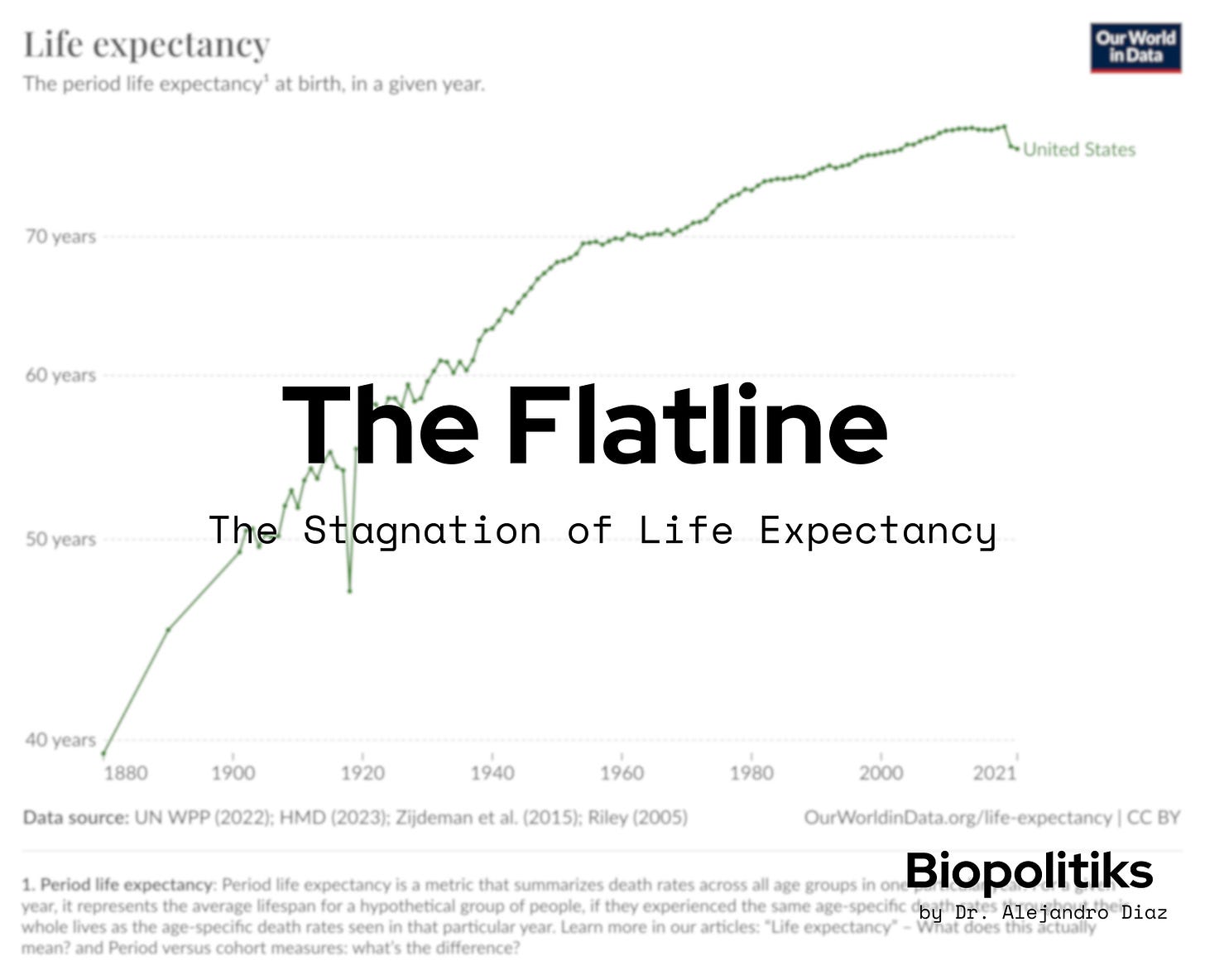
The Flatline
The Stagnation of Life Expectancy
Biopolitiks by Dr. Alejandro Diaz | November 14, 2024
Life expectancy is one of the most relevant measures of health outcomes. Historical data on this issue tells the story of the revolutionary medical advancements of the last centuries. Over the last 100 years, life expectancy has risen dramatically. Rapid industrialization and scientific advancements have reduced the early mortality risk tremendously. Since 1900, life expectancy has doubled in nearly every corner of the globe. However, something extremely interesting happened at the turn of this last decade. For the first time in over 60 years, global life expectancy dropped. This wasn’t an isolated trend, by the way. Life expectancy had been flatlining for about the past 10 years globally, and 30 years in some developed nations, particularly the United States.

Life Expectancy Statistics according to Our World in Data
What’s the reason behind this flatline?
To dive into the hows and whys behind the stagnation, it is important to first understand how this data is measured and what it means for health outcomes. Life expectancy refers to the number of years the average person within a selected population can expect to live. Although there are various methods, the most common is referred to as “period life expectancy.” This method calculates the period during which a person born in the year of measurement can expect to live if the death rates stay constant.
Life expectancy is widely considered to be one of the most relevant indicators in the measurement of the health of a population. Experts believe that this is a more accurate measure than other comparable indicators, like total mortality. More broadly, some refer to it as a clear indicator of human progress.
Regardless of the many interpretations, it is clear that this is a relevant global health statistic.
Life expectancy is not only a health indicator—it’s a Biopolitikal indicator. It accurately quantifies the relationship between policy and the health outcomes of governed populations. This statistic can measurably grade the quality of public health policy. The coordination of those in charge of scientific/medical advancements, in conjunction with policymakers, has driven improvements. This outlines the importance of this measurement and how it is indicative of recent systemic failures on the Biopolitikal level.
Globally, the stagnation of this metric coincides with the increased incidence of chronic diseases. It seems that much of the detriment, not only in life expectancy data but in disease burden generally—particularly non-communicable disease burden—begins around the year 1990. The medical advancements of the prior century appear to have leveled off in their impact on health outcomes.
Among developed nations, the United States stands out, with life expectancy lagging behind comparable nations.

Life Expectancy vs Health Expenditures (Our World in Data)
The situation of the United States is quite particular in the sense that it represents some of the highest expenditures per capita on healthcare but lies around the mid-range of the spectrum in terms of overall health outcomes. In this specific chart above, it measures life expectancy. The United States has been the most affected country by the global chronic disease epidemic, by far.
A Centers for Disease Control and Prevention (CDC) report from earlier this year in February stated that around 130 million people suffer from some sort of chronic disease in the United States. The figure has risen by nearly 50 million in the last 30 years. This represents a clear Biopolitikal failure. One study out of California mentioned the increase in circulatory disease as one of, if not the main, contributors to the stagnation of American life expectancy “post-2010.”
This chronic disease data is reflected in life expectancy rates. From 1960 to 1990, the U.S. life expectancy rate rose nearly six years; in the next 30-year period from 1990 to 2020, it rose only two years. The correlation is clear.
The data is similar globally; however, the United States is a special case.
In the previously mentioned CDC report, they also estimate that around 90% of the over $4 trillion USD in yearly federal health expenditures go to managing chronic diseases. This shows that not only is the chronic disease epidemic costing the government trillions in taxpayer dollars, but also that some are making billions in treating them.
This, of course, is in the United States. But what does the global data suggest? In Europe, experts suggest that around 70% of all deaths on the continent originate from chronic diseases, specifically cancer and cardiovascular disease. Despite the economic disparities, data out of Latin America shows a very similar story. The WHO estimates that around 63% of men and 60% of women are considered overweight in the region.
These figures represent incentives for the system to keep the patient sick in perpetuity, contributing to stagnating life expectancy rates. However, this also represents an enormous opportunity for us to make a positive transformation in the Biopolitikal framework.
The Path Forward
To reverse this tendency we must course correct. The solution lies in the collective decision-making processes. A critical review of the current landscape is a necessity.
We must review certain aspects influencing the chronic health epidemic and the general detriment of health outcomes across the board. That means looking at the root causes. In my professional opinion, I would include in that list the current vaccine schedule. Is it really necessary for people to receive the nearly 70 vaccines that are on the recommended immunization schedules from the moment they practically leave the womb to adulthood? When most deadly infectious diseases have been eradicated globally. What effects are these having on children? Could this be why we’re seeing widespread immunosuppression in the global population?

Recommended child immunization schedule according to the CDC
Food and agriculture policy must be modified. Last week we discussed the effects of the dangerous chemicals and additives included in the global food supply. Many of these have been linked to long-term health issues, including hormonal disruption, obesity, ADHD, and chronic diseases. These additives compromise the nutritional value of food and contribute to the global rise in non-communicable diseases by promoting unhealthy dietary patterns.
Additionally, overmedication further exacerbates these ailments. Instead of addressing the root dietary issues, doctors resort to pharmaceuticals.
I would go so far as to argue that this critical review should extend to medical school curricula. Curriculums should be modified to include further training on nutrition, functional medicine, etc., giving medical graduates a new understanding to take on these public health crises.
Medical schools don’t teach you how to think; they teach you what to think.
Transforming, from a policy perspective, the way we look at public health is necessary. We as a society must collectively broaden our perspective to consider these alternative approaches.
Luckily, the point of inflection is now. Global attitudes toward this line of thinking are shifting rapidly. There is immense enthusiasm arising from the possibility of real reform coming to the highest levels of Biopolitikal decision-making.
With today’s announcement, it seems as though we are even closer than we think of it all coming to fruition. As of today, November 14th, President-Elect Donald J. Trump has nominated Robert F. Kennedy Jr. as the next Secretary of Health and Human Services, definitely the most qualified for the position. As I have mentioned repeatedly in my substack posts, whatever the United States does, the world will follow. Parting from this principle, Global Biopolitiks is set to experience a massive shift in the coming years.
About me (Dr. Alejandro Diaz)
I am a Pediatric Allergist / Immunologist and Global Health Expert with extensive international experience. I have delivered conferences in over 27 countries around the globe on topics of medicine, migration, biosecurity, and related topics. This includes prestigious venues such as the White House, the US Capitol, the Romanian Parliament, the European Parliament in Brussels, the Mexican Senate of the Republic, the United Nations in Geneva, Japanese Parliament, among others.
My career encompasses diverse roles in healthcare including private practice, health systems, and advisory positions for medical service companies, governments, and government entities worldwide.
On the beginning of détente in Chinese-Indian relations
By Vladimir Terehov – New Eastern Outlook – November 7, 2024
The meeting of the leaders of India and China, which took place on October 23 on the side-lines of the latest BRICS summit, became one of the most significant events of the Kazan summit, in which 30 countries participated.
In a commentary on the Chinese Global Times, the term ‘détente’ was used to characterise the state of relations between them, two of the multiple participants in the ‘Big Global Game’ at its current stage, which began to form both as a result of the aforementioned meeting and as a result of certain previous events. This article is a reaction to the words of Indian Foreign Minister S. Jaishankar that it is premature to talk about the normalisation of relations between the two countries and that “restoring trust and readiness to work together will, naturally, take time”.
Half a century ago, the term ‘détente’ was used at one point of the Cold War by very responsible (both to their own peoples and to the world as a whole) leaders of opposing military and political groups. One of the main tasks was to prevent the use of ‘doomsday devices’, which are today absent-mindedly juggled by self-asserted political connoisseurs due to schizoid propaganda.
However, it did not, of course, reduce the multitude of fundamental problems at the heart of the Cold War itself, which were not eliminated by détente. Today, the ‘détente’ that has seemingly begun does not eliminate the serious issues in relations between the two Asian giants. This is likely what was meant by the head of the Indian Foreign Ministry and his commentators from the leading Chinese newspaper, warning against premature euphoria about the results of the meeting of the Chinese and Indian leaders in Kazan.
Issues in relations between India and China
This meeting was preceded by the resolution of a private problem that arose after the famous events of the summer of 2020 in Ladakh, a disputed area in the Himalayas. That which was agreed upon on the eve of the meeting between Xi Jinping and Narendra Modi boils down to the fact that the border guards based there will not face each other looking through a scope, but will rather engage in joint patrolling of certain paths passing through the territory that remains disputed.
There are several such disputed areas (with a total area of about 130,000km2). In the 50s and 60s, attempts were made to solve the territorial issue according to the principle of mutual and approximately equal concessions.
But something went wrong; what exactly went wrong is hard to pinpoint. This is the mystery of the whole issue of Chinese-Indian relations, the scale of which goes beyond the disputed territories. In order to define this ‘something’, international conferences are held with the participation of reputable Indologists and Sinologists who offer plausible hypotheses about this ‘something’.
10-15 years ago, it was defined by the word ‘Tibet’. More precisely, the state of bilateral relations after the liquidation of the virtually independent status of Tibet at the end of 1950. This status, in turn, turned out to be a consequence of the turmoil in China as a result of the Xinhai Revolution of 1911-1912. Since 1952, Tibet has ceased to be a sort of buffer zone between India and China and the military units of both countries are now separated by a 4,000,000 km line of actual control, which is not an internationally recognised border and will not become such until the parties resolve the issue of control over several of the above-mentioned disputed territories.
As a result of this and a number of subsequent events (this is first of all the 1959 rebellion in Tibet), the head of Buddhism in the world and about 100,000 Tibetan refugees found themselves in India, creating ‘authorities in exile’ there. This aids in keeping the ‘Tibetan issue’ – and suspicion in relations between India and China in general – in a tense state.
Over the past 10-15 years, radical changes have taken place in the status of these countries in the format of the ‘Big Global Game’. At the same time, the interests of both India and China extend far beyond national borders, intersecting on the territories of ‘external’ countries, which include all the countries of the Indian Ocean area and that are adjacent to India and China on the Asian mainland.
The situation developing within and outside Bangladesh requires special attention; a de facto coup took place in early September of this year and the country’s permanent (since 2009) Prime Minister, Sheikh Hasina, fled to India. Today, this serves as an additional reason for her to be accused of maintaining a ‘pro-Indian’ political vector, although she has actually been skilfully balancing the force fields created by two great neighbours of Bangladesh.
Relations between India and the current ‘transitional government’ of Bangladesh (which demanded the extradition of S. Hasina for her trial) have deteriorated markedly. This is especially notable against the background of a number of recent friendly gestures in Dhaka’s relations with Beijing (e.g. two Chinese navy ships visiting one of the ports of Bangladesh in the first half of October).
One may also recall India’s membership (along with the United States, Japan and Australia) in the Quad configuration, the latest summit of which was held in September in the US. Three weeks later, 10-day joint naval exercises between Quad countries took place in the Bay of Bengal. It is possible that, among other things, this was a warning signal to Bangladesh and China.
What to expect from future developments of Chinese-Indian relations?
 It is difficult to make forecasts at the current stage of the radical reformatting of the world order. Therefore, assessments regarding the nature of further development of bilateral relations – both in China and in India – are reserved. The illustration in the Global Times article mentioned at the very beginning accurately reflects reality.
Nevertheless, a remark in another commentary from the same newspaper about the need to “reduce future fluctuations in Chinese-Indian relations so as to minimise geopolitical disruptions from third parties guided by hidden malicious intent” seems noteworthy. Everything is significant in this phrase, especially the term ‘fluctuations’, a word which could describe the entire period of bilateral relations between independent India and China.
The previous stage of bettering bilateral relations started during a meeting of the two countries’ leaders held in April 2018 in Wuhan, China. A year and a half later, this trend was confirmed during Xi Jinping’s return trip to India and his meeting with N. Modi. The ‘incident in Ladakh’ followed and bilateral relations again fell to one of their lowest levels.
As for the ‘third parties with malicious intent’, it is clear who is meant by this. Note that Russia is also a ‘third party’, but with the complete opposite ‘intent’. There can be little doubt that it was Russian assistance that facilitated the meeting of the Indian and Chinese leaders on the side-lines of the latest BRICS summit. Russian diplomacy should be acknowledged on this occasion.
Fully aware of the fact that various difficulties remain in Chinese-Indian relations, let us hope that this meeting will become the starting point of their long-term positive development.
Vladimir Terekhov is an expert on the issues of the Asia-Pacific region.
Russian gas exports to EU approaching ‘technical maximum’
RT | November 4, 2024
Exports of Russian gas to the EU and Moldova through Ukraine are approaching the maximum possible using existing infrastructure, Vedomosti newspaper has reported, citing data from energy giant Gazprom.
A total of 1.31 billion cubic meters of gas were delivered via this route in October, the outlet said in an article published on Saturday.
According to Gazprom’s figures, the average daily volume of Russian gas supplies through the Ukrainian gas transmission system last month amounted to 42.3 million cubic meters, representing a 5% increase compared to October 2023.
Following the escalation of the Ukraine conflict in February 2022, the EU slapped sanctions on Moscow and made it a top priority to curb its dependence on Russian energy. However, deliveries of Russian gas to the bloc continue almost three years later.
At the moment, the transit line through Ukraine and the European arm of TurkStream remain the only two conduits through which piped Russian gas can reach central and southern Europe.
Kiev has said it is not planning to extend the current transit agreement with Gazprom when it expires at the end of the year.
Earlier this week, Hungary – an EU member state – announced that it had imported 6.2 billion cubic meters of natural gas via the TurkStream this year. “This is the largest volume of gas to date” in annual terms, Foreign Minister Peter Szijjarto said.
Last month, the Agency for the Cooperation of Energy Regulators (ACER) said the share of Russian liquefied natural gas (LNG) in the EU market had reached 20% this year, growing by 6% compared to 2023.
West sees red over failed second color revolution in Georgia
Strategic Culture Foundation | November 1, 2024
The United States and European Union are threatening consequences for Georgia after its citizens voted “the wrong way” – for peaceful relations with Russia and traditional moral values.
Farcically, this is while the U.S. heads into presidential elections that are mired in chaos and recriminations over vote rigging and buying of votes by oligarchs and big businesses.
Welcome to Western-style democracy where if you vote the way the powers-that-be want, it’s a fair election. If you vote the wrong way, it’s a rigged, flawed result that should be ignored or, worse, overturned.
Such was the heated reaction from Western states to the electoral victory of the ruling Georgian Dream (GD) party last weekend in the South Caucasus nation. The party campaigned on a strong, clear platform for pursuing peaceful neighborly relations with Russia.
GD also declared support for traditional social and moral values, rejecting the Western pseudo-liberal agenda of promoting gender-bender LGBTQ+ identities, which was espoused by the Western-backed Georgian opposition parties.
At the end of the day, Georgian Dream won a stunning victory, taking nearly 54 percent of the vote, translating into obtaining 90 out of a total of 150 parliamentary seats. Four opposition parties, which touted closer integration ties with NATO and the EU and acclaiming LGBTQ+ rights, won less than 38 percent of the vote.
The Georgian people are to be commended for asserting their democratic rights in the face of massive Western interference in the election. Western money and NGOs amplified the opposition parties. If they had won, the new pro-Western administration would have turned Georgia into a second war front against Russia in conjunction with the NATO-backed Ukrainian regime. Georgia and Ukraine have been at the center of the Western policy of expanding NATO around Russia’s borders. Both countries were declared future members of the military bloc as far back as 2008, although NATO membership is a red line for Russia.
Fortunately, Georgian voters were aware of the geopolitical stakes and rallied to the cause of prioritizing peaceful regional relations and rejecting the notional security privileges of NATO.
Western recriminations were fast and furious after the result. Western media reported that “Western pollsters” claimed that there were voting irregularities. What were Western pollsters doing in Georgia in the first place? Such entities sound more like a plant to stir post-election trouble.
As it turns out, there were indeed incidents of vote buying, ballot stuffing, and intimidation at polling stations. But videos showed that the incidents were agitprops organized by the Western-sponsored opposition parties.
However, thankfully, such malfeasance was relatively minor and did not invalidate the overall final result. Georgia’s Central Election Committee declared the process to be free and fair. The authorized election invigilating body has given its verdict, and that should be the end of it.
Disgracefully, the defeated opposition parties, who behave more like fifth columnists than patriotic representatives, have refused to recognize the result as legitimate. Georgian President Salome Zourabichvili demeaned her constitutionally designated office of political neutrality by accusing Georgian Dream of “stealing the election.” She was afforded a prominent interview on CNN to peddle her treasonous slander that Russia interfered in the election to hamper the opposition.
Moscow vehemently repudiated accusations of interference. It pointed instead to the abundant evidence that Western states had vigorously tried to enhance the vote for opposition parties touting a common agenda.
At this early post-election stage, it is not clear if the opposition parties will persist in threats to hold street protests denouncing the new legislature. Certainly, one can well imagine that Western powers and entities will only be too glad to assist and amplify such civic disturbances – if they are not already inciting them.
Georgian Dream leader Irakli Kobakhidze applauded citizens for voting for a peaceful future. He indicated confidence that the opposition protests will fade into futility because, he said, they do command the support of citizens.
History shows that such confidence might be misplaced, or, at least, should not be complacent.
There is an ominous echo of the U.S.-led coups in Georgia during the 2003 Rose Revolution and the Maidan Revolution in Ukraine in 2014.
Georgia was one of the first in a series of so-called color revolutions that occurred in the post-Soviet regions. The fingerprints of the CIA, USAID, Soros Foundation, and other Western imperialist agencies are all over these movements. There is no doubt they were orchestrated with the help of Western media to foment regimes hostile towards Russia with the ultimate objective of destabilizing Russia itself.
The color revolutions have been a disaster for targeted countries. The Georgian Rose Revolution led to the despotic, corrupt regime of Mikhail Saakashvili who is currently in jail for abuse of power.
In Ukraine, the Orange Revolution in 2004-2005 led to the Maidan movement of 2014 that culminated in a NeoNazi regime, which destroyed that country in a proxy war with Russia at the behest of its NATO masters. It is estimated that 600,000-700,000 Ukrainian soldiers have been killed in nearly three years of conflict. Millions of Ukrainian citizens have been displaced or fled their country. The nation has huge debts to Western capital, and its natural resources are owned by Wall Street.
As for Georgia, it has escaped the same fate – so far. The truth is that Georgia was subjected to a second color revolution in the run-up to this latest election. To be clear, a second color revolution is not on the way in Georgia; it is already underway. The question is: can the Georgian nation of four million defeat it definitively?
The United States and European Union are huffing and puffing about the latest Georgian election, hinting that they will not recognize the new government and that there will be “consequences.” The fact is the Western despotic powers were threatening consequences in the weeks before the vote on October 26. Georgians took courage and refused to be intimidated by Western threats or bribes. Such courage bodes well for their future independence and development. But vigilance is the watchword.
Orban blasts West’s ‘useless lecturing’ of Georgia
RT | October 29, 2024
Hungarian Prime Minister Viktor Orban has warned against “lecturing” Georgia after the outcome of the parliamentary election in the former Soviet republic attracted sharp criticism from the EU and US.
Orban arrived in Tbilisi on an official visit on Monday. The trip comes after the ruling Georgian Dream party, which seeks to build pragmatic relations with Russia, secured 54% of the vote in Saturday’s election. The victory is expected to give Georgian Dream at least 90 seats in the 150-member national parliament, allowing it to form the country’s next government.
Various opposition forces garnered between 11% and 3% each, according to the Central Electoral Commission.
“One thing is clear about this weekend’s elections: the people of Georgia voted for peace and prosperity in free and democratic elections. We are here to support Georgia’s European integration efforts and to strengthen relations,” Orban wrote on X on Tuesday.
Pro-Western opposition parties have refused to recognize the results, branding the vote a “constitutional coup.” Thousands of opposition supporters rallied in Tbilisi on Monday. Georgia’s president, the French-born Salome Zourabichvili, who has sided with the opposition, had earlier called for a rally outside parliament.
Moscow has accused the West of “completely unprecedented interference attempts” in the Georgian vote.
On Monday, the US claimed there was “vote buying and voter intimidation” during the election and threatened Georgia with “consequences.”
“We encourage Georgia’s governing officials to consider the relationship they want with the Euro-Atlantic community rather than strengthening policies that are praised by authoritarians,” US State Department spokesman Matthew Miller said.
On Sunday, the EU Commission issued a statement voicing concerns of “a tense environment” and “irregularities” in the election. European Council President Charles Michel insisted that Georgia must “prove its commitment” to joining the bloc.
Georgia submitted its EU membership application in March 2022 after the escalation of the Ukraine conflict, and was granted candidate status in December 2023.
Western governments have since accused Georgia of democratic backsliding over its recent policies such as labelling NGOs as ‘foreign agents’ and a ban on LGBTQ ‘propaganda’ to minors.
“Georgia is a conservative, Christian and pro-Europe state. Instead of useless lecturing, they need our support on their European path,” argued Orban.
The Hungarian prime minister has voiced views that oppose those of Brussels on issues such as the Ukraine conflict and relations with Russia. His government has refused to send weapons to Kiev and has called for a negotiated solution. Orban has been accused by the West of being pro-Russian, while he has repeatedly insisted that his policies aim to defend the interests of the Hungarian people.
Georgia Unrest Part of West’s Grand Strategy to Use Russia’s Neighbors as Pawns in Hybrid War
By Ilya Tsukanov – Sputnik – 29.10.2024
Thousands gathered outside the parliament building in Tbilisi on Monday night amid opposition claims that Saturday’s parliamentary elections were “rigged”. The strategy is not new, and designed to pressure the ruling party into becoming more malleable to Western interests, says political analyst and Caucasus politics expert Stanislav Tarasov.
The United States and the European Union “want to create a whole package of conflict situations: Moldova, Georgia, Ukraine, and to play these games like a grandmaster across multiple boards, yielding somewhere while hitting out somewhere else,” Tarasov told Sputnik, commenting on the shaky political situation in Georgia after the weekend’s parliamentary vote, which some observers fear may escalate into a new Euromaidan-style coup scenario.
State Department spokesman Matthew Miller announced Monday that the US would “join calls for international and local observers for a full investigation of all reports of election-related violations.” The US has “consistently urged the Georgian government this year to walk back its anti-democratic actions and return to its Euro-Atlantic path. We do not rule out further consequences if the Georgian government’s direction does not change,” Miller warned.
Georgia can expect further pressure from the West, including sanctions, if the Georgian Dream Party government sticks to its independence on foreign and domestic policy, Tarasov says.
The former includes pragmatism in relations toward Russia to avoid being dragged into a Western-fueled conflict, while the latter features staunchly socially conservative policies decried by the EU and the US, plus a foreign agent law passed earlier this year to ensure transparency among NGOs, which forced would-be agents of foreign influence to register as such. That measure was also slammed by Washington and its allies.
“They’ll impose sanctions… They can’t very well send in the armed forces or some expeditionary corps. First they feed them some investments, then they impose sanctions; first they open a visa regime; then they impose bans, and so on and so forth… This is the primitive scheme in the American version of colonial rule being implemented in relation to Georgia,” the observer said.
Pointing to the unlikelihood of the West being able to oust the ruling Georgian Dream Party, which won nearly 54% of the vote and gathered enough seats to form a new government, Tarasov believes the opposition’s claims of fraud and manipulation may not be aimed at overthrowing the government, but forcing it to accept members of the opposition into a coalition to “erode” it from within.
“In this case, the plot is aimed not so much at destabilizing the domestic situation, but is a purely political technological approach designed to force Georgian Dream to accept the idea of a coalition,” Tarasov said. Once inside, the opposition can block certain policies, including regional economic and infrastructure projects like the North-South Transport Corridor that would allow Tbilisi to escape the West’s political and economic grip entirely, according to the analyst.
Terminally Ill Adults (End of Life) Bill
First reading was on 16th October – the time to act is now
Health Advisory & Recovery Team | October 24, 2024
Presentation and First Reading (Standing Order No. 57) October 16th
Kim Leadbeater, supported by Kit Malthouse, Christine Jardine, Jake Richards, Siân Berry, Rachel Hopkins, Mr Peter Bedford, Tonia Antoniazzi, Sarah Green, Dr Jeevun Sandher, Ruth Cadbury and Paula Barker, presented a Bill to allow adults who are terminally ill, subject to safeguards and protections, to request and be provided with assistance to end their own life; and for connected purposes.
It will be read a Second time on Friday 29 November.
Last time this question came before the House of Commons, it was readily defeated, but the personnel has changed considerably and of course the law in several other countries including Canada, the Netherlands, Belgium and closer to home in the Isle of Man. We are all aware of the suffering of people nearing the end of their life but there are so many problems with changing the existing law (thou shalt not kill), quite apart from the ethical red line, that it’s hard to know where to begin. The proponents of this bill say they will introduce all sorts of safeguards but those countries who have gone ahead show us what a slippery slope we will be on. The most obvious one is how to absolutely prevent any coercion, which of course may be self-inflicted by those with declining health who feel they are a burden to their family. Second, any doctor will tell you how hard it is to predict how long someone will actually live with a terminal illness (remember Al-Megrahi released from prison in Scotland on compassionate grounds after doctors said he had less than 3 months to live and who survived a further 33 months back in Libya). Thirdly, once this crack in the door is opened, who will stop the rules moving from less than six months, to less than a year, to non-life threatening pain or anguish. All as a much cheaper and quicker solution than actually treating people’s underlying health issues and one with absolutely no reversability.
The slippery slope has been well illustrated in Canada and the Netherlands with examples highlighted in a Conservative Woman article here, including a 17-year-old girl with depression and others with non-terminal disability. In Canada ‘assisted dying’ is even being extended potentially down to infancy, where adults have determined there is no quality of life, and certainly it can’t be called ‘assisted’ if the child has no part in it.
Looking at the coverage from the recent Scottish Covid-19 Inquiry, it is also clear that during the covid period, elderly people in care homes were being given ‘Do Not Resuscitate’ directives, without their family’s knowledge and then being denied admission to hospital if they became ill. Coupled with liberal use of ‘end of life’ drugs, namely morphine and midazolam, they were apparently eased on their way with little regard as to whether they could have responded to standard treatments for pneumonia.
An organisation called Our Duty of Care has written the following open letter from doctors and other health professionals to the Prime Minister, which is reproduced in full here. It particularly draws attention to the poor state of the NHS at present, with poor access to palliative care and the current mental health crisis. The letter is open for health professionals to sign urgently, so please do so if you are a medical practitioner and/or share it with any medical friends and family if you are as worried by these proposals as we are. There is also a separate declaration to sign. They are part of the ‘Care Not Killing Alliance’. Heartening is that the Welsh Assembly have just voted against a change to the law.
Dear Prime Minister,
We write with great concern regarding the introduction of a Bill to legalise doctor-assisted suicide. The NHS is broken, with health and social care in disarray. Palliative care is woefully underfunded and many lack access to specialist provision.[1] The thought of assisted suicide being introduced and managed safely at such a time is remarkably out of touch with the gravity of the current mental health crisis and pressures on staff.
It is impossible for any Government to draft assisted suicide laws which include protection from coercion and from future expansion. Canada has clearly demonstrated that safeguards can be eroded in a matter of just five years; it has been roundly criticised for introducing euthanasia for those who are disabled[2] and plans for the mentally ill have been paused because of international concern.[3]
The shift from preserving life to taking life is enormous and should not be minimised. The prohibition of killing is present in all societies due to the immeasurable worth and inherent dignity of every human life.[4] The prohibition of killing is the safeguard. The current law is the protection for the vulnerable.
Any change would threaten society’s ability to safeguard vulnerable patients from abuse; it would undermine the trust the public places in physicians; and it would send a clear message to our frail, elderly and disabled patients about the value that society places on them as people.
Far from one person’s decision affecting no one else, it affects us all. Some patients may never consider assisted suicide unless it was suggested to them. Nearly half those who choose assisted suicide in Oregon cite ‘feeling a burden’.[5]
As healthcare professionals, we have a legal duty of care for the safety and wellbeing of our patients. We, the undersigned, will never take our patients’ lives – even at their request. But for the sake of us all, and for future generations, we ask do not rush in to hasty legislation but instead fund excellent palliative care.
Yours sincerely,
[1] Marie Curie’s Better End of Life Report 2024
[2] Worries grow about medically assisted dying in Canada – The Lancet
Iran Ready to Respond to Israel’s Missile Strikes on Tehran – Reports
Sputnik – 26.10.2024
TEHRAN – Iran is ready to respond to Israel for the missile strikes carried out overnight to Saturday, the Iranian state news agency Tasnim reported, citing a high-ranking source.
Iran’s air defenses repelled an attack by Israeli drones that planned to carry out an operation in eastern Tehran, the Shafaqna news agency reported.
The Israel Defense Forces (IDF) said overnight to Saturday that it had struck military targets in Iran in response to the attacks on the Jewish state on October 1. CBS News, citing a source, reported that the Israeli attack on Iran was limited to military targets and did not extend to nuclear or oil facilities.
The Fars news agency claimed that Israel struck a number of military bases in the west and southwest of Tehran. At the same time, the Tasnim news agency stated that the military centers of the Islamic Revolutionary Guard Corps (IRGC, elite units of the Armed Forces), located in the west and southwest of the Iranian capital, were not damaged.
As reported by a Sputnik correspondent, at about 4:25 a.m. (0125 GMT) in the central part of Tehran, in the area of the Russian embassy, a second series of powerful explosions in the sky was heard, which lasted about a minute.
Germany and UK to sign ‘historic’ defence pact – Sunday Times
RT | October 20, 2024
The UK and Germany will sign a bilateral defense agreement this week, paving the way for both nations to step up their military drills near Russia’s borders, The Sunday Times has reported.
Under the terms of the deal, Britain and Germany will cooperate on arms procurement and development, with the agreement serving as a “first step” for a larger deal between the UK and EU next year, the British newspaper reported.
The pact “is expected to enable British and German forces to conduct joint military exercises on NATO’s eastern border with Russia, most probably in Estonia and Lithuania,” The Times noted, without offering further explanation.
Britain and Germany already take part in NATO exercises, such as this year’s ‘Steadfast Defender’ drills. Conducted near Russia’s western borders, ‘Steadfast Defender’ involved 90,000 troops from all 32 NATO states, and was perceived in Moscow as open preparation for “a potential armed clash with Russia.”
In addition to these multilateral exercises, Germany already takes part in smaller-scale bilateral exercises, such as Germany’s ‘Grand Quadriga’ drills with Lithuania earlier this year, and its ‘Baltic Tiger’ maneuvers with Estonia in 2022. The Times’ article suggests that Britain could join these exercises once the new deal is signed.
British Defense Secretary John Healey told the newspaper that the deal is modeled on the 2010 Lancaster House agreement between the UK and France. Under this agreement, Britain and France pledge to create a joint expeditionary force to take part in military drills, to collaborate on developing drones and submarine technology, and to share nuclear-weapons data with each other.
During a two-day NATO summit in Brussels this week, Healey also announced that British troops stationed in Estonia will receive new drone warfare equipment and training, and that the UK will work with Germany, France, Poland and Italy to create new long-range missiles for Ukraine.
Featured Video

Alon Mizrahi: ‘Israel Must Be Dismantled’
or go to
Aletho News Archives – Video-Images
From the Archives
Allies Don’t Need Lobbies
By Jay Knott | Dissident Voice | September 24, 2013
In a recent article on Counterpunch, Rob Urie defended the traditional Marxist analysis of US policy in the Middle East. He argues that support for Israel is driven primarily by economic interest, not the Jewish lobby.
He starts by paying tribute to the idea that Western societies are uniquely racist. He says that the “Western narrative” claims there is an “Arab character”, and that this is “antique racist blather”. He gives no definition of these terms. Further, he establishes his credentials as part of the dominant current in the American left by claiming that “over a million people in Iraq died so ‘we’ in the West can drive SUVs.”1
When he tries to criticize bourgeois economics, he makes it clear he doesn’t understand the developments it has made since Marx’s day, using the mathematical discipline known as “game theory”. He dismisses the basic abstraction of economic theory, the idea of the rational individual, on the grounds that it is “devoid of history, culture and political context”. But abstractions are always devoid of something.
He defends a more concrete economic theory, mostly Marxist, with some input from another theorist of capitalist crisis, Hyman Minsky. This concrete theory leads him to the view that US activity in the Middle East is primarily driven by rational capitalist motives, the need to secure a supply of oil.
“Taking the totality of circumstance — former oil company executives launching war on an oil rich nation on a pretext they publicly proclaimed they didn’t believe shortly before taking office — and that upon launching their war proved to be non-existent, requires a willingness to overlook the obvious — that the war on Iraq was for oil, that is difficult to support.”1
Perhaps I’ve misunderstood him, but based on what he says in the rest of the article, this convoluted sentence seems to argue that, because president Bush and vice-president Cheney attacked Iraq on false premises, and they also said it was all about oil, and they are former oil executives, and Iraq has a lot of oil, it’s difficult to deny US attacks on Iraq are all about oil.
In fact, it’s not hard at all. As Urie points out, at times Bush and co. said that attacking Iraq was “protecting the world’s supply of oil.”1 But, as he also points out, they are congenital liars. Why should we believe them when they say they are trying to “protect” the oil supply? Protect it against what? When politicians “admit” attacks on Middle Eastern countries are wars for oil, they are parroting the neo-con party line, feeding the public, both left and right, with a plausible-sounding pretext. For right-wingers, “it’s a war for oil” is a reason to support war, and for leftists, it’s a way to feel better by complaining impotently about corporate greed. Both approaches help the war drive. … continue
Blog Roll
 Aletho News
- Zelensky unnecessarily involves Ukraine in the Middle East crisis
- Turkish tanker blacklisted by Ukraine hit in drone attack – media
- Canada, the U.S., and NATO: the inescapable trap
- Villains of Judea: Leonid Radvinsky
- Alon Mizrahi: ‘Israel Must Be Dismantled’
- Former Head Of MI6 Admits That The U.S. And Israel Are Losing The Iran War
- Scattered Thoughts on War and Peace
- Iran Threatens to Close Red Sea to Shipping in Response to Invasion
- Iran in excellent position to prevail in war with US, Israel: John Mearsheimer
- Iran warns US: Do not call your retreat an agreement
- If Americans Knew
- In the West Bank, life is a constant battle – 3 articles
- Jacob Reses, one of the most powerful pro-Israel operatives in Trump’s Washington
- Israeli-US assaults kill or injure 87 children a day – Not a ceasefire Day 166
- ‘Forever live by the sword’: Understanding Israelis’ massive support for Iran war
- UN’s special rapporteur on human rights says Israel is systematically torturing Palestinians
- Trump White House plagiarized Iran war manifesto from Israel-aligned think tank
- Gaza says 6–10 patients die daily waiting for treatment abroad as Israel blocks medical evacuations
- ‘Substantial evidence’ of double-tap strike in killing of Gaza’s Hind Rajab
- ‘Do Not Want To Die For Israel’: Doubts About Trump’s Iran Strategy Spread Among Troops
- Instead of taking Joe Kent’s claims seriously, the media is disregarding him as an antisemite
- No Tricks Zone
- Devastating Assessment Of Comirnaty Vaccine By Former Senior Pfizer Europe Toxicologist
- New Study: CO2 Is ‘Effectively Negligible’ As An Explanatory Climate Change Factor Since 2000
- Former Pfizer Toxicologist Dr. Helmut Sterz Tells Bundestag Hearing Pfizer Vaccine Should Have Never Been Approved
- Energy Expert: Germany’s Nuclear Phaseout Was A “500 Billion Euro Mistake”
- New Research: South Australia’s Mid-Holocene Sea Surface Temperatures Were 4°C Warmer Than Today
- Storing Green Energy To Last Germany 10 Days Would Require A 60-Million Tonne Battery
- New Studies: UK Sea Levels Were 4 Meters Higher Than Today During The Mid-Holocene
- Destructive Green New Deal: German Energy And Metal Group Warns Of Drastic Crisis
- New Study Documents A 20-Year Pause In Arctic Sea Ice Decline – Driven By Internal Variability
- Wake-up Call: Survey Shows Majority Of Germans Now Favor Postponing Climate Targets!
 Aletho News