Their vaccine injury reports disappeared from VAERS — So they developed a tool for anyone to track their own reports
By Brenda Baletti, Ph.D. | The Defender | September 11, 2024
A team of researchers is developing a tool to track reports in the Vaccine Adverse Event Reporting System (VAERS), so vaccine-injured people can follow what happens to the reports they submit.
As part of a broader effort to hold public health agencies accountable, the tool will also make it possible to audit the VAERS system by identifying what types of reports are deleted, insufficiently updated or contain errors.
The Centers for Disease Control and Prevention (CDC) and the U.S. Food and Drug Administration (FDA), which jointly oversee VAERS, have refused to do this work despite multiple appeals by advocates for the vaccine-injured, according to React19, the group leading the initiative.
React19, founded by a small group of medical professionals injured by COVID-19 vaccines, works with institutions and providers to increase understanding and awareness of patients experiencing lasting effects following COVID-19 and/or COVID-19 vaccines.
The group is teaming up with computer programmer Liz Wilner, founder of OpenVAERS — a website that provides tools for more easily accessing and searching VAERS data — and Children’s Health Defense (CHD) to develop the tool.
The idea for developing the automatic VAERS report tracking tool came out of a VAERS audit the group conducted in 2022 to assess how the FDA and CDC were following up on COVID-19 vaccine injury reports.
React19 worked with outside experts to review a sample of 126 VAERS reports filed by some of its members who wanted to know what happened to their reports.
After tracking down each person’s reports and following them through the VAERS system, they “were kind of shocked at how bad it is,” members of React19 told The Defender.
They found that only 61% of the reports filed were correctly logged and published in VAERS. Twenty-two percent of the reports were never issued a permanent ID and are therefore not publicly visible, 12% were deleted and in 5% of the cases, a report couldn’t be filed or their report number remains unknown due to system errors.
That means more than 1 in 3 reports searched couldn’t be found in a database that is meant to be publicly accessible and transparent. It also suggests that problems of “omission of data and underreporting may be even greater than estimated,” according to the audit report.
The group also found that the medical status of the deleted reports, “by and large, had a worse outcome than the ones that were still in the system,” they said. For example, they said, in the public-facing VAERS system, 23% of reports were for permanent disabilities — but in the deleted reports, 53% were for permanent disability.
“One of the more alarming things we found out was that not all death reports are investigated,” Brianne Dressen, React19 founder, told The Defender.
The group brought this to the attention of public health officials in their meetings, sharing examples of reports that had been updated by people’s families when they died, but didn’t show up on the public system.
They also found that many follow-up reports containing updates on worsening symptoms were gone from the system.
At the time, the group was meeting regularly with top officials, including Peter Marks, M.D., Ph.D., director of the FDA’s Center for Biologics Evaluation and Research, to discuss vaccine injuries and why the agencies were doing nothing to address them.
In those meetings, according to Dressen and React19 member Dr. Joel Wallskog, when they raised the issue that the agencies weren’t following up on VAERS reports, the FDA told them VAERS wasn’t a reliable indicator for vaccine injuries, because anyone could file an injury complaint, including “Mickey Mouse or Michael Jackson.”
“We told them we know thousands of people that have not had any follow-up on their VAERS reports that are not Mickey Mouse, and they’re suffering it every single day waiting for you guys to get back to them to investigate what happened to them,” Dressen said.
“And of course then they never did anything. So we were like, OK, fine. If they’re not going to generate the evidence, then we will ourselves.”
The group submitted their findings to Marks during a meeting with him and his team. Based on their findings they also requested an external audit of the entire VAERS system and posed a series of questions listed on their audit report webpage.
They never heard from the agencies again.
“We were like, really?” Dressen said. “We were having these regular meetings with them every one month or every two months, and then after that, they wouldn’t meet with us anymore.”
Dressen, who was injured in the AstraZeneca clinical trials and whose diagnosis of post-vaccine neuropathy and other vaccine-related disorders was confirmed by the National Institutes of Health, said her own VAERS report is not visible to the public. The agencies haven’t told her why.
More recently, still hoping for accountability from the public health agencies, React19 submitted its audit and complaint to the Office of Inspector General at the U.S. Department of Health and Human Services.
The only response they received was an autoresponse confirming receipt of the complaint.
Attempt to ‘bring power back to the people’
In its small pilot audit, React19 found the VAERS system is “obviously broken from top to bottom.” According to Dressen, “One thing we can easily conclude is that the FDA and CDC have no interest in addressing these issues.”
Now, the group is scaling up the project to do a larger audit with more data.
With help from OpenVAERS and CHD, the team built a backend, automated administrative tracking system that eliminates the need to manually search for each report and its journey through VAERS — something the analysts had to do for the first iteration of their audit.
Participants will register on the React19 website and will be invited — if they are interested — to share their stories as part of the organization’s project to collect and publish vaccine injury testimonials.
Users can share any information they have about their VAERS report — their ID number if they have one, or if not, details about their case. Then they will receive a monthly email with the status of their report.
For example, someone who has a user ID and a public-facing report will be informed if their report disappears. In the case of those people who filed a VAERS complaint but never got an ID number, the system will search each month for the record and try to find the ID.
“We’ll be able to track these reports through the system and figure out what happens to them,” Wilner said. “Do they disappear? Do they appear and the person doesn’t get notified? Do they appear incorrectly?”
“So people will be able to track their own reports with less effort and React19 will be able to audit a much larger user base than they initially did.”
Wilner said auditing VAERS in this way also reveals details about how the agencies are “either lying or deliberately obfuscating the process.” In the first audit, it was clear there was no systematic or automated way that, for example, reports were deleted.
The tracker and the audit will provide valuable data that no one else has. Rather than having only the stories, Wilner said, they will have the data backing up those stories. “Now we have a group of injured people that are all talking with one voice.”
“Without more pressure and more discovery,” Wallskog said, “I don’t think we’re ever going to get the truth out. Ultimately, we want to get this information to the masses of people that just don’t know what’s happening, particularly with this data, and that we’ve all been duped.”
Dressen said the project is an attempt to “bring the power back to the people.”
The COVID-19 vaccine produced a large swath of vaccine injuries all at the same time, she said. Auditing the COVID-19 entries in VAERS will provide an opportunity “to show through massive numbers where those problems are, not just with the systems that are supposed to be monitoring vaccine safety, but also the actual harms themselves and what those are, but the government’s not doing their job on that.”
The two faces of VAERS and the problem of accountability
Wilner said Dressen’s injury report, sitting in VAERS limbo, spoke to one of the major issues around claims of transparency in the database — that there are two versions of VAERS, a public-facing database and a private one.
The BMJ reported last year that it investigated the VAERS database and found that the public facing database contains only initial reports. And “a private, back end system containing all updates and corrections — such as a formal diagnosis, recovery, or death.”
The CDC told The BMJ that this was part of patient confidentiality, but the publication found that in the FDA’s Adverse Event Reporting System, they do update the database — “raising the question of why VAERS can’t do the same.”
And during the React19 audit, the group found that VAERS was sometimes deleting people’s legitimate reports or the more detailed updated reports that some people were submitting.
Another problem, Wilner noted, is that a lot of key information — such as race, pregnancy and report provider — is unnecessarily withheld from public VAERS reports. She also said the agencies sometimes leave reports on there that are clearly false or jokes, which then discredits the database in the public’s eyes.
On the CDC website, Wilner said, “you’re basically looking at a doctored set of books.”
Wallskog said the agencies “try to live on both sides of the fence” with VAERS, presenting it as a key tool for monitoring vaccine injuries. But when it shows a safety signal or an issue with vaccines, they discredit it as a problematic surveillance system with a lot of limitations that can’t be trusted.
“It’s incredibly frustrating for injured people,” he said.
The team working on the new VAERS tracking system and audit said they hope it will raise public awareness and force the public health agencies to take responsibility for the vaccine injuries.
“Rochelle Walensky said the CDC is charged with finding legitimate vaccine injuries and reporting them,” Wilner said. She added:
“If that’s the case, where is that? We don’t have access to the actual database to figure it out so we want to know where is the report from the CDC on the people that were actually injured by the COVID vaccine that the government accepts were legitimately injured? That report doesn’t exist.”
This article was originally published by The Defender — Children’s Health Defense’s News & Views Website under Creative Commons license CC BY-NC-ND 4.0. Please consider subscribing to The Defender or donating to Children’s Health Defense.
Typhon Missile Deployment is Part of US Plans to Maintain ‘Primacy Over the Planet’
Sputnik -10.09.2024
Having previously deployed the medium-range Typhon missile systems – a weapon banned under the now-obsolete INF Treaty – in the Philippines, the United States now moves to station them in Japan in relatively close proximity to China and North Korea.
Washington’s plans to deploy these weapons in Asia are “part of a much wider long-running US strategy to encircle and contain China,” with this move itself being “part of a global post-Cold War strategy to eliminate any peer or near-peer competitor and maintain US primacy over the planet,” geopolitical analyst and former US Marine Brian Berletic tells Sputnik.
The US plans to deploy Typhon missile systems in Europe are also “part of a wider strategy to encircle and contain Russia,” Berletic adds.
According to him, the deployment of these weapons “reveals several important factors regarding US foreign, policy including continuity of agenda.”
For one, Berletic notes, the US pulled out from the INF Treaty during Donald Trump’s presidency, but the deployment of the Typhon missiles in various corners of the globe takes place with Joe Biden at the helm.
“The process of withdrawing from a treaty, developing, and then deploying such systems took place over the course of two presidential administrations, serving one single agenda, regardless of who sat in the White House,” he says.
“The Typhon’s deployment also reveals the true nature of US foreign policy and its disruptive nature for supposed US ‘allies’,” Berletic remarks.
Though both the Philippines and Japan “count China as their largest trade partner,” they both end up hosting US missiles aimed squarely at Beijing, which does little to improve their relations.
“This is just the latest in a long line of provocations complicating what would otherwise be increasingly constructive relations with China,” Berletic explains, arguing that the Philippines and Japan’s willingness to enable such US provocations “reveals the absence of agency in terms of either nations’ foreign policy.”
“It is very clear that this policy of hosting US forces seeking to encircle and contain China is a policy determined in Washington, not Manila or Tokyo, and is a policy serving US interests at the expense of the Philippines and Japan,” he states.
Berletic also deemed ironic the fact that the United States claims that its deployment of weapon systems around the world “is necessary to ensure global peace and stability,” even as the US “consistently demonstrates that it itself is the greatest threat to both.”
Former US Ambassador to USSR Says ‘Dangerous’ for US to Attempt Undeclared War With Russia
Sputnik – 10.09.2024
WASHINGTON – It is dangerous for the United States to attempt an undeclared war with Russia via Ukraine, former US Ambassador to the Soviet Union Jack Matlock said in an interview with the Schiller Institute.
“It seems to me that it is extremely dangerous to attempt what is, in effect, an undeclared war against a nuclear armed power, which perceives, rightly or wrongly, that its sovereignty and even its political existence are being threatened,” Matlock said in the interview, conducted on September 3 and released on Monday.
Such a situation could result in a nuclear exchange between the United States and Russia because of mistakes, Matlock said.
US efforts to conduct diplomacy with Russia have disappeared and turned into feeding the conflict in Ukraine, Matlock said. Ukraine is on a “suicide course” by continuing hostilities with Russia, Matlock said.
Russia would not have launched its special military operation in Ukraine if the United States and NATO had given assurances that Ukraine would not join the alliance, Matlock said.
However, the United States has “grossly overcommitted” internationally by fueling de facto economic and military war against Russia, supporting Israel’s actions in the Middle East and preparing the US military for a war with China, Matlock said. The situation is sustainable neither economically nor militarily, Matlock also said.
The American people are not going to support getting the US directly involved in a conflict that could be brought to the home front, Matlock added.
The United States’ decision to push for NATO expansion instead of developing peaceful ties with Russia was a mistake, Matlock also stated.
At first, we proposed a Partnership for Peace with the countries in Eastern Europe, including with Russia and the successor states of the Soviet Union. If we had continued to follow that course… that would have permitted the creation of a more comprehensive European security structure. That didn’t happen. And it didn’t happen because instead of the Partnership for Peace, ultimately the United States opted for the expansion of NATO. I think that was a huge mistake,” Matlock said.
Attempts to harm Russia without a direct confrontation have also failed, Matlock added.
“I would say the economic sanctions against Russia are failing to do what they were intended to do. They were aimed to destroy the Russian economy, but they have not,” Matlock argued, adding that the sanctions have only served to make the Russian economy more autonomous and build its relationships with China and Iran.
The consequences of the sanctions will turn out to be disadvantageous for the United States and Western Europe in the long run, Matlock concluded.
US Seizes Venezuelan Jet Plane Confirming who is the Rogue Nation
By Rick Sterling | Dissident Voice | September 7, 2024
The Biden/Harris administration is renewing its attacks on Venezuela. On Monday, September 2, US officials seized a jet plane belonging to the Venezuelan government when it was in the Dominican Republic for servicing, then flew it to Florida.
Contrary to a false report in the NY Times, the plane was not “owned by Venezuela’s Nicolas Maduro”. It is owned by the Venezuelan government and used for travel by various Venezuelan officials in addition to the president.
The NYT article claims, “The Biden administration is trying to put more pressure on Mr. Maduro because of his attempts to undermine the results of the recent presidential election.” This is another inversion of reality. The US government is trying to undermine the results determined by the Venezuelan National Election Council (CNE) and ratified by their Supreme Court.
Contrary to Western claims, the Supreme Court and Election Council are not synonymous with the government. They are approved by Venezuela’s elected national assembly. While one opposition member of the Election Council criticized the results, he did not attend the count or meetings. He does not ordinarily live in Venezuela and has returned to his home in the USA. Meanwhile, another opposition member of the Election Council, Aime Nogal, participated and approved the council’s decision.
Before the election, polls showed vastly different predictions. The US-funded polling company, Edison Research, showed the Gonzalez/ Machado opposition winning. Other polls showed the opposite. Polls are notoriously unreliable, especially when the poll is funded by an interested party. A better indication was the street demonstrations where the crowd in support of the coalition led by Maduro was near one million people. In contrast, the crowd for Gonzalez was a small fraction of that.
Increasingly, countries throughout the Global South are rejecting and criticizing Washington’s intervention in other nations’ internal affairs. On August 28, the president of Honduras, Xiomara Castro Zelaya, terminated the long standing extradition treaty with the United States and denounced US meddling after the US Ambassador commented negatively on Honduran – Venezuelan discussions. Along with many other Latin American countries but to the dismay of the US, Honduras recognized the results of the Venezuelan election.
For over twenty years, the US has been trying to overturn the Bolivarian revolution. In 2002, the US government and elite media supported a coup attempt against President Hugo Chavez. To their chagrin, the attempt collapsed due to popular outrage. Since then, there have been repeated efforts with the US supporting street violence, assassination attempts, and invasions. Under Obama, Venezuela was absurdly declared to be a “threat to US national security”. This was the bogus rationale for the economic warfare which the US has waged ever since. Multiple reports confirm that tens of thousands of Venezuelans have died as a result of hunger and sickness due to US strangulation of the economy. Again, the truth is the opposite of what Washington claims: the US is a threat to Venezuela’s national security.
Unknown to most U.S. residents, in December 2020 the U.N. General Assembly declared US unilateral coercive measures (sanctions) are “contrary to international law, international humanitarian law, the Charter of the United Nations and the norms and principles governing peaceful relations among States.”
Illegal U.S. measures were used to justify the kidnapping and imprisonment of Venezuelan diplomat, Alex Saab. They have now been used to justify the theft of a jet plane needed by Venezuelan officials.
Previously, sanctions were used to justify the seizure of Venezuela’s CITGO gas stations and freezing gold reserves in London. It comes after the U.S. and allies pretended for several years that an almost unknown politician, Juan Guaido, was the president of Venezuela.
The reasons for Washington’s repeated efforts to overturn the Bolivarian revolution are clear: Venezuela has huge oil reserves and insists on its sovereignty. Under Chavez and Maduro, the Bolivarian revolution has sought to benefit the vast majority of Venezuela’s people instead of a small elite of Venezuelans and foreigners. Washington cannot tolerate the idea that those resources are used to benefit the Venezuelan people instead of billionaires like the Rockefeller clan, which made much of its wealth from Venezuela.
Under the Bolivarian revolution, Venezuela insists on having its own foreign policy. In 2006, Venezuelan President Hugo Chavez denounced the U.S. invasion of Iraq and compared U.S. President Bush to the devil. In May this year, Venezuelan President Maduro denounced Israel’s genocide in Gaza and accused the West of being “accomplices.”
The cost of seizing Venezuela’s plane on foreign soil was probably greater than the $13 million value of the plane. So why did the Biden administration do this now? Perhaps it is to garner the votes of right-wing Cubans and Venezuelans in Florida. Perhaps it is to distract from their foreign policy failures in Gaza and Ukraine.
Whatever the reason, the theft of the Venezuelan jet plane is an example of U.S. foreign policy based on self-serving “rules” in violation of international law. It shows who is the rogue state.
President Xiomara Castro of Honduras is representative of the wave of disgust with US interference, crimes, and arrogance. In the past, Honduras was called a “banana republic” and known as “USS Honduras”. Now its president says, “The interference and interventionism of the United States … is intolerable. They attack, disregard and violate with impunity the principles and practices of international law, which promote respect for the sovereignty and self-determination of peoples, non-intervention and universal peace. Enough.”
Iran rejects US accusations of electoral interference
Al Mayadeen | September 6, 2024
Iranian Foreign Ministry Spokesperson Nasser Kanaani rejected the US accusations against Iran, alongside other countries, of launching a campaign to interfere with the results of the upcoming presidential elections.
“Once again, we reject these unfounded accusations, which serve domestic political purposes in the United States,” he said in response to US Attorney General Merrick Garland’s allegations.
The diplomat asserted that US officials cannot reform their own deeply rooted structural, political, and social problems by deflecting responsibility onto others.
Kanaani added that the US accusations divert attention from its own record of disruptive and illegal actions against other countries.
In a joint statement with the FBI and several other US intelligence agencies, Iran was accused of conducting cyberattacks targeting the presidential campaigns of Republican candidate Donald Trump and his Democratic counterpart Kamala Harris.
Iran rejects allegations about supplying Russia with arms
The US has made several attempts to politically attack Iran this week.
Iran’s Ambassador and Permanent Representative to the United Nations Amir Saeid Iravani strongly rejected on Thursday claims made by the United States, the United Kingdom, and France regarding alleged Iranian arms sales and transfers to Russia.
In a letter addressed to the UN Security Council, Iravani stated that the US and its allies “cannot hide the fact that the shipment of advanced Western weaponry, particularly by the United States, has prolonged the war in Ukraine and caused harm to civilians and civilian infrastructure.”
Iravani pointed out that the representatives of France and the UK made false allegations under UN Security Council Resolution 2231 (2015), while the US representative not only reiterated those claims but also accused Iran of supporting terrorism. He emphasized that “these baseless and misleading accusations are categorically rejected.”
“It is laughable that three countries, which are directly involved in the Ukraine war and actively fueling the conflict, would brazenly accuse the Islamic Republic of intervening in the war,” Iravani said, reaffirming Tehran’s commitment to adhering to international humanitarian law.
These remarks come in response to a recent Bloomberg report, which, citing unnamed sources, claimed that European officials expect Iran to soon deliver Iranian-made ballistic missiles to Russia for use in the Ukraine war.
Iran has consistently denied accusations of providing military support to Russia in the Ukraine war, stressing that such claims were part of a “broader effort to incite hostility against the Islamic Republic.”
‘How I Got Fired From The CIA’: Philip Giraldi Tells All
By Tyler Durden – Zero Hedge – September 6, 2024
Americans are by now familiar with a handful of whistleblowers who after spending years employed by the US intelligence community (IC) eventually saw enough to make them angry and throw away the safety of their future government careers by exposing state secrets to the public. Names like Snowden, Manning, Kiriakou or John Stockwell, William Binney and Thomas Drake (both of NSA whistleblower fame) are well-known, especially in independent and alternative media circles.
But lesser known are the names of those abruptly fired and dismissed from their posts as analysts or as officers for merely questioning and pushing back in real time against what they understood to be disastrous and criminal foreign action and policy. We suspect that this list of names, still largely unknown to the public or media, is much bigger than anyone knows. Such ex-employees of the CIA, NSA, DIA or other alphabet soup agencies typically have their security clearances revoked and are threatened with criminal prosecution should they ever reveal state secrets and classified information. The possibility of future employment even in the civilian world then comes under threat. This means most of them remain unknown.
Typically the American public only finds out about massive covert CIA operations or US war plans long after the fact. For example, the intelligence community knew that the Bush-Cheney White House was gearing up for a ‘shock and awe’ invasion of Iraq for at least many months before it happened. Or for another example, the truth about the CIA’s covert program to overthrow Syria’s Assad (called ‘Timber Sycamore’) finally leaked to The New York Times at least half a decade after it began. Intelligence planners under President Obama understood that the US was arming and training al-Qaeda linked Libyan rebels to overthrow and execute Gaddafi. And all the while, then Secretary of State Hillary Clinton was getting briefed on these US-backed ‘rebels’ conducting extermination campaigns against ethnic minorities. Such horrific and suppressed truths only typically come out years or decades after they happen.
But again, what of those rare voices who dissent in real time and quietly suffer the full retribution of the national security deep state, far from the public eye? ZeroHedge was able to hear directly from one such rare dissenter in the Washington D.C. area this weekend. Former CIA operations officer Philip Giraldi spent over two decades in the agency, which took him around the world. We heard his fascinating and alarming story of “How I Got Fired From The CIA” during a closed-door session at the Ron Paul Institute‘s Liberty Platform conference held in Dulles, Virginia.
Below are ex-CIA Giraldi’s words recounting how his long career led up to a difficult show-down with CIA leadership, and what happened next, as transcribed directly by ZeroHedge [emphasis ours].
* * *
After graduate school and following time in the US Army as an intelligence officer, I joined the CIA. I was an operations officer, which means a spy. I was sent to a lot of nice places to live in, starting with Rome. And then I was in Hamburg and then I was in Istanbul, and then Barcelona. After Barcelona I left the agency for a while and came back as a contractor after 9/11, and I was there for another three years.
How I got in trouble with the agency was… after I came back as a contractor I was sent to Afghanistan – this was after we had overrun it. It didn’t take me long to figure out that we had replaced the Taliban by becoming worse than the Taliban.
And there was no evidence whatsoever coming from CIA analysts that [Osama] bin Laden [and the Afghan government] had actually been involved in 9/11, and so it was a bit of a contradictory assignment, and I became suspicious after that concerning the bogus things going on and what was developing inside the government.
So a couple years later I was back at CIA headquarters at Langley, Virginia and working with them on basic security issues. I had been a counterterrorism specialist and so I was working on different groups that they were considering to be ‘over horizon’ threats to the United States. This was a new concept, this threat. The tune that was being played in Washington was that ‘we are threatened’.
Anyway, while I was doing this I was also talking to a number of my friends who were classmates [from prior schooling and training early in his career] who were analysts and they at this point were very senior analysts in the agency. And the United States meanwhile was preparing to attack Iraq because Iraq was ‘a threat’.
And these friends of mine who were analysts saw all of the raw information that went into what the US government was seeing and they said, “you know this is all bullshit, this is all a lie – the intelligence that’s coming in is fake. And this fake intelligence is being used to justify starting another war.”
So anyway I got ‘converted’ and I started to be somewhat outspoken on the issue of why we should not be going into Iraq and we should leave this alone. And word of this got around [the agency].
So they called me in, they polygraphed me. They wanted to know who among all of my friends have similar views. I refused to cooperate and they said at that point, “well you failed your polygraph exam, we want to take away your security clearance.“
So this was after twenty-one years in the agency, they took away my clearance, and I was basically fired. So it’s kind of an interesting tale. I think it’s probably shaped my thinking ever since then. I’m automatically suspicious of people who talk about justifications for wars. I think I will continue for the rest of my life to be that way. Thank you.
The spectre of instability on India’s eastern front
By M K Bhadrakumar | The New Indian Express | August 22, 2024
The demand by the Bangladesh Nationalist Party for extradition of the deposed Prime Minister Sheikh Hasina from India comes as no surprise. The party is apprehensive that the current antipathy toward Hasina in the country may dissipate sooner than later once the joyous ‘second revolution’ in the country collides with the sobering reality that the complex problems of development in Bangladesh are intractable and the expectations are pitched sky-high.
An analogous situation would be what’s happening in Georgia. The fizz went out of the 2003 US-backed ‘Rose revolution’ a long time ago. During its first decade, Georgia went through several political crises. Waves of protest erupted as the economy tanked, corruption and venality deepened, rule of law tumbled, and the misrule and anarchic conditions brought the country down on its knees. The icon of the colour revolution, Mikhail Saakashvili, was literally driven out of power into exile. The party that emerged out of the wreckage of the colour revolution in a free and fair election, Georgia Dream, sought rapprochement with Russia, as realisation dawned that Georgia’s future was in good relations with its giant neighbour.
Washington recently tried to repeat the colour revolution, but Tbilisi countered it ingeniously by enacting a law that all foreign contributions to NGOs must be audited—exposing in one stroke the fifth column and sleeper cells. Georgians made the point that they have had enough of colour revolutions.
These are early post-revolution days in Bangladesh. The twenty-something starry-eyed students are now aspiring to form a new political party to rule the country of 170 million. Meanwhile, criminal cases are being filed against Hasina. The powers that be seem to fear that, some day, Hasina may stage a comeback. In reality though, what they have to guard against is something entirely different.
For, the chronicle of colour revolutions tells a sordid tale of failed states. Next door, Myanmar is in the US’s crosshairs, where they are financing and arming an insurgency with Western mercenaries providing expertise. Last Friday, two senior US officials met in Washington virtually with the shadow of Myanmar’s National Unity government consisting of an opposition that is willing to act as proxies, politicians and a clutch of ethnic rebel groups.
According to the US state department, the two officials “reiterated that the United States will continue to expand direct support and assistance to pro-democracy actors” including to “develop concrete steps towards a full transition to civilian governance that respects the will of the people of Burma”.
One of the two officials was Tom Sullivan—White House National Security Advisor Jake Sullivan’s little brother—who is a senior advisor to Secretary of State Antony Blinken and holds the position of deputy chief of staff for policy at the state department. The second official was Michael Schiffer, assistant administrator of the USAID bureau for Asia, a former Pentagon official who handles Indo-Pacific strategy, crafting new plans for engagement in central and southeast Asia. The consultations on Friday messaged unambiguously that the Myanmar file is a priority in the Indo-Pacific strategy and the US is robustly pushing the regime change agenda.
Colour revolutions take myriad forms. If in Georgia—and more recently in Hong Kong and Thailand — it appeared in the classic mould of non-violent street protests, in Ukraine in 2014 it took a hybrid form where agents provocateurs secretly positioned in the Kiev city square opened fire in the night of February 20 and killed 108 civilian protesters and 13 police officers. That gruesome incident in mysterious circumstances became the tipping point as democratically-elected President Viktor Yanukovych lost nerve and fled in panic.
When it comes to Myanmar, the US is instigating regime change through a guerrilla war. After Afghanistan and Syria, this is the first time Washington is using the technique of insurgency. But sanctuaries are needed next door for staging insurgencies—like Pakistan and Turkey in the earlier cases.
Hence the importance of the northern borderlands of Thailand, which is part of the Golden Triangle, a large mountainous region that gives cover to the drug mafia and human traffickers, and has a sizeable refugee population from Myanmar. But the attempted colour revolution in Bangkok got squashed through constitutional methods by the entrenched ruling elite. Therefore, the regime change in Bangladesh has come as a windfall for Western intelligence.
The encirclement of China with unfriendly states is the unspoken agenda of the US. Chinese Foreign Minister Wang Yi’s visit to Myanmar and Thailand last week highlighted the criticality of the situation. Wang Yi called the situation “worrying”, and suggested that neighbouring countries should promote cooperation with Myanmar to create economic and social conditions that prevent conflict. He said neighbouring countries “sitting in the same boat and drinking water from the same river” have a better understanding of Myanmar’s situation than others.
If Bangladesh gets sucked into the conflict in Myanmar, the security implications for India can be very daunting, especially due to the religious dimension, what with the Rohingya refugee problem and the activities of Christian evangelicals in the remote tribal tracts in the region. There is a high probability that the collapse of the state structure may result in the eventual fragmentation of Myanmar. It is extremely short-sighted to imagine that Myanmar is China’s problem, not India’s.
Suffice to say, the regime change in Bangladesh will destabilise India’s eastern periphery. It is a moot point whether the US agenda in Bangladesh is ‘India-centric’. American geo-strategies invariably serve American interests, and are impervious to the collateral damage they inflict on others.
The Biden administration wasn’t punishing Germany, America’s closest NATO ally, by destroying the Nord Stream gas pipelines; rather, it was burying in the seabed a potential Russian-German alliance in the heart of Europe. Similarly, Washington should have no conceivable reason to punish rising India; rather, American officials keep saying that the partnership is among the “most consequential in the world”. With the US’s towering presence in the Bay of Bengal, India must constantly guard against the fate of Icarus in Greek mythology.
Toxic water claims at US base top 500,000
RT | August 21, 2024
More than half a million people have sought compensation from the US military for damages caused by contaminated water at Marine Corps Base Camp Lejeune, Reuters has revealed.
Dangerous chemicals were first discovered in the water supply of the North Carolina facility in 1982. According to the US government, the contaminated water may have affected an estimated million people with conditions such as kidney cancer, bladder cancer and leukemia between 1953 and 1987.
The US Navy has received more than 546,500 claims for compensation, Reuters reported on Wednesday citing a court filing. The number could go up or down by “a few thousand” after the Navy goes over the claims to remove duplicates.
Administrative claims had to be filed by the August 10 deadline to make the plaintiffs eligible to receive compensation. The deadline was set by the Camp Lejeune Justice Act, signed into law exactly two years prior.
The Navy said it was reviewing each claim and “is committed to resolving every valid CLJA claim as fairly and expeditiously as possible.”
So far, more than 2,000 lawsuits have been filed in a federal court in North Carolina by plaintiffs whose claims were not resolved administratively. The first trials may begin next year. Only about 150 cases have been resolved through administrative procedure as of early August, the Navy said in the filing.
Should all the administrative claims go to trial, that would make the Camp Lejeune water case the largest claim to damages since the 3M earplugs scandal, Reuters noted.
The Minnesota-based company had made the protective equipment for the US military that was widely used in Iraq and Afghanistan between 2001 and 2015, but left many troops complaining about hearing loss. Eventually, more than 390,000 filed claims against 3M, in what was described as the “largest multidistrict litigation” in history. Last year, 3M paid $6.01 billion to settle the 260,000 or so remaining claims.
U.S. military base in Bangladesh at the heart of a revolution
By Steven Sahiounie | Strategic Culture Foundation | August 21, 2024
Former Bangladeshi Prime Minister, Sheikh Hasina, has a shocking accusation against the U.S. On August 12, while in exile in India, she told the Economic Times, “I could have remained in power if I had surrendered the sovereignty of Saint Martin Island and allowed America to hold sway over the Bay of Bengal. I beseech to the people of my land, ‘Please do not be manipulated by radicals’.”
Hasina resigned on August 5 after weeks of violent street protests by students angry at a law which awards government civil service jobs. The protests began in June 2024 after the Supreme Court reinstated a 30% quota for descendants of the freedom fighters who won the independence for the country in 1971 after fighting against Pakistan with the help of an Indian military intervention. The students felt they were facing an unfair system and would have limited opportunity for a job based on their educational qualifications, instead of ancestry.
On July 15, Dhaka University students were protesting and calling for quota reforms, when suddenly they were attacked by individuals with sticks and clubs. Similar attacks began elsewhere and rumors circulated that it was a group affiliated with the ruling Awami League.
Some believe the group who began the violence was paid mercenaries employed by a foreign country. Street protesters who were met by a brutal crackdown were the western media description of the March 2011 uprising in Syria. However, the media failed to report that the protesters were armed and even on the first day of violence 60 Syrian police were killed. The question is in cases like Bangladesh: was this a grass-roots uprising, or a carefully staged event by outside interests?
By July 18, 32 deaths were reported, and on July 19, there were 75 deaths. The internet was shut down, and more than 300 were killed in less than 10 days, with thousands injured.
Some call the Bangladeshi uprising the ‘Gen Z revolution’, while others dub it the ‘Monsoon revolution’. But, experts are not yet united in a source of the initial violent attack on student protesters.
Hasina had won her fourth consecutive term in the January 7 elections, which the U.S. State Department called ‘not free or fair’. Regional powerhouses, India and China, rushed to congratulate the 76-year-old incumbent.
Hasina had held the peace in a country since 2009 while facing Radical Islamic threats. Targeting Bangladeshi Hindus was never the message or the intent of the student movement, according to some student activists.
The Jamaat-e-Islami has never won a parliamentary majority in Bangladesh’s 53-year history, but it has periodically allied with the opposition Bangladesh Nationalist Party (BNP). Jamaat, as the party is widely known, was banned on August 1, when Hasina blamed the two opposition parties for the deaths during the anti-quota protests.
Muhammad Yunus, a respected economist and Nobel Laureate, accepted the post of chief adviser in a transitional government until elections are held. He said he will seek to restore order as his first concern.
The Saint Martin Island is a stretch of land spreading across merely three square kilometers in the northeastern part of the Bay of Bengal, and is the focus of the U.S. military who seek to increase their presence in Southeast Asia as a balance against China.
On May 28, China praised Hasina for her decision to deny permission for a foreign military base, commending it as a reflection of the Bangladeshi people’s strong national spirit and commitment to independence.
Without naming any country, Hasina had said that she was offered a hassle-free re-election in the January 7 polls if she allowed a foreign country to build an airbase inside Bangladeshi territory.
“If I allowed a certain country to build an airbase in Bangladesh, then I would have had no problem,” Hasina told The Daily Star newspaper.
Bangladesh was formerly East Pakistan, becoming a part of Pakistan in 1947, when British India was divided into Hindu-majority India and Muslim-majority Pakistan. Bangladesh was founded in 1971 after winning a war of independence. On August 15, 1975, a military coup took over, and Hasina’s father, Sheikh Mujibur Rehman, was assassinated along with most of his family members.
The U.S. State Department, aided by the CIA, have a long history of political meddling in foreign countries. Examples are the 2003 ‘regime change’ invasion of Iraq, and in the 2011 ‘Arab Spring’ we saw the U.S. attack Libya to overthrow the government, the U.S. support of the ‘freedom fighters’ in Syria who were Al Qaeda terrorists, and the U.S. manipulated election in Egypt which installed a Muslim Brotherhood member as President. The American Lila Jaafar received a 5 year prison sentence for her manipulation of the Egyptian election, but Hillary Clinton evacuated her from the U.S. Embassy in Cairo before she could serve her prison sentence, and she is now the Director of the Peace Corps with a White House office.
The U.S. often uses sectarian issues and strife to accomplish their goals abroad. After the Islamists in Bangladesh drove out Hasina, reports of attacks on Hindu temples and businesses circulated on mainstream Indian TV channels.
Hindus, Muslim-majority Bangladesh’s largest religious minority, comprise around 8% of the country’s nearly 170 million population. They have traditionally supported Hasina’s party, the Awami League, which put them at odds with the student rioters.
In the week after Hasina’s ouster, there were at least 200 attacks against Hindus and other religious minorities across the country, according to the Bangladesh Hindu Buddhist Christian Unity Council, a minority rights group.
The police have also sustained casualties in their ranks, proving the protesters were armed as well, and went on a weeklong strike after Hasina fled to India.
Dhaka-based Bangladesh Institute of Peace and Security Studies said they believe inclusivity and plurality are important principles as Bangladesh navigates a post-Hasina era. Those exact words: inclusivity and plurality are current ‘buzz-words’ used in Washington, DC. based political and security groups.
Hasina is credited with doing a good job balancing Bangladesh’s relations with regional powers. She had a special relationship with India, but she also increased economic and defense ties with China.
In March 2023, Hasina inaugurated a $1.21 billion China-built submarine based at Bangladesh’s Cox Bazaar off the Bay of Bengal coast.
On May 28, China praised Hasina for refusing to permit a foreign air base. Chinese Foreign Ministry spokesperson Mao Ning said, “China has noted Prime Minister Hasina’s speech, which reflects the national spirit of the Bangladeshi people to be independent and not afraid of external pressure.”
Mao said some countries seek their own selfish interests, openly trade other countries’ elections, brutally interfere in other countries’ internal affairs, undermine regional security and stability, and fully expose their hegemonic, bullying nature.
China has invested over U.S.D 25 billion in various projects in Bangladesh, next highest after Pakistan in the South Asian region, who also steadily enhanced defense ties with Bangladesh supplying a host of military equipment, including battle tanks, naval frigates, missile boats besides fighter jets.
Indian Prime Minister Narendra Modi and Hasina had long ignored the democratic backsliding in each other’s countries to forge close ties, and bilateral trade increased with Indian corporations striking major deals
“I also congratulate the people of Bangladesh for the successful conduct of elections. We are committed to further strengthen our enduring and people-centric partnership with Bangladesh,” Modi said in a post on X in January.
Mainstream Indian news outlets, which often serve as mouthpieces for Modi’s Hindu nationalist government, have been focused on a Bangladeshi Islamist party. “What is Jamaat-e-Islami? The Pakistan-backed political party that brought down Sheikh Hasina’s govt,” read one headline. “Jamaat may take control in Bangladesh,” read another, quoting a senior member of Modi’s Bharatiya Janata Party (BJP).
Some critics claimed India “covertly” helped Hasina win the election, while others said New Delhi used its influence to tone down U.S. and European criticisms of the Bangladeshi vote.
Modi’s Hindu nationalist BJP party came to power in 2014, and Modi’s commitment to a Hindu rashtra, or Hindu nation, while turning its back on secularism has undermined a core Indian foreign policy principle.
In 2019, the Modi government passed controversial citizenship laws that were criticized as anti-Muslim. The BJP’s strident anti-migrant rhetoric sees hardline party members often railing against Muslim “infiltrators” with Indian Home Minister Amit Shah infamously calling Bangladeshi migrants “termites” during an election rally in West Bengal.
The revolution to oust a long-serving leader, who kept the Muslim majority and the Hindu minority in a peaceful coexistence, has opened a new chapter for Bangladesh society. Will this prove to be a destabilizing period in which the Islamic party, Jamaat, holds sway over the society? Will the secular history of Bangladesh be forgotten? The final question will be, when will the new U.S. military base be opened on Saint Martin Island?
A multilateralist, but not a multipolarist: Lula shows his true face
By creating tensions with Venezuela and Nicaragua, Lula creates serious geopolitical problems in South America

By Lucas Leiroz | Strategic Culture Foundation | August 21, 2024
Brazilian President Luiz Inácio Lula da Silva has been the target of several recent controversies across the South American geopolitical scene. Contrary to the expectations of some naive leftists, Lula’s government is not acting according to a non-aligned guideline, but cooperating with Western powers in several aspects, mainly with regard to opposition to counter-hegemonic governments in Latin America.
To this day, Lula has not recognized the victory of Nicolás Maduro – the legitimate and democratically elected president of the Bolivarian Republic of Venezuela. This irresponsible attitude was easily expected from a political leader on the Brazilian right wing – like the previous president, Jair Messias Bolsonaro –, but it is something really surprising for the “left”, which historically has good relations with illiberal countries.
The Brazilian president’s international affairs advisor, former foreign minister Celso Amorim, explained that there is “no evidence” that the Venezuelan elections took place in a non-fraudulent manner. One of the “solutions” he proposed was even redoing the elections, which sounds absolutely ridiculous. Another possibility was for Maduro to form a joint government with the defeated opposition, which does not make any sense from a rational point of view.
In the same sense, Brazil and Nicaragua mutually cut diplomatic relations, expelling each other’s ambassadors. As a result, relations between Brazil and the two main counter-hegemonic countries in the Americas are deeply shaken. It is not known what Lula will do after the end of Maduro’s current term, as failure to recognize the recent victory could lead to a break in relations.
In practice, Brazil is functioning as an auxiliary to U.S. interests in South America, using the rhetoric of “democratic zeal” as an interventionist excuse to guarantee foreign interests in the region. Many supporters of President Lula are disappointed with these acts, but this was truly expected by the most qualified analysts.
Lula was never a “pro-multipolar” leader. The entire foreign policy of Lula and the Workers’ Party is based on a multilateralist worldview centered on the UN. Since the 2000s, Lula has been a leader encouraging dialogue between emerging nations, but at the same time he advocates a global consensus through the UN and other international organizations as regulators of relations between States – completely ignoring that these organizations are strongly biased and linked to a liberal ideology propagated from the western U.S.-EU axis.
In the 2000s, Lula’s stance was contesting and somehow “outsider”, as he dialogued with revisionist nations of the liberal order. However, Lula was never paradigmatic in his foreign policy and never proposed any radical project for real change in the structures of the global order. American hegemony was never challenged by Lula, but “mitigated”. His idea basically consisted of making the world economically more “equitable” and relations between States more “humane”. Western values, such as “democracy (in the Western understanding)” and liberalism, were never a problem for Lula.
In this sense, what seemed like something “dissident” in the 2000s today sounds like something conservative and insufficient. Today, emerging nations are much more organized and are capable of contesting American hegemony in an actually profound way. Mere multilateralism is insufficient, as there is a need to take a step towards real Multipolarity – which consists of reconfiguring the global power structure and not simply increasing multilateral dialogue and economic cooperation.
So, the same Lula who was an “outsider” in the 2000s is now showing himself to be a advocate for the “consensus”. Lula condemned the Russian operation in Ukraine – despite correctly refusing to participate in the sanctions –, which can be considered his first big mistake since the election. Lula later called Hamas’ Operation Al Aqsa Storm a “terrorist attack.” Despite taking a firm stance when criticizing Israel for the massacre in Gaza, Lula avoided going deeper into this issue, remaining inert in the face of the defense cooperation that exists between Brazil and the Zionist regime. Now, by destabilizing relations with counter-hegemonic countries in South America, Lula takes the definitive step so that there is no longer any doubt: his government is not aligned with the multipolar transition.
Lula continues to be a typical multilateralist leftist of the 2000s. Economic cooperation and multilateralism, for him, must be respected as long as the Western model of liberal democracy continues to be hegemonic. Unfortunately, with this type of stance, Brazil loses the opportunity to become one of the main players in the multipolar geopolitical transition process.
Explainer: What are the scenarios and potential targets of retaliatory strike on Tel Aviv?
By Ivan Kesic | Press TV | August 13, 2024
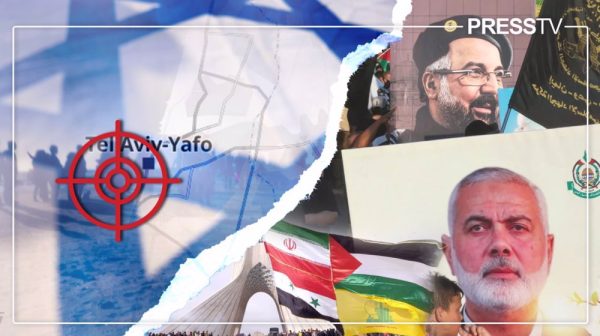
The stage is set for the retaliatory military operation against the Israeli regime in response to the cowardly assassinations of top-ranking Axis of Resistance commanders in Tehran and Beirut.
Although the nature of the retaliation and its precise timing remains shrouded in mystery, the embattled regime in Tel Aviv, already grappling with an internal political and social crisis, has been paralyzed with fear.
Illegal settlers have also been fleeing the occupied Palestinian territories in panic, anticipating a response that pales in comparison with Iran’s ‘Operation True Promise’ that followed an attack on Iran’s consulate building in the Syrian capital of Damascus in April.
There are scores of military sites in Tel Aviv that could be targeted to punish the Israeli regime for terrorist attacks that claimed the lives of Hamas political bureau leader Ismail Haniyeh and Hezbollah military commander Fuad Shukr.
Our analysis shows the most likely targets in Tel Aviv could be the centers affiliated with the Israeli spy agency Mossad, which had a key role in the assassinations of Haniyeh and Shukr.
This analysis is supported by the fact that the Ramon and Nevatim air bases of the Israeli regime were successfully targeted in the retaliatory military action in April since the warplanes that attacked the Iranian consulate in Damascus had taken off from them.
Taking that into consideration and the fact that simultaneous attacks in Tehran, Beirut and Iraq were carried out with the order and cooperation of the highest Israeli political, military and intelligence structures, their headquarters are primary targets.
The likelihood of these targets is further supported by a report by the Al-Hadath news channel, which revealed that employees of four intelligence and military agencies of the Israeli regime were evacuated on Thursday from their sites in Tel Aviv.
These headquarters are located in the densely populated metropolitan Tel Aviv, known as the Gush Dan, where half of the settler population of the Zionist entity lives, in contrast to the two aforementioned air bases in uninhabited desert areas.
Among them, an area of exceptional importance is Kirya, a district in central Tel Aviv, which is home to many administrative buildings and the military intelligence Camp Rabin that serves command, administrative, communications, and support functions for the Israeli military apparatus.
This camp has served as the headquarters of the armed forces of the Zionist entity since its establishment in 1948 and is encircled on all sides by densely populated civilian areas.
The main building in the camp is the Matcal Tower, which houses the offices of the top brass of the Israeli military, surrounded by other high-rise military facilities, such as the communications office Marganit Tower.
The Kirya district, known as the “Israeli Pentagon,” is much larger in scope than it looks on the map or is officially recognized, due to underground facilities and classified offices in nearby areas.
Beneath the military complex is the Bor (literally pit), the heavily fortified underground national military command center that is located a few blocks away from the former prime minister’s office, which has been moved now to occupied Jerusalem al-Quds.
The Bor is accessed through a large steel door that is sealed shut in the event of a non-conventional attack, and at the entrance, there is a big sign reminding visitors to remove the batteries from their cellphones before entering.
Long stairs lead deep into the operations rooms where regime officers prepare, organize and discuss future wars with their neighbors, Syria, Lebanon and Palestine, including the ongoing genocidal war against Gaza.
Even deeper, there is the chief of general staff’s conference room with a U-shaped table and a wall lined with plasma TV screens, where top officers meet almost weekly for highly classified discussions and a review of operational plans.
This facility is relatively well protected from attacks by short-range missiles, cruise missiles and kamikaze drones, but not from larger ballistic missiles with deep penetration power and a one-ton high-explosive warhead, so it is a high-value target.
Headquarters of intelligence services are classified, without official addresses, and most often masqueraded as civil function buildings.
In recent decades, the Israeli regime authorities have started selling land in Kirya, on which many “multipurpose” high-rises have been built, due to its attractive location in the center of the city.
This “multi-purpose” most often implies the regime and some other function, with the former containing multi-levels of the regime, military and intelligence offices.
The wider metropolitan area of Tel Aviv is also home to numerous factories, military bases and other regime buildings that can be the target of retaliatory strikes.
At least three large military facilities on the edges of the Tel Aviv metropolitan area are also possible targets, especially in case of new Israeli attacks and further escalation.
First among them is the operational headquarters of military intelligence unit 8200, located in the north near the city of ‘Herzliya’, where the collected information is processed and further forwarded to military strategists and other Israeli intelligence agencies.
Another site is Palmachim Airbase, located a few kilometers south of the metropolitan area, the main base for the Israeli regime’s drone, missile and space programs.
Finally, there is also a vast military zone around the Tel Nof and Sdot Micha air-missile bases, between Tel Aviv and occupied Jerusalem al-Quds, where numerous squadrons, special forces, missile silos and bunkers, arms warehouses, including nuclear warheads, are stationed.
Iran Rejects Evidence-Free Claims It Hacked Trump’s Presidential Campaign
By Ilya Tsukanov – Sputnik – 11.08.2024
The Islamic Republic has faced increasingly hostile rhetoric from the US deep state and Donald Trump’s president’s campaign over the past month, rejecting media claims about a supposed Iranian plot to assassinate him, and disregarding comments by Trump himself that Iran should be wiped “off the face of the Earth” if he was killed.
Iran has responded to the Trump campaign’s latest hostile claims, rejecting allegations that it was responsible for the recent hacking of the campaign’s internal communications, including a 271-page dossier on Trump running mate JD Vance’s “potential vulnerabilities.”
“We do not accord any credence to the news. The Iranian government has no intent or motive to interfere in the US presidential election,” Iran’s permanent mission to the United Nations said in a statement.
“The US presidential election is an internal matter in which Iran does not interfere,” the mission said, emphasizing that Iran’s cyber capabilities are “defensive and proportionate to the threats it faces.” The mission further recalled that Iran itself “has been a victim of various cyber offensive operations against the country’s infrastructures, public service centers and industries.”
In a statement Saturday, the Trump campaign blamed Iran for the hack and possible leak to media of sensitive internal materials, but did not provide any evidence of Tehran’s involvement.
“These documents were obtained illegally from foreign sources hostile to the United States, intended to interfere with the 2024 election and sow chaos throughout our democratic process,” campaign spokesman Steve Cheung said.
Cheung also warned media receiving the hacked documents not to publish the materials. “Any media or news outlet reprinting documents or internal communications are doing the bidding of America’s enemies and doing exactly what they want,” he said.
Later in the day, Trump took to social media to say that Microsoft had informed his campaign that Iran had purportedly hacked one of his campaign websites, but supposedly retrieved only “publicly available information.”
“Nevertheless, they shouldn’t be doing anything of this nature,” Trump said. “Iran and others will stop at nothing, because our Government is Weak and Ineffective, but it won’t be for long,” he added, without elaborating.
US media began reporting on the receipt of the hacked campaign materials on July 22, about a week after Trump survived an assassination attempt, and was officially picked as the Republican nominee for president at the party’s convention in Milwaukee. The materials reportedly included an array of internal documents, including a report on JD Vance’s “potential vulnerabilities,” as well as a “variety of documents from [Trump’s] legal and court documents,” and “internal campaign discussions.”
The ‘Iranian hacking’ claims come in the wake of separate allegations by anonymous US intelligence sources in US media last month that Tehran was out to kill Trump. Those claims came just days after the attempt on his life and the spate of questions from the media, lawmakers and the public about the curious and unprofessional conduct of the Secret Service officers charged with protecting him. Instead of asking questions of his own about who in the US deep state may want him dead, Trump piled onto the Iran story. “If they do ‘assassinate President Trump’, which is always a possibility, I hope that America obliterates Iran, wipes it off the face of the Earth – If that does not happen, American Leaders will be considered ‘gutless’ cowards!” Trump wrote in a social media post on July 25.
The Trump campaign’s hacking allegations and the former president’s response to them are not without a sense of irony, given that Trump himself spent nearly the entirety of his first term in office fending off false claims that Russia had hacked the 2016 election to help bring him to power.
Similarly, while US officials, media and intelligence agencies regularly allege that foreign actors like Iran, Russia and China seek to meddle in or otherwise disrupt US elections, they haven’t been nearly as concerned about efforts by Washington’s allies, including Israel and Ukraine, to do the same thing, whether through the use of powerful lobbying groups in Washington, or attempts to dig up dirt on candidates hostile to their corrupt interests.
Featured Video

Alon Mizrahi: ‘Israel Must Be Dismantled’
or go to
Aletho News Archives – Video-Images
From the Archives
Allies Don’t Need Lobbies
By Jay Knott | Dissident Voice | September 24, 2013
In a recent article on Counterpunch, Rob Urie defended the traditional Marxist analysis of US policy in the Middle East. He argues that support for Israel is driven primarily by economic interest, not the Jewish lobby.
He starts by paying tribute to the idea that Western societies are uniquely racist. He says that the “Western narrative” claims there is an “Arab character”, and that this is “antique racist blather”. He gives no definition of these terms. Further, he establishes his credentials as part of the dominant current in the American left by claiming that “over a million people in Iraq died so ‘we’ in the West can drive SUVs.”1
When he tries to criticize bourgeois economics, he makes it clear he doesn’t understand the developments it has made since Marx’s day, using the mathematical discipline known as “game theory”. He dismisses the basic abstraction of economic theory, the idea of the rational individual, on the grounds that it is “devoid of history, culture and political context”. But abstractions are always devoid of something.
He defends a more concrete economic theory, mostly Marxist, with some input from another theorist of capitalist crisis, Hyman Minsky. This concrete theory leads him to the view that US activity in the Middle East is primarily driven by rational capitalist motives, the need to secure a supply of oil.
“Taking the totality of circumstance — former oil company executives launching war on an oil rich nation on a pretext they publicly proclaimed they didn’t believe shortly before taking office — and that upon launching their war proved to be non-existent, requires a willingness to overlook the obvious — that the war on Iraq was for oil, that is difficult to support.”1
Perhaps I’ve misunderstood him, but based on what he says in the rest of the article, this convoluted sentence seems to argue that, because president Bush and vice-president Cheney attacked Iraq on false premises, and they also said it was all about oil, and they are former oil executives, and Iraq has a lot of oil, it’s difficult to deny US attacks on Iraq are all about oil.
In fact, it’s not hard at all. As Urie points out, at times Bush and co. said that attacking Iraq was “protecting the world’s supply of oil.”1 But, as he also points out, they are congenital liars. Why should we believe them when they say they are trying to “protect” the oil supply? Protect it against what? When politicians “admit” attacks on Middle Eastern countries are wars for oil, they are parroting the neo-con party line, feeding the public, both left and right, with a plausible-sounding pretext. For right-wingers, “it’s a war for oil” is a reason to support war, and for leftists, it’s a way to feel better by complaining impotently about corporate greed. Both approaches help the war drive. … continue
Blog Roll
 Aletho News
- US vs Iran: Kharg Island Talk — Bluff or Escalation? Ex-Military Officer Weighs In
- Zelensky unnecessarily involves Ukraine in the Middle East crisis
- Turkish tanker blacklisted by Ukraine hit in drone attack – media
- Canada, the U.S., and NATO: the inescapable trap
- Villains of Judea: Leonid Radvinsky
- Alon Mizrahi: ‘Israel Must Be Dismantled’
- Former Head Of MI6 Admits That The U.S. And Israel Are Losing The Iran War
- Scattered Thoughts on War and Peace
- Iran Threatens to Close Red Sea to Shipping in Response to Invasion
- Iran in excellent position to prevail in war with US, Israel: John Mearsheimer
- If Americans Knew
- Israel may be committing war crimes in Lebanon – Not a ceasefire Day 167
- In the West Bank, life is a constant battle – 3 articles
- Jacob Reses, one of the most powerful pro-Israel operatives in Trump’s Washington
- Israeli-US assaults kill or injure 87 children a day – Not a ceasefire Day 166
- ‘Forever live by the sword’: Understanding Israelis’ massive support for Iran war
- UN’s special rapporteur on human rights says Israel is systematically torturing Palestinians
- Trump White House plagiarized Iran war manifesto from Israel-aligned think tank
- Gaza says 6–10 patients die daily waiting for treatment abroad as Israel blocks medical evacuations
- ‘Substantial evidence’ of double-tap strike in killing of Gaza’s Hind Rajab
- ‘Do Not Want To Die For Israel’: Doubts About Trump’s Iran Strategy Spread Among Troops
- No Tricks Zone
- Devastating Assessment Of Comirnaty Vaccine By Former Senior Pfizer Europe Toxicologist
- New Study: CO2 Is ‘Effectively Negligible’ As An Explanatory Climate Change Factor Since 2000
- Former Pfizer Toxicologist Dr. Helmut Sterz Tells Bundestag Hearing Pfizer Vaccine Should Have Never Been Approved
- Energy Expert: Germany’s Nuclear Phaseout Was A “500 Billion Euro Mistake”
- New Research: South Australia’s Mid-Holocene Sea Surface Temperatures Were 4°C Warmer Than Today
- Storing Green Energy To Last Germany 10 Days Would Require A 60-Million Tonne Battery
- New Studies: UK Sea Levels Were 4 Meters Higher Than Today During The Mid-Holocene
- Destructive Green New Deal: German Energy And Metal Group Warns Of Drastic Crisis
- New Study Documents A 20-Year Pause In Arctic Sea Ice Decline – Driven By Internal Variability
- Wake-up Call: Survey Shows Majority Of Germans Now Favor Postponing Climate Targets!
 Aletho News