Blinken hopes to derail India’s relationship with Russia following Scholz’s failure
By Ahmed Adel | March 1, 2023
With Russia’s military operation in Ukraine evidently destroying NATO’s ambitions, Washington is becoming increasingly frustrated that Moscow has not been isolated. Russia did not economically collapse, as was predicted in the West, partly because of the robust and longstanding relationship it has with India. It is unsurprising that in only a matter of days, Germany and the US have pressured India to capitulate their sovereignty and serve Western interests instead of their own.
German Chancellor Olaf Scholz sought assurances from India on February 25 that it would not only refuse to block, but also support efforts to isolate Russia. Following his talks with Indian Prime Minister Narendra Modi, the chancellor refused to reveal what exactly they discussed in relation to Ukraine.
Although the contents of the discussion were cited as being confidential in nature, it is likely that Scholz did not want to humiliatingly admit that India refused to step back from its tried and tested relationship with Russia. Scholz did reveal though that he and Modi had discussed the war in Ukraine “very extensively and very intensely.”
It is noted that this trip was Scholz’s first official visit to India but his fourth meeting with Modi since taking office in 2021. Although they also discussed ways to boost economic cooperation, including through a free trade agreement between the European Union and India, it cannot be overlooked that US Secretary of State Antony Blinken arrived in New Delhi only days after Scholz.
Days before arriving in the Indian capital, Blinken said that countries like India, which have not joined the West in denouncing Russia’s military operation, were on a supposed trajectory away from alignment with Moscow. He stressed that the process would not occur “in one fell swoop.”
“There are countries that have long-standing, decades-long relationships with Russia, with the Soviet Union before, that are challenging to break off in one fell swoop. It’s not flipping a light switch, it’s moving an aircraft carrier,” Blinken said in an interview with The Atlantic on February 24.
However, for all of Blinken’s claims that India is moving away from Moscow, there is no actual suggestion that this is occurring. The US and India cooperate through the QUAD format, a naval bloc aimed against China, but this has not meant India’s submission to Washington, as the Americans evidently anticipated.
Although India has faced sustained and continued pressure from the West to distance itself from Moscow, New Delhi has thus far resisted, citing its longstanding ties with Russia and its economic and oil interests. It cannot be overlooked that Russia has been India’s largest weapons supplier since the Cold War-era, particularly since the US traditionally favoured Pakistan.
However, Washington in recent years has looked to turn New Delhi away from its main military supplier (but without wanting to adjust its policy to Pakistan).
“India for decades had Russia at the core of providing military equipment to it and its defences, but what we’ve seen over the last few years is a trajectory away from relying on Russia and moving into partnership with us and other countries,” Blinken said, without mentioning the fact that India is moving towards home-grown production, something that Russia is playing a key role in.
None-the-less, it is expected that Blinken, in the same way as Scholz, will try and convince India to change course regarding its ties with Russia.
As Bloomberg reported, citing Kpler’s lead crude analyst, Viktor Katona, “India purchased almost no Russian oil a year ago, but has become a crucial market after the US and European Union imposed sanctions on Moscow. The Asian country imported around 1.85 million barrels a day from Russia in February, close to its potential maximum of about 2 million barrels a day.”
The cold hard facts are that Moscow and New Delhi have a longstanding relationship that India will not break just for the sake of serving Western interests. Beyond the time-tested security ties, Russia offers energy hungry India the best deal for oil, something that will not be sacrificed because of a far-off war in Eastern Europe.
According to QUARTZ, India has in less than a year saved an estimated $3.6 billion by increasing Russian oil imports. This is a significant amount for a country that depends on imports to meet 85% of its petroleum needs.
It is recalled that in November 2022, Indian Foreign Minister S Jaishankar said “Russia has been a steady and time-tested partner. Any objective evaluation of our relationship over many decades would confirm that it has actually served both our countries very, very well.”
With this statement, he effectively confirmed a continuance of the current policy despite sustained pressure – a pressure that Scholz and Blinken are the latest to apply. They are however also the latest that were unable to convince New Delhi to change its policy regarding Russia.
Ahmed Adel is a Cairo-based geopolitics and political economy researcher.
NATO is de facto at war with Russia – Kremlin
RT | February 28, 2023
The US-led collective West must change its approach to global security and finally take Moscow’s concerns into consideration, before talks on the New START nuclear agreement can be renewed, Kremlin spokesman Dmitry Peskov has insisted.
Speaking to the Izvestia newspaper for an interview published on Tuesday, Peskov said relations with the United States and Europe have “changed radically” since President Vladimir Putin formulated draft security treaties that were sent to Washington, Brussels and Vienna in late 2021, only to hear that “they were not ready to talk about anything with us.”
“If they wanted, they could have sat down at the negotiating table [back then, before the decision to launch a military operation in Ukraine],” he said. “There would have been very complex, positional, sometimes irreconcilable talks, but they would have been under way. But they refused.”
With the failed attempt at dialogue, tensions continued to soar between Moscow and the West in the lead up to the conflict in Ukraine. Peskov argued that NATO is now fully involved in the hostilities, noting “their intelligence is working against us 24 hours a day, their weapons… are supplied to Ukraine for free to shoot at our military, not to mention that they shoot at Ukrainian citizens.”
“The moment when NATO de facto became a participant in the conflict in Ukraine, the situation changed,” the spokesman continued. “In fact, the NATO bloc is no longer acting as our conditional opponent, but as our enemy.”
“President Putin was and remains open to any contacts that can help Russia achieve its goals in one way or another,” Peskov continued. “Preferably peacefully, at the negotiations table, but when this is not possible, also by military means, as we are seeing now.”
Peskov touched on the New START treaty, a US-Russian accord intended to limit both nations’ nuclear stockpiles and allow them to monitor each other’s military facilities to confirm compliance. Amid the conflict in Ukraine, however, Moscow and Washington have accused each other of failing to facilitate such inspections.
Last week, Russian President Vladimir Putin announced that Moscow intended to formally suspend its obligations under the pact, with Peskov explaining “the conditions must somehow change.” During the New START negotiations, the nuclear arsenals of France and Great Britain were left out of the equation, even though they are “significant enough for the entire system of European strategic security,” he said.
“These countries – France, Britain, the United States – are members of an organization which is de facto at war with us… you need to call a spade a spade,” Peskov added, noting how Western states nevertheless keep “repeating like a mantra that they do not want to be participants in the conflict.”
Putin has also accused NATO specialists of helping Kiev to launch drone attacks against Russian airfields hosting long-range bombers, which are part of Moscow’s system of nuclear deterrence. He blamed Washington and NATO’s proxy war against Russia for destroying the foundation of trust on which the treaty was initially built.
Russia explains halt in oil exports to Poland
RT | February 27, 2023
Russian oil flows to Poland have been halted due to the stoppage of payment for deliveries, Russia’s state-owned pipeline transport company Transneft announced on Monday.
Transneft, which operates Russia’s section of the Druzhba pipeline, explained that it transfers oil to other countries in line with the export schedule approved by the Russian Ministry of Energy, as well as routing orders processed by freight forwarders.
“Transneft is not currently transporting oil to Poland,” the company’s spokesman Igor Demin said. He noted that pumping to Polish refineries was scheduled for “the third ten-day interval” of February. However, “routing orders with confirmed resource and transit payments were not processed,” he explained, adding that “operational changes were made to the schedule, excluding supplies for Polish consumers.”
On Saturday, Poland’s largest oil company PKN Orlen said it had stopped receiving oil via the Druzhba pipeline from Russia. While the EU banned seaborne oil imports from the country last December, pipeline deliveries were exempted from the sanctions package in order to secure supplies to landlocked members of the bloc.
Poland has been getting piped oil under a contract with Russian oil and gas company Tatneft after a previous supply agreement with oil major Rosneft expired.
According to Orlen’s CEO Daniel Obajtek, Russian oil currently accounts for 10% of Poland’s imports, after Warsaw slashed shipments from the sanctioned country. The current contract with Tatneft provides 200,000 tons of oil per month to Polish refineries and expires in December 2024.
The northern part of the Druzhba pipeline system feeds two refineries in eastern Germany as well as plants operated by Orlen in Poland. Warsaw has repeatedly pledged to replace Russian oil with crude from the US, the Middle East and other sources.
Oil shipments via the pipeline’s southern branch to Slovakia and the Czech Republic, where Orlen operates two refineries, remained unchanged.
China Actually Has A Decent Chance Of Negotiating A Russian-Ukrainian Ceasefire
By Andrew Korybko | February 25, 2023
Most observers are convinced that the Russian-NATO proxy war in Ukraine will be a protracted struggle due to each side’s polar opposite envisaged end game in this conflict, yet China actually has a decent chance of negotiating a Russian-Ukrainian ceasefire after the positive reaction to its official peace plan. It was expected that Moscow would praise Beijing’s pragmatic 12-step proposal yet few could have foreseen that Kiev would also be interested in it too.
Zelensky reacted by saying that “China started talking about Ukraine, and I think this is a good thing. But it actually begs the question, what will these words be followed with? The steps next are important”, after which he announced that he has plans to meet with Chinese President Xi in the coming future. Approximately 24 hours later, his Belarusian counterpart Lukashenko disclosed that he’ll be traveling to the People’s Republic on a state visit from 28 February-2 March.
It can’t be known for sure, but it compellingly appears as though he’ll discuss reviving the peace talks that his country hosted last spring but which were ultimately sabotaged by the UK at the US’ behest. Should that be the partial purpose behind his trip at this particular point in time, it would likely then be the case that President Xi might soon visit Eastern Europe in an attempt to personally encourage his Russian and Ukrainian counterparts to resume this process or at least reach a ceasefire.
The Chinese leader was invited by President Putin late last year to visit Russia sometime this spring, and its top diplomat’s latest trip to Moscow last week was interpreted as paving the way for that event, especially after he met with his country’s host in the Kremlin. In light of Zelensky’s unexpected interest in China’s peace plan and his announcement that he intends to meet with President Xi, the latter would likely visit Kiev during the same regional sojourn and might also make a pit stop in Minsk too.
The fast-moving sequence of diplomatic events that followed the release of China’s peace plan on Friday – Russia’s praise of it, Zelensky’s unexpected interest, his announcement that he hopes to soon meet President Xi, and then Lukashenko’s trip to Beijing next week – extends credence to this prediction. The very fact that the Ukrainian leader didn’t dismiss it outright like his American counterpart and other Western ones did is worthy of explanation since it defied many observers’ predictions.
Zelensky might seriously be concerned about his Golden Billion patrons’ military-industrial reliability amidst the NATO chief’s belated admission that this de facto New Cold War bloc is in a “race of logistics”/”war of attrition” with Russia. In that scenario, it makes sense why he might intend to diversify from his near total dependence on its US leader by gradually engaging China, which is also occurring in the context of France, Germany, and the UK reportedly offering Ukraine a defense pact.
The Wall Street Journal (WSJ) broke the story on Friday, which was the one-year anniversary of Russia’s special operation and the same day that the previously mentioned sequence of diplomatic events began rapidly unfolding. This adds another dimension to everything since that development could serve as a compromise for allaying Kiev’s fears, both in the substantive but also soft power sense, that seriously exploring a ceasefire would amount to a tacit admission of defeat that’ll only embolden Moscow.
Europe has been the second-most directly affected party to the Ukrainian Conflict other than the former Soviet Republic itself within which this Russian-NATO proxy war is being fought so there’s a certain logic to its three most powerful countries coordinating their own possible peace plan. The US successfully reasserted its unipolar hegemony over the EU at the expense of the bloc’s objective interests, but while the UK immediately benefited from this, it too risks blowback over the long-term.
The combination of the collective Franco-German-British security pact with Kiev and China’s peace proposal could create the optics required for Zelensky to comparatively climb down from his absolutist-maximalist demands of Russia with a view towards pragmatically negotiating a ceasefire. Of course, this probably wouldn’t happen until both their reportedly planned offensives have been launched and there’s more clarity about their success or lack thereof, but it appears to be a credible scenario.
In that event, the Ukrainian leader might remain reluctant to recognize the ground realities that Russia demands as the condition for resuming the peace process, but President Xi’s diplomatic intervention in the coming future, should he ultimately visit Kiev, could greatly increase the chances of a ceasefire. He wouldn’t meet with Zelensky just for a photo-op, especially since the Chinese leader has only traveled abroad on three occasions and only in just the last half-year since the pandemic began three years ago.
The only reason why President Xi would visit Kiev to meet with Zelensky is if the latter is serious about there being a tangible outcome to this trip in terms of de-escalating his country’s conflict with Russia. The Ukrainian leader’s interest in China’s peace plan and the announcement that he plans to meet with his counterpart, which occurred against the backdrop of a reportedly proposed collective Franco-German-British security pact to Kiev and Lukashenko’s upcoming trip to Beijing, makes this possible.
To be clear, no prediction is being put forth confidently stating that this fast-moving sequence of diplomatic developments will successfully result in a Russian-Ukrainian ceasefire, but just that it nevertheless can’t be ruled out right now for the reasons that were explained. A lot can still happen and the US can always attempt to sabotage this process, which it’ll likely try to do (potentially even via a false-flag provocation) if a breakthrough appears imminent, so nobody should get their hopes up.
Court convicts UK firm over cataclysmic 2020 blast in Beirut
Press TV – February 23, 2023
The UK High Court has ruled a London-based company that delivered the explosive ammonium nitrate to Beirut’s port is liable towards the victims of a devastating blast in 2020.
Lebanon’s Beirut Bar Association said on Thursday the high court had ruled the London-registered chemical trading firm, Savaro Ltd., will have to pay compensations now.
The huge Beirut port blast on August 4, 2020 killed more than 200 people, injuring over 6,000 and damaging large parts of the port city.
Friends and families of the blast’s victims saw the legal development as a rare step towards justice and against the political intervention that has obstructed the investigative judge leading a probe in Lebanon for over two years.
The court ruling in London is an unusual judicial success for the victims’ families, some of whom opted to file lawsuits abroad.
The Beirut Bar Association, alongside three of the victims’ family members, filed a lawsuit against the British firm more than a year ago.
The ruling by the High Court of Justice in London means the proceedings now move to a “damages phase” of the case that determines the firm’s compensation for the families, Camille Abousleiman, one of the lawyers involved in the case, told media.
Head of the Bar Association Nader Kaspar considered the ruling a “great achievement,” paving the way to continue the quest for justice and the truth about what caused the devastating explosion in Beirut’s port.
“It’s the first time there is an actual judgment on this matter in reputable courts,” Abu Suleiman, also a former Lebanese labor minister, said. The ruling “certainly will open the door for potential justice in courts overseas.”
Mariana Foudoulian, whose sister Gaia died in the explosion, called the judgment a “very important step.”
“Through this judgment, we can try to access more important details,” Foudoulian told media. “This does give us some hope.”
Court documents showed Savaro chartered a huge shipment of ammonium nitrate in 2013 which eventually ended up in Beirut’s port area.
Documents show officials were aware of the highly inflammable chemical substance docked at the port for years, but did not take decisive action to have it removed.
The lawsuit against Savaro was lodged in August 2021. It remains unclear who own(s) Savaro. Probes into the company’s ownership listed agents from a corporate services firm.
Accountability Now, a Swiss organization, said some of the Beirut blast victims’ families had filed a lawsuit in Texas against US-Norwegian geophysical services group TGS.
The TGS firm owns a company that allegedly sub-chartered the ship carrying the ammonium nitrate in 2012. Accountability Now said it hoped the Texas lawsuit would help disclose communications between TGS and other parties involved in the Beirut blast.
Russia expands its partners as special military operation progresses
Contrary to what Westerners predicted, Moscow is gradually looking like an attractive alternative for emerging countries.
By Lucas Leiroz | February 24, 2023
One year after the start of the special military operation, little seems to have changed in the Russian diplomatic landscape. NATO’s members and allies continue to condemn Moscow’s actions, while virtually the rest of the world remains neutral – in addition to a number of states openly supporting the operation. The Russian Federation is not isolated in the global society and all measures aimed at making it a “pariah” have had the reverse effect, making the collective West itself a “bad partner”.
Since the beginning of the special military operation for the demilitarization and de-Nazification of Ukraine, on February 24, 2022, Russia has maintained a team of great partners, guaranteeing strong diplomatic support. Countries with a more openly pro-Russian geopolitical position, such as North Korea, Belarus and Syria, support the operation and vote against anti-Russian resolutions at the UN, while countries with a more neutral position, such as China and India, abstain from voting and demonstrate tacit support for Moscow through economic cooperation.
Throughout 2022, the West tried to coerce emerging countries to adopt hostile policies against Russia, but this proved ineffective. Anti-Russian sanctions have become an exclusive practice of NATO allied countries, with no adherence to such measures among emerging nations. Even governments of emerging countries that act with ambiguity and try to maintain good ties with the West continue to insist on a neutral foreign policy, without actively joining one of the sides in the conflict. This is the case of Brazil, for example, which voted against Moscow in UN resolutions, but continues to refuse to comply with requests from the West to supply weapons to Kiev.
Indeed, this conclusion contrasts with what many Western biased analysts predicted last year. Many experts stated that as the conflict progressed, it was most likely that Russia would naturally become more isolated on the international arena. There was a bet on the propaganda capacity of the Western media to promote the narrative that Moscow would be blamed for the global security crisis, but apparently this type of discourse is no longer able to convince most state officials around the world.
Countries that remained neutral or pro-Russian were able to see over the course of one year what happened to states that, unlike them, adhered to the Western-Ukrainian axis. Among almost all NATO member countries or allies, the scenario arising from observance to the irresponsible policy of sanctions against Moscow was the same: economic crisis, energy instability, food insecurity and government unpopularity.
Europe entered a deep social crisis, with its development rates declining significantly. But the European states did not even consider banning sanctions against Russia, maintaining a posture of subservience to the US. In addition, there were some episodes of direct violence against European countries, such as the sabotage against the Nord Stream gas pipelines, which showed how relations between the US and its allies are maintained through coercion and fear.
Of course, this just made joining the anti-Russian side even less attractive for most countries. It is now evident to the emerging world that the US allied countries have been severely harmed due to their decision to side with Kiev in the conflict, although they continued to be absolutely submissive. This resulted, contrary to what optimistic Westerners predicted, in a growth in the number of neutral and pro-Russian countries.
For example, comparing the vote on the anti-Russian resolution of March 24, 2022, with the resolution of February 23, 2023, it is possible to see that the number of countries voting against the withdrawal of Russian troops increased from five to seven, as well as that abstentions increased from 32 to 38. In practice, this means that, as time passes, more countries are adopting neutral or pro-Russian attitudes.
If this has been the scenario so far, it is unlikely that this will change anytime soon. Countries that chose to maintain friendly ties with Russia at the beginning of the special military operation tend to continue to maintain them, regardless of what happens on the frontlines and of what the West does to try to persuade them. Neutrality has proven to be a more interesting, strategic and pragmatic path for most states, and that will certainly not change.
In fact, with the recent visit of China’s top diplomat to Moscow and the reaffirmation of the unlimited cooperation ties between both countries, this scenario seems increasingly clear to the whole world: Russia friendly countries will continue to cooperate with Moscow. The Western strategy of relying on coercion and propaganda to prevent Russia from having allies has absolutely failed. As the operation continues, Russia gains more allies and deepens ties with the already-existing partners. The best the West can do is to prioritize diplomacy and accept the reality that Russia cannot be isolated.
Lucas Leiroz is a researcher in Social Sciences at the Federal Rural University of Rio de Janeiro; geopolitical consultant.
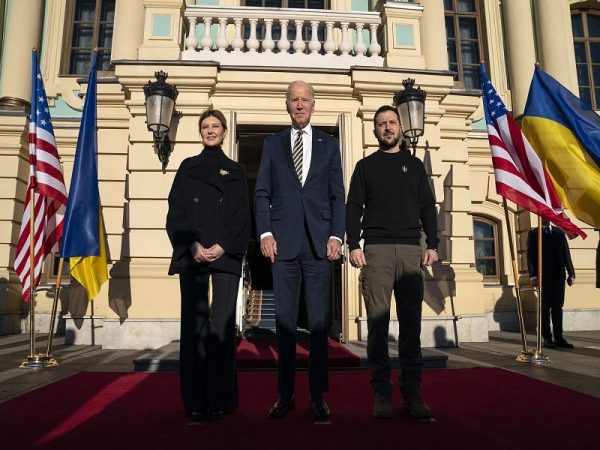
Biden posing in Kiev as problems at home pile up

By Drago Bosnic | February 21, 2023
On February 20, United States President Joe Biden made a surprise visit to Kiev. The unannounced trip comes on the heels of the failed Munich Conference and just days ahead of the first anniversary of Russia’s counteroffensive against NATO aggression in Europe. Various sources indicate that Moscow is very likely to launch another massive offensive, resulting in the political West’s arms shipment frenzy, as it is desperate to at least postpone Russia’s victory. NATO member states are flooding the Kiev regime with new weapons, particularly tanks, IFVs (infantry fighting vehicles) and APCs (armored personnel carriers) to offset the Neo-Nazis junta’s mounting losses.
As per usual, Biden reiterated his “full support” for the “vibrant democracy in Ukraine” and once again condemned Russia’s special military operation as a “brutal, unprovoked invasion”. According to the AP, he also announced another “earth-shattering” $500 million in military “aid” which includes new ATGMs (anti-tank guided missiles), air defense radars, howitzers, shells, ammunition and other systems. However, there was no mention of any of the advanced weapons the Kiev regime has been “begmanding” for nearly a year. Considering that Neo-Nazi junta frontman Volodymyr Zelensky requested a “mere” trillion dollars (1.000.000.000.000), if Biden makes at least two Kiev trips per year, bringing at least $500 million each time, it would take him “only” a thousand years to fulfill this “perfectly reasonable” request.
Biden also stated that Russian President Vladimir Putin was “dead wrong” for allegedly “believing he could instantly take Ukraine”. However, nothing indicates this was Russia’s intention, as it is virtually impossible to take the largest country in Europe with only the 200-250 thousand soldiers initially engaged in Russia’s counteroffensive. What Putin announced was demilitarization and denazification and considering the Neo-Nazi junta’s staggering losses, both tasks are going as planned. Biden also insisted that “the US has built a coalition of nations from the Atlantic to the Pacific to help defend Ukraine with unprecedented military, economic, and humanitarian support”, although the Munich Conference showed just how isolated the political West is.
Biden also announced additional sanctions “against elites and companies that are trying to evade or backfill Russia’s war machine”. It’s not entirely clear what the US president meant by this, but considering that the current economic siege has failed spectacularly, Moscow could even rejoice as the existing sanctions have actually helped it achieve greater economic growth than most of the countries enforcing them. Some have suggested that new restrictions will be aimed at Russia’s military industry. However, this would make little sense, as the Russian military has been virtually unscathed by the sanctions, given the fact that its suppliers are state-owned companies with their own resources and technologies.
Rather theatrically, during Biden’s meeting with Zelensky, air raid sirens sounded in Kiev. What was planned for a dramatic effect to portray the US president as some sort of a “hero” turned out to be nothing more than posing, since Washington DC revealed it has notified Moscow that Biden would be going to Kiev. White House national security adviser Jake Sullivan stated that “the Russians were notified President Biden would be traveling to Kiev hours before his departure” and that this was done “for deconfliction purposes”. He didn’t disclose how Moscow responded to this, but despite the melodramatic air raid sirens, there were no Russian missiles or airstrikes in Kiev. Biden was promptly mocked for his theatrics by many around the world, including in the US.

Perhaps the most appropriate response to this came from Ohio, where many are jokingly suggesting the state be annexed by Ukraine, so they could get some relief, since Biden has made no mention of the disaster-stricken town of East Palestine in Ohio where a toxic chemical spill happened more than two weeks ago. The mainstream propaganda machine has been ignoring or at least trivializing the event, despite thousands of complaints about the resulting pollution. Approximately 50 freight train cars derailed on the outskirts of the town on 3 February, causing a toxic chemical spill that left the surrounding areas effectively unfit for habitation. Residents have reported headaches and eye irritation, in addition to finding their cars and lawns covered in soot. The hazardous chemicals have already killed pets and wildlife, including thousands of fish.
Since Biden took office, the US has been experiencing a plethora of issues, including 40-year peak inflation that has effectively pushed its economy into recession. The DNC neoliberals have exponentially intensified the existing issues, leaving chaos across the US, particularly in core urban areas. States such as California have seen soaring homelessness and record-breaking crime rates, to say nothing of the substance abuse crisis. Similar issues exist in most other DNC-run urban areas across the country. However, instead of tackling these issues, in addition to numerous already existing problems (racism, gun violence, immigration, etc.), the US keeps trying to divert attention by inciting wars and destabilization around the globe.
Drago Bosnic is an independent geopolitical and military analyst.
Leaked files reveal Britain’s ambulances aided terrorists in war-torn Syria
By Kit Klarenberg | Press TV | February 20, 2023
On February 6, Syria and Turkey were rocked by devastating back-to-back earthquakes. Ever since, people in these countries and the region have been subjected to a particularly merciless – yet illuminating – crash course in Western double standards on humanitarian aid.
While aid and assistance have flowed into Istanbul and Damascus from all neighbors, initially many governments were reticent to dispatch anything at all to Syria, because US and EU sanctions made it illegal for planes to land in its airports.
It meant that those eager to provide humanitarian assistance could not dispatch it, for fear of dire repercussions. Such concerns were well-founded. Washington enforces sanctions with an iron fist, and any individual or state breaching them faces severe penalties.
Giving in to intense global public pressure, the US Treasury on February 10 enacted a 180-day waiver on certain sanctions imposed on Syria, to allow for vital earthquake relief to reach the country.
Still, neither Washington nor its constellation of international allies has provided any meaningful assistance to Damascus whatsoever, despite the death toll in the country grimly ratcheting daily.
Meanwhile, Israeli regime officials expressed the readiness to bomb Iranian aid deliveries arriving by land. And, in the end, they ended up bombing the people still recovering from the shock of a colossal human tragedy.
Complicating matters further, terrorist groups that still occupy portions of Syrian territories, such as Hayat Tahrir al-Sham (HTS) in the northwest, are blocking the government’s attempts to distribute provisions, a spokesperson for HTS in Idlib telling Reuters no shipments would be permitted to pass its checkpoints, on the basis, “we won’t allow the regime to take advantage of the situation to show they are helping.”
These pockets crisscross the country, an enduring and shameful legacy of the West’s failed decade-long dirty war against Damascus.
Almost never acknowledged by the mainstream media, their continued presence is particularly relevant to consider now, for they are relics of a time when the Western world was only too eager to invest vast sums to flood Syria with medical aid, albeit in service of “regime change”.
Healthcare as psychological warfare
In August 2016, a remarkable and never-before-disclosed covert British intelligence operation began near Amman, Jordan.
At a secret training site operated by London and Washington, British Foreign Office contractor Torchlight – which this journalist has repeatedly exposed for assisting Britain’s infiltration of security and spying agencies across West Asia – extensively tutored violent groups funded and armed by the spy agencies CIA and MI6 in providing medical assistance to terrorists and mercenaries.
Dubbed “MAO CASEVAC” (Moderate Armed Opposition Casualty Evacuation), the program ran the gamut from practical training for paramedics to the provision of multiple ambulances purchased from Qatar, advanced medical technology, elaborate communications systems to ensure the safe and timely transfer of injured “rebels” from the frontline, and the creation and maintenance of dedicated facilities to treat the wounded, at a cost of millions.
Internal documents related to the effort note that at the time it was launched, injured fighters relied “on inadequately prepared and supported self-help at the point of injury, followed by ad hoc systems and capabilities to evacuate and treat them in a hostile and austere environment,” with an overwhelming reliance on civilian hospitals and healthcare infrastructure.
Moreover, CIA and MI6-supported terrorist groups lacked “dedicated doctors”, and medical professionals locally, while willing to treat anyone whatever their ailments, remained “keen to maintain their independence” lest they be accused of serving as in-house doctors for armed actors.
These practitioners even lacked high-tech equipment such as scanners for detecting internal bleeding, and access to resources such as blood products.
So it was Torchlight that set about training 200 opposition actors every year for three years in all conceivable medical disciplines and equipping them accordingly.
While London was careful not to publicize the initiative’s existence in any way, its results were intended to be broadcast widely locally and internationally – for MAO CASEVAC’s objectives were as practical as they were psychological.
It was hoped that on top of saving lives and protecting the welfare of terrorists, their “morale and motivation” would all “be enhanced”, while “purpose, ethos and culture” would be instilled in them:
“If the MAO is able to provide this support then fighters will have greater confidence that they can be provided for in case of injury. Consequently, this will improve motivation, a sense of welfare, and the credibility of MAO troops, as well as reduce battlefield losses. This will add credibility to the MAO.”
As such, MAO CASEVAC was but one component of Britain’s wide-ranging information warfare campaign throughout the Syrian dirty war, designed to destabilize the democratically-elected government of Bashar al-Assad, while rebranding the murderous militant groups rampaging across the country as a “moderate” alternative. Its founding documents make these objectives very clear.
Noting that the British government sought to “foster a negotiated political transition” in Syria, these papers openly state that MAO CASEVAC’s aim was to “generate pressure” on the Assad government.
This was predicated on the notion that “regime change” required “an empowered opposition on the ground,” capable of convincing locals, Western citizens and international bodies that they were courageous freedom fighters on a righteous mission, rather than a ragtag bunch of crazed fundamentalists complicit in countless hideous atrocities, wholly dependent on foreign backing to survive in every way.
Of course, if the opposition could demonstrate to the world they were highly skilled in saving lives, it would go some way to cementing the perception of a professional, humanitarian-orientated force.
This was precisely the rationale behind the creation of the White Helmets – a terrorist group masquerading as a civil defense force – by the British intelligence agency.
‘Risk of ricochet’
Another indication of MAO CASEVAC’s darker nature is provided in Torchlight documents on risks related to its operation.
The training area in Jordan, provided to the company by British intelligence “at no cost to the project,” offered “accommodation, ablution, dining, classrooms, driving tracks, outside rural environment areas, and open space for equipment storage.”
However, the milieu was far from idyllic – medics would be trained alongside opposition fighters learning the art of killing, including the use of AK47s and other weaponry. The proximity between the two programs was such, Torchlight repeatedly warned of the “physical security risk” posed to their students by the site’s dual purpose:
“Another training conducted on the site involves live firing. Consequently, third-party personnel are in possession of weapons and live ammunition on the camp in addition to the Jordanian Security Personnel on site. Risk of ricocheting from the live firing ranges onto the driving range and wider area behind. There is likely to be an overlap of live firing and driving courses [emphasis added].”
If that wasn’t enough, Torchlight also forecast the threat of a “disaffected student” or Jordanian security operative “in possession of a weapon and ammunition” carrying out an armed attack on its staff and trainees to be “high” risk.
Absent was any consideration of students joining the al-Nusra Front and Daesh Takfiri group, and equipment being one way or another appropriated by these terrorist groups, although such considerations are writ large in leaked Foreign Office risk assessments of the fighter training program, which was likewise overseen by British intelligence cutouts.
However, the UK Foreign Office, which funded the program to the tune of $21 million over the same timeframe as MAO CASEVAC, with up to 600 fighters trained annually as a result, was intensely relaxed about those prospects. Any loss of equipment was to be “tolerated” to “a reasonable degree.”
The same was true of AJACS, a controversial British intelligence “aid” project that created the Free Syrian Police, which was run in coordination with Nour al-Din al-Zinki, a CIA-backed entity linked to heinous crimes against humanity, including the videotaped beheading of a Palestinian teenager in 2016.
The implementing contractor of that effort, the notorious Adam Smith International, simply didn’t consider it “cost-effective” to prevent their participation.
All of this begs the question of whether the real objective behind MAO CASEVAC and other interrelated British intelligence operations was to insidiously bolster and equip the most violent, deranged elements on the ground in Syria.
At the very least, it’s evident that whatever anxieties London may harbor today about humanitarian aid making its way to earthquake-hit Syria, an enemy state in dire need of respite, hasn’t historically applied to terrorist groups that further its interests in the country.
This may explain why they remain active there so long after the dirty war theoretically ended.
Biden’s Visit To Kiev Is “Copium” To Distract The West From Disadvantageous Developments
By Andrew Korybko | February 20, 2023
The whole reason why the Mainstream Media and allied accounts on social media are overdosing on this cheap “copium” is because they know very well that tougher days are ahead for their side considering NATO’s military-industrial crisis, the sanctions’ failure, and Russia’s likely capture of Artyomovsk/“Bakhmut”. Kiev’s supporters urgently need a proverbial shot in the arm to keep their morale alive amidst the series of impending setbacks that are poised to afflict the Golden Billion’s proxies in the coming future.
The term “copium” refers to an artificially manufactured narrative aimed at distracting a targeted audience from a disadvantageous development by convincing them that “everything is going according to plan”, which is why it’s a fitting description of the purpose behind Biden’s surprise visit to Kiev. His trip occurred against the context of the NATO chief finally admitting his bloc’s military-industrial crisis that risks depriving its Ukrainian vassals of the armed support they need to continue this proxy war.
Just the day before Biden arrived, Zelensky disclosed in an interview with Italian media that his forces might abandon Artyomovsk/“Bakhmut” if their casualties continue to climb, which represents a decisive reversal of the “official narrative” hitherto claiming that they’ll cling to it no matter the cost. On the topic of decisive narrative shifts, American and Polish officials spent the past month informing everyone that Kiev’s victory is no longer “inevitable”, which was meant to prepare them for impending setbacks.
Between the initiation of that newfound narrative trend and Biden’s trip, the New York Times reported that the West’s anti-Russian sanctions failed, after which Bloomberg proved that India had been working as the middleman for indirectly facilitating Russia’s oil exports to the West. Russian Foreign Minister Lavrov’s two practically back-to-back trips to Africa in recent weeks also confirmed that his country is far from isolated since it enjoys that geostrategic continent’s support.
The sequence of events that began at the start of this year were obviously disadvantageous for the US-led West’s Golden Billion since they discredited everything that this de facto New Cold War bloc’s perception managers had claimed up until that point. Russia continues gradually gaining ground in Donbass, neither its economy nor military collapsed under sanctions, and the global systemic transition to multipolarity has only accelerated since the start of its special operation a year ago.
It therefore makes perfect sense why the US was so desperate for a distraction, hence Biden’s visit to Kiev, which is being spun by the Mainstream Media (MSM) as supposedly representing one of the most symbolic moments since Russia was forced to initiate the latest phase of the Ukrainian Conflict. Nothing of tangible significance was achieved during his trip, though, and the comparatively miniscule armed aid that he announced on Monday obviously didn’t require him to be there in person.
The whole reason why the MSM and allied accounts on social media are overdosing on this cheap “copium” is because they know very well that tougher days are ahead for their side considering NATO’s military-industrial crisis, the sanctions’ failure, and Russia’s likely capture of Artyomovsk/“Bakhmut”. Kiev’s supporters urgently need a proverbial shot in the arm to keep their morale alive amidst the series of impending setbacks that are poised to afflict the Golden Billion’s proxies in the coming future.
The last thing that this de facto New Cold War bloc’s liberal-globalist elite needs is the masses losing hope in this post-modern crusade lest public pressure build to the point of complicating some NATO countries’ further dispatch of armed assistance to Kiev at the expense of their minimum security needs. The chain reaction of disadvantageous developments that was described in the present analysis and everything else that might thus follow if that unfolds could end up being a game-changer in this conflict.
The military-strategic dynamics are trending in Russia’s favor at this pivotal moment in the conflict, and even the economic ones too after the New York Times reported that the West’s sanctions failed, so there’s never been a more urgent time for a “copium” binge than now. Biden’s visit to Kiev won’t change the aforesaid, but it might very well succeed in temporarily distracting the Western masses from all this long enough for their elites to weaponize a new set of infowar narratives against them.
Potential Role of Spike Protein in Neurodegenerative Diseases
Long-term Exposure to Spike after COVID-19 Vaccines is Pathogenic
By Peter A. McCullough, MD, MPH | Courageous Discourse | February 18, 2023
The COVID-19 vaccination campaign was launched in late 2020 with no assurances on long-term safety and full liability protection to those involved with mass vaccination via the PREP Act and the National Childhood Vaccine Injury Act of 1986. There is now abundant evidence that the synthetic lipid nanoparticles travel into the brain and install the genetic code (mRNA or adenoviral DNA) for the SARS-CoV-2 Spike protein. As this protein is produced and accumulates in the brain, it can cause inflammation and also fold into an amyloid plaque. Thus, there is strong rationale for some vaccine recipients to develop mild cognitive dysfunction, Alzheimer’s like dementia, and other forms of neurocognitive decline. Because seniors were heavily vaccinated, many families and doctors will attribute clinical changes to advanced age and not the vaccine. They should understand in each and every case, that COVID-19 vaccination should be considered a determinant of cognitive decline in a previously healthy person.
Seneff and colleagues describe the pathophysiological rationale for COVID-19 vaccines in the development of neurocognitive disorders. Key features are: 1) CNS penetration of the vaccines, 2) neuroinflammation, 3) Spike protein activation of toll-like receptor-4, 4) folding of Spike protein into amyloid plaques, 5) cumulative exposure with multiple shots connotes enhanced risk.

Seneff S, Kyriakopoulos AM, Nigh G, McCullough PA. A Potential Role of the Spike Protein in Neurodegenerative Diseases: A Narrative Review. Cureus. 2023 Feb 11;15(2):e34872. doi: 10.7759/cureus.34872. PMID: 36788995; PMCID: PMC9922164.
For people in your family and social circles who are experiencing premature or a precipitous decline in mental function, have the doctors consider and document COVID-19 vaccination as a potential explanation. If a senior citizen is already confused or has cognitive decline, any further vaccination is contraindicated. In patients such as this, further booster shots are likely to worsen the condition and should be avoided.
US opposes UN resolution against Israeli settlement expansion
The Cradle | February 17, 2023
The US voiced opposition to the UN Security Council’s resolution to stop the further expansion of Israeli settlements in Palestinian territories on 16 February, despite Washington previously criticizing Israel on the issue.
A few days before the proposed resolution, AP disclosed that it demanded that Tel Aviv “immediately and completely cease” settlement expansion and construction in the occupied territories.
Israel’s new extremist government has faced mass criticism over increasing Tel Aviv’s military operations in the West Bank and its bid to legitimize and construct settlement outposts and housing units in the occupied territories. Israeli Prime Minister Benjamin Netanyahu seeks to annex more of the West Bank, with his party recently proposing the annexation of the Jordan Valley.
Washington expressed that it was “deeply dismayed” by Tel Aviv’s decision to expand its settlements. However, the US State Department affirmed that it would not support the resolution, reportedly proposed by the UAE – one of the Arab states that normalized relations with Israel during the signing of the Abraham Accords in 2020.
The State Department spokesman Vedant Patel remarked: “Our view is that the introduction of this resolution was unhelpful in supporting the conditions necessary to advance the negotiations of a two-state solution.”
On the other hand, Palestinian activists and political experts have indicated that the further expansion of settlements into the Palestinian territories will hinder efforts to reach a two-state solution.
Earlier this week, the Israeli government authorized the construction of nine occupation outposts in the West Bank, which drew mass opposition from the Palestinian Authority (PA).
Over half a million Israelis live across 200 settlements on Palestinian land, including several areas in the West Bank. These settlements are deemed illegal under international law.
This came a week after Israel’s Religious Zionism party issued a statement highlighting that there will be “no pause” to the expansion of illegal settlements in the occupied West Bank, despite pushback from US officials.
“There will be no construction freeze in [the West Bank], period. There will be no damage done to Israeli deterrence against terrorists, period. There will be no continuation of illegal construction and Arab land-grabbing in open areas, period,” the statement reads.
Natural gas will be key global resource for years to come – Putin

RT | February 17, 2023
Natural gas will continue to be a valuable resource with high global demand for a considerable period to come, Russian President Vladimir Putin stated on Friday.
Speaking via video link at an event dedicated to the 30th anniversary of state energy company Gazprom, the Russian leader noted that global gas consumption has nearly doubled in the last 30 years, and is expected to increase by at least 20% in the next 20 years.
“In the so-called transitional phase, demand will be huge, and countries of the Asia-Pacific will account for more than half of this growth, especially, of course, in China, given its economic development rate,” Putin said.
Further growth of the huge gas-industrial complex already established in the east of Russia is strategically vital for the country, the president added.
Regarding Gazprom, Putin described the state-owned company’s explored energy reserves as enormous.
“Well, here are the Bovanenkovskoye and Kharasaveyskoye gas fields. The first one contains 4.9 trillion cubic meters of proven reserves, almost five trillion. The second one about two trillion cubic meters. These are astronomical reserves for any country,” the head of the state observed.
Featured Video

Yemen joins the war – Red Sea could be blocked next – Saudi regime at risk
or go to
Aletho News Archives – Video-Images
From the Archives
A superpower and “the world’s sickest warrior state”
By Paul J. Balles | March 8, 2010
Living through five or six major wars has hardened me to what I thought were the extremes of inhuman cruelty and brutality.
Two things made those extremes almost bearable: the brutality always revealed – at least according to the media coverage – the viciousness of the enemy. It was therefore quite understandable when our “brave men and women” pulverized the enemy.
Films of Japanese torturing captive Americans somehow justified holding Japanese Americans in internment camps during World War II; and only a small percentage of Americans found the bombing of Hiroshima and Nagasaki unreasonably vengeful at best, at worst, depraved.
The media giants in America portrayed the North Koreans as barbaric beasts with their captives, quite unlike their southern counterpoints – our allies during the Korean War. No one ever felt the need to explain how the South Koreans were a civilized breed while the North Koreans were absolute savages, at least according to the official line.
In Vietnam, our warriors justifiably (or so the media made us believe) dropped napalm on the North Vietnamese who had the gall to hide in villages and tunnels to ravage our invaders. At least it was accepted practice until some rogue photojournalist filmed a young girl screaming down a Vietnamese road in flames. … continue
Blog Roll
 Aletho News
- Russian tanker approaches Cuba despite US oil blockade
- Marandi: Yemen joins the war – Red Sea could be blocked next – Saudi regime at risk
- Pro-Palestinian French member of European Parliament denied entry to Canada
- Pakistan to Host US-Iran Talks
- How Indonesia’s tilt toward the US left it stranded in the Strait of Hormuz
- US has no choice but to retreat from Iranian borders: Top commander
- Iran Retaliation Strikes Chemical Plant Near Dimona
- AWACS’ Destruction is a Major Loss for US Military – Ex-DoW Analyst
- Israel’s Iran Strategy Uses US Military & Gulf States as Its Pawns
- Iran: Trump wanted regime change, now just begging for Hormuz to open
- If Americans Knew
- Israeli police block Catholic cardinal from entering Church of the Holy Sepulchre on Palm Sunday
- Israel is assassinating journalists again, more than any other nation, anywhere, ever – Not a ceasefire Day 170
- Over 300 US service members wounded, majority have brain injuries – Not a ceasefire Day 169
- Researchers at Human Rights Watch Resign Over Blocked Report on Palestinian Refugee Return
- Jewish Groups Are Backing a War Americans Don’t Want
- Eric Fingerhut Thinks He’s the President of the Jews
- Top Jewish Philanthropists, Rabbis Urge Israeli President to Take Action Against ‘Jewish Extremists’
- Don’t Be Fooled. Zionist Leaders Have Always Wanted to Control Southern Lebanon
- Israel’s widespread use of torture is a core element of its genocide against the Palestinian people
- In Israel’s War on Iran, Many Middle East US Bases Rendered “All But Uninhabitable”
- No Tricks Zone
- German Science Blog Accuses PIK Climate Institute Of Hallucinating Climate Tipping Points
- Devastating Assessment Of Comirnaty Vaccine By Former Senior Pfizer Europe Toxicologist
- New Study: CO2 Is ‘Effectively Negligible’ As An Explanatory Climate Change Factor Since 2000
- Former Pfizer Toxicologist Dr. Helmut Sterz Tells Bundestag Hearing Pfizer Vaccine Should Have Never Been Approved
- Energy Expert: Germany’s Nuclear Phaseout Was A “500 Billion Euro Mistake”
- New Research: South Australia’s Mid-Holocene Sea Surface Temperatures Were 4°C Warmer Than Today
- Storing Green Energy To Last Germany 10 Days Would Require A 60-Million Tonne Battery
- New Studies: UK Sea Levels Were 4 Meters Higher Than Today During The Mid-Holocene
- Destructive Green New Deal: German Energy And Metal Group Warns Of Drastic Crisis
- New Study Documents A 20-Year Pause In Arctic Sea Ice Decline – Driven By Internal Variability
 Aletho News