US on alert as UAE seeks to join Turkish-Syrian reconciliation talks
The Cradle | January 8, 2023
During a speech in Ankara on 5 January, Turkish President Recep Tayyip Erdogan hinted that a meeting with his Syrian counterpart Bashar al-Assad may soon take place, “as part of efforts for peace.” He added that a tripartite meeting between the foreign ministers of Turkiye, Russia and Syria is scheduled to be held in the near future for the first time since 2011.
The upcoming meeting aims to enhance communication after Russian-sponsored talks between the Turkish and Syrian defense ministers were held in Moscow on 28 December. The meeting was the highest-level of official meetings between Ankara and Damascus since the start of the Syrian war.
In a phone call with Russian President Vladimir Putin on 5 January, Erdogan called on the Syrian government to “take the steps to achieve a tangible solution concerning the case of Syria.”
US seeks to establish a middle ground between Ankara and the SDF so as to prevent Turkish-Syrian reconciliation
The Syrian-Turkish rapprochement via declared Russian mediation was paralleled by Emirati-Syrian rapprochement – the latest of which was a “brotherly” meeting aimed at strengthening cooperation and restoring historical relations between Assad and Foreign Minister of the UAE Abdallah bin Zayed Al-Nahyan, according to SANA.
Saudi newspaper Asharq Al-Awsat reported that the UAE seeks “to join Russia in sponsoring Syrian-Turkish relations at a high level,” noting that the Emirati foreign minister’s visit to Damascus sought to arrange Turkiye’s participation in the tripartite meeting of Syrian-Turkish-Russian foreign ministers, making it a quadripartite meeting.
The meeting is meant to pave the way for a presidential meeting between Erdogan and Assad in the presence of Putin. Reportedly, the UAE has offered to host this summit, with a possibility of a high-level UAE official being present at the meeting if it will be held in Moscow.
Asharq Al-Awsat added that Turkish Foreign Minister Mevlut Cavusoglu plans to visit Washington on 16-17 January to brief US officials on the developments of Turkish-Syrian normalization, his meeting with Syrian Foreign Minister Faysal Mikdad, and the “roadmap” sponsored by Moscow in the context of security, military, political and economic fields – as agreed upon by the defense ministers as well as the intelligence chiefs in Syria, Turkiye and Russia over the past weeks.
As Turkiye has been launching successive operations against Kurdish groups both on the Turkish-Syrian border as well as within Syria itself under ‘Operation Claw Sword,’ a Western official informed Asharq Al-Awsat that a high-ranking US official will be visiting Ankara in the coming hours as part of efforts to mediate between Turkiye and the SDF in northeastern Syria.
Ankara has demanded that Moscow and Washington commit to the implementation of the bilateral military agreements signed at the end of 2019. The agreements stipulate the withdrawal of the Kurdish People’s Protection Units (YPG) and the Syrian Democratic Forces (SDF) to beyond 30 kilometers from the Turkish border, and from the areas of Manbij and Tal Rifaat, in addition to the withdrawal of all heavy weaponry.
The SDF says that it has fulfilled its obligations, and will not withdraw its police force – known as the Asayish – nor dismantle its local councils, despite Turkiye’s insistence on dissolving all Kurdish military and civil institutions in the area.
Meanwhile, Cavusoglu told media on 29 December that Ankara is willing to withdraw from the territory it occupies in northern Syria and hand it over to Damascus in the event that “political stability” is reached – after cooperation in “neutralizing ISIS members, the Kurdistan Workers’ Party (PKK) and the YPG.”
The Saudi newspaper’s report stated that US mediation seeks to reach a “compromise” between the Kurdish groups and Ankara without a new Turkish incursion taking place ahead of the Turkish presidential and parliamentary elections in mid-2023. This mediation seems to be an attempt at circumventing the imminent Syrian-Turkish reconciliation.
Another official source disclosed that Ankara was “uncomfortable with the leaks following the meeting of the Syrian, Turkish and Russian defense ministers in Moscow, and that it had agreed to a full withdrawal.” However, the source confirmed that, “it is true that Ankara and Damascus consider the PKK a common threat, and will work against any separatist agenda, because it is an existential threat to both countries,” adding that the two countries will “work to open the Aleppo-Latakia Highway.”
Following the UAE’s visit to Damascus, which came after the US called on its allies and international partners to refrain from normalizing ties with Syria, Asharq Al-Awsat quoted an official as saying that the US has been the only western country to issue a statement against normalization, and is working alongside Paris, Berlin, and London to assume a united stance against normalization with Syria.
Communication is currently underway for a meeting between the representatives of Paris, Berlin, London, and Washington and UN Special Envoy for Syria Geir Pederson in Geneva on 23 January. This meeting will take place before Pedersen’s visit to Damascus to meet with the Syrian foreign minister to “confirm the position against normalization, and support the provision of funding for electricity projects within the timeline of early recovery,” stipulated by a resolution for international aid that will be extended before 10 January.
Asharq Al-Awsat said that the UAE has proposed to contribute to the funding of economic and electrical projects in Syria – within the confines of the Caesar Act.
Simultaneously, Jordan, who was the first to open high-level channels of communication with Damascus, is leading efforts alongside other Arab countries to reach a “united Arab position that defines Arab demands in order to make normalization possible.”
The newspaper quoted another western official as saying that Jordan is calling for coordination to put pressure on Damascus to provide political and geopolitical steps for the coming phase in southern Syria, as Amman confirmed that there has been an increase in the smuggling of Captagon, weapons and ammunition across the Syrian border following the start of the normalization process. Additionally, Amman has said that the Iranian presence in southern Syria near the Jordanian border has not diminished, and that there has been an expansion of ISIS activity in the area, according to the official.
Syria’s Arab League membership was suspended in November of 2011 following the start of the Syrian war, and it has been excluded ever since.
Biden’s existential angst in Ukraine
BY M. K. BHADRAKUMAR | INDIAN PUNCHLINE | JANUARY 8, 2023
The bipartisan consensus in the Beltway on the United States being the ‘indispensable’ world power is usually attributed to the neocons who have been the driving force of the US foreign and security policy in successive administrations since the 1970s.
The op-end in the Washington Post on Saturday titled Time is not on Ukraine’s side, coauthored by former Secretary of State Condoleezza Rice in George W. Bush presidency and Defence Secretary Robert Gates (who served under both Bush and Barack Obama), highlights this paradigm.
Rice and Gates are robust cold warriors who are enthusiastic about NATO’s war against Russia. But their grouse is that President Biden should ‘dramatically’ step up in Ukraine.
The op-ed harks back to the two world wars that marked the US’ ascendance as world power and warns that the US-led ‘rules-based order’ since 1990 — code word for US global hegemony — is in peril if Biden fails in Ukraine.
Rice and Gates indirectly acknowledge that Russia is on a winning streak, contrary to the western triumphalist narrative so far. Evidently, the expected Russian offensive ahead is rattling their nerves.
Equally, the op-ed is contextual to American politics. The House speaker stalemate and its dramatic denouement in a bare-knuckle political fight among Republicans presages a dysfunctional Congress between now and the 2024 election.
Kevin McCarthy, who had former president Donald Trump’s backing, finally won but only after making a series of concessions to the populist wing of the GOP, which has weakened his authority. The AP reported, “Fingers were pointed, words exchanged and violence apparently just averted… It was the end of a bitter standoff that had shown the strengths and fragility of American democracy.”
A senior Kremlin politician already commented on it. McCarthy himself, in his statement after election as the new House speaker, listed as his priorities the commitment to a strong economy, counteracting illegal immigration through the Mexican border and competing with China, but omitted any reference to the Ukraine situation or providing funds to Kiev.
Indeed, earlier in November, he had asserted that the Republicans in the House would resist unlimited and unjustified financial aid to Ukraine.
Now, Rice and Gates refuse to march in lockstep with Trump. But, although a diminished player, Trump still remains an active player, a massive presence and exercises functional control and is by far the largest voice in the Republican Party. Arguably, what defines the GOP today is Trump. Therefore, his backing for McCarthy is going to be consequential.
Biden understands that. Conceivably, the Rice-Gates op-ed was mooted by the White House and the US security establishment and scripted by the neocons. The op-ed appeared on the day after the January 5 joint statement by Biden and German Chancellor Olaf Scholz underscoring their ‘unwavering solidarity’ with Ukraine.
Under immense pressure from Biden, Germany and France caved in last week to provide Ukraine with Infantry Fighting Vehicles. Scholz also agreed that Germany will supply an additional Patriot air defense battery to Ukraine. (A top SPD politician in Berlin has since voiced reservations.)
On the same day as the op-ed appeared, Pentagon arranged, unusually for a Saturday, a Press briefing by Laura Cooper, Deputy Assistant Secretary of Defense, International Security Affairs for Russia, Ukraine, Eurasia. Cooper stated explicitly that the war in Ukraine threatens the US’ global standing:
“From an overall strategic perspective, it is hard to emphasise enough the devastating consequences if Putin were to be successful in achieving his objective of taking over Ukraine. This would rewrite international boundaries in a way that we have not seen since World War II. And our ability to reverse these gains and to support and stand by the sovereignty of a nation, is something that resonates not just in Europe, but all around the world.”
The cat is out of the bag, finally — the US is fighting in Ukraine to preserve its global hegemony. Coincidence or not, in a sensational interview in Kiev, Ukrainian Defence Minister Oleksii Reznikov also blurted out in the weekend that Kiev has consciously allowed itself to be used by NATO in the bloc’s wider conflict with Moscow!
To quote him, “At the NATO Summit in Madrid (in June 2022), it was clearly delineated that over the coming decade, the main threat to the alliance would be the Russian Federation. Today Ukraine is eliminating this threat. We are carrying out NATO’s mission today. They aren’t shedding their blood. We’re shedding ours. That’s why they’re required to supply us with weapons.”
Reznikov, an ex-Soviet army officer, claimed that he personally received holiday greeting cards and text messages from Western defense ministers to this effect. The stakes couldn’t be higher, with Reznikov also asserting that Ukraine’s NATO membership is a done thing.
Indeed, on Saturday, Pentagon announced the Biden Administration’s single biggest security assistance package for Ukraine so far from the Presidential Drawdown. Evidently, the Biden Administration is pulling out all the stops. Another UN Security Council meeting has been scheduled for Jan. 13.
But Putin has made it clear that “Russia is open to a serious dialogue – under the condition that the Kiev authorities meet the clear demands that have been repeatedly laid out, and recognise the new territorial realities.”
As for the war, the tidings from Donbass are extremely worrisome. Soledar is in Russian hands and the Wagner fighters are tightening the noose around Bakhmut, a strategic communication hub and lynchpin of Ukrainian deployments in Donbass.
On the other hand, contrary to expectations, Moscow is unperturbed about sporadic theatrical Ukrainian drone strikes inside Russia. The Russian public opinion remains firmly supportive of Putin.
The commander of the Russian forces, Gen. Sergey Surovikin has prioritised the fortification of the so-called ‘contact line,’ which is proving effective against Ukrainian counterattacks.
Pentagon is unsure of Surovikin’s future strategy. From what they know of his brilliant success in evicting NATO officers from Syria’s Aleppo in 2016, siege and attrition war are Surovikin’s forte. But one never knows. A steady Russian build-up in Belarus is underway. The S-400 and Iskander missile systems have been deployed there. A NATO (Polish) attack on Belarus is no longer realistic.
On January 4, Putin hailed the New Year with the formidable frigate Admiral Gorshkov carrying the “cutting-edge Zircon hypersonic missile system, which has no analogue,” embarking on “a long-distance naval mission across the Atlantic and Indian Oceans, as well as the Mediterranean Sea.”
A week earlier, the sixth missile-carrying strategic nuclear-powered submarine of the Borei-A class, The Generalissimus Suvorov, joined the Russian Navy. Such submarines are capable of carrying 16 inter-continental ballistic missiles Bulava.
The fog of war envelops Russian intentions. Rice and Gates have warned that time works in favour of Russia: “Ukraine’s military capability and economy are now dependent almost entirely on lifelines from the West — primarily, the United States. Absent another major Ukrainian breakthrough and success against Russian forces, Western pressures on Ukraine to negotiate a cease-fire will grow as months of military stalemate pass. Under current circumstances, any negotiated cease-fire would leave Russian forces in a strong position.”
This is a brutally frank assessment. Biden’s call to Scholz on Friday shows the angst in his mind, too. With the fragmentation of the political class within America, Biden can ill afford cracks in allied unity as well.
Curiously, this was also the main thrust of an article a fortnight ago by a top Russian pundit Andrey Kortunov in the Chinese Communist Party daily Global Times titled US domestic woes could push Ukraine to sidelines of American public discourse.
Kortunov wrote: “Putting emotions aside, one has to accept that the conflict has already become existential not only for Ukraine and Russia, but for the US as well: the Biden administration cannot accept a defeat in Ukraine without facing major negative implications for the US positions all over the world.”
Kortunov was writing almost a fortnight before Rice and Gates began getting the same metaphysical perception. But the neocons aren’t yet prepared to accept that the choice is actually staring at them — Biden swimming alongside Putin toward a multipolar world order, or sinking in the troubled waters.
Switzerland slated to destroy millions of mRNA vaccine doses in 2023
Even the oldfolk have stopped caring, and nobody in the developing world wants the surplus either
eugyppius: a plague chronicle | January 7, 2023
Switzerland, home to less than 9 million people, is one of the biggest mRNA vaccine customers in the world relative to population. The’ve already received a staggering 33 million Covid vaccine doses, only a little over half of which were ever administered.
The small country is now sitting on 13.5 million doses, nervously awaiting the delivery of a further 2 million in the coming weeks, and surely lamenting that 11.6 million more are scheduled to arrive by the end of 2023. The vast majority of these will sit for some months in freezers before the Swiss Confederation destroys them. The country already binned more than eleven million doses last year, the greater part of them after a deal to supply surplus snake oil to the third world via the failed Covax initiative fell through because nobody in Africa wants this stuff either.
Vaccine credulity may still be the mainstream, politically acceptable position, but revealed preferences show that enormous majorities everywhere are done with mass vaccination. Pharmaceutical executives can sing their doubtful hymns to the miraculous safety and efficacy of their jabs, but the quiet worldwide rejection of their garbage products is a stinging rebuke, suggesting that billions across the world harbour unexpressed scepticism towards the mRNA Covid vaccines.
From here, it is only downhill for the vaccinators.
US meddled in Saudi-Yemen peace process
The Cradle | January 6, 2023
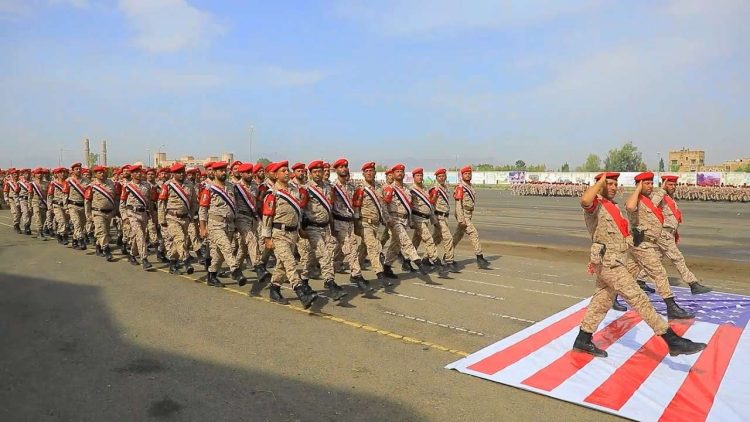
Lebanese daily newspaper Al-Akhbar reported on 6 January that Saudi Arabia has expressed its readiness to end the status quo in Yemen and withdraw under the conditions set by Ansarallah.
The kingdom agreed to lift the blockade, and pay compensations for the war after retreating under a pledge not to interfere in the country’s political process.
For that, Riyadh demanded the government in Sanaa present a set of “guarantees” that it will not threaten Saudi Arabia and its security, nor allow hostilities to originate from Yemeni soil.
According to Al-Akhbar, these demands were reiterated by Iran and the Sultanate of Oman, who assured the kingdom of Ansarallah’s willingness to meet Riyadh’s demands.
Despite that, no progress has been made to end the current state, which has left Yemen torn between peace and war. This lack of progress has prompted Ansarallah’s leadership to publicly reject that this limbo becomes a permanent reality.
In an interview with Al-Masirah TV on 1 January, Ansarallah’s spokesman and peace envoy, Mohammed Abdel Salam, demanded a permanent ceasefire between Yemen and Saudi Arabia.
“We are working to reach a point of clarity in Yemen, in which we move into either a truce or permanent ceasefire, and we have presented our point of view to the Omani mediator,” said Abdel Salam.
He added that this would require opening all ports, airports, and roads, and paying salaries with the revenue generated from Yemen’s oil and gas exports.
A source close to Ansarallah in Sanaa revealed to The Cradle that Saudi Arabia agreed to this demand in October 2022, and was ready – along with Qatar – to finance the salaries of all government employees in northern Yemen.
However, the US sabotaged this agreement and blocked the solution by pressuring Riyadh to cease its efforts.
The leader of Ansarallah, Abdul-Malik al-Houthi, has ordered the military to prepare for a scenario in which all prospects for peace diminish, as the status quo is no longer acceptable.
On the other hand, the UN coordinator for Yemen, Hans Grundberg, and US Deputy Assistant Secretary of State for Arabian Gulf Affairs, Tim Lenderking, met in Riyadh on 5 January, to discuss the developments with the head of the Yemeni Presidential Leadership Council, Rashad al-Alimi.
According to local media, the meeting tackled the UN’s efforts to coordinate with the international community to keep the peace process on track and explore ways to end Yemeni suffering.
However, progress has yet to materialize, and no plan has been set to find ways to establish communication with the Sanaa government, as a key to peace.
Sweden Did *Better* Than Its Neighbours
BY NOAH CARL | THE DAILY SCEPTIC | JANUARY 4, 2023
Sweden’s decision not to lockdown in the spring of 2020 was variously described as “deadly folly” (the Guardian), “a disaster” (Time magazine) and “the world’s cautionary tale” (the New York Times).
Yet Sweden confounded its critics. The country’s first wave receded around the same time as Britain’s, and over the succeeding months it crept down the list of countries by official Covid death rate – as others caught-up-with and then surpassed Sweden’s death toll.
The argument then became: “But Sweden did worse than its neighbours!” Critics would point out that although Sweden did okay compared to the rest of Europe, it did worse than the other Nordic countries.
This was a weak argument at the time, as I’ve noted before. But now its premise is actually false: Sweden did not do worse than the other Nordics.
As you may recall, back in November of 2021 the ONS published estimates of age-adjusted excess mortality for most of the countries in Europe. These showed that up to June of 2021, Sweden had negative excess mortality – fewer people died than usual. On the other hand, its excess mortality was less negative than that of the other Nordic countries.
The ONS has now published updated estimates of age-adjusted excess mortality, which run all the way up to July of 2022. And they show that Sweden’s excess mortality is lower than Finland’s, Denmark’s and Iceland’s; only Norway did better.
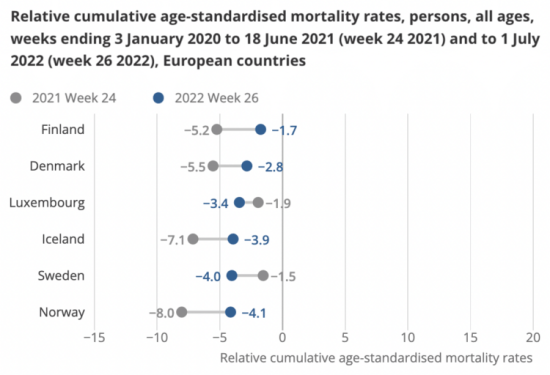
Between January 2020 and July 2022 (blue dots), Sweden’s age-standardised mortality rate was 4% lower than the five-year average. By contrast, Iceland’s was 3.9% lower, Denmark’s was 2.8% lower and Finland’s was 1.7% lower. This means that Sweden did better than three out of four other Nordics.
In the summer of 2020, Sweden’s state epidemiologist Anders Tegnell said, “Judge me in a year”. One year later, Sweden’s excess mortality was below the European average. We can now judge him again, more than two years later: Sweden’s excess mortality is the second lowest in Europe. On top of that, Sweden saw the second smallest increase in national debt of all European countries.
Tegnell got it right, and his critics got it wrong.
Putin announces Christmas truce
RT | January 5, 2023
President Vladimir Putin has ordered Russian troops to impose a cessation in hostilities in Ukraine. Hours earlier, Primate of the Russian Orthodox Church Patriarch Kirill had called on the forces of both sides of the conflict to cease hostilities in the run-up to and during the holiday.
According to the Kremlin, the truce is intended to last from noon on Friday January 6 until midnight on Saturday January 7, when the Orthodox faithful traditionally celebrate the holiday.
“Judging by the fact that a lot of citizens who practice the Orthodox religion live in the embattled area, we call upon the Ukrainian side to proclaim a cessation of hostilities and give them the opportunity to attend services on Christmas Eve and on Christmas Day,” the Kremlin said in a statement.
Earlier on Thursday, Putin discussed the prospect of peace negotiations with Ukraine with his Turkish counterpart, Recep Tayyip Erdogan, over the phone. The Russian president reiterated that Moscow was “open to serious dialogue” with Kiev if the latter recognized the “new territorial realities.”
Erdogan responded by saying that “calls for peace and negotiations should be supported by a unilateral declaration of ceasefire and a vision of a just solution” of the conflict.
Ankara has offered to broker negotiations between Russia and Ukraine in the past. Any meaningful peace talks between Russia and Ukraine effectively collapsed by April, with both sides blaming each other for the collapse. Russian Foreign Minister Sergey Lavrov said in late December that Ukrainian politicians were “incapable of negotiating,” adding that “the majority of them are blatant Russophobes.”
Russian drones far cheaper than Ukrainian air defenses – NYT
RT | January 4, 2023
The fact that the smaller kamikaze drones used by Russia are much cheaper than the Ukrainian air defense missiles used against them is creating problems for Kiev and its Western backers, the New York Times has acknowledged.
In an article on Tuesday, the paper didn’t question Kiev’s claims that most of the UAVs launched by Russia are being shot down, but pointed out that even in this case Ukrainian air defense stocks were being exhausted.
“How long can Ukraine sustain its effort when many of its defensive measures cost far more than the drones do?” the NYT wondered.
In addition to trying to destroy the incoming drones with anti-aircraft guns and small-arms fire, Kiev’s forces have “also relied heavily on missiles fired from warplanes and the ground,” which are very expensive, it wrote.
The paper cited the head of the Ukrainian consultancy Molfar, Artem Starosiek, who claimed that using a missile against a UAV costs up to seven times more than the drone itself. The drones that Russia uses are priced at around $20,000 per unit, while a surface-to-air missile from Ukraine’s arsenal ranges from $140,000 for a Soviet-era S-300 to $500,000 for a US-supplied NASAM system, he said.
The article claims that the drones used by Russia in Ukraine are Shahed-136s, supplied by Iran. This claim has been denied by both Moscow and Tehran on many occasions. The Russian Defense Ministry insists that its Geran-2 drones are domestically made, just like all the other hardware used in the military operation against Kiev. The Iranian Foreign Ministry has only confirmed sending a small batch of drones to Russia before the outbreak of the conflict with Ukraine, stressing that no new deliveries have been made since then.
Starosiek nevertheless defended Kiev’s strategy, arguing that it still “costs far less to shoot down a drone than to repair a damaged or destroyed power station.”
However, the NYT warned that the price difference between drones and air defenses was “an imbalance that could over time favor Russia, costing Ukraine and its allies dearly, some analysts say.”
According to estimations by Molfar, Russia has targeted Ukrainian military infrastructure and energy systems with some 600 UAVs since September, when they began to be used more widely.
Russia drastically ramped up its strikes against Ukrainian infrastructure in early October in response to repeated Ukrainian sabotage on Russian soil, including the bombing of the Crimean Bridge, which Moscow blamed on Kiev. Although the attack was widely cheered by top Ukrainian officials, Kiev has denied any involvement.
Venezuela National Assembly votes out US-backed opposition leader
RT | December 31, 2022
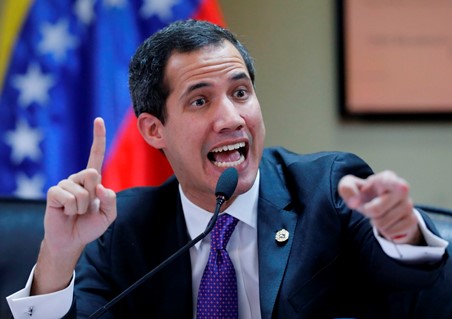
Opposition lawmakers in Venezuela have voted to dissolve the ‘interim government’ formed under their one-time leader, Juan Guaido, a main rival to the country’s ruling socialist party and once a darling of the US foreign policy establishment.
Holding their vote over a Zoom call, the opposition-controlled National Assembly moved to reorganize their movement on Friday, with 72 lawmakers voting in favor of disbanding the legislature compared to just 29 opposed. Guaido’s term at the head of the assembly, as well as his ‘interim presidency’ declared in 2019 with the blessing of the US, are now set to end on January 5.
“Venezuela needs new machinery in this struggle,” lawmaker Juan Miguel Matheus of the opposition Justice First party said after the vote, adding that Guaido’s tenure as interim leader “was something that was supposed to be temporary, but it became something perpetual.”
Guaido and his supporters, meanwhile, have argued that dissolving the interim government could spell the demise of any unified opposition movement, insisting it will only bolster the power and influence of Maduro, who has been deemed an illegitimate leader by Washington and a long list of allies.
“This is not about defending Guaido. This is about not losing the important tools that we have in this struggle,” Guaido said.
The shake-up in the opposition leadership follows several years of failed efforts to oust Maduro from power, including a series of heated street protests and an outright coup attempt in 2019. While Guaido and fellow opposition leaders failed to inspire mass defections among the security forces as hoped, the ill-fated putsch enjoyed open support from US officials.
In addition to eliminating the temporary government, the assembly said it would establish a new committee to monitor the state assets it still controls, which includes a quantity of gold bullion stored at the Bank of England, as well as the American oil firm Citgo – even as it continues to be majority-owned by PDVSA, a state-controlled energy giant operated by President Maduro’s government in Caracas.
The National Assembly will also create a special panel to negotiate with Maduro, aiming to take part in another round of elections slated for 2024.
While opposition candidates were set to gain control over the legislature following elections in 2015, the results were later invalidated in the courts and the government opted to launch an entirely new body known as the National Constituent Assembly. Since then, Maduro’s opponents have effectively led a government-in-exile, with many lawmakers conducting official business from foreign countries.
Russia consolidates in East Mediterranean
BY M. K. BHADRAKUMAR | INDIAN PUNCHLINE | DECEMBER 31, 2022
The curtain is coming down on the brutal 11-year old Syrian conflict, which former US President and Nobel Laureate Barack Obama initiated, as the Arab Spring swept through West Asia two decades ago. The United States has suffered yet another big setback in West Asia as the year 2022 draws to a close. The unfolding Turkish-Syrian reconciliation process under Russian mediation is to be seen as a saga of betrayal and vengeance.
Ankara came under immense pressure from the Obama Administration in 2011 to spearhead the regime change project in Syria. Obama blithely assumed that Turkiye would gleefully serve as the charioteer of “moderate” Islamism for the transformation in West Asia. But Ankara took its time to calibrate its foreign policies to adapt to the Arab Spring before responding to the shifting landscape in Syria.
Erdogan was caught unprepared by the uprising in Syria at a juncture when Ankara was pursuing a “zero-problems” policy with Turkiye’s neighbours. Ankara was unsure how the Arab Spring would play out and remained silent when the revolt first appeared in Tunisia. Even on Egypt, Erdogan made an emotional call for Hosni Mubarak’s departure only when he sensed, correctly so, that Obama was decoupling from America’s staunch ally in Cairo.
Syria was the ultimate test case and a real challenge for Erdogan. Ankara had invested heavily in the improvement of relations with Syria within the framework of the so-called Adana Agreement in 1998 in the downstream of Turkish military’s massive showdown with Damascus over the latter harbouring the PKK [Kurdish] leader Ocalan. Erdogan initially did not want Bashar al-Assad to lose power, and advised him to reform. The families of Erdogan and Assad used to holiday together.
Obama had to depute then CIA chief David Petraeus to visit Turkey twice in 2012 to persuade Erdogan to engage with the US in operational planning aimed at bringing about the end of the Assad government. It was Petraeus who proposed to Ankara a covert program of arming and training Syrian rebels.
But by 2013 already, Erdogan began sensing that Obama himself had only a limited American involvement in Syria and preferred to lead from the rear. In 2014, Erdogan went public that his relations with Obama had diminished, saying that he was disappointed about not getting direct results on the Syrian conflict. By that time, more than 170,000 people had died and 2.9 million Syrians had fled to neighbouring countries, including Turkey, and the fighting had forced another 6.5 million people from their homes within Syria.
Simply put, Erdogan felt embittered that he was left holding a can of worms and Obama had scooted off. Worse still, the Pentagon began aligning with the Syrian Kurdish groups linked to the PKK. (In October 2014, US began providing supplies to Kurdish forces and in November 2015, US special forces were deployed in Syria.)
Indeed, since then, Erdogan had been protesting in vain that the US, a NATO ally, had aligned with a terrorist group (Syrian Kurds known as YPG) that threatened Turkiye’s sovereignty and territorial integrity.
It is against such a backdrop that the two meetings in Moscow on Wednesday between the defence ministers and intelligence chiefs of Turkey and Syria in the presence of their Russian counterparts took place. Erdogan’s reconciliation process with Assad is quintessentially his sweet revenge for the American betrayal. Erdogan sought help from Russia, the archetypal enemy country in the US and NATO’s sights, in order to communicate with Assad who is a pariah in American eyes. The matrix is self-evident.
On Thursday, Turkish Defence Minister Hulusi Akar said: “At the meeting (in Moscow), we discussed what we could do to improve the situation in Syria and the region as soon as possible while ensuring peace, tranquility and stability… We reiterated our respect for the territorial integrity and sovereignty rights of all our neighbours, especially Syria and Iraq, and that our sole aim is the fight against terrorism, we have no other purpose.”
Russian President Vladimir Putin has been counselling Erdogan in recent years that Turkiye’s security concerns are best tackled in coordination with Damascus and that the Adana Agreement could provide a framework of cooperation. The Turkish Defence Ministry readout said the meeting in Moscow took place in a “constructive atmosphere” and it was agreed to continue the format of trilateral meetings “to ensure and maintain stability in Syria and the region as a whole.”
Without doubt, the normalisation between Ankara and Damascus will impact regional security and, in particular, the Syrian war, given the clout Turkiye wields with the residual Syrian opposition. A Turkish ground operation in northern Syria may not be necessary if Ankara and Damascus were to revive the Adana Agreement. In fact, Akar disclosed that Ankara, Moscow and Damascus are working on carrying out joint missions on the ground in Syria.
The Russian Defence Minister Sergei Shoigu’s willingness right in the middle of the Ukraine war to take the steering wheel and navigate its reconciliation with Syria adds an altogether new dimension to the deepening strategic ties between Moscow and Ankara. For Erdogan too, Syria becomes the newest addition to his policy initiatives lately to improve Turkiye’s relations with the regional states. Normalisation with Syria will go down well with Turkish public opinion and that has implications for Erdogan’s bid for a renewed mandate in the upcoming elections.
From the Syrian perspective, the normalisation with Turkiye is going to be far more consequential than the restoration of ties with various regional states (starting with the UAE) in recent years who had fuelled the conflict. Turkiye’s equations with Syrian militant groups (eg., Syrian National Army and Hayat Tahrir al-Sham), its continued occupation of Syrian territory, Syrian refugees in Turkiye (numbering 3.6 million), etc. are vital issues affecting Syria’s security.
The US resents Erdogan’s move to normalise with Assad — and that too, with Russia’s helping hand. It is now even more unlikely to give up its military presence in Syria or its alliance with the Syrian Kurdish group YPG (which Ankara regards as an affiliate of the PKK.)
But the YPG will find itself in a tight spot. As Syria requests Turkiye to withdraw from its territories (Idlib and so-called operation areas) and stop supporting armed groups, Turkiye in return will insist on pushing the YPG away from the border. (The government-aligned Syrian daily Al-Watan reported quoting sources that at the tripartite meeting in Moscow, Ankara has committed to withdrawing all its forces from Syrian territory.)
Indeed, the replacement of the YPG militia by the Syrian government forces along the borders with Turkiye would lead to the weakening of both YPG and the US military presence. However, the question will still remain unanswered as regards the place of Kurds in the future of Syria.
The US State Department stated recently, “The US will not upgrade its diplomatic relations with the Assad regime and does not support other countries upgrading their relations. The US urges states in the region to consider carefully the atrocities inflicted by the Assad regime on the Syrian people over the last decade. The US believes that stability in Syria and the greater region can be achieved through a political process that represents the will of all Syrians.”
Last week’s meetings in Moscow show that Russia’s standing in the West Asian region is far from defined by the Ukraine conflict. Russian influence on Syria remains intact and Moscow will continue to shape Syria’s transition out of conflict zone and consolidate its own long-term presence in Eastern Mediterranean.
OPEC Plus has gained traction. Russia’s ties with the Gulf states are steadily growing. The Russia-Iran strategic ties are at their highest level in history. And the return of Benjamin Netanyahu as Israel’s prime minister means that the Russian-Israeli ties are heading for a reset. Clearly, Russian diplomacy is on a roll in West Asia.
Conventional wisdom was that Russia and Turkiye’s geopolitical interests would inevitably collide once the floodgates were opened in Ukraine. Herein lies the paradox, for, what has happened is entirely to the contrary.
‘Türkiye agrees to withdraw troops from Syria following Moscow talks’
RT | December 31, 2022
Türkiye has agreed to fully withdraw its troops from northern Syria following tripartite talks involving Moscow, Ankara and Damascus earlier this week, Syrian newspaper Al-Watan has reported.
The three countries’ defense ministers – Hulusi Akar, Ali Mahmoud Abbas and Sergey Shoigu – met in Moscow on Wednesday for the first meeting of its kind since the outbreak of the Syrian conflict in 2011.
According to the paper’s source in Damascus, the negotiations resulted in “Türkiye’s consent to completely withdraw its troops from the Syrian territories that it occupies in the north of the country.”
Ankara and Damascus also expressed a common view that the Syrian-based Kurdish YPG militia, which Turkey associates with the outlawed Kurdistan Workers’ Party (PKK), “are agents of Israel and the US, and pose a grave threat to both Türkiye and Syria.”
Türkiye considers the separatist PKK and allied Kurdish groups to be “terrorist organizations” that threaten its national security. The Turkish military carried out airstrikes against YPG targets in northern Syria in November, with Ankara saying a ground operation in the area was also on the cards.
A special trilateral commission will be created by Russia, Türkiye and Syria to ensure that the agreements reached in Moscow are honored, Al-Watan reported.
Turkish Defense Minister Hulusi Akar told local media on Saturday that “one shouldn’t expect that everything will be solved at once in a single meeting.”
In Moscow, Türkiye “emphasized that we respect Syria’s territorial integrity and sovereign rights, and that our only goal is the fight against terrorism” including the PKK/YPG and Islamic State (IS, formerly ISIS), he said.
Ankara and Damascus have agreed to continue talks to deepen reconciliation, Akar added. He also suggested that those negotiations could even result in a joint anti-terrorist operation involving the two countries, which would happen “if we can solve our problems related to defense and security, if we can meet our needs.”
The Syrian side had earlier described the meeting in the Russian capital as “positive,” while Russia’s Defense Ministry said the talks had been conducted in a constructive manner and stressed the need for the continuation of such engagement.
South Caucasus: A battle of wills and corridors
By Yeghia Tashjian | The Cradle | December 30, 2022
On 12 December, under the pretext of environmentalism, dozens of state-backed “eco-activists” from Azerbaijan blocked the only land corridor connecting Armenia to Nagorno-Karabakh.
The blockade created a humanitarian crisis for the 120,000 Armenians living in Nagorno-Karabakh, cutting them off from the outside world. This is not the first time Baku has taken such a provocative action. Azerbaijan has long been pushing for the creation of the “Zangezur corridor” to connect itself to close ally Turkiye through southern Armenia, thereby cutting off the strategic Armenia-Iran border.
Tehran has opposed this project and has engaged in military exercises on its border with Azerbaijan. In October, the Iranians opened a consulate in the city of Kapan in southern Armenia as a warning to Baku and its regional allies.
Blocking the Lachin corridor
Despite this, Azerbaijan, with the support of Turkiye, has continued to pursue its goal, which has included blocking the road where Russian peacekeepers are stationed in the Lachin corridor connecting Armenia to Nagorno-Karabakh.
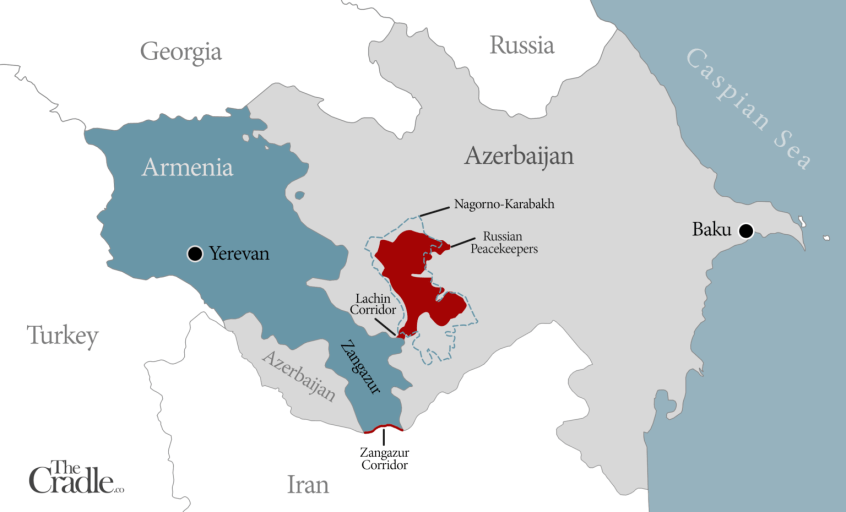
Map of Azerbaijan-Armenia conflict zones (Photo Credit: The Cradle)
In July 2022, Baku amended a contract with British company Anglo Asian Mining PLC, transferring three new mining sites inside Azerbaijan to the firm. One of these areas is located in the eastern part of Nagorno-Karabakh’s Martakert region, an area rich in gold, copper, and silver mines.
Nagorno-Karabakh’s Armenian population refused Azerbaijan’s efforts to send in monitoring groups, believing the move would give Baku control over the region’s economy and eventually lead to its annexation. In retaliation, Baku sent “environmentalists” to block the only corridor connecting Armenia to Nagorno-Karabakh.
Social media users have identified Azerbaijani state employees amid some of these “environmentalists” who periodically try to provoke Russian peacekeepers. The blockade has caused a humanitarian disaster in the region, with thousands of civilians unable to access basic necessities like medication and food via the only road connecting them to the outside world.
To compound tensions, Anglo-Asian Mining sent a letter to leading international organizations and states demanding that the “illegal exploitation” of the mines in Nagorno-Karabakh by Armenians be stopped. And yet Moscow continues to take a passive position, despite being a targeted party in the melee.
The Battle of Corridors
The blockade of the Lachin corridor did not come as a surprise, having been openly discussed in Azerbaijani media.
The only surprise was Russia’s inability to resolve the crisis. Earlier this month, Turkiye’s defense minister Hulusi Akar called on Armenia to “grasp the opportunity and respond positively to Turkiye’s and Azerbaijan’s peace calls” during joint military drills with Azerbaijan near the Iranian border.
He also commented on the “Zangezur corridor,” claiming that it was Baku’s “sincerest wish” to re-establish connections in the region and ensure “a comprehensive normalization throughout the region, including the relations between Azerbaijan-Armenia and Turkiye-Armenia.” Akar also vowed that Turkiye would continue to support Azerbaijan’s “righteous cause” against Armenia.
But on the second day of the protests organized by Azerbaijanis and the blockade on Nagorno-Karabakh, Azerbaijani media outlets made their intentions clear.
They called for the replacement of the commander of the Russian peacekeeping mission in Nagorno-Karabakh, Andrey Volkov, and for the control of the Lachin corridor to be transferred to Azerbaijan, along with the “full restoration of Azerbaijani sovereignty in the territories under the control of the peacekeepers.”
Some Azerbaijani activists also called for the removal of Russian forces and their replacement with UN-mandated forces.
Removal of Russian peacekeepers
It is unclear if Baku itself is willing to employ this language and demand the removal and replacement of Russian peacekeeping forces. According to some Azerbaijani experts, Baku is currently against the withdrawal of Russian peacekeepers by force, as this could lead to the annexation of Nagorno-Karabakh and the ethnic cleansing of Armenian Christians, which could tarnish President Ilham Aliyev’s image in the west and potentially result in US-EU economic sanctions.
Instead, Baku prefers to have the Russians stay, but in a restrictive capacity. It is easier for Azerbaijan to deal with a weak Russia, rather than with the Europeans, as they are familiar with the “Russian mentality,” says one expert. This suggests that Azerbaijan may prefer to continue using the Lachin corridor as a tool for negotiating with Moscow, rather than risking the removal of Russian forces.
Another Azerbaijani expert agreed that the current crisis is essentially between Azerbaijan and Russia – that the latter is unable to fulfill its “peacekeeping mission” and prevent the “Armenians of Karabakh from exploiting the natural resources in the region.”
But he also argues that the crisis is less about the mining and exploitation of resources, and more about pressuring the Russians to open the “Zangezur corridor,” which connects Azerbaijan proper to its Nakhichevan exclave, and lies on Iran’s strategic border with Armenia.
According to the expert, “Azerbaijan wants additional guarantees that it will have a safe connection with Turkiye, in exchange for Karabakh’s safe connection to Armenia.”
The story gets more complicated. In December, Azerbaijani media accused Armenians of inviting Iranian military experts to train Nagorno-Karabakh’s self-defense forces. The reports claim Iranians crossed the Lachin corridor and entered the territories controlled by Russian peacekeepers.
Despite Baku’s continuous barbs and provocations, it appears that Azerbaijan’s goal is not to fully remove or replace Russian peacekeepers, but rather to control their mission, monitor transit in the Lachin corridor, and use the corridor as a pressure card on Yerevan to open a “corridor” in Syunik linking Azerbaijan to Turkiye.
Therefore, from Azerbaijan’s perspective, the future of the Lachin corridor is now tied to the fate of the “Zangezur corridor.”
The view from Tehran
According to Dr. Ehsan Movahedian, researcher and instructor at the Allameh Tabataba’i University of Tehran, “the Republic of Azerbaijan is seeking a new adventure in the Caucasus region, and this issue requires diplomatic steps from the Islamic Republic of Iran and should be warning for the military authorities (in Tehran).”
One Iranian media outlet argues that if Stepanagert (the capital of Nagorno-Karabakh) falls:
“Unpleasant scenarios can be imagined for the South Caucasus region and its surrounding areas, including Iran. Removing an obstacle such as Nagorno-Karabakh paves the way for occupying Armenian territory and changing the map of the region, and in the long term for security attacks on the northwestern regions of Iran.”
The analyst, Mohammad Hossein Masumzadeh, says the only solution to halt Azerbaijan’s aggression “is offensive measures instead of the defensive approach governing the country’s regional policy in order to avoid irreparable risks.”
Some Iranian experts and former diplomats believe that the developments in the South Caucasus are related to domestic developments in Iran, where many ethnic Azeris, backed by Ankara and Baku, have called for separatist aspirations to dismantle the state from within.
Iran is concerned that the spread of Turkish influence on its northern border could impact its domestic politics in the future, as Azerbaijan has openly called for the “unification of Southern Azerbaijan (northern Iran) to the Republic of Azerbaijan.”
These do not appear to be empty threats. On 29 November, the “Organization for the Protection of the Rights of South Azerbaijanis” was established in Switzerland, announcing that it will submit documents and information to international organizations, including the UN, regarding the “rights of people in the Azerbaijani Province of Iran”.
On 2 December, the representative of “South Azerbaijan” at the UN, Araz Yurdseven, defended the idea of the independence of “South Azerbaijan” and accused Iran of committing “murders against the Iranian Azeris.”
Is the region heading for a new escalation?
Interestingly, many European and Azerbaijani experts viewed Armenian Prime Minister Nikol Pashinyan’s refusal to sign the final document of the Collective Security Treaty Organization (CSTO ) as a sign of Russian weakness, calling it “an unprecedented event that had never happened before.”
The CSTO is a Eurasian military alliance consisting of six post-Soviet states, which include Armenia, Russia, Belarus, Kazakhstan, Kyrgyzstan, and Tajikistan.
There are concerns that the region could be headed towards a new escalation. Azerbaijan has recently invited Turkish F-16 fighter jets to the region, which is being viewed as a preparation for conflict. The last time Baku invited the Turkish jets was in 2020, weeks before its war with Armenia.
Azerbaijan is also pressuring Russia to renegotiate the terms of their 10 November 2020 trilateral statement, which states that only Russian peacekeepers are responsible for controlling the Lachin corridor.
Azerbaijan is linking the blockade of the Lachin corridor to the opening of the Zangezur one. If Russia agrees to these concessions, it could lead to the isolation of Armenia, threaten its territorial integrity, and block an Iranian strategic border.
This would also shift the regional balance of power towards Turkiye, as Iran risks acting alone against Turkish-Azerbaijani pan-Turkic aspirations, which could eventually threaten Iran’s national security interests both regionally and domestically.
NYC electric garbage truck plans hit wall after trucks “conked out” plowing snow for just four hours
By Tyler Durden | Zero Hedge | December 28, 2022
In a move that absolutely nobody could have seen coming, New York City is scrapping its brilliant idea for electric garbage trucks after finding out the truck simply “aren’t powerful enough to plow snow”.
The pipe dream of converting the city’s 6,000 garbage trucks from gas to electric in order to try and limit carbon emissions (because there’s no other problems that need to be dealt with in New York City right now) is “clashing with the limits of electric-powered vehicles,” Gothamist wrote this week.
The city’s current trucks run on diesel and can be fitted with plows in the winter.
Despite the shortcomings, the city Department of Sanitation’ has already ordered seven electric rear loader garbage trucks, custom-made by Mack, the report says. Those trucks cost an astonishing $523,000 each and are to be delivered this spring.
Sanitation Commissioner Jessica Tisch told the NYC city council earlier this month: “We found that they could not plow the snow effectively – they basically conked out after four hours. We need them to go 12 hours. Given the current state of the technology, I don’t see today a path forward to fully electrifying the rear loader portion of the fleet by 2040.”
“We can’t really make significant progress in converting our rear loader fleet until the snow challenges are addressed,” she continued.
Many other cities don’t use their garbage trucks to plow snow, the report notes. Places that get a lot of snow, like Denver, have their own committed light duty trucks outfitted with plows, which operate more efficiently.
New York City, however, has committed to plowing each street and doing so by putting the city’s 2,100 trucks to work to clear the “equivalent of 19,000 miles of street lanes”.
In addition to… well, not being able to get the job done, charging has also been a holdup with electric trucks, Tisch said: “..this charging infrastructure requires additional space and often new electrical utility connections that can require substantial capital investments.”
Harry Nespoli, the president of Teamsters Local 831 union representing sanitation workers also isn’t sold on the idea: “How much power do they have? Can they run 12-hour shifts without a charge? I don’t know.”
Sanitation spokesperson Vincent Gragnani concluded: “With current technology, full electrification isn’t possible now for some parts of our fleet, but we are monitoring closely and really hope it will be.”
Let us know how that turns out, Vinny.
Featured Video
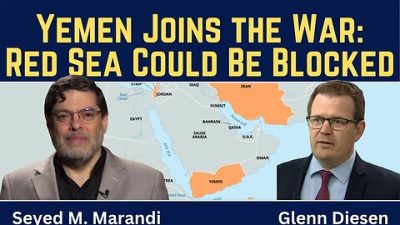
Yemen joins the war – Red Sea could be blocked next – Saudi regime at risk
or go to
Aletho News Archives – Video-Images
From the Archives
A superpower and “the world’s sickest warrior state”
By Paul J. Balles | March 8, 2010
Living through five or six major wars has hardened me to what I thought were the extremes of inhuman cruelty and brutality.
Two things made those extremes almost bearable: the brutality always revealed – at least according to the media coverage – the viciousness of the enemy. It was therefore quite understandable when our “brave men and women” pulverized the enemy.
Films of Japanese torturing captive Americans somehow justified holding Japanese Americans in internment camps during World War II; and only a small percentage of Americans found the bombing of Hiroshima and Nagasaki unreasonably vengeful at best, at worst, depraved.
The media giants in America portrayed the North Koreans as barbaric beasts with their captives, quite unlike their southern counterpoints – our allies during the Korean War. No one ever felt the need to explain how the South Koreans were a civilized breed while the North Koreans were absolute savages, at least according to the official line.
In Vietnam, our warriors justifiably (or so the media made us believe) dropped napalm on the North Vietnamese who had the gall to hide in villages and tunnels to ravage our invaders. At least it was accepted practice until some rogue photojournalist filmed a young girl screaming down a Vietnamese road in flames. … continue
Blog Roll
 Aletho News
- FTC Warns Visa, Mastercard, PayPal, Stripe Over Political Debanking
- Russian tanker approaches Cuba despite US oil blockade
- Marandi: Yemen joins the war – Red Sea could be blocked next – Saudi regime at risk
- Pro-Palestinian French member of European Parliament denied entry to Canada
- Pakistan to Host US-Iran Talks
- How Indonesia’s tilt toward the US left it stranded in the Strait of Hormuz
- US has no choice but to retreat from Iranian borders: Top commander
- Iran Retaliation Strikes Chemical Plant Near Dimona
- AWACS’ Destruction is a Major Loss for US Military – Ex-DoW Analyst
- Israel’s Iran Strategy Uses US Military & Gulf States as Its Pawns
- If Americans Knew
- Israeli police block Catholic cardinal from entering Church of the Holy Sepulchre on Palm Sunday
- Israel is assassinating journalists again, more than any other nation, anywhere, ever – Not a ceasefire Day 170
- Over 300 US service members wounded, majority have brain injuries – Not a ceasefire Day 169
- Researchers at Human Rights Watch Resign Over Blocked Report on Palestinian Refugee Return
- Jewish Groups Are Backing a War Americans Don’t Want
- Eric Fingerhut Thinks He’s the President of the Jews
- Top Jewish Philanthropists, Rabbis Urge Israeli President to Take Action Against ‘Jewish Extremists’
- Don’t Be Fooled. Zionist Leaders Have Always Wanted to Control Southern Lebanon
- Israel’s widespread use of torture is a core element of its genocide against the Palestinian people
- In Israel’s War on Iran, Many Middle East US Bases Rendered “All But Uninhabitable”
- No Tricks Zone
- New Study Finds Warming Saves Lives…Cold Temperatures 12 Times More Deadly Than Excess Heat
- German Science Blog Accuses PIK Climate Institute Of Hallucinating Climate Tipping Points
- Devastating Assessment Of Comirnaty Vaccine By Former Senior Pfizer Europe Toxicologist
- New Study: CO2 Is ‘Effectively Negligible’ As An Explanatory Climate Change Factor Since 2000
- Former Pfizer Toxicologist Dr. Helmut Sterz Tells Bundestag Hearing Pfizer Vaccine Should Have Never Been Approved
- Energy Expert: Germany’s Nuclear Phaseout Was A “500 Billion Euro Mistake”
- New Research: South Australia’s Mid-Holocene Sea Surface Temperatures Were 4°C Warmer Than Today
- Storing Green Energy To Last Germany 10 Days Would Require A 60-Million Tonne Battery
- New Studies: UK Sea Levels Were 4 Meters Higher Than Today During The Mid-Holocene
- Destructive Green New Deal: German Energy And Metal Group Warns Of Drastic Crisis
 Aletho News