The Final Report of the International Health Regulations Review Committee
The International Health Regulations Review Committee (IHRRC) published their final report and they have validated nearly everything that I have been saying for the last month and a half. Go figure.
By James Roguski | February 7, 2023
Final Report of the International Health Regulations Review Committee regarding the proposed amendments to the International Health Regulations
https://apps.who.int/gb/wgihr/pdf_files/wgihr2/A_WGIHR2_5-en.pdf

I must admit. I am pleasantly SURPRISED.
Is it possible that my prayers have been answered?
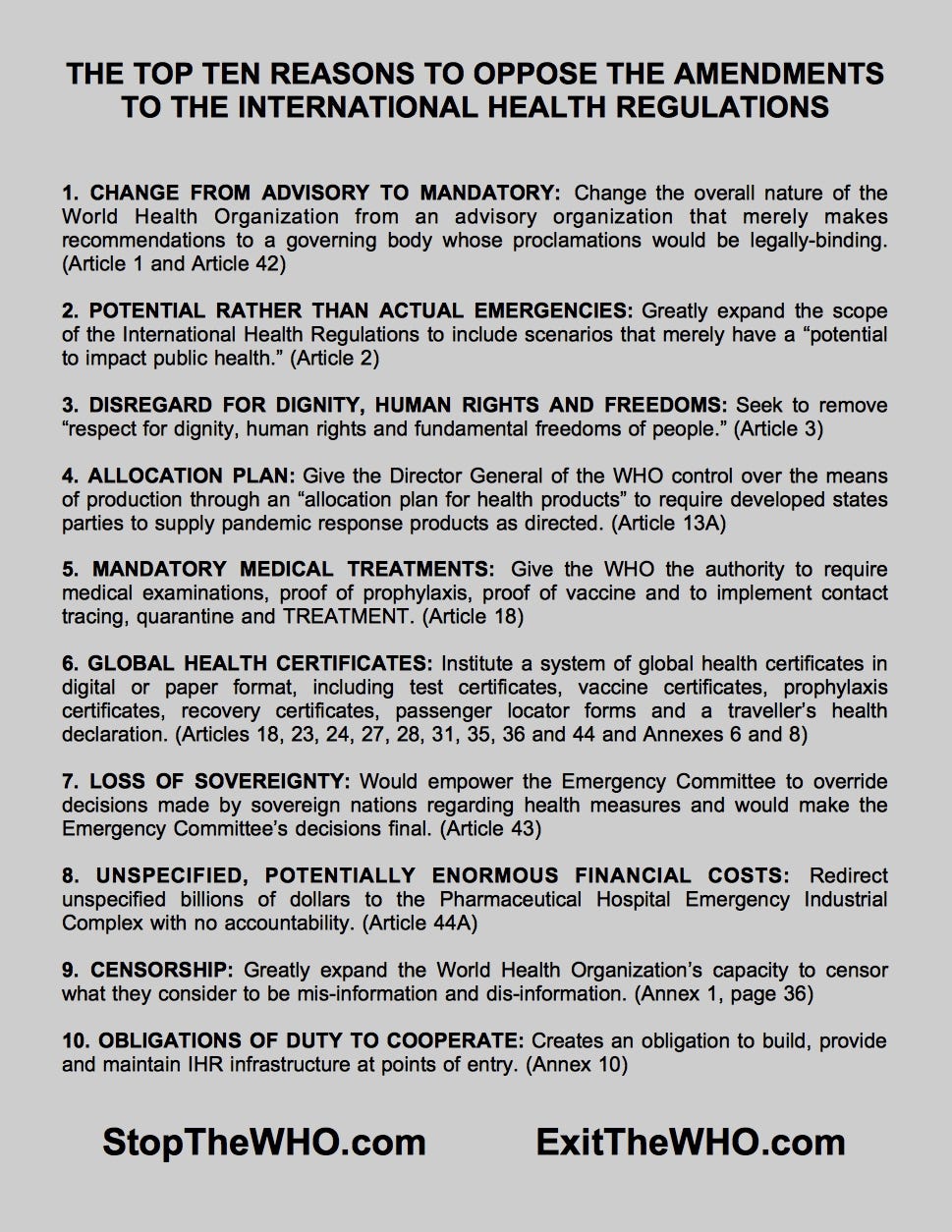
Below are the TOP 10 things that I have been speaking up against followed by excerpts from the IHRRC Report.
For the most part, it seems like the IHRRC agrees with me.
Go figure.

In their final report, the IHRRC stated:
Article 1- Definitions
In relation to the two proposed amendments to remove the word “non-binding” from the definitions of “temporary” and “standing recommendations”, the Committee notes that on a plain reading the proposed change would not affect the current understanding of the definition of standing or temporary recommendations as merely advice that is not mandatory. However, given that substantial proposals were made in relation to WHO recommendations in other related articles, the proposed amendments to these definitions could be understood as aiming to change the nature of these recommendations from non-binding to binding, and giving a binding effect to WHO recommendations and requests as proposed in other articles. That change would require a fundamental reconsideration of the nature of recommendations and the process for their adoption and implementation. The Committee further notes that during a public health emergency of international concern the recommendations may work better if they are not mandatory and advises against changing the nature of recommendations.
-Page 26
Article 42 – Implementation of health measures
The proposed amendments expand the scope of Article 42 in three ways: by making specific reference to recommendations made under Articles 15 and 16 (temporary and standing recommendations);
The proposed amendment to include a reference to temporary and standing recommendations seems to make application of these recommendations obligatory.
-Page 67

In their final report, the IHRRC stated:
Article 2 – Purpose and scope
The Committee considers that the proposed amendment to replace “public health risk” with “all risks with a potential to impact public health” may not increase the clarity of this Article. Public health risks are already defined in Article 1.
-Page 27

In their final report, the IHRRC stated:
Article 3 – Principles
The Committee strongly recommends the retention of the existing text “full respect for the dignity, human rights and fundamental freedoms of persons” as an overarching principle in the first paragraph, and notes that the concepts of human rights, dignity and fundamental freedoms are clearly defined within the framework of treaties to which many of the States Parties to the Regulations have adhered. The inclusion of human rights in Article 3 of the current International Health Regulations (2005) was a major improvement on the previous 1969 Regulations.1 The reference to “respect for dignity, human rights and freedoms of persons” works not only as an overarching principle in Article 3, but also as a concrete reference point in the operationalization of all articles concerning public health response, response measures, additional health measures and recommendations.
-Page 28

In their final report, the IHRRC stated:
NEW Article 13A – Access to health products, technologies and know-how for public health response
This proposed new Article addresses a range of considerations pertaining to the availability and affordability of health products, technologies and know-how. It goes further than the other proposed new Article 13A WHO-led international public health response in that it imposes obligations on States Parties as well as on WHO and it introduces a more robust final paragraph concerning the role and regulation of non-State actors.
WHO recommendations, as currently stated under Articles 15 and 16, were not envisioned for the purposes of establishing a medicines allocation mechanism or otherwise directing States Parties on increasing access to health products.
-Page 52
NEW Article 13A – Access to health products, technologies and know-how for public health response
However, the requirement in paragraph 1 for the Director-General to make an “immediate assessment of availability and affordability of required health products” may not be feasible due to the magnitude of such a list implied by the proposed amendment and the very high workload imposed on WHO during the initial stages of determining a PHEIC .
The Committee has concerns regarding the proposal in paragraph 1 to use Article 15 (temporary recommendations) for the purposes of establishing an “allocation mechanism.” Temporary recommendations, as defined under Article 1, are “non-binding advice and do not authorize WHO to direct States.
A different mode of authority may be required to establish an allocation mechanism.
It is unclear to the Committee what it means to comply with non-binding recommendations as per Articles 15 or 16.
-Page 53
NEW Article 13A – WHO-led international public health response
The Article goes further, however, in attributing to WHO several obligations that it does not currently have under the International Health Regulations (2005), including: to conduct an assessment of availability and affordability of “health products”; to develop an allocation and prioritization plan in the event that such an assessment reveals shortages in supply; and to direct States Parties to increase and diversify production and distributive functions for health products within individual States.
The Article further mandates WHO to establish a database “containing details of the ingredients, design, know-how, and manufacturing process or any other information required to facilitate manufacturing of health products” required to respond to potential PHEICs, and to maintain the database for all past PHEICs, as well as diseases identified in the International Health Regulations (1969).
This proposal also renders mandatory the temporary and standing recommendations addressed under Articles 15 and 16. The State Party making this proposal has also provided corresponding proposals to change the definitions of temporary and standing recommendations under Article 1 to render them coherent with new proposals in paragraph 1 of this proposal for a new Article 13A.
More fundamentally, it remains unclear how WHO could discharge the unprecedented set of new responsibilities attributed to it relating to health products and know-how under this proposed amendment, as these may arguably exceed its constitutional mandate. In order to be legally feasible, this amendment will require coherence with States Parties’ relevant national laws and other international obligations.
-Pages 54-55
NEW Article 13A – WHO-led international public health response
Finally, it is unclear whether reference to “WHO’s recommendations” in this paragraph refers to WHO’s authority to issue non-binding recommendations under Articles 15 and 16, or whether other forms of recommendations are envisioned. If indeed recommendations under Articles 15 and 16 are the targets of this addition in paragraph 1, the addition would be incoherent with the existing Regulations, as it would render these recommendations mandatory, whereas they were intended to be non-binding.
The Committee notes that the same State Party that proposed this new Article, has also put forward amendments to the definitions of temporary and standing recommendations, which propose removing the reference to “non-binding” in these definitions. If read in conjunction with this newly proposed Article, the proposed amendments to remove “non-binding” could be seen as a desire to make the temporary and standing recommendations binding, and therefore legally coherent with Article 13A, paragraph 1.
Similar to this proposal, paragraph 1 in the other proposal for a new Article 13A also makes explicit reference to Articles 15 and 16, and paragraph 2 creates a mandatory obligation on States to cooperate according to Articles 15 and 16.
Irrespective of legal coherence, changing temporary and standing recommendations into binding obligations may raise questions of feasibility. At this moment it is still unclear how to assess “compliance” with temporary recommendations issued during PHEICs, since they are defined as non- binding advice.
-Page 56

The IHRRC did not specifically address the types of “recommendations” that are listed in Article 18 (see below), they did raise concerns regarding articles 1, 13A and 42 that directly relate to the concept of changing non-binding “recommendations” to obligations.
Article 18 Recommendations with respect to persons, baggage, cargo, containers, conveyances, goods and postal parcels
1. Recommendations issued by WHO to States Parties with respect to persons may include the following advice:
– no specific health measures are advised;
– review travel history in affected areas;
– review proof of medical examination and any laboratory analysis;
– require medical examinations;
– review proof of vaccination or other prophylaxis;
– require vaccination or other prophylaxis;
– place suspect persons under public health observation;
– implement quarantine or other health measures for suspect persons;
– implement isolation and treatment where necessary of affected persons;
– implement tracing of contacts of suspect or affected persons;
– refuse entry of suspect and affected persons;
– refuse entry of unaffected persons to affected areas; and
– implement exit screening and/or restrictions on persons from affected areas.

In their final report, the IHRRC stated:
Article 18 – Recommendations with respect to persons, baggage, cargo, containers, conveyances, goods and postal parcels
The first part of the proposal about passenger information is not clear. If the proposed mechanism only concerns affected persons as per Article 1, then the mechanisms described in Articles 30, 37 and 38 and Annexes 8 and 9 can be used. If it is to cover all passengers, this would be a challenge to feasibility.
-Page 60
Article 23 – Health measures on arrival and departure
Regarding the proposal to introduce the possibility for health documents to include information related to laboratory tests, the Committee notes that this was a practice during the COVID-19 pandemic, within the context of the PHEIC and the related temporary recommendations. However, given that Article 23 applies to all situations, not only PHEICs, the Committee is concerned that such a requirement may overburden travellers, and may even raise ethical and discrimination-related concerns.
Lastly, the Committee recommends examining these proposed amendments in conjunction with Articles 31, 32, 35 and 36 and Annexes 6 and 7, as well as with the related proposed amendments thereto. Should any of these amendments be retained, definitions should be provided in Article 1 for the terms “information”, “digital” and “report”.
-Page 62
Article 27 – Affected Conveyances
The Committee considers the proposed amendment to be redundant.
The Committee notes that States Parties’ ability to regulate is subject to the international law of jurisdiction. Depending on the location of conveyance, State Parties may or may not have the legal power to fulfill their newly proposed obligation.
-Page 63
Article 35 – General rule
This Article states that, as a general rule, no health documents, other than those provided for under the Regulations or in recommendations issued by WHO, shall be required in international traffic.
-Page 65
Introducing an obligation for States Parties to recognize the health documents of other States Parties may pose many practical difficulties, especially considering that domestic legislation concerning privacy and personal information protection differs from one State Party to the next. Another concern, depending on how the amendments are implemented, is the appropriate level of protection of personal data under the applicable regional and international instruments.
As a general observation, the Committee recommends that the multiple proposals for amendments related to the digitalization of health information should be addressed in one single article and be harmonized with the provisions of Annexes 6 and 7.
-Page 66
Article 36 – Certificates of vaccination or other prophylaxis
It is unclear how the specifications and requirements for such “other types of proofs and certificates” would be formulated and by whom, since the proposal only mentions a possibility for the Health Assembly to design and approve such certificates. It is also unclear whether “substitutes for” and “complementary to” are to be used interchangeably. This matters because the meaning is different. The proposal that such certificates may include test certificates and recovery certificates should be read in conjunction with the proposed amendments to Article 23, paragraph 1(a), introducing laboratory tests and/or information on vaccination as part of the information that may be required of travellers.
-Page 67
Annex 6
The comments made under Article 35 apply in general to Annex 6, for example, with regard to the feasibility of digital certificates in many countries, as well as not precluding future technological developments. Similar considerations apply to the feasibility of having the Health Assembly decide on the related technical requirements, since situations may change periodically at short notice.
-Page 87
Annex 8
It is unclear to the Committee how this additional question on the maritime declaration will facilitate application of the Regulations.
The issue of the digital format of vaccination cards is being addressed in other proposed amendments to Articles 31, 35 and 36 (see related comments).
-Page 88

In their final report, the IHRRC stated:
Article 43 – Additional health measures
The proposals in paragraphs 4 and 6 establish a quasi-judicial process with tight deadlines and binding effects for recommendations, with the Emergency Committee having the final authority to decide on the appropriateness of health measures. This Committee is concerned that these proposals may unduly impinge on the sovereignty of States Parties and give binding effects to what are supposed to be recommendations.
-Page 68

In their final report, the IHRRC stated:
New Article 44A – Financial mechanism for equity in health emergency preparedness and response
The Committee notes a divergence of views as to whether WHO has a financing function.
The Committee notes that, under Article 44, WHO already has a role, in collaboration with States Parties, to mobilize financial resources, and cautions against creating an explicit financing function for WHO under the Regulations.
-Page 71

The IHRRC did not specifically address the proposed amendment regarding increased censorship powers for the WHO in Annex 1, but they did state the following:
A balance is needed between ensuring more accurate scientific information on one hand and freedom of speech and the press on the other. How to strike that balance while navigating global policy and national regulatory landscapes will be an ongoing challenge.
-Page 21

In their final report, the IHRRC stated:
NEW Annex 10
The obligations set out in paragraph 1 of this proposed new Annex appear to be absolute and unconditional.
If requested to provide assistance, it is unclear what steps WHO or States Parties should take.
In summary, the Committee supports the idea of full cooperation and collaboration between WHO and States Parties, but the proposed new Annex 10 would be difficult to implement.
However, the proposed new Annex 10 goes well beyond that supporting function, containing provisions that exceed the scope of both the current Article 44 and the amendments proposed thereto.
-Page 89

OFFICIAL WHO DOCUMENTS:
https://apps.who.int/gb/wgihr/e/e_wgihr-2.html
1. Provisional Agenda
https://apps.who.int/gb/wgihr/pdf_files/wgihr2/A_WGIHR2_1-en.pdf
2. Draft Program of Work
https://apps.who.int/gb/wgihr/pdf_files/wgihr2/A_WGIHR2_2-en.pdf
3. Proposed Modalities of Engagement For Relevant Stakeholders
https://apps.who.int/gb/wgihr/pdf_files/wgihr2/A_WGIHR2_3-en.pdf
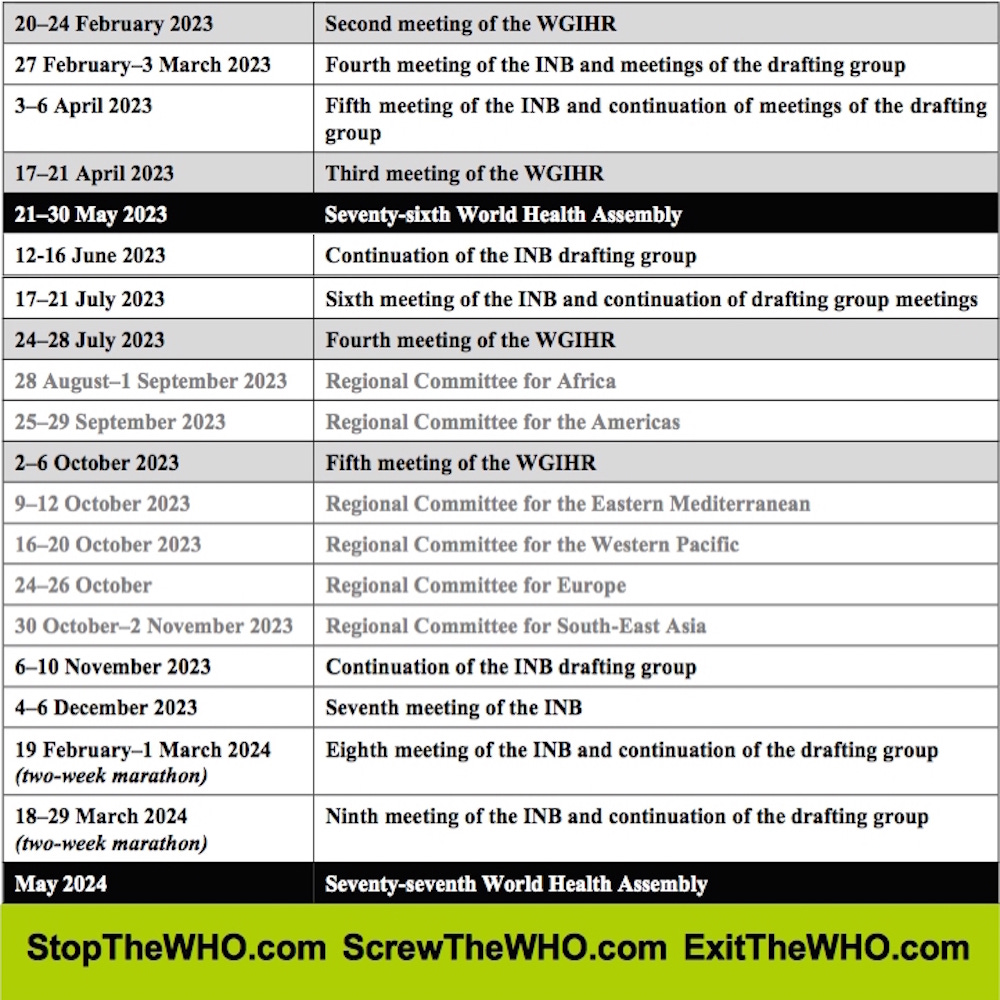
4. Provisional WGIHR timeline 2022–2024
https://apps.who.int/gb/wgihr/pdf_files/wgihr2/A_WGIHR2_4-en.pdf

5. Report of the Review Committee regarding amendments to the International Health Regulations
https://apps.who.int/gb/wgihr/pdf_files/wgihr2/A_WGIHR2_5-en.pdf
6. Proposed amendments to the International Health Regulations
https://apps.who.int/gb/wgihr/pdf_files/wgihr2/A_WGIHR2_6-en.pdf
7. Article-by-Article compilation of proposed amendments to the International Health Regulations
https://apps.who.int/gb/wgihr/pdf_files/wgihr2/A_WGIHR2_7-en.pdf
Report of the Sixth Meeting of the Review Committee regarding amendments to the International Health Regulations (2005) (IHR)
Ex-Pentagon Analyst Doubts China Would Risk Sending Surveillance Balloon Over US
Sputnik – 04.02.2023
WASHINGTON – A former US defense official told Sputnik it is hard to imagine why China would risk sending an uncontrollable balloon with high-end surveillance equipment over the United States.
The Pentagon on Friday said it detected another Chinese surveillance balloon – this one transiting Latin America, which comes a day after the US identified the first one over Montana.
Beijing said the balloon over the US is a civilian airship intended for scientific research, however, Secretary of State Antony Blinken scrapped a high profile visit to China over the incident.
“It is hard to imagine why the Chinese would risk sending military-grade surveillance equipment in a vulnerable, uncontrollable balloon that cannot even be directed to a specific target,” former Pentagon analyst Chuck Spinney said. “These high altitude balloons basically go with the wind-flows.”
US constitutional historian and political commentator Dan Lazare said the US response has been a gross overreaction. Canceling an important diplomatic trip over something as trivial as this is absurd, he added.
China’s foreign ministry on Friday said the airship deviated far from its planned course and regrets the unintended entry into US airspace due to force majeure.
Croatia’s President Doesn’t Want Be West’s ‘Circus Poodle’ in Ukraine Crisis
By Ilya Tsukanov – Sputnik – 31.01.2023
The Croatian head of state took flak from Zagreb’s NATO and EU allies last year after threatening to block Finland and Sweden’s NATO applications for membership, but was overruled by parliament, which ratified the accession protocols in July.
Croatian President Zoran Milanovic sparked a fresh rift with Brussels and Kiev after assuring that Crimea will inevitably remain part of Russia, and blasting the West’s “manic” desire to try to collapse Russia or institute regime change in the country.
“Between 2014 and 2022, we watched as someone provoked Russia with the intention of starting this conflict,” Milanovic told reporters Monday while discussing last week’s decision to send German tanks to Ukraine, referring to the 2014 US-backed Euromaidan coup in Kiev.
“What we are doing as the collective West is deeply immoral. German tanks will only unite Russia and China even more. My job as president is to get away from this, and not be a circus poodle. Any involvement in this [crisis] is extremely dangerous,” he said.
Warning that the tank deliveries would only prolong a pointless conflict, Milanovic said he is “against sending any lethal arms there” because as a nuclear power Russia cannot not be defeated.
“Russia has 6,000 nuclear warheads. What is the goal [of the Ukraine conflict – ed.note]? The disintegration of Russia? A change of power? They are talking about ripping Russia apart. It’s manic. The Serbs and I hated each other less. It was a much more terrible war in our country than in Ukraine,” the Croatian president said, recalling the Western-instigated Slav-on-Slav bloodshed of the 1990s in Yugoslavia.
Stressing that “leading German generals are saying” that Crimea will “never be Ukraine again,” Milanovic urged the West to get off its high horse in talking about Russia “annexing” the Black Sea peninsula, and pointed out that Kosovo was “annexed” and “stolen” from Serbia by the West.
“Who annexed Kosovo? The international community, including us,” he said. “It was taken from Serbia by force, it was extraction, a part of Serbian territory was taken away.”
‘It’s Armageddon’
Milanovic expressed fears that “deranged emotions and hatred are leading Europe to great danger” amid the prospects of a full-on war with Russia. “The question is not how much we help Ukraine. This is not help, this is torture. They should have been forced to sit down at the negotiating table. 300,000 Ukrainians should die [to end the conflict?, ed.note]. It hurts my heart, as I’m watching this – it’s Armageddon.”
Milanovic’s remarks sparked outrage from Kosovo and Albania, while a Ukrainian Foreign Ministry spokesman called them “unacceptable” for “calling into question the territorial integrity of Ukraine.” The spokesman also expressed appreciation for the “steadfast support” Croatia has provided, notwithstanding the president’s sentiments.
Milanovic rivals his Serbian neighbors when it comes to outspoken criticism of NATO and EU policy amid the Ukraine conflict – with the difference being that Croatia is actually part of both Western-dominated institutions. The politician has spoken out repeatedly against Zagreb getting involved, and expressed doubts about the effectiveness of Western sanctions on Moscow, recently calling them “total nonsense.”
Milanovic’s rhetoric has not been matched by actual Croatian government policy, with the government of Prime Minister Andrej Plenkovic towing the NATO and EU line and taking one of the toughest anti-Russian stances in the Western Balkans. The Croatian presidency is largely a ceremonial role, although nominally it is supposed to provide for cooperation on conducting foreign policy.
MbS urged Baghdad to set up Iran-Saudi meeting: Iraqi FM
The Cradle | January 31, 2023
As part of a diplomatic process aimed at mending strained relations between the two neighbors, Saudi Crown Prince Mohammed bin Salman (MbS) reportedly pressured senior Iraqi officials to set up a face-to-face meeting between the top diplomats of Riyadh and Tehran. This was revealed by the Iraqi Foreign Minister, Fuad Hussein, on 30 January.
In an interview with Rudaw TV on 29 January, the Iraqi Foreign Minister said that “Prince Faisal bin Farhan Al Saud and Hossein Amir-Abdollahian, the foreign ministers of Saudi Arabia and Iran, will meet in Baghdad, at the request of Mohammed bin Salman. The event is still planned, and the time and date will be announced later.”
He also said that the Iranian and Saudi foreign ministers would meet in public and that Iraq would act as a middleman to ensure that the details of the private conversations were made public.
The Saudi diplomat stated earlier this month that his nation has spoken with Iran and is looking for a way to open a dialogue between the two.
In an effort to improve their bilateral relations, the two sides began negotiations in the spring of 2021 and held five rounds of talks in the Iraqi capital. However, Tehran suspended the negotiations after Riyadh executed 81 people under the pretext of being involved in “terrorism,” the majority of which were minority Shia Muslims.
Relations have recently become tenser due to Saudi Arabia’s alleged sponsorship of the protests in Iran in late 2022.
Iran’s Intelligence Minister, Esmail Khatib, was quoted by Iranian media as saying it is running out of patience and will no longer tolerate intervention, hostility, and incitement in a direct message to Saudi Arabia.
Meanwhile, in November, Iran sent an official warning message to the kingdom through diplomatic channels, confirming that it is fully aware of “the Saudi connection to Iran International.” Riyadh categorically denied this, saying it has “nothing to do with the outlet.”
HHS Office of Inspector General Maneuvers to Throw Fauci Under Bus Without Hurting Him
Audit finds lax oversight of EcoHealth grants for “enhanced potential pandemic pathogens (ePPPs)”
By John Leake | Courageous Discourse | January 27, 2023
Three years after SARS CoV-2 broke out, the Department of Health and Human Services (HHS) Office of Inspector General (OIG) just issued a dry-as-dust report on its audit of the NIH grants to EcoHealth Alliance “totaling approximately $8.0 million, which included $1.8 million of EcoHealth’s subawards to eight subrecipients, including the Wuhan Institute of Virology (WIV).”
The auditors concluded that:
Using its discretion, NIH did not refer the research to HHS for an outside review for enhanced potential pandemic pathogens (ePPPs) because it determined the research did not involve and was not reasonably anticipated to create, use, or transfer an ePPP. However, NIH added a special term and condition in EcoHealth’s awards and provided limited guidance on how EcoHealth should comply with that requirement. We found that NIH was only able to conclude that research resulted in virus growth that met specified benchmarks based on a late progress report from EcoHealth that NIH failed to follow up on until nearly 2 years after its due date.
In plain English, the NIH financed a company conducting dangerous and illegal research that likely resulted in or contributed to a viral pandemic that inflicted incalculable damage on the entire human race. Note the Orwellian sleight of hand trick of using the term “enhanced potential pandemic pathogens ePPP” instead of the “Gain-of-Function,” which the public now understands to be illegal.
And what does the OIG recommend be done about this? Its recommendations are written in such toothless and boring prose that the average reader will likely fall asleep before reaching the end of the paragraph.
We recommend that NIH ensure that EcoHealth accurately and in a timely manner report award and subaward information; ensure that administrative actions are appropriately performed; implement enhanced monitoring, documentation, and reporting requirements for recipients with foreign subrecipients; assess whether NIAID staff are following policy to err on the side of inclusion when determining whether to refer research that may involve ePPP for further review; consider whether it is appropriate to refer WIV to HHS for debarment; ensure any future NIH grant awards to EcoHealth address the deficiencies noted in the report; and resolve costs identified as unallowable as well as possibly unreimbursed costs.
The OIG report suggests that the HHS is now maneuvering to throw retired NIAID director Anthony Fauci under the bus for these “regrettable indiscretions,” while giving the appearance of taking corrective action. Fauci will enjoy his retirement, only occasionally interrupted by theatrical Congressional hearings that will result in zero disciplinary action. EcoHealth Alliance will continue receiving generous grants like the $3 million it was just awarded, and its officers will continue pocketing much of the money for themselves. Business as usual in the Land of the Racketeers will continue.
Australia Sees Heart Attacks Increase By 17% In 2022 – “Experts” Blame Pandemic
By Tyler Durden | Zero Hedge | January 25, 2023
The public has been bombarded with a stream of news stories in recent months seeking to explain the steady rise of heart attacks in western countries in the past two years. The epidemic is most concerning due to the large number of young and otherwise healthy people that are being stricken with heart problems otherwise reserved for older or clinically obese patients.
Explanations for the trend blame everything from video games to climate change. Of course, these scapegoats do not explain the statistical leap in heart failure in the past two years. The most common narrative is that the covid virus is the cause – The problem with this theory is that there is zero evidence to support the claim that covid causes potential heart ailments. In fact, studies show that there is no such thing as “covid heart”, a false concept spread by the mainstream media at the onset of the pandemic.
Are the “experts” baffled? Or, are they trying to avoid the obvious culprit.
Australia is reporting a 17% increase in heart attacks in the first eight months of 2022 alone, and establishment paid researchers seem to be deliberately avoiding any mention of the covid mRNA vaccines. Instead, they are continuing to blame covid infection along with numerous peripheral and indirect triggers associated with the lockdowns.
Multiple studies now show a direct relationship between vaccine status and Myocarditis, specifically in young people, and the attempts to suppress such information by Big Pharma and governments are failing. If side effects are related to developing auto-immune disorders triggered by mRNA as some researchers suspect, then symptoms in many vaccinated people may not become visible for months or years. But, as time passes, the extent of the damage will become clear to the public.
Pro-vaccine studies related to the dangers often do not include unvaccinated people as a control group for determining side effects, which suggests a desire to hide health risks associated with covid vaccination. Eventually the questions and the deaths are going to become too prominent for the mainstream to ignore. Are torches and pitchforks the inevitable end for vaccine enforcers and Big Pharma?
‘Science Fiction Medicine’: Moderna Developing mRNA Injection to Treat Heart Failure
By Michael Nevradakis, Ph.D. | The Defender | January 17, 2023
Moderna raked in significant earnings in 2022, based on $18.4 billion in sales of its mRNA COVID-19 vaccine — the company’s one and only product on the market.
But in a Jan. 9 update on the company’s “industry-leading mRNA pipeline,” Moderna told investors it is developing multiple new mRNA products — including a treatment designed to be injected directly into the hearts of patients who have sustained heart attacks or heart failure.
Moderna said it launched a phase 1B clinical trial of its mRNA-0184 injection, which it said: “encodes for relaxin, a naturally occurring hormone that is known to cause hemodynamic changes that are potentially beneficial for heart failure patients.”
The company stated:
“The mRNA sequence of mRNA-0184 is engineered to instruct the body to produce relaxin with an extended half-life, with the goal of producing a sustained clinical benefit in heart failure patients — this longer half-life may result in more durable effects compared to previous approaches.”
According to the Daily Mail, mRNA-0184 “uses the same technology as the company’s flagship COVID jab and is designed for people weeks or months after a heart attack to help them recover,” by “instructing human heart cells to generate a hormone that is known to improve blood flow, helping restore damaged heart muscles.”
Patients in the trial “have stable heart failure and the trial will determine how safe the shot is and how well patients can tolerate it, as well as perfecting the dosage amount and frequency.”
In a Nov. 4, 2021, presentation introducing the novel mRNA-0184 therapy, Moderna claimed its “relaxin program … is being developed to treat decompensated heart failure.”
Relaxin is “a naturally occurring hormone that is known to cause” changes to blood flow that are “potentially beneficial for heart failure patients,” according to the company.
A federal disclosure filed by Moderna on Dec. 21, 2022, regarding its phase 1B clinical study indicates that 98 participants are expected to be enrolled and that the study is expected to be completed by May 7, 2024.
The clinical trials are taking place at six locations in Poland and the U.K.
In an October 2022 interview with Sky News Australia, Moderna CEO Stéphane Bancel said:
“We are now in a super exciting program where we inject mRNA in people’s hearts after a heart attack to grow back new blood vessels and re-vascularize the heart.
“It’s a bit like science fiction medicine but that’s what is really exciting to me.”
Prior to jumping into the race to develop a COVID-19 vaccine, Moderna had a long history of failure, as persistent safety concerns and other doubts about its mRNA delivery system threatened its entire product pipeline, according to investigative journalist Whitney Webb.
‘No safety track record’ for this type of genetic therapy, expert says
Cardiologist Dr. Peter McCullough, an outspoken critic of COVID-19 vaccines, was less enthusiastic than Bancel about Moderna’s mRNA injection targeting heart disease.
McCullough told The Defender :
“There is no safety track record for genetic therapies that introduce functional code for production of a protein for an uncontrolled quantity and uncontrolled duration of time. There are no assurances on long-term safety of mRNA technology.”
Previous similar efforts have failed, McCullough said, casting doubt on the possibility of success for the mRNA-0184 injection.
“In a large trials program, Novartis failed to show benefit with a similar hormone, serelaxin, thus the Moderna product looks unattractive as a heart failure therapeutic,” he said.
The Gateway Pundit, reporting on Moderna’s announcement, remarked, “In short, Moderna will fix the problem it created,” in a thinly veiled reference to the increased prevalence of heart disease and heart failure among individuals who received COVID-19 vaccines.
Moderna announces several more mRNA vaccines and therapeutics that are in its pipeline
Moderna stated that it has 48 programs in development, including 36 in ongoing clinical studies.
“Moderna continues to scale, now with 48 programs in development, including 36 programs in clinical trials encompassing mRNA infectious disease vaccines and mRNA therapeutics spanning seven different modalities,” the statement read.
Bancel said:
“We enter 2023 in a great position, with significant momentum across our clinical pipeline, a highly energized team and a strong balance sheet of over $18 billion of cash and cash equivalents.
“With our infectious disease franchise continuing to accelerate with exciting near-term catalysts for RSV [respiratory syncytial virus] Phase 3 data and Flu Phase 3 data, and recent breakthroughs in the development of individualized cancer treatments, as well as our rapid advancement in rare diseases and promising cardiology programs, the Moderna platform is delivering across several modalities.
“Our progress is meeting the high expectations we set out a few years ago, and with encouraging clinical data across the entire Moderna platform, we are accelerating our investments to deliver the greatest possible impact to people through mRNA medicines … 2023 is going to be a very exciting year for Moderna, and most importantly, for patients.”
These “exciting” developments, according to the company, include candidate vaccines and therapeutics for flu, RSV, cytomegalovirus and cystic fibrosis, as well as a “personalized cancer vaccine.”
As previously reported by The Defender, several Big Pharma companies, including Moderna, are vying to develop an RSV vaccine, despite repeated failed attempts to develop a vaccine for this illness in the past. These efforts have been ramped up just as many regions in the U.S. and worldwide are reporting outbreaks of RSV.
Moderna’s RSV candidate vaccine, which utilizes mRNA technology and is known under the identifier mRNA-1345, is currently in a phase 3 clinical study, according to the company’s announcement.
Moderna is also conducting two studies, with participants in the Northern and Southern hemispheres, of its candidate mRNA-1010 seasonal influenza vaccine, which also utilizes mRNA technology.
In conjunction with Merck, Moderna announced its mRNA-4157/V940 candidate vaccine — specifically, a “personalized” cancer vaccine that has been trialed on melanoma patients and which, according to Moderna, is the first treatment to have demonstrated “efficacy for an investigational mRNA cancer treatment in a randomized clinical trial.”
In addition to injectables, Moderna also announced the ongoing development of an inhalable mRNA therapy, VX-522, “mRNA targeted at treating the underlying cause of cystic fibrosis” that is “delivered to the lung.”
The company said it expects continued sales of its COVID-19 mRNA vaccine in 2023, stating “expected minimum COVID-19 vaccines sales of approximately $5.0 billion” and “potential additional contracts in the United States, Europe, Japan, and other key markets.”
Moderna’s announcement also referenced several recent acquisitions and new partnerships the company has entered into.
This includes the acquisition of OriCiro Genomics, “a Japanese company with a novel development approach for cell-free synthesis and amplification of plasmid DNA, a key building block of mRNA manufacturing.”
A “strategic research collaboration” with CytomX Therapeutics was also announced, “for [the] development of mRNA-based conditionally activated therapeutics for oncology and non-oncology conditions.”
Moderna’s ongoing partnership with Metagenomi, “to accelerate the development of in vivo gene editing therapeutics,” was also highlighted in its announcement. Metagenomi is funded by Bayer, which acquired Monsanto, producer of the widely used weedkiller Roundup, in 2018.
As previously reported by The Defender, thousands of lawsuits are currently pending in the U.S., claiming that Roundup causes cancer.
Michael Nevradakis, Ph.D., based in Athens, Greece, is a senior reporter for The Defender and part of the rotation of hosts for CHD.TV’s “Good Morning CHD.”
This article was originally published by The Defender — Children’s Health Defense’s News & Views Website under Creative Commons license CC BY-NC-ND 4.0. Please consider subscribing to The Defender or donating to Children’s Health Defense.
Ukraine war’s first anniversary and beyond
BY M. K. BHADRAKUMAR | INDIAN PUNCHLINE | JANUARY 24, 2023
The first anniversary of Russia’s special military operation in Ukraine falls on February 24. The Russian strategy of attrition war has not yet produced the desired political outcome but has been a success nonetheless.
The delusional “westernist” notions of the Moscow elite that Russia can be a dialogue partner of the West have dissipated thoroughly, with ex-German Chancellor Angela Merkel’s stunning disclosure recently that the West’s negotiations with Russia regarding the Minsk Agreement were an “attempt to give Ukraine time” and that Kiev had used it “to become stronger.”
Moscow reacted with bitterness and a sense of humiliation that the Russian ruling elite were taken for a ride. This awareness impacts the Ukraine conflict as it enters the second year. Thus, the annexation of the four regions of Ukraine — Donetsk and Lugansk [Donbass], Zaporozhye, Kherson oblasts — and Crimea, accounting for around one-fifth of Ukrainian territory, is a fait accompli now, and Kiev’s recognition of it is a pre-requisite for any future peace talks.
Moscow’s initial optimism in February-March that “the supreme art of war is to subdue the enemy without fighting” (Sun Tzu) has also given way to the realism that the Biden Administration will not allow the war to end anytime soon until Russia is bled white and weakened. This led to the Russian withdrawal from Kharkhov and Kherson regions with a view to create a well-fortified defence line and dig in.
Putin finally accepted the army commanders’ demand for a partial mobilisation. The ensuing big deployment in Ukraine, alongside the build-up in Belarus, has put Russia for the first time in a commanding position militarily as the war enters the second year.
The Kremlin has put necessary mechanisms in place to galvanise the defence industry and the economy to meet the needs of the military operations in Ukraine. From a long-term perspective, one historic outcome of the conflict is going to be Russia’s emergence as an unassailable military power that draws comparison with the Soviet Red Army, which the West will never again dare to confront. This is yet to sink in.
Today, the Chief of the General Staff General Valery Gerasimov stated in an extraordinary interview with the journal Argumenti i Fakti that the newly approved Armed Forces development plan will guarantee the protection of Russia’s sovereignty and territorial integrity and “create conditions for progress in the country’s social and economic development.
Under the plan approved by Putin, the Moscow and the Leningrad military districts will be created, three motorised rifle divisions will be formed in the Kherson and the Zaporozhye oblasts (that have been annexed in September) and an army corps will be built in the northwestern region of Karelia bordering Finland.
The internal western assessment is that the war is going badly for Ukraine. Spiegel reported last week that Germany’s Federal Intelligence Service (BND) “informed security politicians of the Bundestag in a secret meeting this week that the Ukrainian army is currently losing a three-digit number of soldiers every day in battles.”
The BND told the German MPs that it is particularly “alarmed by the high losses of the Ukrainian army in the battle for the strategically important city of Bakhmut” (in Donetsk) and warned that “the Russians’ capture of Bakhmut would have significant consequences, as it would allow Russia to make further forays into the interior of the country.”
Again, a Reuters report quoted a senior Biden Administration official who was speaking to a small group of reporters in Washington on Friday that there is “a high possibility” that the Russians will push the Ukrainians out of Bakhmut, which western military experts have called the “lynchpin” of the entire Ukrainian defence line in Donbass.
On the other hand, the Biden Administration is hoping to buy time till spring to revamp the pulverised Ukrainian military and equip it with advanced weaponry. The old stocks of Soviet-era weaponry have been exhausted and future supplies to Ukraine will have to be from hardware in service with NATO countries. That is easier said than done, and the western defence industry will need time to restart production.
All the bravado that Kiev is preparing for an offensive to drive the Russians out of Ukraine has vanished. The signs are that a Russian offensive may have begun on the southern front, which is steadily advancing toward Zaporozhye city, a major industrial hub in Ukraine.
This offensive would have profound implications. Capture of the remaining 25% of the territory in Zaporozhye oblast, which is still under Kiev’s control, will make the land bridge between Crimea and the Russian hinterland impregnable to Ukrainian counter-offensive as well as strengthen the Russian control of the Azov Sea ports (which connect the Caspian Sea with the Black Sea and the Volga–Don Shipping Canal leading to St.Petersburg), apart from dramatically weakening the entire Ukrainian military deployment in Donbass and in the steppes on the eastern side of Dnieper River.
The big picture, therefore, as the war enters the second year is that the West is working feverishly on plans, with the Biden Administration leading from the rear, to deliver heavy armour to the Ukrainian military by spring, including German Leopard tanks. If that happens, Russia is sure to retaliate with strikes on supply routes and warehouses in western Ukraine.
On Thursday, Dmitry Medvedev, the outspoken former Russian president who is close to Putin and serves as deputy chairman of the powerful security council, explicitly warned, “Nuclear powers have never lost major conflicts on which their fate depends.”
However, there are mitigating factors. First, the results of Davos 2023 and the meeting of NATO defence ministers in Ramstein on Friday as well as the inter-party disputes in Washington over the budget and the US debt ceiling, etc. are pushing the Biden Administration to make a choice between a risky continuation of confrontation with Russia or slowing down the gravy train running through Ukraine, fixing their profits with the withdrawal from the project. For the Zelensky regime, this will mean that the good things in life may be coming to an end.
Last week, the influential Russian daily Izvestia featured an incisive essay authored by Viktor Medvedchuk, the veteran Ukrainian MP and oligarch-politician (based in Moscow currently) to the effect that “the process has started” in the unraveling of the regime in Kiev.
Medvedchuk reminds us of “an interesting trend” in Ukrainian politics. President Poroshenko had promised peace with Russia in one week but once in power did not fulfil the Minsk agreements, and “miserably lost the next election.” He was replaced by Vladimir Zelensky, who also promised a settlement with Russia in Donbass, but instead became “the personification of war. That is, the Ukrainian people are promised peace, and then they are deceived.” The western press has shoved under the carpet the reality that Zelensky’s support base is small and there is a silent majority that pines for peace.
The death of interior minister Denys Monastyrsky, a longtime aide to Zelensky, and his first deputy Yevgeny Enin in a helicopter crash in Kiev week ago in mysterious circumstances raises eyebrows, since the Ukrainian neo-Nazi militias operate out of his ministry. Only a day earlier came the surprise development of the resignation of Zelensky’s top adviser Alexey Arestovich for allegedly casting aspersions on the Ukrainian military.
In TV interviews since then, Arestovich has been voicing his misgivings about the conduct of the war. Then, there has been the murder of Denis Kireev, who was an important participant in the March peace talks with Russia. A major personnel shakeup today, following corruption claims, involved a deputy prosecutor general, the deputy head of the president’s office, the deputy defence minister and five regional governors so far.
Over and above this fluidity in Kiev, there is the ‘X’ factor — US domestic politics as it approaches the 2024 election year. The Republicans are insisting on an auditing of the tens of billions of dollars spent on Ukraine — $110 billion in military aid alone — making the Biden Administration accountable. The CIA chief William Burns paid an unpublicised visit to Kiev, reportedly to transmit the message that US arms supplies beyond July may become problematic.
On the other hand, revelations are growing on President Biden’s handling of classified documents, which may include sensitive materials on Ukraine. These are early days, but the 13-hour FBI search of his personal residence in Delaware on Friday is generating new questions about White House transparency on the issue. New developments in the document scandal could cut into Biden’s support as he prepares to announce a reelection bid.
All things taken into account, therefore, one tends to agree with Medvedchuk’s prognosis that the Ukraine conflict, as it enters the second year, “will either grow further, spreading to Europe and other countries, or it will be localised and resolved.”
A top British think tank has revealed Russia’s cyberwarfare dominance over Ukraine
Why has Western media ignored its report?
By Felix Livshitz | RT | January 23, 2023
On November 30, the Royal United Services Institute (RUSI), an elite military think tank, and lobby group, with deep ties to the UK government, published a landmark report entitled ‘Preliminary Lessons in Conventional Warfighting from Russia’s Invasion of Ukraine: February–July 2022’. While desperate to portray the operation as a failure, even the normally Russophobic RUSI can’t ignore Moscow’s total cyberwarfare dominance over Kiev.
Complete superiority
Buried in the document is a long section on the electronic warfare aspect of the Russia-Ukraine conflict. It found that within weeks of February 24, Moscow’s forces quickly established total dominance in this sphere by deploying extensive jamming infrastructure. Once achieved, Kiev’s most sophisticated cyber systems were not only totally confused, but absolutely crippled.
Before the attack, Ukraine had for some years been receiving the best Western reconnaissance and strike drones – Unmanned Aerial Vehicles (UAVs) – IMF debt could buy.
These systems, RUSI states, were envisioned to be “critical to competitiveness” in a hypothetical future battlefield, by providing “situational awareness and target acquisition” second to none. However, as it turned out, the “attrition rates” of these high-tech drones were “extremely high” from February to July due to Russian electronic warfare prowess, and thy were destroyed completely at around 90%.
“The average life expectancy of a quadcopter remained around three flights. The average life expectancy of a fixed-wing UAV was around six flights … even when UAVs survived, this did not mean that they were successful in carrying out their missions,” the report records. “UAVs could fail to achieve their missions because the requirements to get them in place … prevented timely target acquisition before the enemy displaced. Many missions failed to find targets because there was no target at the specified location.”
A “more common” means of “mission failure” was “disruption of a UAV under control through electronic warfare, the dazzling of its sensors or the denial of its navigational systems from determining the accurate location of a target.”
“In other instances, the Russians successfully struck the ground control stations of the UAV. In aggregate, only around a third of UAV missions can be said to have been successful.”
Russia’s dominance in electronic warfare had further damaging implications for the precision weapons shipped to Ukraine from London, Washington, and other Western backers too. Moscow’s cyber divisions effectively “defeated” most of the precision weapons used by Kiev.
RUSI is a prominent and highly influential firm, and its publications typically generate enormous media interest – when these reports paint Russia in an overwhelmingly negative light, and talk up the need for Moscow to be countered through highly aggressive political, diplomatic, intelligence and military postures, that is.
Unheeded prophecies
Aside from a single article in America’s Forbes magazine, this assessment has remained unacknowledged by any mainstream journalist or pundit for well over a month. It is not the first time a RUSI report has mysteriously received no recognition in recent memory. In late January, the think tank published an assessment of the value of Western arms shipments to Kiev.
It concluded there was little point in sending vehicles or weaponry of any kind to Ukraine, in the event fighting broke out with Russia, due to Moscow’s “operational art,” military doctrine, and “strategic thinking.” These long-held philosophies mean that the Kremlin and its armed forces chiefs consider battle an extension of diplomacy, and therefore leverage “superiority in long-range fires to achieve decisive effects against an opponent, which could in turn achieve strategic results.”
Among the “strategic results” sought is a battlefield where “massed ground formations in direct confrontations” are not deployed. Instead, by “inflicting enough damage to alter an opponent’s course of action, or signal that Russia’s intent is genuine, Russian strategic goals can be achieved without conflict.”
This would be secured by using long-range missiles in a “non-contact” military engagement – “the minimum level of force necessary to promote Russia’s regional goals and limit the need to deploy ground forces.” In other words, exactly what has unfolded over the course of the past year.
“Armoured vehicles, short-range anti-tank weapons and air defence systems can only be useful in one scenario, one which is likely to be preceded by a harrowing and extensive period of non-contact warfare designed to prevent the Ukrainian armed forces from operating effectively at all,” RUSI forecast. “Their use will only be possible once all initiative has been lost and the situation is unlikely to be turning in Ukraine’s favour.”
The report’s conclusion was that the weaponry the West had sent and planned to send to Ukraine “does nothing to improve Ukraine’s odds of deterring Russia, or even defending against a Russian invasion once it has begun,” and any attempt to arm Kiev was “not likely” to defend “Ukraine’s sovereignty.”
Saudi Crown Prince defies the US policy against Syria
By Steven Sahiounie | Free West Media | January 22, 2023
In November 2022, Saudi Arabia formally changed its stance on Syria. Saudi Arabia is the political powerhouse of the Middle East, and often shares positions on foreign policy and international issues with the UAE, which has previously re-opened their embassy in Damascus.
“The kingdom is keen to maintain Syria’s security and stability and supports all efforts aimed at finding a political solution to the Syrian crisis,” Saudi Foreign Minister Prince Faisal bin Farhan told the November Arab League summit in Algeria.
Syria was suspended from the Arab League in 2011 following the outbreak of conflict instigated by the US, and portrayed in western media as a popular uprising of pro-democracy protesters.
Arab League Secretary-General Ahmed Aboul Gheit said, “The developments in Syria still require a pioneering Arab effort. It is necessary to show flexibility from all parties so that the economic collapse and political blockage can be dispelled. Syria must engage in its natural Arab environment.”
The next Arab League summit will be held in Saudi Arabia, and there is a possibility of Syria once again taking its seat at the round table.
On January 16, the Syrian Foreign Ministry agreed to resume imports from Saudi Arabia after over a decade of strained relations, and Syria planned to import 10,000 tons of white sugar. This development signals a new beginning between the two countries.
Saudi and the Syrian tribes
The Arab tribes in the north east of Syria have traditionally had strong ties with Saudi Arabia, and have received support from the kingdom. The tribes have opposed the ethnic cleansing and forced displacement of Arab villages which the US-led YPG militia has conducted for years. Even though Saudi Arabia has been viewed as a US ally in the past, this has changed since the US military has supported the Marxist YPG who have oppressed Syrians who are not Kurdish.
The US occupied oil wells in north east Syria may come under attack by Arab tribes who are demanding their homes, farms and businesses back from the US-supported YPG. Some analysts foresee the US troops pulling out of Syria after the Kurds find a political solution with Damascus.
Turkey and Syria repair relationship
Turkey and Syria have begun steps to repair their relationship, which ended after Turkey supported the US-NATO attack on Syria for regime change, and hosted CIA operations funneling weapons and terrorists into Syria, under the Obama administration.
Syrian President Bashar al-Assad recently demanded the withdrawal of Turkish troops from Syria to begin to repair the relationship.
Russia is brokering the reconciliation between Erdogan and Assad, which began with the Moscow hosted meeting of the three defense ministers, and a meeting between the three foreign ministers is upcoming.
The developments between Turkey and Syria are being watched by Iran. Foreign Minister Hossein Amirabdollahian said his country was “happy with the dialogue taking place between Syria and Turkey.” Amirabdollahian will travel to Damascus on Saturday for talks with Syrian Foreign Minister Mekdad.
Iran is looking to establish a new role in the recovery process in Syria. President Ebrahim Raisi will visit both Turkey and Syria soon, his first visit to Turkey since taking office two years ago. While analysts see Saudi Arabia and Iran as antagonists, some feel the kingdom will ultimately realize they have to work with Iran in Syria and Lebanon. Iran is part of the region and can’t be excluded from the geo-political sphere.
Saudi Arabian reforms
Saudi Crown Prince Mohammed bin Salman (MBS) said on April 27, 2021 that the country was undergoing a sweeping reform which would restructure the role of religion in Saudi politics and society. The process began a few years before he became crown prince, but under his leadership it has accelerated. Islamic institutions in the Kingdom have seen changes in procedure, personnel, and jurisdiction. All of these reforms are in line with the future vision of the country.
Some analysts feel the rise of the Muslim Brotherhood in the 1960s eventually gave rise to support for domestic religious institutions, and eventually led to funding of religious activities abroad, while religious leaders at home wielded power over public policy.
Vision 2030
Saudi King Salman, Custodian of the Two Holy Mosques, and his son, MBS have a plan for the country which is known as Vision 2030. MBS is also Prime Minister and Chairman of the Council of Economic and Development Affairs.
The days of unlimited oil and markets are in the decline. Education, training, and employment opportunities are the stepping stones to building a thriving country and MBS is determined to plan for a long future of growth and innovation.
MBS
The Crown Prince is young and has new ideas. He is instituting sweeping reforms to the society which have included more rights and freedoms for women. He has championed projects to place Saudi Arabia as a tourist destination, year round golf and soccer venue, and encouraged cultural arts such as musical productions. MBS is breaking the mold: no longer will Saudi Arabia be a breeding ground for Radical Islam.
Extremist preachers
Saudi Arabia had hosted many extremist preachers. Some were featured on satellite TV channels located in Saudi Arabia, and others were local preachers, authors, or scholars. Some had traveled abroad preaching in pulpits and exporting their hatred and sectarian bigotry.
One of the most famous preachers was Muhammed Al-Arifi, who has had an electronic surveillance device attached to him by Saudi intelligence agents, after they seized all of his social media accounts. His last tweet is said to be on May 6, 2019, when he had 20 million followers, and 24 million likes on Facebook, which ranked him as tenth in the Arab world and in the Middle East. The kingdom is shutting down clerics who are extreme.
In 2014, Great Britain banned Arifi from entering the UK following reports that was involved in radicalizing three young British citizens who went to Syria as terrorists.
A YouTube video in 2013 showed Arifi preaching in Egypt and prophesying the coming of the Islamic State. Egyptian TV reported Arifi meeting with the former Muslim Brotherhood prime minister Hisham Qandil in his office.
Arifi is best remembered for his statement on the media Al Jazeera in which he called for jihad in Syria and supported Al Qaeda.
Adnan al-Arour is another extremist preacher who had appeared regularly on two Saudi-owned Salafist satellite channels. Arour was originally from Syria before settling in Saudi Arabia, and in the early days of the Syrian conflict he would stand up on camera, shake his finger, and call for his followers to ‘grind the flesh’ of an Islamic minority sect in Syria and ‘feed it to the dogs’.
These extremist preachers made it clear that the battles being waged in Syria had nothing to do with freedom or democracy, which the western media was pushing as the goal. The truth was the conflict in Syria was a US-NATO attack for regime change and utilized terrorists following Radical Islam, who fought a sectarian war with the goal of establishing an Islamic State in Syria.
The previous Crown Prince
Muhammad bin Nayef Al Saud (MBN) served as the crown prince and first deputy prime minister of Saudi Arabia from 2015 to 2017. On June 21, 2017 King Salman appointed his own son, MBS, as crown prince and relieved MBN of all positions.
MBN met with British Prime Minister David Cameron in January 2013. He then met with President Obama in Washington, on 14 January 2013. The discussion focused on the US-NATO attack on Syria and its support from Saudi Arabia.
In February 2014, MBN replaced Prince Bandar bin Sultan, then intelligence chief of Saudi Arabia, and was placed in charge of Saudi intelligence in Syria. Bandar had been in charge of supporting the US attack on Syria. Bandar had been trying to convince the US in 2012 that the Syrian government was using chemical weapons. However, research has shown that the terrorists used chemical weapons to push Obama into a military invasion, based on his speech of ‘The Red Line’.
In March 2016, MBN was awarded Légion d’honneur by French President François Hollande, another partner in the US-NATO attack on Syria.
On February 10, 2017, the CIA granted its highest Medal to MBN and was handed to him by CIA director Mike Pompeo during a reception ceremony in Riyadh. MBN and Pompeo discussed Syria with Turkish officials, and said Saudi Arabia’s relationship with the US was “historic and strategic”. Just months later in June MBS would depose MBN and strip him of powers, in a move considered to be “upending decades of royal custom and profoundly reordering the kingdom’s inner power structure”.
US diplomats argued that MBN was “the most pro-American minister in the Saudi Cabinet”. That is what brought MBN down. The days of blindly following the US directives are over in Saudi Arabia. MBS has refused to bow down to Biden when he demanded an increase in oil production. The Vision 2030 that MBS developed does not include financing failed wars in the Middle East for the benefit of the Oval Office. MBS has a strained relationship with Biden, and he wears it as a badge of honor.
Saudi role in the Syrian war
Saudi Arabia played a huge role in the large-scale supply of weapons and ammunition to various terrorist groups in Syria during the Syrian conflict. Weapons purchased in Croatia were funneled through Jordan to the border town of Deraa, the epi-center of the Syrian conflict.
At the height of Saudi involvement in Syria, the kingdom had their own militia in Syria under the command of Zahran Alloush. The Jaysh al-Islam are remembered for parading women in cages through the Damascus countryside prior to massacring them.
In summer 2017, US President Donald Trump shut down the CIA operation ‘Timber Sycamore’ which had been arming the terrorists fighting in Syria. About the same time, Saudi Arabia cut off support to the Syrian opposition, which was the political arm of the terrorists.
Richard Dearlove, former head of MI6, expressed his view at the time that “Saudi Arabia is involved in the ISIS-led Sunni rebellion” in Syria.
Syria has been destroyed by the US and their allies who supported the attack beginning in 2011. Now, Turkey and Saudi Arabia are looking to find a solution which will help the Syrian people to rebuild their lives. Both Turkey and Saudi Arabia have turned away from past policies which found them supporting the conflict in Syria at the behest of the US. There is a new Middle East emerging which makes its own policies and is not subservient US interests.
FM: Iran to Possibly Quit NPT if Europe Not Stop Hostile Stances
Al-Manar | January 22, 2023
If the Europeans do not change their anti-Iran positions, Iran will possibly withdraw from the NPT as a countermeasure, the Iranian Foreign Minister said on Sunday.
Reacting to a recent move by the European Union to designate the IRGC as a “terrorist” entity, Hossein Amir-Abdollahian told reporters on Sunday, “Parliament’s Sunday measure that binds the government to designate the armies of the European countries as terrorist is a countermeasure.”
Referring to his conversations with EU Foreign Policy Chief Josep Borrell, Amir-Abdollahian said that the resolution is not binding and it’s just an expression of the feelings of a part of the European Parliament representatives.
Answering a question about whether withdrawal from the NPT would be one of Iran’s countermeasures, Amir-Abdollahian said, “A small number of European political leaders, including the German Foreign Minister, have no experience in the field of diplomacy.”
Therefore, if they do not move in the direction of rationality and do not correct their positions, any measure is possible, he noted.
Russian military delegation meets with Kurds in northern Syria
The Cradle | January 19, 2023
Lebanese newspaper Al-Akhbar reported on 19 January that a meeting was held between a Russian military delegation and Kurdish representatives in the northern Syrian town of Ain al-Arab.
Kurdish sources told the newspaper that the meeting focused on securing Ain al-Arab, also known by its Kurdish name Kobani, as the northern Syrian town is among the principal targets of Ankara’s long-promised ground offensive against Kurdish militants in northern Syria.
According to the sources, the Kurdish representatives were informed by General Alexander Alkous – the Russian general at the head of Moscow’s delegation – that Russia is prepared to support the city in the sectors of health, education, and basic services.
This coincided with a renewal of Turkish military bombardment against positions of the Syrian Democratic Forces (SDF) in Ain al-Arab on 18 January, reigniting Kurdish fears that the Turkish operation is imminent. It also coincided with a meeting between Turkish Foreign Minister Mevlut Cavusoglu and US Secretary of State Anthony Blinken in the US capital.
Al-Akhbar also revealed that the Russian Reconciliation Center is working to recruit volunteers from the Arab tribes across northern Syria, in order to counter US efforts at reviving the Raqqa Revolutionary Brigade, which Washington aims to merge with a ‘restructured’ version of the SDF. The report adds that Ankara, during the 18 January meeting between Blinken and Cavusoglu, expressed a “categorical” rejection of Washington’s plan.
Additionally, Al-Akhbar suggests that Ankara is “sticking to [the] path” of reconciliation with Damascus.
A day before the meeting in Washington, a meeting was held by several EU representatives in Brussels, aimed at confirming “the continuation of the existing EU position, which constitutes a rejection of any normalization with Damascus, a refusal to lift sanctions, and the blocking of attempts to initiate the reconstruction of Syria,” according to Al-Akhbar.
Meanwhile, the sentiment expressed by the US and EU towards Turkish-Syrian reconciliation is shared only by Syria’s armed extremist opposition, led by Hayat Tahrir al-Sham (HTS).
As a result, HTS and other extremist armed groups have stepped up ambush operations and hit-and-run attacks against Syrian army outposts over the past week. Just yesterday, heavy clashes erupted between the forces of Damascus and extremist militants in the countryside of Aleppo.
Featured Video

Elijah Magnier: Yemen’s strikes are shattering Saudi Arabia’s long-term strategy
or go to
Aletho News Archives – Video-Images
From the Archives
British weapons and personnel doing much of the killing in Yemen
Press TV – June 18, 2019
A detailed report published by the Guardian newspaper has shown how Britain is massively contributing to Saudi Arabia’s devastating war on Yemen as it suggests that London is not only supplying the bombs that fall on Yemenis, but it provides the personnel and expertise that keep the war going.
The comprehensive report by Arron Merat published on Tuesday showed that Britain was doing much of the killing in Yemen as the country continues to provide Saudi Arabia with everything it needs to turn its southern impoverished neighbor into a graveyard.
“Every day Yemen is hit by British bombs – dropped by British planes that are flown by British-trained pilots and maintained and prepared inside Saudi Arabia by thousands of British contractors,” said Merat in the report. … continue
Blog Roll
 Aletho News
- Racist Seinfeld Dances for Joy as Bibi Unveils His New Map
- A West Bank War for Netanyahu’s Election Campaign, Could It Backfire?
- Yemen denounces European Parliament’s ‘hypocritical’ push to blacklist Ansarullah
- Qalibaf: UAE’s UN bid aims to ‘clear the runway’ for ‘Greater Israel’, whitewash genocide
- Pakistan reopens Iran border after boosting security: Report
- Why are so many Brazilians voting for Flávio Bolsonaro?
- Democrats Put Anti-Russia Agenda Ahead of American Workers
- Elijah Magnier: Yemen’s Strikes Are Shattering Saudi Arabia’s Long-Term Strategy
- Pentagon designates Chinese cultural centers national security threat
- Israel Demolishes Home Of Lebanese Journalist Whose Viral Film Exposed Pager Attack
- If Americans Knew
- An error has occurred; the feed is probably down. Try again later.
- No Tricks Zone
- Sudden Stratospheric Warming, Powerful El Niño Combination May Lead To Extreme Europe Cold, Energy Crisis!
- Two New Studies Find Thwaites Glacier Melt Cannot Be Driven By Human Activity Or A Warming Ocean
- E-Cars Reduce CO2 Emissions By Only 41% Compared To Internal Combustion Engine Vehicles
- Predictions Made By Renowned Climate Professor Over Past Decades Have Been Proven To Be Poor
- New Study Suggests Large Regions Of The Pacific Ocean Have Been Cooling For The Last 80 Years
- Germany’s Green Energy Debacle: High Energy Costs Force Kahla Porzellan to Close After 182 Years!
- New Study: 50 Years Of The Most Aggressive ‘Net Zero’ Policies Can Only Affect The Global Climate By 0.03°C
- US September “Heat” Was No Record…Many Records Set Decades Ago
- Latest European Green Energy Debacle; Portugal’s Largest Flagship Solar Park Insolvent!
- Green Energy Debacle: German Expert Professor Fritz Vahrenholt Warns Of Severe Economic And Social Consequences

