Kurdish delegation visits Damascus as SDF loses faith in Washington
The Cradle | January 17, 2023
Lebanese newspaper Al-Akhbar reported on 17 January that a Kurdish delegation representing the US-backed Syrian Democratic Forces (SDF) visited Syria’s capital Damascus today, to engage in dialogue with the Syrian government in light of the potential Syrian-Turkish rapprochement.
According to the report, the SDF “welcomed” Damascus’ insistence that the rapprochement not officially begin until Turkiye guarantees its intention to withdraw from Syria. Quoting the head of the Kurdish Autonomous Administration of North and East Syria (AANES) foreign relations office, Badran Jia Kurd, who led the delegation, it has a priority “to develop Syrian-Syrian dialogue as an ideal path to a political solution.”
At the same time, however, in continuation of its attempt to foil any chance of Syrian-Turkish reconciliation, Washington is now trying to, in a sense, reform and restructure the Kurdish organization to make it more acceptable to Ankara.
A 12 January report released by Al-Akhbar stated that in an attempt to do this, the US has asked the SDF to disassociate from Turkiye’s sworn foe, the Kurdistan Workers Party (PKK), and clear Raqqa and Deir Ezzor of Kurdish militants so that they could be overseen by ‘local councils’ made up of Arabs.
It is worth noting that the Kurds have expressed reluctance over this US project and have said that despite being willing to negotiate, they cannot accept to make such large concessions.
Proceeding with this plan, the US is currently recruiting Arab fighters to eventually incorporate into the SDF, thereby working to make it somewhat more acceptable to Turkiye. These Arab fighters are being recruited into the Raqqa Revolutionary Brigade (Liwa Thuwwar al-Raqqa), the revived version of a former extremist faction which was allied to Jabhat al-Nusra in 2012, and then fought ISIS alongside the SDF from 2015 to 2018 under US sponsorship before a dispute saw them break apart.
Having been inactive for a few years, Al-Akhbar reported on 20 December 2022 that Washington has brought this group into action once again, giving it the capacity to recruit fighters, and promised its members monthly salaries. Later reports claimed that the US has already begun making payments to the Raqqa Brigade, which it hopes can remerge with the SDF at some point.
Today, Al-Akhbar reports that the Raqqa Brigade is coordinating with the Syrian National Alliance (SNA), a New York-based opposition group made up of Syrian exiles, which is supposed to make up the brigade’s political wing.
However, as Washington scrambles to forge together alliances in an attempt to keep Turkiye and the SDF away from Damascus and closer to each other, the Kurds have expressed wariness over these efforts.
“This vision cannot be viewed positively, given the difficulty of persuading Turkiye to end hostility towards the Kurds in general … the most appropriate solution for the region lies with Damascus,” Kurdish sources close to the SDF have said.
In other news, the armed opposition’s leading faction, the extremist, former Al-Qaeda affiliate, Hayat Tahrir al-Sham (HTS), has continued to voice its complete rejection of Ankara’s diplomatic turnaround and is currently mobilizing heavy reinforcements.
Autopsy Series after COVID-19 Vaccination
Sudden Cardiac Death Leads all Fatal Diagnoses
By Peter A. McCullough, MD, MPH | Courageous Discourse | January 14, 2023
Almost everyday in the news is another reported case of sudden, unexpected cardiac death. The vaccination status is carefully concealed in the report and any mention of past SARS-CoV-2 immunization appears to be scrubbed from the internet. Families maintain an airtight silence on a simple medical query — did they take a COVID-19 vaccine? Yes or No? Prior to COVID-19 vaccination, the usual causes of death were almost always known antemortem, and were roughly 40% cardiovascular, 40% cancer, and 20% other causes. Chaves and colleagues have shown these proportions have been dramatically shifted to sudden cardiac death.

Chaves JJ, Bonilla JC, Chaves-Cabezas V, Castro A, Polo JF, Mendoza O, Correa-Rodríguez J, Piedrahita AC, Romero-Fandiño IA, Caro MV, González AC, Sánchez LK, Murcia F, Márquez G, Benavides A, Quiroga MDP, López J, Parra-Medina R. A postmortem study of patients vaccinated for SARS-CoV-2 in Colombia. Rev Esp Patol. 2023 Jan-Mar;56(1):4-9. doi: 10.1016/j.patol.2022.09.003. Epub 2022 Oct 31. PMID: 36599599; PMCID: PMC9618417.
In a series of 121 deaths primarily after the whole virus CoronaVac (Sinovac) injection, 57% were classified as sudden cardiac death and the pathologies included myocardial infarction, aortic dissection, and in few cases with no cardiac pathology assumed primary arrhythmic death. Pulmonary embolism, another accepted complication comprised 21% of the cases. Despite the authors claim of “no association,” its my interpretation of the data that 78% of the deaths could be directly attributed to a known mechanism of COVID-19 vaccination. This is very consistent with the recent report from Schwab et al from Germany whose data revealed 71% of deaths within 20 days of vaccination occurred in the context of acute problems known to be caused by the vaccines.
When autopsies done by separate teams in different countries arrive at similar findings, we have external consistency. This is one of many criteria that are used in determining scientific validity. The assertion that COVID-19 vaccines are causing death is increasingly supported in the peer-reviewed literature.
Will Japan and India become permanent members of the UN Security Council?
By Petr Konovalov – New Eastern Outlook – 14.01.2023
On December 12, 2022 in London, during a meeting of the British Foreign, Commonwealth and Development Office, its head, James Cleverly, said that he was in favor of expanding the number of permanent members of the UN Security Council (UNSC) by including Japan, India, Brazil and Germany.
The British diplomat believes that the current world order allows a much larger number of people to live much better than before, but today it needs some changes. According to Cleverly, the UK is interested in reflecting the needs of as many countries as possible in the UN. He also noted that the inclusion of Japan, Brazil, India and Germany would allow London to expand interaction with these countries and thus accelerate the growth of global prosperity.
The British Secretary of State for Foreign, Commonwealth and Development Affairs said that the established system of international relations, which was approved as a result of the victory of the Allies after the Second World War, is allegedly outdated due to the fact that since 1950 the volume of world trade has increased by about 40 times, which has led to a radical change in the balance of power in the world. Furthermore, he emphasized that demographic changes had also made their own adjustments to the modern world order.
The rhetoric of the British leadership is quite logical. The UK no longer represents the military and economic power that it used to be during the second half of the previous century. London is aware that it needs allies to support it internationally. The countries listed by James Cleverly, which, in his opinion, should become permanent members of the UN Security Council, maintain close relations with the US and the UK and are highly likely to pursue a common policy with London and Washington on many issues.
In accordance with the norms of international law, the UN Charter can be revised only with the unanimous consent of all the permanent members of the UN Security Council. France, which is a permanent member of the UN Security Council and is loyal to the policy pursued by Washington and London, will support the proposal of the UK, however, Russia and China, who are also permanent members of the UN Security Council, may not approve its expansion, as this may upset their geopolitical plans.
Russia welcomes the inclusion of India and Brazil in the list of permanent members of the UN Security Council. The Russian Federation has fairly warm relations with these states, and it is unlikely that Moscow will have any international disputes with them in the foreseeable future. Back in 2010, Russian President Vladimir Putin, who was serving as Prime Minister of the Russian Federation that year, during a meeting with Indian diplomats, said that India should be included in the list of permanent members of the UN Security Council. Subsequently, the Russian president has always adhered to this rhetoric. As for Russian-Brazilian relations, they have always been at a high level, and Lula da Silva, elected for the third time as President of Brazil in October 2022, is known for his pro-Russian views. During the previous presidency of Lula da Silva, the international organization BRICS was created (in 2006), which includes Brazil, Russia, India, China and South Africa. Consequently, the Russian Federation is likely to approve the inclusion of Brazil in the list of permanent members of the UN Security Council.
However, the Kremlin has a negative stance when it comes to the inclusion of Germany and Japan in the list of permanent members of the UN Security Council, since these states are pursuing an unfriendly policy towards Russia, and Tokyo completely casts doubt on the territorial integrity of the Russian Federation, claiming control over the Kuril Islands.
It should be noted that the inclusion of Germany, Brazil, Japan and India in the list of permanent members of the UN Security Council is not beneficial for China either, since these states maintain good relations with the United States and will adhere to a pro-American position in numerous international disputes.
Germany and Brazil are in close economic relations with London and Washington and therefore, with a high degree of probability, they will act in the interests of the US and the UK if they become permanent members of the UN Security Council. Of course, China will prevent such a development of events.
In China, the memory of Japan’s war crimes against the Chinese population during the Second World War is still fresh. Beijing also disapproves of Tokyo’s pro-American policy and is wary of the impressive number of US military installations in Japan.
Relations between Beijing and New Delhi are also at a fairly low level. India and China are competing for influence in places like Bangladesh and Sri Lanka. The Chinese authorities do not want the strengthening of Indian international influence and will do everything in their power to prevent India from being included in the list of permanent members of the UN Security Council.
It is important to emphasize that skirmishes have periodically occurred between Indian and Chinese border guards over the past 45 years. As recently as December 9, 2022, another conflict broke out between the military of China and India along the Indian line of actual control in the Tawang district in the west of the Indian state of Arunachal Pradesh in an area of the disputed territory. As a result of the collision, the military personnel of the two countries were slightly injured.
Despite the rationality of the idea of expanding the list of permanent members of the UN Security Council, Russia and China are unlikely to take such a step. Russia will not vote for granting this privilege to Germany and Japan, which today openly support the Ukrainian army participating in hostilities against the Russian Armed Forces. In turn, China is not interested in increasing the clout in the international arena of Tokyo and New Delhi, which are on cool terms with Beijing. Also, China will not give an opportunity to Germany and Brazil to become permanent members of the UN Security Council since both countries sympathize with the policies of the states of the Western bloc. As noted above, without the unanimous consent of all the permanent members of the UN Security Council, changes in the norms of international law are impossible.
The West is pursuing its own interests and engaging in geopolitical confrontation with China through the Quadrilateral Security Dialogue (QUAD), which includes Australia, the US, Japan and India. Within the framework of this organization, annual military exercises of the participating countries are held.
On May 24, 2022, a QUAD summit was held in Tokyo, the main agenda of which, according to Australian Prime Minister Anthony Albanese, was to discuss how to counter the growth of China’s influence in East and Southeast Asia.
As it stands now, there will be no expansion in the number of countries that are permanent members of the UN Security Council any time soon, since this comes into conflict with the plans of several current permanent members of the UN Security Council. However, the absence of Japan and India in the UN Security Council is offset by their participation in the QUAD, as well as their close cooperation with the United States in the field of defense.
Russian MoD Announces Liberation of Soledar
Samizdat – 13.01.2023
The area around the strategic town, situated in the Donetsk People’s Republic’s northeast, has seen heavy fighting in recent days. The Soledar Salt Mine – opened in the 19th century and featuring a vast 201 km network of tunnels dug up to 288 meters underground, is the largest salt mine in Europe.
Russia’s Ministry of Defense has announced the complete liberation of the town of Soledar, saying the capture of the strategic settlement will make it possible to cut off supply routes used by Ukrainian forces in nearby Artemovsk (which was renamed Bakhmut by Ukraine’s post-coup government in 2016).
According to the MoD’s figures, over 700 Ukrainian troops were killed and 300 pieces of weaponry, including three planes and a helicopter, were destroyed in fighting for Soledar over the past three days. Russian air defenses were said to have shot down nine HIMARS, Olha and Uragan rockets in the course of fighting.
“The liberation of the settlement of Soledar, important for the continuation of successful offensive operations in the Donetsk region, was completed on the evening of January 12,” MoD spokesman Igor Konashenkov said in a briefing on Friday.
The Russian military said the capture of Soledar was made possible thanks to constant strikes by army aviation, rocket and artillery units, which pinned down Ukrainian forces and prevented the transfer of reserves and the delivery of ammunition, and blocked attempts to withdraw to new defensive lines. At the same time, Konashenkov said, Russian Airborne Forces occupied dominant heights and blockaded the town from the north and south.
According to Konashenkov, the liberation of Soledar will allow Russian forces to block Ukrainian forces in the region and pocket them in a cauldron.
The first days of 2023 witnessed heavy fighting for Soledar between Russian and Ukrainian forces, with DPR head Denis Pushilin announcing Tuesday that the city center was under the control of fighters from Wagner Group, a Russian private military company.
DPR lawmaker Vladislav Berdichevsky told Sputnik Thursday that the victory at Soledar opened the door for the liberation of the remainder of the Donbass, and that the battle for the town itself had created a mini-cauldron containing Ukrainian troops.
Ukrainian forces aided by US and NATO advisors spent years building up a complex network of fortifications and entrenchments in the Donbass, and have used these positions to launch indiscriminate artillery and rocket attacks into the areas of the region controlled by the Donbass People’s Militias and Russian forces. Donetsk’s major settlements, including the city of Donetsk itself, continue to experience severe shelling, often using US-made artillery and HIMARS rounds, on almost a daily basis, with the intensity of fire becoming the worst in 2022 since 2014-2015.
Russia kicked off a military operation in Ukraine in February 2022 amid concerns that Kiev was preparing to launch an all-out offensive against the Donbass. In the weeks leading up to the escalation, the Donbass republics experienced a dramatic increase in Ukrainian shelling and sabotage attacks and attempted assassinations, and the regions’ leaders ordered the evacuation of the civilian population to Russia. The crisis in the Donbass was complemented by heightened tensions between Moscow and NATO in late 2021 and early 2022, with the alliance rejecting a pair of comprehensive security proposals tabled by Russia to dramatically ease the strain – on the condition that the US-led military bloc give up its ambition to expand further east toward Russia’s borders, including into Ukraine.
NATO ramps up presence in Ukraine’s neighbor
RT | January 13, 2023
NATO will send a deployment of Airborne Warning and Control System (AWACS) surveillance planes to Romania to “monitor Russian military activity” amid the Ukraine conflict, the US-led military bloc announced on Thursday.
In a statement, NATO said its “eyes in the sky” are expected to arrive in the Bucharest area on January 17, to strengthen the bloc’s presence in the region. Romania, which borders Ukraine, already hosts a number of NATO units, including the American 101st elite Airborne division.
The bloc did not specify how many planes will be stationed in Romania. However, the German press agency DPA reported that NATO plans to deploy three AWACS there.
The AWACS planes will begin reconnaissance flights, which will take place only over the alliance’s territory, in the coming days, with their mission scheduled to last “several weeks.” In addition, the surveillance mission will be supported by about 180 service members, who will be deployed at the Otopeni air force base near the Romanian capital, some 200km (124 miles) from the Ukrainian border.
The planes themselves are part of a fleet of 14 NATO surveillance aircraft usually based in Geilenkirchen in western Germany. These aircraft are equipped with long-range radar and passive sensors capable of detecting targets over large distances while staying in the air for hours.
The US-led military bloc has been conducting regular surveillance operations on its eastern flank, monitoring the conflict in Ukraine ever since Russia launched its military offensive against the neighboring state in February 2022.
The deployment of AWACS planes comes as a large number of US armor and military vehicles started to arrive in the Netherlands on Wednesday before heading out to NATO’s eastern flank, according to Reuters. In total, about 1,250 pieces of military equipment are said to be disembarking from the Dutch port of Vlissingen, US officials said.
On Monday, Nikolay Patrushev, the secretary of Russia’s national security council, stated that the ongoing Ukraine conflict “is not a confrontation between Moscow and Kiev, but rather a military stand-off with NATO.”
Battle for Bakhmut: Why the City is Key to Russia’s Liberation of Donbass
By Ekaterina Blinova – Samizdat – 10.01.2023
All eyes are on Bakhmut (Artyomovsk), a Donbass city-turned-meat grinder for the Ukrainian Armed Forces, which are sustaining heavy losses there. Mark Sleboda, a US military veteran and international affairs and security analyst, has explained to Sputnik why the city is so important for both sides of the conflict.
“First of all, from a level of its significance, one of the Russian military priorities was to secure all the Donbass, to secure the liberation of the entirety there,” Mark Sleboda told Sputnik. “And that being kind of right in the center of the Donetsk region, Bakhmut has often been called the key to Donetsk. So, of course, all of that area has to be liberated (…) Bakhmut is also a major transport and logistical hub because it’s got two highways that intersected and railroads that run north all the way to Moscow and then they go through south and then bend around down into Donetsk city.”
Second, Bakhmut is the linchpin of the entire second line of defense of the Kiev regime, the US military veteran continued.
“After that, there’s only one last defensive line in Donetsk of any major node between Slavyansk and Kramatorsk, further to the west,” Sleboda noted.
Third, taking Bakhmut threatens further advances and flanks in other directions due to its geographical location. Finally, it would allow greater control of the Donetsk-Seversky Canal, which provides water to Donetsk city, according to the analyst. Sleboda pointed out that the Kiev regime cut off the water supply to Donetsk five years ago. “They did it in Crimea as well,” the analyst added. “Cutting off water is what they do.”
Following the February 2014 regime change in Kiev, the breakaway Donetsk People’s Republic (DPR) established control over Bakhmut (known as Artyomovsk at that time). However, the Kiev military junta captured the town in July 2014.
The city is of utmost importance to both sides, and the entire conflict now is centered on what happens there. The Kiev regime has sent tens of thousands of reinforcements into Bakhmut, which are being methodically eliminated by the Russian forces, according to the analyst. Presently, the standoff over the city has escalated dramatically, he stressed.
Entire Front Around Bakhmut is Activated
“The entire front line, particularly to the area north and south of Bakhmut and Donetsk, is fully activated,” Sleboda said. “And everywhere along there, Russian units, particularly led by the private military company (PMC) Wagner [Group], are on the assault.”
The US military veteran explained that the Russian military forces are also advancing in Soledar, a small town which lies 18 km northeast of Bakhmut. On Monday, the Defense Staff of the Donetsk People’s Republic (DPR) announced that Russian forces had taken control of the village of Bakhmutskoe near the town of Soledar. The developments could pave the way for the liberation of Donbass.
“Both Bakhmut and Soledar are both at the same time penetrated [by the Russian forces] and there is fighting within the city districts (…) Russia is making now quicker progress, I would say. There is fierce defense, there’s no question about that, but it’s penetrating and enveloping at an increasingly faster rate,” Sleboda pointed out.
According to the analyst, there appears to be some general breakdown in the Kiev regime’s ability to rotate forces and supply reinforcements at the rate they have been doing for the last few months.
“Also, their artillery has to a much higher degree been silenced,” the military veteran continued. “Russian counter-battery artillery fire has been extremely offensive. What was already a 9-to-1 advantage in terms of artillery is probably at this point greater.”
To cap it off, the Ukrainian forces have been sustaining heavy losses which are between 300 and 1,000 people a day as per western reports. Roughly 90% of Kiev regime casualties continue to be by Russian artillery strikes, according to Sleboda.
Bakhmut Defense: City Beneath City
The particularity of the fight over Bakhmut and adjusted areas is that they’re very easy to defend and very hard to attack because of the height advantage. Those who control this height can see everything and fire down on approaching troops, explained the US military veteran.
“To get a scale, the Kiev regime just in the Bakhmut area has some 60,000 troops,” Sleboda said. “Now, a lot of them are conscripts in territorial defense, but they also have some of their best troops there. According to the head of Wagner [Yevgeny Prigozhin], they have erected some 500 defensive lines of trenches within the city.”
In addition, Bakhmut has an “unusual geography where it is split by a river and has bodies of water in it, which makes it more easily defendable,” according to the analyst.
“Then, there are extensive underground tunnels in Bakhmut that converge, it seems, at some point with the large salt mines of Soledar just to the north of it,” the veteran continued. “These were built as very extensive WW2-era bunker systems and fortifications by the Soviet Union. Some of these tunnels are reportedly big enough to drive tanks into and out of. So, there is a city beneath the city that is being fought in which makes the defense of it even better from a defensive position, and much harder to attack.”
However, despite all of the above, Russian forces are now advancing, Sleboda stressed, adding that just in the last two days, there was a breakthrough in Soledar, which will help threaten the Ukrainian military’s entire defensive line there.
This is also important because in the north there is also a large Kiev offensive grouping in the direction of the small cities of Kremennaya and Svatovo, the analyst emphasized.
“The Kiev regime has been on an offensive there very quietly,” said Sleboda. “No one’s talking a lot about that front to the north of this area in Bakhmut, and they have some 40,000 troops there, and they have been throwing them at Kremennaya. [They are] making some marginal gains and settlements, but suffering very high casualties and appears to have petered out there. If Soledar collapses the way it looks like it’s going, then Seversk will essentially be undefendable to the north of it. And if Seversk is undefendable, that is the launching pad for much of the attack on Svatovo and Kremennaya. So, that means that the entire northern offensive grouping of the Kiev regime will be unsustainable.”
One could see that the whole Ukrainian military offensive is stalled there and may have to be pulled back to save them from being enveloped by a quick Russian surge if there is a greater breakthrough in the Kiev regime lines, according to the US military veteran.
Sleboda has also drawn attention to what appear to be active mobilizations in south Donetsk, in Ugledar, in Zaporozhye, and also further to the north and the west on the Belorussian-Ukrainian border. These activities have become possible because the ground is all getting frozen now and everyone is preparing for that “winter fighting weather,” as per the analyst.
Russia-NATO Standoff is Escalating
Meanwhile, the overall conflict against Russia in Ukraine is escalating, with NATO member states stepping up their military supplies to Kiev. A new US military aid package for Kiev contains a long list of military equipment and ammunition, including 50 Bradley fighting vehicles with 500 TOW anti-tank missiles and 250,000 rounds of 25mm ammunition, 100 M113 Armored Personnel Carriers, Sea Sparrow RIM-7 missiles for air defense, additional ammunition for High Mobility Artillery Rocket Systems (HIMARS), and 100 M113 Armored Personnel Carriers.
French President Emmanuel Macron pledged an unspecified number of AMX-10 RC light tanks to Kiev, while Germany vowed to provide 40 Marder infantry fighting vehicles (IFVs) to the Ukrainian military. For their part, Polish and Finnish ministers are considering supplying some of their German-made Leopard 2 or US M1 Abrams tanks if the major western powers take the lead.
“The Western European countries are providing outdated infantry fighting vehicles,” said Sleboda. “They are not quite vintage. These are models that were just being phased out of use. So, they have them in stock and they’re still fairly effective.”
Sleboda does not rule out that soon one may also see NATO member states sending main battle tanks to Kiev, even though previously it was largely seen as a “red line.” In addition to that, all the signs are that there’s another Patriot battery now being promised by Germany, he remarked.
However, western supplies won’t become a dramatic game changer, given that Russia has been surging huge amounts of new state-of-the-art equipment to the front, either, according to him. Make no mistake, “this is all escalating,” the US military veteran said.
“If you thought the fighting in 2022 and the political divisions were significant, 2023 is right now they’re just handing off their beer. Hold my beer, because 2023 is going to make 2022 look like a skirmish,” he concluded.
New Zealand to Vaccinate People Against Mpox With Unapproved Vaccine, Report Says
Samizdat – 09.01.2023
New Zealand authorities are preparing to vaccinate the population against mpox, also known as monkeypox, with a vaccine that has not yet been approved, local media reported on Monday.
The authorities want to get a vaccine out as soon as possible, but Medsafe, New Zealand Medicines and Medical Devices Safety Authority has asked for necessary documentation from the manufacturer, which means that the vaccine will be rolled out unapproved, New Zealand’s TV channel reported.
Since it is against the law to advertise unapproved medicines, there will be no big marketing campaign and the vaccine’s proprietary name will not be used, media reported.
“That’s right, we can’t [promote or advertise unapproved medicines]. But we are making sure that everyone has the opportunity for a funded visit with their medical practitioner to discuss whether the vaccine is right for them,” Associate Health Minister Ayesha Verrall stated.
In August 2022, media reports said the country’s authorities are considering the use of the Jynneos mpox vaccine recommended in the United States, Australia and the United Kingdom. The report said only about 5,000 vials of the vaccine that is enough for immunization of nearly 20,000 people were so far obtained. The vaccine will be available from January 16.
Mpox is a rare viral disease that is usually transmitted to people from wild animals and is endemic in some African countries. The disease usually results in fever, rash and swollen lymph nodes. Since May 2022, mpox cases have been reported from countries where the disease is not endemic. The disease affected over 83,000 people in 110 countries, including 66 fatalities, according to the latest data from the World Health Organization. New Zealand has registered 41 confirmed cases.
China’s normalization overtures rejected as US opts for another Taiwan escalation
By Drago Bosnic | January 9, 2023
For decades, many geopolitical experts have been claiming the United States is in constant need of geopolitical adversaries. The view was challenged by those claiming that all the US wants is the spread of “peace, prosperity, democracy, freedom, human rights,” etc. And yet, the belligerent thalassocracy is consistent in its rejection of mutually beneficial relations with other global powers.
USSR/Russia essentially dismantled its own superpower status in an attempt to establish normal ties with the political West and focus almost exclusively on economic cooperation and integration. The political West responded with an unrelenting eastward expansion and effective destabilization and encirclement of Russia’s core regions in the west of the country. Despite Moscow’s patience, the results of this are now seen in Ukraine, where the Eurasian giant is forced to fight the same ultra-radicals it had to fight eight decades ago.
A somewhat similar scenario seems to be playing out in the increasingly contested Asia-Pacific geopolitical theater, where the US and (most of) its regional vassals are taking aim at China. Despite Beijing’s attempts at rapprochement with Washington DC and its numerous satellites, this seems to be futile. The belligerent thalassocracy keeps insisting on not just meddling in China’s internal affairs, but is also engaging in repeated violations of Beijing’s sovereignty and territorial integrity. This is especially true concerning the South China Sea, as well as the Asian giant’s breakaway island province of Taiwan, which is being pushed ever closer to an armed conflict with (mainland) China. Beijing is certainly capable of winning if the ongoing dispute ever turns hot, but it’s still trying to avoid such a scenario.
In line with its attempts at detente with the US, the last major (geo)political move China made at the end of 2022 was the appointment of a new foreign minister. On December 30, its ambassador to the US, Qin Gang, was appointed as the Foreign Minister of China, taking the diplomatic helm from Wang Yi. Major Western media outlets noted that the move could indicate Beijing’s “softening” stance toward America. Indeed, this could be considered one of the biggest recent developments out of Beijing and it could have impacted the future of US-China relations, as Qin Gang tried his best to keep ties between the two superpowers as friendly as possible during his relatively short, seventeen months-long tenure in Washington DC.
In the first days of January, the new Chinese FM grabbed the headlines of Western media by posting tweets that he’s “deeply impressed” by the American people, while pledging to push US-China ties towards a more positive relationship. “I want to pay sincere thanks to the people of the United States for the strong support and assistance given to me and the Chinese Embassy during this period,” Qin tweeted on January 2, adding: “I have been deeply impressed by so many hard-working, friendly and talented American people that I met,” further saying he had “made many friends across the US.” He promised to “support the growth of China-US relations” in his capacity as the new Chinese FM.
And yet, China’s overtures have been shunned by the US. On January 4, barely two days after Gang’s words, the Office of the US Trade Representative (USTR) announced it will be sending a delegation to Taipei this week for additional trade talks with the government of the breakaway island province. Washington DC and Taipei held formal trade talks last year and agreed to have more such meetings after the first round was held in New York in November. Although there are no official relations between the US and Taiwan, as even Washington DC officially considers the island as part of China, the American delegation is led by Terry McCartin, the assistant US trade representative for China affairs.
This means the move is carried out by President Biden’s Executive Office, giving the effort a formal diplomatic status, usually reserved for state-level contacts, which is highly unlikely to be appreciated in Beijing. In addition, the USTR stated that the meetings would be attended by officials from several other US government agencies. According to The South China Morning Post, Yang Jen-ni, Taipei’s deputy trade representative, will lead the Taiwanese delegations, which will also include officials from other departments. This clearly implies that the meeting will include more than just trade talks, further antagonizing China and its attempts at rapprochement.
Beijing views high-level contacts between Washington DC and Taipei as a direct violation of the One-China policy, to which, as previously mentioned, the US still officially adheres. This also includes trade talks, which have been almost exclusively aimed against China in recent years. Beijing views the trade talks as another US attempt to hurt China’s standing in the Asia-Pacific region. The USTR has dubbed the trade talks the US-Taiwan Initiative on 21st-Century Trade and said that “they are intended to develop concrete ways to deepen the economic and trade relationship.”
A major point of the talks is Taiwan’s position as the world’s largest producer of advanced semiconductors. The US is aiming to push Taiwan-based companies to move facilities to America, while sanctioning China’s microchip industry, marking a hostile shift in US trade policy toward the Asian giant. Additionally, speaking of hostility, on January 5, only a day after the controversial trade talks were announced, Washington DC further insulted Beijing by ordering the US Navy 7th Fleet’s Arleigh Burke-class guided-missile destroyer USS Chung-Hoon to pass through the Taiwan Strait as part of “its commitment to a free and open Indo-Pacific.” This was the latest sign that the US is clearly rejecting China’s peace initiatives.
Drago Bosnic is an independent geopolitical and military analyst.
US on alert as UAE seeks to join Turkish-Syrian reconciliation talks
The Cradle | January 8, 2023
During a speech in Ankara on 5 January, Turkish President Recep Tayyip Erdogan hinted that a meeting with his Syrian counterpart Bashar al-Assad may soon take place, “as part of efforts for peace.” He added that a tripartite meeting between the foreign ministers of Turkiye, Russia and Syria is scheduled to be held in the near future for the first time since 2011.
The upcoming meeting aims to enhance communication after Russian-sponsored talks between the Turkish and Syrian defense ministers were held in Moscow on 28 December. The meeting was the highest-level of official meetings between Ankara and Damascus since the start of the Syrian war.
In a phone call with Russian President Vladimir Putin on 5 January, Erdogan called on the Syrian government to “take the steps to achieve a tangible solution concerning the case of Syria.”
US seeks to establish a middle ground between Ankara and the SDF so as to prevent Turkish-Syrian reconciliation
The Syrian-Turkish rapprochement via declared Russian mediation was paralleled by Emirati-Syrian rapprochement – the latest of which was a “brotherly” meeting aimed at strengthening cooperation and restoring historical relations between Assad and Foreign Minister of the UAE Abdallah bin Zayed Al-Nahyan, according to SANA.
Saudi newspaper Asharq Al-Awsat reported that the UAE seeks “to join Russia in sponsoring Syrian-Turkish relations at a high level,” noting that the Emirati foreign minister’s visit to Damascus sought to arrange Turkiye’s participation in the tripartite meeting of Syrian-Turkish-Russian foreign ministers, making it a quadripartite meeting.
The meeting is meant to pave the way for a presidential meeting between Erdogan and Assad in the presence of Putin. Reportedly, the UAE has offered to host this summit, with a possibility of a high-level UAE official being present at the meeting if it will be held in Moscow.
Asharq Al-Awsat added that Turkish Foreign Minister Mevlut Cavusoglu plans to visit Washington on 16-17 January to brief US officials on the developments of Turkish-Syrian normalization, his meeting with Syrian Foreign Minister Faysal Mikdad, and the “roadmap” sponsored by Moscow in the context of security, military, political and economic fields – as agreed upon by the defense ministers as well as the intelligence chiefs in Syria, Turkiye and Russia over the past weeks.
As Turkiye has been launching successive operations against Kurdish groups both on the Turkish-Syrian border as well as within Syria itself under ‘Operation Claw Sword,’ a Western official informed Asharq Al-Awsat that a high-ranking US official will be visiting Ankara in the coming hours as part of efforts to mediate between Turkiye and the SDF in northeastern Syria.
Ankara has demanded that Moscow and Washington commit to the implementation of the bilateral military agreements signed at the end of 2019. The agreements stipulate the withdrawal of the Kurdish People’s Protection Units (YPG) and the Syrian Democratic Forces (SDF) to beyond 30 kilometers from the Turkish border, and from the areas of Manbij and Tal Rifaat, in addition to the withdrawal of all heavy weaponry.
The SDF says that it has fulfilled its obligations, and will not withdraw its police force – known as the Asayish – nor dismantle its local councils, despite Turkiye’s insistence on dissolving all Kurdish military and civil institutions in the area.
Meanwhile, Cavusoglu told media on 29 December that Ankara is willing to withdraw from the territory it occupies in northern Syria and hand it over to Damascus in the event that “political stability” is reached – after cooperation in “neutralizing ISIS members, the Kurdistan Workers’ Party (PKK) and the YPG.”
The Saudi newspaper’s report stated that US mediation seeks to reach a “compromise” between the Kurdish groups and Ankara without a new Turkish incursion taking place ahead of the Turkish presidential and parliamentary elections in mid-2023. This mediation seems to be an attempt at circumventing the imminent Syrian-Turkish reconciliation.
Another official source disclosed that Ankara was “uncomfortable with the leaks following the meeting of the Syrian, Turkish and Russian defense ministers in Moscow, and that it had agreed to a full withdrawal.” However, the source confirmed that, “it is true that Ankara and Damascus consider the PKK a common threat, and will work against any separatist agenda, because it is an existential threat to both countries,” adding that the two countries will “work to open the Aleppo-Latakia Highway.”
Following the UAE’s visit to Damascus, which came after the US called on its allies and international partners to refrain from normalizing ties with Syria, Asharq Al-Awsat quoted an official as saying that the US has been the only western country to issue a statement against normalization, and is working alongside Paris, Berlin, and London to assume a united stance against normalization with Syria.
Communication is currently underway for a meeting between the representatives of Paris, Berlin, London, and Washington and UN Special Envoy for Syria Geir Pederson in Geneva on 23 January. This meeting will take place before Pedersen’s visit to Damascus to meet with the Syrian foreign minister to “confirm the position against normalization, and support the provision of funding for electricity projects within the timeline of early recovery,” stipulated by a resolution for international aid that will be extended before 10 January.
Asharq Al-Awsat said that the UAE has proposed to contribute to the funding of economic and electrical projects in Syria – within the confines of the Caesar Act.
Simultaneously, Jordan, who was the first to open high-level channels of communication with Damascus, is leading efforts alongside other Arab countries to reach a “united Arab position that defines Arab demands in order to make normalization possible.”
The newspaper quoted another western official as saying that Jordan is calling for coordination to put pressure on Damascus to provide political and geopolitical steps for the coming phase in southern Syria, as Amman confirmed that there has been an increase in the smuggling of Captagon, weapons and ammunition across the Syrian border following the start of the normalization process. Additionally, Amman has said that the Iranian presence in southern Syria near the Jordanian border has not diminished, and that there has been an expansion of ISIS activity in the area, according to the official.
Syria’s Arab League membership was suspended in November of 2011 following the start of the Syrian war, and it has been excluded ever since.
Biden’s existential angst in Ukraine
BY M. K. BHADRAKUMAR | INDIAN PUNCHLINE | JANUARY 8, 2023
The bipartisan consensus in the Beltway on the United States being the ‘indispensable’ world power is usually attributed to the neocons who have been the driving force of the US foreign and security policy in successive administrations since the 1970s.
The op-end in the Washington Post on Saturday titled Time is not on Ukraine’s side, coauthored by former Secretary of State Condoleezza Rice in George W. Bush presidency and Defence Secretary Robert Gates (who served under both Bush and Barack Obama), highlights this paradigm.
Rice and Gates are robust cold warriors who are enthusiastic about NATO’s war against Russia. But their grouse is that President Biden should ‘dramatically’ step up in Ukraine.
The op-ed harks back to the two world wars that marked the US’ ascendance as world power and warns that the US-led ‘rules-based order’ since 1990 — code word for US global hegemony — is in peril if Biden fails in Ukraine.
Rice and Gates indirectly acknowledge that Russia is on a winning streak, contrary to the western triumphalist narrative so far. Evidently, the expected Russian offensive ahead is rattling their nerves.
Equally, the op-ed is contextual to American politics. The House speaker stalemate and its dramatic denouement in a bare-knuckle political fight among Republicans presages a dysfunctional Congress between now and the 2024 election.
Kevin McCarthy, who had former president Donald Trump’s backing, finally won but only after making a series of concessions to the populist wing of the GOP, which has weakened his authority. The AP reported, “Fingers were pointed, words exchanged and violence apparently just averted… It was the end of a bitter standoff that had shown the strengths and fragility of American democracy.”
A senior Kremlin politician already commented on it. McCarthy himself, in his statement after election as the new House speaker, listed as his priorities the commitment to a strong economy, counteracting illegal immigration through the Mexican border and competing with China, but omitted any reference to the Ukraine situation or providing funds to Kiev.
Indeed, earlier in November, he had asserted that the Republicans in the House would resist unlimited and unjustified financial aid to Ukraine.
Now, Rice and Gates refuse to march in lockstep with Trump. But, although a diminished player, Trump still remains an active player, a massive presence and exercises functional control and is by far the largest voice in the Republican Party. Arguably, what defines the GOP today is Trump. Therefore, his backing for McCarthy is going to be consequential.
Biden understands that. Conceivably, the Rice-Gates op-ed was mooted by the White House and the US security establishment and scripted by the neocons. The op-ed appeared on the day after the January 5 joint statement by Biden and German Chancellor Olaf Scholz underscoring their ‘unwavering solidarity’ with Ukraine.
Under immense pressure from Biden, Germany and France caved in last week to provide Ukraine with Infantry Fighting Vehicles. Scholz also agreed that Germany will supply an additional Patriot air defense battery to Ukraine. (A top SPD politician in Berlin has since voiced reservations.)
On the same day as the op-ed appeared, Pentagon arranged, unusually for a Saturday, a Press briefing by Laura Cooper, Deputy Assistant Secretary of Defense, International Security Affairs for Russia, Ukraine, Eurasia. Cooper stated explicitly that the war in Ukraine threatens the US’ global standing:
“From an overall strategic perspective, it is hard to emphasise enough the devastating consequences if Putin were to be successful in achieving his objective of taking over Ukraine. This would rewrite international boundaries in a way that we have not seen since World War II. And our ability to reverse these gains and to support and stand by the sovereignty of a nation, is something that resonates not just in Europe, but all around the world.”
The cat is out of the bag, finally — the US is fighting in Ukraine to preserve its global hegemony. Coincidence or not, in a sensational interview in Kiev, Ukrainian Defence Minister Oleksii Reznikov also blurted out in the weekend that Kiev has consciously allowed itself to be used by NATO in the bloc’s wider conflict with Moscow!
To quote him, “At the NATO Summit in Madrid (in June 2022), it was clearly delineated that over the coming decade, the main threat to the alliance would be the Russian Federation. Today Ukraine is eliminating this threat. We are carrying out NATO’s mission today. They aren’t shedding their blood. We’re shedding ours. That’s why they’re required to supply us with weapons.”
Reznikov, an ex-Soviet army officer, claimed that he personally received holiday greeting cards and text messages from Western defense ministers to this effect. The stakes couldn’t be higher, with Reznikov also asserting that Ukraine’s NATO membership is a done thing.
Indeed, on Saturday, Pentagon announced the Biden Administration’s single biggest security assistance package for Ukraine so far from the Presidential Drawdown. Evidently, the Biden Administration is pulling out all the stops. Another UN Security Council meeting has been scheduled for Jan. 13.
But Putin has made it clear that “Russia is open to a serious dialogue – under the condition that the Kiev authorities meet the clear demands that have been repeatedly laid out, and recognise the new territorial realities.”
As for the war, the tidings from Donbass are extremely worrisome. Soledar is in Russian hands and the Wagner fighters are tightening the noose around Bakhmut, a strategic communication hub and lynchpin of Ukrainian deployments in Donbass.
On the other hand, contrary to expectations, Moscow is unperturbed about sporadic theatrical Ukrainian drone strikes inside Russia. The Russian public opinion remains firmly supportive of Putin.
The commander of the Russian forces, Gen. Sergey Surovikin has prioritised the fortification of the so-called ‘contact line,’ which is proving effective against Ukrainian counterattacks.
Pentagon is unsure of Surovikin’s future strategy. From what they know of his brilliant success in evicting NATO officers from Syria’s Aleppo in 2016, siege and attrition war are Surovikin’s forte. But one never knows. A steady Russian build-up in Belarus is underway. The S-400 and Iskander missile systems have been deployed there. A NATO (Polish) attack on Belarus is no longer realistic.
On January 4, Putin hailed the New Year with the formidable frigate Admiral Gorshkov carrying the “cutting-edge Zircon hypersonic missile system, which has no analogue,” embarking on “a long-distance naval mission across the Atlantic and Indian Oceans, as well as the Mediterranean Sea.”
A week earlier, the sixth missile-carrying strategic nuclear-powered submarine of the Borei-A class, The Generalissimus Suvorov, joined the Russian Navy. Such submarines are capable of carrying 16 inter-continental ballistic missiles Bulava.
The fog of war envelops Russian intentions. Rice and Gates have warned that time works in favour of Russia: “Ukraine’s military capability and economy are now dependent almost entirely on lifelines from the West — primarily, the United States. Absent another major Ukrainian breakthrough and success against Russian forces, Western pressures on Ukraine to negotiate a cease-fire will grow as months of military stalemate pass. Under current circumstances, any negotiated cease-fire would leave Russian forces in a strong position.”
This is a brutally frank assessment. Biden’s call to Scholz on Friday shows the angst in his mind, too. With the fragmentation of the political class within America, Biden can ill afford cracks in allied unity as well.
Curiously, this was also the main thrust of an article a fortnight ago by a top Russian pundit Andrey Kortunov in the Chinese Communist Party daily Global Times titled US domestic woes could push Ukraine to sidelines of American public discourse.
Kortunov wrote: “Putting emotions aside, one has to accept that the conflict has already become existential not only for Ukraine and Russia, but for the US as well: the Biden administration cannot accept a defeat in Ukraine without facing major negative implications for the US positions all over the world.”
Kortunov was writing almost a fortnight before Rice and Gates began getting the same metaphysical perception. But the neocons aren’t yet prepared to accept that the choice is actually staring at them — Biden swimming alongside Putin toward a multipolar world order, or sinking in the troubled waters.
Switzerland slated to destroy millions of mRNA vaccine doses in 2023
Even the oldfolk have stopped caring, and nobody in the developing world wants the surplus either
eugyppius: a plague chronicle | January 7, 2023
Switzerland, home to less than 9 million people, is one of the biggest mRNA vaccine customers in the world relative to population. The’ve already received a staggering 33 million Covid vaccine doses, only a little over half of which were ever administered.
The small country is now sitting on 13.5 million doses, nervously awaiting the delivery of a further 2 million in the coming weeks, and surely lamenting that 11.6 million more are scheduled to arrive by the end of 2023. The vast majority of these will sit for some months in freezers before the Swiss Confederation destroys them. The country already binned more than eleven million doses last year, the greater part of them after a deal to supply surplus snake oil to the third world via the failed Covax initiative fell through because nobody in Africa wants this stuff either.
Vaccine credulity may still be the mainstream, politically acceptable position, but revealed preferences show that enormous majorities everywhere are done with mass vaccination. Pharmaceutical executives can sing their doubtful hymns to the miraculous safety and efficacy of their jabs, but the quiet worldwide rejection of their garbage products is a stinging rebuke, suggesting that billions across the world harbour unexpressed scepticism towards the mRNA Covid vaccines.
From here, it is only downhill for the vaccinators.
US meddled in Saudi-Yemen peace process
The Cradle | January 6, 2023
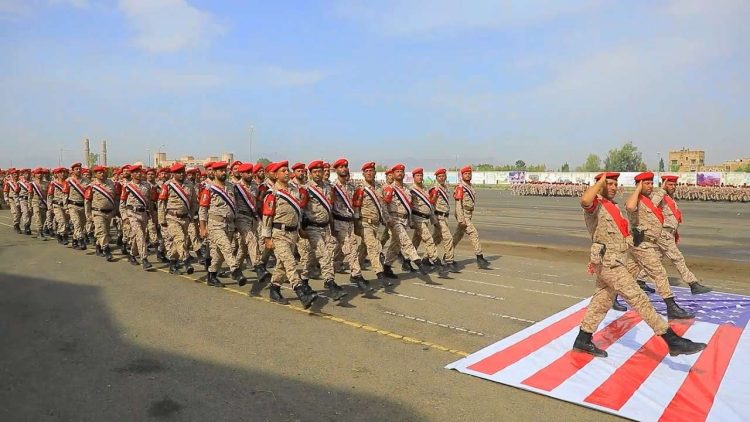
Lebanese daily newspaper Al-Akhbar reported on 6 January that Saudi Arabia has expressed its readiness to end the status quo in Yemen and withdraw under the conditions set by Ansarallah.
The kingdom agreed to lift the blockade, and pay compensations for the war after retreating under a pledge not to interfere in the country’s political process.
For that, Riyadh demanded the government in Sanaa present a set of “guarantees” that it will not threaten Saudi Arabia and its security, nor allow hostilities to originate from Yemeni soil.
According to Al-Akhbar, these demands were reiterated by Iran and the Sultanate of Oman, who assured the kingdom of Ansarallah’s willingness to meet Riyadh’s demands.
Despite that, no progress has been made to end the current state, which has left Yemen torn between peace and war. This lack of progress has prompted Ansarallah’s leadership to publicly reject that this limbo becomes a permanent reality.
In an interview with Al-Masirah TV on 1 January, Ansarallah’s spokesman and peace envoy, Mohammed Abdel Salam, demanded a permanent ceasefire between Yemen and Saudi Arabia.
“We are working to reach a point of clarity in Yemen, in which we move into either a truce or permanent ceasefire, and we have presented our point of view to the Omani mediator,” said Abdel Salam.
He added that this would require opening all ports, airports, and roads, and paying salaries with the revenue generated from Yemen’s oil and gas exports.
A source close to Ansarallah in Sanaa revealed to The Cradle that Saudi Arabia agreed to this demand in October 2022, and was ready – along with Qatar – to finance the salaries of all government employees in northern Yemen.
However, the US sabotaged this agreement and blocked the solution by pressuring Riyadh to cease its efforts.
The leader of Ansarallah, Abdul-Malik al-Houthi, has ordered the military to prepare for a scenario in which all prospects for peace diminish, as the status quo is no longer acceptable.
On the other hand, the UN coordinator for Yemen, Hans Grundberg, and US Deputy Assistant Secretary of State for Arabian Gulf Affairs, Tim Lenderking, met in Riyadh on 5 January, to discuss the developments with the head of the Yemeni Presidential Leadership Council, Rashad al-Alimi.
According to local media, the meeting tackled the UN’s efforts to coordinate with the international community to keep the peace process on track and explore ways to end Yemeni suffering.
However, progress has yet to materialize, and no plan has been set to find ways to establish communication with the Sanaa government, as a key to peace.
Featured Video

Racist Seinfeld Dances for Joy as Bibi Unveils His New Map
or go to
Aletho News Archives – Video-Images
TV Drama Review
Japanese drama projects Japan’s wartime atrocities onto Chinese characters

Global Times | October 25, 2026
By portraying Chinese characters as perpetrators of ruthless violence while casting Japanese Self-Defense Forces (SDF) intelligence operatives as defenders, the season 2 of the Japanese drama Vivant has recently drawn criticism from Chinese netizens, who argue that its depiction turns historical reality on its head while ignoring Japan’s wartime atrocities.
The TBS drama series – a spy suspense story in which an alleged unofficial intelligence unit of the SDF operates across the globe — has attracted a passionate fanbase. Its currently airing season 2 opened with a household rating of 18.8 percent, the highest for a TV drama this year, according toa commentary article by Japanese media Toyo Keizai.
What draws attention is the portrayal of the enemies in the series, the article noted. Scenes in which the Chinese organization subjects kidnapped members of the SDF unit to brutal torture are repeated with unrelenting intensity.
It is rare for Japanese TV dramas to explicitly portray a real-life country as the enemy, the article noted.
Japanese Prime Minister Sanae Takaichi also made a reference to the drama, saying that she has been recording Vivant and hopes to binge-watch it over the year-end and New Year holidays, according to Japanese media outlets.
China’s CCTV News report on Sunday revealed that the drama features scenes in which Chinese personnel cut off the fingers of and stab Japanese intelligence operatives in the abdomen. Such acts bear striking similarities to the torture inflicted on Chinese nationals by invading Japanese troops during the World War II.
The drama distorts the truth by attributing these atrocities to modern Chinese characters. Beneath the surface, it subtly glorifies Japan’s cross-border overseas operations, blurs the functional boundaries of the SDF and implicitly promotes an expansionist narrative, per CCTV News. … continue
Blog Roll
 Aletho News
- Iran FM Araghchi: “Hormuz Will No Longer Be the Same”
- EU facing trillion-euro debt hole while seeking more cash for Kiev
- How US, Europe, Persian Gulf states exhausted missile stockpiles, splurged billions to defend Israel
- Up in arms… Koreans reject U.S. empire’s plan to make South Korea the next Ukraine
- Iran, Turkey, Pakistan, Saudi Arabia could advance region-led security framework in Tehran: FM spox
- Netizens condemn Japanese drama for projecting Japan’s wartime atrocities onto Chinese characters
- Racist Seinfeld Dances for Joy as Bibi Unveils His New Map
- A West Bank War for Netanyahu’s Election Campaign, Could It Backfire?
- Yemen denounces European Parliament’s ‘hypocritical’ push to blacklist Ansarullah
- Qalibaf: UAE’s UN bid aims to ‘clear the runway’ for ‘Greater Israel’, whitewash genocide
- If Americans Knew
- Israel punishes Palestinian prisoners with solitary confinement for making a cake
- US midterms: Where do candidates in key Senate races stand on Israel, Gaza, and Iran?
- Israeli forces demolish Hebron homes, displace thousands of Palestinians as raids expand
- Their Son Died in Israeli Prison. No Answers. No Body
- Biden’s Israel Catastrophe
- Why Israel’s latest assault on Hebron is so significant for the West Bank
- Israel Used “Where’s Daddy?” AI to Relentlessly Murder Palestinian Journalists and Their Families in Their Homes from October to December 2023
- DAILY UPDATE: Latest essential news on Palestine, Israel, & region
- Netanyahu Says Israel Must Prepare for Banking Sanctions, Floats Crypto as a Possible Bypass
- Latest updates from Israeli assault on West Bank
- No Tricks Zone
- Sudden Stratospheric Warming, Powerful El Niño Combination May Lead To Extreme Europe Cold, Energy Crisis!
- Two New Studies Find Thwaites Glacier Melt Cannot Be Driven By Human Activity Or A Warming Ocean
- E-Cars Reduce CO2 Emissions By Only 41% Compared To Internal Combustion Engine Vehicles
- Predictions Made By Renowned Climate Professor Over Past Decades Have Been Proven To Be Poor
- New Study Suggests Large Regions Of The Pacific Ocean Have Been Cooling For The Last 80 Years
- Germany’s Green Energy Debacle: High Energy Costs Force Kahla Porzellan to Close After 182 Years!
- New Study: 50 Years Of The Most Aggressive ‘Net Zero’ Policies Can Only Affect The Global Climate By 0.03°C
- US September “Heat” Was No Record…Many Records Set Decades Ago
- Latest European Green Energy Debacle; Portugal’s Largest Flagship Solar Park Insolvent!
- Green Energy Debacle: German Expert Professor Fritz Vahrenholt Warns Of Severe Economic And Social Consequences

