Sweden Did *Better* Than Its Neighbours
BY NOAH CARL | THE DAILY SCEPTIC | JANUARY 4, 2023
Sweden’s decision not to lockdown in the spring of 2020 was variously described as “deadly folly” (the Guardian), “a disaster” (Time magazine) and “the world’s cautionary tale” (the New York Times).
Yet Sweden confounded its critics. The country’s first wave receded around the same time as Britain’s, and over the succeeding months it crept down the list of countries by official Covid death rate – as others caught-up-with and then surpassed Sweden’s death toll.
The argument then became: “But Sweden did worse than its neighbours!” Critics would point out that although Sweden did okay compared to the rest of Europe, it did worse than the other Nordic countries.
This was a weak argument at the time, as I’ve noted before. But now its premise is actually false: Sweden did not do worse than the other Nordics.
As you may recall, back in November of 2021 the ONS published estimates of age-adjusted excess mortality for most of the countries in Europe. These showed that up to June of 2021, Sweden had negative excess mortality – fewer people died than usual. On the other hand, its excess mortality was less negative than that of the other Nordic countries.
The ONS has now published updated estimates of age-adjusted excess mortality, which run all the way up to July of 2022. And they show that Sweden’s excess mortality is lower than Finland’s, Denmark’s and Iceland’s; only Norway did better.
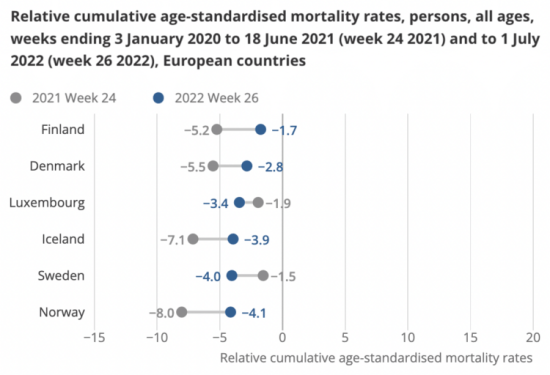
Between January 2020 and July 2022 (blue dots), Sweden’s age-standardised mortality rate was 4% lower than the five-year average. By contrast, Iceland’s was 3.9% lower, Denmark’s was 2.8% lower and Finland’s was 1.7% lower. This means that Sweden did better than three out of four other Nordics.
In the summer of 2020, Sweden’s state epidemiologist Anders Tegnell said, “Judge me in a year”. One year later, Sweden’s excess mortality was below the European average. We can now judge him again, more than two years later: Sweden’s excess mortality is the second lowest in Europe. On top of that, Sweden saw the second smallest increase in national debt of all European countries.
Tegnell got it right, and his critics got it wrong.
Putin announces Christmas truce
RT | January 5, 2023
President Vladimir Putin has ordered Russian troops to impose a cessation in hostilities in Ukraine. Hours earlier, Primate of the Russian Orthodox Church Patriarch Kirill had called on the forces of both sides of the conflict to cease hostilities in the run-up to and during the holiday.
According to the Kremlin, the truce is intended to last from noon on Friday January 6 until midnight on Saturday January 7, when the Orthodox faithful traditionally celebrate the holiday.
“Judging by the fact that a lot of citizens who practice the Orthodox religion live in the embattled area, we call upon the Ukrainian side to proclaim a cessation of hostilities and give them the opportunity to attend services on Christmas Eve and on Christmas Day,” the Kremlin said in a statement.
Earlier on Thursday, Putin discussed the prospect of peace negotiations with Ukraine with his Turkish counterpart, Recep Tayyip Erdogan, over the phone. The Russian president reiterated that Moscow was “open to serious dialogue” with Kiev if the latter recognized the “new territorial realities.”
Erdogan responded by saying that “calls for peace and negotiations should be supported by a unilateral declaration of ceasefire and a vision of a just solution” of the conflict.
Ankara has offered to broker negotiations between Russia and Ukraine in the past. Any meaningful peace talks between Russia and Ukraine effectively collapsed by April, with both sides blaming each other for the collapse. Russian Foreign Minister Sergey Lavrov said in late December that Ukrainian politicians were “incapable of negotiating,” adding that “the majority of them are blatant Russophobes.”
Russian drones far cheaper than Ukrainian air defenses – NYT
RT | January 4, 2023
The fact that the smaller kamikaze drones used by Russia are much cheaper than the Ukrainian air defense missiles used against them is creating problems for Kiev and its Western backers, the New York Times has acknowledged.
In an article on Tuesday, the paper didn’t question Kiev’s claims that most of the UAVs launched by Russia are being shot down, but pointed out that even in this case Ukrainian air defense stocks were being exhausted.
“How long can Ukraine sustain its effort when many of its defensive measures cost far more than the drones do?” the NYT wondered.
In addition to trying to destroy the incoming drones with anti-aircraft guns and small-arms fire, Kiev’s forces have “also relied heavily on missiles fired from warplanes and the ground,” which are very expensive, it wrote.
The paper cited the head of the Ukrainian consultancy Molfar, Artem Starosiek, who claimed that using a missile against a UAV costs up to seven times more than the drone itself. The drones that Russia uses are priced at around $20,000 per unit, while a surface-to-air missile from Ukraine’s arsenal ranges from $140,000 for a Soviet-era S-300 to $500,000 for a US-supplied NASAM system, he said.
The article claims that the drones used by Russia in Ukraine are Shahed-136s, supplied by Iran. This claim has been denied by both Moscow and Tehran on many occasions. The Russian Defense Ministry insists that its Geran-2 drones are domestically made, just like all the other hardware used in the military operation against Kiev. The Iranian Foreign Ministry has only confirmed sending a small batch of drones to Russia before the outbreak of the conflict with Ukraine, stressing that no new deliveries have been made since then.
Starosiek nevertheless defended Kiev’s strategy, arguing that it still “costs far less to shoot down a drone than to repair a damaged or destroyed power station.”
However, the NYT warned that the price difference between drones and air defenses was “an imbalance that could over time favor Russia, costing Ukraine and its allies dearly, some analysts say.”
According to estimations by Molfar, Russia has targeted Ukrainian military infrastructure and energy systems with some 600 UAVs since September, when they began to be used more widely.
Russia drastically ramped up its strikes against Ukrainian infrastructure in early October in response to repeated Ukrainian sabotage on Russian soil, including the bombing of the Crimean Bridge, which Moscow blamed on Kiev. Although the attack was widely cheered by top Ukrainian officials, Kiev has denied any involvement.
Venezuela National Assembly votes out US-backed opposition leader
RT | December 31, 2022
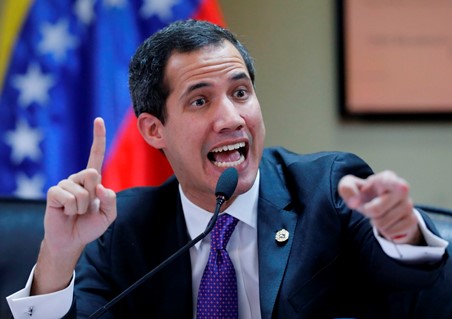
Opposition lawmakers in Venezuela have voted to dissolve the ‘interim government’ formed under their one-time leader, Juan Guaido, a main rival to the country’s ruling socialist party and once a darling of the US foreign policy establishment.
Holding their vote over a Zoom call, the opposition-controlled National Assembly moved to reorganize their movement on Friday, with 72 lawmakers voting in favor of disbanding the legislature compared to just 29 opposed. Guaido’s term at the head of the assembly, as well as his ‘interim presidency’ declared in 2019 with the blessing of the US, are now set to end on January 5.
“Venezuela needs new machinery in this struggle,” lawmaker Juan Miguel Matheus of the opposition Justice First party said after the vote, adding that Guaido’s tenure as interim leader “was something that was supposed to be temporary, but it became something perpetual.”
Guaido and his supporters, meanwhile, have argued that dissolving the interim government could spell the demise of any unified opposition movement, insisting it will only bolster the power and influence of Maduro, who has been deemed an illegitimate leader by Washington and a long list of allies.
“This is not about defending Guaido. This is about not losing the important tools that we have in this struggle,” Guaido said.
The shake-up in the opposition leadership follows several years of failed efforts to oust Maduro from power, including a series of heated street protests and an outright coup attempt in 2019. While Guaido and fellow opposition leaders failed to inspire mass defections among the security forces as hoped, the ill-fated putsch enjoyed open support from US officials.
In addition to eliminating the temporary government, the assembly said it would establish a new committee to monitor the state assets it still controls, which includes a quantity of gold bullion stored at the Bank of England, as well as the American oil firm Citgo – even as it continues to be majority-owned by PDVSA, a state-controlled energy giant operated by President Maduro’s government in Caracas.
The National Assembly will also create a special panel to negotiate with Maduro, aiming to take part in another round of elections slated for 2024.
While opposition candidates were set to gain control over the legislature following elections in 2015, the results were later invalidated in the courts and the government opted to launch an entirely new body known as the National Constituent Assembly. Since then, Maduro’s opponents have effectively led a government-in-exile, with many lawmakers conducting official business from foreign countries.
Russia consolidates in East Mediterranean
BY M. K. BHADRAKUMAR | INDIAN PUNCHLINE | DECEMBER 31, 2022
The curtain is coming down on the brutal 11-year old Syrian conflict, which former US President and Nobel Laureate Barack Obama initiated, as the Arab Spring swept through West Asia two decades ago. The United States has suffered yet another big setback in West Asia as the year 2022 draws to a close. The unfolding Turkish-Syrian reconciliation process under Russian mediation is to be seen as a saga of betrayal and vengeance.
Ankara came under immense pressure from the Obama Administration in 2011 to spearhead the regime change project in Syria. Obama blithely assumed that Turkiye would gleefully serve as the charioteer of “moderate” Islamism for the transformation in West Asia. But Ankara took its time to calibrate its foreign policies to adapt to the Arab Spring before responding to the shifting landscape in Syria.
Erdogan was caught unprepared by the uprising in Syria at a juncture when Ankara was pursuing a “zero-problems” policy with Turkiye’s neighbours. Ankara was unsure how the Arab Spring would play out and remained silent when the revolt first appeared in Tunisia. Even on Egypt, Erdogan made an emotional call for Hosni Mubarak’s departure only when he sensed, correctly so, that Obama was decoupling from America’s staunch ally in Cairo.
Syria was the ultimate test case and a real challenge for Erdogan. Ankara had invested heavily in the improvement of relations with Syria within the framework of the so-called Adana Agreement in 1998 in the downstream of Turkish military’s massive showdown with Damascus over the latter harbouring the PKK [Kurdish] leader Ocalan. Erdogan initially did not want Bashar al-Assad to lose power, and advised him to reform. The families of Erdogan and Assad used to holiday together.
Obama had to depute then CIA chief David Petraeus to visit Turkey twice in 2012 to persuade Erdogan to engage with the US in operational planning aimed at bringing about the end of the Assad government. It was Petraeus who proposed to Ankara a covert program of arming and training Syrian rebels.
But by 2013 already, Erdogan began sensing that Obama himself had only a limited American involvement in Syria and preferred to lead from the rear. In 2014, Erdogan went public that his relations with Obama had diminished, saying that he was disappointed about not getting direct results on the Syrian conflict. By that time, more than 170,000 people had died and 2.9 million Syrians had fled to neighbouring countries, including Turkey, and the fighting had forced another 6.5 million people from their homes within Syria.
Simply put, Erdogan felt embittered that he was left holding a can of worms and Obama had scooted off. Worse still, the Pentagon began aligning with the Syrian Kurdish groups linked to the PKK. (In October 2014, US began providing supplies to Kurdish forces and in November 2015, US special forces were deployed in Syria.)
Indeed, since then, Erdogan had been protesting in vain that the US, a NATO ally, had aligned with a terrorist group (Syrian Kurds known as YPG) that threatened Turkiye’s sovereignty and territorial integrity.
It is against such a backdrop that the two meetings in Moscow on Wednesday between the defence ministers and intelligence chiefs of Turkey and Syria in the presence of their Russian counterparts took place. Erdogan’s reconciliation process with Assad is quintessentially his sweet revenge for the American betrayal. Erdogan sought help from Russia, the archetypal enemy country in the US and NATO’s sights, in order to communicate with Assad who is a pariah in American eyes. The matrix is self-evident.
On Thursday, Turkish Defence Minister Hulusi Akar said: “At the meeting (in Moscow), we discussed what we could do to improve the situation in Syria and the region as soon as possible while ensuring peace, tranquility and stability… We reiterated our respect for the territorial integrity and sovereignty rights of all our neighbours, especially Syria and Iraq, and that our sole aim is the fight against terrorism, we have no other purpose.”
Russian President Vladimir Putin has been counselling Erdogan in recent years that Turkiye’s security concerns are best tackled in coordination with Damascus and that the Adana Agreement could provide a framework of cooperation. The Turkish Defence Ministry readout said the meeting in Moscow took place in a “constructive atmosphere” and it was agreed to continue the format of trilateral meetings “to ensure and maintain stability in Syria and the region as a whole.”
Without doubt, the normalisation between Ankara and Damascus will impact regional security and, in particular, the Syrian war, given the clout Turkiye wields with the residual Syrian opposition. A Turkish ground operation in northern Syria may not be necessary if Ankara and Damascus were to revive the Adana Agreement. In fact, Akar disclosed that Ankara, Moscow and Damascus are working on carrying out joint missions on the ground in Syria.
The Russian Defence Minister Sergei Shoigu’s willingness right in the middle of the Ukraine war to take the steering wheel and navigate its reconciliation with Syria adds an altogether new dimension to the deepening strategic ties between Moscow and Ankara. For Erdogan too, Syria becomes the newest addition to his policy initiatives lately to improve Turkiye’s relations with the regional states. Normalisation with Syria will go down well with Turkish public opinion and that has implications for Erdogan’s bid for a renewed mandate in the upcoming elections.
From the Syrian perspective, the normalisation with Turkiye is going to be far more consequential than the restoration of ties with various regional states (starting with the UAE) in recent years who had fuelled the conflict. Turkiye’s equations with Syrian militant groups (eg., Syrian National Army and Hayat Tahrir al-Sham), its continued occupation of Syrian territory, Syrian refugees in Turkiye (numbering 3.6 million), etc. are vital issues affecting Syria’s security.
The US resents Erdogan’s move to normalise with Assad — and that too, with Russia’s helping hand. It is now even more unlikely to give up its military presence in Syria or its alliance with the Syrian Kurdish group YPG (which Ankara regards as an affiliate of the PKK.)
But the YPG will find itself in a tight spot. As Syria requests Turkiye to withdraw from its territories (Idlib and so-called operation areas) and stop supporting armed groups, Turkiye in return will insist on pushing the YPG away from the border. (The government-aligned Syrian daily Al-Watan reported quoting sources that at the tripartite meeting in Moscow, Ankara has committed to withdrawing all its forces from Syrian territory.)
Indeed, the replacement of the YPG militia by the Syrian government forces along the borders with Turkiye would lead to the weakening of both YPG and the US military presence. However, the question will still remain unanswered as regards the place of Kurds in the future of Syria.
The US State Department stated recently, “The US will not upgrade its diplomatic relations with the Assad regime and does not support other countries upgrading their relations. The US urges states in the region to consider carefully the atrocities inflicted by the Assad regime on the Syrian people over the last decade. The US believes that stability in Syria and the greater region can be achieved through a political process that represents the will of all Syrians.”
Last week’s meetings in Moscow show that Russia’s standing in the West Asian region is far from defined by the Ukraine conflict. Russian influence on Syria remains intact and Moscow will continue to shape Syria’s transition out of conflict zone and consolidate its own long-term presence in Eastern Mediterranean.
OPEC Plus has gained traction. Russia’s ties with the Gulf states are steadily growing. The Russia-Iran strategic ties are at their highest level in history. And the return of Benjamin Netanyahu as Israel’s prime minister means that the Russian-Israeli ties are heading for a reset. Clearly, Russian diplomacy is on a roll in West Asia.
Conventional wisdom was that Russia and Turkiye’s geopolitical interests would inevitably collide once the floodgates were opened in Ukraine. Herein lies the paradox, for, what has happened is entirely to the contrary.
‘Türkiye agrees to withdraw troops from Syria following Moscow talks’
RT | December 31, 2022
Türkiye has agreed to fully withdraw its troops from northern Syria following tripartite talks involving Moscow, Ankara and Damascus earlier this week, Syrian newspaper Al-Watan has reported.
The three countries’ defense ministers – Hulusi Akar, Ali Mahmoud Abbas and Sergey Shoigu – met in Moscow on Wednesday for the first meeting of its kind since the outbreak of the Syrian conflict in 2011.
According to the paper’s source in Damascus, the negotiations resulted in “Türkiye’s consent to completely withdraw its troops from the Syrian territories that it occupies in the north of the country.”
Ankara and Damascus also expressed a common view that the Syrian-based Kurdish YPG militia, which Turkey associates with the outlawed Kurdistan Workers’ Party (PKK), “are agents of Israel and the US, and pose a grave threat to both Türkiye and Syria.”
Türkiye considers the separatist PKK and allied Kurdish groups to be “terrorist organizations” that threaten its national security. The Turkish military carried out airstrikes against YPG targets in northern Syria in November, with Ankara saying a ground operation in the area was also on the cards.
A special trilateral commission will be created by Russia, Türkiye and Syria to ensure that the agreements reached in Moscow are honored, Al-Watan reported.
Turkish Defense Minister Hulusi Akar told local media on Saturday that “one shouldn’t expect that everything will be solved at once in a single meeting.”
In Moscow, Türkiye “emphasized that we respect Syria’s territorial integrity and sovereign rights, and that our only goal is the fight against terrorism” including the PKK/YPG and Islamic State (IS, formerly ISIS), he said.
Ankara and Damascus have agreed to continue talks to deepen reconciliation, Akar added. He also suggested that those negotiations could even result in a joint anti-terrorist operation involving the two countries, which would happen “if we can solve our problems related to defense and security, if we can meet our needs.”
The Syrian side had earlier described the meeting in the Russian capital as “positive,” while Russia’s Defense Ministry said the talks had been conducted in a constructive manner and stressed the need for the continuation of such engagement.
South Caucasus: A battle of wills and corridors
By Yeghia Tashjian | The Cradle | December 30, 2022
On 12 December, under the pretext of environmentalism, dozens of state-backed “eco-activists” from Azerbaijan blocked the only land corridor connecting Armenia to Nagorno-Karabakh.
The blockade created a humanitarian crisis for the 120,000 Armenians living in Nagorno-Karabakh, cutting them off from the outside world. This is not the first time Baku has taken such a provocative action. Azerbaijan has long been pushing for the creation of the “Zangezur corridor” to connect itself to close ally Turkiye through southern Armenia, thereby cutting off the strategic Armenia-Iran border.
Tehran has opposed this project and has engaged in military exercises on its border with Azerbaijan. In October, the Iranians opened a consulate in the city of Kapan in southern Armenia as a warning to Baku and its regional allies.
Blocking the Lachin corridor
Despite this, Azerbaijan, with the support of Turkiye, has continued to pursue its goal, which has included blocking the road where Russian peacekeepers are stationed in the Lachin corridor connecting Armenia to Nagorno-Karabakh.
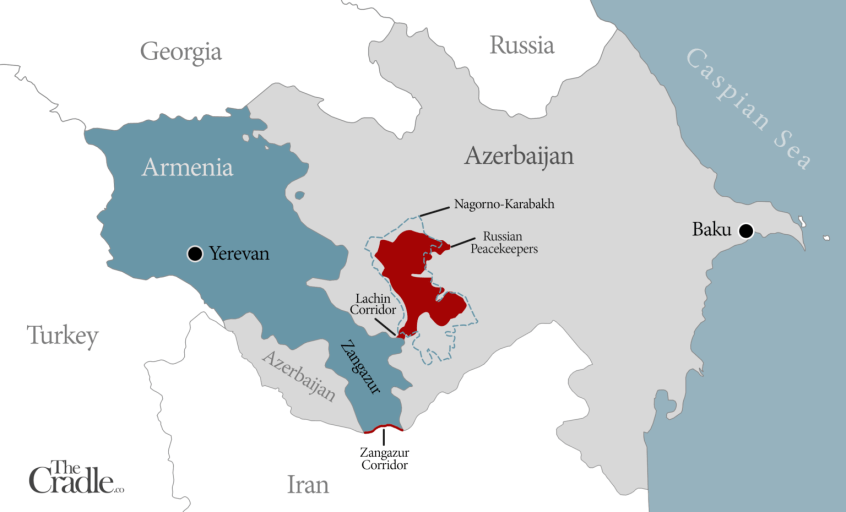
Map of Azerbaijan-Armenia conflict zones (Photo Credit: The Cradle)
In July 2022, Baku amended a contract with British company Anglo Asian Mining PLC, transferring three new mining sites inside Azerbaijan to the firm. One of these areas is located in the eastern part of Nagorno-Karabakh’s Martakert region, an area rich in gold, copper, and silver mines.
Nagorno-Karabakh’s Armenian population refused Azerbaijan’s efforts to send in monitoring groups, believing the move would give Baku control over the region’s economy and eventually lead to its annexation. In retaliation, Baku sent “environmentalists” to block the only corridor connecting Armenia to Nagorno-Karabakh.
Social media users have identified Azerbaijani state employees amid some of these “environmentalists” who periodically try to provoke Russian peacekeepers. The blockade has caused a humanitarian disaster in the region, with thousands of civilians unable to access basic necessities like medication and food via the only road connecting them to the outside world.
To compound tensions, Anglo-Asian Mining sent a letter to leading international organizations and states demanding that the “illegal exploitation” of the mines in Nagorno-Karabakh by Armenians be stopped. And yet Moscow continues to take a passive position, despite being a targeted party in the melee.
The Battle of Corridors
The blockade of the Lachin corridor did not come as a surprise, having been openly discussed in Azerbaijani media.
The only surprise was Russia’s inability to resolve the crisis. Earlier this month, Turkiye’s defense minister Hulusi Akar called on Armenia to “grasp the opportunity and respond positively to Turkiye’s and Azerbaijan’s peace calls” during joint military drills with Azerbaijan near the Iranian border.
He also commented on the “Zangezur corridor,” claiming that it was Baku’s “sincerest wish” to re-establish connections in the region and ensure “a comprehensive normalization throughout the region, including the relations between Azerbaijan-Armenia and Turkiye-Armenia.” Akar also vowed that Turkiye would continue to support Azerbaijan’s “righteous cause” against Armenia.
But on the second day of the protests organized by Azerbaijanis and the blockade on Nagorno-Karabakh, Azerbaijani media outlets made their intentions clear.
They called for the replacement of the commander of the Russian peacekeeping mission in Nagorno-Karabakh, Andrey Volkov, and for the control of the Lachin corridor to be transferred to Azerbaijan, along with the “full restoration of Azerbaijani sovereignty in the territories under the control of the peacekeepers.”
Some Azerbaijani activists also called for the removal of Russian forces and their replacement with UN-mandated forces.
Removal of Russian peacekeepers
It is unclear if Baku itself is willing to employ this language and demand the removal and replacement of Russian peacekeeping forces. According to some Azerbaijani experts, Baku is currently against the withdrawal of Russian peacekeepers by force, as this could lead to the annexation of Nagorno-Karabakh and the ethnic cleansing of Armenian Christians, which could tarnish President Ilham Aliyev’s image in the west and potentially result in US-EU economic sanctions.
Instead, Baku prefers to have the Russians stay, but in a restrictive capacity. It is easier for Azerbaijan to deal with a weak Russia, rather than with the Europeans, as they are familiar with the “Russian mentality,” says one expert. This suggests that Azerbaijan may prefer to continue using the Lachin corridor as a tool for negotiating with Moscow, rather than risking the removal of Russian forces.
Another Azerbaijani expert agreed that the current crisis is essentially between Azerbaijan and Russia – that the latter is unable to fulfill its “peacekeeping mission” and prevent the “Armenians of Karabakh from exploiting the natural resources in the region.”
But he also argues that the crisis is less about the mining and exploitation of resources, and more about pressuring the Russians to open the “Zangezur corridor,” which connects Azerbaijan proper to its Nakhichevan exclave, and lies on Iran’s strategic border with Armenia.
According to the expert, “Azerbaijan wants additional guarantees that it will have a safe connection with Turkiye, in exchange for Karabakh’s safe connection to Armenia.”
The story gets more complicated. In December, Azerbaijani media accused Armenians of inviting Iranian military experts to train Nagorno-Karabakh’s self-defense forces. The reports claim Iranians crossed the Lachin corridor and entered the territories controlled by Russian peacekeepers.
Despite Baku’s continuous barbs and provocations, it appears that Azerbaijan’s goal is not to fully remove or replace Russian peacekeepers, but rather to control their mission, monitor transit in the Lachin corridor, and use the corridor as a pressure card on Yerevan to open a “corridor” in Syunik linking Azerbaijan to Turkiye.
Therefore, from Azerbaijan’s perspective, the future of the Lachin corridor is now tied to the fate of the “Zangezur corridor.”
The view from Tehran
According to Dr. Ehsan Movahedian, researcher and instructor at the Allameh Tabataba’i University of Tehran, “the Republic of Azerbaijan is seeking a new adventure in the Caucasus region, and this issue requires diplomatic steps from the Islamic Republic of Iran and should be warning for the military authorities (in Tehran).”
One Iranian media outlet argues that if Stepanagert (the capital of Nagorno-Karabakh) falls:
“Unpleasant scenarios can be imagined for the South Caucasus region and its surrounding areas, including Iran. Removing an obstacle such as Nagorno-Karabakh paves the way for occupying Armenian territory and changing the map of the region, and in the long term for security attacks on the northwestern regions of Iran.”
The analyst, Mohammad Hossein Masumzadeh, says the only solution to halt Azerbaijan’s aggression “is offensive measures instead of the defensive approach governing the country’s regional policy in order to avoid irreparable risks.”
Some Iranian experts and former diplomats believe that the developments in the South Caucasus are related to domestic developments in Iran, where many ethnic Azeris, backed by Ankara and Baku, have called for separatist aspirations to dismantle the state from within.
Iran is concerned that the spread of Turkish influence on its northern border could impact its domestic politics in the future, as Azerbaijan has openly called for the “unification of Southern Azerbaijan (northern Iran) to the Republic of Azerbaijan.”
These do not appear to be empty threats. On 29 November, the “Organization for the Protection of the Rights of South Azerbaijanis” was established in Switzerland, announcing that it will submit documents and information to international organizations, including the UN, regarding the “rights of people in the Azerbaijani Province of Iran”.
On 2 December, the representative of “South Azerbaijan” at the UN, Araz Yurdseven, defended the idea of the independence of “South Azerbaijan” and accused Iran of committing “murders against the Iranian Azeris.”
Is the region heading for a new escalation?
Interestingly, many European and Azerbaijani experts viewed Armenian Prime Minister Nikol Pashinyan’s refusal to sign the final document of the Collective Security Treaty Organization (CSTO ) as a sign of Russian weakness, calling it “an unprecedented event that had never happened before.”
The CSTO is a Eurasian military alliance consisting of six post-Soviet states, which include Armenia, Russia, Belarus, Kazakhstan, Kyrgyzstan, and Tajikistan.
There are concerns that the region could be headed towards a new escalation. Azerbaijan has recently invited Turkish F-16 fighter jets to the region, which is being viewed as a preparation for conflict. The last time Baku invited the Turkish jets was in 2020, weeks before its war with Armenia.
Azerbaijan is also pressuring Russia to renegotiate the terms of their 10 November 2020 trilateral statement, which states that only Russian peacekeepers are responsible for controlling the Lachin corridor.
Azerbaijan is linking the blockade of the Lachin corridor to the opening of the Zangezur one. If Russia agrees to these concessions, it could lead to the isolation of Armenia, threaten its territorial integrity, and block an Iranian strategic border.
This would also shift the regional balance of power towards Turkiye, as Iran risks acting alone against Turkish-Azerbaijani pan-Turkic aspirations, which could eventually threaten Iran’s national security interests both regionally and domestically.
NYC electric garbage truck plans hit wall after trucks “conked out” plowing snow for just four hours
By Tyler Durden | Zero Hedge | December 28, 2022
In a move that absolutely nobody could have seen coming, New York City is scrapping its brilliant idea for electric garbage trucks after finding out the truck simply “aren’t powerful enough to plow snow”.
The pipe dream of converting the city’s 6,000 garbage trucks from gas to electric in order to try and limit carbon emissions (because there’s no other problems that need to be dealt with in New York City right now) is “clashing with the limits of electric-powered vehicles,” Gothamist wrote this week.
The city’s current trucks run on diesel and can be fitted with plows in the winter.
Despite the shortcomings, the city Department of Sanitation’ has already ordered seven electric rear loader garbage trucks, custom-made by Mack, the report says. Those trucks cost an astonishing $523,000 each and are to be delivered this spring.
Sanitation Commissioner Jessica Tisch told the NYC city council earlier this month: “We found that they could not plow the snow effectively – they basically conked out after four hours. We need them to go 12 hours. Given the current state of the technology, I don’t see today a path forward to fully electrifying the rear loader portion of the fleet by 2040.”
“We can’t really make significant progress in converting our rear loader fleet until the snow challenges are addressed,” she continued.
Many other cities don’t use their garbage trucks to plow snow, the report notes. Places that get a lot of snow, like Denver, have their own committed light duty trucks outfitted with plows, which operate more efficiently.
New York City, however, has committed to plowing each street and doing so by putting the city’s 2,100 trucks to work to clear the “equivalent of 19,000 miles of street lanes”.
In addition to… well, not being able to get the job done, charging has also been a holdup with electric trucks, Tisch said: “..this charging infrastructure requires additional space and often new electrical utility connections that can require substantial capital investments.”
Harry Nespoli, the president of Teamsters Local 831 union representing sanitation workers also isn’t sold on the idea: “How much power do they have? Can they run 12-hour shifts without a charge? I don’t know.”
Sanitation spokesperson Vincent Gragnani concluded: “With current technology, full electrification isn’t possible now for some parts of our fleet, but we are monitoring closely and really hope it will be.”
Let us know how that turns out, Vinny.
Belarus shoots down Ukrainian missile – MOD
RT | December 29, 2022
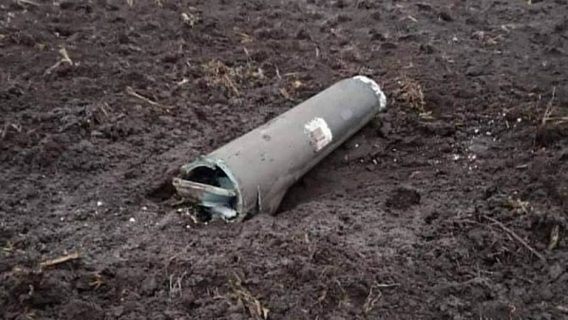
Belarusian forces intercepted and destroyed a Ukrainian S-300 anti-air missile on Thursday, the Defense Ministry said.
According to the MOD, parts of the missile fell on agricultural land near the village of Gorbakha in the country’s southwestern Brest Region, which shares a border with Ukraine. There were no casualties.
Belarusian President Alexander Lukashenko has been briefed about the incident, state news agency Belta said.
Photos posted on social media show missile parts lying in the middle of a field.
The incident comes as officials in Minsk accuse Kiev of amassing troops and setting up firing positions across the border. The Belarusian government restricted movement in several border areas last week, citing tensions with Ukraine.
On November 15, a falling missile killed two people in eastern Poland, not far from the border with Ukraine. Warsaw said that the projectile was probably an S-300 fired by Ukrainian forces as they were trying to fend off a Russian attack, and that there was no evidence that the fallen missile was launched by Russian troops.
Kiev initially accused Moscow of attacking Polish territory, but later said that further investigation was needed to determine what happened. Ukrainian President Vladimir Zelensky described the incident at the time as an attack on NATO. Russia denied that the missile that hit Poland was fired by its forces.
Russia to provide Iran with dozens of Sukhoi Su-35 fighter jets ‘in near future’

Press TV – December 28, 2022
Russia will soon provide a complete squadron of Sukhoi Su-35 fighter jets to the Islamic Republic of Iran, a development that will likely further rile up the West as Tehran and Moscow deepen their defense and economic cooperation in defiance of sweeping sanctions and coercive measures.
Media reports, citing military experts, said 24 units of the twin-engine and super-maneuverable aircraft, a fourth-generation fighter jet designed primarily for air superiority roles, will be supplied to Iran in the near future.
It is believed that the Islamic Republic of Iran Air Force (IRIAF) Tactical Air Base (TAB) 8 in the central Iranian city of Isfahan will accommodate some of the combat aircraft.
Russia’s United Aircraft Corporation (UAC) says the Sukhoi Su-35 fighter jet “combines the qualities of a modern fighter (super-maneuverability, superior active and passive acquisition aids, high supersonic speed and long range, capability of managing battle group actions, etc.) and a good tactical airplane (wide range of weapons that can be carried, modern multi-channel electronic warfare system, reduced radar signature, and high combat survivability).”
Iran hasn’t acquired any new fighter aircraft in recent years, excluding a few Russian MiG-29 Fulcrum fighters it bought in the 1990s.
Besides the MiG-29, IRIAF mainly uses locally modified F-4 Phantom II, F-14 Tomcat, and F-5E/F Tiger II planes from the 1970s that the toppled US-backed Pahlavi regime received before the 1979 Islamic Revolution.
Iran and Russia have signed major deals in recent months to boost their economic, trade, energy and military cooperation.
Iran came under an inclusive regime of American sanctions in 2018 after Washington unilaterally withdrew from the 2015 nuclear deal, officially known as Joint Comprehensive Plan of Action (JCPOA).
The United States and allies imposed a raft of similar and even tougher sanctions on Russia in February after Moscow launched a military operation in Ukraine.
Experts say US sanctions failed to reach their ultimate objective of forcing Iran into major political and military concessions. They insist the bans even created an opportunity for Iran to diversify its economy away from crude revenues and rely more on its domestic resources.
Earlier this year, Russian President Vladimir Putin said during an economic forum in Vladivostok that Russia was gaining from Western sanctions, saying Moscow saw more opportunities in entering markets in the Middle East and Iran after the sanctions were imposed.
Ban on Orthodox patriarch ‘disgrace’ for West – Serbian president
RT | December 27, 2022
The decision by Kosovo’s ethnic Albanian government to block the Serbian Orthodox patriarch from entering the breakaway province is as shameful as the non-response of Pristina’s Western backers, President Aleksandar Vucic said on Tuesday.
“This is a great shame, not for us, but for them,” Vucic said in a televised speech. “But it’s important for us to see how decision-makers, mainly in the West, truly feel about our people and our country.”
Patriarch Porfirije of the Serbian Orthodox Church was turned away when he tried visiting the patriarchal seat in Pec on Monday. Vucic noted that Western governments reacted by speaking about the importance of “freedom of movement” instead, focusing on the barricades put up by the protesting Serbs in the north of the breakaway province.
“Why is there such hysterical insistence on removing the barricades? Because they need to remove the Serbs from northern Kosovo, both the Albanians in Pristina and some in the international community,” the Serbian president said. “Albanians don’t use those roads, only Serbs in the north, who support the barricades as a way to defend their existence.”
The very same powers that “trampled Serbia’s territorial integrity” in 1999, during the NATO war, are “trying to do the same today” in violation of all international laws and treaties, “because they consider territorial integrity of Kosovo more important than Serb lives,” Vucic added.
NATO bombed Serbia in 1999 and handed control of Kosovo to ethnic Albanian separatists, who declared independence in 2008 and have demanded recognition from Belgrade ever since. Serbia has refused, despite pressure from the US and EU.
Residents of several Serb-majority municipalities in northern Kosovo put up roadblocks earlier this month, protesting the arrest of an ethnic Serb policeman and the heavy presence of ethnic Albanian police in their communities.
The Russian ambassador to Serbia, Alexander Botsan-Kharchenko, condemned Pristina’s actions towards the Orthodox patriarch, calling them “absolutely unreasonable” and “a ban on Orthodoxy.” He also said the ethnic Albanian police demanded the patriarch make “anti-Serb statements.”
Patriarch Porfirije described Monday’s incident as “if someone for no reason, with a laughable explanation, tried to prevent the Pope of Rome from entering the Vatican.” He nonetheless appealed for restraint and a peaceful solution to the ongoing tensions.
“Serbs have lived in Kosovo and Metohija for 15 centuries, five of them alongside Albanians. If there is good will, we can find a way to live together,” he said on Tuesday.
Ukraine war tolls death knell for NATO
BY M. K. BHADRAKUMAR | INDIAN PUNCHLINE | DECEMBER 25, 2022
The defining moment in US President Joe Biden’s press conference at the White House last Wednesday, during President Zelensky’s visit, was his virtual admission that he is constrained in the proxy war in Ukraine, as European allies don’t want a war with Russia.
To quote Biden, “Now, you say, ‘Why don’t we just give Ukraine everything there is to give?’ Well, for two reasons. One, there’s an entire Alliance that is critical to stay with Ukraine. And the idea that we would give Ukraine material that is fundamentally different than is already going there would have a prospect of breaking up NATO and breaking up the European Union and the rest of the world… I’ve spent several hundred hours face-to-face with our European allies and the heads of state of those countries, and making the case as to why it was overwhelmingly in their interest that they continue to support Ukraine… They understand it fully, but they’re not looking to go to war with Russia. They’re not looking for a third World War.”
Biden realised at that point that “I probably already said too much” and abruptly ended the press conference. He probably forgot that he was dwelling on the fragility of Western unity.
The whole point is that the western commentariat largely forgets that Russia’s core agenda is not about territorial conquest — much as Ukraine is vital to Russian interests — but about NATO expansion. And that has not changed.
Every now and then President Putin revisits the fundamental theme that the US consistently aimed to weaken and dismember Russia. As recently as last Wednesday, Putin invoked the Chechen war in the 1990s — “the use of international terrorists in the Caucasus, to finish off Russia and to split the Russian Federation… They [US] claimed to condemn al-Qaeda and other criminals, yet they considered using them on the territory of Russia as acceptable and provided all kinds of assistance to them, including material, information, political and any other support, notably military support, to encourage them to continue fighting against Russia.”
Putin has a phenomenal memory and would have been alluding to Biden’s careful choice of William Burns as his CIA chief. Burns was Moscow Embassy’s point person for Chechnya in the 1990s! Putin has now ordered a nation-wide campaign to root out the vast tentacles that the US intelligence planted on Russian soil for internal subversion. Carnegie, once headed by Burns, has since shut down its Moscow office, and the Russian staff fled to the West!
The leitmotif of the expanded meeting of the Board of the Defence Ministry in Moscow on Wednesday, which Putin addressed, was the profound reality that Russia’s confrontation with the US is not going to end with Ukraine war. Putin exhorted the Russian top brass to “carefully analyse” the lessons of Ukraine and Syrian conflicts.
Importantly, Putin said, “We will continue maintaining and improving the combat readiness of the nuclear triad. It is the main guarantee that our sovereignty and territorial integrity, strategic parity and the general balance of forces in the world are preserved. This year, the level of modern armaments in the strategic nuclear forces has already exceeded 91 percent. We continue rearming the regiments of our strategic missile forces with modern missile systems with Avangard hypersonic warheads.”
Equally, Defence Minister Sergei Shoigu proposed at Wednesday’s meeting a military build-up “to bolster Russia’s security,” including:
- Creation of a corresponding group of forces in Russia’s northwest to counter Finland and Sweden’s induction as NATO members;
- Creation of two new motorised infantry divisions in the Kherson and Zaporozhya regions, as well as an army corps in Karelia, facing the Finnish border;
- Upgrade of 7 motorised infantry brigades into motorised infantry divisions in the Western, Central and Eastern military districts, and in the Northern Fleet;
- Addition of two more air assault divisions in the Airborne Forces;
- Provision of a composite aviation division and an army aviation brigade with 80-100 combat helicopters within each combined arms (tank) army;
- Creation of 3 additional air division commands, eight bomber aviation regiments, one fighter aviation regiment, and six army aviation brigades;
- Creation of 5 district artillery divisions, as well as super-heavy artillery brigades for building artillery reserves along the so-called strategic axis;
- Creation of 5 naval infantry brigades for the Navy’s coastal troops based on the existing naval infantry brigades;
- Increase in the size of the Armed Forces to 1.5 million service personnel, with 695,000 people serving under contract.
Putin summed up: “We will not repeat the mistakes of the past… We are not going to militarise our country or militarise the economy… and we will not do things we do not really need, to the detriment of our people and the economy, the social sphere. We will improve the Russian Armed Forces and the entire military component. We will do it calmly, routinely and consistently, without haste.”
If the neocons in the driving seat in the Beltway wanted an arms race, they have it now. The paradox, however, is that this is going to be different from the bipolar Cold War era arms race.
If the US intention was to weaken Russia before confronting China, things aren’t working that way. Instead, the US is getting locked into a confrontation with Russia and the ties between the two big powers are at a breaking point. Russia expects the US to roll back NATO’s expansion, as promised to the Soviet leadership in 1989.
The neocons had expected a “win-win” in Ukraine: Russian defeat and a disgraceful end to Putin presidency; a weakened Russia, as in the 1990s, groping for a new start; consolidation of western unity under a triumphant America; a massive boost in the upcoming struggle with China for supremacy in the world order; and a New American Century under the “rules-based world order”.
But instead, this is turning out to be a classic Zugzwang in the endgame — to borrow from German chess literature — where the US is under obligation to make a move on Ukraine but whichever move it makes will only worsen its geopolitical position.
Biden has understood that Russia cannot be defeated in Ukraine; nor are Russian people in any mood for an insurrection. Putin’s popularity is soaring high, as Russian objectives in Ukraine are being steadily realised. Thus, Biden is getting a vague sense, perhaps, that Russia isn’t exactly seeing things in Ukraine as a binary of victory and defeat, but is gearing up for the long haul to sort out NATO once and for all.
The transformation of Belarus as a “nuclear-capable” state carries a profound message from Moscow to Brussels and Washington. Biden cannot miss it. (See my blog NATO nuclear compass rendered unavailing, Indian Punchline, Dec. 21, 2022
Logically, the option open to the US at this point would be to disengage. But that becomes an abject admission of defeat and will mean the death knell for NATO, and Washington’s transatlantic leadership goes kaput. And, worse still, major west European powers — Germany, France and Italy — may start looking for a modus vivendi with Russia. Above all, how can NATO possibly survive without an “enemy”?
Clearly, neither the US nor its allies are in a position to fight a continental war. But even if they are, what about the emerging scenario in the Asia-Pacific, where the “no limits” partnership between China and Russia has added an intriguing layer in the geopolitics?
The neocons in the Beltway have bitten more than what they could chew. Their last card will be to push for a direct US military intervention in the Ukraine war under the banner of a “coalition of the willing.”
Featured Video

Racist Seinfeld Dances for Joy as Bibi Unveils His New Map
or go to
Aletho News Archives – Video-Images
TV Drama Review
Japanese drama projects Japan’s wartime atrocities onto Chinese characters

Global Times | October 25, 2026
By portraying Chinese characters as perpetrators of ruthless violence while casting Japanese Self-Defense Forces (SDF) intelligence operatives as defenders, the season 2 of the Japanese drama Vivant has recently drawn criticism from Chinese netizens, who argue that its depiction turns historical reality on its head while ignoring Japan’s wartime atrocities.
The TBS drama series – a spy suspense story in which an alleged unofficial intelligence unit of the SDF operates across the globe — has attracted a passionate fanbase. Its currently airing season 2 opened with a household rating of 18.8 percent, the highest for a TV drama this year, according toa commentary article by Japanese media Toyo Keizai.
What draws attention is the portrayal of the enemies in the series, the article noted. Scenes in which the Chinese organization subjects kidnapped members of the SDF unit to brutal torture are repeated with unrelenting intensity.
It is rare for Japanese TV dramas to explicitly portray a real-life country as the enemy, the article noted.
Japanese Prime Minister Sanae Takaichi also made a reference to the drama, saying that she has been recording Vivant and hopes to binge-watch it over the year-end and New Year holidays, according to Japanese media outlets.
China’s CCTV News report on Sunday revealed that the drama features scenes in which Chinese personnel cut off the fingers of and stab Japanese intelligence operatives in the abdomen. Such acts bear striking similarities to the torture inflicted on Chinese nationals by invading Japanese troops during the World War II.
The drama distorts the truth by attributing these atrocities to modern Chinese characters. Beneath the surface, it subtly glorifies Japan’s cross-border overseas operations, blurs the functional boundaries of the SDF and implicitly promotes an expansionist narrative, per CCTV News. … continue
Blog Roll
 Aletho News
- Iran FM Araghchi: “Hormuz Will No Longer Be the Same”
- EU facing trillion-euro debt hole while seeking more cash for Kiev
- How US, Europe, Persian Gulf states exhausted missile stockpiles, splurged billions to defend Israel
- Up in arms… Koreans reject U.S. empire’s plan to make South Korea the next Ukraine
- Iran, Turkey, Pakistan, Saudi Arabia could advance region-led security framework in Tehran: FM spox
- Netizens condemn Japanese drama for projecting Japan’s wartime atrocities onto Chinese characters
- Racist Seinfeld Dances for Joy as Bibi Unveils His New Map
- A West Bank War for Netanyahu’s Election Campaign, Could It Backfire?
- Yemen denounces European Parliament’s ‘hypocritical’ push to blacklist Ansarullah
- Qalibaf: UAE’s UN bid aims to ‘clear the runway’ for ‘Greater Israel’, whitewash genocide
- If Americans Knew
- An error has occurred; the feed is probably down. Try again later.
- No Tricks Zone
- Sudden Stratospheric Warming, Powerful El Niño Combination May Lead To Extreme Europe Cold, Energy Crisis!
- Two New Studies Find Thwaites Glacier Melt Cannot Be Driven By Human Activity Or A Warming Ocean
- E-Cars Reduce CO2 Emissions By Only 41% Compared To Internal Combustion Engine Vehicles
- Predictions Made By Renowned Climate Professor Over Past Decades Have Been Proven To Be Poor
- New Study Suggests Large Regions Of The Pacific Ocean Have Been Cooling For The Last 80 Years
- Germany’s Green Energy Debacle: High Energy Costs Force Kahla Porzellan to Close After 182 Years!
- New Study: 50 Years Of The Most Aggressive ‘Net Zero’ Policies Can Only Affect The Global Climate By 0.03°C
- US September “Heat” Was No Record…Many Records Set Decades Ago
- Latest European Green Energy Debacle; Portugal’s Largest Flagship Solar Park Insolvent!
- Green Energy Debacle: German Expert Professor Fritz Vahrenholt Warns Of Severe Economic And Social Consequences

