Damage to Ukrainian civilian infrastructure self-inflicted – Russia
RT | December 17, 2022
Mistakes made by the Ukrainian forces in their attempt to repel a Russian missile strike on Friday led to damage to civilian infrastructure, the Russian Defense Ministry said in a statement on Saturday. Earlier, Kiev had blamed the Russian forces for hitting residential apartments in the strike and killing four people, including a toddler.
“Unprofessional actions of the Ukrainian air defense units resulted in damage to civilian infrastructure on the ground,” the ministry said, without providing any further details.
Earlier, the governor of the Ukrainian Dnepropetrovsk Region, Valentin Reznichenko, said that four civilians had died in Krivoy Rog in Friday’s strike, including a one-year-old boy. A total of 13 people were injured, including four children, he added. According to Reznichenko, it was a Russian missile that supposedly had hit a residential building, leading to four deaths.
The Russian Defense Ministry said the “high-precision weapon strike” was targeting the Ukrainian military command and administration system as well as the military industrial complex and relevant power-supply networks. The strike had in particular “disrupted foreign weapons and munition transportation” and had “blocked the advancement of the Ukrainian reserves,” the ministry said. The operation of some military industrial facilities was stopped as well, it added.
“The strike’s goal was reached. All the designated targets were hit,” the Russian ministry said. The Ukrainian General Staff said on Saturday that Russia had launched a total of 98 missiles at Ukraine during the massive strike on Friday. It did not elaborate on how many of them were shot down.
On Friday, Ukraine’s state-owned energy giant Ukrenergo declared a state of emergency following the reports of the Russian strikes hitting critical infrastructure. The operator called the situation a “system breakdown,” adding that it had registered a fall in nationwide electricity consumption by more than 50%.
In recent weeks, Russia has ramped up its airstrikes against Ukraine’s critical infrastructure, through missile and drone barrages across the country. This followed Kiev’s launch of several sabotage operations against civilian infrastructure in Russia, including the Crimean Bridge truck-bomb attack.
The Russian Defense Ministry had previously said the Russian forces only target military sites in Ukraine. In October, the Russian military started targeting energy facilities that the Defense Ministry believes to be crucial for Ukraine’s military capability. As a result, the Ukrainian energy system has been significantly degraded.
Ukraine declares energy emergency
RT | December 16, 2022
Ukraine’s state-owned energy giant Ukrenergo declared a state of emergency on Friday, amid reports of a new wave of Russian missile strikes against the country’s critical infrastructure. The operator said it had registered electricity consumption plummeting by more than 50% across the country, with the situation constituting a “system breakdown.”
On Friday morning, an air raid alert was announced for all parts of Ukraine, as local media and authorities reported explosions in various cities and regions, including in the capital, Kiev.
The Mayor of eastern Ukrainian city Kharkov, Igor Terekhov, said that “colossal” infrastructural damage had been inflicted by the strikes. The attack has “primarily affected the energy system,” the official claimed in a Telegram post.
A similar account of the attack has been provided by the Mayor of the southern Ukrainian city of Krivoy Rog, Alexander Vikul, who confirmed “several” missile strikes in that region. An “energy infrastructure” site has been “destroyed” by the attack, Vikul said in a Telegram post, without revealing the exact nature of the affected site.
Ukraine’s largest private energy operator, DTEK, has also reported an attack on one of its sites, which ended up “seriously damaged” and disconnected from the grid. The site has been repeatedly subjected to missile attacks before, the company noted.
Somewhat contradicting the reports by the energy operators and local authorities, however, Ukraine’s military claimed it has been extremely successful in fending off the strikes. According to official figures, Ukraine has intercepted some 60 missiles out of 76 said to have been launched by Russia.
So far, the Russian military has remained silent on the salvo and has not provided its account of the attack.
In recent weeks, Russia has ramped up its air strikes against Ukraine’s critical infrastructure, repeatedly firing massive missile and suicide drone barrages across the country. This followed Kiev’s launch of several sabotage operations against civilian infrastructure in Russia, including the Crimean Bridge bombing. The attack on the bridge has been widely cheered by common Ukrainians and top officials alike, with the incident squarely blamed by Moscow on Kiev’s military intelligence and its Western backers.
Kremlin Spokesman Says Russia Never Deployed Heavy Weapons at Zaporozhye NPP
Samizdat – 13.12.2022
MOSCOW – Russian heavy weapons have never been and are not now deployed at the Zaporozhye nuclear power plant (ZNPP), Kremlin spokesman Dmitry Peskov said on Tuesday.
Earlier in the day, French President Emmanuel Macron said that the International Atomic Energy Agency (IAEA) had achieved a “withdrawal of heavy and light weapons” from the ZNPP.
“I would like to remind you remarks by President [of Russia Vladimir] Putin that there have not been any and are no heavy weapons at the power plant itself, and representatives of the IAEA, who are present there day and night, can definitely confirm this,” Peskov told journalists.
Russia highly appreciates and continues talks with the IAEA on the security of the station, he added.
Director General of the IAEA Rafael Grossi said earlier in the day that work on ensuring safety and security of the ZNNP was in progress.
Located on the left bank of the Dnepr River, the ZNPP is the largest nuclear power plant in Europe by number of units and output. During the military operation in Ukraine launched by Russia on February 24, the station and surrounding area went under the control of the Russian forces and have since been shelled multiples times. Russia and Ukraine blame each other for the attacks.
Russian Foreign Ministry spokeswoman Maria Zakharova told Sputnik in early December that it was untimely to say that Russia and Ukraine were close to agreeing on the creation of a safety zone around the ZNPP, as it was unclear whether Kiev was ready to stop the shelling of the plant.
Serbia’s Vucic Accuses US, Pristina of Not Complying With Any Agreements on Kosovo
Samizdat – 11.12.2022
BELGRADE – The United States and the Kosovo authorities in Pristina are not following any acts or agreements on Kosovo, Serbian President Aleksandar Vucic said following a Security Council meeting convened on Sunday amid mounting tensions in the predominantly Serb-populated north of Kosovo.
Vucic called the meeting after Kosovo’s de facto leader Albin Kurti urged the NATO-led Kosovo Force (KFOR) to dismantle road barricades erected by local Serbs in the north of the breakaway region. He said that Pristina would be waiting for a response from KFOR mission command until the evening. If KFOR refuses to step in, Kosovo’s own security forces will be ready to carry out this operation themselves, Kurti said.
“We have one question for our American partners. Tell us, which agreement is Pristina abiding by and which act are you abiding by? The UN Charter, UN Security Council Resolution 1244, the Brussels Agreement, or the Washington Agreement? Name us one of these documents that Pristina respects, at least one that they and the US respect,” Vucic said in his address after the meeting.
Washington and Pristina believe they can “do whatever [they] want and as much as [they] want,” without respecting any agreements on Kosovo, the Serbian president said.
Serbs in the northern part of Kosovo began setting up barricades on roads on Saturday in protest of the arrest of Dejan Pantic, former police officer who quit his post in mid-November and was arrested by the Kosovo authorities at the Jarinje border crossing on suspicion of “terrorism.”
On Saturday evening, Vucic said in his address to the nation that Belgrade would send a formal request to the KFOR mission command for permission to deploy the Serbian military and police in Kosovo under UN Security Council Resolution 1244. He also showed photos of Kosovar soldiers in heavy equipment and with automatic weapons in the north of the region near the border with Serbia. Vucic recalled that, according to the agreements reached earlier, special police forces can only be deployed to the Serb-majority municipalities with the authorization of regional heads.
Earlier on Sunday, Vucic pledged that his country would continue efforts to settle the Kosovo issue using legal means and called on Pristina to create the Community of Serb Municipalities in accordance with the 2013 Brussels Agreement.
Constant Illness – Pandemic of the Vaccinated?
The Naked Emperor’s Newsletter | December 11, 2022
Obviously, I am rather biased and on the lookout for any change in trends but to me a lot of people seem to be ill a lot.
Again, I am definitely biased here but it seems to be mainly the vaccinated people getting ill. Not anything serious but bad cold or flu like symptoms that last for weeks and weeks. And then they recover and after a few days a new long illness starts again.
I don’t know most people’s vaccination status but of the ones I do know, the unvaccinated haven’t been ill much (if at all) whilst the vaccinated are either on their third or fourth bout of Covid or some other respiratory illness.
This is also reflected in the levels of absenteeism in most places – shops, cafes, schools etc.
Could I just be looking out for illnesses more? Could the unvaccinated be conscious that they don’t want to get ill and so some kind of sub-conscious placebo effect is helping them fight off bugs? Were the people who didn’t get vaccinated generally a fitter bunch in the first place? Or are the vaccinated suffering from T-cell exhaustion or ADE?
As I say, I am biased and a lot of you will be too. But try not to be and let me know what you are seeing in the comments below.
Argentina convicts vice-president of corruption

RT | December 6, 2022
Argentina’s sitting Vice President Cristina Fernandez de Kirchner was found guilty of corruption on Tuesday and sentenced to six years in prison, along with a lifelong ban on holding public office going forward. She will remain free until the end of her term, however, due to immunity.
The federal court in Buenos Aires rendered the verdict after three and a half years of proceedings involving more than 100 witnesses. Kirchner, 69, was accused of taking bribes and having an “illicit association” with a construction magnate during her 2007-2015 presidency. Prosecutors had sought a 12-year sentence.
Kirchner has been vice president and head of the Argentinian senate since December 2019, and can only be stripped of immunity with an unlikely two-thirds vote in the chamber. She also has the option to appeal the verdict to the supreme court.
Tuesday’s verdict is the first time a sitting vice president in Argentina was sentenced for wrongdoing while in office. Kirchner’s Vice President Amado Boudou, as well as Presidents Carlos Menem and Fernando de la Rua, had all been convicted after leaving their posts.
Kirchner had denied all charges and called the process politically charged and ridden with irregularities. Within minutes of the verdict, she said it went beyond “lawfare.”
“This is a parallel state and judicial mafia, and the confirmation of a parastatal system where decisions are made about the life, patrimony and freedom of all Argentines outside the electoral results,” she said.
Kirchner succeeded her late husband Neastor (2003-2007) as president, and was suspected of directing millions in public works funds to Lázaro Baez, a businessman who was a friend of the couple.
After Kirchner left office in 2015, she was also charged with setting a fraudulently low price for dollar-denominated futures, but later acquitted. Another indictment charged her with treason, but was later dropped, while a claim that she had made a secret pact with Iran to protect the alleged perpetrators of a 1994 terrorist bombing was thrown out by another federal court in October 2021.
President Alberto Fernandez backed Kirchner, calling the investigation into her “political” in nature. The next presidential election in Argentina is in 11 months, and it was widely believed Kirchner would run for the post again, though no official announcements have been made.
Kirchner is seen as the most influential figure inside Argentina’s ruling Justicialist Party, founded by Juan and Eva Peron in 1946. Her son Maximo leads the ruling majority bloc in the Chamber of Deputies, the lower house of the Argentinian parliament.
Moscow names condition for resuming arms control talks with US
RT | November 30, 2022
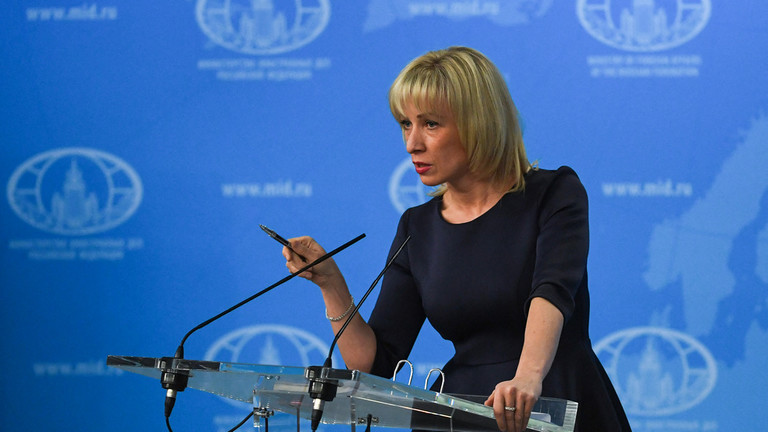
Russia sees no possibility of resuming talks with Washington on the cornerstone New START arms control treaty while the US continues to arm Ukraine, Russia’s Foreign Ministry spokesman said on Wednesday.
Speaking in a live interview on radio Sputnik, Maria Zakharova said: “The US intends to supply even more weapons to the conflict region, in which the Russian Federation is directly involved. That is, they will supply all these weapons, they will encourage the Kiev regime to cause even more bloodshed, they will allocate money for extremist activities that are carried out under the auspices of these delusional people [in the Ukrainian presidency], and we will sit with them at the same table and discuss issues of mutual security with them, including those in their interest?”
The spokeswoman stressed that Moscow values the New START agreement, as it serves the best interests of both Russia and the US, adding that the necessary conditions must be met before talks can be resumed.
Russian and American diplomats were set to meet in Cairo on Tuesday for a new round of talks on prolonging the deal, set to expire in early 2026. The meeting, however, was called off shortly before it was set to happen, with no new date announced.
“The event is being postponed to a later date,” the Russian Foreign Ministry told RT on Monday. Meanwhile, CNN has quoted the US State Department as saying Washington was ready to hold talks at the earliest possible date, and considered that “resuming nuclear inspections under the New START treaty is a priority.”
New START, signed back in 2010, is effectively the last arms control agreement between the two major nuclear powers following Washington’s unilateral withdrawal from the Intermediate-Range Nuclear Forces (INF) treaty in 2019. The pact limits the number of nuclear warheads that the US and Russia can possess, and restricts the number of deployed silo-based intercontinental ballistic missiles, submarine-launched ballistic missiles, and nuclear bombers. The total number of strategic nuclear delivery vehicles must not exceed 800.
Russia suspended the inspection regime under the treaty back in August, blaming the move on Western sanctions that had prevented Russian inspectors from doing their work in the US and giving Washington an unfair advantage. Moscow said the inspection could resume only when the principles of parity and equality were restored.
What to expect in Russia’s winter offensive in Ukraine
BY M. K. BHADRAKUMAR | INDIAN PUNCHLINE | NOVEMBER 29, 2022
Wading through the 18,000-word transcript of an hours-long meeting that President Vladimir Putin took with the “soldiers’ mothers” last Friday in Moscow, one gets the impression that the fighting in Ukraine may continue well into 2023 — and even beyond.
In a most revealing remark, Putin acknowledged that Moscow blundered in 2014 by leaving Donbass an unfinished business — unlike Crimea — by allowing itself to be lured into the ceasefire brokered by Germany and France and the Minsk agreements.
Moscow took some time to realise that Germany and France connived with then leadership in Kiev to scuttle the implementation of Minsk accord. Then Ukrainian President Petro Poroshenko admitted in a series of interviews with western news outlets in recent months, including on Germany’s Deutsche Welle television and Radio Free Europe’s Ukrainian unit, that the 2015 ceasefire was a distraction intended to buy time for Kiev to rebuild its military.
In his words, “We had achieved everything we wanted, our goal was to, first, stop the [Russian] threat, or at least to delay the war –- to secure eight years to restore economic growth and create powerful armed forces.”
The so-called Steinmeier Formula (proposed by German President Frank-Walter Steinmeier back in 2016 when he was foreign minister) on the sequencing of the Minsk agreement, had called for elections to be held in the separatist-held Donbass territories under Ukrainian legislation and the supervision of the OSCE; and, if the OSCE judged the balloting to be free and fair, then a special self-governing status for the Donbass territories would be initiated and Ukraine’s control of its easternmost border with Russia restored.
Putin admitted that Russia accepted the Minsk agreements ignoring the wishes of the Russian population in Donbass. To quote him, “We sincerely went to this. But we didn’t fully feel the mood of the people, it was impossible to fully understand what was going on there. But now it has probably become obvious that this reunion [of Donbass] should have happened earlier. Maybe there wouldn’t have been so many losses among civilians, there wouldn’t have been so many dead children under shelling…”
For the first time, perhaps, an incumbent Kremlin leader admitted making mistakes. The above poignant passage, therefore, becomes a touchstone for Putin’s future decisions, as the Russian mobilisation approaches the final stage and by end-December, an estimated 400,000 additional Russian troops will have been deployed in forward positions.
The bottom line is that Putin slammed the door shut on another Minsk-like hodgepodge of modern furniture and antiques. How does this translate as political reality?
First and foremost, much as Moscow is open for dialogue without preconditions, Russian negotiators will be bound by the recent amendments to the country’s Constitution, which incorporated Donetsk, Lugansk, Kherson, and Zaporozhye regions as part of the Russian Federation.
Second, Friday’s meeting has been, by any reckoning, an audacious initiative by Putin — risky, politically speaking. His interlocutors included mothers drawn from far-flung regions, whose sons are either actively fighting on the warfront, or have experienced the tragedy of sons having been killed in the fighting, or seriously wounded and need prolonged rehabilitation.
They were strong-willed women, for sure, and yet, as one of them from the small town of Kirovsk in Luhansk told Putin while recalling the death of her son Konstantin Pshenichkin on the frontline, “My heart bleeds, my soul freezes, gloomy memories cloud my mind, tears, tears, and suddenly my son asks me: “Mom, don’t be sad, I’ll see you – you just have to wait. You will go through this life for me, and in that life, we will be together again.”
Putin claimed openly — highly unusual for a Kremlin leader — that he went prepared for the meeting. But he still had surprises in store. Such meetings are impossible to be choreographed as pent-up emotions are in play in front of TV cameras.
Thus, Marina Bakhilina from Sakha Republic, mother of three sons (one of whom is a highly decorated soldier from the elite Airborne Forces, 83rd Brigade and recipient of the Order of Courage) complained that there’s no hot food on the frontline. She told Putin: “Do you understand what’s going on? If our people can’t provide our soldiers with hot meals, I, as a master of sports and a shooting CMC, would love to go there, to the front line to cook.”
Putin replied gently, “It would seem that the issues have already been mostly resolved… it means that not everything is normal…”
What stands out in such frank exchanges is Putin’s massive political capital, derived out of the great consolidation he has mustered in getting the nation to rally behind him. The overall mood at the meeting was one of commitment to Russia’s cause and the confidence in ultimate victory. Of course, this strengthens Putin’s hands.
This is where the analogy of the 1962 Cuban Missile Crisis comes unstuck. Public opinion wasn’t a key factor 60 years ago. In a nutshell, common sense prevailed in 1962 as realisation dawned that any failure to take into account the rival power’s security interests could have an apocalyptic outcome.
The difference today is that while President Joe Biden has insulated himself and is not accountable for his dogged pursuit of a Russian defeat on the battlefield in Ukraine and an ensuing “regime change” in Moscow, Putin insists on holding himself accountable to his people. Will any western “liberal” politician in power dare emulate Putin’s extraordinary meeting with the “soldiers’ mothers”?
If economic hardships lead to social unrest and political turmoil in western Europe, the politicians in power will be at a disadvantage. Putin is fighting a “People’s War,” while western politicians cannot even admit that they are fighting Russia. But how long can it be hidden from the public view in Poland or France that their nationals are getting killed in Ukraine’s steppe? Can the western politicians pledge that their “volunteers” didn’t die in vain? What happens if a refugee flow out of Ukraine into western Europe begins as winter advances?
In military terms, Russia enjoys escalation dominance — a markedly superior position over its NATO rival, across a range of rungs as the conflict progresses. The accelerating Russian operation in Bakhmut is a case in point. The deployment of regular troops in the recent days shows that Russia is on the escalation ladder to wrap up the 4-month old “grind” in Bakhmut city in Donetsk, which military analysts often describe as a lynchpin of Kiev’s defence in the eastern Donbass region.
A New York Times report on Sunday highlighted the enormous scale of losses Ukrainian forces suffered in recent weeks. Evidently, the Wagner Group of Russian military contractors who were doing the fighting pinned down the Ukrainian forces in defensive positions, estimated in the region of 30,000 troops including crack units “that have been worn down by nonstop Russian assaults.”
The Times report admits, citing a US defence official, that the Russian intention could have been to make Bakhmut city “a resource-intensive black hole for Kyiv.” This paradigm will repeat elsewhere, too, except that the Russian forces will be much stronger, far superior in numbers and vastly better equipped and will be fighting from heavily fortified positions.
Putin made it clear at Friday’s meeting that vanquishing the neo-Nazi Banderites will remain a firm objective. Although regime change in Kiev is not a stated purpose, Putin will not settle for a repetition of the ceasefire and peace as in 2015, which left an anti-Russian, proxy regime of the US in power.
That said, Putin underscored that “despite all the issues related to the special military operation, we do not change our plans for the development of the state, for the development of the country, for the development of the economy, its social sphere, for national projects. We have huge, big plans…”
Taken together, all these elements define Russia’s so-called winter offensive. Putin’s hand-picked theatre commander in Ukraine General Sergei Surovikin is not in the mould of Patton or MacArthur. Basically, he holds the compass of the special military operations, while incorporating the experience accruing through the past 8 months of NATO involvement in the fighting. But never once did Putin use the expression “war” to characterise the conflict.
Satellite Imagery Shows Extensive Destruction Of Ukraine Power Grid
By Tyler Durden | Zero Hedge | November 27, 2022
It was only a matter of time. The recent Russian pull-back of troops clearly indicated a broad shift in tactics, and the one thing that the Kremlin avoided for several months seemed like the next most logical step – Full spectrum strikes on Ukrainian infrastructure.
Initially, Ukraine’s media spin suggested that the precision strikes were “ineffective”, with western news outlets showing only a handful of images of craters in streets and some scarred apartment buildings. There were limited admissions of damage to the power and water grids, but Ukraine claimed that these systems would be back and functional within days. This did not happen.
Not surprisingly, Ukraine suffered far more damage to their utilities than the government and media let on. Later estimates ranged from 60% to 80% of the nation’s grid destroyed or unusable and the latest satellite photos of active lights at night support this. Below, we can see lights across Ukraine on February 24th at the start of the war.
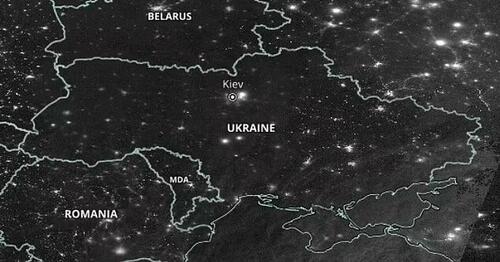
Next, we have an image taken from November 24th.
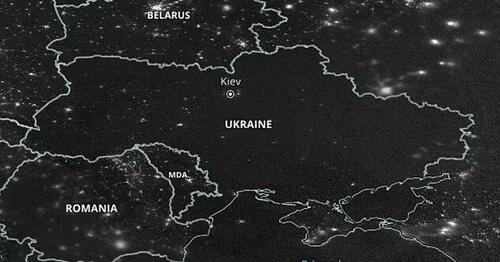
More than half the nation is in total darkness and the comparison to neighboring countries is stark. For the majority of the war Ukraine enjoyed near full use of their power grid, internet, water, gas, and other amenities, which is highly unusual during an invasion. The reasons for Vladimir Putin seeking to avoid damage to infrastructure are unknown, but public optics are the most likely explanation. With power resources nearly destroyed, the citizenry of Ukraine is facing a long cold winter with little to no relief in sight.
No doubt the media will portray this as a cold weather holocaust, though, elimination of infrastructure is usually the first measure of a large scale attack. It is standard operating procedure for the US military, for example. At this point, the coldest temperatures have yet to hit Ukraine, with average lows of 21°F (-6°C) in December. This kind of weather is not a problem with infrastructure intact, but with the grid down there will be chaos.
Water pipes will freeze and bust across major population centers, leaving only well water. The effects of the cold will be cumulative, and without heating and electric most other operations including economic operations will grind to a halt. Ukraine’s population will have gone from relative comfort to brutal survival in the span of a couple months.
The next most obvious outcome is a refugee crisis, with millions of people seeking shelter in neighboring countries in order to escape the cold. Though mainstream analysts are finally admitting to the grid problem, there is still very little coverage of the actual consequences we are about to witness. The assertions that Ukraine is “winning” the war are harder to sell while at the same time acknowledging the massive economic and humanitarian disaster that is escalating in the wake of supposed victory.
Remember when we were told up to 10% die from Monkeypox?
Turns out it is hard to catch and it is really hard to die from it
By Meryl Nass | November 25, 2022
Today’s official WHO death rate throughout the world is 0.068% or less than 1 in a thousand. And in the US the mortality rate associated with monkeypox is 0.048%.
MPOX is the new name, because the US government felt the old name stigmatized monkeys.
“Various surveys have found a significant share of monkeypox patients also have HIV. A national review of nearly 2,000 cases over the summer found that 38 percent had HIV, but the diagnosis alone is not linked to severe outcomes, researchers say,” according to the WaPo.
“The vast majority [of deaths] have had comorbidities with severely weakened immune systems,” said Ohio Department of Health Director Bruce Vanderhoff in a statement.”
The WaPo continued, “There have been a few cases of spread to household and nonsexual contacts, but the potential for sustained transmission among heterosexual networks is probably low, according to the CDC.”

Ukraine halts Russian oil transit to EU – Transneft
RT | November 23, 2022
Kiev has stopped the operation of a section of the southern branch of the ‘Druzhba’ (Friendship) oil pipeline that transits Ukraine, RIA Novosti reported on Wednesday, citing Russian oil-exporting company Transneft.
According to the report, oil transmission has been suspended for an indefinite period.
“In Ukraine, the section [of Druzhba] has been stopped, from Brod to the Carpathians,” said Igor Demin, an adviser to the president of Transneft.
He added that deliveries via the Belarusian section of the pipeline were continuing.
Last week, Kiev stopped oil flows to Hungary through the Druzhba pipeline, explaining the suspension was linked to a Russian air strike that reportedly had hit a transformer station near the border with Belarus. It stated that the service was suspended due to a “drop in voltage.”
Kiev later announced plans to raise transit fees for Russian oil running through the pipeline to the EU, due to higher costs resulting from Russian air and missile attacks targeting the country’s energy infrastructure.
Ukrainian oil transit fees have already been raised twice this year. The last hike, in April, reportedly brought the total increase on an annualized basis to 51%.
European parliament severs ties with Iran over sanctions against EU

The Cradle | November 22, 2022
The EU parliament announced on 21 November its decision to sever ties with Iran. The announcement comes in response to the Islamic Republic’s recent decision to place sanctions on the European governing body, which has been slapping its own sanctions against Tehran throughout the ongoing unrest in the country.
“We will not look away from those who look to us from the streets of Iran. Iran must stop its oppression of legitimate protests. In response to Iran’s [sanctions] on members of the European Parliament, [it] will no longer engage with Iranian authorities,” President of the EU parliament, Roberta Metsola, said in a statement via Twitter with the popular Iranian protest slogan “Women, life, freedom” written in Persian at the end of the tweet.
At the opening of its November plenary session on the same day, Metsola said that there would be “no direct contact” between the parliament and Iranian officials “until further notice.”
As Iran continues to face large waves of violent riots – which have resulted in the deaths of several members of the security forces and the destruction of public property – western media has framed the response by authorities as nothing more than a brutal crackdown on peaceful protestors.
In addition to the propagation of misinformation by mainstream, western European media, the EU has repeatedly placed several rounds of sanctions against Iran.
Accusing European states of interventionist policies and “supporting terrorism and violence” on Iranian soil, Tehran on 26 October announced the implementation of its own sanctions against several individuals and institutions associated with the EU.
Earlier that month, the Islamic Republic had sent several letters to European diplomats warning them that the aggressive EU sanction policy against Tehran could result in a “rupture” of relations between them.
As European, Saudi, British, and US media outlets lead the misinformation campaign against Tehran, violent attacks against the country’s security personnel are on the rise, and internationally-backed armed separatists continue to push for the illegal overthrow of the Islamic Republic.
Featured Video

Racist Seinfeld Dances for Joy as Bibi Unveils His New Map
or go to
Aletho News Archives – Video-Images
TV Drama Review
Japanese drama projects Japan’s wartime atrocities onto Chinese characters

Global Times | October 25, 2026
By portraying Chinese characters as perpetrators of ruthless violence while casting Japanese Self-Defense Forces (SDF) intelligence operatives as defenders, the season 2 of the Japanese drama Vivant has recently drawn criticism from Chinese netizens, who argue that its depiction turns historical reality on its head while ignoring Japan’s wartime atrocities.
The TBS drama series – a spy suspense story in which an alleged unofficial intelligence unit of the SDF operates across the globe — has attracted a passionate fanbase. Its currently airing season 2 opened with a household rating of 18.8 percent, the highest for a TV drama this year, according toa commentary article by Japanese media Toyo Keizai.
What draws attention is the portrayal of the enemies in the series, the article noted. Scenes in which the Chinese organization subjects kidnapped members of the SDF unit to brutal torture are repeated with unrelenting intensity.
It is rare for Japanese TV dramas to explicitly portray a real-life country as the enemy, the article noted.
Japanese Prime Minister Sanae Takaichi also made a reference to the drama, saying that she has been recording Vivant and hopes to binge-watch it over the year-end and New Year holidays, according to Japanese media outlets.
China’s CCTV News report on Sunday revealed that the drama features scenes in which Chinese personnel cut off the fingers of and stab Japanese intelligence operatives in the abdomen. Such acts bear striking similarities to the torture inflicted on Chinese nationals by invading Japanese troops during the World War II.
The drama distorts the truth by attributing these atrocities to modern Chinese characters. Beneath the surface, it subtly glorifies Japan’s cross-border overseas operations, blurs the functional boundaries of the SDF and implicitly promotes an expansionist narrative, per CCTV News. … continue
Blog Roll
 Aletho News
- Iran FM Araghchi: “Hormuz Will No Longer Be the Same”
- EU facing trillion-euro debt hole while seeking more cash for Kiev
- How US, Europe, Persian Gulf states exhausted missile stockpiles, splurged billions to defend Israel
- Up in arms… Koreans reject U.S. empire’s plan to make South Korea the next Ukraine
- Iran, Turkey, Pakistan, Saudi Arabia could advance region-led security framework in Tehran: FM spox
- Netizens condemn Japanese drama for projecting Japan’s wartime atrocities onto Chinese characters
- Racist Seinfeld Dances for Joy as Bibi Unveils His New Map
- A West Bank War for Netanyahu’s Election Campaign, Could It Backfire?
- Yemen denounces European Parliament’s ‘hypocritical’ push to blacklist Ansarullah
- Qalibaf: UAE’s UN bid aims to ‘clear the runway’ for ‘Greater Israel’, whitewash genocide
- If Americans Knew
- An error has occurred; the feed is probably down. Try again later.
- No Tricks Zone
- Sudden Stratospheric Warming, Powerful El Niño Combination May Lead To Extreme Europe Cold, Energy Crisis!
- Two New Studies Find Thwaites Glacier Melt Cannot Be Driven By Human Activity Or A Warming Ocean
- E-Cars Reduce CO2 Emissions By Only 41% Compared To Internal Combustion Engine Vehicles
- Predictions Made By Renowned Climate Professor Over Past Decades Have Been Proven To Be Poor
- New Study Suggests Large Regions Of The Pacific Ocean Have Been Cooling For The Last 80 Years
- Germany’s Green Energy Debacle: High Energy Costs Force Kahla Porzellan to Close After 182 Years!
- New Study: 50 Years Of The Most Aggressive ‘Net Zero’ Policies Can Only Affect The Global Climate By 0.03°C
- US September “Heat” Was No Record…Many Records Set Decades Ago
- Latest European Green Energy Debacle; Portugal’s Largest Flagship Solar Park Insolvent!
- Green Energy Debacle: German Expert Professor Fritz Vahrenholt Warns Of Severe Economic And Social Consequences

