Belarus shoots down Ukrainian missile – MOD
RT | December 29, 2022
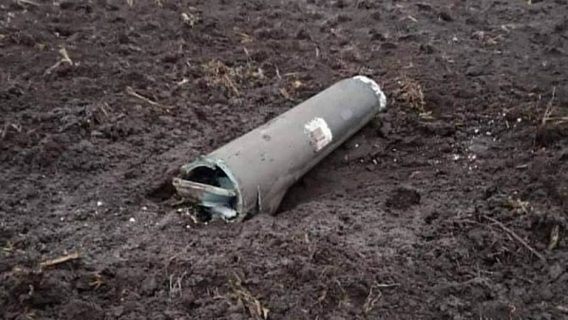
Belarusian forces intercepted and destroyed a Ukrainian S-300 anti-air missile on Thursday, the Defense Ministry said.
According to the MOD, parts of the missile fell on agricultural land near the village of Gorbakha in the country’s southwestern Brest Region, which shares a border with Ukraine. There were no casualties.
Belarusian President Alexander Lukashenko has been briefed about the incident, state news agency Belta said.
Photos posted on social media show missile parts lying in the middle of a field.
The incident comes as officials in Minsk accuse Kiev of amassing troops and setting up firing positions across the border. The Belarusian government restricted movement in several border areas last week, citing tensions with Ukraine.
On November 15, a falling missile killed two people in eastern Poland, not far from the border with Ukraine. Warsaw said that the projectile was probably an S-300 fired by Ukrainian forces as they were trying to fend off a Russian attack, and that there was no evidence that the fallen missile was launched by Russian troops.
Kiev initially accused Moscow of attacking Polish territory, but later said that further investigation was needed to determine what happened. Ukrainian President Vladimir Zelensky described the incident at the time as an attack on NATO. Russia denied that the missile that hit Poland was fired by its forces.
Russia to provide Iran with dozens of Sukhoi Su-35 fighter jets ‘in near future’

Press TV – December 28, 2022
Russia will soon provide a complete squadron of Sukhoi Su-35 fighter jets to the Islamic Republic of Iran, a development that will likely further rile up the West as Tehran and Moscow deepen their defense and economic cooperation in defiance of sweeping sanctions and coercive measures.
Media reports, citing military experts, said 24 units of the twin-engine and super-maneuverable aircraft, a fourth-generation fighter jet designed primarily for air superiority roles, will be supplied to Iran in the near future.
It is believed that the Islamic Republic of Iran Air Force (IRIAF) Tactical Air Base (TAB) 8 in the central Iranian city of Isfahan will accommodate some of the combat aircraft.
Russia’s United Aircraft Corporation (UAC) says the Sukhoi Su-35 fighter jet “combines the qualities of a modern fighter (super-maneuverability, superior active and passive acquisition aids, high supersonic speed and long range, capability of managing battle group actions, etc.) and a good tactical airplane (wide range of weapons that can be carried, modern multi-channel electronic warfare system, reduced radar signature, and high combat survivability).”
Iran hasn’t acquired any new fighter aircraft in recent years, excluding a few Russian MiG-29 Fulcrum fighters it bought in the 1990s.
Besides the MiG-29, IRIAF mainly uses locally modified F-4 Phantom II, F-14 Tomcat, and F-5E/F Tiger II planes from the 1970s that the toppled US-backed Pahlavi regime received before the 1979 Islamic Revolution.
Iran and Russia have signed major deals in recent months to boost their economic, trade, energy and military cooperation.
Iran came under an inclusive regime of American sanctions in 2018 after Washington unilaterally withdrew from the 2015 nuclear deal, officially known as Joint Comprehensive Plan of Action (JCPOA).
The United States and allies imposed a raft of similar and even tougher sanctions on Russia in February after Moscow launched a military operation in Ukraine.
Experts say US sanctions failed to reach their ultimate objective of forcing Iran into major political and military concessions. They insist the bans even created an opportunity for Iran to diversify its economy away from crude revenues and rely more on its domestic resources.
Earlier this year, Russian President Vladimir Putin said during an economic forum in Vladivostok that Russia was gaining from Western sanctions, saying Moscow saw more opportunities in entering markets in the Middle East and Iran after the sanctions were imposed.
Ban on Orthodox patriarch ‘disgrace’ for West – Serbian president
RT | December 27, 2022
The decision by Kosovo’s ethnic Albanian government to block the Serbian Orthodox patriarch from entering the breakaway province is as shameful as the non-response of Pristina’s Western backers, President Aleksandar Vucic said on Tuesday.
“This is a great shame, not for us, but for them,” Vucic said in a televised speech. “But it’s important for us to see how decision-makers, mainly in the West, truly feel about our people and our country.”
Patriarch Porfirije of the Serbian Orthodox Church was turned away when he tried visiting the patriarchal seat in Pec on Monday. Vucic noted that Western governments reacted by speaking about the importance of “freedom of movement” instead, focusing on the barricades put up by the protesting Serbs in the north of the breakaway province.
“Why is there such hysterical insistence on removing the barricades? Because they need to remove the Serbs from northern Kosovo, both the Albanians in Pristina and some in the international community,” the Serbian president said. “Albanians don’t use those roads, only Serbs in the north, who support the barricades as a way to defend their existence.”
The very same powers that “trampled Serbia’s territorial integrity” in 1999, during the NATO war, are “trying to do the same today” in violation of all international laws and treaties, “because they consider territorial integrity of Kosovo more important than Serb lives,” Vucic added.
NATO bombed Serbia in 1999 and handed control of Kosovo to ethnic Albanian separatists, who declared independence in 2008 and have demanded recognition from Belgrade ever since. Serbia has refused, despite pressure from the US and EU.
Residents of several Serb-majority municipalities in northern Kosovo put up roadblocks earlier this month, protesting the arrest of an ethnic Serb policeman and the heavy presence of ethnic Albanian police in their communities.
The Russian ambassador to Serbia, Alexander Botsan-Kharchenko, condemned Pristina’s actions towards the Orthodox patriarch, calling them “absolutely unreasonable” and “a ban on Orthodoxy.” He also said the ethnic Albanian police demanded the patriarch make “anti-Serb statements.”
Patriarch Porfirije described Monday’s incident as “if someone for no reason, with a laughable explanation, tried to prevent the Pope of Rome from entering the Vatican.” He nonetheless appealed for restraint and a peaceful solution to the ongoing tensions.
“Serbs have lived in Kosovo and Metohija for 15 centuries, five of them alongside Albanians. If there is good will, we can find a way to live together,” he said on Tuesday.
Ukraine war tolls death knell for NATO
BY M. K. BHADRAKUMAR | INDIAN PUNCHLINE | DECEMBER 25, 2022
The defining moment in US President Joe Biden’s press conference at the White House last Wednesday, during President Zelensky’s visit, was his virtual admission that he is constrained in the proxy war in Ukraine, as European allies don’t want a war with Russia.
To quote Biden, “Now, you say, ‘Why don’t we just give Ukraine everything there is to give?’ Well, for two reasons. One, there’s an entire Alliance that is critical to stay with Ukraine. And the idea that we would give Ukraine material that is fundamentally different than is already going there would have a prospect of breaking up NATO and breaking up the European Union and the rest of the world… I’ve spent several hundred hours face-to-face with our European allies and the heads of state of those countries, and making the case as to why it was overwhelmingly in their interest that they continue to support Ukraine… They understand it fully, but they’re not looking to go to war with Russia. They’re not looking for a third World War.”
Biden realised at that point that “I probably already said too much” and abruptly ended the press conference. He probably forgot that he was dwelling on the fragility of Western unity.
The whole point is that the western commentariat largely forgets that Russia’s core agenda is not about territorial conquest — much as Ukraine is vital to Russian interests — but about NATO expansion. And that has not changed.
Every now and then President Putin revisits the fundamental theme that the US consistently aimed to weaken and dismember Russia. As recently as last Wednesday, Putin invoked the Chechen war in the 1990s — “the use of international terrorists in the Caucasus, to finish off Russia and to split the Russian Federation… They [US] claimed to condemn al-Qaeda and other criminals, yet they considered using them on the territory of Russia as acceptable and provided all kinds of assistance to them, including material, information, political and any other support, notably military support, to encourage them to continue fighting against Russia.”
Putin has a phenomenal memory and would have been alluding to Biden’s careful choice of William Burns as his CIA chief. Burns was Moscow Embassy’s point person for Chechnya in the 1990s! Putin has now ordered a nation-wide campaign to root out the vast tentacles that the US intelligence planted on Russian soil for internal subversion. Carnegie, once headed by Burns, has since shut down its Moscow office, and the Russian staff fled to the West!
The leitmotif of the expanded meeting of the Board of the Defence Ministry in Moscow on Wednesday, which Putin addressed, was the profound reality that Russia’s confrontation with the US is not going to end with Ukraine war. Putin exhorted the Russian top brass to “carefully analyse” the lessons of Ukraine and Syrian conflicts.
Importantly, Putin said, “We will continue maintaining and improving the combat readiness of the nuclear triad. It is the main guarantee that our sovereignty and territorial integrity, strategic parity and the general balance of forces in the world are preserved. This year, the level of modern armaments in the strategic nuclear forces has already exceeded 91 percent. We continue rearming the regiments of our strategic missile forces with modern missile systems with Avangard hypersonic warheads.”
Equally, Defence Minister Sergei Shoigu proposed at Wednesday’s meeting a military build-up “to bolster Russia’s security,” including:
- Creation of a corresponding group of forces in Russia’s northwest to counter Finland and Sweden’s induction as NATO members;
- Creation of two new motorised infantry divisions in the Kherson and Zaporozhya regions, as well as an army corps in Karelia, facing the Finnish border;
- Upgrade of 7 motorised infantry brigades into motorised infantry divisions in the Western, Central and Eastern military districts, and in the Northern Fleet;
- Addition of two more air assault divisions in the Airborne Forces;
- Provision of a composite aviation division and an army aviation brigade with 80-100 combat helicopters within each combined arms (tank) army;
- Creation of 3 additional air division commands, eight bomber aviation regiments, one fighter aviation regiment, and six army aviation brigades;
- Creation of 5 district artillery divisions, as well as super-heavy artillery brigades for building artillery reserves along the so-called strategic axis;
- Creation of 5 naval infantry brigades for the Navy’s coastal troops based on the existing naval infantry brigades;
- Increase in the size of the Armed Forces to 1.5 million service personnel, with 695,000 people serving under contract.
Putin summed up: “We will not repeat the mistakes of the past… We are not going to militarise our country or militarise the economy… and we will not do things we do not really need, to the detriment of our people and the economy, the social sphere. We will improve the Russian Armed Forces and the entire military component. We will do it calmly, routinely and consistently, without haste.”
If the neocons in the driving seat in the Beltway wanted an arms race, they have it now. The paradox, however, is that this is going to be different from the bipolar Cold War era arms race.
If the US intention was to weaken Russia before confronting China, things aren’t working that way. Instead, the US is getting locked into a confrontation with Russia and the ties between the two big powers are at a breaking point. Russia expects the US to roll back NATO’s expansion, as promised to the Soviet leadership in 1989.
The neocons had expected a “win-win” in Ukraine: Russian defeat and a disgraceful end to Putin presidency; a weakened Russia, as in the 1990s, groping for a new start; consolidation of western unity under a triumphant America; a massive boost in the upcoming struggle with China for supremacy in the world order; and a New American Century under the “rules-based world order”.
But instead, this is turning out to be a classic Zugzwang in the endgame — to borrow from German chess literature — where the US is under obligation to make a move on Ukraine but whichever move it makes will only worsen its geopolitical position.
Biden has understood that Russia cannot be defeated in Ukraine; nor are Russian people in any mood for an insurrection. Putin’s popularity is soaring high, as Russian objectives in Ukraine are being steadily realised. Thus, Biden is getting a vague sense, perhaps, that Russia isn’t exactly seeing things in Ukraine as a binary of victory and defeat, but is gearing up for the long haul to sort out NATO once and for all.
The transformation of Belarus as a “nuclear-capable” state carries a profound message from Moscow to Brussels and Washington. Biden cannot miss it. (See my blog NATO nuclear compass rendered unavailing, Indian Punchline, Dec. 21, 2022
Logically, the option open to the US at this point would be to disengage. But that becomes an abject admission of defeat and will mean the death knell for NATO, and Washington’s transatlantic leadership goes kaput. And, worse still, major west European powers — Germany, France and Italy — may start looking for a modus vivendi with Russia. Above all, how can NATO possibly survive without an “enemy”?
Clearly, neither the US nor its allies are in a position to fight a continental war. But even if they are, what about the emerging scenario in the Asia-Pacific, where the “no limits” partnership between China and Russia has added an intriguing layer in the geopolitics?
The neocons in the Beltway have bitten more than what they could chew. Their last card will be to push for a direct US military intervention in the Ukraine war under the banner of a “coalition of the willing.”
Damage to Ukrainian civilian infrastructure self-inflicted – Russia
RT | December 17, 2022
Mistakes made by the Ukrainian forces in their attempt to repel a Russian missile strike on Friday led to damage to civilian infrastructure, the Russian Defense Ministry said in a statement on Saturday. Earlier, Kiev had blamed the Russian forces for hitting residential apartments in the strike and killing four people, including a toddler.
“Unprofessional actions of the Ukrainian air defense units resulted in damage to civilian infrastructure on the ground,” the ministry said, without providing any further details.
Earlier, the governor of the Ukrainian Dnepropetrovsk Region, Valentin Reznichenko, said that four civilians had died in Krivoy Rog in Friday’s strike, including a one-year-old boy. A total of 13 people were injured, including four children, he added. According to Reznichenko, it was a Russian missile that supposedly had hit a residential building, leading to four deaths.
The Russian Defense Ministry said the “high-precision weapon strike” was targeting the Ukrainian military command and administration system as well as the military industrial complex and relevant power-supply networks. The strike had in particular “disrupted foreign weapons and munition transportation” and had “blocked the advancement of the Ukrainian reserves,” the ministry said. The operation of some military industrial facilities was stopped as well, it added.
“The strike’s goal was reached. All the designated targets were hit,” the Russian ministry said. The Ukrainian General Staff said on Saturday that Russia had launched a total of 98 missiles at Ukraine during the massive strike on Friday. It did not elaborate on how many of them were shot down.
On Friday, Ukraine’s state-owned energy giant Ukrenergo declared a state of emergency following the reports of the Russian strikes hitting critical infrastructure. The operator called the situation a “system breakdown,” adding that it had registered a fall in nationwide electricity consumption by more than 50%.
In recent weeks, Russia has ramped up its airstrikes against Ukraine’s critical infrastructure, through missile and drone barrages across the country. This followed Kiev’s launch of several sabotage operations against civilian infrastructure in Russia, including the Crimean Bridge truck-bomb attack.
The Russian Defense Ministry had previously said the Russian forces only target military sites in Ukraine. In October, the Russian military started targeting energy facilities that the Defense Ministry believes to be crucial for Ukraine’s military capability. As a result, the Ukrainian energy system has been significantly degraded.
Ukraine declares energy emergency
RT | December 16, 2022
Ukraine’s state-owned energy giant Ukrenergo declared a state of emergency on Friday, amid reports of a new wave of Russian missile strikes against the country’s critical infrastructure. The operator said it had registered electricity consumption plummeting by more than 50% across the country, with the situation constituting a “system breakdown.”
On Friday morning, an air raid alert was announced for all parts of Ukraine, as local media and authorities reported explosions in various cities and regions, including in the capital, Kiev.
The Mayor of eastern Ukrainian city Kharkov, Igor Terekhov, said that “colossal” infrastructural damage had been inflicted by the strikes. The attack has “primarily affected the energy system,” the official claimed in a Telegram post.
A similar account of the attack has been provided by the Mayor of the southern Ukrainian city of Krivoy Rog, Alexander Vikul, who confirmed “several” missile strikes in that region. An “energy infrastructure” site has been “destroyed” by the attack, Vikul said in a Telegram post, without revealing the exact nature of the affected site.
Ukraine’s largest private energy operator, DTEK, has also reported an attack on one of its sites, which ended up “seriously damaged” and disconnected from the grid. The site has been repeatedly subjected to missile attacks before, the company noted.
Somewhat contradicting the reports by the energy operators and local authorities, however, Ukraine’s military claimed it has been extremely successful in fending off the strikes. According to official figures, Ukraine has intercepted some 60 missiles out of 76 said to have been launched by Russia.
So far, the Russian military has remained silent on the salvo and has not provided its account of the attack.
In recent weeks, Russia has ramped up its air strikes against Ukraine’s critical infrastructure, repeatedly firing massive missile and suicide drone barrages across the country. This followed Kiev’s launch of several sabotage operations against civilian infrastructure in Russia, including the Crimean Bridge bombing. The attack on the bridge has been widely cheered by common Ukrainians and top officials alike, with the incident squarely blamed by Moscow on Kiev’s military intelligence and its Western backers.
Kremlin Spokesman Says Russia Never Deployed Heavy Weapons at Zaporozhye NPP
Samizdat – 13.12.2022
MOSCOW – Russian heavy weapons have never been and are not now deployed at the Zaporozhye nuclear power plant (ZNPP), Kremlin spokesman Dmitry Peskov said on Tuesday.
Earlier in the day, French President Emmanuel Macron said that the International Atomic Energy Agency (IAEA) had achieved a “withdrawal of heavy and light weapons” from the ZNPP.
“I would like to remind you remarks by President [of Russia Vladimir] Putin that there have not been any and are no heavy weapons at the power plant itself, and representatives of the IAEA, who are present there day and night, can definitely confirm this,” Peskov told journalists.
Russia highly appreciates and continues talks with the IAEA on the security of the station, he added.
Director General of the IAEA Rafael Grossi said earlier in the day that work on ensuring safety and security of the ZNNP was in progress.
Located on the left bank of the Dnepr River, the ZNPP is the largest nuclear power plant in Europe by number of units and output. During the military operation in Ukraine launched by Russia on February 24, the station and surrounding area went under the control of the Russian forces and have since been shelled multiples times. Russia and Ukraine blame each other for the attacks.
Russian Foreign Ministry spokeswoman Maria Zakharova told Sputnik in early December that it was untimely to say that Russia and Ukraine were close to agreeing on the creation of a safety zone around the ZNPP, as it was unclear whether Kiev was ready to stop the shelling of the plant.
Serbia’s Vucic Accuses US, Pristina of Not Complying With Any Agreements on Kosovo
Samizdat – 11.12.2022
BELGRADE – The United States and the Kosovo authorities in Pristina are not following any acts or agreements on Kosovo, Serbian President Aleksandar Vucic said following a Security Council meeting convened on Sunday amid mounting tensions in the predominantly Serb-populated north of Kosovo.
Vucic called the meeting after Kosovo’s de facto leader Albin Kurti urged the NATO-led Kosovo Force (KFOR) to dismantle road barricades erected by local Serbs in the north of the breakaway region. He said that Pristina would be waiting for a response from KFOR mission command until the evening. If KFOR refuses to step in, Kosovo’s own security forces will be ready to carry out this operation themselves, Kurti said.
“We have one question for our American partners. Tell us, which agreement is Pristina abiding by and which act are you abiding by? The UN Charter, UN Security Council Resolution 1244, the Brussels Agreement, or the Washington Agreement? Name us one of these documents that Pristina respects, at least one that they and the US respect,” Vucic said in his address after the meeting.
Washington and Pristina believe they can “do whatever [they] want and as much as [they] want,” without respecting any agreements on Kosovo, the Serbian president said.
Serbs in the northern part of Kosovo began setting up barricades on roads on Saturday in protest of the arrest of Dejan Pantic, former police officer who quit his post in mid-November and was arrested by the Kosovo authorities at the Jarinje border crossing on suspicion of “terrorism.”
On Saturday evening, Vucic said in his address to the nation that Belgrade would send a formal request to the KFOR mission command for permission to deploy the Serbian military and police in Kosovo under UN Security Council Resolution 1244. He also showed photos of Kosovar soldiers in heavy equipment and with automatic weapons in the north of the region near the border with Serbia. Vucic recalled that, according to the agreements reached earlier, special police forces can only be deployed to the Serb-majority municipalities with the authorization of regional heads.
Earlier on Sunday, Vucic pledged that his country would continue efforts to settle the Kosovo issue using legal means and called on Pristina to create the Community of Serb Municipalities in accordance with the 2013 Brussels Agreement.
Constant Illness – Pandemic of the Vaccinated?
The Naked Emperor’s Newsletter | December 11, 2022
Obviously, I am rather biased and on the lookout for any change in trends but to me a lot of people seem to be ill a lot.
Again, I am definitely biased here but it seems to be mainly the vaccinated people getting ill. Not anything serious but bad cold or flu like symptoms that last for weeks and weeks. And then they recover and after a few days a new long illness starts again.
I don’t know most people’s vaccination status but of the ones I do know, the unvaccinated haven’t been ill much (if at all) whilst the vaccinated are either on their third or fourth bout of Covid or some other respiratory illness.
This is also reflected in the levels of absenteeism in most places – shops, cafes, schools etc.
Could I just be looking out for illnesses more? Could the unvaccinated be conscious that they don’t want to get ill and so some kind of sub-conscious placebo effect is helping them fight off bugs? Were the people who didn’t get vaccinated generally a fitter bunch in the first place? Or are the vaccinated suffering from T-cell exhaustion or ADE?
As I say, I am biased and a lot of you will be too. But try not to be and let me know what you are seeing in the comments below.
Argentina convicts vice-president of corruption
RT | December 6, 2022
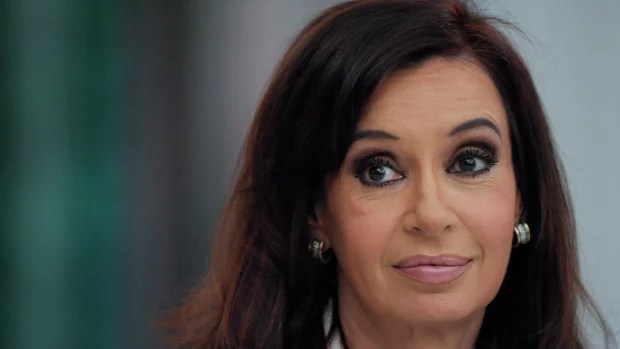
Argentina’s sitting Vice President Cristina Fernandez de Kirchner was found guilty of corruption on Tuesday and sentenced to six years in prison, along with a lifelong ban on holding public office going forward. She will remain free until the end of her term, however, due to immunity.
The federal court in Buenos Aires rendered the verdict after three and a half years of proceedings involving more than 100 witnesses. Kirchner, 69, was accused of taking bribes and having an “illicit association” with a construction magnate during her 2007-2015 presidency. Prosecutors had sought a 12-year sentence.
Kirchner has been vice president and head of the Argentinian senate since December 2019, and can only be stripped of immunity with an unlikely two-thirds vote in the chamber. She also has the option to appeal the verdict to the supreme court.
Tuesday’s verdict is the first time a sitting vice president in Argentina was sentenced for wrongdoing while in office. Kirchner’s Vice President Amado Boudou, as well as Presidents Carlos Menem and Fernando de la Rua, had all been convicted after leaving their posts.
Kirchner had denied all charges and called the process politically charged and ridden with irregularities. Within minutes of the verdict, she said it went beyond “lawfare.”
“This is a parallel state and judicial mafia, and the confirmation of a parastatal system where decisions are made about the life, patrimony and freedom of all Argentines outside the electoral results,” she said.
Kirchner succeeded her late husband Neastor (2003-2007) as president, and was suspected of directing millions in public works funds to Lázaro Baez, a businessman who was a friend of the couple.
After Kirchner left office in 2015, she was also charged with setting a fraudulently low price for dollar-denominated futures, but later acquitted. Another indictment charged her with treason, but was later dropped, while a claim that she had made a secret pact with Iran to protect the alleged perpetrators of a 1994 terrorist bombing was thrown out by another federal court in October 2021.
President Alberto Fernandez backed Kirchner, calling the investigation into her “political” in nature. The next presidential election in Argentina is in 11 months, and it was widely believed Kirchner would run for the post again, though no official announcements have been made.
Kirchner is seen as the most influential figure inside Argentina’s ruling Justicialist Party, founded by Juan and Eva Peron in 1946. Her son Maximo leads the ruling majority bloc in the Chamber of Deputies, the lower house of the Argentinian parliament.
Moscow names condition for resuming arms control talks with US
RT | November 30, 2022
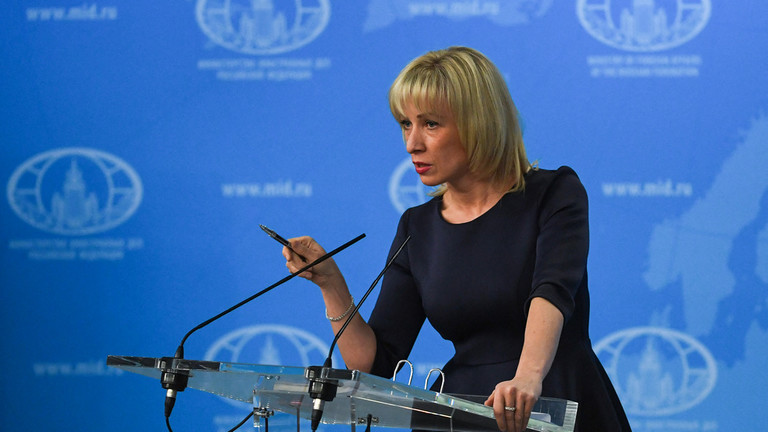
Russia sees no possibility of resuming talks with Washington on the cornerstone New START arms control treaty while the US continues to arm Ukraine, Russia’s Foreign Ministry spokesman said on Wednesday.
Speaking in a live interview on radio Sputnik, Maria Zakharova said: “The US intends to supply even more weapons to the conflict region, in which the Russian Federation is directly involved. That is, they will supply all these weapons, they will encourage the Kiev regime to cause even more bloodshed, they will allocate money for extremist activities that are carried out under the auspices of these delusional people [in the Ukrainian presidency], and we will sit with them at the same table and discuss issues of mutual security with them, including those in their interest?”
The spokeswoman stressed that Moscow values the New START agreement, as it serves the best interests of both Russia and the US, adding that the necessary conditions must be met before talks can be resumed.
Russian and American diplomats were set to meet in Cairo on Tuesday for a new round of talks on prolonging the deal, set to expire in early 2026. The meeting, however, was called off shortly before it was set to happen, with no new date announced.
“The event is being postponed to a later date,” the Russian Foreign Ministry told RT on Monday. Meanwhile, CNN has quoted the US State Department as saying Washington was ready to hold talks at the earliest possible date, and considered that “resuming nuclear inspections under the New START treaty is a priority.”
New START, signed back in 2010, is effectively the last arms control agreement between the two major nuclear powers following Washington’s unilateral withdrawal from the Intermediate-Range Nuclear Forces (INF) treaty in 2019. The pact limits the number of nuclear warheads that the US and Russia can possess, and restricts the number of deployed silo-based intercontinental ballistic missiles, submarine-launched ballistic missiles, and nuclear bombers. The total number of strategic nuclear delivery vehicles must not exceed 800.
Russia suspended the inspection regime under the treaty back in August, blaming the move on Western sanctions that had prevented Russian inspectors from doing their work in the US and giving Washington an unfair advantage. Moscow said the inspection could resume only when the principles of parity and equality were restored.
What to expect in Russia’s winter offensive in Ukraine
BY M. K. BHADRAKUMAR | INDIAN PUNCHLINE | NOVEMBER 29, 2022
Wading through the 18,000-word transcript of an hours-long meeting that President Vladimir Putin took with the “soldiers’ mothers” last Friday in Moscow, one gets the impression that the fighting in Ukraine may continue well into 2023 — and even beyond.
In a most revealing remark, Putin acknowledged that Moscow blundered in 2014 by leaving Donbass an unfinished business — unlike Crimea — by allowing itself to be lured into the ceasefire brokered by Germany and France and the Minsk agreements.
Moscow took some time to realise that Germany and France connived with then leadership in Kiev to scuttle the implementation of Minsk accord. Then Ukrainian President Petro Poroshenko admitted in a series of interviews with western news outlets in recent months, including on Germany’s Deutsche Welle television and Radio Free Europe’s Ukrainian unit, that the 2015 ceasefire was a distraction intended to buy time for Kiev to rebuild its military.
In his words, “We had achieved everything we wanted, our goal was to, first, stop the [Russian] threat, or at least to delay the war –- to secure eight years to restore economic growth and create powerful armed forces.”
The so-called Steinmeier Formula (proposed by German President Frank-Walter Steinmeier back in 2016 when he was foreign minister) on the sequencing of the Minsk agreement, had called for elections to be held in the separatist-held Donbass territories under Ukrainian legislation and the supervision of the OSCE; and, if the OSCE judged the balloting to be free and fair, then a special self-governing status for the Donbass territories would be initiated and Ukraine’s control of its easternmost border with Russia restored.
Putin admitted that Russia accepted the Minsk agreements ignoring the wishes of the Russian population in Donbass. To quote him, “We sincerely went to this. But we didn’t fully feel the mood of the people, it was impossible to fully understand what was going on there. But now it has probably become obvious that this reunion [of Donbass] should have happened earlier. Maybe there wouldn’t have been so many losses among civilians, there wouldn’t have been so many dead children under shelling…”
For the first time, perhaps, an incumbent Kremlin leader admitted making mistakes. The above poignant passage, therefore, becomes a touchstone for Putin’s future decisions, as the Russian mobilisation approaches the final stage and by end-December, an estimated 400,000 additional Russian troops will have been deployed in forward positions.
The bottom line is that Putin slammed the door shut on another Minsk-like hodgepodge of modern furniture and antiques. How does this translate as political reality?
First and foremost, much as Moscow is open for dialogue without preconditions, Russian negotiators will be bound by the recent amendments to the country’s Constitution, which incorporated Donetsk, Lugansk, Kherson, and Zaporozhye regions as part of the Russian Federation.
Second, Friday’s meeting has been, by any reckoning, an audacious initiative by Putin — risky, politically speaking. His interlocutors included mothers drawn from far-flung regions, whose sons are either actively fighting on the warfront, or have experienced the tragedy of sons having been killed in the fighting, or seriously wounded and need prolonged rehabilitation.
They were strong-willed women, for sure, and yet, as one of them from the small town of Kirovsk in Luhansk told Putin while recalling the death of her son Konstantin Pshenichkin on the frontline, “My heart bleeds, my soul freezes, gloomy memories cloud my mind, tears, tears, and suddenly my son asks me: “Mom, don’t be sad, I’ll see you – you just have to wait. You will go through this life for me, and in that life, we will be together again.”
Putin claimed openly — highly unusual for a Kremlin leader — that he went prepared for the meeting. But he still had surprises in store. Such meetings are impossible to be choreographed as pent-up emotions are in play in front of TV cameras.
Thus, Marina Bakhilina from Sakha Republic, mother of three sons (one of whom is a highly decorated soldier from the elite Airborne Forces, 83rd Brigade and recipient of the Order of Courage) complained that there’s no hot food on the frontline. She told Putin: “Do you understand what’s going on? If our people can’t provide our soldiers with hot meals, I, as a master of sports and a shooting CMC, would love to go there, to the front line to cook.”
Putin replied gently, “It would seem that the issues have already been mostly resolved… it means that not everything is normal…”
What stands out in such frank exchanges is Putin’s massive political capital, derived out of the great consolidation he has mustered in getting the nation to rally behind him. The overall mood at the meeting was one of commitment to Russia’s cause and the confidence in ultimate victory. Of course, this strengthens Putin’s hands.
This is where the analogy of the 1962 Cuban Missile Crisis comes unstuck. Public opinion wasn’t a key factor 60 years ago. In a nutshell, common sense prevailed in 1962 as realisation dawned that any failure to take into account the rival power’s security interests could have an apocalyptic outcome.
The difference today is that while President Joe Biden has insulated himself and is not accountable for his dogged pursuit of a Russian defeat on the battlefield in Ukraine and an ensuing “regime change” in Moscow, Putin insists on holding himself accountable to his people. Will any western “liberal” politician in power dare emulate Putin’s extraordinary meeting with the “soldiers’ mothers”?
If economic hardships lead to social unrest and political turmoil in western Europe, the politicians in power will be at a disadvantage. Putin is fighting a “People’s War,” while western politicians cannot even admit that they are fighting Russia. But how long can it be hidden from the public view in Poland or France that their nationals are getting killed in Ukraine’s steppe? Can the western politicians pledge that their “volunteers” didn’t die in vain? What happens if a refugee flow out of Ukraine into western Europe begins as winter advances?
In military terms, Russia enjoys escalation dominance — a markedly superior position over its NATO rival, across a range of rungs as the conflict progresses. The accelerating Russian operation in Bakhmut is a case in point. The deployment of regular troops in the recent days shows that Russia is on the escalation ladder to wrap up the 4-month old “grind” in Bakhmut city in Donetsk, which military analysts often describe as a lynchpin of Kiev’s defence in the eastern Donbass region.
A New York Times report on Sunday highlighted the enormous scale of losses Ukrainian forces suffered in recent weeks. Evidently, the Wagner Group of Russian military contractors who were doing the fighting pinned down the Ukrainian forces in defensive positions, estimated in the region of 30,000 troops including crack units “that have been worn down by nonstop Russian assaults.”
The Times report admits, citing a US defence official, that the Russian intention could have been to make Bakhmut city “a resource-intensive black hole for Kyiv.” This paradigm will repeat elsewhere, too, except that the Russian forces will be much stronger, far superior in numbers and vastly better equipped and will be fighting from heavily fortified positions.
Putin made it clear at Friday’s meeting that vanquishing the neo-Nazi Banderites will remain a firm objective. Although regime change in Kiev is not a stated purpose, Putin will not settle for a repetition of the ceasefire and peace as in 2015, which left an anti-Russian, proxy regime of the US in power.
That said, Putin underscored that “despite all the issues related to the special military operation, we do not change our plans for the development of the state, for the development of the country, for the development of the economy, its social sphere, for national projects. We have huge, big plans…”
Taken together, all these elements define Russia’s so-called winter offensive. Putin’s hand-picked theatre commander in Ukraine General Sergei Surovikin is not in the mould of Patton or MacArthur. Basically, he holds the compass of the special military operations, while incorporating the experience accruing through the past 8 months of NATO involvement in the fighting. But never once did Putin use the expression “war” to characterise the conflict.
Featured Video
Yemen joins the war – Red Sea could be blocked next – Saudi regime at risk
or go to
Aletho News Archives – Video-Images
From the Archives
A superpower and “the world’s sickest warrior state”
By Paul J. Balles | March 8, 2010
Living through five or six major wars has hardened me to what I thought were the extremes of inhuman cruelty and brutality.
Two things made those extremes almost bearable: the brutality always revealed – at least according to the media coverage – the viciousness of the enemy. It was therefore quite understandable when our “brave men and women” pulverized the enemy.
Films of Japanese torturing captive Americans somehow justified holding Japanese Americans in internment camps during World War II; and only a small percentage of Americans found the bombing of Hiroshima and Nagasaki unreasonably vengeful at best, at worst, depraved.
The media giants in America portrayed the North Koreans as barbaric beasts with their captives, quite unlike their southern counterpoints – our allies during the Korean War. No one ever felt the need to explain how the South Koreans were a civilized breed while the North Koreans were absolute savages, at least according to the official line.
In Vietnam, our warriors justifiably (or so the media made us believe) dropped napalm on the North Vietnamese who had the gall to hide in villages and tunnels to ravage our invaders. At least it was accepted practice until some rogue photojournalist filmed a young girl screaming down a Vietnamese road in flames. … continue
Blog Roll
 Aletho News
- America Racing to Strategic Defeat in Iran: Lt Col Daniel Davis
- FTC Warns Visa, Mastercard, PayPal, Stripe Over Political Debanking
- Russian tanker approaches Cuba despite US oil blockade
- Marandi: Yemen joins the war – Red Sea could be blocked next – Saudi regime at risk
- Pro-Palestinian French member of European Parliament denied entry to Canada
- Pakistan to Host US-Iran Talks
- How Indonesia’s tilt toward the US left it stranded in the Strait of Hormuz
- US has no choice but to retreat from Iranian borders: Top commander
- Iran Retaliation Strikes Chemical Plant Near Dimona
- AWACS’ Destruction is a Major Loss for US Military – Ex-DoW Analyst
- If Americans Knew
- Israeli police block Catholic cardinal from entering Church of the Holy Sepulchre on Palm Sunday
- Israel is assassinating journalists again, more than any other nation, anywhere, ever – Not a ceasefire Day 170
- Over 300 US service members wounded, majority have brain injuries – Not a ceasefire Day 169
- Researchers at Human Rights Watch Resign Over Blocked Report on Palestinian Refugee Return
- Jewish Groups Are Backing a War Americans Don’t Want
- Eric Fingerhut Thinks He’s the President of the Jews
- Top Jewish Philanthropists, Rabbis Urge Israeli President to Take Action Against ‘Jewish Extremists’
- Don’t Be Fooled. Zionist Leaders Have Always Wanted to Control Southern Lebanon
- Israel’s widespread use of torture is a core element of its genocide against the Palestinian people
- In Israel’s War on Iran, Many Middle East US Bases Rendered “All But Uninhabitable”
- No Tricks Zone
- New Study Finds Warming Saves Lives…Cold Temperatures 12 Times More Deadly Than Excess Heat
- German Science Blog Accuses PIK Climate Institute Of Hallucinating Climate Tipping Points
- Devastating Assessment Of Comirnaty Vaccine By Former Senior Pfizer Europe Toxicologist
- New Study: CO2 Is ‘Effectively Negligible’ As An Explanatory Climate Change Factor Since 2000
- Former Pfizer Toxicologist Dr. Helmut Sterz Tells Bundestag Hearing Pfizer Vaccine Should Have Never Been Approved
- Energy Expert: Germany’s Nuclear Phaseout Was A “500 Billion Euro Mistake”
- New Research: South Australia’s Mid-Holocene Sea Surface Temperatures Were 4°C Warmer Than Today
- Storing Green Energy To Last Germany 10 Days Would Require A 60-Million Tonne Battery
- New Studies: UK Sea Levels Were 4 Meters Higher Than Today During The Mid-Holocene
- Destructive Green New Deal: German Energy And Metal Group Warns Of Drastic Crisis
 Aletho News