Iran nuclear chief: IAEA cameras will remain turned off until JCPOA fully restored
Press TV – July 25, 2022
The head of the Atomic Energy Organization of Iran (AEOI) says monitoring cameras installed by the UN nuclear agency at the Iranian nuclear sites will remain turned off until the 2015 nuclear deal, known as the Joint Comprehensive Plan of Action (JCPOA), is fully restored.
Mohammad Eslami made the remarks on Monday in reaction to recent remarks by Director General of the International Atomic Energy Agency (IAEA) Rafael Grossi.
Eslami said the conclusion of the JCPOA was the final outcome of numerous rounds of negotiations over Iran’s nuclear program.
“However, the West continues to level accusations against Iran on the basis of stolen and alleged documents. The Islamic Republic of Iran agreed to the JCPOA to dispel doubts and build confidence. Iran accepted to restrict its [nuclear] activities to pave the way for confidence building. However, they (the other parties to the deal) did not abide by their commitments,” he said.
“The [IAEA] cameras [which were installed] under the JCPOA were meant to put an end to those [Western] accusations. If those accusations are going to remain in place, there is no more need for the existence of JCPOA cameras,” Iran’s nuclear chief said.
Esalmi added that the IAEA “has removed and sealed the cameras, which are being kept at the [nuclear] facilities [of Iran] until they return to this accord.”
Grossi said in June that Iran has informed the United Nations nuclear watchdog that it is removing 27 surveillance cameras at its nuclear facilities following the Western-drafted anti-Tehran resolution by the agency’s Board of Governors.
“What we have been informed is that 27 cameras… are being removed in Iran,” the IAEA chief said.
Elsewhere in his remarks, Eslami also criticized certain allegations against Iran’s nuclear program, emphasizing that “Tehran has never engaged in any covert and enrichment activities outside the framework [of the JCPOA] and without coordination with the IAEA.”
Iran’s measures to produce heavy water or develop other sections of the country’s nuclear industry infrastructure have been carried out in coordination with the IAEA and are currently under the agency’s supervision, Eslami said.
“No one should have the wrong impression that the IAEA does not currently supervise Iran’s nuclear activities. The IAEA is … conducting its supervision according to the Safeguards Agreement,” the Iranian nuclear chief pointed out.
He added that Iran has turned off the cameras that were not operating based on the Safeguards Agreement, but were related to the JCPOA.
He, however, said Tehran will make new decisions if the parties to the deal return to their obligations as per the JCPOA and Iran is assured that the West would not carry out any mischievous act any more.
During an interview with Spain’s El Pais on Friday, the IAEA chief claimed that Iran’s nuclear program “is advancing at a gallop and we have very little visibility.”
Iran’s nuclear program “has grown enormously, far beyond what it was in 2015. It is a growth that is not only quantitative but qualitative, also with the levels of enrichment.”
“This does not imply that Iran is making a nuclear weapon, but no country that does not have warlike projects enriches at that level, at 60 percent,” Grossi said.
Earlier on Monday, Iran’s Foreign Ministry spokesman Nasser Kan’ani also reacted to Grossi’s remarks, saying, “The Islamic Republic of Iran is a member of the International Atomic Energy Agency and the Non-Proliferation Treaty (NPT), and for many years, especially during recent years, has allowed the agency’s inspectors … to visit [Iran’s nuclear] facilities.”
“Unfortunately, Mr. Grossi has time and again taken an unprofessional and unfair approach vis-à-vis Iran’s nuclear program, especially in recent months. His views are not helpful and constructive. He is interested in raising an issue about Iran’s nuclear issues now and then.,” he said.
Kan’ani added, “We believe that the IAEA director general should adopt a constructive and interactive approach in response to Iran’s constructive cooperation with the agency. We do not view Grossi’s remarks as technical and professional and we advise him to observe the principle of neutrality and fairness and to avoid politically-motivated statements.”
Moscow reveals target of strike on key Ukrainian port
Samizdat | July 24, 2022
The Russian Ministry of Defense has confirmed striking targets in the major Ukrainian port of Odessa on Saturday, revealing that its missiles hit military infrastructure and arms stockpiles.
“In the seaport of Odessa, on the territory of a shipyard, a docked Ukrainian warship and a warehouse of Harpoon anti-ship missiles, supplied by the US to the Kiev regime, have been destroyed by sea-based high-precision long-range missiles,” the ministry said on Sunday.
The attack also crippled a repair facility where vessels of the Ukrainian navy have been fixed, it added.
The strike on the target in Odessa, which is a major trade hub in the southwest of Ukraine, came a day after the signing of a UN-brokered deal to unblock grain exports from Ukrainian ports.
During the conflict that has been underway since February 24, Moscow has insisted that its troops only fire at Ukrainian forces and military infrastructure, not civilian facilities.
According to Kiev officials, four cruise missiles were used in the attack on the port of Odessa, allegedly targeting grain silos located there. Two of the missiles were intercepted and two made it through, but failed to inflict significant damage, they said.
Ukrainian leader Vladimir Zelensky described the strike as “barbarism” and insisted “Russian Kalibr missiles destroyed the very possibility of statements” on the need for dialogue and any agreements with Moscow.
UN Secretary-General Antonio Guterres “unequivocally condemns” the attack on the port of Odessa, his spokesman said. According to Guterres, “the full implementation [of the deal] by Russia, Ukraine and Turkey is imperative” because the products that are covered by it are “desperately needed to address the global food crisis and ease the suffering of millions of people in need around the globe,” he added.
The Russia-Ukraine agreement, which had been agreed on Friday with the mediation of Turkey and the UN, sets out a framework for resuming Ukrainian grain exports via the Black Sea ports, which had been disrupted by the fighting.
In addition, Russia and the United Nations signed a memorandum providing for the UN’s involvement in lifting international sanctions on the export of Russian grain and fertilizers to world markets.
What You Don’t Know Could Hurt You: Novavax’s ‘Loud-and-Clear’ Nanoparticle Adjuvant
The Defender | July 20, 2022
In recent months, COVID-19 vaccination in the U.S. has “slowed to a crawl” as an increasingly distrustful public says “no thanks” to primary shots and boosters.
Still, U.S. public health agencies continue to authorize, approve and recommend COVID-19 vaccines — even for infants.
On Tuesday, advisors to the Centers for Disease Control and Prevention (CDC) — perhaps believing they can reverse the slowdown in “vaccine uptake” and without admitting to the ravages caused by the Pfizer/BioNTech, Moderna and Johnson & Johnson (J&J) shots — unanimously recommended the “Novavax COVID-19 Vaccine, Adjuvanted.”
The U.S. Food and Drug Administration (FDA) last week granted Novavax Emergency Use Authorization (EUA) for its COVID-19 vaccine, for adults age 18 and up.
Back in 2020, Operation Warp Speed awarded Novavax — another company that like Moderna, never brought a product to market before COVID-19 — a secret contract worth $1.6 billion (now being reported as $1.8 billion).
It was one of the largest taxpayer handouts channeled through Operation Warp Speed.
The media’s obliging sales pitch is that the Novavax injection is a “game changer” in comparison to the mRNA and adenovirus-vectored gene therapy shots, and should be “reassuring to those who are hesitant.”
In fact, according to the CDC’s advisors, the unvaccinated represent the “primary target population for Novavax.”
To further entice the unvaccinated, headlines feature the misleading claim that Novavax’s EUA jab — featuring recombinant moth-cell-based nanoparticle technology, the problematic surfactant polysorbate 80 and a never-before-approved nanoparticulate adjuvant called Matrix-M — is “free of side effects.”
However, the day after the FDA issued its Novavax authorization, the European Medicines Agency (EMA) made its own announcement, stating it was updating its product information for the Novavax COVID-19 shot to disclose “new” side effects.
The EMA’s list of side effects included “severe allergic reaction [anaphylaxis] and unusual or decreased feeling in the skin” (called paresthesia and hypoesthesia, respectively).
In addition, the EMA said it is assessing myocarditis and pericarditis as Novavax side effects — safety signals that also were on display in the FDA’s briefing document.
And in clinical trials, older adults who received the Novavax vaccine experienced an increased incidence of hypertension compared to those in the placebo group.
In short, as reported last week and last month by The Defender, the evidence contradicts Novavax’s downplaying of its vaccine’s association with heart problems and other side effects.
Apparently unaware of any potential cardiac risks, die-hards who have swallowed the slanted Novavax messaging blithely suggested in online comments that they would take bizarre skin problems over the heart problems they associate with other COVID-19 vaccines any day.
Adjuvants — ‘leave them out if you can’
Adjuvants, sometimes referred to as “the immunologist’s dirty little secret,” are components of at least 80% of all vaccines. They are supposed to “stimulate and enhance the magnitude and durability of the immune response.”
Additional adjuvant actions include modifying or broadening the immune response in certain age groups (such as infants and older adults) who tend not to respond to vaccines as strongly as vaccine makers would like, and increasing the body’s uptake of the vaccine antigen and protecting the antigen “from degradation and elimination.”
Less often admitted is the sordid association between adjuvants’ tenacious and “immunostimulatory” properties and systemic adverse events — such as neurotoxicity, “enigmatic” autoimmune issues (dubbed “autoimmune/inflammatory syndrome induced by adjuvants” or “ASIA” by Israeli autoimmunity expert Yehuda Shoenfeld), narcolepsy, infertility and other wild-card effects.
For these reasons, Dr. Martin Friede — lead scientist at the World Health Organization’s (WHO) Initiative for Vaccine Research — candidly remarked to other global vaccine insiders in late 2019, “We do not add adjuvants to vaccines because we want to do so” but out of perceived necessity.
Friede added:
“The first lesson is, while you’re making your vaccine, if you can avoid using an adjuvant, please do so. Lesson two is, if you’re going to use an adjuvant, use one that has a history of safety. And lesson three is, if you’re not going to do that, think very carefully.”
Undermining these seeming appeals to safety, Friede has since gone on to shill for Pfizer’s COVID-19 shot and for mRNA vaccine technology more broadly.
Nanoparticles times two
For many decades, aluminum-based adjuvants were the only game in town.
However, with the burgeoning of nanotechnology and encouragement from sponsors like the National Institutes of Health, manufacturers shifted gears toward a new generation of “novel” nanotech adjuvants designed to not only amplify vaccine responses but also to serve as carrier systems that distribute the vaccine’s payload to “key cells of the immune system.”
Generally left unmentioned in the hype surrounding these next-generation, nanoparticle-based adjuvants is the abundant evidence of nanoparticle toxicity.
Well before COVID-19 vaccines came along, researchers warned about nanomaterials’ ability to “cross biological membranes and access cells, tissues and organs” — such as the brain, heart, liver, kidneys, spleen, bone marrow and nervous system — “that larger-sized particles normally cannot.”
They also cautioned that in the cells, “nanomaterials may be taken up by cell mitochondria and the cell nucleus,” with the potential for DNA mutation, structural damage to mitochondria and cell death.
Moreover, researchers identified extensive biotoxic impacts of nanoparticles on the cardiovascular system, including “cardiac damage and dysfunction, vascular dysfunction, EC [epithelial cell] abnormities [sic], atherosclerosis, abnormal angiogenesis, platelet activation, blood coagulation and thrombosis.”
Nevertheless, in pre-COVID-19 studies of experimental vaccines containing Novavax’s Matrix-M, researchers waxed enthusiastic about the nanoparticle-based adjuvant’s “significant” and “potent” action — including its strong “immunostimulatory properties” even without any accompanying antigen.
And, where nanoparticles are concerned, the Novavax COVID-19 shot actually delivers a double whammy, combining Matrix-M with genetically engineered spike protein nanoparticles.
As Novavax explains it (for some reason putting the word “adjuvant” in quotes), “The spike protein is the ‘signal,’ but … we want your immune system to hear that signal loud and clear [and] that signal boost comes from our Matrix-M ‘adjuvant.’”
Phospholipids and autoimmunity
Not unlike the lipid nanoparticle “carrier systems” in the Pfizer and Moderna COVID-19 injections, the “immunostimulant” Matrix-M adjuvant includes two types of fat molecules — cholesterol and phospholipids — bundled with detergent-like saponins.
In human biology, phospholipids are essential for properly functioning cell membranes. But in the vaccine laboratory, synthetic versions are viewed as “essential components of advanced vaccines.”
Unheeded by the pharmaceutical industry is the fact that up to 5% of healthy individuals are estimated to harbor antiphospholipid antibodies, produced in a “mistaken” autoimmune response.
Researchers have linked the autoantibodies to the risk of antiphospholipid syndrome (APS), an autoimmune disorder characterized by recurring blood clots as well as fetal loss, fetal growth retardation and other obstetric complications.
Although researchers claim to be baffled as to why some people develop APS, studies have noted the emergence of APS and other autoimmune conditions following receipt of numerous vaccines, including those against tetanus, influenza, human papillomavirus (HPV) — and now COVID-19.
In a study published in August 2021, the authors suggested that in people with preexisting antiphospholipid antibodies, both the mRNA and adenovirus-vectored COVID jabs — and presumably other types such as the Novavax injection — could plausibly function as “the straw that breaks the camel’s back,” triggering “aberrant activation of the coagulation pathway.”
Rheumatologists are also reporting surges in blood clotting disorders, including APS.
Will the unvaccinated public take the bait?
In 2005, the EMA mused that while new adjuvants often had trouble gaining approval due to safety concerns such as “acute toxicity and the possibility of delayed side effects … an increased level of toxicity may be acceptable if the benefit of the vaccine is substantial.”
In a 2017 study, investigators studying Matrix-M approvingly noted that “rapid activation” of the immune system “is highly desirable in adjuvants used for emergency vaccination.”
With its authorization of Novavax’s souped-up COVID-19 jab, the FDA appears to have endorsed both of these views.
Outside the U.S., Novavax’s potent adjuvant also is being test-driven in children in the African nation of Burkina Faso, where almost 1 in 10 of the unfortunate toddlers who received an experimental Matrix-M-containing malaria vaccine withdrew or were “lost to follow-up” before or just after the third dose.
Acknowledging only seven serious adverse events, the researchers concluded, “None … were attributed to the vaccine.”
Does Novavax even take its product seriously?
In a comment posted at Yahoo!Finance, a person who signed up for the Novavax clinical trials and then, after researching the untried company, decided to withdraw, noted the doctor running the trial responded, “Oh sure, that’s fine. You want to wait and get one of the real vaccines.”
In another sign of Novavax’s lackadaisical corporate attitude, the labels on the COVID-19 vaccine vials will contain no information about expiration dates, forcing healthcare providers into using an “online expiry date checker tool,” which CDC advisors acknowledge could be both burdensome and a source of “confusion.”
The Merriam-Webster dictionary defines a “nova” as “a star that suddenly increases its light output tremendously and then fades away to its former obscurity in a few months or years.”
Will we say the same for “Nova”-vax’s shot in a few months’ or years’ time?
© 2022 Children’s Health Defense, Inc. This work is reproduced and distributed with the permission of Children’s Health Defense, Inc. Want to learn more from Children’s Health Defense? Sign up for free news and updates from Robert F. Kennedy, Jr. and the Children’s Health Defense. Your donation will help to support us in our efforts.
China blames US for Ukraine conflict
Samizdat | July 19, 2022
A spokesman for the Chinese Foreign Ministry accused the US of starting the crisis in Ukraine and fueling the conflict. Zhao Lijian told reporters at a regular press briefing on Tuesday that Washington should stop playing “world police” and work on creating conditions for peace talks instead.
Zhao was asked about the recent remarks by US State Department spokesperson Ned Price, who once again threatened China with a “very steep cost” should Beijing help Moscow evade Western sanctions – even though there was no evidence China was actually doing so.
Accusing Price of sounding “as if the US were the world police,” Zhao said that China “takes an objective and fair stance and stands on the side of peace and justice” when it comes to Ukraine.
“As the one who started the Ukraine crisis and the biggest factor fueling it, the US needs to deeply reflect on its erroneous actions of exerting extreme pressure and fanning the flame on the Ukraine issue.”
“We firmly oppose any unwarranted suspicion, threat and pressure targeting China. We are also firmly against unilateral illegal sanctions and long-arm jurisdiction with no basis in international law,” Zhao said.
Washington needs to “stop playing up bloc confrontation and creating a new Cold War by taking advantage of the situation,” Zhao added, urging the US to instead “facilitate a proper settlement of the crisis in a responsible way and create the environment and conditions needed for peace talks between parties concerned.”
This is not the first time China has pushed back on US pressure to side with the West against Russia in the matter of Ukraine. Last month, Zhao’s colleague Wang Wenbin also chided Washington for fueling the conflict and wanting to “fight to the last Ukrainian” while Beijing wanted a negotiated peace. He stopped short of blaming the US for starting the current military confrontation, however.
At the end of June, NATO Secretary General Jens Stoltenberg told reporters the alliance had been “preparing for this since 2014,” referring to the US-backed government in Kiev which came to power after the coup ousted the elected president and triggered the crisis with Crimea and Donbass.
At Tuesday’s press conference, Zhao also rejected US accusations that China was contributing to food shortages in Africa, pointing the finger back at Washington.
“It is quite clear to the world who exactly is causing the global food crisis,” he said. “We hope that the US will seriously reflect on its disreputable role in the global food crisis and stop smearing and making groundless accusations against China.”
Russia sent troops into Ukraine on February 24, citing Kiev’s failure to implement the Minsk agreements, designed to give the regions of Donetsk and Lugansk special status within the Ukrainian state. The protocols, brokered by Germany and France, were first signed in 2014. Former Ukrainian president Pyotr Poroshenko has since admitted that Kiev’s main goal was to use the ceasefire to buy time and “create powerful armed forces.”
In February 2022, the Kremlin recognized the Donbass republics as independent states and demanded that Ukraine officially declare itself a neutral country that will never join any Western military bloc. Kiev insists the Russian offensive was completely unprovoked.
NATO would have attacked Crimea if not stopped – Iran
Samizdat | July 19, 2022
Iranian Supreme Leader Ayatollah Ali Khamenei declared on Tuesday that had Russian President Vladimir Putin not “taken the initiative” in Ukraine, the NATO alliance would have launched a war with Russia over Crimea, which Kiev claims as its own land.
Speaking alongside Putin in Tehran, Khamenei stated that “as regards Ukraine, if you did not take the initiative, the other side would have initiated the war.”
Describing the West as “completely opposed to a strong and independent Russia” and NATO as “a dangerous entity that sees no boundaries in its expansionist policy,” the Iranian leader added that “had they not been stopped in Ukraine, they would have launched the same war sometime later under the pretext of the Crimea issue.”
Considered Russian land since imperial times, Crimea was an autonomous republic within the Soviet Union until it was ceded to the Ukrainian SSR by Soviet Premier Nikita Kruschev in 1954. The region fell under Ukrainian control after the breakup of the USSR, and voted to join Russia in 2014.
NATO considers Crimea to be “illegally annexed” Ukrainian territory. While the alliance has not threatened Russia with open war, it has demanded that Moscow return the region to Ukrainian control and a number of decisions made by its leaders and the government in Kiev suggest a possible path to war over Crimea.
NATO first established a partnership with Ukraine in 1997, and in the 2008 Bucharest Declaration stated that Ukraine and Georgia “will become members of NATO” at an unspecified future date. The Declaration remains alliance policy, and were Ukraine to join NATO, its 30 other members would instantly become parties to a territorial dispute with Russia.
For its part, Ukraine has signaled that it both intends to join NATO and intends to act on this dispute. Under President Pyotr Poroshenko, the country wrote its goal of becoming a NATO member into its constitution in 2019, despite Moscow’s warnings that having the alliance’s forces and weapons on its border would constitute an unacceptable security threat. Two years later, President Vladimir Zelensky signed a decree ordering his government to “prepare and implement measures to ensure the de-occupation and reintegration” of Crimea.
Ukraine’s ambitions of joining NATO appear to have fallen by the wayside, with Igor Zhovkva, an adviser to Zelensky, telling Financial Times last month that Kiev won’t pursue accession any further. Its ambitions of seizing Crimea, however, persist. Zelensky announced last month that he intends to “liberate” Crimea, and a spokesman for Ukraine’s Ministry of Defense, Vadim Skibitskiy, declared on Saturday that his forces may use American missiles to strike the peninsula.
Ukraine’s ‘Great Game’ surfaces in Transcaucasia
BY M. K. BHADRAKUMAR | INDIAN PUNCHLINE | JULY 19, 2022
If the metaphor of the “Great Game” can be applied to the Ukrainian crisis, with the expansion of the North Atlantic Treaty Organisation (NATO) at its core, it has begun causing reverberations across the entire Eurasian space. The great game lurking in the shade in the Caucasus and Central Asian regions in recent years is visibly accelerating.
The edge of the game is above everything else the targeting of Russia and China by the United States. This unfolding game cannot be underestimated, as its outcome may impact the shaping of a new model of the world order.
Starting with the Caspian Summit in Ashgabat on June 29, the inter-connected templates of the great game in the Caucasus began surfacing. The fact that the summit was scheduled at all despite the raging conflict in Ukraine — and that Russian President Vladimir Putin took time out to attend it — testified to the high importance of the event.
Basically, the presidents of the 5 littoral states — Kazakhstan, Iran, Turkmenistan, Azerbaijan and Russia — synchronised their watches, based on the Convention on the Legal Status of the Caspian Sea — the Constitution of the Caspian Sea — that was signed at their last summit in 2018. While doing so, they considered the current international situation and geopolitical processes worldwide.
Thus, one of the key points of the Final Communiqué of the Ashgabat Summit was the reiteration of a fundamental principle regarding the total exclusion of the armed forces of all extra-regional powers from the Caspian Sea (which primarily meets the geopolitical interests of Russia and Iran.) The fact that the heads of the Caspian countries confirmed this in writing can be regarded as the main result of the Summit. Secondly, the leaders focused on the Caspian transport communications and agreed that the region could become a hub for the East-West and North-South corridors.
The Caspian Summit was held just 5 weeks after Russian forces gained control of Mariupol port city (May 21), which established its total supremacy over the Sea of Azov and the Kerch Strait in eastern Crimea. Kerch Strait has a strategic role in Russian policies, being the narrow maritime gateway (5 kms in length and 4.5 km. wide at the narrowest point) which links the Black Sea via the Sea of Azov to Russia’s major waterways including the Don and the Volga.
In effect, it is yet to sink in that in the geopolitics of the entire Eurasian landmass, the liberation of Mariupol by Russian forces was a pivotal event in the great game, since the Kerch Strait ensures maritime transit from the Black Sea all the way to Moscow and St Petersburg, not to mention the strategic maritime route between the Caspian Sea (via the Volga-Don Canal) to the Black Sea and the Mediterranean.
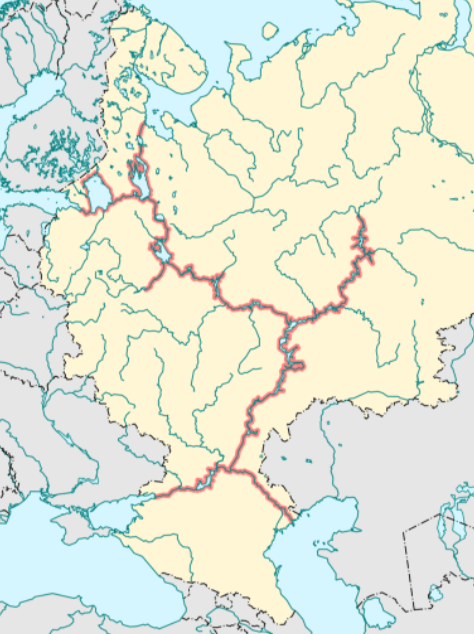
United Deep Waterway System of European Russia linking Sea of Azov and Caspian Sea to Baltic Sea and the Northern Sea Route
Now, to get the “big picture” here, factor in that the Volga River also links the Caspian Sea to the Baltic Sea as well as the Northern Sea Route (via the Volga–Baltic Waterway). Suffice to say, Russia has gained control of an integrated system of waterways, which connects the Black Sea and the Caspian Sea to the Baltic and the Northern Sea Route (which is a 4800 km long shipping lane that connects the Atlantic with the Pacific Ocean, passing along the Russian coasts of Siberia and the Far East.)
No doubt, it is a stupendous consolidation of the so-called “heartland” — per Sir Halford Mackinder’s theory (1904) that whoever controls Eastern Europe controls the Heartland and controls the “world island.”
Looking back, therefore, there is no question that the reunion of Crimea with the Russian Federation in 2014 was a major setback for the US and NATO. Putin caught Washington and its allies by total surprise. It complicated their objective to integrate Ukraine into the NATO.
The US was caught unawares for the second time when in the early days of the current special military operation, when all western eyes were trained on the Kiev region, Russian troops captured the highly strategic southern city of Kherson as early as on March 2. The significance of it was understood only by those who could perceive the great game unfolding in Ukraine as something much more than a mere military conflict. (Most Americans still don’t get it.)
The capture of Kherson in early March practically spelt doom for NATO’s design to extend its military presence in the Black Sea basin. Today, the game is practically over for the US and NATO, once Russia took control of the entire basin of the Sea of Azov. Russia now de facto controls the access of Dniepr to and from the Black Sea. And Dniepr happens to be the main river way for Ukraine’s transportation links to the world market.
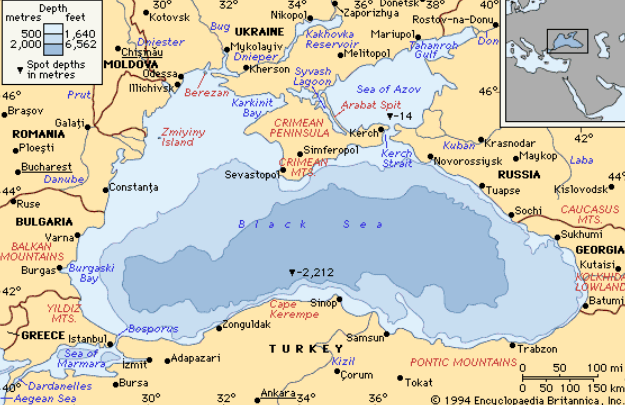
To the immediate east of the Kerch Strait is Russia’s Krasnodar region, which extends southwards to Russia’s largest commercial port on the Black Sea, Novorossiysk at the cross-roads of major oil and gas pipelines between the Black Sea and the Caspian Sea. In sum, control of the Kerch Strait gives Russia a big say with regard to the transportation routes linking Western and Eastern Europe to the Caspian Sea basin, Kazakhstan and China. Put differently, this part of the Russian special military operation becomes an integral part of Moscow’s Eurasian project linking up with China’s Belt and Road Initiative.
Washington has belatedly understood that Russia has outwitted the western alliance and gained the upper hand in the great game in the eastern Black Sea region. So, the Western strategy towards the Caucasus and Central Asia is being reworked. The NATO Secretary-General Jens Stoltenberg scheduled a meeting in Brussels today with the foreign minister of Azerbaijan Jeyhun Bayramov.
Importantly, Bayramov also attended a meeting of the EU-Azerbaijan Cooperation Council today in Brussels. The EU foreign policy chief Josep Borrell later said at a joint news conference with Bayramov that “Azerbaijan is an important partner for the European Union and our cooperation is intensifying.” Meanwhile, yesterday, the European Commission President Ursula von der Leyen visited Baku to sign a memorandum of understanding with Azerbaijan on energy cooperation.
All this is taking place against the backdrop of Charles Michel, the president of the European Council, spearheading efforts to mediate between arch rivals Azerbaijan and Armenia. As part of the EU’s diplomatic efforts, Michel hosted in April a meeting in Brussels between Azerbaijan’s President Aliyev and Armenia’s Prime Minister Nikol Pashinyan where the two sides expressed willingness to secure a peace agreement. Last week, CIA Director William Burns paid an unpublicised visit to Yerevan in this connection. Evidently, Washington and Brussels are jointly strategising a game plan to replace Russia and Turkey, which have hitherto taken the lead roles in Transcaucasia.
There should be no doubt that Moscow is watching closely the synchronised US-EU-NATO moves in the Caucasus targeting Azerbaijan with a view to undermine Russia’s consolidation in the Black Sea and the Caspian Sea regions, which poses a formidable hurdle to the advancement of the NATO strategies toward Central Asia and Xinjiang. This is a high-stakes game.
It will be recalled that on February 22, just two days prior to the launch of the special military operation in Ukraine, Putin hosted the president of Azerbaijan Ilham Aliyev in the Kremlin. They signed “a wide-ranging agreement,” the details of which were not divulged. The document is titled the Declaration on Allied Interaction.
Clearly, oil-rich Azerbaijan, which is not only a littoral state of the Caspian Sea but a gateway to both Central Asia and Russia’s Volga region, is destined to play a key role in the great game in the period ahead.
Breakaway region bordering Ukraine seeks security guarantees
Samizdat | July 19, 2022
Transnistria, a breakaway region of Moldova, has proposed that all parties in the ongoing ‘5+2’ peace talks sign a document providing security guarantees for the unrecognized republic that borders Ukraine.
Transnistrian President Vadim Krasnoselsky floated the idea during his meeting with Russia’s representative at the talks, ambassador-at-large Vitaly Tryapitsin, on Tuesday.
“There is an idea to appeal to all participants in the ‘5+2’ format [to] draw up a single document on the guarantees of peace and security of Transnistria,” Krasnoselsky said, as quoted by his press service. “If they keep talking about peace, let’s see them all sign it.”
The talks between Moldova and Transnistria are being mediated by Russia, Ukraine and the OSCE, while the US and EU attend as observers. They began in 2005 in an attempt to find a solution to the conflict between Chisinau and the breakaway republic. They have effectively been on hold since 2019.
According to Krasnoselsky, even if the ‘5+2’ format shows no signs of progress, there still should be at least some bilateral engagement between Moldova and the Russian-speaking breakaway Pridnestrovian Moldavian Republic (PMR).
“There are political representatives, there is the president, there are other Moldovan officials who should now be talking and finding compromises on the issues that are currently not being solved. The agenda of the talks is known by everyone quite well, and it still holds true,” he said.
The disputes between the PMR and Moldova should now be viewed “in a different light” because of Chisinau’s decision to apply for EU membership, the president added. “Moldova and the PMR are moving in opposite directions,” he said.
A nation of 2.6 million people sandwiched between Ukraine and Romania, Moldova declared itself a neutral state soon after gaining independence as a result of the collapse of the Soviet Union. However, it has long aimed to become a member of the EU – and was finally granted candidate status in late June, along with Ukraine.
Since the start of the conflict between Russia and Ukraine, Transnistria has seen a number of explosions and other provocations. The region, stretching along the Ukrainian border, maintains strong ties with Moscow and hosts Russian peacekeepers.
Chinese military issues warning to US
Samizdat | July 19, 2022
The foreign and defense ministries in Beijing issued harsh statements on Monday condemning the Biden administration’s approval of a new US arms sale to Taiwan. The deal is worth an estimated $108 million and includes armored vehicle parts and technical assistance.
Beijing “demands” that the United States “immediately withdraw the above-mentioned arms sales plan to Taiwan,” as well as halt all other arms deals and cut military ties with the island, said Defense Ministry spokesman Colonel Tan Kefei. “Otherwise, the US side will be solely responsible for undermining the relationship between China and the US and the two militaries and the peace and stability of the Taiwan Strait.”
“The Chinese People’s Liberation Army will take all necessary measures to firmly defend national sovereignty and territorial integrity, and resolutely thwart any form of external interference and separatist attempts for ‘Taiwan independence’,” the colonel added.
Chinese Foreign Ministry spokesman Wang Wenbin echoed this sentiment, saying that Washington’s arms supplies “gravely undermine China’s sovereignty and security interests, and severely harm China-US relations and peace and stability across the Taiwan Strait.”
“China will continue to take resolute and strong measures to firmly defend its sovereignty and security interests,” Wang added.
The Pentagon revealed on Friday that the US State Department had greenlit the transaction, which is valued at up to $108 million. It has yet to receive congressional approval, however. The military aid package will include parts for tanks and other combat vehicles, as well as technical and logistical support services provided by the US government and its contractors, in order to enhance the Taiwanese military’s interoperability with American forces and other allies, according to the US Defense Security Cooperation Agency.
State Department spokesman Ned Price dismissed China’s concerns, claiming later on Monday that the US has certain obligations to supply Taiwan with the necessary means to “defend itself.”
“Under the Taiwan Relations Act, we make available to Taiwan defense articles and services necessary to enable Taiwan to maintain a sufficient self-defense capability. This is something that successive administrations have done. It is entirely consistent with our One China policy,” said Price.
Taiwan has been ruled by the nationalists who fled to the island in 1949 after losing the civil war on the Chinese mainland. Beijing considers the island of 23.5 million a part of its own territory, under the One China policy.
China has recently increased its maritime and aerial military activity around the island, saying that this was needed to deter “collusion activities” between “Taiwan independence forces” and the US government.
While agreeing with the One China policy on paper, Washington maintains strong unofficial ties with Taipei, selling weapons to the island and tacitly encouraging its push for sovereignty. Beijing has repeatedly decried such contacts as provocations and as meddling in China’s internal affairs.
Ukraine plots partnership with Big Tech, a cashless society, and the use of AI to assess criminals
By Didi Rankovic | Reclaim The Net | July 18, 2022
Ukraine hopes to team up with Big Tech for some big plans to make the war-torn country “digitally indestructible,” reports citing statements made by officials during recent conferences suggest.
The main goal is to move towards a cashless society by introducing non-crypto digital money, and use AI systems even for purposes like producing “pre-trial and pre-sentencing reports assessing the risk of a suspect re-offending.”
An initiative, called “Digital4Freedom” was presented by Ukraine’s Deputy PM and Minister of Digital Transformation Mykhailo Fedorov in Switzerland. Fedorov is described as long-time friend of President Volodymyr Zelensky and a fellow enthusiast in ushering it ever greater levels of digitalization.
The initiative appears very ambitious, and optimistic: it is to make Ukraine “the most digital state in the world,” and that has been the pitch made to the audience in Lugano, who were asked to contribute funds and cooperate on forging a “digital Marshall plan” for Ukraine.
The general promise is that in the future, the Ukrainian government and Big Tech will be “closely interlinked,” while turning the country into “a European Israel.”
The push presented by Fedorov is to make Ukraine 100 percent digital, and he has a lot of faith in storing data on Amazon’s and Microsoft’s severs, which he says “cannot be destroyed by missiles.”
The plan is to allow Ukrainians to use digital services for all administrative tasks, like car, property, and land registration, paying customs duties and starting businesses.
More sectors slated for similar transformation, other than the payments system that is supposed to completely do away with paper money, are education and healthcare.
In his own appeals made on several occasions, Zelensky made it clear he expects Big Tech to build this infrastructure. According to reports, Fedorov left out mentioning Big Tech by name as he asked for donations and funding.
Even though appearing to address an eager audience, one part of the plan that was viewed with some apprehension is the judiciary using AI in risk assessment.
Fedorov’s name for this portion of the presentation was, “Judge Dredd.” Fair Trials seems to agree that’s what it might turn into, and expressed concern, saying that using AI for this purpose should be banned, as it “undermines the fundamental right to be presumed innocent.”
Ukraine, meanwhile, already has pilots that “produce pre-trial and pre-sentencing reports assessing the risk of a suspect re-offending,” the reports say.
Germany’s Energy Crisis About To Get Even Worse As Rhine Water Levels Plummet
By Tyler Durden | Zero Hedge | July 18, 2022
What has already been a year from hell for Germany, which is suffering energy hyperinflation as a result of Europe’s sanctions on Russia, and which is “facing the biggest crisis the country has every had” according to the president of the German employers association, is about to get even worse as the declining water level of the Rhine river, which has historically been a key infrastructure transit artery across Germany, continues to fall and as it does, the flow of commodities to inland Europe is starting to buckle threatening to make an already historic crisis even worse.
The alarming lack of water is contributing to oil product supply problems in Switzerland and preventing at least two power plants in Germany from getting all the coal they need, and what’s more, the continent’s sizzling summer temperatures are forecast to climb even higher in the coming week, leading to even lower water levels.
The 800-mile (1,288-kilometer) Rhine river runs from Switzerland all the way to the North Sea and is used to transport tens of millions of tons of commodities through inland Europe. But with water levels at their lowest for the time of year in 15 years, there is a limit how much fuel, coal and other vital cargo that barges can carry up and down the river.
Low water levels on the Rhine River mean that barges hauling middle distillate-type oil products – typically gasoil/diesel – past Kaub in Germany, are limited to loading about 30% of capacity, according to maritime brokerage services firm Riverlake.
A barge loading in the energy hub of Amsterdam-Rotterdam-Antwerp (or ARA), which can haul 2.5k tons when fully laden, is restricted to taking on about 800 tons if sailing to destinations beyond Kaub. The water level at Kaub has fallen in recent days and is at its lowest on a seasonal basis since at least 2007. According to Riverlake, further decreases in loading volumes for barges hauling middle distillates from ARA to inland destinations beyond Kaub are expected in coming days.
This – coupled with capacity issues on German railways – has meant that Switzerland is struggling with supplies of oil products, mainly diesel/heating oil, according to Avenergy Suisse, the landlocked country’s organization for fuel importers.
Low Rhine water level combined with capacity problems on German railways are the reasons, managing director Roland Bilang told Bloomberg, adding that supply problems mainly concern diesel/heating oil.
“It has happened from time to time in the past that temporarily not enough mineral oil products could be transported to Switzerland and therefore the compulsory stocks had to be tapped.” Biland recommends private households fill their heating oil tanks early.
Meanwhile, Bloomberg reports that power plants at Mannheim and Karlsruhe in Germany, operated by Grosskraftwerk Mannheim and EnBW, have been struggling to source coal because of the shallow water – just as the country frets that Russia won’t restart flows on a key gas pipeline. The companies said their generation operations aren’t currently affected.
Because of the tight coal market and low Rhine levels making it hard to deliver the fuel, only 65% of Germany’s coal capacity will be available in coming months, according to S&P Global Commodity Insights analyst Sabrina Kernbichler. This is bad news for a country whose biggest energy utilities are starting to drain natgas reserves as a result of the halt in Nord Stream 1 shipments, jeopardising millions of Germans with freezing should the country fail to restock fully ahead of the winter.
Germany also imports oil products up the Rhine, including fuel and heating oil. There’s currently no shortage of gasoline or diesel in the country, according to Herbert Rabl, spokesman for Tankstellen-Interessenverband e.V., which represents fuel station leaseholders and owners in Germany.
Shell – which owns the Wesseling and Godorf refineries along the Rhine – is monitoring the situation, according to a spokesperson.
Germany and France ‘killed’ Minsk agreements – Russia
Samizdat | July 18, 2022
Germany is demanding that Russia guarantee Ukraine’s territorial integrity, but such a deal was previously signed, only to be “killed” by Berlin and Paris, Russian Foreign Minister Sergey Lavrov said on Monday.
“When [German Chancellor] Olaf Scholz demands that Russia should be compelled to sign an agreement granting Ukraine guarantees of territorial integrity and sovereignty, all his attempts are in vain. There was already such a deal – the Minsk agreements – which was killed by Berlin and Paris. They were shielding Kiev, which openly refused to comply,” he wrote in an op-ed for the Russian newspaper Izvestia.
Russia, Germany and France brokered the 2015 Minsk agreements between Ukraine and Donbass, which were designed to put an end to hostilities. But according to Lavrov, Berlin and Paris failed to ensure Kiev’s compliance.
The Russian foreign minister noted that former Ukrainian President Petro Poroshenko admitted the Minsk agreements meant nothing for Kiev, and Ukraine used them only to buy time.
“Our task was to stave off the threat… to buy time to restore economic growth and create powerful armed forces. This task was achieved. The Minsk Agreements have fulfilled their mission,” Poroshenko said in June.
Lavrov also mentioned that in December 2019, Ukrainian President Volodymyr Zelensky had a chance to fulfil the Minsk agreements at the so-called Normandy format summit held in Paris. After negotiations with leaders of Russia, Germany and France, Zelensky pledged to resolve issues surrounding the special status of Donbass. “Of course, he did nothing, and Berlin and Paris were shielding him once again,” he noted.
The Minsk agreements included a series of measures designed to rein in hostilities in Donbass and reconcile the warring parties. The first steps were a ceasefire and an OSCE-monitored pullout of heavy weapons from the frontline, which were fulfilled to some degree.
Kiev was then supposed to grant a general amnesty to the rebels and extensive autonomy for the Donetsk and Lugansk regions. Ukrainian troops were supposed to take control of the rebel-held areas after Kiev granted them representation, and otherwise reintegrate them as part of Ukraine.
Poroshenko’s government refused to implement these portions of the deal, claiming it could not proceed unless it fully secured the border between the breakaway republics and Russia. He instead endorsed an economic blockade of the rebel regions, initiated by Ukrainian nationalist forces.
Zelensky’s presidency gave an initial boost to the peace process, but stalled after a series of protests by right-wing radicals, who threatened to depose the new Ukrainian president if he tried to deliver on his campaign promises.
Kiev’s failure to implement the roadmap, and the continued hostilities with rebels, were among the primary reasons cited by Russia when it attacked Ukraine in late February. Days before launching the offensive, Moscow recognized the breakaway Ukrainian republics as sovereign states, offering them security guarantees and demanding that Kiev pull back its troops. Zelensky refused to comply.
Russia-Iran relations take a quantum leap
BY M. K. BHADRAKUMAR | INDIAN PUNCHLINE | JULY 17, 2022
When US National Security Advisor Jack Sullivan first spoke about a potential Iran-Russian drone deal, Moscow kept quiet and Tehran issued a pro forma rebuttal, which suggested that it is still a work in progress. Sullivan’s disclosure appeared at the end of a White Course briefing for President Biden’s West Asia tour to Israel and Saudi Arabia, and seemed to have an element of grandstanding aimed at fuelling the latent anti-Iran sentiments in the Gulf region that could in turn impart momentum to POTUS’ project to put together an Israeli-Arab military front in the region.
In the event, the ploy didn’t work. After Biden’s visit ended, the Saudi Arabian foreign minister Prince Faisal bin Farhan told CNN, amongst other things, that talks are going on between Iran and the GCC states for improvement of relations and the focus should be on changing Iran’s behaviour.
But Sullivan has repeated his charge and has since added that an official Russian delegation “recently received a showcase of Iranian attack-capable UAVs,” the last time being as recently as on July 5. CNN has cited White House officials as saying that Iran is expected to supply Russia with hundreds of drones for use in the war in Ukraine, “with Iran preparing to begin training Russian forces on how to operate them as early as late July.”
Iran is known to have a varied drone ecosystem and is reportedly showcasing to Russia the Shahed-191 and Shahed-129 “killer” drones. According to published information, Shahed-129 has a wingspan of 50 feet with a cruising speed of about 160 km per hour, an endurance of 24 hours with a range of 1,700 km and a ceiling of 24,000 feet. The 129 can carry 8 Sadid-345 miniaturized precision-guided bombs capable of hitting moving targets. The bomb’s small size with a range of 6 km, reduces collateral damage and would allow the Shahed to achieve more kills or attack strikes per mission.
The Shahed 191 carries two Sadid-1 missiles internally, has a cruising speed of 300 km/h, an endurance of 4.5 hours, a range of 450 km, and a payload of 50kg. The ceiling is 25,000 ft. Iran’s Fars News Agency says the Shahed 191 has been used in combat in Syria.
Both are stealth drones, harder for air defences to detect. Russia is, reportedly, short of such armed drones, which have the capability to undertake long-range missions to find and destroy, for example, the US-supplied HIMARS mobile rocket launchers which are currently deployed in Ukraine as well as knocking out Ukrainian air defences. Besides, drones are relatively cheap and expendable, unlike crewed aircraft.
If the drone deal indeed goes through, as seems likely, it will mark a quantum leap in Russia-Iran relations. For, Iran will be doing something that only China is capable of doing but won’t out of fear of US reprisal. That makes Iran a very special partner country indeed. Ironically, Russia is yet to upgrade its relationship with Iran as “strategic.”
On its part, Iran is literally sticking out its neck in an act of defiance of the West’s “rules-based order”, as Russia will be deploying its weapon systems on a European battlefield against the air defence systems supplied to Ukraine by the US and NATO countries. There cannot be many parallels of an emerging middle power rendering such critical help to a superpower in high-tech warfare in real conditions on the frontline. Of course, it enhances Iran’s standing regionally and internationally.
In geopolitical terms, however, the most important salience lies in the certainty that the door is closing on the nuclear negotiations between Iran and the US via European mediators. Tehran would have drawn the conclusion already that President Joe Biden is virtually co-opting his predecessor’s [Israel Lobby dictated] Iran policy and the US has reverted to its decades-old strategy of promoting an Israeli-Arab front against Tehran. Put differently, Tehran is moving on to a trajectory that is predicated on unremitting American hostility.
This will mean that Tehran will double down on its efforts to improve relations with its Aran neighbours and explore all possible avenues in that direction, seizing the window of opportunity in the new Saudi thinking to reduce its dependence on the US and explore its strategic autonomy. It is possible to say that Tehran is a beneficiary if the Saudi-Russian and Saudi-Chinese relationships strengthen. Arguably, Saudi Arabia’s quest for BRICS membership brings the Kingdom tantalisingly close to Iran’s world view which places primacy on a democratised, multipolar world order where every country is free to choose its developmental path.
To be sure, against this backdrop, President Vladimir Putin’s visit to Tehran on Tuesday is invested with great importance. Iran is becoming one of the most consequential relationships for Russia. What began as a limited alliance in Syria is taking on a global character.
Featured Video

America Racing to Strategic Defeat in Iran
or go to
Aletho News Archives – Video-Images
From the Archives
Should Europeans ‘Thank’ the Americans for Destroying Nord Stream?
By Robert Bridge | Strategic Culture Foundation | September 29, 2022
With an investigation continuing into the destruction of the Nord Stream gas pipeline that provided energy supplies to Europe from Russia, there appears to be just one prime suspect, and that should surprise nobody.
Following the sabotage of the Nord Stream 1 and 2 gas pipelines, former Polish Foreign Minister Radoslaw Sikorski already seemed to know the identity of the perpetrator when he tweeted out: “Thank you, USA.”
At first glance, it seemed that Sikorski was speaking sarcastically, berating Washington for carrying out an attack that will have severe repercussions for the people of Europe. After all, how could anyone see any good coming from the termination of Europe’s primary source of gas reserves with winter just around the corner? It was Sikorski’s homeland of Poland, after all, that urged its citizens to collect firewood in the face of dwindling gas reserves.
In fact, the Polish diplomat was speaking one-hundred percent literally… continue
Blog Roll
 Aletho News
- Growing insecurity, soaring prices fuel protests in north as regime bans evacuation: Sources
- Iran denies responsibility for ‘depraved’ attack on Kuwait desalination plant
- Bring The Troops Back. End This War Now!
- Can we please stop calling Israel the ‘only democracy in the Middle East’ now?
- US should start removing its troops for Germany, proposes AfD co-leader Chrupalla
- Iran Red Crescent: 600 educational centers attacked in US-Israeli ‘war crimes’
- Russian Oil Tanker Arrives in Cuba Amid U.S. Blockade
- America Racing to Strategic Defeat in Iran: Lt Col Daniel Davis
- FTC Warns Visa, Mastercard, PayPal, Stripe Over Political Debanking
- Russian tanker approaches Cuba despite US oil blockade
- If Americans Knew
- Israeli police block Catholic cardinal from entering Church of the Holy Sepulchre on Palm Sunday
- Israel is assassinating journalists again, more than any other nation, anywhere, ever – Not a ceasefire Day 170
- Over 300 US service members wounded, majority have brain injuries – Not a ceasefire Day 169
- Researchers at Human Rights Watch Resign Over Blocked Report on Palestinian Refugee Return
- Jewish Groups Are Backing a War Americans Don’t Want
- Eric Fingerhut Thinks He’s the President of the Jews
- Top Jewish Philanthropists, Rabbis Urge Israeli President to Take Action Against ‘Jewish Extremists’
- Don’t Be Fooled. Zionist Leaders Have Always Wanted to Control Southern Lebanon
- Israel’s widespread use of torture is a core element of its genocide against the Palestinian people
- In Israel’s War on Iran, Many Middle East US Bases Rendered “All But Uninhabitable”
- No Tricks Zone
- New Study Finds Warming Saves Lives…Cold Temperatures 12 Times More Deadly Than Excess Heat
- German Science Blog Accuses PIK Climate Institute Of Hallucinating Climate Tipping Points
- Devastating Assessment Of Comirnaty Vaccine By Former Senior Pfizer Europe Toxicologist
- New Study: CO2 Is ‘Effectively Negligible’ As An Explanatory Climate Change Factor Since 2000
- Former Pfizer Toxicologist Dr. Helmut Sterz Tells Bundestag Hearing Pfizer Vaccine Should Have Never Been Approved
- Energy Expert: Germany’s Nuclear Phaseout Was A “500 Billion Euro Mistake”
- New Research: South Australia’s Mid-Holocene Sea Surface Temperatures Were 4°C Warmer Than Today
- Storing Green Energy To Last Germany 10 Days Would Require A 60-Million Tonne Battery
- New Studies: UK Sea Levels Were 4 Meters Higher Than Today During The Mid-Holocene
- Destructive Green New Deal: German Energy And Metal Group Warns Of Drastic Crisis
 Aletho News