US is Willing to Sell Weapons to Turkey Only with Strings Attached
By Vladimir Platov – New Eastern Outlook – 05.08.2022
Turkish National Defense Minister Hulusi Akar, while answering questions from Anadolu agency journalists, announced negotiations with the United States on the purchase of F-16s to be held on August 15. As the readers may recall, earlier Ankara requested from Washington 40 F-16 fighters of the Block-70 version and 80 modernization kits for the F-16 aircraft of previous modifications already in service with the Turkish Air Force. The desire to purchase additional F-16s was voiced by Ankara after Turkey was excluded from the American program for the production of fifth-generation F-35 fighters due to the rapprochement between Turkey and Russia.
Washington has, for a number of years now, been putting on the back burner this issue of Turkey’s modernization of its Air Force by purchasing new models of American combat aircraft, under the pretext that five years ago Ankara acquired the Russian S-400 air defense system, instead of the American Patriot missile system, despite the United States’ imperative demands not to do so and the threat of sanctions.
However, note that Turkey’s position on the procurement of the S-400 was not hasty and had a clear justification from Ankara.
Initially, Turkey actually intended to acquire the American Patriots, but the deal was disrupted twice (in 2013 and 2017) because Washington refused to provide Ankara with secret technologies related to the production of this system. In addition, the United States burdened this deal with a number of restrictions and demands, in particular, on provision of full information about each shot and the tasks of the complexes. Furthermore, the service life of Patriot systems was also limited by Turkey’s obligation to return them to the US army after its expiration and purchase new ones. Turkey deemed these demands to be non-starters. Besides, the Russian S-400s were almost twice as cheap as the American Patriots, and more advanced.
But there was another reason, namely, Erdoğan’s lack of confidence in the truth of Washington’s “friendly attitude towards him.” The validity of such suspicions was confirmed, in particular, by the events of the summer of 2016, when a coup was attempted in Turkey. The helicopters attacking Erdoğan’s presidential palace in Ankara belonged to the NATO command and took off from the Incirlik air base in Turkey controlled by the United States and NATO. At the same time, Turkey’s air defense could not protect Erdoğan using Patriot systems, which the United States had withdrawn from this country shortly before. No less suspicious is the fact that no NATO country came to the aid of the Turkish president, and that in a series of many attempts at military coups in Turkey’s history, the United States has always been behind them clearly pursuing its goals and objectives with regard to Turkey.
As a result, Erdoğan preferred the Russian S-400 air defense system to the American Patriots, thus gravely complicating relations with Washington. The anti-Turkish sentiments in the United States manifested themselves, in particular, in the freezing in 2020 by four key members of the US Congress of all major sales of American weapons to Turkey, in an attempt to strengthen the American pressure on Erdoğan.
This pressure continues to this day. For example, last month, the House of Representatives of the US Congress approved the amendment proposed by Democrat Chris Pappas (representing the state of New Hampshire) prohibiting the US administration from selling to Turkey or issuing an export permit for new F-16 aircraft or components until the US President provides Congress with confirmation that such a transfer of equipment meets the national interests of the United States. In addition, taking into account Washington’s recent reorientation towards supporting Greece in the Eastern Mediterranean instead of Turkey, the White House, according to this amendment, must provide confirmation that F-16s will not be used by Turkey to the detriment of Greece.
The same month, the Chairman of the US Senate Foreign Affairs Committee, Robert Menendez, went even further in setting conditions for Ankara, by demanding that Turkey sever relations with Russia for the purchase of F-16 fighter jets, since Washington intends to sell its military equipment only to those countries that “share the values of the United States.”
This pressure from Washington was met in Ankara very critically and the prevailing mood among the Turks on this issue was fully reflected by the Turkish television TRT Haber, which stressed that Ankara does not accept any conditions when purchasing F-16s from the United States. At the same time, it was clarified that at the upcoming negotiations with the United States on August 15, issues of strategic partnership between the two countries will be discussed, “Turkey’s theses will be clarified, and it will be emphasized that sales under conditions are unacceptable.”
At the same time, Turkish National Defense Minister Hulusi Akar announced the possibility of new alternatives and solutions in the event of a failure of negotiations with the United States on the purchase of F-16 fighters. He clearly hinted that Turkey’s multifaceted relations with Russia, which have recently been developing quite favorably, also include joint work on the creation of a new generation military aircraft common to the two countries on the basis of the Russian Su-57 jet.
Ankara’s harsh reaction to Washington’s preliminary demands for the development of US-Turkish military cooperation can also be explained by the fact that the latest US anti-Turkish sanctions also affected Ismail Demir, one of the main Turkish functionaries in the field of national security. He was put on the sanctions list because of his participation in purchasing Russian S-400s, and now it was he who very harshly warned Washington that if the United States refuse to sell the F-16s, Turkey would turn to Russia again, this time to buy advanced aircraft. In particular, Ismail Demir, who heads the country’s Defense Industry Department, earlier announced on Turkish Kanal 7 that Turkey can buy Su-35 and Su-57 fighter jets from Russia if the United States refuses to sell F-16 aircraft to Ankara.
China to test hypersonic missiles in Taiwan blockade drill
Samizdat | August 3, 2022
The large-scale military drills Beijing has launched near Taiwan in response to US House Speaker Nancy Pelosi’s visit to the island involve the “use of advanced weapons,” including state-of-the-art hypersonic DF-17 missiles, according to the state-run Global Times newspaper.
The ongoing exercises entail a “joint blockade, sea assault and land and air combat trainings,” the outlet reported on Wednesday, adding that Chinese J-20 stealth fighter jets were also taking part in the war games.
Even before the main stage of the exercise kicked off on Thursday, Global Times called them “unprecedented,” adding that Chinese missiles were expected to “fly over the island of Taiwan for the first time.” People’s Liberation Army (PLA) forces are also expected to enter the area within 12 nautical miles of the island, and could potentially surround the island “entirely,” it added, citing military “experts.”
The Chinese Armed Forces Eastern Theater Command said on Wednesday that the forces involved in the exercise had already conducted “realistic combat-oriented” drills to the north, southwest and southeast of the island.
The drills are expected to run at least until Sunday noon, Xinhua News Agency reported, adding that they will involve “live-fire drills in six large maritime areas and their air space surrounding the island of Taiwan.”
The DF-17 missiles mentioned by Global Times on Wednesday were first publicly demonstrated in action by the Chinese military on July 31, 2022. At that time, an official video celebrating the 95th anniversary of the PLA’s founding featured a launch of what the Chinese media described as a missile resembling the “aircraft carrier killer.”
DF-17, which stands for Dongfeng (East Wind), is said to be using a hypersonic glider as its warhead, which flies five times faster than the speed of sound and has an “unpredictable trajectory.” According to the Global Times, the missile is particularly good at hitting “slowly moving targets” like aircraft carriers.
The news comes as tensions around Taiwan are running high. On Tuesday, Nancy Pelosi visited the island that Beijing considers part of China’s sovereign territory. The House speaker, who is the third in line to the US presidency, has become the highest-ranking American official to do so since 1997. China previously repeatedly protested the move, calling it a provocation.
Beijing reacted to the trip by launching military exercises around Taiwan and warning the US that Pelosi’s visit would have “severe impact” on bilateral relations between Beijing and Washington.
Since 1949, Taiwan has been governed by nationalists defeated in the Chinese civil war, who evacuated from the mainland with US help. The government in Taipei calls itself the Republic of China (ROC) and never officially declared independence. Washington maintains close unofficial ties with the island and sells weapons to Taipei, despite officially recognizing Beijing as the sole legitimate authority in China.
Pelosi’s Taiwan visit has shown China diplomacy doesn’t work – now all bets are off
By Scott Ritter | Samizdat | August 4, 2022
In March of this year, Chinese President Xi Jinping chastised US President Joe Biden on Ukraine, noting that “it took two hands to clap” (a reference to the role played by the US in fomenting the Russia-Ukraine crisis), and declaring “He who tied the bell to the Tiger must take it off,” a Chinese aphorism which basically said it was up to the US to fix the problems it was responsible for instigating.
During that same conversation, President Xi likewise took his American counterpart to task for statements made by US officials–including Biden himself–which suggested that the United States was drifting away from its historical commitment to the ‘One China’ policy regarding Taiwan that had underpinned US-Sino relations for decades. Xi noted that the “direct cause” of the current strain on relations is that “some people on the US side have not followed through on the important common understanding reached by us.”
The US, Xi added, has failed to deliver on virtually all of its promises to China regarding the avoidance of conflict, simultaneously promulgating deep-seated notions of China as an “imagined enemy” while sending the wrong signal to “Taiwan independence” forces, something Xi characterized as “very dangerous.” Continuation of such a policy direction would, the president noted, have a “disruptive impact” on China-US relations.
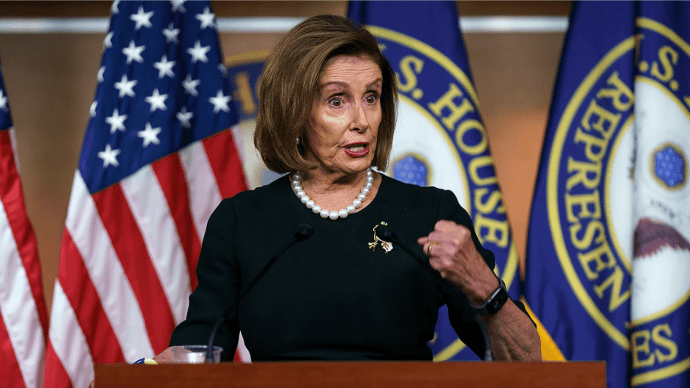
On August 2, the Speaker of the US House of Representatives, Nancy Pelosi, made an unannounced stop in Taiwan. This trip was made despite concerted warnings on the part of China that her visit would “lead to egregious political impact,” and that the Chinese military would “not sit idly by” if Pelosi landed in Taipei. The visit of Pelosi, number two in the line of succession to the Presidency of the United States, is a deliberately provocative move which appears to have been done independent of coordination with the State Department, the Department of Defense, or the White House.
I, together with other former US intelligence and national security officials, had advised President Biden to curtail her visit out of concern that it would set in motion events which could result in a Chinese invasion of Taiwan and direct US-Chinese military confrontation. The White House refused to interfere with what it deemed the operation of a separate branch of government.
There can be little doubt that China did everything in its power short of shooting Pelosi’s plane down to dissuade the Speaker of the House to forgo her Taiwan visit. From the standpoint of national credibility, China literally put it all on the line. For China to do nothing in the face of what is an obvious provocation on the part of the US, through Pelosi, is not a probable outcome.
The question now is what will China do? The current diplomacy card has, for all intents and purposes, been exhausted. While China has imposed certain economic sanctions on Taiwan, the reality is the sanctions card, as wielded by China, is insufficient to the task of responding to the Pelosi provocation.
This leaves a military response.
China has already engaged in an unprecedented mobilization of military resources, by some accounts assembling more than 40 brigades, along with significant air defense and ballistic missile forces, hundreds of aircraft, and scores of ships. By rough calculation, this amounts to some 250,000 troops, and it doesn’t appear as if the mobilization is complete. China has announced that it will be holding live fire exercises around the periphery of Taiwan, including some that encroach on what Taiwan considers to be its sovereign space, running from August 4, the day after Pelosi’s departure from Taiwan, through August 7.
There is considerable cost, both in terms of fiscal resources and political capital, attached to military exercises of this scale during times of crisis. By mobilizing this amount of military resources, China has created a “use it or lose it” situation, where the military viability of the assembled force dissipates over time. The key question that needs to be answered is will China be satisfied with simply sending a signal to Taiwan and return its forces to their respective barracks once the exercises conclude, or if the Chinese government has determined that a red line has been crossed, and as such orders its military to transition from a live fire exercise to an actual invasion.
The answer to this question may very well rest with any parallel diplomatic track China may establish with both Taiwan and the US. If both Taiwan and the US can provide meaningful reassurances that Pelosi’s visit was not reflective of current US and Taiwan policy, there may be a possibility for China to be satisfied with simply flexing its muscle.
However, the Pelosi visit is itself a byproduct of a policy trend in both the US and Taiwan built on the notion of Taiwanese independence. If this perception cannot be altered, then China is bound through its Constitution to take measures consistent with preserving Chinese sovereignty over Taiwan. This, of course, would mean war.
Let there be no doubt—Nancy Pelosi, by landing in Taiwan, tied the bell to the tiger. It is now up to Joe Biden to take it off.
The question now is whether the tiger will cooperate.
US asks Argentina to confiscate aircraft linked to Iran
MEMO | August 3, 2022
The US Department of Justice said on Tuesday that it has asked the government in Buenos Aires for permission to seize an Iranian plane that was sold to new owners in Venezuela but is being held in Argentina on suspicion of being linked to international terrorist groups.
The unannounced arrival of the plane in Argentina on 8 June raised concerns within the Argentinian government about its relations with Iran, Venezuela and companies that the US has imposed sanctions on. The Justice Department said that the seizure request followed the disclosure of a warrant in the District Court for the District of Columbia dated 19 July to take the aircraft for violating export control laws.
According to the department, the US-made Boeing 747-300 is under sanctions because Iran’s Mahan Air sale to Emtrasur last year violated US export laws. Both companies are subject to US sanctions over their alleged cooperation with terrorist organisations.
Assistant Attorney General Matthew Olsen of the Justice Department’s National Security Division said that, “The department will not tolerate transactions that violate our sanctions and export laws.” Mahan Air faces sanctions for its ties to Iran’s Islamic Revolutionary Guard Corps’ Quds Force, which the US has listed as a terrorist organisation.
There were 14 Venezuelans and five Iranians travelling on the aircraft when it landed in Buenos Aires. Seven of the passengers are still being held by the Argentinian authorities.
OPEC+ approves tiny oil output rise in rebuff to Biden
MEMO | August 3, 2022
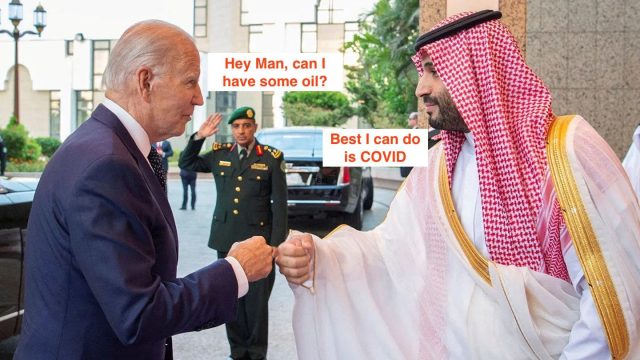
OPEC+ is set to raise its oil output goal by 100,000 barrels per day, an amount analysts said was an insult to US President Joe Biden after his trip to Saudi Arabia to ask the producer group’s leader to pump more to help the United States and the global economy, Reuters reports.
The increase, equivalent to 86 seconds of daily global oil demand, follows weeks of speculation that Biden’s trip to the Middle East and Washington’s clearance of missile defence system sales to Riyadh and the United Arab Emirates will bring more oil to the world market.
“That is so little as to be meaningless. From a physical standpoint, it is a marginal blip. As a political gesture, it is almost insulting,” said Raad Alkadiri, Managing Director for Energy, Climate and Sustainability at Eurasia Group.
The increase of 100,000 bpd will be one of the smallest since OPEC quotas were introduced in 1982, OPEC data shows.
The Organisation of the Petroleum Exporting Countries and its allies, led by Russia, a group known as OPEC+ that formed in 2017, had been increasing production by about 430,000-650,000 bpd a month, as they unwound record supply cuts introduced when pandemic lockdowns choked off demand.
They had, however, struggled to meet full targets as most members have exhausted their output potential following years of under-investment in new capacity.
Combined with disruption linked to Russia’s invasion of Ukraine in February, the lack of spare supply has driven up energy markets and spurred inflation.
With US inflation around 40-year highs and Biden’s approval ratings under threat unless gasoline prices fall, the President travelled to Riyadh last month to mend ties with Saudi Arabia, which collapsed after the murder of journalist, Jamal Khashoggi, four years ago.
Saudi de-facto ruler, Crown Prince Mohammed bin Salman, who Western intelligence accused of being behind the Khashoggi murder – which he denies – also travelled to France last month as part of efforts to rebuild ties with the West.
On Tuesday, Washington approved $5.3 billion worth of defensive missile system sales to the UAE and Saudi Arabia, but it has yet to roll back its ban on offensive weapon sales to Riyadh.
OPEC+, which will next meet on 5 September, said in a statement that limited spare capacity requires it to be used with great caution in response to severe supply disruptions.
It also said a chronic lack of investment in the oil sector will impact adequate supply to meet growing demand beyond 2023.
Sources within OPEC+, speaking on condition of anonymity, also cited a need for cooperation with Russia as part of the wider OPEC+ group.
“(This decision) is to calm down the United States. And not too big that it upsets Russia,” said an OPEC+ source.
Benchmark Brent oil futures jumped by around $2 per barrel after OPEC’s decision to trade close to $101 per barrel.
Shortly after Russia’s invasion of Ukraine, which Moscow terms a “special military operation”, oil prices rose to their highest in 14 years.
By September, OPEC+ was meant to have wound down all of the record production cuts it implemented in 2020 in response to the impact of the pandemic.
But, by June, OPEC+ production was almost 3 million barrels per day below its quotas as sanctions on some members and low investment by others crippled its ability to boost output.
Only Saudi Arabia and the UAE are believed to have some spare capacity.
French President, Emmanuel Macron, has said he had been told that Saudi Arabia and the UAE had very limited ability to increase oil production.
Taiwan accuses Beijing of air and sea blockade
Samizdat | August 3, 2022
 Taiwanese defense officials have accused Beijing of seeking to “invade” the island’s territorial waters and airspace, after China announced a series of “targeted military operations” in response to US House Speaker Nancy Pelosi’s visit to Taipei.
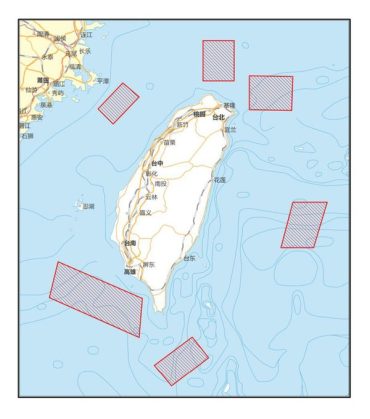
Military officials claimed on Wednesday that several exclusion zones around the island, where China intends to conduct live-fire drills and other military exercises later this week, overlap with “Taiwan’s territorial space.” According to the Guardian, a military spokesman accused Beijing of violating “UN rules” with what would amount to a de facto “blockade of Taiwan’s air and sea space.”
Accusing Beijing of waging “psychological warfare on Taiwan and citizens,” Taipei vowed to “firmly defend its national security” and boost its military preparedness to the highest level, while adhering to the “principle of not asking for a war.”
Pelosi arrived in Taipei late on Tuesday despite repeated warnings from Beijing against attempting to visit territory that it regards as an integral part of China.
“The Chinese People’s Liberation Army is on high alert and will launch a series of targeted military operations to counter this, resolutely defend national sovereignty and territorial integrity, and resolutely thwart external interference and ‘Taiwan independence’ separatist attempts,” China’s Defense Ministry spokesman Wu Qian said on Tuesday night, without providing further detail.
In a separate statement, China’s Eastern Theater Command announced joint military drills off Taiwan, live-firing in the Taiwan Strait and missile test-launches in the sea east of Taiwan. According to a map shared by state media, the military drills, set to begin on Thursday, after Pelosi’s departure, will take place in six large maritime areas and their airspace all around Taiwan.
West behind Kosovo escalation – Russian envoy
Samizdat | August 2, 2022
The smoldering conflict between Serbia and the breakaway republic of Kosovo is beneficial for the West, Russia’s envoy in Belgrade Alexander Botsan-Kharchenko proclaimed on Tuesday.
Appearing on Russian TV, the ambassador suggested that Pristina was behind the recent escalation between Serbia and Kosovo but insisted that the incident was ultimately orchestrated by the US and the EU, who aim to stage a provocation in Kosovo that would put Serbia “on its knees” and pressure it into supporting anti-Russia sanctions.
“In this case, the EU, just like it was in the case of Ukraine and in the case of anti-Russian sanctions, is following instructions from Washington, contrary to its own interests. Washington benefits from a smoldering conflict. It benefits from keeping the situation on the brink of collapse,” said Botsan-Kharchenko.
The Russian ambassador’s comments come after tensions flared over the weekend on the border between Serbia and its breakaway province, officially called the Autonomous Province of Kosovo and Metohija in the Serbian constitution, which received recognition by several Western powers in 2008.
The government in Kosovo planned to ban the use of Serbian-issued license plates and ID papers starting from August 1, and was to use its police force to enforce the measure. On Sunday, Serbs in the north of the breakaway province set up roadblocks and rang alarm bells as heavily armed special police took control over two administrative crossings with Serbia, preparing to implement the order by Pristina.
The situation received a temporary resolution after Washington called on Kosovo officials to postpone the implementation of the controversial law until September 1. Pristina agreed, on condition that Serbia remove barricades from the de facto border.
Serbian President Aleksandar Vucic has said that he hopes for tensions to ease and promised that Belgrade would do everything within its power to preserve the peace through compromise.
NATO occupied Kosovo in 1999, after a 78-day air war against what was then Yugoslavia. The province declared independence in 2008, with Western support. While the US and most of its allies have recognized it, Serbia, Russia, China and the UN states in general have not.
China to speed up Taiwan reunification process with comprehensive action
By Yang Sheng | Global Times | August 2, 2022
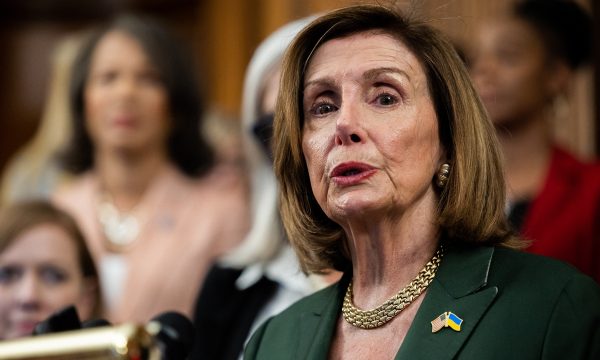
US House Speaker Nancy Pelosi is expected to arrive on the island of Taiwan on Tuesday night according to foreign media reports, with rising concerns and opposition over her trip within the island and increasing military activities by the Chinese mainland, the Taiwan authorities and the US military in the region. Analysts from both sides of the Taiwan Straits said this risky move will totally change the situation in the region, while the mainland will more actively dominate and speed up the reunification process with comprehensive measures including military and political actions, and these actions will let the US and the secessionist Democratic Progressive Party (DPP) authorities feel the pain.
There are many options on the table for China to speed up the reunification process. These could include striking Taiwan military targets, just as the PLA did in the previous Taiwan Straits crisis, pushing new legislation for national reunification, sending military aircraft and vessels to enter the island’s “airspace” and “water areas” controlled by the Taiwan authorities and ending the tacit cease-fire with the Taiwan military.
Whether Pelosi can make her trip to Taiwan happen or not, there is no reason for China to be nervous, because such a political show will not change the overwhelming advantages, especially the military one, held by the mainland against the Taiwan authorities and the US in the region. Nor will the trip provide any possibility of “Taiwan independence,” and it cannot change the unshakable hard fact that Taiwan is part of China, said experts, noting that what China needs to do is to use this incident to maximize its advantage and keep pushing the reunification process.
Hua Chunying, a spokesperson of the Ministry of Foreign Affairs, said at a routine press conference on Tuesday that “it was the US who takes the provocative action first and has caused the escalation of Taiwan Straits tension. The US should and must take full responsibility for this.”
Military preparations
Both aircraft carriers of the PLA Navy have reportedly moved out from their homeports respectively amid Pelosi’s possible visit to the island of Taiwan, which media reported could happen on Tuesday evening.
The aircraft carrier Liaoning on Sunday embarked on a voyage from its homeport in Qingdao, East China’s Shandong Province, and the aircraft carrier Shandong on Monday set out from its homeport in Sanya, South China’s Hainan Province, accompanied by a Type 075 amphibious assault ship, media on the island of Taiwan reported on Tuesday.
Foreign commercial satellite imageries obtained by the Global Times on Tuesday also show that the aircraft carrier Liaoning was not in its homeport on Sunday, a Type 075 amphibious assault ship was sailing in the South China Sea on Sunday, and the aircraft carrier Shandong was sailing in the South China Sea on Monday.
Some analysts said that as Pelosi’s aircraft may enter Taiwan’s self-claimed “air defense identification zone” along the east coast of Taiwan after departing Malaysia, the Chinese mainland vessels appeared earlier to get into position and are closely monitoring Pelosi’s route.
A military expert who asked for anonymity told the Global Times that with the participation of the aircraft carriers, the PLA could conduct more effective intercept operations, because it will take longer for fighter jets to be launched from airports in the mainland to arrive in the areas to the east or south of Taiwan island, while the shipboard aircraft will be more flexible as long as the fleets have arrived in the relevant region.
Citing an anonymous source, Reuters reported on Tuesday that several PLA aircraft flew close to the “median line” of the Taiwan Straits on Tuesday morning, and Taiwan-based outlets said two Chinese mainland guided-missile frigates and a survey ship sailed from north to south through Yonaguni Island waters, heading east of Taiwan island.
As of Tuesday noon, flights at airports in several cities in Fujian Province, including Xiamen, Fuzhou and Quanzhou, have been partially canceled, according to Xiamen Airlines, citing air traffic control.
US military forces are also taking actions. Four US warships, including an aircraft carrier, were positioned in waters east of the island on “routine” deployments, Reuters reported on Tuesday.
Aircraft carrier the USS Ronald Reagan (CVN-76) and big deck amphibious ship USS Tripoli (LHA-7), with Marine F-35B Lighting II Joint Strike Fighters embarked, are operating in the vicinity of Taiwan, on the edge of the South China Sea, according to the August 1 edition of the USNI News Fleet and Marine Tracker.
A Pentagon spokesperson told USNI News on Monday that the ships were operating normally in the region and would not detail force protection measures for the visit of the third-highest ranking US official to the region.
Concerns within the island
But there is still a possibility that Pelosi could eventually land on the island due to complicated reasons, as Taiwan media also reported that due to security concerns, the DPP authorities once withdrew the “invitation” to Pelosi, but due to Pelosi’s pressure, the authorities eventually compromised and make arrangement for her trip.
Many Taiwan web users complained how Pelosi could be so arrogant and bossy, to force Taiwan to play in a show with her. “After the show you will go back to the US, but what about the mess you leave here in Taiwan?” said a web user.
Hung Hsiu-chu, former chairwoman of the KMT, the major opposition party within the island, said there are two different views on Pelosi’s trip to Taiwan – one group do not want Pelosi to come and do not know why she would come as this could only add conflicts for the Chinese mainland, the US and Taiwan. Another group think that if Pelosi wants to support Taiwan secessionism, she could let the House pass an act to recognize “Taiwan independence,” so why would she come to the island to create such a big mess?
Some also consider that the US is tolerating Pelosi’s risky move to test the bottom-line set by the Chinese mainland, Hung said, noting that “God bless, hopefully nothing bad will happen.”
Taiwan Taoyuan International Airport received a threatening letter on Tuesday morning which claimed that “three explosive devices have been placed at the airport to stop the US House Speaker’s visit to Taiwan,” media reported. The New Party, a pro-reunification political party in the island, and some civil society groups plan to protest at the Grand Hyatt Hotel in Taipei where it is believed Pelosi will stay if she visits the island, according to media reports.
The DPP authorities and the many senior politicians are keeping silent without any high-profile preparation for welcoming Pelosi, as analysts said this reflects the high concerns within the island. Pelosi’s visit is creating great troubles but due to the weak position of the DPP authorities in front of the US, the island must cooperate and has no room to make independent decisions.
What the mainland can do
Chinese analysts said the struggle between China and the US at this point is about dignity and concrete strategic interests, but the latter is much more important, so China will not merely focus on playing a game of chicken and hawk with Pelosi, as changing the whole situation of the region is much more significant and valuable.
The Chinese mainland really knows the importance of “strategic patience,” just like when many people expected that China would crack down on the Hong Kong turmoil in 2019 with force when rioters attacked the central government’s liaison office, but the facts prove that China did not act in that way but eventually realized a land-slide victory to reinforce its governance in Hong Kong. “So this time, China will teach the US a lesson again, as it will use US mistakes to comprehensively change the Taiwan Straits situation, just as it did in Hong Kong in recent years,” said a Beijing-based senior expert on international relations who asked for anonymity.
Wang Jiangyu, a professor of law at the City University in Hong Kong, said China will use this incident to strengthen its sovereignty claim over Taiwan. “For instance, sending squadrons of military aircraft to enter the ‘airspace’ of Taiwan, or sending military vessels to enter the ‘water areas’ controlled by the Taiwan military,” he said.
These are unprecedented acts of declaring sovereignty over Taiwan, and if China can send its signal of determination to effectively contain the provocations made by the US and other Western countries, the situation will be in favor of the Chinese side in the future, Wang said.
Lü Xiang, a research fellow at the Chinese Academy of Social Sciences, told the Global Times on Tuesday that China’s reaction will not be just a momentary action but will consider the whole security mechanism of Taiwan.
“The Chinese mainland could exercise its sovereignty and rights of control over the airspace on the island and adjacent sea areas around the island, to make sure there will not be another case like ‘Pelosi’s visit’ that could happen again, and to better safeguard national sovereignty,” he said.
Song Zhongping, a Chinese military expert and TV commentator, said based on the experience of the previous Taiwan Straits crisis, the PLA will strike Taiwan military targets but will not directly fire at US targets, so it is possible that the PLA will strike some Taiwan military targets this time as well, and the mainland could also consider speeding up legislation for a national reunification law and even publish a timetable for reunification which will impose real pressure on the US and Taiwan authorities.
Russia would help Serbia if conflict were to break out – senator
Samizdat | August 1, 2022
If Serbia-Kosovo tensions spiral into an outright conflict, Moscow is ready to assist Belgrade without playing a direct role, a Russian senator has said. The two sides clashed on Sunday, with demonstrators building barricades and unknown gunmen reportedly firing on Kosovo police.
“It is very dangerous, it is the center of Europe, and everything can end in a very sad way, because NATO forces are stationed there (in Kosovo),” Russian Federation Council member Vladimir Dzhabarov said in an interview with RIA Novosti news agency on Monday.
According to the lawmaker, the situation “may end in an armed conflict, and as soon as NATO countries get in there, of course, there is a danger that other countries that are allies of Serbia will be drawn in.”
His remarks were in response to a feud between Serbia and its breakaway province, officially called the Autonomous Province of Kosovo and Metohija in the Serbian constitution, which received recognition by several Western powers in 2008.
The government in Kosovo planned to ban the use of Serbian-issued license plates and ID papers starting from August 1, and to prohibit entry for anyone using Serbian-issued plates or documents, while also refusing to print temporary papers for travelers.
Belgrade officials have called it an attack on Kosovo’s Serb minority, and President Aleksandar Vucic accused Pristina of violating the rights of local Serbs, who “will not suffer any more atrocities.” While offering a chance for peace, he warned on Sunday that his government would not sit idly by if Serbs were targeted.
Kosovo has denied a crackdown on Serbs and accused Belgrade officials of undermining “the rule of law” on their territory. Prime Minister Albin Kurti has accused local Serbs of opening fire on police, and claimed his government is facing “Serbian national-chauvinism” and “misinformation” from Belgrade.
Tensions flared on Sunday on the Kosovo-Serbia border. Serbs in the north of the breakaway province set up roadblocks and rang alarm bells, as heavily armed special police under Pristina’s authority took control of two administrative crossings with Serbia.
After a discussion with Washington, Kosovo officials decided to postpone the implementation of the controversial law for 30 days on the condition that Serbia remove barricades from the de facto border.
Why are US road accidents sky-rocketing?

Free West Media | July 31, 2022
There has been a massive increase in traffic accidents in the United States since last year. Based on its observations, the National Highway Traffic Safety Administration (NHTSA) predicted some time ago that there would be a statistical increase in traffic deaths in at least 44 (out of 50) US states by 2021.
In fact, the number of fatalities in multi-vehicle accidents in cities and on urban roads in the United States increased by 16 percent from 2020. For people over the age of 65, the number of traffic deaths increased by 14 percent. The number of fatal pedestrian accidents increased by 13 percent. Even the number of fatalities on motorcycles increased by nine percent, and the number of fatalities on cyclists increased by five percent.
The states with the highest number of traffic-related fatalities are California, Texas, Florida and Washington DC.
NHTSA’s numbers represent the worst accident statistics since 2005 and the largest one-year percentage increase in the history of the Fatality Analysis Reporting System.
In absolute numbers: 43,000 Americans died on US roads in 2021 – the highest level in 16 years. The number of car accidents increased by ten percent in 2021 compared to 2020 and is still increasing. For 2022, the forecast is that 50,000 Americans will die in car accidents.
The NHTSA appears disinterested to find out why the rising number of accidents has reached a 16-year high coinciding with the “pandemic”. In contrast, the Governors Highway Safety Association (GHSA) blamed speeding, alcohol, drugs and distracted driving for the massive increase in road fatalities.
Some 270 million Americans have been vaccinated against Covid-19 with mRNA vaccines in the last two years. Already, behind closed doors, calls are being made for more autopsies to be carried out on the alleged “accident” victims. In any case, the increase in numbers correlates strikingly with the increasing numbers of collapsing athletes, public figures and, more recently, tourists worldwide.
China Unveils ‘Aircraft Carrier Killer’ Missile Amid Tensions Over Pelosi’s Indo-Pacific Trip
Samizdat – 31.07.2022
Beijing has for the first time unveiled a video featuring the launch of what appears to be a DF-17 hypersonic missile, which Chinese experts quoted by state media have described as an “aircraft carrier killer”.
The video, titled ‘The capabilities of the Chinese troops shown in 81 seconds’ was broadcast on China Central Television (CCTV) on Sunday, amid the ongoing tensions with the US over the possible visit to Taiwan of House of Representatives’ Speaker Nancy Pelosi.
The video was published a day before the 95th anniversary of the founding of the People’s Liberation Army (PLA).
A military expert quoted by Global Times said that potential enemies would have a “hard time” locating the new missile, which can be launched any time and anywhere.
Military observers have also said it is “almost impossible” to “intercept” the missile since it uses an “unpredictable trajectory”.
Further, experts have reckoned that the South China Sea, the Taiwan Strait and the north-east Asian region are located within “striking range” of the missile, which can also hit slow-moving targets such as aircraft carriers.
The video surfaced a day after the PLA held “live-fire drills” near the Pingtan Islands in the Taiwan Strait. The Maritime Safety Administration warned ships to avoid the area from 8am to 9pm on Saturday. Beijing also conducted naval drills in the South China Sea on 29 and 30 July.
The US Navy this week confirmed that an aircraft carrier, the USS Ronald Reagan, and a strike group is at present operating in the South China Sea amid tensions over Pelosi’s trip to the region.
Beijing has issued several warnings over the past week saying that Washington would “bear the consequences” if Pelosi, who is now on her trip around the Indo-Pacific, visits Taiwan which Chinese authorities say would violate the ‘One China Policy’.
The possible visit has been attracting attention since mid-July when the Financial Times reported the alleged plans of the US House Speaker.
On Sunday, Pelosi shared her itinerary to the Indo-Pacific, without mentioning Taiwan among the places she was going to visit.
Chinese President Xi Jinping warned US President Joe Biden against “playing with fire” over Taiwan during a telephone call lasting more than two hours on 28 July.
“Those who play with fire will perish by it. It is hoped that the US will be clear-eyed about this,” Xi said, adding that Beijing would “resolutely” defend China’s territorial integrity and sovereignty.
As part of the One China Policy, Beijing opposes all forms of official contact between Taiwan and foreign governments and has warned of “resolute measures” should Pelosi visit the self-governed island.
China vows to defend its ‘territorial integrity’
Samizdat | July 31, 2022
The Chinese Air Force will circle Taiwan with fighter jets if necessary to “safeguard national sovereignty and territorial integrity,” a spokesman said on Sunday. US House Speaker Nancy Pelosi is heading to the region, but it is not yet clear if she will go ahead with a controversial visit to Taiwan, which Beijing firmly opposes.
Speaking at a military airshow on Sunday, Air force spokesman Shen Jinke said that China has many kinds of aircraft capable of circling “this precious island of our motherland.”
China’s Air Force “has the firm will, full confidence, and sufficient capability to defend national sovereignty and territorial integrity,” Shen added, according to a Reuters report citing Chinese state media.
Shen’s statement came as US House Speaker Nancy Pelosi departed for Asia, announcing on Sunday that she would stop in Singapore, Malaysia, South Korea, and Japan for “high-level meetings.” Pelosi had planned on visiting Taiwan during this trip, but stopped short of confirming or denying whether she would go through with this plan in recent days.
Beijing considers Taiwan, which has been ruled by a separate government since the late 1940s, to be part of its territory, and opposes high-level diplomatic recognition of the island’s authorities. Washington officially recognizes, but does not endorse, Beijing’s sovereignty over the island.
Should Pelosi go through with her visit, she would be the first speaker of the House of Representatives to do so since Newt Gingrich made the trip in 1997.
Speaking to Biden by phone on Thursday, Chinese President Xi Jinping warned the US leader not to “play with fire,” cautioning him that a visit by Pelosi would be perceived as a challenge to the country’s national sovereignty and territorial integrity. Biden himself said last week that a visit by the speaker would be “not a good idea,” but did not directly advise her against going.
Featured Video

Iran FM Araghchi: “Hormuz Will No Longer Be the Same”
or go to
Aletho News Archives – Video-Images
From the Archives
Sam Husseini: The entire US establishment helped lie their way into the Iraq war
By Slava Zilber | American Herald Tribune | October 14, 2019
Sam Husseini is a senior analyst with the Institute for Public Accuracy, independent journalist and contributor to The Nation and FAIR.
Slava Zilber: Sam, three years ago, you appeared on Talk Nation Radio with David Swanson and spoke about the case of the GCHQ whistleblower Katharine Gun. You pointed out that the people involved in the spying on the UN and the people authorizing the Iraq War were not held accountable:
“Virtually everybody who went along with the war, whether it is Kerry or Clinton, of course, the Bush administration themselves has falsified their own records in terms of why, what they did, when they did, why they did it, to the extent that they’ve been scrutinised at all.”
You also address it in a recent article. And recently, Joe Biden has been lying about his position on the Iraq War. How can such an important issue escape meaningful scrutiny? … continue
Blog Roll
 Aletho News
- Trump peddles fresh falsehoods, claims Iran ‘started the war’ as US aggression drags on
- Ukraine quagmire? Yes, but it’s for NATO, not Russia
- US intelligence hypes Chinese, Russian space threats while accelerating its own military buildup in orbit
- Iran FM Araghchi: “Hormuz Will No Longer Be the Same”
- EU facing trillion-euro debt hole while seeking more cash for Kiev
- How US, Europe, Persian Gulf states exhausted missile stockpiles, splurged billions to defend Israel
- Up in arms… Koreans reject U.S. empire’s plan to make South Korea the next Ukraine
- Iran, Turkey, Pakistan, Saudi Arabia could advance region-led security framework in Tehran: FM spox
- Netizens condemn Japanese drama for projecting Japan’s wartime atrocities onto Chinese characters
- Racist Seinfeld Dances for Joy as Bibi Unveils His New Map
- If Americans Knew
- An error has occurred; the feed is probably down. Try again later.
- No Tricks Zone
- Sudden Stratospheric Warming, Powerful El Niño Combination May Lead To Extreme Europe Cold, Energy Crisis!
- Two New Studies Find Thwaites Glacier Melt Cannot Be Driven By Human Activity Or A Warming Ocean
- E-Cars Reduce CO2 Emissions By Only 41% Compared To Internal Combustion Engine Vehicles
- Predictions Made By Renowned Climate Professor Over Past Decades Have Been Proven To Be Poor
- New Study Suggests Large Regions Of The Pacific Ocean Have Been Cooling For The Last 80 Years
- Germany’s Green Energy Debacle: High Energy Costs Force Kahla Porzellan to Close After 182 Years!
- New Study: 50 Years Of The Most Aggressive ‘Net Zero’ Policies Can Only Affect The Global Climate By 0.03°C
- US September “Heat” Was No Record…Many Records Set Decades Ago
- Latest European Green Energy Debacle; Portugal’s Largest Flagship Solar Park Insolvent!
- Green Energy Debacle: German Expert Professor Fritz Vahrenholt Warns Of Severe Economic And Social Consequences

