Russia Invites UN, Red Cross to Probe Shelling of Elenovka Pre-Trial Detention Center
Samizdat – 30.07.2022
MOSCOW – Russia has invited experts from the United Nations and the Red Cross to participate in the investigation into the deadly shelling of the pre-trial detention center in the Donetsk People’s Republic (DPR) town of Elenovka, the Russian Defense Ministry said.
“In order to conduct an objective investigation of the attack on the pre-trial detention center in Elenovka, which led to the death of a large number of Ukrainian prisoners of war, the Russian Federation has officially invited experts from the UN and the International Committee of the Red Cross,” the defense ministry said on Sunday.
The Elenovka detention center, hosting Ukrainian prisoners of war, was shelled by Ukrainian troops with US-supplied High Mobility Artillery Rocket Systems (HIMARS) on Friday morning. According to the DPR territorial defense, the death toll from the strike has reached 53, and the number of wounded has surpassed 130.
The International Committee of the Red Cross (ICRC) offered its support in the evacuation of the wounded on Friday. UN spokesman Farhan Haq said on Saturday that the United Nations was ready to conduct an investigation into the Elenovka shelling.
DPR head Denis Pushilin said on Friday that the shelling of the detention facility was premeditated and launched because the militants imprisoned there, particularly those from the nationalist Azov battalion, had started to give testimonies implicating the Kiev regime.
Shouldn’t Biden be talking directly to Putin?
BY M. K. BHADRAKUMAR | INDIAN PUNCHLINE | JULY 30, 2022
No sooner than Russian Foreign Minister Sergey Lavrov returned to Moscow after the SCO ministerial in Tashkent, US Secretary of State Antony Blinken’s pending request for a conversation was scheduled late Friday evening. This has been their first conversation since the war began in Ukraine in February.
The Russian readout touches on Russia’s special military operations. Lavrov emphasised the inevitability that the “goals and tasks will be fully achieved.” Second, Lavrov told Blinken that the US’ continued arming of Ukraine with weapons “is only prolonging the agony of the Kiev regime by dragging out the conflict and increasing the number of victims.”
Lavrov also said Russia will continue its “consistent efforts to restore peaceful life on the territories that it is liberating.” It implies that the integration of Kherson, Zoporozhia, Kharkiv, etc. is an inexorable process.
Fourth, Lavrov focused on global food security issues and the grain deal and regretted that US is yet to deliver on “promises to make exemptions for Russian food shipments,” and the West is “exploiting the problem to advance its geopolitical interests, which is unacceptable.”
Finally, on prisoner exchange, Lavrov “strongly advised” Blinken that this is not an amateurish issue and “dubious media leaks” should be avoided.
For a conversation after several months, it was icy. Blinken is taking his time to issue a readout. But he was evasive on the issue of prisoner exchange, adding, “I’m not going to characterise his (Lavrov’s) response, and I can’t give you an assessment of whether I think things are any more or less likely.”
Equally, on the grain deal, Blinken made no reference to the reciprocal lifting of restrictions on Russia’s export of grains and fertiliser. His interest was only on Russia making good on loosening its naval blockade and allowing grain shipments to leave Ukraine’s Black Sea ports.
There is a hump appearing here, for sure. Zelensky’s trip to the Black Sea port of Chernomorsk near Odessa accompanied by G7 ambassadors suggests that Washington is switching back to the propaganda mode that Russia is impeding Ukraine’s exports.
The New York Times has noted, “Even if grain ships do get underway, danger, uncertainty and deep mistrust will hang over the effort, and major obstacles to carrying out the agreement remain.”
Such conversations as yesterday’s suffer from being totally opaque. Blinken can’t even articulate the substantive issues bothering Biden —the cracks in the western unity.
Curiously, the Biden faces two crisis situations with explosive potential at the moment — in Ukraine and over Taiwan. Indeed, it is crystal clear that both have been precipitated by Washington. Yet, the manner in which Biden is handling them couldn’t be anymore dissimilar.
In the case of Taiwan, Biden didn’t hesitate to call up Chinese President Xi Jinping to calm the tensions. But he has chosen a different path to communicate with President Vladimir Putin.
For sure, into the sixth month of the conflict in Ukraine, Biden has finally decided to bite the bullet and resume high-level contact with Moscow. But he opted to get through to Putin through his state secretary!
The problem here is, although US-China relations are tense, Biden never took it to a personal level. He never used derogatory language to spite Xi Jinping, as he did to Putin repeatedly.
But Blinken too faces a similar predicament. On July 7-8, he avoided shaking hands with Lavrov at the G20 ministerial at Bali and skipped the official banquet because Lavrov was there. But after such churlish behaviour, here he was yesterday seeking out Lavrov!
The State Department reportedly sent out a circular recently to American embassies directing diplomats to dissuade foreign leaders from being photographed with Lavrov, so that Washington’s project to “isolate” Russia gained traction! Lavrov apparently learnt about it from his hosts!
Unsurprisngly, Blinken had to first call a press conference to rationalise publicly his need to talk with someone whom he treated as a “pariah” only 3 weeks ago. Blinken is an intelligent man and senses that Biden is desperate to open a communication channel to the Kremlin. (Whether a Biden-Putin conversation figured in yesterday’s discussion we do not know.)
The point is, after five months of conflict in Ukraine, the Russian economy has not collapsed but is adjusting to a “new normal” in the geopolitical conditions. The Russian currency is doing splendidly well. And there has been no insurrection in Russia. Above all, Russia is winning the war in Ukraine and is gearing up to dictate the terms of peace.
Lavrov must be well aware of the real reasons behind Blinken’s call. First, there is a catastrophic situation that may crack western unity, as the spectre of cutoff in Russian gas supplies threatens European countries. Four European governments have fallen so far.
Everyone understands that it is much more than an energy crisis. As economies start crashing, social and political unrest will follow. There is pervasive disquiet in European capitals. The blame game has begun.
Washington may not be able to salvage the job of European Commission chief Ursula von der Leyen much longer. The European leaders realise that Ursula played them with her personal crusade to punish Russia.
There is a lot of pent-up resentment about Germany, too. Europeans don’t shed tears over Germany’s plight. Berlin’s imposition of harsh austerity programme on its southern neighbours is still painful memory.
Therefore, Ursula’s latest hare-brained scheme to impose a 15% reduction in gas consumption on all EU countries (to bail out Berlin) faces resistance. Truly, there is no alternative to Russian gas and Washington has forgotten its promise to find replacement.
Biden only brought this calamity down on the Europeans. Barack Obama’s private doubt is now public wisdom for Europeans — “Don’t underestimate Joe’s ability to f… things up.”
Lavrov also knows the second reason why Blinken wants to re-engage. The Russian special military operations are making good progress and all indications are that the Zelensky regime is crumbling. Thus, preparations have begun for holding referendums in Kherson and Zoporozhia regions to ascertain the wishes of the people.
Russia has invited applications for citizenship from the residents of Kharkov as well, and ruble currency is being introduced. Putin just approved a 3-year master plan to rebuild Mariupol. The ancient city will soon have bridges, roads and schools that put Washington to shame.
Most important, Biden must be worrying that even if he multiplies by a hundred times Washington’s carve-up of Kosovo as a nation state in 2008, it still wouldn’t match what is steadily unfolding in Ukraine. And Europeans are watching all this — speechless, in disbelief — as territorial boundaries get redrawn in their manicured continent.
There are new facts on the ground since March when Russia and Kiev reached an agreement in Istanbul (which the hawkish Biden team promptly torpedoed by promising the moon to Zelensky.) So much water has flown down the Dnieper since then. Watch the video, below, of Biden’s landmark April 28 war speech
Pelosi’s Trip to Taiwan is Fraught With Risk of Military Escalation
Samizdat – 29.07.2022
House Speaker Nancy Pelosi is planning to travel to Taiwan, an island regarded by Beijing as an inalienable part of the People’s Republic of China (PRC), as a leg of a broader Asia trip. Even though Pelosi has yet to confirm the visit, tensions have escalated sharply between the US and the PRC.
“Remember what happened in 1983? Two days after 241 Marines were blown up in Lebanon, the USA invaded tiny Grenada. Overnight, the previous headlines disappeared. I think we are seeing the same today. NATO is losing badly in Ukraine and it’s going to be a long winter for the West. Pounding its imperial chest with Taiwan is now what the MSM is reporting, much less so Ukraine,” suggests Jeff J. Brown, author of “The China Trilogy,” editor at China Rising Radio Sinoland, and curator of the Bioweapon Truth Commission.
If Pelosi travels to Taiwan, this would be the first time a high-ranking US politician visits the place in 25 years. Last time it was Newt Gingrich, then-speaker of the US House of Representatives, who arrived on the island in 1997, ignoring the Chinese leadership’s discontent.
“I said firmly, ‘We want you to understand, we will defend Taiwan. Period,'” Gingrich told the press at the time, as quoted by The New York Times. However, Clinton administration officials made it clear that Gingrich “was speaking for himself.”
Likewise, it appears that Pelosi’s apparent visit to Taiwan is not in line with the Biden administration’s China policy, argues Francesco Sisci, a Beijing-based China expert, author, and columnist.
“American politics is not set like an omniscient Leviathan,” the China expert says. “The Congress, the Senate, the executive all move according to different agendas which do not often coincide and are in conflict with one another. The issue is that there is a growing anti-Beijing sentiment in America and this has sometimes bursts which aren’t fully sorted out. I believe the visit is an expression of a sentiment, rather than of a clear cut plan.”
According to CNN, Pelosi’s initiative has triggered concerns both in the Biden administration and the Pentagon, with US national security officials “quietly working to convince House Speaker Nancy Pelosi of the risks of her potential trip to Taiwan.” While in 1997 Beijing and Washington managed to solve the dilemma, this time the PRC leadership might opt for a harsher response, CNN and The Guardian have warned.
Washington has been fanning US-Sino tensions for quite a while, starting with Donald Trump’s tariff war against Beijing, which has yet to be halted by Joe Biden. In a candid phone conversation, Chinese President Xi Jinping warned his American counterpart against “playing with fire” over Taiwan and explained that any involvement would ultimately backfire on the US.
“A Chinese general has publicly declared that Pelosi’s visit could entail a military response from Beijing,” Brown says. “China’s Ministry of Foreign Affairs has repeated this. Now, with Xi’s ‘You get burned playing with fire’ metaphor, I think there would be a military response.”
Senior Colonel Tan Kefei, a spokesperson for China’s Ministry of Defense, stated on July 26: “If the US insists on taking its own course, the Chinese military will never sit idly by, and it will definitely take strong actions to thwart any external force’s interference.”
Tan highlighted that Pelosi’s visit to Taiwan would “seriously violate the one-China principle” and “seriously harm China’s sovereignty and territorial integrity, and seriously damage the political foundation of China-US relations.”
Meanwhile, Brown surmises that China’s hypothetical response “might include a declared no-fly zone.” However, there is a “much more elegant option,” according to the author:
“[China could] take over Taiwan’s Kinmen Island, which is only two kilometers from Xiamen, off China’s Fujian Province coast. It would take only a few hours. I do not think Beijing will strike any US targets, unless attacked first.”
The scholar also does not rule out that the Democratic People’s Republic of Korea’s (DPRK) remark, made earlier this week, that Pyongyang is “fully prepared” for any military conflict with the United States is no coincidence.
“Does Biden know that China and nuclear-armed North Korea have had a mutual defense treaty since 1961?” Brown asks rhetorically. “NATO is being bled dry in Ukraine and it is imperial folly, hubris or geopolitical brinkmanship to think it can fight East Asia’s biggest and most powerful military, which is only 200 km from Taiwan.”
For his part, Sisci believes that the PRC could opt for an asymmetrical non-military response. Still, the unfolding crisis is complicated by the fact that Washington is already involved in a confrontation with Russia, raising questions as to whether the US is capable of taking on Moscow and Beijing at once.
“I don’t think that either China or the US wants an escalation,” says Sisci. “The talk between Biden and Xi Jinping was to avoid an escalation.”
Brown also believes that Beijing’s warnings have been heard by Washington.
“Pelosi’s visit to Taiwan has been bandied about by Washington for months now,” he says. “A supposed Covid-19 infection scuttled the first trial balloon. After Biden’s phone call yesterday with Xi, I suspect another American ‘postponement’ is likely to occur. If not, then ‘Katy, bar the door!'”
Play with fire – get burned, China warns US
Samizdat | July 28, 2022
Taiwan is a part of China and the 1.4 billion Chinese will not tolerate any challenges to the country’s national sovereignty and territorial integrity, President Xi Jinping told his US counterpart, Joe Biden, in a phone call on Thursday. Xi’s warning comes amid reports that House Speaker Nancy Pelosi is preparing to visit the island next month, something Beijing has warned her against.
Xi “highlighted that the historical ins and outs of the Taiwan question are crystal clear, and so are the fact and status quo that both sides of the Taiwan Strait belong to one and the same China,” according to Beijing’s readout of Thursday’s call, also noting that Biden was the one who initiated it.
China is firmly opposed to Taiwanese separatism and will not tolerate “independence” for the island “in whatever form,” Xi told Biden, in the first direct call between the two leaders since March 18.
“Those who play with fire will perish by it. It is hoped that the US will be clear-eyed about this.”
According to the readout, Xi also told Biden that the US approach to China as the primary rival, strategic competitor, and a security challenge “would be misperceiving China-US relations and misreading China’s development,” adding that US attempts at “decoupling or severing supply chains in defiance of underlying laws” would not help its economy, but “only make the world economy more vulnerable.”
China and the US need to “uphold the international system centering on the UN and the international order underpinned by international law,” said Xi, who also “reiterated China’s principled position” on the crisis in Ukraine.
The much shorter White House readout of the call did not mention Ukraine or the specifics of economic discussions, instead singling out the issues of “climate change and health security.” It did, however, say that the call was “part of the Biden Administration’s efforts to maintain and deepen lines of communication between the United States and the PRC and responsibly manage our differences and work together where our interests align.”
When it comes to Taiwan, Biden “underscored that the US policy has not changed and that the US strongly opposes unilateral efforts to change the status quo or undermine peace and stability across the Taiwan Strait,” according to the White House.
Tensions between China and the US have escalated in recent weeks, after reports that House Speaker Nancy Pelosi (D-California) intended to take a congressional delegation to Taiwan in August.
Pelosi has neither confirmed nor denied the trip. Asked about it earlier this month, Biden said the US military thought it was “not a good idea right now.”
Since then, however, the Pentagon has reportedly developed a “contingency plan” to send additional ships and fighter jets to the region. Meanwhile, Chinese officials threatened the US with “unbearable consequences” should Pelosi go forward with her visit, and some pundits even advocated attacking Taiwan in response to such a “provocation.”
House Speaker Newt Gingrich visited Taiwan in 1997, but as government officials in Beijing have noted, he was opposition leader at the time, while Pelosi is from the same party as Biden.
Taiwan has been ruled by the nationalist Kuomintang, who found refuge on the island after losing the civil war to the Communists in 1949 and leaving the mainland with US help.
China reinforces bilateral ‘guardrail’ to US
Partisan struggle may ‘bring crisis to Taiwan Straits’
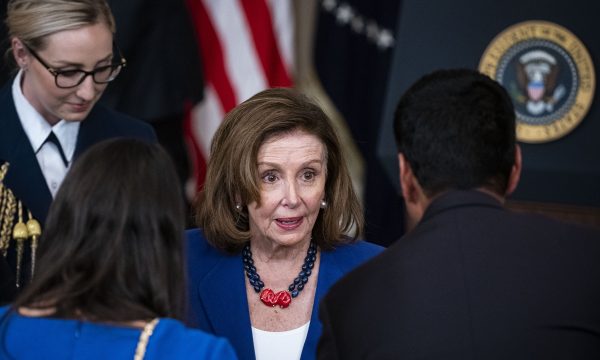
US House Speaker Nancy Pelosi | Photo: VCG
By Yang Sheng and Liu Xuanzun | Global Times | July 28, 2022
US House Speaker Nancy Pelosi’s unconfirmed plan of a trip to the island of Taiwan keeps troubling the US as Pelosi, US President Joe Biden and Democrats are now facing pressure instead of “encouragements” from the Republicans on the matter, with Chinese experts warning that if the US eventually let the partisan struggle and internal politics hijack its strategic decision-making, it would definitely bring a new crisis in the Taiwan Straits.
Republicans knew that Democrats, especially Pelosi and Biden, are now facing a dilemma – visiting the island may prompt China’s military reaction and a serious geopolitical crisis will emerge and Pelosi will be in danger as well. According to analysts, canceling the trip will benefit Republicans, as they can say that Democrats are being too weak and dare not to challenge China. The Biden administration and Pelosi still have a chance to keep the mistake from becoming a much bigger one, and if they – both Democrats and Republicans – underestimate China’s warning, it would be extremely dangerous.
China has issued six warnings in the past few days and has stressed the danger of the US provocations, including those coming from the Ministry of Foreign Affairs, the Ministry of National Defense and the Taiwan Affairs Office of the State Council.
On Tuesday, China’s top political advisor Wang Yang stressed the importance of upholding the one-China principle and the 1992 Consensus, and called for jointly striving to achieve the reunification of the motherland, the Xinhua News Agency reported.
Wang, at a meeting in Beijing marking the 30th anniversary of the 1992 Consensus, said the Taiwan authorities’ denial of the 1992 Consensus, along with certain countries’ connivance and instigation of the secessionists’ provocation, will only plunge Taiwan into catastrophe, and cause misery for Taiwan people.
He warned that no individual and no force should underestimate the resolve, the will, and the ability of the Chinese people to defend their national sovereignty and territorial integrity.
Analysts said the high-profile commemoration for the 1992 Consensus has once again highlighted the bottom line of China on the Taiwan question. Chinese State Councilor and Foreign Minister Wang Yi had already told US State Secretary Antony Blinken at a meeting on the sidelines of the G20 Foreign Ministers’ Meeting in Indonesia that “the three China-US joint communiqués are the most reliable guardrails for the two countries.”
China is telling the US loud and clear where the bilateral “guardrails” are, and the US should keep its promise of not supporting Taiwan secessionism. If Washington doesn’t keep the bilateral ties away from the edge but instead, insists on crashing against the “guardrails,” the consequence will definitely be a deadly disaster, experts warn.
Sick partisan politics
Pelosi’s reported plan has “upended Washington’s political divide,” with prominent Republicans offering encouragement to a political opponent they normally scorn, AP reported on Tuesday.
Pelosi’s supporters include a conservative Republican senator, at least two former Trump administration officials, including former secretary of state Mike Pompeo who is sanctioned by China, and Newt Gingrich, the speaker of a Republican-controlled House under Democratic president Bill Clinton, who made a trip to the island in 1997. They are urging Biden to back the trip even as China threatens a forceful response if she goes.
Some Democrat Congress members also joined the choir of encouraging voices, according to NBC News on Wednesday. This dangerous trend reflects that the US partisan struggle has made politicians in Washington blind to actual risks that could cause geopolitical disaster, while they keep only the midterm elections in sight.
“Republicans’ encouragements to Pelosi are more like setting a trap than real approval. If Pelosi eventually goes to the island and causes a military crisis that the US can’t handle, Republicans can still criticize the Biden administration for the failure to handle a crisis,” said a Beijing-based senior expert on international relations who asked for anonymity.
A Chinese proverb goes that “When the weasel pays respects to the hen, his intentions are certainly not good,” which perfectly describes the Republicans’ push for Pelosi’s possible visit, he noted.
Lü Xiang, a research fellow at the Chinese Academy of Social Sciences, told the Global Times on Wednesday, “Republicans would love to see the Biden administration’s situations, both internal and external, to get as messy as possible, because they want to maximize the advantage to win the upcoming midterm elections.”
Pelosi just made a very big mistake to have made such a plan though she still refuses to confirm or deny it publicly, which could only bring trouble and nothing good for Democrats at the moment, Lü said.
“Maybe before the information got leaked to the media, she had underestimated how serious the consequences would be, and the firm response made by China,” Lü remarked.
The above-quoted anonymous expert stressed that “the Biden administration and Pelosi still have an opportunity to keep the mistake away from worsening into a huge geopolitical crisis, otherwise, if Pelosi gets eventually taken over by the pressures from Republicans, and decides to make the provocative move to visit the island of Taiwan, the US partisan struggle would spark a new round of Taiwan Straits crisis.”
Possibilities and consequences
Pelosi’s plan is a big headache for Biden, and the White House has publicly told media multiple times that Biden is seeking talks with Chinese President Xi Jinping, about which the Chinese side has released no information. Experts say Pelosi’s plan of visiting Taiwan island will definitely worsen the atmosphere and the conditions for possible talks between the two heads of states.
“Biden wants to engage with the Chinese top leader to seek help for the relief of inflation pressure as well as for the management of the competition and differences between the two sides, but when Pelosi, the House speaker who is in the same party as the president, is likely to make an extreme provocation against China on the most sensitive Taiwan question, it’s very unlikely to be conductive to constructive and friendly talks, and the agenda of such an exchange would also be greatly impacted,” Lü noted.
China has set a “very high guardrail” to keep the China-US relations away from falling off a cliff, but now it seems that the US, or some US politicians, are intending to crash through that “guardrail,” Lü said.
Tan Kefei, a spokesperson of China’s Ministry of National Defense, said on Tuesday the Chinese armed forces will by no means sit idly by, on the contrary, they will take strong measures to thwart any external interferences and “Taiwan independence” secessionist attempts, resolutely safeguarding national sovereignty and territorial integrity.
Chinese mainland analysts and experts said that Tan’s remarks indicate that the PLA is fully prepared to respond if Pelosi does visit the island.
The PLA can send fighter jets to intercept Pelosi’s plane if it approaches Taiwan, then escort it and have it landed in the Chinese mainland, another Chinese mainland military expert who requested anonymity told the Global Times on Wednesday.
An alternative is that the PLA can declare air and maritime zones around the island of Taiwan as restriction zones for military exercises, Song Zhongping, a Chinese mainland military expert and TV commentator, told the Global Times on Wednesday.
In addition, the PLA can conduct large-scale military drills around the island of Taiwan, including on the waters between Taiwan island and Japan as well as between Taiwan island and Guam, experts said. The drills should include joint efforts of all PLA service branches, with all combat elements including electronic warfare, missile and long-range rocket strikes, seizing of air superiority and control of sea, amphibious landing, as well as anti-access and area denial against external military interference, they said.
On Monday a TB-001 drone of the PLA made a full circle flight around the island of Taiwan for the first time, media on the island reported on Tuesday, but Taiwan’s defense authority failed to report its activity. This exposed the island’s defense loopholes against drones, which is a great vulnerability the PLA can exploit, analysts said.
Lü noted that no matter what military actions the PLA may take, one thing is for sure, “as the status quo has already been broken by the US’ side due to Pelosi’s visit, China will actively shape a new status quo with comprehensive measures including military actions, aimed at making the best use of the US’ mistakes and at fully taking control of the Taiwan Straits situation to better promote the reunification process in the future.”
Russia’s Vostok 2022 has big messages
BY M. K. BHADRAKUMAR | INDIAN PUNCHLINE | JULY 27, 2022
The announcement by Russian Defence Ministry on Tuesday on Vostok-22 strategic command post exercises during August 30-September 5 gives a big message to the West in political and military terms.
The announcement said, “In addition to the troops (forces) of the Eastern Military District, units of the Airborne Troops, Long Range Aviation and Military Transport Aviation, as well as military contingents from other states, will be involved in these manoeuvres.”
If there is going to be participation by China, it will be highly significant in the present context of global politics, especially in the Far East.
Vostok 2018, held exactly four years ago, was the first time such a massive military exercise was held after the dissolution of the Soviet Union. (At the height of the Cold War in 1981 under Leonid Brezhnev, the Soviet Union held its last Vostok exercise). In the event, Vostok 2018 turned into a Russia-China gun show.
The Russian Federation put more than 300,000 troops in the field—alongside tens of thousands of tanks, helicopters, and weapons of every sort—for a huge war game in Russia’s far-eastern reaches, and invited the Chinese People’s Liberation Army to play along, which it did.
And a whole new groove in international affairs began appearing, signifying that the interests of Russia and China have once again begun to align — this time around, in response to US military power under a pugnacious president, Donald Trump.
On the sidelines of the exercise, Presidents Vladimir Putin and Xi Jinping had a breakfast of blinis together in Vladivostok. It was a powerful signal that Russia no longer saw China as an adversary but as a potential military ally. It was widely noted internationally as heralding a major shift in the co-relation of forces in world politics.
To be sure, any Chinese participation in Vostok 2022 will be similarly subjected to close analysis by Washington and its allies at a time of heightened tension in US-China relations, with Beijing warning last week to take “resolute and strong measures” should the Speaker of the US House of Representatives Nancy Pelosi proceed with reported plans to visit Taiwan.
China has vowed to annex Taiwan by force if necessary, and has advertised that threat by flying warplanes near Taiwanese airspace and holding military exercises based on invasion scenarios. At a meeting in Singapore early July with Chairman, US Joint Chiefs of Staff, the chief of the Joint Staff Department of China’s Central Military Commission Gen. Li Zuocheng had warned that Chinese military would “resolutely safeguard national sovereignty and territorial integrity. If anyone creates a wanton provocation, they will be met with the firm counterattack from the Chinese people.”
However, at the end of the day, Chinese participation in Vostok 2022 will be seen as an expression of solidarity with Russia in the best spirit of the February 4 joint statement by the two leaderships, which states that “Friendship between the two States has no limits, there are no ‘forbidden’ areas of cooperation.”
No matter the usual mantra that the Vostok 2022 is not directed against any third party, its optics will be as a counter to the US pressure on Russia and China. Both Russia and China face new security challenges in the Far East in the recent period — especially, the revival of “militarism” in Japan, NATO’s growing Asia-Pacific posturing, and the belligerence in the US’ provocations over Taiwan.
Tass news agency has reported that the Russian Defence Ministry has proposed certain amendments to Russia’s Federal Law “On territorial waters, territorial sea and the contiguous zone of the Russian Federation”, putting restrictions on the passage of foreign military ships through the Northern Sea Route connecting Europe and East Asia.
The proposed amendment will require foreign military and state ships to sail through the Northern Sea Route without entering ports or naval bases, and, furthermore, seek permission from Russian authorities at least 90 days in advance. The amendment will effectively restrict the use of the shortest sea route to Asia for the western navies operating in the Asia-Pacific region.
Significantly, this Russian move comes in the wake of the NATO’s plans to forge stronger security links between the North Atlantic area and Asia-Pacific countries (Japan, South Korea, Australia and New Zealand) in a coordinated strategy to counter China’s rise.
Equally, the staging of Vostok 2022 comes at a juncture when Russia’s military operations in Ukraine are entering a crucial phase. In a major speech in Moscow on July 7 at a meeting with leaders of the parliament, Putin warned that everyone should understand that Russia “by and large hasn’t started anything seriously yet” in Ukraine.
To be sure, Vostok 2022 flies in the face of western propaganda that Russian military capabilities are steadily weakening due to the conflict in Ukraine. The MOD announcement on Vostok 2022 made it a point to touch on it indirectly.
The MOD statement said, “A number of foreign media are spreading inaccurate information about alleged mobilisation activities. Please note that only a part of the Armed Forces of the Russian Federation is involved in the special military operation, the number of which is sufficient to fulfil all the tasks set by the Supreme Commander-in-Chief.
“Moreover, none of the planned operational and combat training and military-technical and international cooperation activities of the Russian Ministry of Defence have been cancelled and will be provided with the necessary personnel, weapons, military equipment and materials.”
This is only logical, since, following the massive haemorrhage suffered by the Ukrainian military in the past 5-month period, the military balance is now working favourably for the Russian forces. Equally, the Russian military strategy to grind the Ukrainian forces with heavy artillery and missile strikes and the slow pace of the conflict also mean that the operations are sustainable over a prolonged period.
At any rate, given the hostile posturing of the NATO forces all along Russia’s western borders, it is inconceivable that Moscow would have taken risks by heavily committing its forces to the Ukraine operations. Interestingly, Germany’s army chief Lieutenant General Alfons Mais told Handelsblatt newspaper recently in an interview that Russia has “almost inexhaustible” resources.
In the general’s estimation, “With its artillery superiority, the Russian army is apparently working its way forward kilometre by kilometre. This is a war of attrition that will raise the question of how long Ukraine can hold out… The Russian army is getting stronger, and Russia has resources that are almost inexhaustible.”
The focus of Vostok 2022 will be “on the use of groupings of troops (forces) to ensure military security.” It will be staged in 12 different locations spread across the Eastern Military District, one of Russia’s five military districts, with a vast geographical spread of 7 million sq. kilometres, headquartered in Khabarovsk on the Amur river in the Russian Far East near the Russia-China border, and comprises the regions up to Sakhalin Oblast, which includes Kuril Islands.
Black Sea and three musketeers
BY M. K. BHADRAKUMAR | INDIAN PUNCHLINE | JULY 26, 2022
As the conflict in Ukraine slouches toward Odessa, the war gets elevated to the sphere of a romantic adventure. If Alexander Dumas was alive, the idea might have struck him to write a sequel to his Three Musketeers, the historical novel written in 1844, which has heroic, chivalrous swordsmen who fight for justice, highlighting the absurdities of the Ancient Régime in a setting when the debate in France between republicans and monarchists was still fierce.
The absurdity of raking up a non-existent controversy over the Russian missile strike on Odessa on Friday casts Ukrainian President Volodymyr Zelensky for the second time in a lead role with three swashbuckling musketeers — US Secretary of State Antony Blinken, UN Secretary-General António Guterres and EU foreign policy chief Josep Borrell.
The first time was when Zelensky acted in a Russian musical film based on Dumas’ novel, with three beautiful Soviet actresses — Anna Ardova, Ruslana Pysanka and Alyona Sviridova — as musketeers, which was released in Moscow on New Year’s Eve in 2004.
Coming back to time present, on Friday, it was a controversy waiting to happen when Russia fired four high precision Kalibr missiles and destroyed Ukrainian military infrastructure in Odessa Port just a day after the Russia-Ukraine grain deal was signed in Istanbul, which provides for the resumption of grain exports from the region.
Zelensky promptly shouted that the missile strike was a “barbaric” act. And Blinken came on the line to level charges against Russia; Guterres jumped into the fray “unequivocally” condemning the Russian strike; and, Borrell lazily wrote on Tweeter that the missile strike was “particularly reprehensible & again demonstrates Russia’s total disregard for international law & commitments.”
As for the Russians, well, they slept over it — that is, until Sunday, when late in the afternoon, the Defence Ministry in Moscow inserted two tersely-worded sentences into its customary daily bulletin on the day’s operations in Ukraine:
“Attack launched by high-precision long-range sea-based missiles has resulted in the elimination of Ukrainian military ship and a depot of Harpoon anti-ship missiles delivered by USA to the Kiev regime in the seaport of Odessa. The list of neutralised targets also includes the production facilities of an entity specialised in repairing and modernising the fleet of Ukrainian Navy.”
Zelensky soon issued a clarification that the implementation of the grain deal from Odessa Port was not in doubt. Apparently, he hadn’t coordinated with the three musketeers sitting elsewhere who reacted prematurely. Blinken probably did the logical thing by distracting attention from the corruption concerns being revived in the Beltway regarding America’s gravy train to Ukraine.
Fundamentally, the grain deal is an eyesore for the Biden administration, which in the first instance never expected an agreement could be negotiated that requires great flexibility on the Russian military’s side. Even more galling is that the deal is turning out to be a political victory for Russia.
Moscow is getting good publicity over its pragmatism to lift its naval blockade for addressing the global food crisis. But what is not obvious to most people is that the grain deal is also a back-to-back deal which commits the UN to get the restrictions being put by the EU and the US on Russia’s grain and fertiliser exports lifted.
Besides, apart from the big income out of grain and fertiliser exports, there is that unquantifiable goodwill that Moscow earns from so many countries which critically depend on Russian wheat, especially in West Asia and Africa. Evidently, the itch to spoil the party in Moscow was found irresistible by Blinken & Co.
Enter Sergey Lavrov. From Oyo, Republic of the Congo, deep in the heart of Africa, where he was travelling to follow up on the grain deal — Russia is the number 1 grain supplier to Africa — Foreign Minister Lavrov sensed immense potentials in the emergent situation. Lavrov made three points while flying out of Oyo in the direction of Kampala:
- The grain deal contains nothing “to bar us from continuing the special military operation and hit military infrastructure and other military targets. And the United Nations secretariat representatives… confirmed this interpretation of the documents yesterday.” (Guterres was apparently unaware.)
- The missile strike was aimed at “a separate part of the Odessa port, the so-called military part” and, therefore, “there are no obstacles for shipping grain to contractors under the Istanbul agreements and we have created none.” (Indeed, Zelensky himself is acknowledging it.)
- The missile strike was aimed at the depot where the Pentagon’s Harpoon anti-ship missiles were stored. “These missiles were delivered to pose threats to the Russian Black Sea Fleet. Now, they pose no threats.”
What Lavrov didn’t say but would have implied is that the Odessa war theatre has now become “kinetic” and Friday’s attack sets a precedent. The missile strike underscores that Moscow likely anticipated Pentagon’s antics to use the grain deal to shield its deployment of advanced Harpoon missiles in Odessa Port.
Curiously, off Bulgaria, next door to Odessa, on July 14-25, the US took part in a multinational maritime exercise, Breeze 2022, involving 24 warships, cutters, auxiliary vessels, five planes, and four helicopters manned by 1,390 naval personnel from eleven NATO member countries!
The controversy over the missile strike highlights that Russia’s special military operations in Ukraine will remain incomplete and inconclusive until Moscow altogether cuts off the US’ and NATO’s access to Odessa Port and cripples the alliance’s capability in the Black Sea. Obviously, that’s still some way off.
Meanwhile, the great game is accelerating in the Black Sea with Blinken doubling down to woo Azerbaijan. He spoke with President Aliyev on Monday to press Washington’s pending offer “in helping facilitate the opening of regional transportation and communication linkages.” Azerbaijan is the chosen bridgehead for NATO in southern Caucasus. (See my blog Ukraine’s Great Game surfaces in Transcaucasia.)
A Gratuitous Insult in Jeddah
By John Whitbeck | CounterPunch | July 21, 2022
The most quoted words from the speech which President Biden read on July 16 while seated at a table in Jeddah with the leaders of eight autocracies (the six GCC monarchies, Egypt and Jordan) and the interim prime minister of one dysfunctional remnant of American regime change (Iraq) was: “We will not walk away and leave a vacuum to be filled by China, Russia or Iran. And we’ll seek to build on this moment with active, principled American leadership. The United States is not going anywhere.”
In light of all the chaos, death and destruction which the United States has wreaked on the region over the past two decades, many in the region — and even at the table — might have wondered whether this pronouncement should be viewed as a promise or a threat.
More importantly, it is remarkable that whoever wrote these words (presumably Tony Blinken and/or Jake Sullivan) did not grasp how insulting they were to the nine leaders to whom they were, at least formally, addressed and to their countries.
The first clear implication of these words is that the countries of the region do not possess either the capacity or the right to stand on their own feet and determine their own destinies but are destined always to be dominated by some outside greater power — in the recent past, the Ottomans, British and French and more recently the Americans — and that the Americans fully intend to maintain their current position of dominance.
The second clear implication of these words is that the countries of the region are not of interest to the United States for any reason inherent in their peoples, their societies or their histories but purely as pawns on the great geopolitical game board on which the United States competes for power and influence against its own demonized adversaries.
Such is the state of American “diplomacy” today.
In their defense, the speechwriters may not actually have been addressing those words to the people in the room but, rather, through the media, to Americans who were questioning why Biden was making this trip at all, and they may also have assumed that no one in the room would take anything that Biden said seriously.
The words with which Biden ended his speech were no doubt not written in the paper text in his hands: “And God protect our troops.”
These are the ritual words with which Biden concludes virtually all of his political speeches on home territory. When he uttered them at the end of his famous “Putin must go!” speech in Warsaw, they were not inappropriate, since he was promising more war. However, at the end of his speech in Jeddah, in which he was professing to be interested in peace and stability in the region, they were simply bizarre.
Iran nuclear chief: IAEA cameras will remain turned off until JCPOA fully restored
Press TV – July 25, 2022
The head of the Atomic Energy Organization of Iran (AEOI) says monitoring cameras installed by the UN nuclear agency at the Iranian nuclear sites will remain turned off until the 2015 nuclear deal, known as the Joint Comprehensive Plan of Action (JCPOA), is fully restored.
Mohammad Eslami made the remarks on Monday in reaction to recent remarks by Director General of the International Atomic Energy Agency (IAEA) Rafael Grossi.
Eslami said the conclusion of the JCPOA was the final outcome of numerous rounds of negotiations over Iran’s nuclear program.
“However, the West continues to level accusations against Iran on the basis of stolen and alleged documents. The Islamic Republic of Iran agreed to the JCPOA to dispel doubts and build confidence. Iran accepted to restrict its [nuclear] activities to pave the way for confidence building. However, they (the other parties to the deal) did not abide by their commitments,” he said.
“The [IAEA] cameras [which were installed] under the JCPOA were meant to put an end to those [Western] accusations. If those accusations are going to remain in place, there is no more need for the existence of JCPOA cameras,” Iran’s nuclear chief said.
Esalmi added that the IAEA “has removed and sealed the cameras, which are being kept at the [nuclear] facilities [of Iran] until they return to this accord.”
Grossi said in June that Iran has informed the United Nations nuclear watchdog that it is removing 27 surveillance cameras at its nuclear facilities following the Western-drafted anti-Tehran resolution by the agency’s Board of Governors.
“What we have been informed is that 27 cameras… are being removed in Iran,” the IAEA chief said.
Elsewhere in his remarks, Eslami also criticized certain allegations against Iran’s nuclear program, emphasizing that “Tehran has never engaged in any covert and enrichment activities outside the framework [of the JCPOA] and without coordination with the IAEA.”
Iran’s measures to produce heavy water or develop other sections of the country’s nuclear industry infrastructure have been carried out in coordination with the IAEA and are currently under the agency’s supervision, Eslami said.
“No one should have the wrong impression that the IAEA does not currently supervise Iran’s nuclear activities. The IAEA is … conducting its supervision according to the Safeguards Agreement,” the Iranian nuclear chief pointed out.
He added that Iran has turned off the cameras that were not operating based on the Safeguards Agreement, but were related to the JCPOA.
He, however, said Tehran will make new decisions if the parties to the deal return to their obligations as per the JCPOA and Iran is assured that the West would not carry out any mischievous act any more.
During an interview with Spain’s El Pais on Friday, the IAEA chief claimed that Iran’s nuclear program “is advancing at a gallop and we have very little visibility.”
Iran’s nuclear program “has grown enormously, far beyond what it was in 2015. It is a growth that is not only quantitative but qualitative, also with the levels of enrichment.”
“This does not imply that Iran is making a nuclear weapon, but no country that does not have warlike projects enriches at that level, at 60 percent,” Grossi said.
Earlier on Monday, Iran’s Foreign Ministry spokesman Nasser Kan’ani also reacted to Grossi’s remarks, saying, “The Islamic Republic of Iran is a member of the International Atomic Energy Agency and the Non-Proliferation Treaty (NPT), and for many years, especially during recent years, has allowed the agency’s inspectors … to visit [Iran’s nuclear] facilities.”
“Unfortunately, Mr. Grossi has time and again taken an unprofessional and unfair approach vis-à-vis Iran’s nuclear program, especially in recent months. His views are not helpful and constructive. He is interested in raising an issue about Iran’s nuclear issues now and then.,” he said.
Kan’ani added, “We believe that the IAEA director general should adopt a constructive and interactive approach in response to Iran’s constructive cooperation with the agency. We do not view Grossi’s remarks as technical and professional and we advise him to observe the principle of neutrality and fairness and to avoid politically-motivated statements.”
Moscow reveals target of strike on key Ukrainian port
Samizdat | July 24, 2022
The Russian Ministry of Defense has confirmed striking targets in the major Ukrainian port of Odessa on Saturday, revealing that its missiles hit military infrastructure and arms stockpiles.
“In the seaport of Odessa, on the territory of a shipyard, a docked Ukrainian warship and a warehouse of Harpoon anti-ship missiles, supplied by the US to the Kiev regime, have been destroyed by sea-based high-precision long-range missiles,” the ministry said on Sunday.
The attack also crippled a repair facility where vessels of the Ukrainian navy have been fixed, it added.
The strike on the target in Odessa, which is a major trade hub in the southwest of Ukraine, came a day after the signing of a UN-brokered deal to unblock grain exports from Ukrainian ports.
During the conflict that has been underway since February 24, Moscow has insisted that its troops only fire at Ukrainian forces and military infrastructure, not civilian facilities.
According to Kiev officials, four cruise missiles were used in the attack on the port of Odessa, allegedly targeting grain silos located there. Two of the missiles were intercepted and two made it through, but failed to inflict significant damage, they said.
Ukrainian leader Vladimir Zelensky described the strike as “barbarism” and insisted “Russian Kalibr missiles destroyed the very possibility of statements” on the need for dialogue and any agreements with Moscow.
UN Secretary-General Antonio Guterres “unequivocally condemns” the attack on the port of Odessa, his spokesman said. According to Guterres, “the full implementation [of the deal] by Russia, Ukraine and Turkey is imperative” because the products that are covered by it are “desperately needed to address the global food crisis and ease the suffering of millions of people in need around the globe,” he added.
The Russia-Ukraine agreement, which had been agreed on Friday with the mediation of Turkey and the UN, sets out a framework for resuming Ukrainian grain exports via the Black Sea ports, which had been disrupted by the fighting.
In addition, Russia and the United Nations signed a memorandum providing for the UN’s involvement in lifting international sanctions on the export of Russian grain and fertilizers to world markets.
What You Don’t Know Could Hurt You: Novavax’s ‘Loud-and-Clear’ Nanoparticle Adjuvant
The Defender | July 20, 2022
In recent months, COVID-19 vaccination in the U.S. has “slowed to a crawl” as an increasingly distrustful public says “no thanks” to primary shots and boosters.
Still, U.S. public health agencies continue to authorize, approve and recommend COVID-19 vaccines — even for infants.
On Tuesday, advisors to the Centers for Disease Control and Prevention (CDC) — perhaps believing they can reverse the slowdown in “vaccine uptake” and without admitting to the ravages caused by the Pfizer/BioNTech, Moderna and Johnson & Johnson (J&J) shots — unanimously recommended the “Novavax COVID-19 Vaccine, Adjuvanted.”
The U.S. Food and Drug Administration (FDA) last week granted Novavax Emergency Use Authorization (EUA) for its COVID-19 vaccine, for adults age 18 and up.
Back in 2020, Operation Warp Speed awarded Novavax — another company that like Moderna, never brought a product to market before COVID-19 — a secret contract worth $1.6 billion (now being reported as $1.8 billion).
It was one of the largest taxpayer handouts channeled through Operation Warp Speed.
The media’s obliging sales pitch is that the Novavax injection is a “game changer” in comparison to the mRNA and adenovirus-vectored gene therapy shots, and should be “reassuring to those who are hesitant.”
In fact, according to the CDC’s advisors, the unvaccinated represent the “primary target population for Novavax.”
To further entice the unvaccinated, headlines feature the misleading claim that Novavax’s EUA jab — featuring recombinant moth-cell-based nanoparticle technology, the problematic surfactant polysorbate 80 and a never-before-approved nanoparticulate adjuvant called Matrix-M — is “free of side effects.”
However, the day after the FDA issued its Novavax authorization, the European Medicines Agency (EMA) made its own announcement, stating it was updating its product information for the Novavax COVID-19 shot to disclose “new” side effects.
The EMA’s list of side effects included “severe allergic reaction [anaphylaxis] and unusual or decreased feeling in the skin” (called paresthesia and hypoesthesia, respectively).
In addition, the EMA said it is assessing myocarditis and pericarditis as Novavax side effects — safety signals that also were on display in the FDA’s briefing document.
And in clinical trials, older adults who received the Novavax vaccine experienced an increased incidence of hypertension compared to those in the placebo group.
In short, as reported last week and last month by The Defender, the evidence contradicts Novavax’s downplaying of its vaccine’s association with heart problems and other side effects.
Apparently unaware of any potential cardiac risks, die-hards who have swallowed the slanted Novavax messaging blithely suggested in online comments that they would take bizarre skin problems over the heart problems they associate with other COVID-19 vaccines any day.
Adjuvants — ‘leave them out if you can’
Adjuvants, sometimes referred to as “the immunologist’s dirty little secret,” are components of at least 80% of all vaccines. They are supposed to “stimulate and enhance the magnitude and durability of the immune response.”
Additional adjuvant actions include modifying or broadening the immune response in certain age groups (such as infants and older adults) who tend not to respond to vaccines as strongly as vaccine makers would like, and increasing the body’s uptake of the vaccine antigen and protecting the antigen “from degradation and elimination.”
Less often admitted is the sordid association between adjuvants’ tenacious and “immunostimulatory” properties and systemic adverse events — such as neurotoxicity, “enigmatic” autoimmune issues (dubbed “autoimmune/inflammatory syndrome induced by adjuvants” or “ASIA” by Israeli autoimmunity expert Yehuda Shoenfeld), narcolepsy, infertility and other wild-card effects.
For these reasons, Dr. Martin Friede — lead scientist at the World Health Organization’s (WHO) Initiative for Vaccine Research — candidly remarked to other global vaccine insiders in late 2019, “We do not add adjuvants to vaccines because we want to do so” but out of perceived necessity.
Friede added:
“The first lesson is, while you’re making your vaccine, if you can avoid using an adjuvant, please do so. Lesson two is, if you’re going to use an adjuvant, use one that has a history of safety. And lesson three is, if you’re not going to do that, think very carefully.”
Undermining these seeming appeals to safety, Friede has since gone on to shill for Pfizer’s COVID-19 shot and for mRNA vaccine technology more broadly.
Nanoparticles times two
For many decades, aluminum-based adjuvants were the only game in town.
However, with the burgeoning of nanotechnology and encouragement from sponsors like the National Institutes of Health, manufacturers shifted gears toward a new generation of “novel” nanotech adjuvants designed to not only amplify vaccine responses but also to serve as carrier systems that distribute the vaccine’s payload to “key cells of the immune system.”
Generally left unmentioned in the hype surrounding these next-generation, nanoparticle-based adjuvants is the abundant evidence of nanoparticle toxicity.
Well before COVID-19 vaccines came along, researchers warned about nanomaterials’ ability to “cross biological membranes and access cells, tissues and organs” — such as the brain, heart, liver, kidneys, spleen, bone marrow and nervous system — “that larger-sized particles normally cannot.”
They also cautioned that in the cells, “nanomaterials may be taken up by cell mitochondria and the cell nucleus,” with the potential for DNA mutation, structural damage to mitochondria and cell death.
Moreover, researchers identified extensive biotoxic impacts of nanoparticles on the cardiovascular system, including “cardiac damage and dysfunction, vascular dysfunction, EC [epithelial cell] abnormities [sic], atherosclerosis, abnormal angiogenesis, platelet activation, blood coagulation and thrombosis.”
Nevertheless, in pre-COVID-19 studies of experimental vaccines containing Novavax’s Matrix-M, researchers waxed enthusiastic about the nanoparticle-based adjuvant’s “significant” and “potent” action — including its strong “immunostimulatory properties” even without any accompanying antigen.
And, where nanoparticles are concerned, the Novavax COVID-19 shot actually delivers a double whammy, combining Matrix-M with genetically engineered spike protein nanoparticles.
As Novavax explains it (for some reason putting the word “adjuvant” in quotes), “The spike protein is the ‘signal,’ but … we want your immune system to hear that signal loud and clear [and] that signal boost comes from our Matrix-M ‘adjuvant.’”
Phospholipids and autoimmunity
Not unlike the lipid nanoparticle “carrier systems” in the Pfizer and Moderna COVID-19 injections, the “immunostimulant” Matrix-M adjuvant includes two types of fat molecules — cholesterol and phospholipids — bundled with detergent-like saponins.
In human biology, phospholipids are essential for properly functioning cell membranes. But in the vaccine laboratory, synthetic versions are viewed as “essential components of advanced vaccines.”
Unheeded by the pharmaceutical industry is the fact that up to 5% of healthy individuals are estimated to harbor antiphospholipid antibodies, produced in a “mistaken” autoimmune response.
Researchers have linked the autoantibodies to the risk of antiphospholipid syndrome (APS), an autoimmune disorder characterized by recurring blood clots as well as fetal loss, fetal growth retardation and other obstetric complications.
Although researchers claim to be baffled as to why some people develop APS, studies have noted the emergence of APS and other autoimmune conditions following receipt of numerous vaccines, including those against tetanus, influenza, human papillomavirus (HPV) — and now COVID-19.
In a study published in August 2021, the authors suggested that in people with preexisting antiphospholipid antibodies, both the mRNA and adenovirus-vectored COVID jabs — and presumably other types such as the Novavax injection — could plausibly function as “the straw that breaks the camel’s back,” triggering “aberrant activation of the coagulation pathway.”
Rheumatologists are also reporting surges in blood clotting disorders, including APS.
Will the unvaccinated public take the bait?
In 2005, the EMA mused that while new adjuvants often had trouble gaining approval due to safety concerns such as “acute toxicity and the possibility of delayed side effects … an increased level of toxicity may be acceptable if the benefit of the vaccine is substantial.”
In a 2017 study, investigators studying Matrix-M approvingly noted that “rapid activation” of the immune system “is highly desirable in adjuvants used for emergency vaccination.”
With its authorization of Novavax’s souped-up COVID-19 jab, the FDA appears to have endorsed both of these views.
Outside the U.S., Novavax’s potent adjuvant also is being test-driven in children in the African nation of Burkina Faso, where almost 1 in 10 of the unfortunate toddlers who received an experimental Matrix-M-containing malaria vaccine withdrew or were “lost to follow-up” before or just after the third dose.
Acknowledging only seven serious adverse events, the researchers concluded, “None … were attributed to the vaccine.”
Does Novavax even take its product seriously?
In a comment posted at Yahoo!Finance, a person who signed up for the Novavax clinical trials and then, after researching the untried company, decided to withdraw, noted the doctor running the trial responded, “Oh sure, that’s fine. You want to wait and get one of the real vaccines.”
In another sign of Novavax’s lackadaisical corporate attitude, the labels on the COVID-19 vaccine vials will contain no information about expiration dates, forcing healthcare providers into using an “online expiry date checker tool,” which CDC advisors acknowledge could be both burdensome and a source of “confusion.”
The Merriam-Webster dictionary defines a “nova” as “a star that suddenly increases its light output tremendously and then fades away to its former obscurity in a few months or years.”
Will we say the same for “Nova”-vax’s shot in a few months’ or years’ time?
© 2022 Children’s Health Defense, Inc. This work is reproduced and distributed with the permission of Children’s Health Defense, Inc. Want to learn more from Children’s Health Defense? Sign up for free news and updates from Robert F. Kennedy, Jr. and the Children’s Health Defense. Your donation will help to support us in our efforts.
China blames US for Ukraine conflict
Samizdat | July 19, 2022
A spokesman for the Chinese Foreign Ministry accused the US of starting the crisis in Ukraine and fueling the conflict. Zhao Lijian told reporters at a regular press briefing on Tuesday that Washington should stop playing “world police” and work on creating conditions for peace talks instead.
Zhao was asked about the recent remarks by US State Department spokesperson Ned Price, who once again threatened China with a “very steep cost” should Beijing help Moscow evade Western sanctions – even though there was no evidence China was actually doing so.
Accusing Price of sounding “as if the US were the world police,” Zhao said that China “takes an objective and fair stance and stands on the side of peace and justice” when it comes to Ukraine.
“As the one who started the Ukraine crisis and the biggest factor fueling it, the US needs to deeply reflect on its erroneous actions of exerting extreme pressure and fanning the flame on the Ukraine issue.”
“We firmly oppose any unwarranted suspicion, threat and pressure targeting China. We are also firmly against unilateral illegal sanctions and long-arm jurisdiction with no basis in international law,” Zhao said.
Washington needs to “stop playing up bloc confrontation and creating a new Cold War by taking advantage of the situation,” Zhao added, urging the US to instead “facilitate a proper settlement of the crisis in a responsible way and create the environment and conditions needed for peace talks between parties concerned.”
This is not the first time China has pushed back on US pressure to side with the West against Russia in the matter of Ukraine. Last month, Zhao’s colleague Wang Wenbin also chided Washington for fueling the conflict and wanting to “fight to the last Ukrainian” while Beijing wanted a negotiated peace. He stopped short of blaming the US for starting the current military confrontation, however.
At the end of June, NATO Secretary General Jens Stoltenberg told reporters the alliance had been “preparing for this since 2014,” referring to the US-backed government in Kiev which came to power after the coup ousted the elected president and triggered the crisis with Crimea and Donbass.
At Tuesday’s press conference, Zhao also rejected US accusations that China was contributing to food shortages in Africa, pointing the finger back at Washington.
“It is quite clear to the world who exactly is causing the global food crisis,” he said. “We hope that the US will seriously reflect on its disreputable role in the global food crisis and stop smearing and making groundless accusations against China.”
Russia sent troops into Ukraine on February 24, citing Kiev’s failure to implement the Minsk agreements, designed to give the regions of Donetsk and Lugansk special status within the Ukrainian state. The protocols, brokered by Germany and France, were first signed in 2014. Former Ukrainian president Pyotr Poroshenko has since admitted that Kiev’s main goal was to use the ceasefire to buy time and “create powerful armed forces.”
In February 2022, the Kremlin recognized the Donbass republics as independent states and demanded that Ukraine officially declare itself a neutral country that will never join any Western military bloc. Kiev insists the Russian offensive was completely unprovoked.
Featured Video

Iran FM Araghchi: “Hormuz Will No Longer Be the Same”
or go to
Aletho News Archives – Video-Images
From the Archives
Sam Husseini: The entire US establishment helped lie their way into the Iraq war
By Slava Zilber | American Herald Tribune | October 14, 2019
Sam Husseini is a senior analyst with the Institute for Public Accuracy, independent journalist and contributor to The Nation and FAIR.
Slava Zilber: Sam, three years ago, you appeared on Talk Nation Radio with David Swanson and spoke about the case of the GCHQ whistleblower Katharine Gun. You pointed out that the people involved in the spying on the UN and the people authorizing the Iraq War were not held accountable:
“Virtually everybody who went along with the war, whether it is Kerry or Clinton, of course, the Bush administration themselves has falsified their own records in terms of why, what they did, when they did, why they did it, to the extent that they’ve been scrutinised at all.”
You also address it in a recent article. And recently, Joe Biden has been lying about his position on the Iraq War. How can such an important issue escape meaningful scrutiny? … continue
Blog Roll
 Aletho News
- Oman FM: Persian Gulf states, Iran, Iraq should form security pact excluding US
- Trump peddles fresh falsehoods, claims Iran ‘started the war’ as US aggression drags on
- Ukraine quagmire? Yes, but it’s for NATO, not Russia
- US intelligence hypes Chinese, Russian space threats while accelerating its own military buildup in orbit
- Iran FM Araghchi: “Hormuz Will No Longer Be the Same”
- EU facing trillion-euro debt hole while seeking more cash for Kiev
- How US, Europe, Persian Gulf states exhausted missile stockpiles, splurged billions to defend Israel
- Up in arms… Koreans reject U.S. empire’s plan to make South Korea the next Ukraine
- Iran, Turkey, Pakistan, Saudi Arabia could advance region-led security framework in Tehran: FM spox
- Netizens condemn Japanese drama for projecting Japan’s wartime atrocities onto Chinese characters
- If Americans Knew
- An error has occurred; the feed is probably down. Try again later.
- No Tricks Zone
- Sudden Stratospheric Warming, Powerful El Niño Combination May Lead To Extreme Europe Cold, Energy Crisis!
- Two New Studies Find Thwaites Glacier Melt Cannot Be Driven By Human Activity Or A Warming Ocean
- E-Cars Reduce CO2 Emissions By Only 41% Compared To Internal Combustion Engine Vehicles
- Predictions Made By Renowned Climate Professor Over Past Decades Have Been Proven To Be Poor
- New Study Suggests Large Regions Of The Pacific Ocean Have Been Cooling For The Last 80 Years
- Germany’s Green Energy Debacle: High Energy Costs Force Kahla Porzellan to Close After 182 Years!
- New Study: 50 Years Of The Most Aggressive ‘Net Zero’ Policies Can Only Affect The Global Climate By 0.03°C
- US September “Heat” Was No Record…Many Records Set Decades Ago
- Latest European Green Energy Debacle; Portugal’s Largest Flagship Solar Park Insolvent!
- Green Energy Debacle: German Expert Professor Fritz Vahrenholt Warns Of Severe Economic And Social Consequences

