‘Poisoner in Chief’: Scientist Behind CIA’s Disturbing Mind-Altering Techniques
By Lilia Dergacheva – Sputnik – 01.12.2019
Author Stephen Kinzer boasts stunning knowledge when it comes to writing about terror attacks and coup plots. His most recent work, however, seems to be the most hair-raising, focusing on the puppet master behind the CIA’s poisoning and torture schemes.
“I’m still in shock”, writer Stephen Kinzer says of what he learned about the horrid experiments conducted by a US government scientist that few know by name – Sidney Gottlieb.
“I can’t believe that this happened”, he recounted as his book with the suggestive title “Poisoner in Chief: Sidney Gottlieb and the CIA Search for Mind Control” saw the light of day.
This is a story about Gottlieb’s 22-year career, as the chemist continuously ran mind-control projects that aimed to assist the US in its fight against international communism from the 1950s to the 1970s.
“The investigation of drug effects on ego control and volitional activities, i.e., can willfully suppressed information be elicited through drugs affecting higher nervous systems? If so, which agents are better for this purpose?” the author cited a CIA memo on the project subsequently called Artichoke.
Kinzer writes that in the 50s and 60s, Gottlieb “directed the application of unknowable quantities and varieties of drugs into” hordes of people as he sought the most suitable conscience-altering recipe to effectively mold subjects’ thoughts and behaviours.
Stealthy Doses
Gottlieb has been widely reported to have performed LSD tests on prisoners, government employees, and hospital patients, with many of them kept in the dark about being fed narcotics.
One of the cited examples is the lethal case of a CIA officer who died in a highly suspicious manner after Gottlieb reportedly laced his drink with LSD. He later designed custom-made poisons when his seniors raised the question of “dealing with” a foreign leader, with the sinister doctor finally portrayed by actor Tim Blake Nelson in Errol Morris’ Wormwood in 2017.
However, Kinzer has outlined quite a few new details in his book, the first proper biography of the scientist. For instance, “Poisoner in Chief” depicts the way Gottlieb tried his hand in torture sessions at US military sites and allowed his colleague, a doctor, to give LSD to children.
Kinzer notes that when “Artichoke scientists came up with a new drug or other technique they wished to test… they asked the CIA station in South Korea to supply a batch [of] ‘expendable’ subjects'”.
One CIA memo suggested the subjects were needed for the testing of an unnamed but “important new technique”, adding: “technique does not, not require disposal problems after application”.
On Duty
Gottlieb’s project notably involved foreign heads of state that belonged to the communist camp. According to colleagues cited by Kinzer, he prepared “a pre-poisoned tube of toothpaste” meant for Congolese Prime Minister Patrice Lumumba, although it was never used.
He also ran a scientific team working on a bizarre plot to disgrace Fidel Castro: believing that his strength was accumulated in his beard, Gottlieb reportedly sought to have thallium salts sprinkled in his boots to make his beard hair fall out, “leaving him open to ridicule and overthrow”.
Kinzer believes his 22 years with the agency left a significant imprint on the CIA as it is today: he says there is “a direct line between Sidney Gottlieb’s work and techniques that US agents taught to Latin American security services in the 1960s and 70s”.
“These techniques were also used in Vietnam—and then later on to the techniques of torture and so-called extreme interrogation that were used at Abu Ghraib and Guantanamo”, Kinzer added.
Given an “effectively unlimited supply” of LSD supplied by the pharmaceutical company Eli Lilly to the CIA, Gottlieb became perhaps “the most powerful unknown American of the 20th century”, Kinzer states.
After the CIA, the father of four tried to reinvent himself, working with children who have speech problems. “Nobody had any idea of what he had done in the past, but he was tormented by it”, Kinzer assumes noting that when he passed away in 1999 no cause of death was officially announced.
Unspeakable Memories: The Day John Kennedy Died
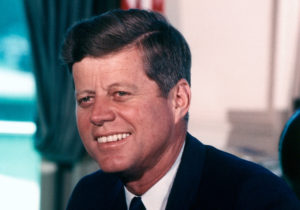
By Edward Curtin | November 22, 2019
There is a vast literature on the assassination of President John F. Kennedy, who died on a November 22nd Friday like this in 1963. I have contributed my small share to such writing in an effort to tell the truth, honor him, and emphasize its profound importance in understanding the history of the last fifty-six years, but more importantly, what is happening in the U.S.A. today. In other words, to understand it in its most gut-wrenching reality: that the American national security state will obliterate any president that dares to buck its imperial war-making machine. It is a lesson not lost on all presidents since Kennedy.
Unless one is a government disinformation agent or is unaware of the enormous documentary evidence, one knows that it was the CIA that carried out JFK’s murder. Confirmation of this fact keeps arriving in easily accessible forms for anyone interested in the truth. A case in point is James DiEugenio’s recent posting at his website, Kennedys and King, of James Wilcott’s affidavit and interrogation by the House Select Committee on Assassinations, declassified by the Assassinations Record Review Board in 1998. In that document, Wilcott, who worked in the finance department for the CIA and was not questioned by the Warren Commission, discusses how he unwittingly paid Lee Harvey Oswald, the government’s alleged assassin, through a cryptonym and how it was widely known and celebrated at his CIA station in Tokyo that the CIA killed Kennedy and Oswald worked for the Agency, although he did not shoot JFK. I highly recommend reading the document.
I do not here want to go into any further analysis or debate about the case. I think the evidence is overwhelming that the President was murdered by the national security state. Why he was murdered, and the implications for today, are what concern me. And how and why we remember and forget public events whose consequences become unbearable to contemplate, and the fatal repercussions of that refusal. In what I consider the best book ever written on the subject, JFK and the Unspeakable: Why He Died and Why It Matters (2009), James W. Douglass explains this in detail, including the James Wilcott story.
Realizing what I am about to say might be presumptuous and of no interest to anyone but myself, I will nevertheless try to describe my emotional reactions to learning of John Kennedy’s murder so long ago and how that reverberated down through my life. I hope my experiences might help explain why so many people today can’t face the consequences of the tragic history that began that day and have continued to the present, among which are not just the other assassinations of the 1960s but the lies about the attacks of September 11, 2001 and the subsequent endless and murderous “war on terror” with its mind-numbing propaganda and the recent anti-Russia phobia and the blatant celebration of the so-called “deep-state’s” open efforts to overthrow another president, albeit a very different one.
On November 22, 1963 I was a college sophomore. I was going down three steps into the college dining hall for lunch. (Many of my most significant memories and decisions have taken place on steps, either going up or going down; memory is odd in that way, wouldn’t you say?) I remember freezing on the second step as a voice announced through a PA system that the president had been shot in Dallas, Texas. When I finally recovered and went down into the building, another announcement came through saying the president had died. The air seemed to be sucked out of the building as I and the other students with a few professors sat in stunned silence. Soon little groups on this Catholic campus joined together to pray for John Kennedy. I felt as if I were floating in unreality.
Later that day when I left the campus and drove home, I thought back to three years previously and the night of the presidential election. Everyone at my house (parents, grandparents, and the five sisters still at home) had gone to bed, but I stayed up past 1 A.M., watching the television coverage of the vote count. My parents, despite their Irish-Catholicism, were Nixon supporters, but I was for JFK. I couldn’t comprehend why anyone would vote for Nixon, who seemed to me to personify evil. When I finally went up the stairs to bed, I was convinced Kennedy would win and felt very happy.
It wouldn’t be for another tumultuous decade before I would hear Kris Kristofferson sing
Never knowin’ if believin’ is a blessin’ or a curse
Or if the going up is worth to coming down….
From the rockin’ of the cradle to the rollin’ of the hearse
The goin’ up was worth the coming down
and I would ask myself the same question.
In the meantime, the next few years would bring the Bay of Pigs, the Cuban Missile crisis, and the Nuclear Test Ban Treaty, among other significant events, and for a high school student interested in politics and world events it was a heady and frightening few years. It was a country of newspapers back then, and I would read perhaps 3-4 each day and sensed a growing animosity toward Kennedy, especially as expressed in the more conservative NYC papers. I can remember very little talk of politics in my home and felt alone with my thoughts. As far as I can remember, this was also true at the Jesuit high school that I attended. And of course nothing prepared me for the president’s murder and the feeling of despair it engendered in me, a feeling so painful that I couldn’t really acknowledge it. At nineteen, I felt traumatized but couldn’t admit it or tell anyone. After all, I was a scholar and an athlete. Tough.
Then on Sunday morning my family had the TV on and we watched as Jack Ruby shot Lee Harvey Oswald, the guy the government said had killed the president. The unreality was compounded manyfold, and when later it was reported that Oswald had died, I felt I was living in an episode of The Twilight Zone, a popular television show at the time, whose narrator would say we are now entering the weird world between shadow and substance.
The next day a friend and I went to the Fordham University campus to visit a Jesuit priest who was a mentor to us. He had the television on for JFK’s funeral and we sat and watched it for a while with him. After a few hours, it became too painful and the two of us went outside to a football field where we threw a football back and forth. Perhaps subconsciously we were thinking of Kennedy’s love of football; I don’t know. But I remember a feeling of desolation that surrounded us on that empty cold field with not another soul around. It seemed sacrilegious to be playing games at such a time, yet deep trauma contributes to strange behavior.
Then I went on with my college life, studying and playing basketball, until the day after Malcolm X was assassinated on February 21, 1965. Those New York newspapers that didn’t like Kennedy, hated Malcolm even more and were constantly ripping into him. I vividly remember talking to my college basketball teammate the next day. His sense of devastation as a young African American struck me forcefully. As we walked to basketball practice and talked, his sense of isolation and gloom was palpable. Visceral. Unforgettable. It became mine, even though I didn’t at the time grasp its full significance.
In 1968 when Dr. Martin Luther King was assassinated, I was driving to visit a girlfriend and remember hearing the news on the car radio and feeling deeply shocked. I felt immediately oppressed by the first warm spring evening in the New York area. It was as if the beautiful weather, usually so uplifting after winter and so joyously stimulating to a young man’s sexuality, was conspiring with the news of King’s death to bring me down into a deep depression.
Soon the country would awaken on June 5 to the surreal news that Senator Robert Kennedy was shot in Los Angeles the night before. Like so many Americans, when he died not long after, I felt his death was the last straw. But it was far from it. For all the while Lyndon Johnson had lied his way to election in 1964 and escalated the Vietnam war to savage proportions. Death and destruction permeated the air we were breathing. The year 1968 ended with the suspicious death in Thailand of a hero of mine, the anti-war Trappist Monk Thomas Merton. Subsequent research has shown that that too was an assassination. And while all of this was going on and my political consciousness was becoming radicalized, I became a conscientious objector from the Marines. I was 24 years old.
By the late 1970s, having been fired from teaching positions for radical scholarship and anti-war activities, and mentally exhausted by the unspeakable events of the 1960s, I retreated into the country where I found solace in nature and a low-key life of contemplation, writing literary and philosophical essays, a novel, book reviews, and becoming a part-time newspaper columnist. By the 1990s, I gradually returned to teaching and a more active political engagement, primarily through teaching and writing.
Then in 1991 Oliver Stone jolted me back in time with his film JFK. I found powerful emotional memories welling up within me, and growing anger at what had happened to the U.S. in the previous decades. Soon JFK Jr., who was investigating his father’s assassination and was about to enter politics and take up his father’s mantle, was killed in a blatantly rigged “accident.” A month before I had been standing in line behind his wife in the bakery in my little town while he waited outside in a car. Now the third Kennedy was dead. I called my old friend the Jesuit priest from Fordham, but he was speechless. The bodies kept piling up or disappearing.
When the attacks of September 11, 2001 happened, I realized from day one that something was not right; that the official explanation was full of holes. My sociological imagination took fire. All that I had thought and felt, even my literary writing, came together. The larger picture emerged clearly. My teaching took on added urgency, including courses on September 11th and the various assassinations.
Then in 2009 I read and reviewed James Douglass’s masterpiece, JFK and the Unspeakable, and my traumatic memories of 1963 and after came flooding back in full force. I realized that those youthful experiences had been so difficult for me to assimilate and that I therefore had to intellectualize them, for the emotional toll of re-experiencing them and what they meant was profound. The book really opened me to this, but so too did the awareness of how sensitive I was to John Kennedy’s death, how emotional I felt when reading about it or hearing him speak or listening to a song such as “The Day John Kennedy Died” by Lou Reed. It was as though a damn had burst inside me and my heart had become an open house without doors or windows.
I tell you all this to try to convey the ways in which we “forget” the past in order to shield ourselves from powerful and disturbing memories that might force us to disrupt our lives. To change. Certain events, such as the more recent attacks of September 11, have become too disturbing for many to explore, to study, to contemplate, just as I found a way to marginalize my feelings about my own government’s murder of President Kennedy, a man who had given me hope as a youngster, and whose murder had nearly extinguished that hope.
Many people will pretend that they are exposing themselves to such traumatic memories and are investigating the events and sources of their disquietude. It is so often a pretense since they feel most comfortable in the land of make-believe. What is needed is not a dilettantish and superficial nod in the direction of having examined such matters, but a serious in-depth study of the facts and an examination of why doing so might make one uncomfortable. A look outward and a look inward. Just as people distort and repress exclusively personal memories to “save” themselves from harsh truths that would force them to examine their current personal lives, so too do they do the same with political and social ones. When I asked two close relatives of mine, both of whom came close to death on September 11, 2001 at The World Trade Towers, what they have thought about that day, they separately told me that they haven’t really given it much thought. This startled me, especially since it involved mass death and a close encounter with personal death in a controversial public event, two experiences that would seem to elicit deep thought. And these two individuals are smart and caring souls.
What and why we remember and forget is profoundly important. Thoreau, in writing about life without principle, said, “It is so hard to forget what is worse than useless to remember.” This is so true. We are consumed with trivia, mostly by choice.
Perhaps a reason we remember so much trivia is to make sure we forget profound experiences that might shake us to our cores. The cold-blooded public execution of President John Kennedy did that to me on that melancholy Friday when I was 19, and by trying to forget it and not to speak of it, I hoped it would somehow go away, or at least fade to insignificance. But the past has a way of never dying, often to return when we least expect or want it.
So today, on this anniversary Friday, another November 22, I have chosen to try to speak of what it felt like once upon a time on the chance that it might encourage others to do the same with our shared hidden history. Only by speaking out is hope possible. Only by making the hidden manifest.
T. S. Eliot wrote in “Journey of the Magi” words that echo ironically in my mind on this anniversary of the day John Kennedy died:
All this was a long time ago, I remember
And I would do it again, but set down
This set down
This: were we led all that way for
Birth or Death? There was a Birth certainly,
We had evidence and no doubt. I had seen birth and
Death,
But had thought they were different; this Birth was
Hard and bitter agony for us, like Death, our death.
We returned to our places, these Kingdoms,
But no longer at ease here, in the old dispensation,
With an alien people clutching their gods.
I should be glad of another death.
Remembering in all its emotional detail the day John Kennedy died has been a long and cold journey for me. It has allowed me to see and feel the terror of that day, the horror, but also the heroism of the man, the in-your-face warrior for peace whose death should birth in us the courage to carry on his legacy.
Killing a man who says “no” to the endless cycle of war is a risky business, says a priest in the novel Bread and Wine by Ignazio Silone. For “even a corpse can go on whispering ‘No! No! No! with a persistence and obstinacy that only certain corpses are capable of. And how can you silence a corpse.”
John Kennedy was such a man.
Eliot was right: Sometimes death and birth are hard to tell apart.
President Kennedy’s courage in facing a death he knew was coming from forces within his own government who opposed his efforts for peace, nuclear disarmament, and an end to the Cold War – “I know there is a God-and I see a storm coming. I believe that I am ready,” he had written on a slip of paper, and his favorite poem contained the refrain, “I have a rendezvous with death” – should encourage all of us to not turn our faces away from his witness for peace.
We must stop being at ease in a dispensation where we worship the gods of war and clutch the nuclear weapons that our crazed leaders say they will use on a “first-strike” basis. If they ever do, Eliot’s question – “were we led all that way for Birth or Death?” – will be answered.
But no one will hear it.
The Kennedy Autopsy 2
By Jacob G. Hornberger | FFF | November 22, 2019
Fifty-six years ago today, President John F. Kennedy was shot dead on the streets of Dallas, Texas. The official story is that a lone nut named Lee Harvey Oswald, without any motive, committed the assassination. During the past several decades, however, the overwhelming amount of circumstantial evidence, much of which was intentionally kept secret, points to a national-security regime-change operation to oust Kennedy from office and elevate Vice President Lyndon Johnson to the presidency.
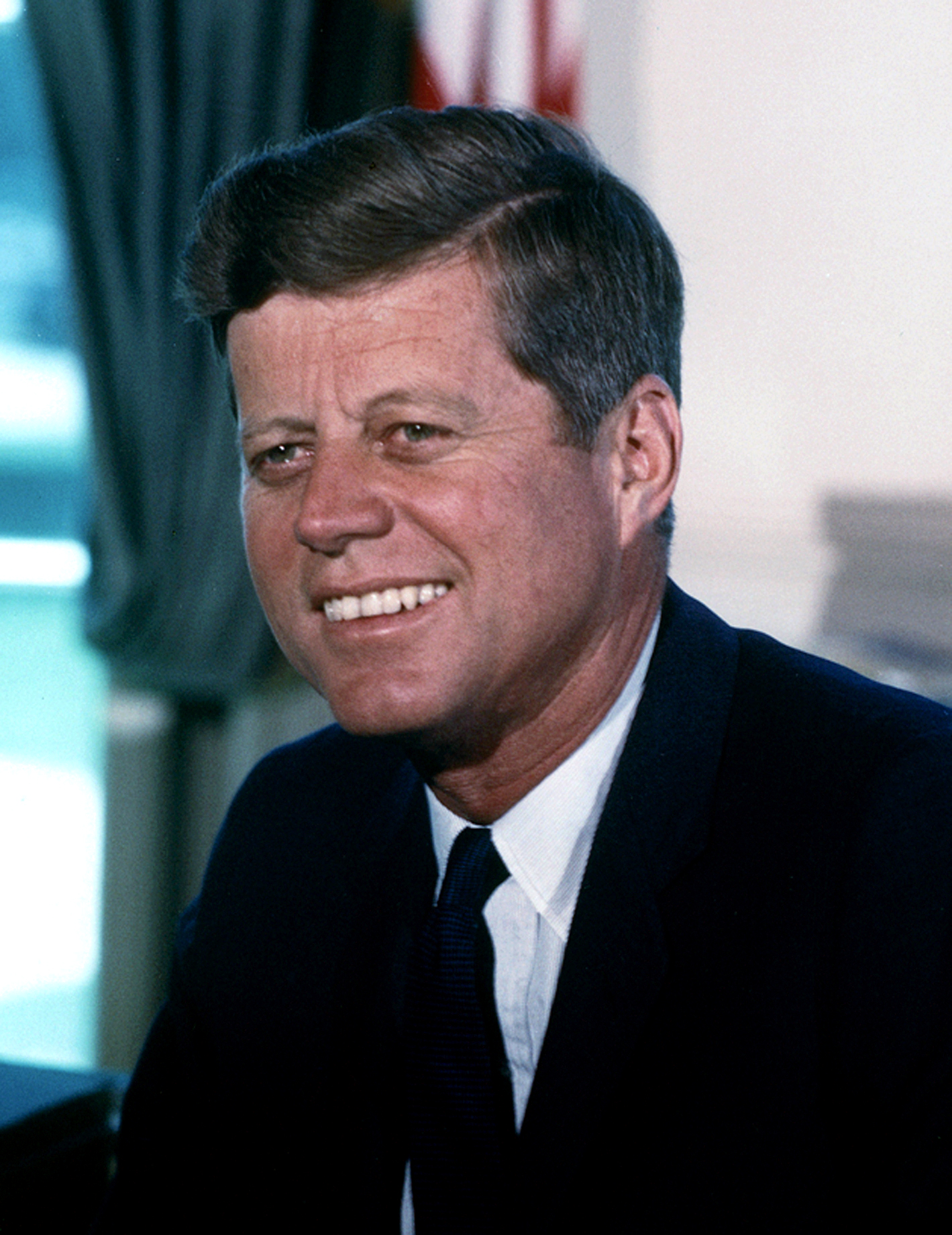 A key to understanding the assassination lies in a critically important event that occurred after the assassination. That event was the official autopsy that was conducted on the president’s body. By understanding the autopsy, one can gain a better understanding of the assassination itself.
That was the purpose of my best-selling book several years ago, The Kennedy Autopsy, which was a synopsis of a watershed five-volume assassination book entitled Inside the Assassination Records Review Board by Douglas P. Horne, who was a staff member of the ARRB in the 1990s.
The ARRB was the agency that Congress called into existence to enforce the President John F. Kennedy Records Collection Act of 1992, the law that required the CIA, the Pentagon, the Secret Service, and other federal agencies to disclose assassination-related records that such agencies had insisted on keeping secret since the day of the assassination. The law was enacted in response to the public outcry produced by Oliver Stone’s movie JFK, which posited that the assassination was a national-security regime-change operation carried out by the U.S. national-security establishment. At the end of the movie was a blurb pointing out the national-security establishment’s continued secrecy with respect to its assassination-related records.
The Future of Freedom Foundation recently published my new book The Kennedy Autopsy 2: Lyndon Johnson’s Role in the Assassination, which builds on the mountain of circumstantial evidence surrounding the president’s autopsy supporting the thesis developed by Oliver Stone in his movie and by Douglas Horne in his five-volume book. Specifically, my new book documents the circumstantial evidence pointing to the role that Lyndon Johnson played in the assassination.
Now, before anyone cries “Conspiracy theory!” which is the term that the CIA promoted early on to its assets in the mainstream press to dissuade people from questioning the official version of the assassination, consider the following:
The purpose of an autopsy is to determine the cause of death, which includes a determination of where the bullets were fired from. Since this was a state murder case, Texas law required that an autopsy be conducted on President Kennedy’s body. That duty fell to the Dallas County Medical Examiner, Dr. Earl Rose, who was one of the most competent pathologists in the country.
As soon as Kennedy was declared dead, however, a Secret Service team had the president’s body placed in an expensive, ornate casket and began taking it out of Parkland Hospital. Rose refused to permit them to do that, standing in their way, and declaring that he was required by state law to conduct an autopsy on the president’s body. In loud, screaming voices, the Secret Service team made it clear to Rose that they were operating under orders to take the body back to Washington without permitting Rose to conduct his autopsy. When Rose continued standing his ground, the Secret Service agents pulled back their suit jackets and brandished their guns. Screaming, yelling, and issuing a stream of profanities, they forced their way out of Parkland Hospital with Kennedy’s body, in direct violation of Texas law.
Waiting at Love Field was Lyndon Johnson, who was having seats removed from the back of Air Force One to make room for the casket. That meant that he knew that the casket was coming, which is virtually conclusive proof that he was the one who issued that order to that Secret Service team before he departed from Parkland Hospital.
Johnson himself was actually the very first conspiracy theorist in the Kennedy assassination. When he was at Parkland Hospital waiting to see if Kennedy would die and then later on the way to Dallas’s Love Field, Johnson raised the notion that the assassination might be the first step in a nuclear attack by the Soviet Union on the United States.
Yet, Johnson’s own actions establish that he knew that his conspiracy theory was bogus. When he arrived at Love Field, he had his personnel transfer everyone’s luggage from his plane — Air Force Two — to Air Force One, so that he could ride on the presidential plane rather than the vice-presidential plane. Yet, both planes were identical. He also took the time to find a federal judge to swear him in, despite the fact that the U.S. attorney general, Robert Kennedy, had advised him that no such swearing in was necessary. Johnson also took the time to wait for the casket to appear and be loaded onto Air Force One.
Does that sound like a man who was concerned that Soviet missiles might possibly be raining in on the United States, including one being aimed at Dallas, Texas? Wouldn’t a president who was genuinely concerned about such a possibility have gotten up into the air immediately in order to conduct America’s defenses to such an attack? Despite his words, Johnson’s actions indicate that he was certain that the Soviets played no role in the assassination. There could only be one reason for such certainty, even while promoting what he knew was a bogus conspiracy theory.
When Air Force One landed in Maryland, Johnson ensured that the president’s body be turned over to the military rather than to civilian authorities. Why? America isn’t a military nation. It’s a civilian nation. The United States wasn’t at war, and Kennedy hadn’t been killed on the field of battle. Why the military instead of a Maryland or Washington, D.C., medical examiner?
The reason is that a fraudulent autopsy was needed to disguise the fact that shots had been fired from the front of Kennedy. The accused killer, Lee Harvey Oswald, was in Kennedy’s rear and, therefore, could not have fired from the front.
Now, before anyone cries “Conspiracy theory!” consider the following:
After the House Select Committee Hearings on the Assassination, which reopened the investigation into the assassination, several enlisted men came forward and told a remarkable story. They said that they had secretly carried the president’s body into the Bethesda morgue in a cheap, military-style shipping casket similar to the ones being used to bring back bodies of U.S. soldiers being killed in Vietnam. They said that they carried the body into the morgue about 6:35 p.m., which was approximately 1 1/2 hours before the body was officially carried into the morgue at 8 pm in the expensive, ornate casket into which the body had been placed in Dallas. They said that military officials had sworn them to secrecy, forced them to sign written secrecy oaths, and threatened them with court martial and criminal prosecution if they ever told anyone what they had seen and done.
In the 1990s, the ARRB uncovered a written document prepared by a Marine sergeant named Roger Boyajean, which had been prepared soon after the autopsy. The document confirmed that the president’s body had in fact been secretly carried into the morgue at 6:35 p.m. Boyayean himself confirmed to the ARRB the authenticity of the document and the event itself.
Now, before anyone cries “Conspiracy theory!” consider the following:
One of the three autopsy physicians, Col. William Finck, later testified that on the evening of the assassination he received a telephone call from Commander James J. Humes, who was one of the other autopsy physicians. The purpose of the call was to request Finck to assist with the autopsy. The call was made at 8 p.m., which was the same time that the president’s body was officially being carried into the morgue in the expensive, ornate Dallas casket.
Finck testified that Humes told him in that call that they already had x-rays of the president’s body. The question naturally arises: How could they already have x-rays at 8 p.m. if the president’s body was first being carried into the morgue at 8 p.m.? Finck inadvertently confirmed the remarkable story that those enlisted men would disclose several years later.
Now, before anyone cries “Conspiracy theory!” consider the following:
The ARRB summoned a woman named Saundra Spencer to testify. On the weekend of the assassination, she was a U.S Navy petty officer working in the U.S. Navy’s photography lab in Washington, D.C. She had a top-secret security clearance. She worked closely with the White House on official photographs, including top-secret ones. No one has ever questioned the veracity, competence, and professionalism of Saundra Spencer. It would be virtually impossible to find a more credible witness.
Under oath, Spencer told the ARRB a remarkable story. On the weekend of the assassination, she was asked to develop photographs of the autopsy carried out by military officials on President Kennedy’s body. She was told that her role was a highly classified operation. For some 30 years, she had kept the secret.
The ARRB showed Spencer the military’s official autopsy photographs. She carefully examined them. She testified directly and unequivocally that the photographs were not the ones she developed on the weekend of the assassination. The ones she developed, she said, showed a massive exit-sized wound in the back of President Kennedy’s head, which implied a shot having been fired from the front.
Now, before anyone cries “Conspiracy theory!” consider the following:
After Kennedy was brought into Trauma Room One in Parkland Hospital, the treating physicians immediately began emergency treatment procedures. However, one of the treating physicians summoned the others to view the back of the president’s head. They saw a huge exit-sized hole in the lower back of President Kennedy head. At that point, they knew that there was no way that they could save his life. The statements of the treating physicians immediately after the assassination confirm what Saundra Spencer would tell the ARRB some 30 years later. See “RIP: Dr. Robert McClelland, the Most Important JFK Witness” by Jefferson Morley.
For much more on the events surrounding the autopsy as well as the events leading up to Lyndon Johnson’s dramatic announcement that he was dropping out of the 1968 presidential race, read my new book The Kennedy Autopsy 2: Lyndon Johnson’s Role in the Assassination.
American Conspiracies & Cover-ups
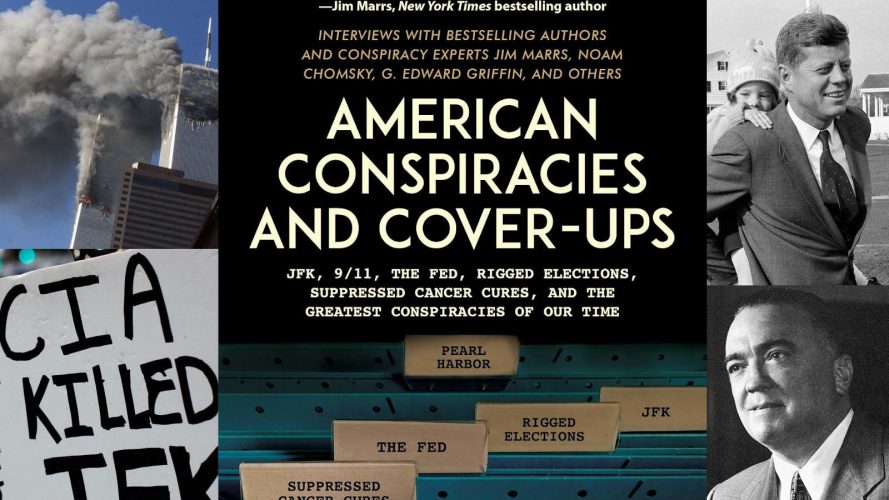
By Douglas Cirignano | OffGuardian | November 3, 2019
In today’s world, the phrase “conspiracy theory” is pejorative and has a negative connotation. To many people, a conspiracy theory is an irrational, over-imaginative idea endorsed by people looking for attention and not supported by the mainstream media or government.
History shows, though, that there have been many times when governments or individuals have participated in conspiracies. It would be naïve to think that intelligence agencies, militaries, government officials, and politicians don’t sometimes cooperate in covert, secretive ways. Following are five instances when it’s been proven that the government engaged in a conspiracy.
THE GULF OF TONKIN RESOLUTION
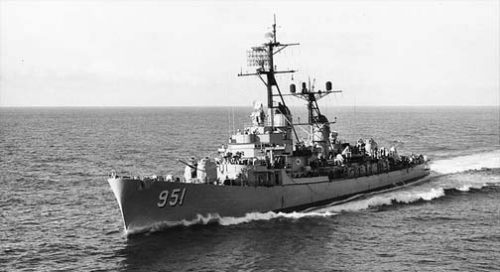
On August 4, 1964, Captain John J. Herrick, the commander of the USS Maddox, a US Navy vessel that was on an intelligence-gathering mission in the Gulf of Tonkin, reported to the White House and Pentagon that North Vietnamese patrol boats had fired torpedoes at his ship, and, so, the Maddox had fired back.
Two days later, Secretary of Defense Robert McNamara testified to the Congress that he was certain that the Maddox had been attacked. On August 7, the Gulf of Tonkin Resolution was passed, the Congressional act that allowed President Johnson free reign to commence war; Johnson immediately ordered air strikes on North Vietnam and the Vietnam War—which would eventually kill fifty-eight thousand Americans and two million Asians—was underway.
Since then, it has been shown and proven that no North Vietnamese boats ever fired on the Maddox, and that McNamara had been untruthful when he testified before Congress. According to the official publication of the Naval Institute,
… once-classified documents and tapes released in the past several years, combined with previously uncovered facts, make clear that high government officials distorted facts and deceived the American public about events that led to full US involvement in the Vietnam War.”
In the weeks prior to the Gulf of Tonkin incident, South Vietnamese ships had been attacking posts in North Vietnam in conjunction with the CIA’s Operation 34A. According to many inside sources, the Johnson administration wanted a full-scale war in Vietnam and through Operation 34A was trying to provoke North Vietnam into an attack that would give Johnson an excuse to go to war. But when McNamara was asked by the Congress on August 7 if these South Vietnam attacks had anything to do with the US military and CIA, McNamara lied and said no.
Within hours after reporting that the Maddox had been attacked, Captain Herrick was retracting his statements and reporting to the White House and Pentagon that “in all likelihood” an over-eager sonar man had been mistaken and that the sonar sounds and images that he originally thought were enemy torpedoes were actually just the beat of the Maddox’s own propellers.
Herrick reported that there was a good probability that there had been no attack on the Maddox, and suggested “complete reevaluation before any action is taken.”
McNamara saw these new, updated reports and discussed them with President Johnson early in the afternoon of August 4. Even though this was so, on the evening of August 4, President Johnson went on national television and announced to the American public that North Vietnam had engaged in “unprovoked aggression” and, so, the US military was retaliating.
A few days after the Gulf of Tonkin Resolution, Johnson remarked, “Hell, those damn stupid sailors were just shooting at flying fish.”
Recently, new documents related to the Gulf of Tonkin incident have been declassified and according to Robert Hanyok, a historian for the National Security Agency, these documents show that the NSA deliberately “distorted intelligence” andand “altered documents” to make it appear that an attack had occurred on August 4.
When President Lyndon Johnson misrepresented to the American public and said he knew that North Vietnam had attacked a US ship, and when Defense Secretary Robert McNamara lied to the Congress and said he was sure that the Maddox had been attacked and that the CIA had nothing to do with South Vietnam aggression, and when NSA officials falsified information to make it appear that there had been an attack on the Maddox, that was a government conspiracy.
OPERATION NORTHWOODS
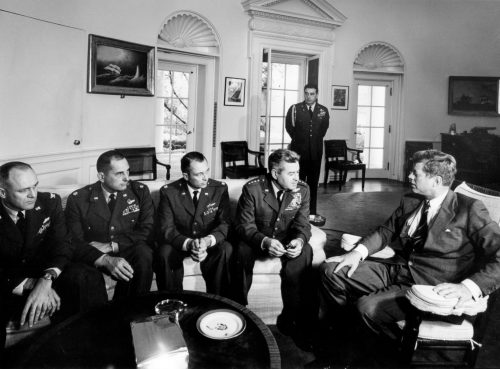
In 1962, the most powerful and highest ranking military officials of the US government, the Joint Chiefs of Staff, felt strongly that the communist leader Fidel Castro had to be removed from power and, so, came up with a plan to justify an American invasion of Cuba.
The plan, entitled Operations Northwoods, was presented to Secretary of Defense Robert McNamara on March 13, 1962, and was signed by the chairman of the Joint Chiefs of Staff, Lyman L. Lemnitzer.
Operations Northwoods was a proposal for a false flag operation, a plan in which a military organizes an attack against its own country and then frames and blames the attack on another country for the purpose of the purpose of initiating hostilities and declaring war on that country.
The proposal was originally labeled Top Secret but was made public on November 18, 1997, by the John F. Kennedy Assassination Records Review Board. The complete Operation Northwoods paper was published online by the National Security Archive on April 30, 2001, and this once-secret government document can now be read by anyone.
The actions that General Lemnitzer and the other chiefs wanted to d to take under Operations Northwoods are shocking. According to the plan, CIA and military personnel and hired provocateurs would commit various violent acts and these acts would be blamed on Castro to “create the necessary impression of Cuban rashness and irresponsibility” and “put the United States in the apparent position of suffering defensible grievances.”
One of the most ambitious plans of Operation Northwoods was to blow up a plane in midflight. The strategy was to fill a civilian airplane with CIA and military personnel who were registered under fake ID’s; an exact duplicate plane—an empty military drone aircraft—would take off at the same exact time.
The plane of fake passengers would land at a military base but the empty drone plane would fly over Cuba and crash in the ocean, supposedly a victim of Cuban missiles. “Casualty lists in US newspapers” and conducting “fake funerals for mock-victims” would cause “a helpful wave of national indignation” in America.
The Operation Northwoods proposal also states: “We could blow up a US ship and blame Cuba.” Whether the ship was to be empty or full of US soldiers is unclear. The document also says: “Hijacking attempts against US civil air and surface craft should be encouraged.”
Some of the recommendations of Operation Northwoods would have surely led to serious injuries and even deaths of Cuban and American civilians. The plan suggests:
We could sink a boatload of Cubans on route to Florida (real or simulated).”
And:
We could foster attempts on lives of anti-Castro Cubans in the United States even to the extent of wounding in instances to be widely publicized…We could explode a few bombs in carefully chosen spots.”
Lemnitzer and the chiefs wanted many of these staged terrorist attacks to be directed at the Guantanamo Bay United States Naval Base in Cuba. The plans were:
- “Start riots near the entrance to the base”
- “lob mortar shells from outside the base to inside the base”
- “blow up ammunition inside the base; start fires”
- “burn aircraft on airbase (sabotage)”
- “sabotage ship in harbor; large fires—napalm.”
When Secretary of Defense McNamara was presented with the Operation Northwoods plan, he either stopped and rejected the plan himself or passed it on to President Kennedy and JFK then rejected it. But if Kennedy and McNamara had agreed with the plan, then the Joint Chiefs of Staff wanted to begin enacting Operation Northwoods “right away, within a few months.”
Even though Operation Northwoods was never initiated, when the chairman of the Joint Chiefs of Staff and the other highest-ranking military officials of the United States Government planned to organize violent attacks on Americans and anti-Castro Cuban citizens, knowing those attacks could severely injure and kill those citizens, and when they planned to blame those attacks on Cuba and then use that as an excuse to invade Cuba, that was a government conspiracy.
FBI AND THE MAFIA
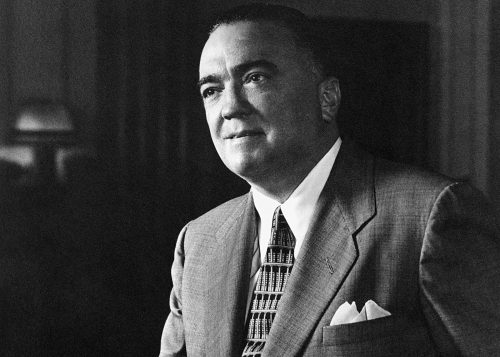
In March 1965, the FBI had the house of New England organized crime boss Raymond Patriarca wiretapped and overheard two mobsters, Joseph Barboza and Vincent Flemmi, asking Patriarca for permission to kill another gangster, Edward Deegan. Two days later, Deegan’s blood-soaked body was found dead in a Boston alley.
Within days, an official FBI report confirmed that Joseph Barboza and three other mobsters were the murderers. Instead of those men going to prison for murder, though, three years later a man named Joseph Salvati was brought to trial for the murder of Edward Deegan. At that trial Joseph Barboza testified and lied that Salvati was one of the murderers. On the basis of Barboza’s testimony, Joseph Salvati was convicted of murder and sentenced to life in prison.
At that time, in the mid 1960s, the FBI was being pressured more and more to do something to stop organized crime. The bureau began using members of the mafia—criminals and murderers—to inform against fellow mafia members. Joseph Barboza was one of these FBI-protected, paid informants. The FBI didn’t want Barboza to go to prison for the murder of Deegan because they wanted him to continue infiltrating the mafia and testifying against other mafia members.
The bureau, apparently, did want a conviction in the Deegan murder case, though, and, so, let Barboza lie under oath and let a man they knew to be innocent, Joseph Salvati, go to prison.
The Witness Protection Program was first created for Joseph Barboza, and Barboza was the first mafia informant to be protected under the program. After helping to convict a number of mobsters, Barboza was sent off to live in California. While under the Witness Protection Program, Barboza committed at least one more murder, and probably more.
On trial for a murder in California, FBI officials showed up for Joseph Barboza’s trial and testified on his behalf, helping Barboza to get a light sentence.
Joseph Salvati ended up serving thirty years in prison for a murder that he was innocent of. During that thirty-year period, lawyers for Salvati requested documents from the FBI that would have proved Salvati’s innocence, but the bureau refused to release them.
Finally, in 1997, other evidence came forth suggesting Salvati’s innocence and the governor of Massachusetts, William Weld, granted Salvati’s release. A few years later, the FBI was ordered to release all its reports on the case; hundreds of documents showed the FBI knew that Barboza was a murderer, that he had murdered Edward Deegan, and that Joseph Salvati had had nothing to do with the crime.
Salvati was exonerated in a court of law, and was eventually awarded millions of dollars in a civil lawsuit against the government. (Three other defendants were also exonerated. At the 1968 trial, Joseph Barboza had testified that three other men—men who were also not guilty—had participated in Deegan’s murder. These three innocent men were, with Salvati, also sent to prison.)
Perhaps the most shocking thing that the FBI documents showed, though, was that FBI Director J. Edgar Hoover himself knew Salvati was innocent and that Barboza had killed Deegan.
Hoover was working closely, almost daily, with the agents handling Joseph Barboza, and it was probably Hoover directing the operation. The congressional committee that investigated the case was the House Committee on Government Reform and Congressman Dan Burton was the chairman.
When asked by CBS’s 60 Minutes journalist Mike Wallace “Did J. Edgar Hoover know all this?” Burton replied:
“Yes . . . It’s one of the greatest failures in the history of American justice…J. Edgar Hoover knew Salvati was innocent. He knew it and his name should not be emblazoned on the FBI headquarters. We should change the name of that building.”
Congressman Burton claimed there was evidence that there were more cases when the FBI did the same sorts of things they did in the Joseph Salvati case; when Burton and his committee requested the files on these cases, the Attorney General and the White House refused to release them.
When FBI Director J. Edgar Hoover and top FBI officials let a known murderer lie and perjure himself in a courtroom, when they let four men they knew to be innocent suffer in the hell of a prison cell for thirty years, and when they deliberately covered that up for decades, that was a government conspiracy.
THE MANHATTAN PROJECT
In 1939, Albert Einstein and two other European physicists sent a letter to President Franklin Roosevelt informing Roosevelt that the German government was working on developing the science that could lead to the creation of a nuclear bomb. FDR immediately formed a committee to look into the idea of the US government making an atomic bomb.
In 1942, the Manhattan Project, the United States program to build a nuclear bomb, headed by General Leslie R. Groves of the US Army Corps of Engineers, was formed.
The program existed from 1942–1946, spent two billion dollars, had plants and factories in thirty cities, and employed 130,000 workers. But virtually no one knew about it. The Manhattan Project is considered the “Greatest Secret Ever Kept.”
The US government wanted to keep the Project a secret lest Germany or one of America’s other enemies found out about it and built—more quickly—a larger, better bomb. In the early 1940s, when American scientists began working on splitting atoms and nuclear fission, US government officials asked the scientists to not publish any reports on the work in scientific journals. The work was kept quiet.
In 1943, when newspapers began reporting on the large Manhattan Project construction going on in a few states, the newly formed United States Government Office of Censorship asked newspapers and broadcasters to avoid discussing “atom smashing, atomic energy, atomic fission . . . the use for military purposes of radium or radioactive materials” or anything else that could expose the project. The press kept mum. The government didn’t talk about the Manhattan Project, the press didn’t report on it, and the public knew nothing about it.
Not even the 130,000 Manhattan Project laborers knew they were building an atom bomb.
In 1945, a Life magazine article wrote that before Japan was attacked with a-bombs, “probably no more than a few dozen men in the entire country knew the full meaning of the Manhattan Project, and perhaps only a thousand others even were aware that work on atoms was involved.”
The workers were told they were doing an important job for the government, but weren’t told what the job was, and didn’t understand the full import of the mysterious, daily tasks they were doing. The laborers were warned that disclosing the Project’s secrets was punishable by ten years in prison, and a hefty financial fine.
Whole towns and cities were built where thousands of Manhattan Project workers lived and worked but these thousands didn’t know they were helping to build nuclear bombs.
The Manhattan Project finally became known to the public on August 6, 1945, when President Harry Truman announced that America had dropped a nuclear bomb on Hiroshima, Japan.
Truman, himself, had not been informed of the Manhattan Project until late April 1945.
When the government kept the purpose of the Manhattan Project a secret from the press, from the public, from America’s enemies, from Harry Truman, and even from the 130,000 laborers who worked for the Manhattan Project, that was a government conspiracy.
THE CHURCH COMMITTEE INVESTIGATION
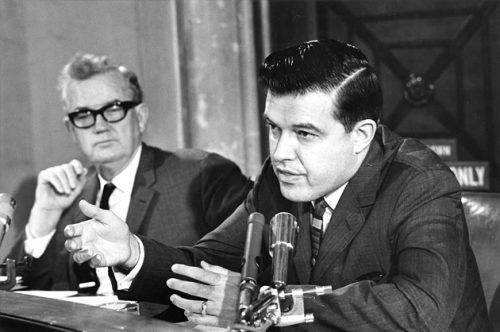
In the early 1970s, after the Watergate affair and investigative reports by the New York Times, it became apparent that the CIA and other US intelligence agencies might be engaging in inappropriate and illegal activities. In 1975, the Church Committee, named after the Committee’s chairman Senator Frank Church, was formed to investigate abuses by the CIA, NSA, FBI, and IRS.
The Church Committee reports are said to constitute the most extensive investigations of intelligence activities ever made available to the public. Many disturbing facts were revealed. According to the final report of the Committee, US intelligence agencies had been engaging in “unlawful or improper conduct” and “intelligence excesses, at home and abroad” since the administration of President Franklin Roosevelt.
The report added that “intelligence agencies have undermined the Constitutional rights of citizens” and “checks and balances designed by the framers of the Constitution to assure accountability have not been applied.”
One of the most well-known revelations of the Committee was the CIA’s so-called “Family Jewels,” a report that detailed the CIA’s misdeeds dating back to Dwight Eisenhower’s presidency. The committee also reported on the NSA’s SHAMROCK and MINARET programs; under these programs the NSA had been intercepting, opening, and reading the telegrams and mail of thousands of private citizens.
The Church Committee also discovered and exposed the FBI’s COINTELPRO program, the bureau’s program to covertly destroy and disrupt any groups or individuals that J. Edgar Hoover felt were bad for America. Some of the movements and groups that the FBI tried to discredit and destroy were the Civil Rights movement, the anti-Vietnam War movement, the Southern Christian Leadership Conference, and individuals such as Martin Luther King Jr.
The most alarming thing that the Church Committee found, though, was that the CIA had an assassination program. It was revealed that the CIA assassinated or had tried to assassinate Dinh Diem of Vietnam, Raphael Trujillo of the Dominican Republic, General Rene Schneider of Chile, Fidel Castro, Patrice Lumumba of the Congo, and other political leaders throughout the world.
The Committee learned about the different ways the CIA had developed to kill and assassinate people: inflicting cancer, inflicting heart attacks, making murders look like suicides, car accidents, boating accidents, and shootings. At one point, CIA Director William Colby presented to the Committee a special “heart attack gun” that the CIA had created. The gun was able to shoot a small poison-laden dart into its victim. The dart was so small as to be undetectable; the victim’s death from the poison would appear to be a heart attack, so no foul play would be suspected.
In response to the Church Committee report, in 1976 President Gerald Ford signed Executive Order 11,905, which forbade employees of the US government from engaging in or conspiring to engage in political assassinations.
In that same year, the Senate approved Senate Resolution 400, which established the Senate Select Committee on Intelligence, the committee responsible for providing vigilant oversight over the intelligence agencies.
Many former CIA employee-whistleblowers and other people, though, claim that US intelligence agencies are still acting in improper ways. In 2008, it was revealed that the CIA had hired Blackwater, a private company made up of ex-Navy Seals, to track down and assassinate suspected terrorists.
Later in the 2000s, when the Congress formed a committee to investigate if CIA waterboarding and other methods of interrogation constituted torture, congressmen complained that they couldn’t get to the bottom of the matter because CIA officials and the CIA director were lying to the congressional committee.
Forty-five years after the revelations of the Church Committee, it seems US intelligence agencies are still engaging in covert and improper conduct.
When US intelligence agencies and the CIA plot to influence the affairs of foreign nations, when the CIA plots assassinations and assassinates foreign leaders and political dissidents, when the CIA develops new ways to kill and assassinate and interrogate and torture, and when the CIA keeps all that from Congress, the press, and the public, that’s a government conspiracy.
***
If these five instances of government engaging in conspiracies have been proven to be true—and they have been—isn’t it logical to assume that government agencies may have engaged in other conspiracies? It is the very nature of intelligence agencies and militaries to act in secretive, conspiratorial ways.
The phrase “conspiracy theory” shouldn’t have a negative connotation. Politics always plays out with backroom handshakes. It is the suggestion of American Conspiracies and Cover-Ups that government agencies and officials and the special interests that influence them are often engaging in conspiratorial actions, and that conspiracies have been behind some of the most iconic and important events of American history.
A conspiracy theorist was regaling a friend with one conspiracy theory after another. Finally, the friend interrupted and said, “I bet I know what would happen if God Himself appeared out of the sky right now, looked down at us, and said, ‘There is no conspiracy.’ I bet you would look up and say, ‘So the conspiracy goes higher than we thought.’”
Perhaps if the Almighty appeared to inform us that politicians and governments and government officials don’t act in secretive, covert, conspiratorial ways, then we could accept that.
But when the evidence indicates otherwise….
Theories questioning if multiple people might have shot at JFK, or if interior bombs brought down the World Trade Center, or if somebody was able to rig the 2000 and 2004 presidential elections can make for dramatic, sensational storytelling.
But it is not the purpose of American Conspiracies and Cover-Ups to be sensational; the purpose of this book is to talk about “conspiracy realities” that can hopefully give us a deeper and more meaningful understanding of politics.
If elements in the intelligence agencies participated in assassinating President Kennedy, then how can the intelligence agencies be better controlled? If elements in the government allowed or caused 9/11 to happen to give us an excuse to go to war in the Middle East, then how much of the War on Terror is disinformation and propaganda?
If presidential elections can be rigged, then how can we have fairer, uncorrupted elections? If secretive influences behind the scenes, a Deep State, are controlling our social, political, and financial systems for their own selfish purposes, then it would benefit us to expose who and what these secretive influences are.
American Conspiracies and Cover-Ups may give us a glimpse into the way that government and politics work.
Or don’t work.
This is an extract from American Conspiracies and Cover-Ups, by Douglas Cirignano published by Simon&Schuster. It can be purchased in hard copy, digital and audio-book form through Amazon and other booksellers.
Protecting Society From ‘Science’
Scientific research, published in influential places, can change the world. For ill as well as for good.
By Donna Laframboise | Big Picture News | November 4, 2019
 The New York Post ran a fascinating article this weekend, titled Stanford professor who changed America with just one study was also a liar. It’s written by journalist Susannah Cahalan, and is about her new book, The Great Pretender.
I haven’t read the book yet, the Kindle edition becomes available tomorrow, but she appears to be the real deal – a journalist who discovered something disturbing, unwelcome, and contrary to her expectations, yet told the truth.
The book is about a professor from a famous university. In 1973 he published a paper in a famous journal, Science. That paper changed history. It fuelled a backlash against institutions for the mentally ill, leading to their widespread closure.
Only now, more than four decades later, are we learning that David Rosenhan, who taught psychology and law, appears to have invented a great deal of what he described in that paper. That’s called fraud. He also suppressed contrary evidence.
The study claimed to describe the profoundly negative experiences of eight individuals who faked serious illness, were admitted to mental institutions, and then had a difficult time convincing the staff they were actually sane and stable. In the New York Post, Calahan tells us she:
started to uncover serious inconsistencies between the documents I had found and the paper Rosenhan published in Science.
… I looked for the seven other pseudopatients and spent the next months of my life chasing ghosts. I hunted down rumors, pursuing one dead end after the next. I even hired a private detective, who got no further than I had.
After years of searching, I found only one pseudopatient who participated in the study and whose experience matched that of Rosenhan…
… The only other participant I discovered, Harry Lando, had a vastly different take. Lando had summed up his 19-day hospitalization at the US Public Health Service Hospital in San Francisco in one word: “positive.”
Even though he too was misdiagnosed with schizophrenia, Lando felt it was a healing environment that helped people get better.
… instead of incorporating Lando into the study, Rosenhan dropped him from it… His data – the overall positive experience of his hospitalization – didn’t match Rosenhan’s thesis that institutions are uncaring, ineffective and even harmful places, and so they were discarded.
Fake news isn’t new. It turns up in prestigious, peer-reviewed scientific journals. It gets spread far and wide by newspapers, magazines, and television news. It makes its way into textbooks and introductory college courses.
We have few defences against it, few ways to prevent society from being highjacked by ‘research’ conducted by people who have agendas as well as PhDs.
The Great Pretender is another cautionary tale. Skepticism. Always skepticism.
Brexit isn’t David Cameron’s Legacy – Libya is
The MSM’s total disregard for the apocalyptic destruction of the most developed nation in Africa is a crime
By Kit Knightly | OffGuardian | October 1, 2019
“The strong man with the dagger is followed by the weak man with the sponge.”
Lord Acton
David Cameron has a book out. You’ve probably heard. There’s a lot of press coverage. The BBC did a retrospective documentary about him to coincide with it, The Guardian had a review of the book, a review of the documentary, and an interview with the man himself.
Oh, and then another article about how it’s selling less well than Blair’s biography.
This is obviously just about journalists reporting the news, you understand.
It is absolutely not at all a mass marketing strategy camouflaged as “current events”.
Shame on you for thinking otherwise.
Naturally, as is always the case when ex-Prime Ministers make appearances or churn out autobiographies, there is plenty of talk about “legacy”.
Well… what is David Cameron’s legacy?
The media are pretty clear: Brexit.
The BBC documentary is entitled The Cameron Years. It’s in two parts, somehow bloated out to two whole hours in runtime, and is only concerned with the Brexit vote. The first part is entirely dedicated to it, that’s literally all it’s about, with the second half being more general, but still very Brexit-centric.
The reviews of the book are no better. In fact they are worse.
The Telegraph liked it, as did the Times. The Guardian and Independent didn’t, as much, but still praised its “honesty”. They all talk almost entirely about Brexit. Bloomberg headline “David Cameron Wants You to Remember Him for More Than Just Brexit”, pointing out: “The former prime minister’s new memoir, For the Record, spends just 50 of 700 pages on the disastrous referendum”… before going on to review just those fifty pages.
In fact, I’ve read over half-a-dozen reviews of this book, and none of them talks about anything but Brexit.
There is not a single use of the word “Libya” in any of them. Not anywhere. Not in even in passing.
Not. One. Single. Use.
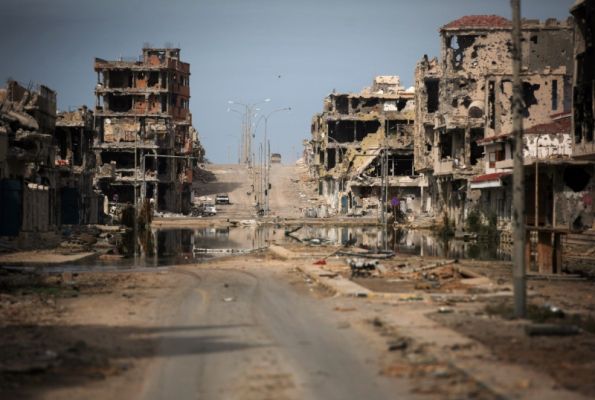
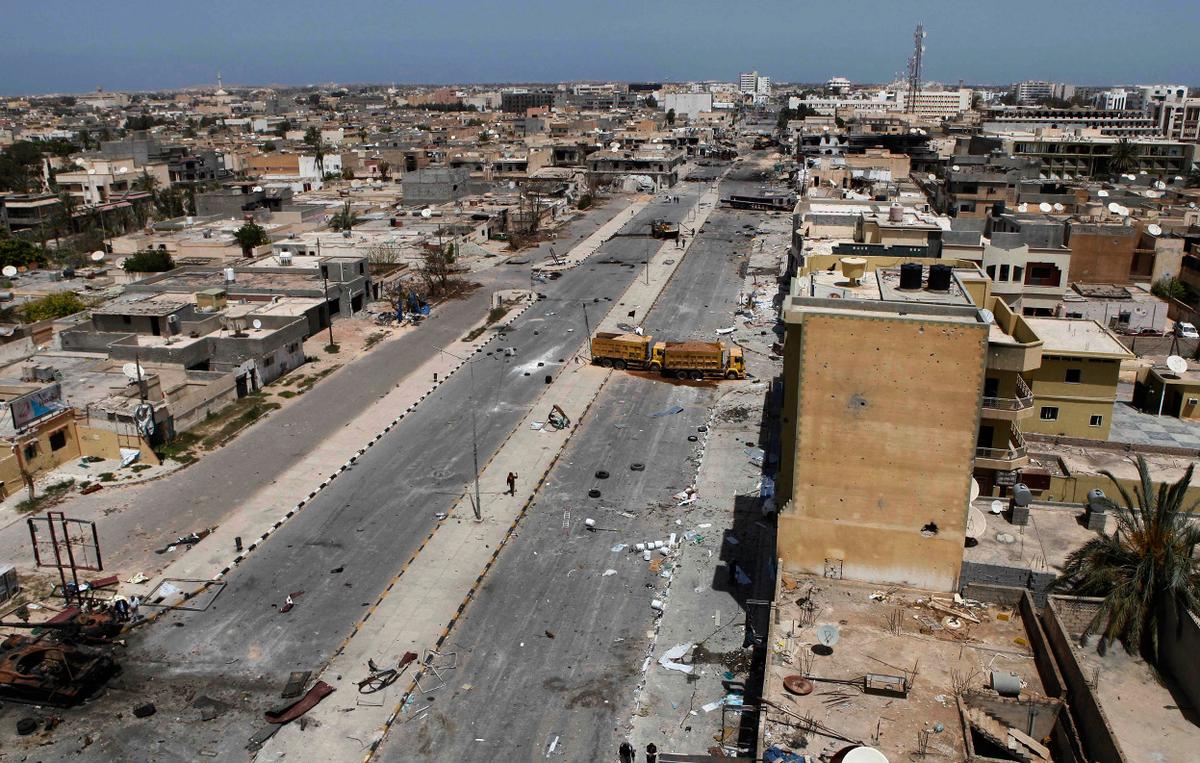
For those of you foggy on the details, Libya was a place that used to look like this:

… and now looks like this:
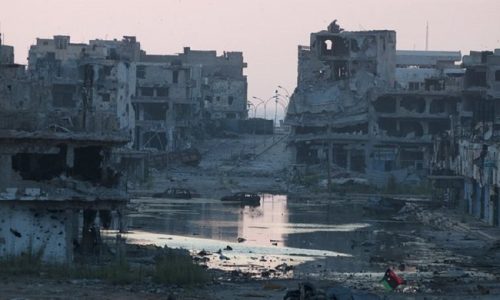
You would think that the total and complete destruction of the most developed nation on the African continent would warrant at least brief discussion in the “legacy” of the Prime Minister responsible but, apparently, you would be wrong.
(I know we’re only Britain, and we only do what America tells us, but “Only following orders” didn’t work for Goering and probably shouldn’t work for anybody else. Cameron included).
The press silence on Libya is on another level.
They grudgingly discuss Iraq as a “mistake” or “blunder”, they carry on their insane propaganda-war on Syria with fresh gusto every few months (or whenever they need a distraction), but Libya… Libya is the country that must not be named.
Take Jonathan Freedland. He was ALL OVER Libya back in 2011. He campaigned for NATO to do something, preaching about the West’s “responsibility to protect”. Does he mention Libya once in his review of this book? Nope.
He even has the gall to open the piece with this:
“Just as the 700 pages of Tony Blair’s autobiography could not escape the shadow of Iraq, so the 700 pages of David Cameron’s memoir are destined to be read through a single lens: Brexit.”
As if his decision to totally disregard a war crime he not only apologised for, but cheerfully encouraged, was somehow just fate and totally beyond his control.
That’s probably got something to do with the organ trafficking and open-air slave markets.
This was no accident, you understand, Libya is exactly what NATO set-out to make it – a failed state where absolutely everything is for sale. A true capitalist paradise. But discussing that would make it harder to sell “R2P” in the future.
Better to just endlessly rant on about Brexit instead.
Now, obviously, Brexit is (potentially) an important decision for the fate of the country. You can’t deny that.
BUT – let’s be real here – Even IF we leave the EU (and right now that is far from guaranteed), and even IF our leaving is as bad as the worst doom-sayers are predicting, London isn’t going to end up like this…
…. or this:
…. or this:
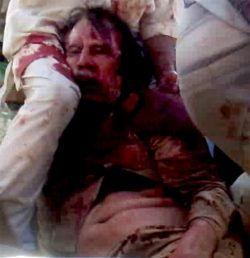
And at the end of the day, THAT is Cameron’s legacy.
Just as it’s the legacy of the all slimy apologists who cheered him on, and the narrow-minded, self-centred xenophobes who clean up after him.
Kit Knightly is co-editor of OffGuardian. The Guardian banned him from commenting. Twice. He used to write for fun, but now he’s forced to out of a near-permanent sense of outrage.
The Epstein Connection to 9-11
Christopher Bollyn – September 10, 2019

Yitzhak Shamir and Benjamin Netanyahu at the Madrid conference, October 1991. Under pressure from the U.S. to reach a peace settlement with the Palestinians, Shamir created “Mega”, a group of rich American Zionists, to support Israel.
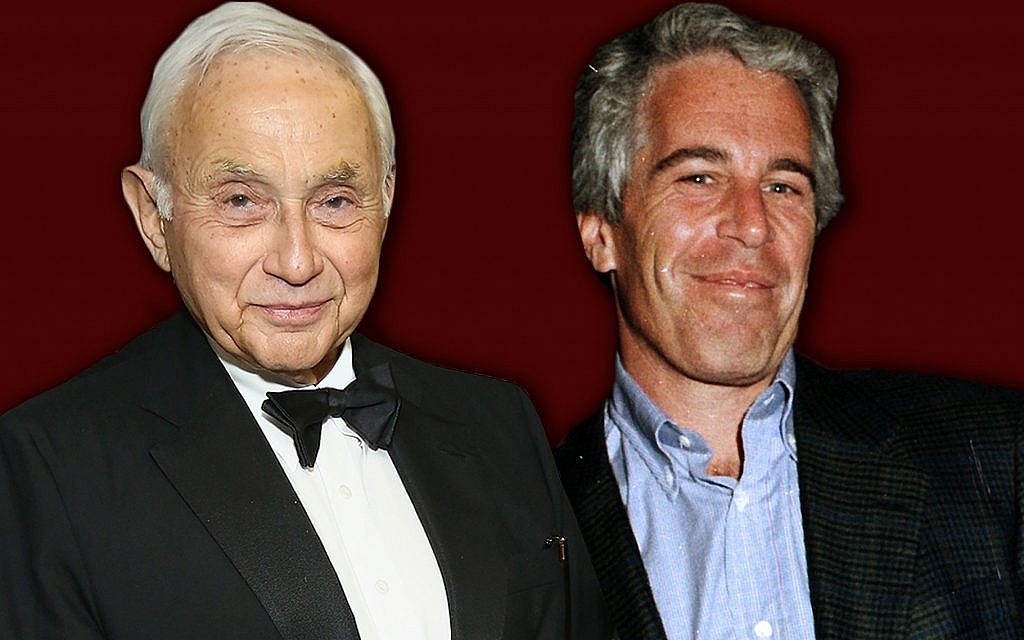
Leslie Wexner, a member of Mega, funded Epstein for years. Was Wexner supporting Epstein to finance a covert Israeli operation?
(Laura E. Adkins/Getty Images via JTA )

Epstein was arrested in July 2019 on federal charges for sex trafficking of minors in Florida and New York. He is reported to have died in his jail cell on August 10, 2019.

Ehud Barak and Jeffrey Epstein have been partners for years. Epstein financed and managed the Wexner Foundation, which gave Barak $2.3 million in 2004, as reported by Israeli journalist Erel Segal. (Source: Revealed: Jeffrey Epstein Entered Partnership Worth Millions With Ehud Barak in 2015, Haaretz )

Michael Chertoff, the former Assistant Attorney General who managed the “non-investigation” of 9-11 (i.e. the cover-up), is on the board of advisors of Ehud Barak’s company, Carbyne, which was funded by Jeffrey Epstein. This connects the criminal network behind 9-11 with the Epstein blackmail operation.
The cover-up is the most essential part of the 9-11 terror atrocity because it is what allows the real masterminds behind the terrorism to attach a false narrative to the crime. The false narrative is designed and prepared in advance to deceive the people and bring public opinion into alignment with the real agenda behind the terror operation.
The most obvious part of the 9-11 agenda was to launch the Global War on Terror, which has become the longest and most expensive war in U.S. history. The fact that the public is not shouting from the rooftops against this costly and fraudulent military campaign is an indication of how successful the 9-11 cover-up has been. Since 9-11, some seven trillion dollars have been wasted on waging wars in the Middle East in which there is no real U.S. interest or benefit to the American people, as President Trump said on April 28, 2018.
The people behind the 9-11 cover-up are clearly part of the criminal network behind the terror atrocity itself. In the Solving 9-11 books I identify many of the key players in the network behind the crime and cover-up. Two of the highest level masterminds involved in the 9-11 cover-up are the former Israeli prime minister and military chief, Ehud Barak, and the former Assistant Attorney General Michael Chertoff.
On 9-11, Ehud Barak was the first person to promote the false narrative by placing the blame for the terror attacks on Osama Bin Laden and calling for a U.S.-led Global War on Terror, which he did from the London studios of the BBC World television network and Rupert Murdoch’s Sky News – all before the towers had fallen on September 11, 2001.
Assistant Attorney General Michael Chertoff was responsible for the federal investigation of 9-11 as head of the criminal division of the Department of Justice. Chertoff’s effort is better described as a “non-investigation” because rather than solving the crime it resulted in the immediate and massive destruction of evidence from the crime scenes where some three thousand people were murdered on 9-11.
The fact that Michael Chertoff now sits on the board of advisors of Ehud Barak’s company, Carbyne, and that Jeffrey Epstein invested millions of dollars into Barak’s enterprise is a solid line connecting the criminal network behind 9-11 with the Epstein sexual blackmail operation.
This is how it works. Epstein’s blackmail operation was designed to control politicians and other agents of influence, which is exactly what is required to maintain a high-level 9-11 cover-up for eighteen years. The fact that Epstein’s racket was supported by Leslie Wexner, a member of the Mega group, is more evidence that Epstein and his partner Ghislaine Maxwell were working for an operation run at the highest level by Israeli intelligence. The Mega group consists of U.S.-based Zionist billionaires dedicated to serving the state of Israel. Mega was established in 1991 during the reign of the former terrorist leader Yitzhak Shamir as Israel’s prime minister.
As Gidi Weitz reported in the Israeli newspaper Haaretz on July 11, 2019:
Revealed: Jeffrey Epstein Entered Partnership Worth Millions With Ehud Barak in 2015
The American billionaire financier Jeffrey Epstein, a registered sex offender who was arrested this week on new sex-trafficking charges involving underage girls, partnered with former Prime Minister Ehud Barak to invest in the former prime minister’s startup.
In 2015 Barak set up a limited partnership, in which he is the sole shareholder. That company invested in Reporty Homeland Security, established in 2014, becoming a major shareholder. Last year Reporty changed its name to Carbyne. The company develops call-handling and identification capabilities for emergency response services.
Barak is the chairman of Carbyne and according to reports by [sic] business media outlets, his personal investment in the company totals millions of dollars in it. Haaretz has learned that Epstein financed a considerable part of the investment, thus becoming a partner in the project.
Sources:
“Ehud Barak, Chairman and Investor,” Carbyne Board of Directors, Carbyne911.com
https://carbyne911.com/team/ehud-barak/
“Secretary Michael Chertoff,” Carbyne Board of Advisors, Carbyne911.com
https://carbyne911.com/team/michael-chetroff/
“Revealed: Jeffrey Epstein Entered Partnership Worth Millions With Ehud Barak in 2015” by Gidi Weitz, July 11, 2019
https://www.haaretz.com/amp/israel-news/.premium-revealed-jeffrey-epstein-entered-million-dollar-partnership-with-ehud-barak-in-2015-1.7493648
To support Bollyn’s research and writing, donate at: http://bollyn.com/donate/ or by PayPal to: bollyn@bollynbooks.com
Another Climate Scientist with Impeccable Credentials Breaks Ranks
“Our models are Mickey-Mouse Mockeries of the Real World”
ELECTROVERSE | September 26, 2019
Dr. Mototaka Nakamura received a Doctorate of Science from the Massachusetts Institute of Technology (MIT), and for nearly 25 years specialized in abnormal weather and climate change at prestigious institutions that included MIT, Georgia Institute of Technology, NASA, Jet Propulsion Laboratory, California Institute of Technology, JAMSTEC and Duke University.
In his book The Global Warming Hypothesis is an Unproven Hypothesis, Dr. Nakamura explains why the data foundation underpinning global warming science is “untrustworthy” and cannot be relied on:
“Global mean temperatures before 1980 are based on untrustworthy data,” writes Nakamura. “Before full planet surface observation by satellite began in 1980, only a small part of the Earth had been observed for temperatures with only a certain amount of accuracy and frequency. Across the globe, only North America and Western Europe have trustworthy temperature data dating back to the 19th century.”
From 1990 to 2014, Nakamura worked on cloud dynamics and forces mixing atmospheric and ocean flows on medium to planetary scales. His bases were MIT (for a Doctor of Science in meteorology), Georgia Institute of Technology, Goddard Space Flight Center, Jet Propulsion Laboratory, Duke and Hawaii Universities and the Japan Agency for Marine-Earth Science and Technology.
He’s published 20+ climate papers on fluid dynamics.
There is no questioning his credibility or knowledge.
Today’s ‘global warming science’ is akin to an upside down pyramid which is built on the work of a few climate modelers. These AGW pioneers claim to have demonstrated human-derived CO2 emissions as the cause of recently rising temperatures and have then simply projected that warming forward. Every climate researcher thereafter has taken the results of these original models as a given, and we’re even at the stage now where merely testing their validity is regarded as heresy.
Here in Nakamura, we have a highly qualified and experienced climate modeler with impeccable credentials rejecting the unscientific bases of the climate crisis claims. But he’s up against it — activists are winning at the moment, and they’re fronted by scared, crying children; an unstoppable combination, one that’s tricky to discredit without looking like a heartless bastard (I’ve tried).

Climate scientist Dr. Mototaka Nakamura’s recent book blasts global warming data as “untrustworthy” and “falsified”.
Data Falsification
When arguing against global warming, the hardest thing I find is convincing people of data falsification, namely temperature fudging. If you don’t pick your words carefully, forget some of the facts, or get your tone wrong then it’s very easy to sound like a conspiracy crank (I’ve been there, too).
But now we have Nakamura.
The good doctor has accused the orthodox scientists of “data falsification” in the form adjusting historical temperature data down to inflate today’s subtle warming trend — something Tony Heller has been proving for years on his website realclimatescience.com.
Nakamura writes: “The global surface mean temperature-change data no longer have any scientific value and are nothing except a propaganda tool to the public.”
The climate models are useful tools for academic studies, he admits. However: “The models just become useless pieces of junk or worse (as they can produce gravely misleading output) when they are used for climate forecasting.”
Climate forecasting is simply not possible, Nakamura concludes, and the impacts of human-caused CO2 can’t be judged with the knowledge and technology we currently possess.
The models grossly simplify the way the climate works.
As well as ignoring the sun, they also drastically simplify large and small-scale ocean dynamics, aerosol changes that generate clouds (cloud cover is one of the key factors determining whether we have global warming or global cooling), the drivers of ice-albedo: “Without a reasonably accurate representation, it is impossible to make any meaningful predictions of climate variations and changes in the middle and high latitudes and thus the entire planet,” and water vapor.
The climate forecasts also suffer from arbitrary “tunings” of key parameters that are simply not understood.
Nakamura on CO2
He writes:
“The real or realistically-simulated climate system is far more complex than an absurdly simple system simulated by the toys that have been used for climate predictions to date, and will be insurmountably difficult for those naive climate researchers who have zero or very limited understanding of geophysical fluid dynamics. The dynamics of the atmosphere and oceans are absolutely critical facets of the climate system if one hopes to ever make any meaningful prediction of climate variation.”
Solar input is modeled as a “never changing quantity,” which is absurd.
“It has only been several decades since we acquired an ability to accurately monitor the incoming solar energy. In these several decades only, it has varied by one to two watts per square meter. Is it reasonable to assume that it will not vary any more than that in the next hundred years or longer for forecasting purposes? I would say, No.”
Read Mototaka Nakamura’s book for free on Kindle — arm yourself with the facts, and spread them.
Facts such as these little nuggets (all lifted/paraphrased from the book):
“[The models have] no understanding of cloud formation/forcing.”
“Assumptions are made, then adjustments are made to support a narrative.”
“Our models are mickey-mouse mockeries of the real world.”
Solar Forcing
Solar output isn’t constant, IPCC. And the modulation of cloud nucleation is a key consequence. During solar minima, like the one we’re entering now, the sun’s magnetic field weakens and the outward pressure of the solar wind decreases. This allows more Cosmic Rays from deep space to penetrate our planet’s atmosphere. These CRs have been found to nucleate clouds (Svensmark et al). And clouds are a crucial player earth’s climate.
As Roy Spencer, PhD. eloquently writes:
“Clouds are the Earth’s sunshade, and if cloud cover changes for any reason, you have global warming — or global cooling.”
For more on that:
The cold times appear to be returning, in line with historically low solar activity.
NASA has warned that this next solar cycle (25) will be “the weakest of the past 200 years”:

Featured Video
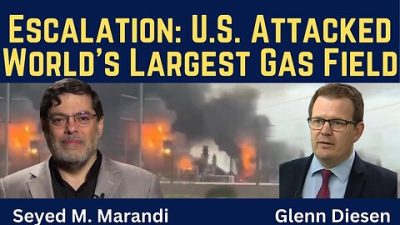
Marandi: US attacked world’s largest gas field & Iran declares economic war
or go to
Aletho News Archives – Video-Images
Book Excerpt
US Axis of Aggression in Gulf
By Finian Cunningham | Strategic Culture Foundation | August 15, 2019
When Washington announced a few weeks ago the formation of a maritime “international coalition” to “protect shipping” in the Persian Gulf, many observers were skeptical. Now skepticism has rightly turned to alarm, as the proposed US-led “coalition” transpires to comprise a grand total of just three nations: the US, Britain and Israel.
The term “coalition” has always been a weasel word used by Washington to give its military operations around the world a veneer of international consensus and moral authority. If the US goes ahead with deploying forces in the Persian Gulf the guise of “coalition” is threadbare. It will be seen for what it is: naked aggression.
Iran promptly warned that if the US, Britain and Israel move on their intention to deploy in the Persian Gulf, it will not hesitate to defend itself from a “clear threat”. … continue
Blog Roll
 Aletho News
- FBI Resumes Buying Americans’ Location Data Without Warrants
- IDF threatens ‘elimination’ for Russian leaders who ‘wish Israel ill’
- Attacks on enemy energy facilities not over yet, strikes ongoing: Iran
- US dragged by Israel into ‘unlawful war’ with Iran – Gulf state
- Israel’s War on Iran’s Grid: How the South Pars Strike Turned Energy into a Weapon
- War on Iran to impose trillion-dollar ‘Israel First Tax’ on US citizens: Araghchi
- The State Is Socializing the Cost Of the Iran War
- Seyed M. Marandi: U.S. Attacked World’s Largest Gas Field & Iran Declares Economic War
- Washington’s War on Cuba Is Older Than You Think
- Daniel Davis: U.S. Military Options & War Narrative Collapse
- If Americans Knew
- Trump: Israel attacked Iranian gas field without US knowledge. No more such attacks!
- America’s friends must help extricate it from an unlawful war
- Democratic Nat’l Committee’s Kneejerk Backing of Israel Is Political and Moral Failure
- Major revelations from former counterterrorism chief Joe Kent’s extensive interview
- More than half of Palestinian child detainees have no charges
- Grieving Parents in Iran Spend Every Night at the Graves of Their Children, Killed by U.S. Strike
- War on Iran spins out of control, Palestine struggles – Not a ceasefire Day 160
- How ignorance, misunderstanding and obfuscation ended Iran nuclear talks
- Israeli media reports grotesque settler attack in West Bank
- UK security adviser attended US-Iran talks and judged deal was within reach
- No Tricks Zone
- Energy Expert: Germany’s Nuclear Phaseout Was A “500 Billion Euro Mistake”
- New Research: South Australia’s Mid-Holocene Sea Surface Temperatures Were 4°C Warmer Than Today
- Storing Green Energy To Last Germany 10 Days Would Require A 60-Million Tonne Battery
- New Studies: UK Sea Levels Were 4 Meters Higher Than Today During The Mid-Holocene
- Destructive Green New Deal: German Energy And Metal Group Warns Of Drastic Crisis
- New Study Documents A 20-Year Pause In Arctic Sea Ice Decline – Driven By Internal Variability
- Wake-up Call: Survey Shows Majority Of Germans Now Favor Postponing Climate Targets!
- Televised! Leading German Political Candidate Tells Schoolchildren CO2 Makes Sun Hotter!
- New Study: A Century Warming Of 1.1°C Is ‘Commonplace’ And ‘Not Unusual’ During This Interglacial
- New Study: ‘Internal Noise’ And Volcanic Forcing Can Trigger 10-15°C Warming Within Decades
 Aletho News