Covid vaccine injured – Silent no More
A book review
Health Advisory & Recovery Team | March 3, 2025
 Was taking the Covid vaccine Worth a Shot? A new book by Caroline Pover, written on behalf of Brianne Dressen who lives in the USA, chronicles the horrific story of how she was severely injured by the Covid vaccine after enrolling on the AstraZeneca trial in November 2020. Caroline sensitively and professionally tells the heart wrenching, eye-opening account of how Brianne Dressen’s life was turned upside down and irreversibly changed forever the day she chose to volunteer to enroll on the UK-led AstraZeneca clinical trial. This book takes the reader along the rollercoaster ride of the devastating injuries caused by the vaccine and the blatant abuse of power by the healthcare system to denigrate, ignore, and cover up her injuries – along with many others labelled – as ‘misinformation’ spreaders by the medical-industrial-military complex. Every person on the planet was misled by governments, NGOs, regulatory agencies, corporations, Big Pharma, healthcare professionals, along with social and mainstream media. From how clinical trials are conducted to the lack of injury compensation, wide scale censorship, corruption and abuse of power, this book shows the myriad ways Brianne fought and continues to fight for truth and justice for the Covid-vaccine injured, who have been completely abandoned and often maligned by society.
The AstraZeneca Clinical Trial
In the introduction, Caroline Pover describes how she had been medically diagnosed with an adverse reaction to the Covid vaccine and was led to believe Brianne Dressen did not exist. It was only when she started posting on social media and heard about another woman who was dropped from a clinical trial because of an adverse reaction to the vaccine, that their paths crossed. Worth a Shot is a book based on real events that impacted on real people and is a narrative account of Brianne’s (Bri’s) story containing brutally honest struggles with how her life has changed irreversibly after the covid vaccine, including her plans to contemplate suicide. Bri had the perfect life: she was a fit, active lady who always pushed herself physically and mentally. She had a wonderful family life, married with two children with a dream house in the mountains. After having children, Bri set up her own preschool to help children who struggled in a typical educational environment. Then in 2020, Covid hit!
When the lockdowns happened and the talk of vaccine trials began, Bri wanted to help in any way possible with contributing to scientific advancements; once “Operation Warp Speed” was being regularly reported in the media, coupled with her husband’s scientific background, Bri felt excited to enrol in the new Covid vaccine trial set up by Oxford University in conjunction with AstraZeneca, which was recruiting in UK, Brazil, South Africa, and the USA. The opening in the USA was in Salt Lake City – just 40 minutes drive from Bri’s home. She had a phone interview with a trial representative for several hours to capture her medical history and was considered an excellent candidate for the trial. Things then went quiet, but out of the blue on 4th November 2020 – the day after the election – she was called into the trial. The consent form she signed was very thorough. It went through all the expectations and explained it was a double-blinded study and that so far 5,000 individuals had received at least one dose, and the side effects were mild to moderate but transient in nature. It also stated that if anyone did experience an adverse reaction they might be withdrawn from the study, but any medical treatment needed for reactions would be covered by AstraZeneca’s insurance policy. Bri took the vaccine, but tingling started within an hour of the injection.
Adverse Reaction
Bri’s reaction was severe. Tingling spread from below her right elbow all the way up her arm and shoulder, then to the other arm. The tingling got progressively worse and her eyes started to blur, and she saw double. Her hearing started to go muffled, but she assumed the symptoms would be gone by the next morning. However, her symptoms intensified, and now both legs were becoming weaker. She called the number on the consent form to report her reactions, but no one answered her call. Within days, she was confined to her bedroom, with drapes covering the window to shut out the light. Within weeks, her condition worsened so she saw a neurologist and visited an out-of-hours emergency clinic. Nausea, vision disturbances, tingling, extreme sensitivity to sound, limb weaknesses, as well as excruciating pain developed all over the body, including her teeth, stomach, bones, joints, legs and arms. She could not eat and lost 20 lbs within weeks. Her body seemed to vibrate and buzz from within constantly, and she could not bear anyone touching her, with extreme sensitivity to sound, light, and food. She spent weeks then months confined to her bed. She lost control of her bladder and her blood pressure was erratic. None of the pain medications helped.
Her husband and other family members and close friends helped with looking after the children and caring for her. Yet Bri and her husband did not want to broadcast these issues publicly when so many were struggling with Covid itself. Weekly and even sometimes daily visits to the hospitals baffled the doctors. Friends visited her but the visible transformation of her appearance shocked them, and she had to wear earplugs and sunglasses. Attempts at exercise were futile, as the pain was too unbearable. She visited multiple experts but to no avail. The principal investigator of the clinical trial suggested she might have multiple sclerosis (MS), but the trial clinic did not recommend any other specialists. Local neurologists recommended she visit the ER. The clinic staff told Bri that the ramifications were serious if she thought there was any possibility the vaccine had caused these symptoms. When she said her reactions were from the vaccine as she was a trial participant, most professionals were not interested and dismissed the symptoms as Covid. She had MRI scans but found nothing significant; there was nothing they could do. Bri was to report back to the trial clinic, which she did. They told her not to worry because AstraZeneca would reimburse all her medical costs – and they would be in touch soon. But no one contacted her.
No Diagnosis
She continued to go through the proper channels and medical experts to get answers. After a series of tests that ruled out MS and other neurological conditions, she was no closer to a diagnosis. By ploughing through scientific papers and doing their own research, Bri discovered post-vaccination transverse myelitis (TM), Guillain-Barre Syndrome (GBS) and acute disseminated encephalomyelitis (ADEM). Both TM and ADEM are conditions relating to inflammation of the spinal cord or central nervous system, which can lead to permanent damage. Despite Bri reporting this to the trial clinic, the trial was not put on hold. She was told to report everything back to AstraZeneca, which she did, but despite all the assurances, no one contacted her. Bri’s multiple trips to the hospital caused by the vaccine meant she was a burden to the healthcare system. Many physicians shrugged off her symptoms as psychiatric because none of the tests produced any explanation. She was put on antidepressants and gabapentin for neurological pain. Nothing had been put in place to deal with anyone who had an unexpected reaction to the vaccine.
On the next visit to her clinic, Bri hoped someone would be able to help her with her condition but was told no one could see her unless she signed a new consent form. She asked what was different about this form but they insisted they could not help her unless she signed it. Bri’s vision was so impaired that she could not read the form. She felt she had no choice but to sign it. Once she signed the form, two nasal swabs were taken and a blood test to confirm she did not have Covid, and she was discharged. Bri reached out to the CDC, and her husband filled out a VAERS report, but no one responded. Bri’s health deteriorated and the medical costs were mounting up, with assurances AstraZeneca would reimburse. After weeks of scouring the internet they discovered that IVIG (intravenous immunoglobulin) might be a possible treatment. When they showed this to the doctors and other experts, they were ignored and refused this treatment. The only interaction from AstraZeneca (via a third party) was that Bri was ‘unblinded’ from the trial at her request as she wanted to know if she had received the vaccine, which was later confirmed. The trial sponsor agreed she would not receive a second dose, but they offered no help or support about her continued deteriorating health.
Losing Hope
Exhausted and losing hope, Bri and her husband reached out to the NIH. They were surprised when a specialist neuroimmunologist, Dr Avinthra Nath, Director of the National Institute of Neurological Disorders and Stroke at the NIH, and a researcher at the National Institute of Allergy and Infectious Diseases (NIAID) who worked directly under Dr Anthony Fauci, responded with interest to learn more about Bri’s condition. An appointment was arranged and he seemed very sympathetic and gave the impression he was keen to help. Bri then learned the shocking news that the AstraZeneca vaccine was authorized for use throughout the UK. Publicly the trials were being celebrated as hugely successful, but Bri knew otherwise. She felt suicidal – she was a climber, skier, and dancer who was now a completely non-functioning member of the family barely able to leave her bedroom. Bri’s circle of friends started to diminish. Their savings were also being rapidly depleted because of the skyrocketing medical costs. What about all the assurances on the consent form? What happened to all the promises of the costs being reimbursed? Bri began to lose hope. A trip into nature with her sister that aimed to be a temporary distraction for her resulted in a candid but dark exchange. Her sister asked her to promise her not to kill herself. Bri replied “I cannot promise you that”. The chapter describes how she planned to take her own life, so she was less of a burden to her family. Mercifully, she changed her mind and instead directed her focus on finding and helping others who might be injured and experiencing the same nightmare she was going through.
The Many Injured
It didn’t take long before Bri joined support groups online. After some time she saw a posting from another lady who was also injured in the AstraZeneca trial. Finally, she could talk to someone who knew exactly what she was going through! Within a few days she found another clinical trial participant (Moderna trial) who also experienced similar debilitating reactions. In this patient’s case, she had her left lymph nodes removed as they were so swollen but she became bedridden owing to complications of the surgery. Bri befriended Dr Danice Hertz, a retired gastroenterologist who had developed Mast Cell Activation Syndrome (MCAS) following the Pfizer jab and was suffering ongoing allergic-type reactions including tinnitus, chest pains, and severe nerve damage to her face. Danice increased the number of patients referred to the NIH and Dr Nath for his study. Soon she was inundated with emails from others who had experienced adverse effects from covid vaccines. Sheryl Reutters was harmed by the Moderna jab, experiencing a severe neurological reaction, and soon became a close friend of Bri. Mary Johnson a front-line ER and critical care physician who was injured by the vaccine, and was driven out of her job and confined to her home. Kristi Dobbs and Candace Hayden were also damaged by the vaccine. Bri trusted the NIH to take care of all these injured and would talk to them each week to learn about their stories.
The number of people with vaccine injuries kept mounting and they were all being ignored by doctors and the drug companies. So, the group decided to create a Covid vaccine injury support group on Facebook. However, anyone publicly criticising the vaccines soon became labelled as ‘conspiracy theorists’ and more prominent healthcare workers with dissenting voices became known as the “Disinformation Dozen”. After taking a default position of always giving the benefit of the doubt, Bri was now beginning to realise they had been strung along for months. Her own children were starting to struggle at school, and were developing anxiety, and her son was afraid of leaving the house. Then Bri discovered Maddie, a 12-year-old girl who was completely healthy before receiving the Pfizer vaccine, who was left unable to walk or eat, incontinent, and with seizures and fainting episodes. Bri and the core group of vaccine injured decided enough was enough – they had to go public!
Going Public
They started to post their testimonies and videos about their experiences on the website; some of the stories were harrowing. The videos found their way onto TikTok and were receiving millions of views, as traffic to their website exploded, with over 300,000 views per week. More and more stories poured in from around the world. Facebook seemed to be where many of the support group interactions were residing. By early 2021, although Bri had yet to find anyone else injured by the AstraZeneca jab, in the UK reports of blood clots were flooding in. Slowly news reporters began contacting them and they promised to cover the stories of the vaccine injured along with statements from governments and drug companies. The group reached out to the CDC, FDA, and VAERS but no one received a significant response. How many others were out there with the same relentless pain, alone and with overpowering thoughts? Petitions were submitted to the FDA, CDC, VAERS, and the White House, after one lady who was part of the injured group took her own life. They went to the top, and contacted Dr Peter Marks, Director of the Centre for Biologics Evaluation and Research at the FDA. Word was now spreading among the vaccine-injured community that the NIH had been contacted about hundreds of people with adverse reactions.
Bri and her newfound friends detected a distinct unease among most doctors and nurses whom they engaged with during their multiple visits to the hospital. Bri spent a week at the NIH having multiple tests, which confirmed she had nerve damage in her legs and autonomic nervous system issues. She was diagnosed with “post-vaccine neuropathy”, and recommended IVIG therapy – the very treatment Bri had pleaded with the doctors to try but were ignored. One of Bri’s friend’s, Casey, was an NIH employee who had suffered severe neurological complications as a result of the vaccine. Casey met with Dr Nath, who had previously reassured them that they were documenting and researching all the injuries. When Casey then confronted Dr Nath about his research he flatly denied any such research was underway even though Bri had spent a week at the NIH having tests and being placed on the IVIG protocol. They had no choice but to get political, so they arranged a call with Wisconsin’s Senator Johnson who had been outspoken about the harms caused by the covid vaccines and the censorship, and had been critical of the lockdown policies. Bri was cautious of accepting Senator Johnson’s help because of how he had been portrayed, but on meeting him found he was full of kindness and willing to expose himself to attack on their behalf.
Senator Johnson agreed to hold a press conference. The vaccine injured community felt the politicisation of their health and ‘vaccine stance’ was very draining. One of the support groups that came together with Bri’s group was named “A Wee Sprinkle of Hope” to reflect the culture of compassion. The real objective of the vaccine injured movement was to help people who were suffering. No headline news from the press conference was on the mainstream media, it was mentioned as an aside before going to the next item. Every vaccine injury was not misinformation and their abandonment by the manufacturers was not misinformation. Instead, the news reporters centred the stories not around the vaccine injuries, but around the fact it was led by what they claimed was a crazy, right-wing ‘conspiracy theorist’: Senator Johnston.
Censorship
Then the censorship started. Within 24 hours of the press conference, Facebook began shutting down the support groups. The injured gathered together and then joined with A Wee Sprinkle of Hope. Thousands had joined, and the group was getting larger by the day. Then 5 days after the press conference, and without warning, Facebook shut down the largest Covid vaccine injury support group in the world. Now the injured could not even talk to each other! The social media platform was actively restricting people suffering from extreme physical and emotional pain from communicating with each other. Soon the group decided to develop code words so they could still communicate under new names. Then a mainstream news article exposed one of the code words, and a new group of 30,000 members was shut down too! Warnings appeared beneath people’s posts on their own pages urging viewers to go to Facebook’s Community Guidelines on ‘accurate’ information about vaccines. The warnings also deterred other Facebook users, suggesting they should not interact with ‘repeat offenders’ posting misinformation about vaccines. People’s posts were also being ‘shadowbanned’ or hidden by Facebook algorithms.
Bri was eventually paid a measly $590.20 from AstraZeneca, which coincided with her learning of other injured people in the UK in early 2021. The injured were getting mixed messages from the NIH. On the one hand, they were paying for people’s tests and diagnosis, but then they denied any research was being done. Eventually Dr Nath stopped responding to emails and the FDA stopped communicating with Danice. The NIH then shut down the entire study of the covid vaccine injured and cancelled Bri’s upcoming trip to the NIH. Some of the “Disinformation Dozen” also had their social media accounts shut down or restricted. By now, authors, doctors, patients, activists and even celebrities were being censored. Bri’s husband studied all the clinical trial study reports that had come out, matching the injured participants they knew of to the recorded reactions and found most had been downplayed or even omitted.
It was becoming clear that the institutions they had previously trusted, such as the media, science, pharmaceutical companies, and the government were hiding the truth or outright lying about Covid vaccine adverse reactions. They were being silenced. Free speech was officially over. But another threat was looming: vaccine mandates! The idea of mandating Covid vaccines was terribly distressing to many of the injured. They knew first hand that no one would be there for anyone if they developed a severe reaction. Being fully vaccinated meant you could go to work, visit restaurants or travel without restriction. Those same ‘privileges’ would not be open to the unvaccinated. The coercion, propaganda, bribes and incentives to get the vaccines was extraordinary. Next they were going to jab children.
Eventually, Bri discovered Dr Doshi, an Associate Professor at the University of Maryland with an interest in the drug approval process and an expert in clinical trials, who was also a Senior Editor at the British Medical Journal. Bri and others set up a call with him, and he suggested organising a roundtable discussion in Washington, with senators, health officials and all media. Other pharmaceutical policy experts were brought in, and Bri and her friends started to gather the vaccine injury testimonials. Fundraising was needed to pay for the injured to travel to the event. Some organizations donated together with crowdfunding efforts that raised £37,000 to pay for everyone’s travel and accommodation. The roundtable event at the Senate lasted over 4 hours, which sparked some media interest. The clinical trial company offered a single ‘full and final settlement’ payment to Bri of £1,243.30. This amount did not even cover one-half of the cost of a single IVIG infusion. It seemed the second consent form that Bri had signed (under duress) had significant changes that included all the symptoms she had suffered since the jab, effectively invalidating the previous consent form. After meeting another vaccine victim, Dr Joel Wallskog, Bri and others formed a new group: React19.
Going Global
A Pfizer Whistleblower, Brook Jackson, had been a regional director at one of the clinical trial sites and expressed serious concerns about how the Pfizer Covid vaccine trial was conducted. Despite the stories some mainstream channels promoted about vaccine misinformation and “anti-vaccine propaganda”, clips of the roundtable event were going viral. Many of the vaccine injured, including healthcare professionals and doctors were risking their careers by speaking out against the vaccines. While React19 was originally set up to support the American’s who were injured, it ultimately became a hub for the vaccine injured all over the world. What became clear was that vaccine injury support groups before the covid vaccines faced similar medical gaslighting. The difference this time was never had a vaccine been administered to so many people at the same time – an estimated 5 billion globally – so the global repercussions would be huge. A chat group was initiated for React19, which grew with international leaders, creating a unified effort. Charlet Crichton set up the UK-based UKCVFamily around the same time as React19, as the healthcare system in the UK is different to the USA and more people in the UK had been given the AstraZeneca vaccine. Both groups now collaborated.
It was also becoming clear that as the vaccine injured community grew, the adverse reactions in all the trials had been hidden or misrepresented. Throughout her journey, Bri had started out searching to find the support she needed, but since taking on a leadership role in React19 she was now the support. The end of the book chronicles how finding allies was not as easy as some might assume. There was still no research paper from Dr Nath from the NIH, and when it finally did materialize on a preprint publication, it only published data from 24 patients (despite having over a hundred cases). Furthermore, any links to the adverse events of the vaccine were completely downplayed. When the injured were invited to speak at events by ‘advocates’ on behalf of the injured, often it was more for appearances. Some people in the freedom movement wanted to raise their profile through association with the vaccine injured, but were not directly offering help. Gradually the environment changed so that it was more ‘acceptable’ to discuss vaccine injuries. The film produced by Mark Sharman (former ITV and BSkyB News Executive) “Safe and Effective: A Second Opinion” released on YouTube in October 2022, was removed from the platform within hours following its mention in a Parliamentary debate, despite amassing over a million views!
Find the Science, Find the Money
The immunization surveillance systems such as VAERS, Yellow Card report scheme and others were not working. It is estimated fewer than 1% of adverse reactions are even logged on these sites and so the true nature and scale of such reactions are far greater than captured on these systems. A staggering statistic of the VAERS system is that in the 30 years of vaccine injury, 50,000 reports had been logged. In 2021, there were 750,000 reports of adverse reactions. In other words, the covid vaccine reports in 1 year outnumbered all adverse event reports from the prior 30 years combined. Many of the VAERS reports were not being followed up or being processed properly. Studies submitted to journals that had any data that questioned the vaccines, were often rejected from multiple journals.
Compounding the issue, the 1986 US National Childhood Vaccine Injury Act (NCVIA) removed any financial liability from the manufacturers if any deaths or injuries were caused by vaccines. Moreover, vaccine damage payment schemes, such as the VICP in the USA, were wholly inadequate as proving vaccine was the cause meant hardly any claims were successful and any moderate payments often took years. The PREP (Public Readiness and Emergency Preparedness) Act established in 2005, also granted pharmaceutical companies immunity from federal or state litigation, in circumstances such as a pandemic. So, the companies making the vaccines have no responsibility for damage and little if any incentives to carry out scientific research into any injuries caused. The vaccine injured had to find the “science to follow” rather than “follow the science”. A combination of the “fact-checkers” who demolished any “anti-vaccine” testimonials and that medical reimbursement was non-existent, the out-of-pocket medical expenses the vaccine injured faced often exhausted personal savings to the point that many were refinancing or selling their homes.
Conclusion
The fear-mongering that had contributed to many of those injured by the vaccine to choose to get vaccinated in the first place was now continuing for this marginalized section of society. Those injured by the Covid-vaccine also learned from people who had been injured by past vaccines. The censorship tale was all too familiar, but the React19 community started doing their own research and discovered alternative therapies – be it pharmaceutical, natural, physical, spiritual – and lifestyle adjustments could help with their symptoms. The Covid vaccine rollout left a trail of devastation and damage in its wake. Social cohesion and disconnection also set in with the vaccine-injured ostracised from society. Whether vaccinated or unvaccinated, most people have been affected by the loss of relatives, friendships, relationships, and often life-long careers and financial autonomy. For many, finding support in such dark times has literally been the difference between life and death. We all need healing from the collective trauma of the Covid era, which is still ongoing. By sharing this poignant story of the many Covid-vaccine injured, we hope this will inspire more kindness, connection, compassion, and courage to be open about the truth. That is Worth a Shot!
Worth a Shot?: Secrets of the Clinical Trial Participant Who Inspired a Global Movement―Brianne Dressen’s Story, told by Caroline Pover, was published in November 2024 by Skyhorse Publishing, ISBN: 9781510783461.
All proceeds from the book go to UKCVFamily and React-19, support vaccine -injured in UK and worldwide.
Let’s Not Forget JFK’s Attitude Toward Russia
By Jacob G. Hornberger | FFF | March 4, 2025
In the aftermath of the tirade at the White House among President Trump, Vice-President Vance, and Ukrainian President Zelensky, both conservatives and liberals (i.e., “progressives” or leftists) are going ballistic over Trump’s friendly attitude toward Russia. They are pointing out that since at least the end of World War II, the official attitude of the U.S. government has always been that Russia is to be considered a threat to U.S. “national security” as well as an official enemy, rival, opponent, or competitor of the United States. They say that Trump’s positive overtures to Russia are unprecedented.
For example, consider a March 2 article in the New York Times entitled “Trump Is Doing Real Damage to America” by David French, which states that after World War II, “both parties saw the Soviet Union as the grave national security threat it was. For decades, both parties were more or less committed to a strategy of containment that sought to keep Soviet tyranny at bay.” French also suggests that America’s “fundamental identity” lies to this very day in a continued commitment to NATO and a continuous antipathy toward Russia.
French’s mindset is pretty much mirrored in an op-ed in the Wall Street Journal in a March 3 article entitled “Trump’s Embrace of Russia Rocks NATO Alliance” by Daniel Michaels. The article states: “The American president’s embrace of Russia, an adversary that has worked for years to undermine U.S. global leadership, runs counter to decades of Western policy. The U.S. and its allies founded the North Atlantic Treaty Organization 75 years ago as protection against Soviet Russia.”
There is one notable omission from both articles, however, an omission that occurs in other articles along these same lines in the mainstream press. That omission is President John F. Kennedy and, specifically, Kennedy’s move toward peaceful, friendly, and normal relations with Soviet Russia and, for that matter, with the rest of the communist world.
Why would members of the mainstream press fail to point out this one important exception to the official policy of perpetual hostility and antipathy toward Russia? After all, they have to be familiar with Kennedy’s June 10, 1963, commencement address at American University — a speech that became known famously as Kennedy’s Peace Speech.
My hunch is that the reason the mainstream press omits this major exception to its official anti-Russia historical narrative is twofold: (1) It would cause them to have to explain why Kennedy was trying to change America’s direction, something that the mainstreamers would prefer not to do and (2) It would cause them to have to address the uncomfortable subject of the JFK assassination, something the mainstream press has always been loathe to do.
By the time JFK delivered his speech, he had achieved a “breakthrough’ that enabled him to see that the Cold War was just one great big racket, one that was not only extremely dangerous but also one that was being used to justify the conversion of the federal government from its founding system of a limited-government republic to a national-security state, a totalitarian type of system in which the federal government wields omnipotent powers, including assassination, torture, and indefinite detention. He had achieved this breakthrough after experiencing the national-security establishment’s perfidy in the Bay of Pigs fiasco, its advocacy of a surprise first-strike nuclear attack on Russia, its infamous Operation Northwoods proposal, and its highly dangerous and irresponsible actions during the Cuban Missile Crisis.
To get a sense of the dramatic and revolutionary shift JFK was taking America, it is necessary to read or listen to the entire speech, which can be done here. To get a sense of why there was so much anger, hatred, and distrust for Kennedy within the U.S. government and the mainstream press, consider the following excerpts from his speech:
I also believe that we must reexamine our own attitude–as individuals and as a Nation–for our attitude is as essential as theirs. And every graduate of this school, every thoughtful citizen who despairs of war and wishes to bring peace, should begin by looking inward–by examining his own attitude toward the possibilities of peace, toward the Soviet Union, toward the course of the cold war and toward freedom and peace here at home.
First: Let us examine our attitude toward peace itself. Too many of us think it is impossible. Too many think it unreal. But that is a dangerous, defeatist belief. It leads to the conclusion that war is inevitable–that mankind is doomed–that we are gripped by forces we cannot control.
We need not accept that view. Our problems are manmade–therefore, they can be solved by man. And man can be as big as he wants. No problem of human destiny is beyond human beings. Man’s reason and spirit have often solved the seemingly unsolvable–and we believe they can do it again.
I am not referring to the absolute, infinite concept of peace and good will of which some fantasies and fanatics dream. I do not deny the value of hopes and dreams but we merely invite discouragement and incredulity by making that our only and immediate goal….
So let us persevere. Peace need not be impracticable, and war need not be inevitable. By defining our goal more clearly, by making it seem more manageable and less remote, we can help all peoples to see it, to draw hope from it, and to move irresistibly toward it.
Second: Let us reexamine our attitude toward the Soviet Union….
No government or social system is so evil that its people must be considered as lacking in virtue. As Americans, we find communism profoundly repugnant as a negation of personal freedom and dignity. But we can still hail the Russian people for their many achievements–in science and space, in economic and industrial growth, in culture and in acts of courage.
Among the many traits the peoples of our two countries have in common, none is stronger than our mutual abhorrence of war. Almost unique among the major world powers, we have never been at war with each other. And no nation in the history of battle ever suffered more than the Soviet Union suffered in the course of the Second World War. At least 20 million lost their lives. Countless millions of homes and farms were burned or sacked. A third of the nation’s territory, including nearly two thirds of its industrial base, was turned into a wasteland–a loss equivalent to the devastation of this country east of Chicago….
I am taking this opportunity, therefore, to announce two important decisions in this regard.
First: Chairman Khrushchev, Prime Minister Macmillan, and I have agreed that high-level discussions will shortly begin in Moscow looking toward early agreement on a comprehensive test ban treaty. Our hopes must be tempered with the caution of history–but with our hopes go the hopes of all mankind.
While JFK did not formally declare an end to the Cold War, every official within the Pentagon, the CIA, and the NSA — as well as their Operation Mockingbird assets within the mainstream press — fully understood that that was the import of his Peace Speech. Thus, it is not difficult to see why U.S. officials deemed Kennedy to be a grave threat to “national security.” The president who they considered to be a naive, incompetent, traitorous womanizer was not only taking America down a road to communist defeat in the Cold War, he was also implicitly challenging the need for a totalitarian-like national-security state for America. JFK’s Peace Speech was effectively a declaration of war by the executive branch of the U.S. government against the national-security branch.
JFK’s Peace Speech left the national-security establishment with a deeply discomforting choice: Sit back and let Kennedy take the country down or keep America “safe” by eliminating Kennedy. See FFF’s book JFK’s War with the National Security Establishment: Why Kennedy Was Assassinated by Douglas P. Horne, who served on the staff of the Assassination Records Review Board and JFK and the Unspeakable: Why He Died and Why It Matters by James W. Douglass. Also see The Kennedy Autopsy and An Encounter with Evil by Jacob Hornberger.
Do you see why the mainstream press would prefer to airbrush John Kennedy’s decision to end the Cold War racket and move America toward peaceful and harmonious relations with Russia out of America’s history? If they include that major exception in their official historical narrative, they would have to explain the reasons for Kennedy’s decision as well as delve into the national-security establishment’s motive for eliminating him. They then have to explain how his assassination restored things to “normal” — with the continuation of the Cold War, the war in Vietnam, which ended up sacrificing more than 58,000 American men for nothing, the never-ending support of the Cold War dinosaur known as NATO, and the perpetual anti-Russia mindset that pervades America today.
The Think Tank Racket
Prof. Glenn Diesen on the Groong Podcast
Glenn Diesen | February 18, 2025
 I discussed THE THINK TANK RACKET with the Groong podcast.
The negative aspect of think tanks is their immense power, from controlling information to functioning as a waiting room for politicians out of office.
Information is power, and the business model of think tanks entails selling political influence in Washington and manufacturing consent among the public.
The military-industrial complex is the dominant donor to think tanks, which results in a bias toward military solutions and perpetuating conflict.
THE THINK TANK RACKET: Managing the Information War with Russia – CLARITY PRESS, Inc.
THE THINK TANK RACKET: Managing the Information War with Russia
Senator Ron Johnson Demands Meta Releases Records on COVID-19 Vaccine Injury Censorship
By Cindy Harper | Reclaim The Net | February 9, 2025
Senator Ron Johnson, Chairman of the Senate Permanent Subcommittee on Investigations, has escalated his scrutiny of Meta’s alleged suppression of COVID-19 vaccine injury discussions, demanding that CEO Mark Zuckerberg release internal records detailing Facebook’s content moderation practices.
In a letter dated February 4, 2025, Johnson specifically questioned Facebook’s removal of vaccine injury support groups, including A Wee Sprinkle of Hope, which was described in the book Worth a Shot? as the largest such group in the world before it was shut down just five days after Johnson’s June 28, 2021, roundtable with vaccine-injured individuals.
We obtained a copy of the letter for you here.
The letter also reiterated claims that Facebook engaged in shadow banning, appended warning labels to users’ posts about vaccine injuries, and even censored private messages. One particularly tragic case cited in Worth a Shot? described a woman who took her own life after her private messages seeking help from fellow vaccine-injured individuals allegedly went unnoticed due to Facebook’s restrictions on message visibility.
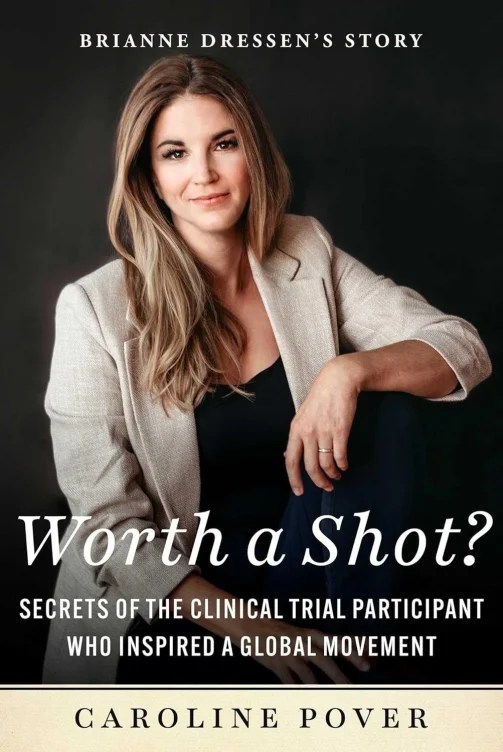
The book in question: Worth a Shot? by Caroline Pover
Johnson’s letter followed recent remarks by Zuckerberg on The Joe Rogan Experience, where he acknowledged that the Biden administration exerted intense pressure on Facebook to suppress content about vaccine side effects. According to Zuckerberg, the government “pushed [Facebook] super hard to take down things that were honestly true” and even resorted to “yelling, cursing, and threatening repercussions” if the platform did not comply.
The senator’s letter outlined a sweeping request for documents, including records of Facebook’s interactions with government agencies, vaccine manufacturers, and third-party groups involved in content moderation policies. He specifically asked whether any federal entity requested the censorship of vaccine injury support groups and demanded details on Facebook’s policies regarding the suppression or removal of posts related to vaccine injuries.
Johnson has set a deadline of February 18, 2025, for Zuckerberg to comply with the request, emphasizing that the investigation seeks to uncover the full extent of the Biden administration’s involvement in what he characterizes as an aggressive censorship campaign in collaboration with Big Tech.
More: Facebook and YouTube Censored Victims of AstraZeneca COVID Vaccine
Dr. Charles Hoffe: Free at Last, but the Battle for Truth Continues
All Charges Dropped
Canary In a Covid World | February 6, 2025
Now, after years of relentless attacks, the College of Physicians and Surgeons of British Columbia has dropped all charges against Dr. Charles Hoffe. It is a victory for truth—but a bitter one. His career, his practice, and years of his life were taken from him. The damage cannot be undone.
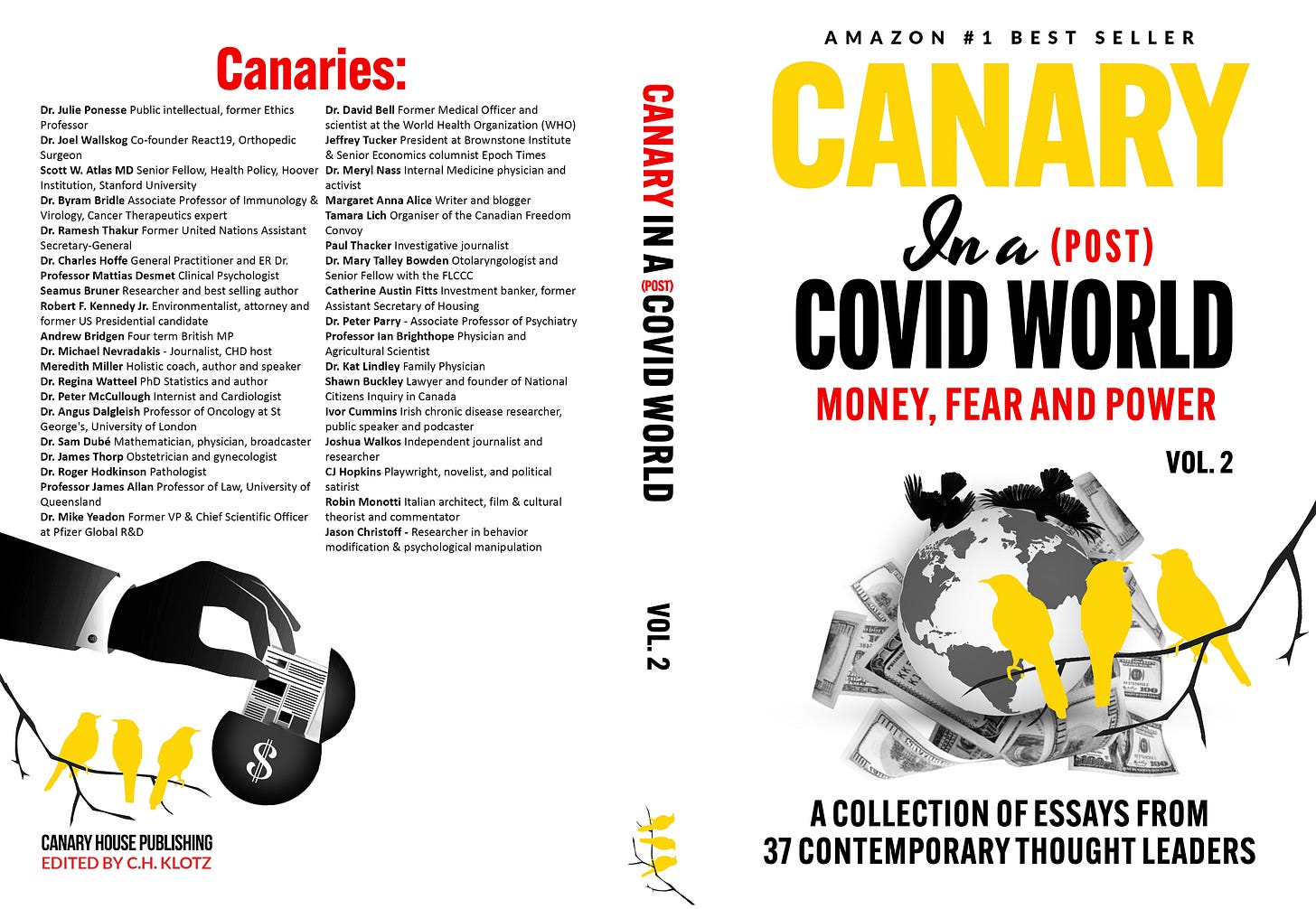
We are incredibly honored that Dr. Hoffe contributed Chapter 6 to Canary in a (Post) Covid World: Money, Fear, and Power (Volume 2). From the beginning, we knew he was telling the truth. His courage to speak out, despite the overwhelming pressure to remain silent, embodies exactly what the Canaries stand for—integrity, resilience, and the relentless pursuit of truth.
Dr. Hoffe, a small-town doctor in British Columbia, was one of the first physicians to sound the alarm on COVID-19 vaccine injuries—only to be silenced and persecuted for doing so. A true Canary, he saw firsthand the harm unfolding in his own patients, yet governments and health officials denied the dangers, doubling down on their “safe and effective”narrative. For his honesty, he was censored, stripped of his ability to practice medicine, and relentlessly attacked.
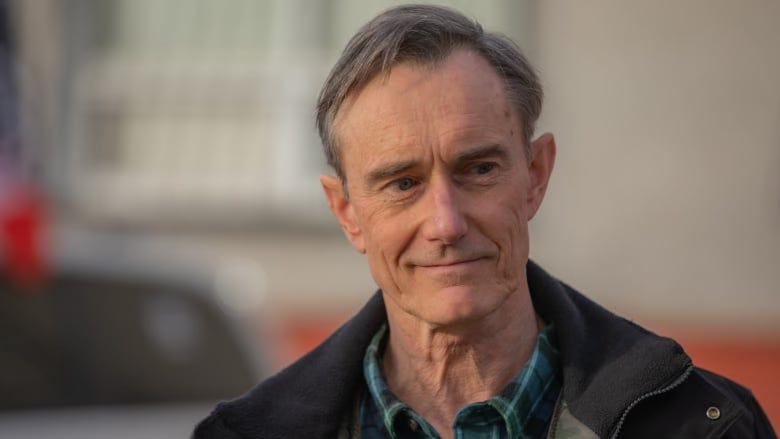
But he was never alone. Behind the scenes, many courageous individuals—including fellow Canaries Dr. Jessica Rose, Dr. Peter McCullough, and Dr. Pierre Kory—worked tirelessly to expose the truth and defend his integrity. Their collective efforts helped bring undeniable evidence to light, making it impossible for the authorities to justify their case against him.
In Integrity Under Fire (Chapter 6), Hoffe takes readers on a gripping journey through the harrowing events that led to his downfall—and his unwavering resolve to stand by his patients. He details the suppression of early treatment, the real-world vaccine injury patterns he documented, and the brutal pushback he faced for daring to ask questions. His work paints a picture of a global medical establishment determined to ignore harm and punish dissenters.
Dr. Charles Hoffe is not just an honest doctor—he is a hero of the people and a key figure in the global narrative that is now crumbling. He stood firm when so many others stayed silent.
But this battle is no longer just about truth—it is a battle to wake people up in the face of relentless propaganda. The forces that sought to silence him have not gone away. The same institutions that crushed his career still refuse to acknowledge the harm they have caused. If we do not stand up, if we do not speak out, this will happen again.
This chapter is more than just a story—it’s a warning. A wake-up call. A testament to the courage of one man who refused to betray his conscience.
Read his story. Share his truth. Wake others up.
Who is Mohammed al-Tous, longest-serving Palestinian prisoner released by Israel?
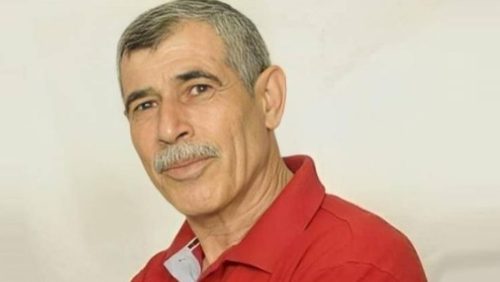
Longest-serving Palestinian prisoner Mohammed al-Tous (Photo via social media)
Press TV – January 25, 2025
Israel has freed the longest-serving Palestinian prisoner, Mohammed al-Tous, among the 200 inmates released as part of the second phase of a prisoner exchange deal with the Hamas resistance movement under the Gaza ceasefire.
In exchange for the prisoners, Hamas earlier on Saturday released four female Israeli soldiers, who were held in Gaza since October 7, 2023.
Tous, who had been in detention for nearly four decades, is a member of the Fatah movement founded by late Palestinian leader Yasser Arafat.
He joined Fatah in 1970 when he was only 14, and took part in several operations targeting Israeli forces and settlements between 1983 and 1985.
His activism led to multiple arrests, with his first imprisonment happening in 1970. After escaping from prison in 1975, he became a “wanted man” by Israel and was re-arrested four more times by 1985. An Israeli military court sentenced him to multiple life sentences.
Tous had been behind bars ever since.
While in prison, Tous emerged as a leader among inmates, advocating for the rights of Palestinian prisoners and participating in hunger strikes to protest against Israeli prison policies.
His resilience and commitment to the Palestinian cause have made him a symbol of resistance in the eyes of the Palestinian people.
Tous is also an accomplished author. His first book, Eye of the Mountain (2021), details his life, resistance activities, and perspectives on the Palestinian struggle. His latest work, Sweetness and Bitterness (2023), chronicles his ordeals in prison, offering insight into the challenges faced by Palestinians incarcerated in Israeli jails.
According to the Palestinian Prisoners’ Club advocacy group, the 69-year-old is recognized as the “dean” of prisoners in the occupied West Bank.
Tous was on the list of seventy detainees who were deported to Egypt on Saturday and who have not been able to meet their relatives in Gaza.
Several high-profile Palestinian fighters including Mohammad al-Ardah, who was part of a jailbreak in 2021, were also among them.
They are expected to be transferred from Egypt to countries such as Algeria, Tunisia, and Turkey.
Separately, a total of 114 inmates arrived in Ramallah and received a heroes’ welcome.
Masses of people congregated in the occupied West Bank city and celebrated the return of the released Palestinian prisoners.
The large crowd included people hoisting Palestinian flags, shouting slogans and documenting the scene with their phones. They surrounded a convoy of buses carrying the freed prisoners.
Moreover, sixteen freed Palestinian prisoners arrived in the Gaza Strip through the Karem Abu Salem crossing.
The released Palestinian prisoners were transferred to the European Gaza Hospital in Khan Younis, which is situated in the south of the Gaza Strip.
Israel has released a list of more than 700 Palestinian prisoners, who are to be released under the deal. More than 230 prisoners are serving life sentences and will be permanently sent to exile upon their release.
Hamas said in a statement on Saturday that Israel was forced to “open the doors of his cells to our heroic prisoners,” after more than 14 months of “unprecedented brutal aggression that targeted every inch of Gaza in its barbarity.”
Trump knows Ukraine conflict means nuclear WWIII, gives peace a chance with Russia’s Putin
By Finian Cunningham | Strategic Culture Foundation | January 23, 2025
The chances of a peace deal in Ukraine are suddenly a lot higher under President Donald Trump only because he has a realistic sense of a nuclear Third World War happening between the United States and Russia if that conflict is not ended promptly.
Peter Kuznick, an esteemed American professor of history, says that the Biden administration brought the world closer to a nuclear conflagration than at any time since the Cuban Missile Crisis in 1962. Biden did this by relentlessly arming Ukraine with weapons to strike deeper and deeper into Russia instead of trying to find a peaceful resolution to the conflict. Indeed, there was no diplomatic effort from Washington under Biden. It was ideologically and propaganda-driven for confrontation, as was the Democratic presidential candidate, Kamala Harris.
Kuznick points out that Trump is no John F Kennedy in terms of the latter’s depth of historical and philosophical knowledge. But in comparison with Joe Biden, Trump has shown more humanity and common sense by not insulting Putin and in reaching out for a peaceful end to the slaughter in Ukraine. Biden called Putin a thug and said he would back Ukraine as long as it takes to defeat Russia. The last Democrat administration spent $175 billion of U.S. taxpayers’ money propping up a NeoNazi regime in Kiev that has lost over one million military casualties since the war erupted in February 2022.
By contrast, newly inaugurated President Trump says that he wants to meet Russian leader Vladimir Putin as a priority to find a peaceful way out of the conflict and to avoid a catastrophic escalation between nuclear powers. Putin has welcomed a meeting with the new president and said he appreciates the urgent concern to avoid a nuclear disaster.
Kuznick is author of The Untold History of the United States, which was coauthored with acclaimed film director Oliver Stone. The book was turned into an award-winning television series aired on Showtime, Netflix and other channels. Kuznick deplores the way the U.S. and NATO partners undermined international security by expanding on Russia’s borders despite earlier promises to the Soviet leaders that would not happen.
If peace is to be found in Ukraine, it must be based on a bigger picture of lasting global security that considers all nations’ concerns.
That means the United States must treat Russia’s national security concerns over NATO’s expansion seriously and respectfully. Can the Trump administration deliver? It is packed with hawkish figures like Secretary of State Marco Rubio.
Donald Trump is better placed than the Biden adminstration to cut a deal with Russia for peace in Ukraine and thereby avoid nuclear disaster, says Kuznick.
Trump’s cabinet is filled with billionaires and his mercurial, superficial understanding of the world can be deprecated. Maybe his peaceful aspirations are muddled and not feasible given that Trump is surrounded by hawkish figures.
But at least he is willing to give peace a chance with Russia over Ukraine. That alone makes Trump a welcome change from the vile warmongering of Biden and his would-be successor Kamala Harris.
New Book – LONG LIVE NOVICHOK!
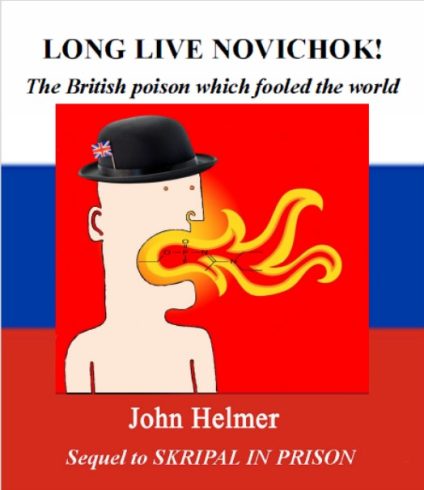
By John Helmer • Unz Review • January 14, 2025
Novichok is the notorious warfighting poison which has killed no one but fooled everyone.
At least that’s how British Government officials, their scientists, chemical warfighters, policemen, media reporters, and trailing after them all, their judges, intend the story to be told.
Theirs is the story of the assassination, ordered by President Vladimir Putin in Moscow and attempted on March 4, 2018, by two military officers tracked and filmed to every location but not the murder scene; with a weapon not detected at the scene nor in the blood streams and bodily tissues of their murder targets.
The victims, Sergei Skripal and Yulia Skripal, have been made to disappear and are either incommunicado in prison or dead. The only direct testimony which has been recorded voluntarily in front of witnesses was given by Yulia Skripal, in hospital four days after the attack, when she identified the assassination attempt as having been carried out with poison spray by an attacker who was not Russian, just minutes before she and her father collapsed. She meant the poison was British; the assassin British.
The motive for the Novichok crime turns out to be hearsay by British government against the Russian government.
In political and military terms, the Novichok poison story is propaganda between enemies at war. Judgement of what happened to the Skripals is a weapon of this war. And so it has turned out that there has been no court trial or test of the Novichok narrative, according to British law. Instead, there has been a proceeding which looked like a court trial but wasn’t; in which the Skripals were represented by police interrogators and by lawyers who said nothing; presided over by a judge who wasn’t.
In other words, a show trial in a time of war.


The truth of what happened has no military or political value, certainly not to the prosecuting British side; not much to the defending Russian side. But as the evidence has surfaced piecemeal over the past five years since the first investigation was published in February 2020 as Skripal in Prison, the truth reveals that Novichok was ineffective as a poison, but very successful as a deception operation by the British. They reversed the hands of the assassin, planted a British-made chemical weapon to look like a Russian one; invented the death of bystander Dawn Sturgess to substitute for Sergei and Yulia Skripal who didn’t die; and suppressed the evidence of what had happened – witnesses, videotapes, toxicology, autopsy records.
Not quite all the evidence, however. This book has been written to reveal new evidence to conclude that Sergei Skripal was a triple agent attempting to return to Russia. His rescue, the exfiltration operation by the Russian military intelligence organisation (GRU), used decoys to mislead the British surveillance and conceal the escape plan. But the British anticipated and decided to act preemptively, attacking both Skripals, reversing culpability, and convicting the Russians for the British crime.
Not one of the legal, medical, police, or government officials engaged in the Novichok story — neither the Skripal nor the Sturgess parts of the narrative — answered the many questions put to them during the seven-year course of the case and of this book. The three lawyers purportedly engaged to represent Sergei and Yulia Skripal were the most silentious of all; their names don’t warrant repeating. Not much better were the lawyers representing Dawn Sturgess’s family’s money claim, especially their lead counsel Michael Mansfield.

This blanket of misrepresentation, evasion, and silence which they have thrown over themselves and over the evidence in the case is proof of the intention to deceive. So determined is this intention, the deceivers don’t realize how preposterous are the results. The colour of Novichok, for example, reported as a state secret in Chapter 74.
A direct request to researchers publishing on A-234 around the world has revealed that the Iranians who reported synthesizing the chemical agent in 2016, reply that it is colourless. The British, Americans, Czechs, and Koreans who have done the same laboratory work, refuse to answer. And yet, despite all the preliminary vetting by British intelligence agents, years of double-checking by British officials, and months of closed-door sessions and redactions ordered by Lord Hughes, chairman of the Dawn Sturgess Inquiry, the truth managed to slip out. A man named Josep Vivas, a Spaniard living in Barcelona, was the unintended, unguarded source.
Vivas was a vice president of Puig, the company which manufactures and sells the bottled perfume which in the British Novichok story has been turned into the Russian murder weapon. “I am making this statement,” Vivas signed for the Dawn Sturgess Inquiry on February 12, 2024, “in addition to a letter I provided on 27 July 2018. Prior to me writing and signing that letter, I was shown a number of images of a small perfume bottle branded ‘Nina Ricci Premier Jour Perfume’. The images I viewed were under police exhibit reference [redaction tagged VN551/10]. I was shown further images of a perfume box labelled as ‘Premier Jour Nina Ricci’. This was under police exhibit reference [redaction tagged VN521/3]. On Friday 2nd February 2024, I was again shown the images of [redaction tagged VN551/10] and [redaction tagged VN521/3] before signing this statement and I set out my observations on them below.”
The photographs of the poison bottle shown in the public hearing on November 28, 2024, were censored — a large black mark was pasted across the bottle contents. But British agents had shown Vivas the photographs just days after July 11, 2018, when the bottle was purportedly discovered at the Sturgess crime scene. Vivas was shown the photographs again more than five years later, just before he testified before Hughes. He saw the bottle without the black mark.

Censored police photograph of Novichok poison weapon, a perfume atomizer bottle, allegedly found on a kitchen bench at Rowley-Sturgess home eleven days after Sturgess and Rowley were hospitalized. The black mark conceals the British Government’s lie.
The key observation Vivas confirmed he had seen on both occasions was this: “The liquid inside the bottle. Premier Jour perfume is pale pink, and from the photos I observe that the liquid contained in the bottle is yellow.”
If the perfume is pink; if Novichok is colourless; if the liquid in the murder weapon was yellow, then the liquid in the murder weapon cannot have been Novichok. QED — Quod erat demonstrandum, as the ancient lawyers and logicians used to conclude their proofs. The colour yellow was a British fabrication; the black mark was British camouflage. The secret slipped out into the open by British mistake.
From whom are the British keeping their secret? Can it be the Russians who, according to the official Novichok narrative, have made, stored, and used it against the Skripals, but have yet to learn what colour it is?
The Russian handling of the Skripal affair is a different story. It has been defensive on the evidence claimed by the British government; ineffective in breaking the silence imposed on the Skripals.
These outcomes were inevitable once it is concluded, in retrospect, that Sergei Skripal was attacked to prevent his return to Moscow as a triple agent; and that the Russian military operation to rescue him had been thwarted by the British.
These two truths, if published officially, leaked to the press, or reported in independent investigations, stood little chance of being believed outside Russia. More certainly, official Russian admission of the two truths, if it had been made, would have condemned the Skripals to the death that was attempted by the British against them on March 4, 2018.
Less explicable is the outcome that for seven years now, Russian press reporting of the case has ignored the investigative reporting published in English in the UK and US, and then the evidence revealed during the Hughes hearings in London between October and December 2024. This is an understandable result of the line dictated by the Kremlin’s and Foreign Ministry’s media departments for protecting the lives of Sergei and Yulia Skripal, and for salvaging what remained of Anglo-Russian relations on the road to war in the Ukraine.
In the chapters to follow, President Putin’s and Foreign Minister Lavrov’s statements can be examined in the political context and news sequence in which they were made.
From the beginning, the Russian Embassy in London issued formal requests for consular access to the Skripals and protest notes when this was denied by the Foreign Office. In reply to British stonewalling on access and propagandizing the allegations against the Russian government, the Embassy issued a detailed summary of every action Russian officials had taken and the statements they made.
The one option the Embassy in London did not take was to engage British lawyers to obtain a hearing and an order of habeas corpus in the High Court to compel the appearance of the Skripals to testify for themselves. This option was obvious to the Embassy and lawyers in London between March 21, 2018, when the Home Office went to the court for legal authority to allow blood testing of the Skripals, and April 9, when Salisbury District Hospital announced that Yulia Skripal had been released; and then on May 18 when Sergei Skripal was also discharged from hospital.
During this period it was reported that Yulia was able to telephone her cousin Viktoria in Russia. Years later, as Chapters 67, 71, and 73 reveal, it became clear in retrospect that Yulia had recovered consciousness in hospital much earlier than the hospital allowed to be known, and that doctors had then forcibly sedated her. At the time the Russian Embassy was announcing it “questioned the authenticity” of the statements issued by the London police and media on Yulia’s behalf. The Embassy was right; it was not believed.
It is possible the Embassy did attempt to engage barristers to go to court for a habeas corpus hearing for the Skripals, but learned that no one would take the case. At the time I made an independent request for this engagement to the well-known human rights barristers in London; the outcome was that none agreed to represent the Skripals. The refusals were point-blank – no one would give a reason.
British officials anticipated that an effort might succeed in forcing a High Court hearing, however. So, on May 24, 2018, a one minute fifty-five second speech by Yulia Skripal was presented on video in which she spoke from a script and appeared to sign a statement. Referring to “offers of assistance from the Russian Embassy,” she claimed “at the moment I do not wish to avail myself of their services.” Skripal’s Russian text spoke of “help” from the Russian Embassy: “now I don’t want and [I am] not ready to use it.”
“Obviously, Yulia was reading a pre-written text,” the Russian Embassy responded publicly. “[This] was a translation from English and had been initially written by a native English-speaker… With all respect for Yulia’s privacy and security, this video does not discharge the UK authorities from their obligations under Consular Conventions.”

Excerpted frames from Yulia Skripal’s brief videotaped appearance at a US nuclear bomber base in England on May 2018; watch the tape in full here.
By subtle signals, Skripal indicated she was being made to speak and to sign under duress. Two script pages were visible on a side table during the filming; the one on top Skripal was filmed signing. The two papers were in a different handwriting from Skripal’s signature and in a different pen from the pen she is seen to use. On the top page, apparently the Russian language text, Skripal added words after her signature; these are her first and family names in Russian, but without her patronymic, as Russians usually record their names in official documents. The handwriting of that name and the handwriting of the Russian statement are not the same. Nor the pen and ink used. Ten weeks earlier, on March 8, 2018, Yulia had woken from a coma in hospital and signaled to the doctor at her bedside that she had been attacked by the British, not by the Russians. Read this evidence for the first time in the new book.
At first, Putin he seemed unprepared on the facts of the case – the Russian facts – and unprepared for the British government’s propaganda blitz.
The president cannot have been unprepared. On March 15, 2018, the Kremlin revealed that at a Security Council meeting on that day Putin was briefed by the Foreign and Defense Ministers and the intelligence chiefs. “While talking about international affairs,” the official communiqué said, “the Council members held an in-depth discussion on Russia-UK relations against the backdrop of Sergei Skripal’s case. They expressed grave concern over the destructive and provocative position of the British side.”
The line which Putin and his advisers decided at that meeting they planned to follow in public was revealed by Putin three days later at a press conference. He tried to feign ignorance himself, and then dissimulated on the weapon, the motive, and the opportunity. “Regarding the tragedy you have mentioned,” Putin told reporters, “I learned about it from the media. The first thing that comes to mind is that, had it been a warfare agent, the victims would have died immediately. It is an obvious fact which must be taken into account. This is first.”
“The second is that Russia does not have such chemical agents. We destroyed all our chemical weapons, and international observers monitored the destruction process. Moreover, we were the first to do this, unlike some of our partners who promised to destroy their chemical weapons but have not done so to this day, regrettably. Therefore, we are ready for cooperation, as we said immediately. We are ready to take part in any investigations necessary, provided the other side wants this too. We do not see their interest so far, but we have not removed the possibility of cooperation on this matter from the agenda.”
“As for the overall situation, I believe that any reasonable person can see that this is total nonsense. It is unthinkable that anyone on Russia would do such a thing ahead of the presidential election and the FIFA World Cup. Absolutely unthinkable. However, we are ready for cooperation despite the above things. We are ready to discuss any issues and to deal with any problems.”
On April 4, 2018, he said: “We do not expect anything other than for common sense to ultimately prevail and for international relations not to be damaged the way we have seen recently. This goes not only for this case, the attempt on Skripal’s life. This has to do with other aspects of international relations as well. We should stay within the framework of healthy political processes based on fundamental norms of international law, and then the situation in the world will become more stable and predictable.”
On May 18, at a news conference following a meeting with then-Chancellor of Germany, Angela Merkel, Putin said: “Now regarding Mr Skripal. Yes, I also heard from the media today that he has been released from hospital. We wish him the best of health, we are really very happy. I have several considerations in this respect. First. I think if a combat-grade nerve agent had been used, as claimed by our British colleagues, the man would have died on the spot. A nerve agent is so powerful that a person dies instantly or within several seconds or minutes. Fortunately, he is alive, he got well, was released from hospital and I hope he will live a healthy and safe life.”
“As to the investigation, on our part we offered every assistance in the investigation to our British partners on a number of occasions, and asked for access to this investigation. There has been no response so far. Our proposals remain in place.”
Putin was accusing the British government of a cover-up, but softly, by innuendo. “The most objective explanation to what happened”, he said on May 25, “can be only provided as a result of a thorough, unbiased and joint – the latter is very important – investigation. We proposed working on it together from the very beginning, but as you know, the British side rejected our offer and investigated the incident alone. It is also a fact, as this was announced at the very beginning, that the victims were poisoned – if it was a poisoning – with a chemical warfare agent. I have spoken about this before, but I will say again that although I am not an expert on chemical warfare agents, I can imagine that the use of such agents should result in the almost instantaneous death of the victims. Thank God, nothing like this happened in the case of the Skripals, and that Skripal himself and his daughter are alive, have been discharged from hospital and, as we have seen on television, his daughter looks quite well. Thank God, they are alive and healthy.”
“Therefore, I believe it would be wrong to say that it was a chemical warfare agent. If so, everything the British side has said can be called into question. How can we settle this? We should either conduct a comprehensive and objective joint investigation, or stop talking about it because it will only worsen our relations.”
If Putin was trying to ameliorate these relations with London, he tried, six months later, to appear to be condemning Sergei Skripal, burying both him and the reciprocal espionage the two governments were conducting against each other. Was Putin calculating that if the British had tried but failed to kill both Skripals, he might yet save their lives? Understandably, no Russian could acknowledge this — certainly not then and not now.
In a Moscow forum in October 2018, six months after the Salisbury incidents, Putin responded to questions from a US journalist. “As regards the Skripals and all that, this latest spy scandal is being artificially inflated. I have seen some media outlets and your colleagues push the idea that Skripal is almost a human rights activist. But he is just a spy, a traitor to the motherland. There is such a term, a ‘traitor to the motherland,’ and that’s what he is. Imagine you are a citizen of a country, and suddenly somebody comes along who betrays your country. How would you, or anybody present here, a representative of any country, feel about such a person? He is scum, that’s all. But a whole information campaign has been deployed around it.”
“I think it will come to an end, I hope it will, and the sooner the better. We have repeatedly told our colleagues to show us the documents. We will see what can be done and conduct an investigation. We probably have an agreement with the UK on assistance in criminal cases that outlines the procedure. Well, submit the documents to the Prosecutor General’s Office as required. We will see what actually happened there. The fuss between security services did not start yesterday. As you know, espionage, just like prostitution, is one of the most ‘important’ jobs in the world. So what? Nobody shut it down and nobody can shut it down yet.”
“[Question] Ryan Chilcote: Espionage aside, I think there are two other issues. One is the use of chemical weapons, and let’s not forget that in addition to the Skripal family being affected in that attack, there was also a homeless person [Dawn Sturgess] who was killed when they came in contact with the nerve agent Novichok.”
“[Answer] Vladimir Putin: Listen, since we are talking about poisoning Skripal, are you saying that we also poisoned a homeless person there? Sometimes I look at what is happening around this case and it amazes me. Some guys came to England and started poisoning homeless people. Such nonsense. What is this all about? Are they working for cleaning services? Nobody wanted to poison… This Skripal is a traitor, as I said. He was caught and punished. He spent a total of five years in prison. We released him. That’s it. He left. He continued to cooperate with and consult some security services. So what? What are we talking about right now? Oil, gas or espionage? What is your question? Let’s move on to the other oldest profession and discuss the latest developments in that business. (Laughter.)”
The British Prime Minister Theresa May and her ambitious rival, Foreign Secretary Boris Johnson, ignored Putin’s request to put the Skripal affair aside. Instead, they escalated, publishing photographs of police and intelligence agency surveillance of the Russian military officers who were then charged with the attempted Novichok murder. Putin was put on the defensive again.

The British inventors of Novichok – left to right — Alexander Younger, head of MI6, and Mark Sedwill, National Security Advisor and Cabinet Secretary, created the Novichok plot to prevent Sergei Skripal returning to Moscow and to persuade Prime Minister Theresa May, then her successor Boris Johnson, to escalate their war against Russia.
On September 12, 2018 – seven days after the Metropolitan Police and Crown Prosecution Service announced their charges against Alexander Petrov and Ruslan Boshirov – Putin was asked who were they were. “Either they deliberately poked their faces towards the camera in order to be photographed, or they are completely unprofessional to have their images captured by all the cameras. Perhaps you have a third theory?”
“Vladimir Putin: Actually, we have, of course, taken a look at these people. We already know who they are, and we have located them. I hope they will show up and tell everyone about themselves. This would be better for everyone. I assure you that there is nothing special or criminal here. We will see shortly.”
“Sergei Brilyov: Are they civilians?”
“Vladimir Putin: Of course, they are civilians.”
“Sergei Brilyov: All right, we will wait.”
“Vladimir Putin: I would like to address them, so they can hear us today. Let them come to a media outlet and tell everything.”
The results followed swiftly – an interview by Russia Today (RT), the state media agency, with the two accused Russians pretending to have been innocent tourists; then British and US intelligence data leaked through the Bellingcat organization. These propaganda episodes can be followed in Part I of the book. Putin decided not to add fuel to this fire; he ignored questions about the Skripal case for seven months, until June of 2019.
“Do you think that there is a possibility of some improvement in Anglo-Russian relations,” he was asked by the editor of the Financial Times of London on June 27, 2019, “– and that we can move on from some of these issues that are obviously of great sensitivity, like the Skripal affair?”
“As a matter of fact,” Putin answered, “treason is the gravest crime possible and traitors must be punished. I am not saying that the Salisbury incident is the way to do it. Not at all. But traitors must be punished. This gentleman, Skripal, had already been punished. He was arrested, sentenced and then served time in prison. He received his punishment. For that matter, he was off the radar. Why would anybody be interested in him? He got punished. He was detained, arrested, sentenced and then spent five years in prison. Then he was released and that was it. As concerns treason, of course, it must be punishable. It is the most despicable crime that one can imagine.”
The president had promoted Skripal from “scum” who deserved his fate to “gentleman” who had been punished enough. Putin’s purpose was to propose again to the British that they set aside the Novichok narrative and opt instead for improving the bilateral relationship at the government level, and sticking to business as usual; by that Putin meant oligarch business.
“Listen, all this fuss about spies and counter-spies, it is not worth serious interstate relations. This spy story, as we say, it is not worth five kopecks. Or even five pounds, for that matter. And the issues concerning interstate relations, they are measured in billions and the fate of millions of people. How can we compare one with the other? The list of accusations and allegations against one another could go on and on. They say, ‘You poisoned the Skripals.’ Firstly, this must be proved.”
“Secondly, the average person listens and says, ‘Who are these Skripals?’ And it turns out that Skripal was engaged in espionage against us [Russia]. So this person asks the next question, ‘Why did you spy on us using Skripal? Maybe you should not have done that?’ You know, these questions are infinite. We need to just leave it alone and let security agencies deal with it. But we know that businesses in the United Kingdom (by the way, I had a meeting with our British colleagues in this same room), they want to work with us, they are working with us and intend to continue doing so. And we support this intent.”
“I think that Mrs May, despite her resignation, could not help but be concerned that these spy scandals made our relations reach a deadlock so we could not develop our ties normally and support business people, who are doing what? They do not only earn money, this is what is on the outside. They create jobs and added value, plus they provide revenue at all levels of the tax system of their countries. This is a serious and multifaceted job, with the same risks you mentioned, including risks related to business operations. And if we add an unpredictable political situation, they will not be able to work at all. I think that both Russia and the United Kingdom are interested in fully restoring our relations. At least I hope that a few preliminary steps will be made. I think it would be easier for Mrs May, maybe, because she is leaving and is free to do what she thinks is right, important and necessary and not to bother about some domestic political consequences.”
Putin believed that through the Financial Times he was appealing to the business lobbies in London to push back against the war faction in Whitehall. The appeal was in vain.
In parallel, in an elaborately staged dialogue with the US filmmaker Oliver Stone, Putin allowed some of the truth to slip out. “What has happened to Skripal? Where is he?” Stone asked.

President Putin with Oliver Stone at the Kremlin. The interview was recorded on June 19, 2019; it was delayed in release for a month until July 19, 2019.
“Vladimir Putin: I have no idea. He is a spy, after all. He is always in hiding.”
“Oliver Stone: They say he was going to come back to Russia. He had some information.”
“Vladimir Putin: Yes, I have been told that he wants to make a written request to come back.”
“Oliver Stone: He knew still and he wanted to come back. He had information that he could give to the world press here in Russia.”
“Vladimir Putin: I doubt it. He has broken the ranks already. What kind of information can he possess?”
“Oliver Stone: Who poisoned him? They say English secret services did not want Sergei Skripal to come back to Russia?”
“Vladimir Putin: To be honest, I do not quite believe this. I do not believe this is the case.”
“Oliver Stone: Makes sense. You do not agree with me?”
“Vladimir Putin: If they had wanted to poison him, they would have done so.”
“Oliver Stone: Ok, that makes sense. I don’t know. Who did then?”
“Vladimir Putin: After all, this is not a hard thing to do in today’s world. In fact, a fraction of a milligram would have been enough to do the job. And if they had him in their hands, there was nothing complicated about it. No, this does not make sense. Maybe they just wanted to provoke a scandal.”
“Oliver Stone: I think it is more complicated. You know, you think I am much too much of a conspiracy guy.”
“Vladimir Putin: I do not believe this.”
In the Kremlin record of Putin’s references to the Skripal affair, these remarks of mid-2019 were the final word from the president. Putin and Stone were telling the truth of what had happened, and why.
Click here to buy the book in paperback or Kindle edition.
THE POLIO PARADOX WITH DR. SUZANNE HUMPHRIES
The HighWire with Del Bigtree | January 9, 2025
Nephrologist and co-author of ‘Dissolving Illusions’, Suzanne Humphries, MD, joins Del to discuss her significant role in the first installment of ‘Jefferey Jaxen Investigates’ on the polio virus. Hear how the dangers of vaccines came to light for her and why the future of humanity depends on people understanding the true history behind the polio vaccine.
Begging for the Wonder Drug
Five years later, we resolve never to forget how US hospitals deprived critically ill patients of ivermectin and other commonly used drugs that could have saved them.

Satoshi Ōmura, 2015 Nobel Laureate for his discovery of the ”wonder drug” Ivermectin, stands next to the River Blindness sculpture. His discovery cured this great scourge of the tropical world.
By John Leake | Courageous Discourse | December 13, 2024
As I was researching our book, The Courage to Face COVID-19: Preventing Hospitalization and Death While Battling the Bio-Pharmaceutical Complex, I was especially disturbed by countless stories of hospitals in various states who steadfastly refused to treat critically ill COVID-19 patients with ivermectin and other drugs (commonly used for other illnesses) that could have saved their lives.
I believe this episode constitutes the darkest chapter in the history of the U.S. hospital system. Strangely enough, the only serious legacy newspaper journalist in the entire country who covered it was Michael Capuzzo—formerly a reporter with the Miami Herald and the Philadelphia Inquirer, where he received four Pulitzer Prize nominations. Apart from Michael’s reporting . . . crickets.
Out of my conviction that we should never forget what U.S. hospitals did to patients who were consigned to die on ventilators instead of receiving FDA-approved, off-label drugs such as ivermectin, methylprednisolone, and even high dose aspirin, I am publishing our chapter on the extraordinary villains who committed this atrocity, and the good guys—including two great attorneys and humanitarians named Ralph Lorigo and Beth Parlato—who fought back. Please share this story with your friends and family and exhort them never to forget.
CHAPTER 28: Begging for the Wonder Drug
As Michael Capuzzo told the story in his long magazine piece “The Drug that Cracked Covid,” Judy Smentkiewicz was an eighty-year-old resident of Buffalo, New York. After working thirty-five years as an office manager for Metropolitan Life and raising two children, she had retired to her small house in the suburbs. A week after Senator Johnson’s second Senate hearing, she began preparing for Christmas, and looked forward to her two children, Michael and Michelle, visiting her for a few days. However, right after Michael and his wife arrived from Florida, she began to feel unwell. On December 22 she tested positive for Covid. Her kids were devastated and cancelled their Christmas celebration as Judy went into quarantine. A week later, she became short of breath and was rushed to the Millard Fillmore Suburban Hospital. On New Year’s Eve she was admitted to the ICU.
It was a terrible moment in which Judy and her children realized they might never see each other again. In the days that followed, the doctors and nurses with whom Michael spoke didn’t offer much hope. They said there were no medications for treating COVID-19 approved by federal health agencies apart from remdesivir. This was administered to Judy, but it seemed to have no beneficial effect. On New Year’s Eve, as her condition deteriorated, her two children and six of their friends gathered on the street below her hospital window and prayed for her.
Shortly after New Year’s Day, Michael received from his mother-in-law a video of Dr. Pierre Kory being interviewed by a reporter for Fox 10 News Now, KSAZ-TV in Phoenix, Arizona. That morning, Dr. Kory had given his Senate testimony on ivermectin. Michael watched it and was moved by Dr. Kory’s passionate intensity and eloquence. Immediately he called the hospital and told Judy’s attending physician that he wanted her to receive ivermectin. The doctor refused on the grounds that it wasn’t approved for COVID-19, but Michael refused to take no for an answer, and finally a hospital administrator approved one, 15-milligram dose. Less than twenty-four hours later, Judy was taken off the ventilator, and the next day she sat upright in a chair for a Zoom call with her son. She still wasn’t out of the woods, and when her heart started racing, she was moved to a cardiac unit, and the hospital refused to give her a second dose of ivermectin. Michael insisted but the hospital refused to budge.
And so, he contacted his friend and attorney Ralph Lorigo, and explained the situation. At the time, Lorigo knew nothing about ivermectin, so he too watched the interview with Dr. Kory, and then sued the hospital. New York State Supreme Court Judge Henry Nowak heard the case and ordered the hospital to commence treating Judy with four more doses of ivermectin, per her family doctor’s prescription.
The hospital refused to obey the judge’s order, which resulted in additional legal wrangling, including another hearing. Finally, the hospital’s lawyer agreed to allow Judy’s family doctor to administer the drug. He was under the impression it was on hand in the hospital’s pharmacy, but when he arrived to carry out his charge, he was told that it would have to be couriered from another facility. This caused another delay. Finally, at 11:00 pm that night, the second dose was administered, and she started to improve. Ten days later she walked out of the hospital.
As word spread about Judy’s happy outcome, Ralph Lorigo was contacted by countless others in the same situation, and soon his law firm had a new area of practice—trying to force hospitals to administer an FDA-approved, Nobel Prize winning, WHO “Essential Medication” to dying COVID-19 patients to whom nothing else was offered.
Mr. Lorigo was well-suited for the task. The energetic, punctilious attorney and Erie County Conservative party chairman has a formidable presence, with strong Italian good looks and a penchant for wearing beautifully tailored suit and power ties. Though he specialized in real estate law, he represented his clients seeking ivermectin with great care. A devoted family man with three children and multiple grandchildren, he empathized with the families who sought his help.
To be sure, it wasn’t an easy job, because the hospitals fought him tooth and nail, bringing multiple attorneys and expert witnesses to hearings. After a few more successes in which he prevailed and the patients recovered after receiving ivermectin, he received more queries than his staff could handle, so he contacted his friend, Beth Parlato, and asked her if she would be interested in taking some of the cases.
The 55-year-old attorney and mother of three had served as a judge in a New York State criminal court. Over the course of her career, she’d seen much of the good, the bad, and the ugly, but none of it had prepared her for the grueling path ahead. What she was about to witness would challenge all of her assumptions about the American healthcare and legal systems, and ultimately about human nature itself.
Most of her clients were referrals from the FLCCC, founded by Drs. Marik and Kory. The typical call would come into her office from a desperate husband or wife, daughter or son. Their stories were always the same. A much-loved family member had been languishing in hospital and was now headed for the ventilator and probable death. And though the doctors and nurses stated that the prognosis was poor, the hospital refused to administer ivermectin.
To patients and their families, the situation was incomprehensible. Many of Beth’s clients posed a variation of the question: “Mom [or dad] is declining and is probably going to die, so what’s the harm in her trying ivermectin?” Beth was at a loss for an answer. The hospital’s policy made no sense, neither as a matter of fact nor law. Many families wondered why “right to try” laws didn’t apply. Hospital attorneys claimed the “right to try” was only for experimental medications that were not yet FDA-approved. Ivermectin was FDA-approved, just not for the treatment of COVID-19.
Patients and their families found this argument perversely legalistic, but many judges—and all judges elected as Democrats—found it persuasive. Beth argued it was a legal, common, and longstanding medical practice to prescribe FDA-approved drugs off-label. Hospital attorneys retorted that the NIH guidelines for the treatment of COVID-19 did not recommend the off-label administration of ivermectin, and because the NIH was the final scientific arbiter of medical matters in the United States, the hospitals were required to follow its guidelines.
The trouble with the one-size-fits-all NIH guidelines for hospitalized COVID-19 patients was that they didn’t work. Almost a year into the pandemic, the United States had the highest COVID-19 death rate of the world’s top ten wealthiest nations and was in the top twenty nations with the highest death rates in the world. Approximately 80% of hospitalized patients who went on mechanical ventilation died. Also significant was the fact that that on January 14, 2021—in response to Senator Johnson’s letter requesting that the NIH review Dr. Kory’s presentation of evidence—the NIH dropped its recommendation against using ivermectin and adopted a neutral stance. Though far from satisfying for Dr. Kory and his colleagues, the NIH neutral stance at least gave doctors greater leeway to exercise their clinical judgement about the drug.
To make matters even more confusing, healthcare professionals were provided with broad legal immunity by the federal PREP Act (Public Readiness and Emergency Preparedness) of 2005. This authorized the Secretary of Health and Human Services to deploy a wide array of “Emergency Countermeasures” in the event of an infectious disease outbreak. When invoked by the Secretary of Health and Human Services, the PREP Act provides immunity for the “manufacture, testing, development, distribution, administration, and use of covered countermeasures.” On February 4, 2020, HHS Secretary Alex Azar declared COVID-19 an emergency and invoked the PREP Act.
The CARES Act of March 27, 2020, also provided immunity for healthcare workers treating COVID-19 patients. Additional immunity was granted by governors’ executive orders in all fifty states. The governor of New York State, in which Beth was practicing, provided the following immunity:
Conduct Covered: Civil liability for injury or death alleged to have been sustained directly as a result of an act or omission by person(s) covered.
Person(s) Covered: Physicians, physician assistants; specialist assistants; nurse practitioners; licensed registered professional nurses; licensed practical nurses.
Conduct Not Covered: Gross negligence.
Many observers who were documenting U.S. healthcare policy with respect to remdesivir wondered if all this liability protection could explain why the new, experimental drug was the hospital standard of care despite numerous red flags raised about its safety. The contrast of this policy with the strict policy against administering ivermectin was stunning.
Additionally, all the patients that Beth represented, and their families, stated in writing that they would indemnify the hospitals of liability for any adverse effects apparently caused by ivermectin, and that their primary care physicians would come to the hospital to administer it. Despite these multiple provisions of immunity, hospitals were still dead set against giving ivermectin to dying patients.
The hearings were brutal affairs in which hospital attorneys and expert witnesses portrayed Beth’s expert witness (on the safety and efficacy of ivermectin) as a delusional quack. Their most common line of attack was that Beth’s witness was a lone, eccentric voice in challenging the overwhelming scientific consensus that informed NIH guidelines. This rhetorical strategy ignored that many of mankind’s greatest scientific insights were the work of individuals who challenged the orthodoxy of their day. The growing body of evidence, including RCTs, cited by Beth’s witness was dismissed by hospital experts with the assertion that the evidence was “low quality.” Thus, the judge was presented with opposing expert witness claims about the evidence, only with the hospital’s witness also claiming he had “scientific consensus” and therefore the NIH on his side.
Beth tried to argue that the patient retained sufficient bodily autonomy to decide if he or she wished to take an FDA-approved drug off-label. The hospitals’ attorneys retorted that hospital patients had never had the right to decide their treatment, and that granting it with ivermectin would set a terrible precedent, opening a Pandora’s Box of future patients demanding treatments after hearing anecdotes about their efficacy. Beth regarded this argument as another legalistic dodge. Her clients weren’t presuming to practice medicine—they were dying men and women, desperately begging for the right to try an FDA-approved drug as a last and only hope when nothing else apart from remdesivir was being offered.
The hospitals claimed total sovereignty over the patient—a godlike power over all decisions affecting his life and death, with the patient afforded no say. For most gravely ill patients, the decision of this godlike power resulted in death. Thus, to sick patients and their families, the Lords of Healthcare were neither competent nor compassionate.
From: The Courage to Face COVID-19: Preventing Hospitalization and Death While Battling the Bio-Pharmaceutical Complex, by John Leake and Peter A. McCullough, MD, MPH, Foreword by Robert F. Kennedy Jr., Skyhorse, 2022.
POSTSCRIPT: As Dr. Pierre Kory noted in his book The War on Ivermectin, of the 80 lawsuits filed by lawyer Ralph Lorigo, in 40 the judge sided with the family, and in 40 with the hospital. Of those, in the 40 where patients received ivermectin, 38 survived, whereas of the 40 who did not, only 2 survived.
The Case for Dismantling the Rules-Based International Order
By Professor Glenn Diesen | December 23, 2024
The so-called “rules-based international order” aims to facilitate a hegemonic world, which entails displacing international law. While international law is based on equal sovereignty for all states, the rules-based international order upholds hegemony on the principle of sovereign inequality.
The rules-based international order is commonly presented as international law plus international human rights law, which appears benign and progressive. However, this entails introducing contradictory principles and rules. The consequence is a system devoid of uniform rules, in which “might makes right”. International human rights law introduces a set of rules to elevate the rights of the individual, yet human-centric security often contradicts state-centric security as the foundation of international law.
The US as the hegemonic state can then choose between human-centric security and state-centric security, while adversaries must abide strictly by state-centric security due to their alleged lack of liberal democratic credentials. For example, state-centric security as the foundation of international law insists on the territorial integrity of states, while human-centric security allows for secession under the principle of self-determination. The US will thus insist on territorial integrity in allied countries such as Ukraine, Georgia or Spain, while supporting self-determination within adversarial states such as Serbia, China, Russia and Syria. The US can interfere in the domestic affairs of adversaries to promote liberal democratic values, yet the US adversaries do not have the right to interfere in the domestic affairs of the US. To facilitate a hegemonic international order, there cannot be equal sovereignty for all states.
Constructing the hegemonic rules-based international order
The process of constructing alternative sources of legitimacy to facilitate sovereign inequality began with NATO’s illegal invasion of Yugoslavia in 1999 without a UN mandate. The violation of international law was justified by liberal values. Even the legitimacy of the UN Security Council was contested by arguing it should be circumvented as Russia and China veto of humanitarian interventionism was allegedly caused by their lack of liberal democratic values.
The efforts to establish alternative sources of authority continued in 2003 to gain legitimacy for the illegal invasion of Iraq. Former US Ambassador to NATO, Ivo Daalder, called for establishing an “Alliance of Democracies” as a key element of US foreign policy.[1] A similar proposal suggested establishing a “Concert of Democracies”, in which liberal democracies could act in the spirit of the UN without being constrained by the veto power of authoritarian states.[2] During the 2008 presidential election, Republican presidential candidate Senator John McCain argued in favour of establishing a “League of Democracies”. In December 2021, the US organised the first “Summit for Democracy” to divide the world into liberal democracies versus authoritarian states. The White House framed sovereign inequality in the language of democracy: Washington’s interference in the domestic affairs of other states was “support for democracy”, while upholding the West’s sovereignty entailed defending democracy.[3] The aforementioned initiatives became the “rules-based international order”. With an imperialist mindset, there would be one set of rules for the “garden” and another set for the “jungle”.
The rules-based international order created a two-tiered system of legitimate versus illegitimate states. The paradox of liberal internationalism is that liberal democracies often demand that they dominate international institutions to defend democratic values from the control of the majority. Yet, a durable and resilient international system capable of developing common rules is imperative for international governance and to resolve disputes among states.
International law in accordance with the UN Charter is based on the Westphalian principle of sovereign equality as “all states are equal”. In contrast, the rules-based international order is a hegemonic system based on sovereign inequality. Such a system of sovereign inequality follows the principle from George Orwell’s Animal Farm that stipulates “all animals [states] are equal but some animals [states] are more equal than others”. In Kosovo, the West promoted self-determination as a normative right of secession that had to be prioritised above territorial integrity. In South Ossetia and Crimea, the West insisted that the sanctity of territorial integrity, as stipulated in the UN Charter, must be prioritised over self-determination.
Uniform rules replaced with a tribunal of public opinion
Instead of resolving conflicts through diplomacy and uniform rules, there is an incentive to manipulate, moralise and propagandise as international disputes are decided by a tribunal of public opinion when there are competing principles. Deceit and extreme language have thus become commonplace. In 1999, the US and UK especially presented false accusations about war crimes to make interventionism legitimate. British Prime Minister Tony Blair told the world that Yugoslav authorities were “set on a Hitler-style genocide equivalent to the extermination of the Jews during the Second World War. It is no exaggeration to say that what is happening is racial genocide”.[4]
The rules-based international order fails to establish common unifying rules of how to govern international relations, which is the fundamental function of world order. Both China and Russia have denounced the rules-based international order as a dual system to facilitate double standards. Chinese Vice Foreign Minister, Xie Feng, asserted that the rules-based international order introduces the “law of the jungle” insofar as universally recognised international law is replaced by unilateralism.[5] Russian Foreign Minister Sergey Lavrov similarly criticised the rules-based international order for creating a parallel legal framework to legitimise unilateralism:
“The West has been coming up with multiple formats such as the French-German Alliance for Multilateralism, the International Partnership against Impunity for the Use of Chemical Weapons, the Global Partnership to Protect Media Freedom, the Global Partnership on Artificial Intelligence, the Call for Action to Strengthen Respect for International Humanitarian Law—all these initiatives deal with subjects that are already on the agenda of the UN and its specialised agencies. These partnerships exist outside of the universally recognised structures so as to agree on what the West wants in a restricted circle without any opponents. After that they take their decisions to the UN and present them in a way that de facto amounts to an ultimatum. If the UN does not agree, since imposing anything on countries that do not share the same ‘values’ is never easy, they take unilateral action”.[6]
The rules-based international order does not consist of any specific rules, is not accepted internationally, and does not deliver order. The rules-based international order should be considered a failed experiment from the unipolar world order, which must be dismantled to restore international law as a requirement for stability and peace.
Article based on excerpts from my book: “The Ukraine War and the Eurasian World Order”
[1] I. Daalder and J. Lindsay, ‘An Alliance of Democracies’, The Washington Post, 23 May 2004.
[2] G.J. Ikenberry and A.M. Slaughter, ‘Forging a World of Liberty Under Law: U.S. National Security in the 21st Century’, Princeton, The Princeton Project on National Security, 2006.
[3] White House, ‘Summit for Democracy Summary of Proceedings’, The White House, 23 December 2021.
[4] N. Clark, ‘Fools no more’, The Guardian, 19 April 2008.
[5] Global Times, ‘US ‘rules-based intl order’ is ‘law of the jungle’ to contain others: Chinese vice FM tells US envoy’, Global Times, 26 July 2021.
[6] S. Lavrov, ‘Foreign Minister Sergey Lavrov’s remarks at the 29th Assembly of the Council on Foreign and Defence Policy (CFDP)’, The Ministry of Foreign Affairs of the Russian Federation, 2 October 2021.
Featured Video

The Most Important Bet You’ve Never Heard Of
or go to
Aletho News Archives – Video-Images
From the Archives
The Occupied Mentality Syndrome
Saudi Arabia on the American chessboard – Part 2
By B. J. Sabri | American Herald Tribune | April 19, 2016
Since the Korean War, but particularly since the Iranian Revolution of 1979 until today, the United States has been steadily escalating its military presence in the Persian Gulf. Taking advantage of many colossal events of the past 36 years, [1] the hyper-empire has institutionalized its massive presence on land and sea, and expanded its objectives to include the unambiguous physical control of the area, as well as the clear understanding that local Arab governments should abide by them. The pretext is always the same: in “defense” of the national interests and security of the United States. From observing how the United States has been interacting with the governments of the region, and by judging from the size of its expeditionary force, we could reach a basic conclusion. The United States is occupying, de facto, the entire Arabian Peninsula. (Yemen, devastated by Saudi and American jets is yet to be conquered. Oman? Britain returned not as colonial ruler but as a soft occupying power.)
Under this articulation, Saudi Arabia, Qatar, Kuwait, and the United Arab Emirates are virtually occupied countries. If we compare this type of occupation to the mandate and protectorate regimes of the past, the results might be identical—the nations affected by it lose sovereignty. When Arab governments comply with the objectives of a foreign power that station military forces on their national milieu, then that power controls them in multiple ways including how they react to policy deliberations and what decisions they intend to take on specific issues. A good method to verify the concept of effective occupation is this: take notice of what the United States says and wants, and then compare it to what the gulf rulers do in response. (I shall discuss this detail at some point in the upcoming parts.)
If the presence of US forces or other means of political pressure are a factor in Saudi Arabia’s interventionist Arab wars, then we need to debate this issue. However, from the history of resistance to colonialism, we learnt: if a powerful state imposes its order on a nation by military means or other forms of coercion, and if this nation does not resist that imposition, then a mental subordination to the powerful state will ensue. This is especially true in the case of Saudi Arabia. One single event, 9/11, has transformed it from a US “ally” into an instant political hostage of the American Empire. … continue
Blog Roll
 Aletho News
- Trump and the debris of Iran war
- IRGC hits US tech giant Oracle’s data center, computing site in UAE over new assassinations
- Bombing Iran Back Into the Stone Age /Lt Col Daniel Davis & Jim Jatras
- UAE rejects report claiming it is ready to join war on Iran to reopen Hormuz
- A New Resistance Front: How Does Syria Factor into the Regional War?
- Gulf states weigh pipeline expansion plans, hoping to bypass Hormuz
- Iran sets up ‘tollbooth’ system in Strait of Hormuz
- Wave 90: IRGC strikes US-linked industrial sites in Gulf
- Iran Says US-Israeli Claims of Its Military Strength Are Wrong
- Trump’s April Fools’ Address to the nation
- If Americans Knew
- Israel-US kill negotiators, destroy civilian structures, but Iran’s military capabilities still largely intact – Daily Update
- ‘War crime’: Global condemnation as Israeli ministers celebrate death penalty law targeting Palestinian prisoners
- 7 Ways Israel Is Turning Lebanon Into Gaza
- World’s Leading Football Bodies Under Fire Over Israel Policies
- Experts warn of possible use of nukes against Iran
- Israeli invasion of Lebanon could be worse than 1982, warn European officials
- Passover: Liberation and collective punishment
- Trump says the quiet part out loud: (Israel’s) war on Iran > Americans’ health – Daily Update
- Gaza families reunite years after babies evacuated amid Israel’s war
- International Rescue Committee warns Gaza’s children face grave protection risks
- No Tricks Zone
- Low Intensity Tornado Wrecks Major Solar Farm, Creating A Potential Toxic Dump
- New Study Finds Warming Saves Lives…Cold Temperatures 12 Times More Deadly Than Excess Heat
- German Science Blog Accuses PIK Climate Institute Of Hallucinating Climate Tipping Points
- Devastating Assessment Of Comirnaty Vaccine By Former Senior Pfizer Europe Toxicologist
- New Study: CO2 Is ‘Effectively Negligible’ As An Explanatory Climate Change Factor Since 2000
- Former Pfizer Toxicologist Dr. Helmut Sterz Tells Bundestag Hearing Pfizer Vaccine Should Have Never Been Approved
- Energy Expert: Germany’s Nuclear Phaseout Was A “500 Billion Euro Mistake”
- New Research: South Australia’s Mid-Holocene Sea Surface Temperatures Were 4°C Warmer Than Today
- Storing Green Energy To Last Germany 10 Days Would Require A 60-Million Tonne Battery
- New Studies: UK Sea Levels Were 4 Meters Higher Than Today During The Mid-Holocene
 Aletho News