Review of “Unmasking Anne Frank, Her Famous diary Exposed as a Literary Fraud” by Ikuo Suzuki

By Karl Haemers | Occidental Observer | August 27, 2022
I am going to assume that most readers of The Occidental Observer are familiar with the official story of Anne Frank, the young Jewish girl (aged 13–15) who kept a diary while hiding in a house from Jew-hunting “Nazis” in the Netherlands during World War II. In searching the TOO site for “Anne Frank,” I found no hits, but the Anne Frank story is almost as prevalent and persistent as the holocaust story itself, and surely TOO readers know the basics.
Publisher Clemens & Blair has just released a new book focused on the fraudulence of The Diary of Anne Frank. A number of other works examining the fraudulent Anne Frank diary have been published over the course of many years, most famously “Is the diary of Anne Frank Genuine?,” an article in English in 1982 by Robert Faurisson. But this new book surpasses the old ones in many ways.
Author of the current work, Ikuo Suzuki, a Japanese researcher, reviews a number of these earlier analyses of the diary in his new book, as does editor Thomas Dalton in his Foreword. As assistant editor, I do the same in my Introduction. (Disclaimer: I have a partial financial interest in this book.)
From there, Mr. Suzuki explores new analyses of the diary, including an illuminating graphic depiction of the many changes among the many various publications of the diary over the span of decades. So numerous and detailed are the diary’s entries over 26 months that logical inconsistencies and physical and logistical impossibilities inevitably occur; Suzuki identifies many new ones. He calls some of this “Anne magic,” and indeed only a magical explanation can reconcile some of the diary’s many internal flaws and self-contradictions.
Suzuki’s book is arranged into five main chapters, each having four to nine sections. As an example of inconsistency among various published versions of the diary, Chapter 1 is titled “Absurdity on the Surface,” and one section is titled “The Translation of ‘Cat’ Into ‘Tarantula’.” This Chapter displays pictures and drawings of the “Annex” in which Anne Frank supposedly hid out with seven other Jews, along with examinations of physical and architectural impossibilities.
Suzuki goes on to explore “Absurdities Lurking in the Depths” in Chapter 2, closing with the section “Was Everything a Figment?.” Here we see pictures of diary pages themselves, and careful comparisons among the bewildering number of different versions of the diary published at different times in different languages. Here we find Suzuki’s unique graphic display of the many changes among the versions. For example, Anne Frank is said to have edited her own diaries at a later point in her time in the “hideout.” Edited is not the proper term when we see that one early entry in her Diary as presented in the English publish version is actually a combination of two entries more than a month apart from the original diaries.
Chapter 3, “Annie Ample: A Soft-Core Porn Romantic Life?,” examines the core drama at the heart of the diary: the love (or lust) affair Anne supposedly had with a Jewish boy from another family also confined in the “hideout.” One of the great revelations that Suzuki presents is just how grotesque and sexually perverse the diary truly is, raising doubts on its own whether a young girl could even think such thoughts, much less write them down.
I’ll say here that, in my Postscript, I present the content of five missing pages of the diary that supposedly were found in 1998, and then two more “uncovered” in 2018. The five pages contain a scathing denunciation of Anne’s mother Edith and an oblique critique of her father Otto, but the two “uncovered” pages contain “perhaps the filthiest pornographic smut of the entire diary.” (I will spare readers the details here, though the book will not.)
Chapter 4 explores Anne’s writing career (or lack of it), the “infamous bookshelf door,” and the story of the beginning and end of the “hideout” (which is the chapter title). More pictures of documents and infrastructure assist the inquiry. This chapter engages in a staple of Diary doubters—handwriting analysis, and clarifies some former confusion. A letter Anne Frank supposedly sent in 1940—before the “hideout”—to a pen pal in the US was found, and when its handwriting is compared to the handwriting of the Diary, even an amateur analyst can see the two are different. It also debunks the absurd story—or stories—of how the diaries were finally found after the “hideout” inhabitants were hauled away by the Gestapo.
Chapter 5, “The Diary Unmasked,” explores the core issue of The Diary of Anne Frank, one that all revisionists have addressed: who really wrote the diary? Many speculate that Anne’s father Otto Frank was the actual author all along, but Suzuki excludes Otto as lacking the character, ability and motivation to forge the diary. He says: “there was at least one person in Otto’s vicinity who definitely possessed those qualities.” Suzuki’s in-depth profile and examination of this one person—Jewish playwright and journalist Meyer Levin—I found compelling. For instance, Levin’s relationship with Otto Frank included Frank appointing Levin his copyright agent in 1952. Levin’s history involved him working in the “Office of War Information” in the US, producing propaganda movies. Thus Levin had the presence and ability to invent the Diary as on-going war propaganda.
Mr. Suzuki closes with a touching Afterword he calls “Annelies Next to You,” in which the focus of our outrage is inverted from the evil “Nazis” to those who would fabricate lies in Anne’s name. This is a virtue of this book; Suzuki never blames Anne for the fraud, but rather points the finger at other Jews. “Not a single word in (the diary) contains her truth. It is merely a prison for Annelies’ soul, covered by a thick wall of falsehood in the name of a legend.” Our compassion should be for the real Annelies (her full name) Frank who has been so brutally used and misrepresented to promote a Jewish victim/”Nazi” perpetrator agenda.
The book closes with my Postscript, where, as stated, the five “missing” and two “uncovered” pages bring us up to date on diary developments. Unfortunately, Revisionists can also generate myths to their discredit, and one of these is the “ball-point pen” story. Hopefully I put to rest the claim that the diary is a fraud merely because it was written in ball-point pen, which was not invented until 1950. (Only two attached notes were written in pen, but nothing in the diary text itself.) The Postscript is framed as “Re-Rebutting the Anne Frank House,” which is the lavishly funded and well-organized foundation administering the “hideout” building itself as a museum, curating the diaries themselves (though not all are displayed), and issuing the on-going education about the iconic Jewish victim of “Nazi” tyranny, Anne Frank. I believe that just about the only point on which the Anne Frank House is correct regarding the diary is its position on the ball point pen issue. Everything else is tendentious and misleading propaganda, or outright deception.
In the words of main author Suzuki: “All other textual information, even the testimonies of friends and relations, is too biased and too fraudulent to be believed.” As he carefully demonstrates, there is so little truth to the diary itself that one can hardly accept any of it as valid.
This is one of those books that in parts of a couple sections presents such exhaustive detail as to make reading tedious, while at the same time my fascination with the revelations drew me onward. Suzuki could not completely resist the temptation to depart from a strict scholarly tone and lapse into humor—but neither could Dalton or I. I suppose this has to be accepted in such revisionist material, as we see all over certain “free speech” social media platforms. The lapses are rare and brief however, and the depth and scope of scholarship prevail. If I have any final critique of Unmasking Anne Frank, it is that it treated the perpetrators of the hoax too lightly, failing to express the appropriate loathing and contempt and even criminal accusations they deserve. Suzuki’s compassion is for Annelies, who was so cruelly used by these criminal fraudsters, but he expresses not enough outrage at those who exploited her posterity. We are all victims of the fraud as well.
Unmasking Anne Frank by Ikuo Suzuki, including the excellent Foreword by editor Thomas Dalton and Introduction and Postscript by myself, achieves the difficult task of summarizing and updating previous diary revision, while presenting new crucial insights. The end effect is to drive a dagger of certainty into the bleeding heart of Diary pathos. Suzuki’s detailed biographical analysis of the person he concludes actually wrote the diary—Meyer Levin—is the climax of a book filled with stunning insights. This book has much to consider for those new to Diary doubt, and much more to ponder for those already familiar with Anne Frank revisionism. Unmasking Anne Frank is, without doubt, the best such revisionist text ever produced; it is not only a great contribution to diary revision, it may be a culmination.
Samantha Power and the Power of a Word
BY DIANA JOHNSTONE • UNZ REVIEW • APRIL 3, 2024
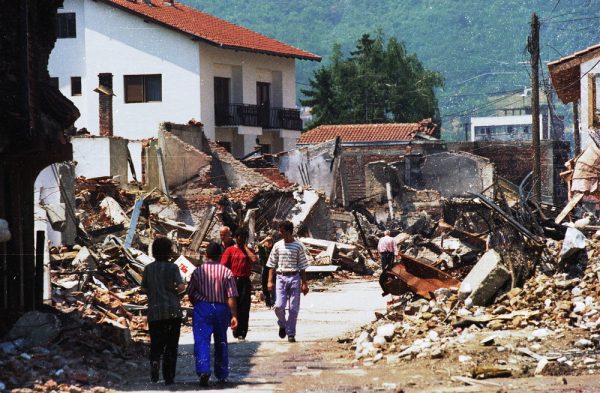
Twenty-five years ago, NATO was bombing Serbia as the first performance in its new role. The collapse of the Soviet Union had deprived the military alliance of its initial official role of defending its member states from a theoretical communist threat. Under no threat and devoid of UN Security Council approval, NATO assumed the self-ordained role of virtuous defender of allegedly oppressed minorities by bombing what was left of largely dismantled Yugoslavia in the spring of 1999 on behalf of Albanian rebels in the Serbian province of Kosovo.
NATO’s air attacks on the Balkan nation were the practical application of a new post-Cold War doctrine. To succeed, this doctrine relied on Western media to report on crisis areas with the appropriate mixture of exaggerations, omissions and outright lies to justify NATO’s virtuous interventions. The military industrial complex could breathe easy and a new generation of journalists began successful careers eagerly spinning their reports to serve the new humanitarian war ideology.
None was more successful than Dublin-born Samantha Power, whose novice reports from Bosnia in the mid-1990s provided the basis for her 2002 book on “genocide” which “quickly became an international sensation, glowingly reviewed almost everywhere, a huge bestseller that won her a Pulitzer Prize and launched her career as a leading figure in human rights doctrine.” She has gone on from one top governmental post to another, a Washington star, urging the United States to intervene on moral grounds.
Samantha Power owes her remarkable success to her talent as a writer, her ambition, her striking presence, but not least to the man at the origins of the whole humanitarian war policy.
That was none other than Morton Isaac Abramowitz, a highly influential member of the foreign policy establishment and the main inventor of what would become the “R2P” (Responsibility to Protect) doctrine. The crucial policy contribution of Abramowitz is explained at the start of my 2002 book, Fools’ Crusade, as follows:[1]
As president of the Carnegie Endowment for International Peace in the early 1990s, Abramowitz headed a project to develop a new U.S. foreign policy for the post-Cold War era. Rather than identifying “threats”, especially at a time when few threats could be seen, a successful new policy needed to combine promotion of U.S. interests with proclamation of U.S. “ideals”.
Theory and Practice
At the Carnegie Endowment in 1992, Abramowitz published the theory of the new U.S. “humanitarian intervention” policy as Self-Determination in the New World Order.
“The vision of a ‘new world order’ since 1990 has been a world with one superpower – the United States – in which the rule of law supplants the rule of the jungle, disputes are settled peacefully, aggression is firmly met by collective resistance, and all people are justly treated.”
That sounds very nice. But put into practice, “collective resistance” means NATO, and “all people are treated justly” depends on Washington’s preferences. The new rules-based order was not to be confused with traditional international law, based on national sovereignty. Globalization was making national sovereignty outdated (except for the United States). “Ideals” make rules more flexible.
The sovereign nation is being broken down subtly by the pressures of economic globalization. It may also be undermined from within, by domestic insurgencies. In the post-Cold War world, the Carnegie Endowment study noted, “groups within states are staking claims to independence, greater autonomy, or the overthrow of an existing government, all in the name of self-determination”. […] In the future, the authors announced, “humanitarian intervention will become increasingly unavoidable”. The United States will have the final word as to when and how to intervene.
Abramowitz subsequently helped put his theory into practice in crumbling Yugoslavia. He was the eminence grise behind U.S. diplomats, steering the events leading to the “Kosovo war” that split the province of Kosovo off from Serbia. He was advisor to the Kosovo Albanian delegation at the imitation “peace negotiations” staged at Rambouillet to provide an excuse for the bombing of Serbia. The moderate Albanian Kosovo leader Ibrahim Rugova was replaced by the armed gangster, Hashim Thaci. Secretary of State Madeleine Albright set terms no Serbian leader could accept, demanding the right to station NATO troops over the entire country, with full impunity. The Serb side was then blamed for the failure, and NATO began to bomb on March 24, 1999.
Samantha Steals her Way into Bosnia
Back in 1992, fresh out of Yale, 22-year-old Samantha Power was given a position as intern in the office of Abramowitz at the Carnegie Endowment. As a proofreader, she quickly absorbed the new official doctrine. At that time, her boss was obsessed with the conflicts in Bosnia as implicating the future of NATO. Determined to get to Bosnia where the action was, Samantha stole stationery from the neighboring office of Foreign Policy magazine and forged a letter from the editor to the head of the UN Press Office, asking that the UN provide her, as Foreign Policy’s “Balkan correspondent,” with “all necessary access.”[2]
From that time on, her work functioned precisely to advance the new “humanitarian intervention” policy of her mentor, Morton Abramowitz. She recalls that his influence helped her get increasingly important assignments – most crucially, writing about the Srebrenica massacre for The Washington Post.
With the Srebrenica reports, the term “genocide” emerged as the power word that could give NATO its new mission.
The Western press corps based in Sarajevo tended to become emotionally involved with the Muslim side which was its principal news source. Missing from their dispatches were reports on Muslim massacres of Serbs villages or on the well-armed Islamic fighters who joined the Muslim side from Afghanistan and Arab countries, some of them settling permanently in Bosnia.
When Bosnian Serb forces captured the Muslim base at Srebrenica in July 1995, they evacuated women, children and the aged to safety, while men fled, fearing retaliation. Many were killed in unclear circumstances.
Without reference to such context, Western media focused on reports of a massacre of 8,000 male prisoners as a unique event which branded the Serbs as the guilty party in the three-sided civil war. With the Srebrenica reports, the term “genocide” emerged as the power word that could give NATO its new mission.
Calling Srebrenica “genocide” provided the argument for NATO bombing: if Serbs committed genocide in Bosnia, it implied that Serbs were genocidal and risked committing genocide in Kosovo unless NATO intervened. This theory was supported by wildly inaccurate accusations voiced by leading Western politicians during the bombing campaign.
That was the story that was sold to the public by politicians and the media. From the start, the Serb majority in Yugoslavia had been portrayed as invaders in their own country, with everyone else as victims. Thus was destroyed the last semi-socialist, nonaligned country in Europe.
The Kosovo war indeed combined U.S. “interests and ideals”. The ideals were preventing a genocide that never would have taken place (and also, incidentally, preventing a negotiation that could have settled the whole conflict as well). The interests included the immediate construction by the Americans of a giant U.S. military base on the territory of Kosovo, once Serbian forces were obliged to leave.
Genocide and R2P
Samantha Power’s 2002 book was subtitled “America in the Age of Genocide”. To speak of the present as an “age of genocide” is wildly melodramatic, but the purpose is to place virtuous America in the center of drastic moral demands. America must save the world from its genocidal self. “Genocide” was thereby promoted as the most potent pretext for U.S. military intervention – precisely by deploring its absence, both in Bosnia and more convincingly, in Rwanda. The Clinton administration was certainly not going to intervene in Rwanda, because the bloody chaos was in fact favoring the conquest of Rwanda by Paul Kagame and his army, which had invaded Rwanda from Uganda in 1990. Kagame was a favored client of the United States. There was no reason for Washington to interfere with Kagame’s victory.
But the “failure to stop genocide” was an appeal to the liberal conscience to intervene later on, whenever the U.S. was in need a powerful argument to get rid of a someone it wanted to get rid of. Moammer Gaddafi had been on the U.S.-UK hit list for decades, but had made concessions to gain reconciliation. But when Gaddafi’s usual fundamentalist Islamic opponents in Tripoli used the 2011 “Arab spring” to raise protests, the “threat of genocide” alarm was raised on their behalf. In Washington, action to stop Gaddafi from “committing genocide” was urged by Hillary Clinton, Susan Rice and Samantha Power, while Bernard Henri Lévy raised the alarm in Paris. NATO rose to the challenge, destroyed the most economically successful country on the African continent and murdered its leader, creating a flood of refugees to Europe and other disasters. Most of the liberal left cheered.
Today it is widely recognized that the Irak war was based on deceit and ended in disaster. Other U.S. wars are mostly conceded to have been unfortunate mistakes. There are doubts about Libya, due mainly to the refugee flow. But the destruction of Yugoslavia, and in particular the 1999 “Kosovo war”, is still widely accepted in the West as what it was arranged to appear: NATO’s generous humanitarian intervention to prevent “genocide” by racist Serbs against the oppressed Albanian minority.
The distortions of the Bosnia conflict and the Kosovo war were precisely the practical application of the Abramowitz policy: promote minority rebellions to break down national sovereignty and change governments the U.S. doesn’t like, while supplying NATO with a new geographically unlimited mission of “humanitarian intervention”. Yugoslavia was the starting point of the whole aggressive post-Cold War U.S. policy as “single superpower” determining the world order, using the idealistic pretexts set out by Abramowitz. Young Samantha Power, who was very smart, got the point and ambitiously cheated her way into a supporting role as reporter in the Bosnia spectacle, which she eventually transformed into an astonishingly successful career.
I was in Kosovo on my own in months prior to the NATO bombardment and saw quite clearly that in that small province, the Serbs were a frightened minority while Albanians were already tasting their future triumph. There was absolutely no danger of a Serbian “genocide” of Albanians. But Western editors kept sending in ignorant young aspiring journalists, on the lookout for some “Serb atrocity” that could advance their budding career. Editors rejected any report that went in a different direction. It was at that time just plain impossible to publish an unbiased report. I know from experience.
Above all, breaking up Yugoslavia was an exercise in subsequent efforts to undermine the Russian Federation, by inciting the Federation’s ethnic minorities against the Russians. Ukraine was the crucial battering ram. I always used to think of Ukraine when studying the conflicts in the Krajina regions of Croatia and Bosnia, as both words have the same root (border land) and suffered from similar conflicts, notably in World War II. Western powers had revived the Nazi-supported Croatian nationalism against the Serbs to break up Yugoslavia. They would revive much more virulent Nazi-supported Ukrainian nationalism against Russian-speakers in Eastern Ukraine, in an effort to weaken and eventually even break up the Russian Federation.
And for the United States, the humanitarian “ideals” of supporting minorities would be compensated by the major strategic “interest” of eventually gaining control of Crimea, and with it, Russia’s main naval base in Sebastopol. Putin did what any Russian leader not brain-dead would have done: he headed off this disaster by mobilizing the Russian inhabitants of Crimea to vote to return to Russia, which they had never chosen to leave. This obvious act of self-determination is denounced in the West as an invasion.
The Ideological Backlash
Unfortunately, the blatantly tragic misuse of the “humanitarian intervention” or R2P doctrine in Libya has not managed to achieve its discredit. It is threatened now by the danger that it is changing sides in the very global conflicts it has stimulated.
The referendum in Crimea was a democratic measure of self-determination that fit the Abramowitz standards. The Russian “Special Military Operation” in Ukraine in 2022 was partially motivated by the sort of consideration featured in the Abramowitz doctrine: defense of the population of Donbas, under attack from an ultranationalist regime in Kiev. Of course, Western governments and media have simply totally ignored any Russia appeal to the ideals of human rights and self-determination, which they consider their own private property as self-declared unique “democracies”. Russia is classed as an “autocracy” whose interests must be malevolent and thus don’t count.
A greater threat to the West’s self-proclaimed monopoly on virtue is coming from Israel’s merciless attack on the people of Gaza. Most of the Global South and growing sections of Western populations are horrified by Israel’s destruction of hospitals, mass murder of children and efforts to starve the Palestinians. They see Israel, with full Western backing, committing Genocide – the real thing this time, out in the open, blatant and unrelenting.
The NATO war machine may have to conjure up a new set of moralizing pretexts for its aggressions.
Notes
[1] See Fools’ Crusade: Yugoslavia, NATO and Western Delusions, Pluto Press, 2002, pp 9-10; Monthly Review 2003
[2] Here, with William Burns, Samantha Power discusses her new autobiography The Education of an Idealist and recalls her short term working for Abramowitz at the Carnegie Endowment. https://carnegieendowment.org/2019/09/13/samantha-power-on-education-of-idealist-event-7178
Is America a Rogue Superpower?
By Ted Snider | The Libertarian Institute | March 27, 2024
“Unipolar” used to mean that the United States was, at least in theory, alone in leading the world. Now “unipolar” means that the United States is alone and isolated in opposition to the world.
In global affairs, a hegemon is a nation that leads because it has the consent of the other nations who believe in its goals and values. The United States has recently demonstrated, though, that it has given up any pretense of using its leadership to pursue the goals of the global community, and instead is openly using the global community to pursue its own goals.
In his new book, The Lost Peace, Richard Sakwa explains the distinction between the pursuit of hegemony and the pursuit of primacy. Primacy “entails predominance and the conscious attempt to thwart the ambition of others.” In its recent performance at the United Nations, the United States is performing, not out of hegemony as it usually described, but out of primacy.
As a hegemon, the U.S. wields the power to veto in the Security Council. But in the exercise of primacy, it has recently used that veto to supress the clearly expressed voice of the international community.
After repeated American vetoes of measures calling for an immediate humanitarian ceasefire in Gaza, in a desperate and seldom used move, on December 12, the General Assembly invoked Resolution 377A in an attempt to circumvent U.S. leadership. It was the response to what was perceived as America’s irresponsible use of its veto power as a permanent member of the Security Council.
It does not matter that the vote was on the war in Gaza, nor on whether you agree with the United States. What is significant is the assumption by Washington of the role of roadblock and not leader of the international will.
Article 377A first reminds the permanent members of the Security Council that they are obliged to “to seek unanimity and exercise restraint in the use of the veto” in pursuit of the maintenance of international peace and security. It then gives the General Assembly the right to make “appropriate recommendations to Members for collective measures… to maintain or restore international peace and security” when the Security Council “because of a lack of unanimity… fails to exercise its primary responsibility.”
The world saw the United States, not as a hegemon leading the world in the pursuit of unanimity, but as failing “to exercise its primary responsibility” as a leader on the Security Council.
On March 25, the U.S. went one step further and took a step toward becoming a rogue state who has supplanted international law with its rules-based order. International law is grounded in the charter system and the United Nations and is universally applicable. The rules-based order is composed of unwritten laws whose source, consent, and legitimacy are unknown. To the global majority, those unwritten laws have the appearance of being invoked when they benefit the U.S. and its partners and not being invoked when they don’t.
On March 25, the Security Council passed a resolution demanding “an immediate ceasefire for the month of Ramadan respected by all parties leading to a lasting sustainable ceasefire.” The resolution was able to pass because the U.S. stood aside and let the other fourteen Security Council members pass it by abstaining instead of vetoing.
But in her explanation of the American abstention after the resolution passed, U.S. Ambassador to the UN Linda Thomas-Greenfield “surprisingly” said that “we fully support some of the critical objectives in this nonbinding resolution.”
Her claim that the Security Council resolution was nonbinding was not an off script, impromptu comment. It is the strategy of a country that enforces, not international law, but the U.S. led rules-based order.
In a March 25 press briefing following the vote and Thomas-Greenfield’s claim, White House National Security Communications Advisor John Kirby called the resolution “nonbinding” no less than four times. “Number one,” he said, “it’s a nonbinding resolution. So, there’s no impact at all on Israel and Israel’s ability to continue to go after Hamas.”
When asked by a reporter, “on the binding thing, is it binding, nonbinding?” Kirby answered, “It’s a nonbinding resolution.” When asked “a technical question” a second time to clarify if the resolution was nonbinding, Kirby again said, “My understanding is it’s a nonbinding resolation—resolution.”
At a State Department press briefing the same day, department spokesperson Matt Miller also called the resolution “nonbinding” three times.
All UN Security Council resolutions are legally binding and have the status of international law. That is why UN Secretary General António Guterres said, “This resolution must be implemented. Failure would be unforgivable.” UN deputy spokesperson Farhan Haq explained that, “All the resolutions of the Security Council are international law. They are as binding as international laws.”
Others responded the same way to the U.S. claim. On behalf of the ten elected members of the Security Council who drafted the resolution, Pedro Comissario, Mozambique’s envoy to the United Nations, said, “All United Nations Security Council resolutions are binding and mandatory.” He then added, “It is the hope of the 10 that the resolution adopted today will be implemented in good faith by all parties.”
The United Kingdom also did “not share” the U.S. claim, prompting their envoy to the UN to say, “we expect all Council resolutions to be implemented. This one is not any different. The demands in the resolution are absolutely clear.” China, too, did not share the U.S. evaluation. “China’s U.N. Ambassador Zhang Jun said Security Council resolutions are binding.”
By judging Security Council resolutions to be nonbinding and denying their status as being as binding as international law, the United States has taken the next step from hegemony to primacy to a rogue state that has undermined the foundational role of the Security Council in the international order.
Voices from Gaza
By Rick Sterling | Dissident Voice | March 22, 2024
The book Gaza Writes Back is a collection of short stories from twenty young Gazans. Although published in 2013, the book is highly relevant today. The stories reveal how the last five months is the culmination of a process which has been going on for decades.
The title is curious: Gaza Writes Back. Perhaps it is an alternative to “Gaza Fights Back”. Certainly in the context of Gaza, writing is an important form of resistance to Israeli repression, occupation and massacres. The oppressor recognizes this as well. At least ninety five journalists and media workers have been killed in Gaza since October 7.
The editor of Gaza Writes Back was an English literature and creative writing professor at Gaza’s Islamic University named Refaat Alareer. Many of the contributors to this collection of short stories were Alareer’s students.
There are many references in the book to Israel’s attacks on Gaza in 2008-9 named “Operation Cast Lead”. As the anthology was being printed and first distributed, Israel launched the massacre named “Operation Protective Edge”. In six weeks, Israel killed 2,191 Palestinians and injured 11,231 while 71 Israelis were killed. Thirty Palestinians for every single Israeli. As editor Alareer says, “This book shows the world that despite Israel’s continuous attempts to kill steadfastness in us, Palestinians keep going on , never surrendering to pain or death, and always seeing and seeking liberty and hope in the darkest of times.”
The editor Alareer says, writing is “an act of resistance and an obligation to humanity to raise awareness among people blinded by the multi-million dollar Israeli campaign of ‘hasbara’ (‘persuasion’, or more accurately, disinformation.)”
Most of the stories recount difficult moments and experiences. That is natural because the oppression in Gaza has been relentless for decades. Here is a concise summary of the conditions in 2014 when this book came out: “If you lived in Gaza, how would YOU feel?”
It is impressive that Gazans continue to resist and maintain their humanity despite the efforts to dehumanize them.
The story “L is for Life” is about a young woman writing a letter to her father who died eleven years earlier. She speaks of her mother’s “bitter loneliness”. It reminds us that for every Palestinian killed there is pain and suffering caused to each of their friends and family. How many women and men share that “bitter loneliness” because their partners or children were killed? How many lives have been irreparably harmed by the injuries and amputations? The author travels to an orphanage that her late father spoke of and sees hope in the midst of destruction.
The story “One War Day” describes a mother who opens all the windows at night to avoid windows exploding inwards if there is an Israeli bombing. When the roof collapses the author’s brother is buried under the rubble with his hands still on the book he was reading.
The story “Spared” describes a girl whose mother insists she stay inside for lunch rather than go out where kids are playing soccer in the street. That saves her from death or injury when a bomb is dropped. Kids died and there were amputated limbs and scarred faces. “Our neighborhood was blown to smithereens in a split second. No more games played. No more goals. No more cheering. And my friends grew up in a second.“
In the story “A Wish for Insomnia” the writer imagines she is an Israeli soldier with post traumatic stress disorder. As the young writer imagines, there must be Israeli soldiers who take home the nightmare of what they have done just as there are US soldiers with the same mental and emotional disorder. The Palestinian author writes, “The past few weeks were agonizing for the family. Their father (the Israeli soldier) did not leave the bedroom. All they saw and heard of him was his screaming in the middle of the night, the noise of things breaking, and his moaning during the day.” He has nightmares and says, “We were sent in tanks to Gaza…. We were instructed to shoot to kill and we shot almost every moving thing. We shot the water tanks, a couple of stray dogs, a cow, a dozen people, and there was that woman with her kid…. I wish I could know what happened to the kid. The kid cried the whole night. I kept hearing the commander’s order in the background, but it was the little kid’s voice that haunted me everywhere…..”
The short story titled “Please Shoot to Kill” portrays family life and fear during nights and days of bombing and Israeli soldiers kicking down the door to their house with M16 rifles ready to fire. It describes what it’s like to see the soldiers ransacking the house then hitting the father. What it’s like to see one’s little sibling hit by shrapnel so badly the leg would be amputated. What it’s like to have Apache helicopters overhead and Meerkhava tanks on the street. The father needs a kidney operation in Egypt but is unable to go there. Instead, a baby that needs surgery is allowed to go. “Laila did not hate the little baby who was sent instead of her father. She only hated Israel for making it so that the doctor had to choose. She only wished this baby would survive, grow up, and become a freedom fighter.”
The story titled “From Beneath” describes the thoughts of a young woman under the rubble, unable to move and sensing what parts of her body have been crushed and how her life was coming to end.
The story “Lost at Once” is a love story giving insights into Gazan social class differences.
These are just a few of the twenty-three short stories in this fine book.
The editor, Professor Refaat Alareer, was also a moving poet and an influential voice with 83 thousand followers on Twitter/X. His twitter handle was @ThisIsGaZa. In his last interview before being killed, Refaat said “I am an academic. Probably the toughest thing I have at home is an Expo marker. But if the Israelis invade, if they barge at us, charge at us, open the door to massacre us, I am going to use that marker to throw it at the Israeli soldiers, even if that that is the last thing I do. And this is the feeling of everybody. We are helpless. We have nothing to lose.”
Refaat Alareer and his brother, sister and four of their children were killed in a targeted airstrike on 6 December 2023. His last poem is a testament to his courage and dedication. It has been widely remembered at demonstrations against Israel’s genocide in Gaza.
If I Must Die
If I must die,
you must live
to tell my story
to sell my things
to buy a piece of cloth
and some strings,
(make it white with a long tail)
so that a child, somewhere in Gaza
while looking heaven in the eye
awaiting his dad who left in a blaze—
and bid no one farewell
not even to his flesh
not even to himself—
sees the kite, my kite you made, flying up above
and thinks for a moment an angel is there
bringing back love
If I must die
let it bring hope
let it be a tale
Some of Refaat Alareer’s outstanding academic lectures are available online. A tribute to him by his publisher Just World Books is online here. The heading of Refaat Alareer’s twitter account says, “I teach; therefore, I am. Have you read Gaza Writes Back?”
This book exemplifies courage and dignity in the face of hardship and repeated attacks. Each story is different but collectively they give a sense of continued dignity and hope despite suffering and pain. Ultimately, the stories are uplifting. It is a measure of Israel’s lawlessness that they had to murder the editor of Gaza Writes Back.
Rick Sterling can be reached at rsterling1@protonmail.com.
What caused the US to fall?
By Vladimir Mashin – New Eastern Outlook – 22.03.2024
Europeans and Americans alike are tired of the war in Ukraine. Clear-headed people in the West realise that Russia cannot be defeated: the bravura statements of some officials can hardly hide the obvious truth that the Kiev regime is doomed. More and more observers are coming to the conclusion that the American elite is waging war to “fend off the challenge to its own hegemony”.
In these circumstances, the new book “Defeat of the West” by Emmanuel Todd, a well-known French political scientist and anthropologist, is attracting a lot of attention in the West. According to the historian, the West made a fatal miscalculation when it decided to expand NATO under Presidents B. Clinton and G. Bush: the American elite was drugged by the ideology of “democracy promotion and official demonisation of Russia”. The American ruling elites not only endangered the whole world, but also created great dangers for America’s existence as a single state.
By imposing unprecedented sanctions on Moscow, the United States overestimated its capabilities and failed to rally the major states of the global South to its side. Moreover, the manufacturing base of the United States and its European allies has proved insufficient to supply Ukraine with the equipment (especially artillery) needed to stabilise, let alone win, the war. The United States no longer has the means to fulfil its foreign policy promises.
The United States makes fewer cars than it did in the 1980s and grows less wheat.
But the most important factor explaining today’s problems is the moral and cultural decline of the West – according to Todd, “Too many people want to run things and boss them around. They want to be politicians, artists, managers. And that doesn’t always require learning intellectually challenging things: ultimately, educational progress has led to educational decline because it has led to the disappearance of the values that favour education”.
The US produces fewer engineers than Russia, not only per capita, but also in absolute numbers: the country is experiencing an “internal brain drain” as its young people move from demanding, high-skill, high-value-added professions to law, finance and various occupations that betray the value of the economy and, in some cases, may even destroy it.
According to Todd, the West’s decision to outsource its industrial base is more than bad policy; it is evidence of a project to exploit the rest of the world.
Nor have the Americans succeeded in spreading the federal values they proclaim to be universal. As the United States has modernised, it has come to espouse a model of sex and gender that does not fit well with the models of traditional cultures such as Indian, Islamic and Russian.
Todd believes that many of these values are “deeply negative”. The West does not value the lives of its young. (In 1976, Todd used infant mortality statistics to predict the collapse of the Soviet Union).
Today, Biden’s America has a higher infant mortality rate (5.4 per 1,000) than today’s Russia, and three times that of Japan.
Todd is struck by the inability of the Western elite to distinguish facts from wishes. Newspapers constantly report that President Putin is a threat to the Western order, but the greater threat to the Western order is the arrogance of those who run it.
According to the historian, it sometimes seems that in the United States there are no national principles, only partisan ones, and “each side is convinced that the other is trying not just to run the government but to take over the state”.
Similar assessments can often be heard in the American press. For example, in a commentary on Biden’s speech to the US Congress on 7 March, the well-known columnist Robin Givhan said: “The real audience is not in the parliament, but in the cheap seats outside: in cities where homeless encampments and busloads of desperate migrants are at once enraging and heartbreaking; in towns where fear and confusion drive people to try to rewrite history or hide it from future generations; and in picturesque communities where people want to hold back change because the unknown future seems far more frightening than the sclerotic present. The American people are confused. After all, they elected this dysfunctional Congress.
“WHAT THE NURSES SAW” NOW A MAJOR MOTION PICTURE (WELL, A SHORT VIDEO)
For more info go to www.WhatTheNursesSaw.com
Based on the book by Ken McCarthy.
Artwork by Anne Gibbons.
Video editing by Paul Morrison and Ken McCarthy.
BRASSCHECK
So what about “What the Nurses Saw”?
Over 7,000 copies sold so far. Not only that, the book is now being circulated among staff in TWO different U.S. Senators office: Rand Paul of Kentucky and Ron Johnson of Wisconsin.
What the Nurses Saw
You can order the book here
CHD Urges Vermont Lawmakers to Reject Bill That Would Allow Kids 12 and Under to Consent to HPV Vaccines
By John-Michael Dumais | The Defender | March 5, 2024
Children’s Health Defense (CHD) last week submitted written testimony to the Vermont Senate Health and Welfare Committee opposing a proposed bill that would allow children as young as 12 to receive certain vaccines — including the human papillomavirus (HPV) vaccine — without parental knowledge or consent.
Senate Bill S.151 states on page 1 that it “proposes to allow a minor 12 years of age or older to consent to medical care for the prevention of a sexually transmitted infection.” The bill does not specifically mention vaccines.
However, according to CHD’s New England Chapter, the American Academy of Pediatrics, Planned Parenthood and other groups that want to offer confidential preventative services to minors — including HPV vaccines, hepatitis vaccines, HIV PrEP pills and other products — are lobbying for the bill.
In their testimony, CHD President Mary Holland and General Counsel Kim Mack Rosenberg argued that HPV vaccines have never been proven to prevent cancer, that the vaccines have caused significant injuries and that bypassing parental consent violates federal law.
They also questioned whether minors could reasonably be expected to understand the potential long-term health risks of these vaccines.
In their testimony, Holland and Rosenberg, authors of “The HPV Vaccine On Trial: Seeking Justice For A Generation Betrayed,” wrote:
“Teens … understandably may not want to have children immediately but do they want to risk not having any children in the future? If they do not know the real risks and the minimal (if any) potential benefits of HPV vaccines, can they give informed consent?”
CHD urged the Vermont Senate Health and Welfare Committee to withdraw S.151. CHD’s New England Chapter recommended Vermonters take immediate action to help defeat the bill.
Evidence for HPV vaccines preventing cancer questioned
CHD’s testimony challenged the claim that HPV vaccines have been proven to prevent cancer, arguing that there is no conclusive evidence to support this assertion.
Holland and Rosenberg cited government data showing the cancer rate for the youngest, most vaccinated women increased between 2011 and 2019 to the same level as when the vaccines were first introduced.
They also cited evidence from the National Cancer Institute, which shows little change in the incidence and death rates of cervical cancer in young and middle-aged women since the introduction of HPV vaccines in the U.S.
The greatest decreases in cervical cancer incidence rates were observed in older women, who likely never received an HPV vaccine, according to CHD’s testimony.
Data also suggest that regular screening, such as a pap smear, is a more effective and affordable method for reducing cervical cancer rates. Yet data show girls who receive the HPV vaccine are less likely to undergo regular screening.
CHD’s testimony included a graphic illustrating that only 0.18% of HPV infections worldwide, including in countries with less screening and more significant exposures to co-factors that contribute to cervical cancer, ever progress to cervical cancer.
CHD emphasized that the need for HPV vaccines, particularly in higher-resource countries like the U.S., is questionable given the effectiveness of screening methods and the fact that the vast majority of HPV infections clear on their own.
HPV vax harmful, trials lacked proper placebo
Holland and Rosenberg delved deeper into the potential risks associated with HPV vaccines — particularly Merck’s Gardasil and Gardasil 9 — arguing that the clinical trials for these vaccines were inadequate and failed to properly assess the vaccines’ safety.
The clinical trials for Gardasil 9, currently the only HPV vaccine available in the U.S., were “bootstrapped to the original formulation of Gardasil, approved in 2006,” according to the testimony.
This methodology, CHD claimed, resulted in a lack of “true controlled clinical trial safety data because the safety of the original Gardasil was never compared to an inert saline placebo.”
Instead, Merck compared the vaccine to its “bioactive aluminum (a known neurotoxin) adjuvant — an ingredient specifically intended to heighten an immune system response to the vaccine.”
This lack of proper safety testing, combined with the absence of saline placebos and other clinical trial manipulations, should raise concerns about allowing children to make decisions about receiving the HPV vaccine — particularly the potential impact on their future fertility — without parental involvement, CHD said.
Holland and Rosenberg cited their book “The HPV Vaccine On Trial,” which they said “details the many concerning questions raised by the Gardasil clinical trials and the injuries reported therein and in the marketplace.”
A search of the Vaccine Adverse Event Reporting System revealed “75,727 … reports of injury, including thousands of serious and disabling injuries, and 629 deaths” related to HPV vaccines as of Jan. 26, 2024, according to CHD’s testimony. “The majority of reported adverse events occurred in children under age 17,” Holland and Rosenberg wrote.
CHD pointed to the more than 100 cases now pending against Merck “for serious, life-altering injuries, many of which are autoimmune in nature, to young women and men following receipt of Merck’s HPV vaccines.”
Rosenberg is one of the attorneys representing plaintiffs in multi-district litigation against Merck.
Bill violates federal law
Holland and Rosenberg argued the Vermont bill violates federal law and is unconstitutional. They cited the National Childhood Vaccine Injury Act of 1986, which requires parents to receive Vaccine Information Statements before their child is vaccinated.
“Therefore, the bill is clearly unconstitutional under the Supremacy Clause of the United States Constitution,” the testimony stated. The Supremacy Clause establishes that federal law is the supreme law of the land and that in most cases it preempts state law when there is a conflict.
CHD also pointed to a 2022 federal court decision in Booth v. Bowser resulting in a preliminary injunction against a similar law in Washington, D.C., on the grounds it conflicted with the federal law.
CHD warned that Vermont could face a similar outcome if S.151 is passed, noting U.S. District Court Judge Trevor N. McFadden’s conclusion in the case:
“States and the District are free to encourage individuals — including children — to get vaccines. But they cannot transgress on the Program Congress created. And they cannot trample the Constitution.”
CHD also cited the Mature Minor Doctrine Clarification Act, a Tennessee law signed by the state’s governor in May 2023. The law recognizes the applicability of the National Childhood Vaccine Injury Act’s requirement for healthcare providers to provide a Vaccine Information Statement to a minor’s parent or guardian before vaccination.
Other testimony submitted in opposition to the bill can be found here.
John-Michael Dumais is a news editor for The Defender. He has been a writer and community organizer on a variety of issues, including the death penalty, war, health freedom and all things related to the COVID-19 pandemic.
This article was originally published by The Defender — Children’s Health Defense’s News & Views Website under Creative Commons license CC BY-NC-ND 4.0. Please consider subscribing to The Defender or donating to Children’s Health Defense.
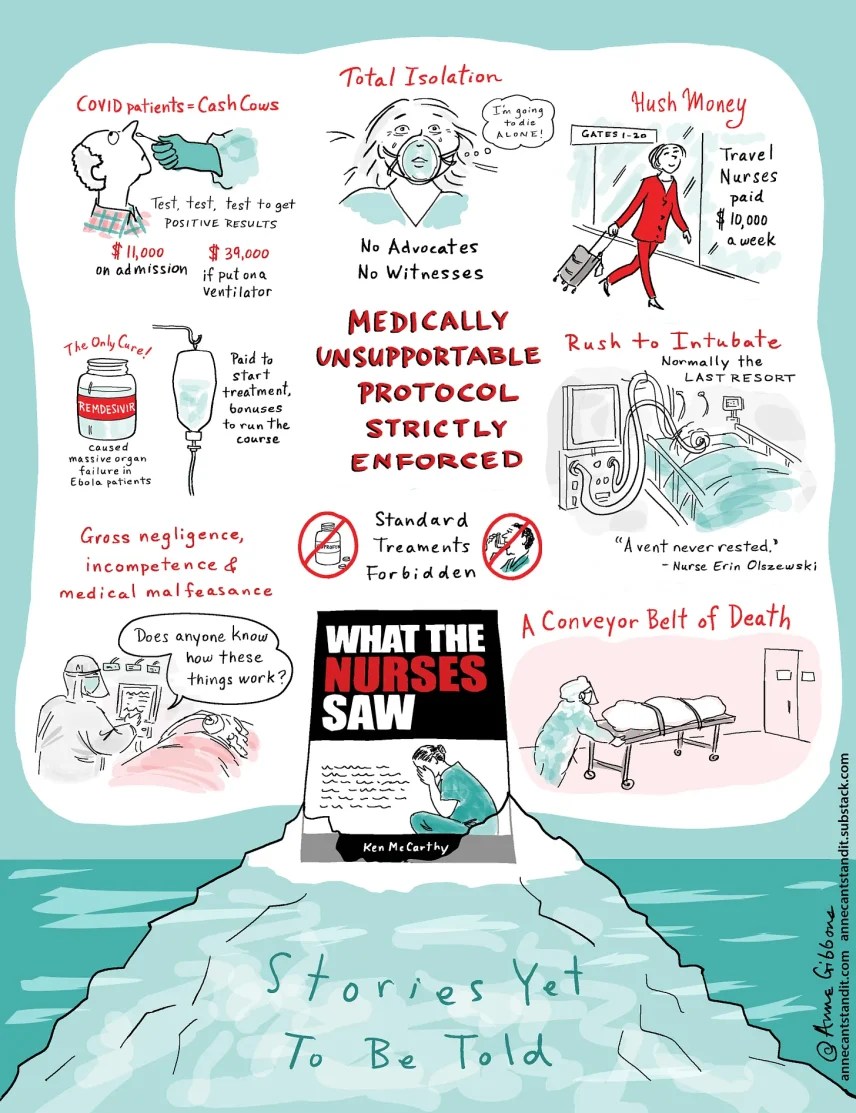
What the Nurses Saw — It was Murder
An investigation into systemic medical murders that took place in hospitals during the COVID panic and the nurses who fought back to save their patients
By Ken McCarthy | December 6, 2023
No human activity can ever be free from error, but to be clear, this book is not about the kind of error all human beings are prone to.
As you will learn from the eye-witness accounts and technical information presented in this book, calling the failed COVID protocols “errors” is not accurate.
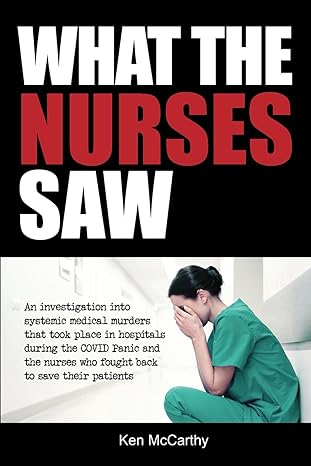 These protocols were explicitly ordered by those who took dictatorial control of the medical system early in the Panic (spring of 2020). Further, when they were shown to be demonstrably failing and harming many thousands of people, experienced healthcare professionals who raised informed concerns were silenced through demotion, firing, and organized campaigns of harassment promoted by the news media and enabled by companies like Google, Facebook, Twitter, and TikTok, in some cases in collaboration with the White House and the Department of Justice’s FBI.
If this sounds very bad, it’s because it is.
What the Nurses Saw is documentation of what happens in the real world when bureaucrats, in this case bureaucrats in Washington DC, take literal dictatorial control over the practice of medicine.
On a pure dollar and cents level, one of every five dollars spent in the U.S. is spent on the products of the medical services industry, as is one of every three tax dollars. The U.S., more than any country in the world, and by a large measure, has been colonized by this industry. As part of this process, the industry and its operatives have corrupted and perverted science, academia, and the news media. Now it’s hard at work to weaken and degrade the last pillar that keeps the system even remotely functioning — the integrity of the nursing profession.
If we fail to support our good nurses, help them hold the line, and start aggressively turning things around, there is no practical limit to how far this totalitarian medical dictatorship which we in fact live under will go in its future abuse and exploitation of human beings.
Featuring in-depth interviews with:
Erin Marie Olszewski,
Kevin Corbett Ph.D.,
Kimberly Overton,
Ashley Grogg,
Kristen Nagle,
Sarah Choujounian,
AJ DePriest,
Mark Bishofsky,
and Katie Spence
Please share the link: WhatTheNursesSaw.com
Featured Video
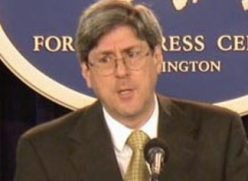
Pentagon insider says high US official Douglas Feith reported to Netanyahu
or go to
Aletho News Archives – Video-Images
Frlom the Archives
Who’s to blame for the Iraq war?
A not-so-trivial quiz
By Maidhc Ó Cathail | 14 March 2010
Maidhc Ó Cathail names and shames the top 19 politicians, academics and policy makers – all con men and all Zionist Jews – who lied and conspired to steer the US toward aggression against the Iraqi people. … continue
Blog Roll
 Aletho News
- Moscow issues warning over Trump’s Golden Dome plan
- Brussels wants ‘our sons to die for Ukraine’ – Orban
- Where in the World Is Benjamin Netanyahu? On the Move or Out of Sight?
- Pentagon insider says high US official Douglas Feith reported to Netanyahu
- The Sludging of Rural America
- Lawyers’ groups demand end to British military bases in Cyprus
- CIA Assessment: The Resistance Cannot Be Crushed
- Hezbollah Returns: It Didn’t Start a War, It Is Ending One
- EU states seek ‘talks’ with Iran for access to Strait of Hormuz: Report
- Trump on Hormuz: “Others must take care of it” after US falters
- If Americans Knew
- As US-Israel war on Iran rages, Gaza faces massive dust storm – Not a ceasefire Day 156
- No let-up in attacks on Gaza as Israel takes on Iran, Lebanon – Not a ceasefire Day 155
- ‘Of Course’: IDF Drops Case Against Soldiers Accused of Raping Palestinian Prisoner
- Don’t Fall for the Regime Change Talk. Israel Is ‘Mowing the Lawn’ in Iran
- Will Israel and the US wreck the Gulf States along with Iran?
- US so far burned through ‘years’ of munitions in Iran war: Report
- How the Israeli Tail Wags the American Dog
- Outdated intel likely led to deadly U.S. strike on Iranian elementary school, sources say
- Pentagon insider says high U.S official Douglas Feith reported to Netanyahu
- In fond memory of Walid Khalidi, the historian of Palestine
- No Tricks Zone
- Storing Green Energy To Last Germany 10 Days Would Require A 60-Million Tonne Battery
- New Studies: UK Sea Levels Were 4 Meters Higher Than Today During The Mid-Holocene
- Destructive Green New Deal: German Energy And Metal Group Warns Of Drastic Crisis
- New Study Documents A 20-Year Pause In Arctic Sea Ice Decline – Driven By Internal Variability
- Wake-up Call: Survey Shows Majority Of Germans Now Favor Postponing Climate Targets!
- Televised! Leading German Political Candidate Tells Schoolchildren CO2 Makes Sun Hotter!
- New Study: A Century Warming Of 1.1°C Is ‘Commonplace’ And ‘Not Unusual’ During This Interglacial
- New Study: ‘Internal Noise’ And Volcanic Forcing Can Trigger 10-15°C Warming Within Decades
- Glaciers Worldwide Are Suddendly Surging, Experts Blame Warming!
- Surprising Discovery: Sahara Is Greening…Billions Of Trees Where Once Thought To Be Barren
 Aletho News