Elections Are Bad for Our Democracy, WEF and Bill Gates’ Senior Adviser Says We do not need no stinking elections

BY IGOR CHUDOV | AUGUST 23, 2023
The World Economic Forum has been on a tear lately! A recent article in the New York Times (paywall-free link) by a senior WEF agenda contributor, Adam Grant, a Wharton management expert and an adviser to Bill Gates, says, “Elections are Bad for Democracy.”
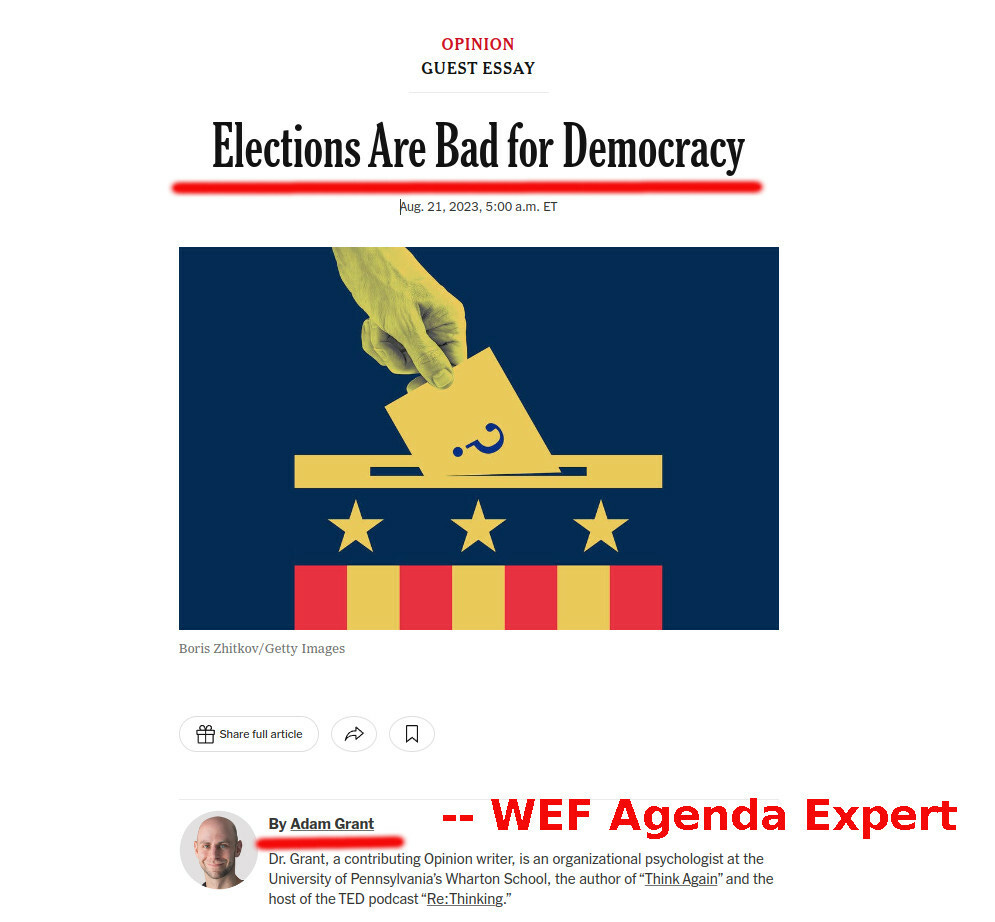
In the United States, any private citizen can publish any opinion on their web page or social network timeline. However, Mr. Grant is not an ordinary private person; he is a WEF contributor who participated in numerous WEF functions and authored many agenda-setting articles. He is also an adviser to Google and Bill Gates.
Far from obscure is the venue that gave him a platform to be heard: The New York Times is the foremost “newspaper of record,” which used to be the most respected publication many years ago.
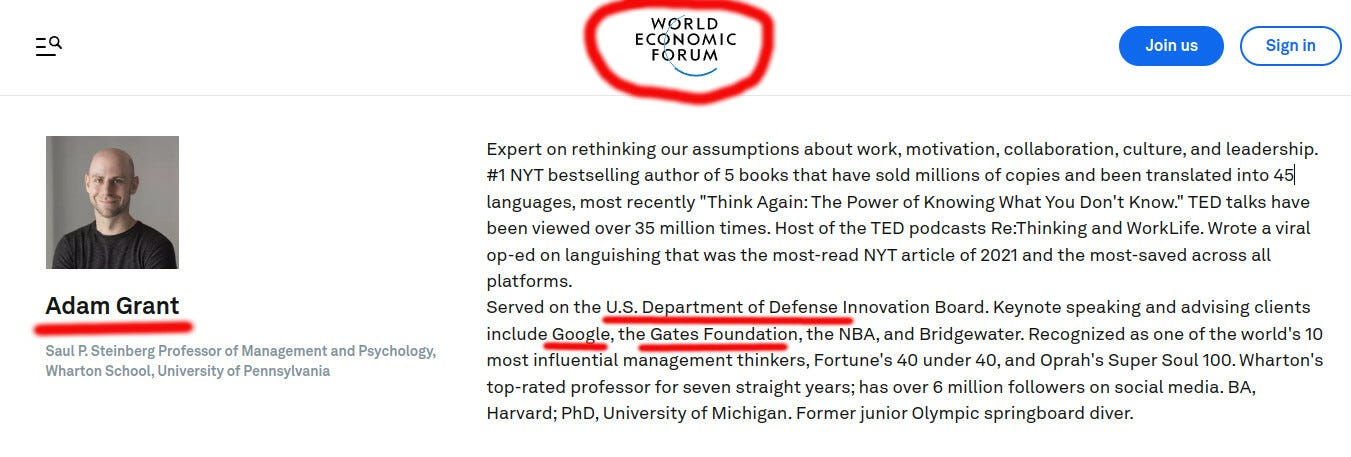
Who is Adam Grant? The New York Times forgot to mention that he is a very senior member of the WEF. Here’s his World Economic Forum page:
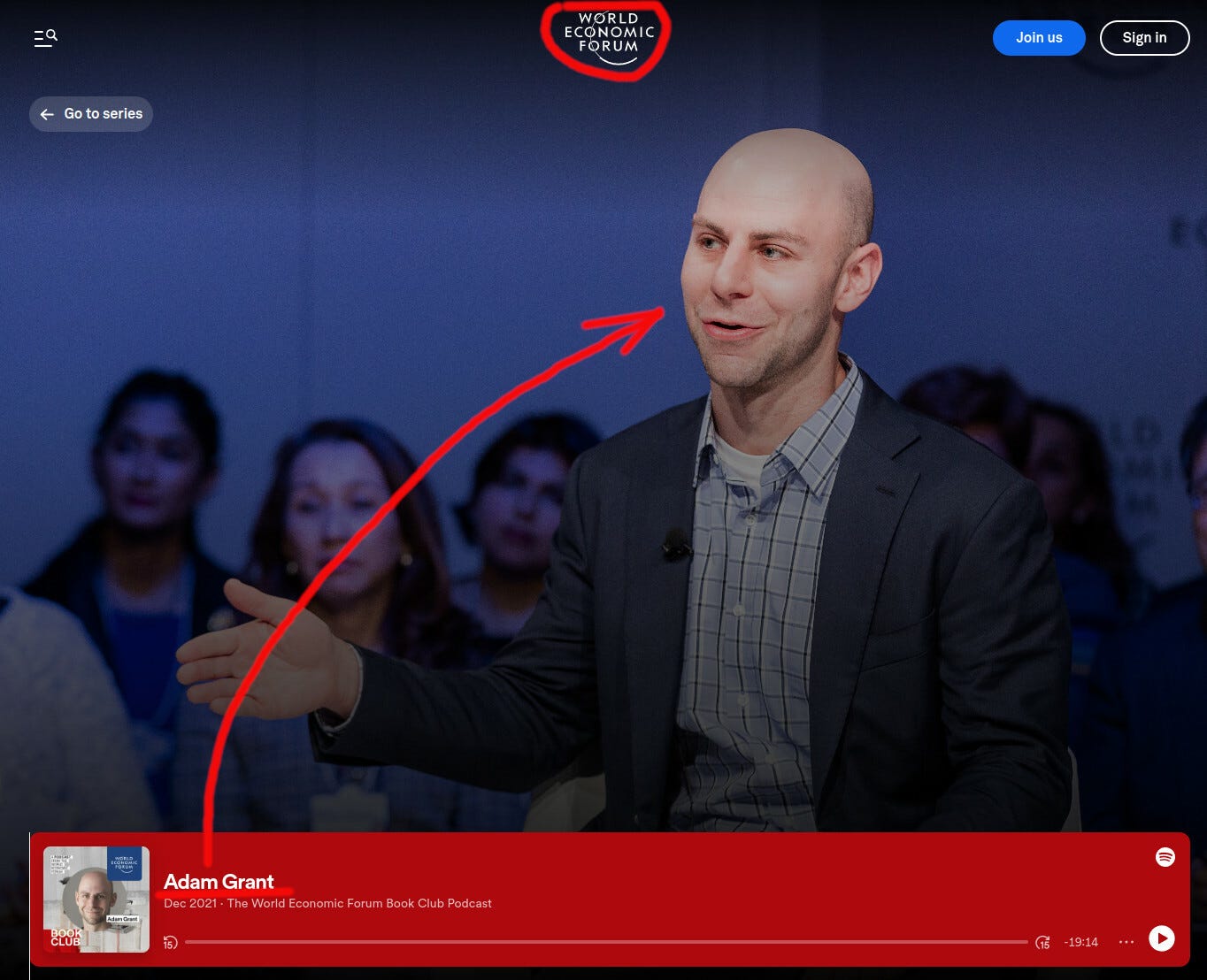
Mr. Grant is a frequent speaker and writer at the WEF, setting and promoting their agenda:
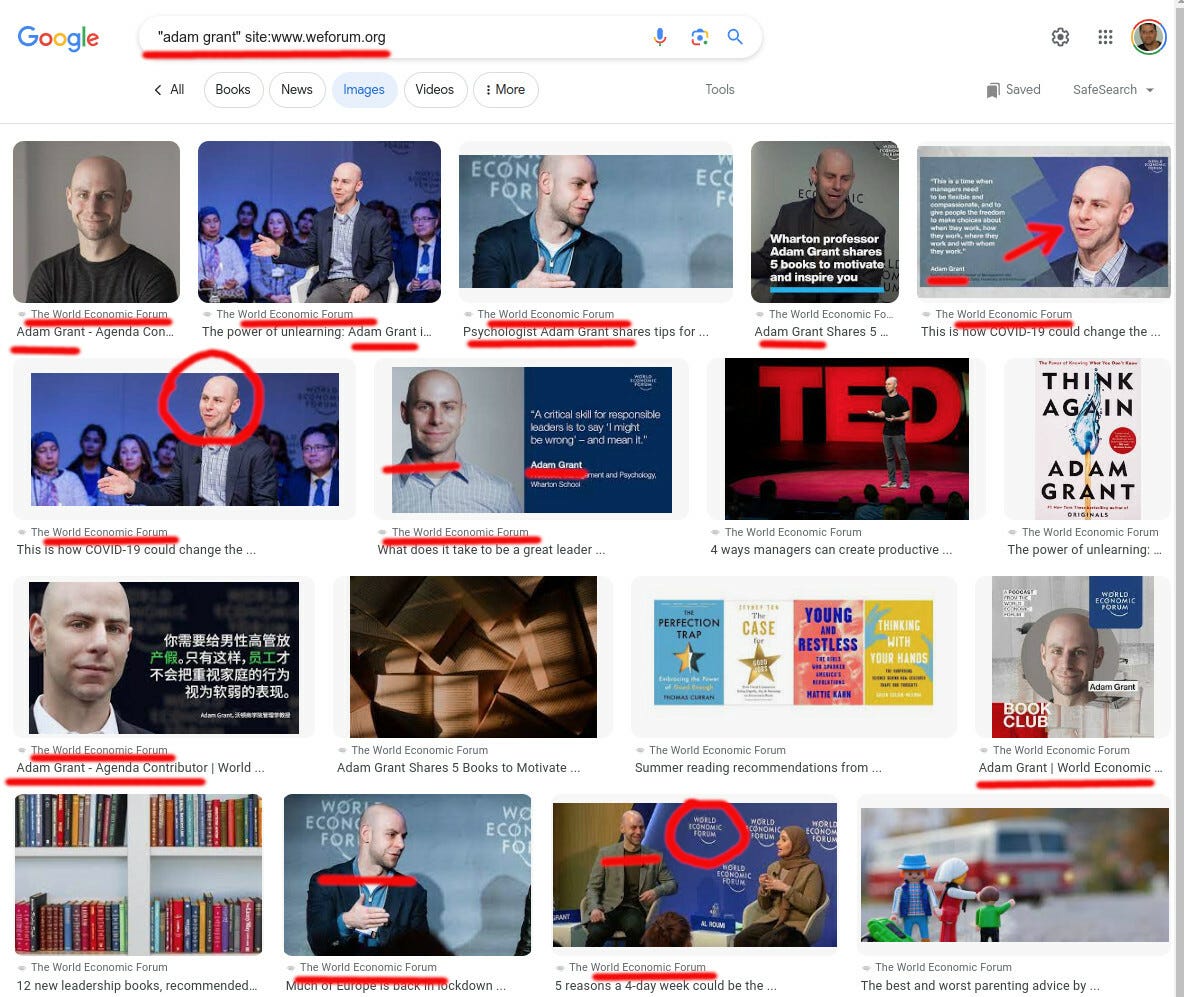
Adam Grant is a prolific WEF author, with posts too many to list individually.
You Are Too Dumb to Vote, Adam Grant Explains
Officials have been working hard to safeguard elections and assure citizens of their integrity. But if we want public office to have integrity, we might be better off eliminating elections altogether.
If you think that sounds anti-democratic, think again. The ancient Greeks invented democracy, and in Athens many government officials were selected through sortition — a random lottery from a pool of candidates. In the United States, we already use a version of a lottery to select jurors. What if we did the same with mayors, governors, legislators, justices and even presidents?
Mr. Grant advocates “randomly selecting” officials from a “pool of candidates.”
Who forms the pool of candidates? Who is admitted to the “pool”? Mr. Grant is vague on this question, but we can take a guess. The pool would be formed by the no-longer-elected “guardians of our democracy”; only the people acceptable to them would be allowed to be randomly selected.
Indeed, Mr Grant explains that those seeking to enter the “pool” would need to be vetted:
In America, imagine that anyone who wants to enter the pool has to pass a civics test — the same standard as immigrants applying for citizenship.
I am sure those who do not believe the WEF-promoted ideologies would be ineligible for the pool and unable to pass the civics test. We do not want doubters to undermine our democracy, after all! (Note the sarcasm)
If you, my dear reader, wonder who will ensure that “random selection” is truly random, you are not alone!
Mr. Grant is a senior adviser to the Department of Defense, Google, and the Bill and Melinda Gates Foundation. So please take him seriously, as do the organizations above who take his advice. He means it.
Just imagine the savings, Grant says:
Switching to sortition would save a lot of money too. The 2020 elections alone cost upward of $14 billion. And if there’s no campaign, there are no special interests offering to help pay for it.
Surely, we can save a lot of money if dirty peons like you and me are not allowed to vote!
The WEF is Serious About Abolishing Voting
Is the above a weird individual opinion only? Not quite!
In this video, Klaus Schwab discusses the idea of using a “prescriptive mode” to form the will of the electorate and do without elections:
The WEF views political systems with competing political parties as “toxic” and discusses “detoxifying politics,” understood as getting rid of party competition:
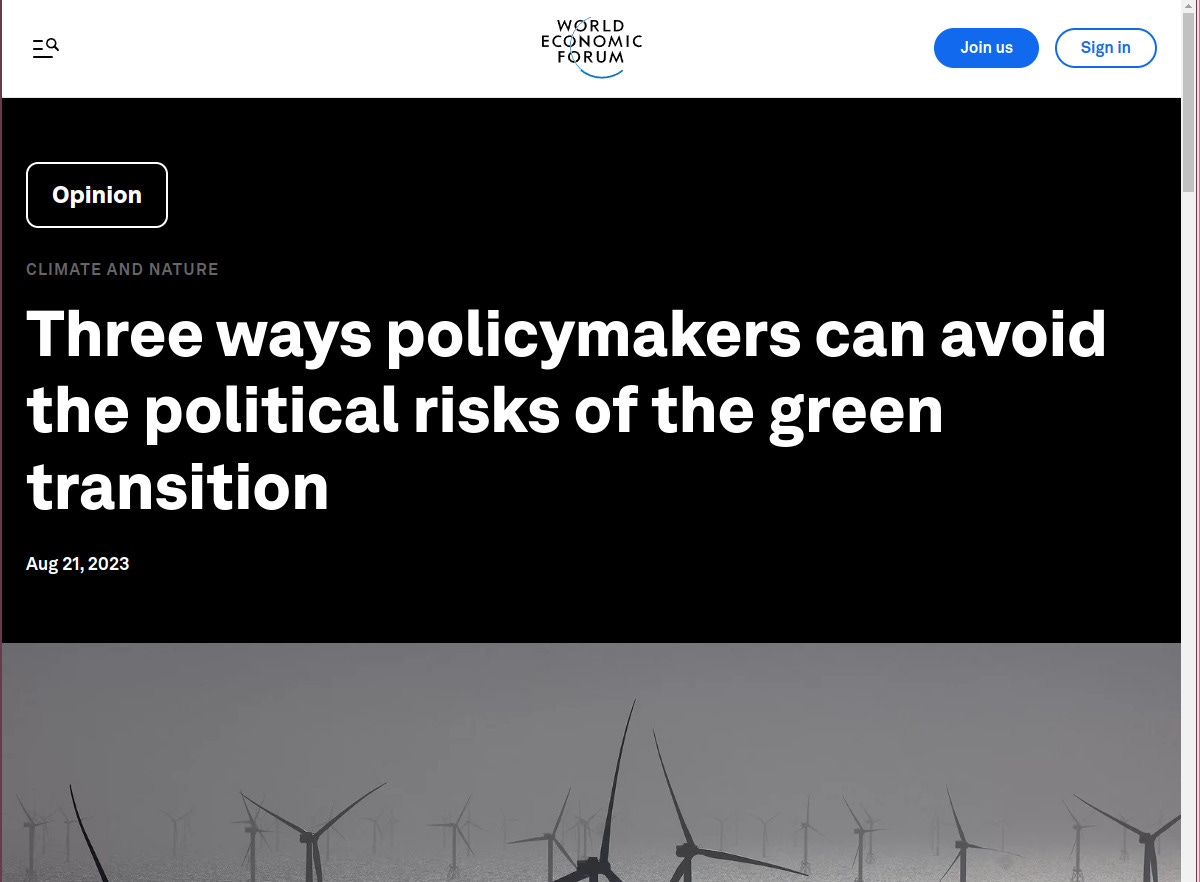
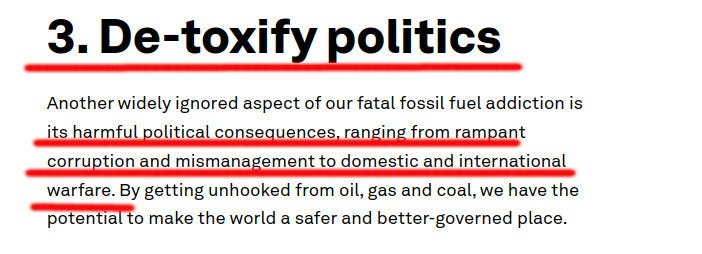
The “Well-being Alliance,” another organization forming the WEF’s agenda, also suggests going away from “party politics”:
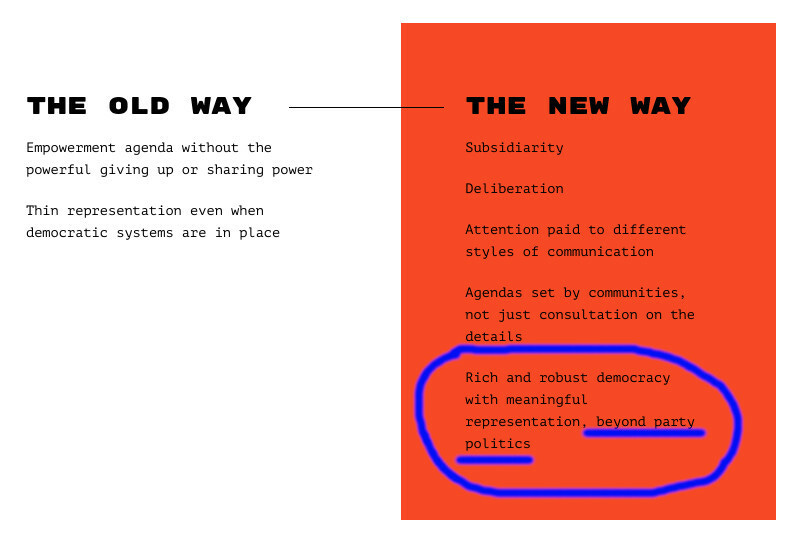
I discussed the Wellbeing Alliance, its Marxian ideology, and its relationship with the WEF here.
The above well-being agenda is already being implemented in eight countries, as discussed in the article above.
These radicals envision a future “free of party politics,” with “detoxified” discourse, and with leaders selected from a pool of WEF-approved candidates. The discourse will be free of undesirable misinformation, even if the unwanted misinformation is true.
The regular peons, like you and me, do not deserve a voice because we are considered “toxic” and incompetent to select our future glorious leaders. The WEF knows better!
German Judge Gets Probation Sentence For Allowing Kids to go Maskless
After his house was raided in 2021
NAKED EMPEROR | AUGUST 23, 2023
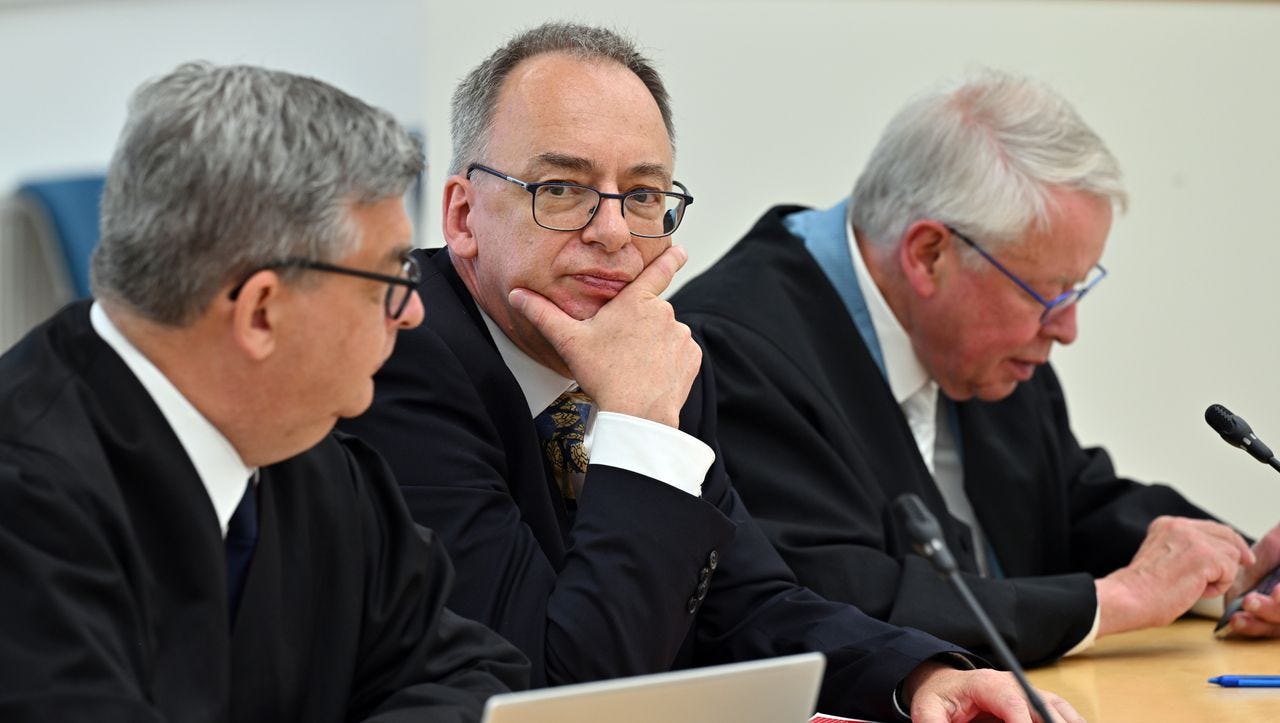
Christiaan Dettmar, a family judge from the Weimar District Court in Germany recently faced the Erfurt Regional Court for his stance against the unnecessary imposition of mask mandates on children. In April 2021, going against the grain, he ruled that children at two Weimar schools should not be burdened with wearing Covid masks in class, defying the restrictive guidelines set by the Thuringian Ministry of Education.
However, in a move reflective of the bureaucratic stranglehold on such decisions, higher courts dismissed his ruling, claiming it unauthorised. The Thuringian Higher Regional Court stated that the family judge did not possess the jurisdiction on this matter, a viewpoint also echoed by the Federal Court of Justice. They insisted that only administrative courts should handle state orders regarding corona protection measures.
At the time (in April 2021), Dettmar had his office, private residence and car searched after he ruled that children should not be wearing masks. He also had his phone confiscated after his decision which embarrassed the government.
His decision to end mask mandates was made after hearing evidence from Professor Kappstein on the lack of benefit of wearing masks and observing distance rules for the children and third parties. Kappstein said that after evaluating all the international data on the subject of masks, the effectiveness of masks for healthy people in public is not supported by scientific evidence.
Dettmar concluded that not only are masks useless but they are also dangerous.
The compulsion imposed on school children to wear masks and to keep their distance from each other and from third persons harms the children physically, psychologically, educationally and in their psychosocial development, without being counterbalanced by more than at best marginal benefit to the children themselves or to third persons. Schools do not play a significant role in the “pandemic”.
The PCR tests and rapid tests used are in principle not suitable on their own to detect an “infection” with the SARS-CoV-2 virus. This is already clear from the Robert Koch Institute’s own calculations, as explained in the expert reports. According to RKI calculations, as expert Prof. Dr. Kuhbandner explains, the probability of actually being infected when receiving a positive result in mass testing with rapid tests, regardless of symptoms, is only two per cent at an incidence of 50 (test specificity 80%, test sensitivity 98%). This would mean that for every two true-positive rapid test results, there would be 98 false-positive rapid test results, all of which would then have to be retested with a PCR test.
A (regular) compulsion to mass-test asymptomatic people, i.e. healthy people, for which there is no medical indication, cannot be imposed because it is disproportionate to the effect that can be achieved. At the same time, the regular compulsion to take the test puts the children under psychological pressure, because in this way their ability to attend school is constantly put to the test.
In the recent trial against Judge Dettmar, although the prosecution demanded a hefty three-year prison term, the defence, representing the concerns and wishes of countless parents and citizens, argued for acquittal. The presiding judge at the Erfurt Regional Court noted that the Weimar judge’s decision emanated from his personal views.
After originally being sentenced to two years in prison, the court has now suspended the sentence on probation.
However, it is still possible that Dettmar may lose his office and pension as a result of the conviction.
Throughout the proceedings, the courtroom was electric with tension and support. Spectators broke into spontaneous applause in favour of Dettmar. This would have continued except the judge threatened to throw them out. The prosecution’s attempt to paint the judge’s intentions as malicious was met with scepticism. They claimed that he intentionally set up a child protection procedure against the mask mandate, misrepresenting it as a statement against government measures. Their evidence, mainly based on emails and chat messages, was tenuous at best.
The defence, however, passionately highlighted the judge’s genuine concern for the well-being of children. They asserted that the case was merely an attempt to suppress and penalise differing opinions in a society where free thought should be celebrated.
Reiterating his unwavering stand, Dettmar confirmed he would make the same decision again. The subsequent lifting of school mask mandates by German states in April 2022 only reinforces the argument that such restrictions should never have been in force in the first place.
German Courts Are Going FULL Dystopia
OffGuardian | August 23, 2023
It’s been an astonishing couple of days for German judges. Well, “astonishing” if you’ve been living in a cave for the last four years.
Many of you likely already know that satirist and playwright (and frequent OffG contributor) CJ Hopkins is being prosecuted in Germany for “disseminating propaganda, the contents of which are intended to further the aims of a former National Socialist organization,”
All because the cover of his book has a swastika on it.
Needless to say, the charges are absurd. Insultingly so. You can read CJ’s first-hand account of this nonsense here and here.
Anyone who isn’t a) stupid or b) delusional can plainly see these charges have nothing to do with a stock-image swastika, and everything to do with the content of the book. In short, they are politically motivated charges brought against an author for criticizing the state. The very essence of dystopian tyranny.
… and yesterday he was convicted.
He now faces 60 days in prison or a 3600 Euro fine.
That’s case one, and as we say one you are likely familiar with if you’re regular readers.
Something you probably haven’t heard is that, just this morning, a different German court sentenced a former judge to two years in prison.
His crime? Ruling that mask mandates in schools were not constitutional.
The case dates back to April 8th 2021, when Weimar District Family Court judge Christiaan Dettmar ruled that two schools in the district a) could not enforce mask mandates, b) must continue in-person classes and c) could not force pupils to test for “Covid”.
From Human Rights Blog :
The court case was a child protection case under to § 1666 paragraph 1 and 4 of the German Civil Code (BGB), which a mother had initiated for her two sons, aged 14 and 8 respectively, at the local Family Court. She had argued that her children were being physically, psychologically and pedagogically damaged without any benefit for the children or third parties. At the same time, she claimed this constituted a violation of a range of rights of the children and their parents under the law, the German constitution (Grundgesetz or Basic Law) and international conventions.
After listening to testimony from expert witnesses, the judge ruled in favour of the mother, writing in his verdict:
These are the risks [to mask mandates]. The children are not only endangered in their mental, physical and psychological well-being by the obligation to wear face masks during school hours and to keep their distance from each other and from other persons, but they are also already being harmed. At the same time, this violates numerous rights of the children and their parents under the law, the constitution and international conventions.
Two weeks after handing down this ruling, his home and office were raided by the police and his mobile phone was seized.
And now, two years later, he was found guilty of “judicial misconduct” and initially given two years in prison (the court has since suspended the sentence). “Judicial Misconduct”, for simply disagreeing with the government.
Free speech is the first and most vital liberty, without it no one is truly free. An independent judiciary is a must to preserve any kind of justice, judges who simply nod along with government edicts are the building blocks of authoritarian states.
The voice of the people and the power of the courts – ideally – work together to hold the government to account.
And yet, whether in the judiciary or the arts, the German legal system is now a machine for criminalizing and punishing dissent of any kind.
… I’d make a comparison to another German government that used to function in a similar way, but I really can’t afford a 4000 euro fine.
Feds want to make it easier to identify independent doctors
They want to obtain the National Practitioner Data Bank
BY MERYL NASS | AUGUST 22, 2023
Do the feds want to be ready to censor or even round up doctors who may oppose their next round of heavy-handed “public health” measures?
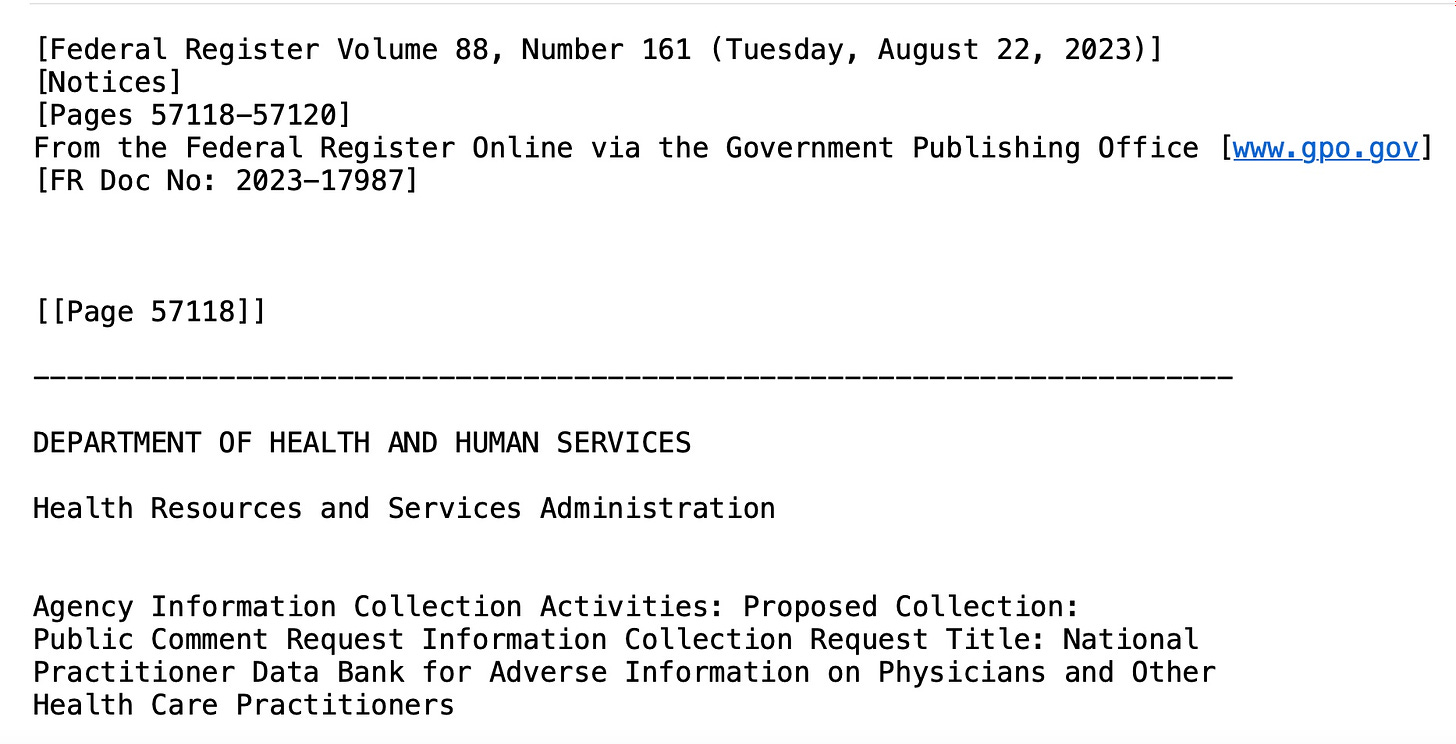
Need and Proposed Use of the Information: The NPDB acts primarily
as a flagging system; its principal purpose is to facilitate
comprehensive review of practitioners' professional credentials and
background. Information is collected from, and disseminated to,
eligible entities (entities that are entitled to query and/or report to
the NPDB as authorized in Title 45 CFR part 60 of the Code of Federal
Regulations) on the following: (1) medical malpractice payments, (2)
licensure actions taken by Boards of Medical Examiners, (3) state
licensure and certification actions, (4) federal licensure and
certification actions, (5) negative actions or findings taken by peer
review organizations or private accreditation entities, (6) adverse
actions taken against clinical privileges, (7) federal or state
criminal convictions related to the delivery of a health care item or
service, (8) civil judgments related to the delivery of a health care
item or service, (9) exclusions from participation in federal or state
health care programs, and (10) other adjudicated actions or decisions.
It is intended for NPDB information to be considered with other
relevant information in evaluating credentials of health care
practitioners, providers, and suppliers.
    Likely Respondents: Eligible entities or individuals that are
entitled to query and/or report to the NPDB as authorized in
regulations found at 45 CFR part 60.
I have a black mark in the NPDB despite lack of a completed hearing — the demand for a psych evaluation and temp suspension gave me the black mark.
London City Hall Tries to Put Pressure on Scientists Who Doubted Climate Policy – Report
Sputnik – 20.08.2023
London Mayor Sadiq Khan’s office tried to “silence” scientists who called into question the effectiveness of the ultra-low emissions zone (Ulez) policy promoted by the head of the city, The Telegraph reported on Saturday.
Shirley Rodrigues, the London Mayor’s deputy for environment and energy, told in emails to Imperial College London professor Frank Kelly that she was “really disappointed” by scientists publishing results that cast doubt on the effectiveness of Ulez, the newspaper reported, adding that the corresponding complaint was sent in November 2021.
In particular, Rodrigues said that she was “deeply concerned” about the damage done to the credibility of the Mayor’s office and Ulez. In response, Kelly promised to write a Ulez-friendly report, the report added.
The report stated that since 2021, Kelly’s research group has received over 800,000 pounds ($1.018 million) from the mayor’s office. However, the publication by scientists led to a cooling in their relations with the London city hall. This, in turn, caused the reluctance of representatives of the scientific community to write any new materials about Ulez, the newspaper noted.
The Ulez initiative was first announced by then-Mayor of London Boris Johnson in 2015. Later, Khan launched an initiative that included, among other things, the installation of special traffic signs and cameras. Since 2020, the London authorities have had to spend over 850,000 pounds to rebuild infrastructure for the initiative, which has been repeatedly damaged by vandals.
No Justice for Trump
By Paul Craig Roberts | Institute For Political Economy | August 18, 2023
The four indictments against Trump are ridiculous in their charges. There is no legal basis in law for any of the indictments. Moreover, many of the indictments are violations of Constitutionally protected civil liberties. All the indictments amount to is an assertion that to charge Democrats with fraud in an election is a felony. It is OK to charge Republicans with fraud.
Charges of electoral fraud have accompanied every election cycle in US history whether at the local, state, or national level. Many believe today that John F. Kennedy got to the White House because the Democrat machine in Chicago counted the graveyards. George W. Bush’s election was disputed and had to be settled by the Supreme Court. Never before has it been a crime to dispute an election.
What explains the criminalization of Trump’s dispute of the election? I will suggest a number of reasons. One is that the Democrats know that they cannot win against Trump, and polls show that Biden is so unpopular even with Democrats that they cannot again steal the election. So the Democrats decided to misuse city, county, and federal prosecutors to tie up Trump with four criminal indictments of multiple charges in order (1) hopefully to discredit him in the public eye, and (2) tie him up in court proceedings and trials so that he cannot campaign. Maybe all the stress will kill an old man. Clearly if the Democrats thought they could win, they would not bring shame on themselves and their party and on government in the United States with obviously politically-inspired indictments of the leading candidate for President. Clearly the people do not believe the indictments. A political party that cared about the country would not split the country in half by weaponizing law. But the corrupt Democrats and their Ruling Establishment backers only care about power. America now has an entire political party totally devoid of integrity. Power uber alles is the Democrats only principle.
Another is the incompetence of the prosecutors. Jack Smith is so totally incompetent that he has had to admit mistakes in his filings and has been repeatedly over-ruled by the federal judges overseeing his two phony indictments. In other words, Jack Smith is so thoroughly incompetent that he is unqualified to be a para-legal in a small town. No self-respecting and competent attorney would bring such false charges, especially against an American President.
The two black prosecutors, Manhattan district attorney Alvin Bragg and Fulton County District Attorney Fani Willis, are quota law school grads and quota hires. Once law schools reduced their admission requirements, they had to lower their standards, because if the quota admissions didn’t pass, the law schools would be accused of racism and of creating false hopes. The result is a lower level of competence of all graduates, black and white, male and female.
It is well known that Alvin Bragg cannot explain how a city or state court can try a person on a federal charge, which is his only felony charge. He can’t even explain what the federal charge is.
Fani Willis has 11 charges against trump, all of which are nonsensical and false, especially her racketeering charge under the RICO law put in place to convict the Mafia. Only an incompetent idiot would equate protest of electoral fraud with racketeering. Aside from being nonsensical charges in Trump’s case, fani Willis’ charges to be valid require criminal intent. Fani Willis provides no evidence that Trump harbored criminal intent when he responded to expert evidence of electoral fraud and tried to get the matter investigated prior to Biden being declared the winner. Nowhere in her indictment does Fani Willis provide any evidence of criminal intent or any reason why she thinks criminal intent is involved.
The indictments boil down to this: It is a felony to accuse Democrats of electoral fraud.
Considering how the locations of the trials have been orchestrated, it is highly unlikely that the jury pools will contain one person who is not a Trump-hater. In other words, the Democrats know that the juries they select will convict Trump even if the evidence proves him innocent. The ground has been prepared so that indictment means conviction. The kangaroo convictions will be appealed and eventually might reach an honest court, but the process will take years, thus ensuring Biden a second term.
This is America today. It is far worse than a Banana Republic. We are now presented with four Kafkaesque, Stalinist trials of a President of the United States. If they can do this to a President, a mere citizen has no chance. The corrupt, incompetent trio of Smith, Bragg, and Willis are achieving the destruction of legal integrity and civil liberty in the United States. The result will be social disintegration.
Americans are going to very much regret that they accepted the stolen 2020 presidential election and that they acquiesced in the white liberals’ goal of placing anti-white blacks in power over them.
Pakistan arrests opposition leader in crackdown on Imran Khan’s party
Press TV – August 19, 2023
Pakistani authorities have arrested opposition leader Shah Mehmood Qureshi in a widening crackdown on former prime minister Imran Khan’s party by the military-backed interim government.
Qureshi, who twice served as Pakistan’s foreign minister, was arrested by the Federal Investigation Agency (FIA) on Saturday in the capital Islamabad shortly after he denounced the newly installed caretaker government for its attempts to delay the elections which are scheduled to be held later this year.
“He was arrested from his residence by Islamabad police. We don’t have any further details yet,” a Pakistan Tehreek-e-Insaf (PTI) official, speaking on condition of anonymity, told AFP.
In recent months, Pakistani authorities have made widespread arrests targeting Khan’s PTI party in an attempt to crush his grassroots support, causing nationwide anger against the country’s powerful military, which most people believe is behind the crackdown.
According to several independent surveys, the PTI will win a landslide victory in the next elections if the party is allowed to run a political campaign without restrictions.
PTI spokesman Zulfi Bukhari condemned Qureshi’s arrest on the social media platform X, formerly known as Twitter, saying the vice chairman of the party was “arrested for doing a press conference and re-affirming PTI stance against all tyranny and pre-poll rigging that is going on currently in Pakistan.”
“PTI Vice Chairman Shah Mahmood Qureshi has been illegally arrested once again,” the PTI said in social media post on X.
Qureshi was also arrested on May 11 and released on June 6.
In the meantime, Khan, 70, is currently serving a three-year jail term.
Khan was arrested earlier this month and taken to jail after a court found him guilty in one of the more than dozens of cases he has faced.
The former prime minister has maintained that some 200 cases against him are politically motivated to keep him out of power. He says the country’s powerful military is behind these cases.
The three-year jail sentence issued by a lower court disqualifies him from taking part in elections.
Dr. Meryl Nass sues Maine Medical Board over suspension, alleges Board violated her first amendment rights
By Brenda Baletti, Ph.D. | The Defender | August 17, 2023
Dr. Meryl Nass today filed suit against the Maine Board of Licensure in Medicine and its individual members, alleging the board violated her First Amendment rights and her rights under the Maine Constitution.
The complaint alleges the board engaged in retaliatory conduct against Nass, a practicing internal medicine physician and member of the Children’s Health Defense (CHD) scientific advisory board, when the board suspended her medical license for publicly expressing her dissenting views on official COVID-19 policies, the COVID-19 vaccine and alternative treatments.
“Because she was outspoken, the board targeted Dr. Nass as someone to silence,” her attorney, Gene Libby told The Defender.
In fall 2021, the board issued a position statement, quoted in the complaint, stating that licensees could face disciplinary action if they “generate and spread COVID-19 vaccine misinformation or disinformation.”
In October 2021, soon after the statement was issued, the board received a complaint alleging Nass was spreading misinformation online and soon after launched an investigation.
The board suspended Nass’ medical license on Jan. 12, 2022, without a hearing, accusing her of engaging in “unprofessional conduct” by spreading “misinformation about COVID-19.”
It also accused her of improperly prescribing hydroxychloroquine and ivermectin for three patients for off-label uses of those drugs.
The board suspended Nass’ license and ordered a neuropsychological evaluation, implying she was mentally impaired or a substance abuser and incompetent to practice medicine.
“There were no grounds to order a mental health examination,” Libby said. “That was simply a means to communicate to the public that there was something wrong with Dr. Nass, to discredit her and tarnish her reputation.”
After Nass moved to have the board dismiss its complaint against her, alleging First Amendment violations, the board on Sept. 26, 2022, withdrew its accusations of “misinformation”, just prior to her first hearing date, Oct. 11, 2022.
The board’s case now rests on Nass’ alleged non-adherence to the medical “standard of care” as it pertained to ivermectin and hydroxychloroquine for treating COVID-19 and on the alleged “record-keeping” issues.
Nass told The Defender :
“The two primary complaints against me were that my statements were misleading and that I was prescribing drugs off-label. My speech — which I should note, was not simply opinion, it was an educated opinion developed after consulting the medical literature — is protected by the First Amendment.
“And prescribing drugs off-label is a perfectly legal thing to do, as explicitly stated on the FDA [U.S. Food and Drug Administration] website. Somewhere between 20-50% of drugs are prescribed off-label. The lawyers on the board staff know all of this. It’s their job to know the law with respect to medicine.
“They didn’t do this because they thought I had committed some kind of violation. They did it because they thought I’m older and I wouldn’t have the money to challenge them and so they could get away with it — they thought they could turn me into a poster child to scare all the doctors in the country.
“It is part of this broader attempt by the U.S. government and governments across the world to criminalize dissent by criminalizing so-called ‘misinformation.’”
Libby said the remaining allegations against Dr. Nass “are simply a pretext to discipline her. Because now, from an institutional standpoint, the board has to do something. She’s been under suspension for 19 months, which is the longest suspension that I’m aware of for any physician in the state.”
The board refused to schedule hearings on Nass’ suspension on consecutive days. Instead, it has held one day of hearings every other month. There have been six days of hearings so far over 10 months — and Nass’ license has been suspended the entire time.
“This is fundamentally unfair to Dr. Nass, but she’s within the grip of an institution that doesn’t want her speaking out,” Libby said.
In her lawsuit, Nass alleges the board and its members used their power to “crush dissenting views and chill disfavored speech.”
Nass is asking the court for declaratory relief, for an injunction to stop the board from continuing to retaliate against her and for monetary damages and legal fees.
CHD is providing financial and legal resources to Nass’ Maine-based legal team.
CHD President Mary Holland told The Defender :
“CHD is proud to support Dr. Nass’ lawsuit against the Maine medical board and its individual members.
“The board and its members have deprived Dr. Nass of her license and livelihood for over a year with no basis whatsoever. This kind of censorship, intimidation and punishment of doctors of conscience must stop.
“People need independent, thoughtful, caring physicians like Dr. Nass to be honored, not hounded as the board has done.
“I am pleased to see this case move forward in the courts in the interests of justice, for Dr. Nass, her patients and the broader society.”
Board provided resources to ‘combat spread of vaccine misinformation’
The Maine board’s Fall 2021 position statement expressed its support for a statement by the Federation of State Medical Boards (FSMB) — a private organization with no regulatory authority — which threatened physicians “who generate and spread COVID-19 vaccine misinformation” with suspension or revocation of their medical license.
According to the statement, physicians have a high degree of public trust and therefore a responsibility to “share information that is factual, scientifically grounded and consensus-driven for the betterment of public health.”
The Maine board’s statement endorsed the FSMB statement, encouraged physicians to address misinformation when encountered, directed physicians to use circulated materials from the American Medical Association (AMA) and said that questioning the COVID-19 vaccine qualifies as “misinformation,” according to the complaint.
The AMA materials provide scripts, talking points and strategies for “combating the spread of vaccine misinformation.”
The Maine board’s chair, Dr. Maroulla Gleaton, is also an FSMB director.
Nass is a widely recognized expert on the anthrax vaccine and biological warfare. She testified before Congress six times and was quoted in major media outlets including The New York Times, The Washington Post, the Los Angeles Times and the Chicago Tribune.
She has also been a prominent critic of governmental handling of the COVID-19 pandemic, the suppression of effective treatments such as ivermectin and hydroxychloroquine and the safety and risks of the vaccine — all topics she has discussed in her Substack, on the radio, in interviews and elsewhere.
But, the complaint notes, her positions have been in conflict with those asserted in the position statement and the resources it highlights as “supporting the fight against COVID-19 misinformation.”
This was merely an attempt by the board to justify its decision to immediately suspend Nass and to intimidate her, the complaint alleges.
Board’s only concern was ‘silencing’ Nass and ‘branding her as crazy’
When Nass questioned the board’s authority to investigate a complaint unrelated to the practice of medicine and instead “focused entirely on a statement made in her private life,” the board responded, on Oct. 14, 2021, that she was engaged in “alleged unprofessional conduct” by provisioning “misleading and/or inaccurate” information.
In the January board meeting where the board decided to suspend her license, the conversation focused on Nass’ “unprofessional conduct due to the spreading of misinformation about COVID-19.”
The board also cited three matters related to treating patients, alleging Nass improperly diagnosed a patient “over the phone,” that she had provided misinformation to a pharmacist about why she was prescribing ivermectin for a patient, and that she had improperly issued another prescription.
On Sept. 7, 2022, Nass moved to dismiss the complaint, alleging the board was violating her First Amendment rights.
The board responded by withdrawing all charges based on her speech, retaining only the charges related to the treatment of three patients.
Libby told The Defender that through the entire investigation and hearings, the board never even spoke to the three patients. It did not inform them their medical records had been subpoenaed, or ask them about their treatment by Dr. Nass.
“Yet the remaining disciplinary charges are all predicated on Dr. Nass’ consultation with and advice to these patients.”
Libby called the patients to testify in Nass’ hearings. They all made “glowing comments” about her availability, her medical advice and her handling of their cases and expressed anger that Nass was being targeted by the board for their cases.
Libby said he interpreted this to indicate the board’s singular focus was not to ensure patient well-being, but rather “silencing Dr. Nass and attempting to brand her as crazy.”
According to the complaint, the board’s animus against Nass is also demonstrated by the fact that it is flouting its own rules for selecting and paying expert witnesses.
Board guidelines stipulate that witnesses can be paid a maximum of $125/hour for preparation and $175/hour for testimony and that the witnesses should have the same specialty as the practitioner in question and be licensed to practice in Maine.
But the board is paying Dr. Jeremy Faust, an emergency room physician from Brigham & Women’s Hospital in Boston, $500/hour to testify.
And board member Gleaton, who has conflicts of interest because of her position as FSMB director and has acted in openly mocking ways, has refused to recuse herself.
The next medical board hearing is set for mid-September.
But in the meantime, Libby said “The actions of the board are so outrageous, they need to be acted on legally.”
Brenda Baletti Ph.D. is a reporter for The Defender. She wrote and taught about capitalism and politics for 10 years in the writing program at Duke University. She holds a Ph.D. in human geography from the University of North Carolina at Chapel Hill and a master’s from the University of Texas at Austin.
This article was originally published by The Defender — Children’s Health Defense’s News & Views Website under Creative Commons license CC BY-NC-ND 4.0. Please consider subscribing to The Defender or donating to Children’s Health Defense.
YouTube Greatly Expands Its Medical “Misinformation” Policies
New rules, largely determined by the WHO
By Christina Maas | Reclaim The Net | August 16, 2023
YouTube, the titan of online video content, has expanded its Covid misinformation policy to cover what it calls all forms of medical misinformation.
YouTube has also declared its plan to delist videos promoting “cancer treatments proven to be harmful or ineffective,” effectively disallowing content creators from encouraging natural cures.
The platform pledges to implement its medical misinformation policies when a topic exhibits high public health risks, is supposedly prone to misinformation, and when official guidance from health authorities is accessible to the public.
The changes also see YouTube recommitting to groups such as the WHO and other health bodies on what information is deemed to be acceptable for people to talk about on the platform – despite these institutions having recently received major blows to their credibility.
According to the policy update, YouTube will no longer host content that:
- Misinforms about prevention techniques or contradicts current health authority guidelines, including inaccuracies regarding the safety or efficacy of approved vaccines.
- Promotes treatments that local health bodies or the WHO have neither approved nor recognized as safe and effective. Moreover, it bans content that advocates for harmful substances or practices that have been scientifically proven to be detrimental.
- Denies the existence of specific health conditions.
As stated in its blog post, YouTube intends to punish content promoting not only what it believes to be overtly harmful treatments but also unproven ones that are audaciously offered as replacements for recognized alternatives.
For instance, influencers suggesting vitamin C supplements or garlic for cancer may have their content removed, the post states.
This marks a substantial escalation in the Google-owned platform’s ongoing crusade against what it believes to be the dissemination of medical misinformation, heavily catalyzed by the controversial experience of battling narratives about themes such as COVID-19 and vaccines, something YouTube was heavily criticized for as truthful content ended up being censored on the platform.
YouTube had targeted vaccine “misinformation,” such as demonetizing and deleting vaccine skepticism, thereby refining their approach in response to the global pandemic situation.
Featured Video
Integrity Initiative: UK-funded network framed dissent as Russian disinformation for years
or go to
Aletho News Archives – Video-Images
From the Archives
Why Saudi Ties to 9/11 Mean U.S. Ties to 9/11
By Kevin Ryan | Dig Within | September 27, 2015
Media interest in Saudi Arabian connections to the crimes of 9/11 has centered on calls for the release of the 28 missing pages from the Joint Congressional Inquiry’s report. However, those calls focus on the question of hijacker financing and omit the most interesting links between the 9/11 attacks and Saudi Arabia—links that implicate powerful people in the United States. Here are twenty examples. … continue
Blog Roll
 Aletho News
- IAEA inspectors cannot return to Iran amid US threats: Russia
- Senate Rejects Iran War Powers Resolution Passed By House
- ‘We did not attack Pakistan with drones’: Afghan sources
- Iraqi Resistance faction links arms to sovereignty, questions US exit
- Cannon fodder no more… South Korea rejects Trump’s pressure to join his criminal war on Iran
- Neria Leiter Was A Legitimate Military Target
- Integrity Initiative: UK-funded network framed dissent as Russian disinformation for years
- ‘We don’t seek permission to defend our country’: Snippets from President Pezeshkian’s UNGA address
- NATO chief wants Europeans to fight American wars [for Israel]
- German chemicals giant reveals details of downsizing
- If Americans Knew
- Israel displaces hundreds of Palestinians amid wave of demolitions in West Bank
- Aid, reconstruction, and Israel’s history of obstruction in Gaza
- Trump administration digs an ever-deeper hole of complicity in genocide – Daily Update
- US-Israel $2.8 Billion Arms Deal, 40,000-Bomb Supply Faces New Gaza Complicity Accusations
- Caught on Tape: AIPAC CEO Boasted of Controlling Trump’s National Security Officials
- Why Hamas Attacked Israel in October 2023 – Israeli professor Ilan Pappé
- They see them, then kill them: Israeli quadcopters track, deliberately target civilians in Gaza
- Winter could turn Gaza’s treacherous, war-damaged buildings into deathtraps
- Majority of Democratic Voters Want to Prosecute Both Biden and Trump Administration Officials Over Gaza
- As Gaza languishes, world leaders gather at the UN – Daily Update
- No Tricks Zone
- New Study: Earth And Venus Surface Warmth Largely Explained By Convection And Lapse Rate, Not CO2 Or Radiation
- 2025 Nature Paper Claiming Worsening Global Drought Gets RETRACTED …Heavily Flawed
- New Study: ‘Global Drought Shows No Detectable Recent Acceleration Under Climate Warming’
- Economic Masterminds: German Socialists Suggest Taxing Productivity Gains Stemming From Using AI
- The South China Sea Has Not Been Cooperating With The Climate Change Narrative
- Energy Crisis: Germany Enters Heating Season With Historically Low Gas Reserve Fill Levels
- New Study: The Antarctic Ice Sheet Gained Mass From 2020-2024 Due To Staggering Snow And Ice Accumulation
- Study: Ocean Heating Rates From Thousands Of Years Ago ‘Dwarf’ Modern Ocean Heating Rates
- Climate Extremists Target, Attack Large-Scale Power Grid Infrastructure In Germany!
- New Study: Antarctic Ice Melt Has Contributed Less Than 1 Centimeter To Sea Level Rise In The Last 30 Years

