Remember the good old days at the beginning of the COVID coup – before the new dogmas started to tangle themselves into self-contradictory knots?
Back then, if you wanted to know what to think, the Infallible Ones always had simple answers.
What was the enemy? A virus called SARS-CoV-2. Where did it come from? Chinese bats and pangolins. When would it end? After a few weeks of “lockdown” and the introduction of “vaccines.” How did you protect yourself from it in the meantime? By isolating yourself at home, wearing a muzzle, obsessively washing your hands, leaving your shoes outside the door, avoiding other human beings, scrubbing the walls and counters – above all, by obeying whatever orders the Infallible Ones gave you.
And if you didn’t obey? You would die.
But “oh, what a tangled web we weave,” as the poet said, “when first we practice to deceive.” The Infallible Ones’ teachings were soon mired in baffling inconsistencies. A “few weeks” of lockdown gave way to months, which in turn gave way to threats of recurring confinements whenever the authorities deemed it expedient. Summertime assurances of the “success” of the national incarceration – which had upended the health care system, educationally crippled a generation of children, and tossed away the livelihoods of millions of innocent people, though the Infallible Ones seldom mentioned any of that – were succeeded by “expert” scoldings to the effect that we Americans had been too selfish to be confined at all.
When randomized clinical trials proved that face masks were useless, the Infallible Ones told us to wear two masks instead of one. When the Infallible Ones abandoned the canard of “asymptomatic transmission” – after it had fulfilled its function of stoking public hysteria – they adopted the equally silly canard that “the unvaccinated” were unique breeding grounds for viral mutations.
Even the virus itself, which the Infallible Ones had originally pronounced so unique, became the very opposite of unique as the Infallible Ones translated it into an ever-enlarging ensemble of similar viral “strains” in which new ones appeared just often enough to offset the gains supposedly made by the “vaccines.”
And meanwhile – most important of all – what was supposed to be a temporary suspension of constitutional government became a “new normal”; the law, or what had always been the law, turned out to be as obsolete as the idea of dealing with an infectious disease by giving medical treatment to the genuinely sick. In the world of the “new normal,” anyone who mentioned “civil rights” was hustled off social media and into First Amendment limbo. Democracy was mocked as a reactionary’s pipe dream – when it was mentioned at all.
That’s the record, in brief, of the past two years. And if we have learned anything from this cavalcade of deceit, it is, or should be, that the COVID coup is fundamentally not about medicine or science. It is not about inflated “case” rates or jiggered statistics or fake news or the pseudo-studies circulated by propaganda outfits like the World Health Organization or the U.S. Centers for Disease Control and Prevention. Yes, all those things have figured in the derangement of constitutional democracy that has characterized the COVID coup. But at bottom it’s not about any of them.
The real nature of the campaign is at once simpler and far more dangerous. What we’re experiencing is an attack on the very foundation of ordered liberty, an assault that is already in the process of submerging democracies beneath what the Italian philosopher Giorgio Agamben has called a “permanent ‘state of exception.’” To put it bluntly: our ruling classes, in one country after another, have effectively switched off their nations’ constitutions and the whole set of civil liberties that are supposed to accompany them – not by formally abolishing them, mind you, but by adopting the extra-legal mechanisms of a “state of emergency” in place of normal constitutional procedures, with the result that the ordinary rules of democracy and the rights of individuals have, for most practical purposes, been indefinitely suspended.
That’s why the COVID coup began, in my own country, with declarations of an “emergency” in four-fifths of the states – and why, with very rare exceptions, those “states of emergency” remain in effect to this day, nearly two years later. Again, this cannot be explained away as a response to a respiratory virus. When an “emergency” involves suspending constitutional government for two years, it should be obvious that the “emergency” has ceased to be a real emergency (if it ever was one) and has become an extralegal norm – and this is even more emphatically true when virtually no one in the political opposition, the civil rights bar, or the mainstream media so much as mentions this fundamental fact.
My point is that those of us who recognize what is happening are going to have to shift our tactics. We can no longer attack COVID-19 propaganda in piecemeal fashion, challenging one medical falsehood at a time. That approach, I’m afraid, is likely to be self-defeating. As long as we focus on disproving each particular COVID “narrative,” the Infallible Ones can continue to manage the debate in mass media as a conflict between the interpretations of “experts” and those of “conspiracy theorists.”
And that allows them to skirt the real issue. COVID fascism is not a comedy of scientific errors. For all intents and purposes, it is a coup d’état. And it must be resisted accordingly.
Still, if we aren’t going to debunk every lie swirling through mass media or dished out by the “experts,” how can we be sure that we stand on solid factual ground as we resist the coup unfolding all around us – particularly if, as I’m arguing, we must begin by asserting that our struggle is about regaining our freedoms, not about correcting a medical policy?
Actually, there are many reasons we can be sure. And now, as we approach the third year of the coup, I want to offer a short list of them.
1) The COVID coup has consistently relied on unconstitutional methods
The first and most unmistakable clue about the real nature of the coup is its aggressive destruction of constitutional government. Right from the start, it involved suspensions of the legislatures; from there it moved quickly to arbitrary rule by executive fiat (mask “mandates” followed by “vaccine passports”), and then indulged head-on in violations of constitutional rights, as in the imposition of mass “quarantines” without a court order – an illegal act even under “emergency” dispensation.
I have argued this in print for over a year and a half, so I won’t belabor the point now except to stress the complicity of mass media in the unprecedented assault on our basic rights. The most important lie, of course, has been one of omission: the press simply never mentions the absence of any constitutional basis for the repeated attacks on freedom.
But I would like to call attention to a small but very revealing lie that crops up every time the press reports a new COVID-related “order.” Last month’s story about sweeping new muzzling requirements in California was a case in point. “California is ordering a statewide mask mandate for indoor public spaces,” blared the Los Angeles Times. But “California” does not and cannot issue a “mandate.” Promulgations of legal requirements belong to the appropriate organs of government – and that means that an honest report would have necessarily told readers how the mandate in question came to be. What body passed the law? Who signed it? Which agency issued the regulation, if it was a regulation, and what was the statutory authority for it to do so? In my opinion, it was no accident that the Times never informed its readers that the new California “mandate” was a unilateral edict signed by Tomas Aragon, the head of California’s Department of Public Health – an edict that did not even attempt to identify any authority for such an action in California’s statutes or regulatory code.
I repeat: in a constitutional government, health regulations are always grounded in such authority; “mandates” that ignore this are violations of law at best, dictatorial usurpations at worst. And the propagandists in the media, though they know this, obviously do not want you to know it.
The same story – political crime furthered by media complicity – emerges just as clearly from New York’s latest assault on the Nuremberg Code. The fiat recently issued by the state’s dictator – officially, Governor Kathy Hochul – claims to acquire authority for a statewide “vaccine mandate” from New York’s Public Health Law, section 225. But that statutory section does not address vaccination policy at all – and since the COVID-19 “vaccines” do not even prevent person-to-person transmission, there is no legal way the section’s general language about “the preservation and improvement of public health” can be construed to give the state’s governor the power to force 5-year-old children to be injected with experimental drugs, as Ms. Hochul has ordered.
In short, the “governor” – the word really must be put in quotation marks at this point – is acting outside her legal powers. And if we had a political opposition and a functioning court system worthy of the name, she might be facing impeachment instead of routine accolades from the tame “liberal” press, which calls this democracy-wrecking child poisoner “a moderate Democrat.”
Consider, by contrast, the intense debate over the 1985 decision of New York State’s public health council to rewrite its regulations so as to force the closing of gay bathhouses. That decision – taken at the height of the AIDS outbreak – was denounced by liberals at the time and is sharply criticized by students of political history to this day. Imagine the reaction if New York’s governor had simply written a unilateral order closing all gay bathhouses in the state, thumbing his nose at New York’s legislature and the whole existing regulatory system on the grounds that, in his view, New York faced an “emergency” that justified the suspension of democracy!
But that is exactly what has happened in states across the country – New York and my own state of New Jersey among them – for nearly two years: state executives have issued fiats suspending legal processes on the grounds of a hazily-defined “emergency,” and have followed them up with a series of unilateral decrees that drastically altered the lives of their citizenry – in direct defiance of their states’ constitutions. You cannot support that and support constitutional democracy at the same time. The propagandists may not like to admit it, but when they sing the praises of mask “mandates,” they are celebrating dictatorship.
And the democracy-busters are everywhere. In New York City, outgoing Mayor Bill DeBlasio slapped a “vaccine mandate” on all municipal employees, topping off the outrage by extending the same requirement to 184,000 private business and organizations. The mayor’s constitutional authority to order this assault on bodily integrity was so obviously shaky that a local judge promptly stayed his order. But that didn’t bother DeBlasio, who said, “I hope [this measure] will be emulated all over the country because it’s time to get even tougher to end the COVID era.” Got it? When you’re being “tough,” who cares about the law?
2) The one thing no one in the mainstream wants to mention is the biggest thing of all: that our civil liberties are evaporating
DeBlasio and Hochul are both Democrats, and it’s tempting to focus on the hypocrisy at the leftward end of the mainstream political spectrum. But it’s not just the “liberals” who have betrayed the Bill of Rights. We’re constantly told that the U.S. Supreme Court is dominated by “conservatives,” but when New York’s rampaging governor decreed that healthcare workers must submit to COVID-19 vaccination – even if they have religious objections to the experimental drugs (she claimed personal knowledge that God doesn’t support exemptions for these particular drugs) – only three justices out of nine were prepared to offer any relief. I don’t always agree with Neil Gorsuch, but the ominous conclusion of his dissenting opinion in that case (Dr. A. v. Hochul) deserves to be committed to memory:
[I]n America, freedom to differ is not supposed to be “limited to things that do not matter much. That would be a mere shadow of freedom. The test of its substance is the right to differ as to things that touch the heart of the existing order.” [Citation omitted.] The test of this Court’s substance lies in its willingness to defend more than the shadow of freedom in the trying times, not just the easy ones…
Still, it seems the old lessons are hard ones. Six weeks ago, this Court refused relief in a case involving Maine’s healthcare workers. [Citation omitted.] Today, the Court repeats the mistake by turning away New York’s doctors and nurses. We do all this even though the State’s executive decree clearly interferes with the free exercise of religion – and does so seemingly based on nothing more than fear and anger at those who harbor unpopular religious beliefs. We allow the State to insist on the dismissal of thousands of medical workers – the very same individuals New York has depended on and praised for their service on the pandemic’s front lines over the last 21 months. To add insult to injury, we allow the State to deny these individuals unemployment benefits too… [H]ow many more reminders do we need that “the Constitution is not to be obeyed or disobeyed as the circumstances of a particular crisis… may suggest”? [Citation omitted.]
How many, indeed?
Business elites are pursuing the COVID agenda as viciously as the politicians, if not more so. Jamie Dimon, CEO of JPMorgan Chase, has stated publicly that he will fire every employee in New York who doesn’t submit to the “vaccine” experiment, even those who attempt to work from home. Wouldn’t it be nice if the erstwhile champions of “free enterprise” actually stood up for freedom when it’s being robbed from the people who work for them? But I don’t see any criticism of Dimon from the business press, which has fallen as silent as the civil-rights crowd.
And please don’t let anyone tell you that these “vaccines” aren’t experimental, or that pressuring people into taking them doesn’t violate the Nuremberg Code’s prohibition against human medical experimentation without informed consent. The case for applying the terms of the Code is simply overwhelming. As we all know, the drugs in question were rushed through privately-administered trials that did not include the animal testing protocols normally required by the Food and Drug Administration. The data from those trials – the only ones ever conducted – remain sealed from public view, and we already know from Brook Jackson about serious irregularities in the limited tests performed by the manufacturers while they were conveniently insulated from public view. That means that these drugs remain untested, and their massive use is the first real experimental trial they have ever had.
In fact, the manufacturers insisted on – and received – blanket legal immunity before they would issue their drugs to the public. This unprecedented action – one that protected the drug makers rather than the public – resulted directly from the manufacturers’ awareness that, given the lack of prior testing, no one could predict the results of the drugs until they had actually been tried out on large numbers of people. You cannot have it both ways. If you insist that you haven’t safety-tested your products before issuing them – and that’s what Pfizer, Moderna and J&J all did insist when they developed the drugs in 2020 – you can’t deny that the people you inject with them over the following year are participating in an experiment.
Besides, the propagandists themselves are giving away the game: they openly refer to the massive vaccination program now under way as “proof” that the drugs are safe. But this means that they are relying on the results of actual use as a substitute for a clinical trial.
“The vaccine does work,” Dr. Mark Sawyer, who served on the FDA advisory committee that approved the drugs in 2020, told CNBC. “[T]hat’s been clearly shown by both death rates and hospitalization rates when comparing vaccinated people to unvaccinated people.” Mind you, the propagandists really have no choice about saying this; the United States, like other countries, is actively vaccinating whole groups of people – pregnant woman and young children – who were completely excluded from the manufacturers’ trials. But to cite that experience as evidence of the drugs’ safety means – again – that people now getting their jabs are actually being herded into an enormous human medical experiment. And of course they’re not being told the truth about this.
Human medical experimentation without informed consent is not just another legal lapse. It is a crime against humanity. Think of that when you read the next op-ed singing the praises of the “vaccination” campaign.
3) The “facts” fed to the public are manifestly worthless
Yes, I know: I began this essay with the statement that we can’t fight COVID fascism one lie at a time. But even a quick sampling is enough to confirm – for anyone who still needs proof – that we’re all eye-deep in propaganda so deceitful that none of it can be taken seriously.
Take the latest fear porn to emerge from New York, always a reliable bellwether for gathering trends in COVID-19 propaganda. The day after Christmas, a deafening chorus of mass media belted out a claim of the New York State Health Department that “the number of children hospitalized with COVID-19 is rising” in New York, adding some gloating if irrelevant details about the police-state measures to be imposed on anyone reckless enough to attempt the traditional New Year’s Eve celebration in Times Square. (For the record, the official harassment included: mandatory muzzles outside as well as inside; required proof of “vaccination” plus personal ID for everyone over 5 years old; a police blockade around the area which banned people from entering until after 3:00 p.m.; and a sharp limit on total crowd size even afterwards. Must have been a delightful party.)
The ghouls responsible for this “alert” clearly wanted us to believe that New York’s children are keeling over in droves from the “deadly virus,” and that if we don’t immediately get every single kid injected with experimental drugs they’re all going to die.
But what does the evidence actually show? Well – nothing.
First, although the headlines made it sound as though all “children hospitalized with COVID-19” were hospitalized because of COVID-19, the fine print in the database linked from the articles told a different tale. In fact, the figures reflected the “number of patients hospitalized, and number of patients in the intensive care unit (ICU) among patients with lab-confirmed COVID-19 disease”: in other words, they included all hospitalizations, due to any cause, for patients who had merely generated one positive test result for COVID-19 during the relevant period. Since those tests usually consist of a PCR assay at an unspecified amplification cycle threshold, and since such “tests” are notoriously unreliable, the number of “positive” test results in children hospitalized for causes that included, for all we know, broken arms, strep throat, measles, concussions, etc., tells us virtually nothing about how COVID-19 has been affecting New York’s children.
Second, there’s the question of absolute as opposed to relative numbers. How many actual pediatric hospitalizations had occurred in New York when the Health Department sounded its alarm? The ghouls never told us that – and once again, the fine print contradicted their arm-waving headlines. The Health Department’s press release noted parenthetically that a total of 30 children between 12 and 17 had yielded a positive COVID-19 test result in New York hospitals during the preceding week, and that “roughly half” of the total number involved children under 5. True, that left open the question of how many were between 5 and 11, but I think it’s safe to assume that if children between those ages had been admitted to hospitals in larger numbers than their older contemporaries, the Health Department would have said so.
So let’s say, for argument’s sake, that we’re talking about 60 hospital admissions for children over 5, yielding a week-long total of about 120. Given that there are nearly 4.2 million children in the state of New York, 120 positive tests for COVID-19 (via dubious methods) in New York hospitals over a seven-day period hardly seems cause for panic.
And this was just one of a whole string of similar fabrications.
The CDC has been claiming for months that “unvaccinated people who had previously recovered from a coronavirus infection” are “five times as likely to get Covid as people who had received both shots of the Pfizer-BioNTech or Moderna vaccines.” Because this result directly contradicted a much-publicized study from Israel, I took the trouble to review the actual data. And it turned out that the numbers not only don’t support the CDC’s claim; they demonstrate the exact opposite of what the “experts” claim they do.
Setting to one side the methods used to determine who had “previously recovered” from a COVID-19 infection, and to ensure that “vaccinated” subjects had not also previously recovered from such an infection (both of which are questionable), the paper’s authors recorded 6,328 hospitalizations “among fully vaccinated and previously uninfected patients,” while among unvaccinated patients who had previously recovered, the total number of hospitalizations was only 1,020.
Even the small proportions of those patients who subsequently tested “positive” for COVID-19 were heavily weighted in favor of the vaccinated: 324 as opposed to 89. Now, take a moment to consider how devastating those numbers are for the claim made by the CDC: namely, that vaccination alone gives you far more protection from COVID-19 than natural immunity. The study’s own data prove this to be a lie. In fact, if the numbers are taken seriously, they suggest that you are more than six times as likely to be hospitalized after being “vaccinated” than after recovering from a COVID infection – and that you are more than three times as likely to be hospitalized with COVID-19. When was the last time you heard that explained in mainstream media?
So don’t waste your time on the latest COVID-19 “study” touted in the New York Times to bludgeon more gullible citizens into compliance. Just assume you’re being lied to, and you’ll be right often enough that the exceptions won’t matter.
4) The “experts” cannot be taken seriously
And then there are the “experts.” How many times do these mouthpieces of the Infallible Ones have to contradict themselves before we stop listening to them? At first they told us (correctly) that face masks offer no real obstacle to the spread of a respiratory virus. Then, reversing themselves without explanation, they insisted that wearing a mask – any sort of mask – provided an essential layer of protection. (Right on cue, the media set up a howl about “maskless” people being sighted at Trump rallies – or similarly disreputable places – as if they had been caught cavorting down Main Street without any clothes on.)
Now the “experts” have outdone themselves by telling us that if we want real protection, we’ve got to “upgrade” to N95 or KN95 respirator masks. Doesn’t that mean that they’ve been lying to us for over a year and a half when they assured us that wearing a cloth or paper mask was the submissive citizen’s way of “doing his part”? Of course it does, but don’t expect the mainstream press to raise that uncomfortable question.
And what about the “vaccines”? When those experimental drugs were first released, I was one of many critical writers who observed that the two-shot regime demanded by the authorities was only the beginning: that soon we’d be ordered to have a third shot, then a fourth, and that eventually we’d be told that “real” vaccination was an unending process, like the “new normal” itself. Nonsense, scoffed the Infallible Ones.
But now Anthony Fauci himself is saying that the very definition of “fully vaccinated” is up for grabs, so that “it’s going to be a matter of when, not if,” that definition changes. Take a moment to wrap your mind around the enormity of this idea. In the future, your medical status won’t be based on objective facts but on the arbitrary pronouncements of the powers that be. No matter which shots you’ve had, or how many, or how recently, or whether you’re sick, or likely to become sick, or what sort of antibodies you’ve got, or what medical treatments you have or haven’t undergone in the past, if Dr. Fauci and his fellow ghouls decide to rewrite the definition of “vaccinated” you may find yourself suddenly among that demonized underclass that, according to the editorialists of the New York Times, are responsible for all the world’s troubles.
And when that happens, there won’t be anything you can do about it except to obey the latest orders of the Infallible Ones. Not even your “vaccine pass” will help you.
So it’s not even a matter of the experts constantly contradicting themselves, feeding us one false story after another – though of course they’ve done that. Now they’ve taken Newspeak to an altogether different level, arrogating to themselves the power to change the meanings of actual medical terms. In the future there won’t be any contradictions from the experts because, whenever they find it convenient, the experts will simply redefine a word or two in order to render their past pronouncements consistent with their current ones.
And who are these “experts”? Most media reports about COVID-19 statistics cite the Johns Hopkins Center for Health Security, directly or indirectly, as their key source of information. But they rarely mention that Johns Hopkins’ coronavirus information arm is funded by Bloomberg Philanthropies and the Stavros Niarchos Foundation, both of which havesignificant ties to the pharmaceuticals industry – a fact that should have disqualified it long ago as a source of “objective” data.
As for the Center for Health Security itself, I have pointed out in a previous article its close links with the American Enterprise Institute, the folks who led the way to the Iraq invasion of 2003. The lies behind that invasion unraveled pretty quickly. But that was because the propagandists at AEI were careless enough to make claims – mostly about Iraqi “weapons of mass destruction” – that could be publicly verified. Their partners at Johns Hopkins have been more discreet: when they claimed there would be “no summertime lull” in 2020, insisting that COVID-19 deaths were not seasonal and that lockdowns would continue, off and on, for “several years,” those lies could be explained away afterward as over-pessimistic projections – projections that might still come true, for all we know, if everyone doesn’t obey Big Brother.
(By the way, I’m not the only one to notice the disturbing history of the blandly-named Center for Health Security. The German lawyer Paul Schreyer has detailed its long-term involvement in bioterror “simulations” at which subjects like the imposition of martial law and other police-state tactics have often been discussed by the high-level participants.)
So these high-profile “experts” are nothing but the lying professional mouthpieces of a lying political class.
Do you really need to know more about them?
5) The COVID coup involves a radical redefinition of human value
Finally, we must realize that the perversions of the past two years have not only been political and legal. The Infallible Ones have been tampering with basic terms of humanity and morality – and that should have all of us up in arms.
Let’s start with the obvious. A policy that deliberately discourages doctors from treating sick patients – that, in fact, causes the deaths of countless people who could otherwise have been saved – is not a medical policy at all; it is a crime.
Yet this was exactly the policy pursued by Fauci, the CDC and the National Institutes of Health, which for nearly two years did their level best to prevent the use of empirically-proven therapies for COVID-19. As a result, according to Dr. Scott Atlas (whose dissenting voice on Trump’s Coronavirus Task Force was generally buried under noisy media slanders), “urgently needed clinical trials by the NIH and FDA were never performed,” while “[i]n another unprecedented move, doctors were blocked from prescribing [hydroxychloroquine], even though prescribing any other approved drug for an off-label use was routine.” And anyone who tried to tell the truth on social media about drugs like hydroxychloroquine or ivermectin was likely to run head-on into social media censorship.
But the evil runs even deeper than that. Today we are being sold a premise never before embraced by a civilized society: the notion that every human being is a public menace by definition, that people are sick until proven healthy and dangerous until proven otherwise, that the mere act of breathing – that is, of living – requires some sort of moral and political justification. And the terms of that justification can only be determined by the powers that be; you and I are not given a say in what relieves us of the status of a public danger.
Just consider how radically incompatible such an idea is with any sort of open or democratic society. If people are defined as public menaces, how can they simultaneously constitute the ultimate public authority – a status that is the defining characteristic of a democracy? How can enemies of the people be “the people”? If a human being’s right to breathe (unless he’s been injected with experimental drugs, wears a muzzle and doesn’t write anything objectionable on social media) may be arbitrarily curtailed, what rights can a human being possibly be said to possess? It hardly needs to be said that the traditional notion of “citizenship” is no longer intelligible in such a context.
Meanwhile, we must be honest with ourselves. No political party is going to save us from the COVID coup. In the U.S., with rare exceptions, Republicans are sniping at their rivals about “cultural” issues and ignoring the most massive attack on freedom in modern American history. And even when the incumbent Democrats do badly at the polls, they stubbornly refuse to get the point.
A “half-dozen Democratic governors” recently told Politico what they thought the trouble was: “The party,” they said, “needs to find a message that acknowledges voters’ exasperation with the virus and its economic and societal impacts.” Such comments tell us all we need to know about these professional frauds, who still hope we’ll believe that “the virus” closed our businesses, stole our performing arts, wrecked our health care, tortured our kids and turned loose a batch of untested drugs on our immune systems, with more mandatory shots on the way even as the death toll of this ghastly experiment rises and rises. But of course “the virus” didn’t do any of that. The bosses did. And if we don’t stop them, they’ll go right on doing it.
And if we needed any more evidence of just how much is at stake, we got it this month from a major life insurance company in Indiana, which announced as the new year began that “the death rate is up a stunning 40% from pre-pandemic levels among working-age people” between 18 and 64 years old. This “unheard of” increase cannot be attributed to COVID-19; the insurance executives themselves say that death rates have sharply declined for that illness.
What then? Might the soaring death rates have something to do with the “vaccines” that have been foisted on hundreds of millions of Americans? Or the health consequences of police-state tactics that have ravaged our society? It’s high time we demanded answers to those questions.
With what methods? Addressing fellow academics on December 8, Giorgio Agamben questioned whether it made sense any longer “to fight or act in the name of principles and concepts such as democracy, the constitution, law” and so forth; after all –
What sense would it make to invoke rights to Hitler, Stalin or Mussolini?… We are facing a government that has abandoned all legality. If you don’t understand this, you don’t understand the situation we are in….
What we have before us is an adversary, an uncivilization at its end, and this seems to be confirmed by the extreme measures this adversary has chosen. How could a government choose such infamous, extreme, destructive measures as this government has done?… Therefore, I believe, we have to invent new strategies; facing such an adversary we have to invent new strategies.
“New” in this context does not have to mean unprecedented. We are accustomed to limiting ourselves to a secular political vocabulary. But when the essence of humanity is under assault, we need to think of other and more basic sorts of expression. What we’re engaged in is a spiritual struggle. It’s a battle for the survival of the human soul, and in that battle our main weapons are likely to be spiritual ones: courage, hope, self-sacrifice, faith.
Remember, the enemies of humanity have a weak point: they do not believe in human beings, and consequently they do not understand the power contained in each soul that refuses to be duped. Listen to any of their recent pronouncements, and you will notice at once that the Infallible Ones think that they are talking to children. “How to Think About Covid Data Right Now,” reads an actual headline in the New York Times for January 7 – as if it were perfectly natural for the Times to teach its readers “how to think.”
But I suspect that far more people are offended by such condescension than the Times and its fellow propagandists have yet realized. And woe to the swindler who underestimates his mark! The propagandist who believes he is lying to children might do well to recall one famous man’s warning to the effect that “it were better for him that a millstone were hanged about his neck, and that he were drowned in the depth of the sea.” But I will leave my readers to draw their own conclusions about this.
Until Stew Peters asked me about the possibility of being locked up on a psychiatric ward, it had honestly never occurred to me that such a thing could happen.
Which just goes to show how much in denial I could be. Because I happen to know a cardiologist in Switzerland, Thomas Binder, who got locked up on a psych ward over his views on COVID last year. He is perfectly sane and measured in his speech, very smart guy, no reason to doubt his sanity. That didn’t save him.
And I knew of Mel Bruchet, a retired doctor from Vancouver, BC, Canada, who was locked up for 25 days and injected with antipsychotic drugs, after he blew the whistle on large numbers of stillbirths occurring in women who had received COVID vaccines during pregnancy. I believe it took a lawsuit from his physician friends to get him out.
BTW, the facts about pregnancy loss are still fuzzy, but there are plenty of reasons to suspect there are problems, as chronicled by Celeste McGovern. There was that strange, incomprehensible NEJM article (which should have been unpublishable) by CDC’s Shimabukuro et al. Read the comments to my post.
And recently there was the Scottish study that I wrote about, which omitted the data on vaccine safety in pregnancy. These papers just raise red flags.
Pregnancy is the canary in the coal mine: if there are going to be safety problems with a vaccine, you will almost invariably see them first in women vaccinated, usually inadvertently, during early pregnancy. So it is particularly important for agencies like CDC, which are committed to the “safety and efficacy” meme, to hide these problems. And Eric Rubin, a) editor in chief of the NEJM, b) temporary member of the FDA advisory committee that voted for expanded use of COVID vaccine in children despite lack of evidence, and c) former colleague of Rochelle Walensky, has obliged in this effort.
Doesn’t anyone care that the quality and reputation of Nature, the Lancet, the NEJM, the FDA, the CDC and the bloated medical nonprofits have been trashed by their current leaders? Hasn’t anyone asked why, and turned over a few rocks? Don’t these editors have a fiduciary responsibility to their owners or shareholders?
A cross-country convoy of truckers that has jammed the streets of Canada’s capital in protest against Covid-19 vaccine mandates might seem like grass-roots pushback against government overreach, but broadcaster CBC Television has offered a more sinister explanation: Russia did it.
Speaking in an interview on Friday with Canada’s public safety minister, Marco Mendicino, CBC host Nil Koksal suggested that possible Kremlin meddlers might have brought about the massive “Freedom Convoy.” “Given Canada’s support of Ukraine in this current crisis with Russia, I don’t know if it’s far-fetched to ask, but there is concern that Russian actors could be continuing to fuel things as this protest grows, but perhaps even instigating it from the outset,” she said.
Koksal didn’t offer any evidence to back up the theory or say who has raised such concern. Mendicino replied, “I’m gonna defer to our partners in the public safety, the trained officials and experts in that area.”
The interview came just before disgruntled truckers began to arrive in Ottawa on Friday night. Thousands of convoy participants and other protesters massed in the city on Saturday, bringing traffic to a standstill and sending Prime Minister Justin Trudeau into hiding. State-owned CBC said Trudeau and his family had been moved from his official residence to a “secure location.”
As many as 50,000 trucks were reportedly expected to flood into Ottawa, and traffic was snarled through much of the city. Some trucks were emblazoned with “F**k Trudeau” signs across their trailers, while other protesters demanded, “Mandate freedom.”
Government restrictions that went into effect on January 15 require unvaccinated Canadian drivers to quarantine for 14 days when they cross the border back into their country. Trudeau has condemned the angry truckers as holding “unacceptable views.”
Prior to floating the theory of a Russian bogeyman, Canadian media outlets have made other claims that appeared to smear the protesters, such as suggesting they are racist or extremist.
The Toronto Star said the convoy became a “magnet” for such undesirable elements as “conspiracy nuts, Western separatists, far right-wingers and worse.” Others have suggested that some participants want to carry out their own version of last year’s US Capitol riot.
A counter-protester was seen on Saturday saying, “F**k your white nationalist agenda,” while Canadian television reporter Mackenzie Gray was quick to post a Twitter message proclaiming “our first Confederate flag of the day here on Parliament Hill.” Multiple observers replied that Gray had spotted the “first fed of the day,” meaning a federal agent seeking to discredit the protest.
Later this week, England is scheduled to drop its problematic mask mandate for shops and public transport, along with its highly unpopular vaccine passport regime. Up north, Scotland says it will “relax” so-called ‘work from home guidance,’ and reopen nightclubs, as well as ending venue capacity limits.
While the UK and Ireland gingerly roll-back their highly disruptive COVID restriction policies, other European countries are now leading the way by scrapping the entire ‘pandemic’ regime altogether.
Denmark said it would lift almost all Covid-19 restrictions and stop designating it a “societally critical” disease on Wednesday in the latest sign that western European countries are easing or even eradicating strict measures brought in to combat the Omicron coronavirus variant.
Magnus Heunicke, Denmark’s health minister, wrote to parliament on Wednesday saying that he would remove all Covid-19 restrictions on February 1, except for testing on arrival from abroad. Just as the Danish government did in September, when it lifted all restrictions, it will also stop calling Covid-19 a “societally critical disease”, meaning that it will no longer have the legal basis to introduce wide-ranging curbs.
“Tonight we can begin to lower our shoulders and find our smiles again,” said Mette Frederiksen, Danish prime minister, on Wednesday evening. “The pandemic is still here, but with what we know now, we can dare to believe we are through the critical phase.”
Denmark is the latest European country in recent days to announce it is dropping most or nearly all measures as it follows in the footsteps of the UK, Ireland and the Netherlands…
Meanwhile, mainstream media outlets like Politico report this latest development with the accompanied fear-mongering over the latest “subvariant” – allegedly on the loose:
The announcement comes as a new subvariant of Omicron, BA.2, is gaining a foothold in Denmark and driving infections up, with 46,000 new COVID-19 cases recorded on Wednesday.
“Recent weeks have seen very high infection rates, in fact the highest in the entire pandemic,” Frederiksen said. “Therefore, it may seem strange and paradoxical that we are now ready to let go of the restrictions.”
Some 82 percent of Denmark’s population is fully vaccinated with two doses, of whom 50 percent are boosted with a third dose, according to the Danish Health and Medicines Authority.
However, as the FT points out, with this alleged rise in “cases” (aka PCR positive tests) promoted in the media – there is no corresponding rise in serious illness as a result COVID-19:
Denmark still has one of the highest number of Covid-19 cases per capita in the world, currently more than 10 times its previous peak as Omicron causes tens of thousands of daily infections. But the number of patients in intensive care continues to fall and, even with Omicron, never hit the peaks reached from April 2020 and January 2021.
Elsewhere in Scandinavia, Sweden, Norway and Finland have all announced they will also be easing their restrictions in the coming weeks.
You’ve been waiting for it all year. So stop waiting. It’s here! The 5th Annual Fake News Awards! Bringing you the worst in dinosaur media lies, smears and outright fiction from the past year. Join your host Bent Krockman for a whirlwind tour of fake photos, fake fact checks, fake politicians and of course the fake story of the year. Also, stay tuned for a musical performance by the new pop hit supergroup, KABAAL . . . and a word from our corporate sponsor!
For those with limited bandwidth, CLICK HERE to download a smaller, lower file size version of this episode.
For those interested in audio quality, CLICK HERE for the highest-quality version of this episode (WARNING: very large download).
Fakest Photo or Video of the Year
AND THE RUNNERS-UP ARE:
The photoshopped photo from Norwegian newspaper Sunnmørsposten of a “masked” Olav Mestad, the chief medical officer of Ålesund, who was in fact maskless
“Gunshot Victims Left Waiting as Horse Dewormer Overdoses Overwhelm Oklahoma Hospitals, Doctor Says” a September 2021 article from Rolling Stone that manages a rare triple play: not only is all of the information presented in the story factually incorrect, and not only did they fail to retract the story when it was debunked (instead opting for the lying “update”), but even the picture they used to illustrate the article was fake news!
Is this real life? Did he actually just say that? That is straight up, comic book, Palpatine-level “I am the Senate!” energy right there.
See my episode on Science Says! for a point-by-point deconstruction of this fundamentally anti-scientific idea and read The Real Anthony Fauci by Robert F. Kennedy, Jr. for a point-by-point takedown of Fauci’s entire career.
Fakest Fact Check of the Year
AND THE RUNNERS-UP ARE:
PolitiFact for their “Pants on Fire” “debunking” of the laboratory origins of SARS-COV-2 . . . which they later had to update with a note to say that since the “experts” they relied on for their “fact check” had changed their mind, they were “removing this fact-check from our database pending a more thorough review” (…we’re still waiting, Poynter!)
The Victoria Times-Colonist for “B.C. doctor clinically diagnoses patient as suffering from ‘climate change’
,” in which they fall for the transparent publicity stunt of Dr. Kyle Merritt of Kootenay Lake Hospital in Nelson, B.C. who clinically diagnosed a patient with diabetes and heart failure with “climate change.” Not only did the Times-Colonist “reporter” not seek any alternative viewpoint to Dr. Merritt’s nonsensical non-diagnosis, it neglected to inform its readers of University of Washington meteorologist Cliff Mass’ exhaustively documented work showing that the “Great Northwest Heatwave” last summer was not climate change but merely weather (because, as we all know, Weather is not Climate!…except when it suits the narrative).
The usual gaggle of climate hypocrites who flew their private jets to the COP26 conference in Scotland to lecture the little people about how they need to reduce their carbon footprint
AND THE LOSER IS…
The Glasgow Financial Alliance for Net Zero for their scheme to get the world’s population on board with the creation of a $130 trillion investment trough to be stewarded over by the organized crime syndicate of crooks, criminals, con artists and eugenicists in international finance in the name of “saving the earth!”
Of course, none of this was surprising to anyone who was paying attention. Viewers of The Future of Vaccines already knew the truth about these non-vaccines way back in December of 2020.
To be sure, there are any number of ancillary fake news stories that deserve to share in this award:
Then there are the “mystery heart attack” stories, like “Mystery rise in heart attacks from blocked arteries,” which miraculously fails to even mention the word “vaccine” despite the fact that the experimental mRNA injection are scientifically proven to “dramatically increase inflammation on the endothelium and T cell infiltration of cardiac muscle” and “Up to 300,000 people facing heart-related illnesses due to post-pandemic stress disorder, warn physicians,” which cites “two London physicians” claiming (without evidence) that “as many as three million people in Britain are already suffering from Post-Pandemic Stress Disorder” before bizarrely pivoting into the one and only health condition they attribute to the disorder: heart related problems . . . without ever once mentioning (you guessed it!) the scientifically-proven link between the experimental COVID injections and the increased risk of myocarditis and pericarditis among otherwise healthy young men. (And that’s not even mentioning the 278% increase in heart attack deaths among soccer players this past year.)
There’s also Brianne Dressen and all the other people with life-altering injuries from the injections who have been censored, suppressed and marginalized over and over this past year.
Truly, many many people have contributed to this, the fakest story of the year (if not the century) and the largest ongoing uncontrolled medical experiment in the history of the human species.
Hallelujah! There are many state entities that are acting as if they have authorities which were never granted to them. They simply usurped the authority and hoped no one would burst their expanding bubble. Well, the AG in this newly-Republican state told the public universities to go pound sand.
Why does anyone think it is okay to force Americans, especially children, to receive experimental inoculations, whenever they say so? It is against the law to force people into an experiment. It is against the law to withhold informed consent. Why do so many bigwigs, like college presidents, think that is okay?
The idea of a digital identity and wallet for citizens residing within the European Union may date back to 2020, but pandemic-era restrictions have shown the extent to which governments can shut off access to everyday life, should they so choose – and with ever-changing criteria that can be difficult to appeal when something goes wrong. That’s a frightening prospect when considering how much of one’s life the supranational European government wants to connect to a new system that it’s set to roll out.
As the Covid-19 pandemic shot around the world, the first public utterances of a Europe-wide digital identity system started emerging from EU think tanks and officials. EU Commission President Ursula von der Leyen said in a speech in September 2020 that “the Commission will soon propose a secure European e-identity. One that we trust and that any citizen can use anywhere in Europe to do anything from paying your taxes to renting a bicycle. A technology where we can control ourselves what data and how data is used.”
At the time, anyone suggesting that one day EU member countries would implement systems of QR codes for access to everyday venues, contingent on a government-dictated number of injections and linked to a larger EU passport system – on which travel around the bloc would be dependent – would have been dismissed as a conspiracy theorist.
So, it’s hardly difficult to see how the QR code system ushered into place due to government health mandates now has the potential to transform into something else more lasting, widespread, and possibly nefarious.
Already, anyone here in France who has logged into the government services website to retrieve their “vaccine mandate” QR code has noticed how that account is already linked with all sorts of data unrelated to health. One can log in using a tax account number that’s normally reserved for accessing your tax returns and assessments, or with a government-approved facial recognition application that associates your face with your pre-existing national ID.
But what if there’s a glitch or a bug? Or someone steals your ID? We’ve already seen during the pandemic what can happen when the government’s system gets overwhelmed by a pre-long-weekend rush to validate and download QR codes, and those with booked flights are forced to cancel or postpone their plans because they lack a scannable form of the pass. Speaking of which, how about the poor folks whose smartphone simply malfunctions or runs out of battery juice at the moment of boarding or venue access?
Now imagine if such a QR code digital ID system is expanded, as the EU plans to do, to include access to university applications, hotel check-ins, car rentals, bank account opening and access, public services, or bank loan applications. While many of these already have digital components, they’re piecemeal, decentralized, and not linked to a single government-run entity. When factoring in that cybersecurity researchers have reported that “89% of EU government websites” employ trackers meant to “associate web activity with the identities of real people,” it’s not a stretch to imagine how your online activity profile could be used – in addition to your financial documents – to approve or deny your bank loan application from your digital ID.
And what happens when things go really wrong in ways that many of us still can’t even imagine? For instance, according to a report published this month by the EU’s own Agency for Cybersecurity, “foolproof” digital IDs, even those that use facial recognition, are rife with susceptibilities that include photo attacks, video of user replay attacks, 3D mask attacks, and deepfake attacks.
Yet another report published by the same agency just two days earlier evokes the need for decentralizing such IDs.
It’s a tacit admission that perhaps governments – which constantly whine about being susceptible to cyberattacks by both state and rogue actors – aren’t really best placed to be encouraging citizens to upload and entrust as much of their life as possible to them under the guise of convenience and so-called ‘security’.
For now, it’s all optional, or so we’re told. Completely voluntary and opt-in. Right – and we’ve already seen exactly how that kind of pledge has panned out amid the pandemic. There is no ‘obligation’ here in France to possess a valid QR code, for example, because restaurants, gyms, your chosen profession, trains, and planes are all ‘optional’.
Is there any doubt that when the EU decides to go full throttle to on-board control over your entire life, you’ll then be fully dependent on their competence or lack thereof? The most incompetent panopticon in human history seems keen to welcome us all aboard a voyage into dystopia.
Rachel Marsden is a columnist, political strategist and host of an independently produced French-language program that airs on Sputnik France. Her website can be found at rachelmarsden.com
Rebel News journalist Avi Yemini is having to defend himself after deciding not to remove an online video the police in Australia’s state of Victoria want taken down.
Yemini revealed that he had a letter, signed by a Victoria Police Crime Squad detective sergeant, sent to his home, threatening that unless he complied and deleted the video, he could end up serving two years in prison.
The journalist published photos of the letter, which notified him of committing an “apparent” breach of the Surveillance Devices Act.
The letter asserts that information protected under this act appeared in a video Yemini uploaded to his YouTube channel in September, under the title, “Police bodycam proves the mainstream media is HIDING the truth.”
The police letter further states that knowingly publishing information obtained from police bodycams is an offense, and demands that he immediately remove the video from all public forums, or face charges.
If found guilty, Yemini could be sent to prison for two years maximum, be forced to pay a fine, defined as “240 penalty units maximum” – or both.
But Yemini, who says he has previously been arrested, assaulted, and intimidated by the police for his work, has decided to fight back, as another letter, this one penned by his legal representative, shows. It reads that under a subsection of the act the police refer to as being violated, the footage used in the report was already in the public domain.
“In a free country, that would be the end of it. In fact, in a genuinely free country, I never would have received that threat letter from the police in the first place,” Yemini writes.
But the journalist doesn’t expect this outcome, and is instead ready to engage in a legal battle with the Victoria police, whom he says have “unlimited resources to bully anyone who doesn’t submit to them.”
“We’ve never lost a case yet, and I’ve never removed a story, even when a gangland lawyer tried to sue me. With your help, I promise not to cower in 2022 either,” Yemini concludes.
The resistance reveals itself always in unexpected ways. As I type, thousands of truckers (numbers are in flux and are in dispute) are part of a 50-mile-long convoy in Canada, headed to the capital city of Ottawa in protest against an egregious vaccine mandate imposed by Prime Minister Justin Trudeau. They will be joined upon arrival by vast numbers of protestors who are defying the restrictions, closures, and mandates of the last nearly two years.
The triple-vaccinated Trudeau, meanwhile, has decided that he has to go into deep hiding because he was exposed to Covid. A clean, ruling-class, fit, and fashionable lefty like him cannot be expected to face such a pathogen directly. As a member of the vanguard of the lockdown elite, he must never take risks (however small) and must keep himself safe. It is merely a matter of coincidence that he will be locked away in hiding as the truckers arrive together with hundreds of thousands of citizens who are fed up with being treated like lab rats.
Previously, Trudeau had said nearly two years ago that the truckers were heroes. On March 31, 2020, he tweeted: “While many of us are working from home, there are others who aren’t able to do that – like the truck drivers who are working day and night to make sure our shelves are stocked. So when you can, please #ThankATrucker for everything they’re doing and help them however you can.”
It’s true. Like many “essential workers” in the US, these truckers bravely faced the virus and many already gained natural immunity, which Canadian law does not recognize. Trudeau decided that they needed to be forced to get the vaccine anyway. Keep in mind: these are the people who get food to the stores, packages to homes, and all products that keep life moving. If they don’t drive, the people don’t eat. It’s that simple.
Few events in modern times have revealed the vast chasm that exists between the ruled and rulers, especially as it pertains to class. For nearly two years, the professional class has experienced a completely different reality than the working class. In the US, this only began to change once the highly vaccinated Zoom class got Covid anyway. Only then did we start seeing articles about how there is no shame in getting sick. It appears that in many countries, the working class that was forced into early confrontation with the virus are saying that they aren’t going to take it anymore (and many are playing that song to make the point).
It’s a massive workers’ strike but not the kind of communist dreams. This is a “working class” movement that stands squarely for freedom against all the impositions of the last two years, which were imposed by an overclass with almost no consultation from legislatures. Canada has had some of the worst, much to the shock of its citizens. The convoy is an enormous show of power concerning who really keeps the country running.
The convoy is being joined by truckers from all over the US too, rising up in solidarity. This is easily the most meaningful and impactful protest to emerge in North America. It is being joined by as many as half a million Canadian citizens, who overwhelmingly support this protest, as one can observe from the cheers on the highway along the way. Indeed, it’s likely to break the record for the largest trucker convoy in history, as well as the most loved.
Trudeau, meanwhile, has dismissed the whole thing as a “small fringe” of extremists and says it means nothing to him and will change nothing. This is because, he says, these truckers hold “unacceptable views.”
This is setting up to be one of the most significant clashes in the world in the great battle between freedom and those governments have set out to crush it.
Meanwhile, I’m looking now for information on this in the mainstream media. It is almost nonexistent outside social media. Fox is covering some of it but that’s about it. The Epoch Times is a wonderful exception, as we’ve come to expect in recent months. It’s not being covered in any depth in Canadian papers and TV. All the usual subjects in the US have completely ignored this mighty movement. It’s almost like these venues have created an alternate version of reality, one that denies the astonishing reality that anyone can see outside the window.
Yes, I know that we have all come to expect that the corporate media will not cover what actually matters, and much of what it does cover it does only with a strong bias toward narratives crafted by ruling elites. Even so, it seems to stretch credulity beyond any plausible extent for the major media to pretend that this isn’t happening. It is and it has massive implications for the present and the future.
This is not really or just about vaccine mandates. It’s about what they represent: government taking possession of our lives. If they can force you to get an injection in your arm over which you have doubts, all bets for freedom are off. There must be evidence that you complied. The phone app is next, which gets tied to your bank account and your job and your access to communications and your ability to pay your rent or mortgage. It means eventually 100% government control over the whole of life. The technology already exists. Everything going on now with these passports is driving to this point.
This is why the truckers are striking this way. It is an act of bravery but also of desperation. Once the tyranny of health passports arrives, there will be no escape. The window of opportunity to do something about this will have closed. So this is the moment. There might not be another one. Something needs to be done to fight for human rights and freedom, and put in place systems that make lockdowns and mandates impossible in the future.
This is the largest and latest example of the revolt and one that could make the biggest difference yet. But it is only one sign among many that the ruling elites in most countries have overplayed their hand. They have arrogantly imposed their plans for everyone else based on the opinions of only a few and without real consultation with experts with differences of opinion or with the people whose lives have been profoundly affected by the pandemic response.
In the US the revolt is taking many forms. There was the rally in DC this past weekend. It was impressive. Also the latest polls on political alliances show that the Democrats have lost a major part of their base. Virginia right now points to where this is headed. The party lost vast amounts of its political power in elections last year and now Republicans rule the state with great popularity.
Meanwhile, I’m looking at Biden’s latest poll numbers. I almost cannot believe my eyes. We are talking about an overall 14-point split between approve and disapprove. If this is an indication of what happens to the pro-lockdown political elite, it stands to reason that Trudeau should be worried.
In the Vietnam War, many Americans fled the draft by going to the safe haven on the northern border. That’s one way that Canada had earned its long reputation for being delightfully normal, peaceful, and mercifully boring. Pandemic policies in Canada changed that, with some of the longest-lasting stringencies in the world.
No one asked the workers. Now they are rising up. Nor does it matter that 90% of the Canadian public is vaccinated. Possessing that status alone does not mean that people no longer feel resentment for being forced to accept what they do not believe they needed and did not want in the first place. The vaccinated do not automatically give up their longing to be free and to have their human rights recognized.
The resistance to tyranny in our times is taking many unexpected forms. There will be many confrontations on the way, and there is still a very long way to go. At some point, and no one knows when or how, something has to give.
The US Surgeon General Vivek Murthy has suggested that Big Tech platforms should censor even more COVID “misinformation” on social media.
Speaking on MSNBC, Murthy said that online platforms have a role to play when it comes to censoring “misinformation” and ensuring that the public gets “accurate” information.
Murthy made the comments on MSNBC when host Mika Brzezinski pushed for a comment on the “best ways to push back on misinformation about COVID that continues to be aggressively pushed, whether it be Joe Rogan’s podcast or all over Facebook.”
“We can have the best science available, we can have the best public health expertise available. It won’t help people if they don’t have access to accurate information,” Murthy responded. “People have the right to make their own decisions, but they also have the right to have accurate information to make that decision with.”
Murthy added that Big Tech giants have an “important role to play” as they are the “predominant places where we’re seeing misinformation spread.”
“This [is] not just about what the government can do,” he went on to say. “This is about companies and individuals recognizing that the only way we get past misinformation is if we are careful about what we say and use the power that we have to limit the spread of misinformation.”
More than 30,000 people gathered Sunday near the steps of the Lincoln Memorial in our nation’s capital to protest COVID vaccine mandates.
Attendees were treated to nearly four hours of impassioned, poignant and uncensored speeches from more than 20 speakers who helped spearhead the movement for medical freedom.
Rather than attempting to summarize their commentary on the purported safety and efficacy of COVID vaccines, departures from accepted practices of informed consent around medical intervention and rapid erosion of the patient/doctor relationship from Big Pharma interference, I will instead list some pearls that might easily get overlooked but should not go forgotten.
Robert F. Kennedy, Jr., Children’s Health Defense chairman and chief legal counsel, elucidated the single most important point of Pfizer’s six-month trial data.
He explained that more participants died in the vaccine group compared to placebo group, and one vaccine recipient perished from COVID during this period compared to two in the placebo group — hence Pfizer can claim its product provides 100% efficacy against COVID death.
But at what cost?
Four times as many people died of cardiac arrest in the vaccine group than placebo. We can thus conclude the risk of dying from a cardiac arrest is 300% greater if you get vaccinated — a fact that goes unacknowledged by our medical authorities and legacy media.
Frontline Covid-19 Critical Care Alliance (FLCCC) spokesperson and board-certified critical care physician Dr. Pierre Kory expressed his frustration in trying to publish rigorous peer-reviewed data on the undeniable efficacy of the early COVID treatment protocol FLCCC formulated during the desperate early days of the pandemic.
This led him to emphatically conclude, “Every policy out of our agencies has been written by the pharmaceutical industry … It’s a war. A war on repurposed drugs.”
Dr. Robert Malone, in his typically measured fashion, reminded us that our authorities and vaccine manufacturers have nearly 100% indemnity from vaccine-related injury and that it is our job to protect our kids, not theirs.
Unfortunately, the magnitude of vaccine risks is yet unknown. Still, “If there is risk,” Malone said, “there must be choice.”
Steve Kirsch took the podium two hours into the program and recounted his introduction into the vaccine-hesitant sphere and described the abject refusal of any authority to answer a single one of his questions.
However, Kirsch’s biggest point was not his attack on tightlipped and avoidant medical authorities.
Kirsch offered a very reasonable counterargument to the mainstream push to accept these vaccinations out of a moral obligation to our community. Do we in fact have an obligation to others that can be mandated? On what moral grounds can this be enforced?
Kirsch said:
“Nobody has the right to mandate that I must risk my life to save other people that I don’t know. It’s unethical and immoral. I will not voluntarily choose to deprive my kids of their father.”
These points are important for every person in the world to consider, regardless of which side of the vaccine debate you are on.
Of course, these sentiments predictably resonated with those in attendance. But is that good enough? Will vaccine mandate proponents ever have the opportunity to hear this perspective?
Perhaps not.
One needs only to listen to how legacy media covered the rally. In this three-minute clip — “Anti-Vaccine Mandate Protests During Omicron Surge” — NBC News gave its viewers a glimpse of what this event signified.
The reporter said:
“Thousands rallying on the National Mall for the ‘Defeat the Mandates’ protest featuring some of the nation’s most prominent anti-vaxxers…”
Then the camera immediately cuts to protesters complaining:
“… we tried to get a burger last night but couldn’t because we didn’t have a proof-of-vaccine card.”
Are these really the most prominent spokespersons of the movement explaining why mandates are not just scientifically unfounded but unethical?
Another protester stated on camera he is not “anti-vax” but chooses not to get the jab because these vaccines are experimental. However, the NBC News reporters said, “That’s not true, COVID vaccines are fully approved, more scrutinized than any vaccine in history…”
Of the three COVID vaccines currently authorized for emergency use, only the Pfizer Comirnaty formulation has been approved by the U.S. Food and Drug Administration.
However, that formulation has not been made available in this country. There isn’t a single person in this country who has been inoculated with a fully approved COVID vaccine. (Consider yourselves fact-checked, NBC News.)
The idea COVID vaccines have been “more scrutinized than any vaccine in history” is a frank lie. The vaccine trials were rushed, poorly designed, offered no meaningful age stratification and used a participant pool that was younger and healthier than those who succumb to serious COVID.
The trials effectively ended several months after they began when the participants were unblinded and offered the vaccine, making any long-term efficacy or safety comparisons impossible.
Moreover, federal agencies responsible for scrutinizing the vaccines have done just the opposite, allowing serious, life-threatening and fatal adverse events to go unacknowledged and uninvestigated.
Despite the magnitude of expert opinion on hand, NBC News chose not to seek it. NBC did not interview one of the physicians, scientists, healthcare advocates or vaccine-injured who spoke at the rally.
A free press, dedicated to balanced reporting and an intrepid pursuit of the facts is our only guardian against tyranny. It is their job to pose difficult questions and demand answers. It is their job to give a voice to the dissenter and the whistleblower.
This is why Del Bigtree’s finale was so salient. Bigtree got large reactions from the crowd when he drew upon Lincoln’s words and Bible quotations, framing the issue as a struggle between good and evil and leading the crowd in a chant for freedom. His comments will likely draw criticism from mainstream pundits that continue to frame the anti-mandate movement as one that is based in ideology and not science.
“For those of you who are standing here quietly today, I know who you are. I know you work for The New York Times. I know you work for the Washington Post and you are here trying to support us quietly… You should have written about us. You should have told the truth!”
The revolution will not be televised. At least not on NBC News.
For over a year, Americans have been subjected to relentless pressure to take experimental coronavirus “vaccine” shots and, more recently, to even have the shots given to children who have a miniscule risk of becoming seriously sick or dying from coronavirus. The shots are widely available, free for the taking, and nonstop marketed by politicians, government bureaucrats, and people in the media as “safe and effective.”
But, many Americans have been smartly rejecting claims pushed on them by government and media. Americans have done their own investigating and found that the shots have known serious dangers, as well as additional likely serious dangers yet unknown because of the lack of proper examination of consequences of taking the rushed into distribution shots. Many Americans have also learned that the shots do not stop people from getting, spreading, and dying from coronavirus. Plus, many Americans know people who have been hurt by the shots.
A large percentage of Americans have just said no to the drug pushers from the beginning. So strong has been the conviction of many individuals against taking the purported miracle drugs that they have said “no” even though it means they will be fired from their jobs due to vaccine mandates and excluded from many activities due to vaccine passports.
Many other Americans, who took the initial shots after giving in to the pushers or after giving the pro-shots propaganda the benefit of the doubt, have since declared, “no more.” Some were hurt by the shots they took and do not want to go through more of the same or worse. Others investigated the shots, learning about the drugs’ safety and efficacy deficits. Others, who never bought the propaganda in the first place but allowed themselves to be pushed into the initial shots, are adamant in their rejection of more.
You will not find much objective discussion in the big money media about the safety and efficacy of the experimental coronavirus vaccine shots. But, you will find recognition that resistance to the vaccine push has been strong and widespread, even if the topic is brought up just to belittle the resisters. One example of that recognition is a Tuesday Associated Pressarticle by Mae Anderson that begins with the following observations regarding the Americans choosing to decline taking the shots:
The COVID-19 booster drive in the U.S. is losing steam, worrying health experts who have pleaded with Americans to get an extra shot to shore up their protection against the highly contagious omicron variant.
Just 40% of fully vaccinated Americans have received a booster dose, according to the Centers for Disease Control and Prevention. And the average number of booster shots dispensed per day in the U.S. has plummeted from a peak of 1 million in early December to about 490,000 as of last week.
Also, a new poll from The Associated Press-NORC Center for Public Affairs Research found that Americans are more likely to see the initial vaccinations — rather than a booster — as essential.
‘It’s clear that the booster effort is falling short,’ said Jason Schwartz, a vaccine policy expert at Yale University.
Overall, the U.S. vaccination campaign has been sluggish. More than 13 months after it began, just 63% of Americans, or 210 million people, are fully vaccinated with the initial rounds of shots. Mandates that could raise those numbers have been hobbled by legal challenges.
Vaccination numbers are stagnant in states such as Wyoming, Idaho, Mississippi and Alabama, which have been hovering below 50%.
It seems to be quite frustrating for the big money media and authoritarians in government that so many Americans are choosing to make up their own minds not to take the shots, or not to allow the shots to be given to their children, instead of just doing as they are told. That exercise of independent decision making in the face of intense pressure to go along, though, reassures people who highly value freedom that there is yet hope for the country.
It is now nearly three decades since the Unites States adopted the policy of dual containment of Iran and Iraq. While much has been written about the containment of Iraq, there has been very little in-depth analysis of this policy when it comes to Iran. In a book that is going to be released on March 31, 2008, entitled The United States and Iran: Sanctions, Wars and the Policy of Dual Containment (Routledge), I attempt to address this shortcoming by investigating when and why the US policy of containment of Iran came about, how it evolved, and where it stands today.[1] To the extent that Israel has been involved in US policy making, the study will also include the role that Israel has played in the containment of Iran. Also, since the fate of Iran has been inextricably linked to that of Iraq, occasionally the investigation will overlap with the containment of Iraq.
The policy of dual containment of Iran and Iraq originated during the Carter Administration, but it was not until the Clinton Administration that the expression “dual containment” became popular. … continue
This site is provided as a research and reference tool. Although we make every reasonable effort to ensure that the information and data provided at this site are useful, accurate, and current, we cannot guarantee that the information and data provided here will be error-free. By using this site, you assume all responsibility for and risk arising from your use of and reliance upon the contents of this site.
This site and the information available through it do not, and are not intended to constitute legal advice. Should you require legal advice, you should consult your own attorney.
Nothing within this site or linked to by this site constitutes investment advice or medical advice.
Materials accessible from or added to this site by third parties, such as comments posted, are strictly the responsibility of the third party who added such materials or made them accessible and we neither endorse nor undertake to control, monitor, edit or assume responsibility for any such third-party material.
The posting of stories, commentaries, reports, documents and links (embedded or otherwise) on this site does not in any way, shape or form, implied or otherwise, necessarily express or suggest endorsement or support of any of such posted material or parts therein.
The word “alleged” is deemed to occur before the word “fraud.” Since the rule of law still applies. To peasants, at least.
Fair Use
This site contains copyrighted material the use of which has not always been specifically authorized by the copyright owner. We are making such material available in our efforts to advance understanding of environmental, political, human rights, economic, democracy, scientific, and social justice issues, etc. We believe this constitutes a ‘fair use’ of any such copyrighted material as provided for in section 107 of the US Copyright Law. In accordance with Title 17 U.S.C. Section 107, the material on this site is distributed without profit to those who have expressed a prior interest in receiving the included information for research and educational purposes. For more info go to: http://www.law.cornell.edu/uscode/17/107.shtml. If you wish to use copyrighted material from this site for purposes of your own that go beyond ‘fair use’, you must obtain permission from the copyright owner.
DMCA Contact
This is information for anyone that wishes to challenge our “fair use” of copyrighted material.
If you are a legal copyright holder or a designated agent for such and you believe that content residing on or accessible through our website infringes a copyright and falls outside the boundaries of “Fair Use”, please send a notice of infringement by contacting atheonews@gmail.com.
We will respond and take necessary action immediately.
If notice is given of an alleged copyright violation we will act expeditiously to remove or disable access to the material(s) in question.
All 3rd party material posted on this website is copyright the respective owners / authors. Aletho News makes no claim of copyright on such material.


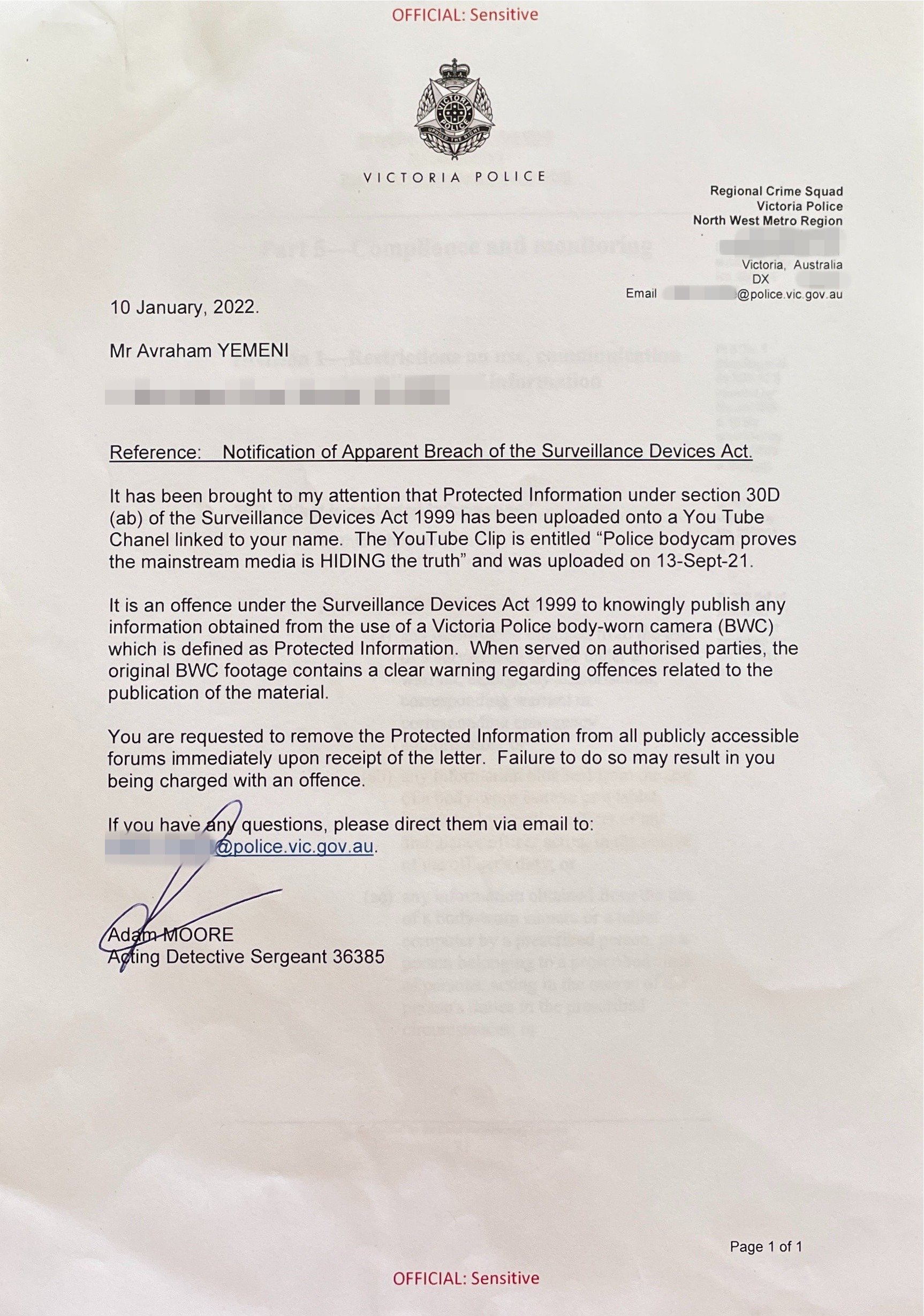


 Aletho News
